
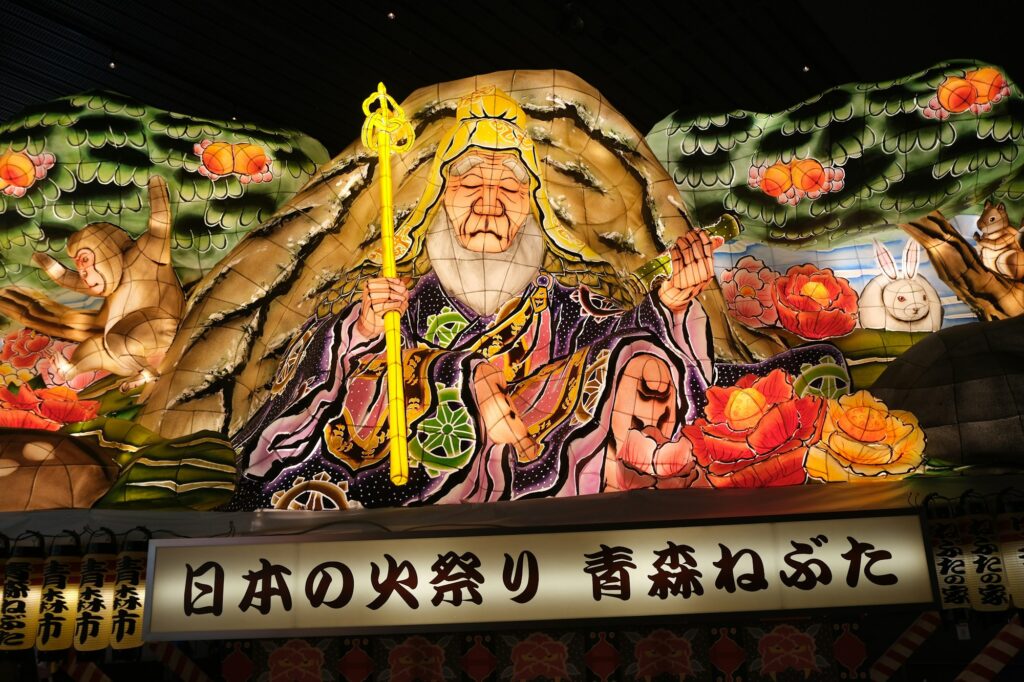
The Aomori Nebuta Matsuri is a festival of giant illuminated floats held every year from 2 to 7 August in Aomori, northern Japan. Around 22 floats, each 9 metres wide and lit by 800-1,000 bulbs, parade through the streets accompanied by taiko drums and hundreds of haneto dancers. The 2026 edition marks an unprecedented collaboration with the Gundam SEED Freedom franchise, featuring two giant mechanical floats created by a master local artisan. To make the most of the festival, book your reserved seats and accommodation several months in advance.
Picture an entire street plunged into darkness, suddenly lit by a monumental float depicting a hand-painted samurai warrior, pulled by around forty people in traditional costume. Welcome to the Aomori Nebuta Matsuri, one of the three great summer festivals of Tohoku, a region in northern Honshu still largely undiscovered by international travellers. Designated an Important Intangible Folk Cultural Property of Japan since 1980, this six-night festival draws between 2.5 and 3 million visitors each year. According to the official festival committee at nebuta.jp, the 2026 edition runs from 2 to 7 August, with a major new addition: the Gundam SEED Freedom collaboration with Bandai Namco Filmworks, promising two giant robot-themed floats.
Aomori Nebuta Matsuri: towering ephemeral floats in vivid colour
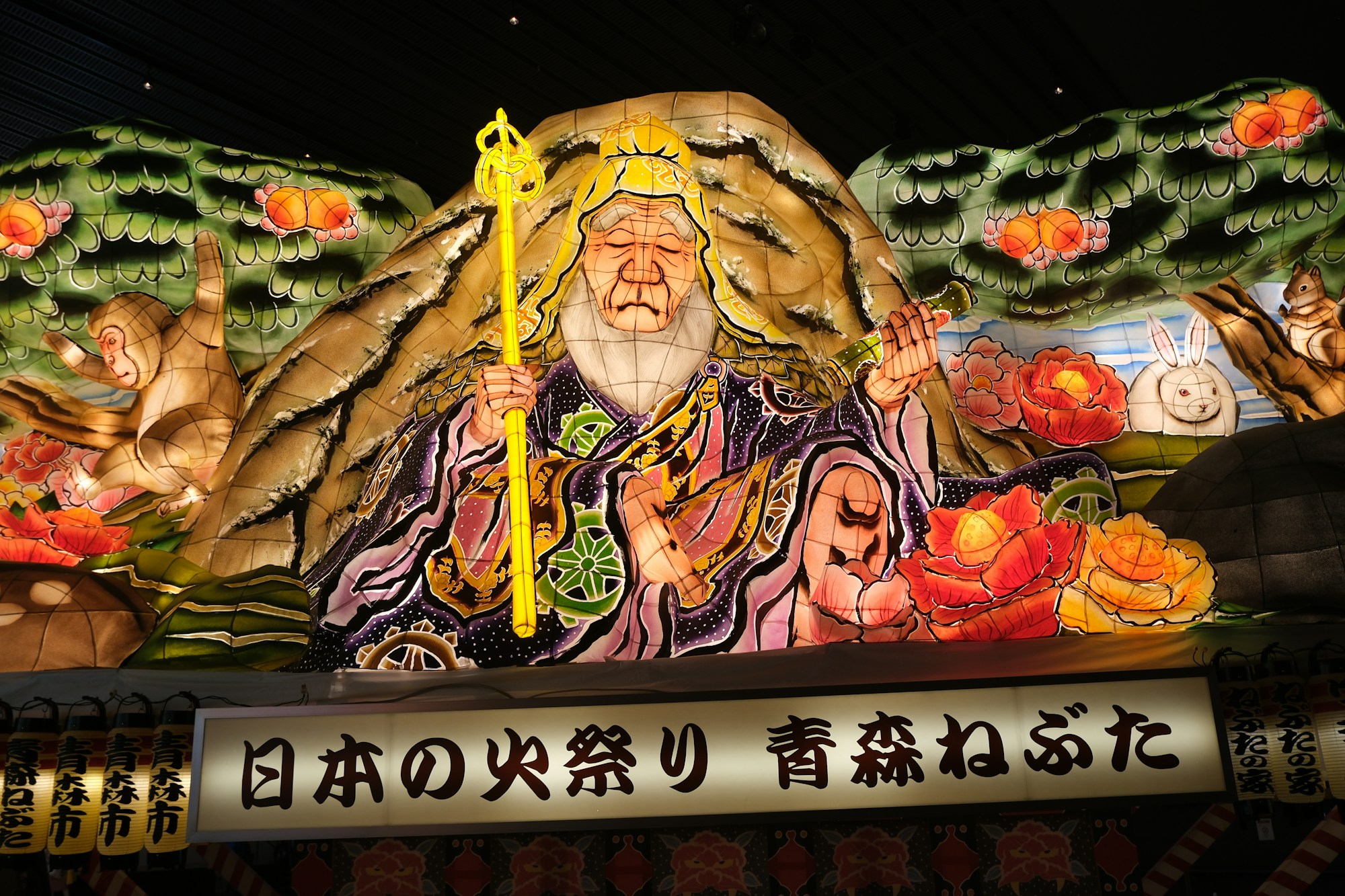
Aomori Nebuta Matsuri — 2 to 7 August 2026
The heart of the festival lies in its nebuta floats — monumental structures made of wire and hand-painted washi paper, measuring up to 9 m wide, 7 m deep and 5 m tall, weighing around 4 tonnes according to JNTO. Each float is built over an entire year by artisans called Nebutashi, then destroyed after the festival — an ephemeral art form that costs roughly 4 million yen per float to build, plus 16 million yen to operate over the six nights, as reported by the Foreign Press Center Japan. The themes draw from samurai history, Japanese mythology, kabuki theatre and, in recent years, contemporary pop culture.
The night parades start at 7:00 pm (6:45 pm from 4 to 6 August) along a 3 km loop through the streets of Aomori City, according to Japan-Guide. On 7 August, the final parade starts at 1:00 pm and ends with a fireworks display over Aomori Bay. Around 22 floats take part each night, including roughly twenty large floats.
Highlights
- Unique atmosphere: illuminated floats, taiko drums, shinobue flutes, and dancers shouting « Rassera! »
- Free viewing from the pavement — reserved seats (2,600-5,500 yen) offer a better view
- Combine with Akita Kanto Matsuri and Sendai Tanabata Matsuri in the same week
Dance to the beat of the drums: become a haneto
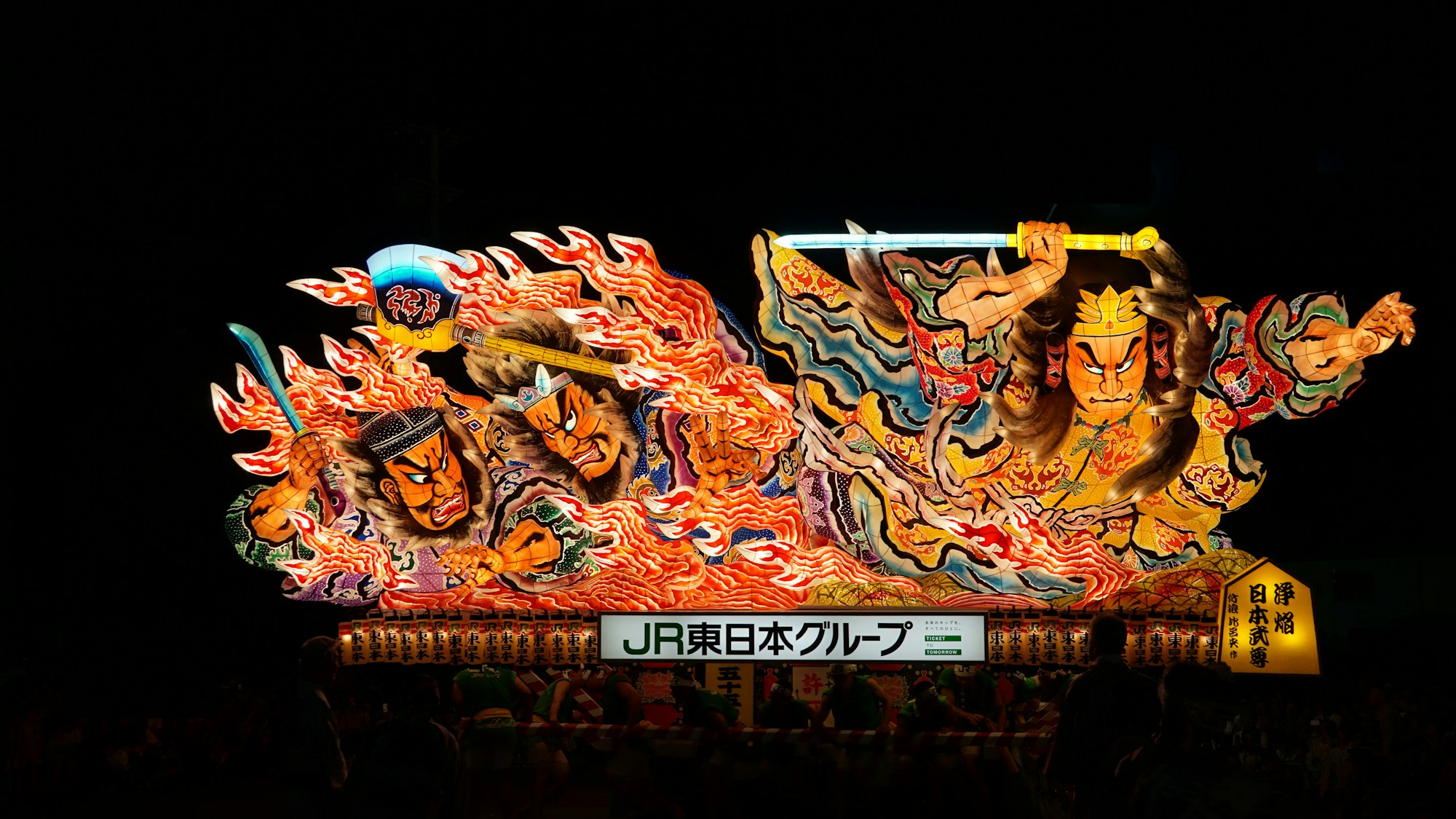
The haneto dance: open participation for everyone
One of the most remarkable aspects of the Nebuta Matsuri is how participatory it is: anyone can join the dance, with no registration or reservation required, explains Japan Heritage. You simply need to wear the official haneto costume, consisting of a flowered hat (hanagasa), a colourful jacket and trousers, and comfortable shoes. Rental costs around 4,000 to 6,000 yen per day near JR Aomori Station; buying a full costume costs 10,000-25,000 yen at department stores across the prefecture.
Essential rules
- The dance step is simple: hop twice on one foot, then twice on the other, moving forward
- Chant « Rassera! Rassera! » in rhythm — the cry comes from the local dialect « irasshai » (welcome)
- Never touch the floats or carts, and don’t run or push other dancers
The ephemeral art of the Nebutashi and Hayashi music
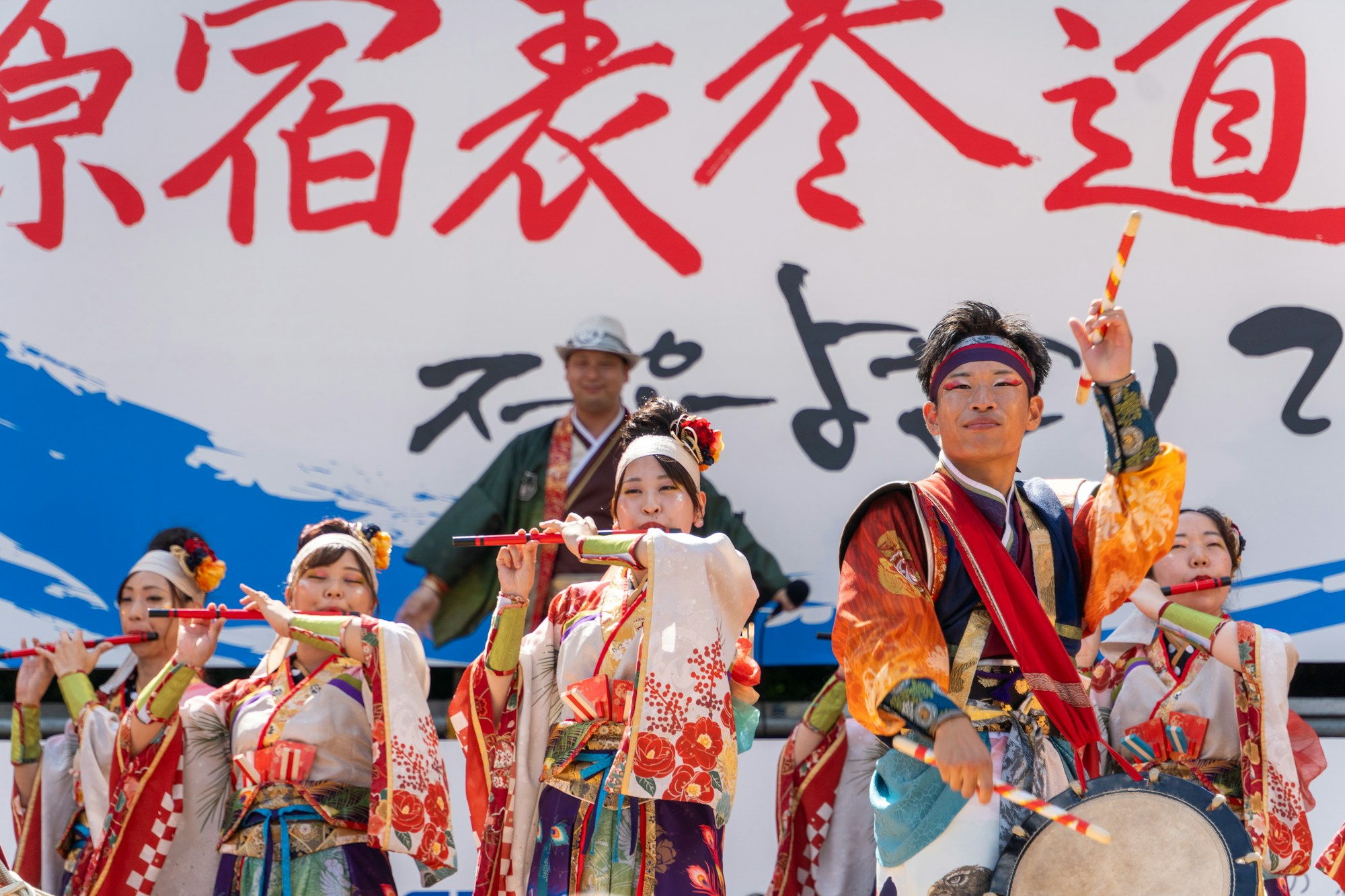
A craft under threat, a mesmerising musical tradition
Building a nebuta float is a year-long process that begins with choosing a theme and creating a preparatory drawing by a Nebutashi (master artisan). According to a National Geographic feature, only two master Nebutashi are still active in Aomori City: Hiroo Takenami (7th generation, 65 years old) and Takashi Kitamura (6th generation, 76). The first female artisan, Asako Kitamura, joined the profession only a decade ago. The craft struggles to attract younger generations, facing total reliance on corporate sponsorship and no possibility of self-funding.
The festival music, called Hayashi, is performed by ensembles of 50 to 100 musicians aboard the floats. Three instruments make up this street orchestra: the taiko, a large drum producing a deep beat like a pulsing heart; the shinobue, a bamboo transverse flute that guides the melody the haneto follow; and the teburigane, small hand cymbals with a lively rhythm, explains Japan-Guide. Two main melodies, standardised since 1952, set the parade’s pace: the « Shinko » (Advance) melody, considered the festival’s anthem, is played while the float moves forward.
Highlights
- A single float takes a year to build and costs ~4 million yen — it’s destroyed after the festival
- First solar-powered float introduced in 2022 by Hitachi: 2,000 LEDs, 170 kg CO2 reduction
- Workshops (nebuta-koya) measure 12 m wide by 12 m deep and 6-7 m high
2026 highlight: the Gundam SEED Freedom collaboration
Gundam meets the Tsugaru tradition
The 2026 edition marks a historic milestone with the arrival of the Mobile Suit Gundam SEED Freedom franchise by Bandai Namco Filmworks. According to Mantan Web, the « Gundam Festival Project » launches its first phase at the Aomori Nebuta Festival with two giant mechanical floats: the Mighty Strike Freedom Gundam and the Infinite Justice Gundam Type II, created by master Nebutashi Hiroaki Fukushi. A commemorative illustration shows Kira Yamato and other series characters dressed in haneto costumes, fusing two iconic worlds of Japanese culture.
A pop-up Gundam shop will be open from 18 July to 30 August at the To-O Nippo Shinmachi Building, offering exclusive merchandise and food collaborations: a limited-edition Gundam SEED Freedom English Toast (chocolate banana, 178 yen) and a chocolate-apple Pporo cake (702 yen), as reported by Essential Japan.
Highlights
- Two giant Gundam floats competing alongside traditional ones for the festival prize
- Dedicated pop-up shop with exclusive merchandise throughout the festival period
- Collaboration created by Hiroaki Fukushi, a recognised master Nebutashi artisan
Practical info: transport, eSIM and insurance
Stay connected during the festival. Japan eSIM 7 days from $4.50. Install before departure, activate on arrival. The network may be congested on festival evenings — download your offline maps ahead of time.
From $4.50Japan doesn’t require mandatory travel insurance, but hospital costs can run $1,000-3,000 per day without cover. SafetyWing Nomad Insurance offers comprehensive coverage from $56 per 4 weeks. 10% off through our Ambassador link.
From $56 / 4 weeksCompare flights from London to Tokyo (Haneda or Narita) for the first week of August. Allow roughly 1h20 for the domestic flight from Tokyo to Aomori, or 3h on the Shinkansen Hayabusa from Tokyo. The JR EAST PASS 5-day at 35,000 yen pays for itself with a round trip.
From £550 returnFrequently Asked Questions
Is the festival free?
Yes, watching the parade from the pavement is completely free. Reserved seats cost between 2,600 and 5,500 yen depending on the day and location. The 7 August finale with fireworks has its own tickets at 4,500-5,500 yen. Source: Japan-Guide.
Can I really join the dance without registering?
Yes, no advance registration or reservation is needed. Simply wear the official haneto costume (rental ~4,000 yen/day) and head to the assembly point 30 minutes before the parade starts. According to Japan Heritage, the rules are simple: don’t touch the floats, don’t run, and chant « Rassera! » in rhythm.
Which is the best night to experience the festival?
The nights of 4-6 August are the most impressive: all the large floats are deployed and the competition is at its peak. 6 August is the final competition night with awards. 7 August offers the unique experience of the sea parade followed by the closing fireworks. Source: Japan-Guide.
Do I need to speak Japanese to enjoy the festival?
Not at all. The festival is primarily a visual and participatory experience that doesn’t require Japanese. The Wa Rasse museum offers English signage and films. Online ticketing sites (PIA English, KKDay) are available in English. Google Translate and offline maps are recommended. Source: LIVE JAPAN.
Where to stay if Aomori’s hotels are fully booked?
Occupancy hits 98% with prices 4.2 times higher during the festival, according to HotelBank. Alternatives include: Hirosaki (45 min by train), Hachinohe (1h-1h30), Morioka (1h by Shinkansen) or Asamushi Onsen (20 min). Special night trains run throughout the festival week.
What’s the difference between Nebuta and Neputa?
« Nebuta » is used in eastern Aomori Prefecture (including Aomori City) for 3D floats crafted by professional artisans. « Neputa » is the term used in the west (Hirosaki) where the floats are 2D fan-shaped and made by ordinary citizens. Both share the same origin but differ in style and their distinctive chant. Source: Aomori Tourism.
Sources
- nebuta.jp — Official website of the Aomori Nebuta Festival Committee
- Japan-Guide — Complete guide to Nebuta Matsuri
- JNTO — Japan National Tourism Organisation
- Aomori Tourism — Official prefecture guide
- Japan Heritage — Festival guide and haneto rules
- National Geographic — Feature on Nebutashi craftsmanship
- Mantan Web — Gundam SEED Freedom 2026 collaboration
- Essential Japan — Gundam pop-up shop details
- HotelBank — Tohoku 2026 hotel trends
- FPCJ — The young Nebutashi masters
- Wikipedia — Nebuta Matsuri encyclopaedia entry
- Tohoku Kizuna Matsuri — The three great Tohoku festivals
- LIVE JAPAN — Practical festival guide
- Hitachi — First solar float at Nebuta Festival
Research conducted on 16 July 2026.
Plan your trip with Pixidia
Pixidia learns how you travel and helps you build a trip that truly fits you and everyone coming along.
Open the planner