
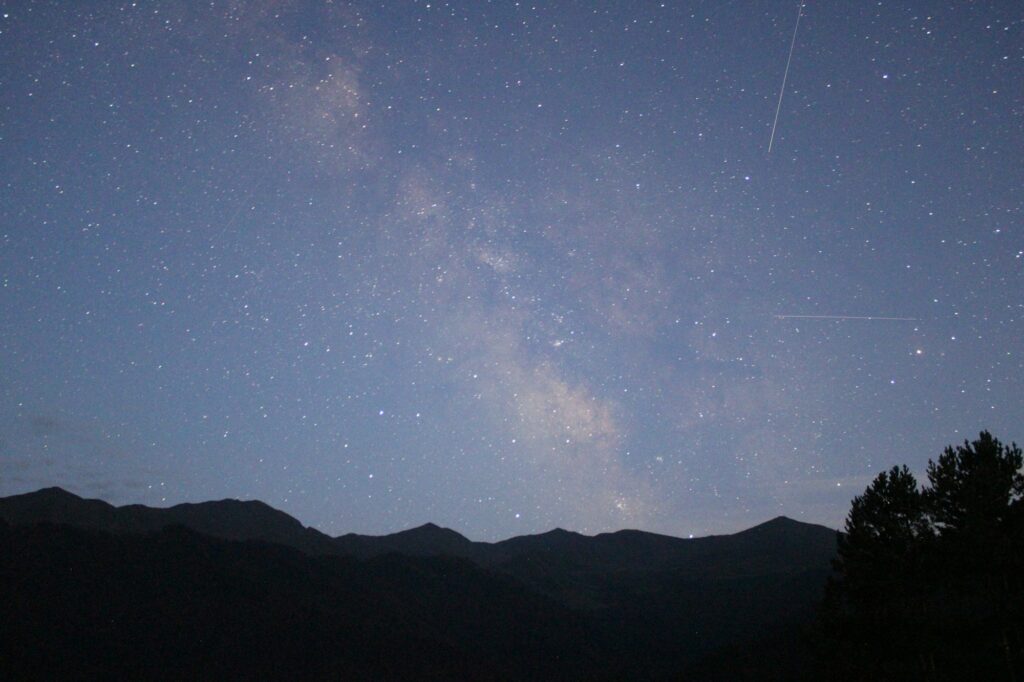
Light pollution is increasing by 10% per year, yet 2026 is shaping up to be one of the most spectacular astronomical years of the decade. A six-planet alignment in late February, a total solar eclipse visible from Europe on August 12, and a solar maximum promising exceptional northern lights reaching mid-latitudes: the night sky has never been more deserving of a dedicated trip. Astrotourism — the practice of traveling to observe the stars at the least light-polluted sites on the planet — is experiencing unprecedented growth, driven by DarkSky International certifications, which now recognize over 125 dark sky reserves and parks worldwide.
From the Atacama Desert, where Chile hosts 70% of the world’s astronomical observation capacity, to the lesser-known Mediterranean reserves of Portugal and Greece, we have selected ten destinations that transform simple sky gazing into an unforgettable travel experience. Here is our comprehensive, sourced, and illustrated guide to planning your next stargazing getaway.
2026 Astronomical Calendar: Events You Cannot Miss
Before choosing your destination, sync your calendar with the year’s major celestial events. Here are the key moments that will make 2026 an exceptional year for sky watching, according to Futura Sciences and the Cité de l’Espace.
| Date | Event | Where to Watch |
|---|---|---|
| Feb. 28 – Mar. 1 | 6-Planet Alignment (Jupiter, Uranus, Saturn, Neptune, Venus, Mercury) | Visible everywhere with the naked eye (Venus, Jupiter, Saturn) — binoculars for Uranus/Neptune |
| February 17 | Annular Solar Eclipse | Antarctica, South Atlantic |
| March 3 | Total Lunar Eclipse | Europe, Africa, Americas |
| April – May | Lyrid meteor shower (April 22) and Eta Aquariid meteor shower (May 6) | Northern Hemisphere (Lyrids), Southern Hemisphere (Aquariids) |
| August 12 | Total Solar Eclipse — the first in Europe since 1999 | Iceland, northern Spain, Portugal, Balearic Islands |
| August 12–13 | Perseid meteor shower (peak: 100+ meteors/hour) | Northern Hemisphere — all destinations in this article |
| August 28 | Partial Lunar Eclipse | Europe, Asia, Australia, Africa |
| Year-round | Solar Maximum (11-year cycle) — exceptional northern lights | Northern latitudes: Canada, Scandinavia, Iceland |
1. Atacama Desert, Chile
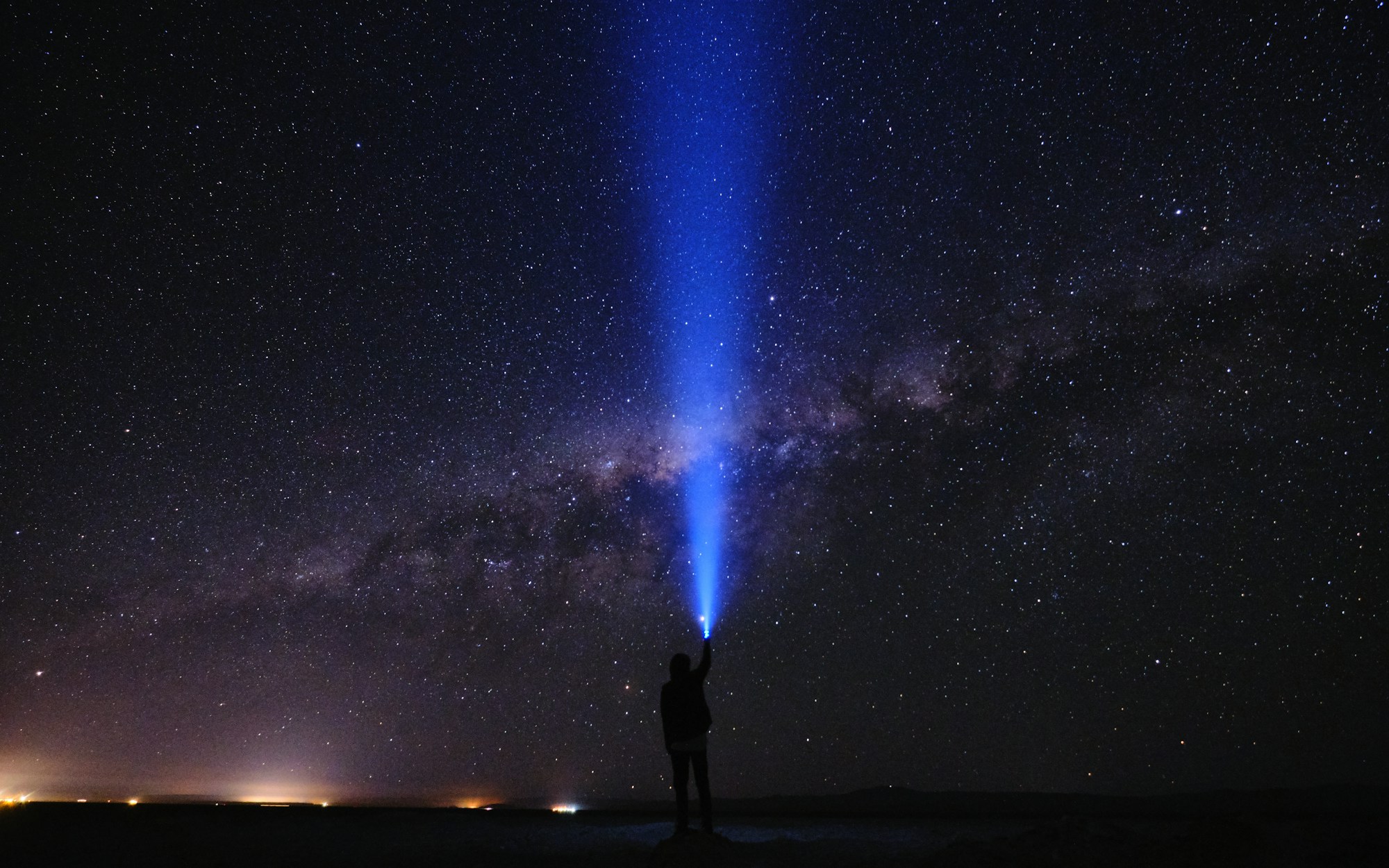
Atacama — Where 70% of the World’s Astronomy Looks Up
The Atacama Desert is not just the driest desert on Earth — it is the world’s sanctuary for astronomy. Perched above 2,400 meters in altitude, it offers an atmosphere of unmatched stability and transparency. The result: Chile alone accounts for 70% of the world’s astronomical observation capacity, according to Chile Travel. Clear nights exceed 300 per year — a figure that any amateur astronomer can only dream of.
This is where the ALMA (Atacama Large Millimeter Array) observatory sits, a network of 66 parabolic antennas deployed on the Chajnantor Plateau at 5,050 meters above sea level. Since 2025, the Vera C. Rubin Observatory, equipped with a 3.2-gigapixel camera — the largest ever built — has been systematically mapping the southern sky. The village of San Pedro de Atacama serves as a base camp for nighttime observation tours offered by local agencies like Space Obs, which use professional telescopes in the open desert.
Beyond pure astronomy, Atacama captivates with its lunar landscapes: the Valley of the Moon at sunset, the El Tatio geysers at dawn (4,300 m), and the altiplano lagoons with flamingos. The observation experience here is visceral: in the total darkness of the desert, the Milky Way is so bright it casts shadows on the ground.
Highlights
- Purest sky on the planet — 300+ clear nights/year
- ALMA and Vera C. Rubin: two world-class observatories open to visitors
- Nighttime tours with professional telescopes from San Pedro
- Valley of the Moon, El Tatio geysers, altiplano lagoons
- Milky Way visible to the naked eye with extraordinary intensity
2. NamibRand Nature Reserve, Namibia
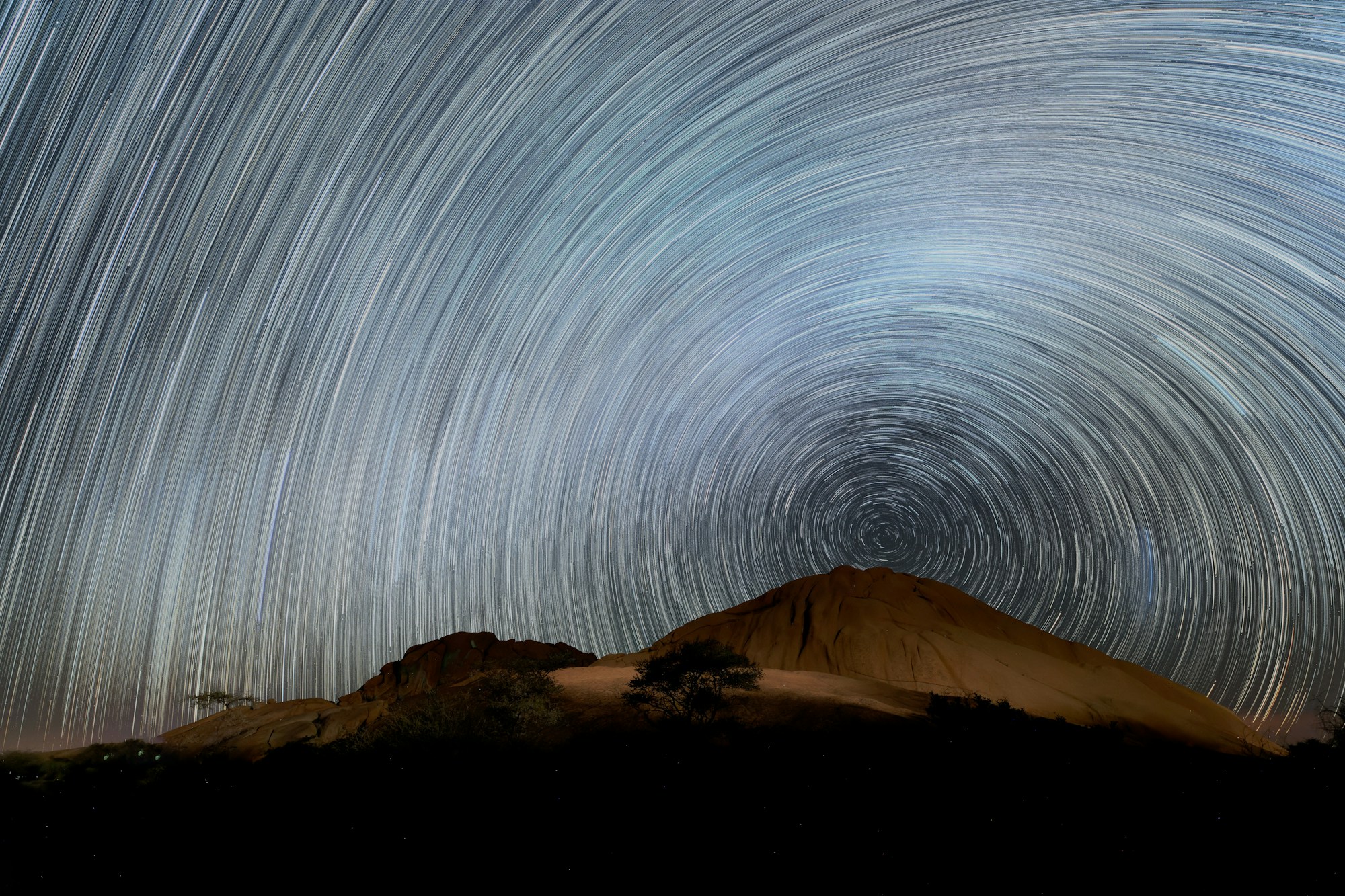
NamibRand — Africa’s First Dark Sky Reserve
NamibRand holds a distinction that few places on Earth can claim: the Gold Tier certification from DarkSky International, the highest level of recognition possible, according to DarkSky International. The first certified dark sky reserve on the African continent, it spans over 2,000 km² of red dunes, gravel plains, and granite mountains where light pollution is simply nonexistent.
The darkness is so profound that observers can cast shadows by starlight alone — a phenomenon only the purest skies on Earth allow, as reported by Rothschild Safaris. With over 300 clear nights per year and exceptionally transparent atmosphere, NamibRand is an astrophotographer’s paradise. The reserve’s unique appeal lies in the ability to combine daytime safari and nighttime stargazing: oryx, springbok, brown hyenas, and jackals all call the reserve home.
Upscale lodges such as andBeyond Sossusvlei offer « star beds » — beds set up outdoors on elevated platforms — where you literally fall asleep beneath the Milky Way. Naturalist guides trained in astronomy lead observation sessions with telescopes and green laser pointers.
Highlights
- DarkSky Gold Tier certification — absolute darkness
- Shadows cast by starlight alone
- One-of-a-kind safari + astronomy combo
- Open-air « star beds » at luxury lodges
- Sossusvlei dunes nearby (45 min)
3. Aoraki Mackenzie Reserve, New Zealand
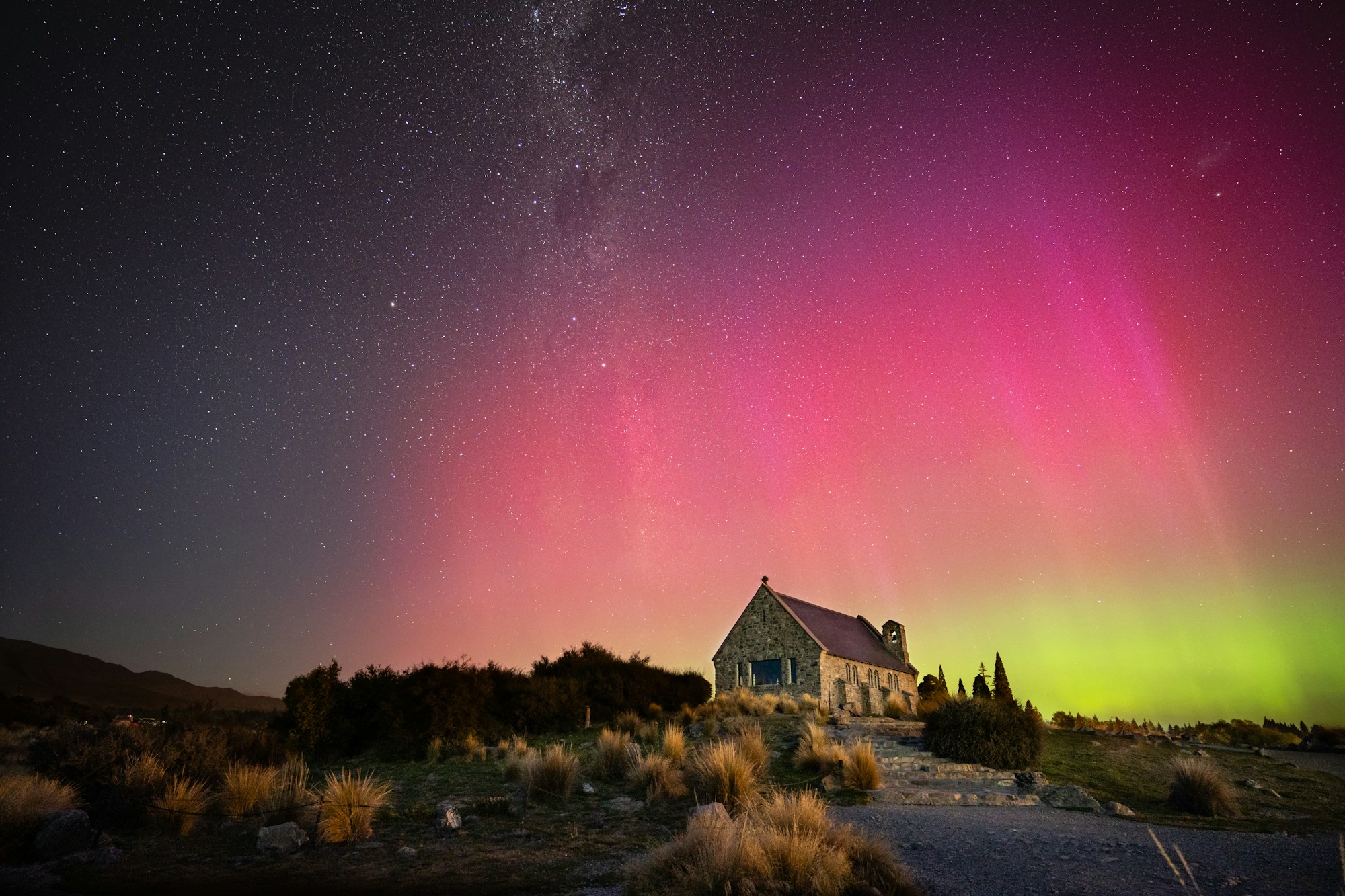
Aoraki Mackenzie — The World’s Largest Dark Sky Reserve
Spanning 4,300 km², the Aoraki Mackenzie Reserve is the largest certified dark sky reserve in the world, according to Outside Online. Nestled in the heart of New Zealand’s South Island, it encompasses Lake Tekapo, Lake Pukaki, and the foothills of Mount Cook (Aoraki in Maori, 3,724 m), the country’s highest peak. New Zealand’s geographic isolation, combined with strict lighting regulations throughout the Mackenzie Basin, ensures remarkable darkness.
The Dark Sky Project at Tekapo offers the « Summit Experience »: a nighttime ascent to the Mount John Observatory (1,029 m), where passionate guides train their telescopes on the jewels of the southern sky — the Southern Cross, the Magellanic Clouds, and the galactic center. The experience is enriched by the sophisticated ancestral astronomical knowledge of the Maori, woven into the guides’ commentary.
The Church of the Good Shepherd, perched on the shore of Lake Tekapo with the Alps as a backdrop, has become one of the world’s most iconic astrophotography spots. On a clear night, the Milky Way appears to plunge directly into the turquoise lake.
Highlights
- World’s largest dark sky reserve (4,300 km²)
- Summit Experience at Mount John — guided telescope observation
- Southern Cross and Magellanic Clouds visible
- Maori astronomical knowledge integrated into tours
- Church of the Good Shepherd — legendary photo spot
4. Jasper National Park, Canada
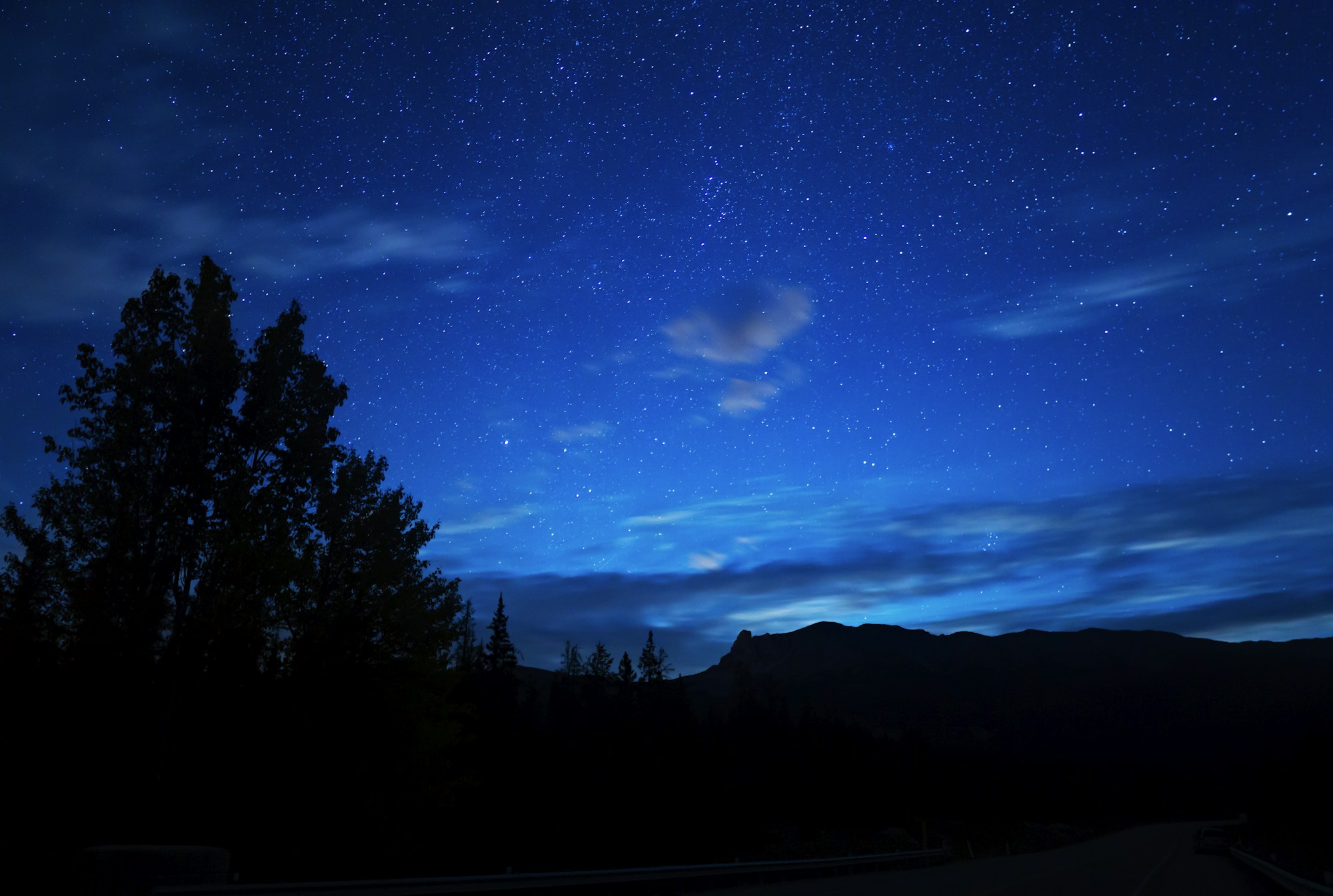
Jasper — The World’s Largest Accessible Dark Sky Preserve
Jasper National Park, in the Canadian Rockies, holds a double record: it is the largest designated dark sky preserve in the world and the most accessible, with a full-service town — hotels, restaurants, shops — located directly within the certified zone, according to Jasper Tourism. No need to drive for hours in the dark: just step outside your hotel and look up.
Thanks to its position under the auroral oval and the solar maximum in 2026, Jasper offers northern lights roughly once a week between October and March. The Jasper Planetarium hosts public observation sessions with the largest telescopes accessible to the public in the Rockies. Lakes Pyramid, Maligne, and Medicine provide spectacular photographic foregrounds — the perfectly calm water reflects the Milky Way like a mirror.
Jasper’s major advantage for travelers: it is a Parks Canada national park with full infrastructure. By day, you explore glaciers along the Icefields Parkway, canyons, and hot springs. By night, the show resumes in an entirely different register.
Highlights
- Largest dark sky preserve with an integrated town
- Northern lights ~once/week from October to March
- Jasper Planetarium — public sessions with giant telescopes
- Icefields Parkway, canyons, and hot springs by day
- Mirror-like lakes for Milky Way photography
5. La Palma Island, Canary Islands, Spain
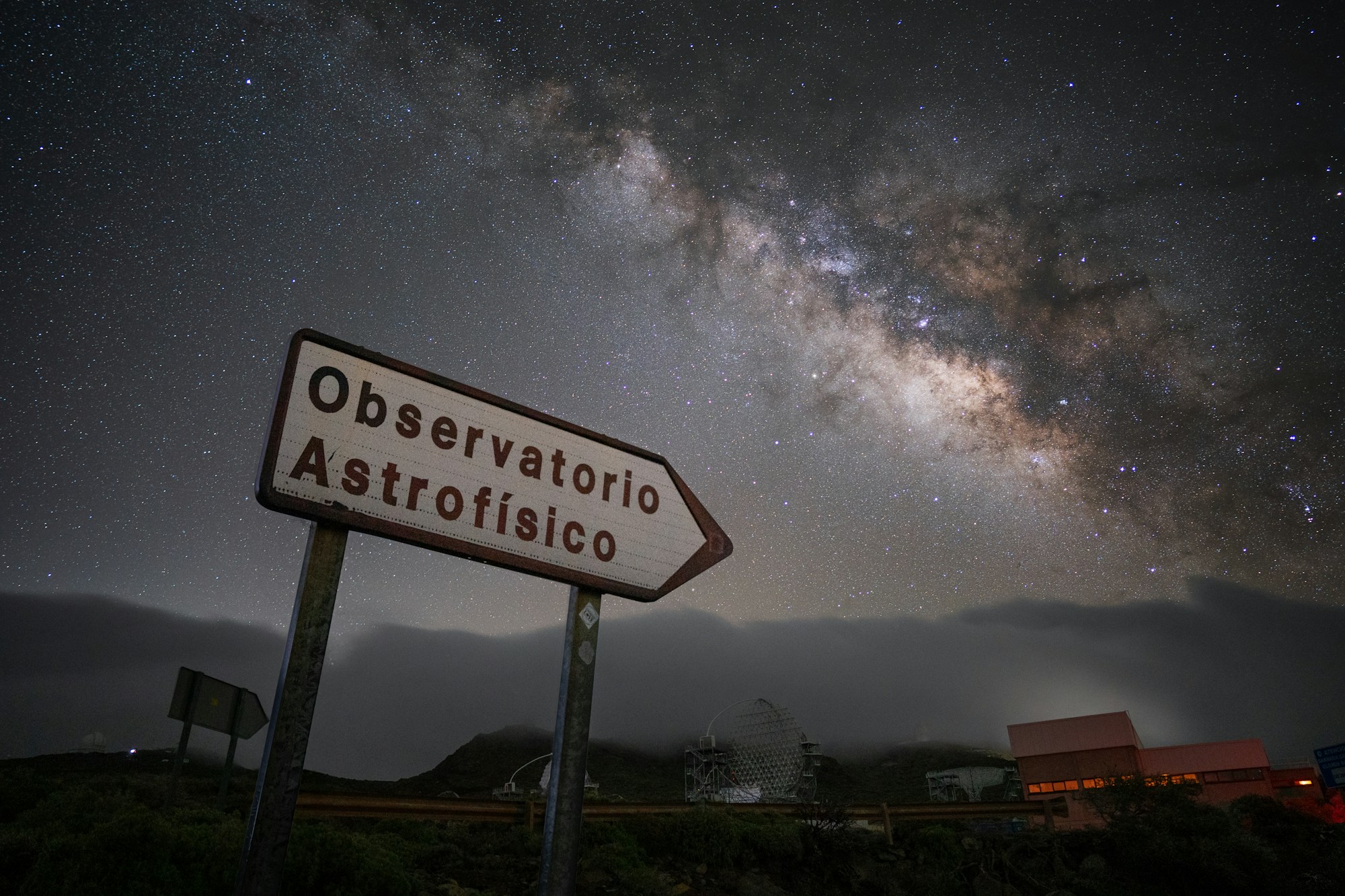
La Palma — The World’s First Starlight Reserve
La Palma holds a special place in the history of astrotourism: it became the world’s first Starlight Reserve in 2012, a status recognizing the island’s outstanding commitment to dark sky preservation. Since 1988, the « Ley del Cielo » (Sky Law) has strictly regulated public lighting, flight paths, and industrial activity that could pollute the atmosphere, according to Spain.info.
Atop the Roque de los Muchachos (2,426 m), the Gran Telescopio Canarias (GTC) reigns supreme: with its 10.4-meter mirror and 400-ton mass, it is the world’s largest optical telescope. The observatory, housing instruments from 19 countries, can be visited by reservation. But astronomy on La Palma goes far beyond the professionals: the island boasts 16 astronomical viewpoints (miradores) with free access, equipped with explanatory panels pointing out constellations, according to Visit La Palma.
From these miradores, 83 of the 88 officially recognized constellations are visible throughout the year — a record owed to the island’s subtropical latitude (28°N). On clear nights, the zodiacal light — a diffuse glow caused by interplanetary dust — is perfectly visible, a phenomenon revealed only by the purest skies, as noted by Le Routard.
Highlights
- World’s first Starlight Reserve — Ley del Cielo since 1988
- Gran Telescopio Canarias — world’s largest optical telescope
- 16 free astronomical viewpoints across the island
- 83/88 constellations visible thanks to subtropical latitude
- Observable zodiacal light — an extremely rare phenomenon
6. Mauna Kea, Hawaii, United States
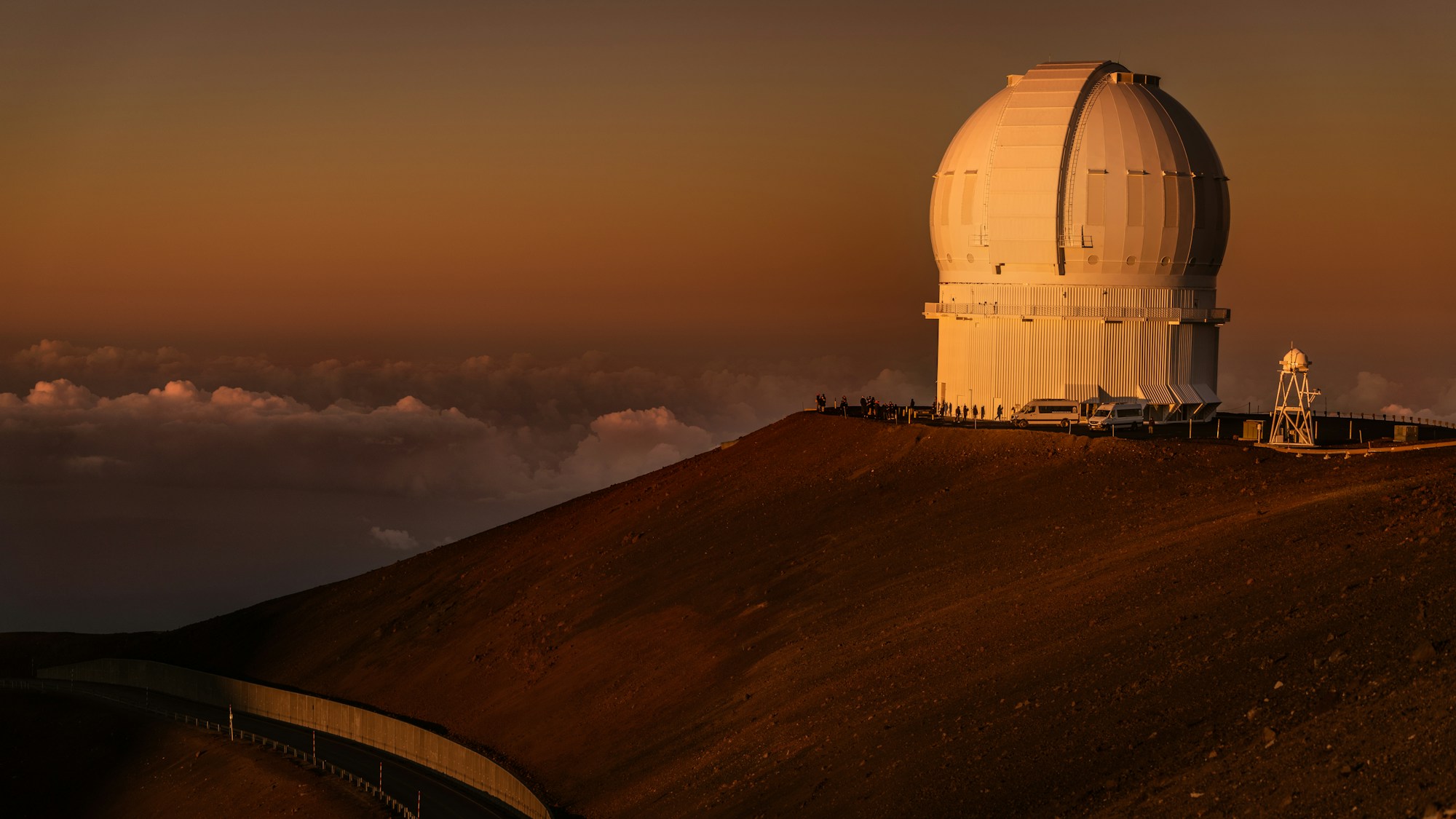
Mauna Kea — The Only Place on Earth Where You Can See Both Hemispheres in One Night
Rising to 4,205 meters above the Pacific, Mauna Kea is considered the best astronomical observation site on the planet by the scientific community. Its unique position at 20° north latitude, in the middle of the Pacific Ocean, well above the cloud inversion layer, offers an unbeatable combination: dry, stable atmosphere with minimal turbulence. According to the University of Hawaii at Hilo, the summit hosts 10 independent observatories operated by 13 countries.
But the most remarkable fact for visitors is this: Mauna Kea is the only place in the world where you can observe the Big Dipper (Northern Hemisphere) and the Southern Cross (Southern Hemisphere) in the same night, according to Mauna Kea Observatories. This position straddling both celestial hemispheres makes it a truly unparalleled location.
The Visitor Information Station (VIS), located at 2,800 m altitude, hosts free observation sessions every evening with telescopes available to the public. Access to the summit itself is regulated and requires a 4WD vehicle — Mauna Kea is also a sacred Hawaiian site (piko, the navel connecting Earth to sky), and visitors are urged to deeply respect this spiritual dimension.
Highlights
- World’s best astronomical site according to the scientific community
- Both celestial hemispheres visible in a single night
- Free observation sessions at the Visitor Information Station
- 10 research observatories at the summit
- Sacred Hawaiian site — cultural and spiritual dimension
7. AlUla, Saudi Arabia
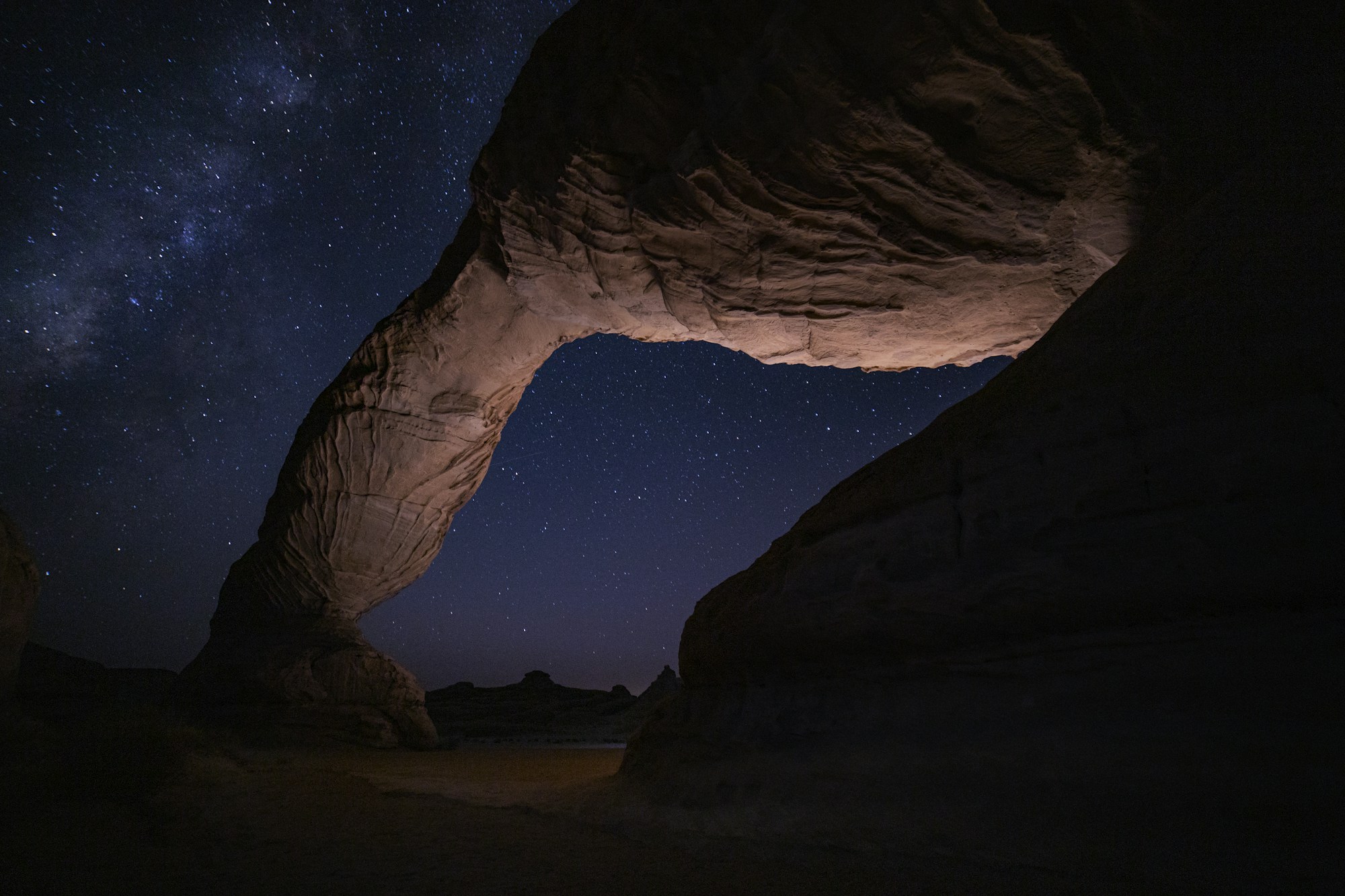
AlUla — Where Arab Astronomy Meets Nabataean Heritage
AlUla is the first site in the Persian Gulf and Saudi Arabia to receive DarkSky International certification, with no fewer than four certified reserves covering 6,146 km². But beyond the label, it is the cultural dimension that makes AlUla truly unique: the names of dozens of stars we still use today — Aldebaran, Betelgeuse, Altair, Vega, Rigel — come from Arabic, the legacy of a civilization that mapped the sky long before European astronomy, as recalled by Arab News.
The flagship experience is Hegra After Dark, offered by Experience AlUla: an immersive nighttime tour of the Nabataean archaeological site of Hegra (UNESCO World Heritage), where tombs carved into sandstone are illuminated by starlight alone. Guides blend ancestral Bedouin stories with modern astrophysical knowledge — a striking fusion of past and present.
The surrounding desert, with its red sandstone formations sculpted by erosion, creates extraordinary photographic foregrounds. The dry Arabian desert air, combined with the total absence of light pollution for hundreds of kilometers, ensures remarkable atmospheric transparency.
Highlights
- 4 certified DarkSky reserves — 6,146 km² of protected sky
- Hegra After Dark — nighttime tour of the UNESCO site
- Arab astronomical heritage — star names still in use today
- Bedouin stories + astrophysics: a unique cultural fusion
- Red sandstone formations — spectacular photo foregrounds
8. Mont-Megantic, Quebec, Canada
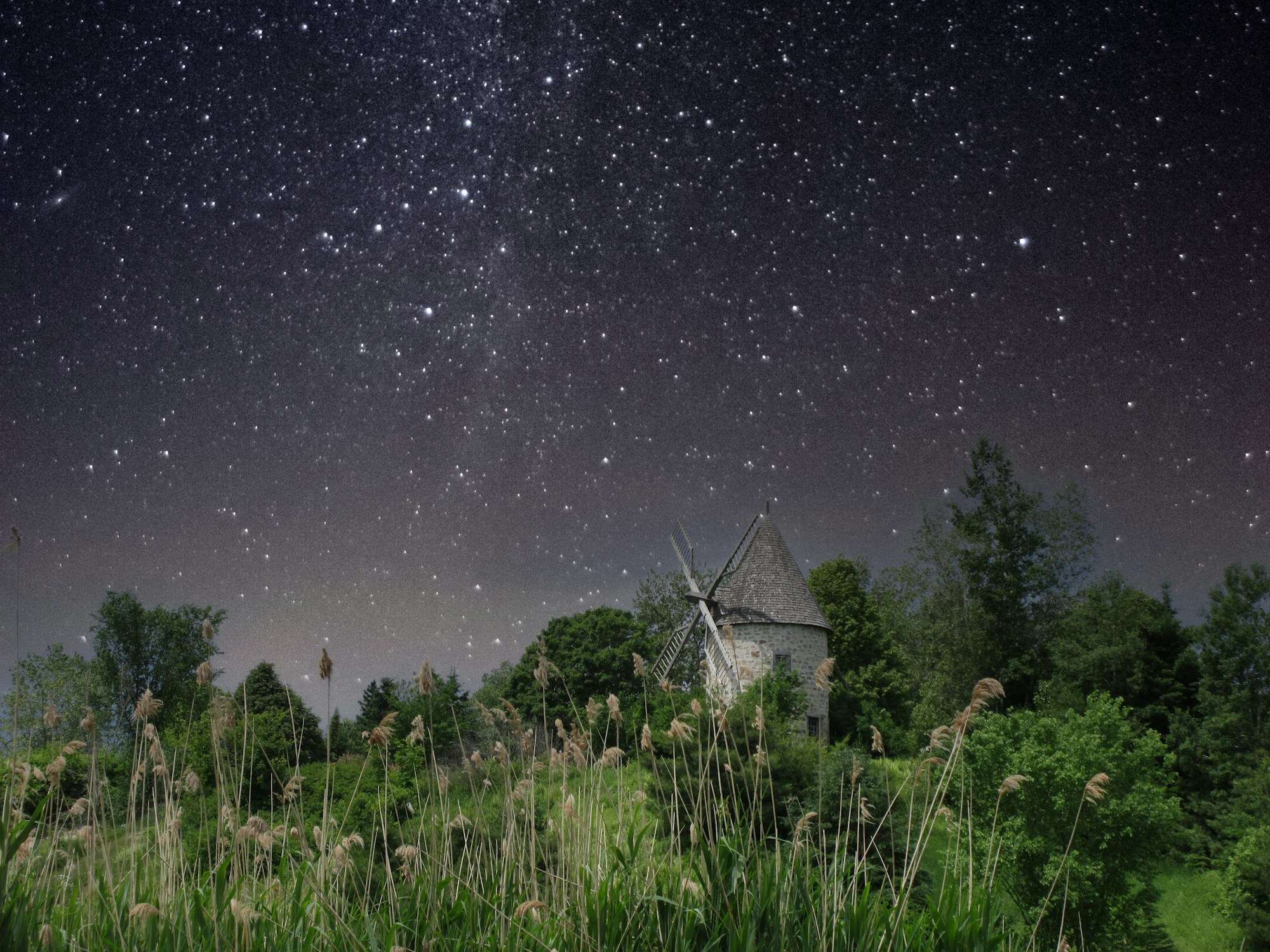
Mont-Megantic — The World’s Very First Certified Dark Sky Reserve
Mont-Megantic, in Quebec’s Eastern Townships, holds a historic place in world astrotourism: it was the very first dark sky reserve certified by DarkSky International, in 2007, according to Ciel étoilé Mont-Mégantic. This pioneering status was achieved through an unprecedented collective effort: 34 surrounding municipalities agreed to modify their public lighting, protecting a zone spanning 5,500 km². The city of Sherbrooke (population 170,000) is the largest city in the world located within a dark sky reserve’s perimeter.
At the summit (1,105 m), the ASTROLab combines an interactive interpretation center, a public observatory, and a research observatory equipped with a 1.6-meter telescope — the most powerful in eastern North America. Public observation evenings take place year-round, with special events during the Perseids in August, which draw thousands of enthusiasts to the national park, according to Espaces.
Accessibility is a major asset: just 2.5 hours from Montreal and 2 hours from Quebec City, Mont-Megantic is one of the easiest astrotourism destinations to fit into a Quebec trip. The national park also offers hiking, mountain biking, and camping — an affordable, family-friendly blend of nature and astronomy.
Highlights
- World’s first certified dark sky reserve (2007)
- ASTROLab + 1.6 m telescope — the most powerful in eastern North America
- 34 municipalities committed — 5,500 km² protected
- Perseid events in August — a memorable collective experience
- Just 2.5 hours from Montreal — highly accessible
9. Alqueva Reserve, Portugal
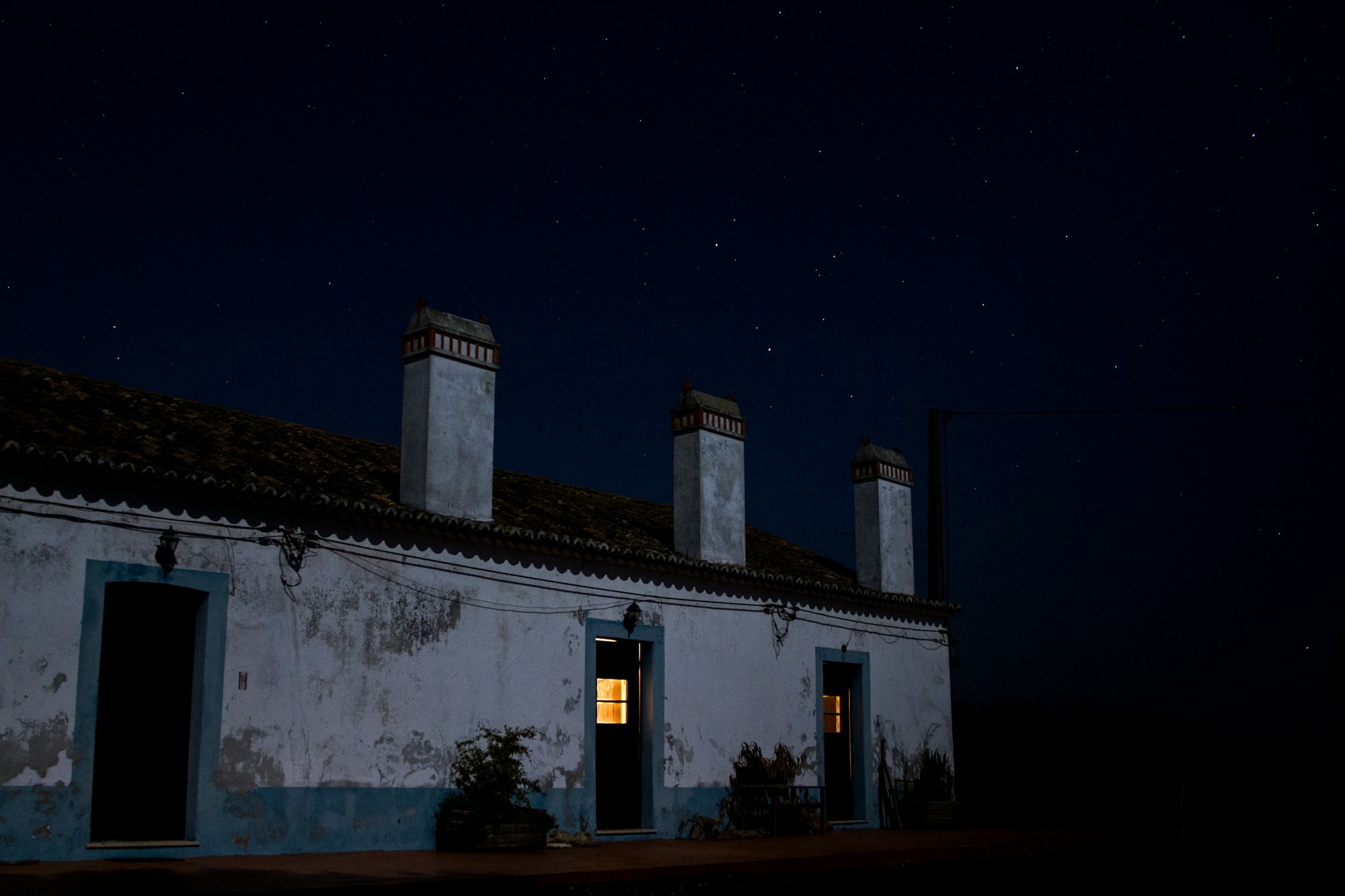
Alqueva — The First UNESCO-Recognized Dark Sky Reserve
Spanning 3,000 km² across the Alentejo region in southeastern Portugal, the Alqueva Reserve is the first in the world to receive UNESCO recognition for the quality of its night sky. It has also been voted « best European tourism attraction » in the sustainable tourism category, according to Zeste Citron. Lake Alqueva, the largest artificial lake in Western Europe, serves as a natural mirror for the stars — a backdrop that has earned the site international fame.
What sets Alqueva apart is the richness and originality of its astrotourism offerings. The reserve features nighttime canoe excursions on the lake under the stars, astrophotography workshops led by professionals, and a network of Dark Sky Hotels — accommodations designed for stargazing, with oriented terraces, free-access telescopes, and adapted lighting. The village of Monsaraz, perched on a medieval hilltop overlooking the lake, offers a breathtaking observation setting, as reported by SNCF Connect.
The Alentejo is also a renowned gastronomic and wine region — astrotourism here pairs with wine tastings, estate visits, and generous traditional Portuguese cuisine. All just 2 hours from Lisbon and at prices significantly lower than in other Western European destinations.
Highlights
- First UNESCO-recognized dark sky reserve
- Nighttime canoe excursions on the lake under the stars
- Dark Sky Hotels with telescopes and observation terraces
- Monsaraz — medieval hilltop village with lake views
- Alentejo wines and gastronomy — epicurean astrotourism
10. Aenos National Park, Kefalonia, Greece
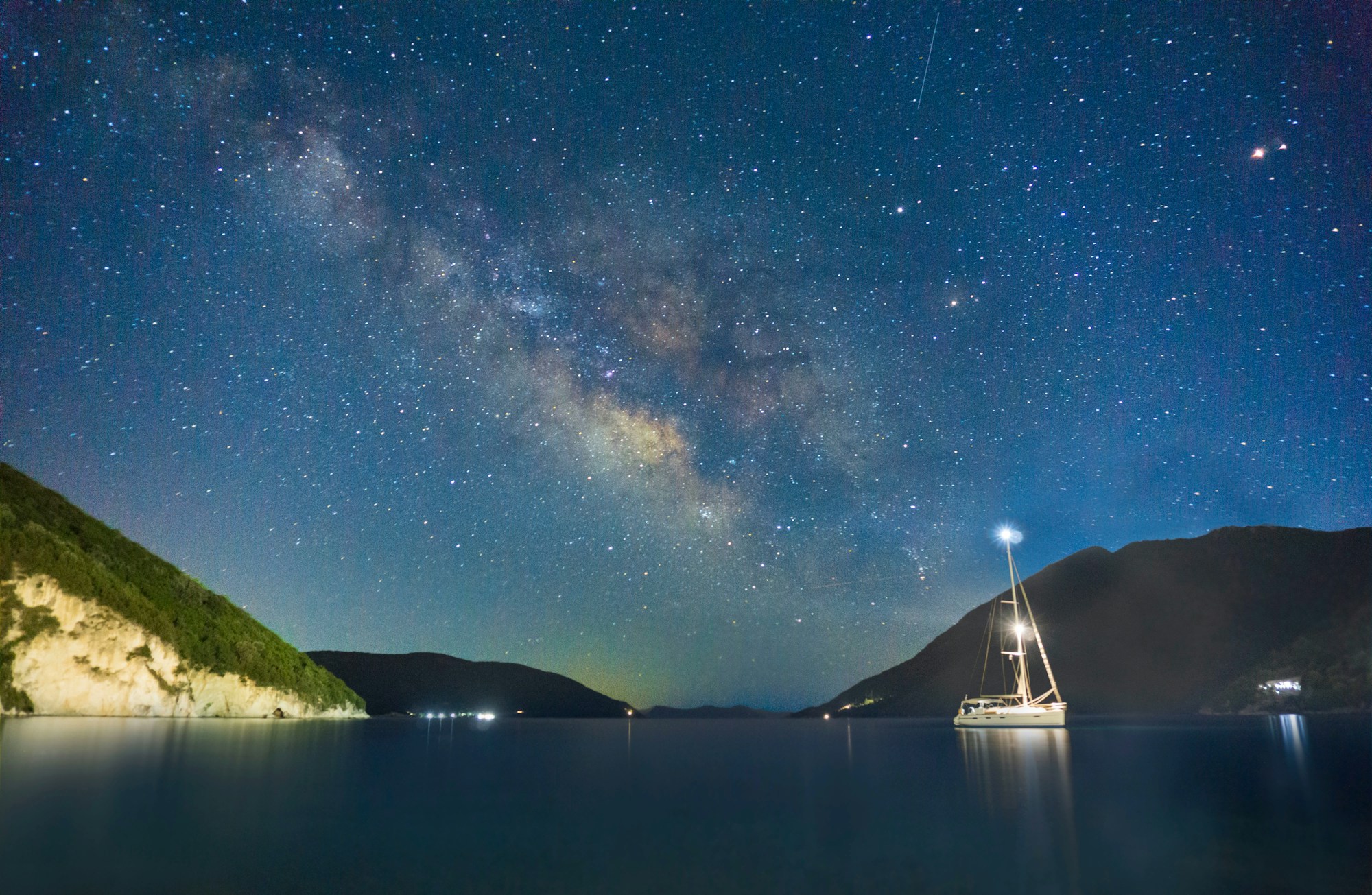
Aenos — Greece’s First DarkSky Park
Certified as an International Dark Sky Park in June 2023, the Aenos National Park is the first — and so far only — DarkSky site in Greece, according to DarkSky International. Located on the Ionian island of Kefalonia, it peaks at 1,628 meters above the Ionian Sea. This altitude, combined with the island’s isolation and low population density, ensures remarkably dark skies for the Mediterranean.
The park organizes free public observation evenings with telescopes provided, led by passionate local astronomers. Sessions are held regularly between May and October, allowing visitors to discover planets, star clusters, and nebulae visible from these latitudes. The atmosphere is relaxed and family-friendly — far from the formality of some observatories, as reported by Kayak.
Kefalonia’s appeal extends well beyond astronomy: Myrtos Beach (regularly ranked among Europe’s most beautiful), the underground lake cave of Melissani, and the pastel-colored villages of Fiskardo and Assos. Mount Aenos itself, covered in endemic black firs (Abies cephalonica), offers hikes with 360° views of the sea and neighboring islands. Stargazing after a day of beaches and swimming: that is the Mediterranean promise of Aenos.
Highlights
- Greece’s first and only DarkSky Park
- Free observation evenings with telescopes
- Kefalonia: Myrtos Beach, Melissani Cave, Ionian villages
- Budget-friendly — one of the most affordable destinations on the list
- Beach + astronomy combo in the Mediterranean
Frequently Asked Questions About Astrotourism
Do I need to be an astronomer to enjoy astrotourism?
Absolutely not. Astrotourism is for anyone with curiosity, not just specialists. Most destinations in this guide offer guided observation sessions where passionate hosts teach you to identify constellations, planets, and deep-sky objects. Simply looking up with the naked eye at a sky free from light pollution is enough for a breathtaking experience — the Milky Way, invisible from cities, becomes a jaw-dropping spectacle in a dark sky reserve.
What equipment should I bring for an astrotourism trip?
The essentials fit in a backpack: a red-filter headlamp (to preserve night vision), warm clothing even in summer (nights at altitude are cold), 10×50 binoculars as an affordable first step, and an astronomy app on your phone (Stellarium, Sky Tonight). For photography, a stable tripod and a camera capable of reaching ISO 3200 minimum are essential. Telescopes are generally provided on-site by guides and observatories.
Why is light pollution a tourism issue?
Light pollution is increasing by 10% per year worldwide, according to satellite data. More than a third of humanity can no longer see the Milky Way from where they live. This growing scarcity of starry skies has created rising tourist demand for preserved locations: DarkSky International-certified reserves now attract hundreds of thousands of visitors annually, generating significant revenue for local communities. Protecting the night sky is therefore both an environmental issue (impact on wildlife, plant life, and human health) and an economic opportunity for rural areas.
What’s the difference between a Dark Sky Park, Reserve, and Sanctuary?
The three DarkSky International designations correspond to increasing levels of protection. A Dark Sky Park is a public space (national park, regional park) committed to reducing light pollution. A Dark Sky Reserve is larger and includes a buffer zone around a central core where darkness is at its maximum — it requires cooperation from multiple municipalities. A Dark Sky Sanctuary is the rarest: it is an exceptionally isolated place, geographically or culturally, offering some of the purest skies on the planet.
What apps should I use to plan an astrotourism trip?
Five apps are particularly useful. Stellarium (free) simulates the sky in real-time from any point on the globe — ideal for planning what you’ll see at your destination. Sky Tonight identifies celestial objects by pointing your phone at the sky. Clear Outside provides specialized weather forecasts for astronomy (hour-by-hour cloud cover, atmospheric transparency, seeing). Light Pollution Map displays worldwide light pollution maps to help you choose your spot. Finally, PhotoPills is indispensable for photographers to calculate the Milky Way’s orientation and plan compositions.
How can I maximize my chances of seeing the northern lights in 2026?
2026 is an exceptional year for the northern lights: we are at the maximum of the 11-year solar cycle, meaning geomagnetic activity is at its peak. To maximize your chances: (1) choose a destination under the auroral oval — Jasper in Canada, Tromso in Norway, or Iceland; (2) travel between October and March, when nights are longest; (3) monitor the Kp index in real-time via the SpaceWeatherLive app — a Kp of 3+ is sufficient at northern latitudes; (4) get at least 30 km away from cities; (5) keep flexibility in your schedule to take advantage of 2-to-3-night activity windows.
What is the best time of night for stargazing?
Optimal observation begins approximately 1.5 hours after sunset, when astronomical twilight has ended and the sky is completely dark. The peak is generally between 11 PM and 2 AM, when the sky is at its darkest and the Milky Way reaches its highest point. An often-underestimated factor: the moon phase is just as important as the time. Plan your observations around the new moon (when the moon is absent from the sky) or at least within the week surrounding it. A full moon shines as brightly as a streetlight and obscures the faintest objects.
Is astrotourism suitable for families with children?
Yes, and it is in fact one of the most memorable activities for children. Destinations like Mont-Megantic in Quebec or Jasper National Park in Canada offer family-friendly programs with earlier evening observation times and playful explanations. Children from age 5–6 can identify the main constellations and are often awestruck by their first Milky Way. Practical advice: bring blankets and hot drinks, pack a comfortable ground mat, and limit the first sessions to 1–2 hours to keep the excitement going.
Sources
- DarkSky International — Global certification organization for dark sky reserves (125+ certified sites)
- Chile Travel — Chile tourism board, data on astronomy and the Atacama Desert
- Space Obs — Professional astronomy tours in the Atacama Desert
- Rothschild Safaris — Safari and astrotourism in NamibRand Nature Reserve
- andBeyond — Luxury lodges and star beds in Namibia
- Outside Online — Feature on the Aoraki Mackenzie Reserve, New Zealand
- Dark Sky Project — Summit Experience and observation at Lake Tekapo
- Jasper Tourism — Official information on the national park and dark sky preserve
- Parks Canada — Jasper — Official Jasper National Park website
- Spain.info — Tourism in Spain, Ley del Cielo and Canary Islands observatories
- Visit La Palma — Astronomical viewpoints and the Gran Telescopio Canarias
- University of Hawaii — Institute for Astronomy — Mauna Kea Observatories
- Mauna Kea Observatories — Scientific information and visits
- Experience AlUla — Official AlUla tourism, Hegra After Dark
- Ciel étoilé Mont-Mégantic — ASTROLab and dark sky reserve
- Espaces — Quebec outdoor magazine, Mont-Megantic and Alqueva
- Futura Sciences — 2026 astronomical events, solar cycle
- Cité de l’Espace — Solar eclipses 2026 and 2027
- Kayak — Kefalonia guide and Aenos National Park
- Zeste Citron — Alqueva Reserve and astrotourism in Portugal
Research conducted in February 2026
Ready to Plan Your Trip Under the Stars?
From the Atacama Desert to the Greek islands, through the Canadian Rockies and the Namibian dunes — the planet is brimming with spectacular starry skies waiting for your eyes. With the solar maximum, the total eclipse in August, and the planetary alignment in February, 2026 is the ideal year to treat yourself to an astronomical adventure. Discover itineraries created by our community of travelers and start planning your nocturnal journey.
Explore all itineraries