
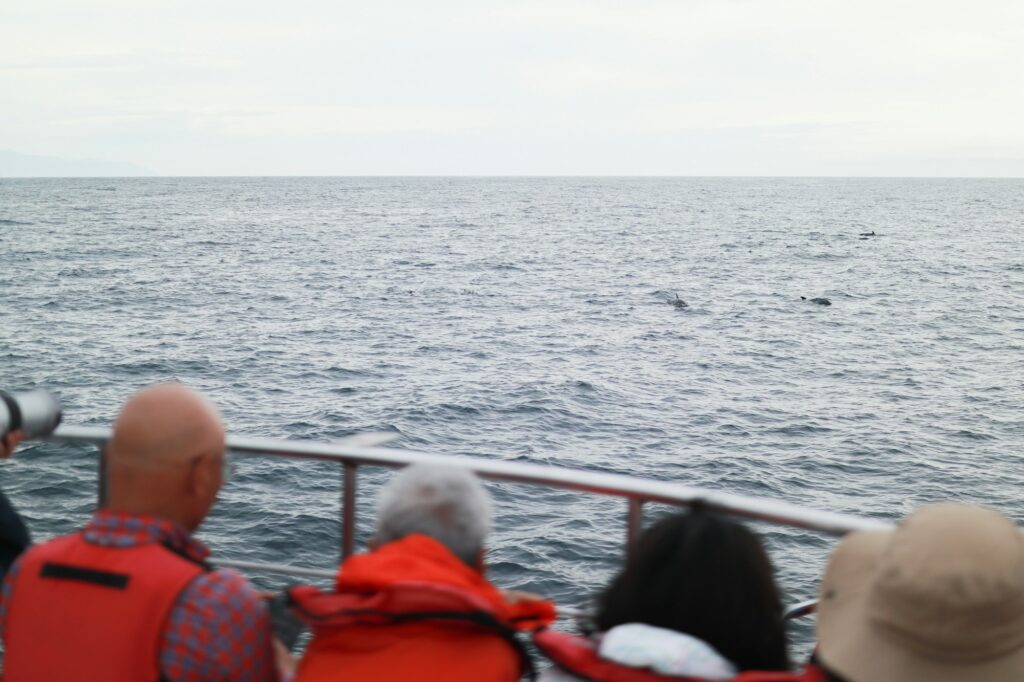
Aim for December to March to see blue whales off Mirissa. The Sri Lankan navy published a season running from 28 November 2022 to late April 2023. The operator Raja publishes a fare of LKR 20,000 per person aged 12 and over (updated 6 October 2026). No sighting is guaranteed.
Checked on against the official sources cited in the article: the Sri Lankan navy, operators, press coverage of the 2012 regulation, and a Viator check made the same day.
From December to March, the south coast of Sri Lanka has the calmest seas for watching blue whales. Mirissa is the port the boats leave from, but the animals are out at sea, and you have to search for them. A sighting is never guaranteed. This guide helps you choose the month, the boat and how much waiting you’re happy to do. The figures come from the Sri Lankan navy, a scientific study published in 2014, operators, and fares we checked in October 2026.
1. The boat trip, from 6 am to midday
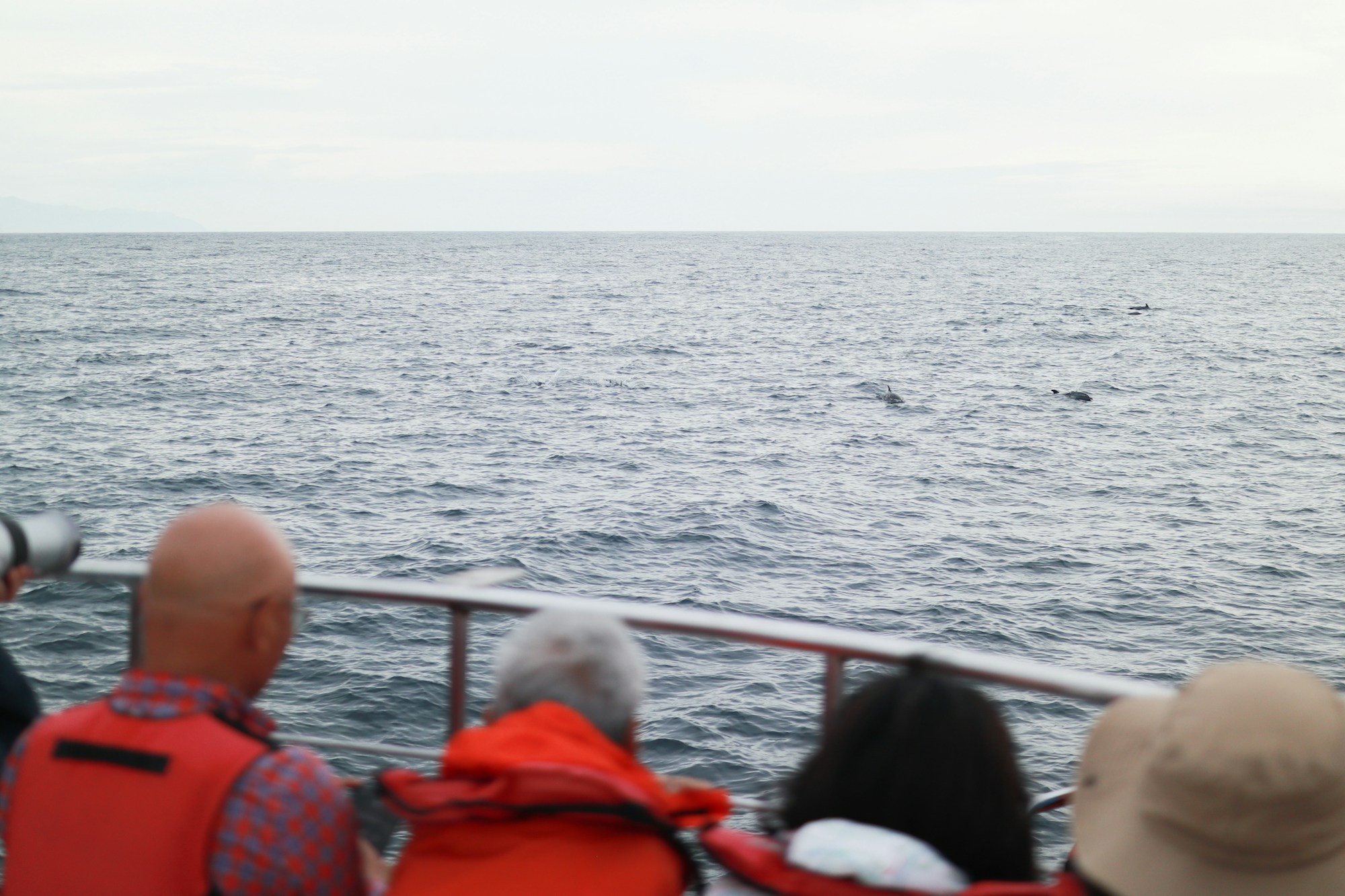
How a trip from Mirissa works
At the operator Raja, check-in is at 6:00 am in an office outside the port, for a 6:30 am departure from Mirissa harbour. According to Raja’s page, the trip lasts 2 to 8 hours at sea, 4 to 5 hours on average, and no fixed return time is guaranteed. PickYourTrail gives 3 to 5 hours and departures between 6 and 7 am, most often at 6:30. The account published by Carnet d’escapades (in French) describes about an hour and a half to reach the area, around two hours of watching and a return around midday. It’s a personal account, not a verified figure.
The point of observation is therefore not the harbour. The whales are out at sea, and each boat has to search for the animal before it gets close. The trip feels more like a half-day at sea than a short excursion. Bring sun protection and a warm layer for the start, before the sun climbs. No official list specifies the kit: these are method tips.
Key points
- An early start: you need to be at the operator’s office around 6:00 am.
- A half-day trip: 3 to 5 hours according to PickYourTrail, 2 to 8 hours according to Raja.
- Safety equipment required under the 2012 regulation, as reported by the press: life jackets and GPS on board.
Booking without the guesswork
There are three ways to book, each with different guarantees. With a local operator, ask for the annual licence, the make-up of the crew, what’s included and what happens when the sea is too rough. We did not verify refund terms for a trip without a sighting with any operator: don’t assume one. The Sri Lankan navy also runs trips, but they leave from Galle, not Mirissa. Its booking number is 0777-323050 (whalewatching.navy.lk). The 100-dollar fare the navy charged in 2012 is out of date, and we found no current fare for its trips. Finally, the trip in the card below can be booked online, with a standard cancellation policy checked on 19 October 2026.
2. When to go: December to March, with some margin
The official season and its edges
The Sri Lankan navy publishes the history of its observation seasons. It lists seasons opened as early as 6 October 2018 and in October 2017, and the 2022-2023 season ran from 28 November 2022 to late April 2023 (whalewatching.navy.lk, checked on 19 October 2026). Raja, for its part, places the main season from November to late April or early May. Popular guides therefore say November, which is a simplification: the season can start earlier and finish later.
Operators and guides agree on December to March. PickYourTrail describes January as the calmest part of the season, and says that from May to October the sea is rough enough for most operators to suspend trips. Raja does not run trips from Mirissa in May, June or July, and accepts departures from August to October, depending on the weather and bookings.
Key points
- December to March: the window that operators and the guides we read cite together.
- January: the month PickYourTrail presents as the calmest.
- November and April: the season is open, but Raja places it until late April or early May, and PickYourTrail notes that the monsoon strengthens late in the month.
| Period | What the sources say | Source status |
|---|---|---|
| October | Seasons opened as early as 6 October 2018 and in October 2017 | Sri Lankan navy, official archives |
| November to April | Navy season 2022-2023: 28 November 2022 to late April 2023; Raja’s general wording: November to late April or early May | Sri Lankan navy; Raja, page of 6 October 2026 |
| December to March | Calmest window, with January ahead | PickYourTrail, page of 1 September 2026 |
| May to July | No trips from Mirissa | Raja, page of 6 October 2026 |
| August to October | Trips possible depending on the weather and bookings | Raja, page of 6 October 2026 |
Source: Sri Lankan navy, Whale Watching, checked on 19 October 2026; operator and guide lines checked the same day.
Some sites publish success rates by month. PickYourTrail, for example, gives 85 to 90% for December, but with no published method or original source, and it says these figures help compare months without guaranteeing a sighting. Raja publishes no percentage at all. We therefore don’t repeat these ranges as statistics: they are a tour operator’s estimate, and should be read as one.
3. How much a trip costs
Published fares, dated and in rupees
The operator Raja publishes LKR 20,000 per person aged 12 and over, LKR 10,000 for ages 5 to 11, and free entry under 5, on a page updated on 6 October 2026. That page notes the fare is not tied to a chosen date. PickYourTrail gives LKR 8,000 to 15,000 per person on a shared boat, on a page dated 1 September 2026. The same text also gives LKR 10,000 to 16,000 for a standard trip: we flag the discrepancy rather than pick one version.
We give fares in rupees, not euros. The EUR/LKR rate in 2026 varies a lot between sources (about 357 LKR to the euro according to a mid-October quote, about 388 according to a June quote). An approximate conversion would suggest a precision that doesn’t exist. Convert at the day’s rate when you pay.
On Viator, the Whale Watching Mirissa trip with WWC (Whale Watching Club) was listed, as checked on 19 October 2026, at €99.62 for two adults departing 15 December 2026 at 6:00 am, or €49.81 per person. That check applies to this date and these two travellers. Across December 2026, the same check shows 20 open days out of 31. Prices can change from one day to the next.
Key points
- A published, dated operator fare in rupees, with no rough conversion.
- A reduced child fare at Raja, and free entry under 5.
- A Viator fare checked on 19 October 2026: €49.81 per person for two adults, departing 6:00 am on 15 December 2026.
| Source | Trip type | Fare | Updated |
|---|---|---|---|
| Raja (goasia.cc) | Operator trip, age 12 and over | LKR 20,000; LKR 10,000 for ages 5 to 11; free under 5 | 6 October 2026 |
| PickYourTrail | Shared boat | LKR 8,000 to 15,000 (the same text also gives LKR 10,000 to 16,000) | 1 September 2026 |
| Viator, Whale Watching Mirissa with WWC | Departure 15 December 2026 at 6:00 am, 2 adults | €99.62 in total, or €49.81 per person | Checked 19 October 2026 |
| Fairmoove.fr | General trip | €25 to €100 | Undated |
Source: Raja (goasia.cc), PickYourTrail, Fairmoove, checked on 19 October 2026; Viator prices checked the same day on the booking interface.
4. Getting there from Colombo, Galle or Matara
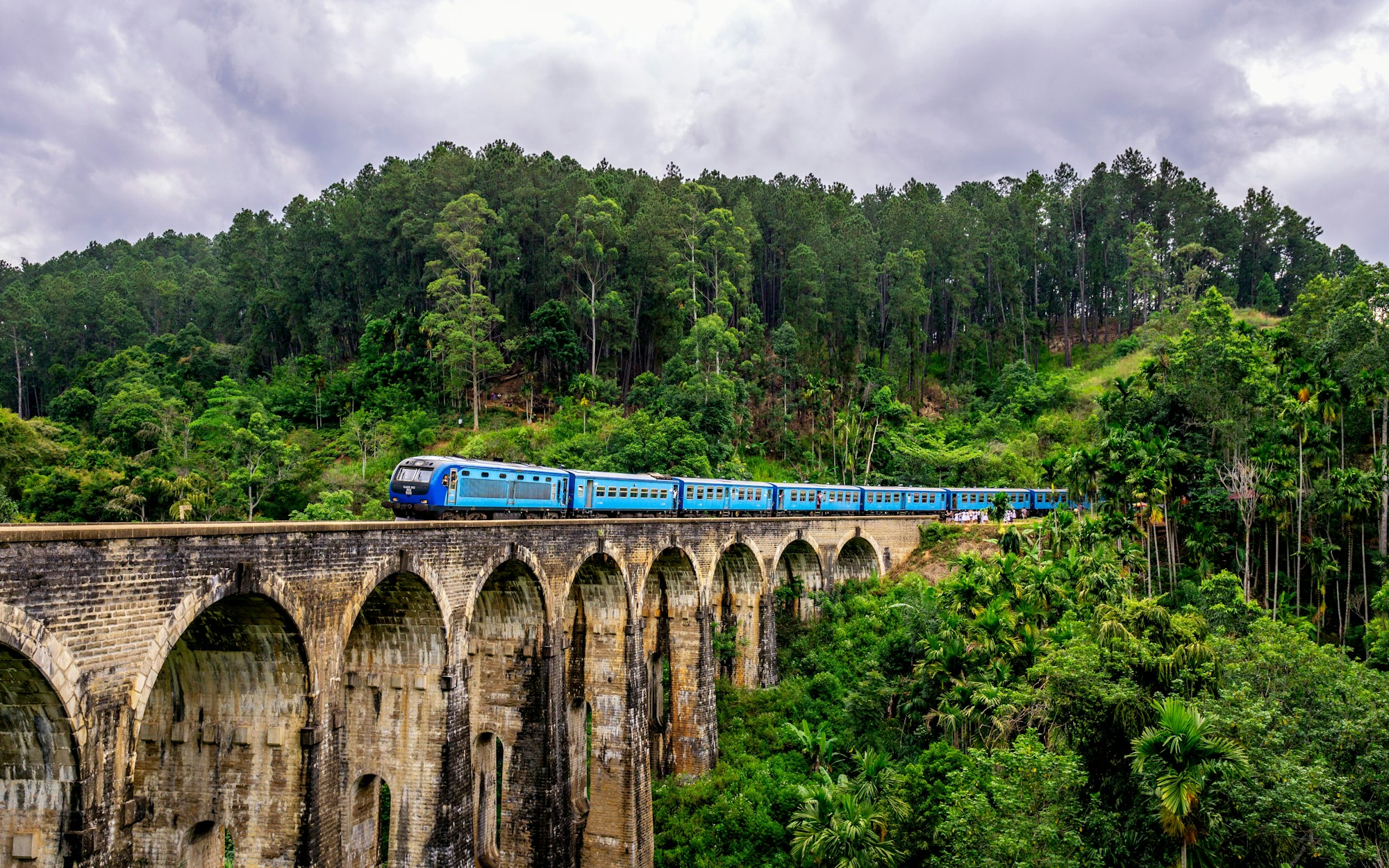
The train to Matara, then the road
One option from Colombo is the coastal line to Matara, then a tuk-tuk or taxi to Mirissa. The travel guide seat61.com, updated on 10 June 2026, says the Colombo-Galle-Matara line is running, with a journey of about 3 to 4 hours 20 minutes depending on the train. Second class unreserved costs LKR 600, third class LKR 300, and reserved first class LKR 1,400. Check these fares on railway.gov.lk before you travel, as timetables change. An express bus also links Matara and Colombo, for LKR 510 to 580 according to search-result extracts: to be confirmed.
From Galle, the trip to Mirissa takes 34 minutes to 1 hour by bus or tuk-tuk, according to an extract from Daytrip (page not opened). From Matara, allow 15 to 20 minutes by tuk-tuk, according to a blog. A private taxi from Colombo exists, but we did not find its fare on a dated source. If you stay in Galle, note that the Dondra viewpoint can be reached from Galle, Hikkaduwa and Mirissa, according to srilanka.travel.
If your itinerary goes through Ella, plan an alternative to the mountain route: the cyclone at the end of November 2025 badly disrupted the highland line. The details are further down.
Key points
- The coastal train links Colombo to Matara in about 3h to 4h20, for LKR 600 in unreserved 2nd class (seat61.com, 10 June 2026).
- The Colombo-Galle-Matara line is in service according to the June 2026 update, even though some lines have not fully recovered their service.
- Arrive in Mirissa the night before your trip.
| Route | Mode | Indicative duration | Indicative fare | Status |
|---|---|---|---|---|
| Colombo to Matara | Train, 2nd class unreserved | About 3h to 4h20 depending on the train | LKR 600 | seat61.com, 10 June 2026; check on railway.gov.lk |
| Colombo to Matara | Train, reserved 1st class | Same | LKR 1,400 | seat61.com, 10 June 2026; timetable to be checked |
| Colombo to Galle | Train, 2nd class unreserved | Not given in the source | LKR 500 | seat61.com, 10 June 2026 |
| Galle to Mirissa | Bus or tuk-tuk | 34 min to 1 h | Not priced | Daytrip, search-result extract (page not opened) |
| Matara to Mirissa | Tuk-tuk | 15 to 20 min | Not priced | Blog, search-result extract |
| Ella to Mirissa | Road | Not given | Not priced | Distance of 150 to 175 km according to the sources: to be confirmed |
Source: seat61.com, Sri Lanka, updated 10 June 2026; the other lines are indicative and were checked on 19 October 2026.
5. Watching without disturbing: what the rules say
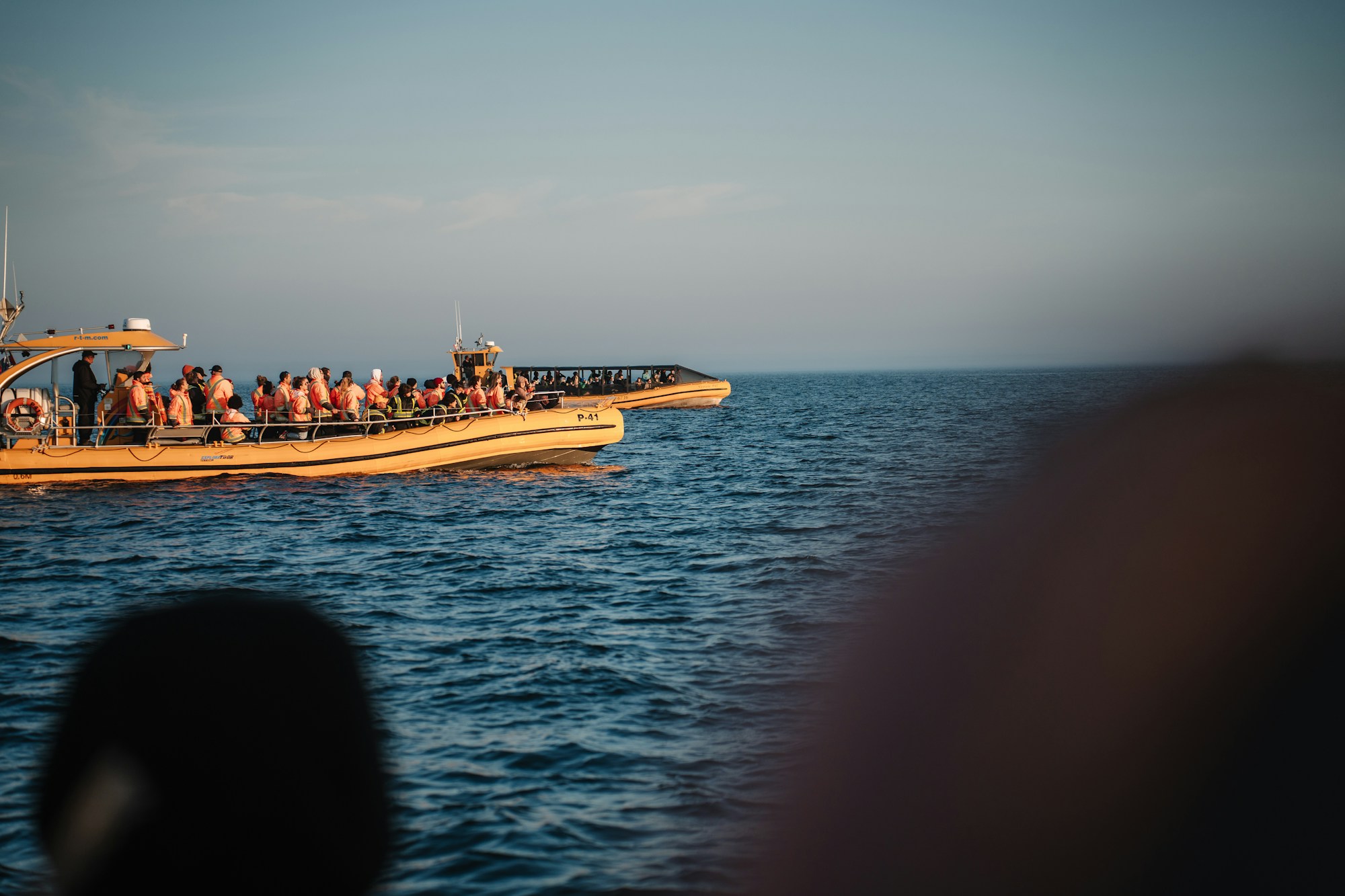
The 2012 distance rules and the questions to ask
Regulation No. 1 of 2012 on the observation of marine mammals was published in the gazette of 6 September 2012. The Ecolex record confirms that the text exists, but does not reproduce the distances. Those come from an article in the Sunday Times of 16 September 2012: the boat must slow down as soon as it spots an animal, stop at 400 metres, and cut its engine 100 metres from the whales. The same article sets 50 metres for other marine mammals.
One point remains open. A Mongabay commentary of 5 August 2020 cites another version: engine off at 1,000 metres, and never closer than 100 metres. We keep 100 metres here, the distance common to both sources. The regulation was amended in 2019 according to the Ecolex record, and we did not read the consolidated text: don’t cite these distances as the rule in force without reading it yourself.
On swimming, the position is clearer in practice than in the text. Raja recommends not swimming with, touching or feeding the animals, and Fairmoove says swimming is formally forbidden. The 2012 regulation, as reported by the press, does not mention any ban on swimming. Contact is therefore discouraged by operators and by common ethical practice, but the exact legal status is not settled in this review.
Key points
- A yearly licence of LKR 5,000, a guide, an operator and a deputy operator on board, according to the regulation as reported.
- Coastal oversight: the Rohana Coast Guard monitors operators, crews and tourists, according to srilanka.travel.
- Alcohol is banned on board, according to the same press article.
6. From May to October: the monsoon and the east coast
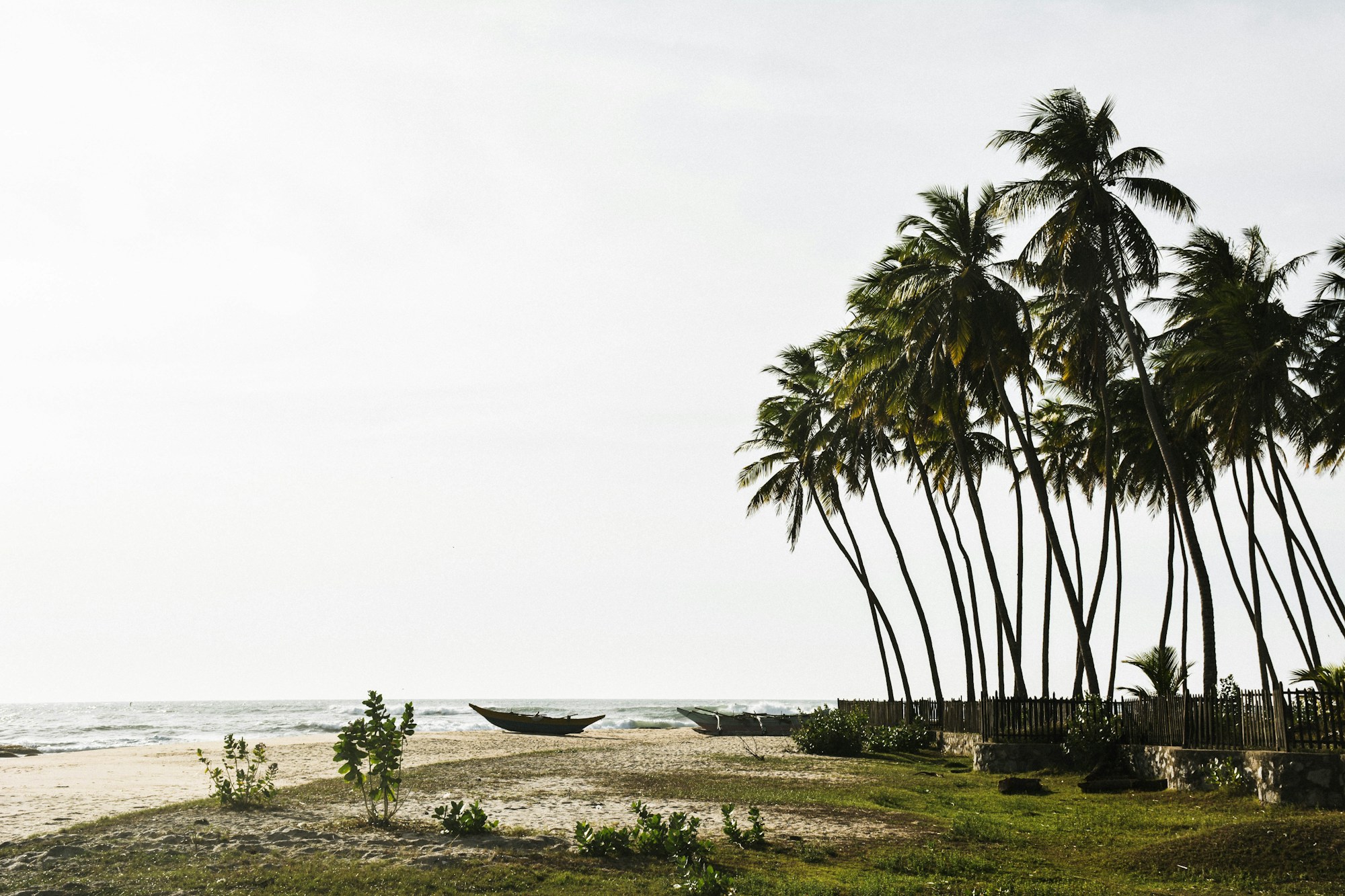
Off-season in the south, another coast in the east
Sri Lanka watches whales on two coasts that don’t overlap. On the south coast, trips leave from Mirissa or Galle. During the south-west monsoon, the sea is too rough for most operators to head out, according to PickYourTrail. Raja doesn’t run trips from May to July. If your stay falls in spring or early summer, the south coast is therefore not the right choice, and it’s better to pick another activity on site.
The sources we consulted place the east coast season, around Trincomalee, from May to September. That consensus doesn’t rest on an official source we read for this article: don’t plan a stay on that basis without confirming it with an east-coast operator. Treat it as an option to check, not a guarantee.
Key points
- The month you pick decides the coast. Choose the coast first, then the month.
- August to October can still offer a trip from Mirissa, if the weather and bookings allow.
What other guides don’t tell you
Three points are missing from the guides we read, or only vaguely covered. Each rests on an official source, a scientific publication or dated news, consulted on 19 October 2026. The distances in the 2012 rule are detailed in section 5.
- The legal observation window starts at 5:30 am, according to the 2012 press. The Sunday Times of 16 September 2012 reports that observation is allowed from 5:30 am to 7 pm. Guides talk about a 6:00 am start without citing that framework. The regulation was amended in 2019: we did not read the consolidated text, so this point still needs confirming.
- Shipping traffic poses a documented risk to blue whales. A 2014 study in the Journal of Cetacean Research and Management, published by the International Whaling Commission, describes an area of about 200 nautical miles crossed by a transit route. It reports four dead blue whales on the south coast between 1 January and 31 May 2014. It does not attribute these deaths to whale-watching tourism, but it shows that the animals’ safety also depends on the traffic in the area you visit.
- The cyclone hit the links to Ella, not the whole coast. Mongabay (24 December 2025) describes the Colombo-Kandy-Ella-Badulla line as badly disrupted, with repairs taking at least 18 months according to the deputy transport minister. Seat61 (updated 10 June 2026) says the Colombo-Galle-Matara line is in service, without saying that full service has been restored everywhere on the network.
7. Depending on your profile
The same trip doesn’t call for the same preparation depending on who’s travelling. Here are the points that change the most, based on the fares and rules above.
- First time. Sleep in Mirissa the night before. Departures are at 6:00 am, and a trip from Colombo the same morning leaves little margin if something goes wrong.
- Family with children. At Raja, children aged 5 to 11 pay LKR 10,000 and under-5s pay nothing. We only found this child fare at Raja: ask your operator for theirs before you book.
- Tight budget. The shared boat, quoted at LKR 8,000 to 15,000 by PickYourTrail, costs less than the Raja trip at LKR 20,000 per person. The coastal train from Colombo to Matara in unreserved 2nd class costs LKR 600. Always compare the price per person, with what’s included.
- Reduced mobility. We found no verified information on boat access for people with reduced mobility. Ask the operator before you book, and don’t assume.
- Ethically minded traveller. Ask the three questions in section 5, and turn down a boat that chases animals, even if the trip is cheaper.
Practical information before you go
Three things need sorting before you leave: entry requirements, staying connected on the road, and insurance. A free 30-day electronic travel authorisation (ETA) has existed for 40 nationalities since 25 May 2026, according to press extracts; we did not check the official list. Check your nationality on the Sri Lankan government’s website before you book.
To stay reachable between the Matara train station, the Mirissa harbour and your accommodation, without a local SIM card. Plans vary by length and data volume.
Plans by duration, see the siteFor health and cancellation surprises. Check before you leave that water activities are covered, since a trip at sea is not an ordinary activity. If you get seasick, talk to your doctor before you go.
Plans by duration and cover, see the siteFrequently asked questions
How much does a whale-watching trip from Mirissa cost?
The operator Raja publishes LKR 20,000 per person aged 12 and over, on a page updated on 6 October 2026. Shared boats cost LKR 8,000 to 15,000 according to PickYourTrail, on a page dated 1 September 2026. On Viator, the Mirissa trip with WWC was listed at €99.62 for two adults departing 15 December 2026, or €49.81 per person, as checked on 19 October 2026. Always compare the price per person, with what’s included.
When can you see blue whales off Mirissa?
Aim for December to March, which are the calmest months according to PickYourTrail and the operators. Operators place the main season from November to late April or early May. The Sri Lankan navy published a season from 28 November 2022 to late April 2023, and it also opened seasons as early as October in some years, in 2017 and 2018, according to its official history. From May to July, Raja runs no trips from Mirissa.
Is whale watching in Mirissa worth it?
Yes, if you accept the uncertainty. Raja publishes no success rate, and says departures depend on sea conditions. PickYourTrail shows monthly ranges, but with no original source. A trip lasts 2 to 8 hours according to Raja, and the animals are out at sea. The month and the boat matter, but they guarantee nothing.
Can you swim with blue whales at Mirissa?
No, according to the operators’ rules. Raja recommends not swimming with, touching or feeding the animals, and Fairmoove says swimming is formally forbidden. The 2012 regulation, as reported by the press, does not mention a ban on swimming, so the exact legal status still needs checking. In any case, common ethical practice discourages swimming near the animals.
Is there whale watching at Mirissa during the monsoon?
Trips from Mirissa are suspended from May to July according to Raja. From May to October, the sea is too rough for most operators to head out, according to PickYourTrail. August to October can still allow a trip, depending on the weather and bookings. The east coast, around Trincomalee, is another option, but its May to September season needs confirming with an operator.
Are trips cancelled in bad weather?
Yes, departures depend on sea conditions according to Raja, and a trip can be suspended that day. On the Viator trip in this article, the cancellation policy checked on 19 October 2026 is Viator’s standard policy. We don’t detail its deadlines, since they can change: read them on the listing before you pay. For a trip booked with a local operator, nothing has been verified: ask about the rule before you pay.
How can you be sure the boat respects the whales?
Ask for the operator’s name and its annual licence. The 2012 regulation, as reported by the press, requires a guide, an operator and a deputy operator on board, as well as life jackets and a GPS. It also sets distances: stop at 400 metres, engine off 100 metres from the whales. Finally, ask how the crew avoids chasing or surrounding the animals, as Raja recommends.
How do you get from Colombo to Mirissa?
The coastal train runs from Colombo to Matara in about 3h to 4h20 depending on the train, and unreserved 2nd class costs LKR 600, according to seat61.com. From Matara, a tuk-tuk or taxi reaches Mirissa in 15 to 20 minutes, according to a blog. Check timetables on railway.gov.lk before you leave, as the network was disrupted by the 2025 cyclone.
Sources
- Sri Lankan navy, Whale Watching: official history of observation seasons, booking
- srilanka.travel, whale watching: official tourism website, coastal oversight and access to Dondra Point
- Ecolex, record of Regulation No. 1 of 2012: confirms the text exists, gazette of 6 September 2012
- The Sunday Times Sri Lanka, 16 September 2012: distances, licence and crew under the regulation, as reported
- Mongabay, 5 August 2020: 1,000-metre version of the engine cut-off distance, and commentary on noise and visitor numbers
- Journal of Cetacean Research and Management, vol. 14 (IWC), 2014: blue whale sightings and collision risk
- Raja (goasia.cc): fares, departure times and months without trips, updated 6 October 2026
- PickYourTrail: shared-boat fares, season and sea conditions, updated 1 September 2026
- seat61.com, Sri Lanka: rail services and fares, updated 10 June 2026
- Mongabay, Cyclone Ditwah: impact on the links to Ella, 24 December 2025
- Fairmoove.fr, Mirissa whales (in French): guide, update date not visible
- Ann.fr, observing whales in Sri Lanka (in French): season, distance and warning against guaranteed sightings, 2 January 2025
- Carnet d’escapades (in French): account of a trip, updated 18 March 2024
- Daytrip, Galle to Mirissa transfer: search-result extract, page not opened
- Viator, availability and price check for the Whale Watching Mirissa with WWC trip, 19 October 2026 (departure 15 December 2026, 2 adults)
Sources consulted on 19 October 2026. Rupee fares have not been converted into euros. Viator prices are as checked on the date shown in the article.

Plan your trip with Pixidia
Pixidia learns how you travel and helps you build a trip that truly fits you and everyone coming along.
Open the planner