
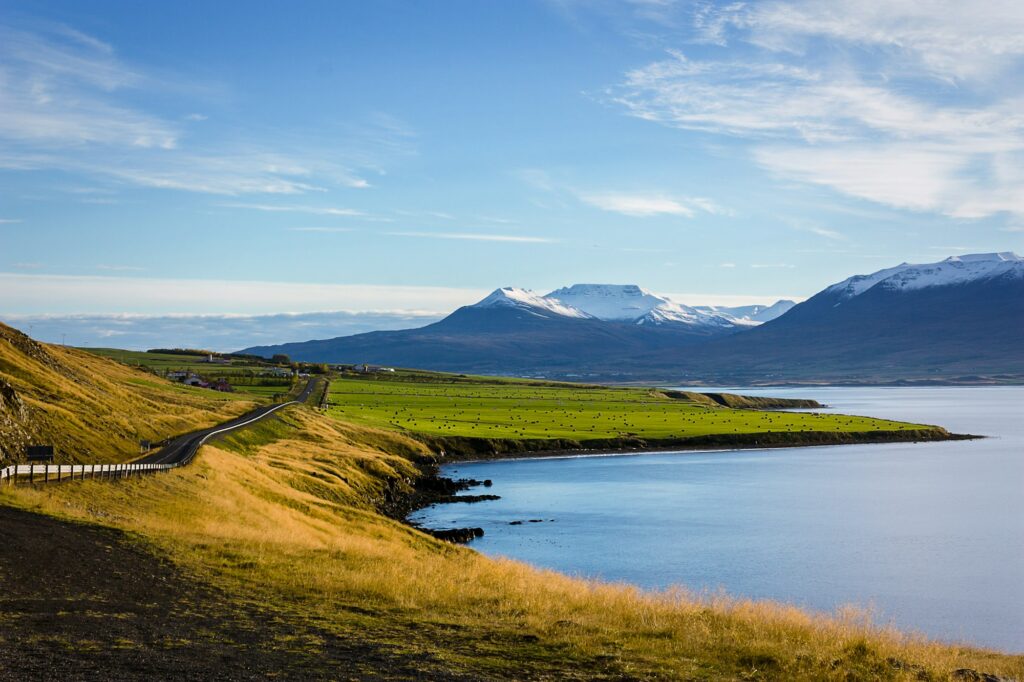
Coolcation is the defining travel trend of summer 2026: escaping the heat to destinations that stay under 25°C. Searches for cool-weather holidays have surged 74% in a year according to Trip.com, driven by a summer 2025 that proved brutal across Europe. Brittany, the Azores, Iceland, Norway and the Faroe Islands are among the ten best options — with flights from London to Scotland for pennies, ferry crossings to Brittany from Portsmouth, and return flights to Reykjavik from £58. Book now: accommodation around Iceland’s total solar eclipse on 12 August is already sold out.
Summer 2025 was Europe’s hottest on record — and summer 2026 is forecast to be warmer still. With temperature anomalies of +1°C to +2°C projected across the continent and Mediterranean resorts sweltering past 40°C, the question isn’t whether to seek cooler air — it’s where to find it. Enter the coolcation: a holiday to a destination that stays under 25°C all summer long. According to Open Jaw, searches for cool-weather destinations jumped 74% between April 2025 and April 2026. Travel and Tour World now ranks Iceland 4th and Norway 7th in its global coolcation index for 2026. Here are ten destinations chosen for their temperatures, accessibility from the UK, and value for the experience they deliver.
1. Brittany: the coolcation you can reach by ferry
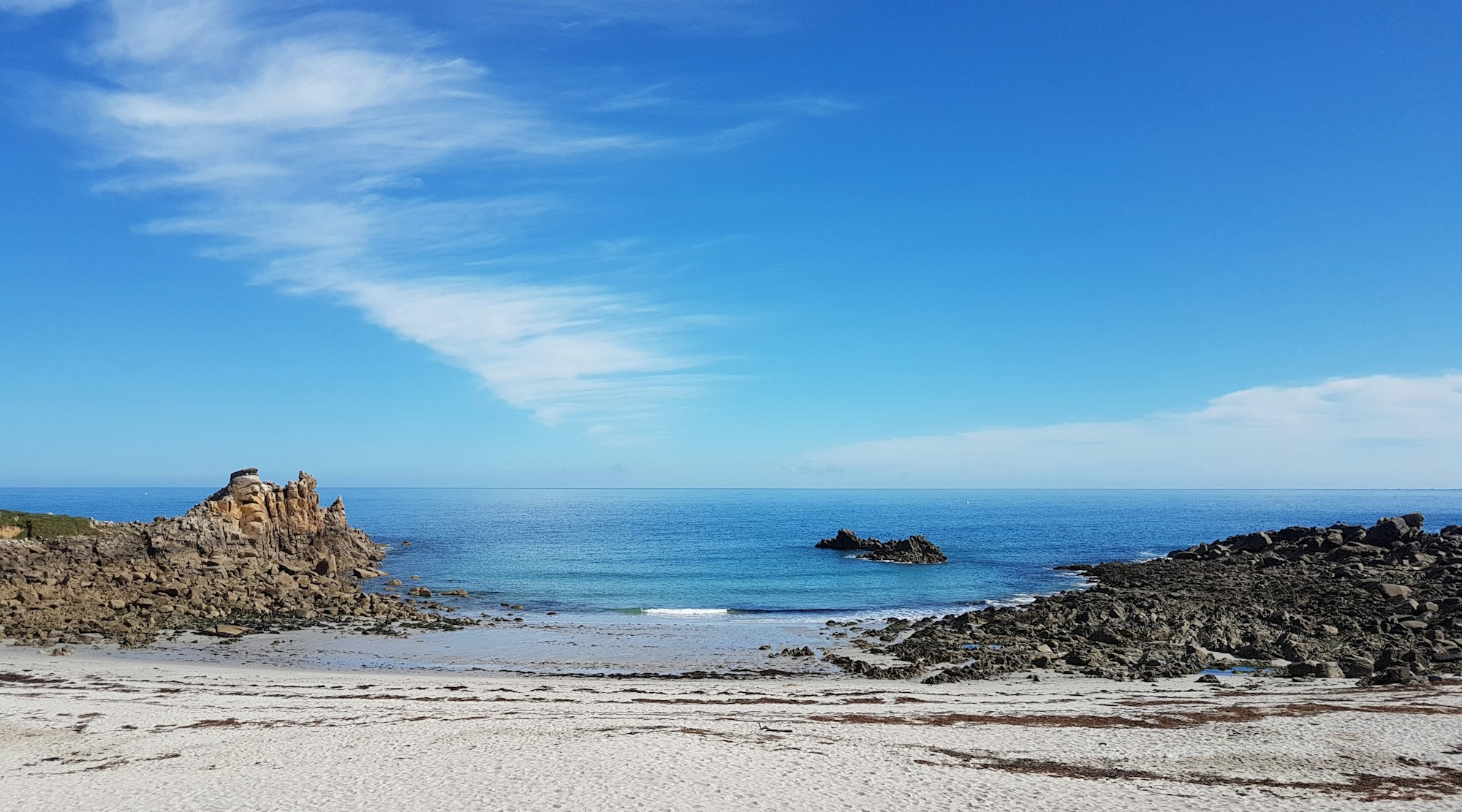
Brittany, France
Brittany has long been a favourite escape for British families — and in an era of European heatwaves, its Atlantic coast makes more sense than ever. Temperatures rarely top 23°C, sea breezes keep the air fresh, and Brittany Ferries sails from Portsmouth, Plymouth and Poole direct to Saint-Malo, Roscoff and Cherbourg. With 22.4 million overnight stays recorded between April and September 2025 — up 5.7% year on year (source: INSEE) — this is France’s number-one coolcation. The Gulf of Morbihan, in southern Brittany, sees sea temperatures reach 20°C in August — genuinely comfortable swimming without the scorching heat of the Med.
Highlights
- GR34 « Customs Officers’ Path »: 2,000 km of marked coastal trail, with NFC trail markers added in 2026 on the Pink Granite Coast
- Festival Interceltique de Lorient: 31 July – 9 August 2026 (55th edition, 750,000 spectators — Cornwall is the guest nation of honour)
- Food: Cancale oysters, buckwheat galettes, 7 new Michelin Bib Gourmand restaurants awarded in 2026
- Island life: Ouessant, Belle-Île and the Îles du Golfe — quieter and cooler than the mainland resorts
2. Azores: volcanoes, whales and natural lava pools
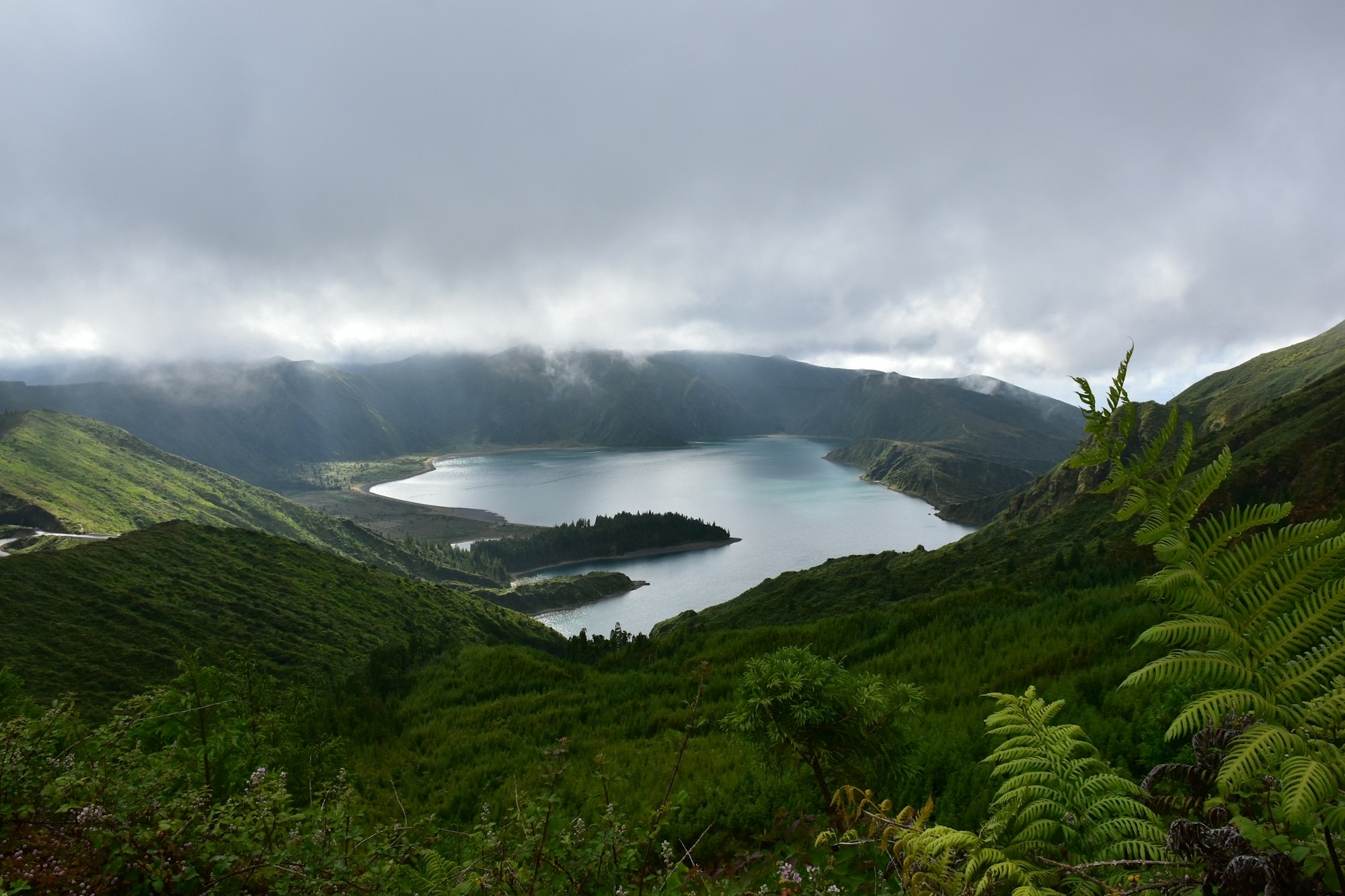
Azores (São Miguel)
The world’s first EarthCheck-certified Sustainable Destination (since 2019), the Azores offer a summer that never exceeds 25–26°C, with nights cooling to 18–20°C. Sea temperatures reach 21–22°C in July–August — perfect for the piscinas naturais, natural rock pools carved into black volcanic lava. According to Visitazores, 41% of the archipelago’s energy is renewable, 67% of that geothermal. Ryanair flies from London Stansted weekly; TAP Air Portugal and British Airways also serve the route with return fares from around £70 (Ryanair off-peak) rising to £200+ in peak summer.
Highlights
- Sete Cidades: 15 km volcanic caldera with two differently coloured lakes — a 12 km rim trail gives jaw-dropping views
- Cozido das Furnas: the only dish in the world cooked for 6 hours by an active volcano (served 11:30 am–12:30 pm)
- Whale watching: 27 cetacean species, certified tours from Ponta Delgada (~£65/person)
- UK passport holders need no visa — the Azores are Portuguese territory within the EU
3. Iceland: the total solar eclipse of 12 August 2026 (first in 593 years)
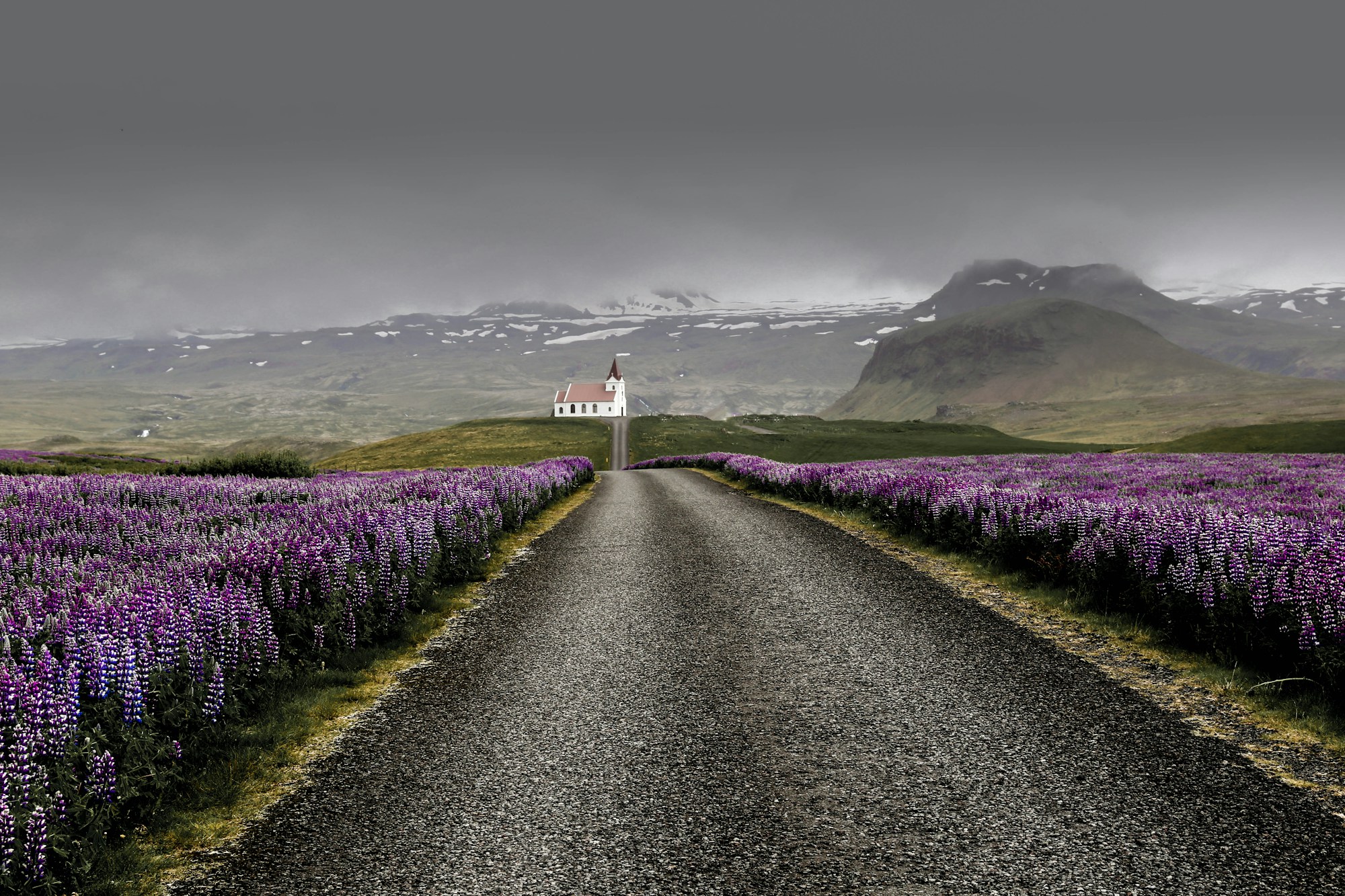
Iceland
On 12 August 2026 at 17:48 UTC, Reykjavik will experience the first total solar eclipse visible from the Icelandic capital in 593 years — the next won’t come until 2196. The path of totality crosses the Westfjords, Snæfellsnes and Reykjavik itself (around 1 minute; up to 2 min 18 s at Látrabjarg). According to Guide to Iceland, accommodation in the Westfjords is already sold out. Snæfellsnes remains an option — up to 2 min 7 s of totality at Hellissandur. easyJet flies London Luton–Reykjavik with return fares from £58; Icelandair flies from London Heathrow. UK passport holders travel visa-free for up to 90 days.
Highlights
- Golden Circle: Strokkur geyser (erupts every 5–10 minutes), Gullfoss waterfall, Þingvellir (UNESCO)
- Landmannalaugar: multicoloured rhyolite mountains, natural geothermal baths, start of the Laugavegur trek (55 km)
- Midnight sun until mid-July: visit the Blue Lagoon at midnight under golden skies
- 100% renewable electricity — Iceland ranks #4 in the TTW coolcation index 2026
4. Norway: electric fjords and iconic hikes
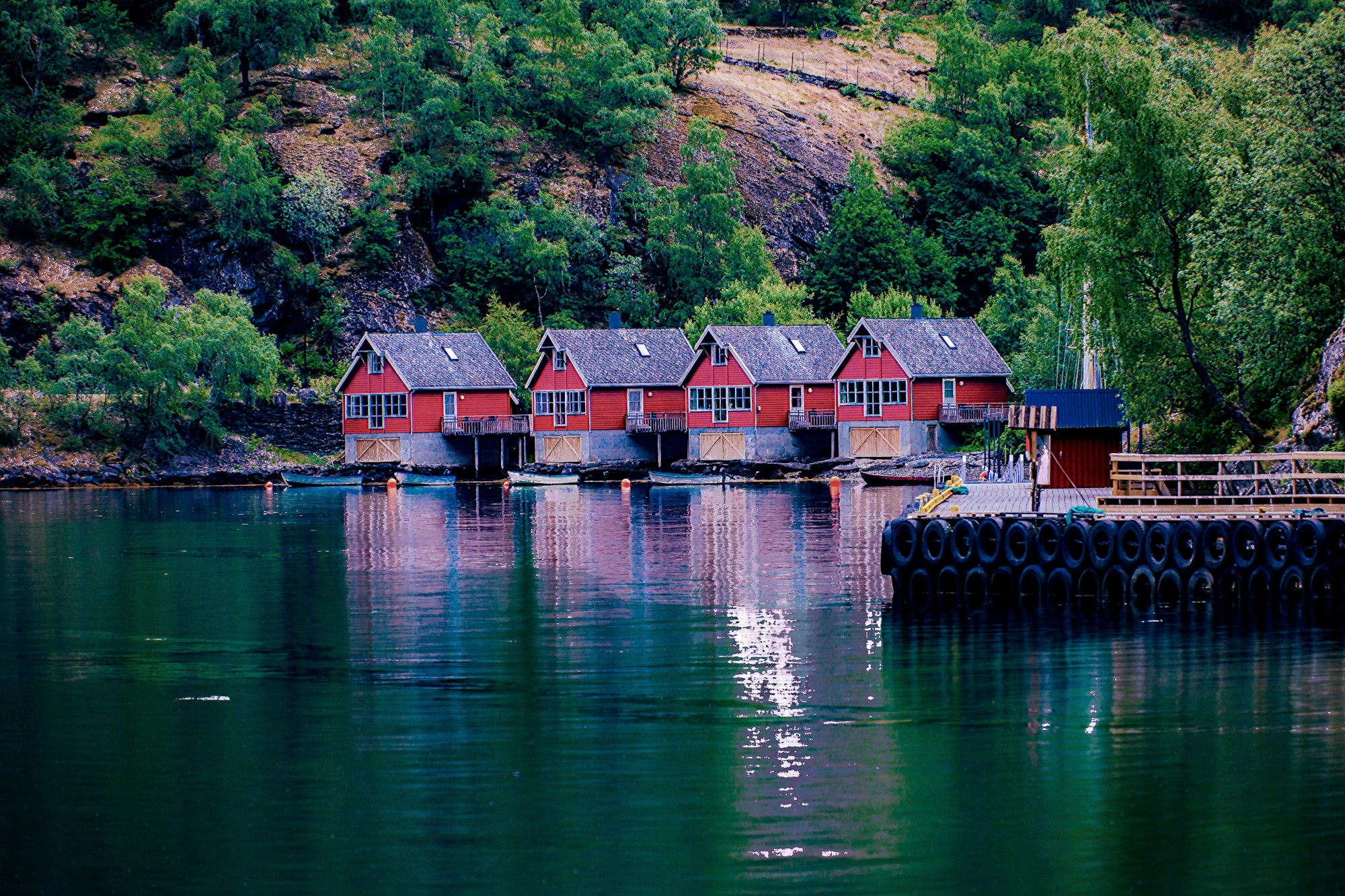
Norway (South-West Fjords)
Bookings to Norway have surged 131% since early 2026, according to Euronews (March 2026). The UNESCO-listed Nærøyfjord is now served by 100% electric ferries, and the Flåmsbana railway regularly tops lists of Europe’s most scenic train rides. easyJet flies London Luton–Bergen from £32 return; Norwegian Air also serves the route from Gatwick. Coastal fjords stay 15–22°C in July, with drier, warmer microclimates in the inner fjords (Sognefjord, Hardangerfjord) reaching 25–30°C in the valleys — still well below any Mediterranean heatwave. UK passport holders need no visa for stays up to 90 days.
Highlights
- Preikestolen (Pulpit Rock): 604 m cliff, moderate 8 km hike — set off before 7 am to beat the car park queues
- Bergen (UNESCO) and its Bryggen wharf: gateway to the fjords, fish market, Fløibanen funicular
- Allemannsretten (right to roam): hike and wild camp anywhere in Norway’s nature, more than 150 m from dwellings
- Lofoten: midnight sun from 28 May to 14 July — hike Ryten for views over Kvalvika, a NatGeo top-10 beach
5. Faroe Islands: wild North Atlantic — cliffs, puffins and solitude
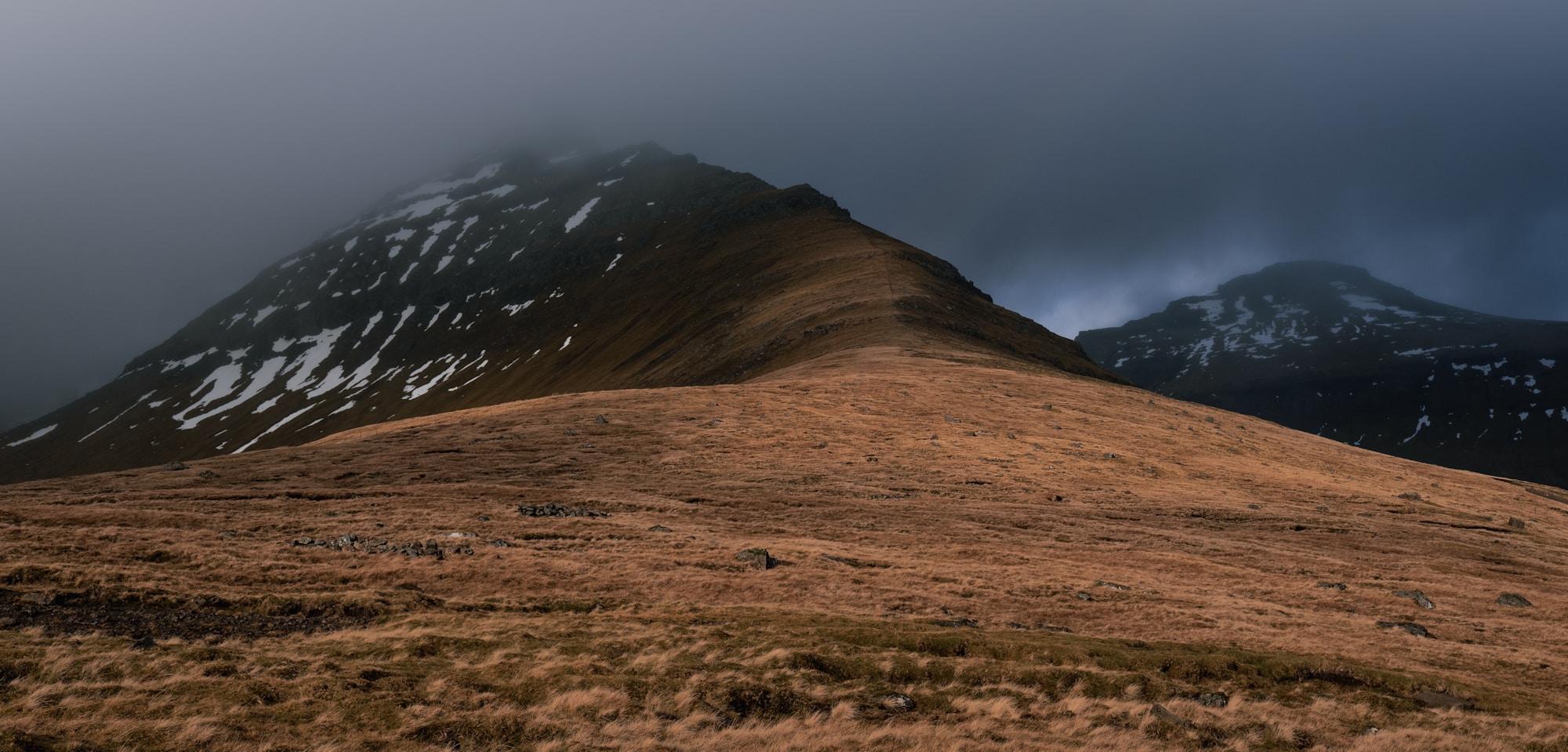
Faroe Islands
Eighteen islands, 53,000 people and 80,000 sheep: the Faroe Islands are one of Europe’s most singular destinations. Lake Sørvágsvatn (6 km long) creates an extraordinary optical illusion from the Trælanípan cliff — it appears to float 100 m above the Atlantic. On Mykines, Atlantic puffins nest right alongside the footpaths in June–July. According to Guide to Faroe Islands, the archipelago introduced mandatory booking for key sites in 2024 to protect the trails. UK passport holders can visit visa-free for up to 3 months — the Faroe Islands are outside the EU and outside Schengen, with their own entry rules.
Highlights
- Gásadalur and Múlafossur waterfall: a 30 m cascade dropping straight into the Atlantic — one of Europe’s most photographed spots
- KOKS (Tórshavn): the archipelago’s only 2-Michelin-star restaurant — a 17-course tasting menu drawing on Faroese larder
- Kirkjubøur: the Roykstovan farmhouse, inhabited for 900 years, and 12th-century St Magnus Cathedral
- 125+ marked hiking trails (58 easy, 49 moderate, 18 difficult)
6. Scotland: the Highlands and the Isle of Skye
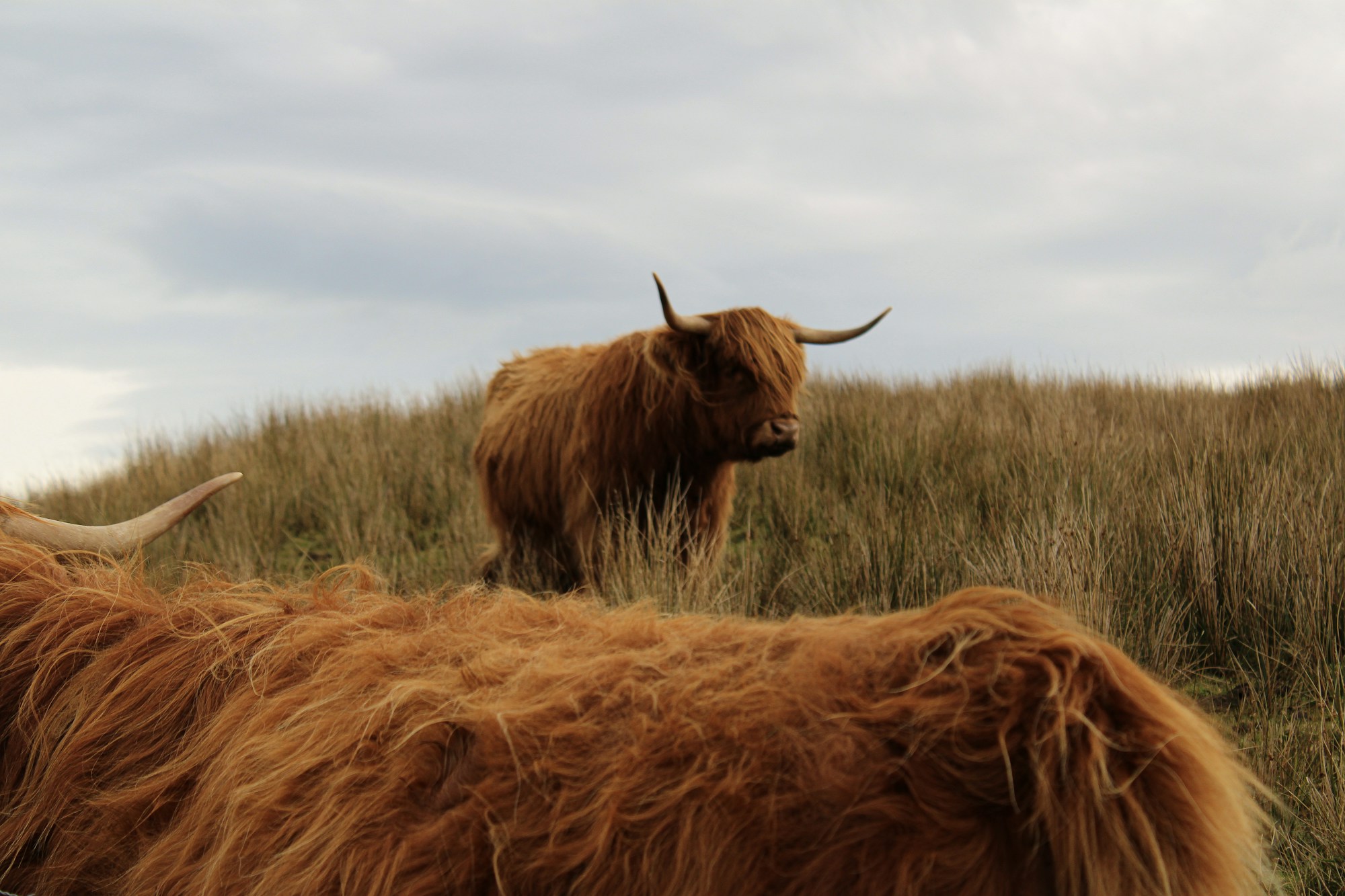
Scotland
For UK travellers, Scotland is the ultimate no-passport, no-faff coolcation. The Highlands average 13–19°C in July–August, with light evenings stretching to 10:30 pm. You can reach Edinburgh by train from London in around 4.5 hours (from £35 one-way on LNER). One major note for 2026: the Commonwealth Games are in Glasgow from 23 July to 2 August 2026, pushing up hotel prices across central Scotland during that window. If you’re visiting the Highlands and Skye, this has little impact — but avoid Glasgow city centre accommodation in that fortnight.
Highlights
- Isle of Skye: Old Man of Storr, Fairy Pools, Neist Point, Dunvegan Castle (home to a seal colony)
- Edinburgh International Festival (Fringe) and Royal Military Tattoo: August 2026 — 3,500 shows across the city
- 130+ distilleries: Speyside and Islay whisky trails, with distillery tours and tastings throughout summer
- Highland Games at 60+ gatherings May–September — including the Cowal Gathering (late August), the world’s largest
7. Finland: saunas, midnight sun and summer Lapland
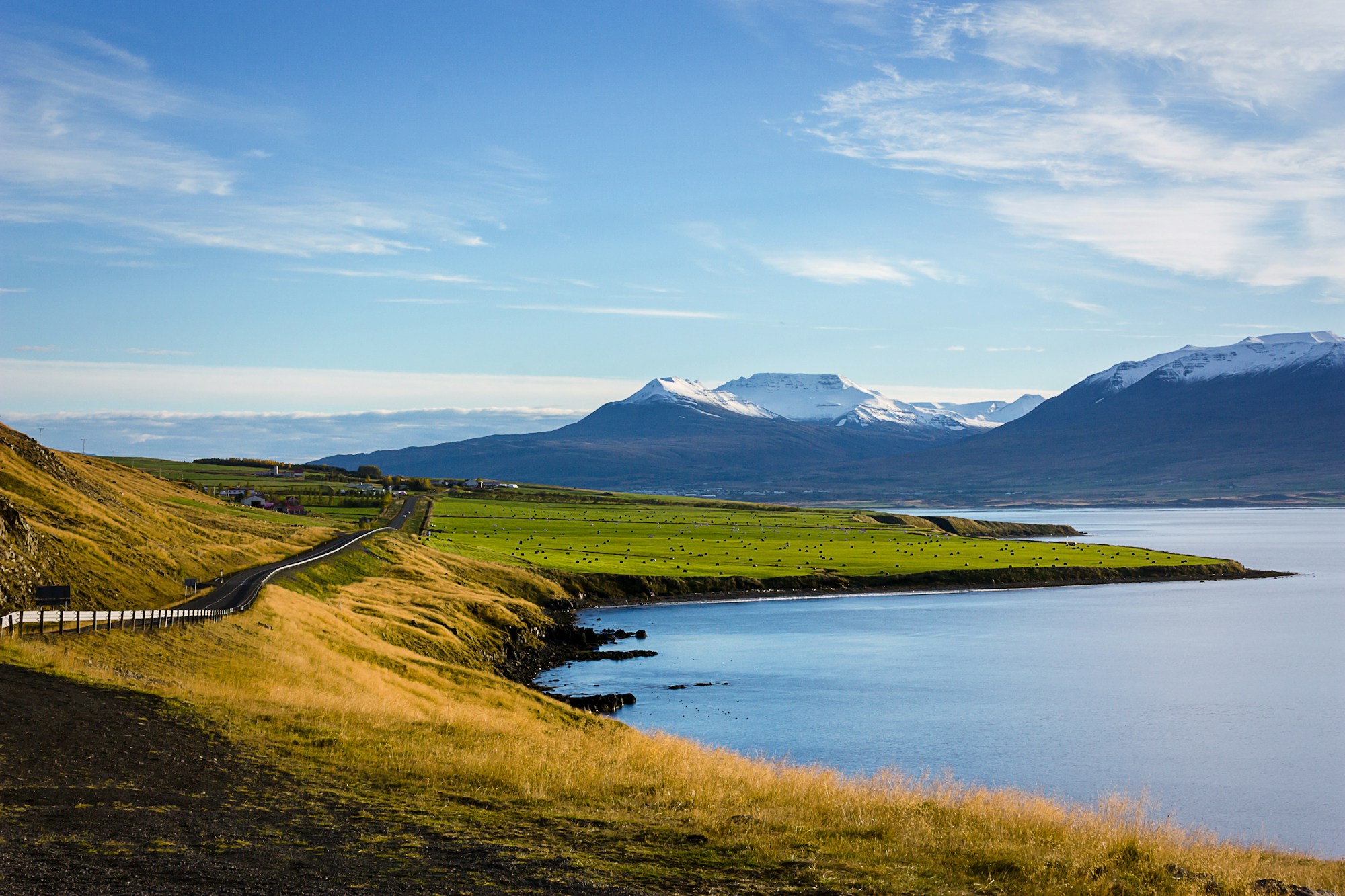
Finland
Finland broke its own tourism record with 7.2 million overnight stays in 2024 (+12% vs 2023), according to Visit Finland. The country’s summer selling point is the midnight sun — visible in Lapland from late May through early August, and unmissable at Rovaniemi. Summer is also the ideal season for kayaking on Lake Saimaa, visiting reindeer and husky farms (the summer puppies are irresistible) and immersing yourself in Finland’s most sacred ritual: the sauna. Every house has one, and the public saunas — including Helsinki’s Löyly, with its Baltic Sea terrace — are among the finest in the world.
Highlights
- Lapland: hiking in Urho Kekkonen National Park, kayaking, foraging for wild blueberries and raspberries
- Helsinki: Nordic design, extraordinary architecture, Löyly urban sauna with Baltic Sea views
- Lake Saimaa: Finland’s largest lake — swimming, kayaking and the chance to spot the ringed Saimaa seal
- Food: poronkäristys (sautéed reindeer), wild smoked salmon, Arctic cloudberries
8. Ireland: the Beara Peninsula — the world’s fastest-growing coolcation
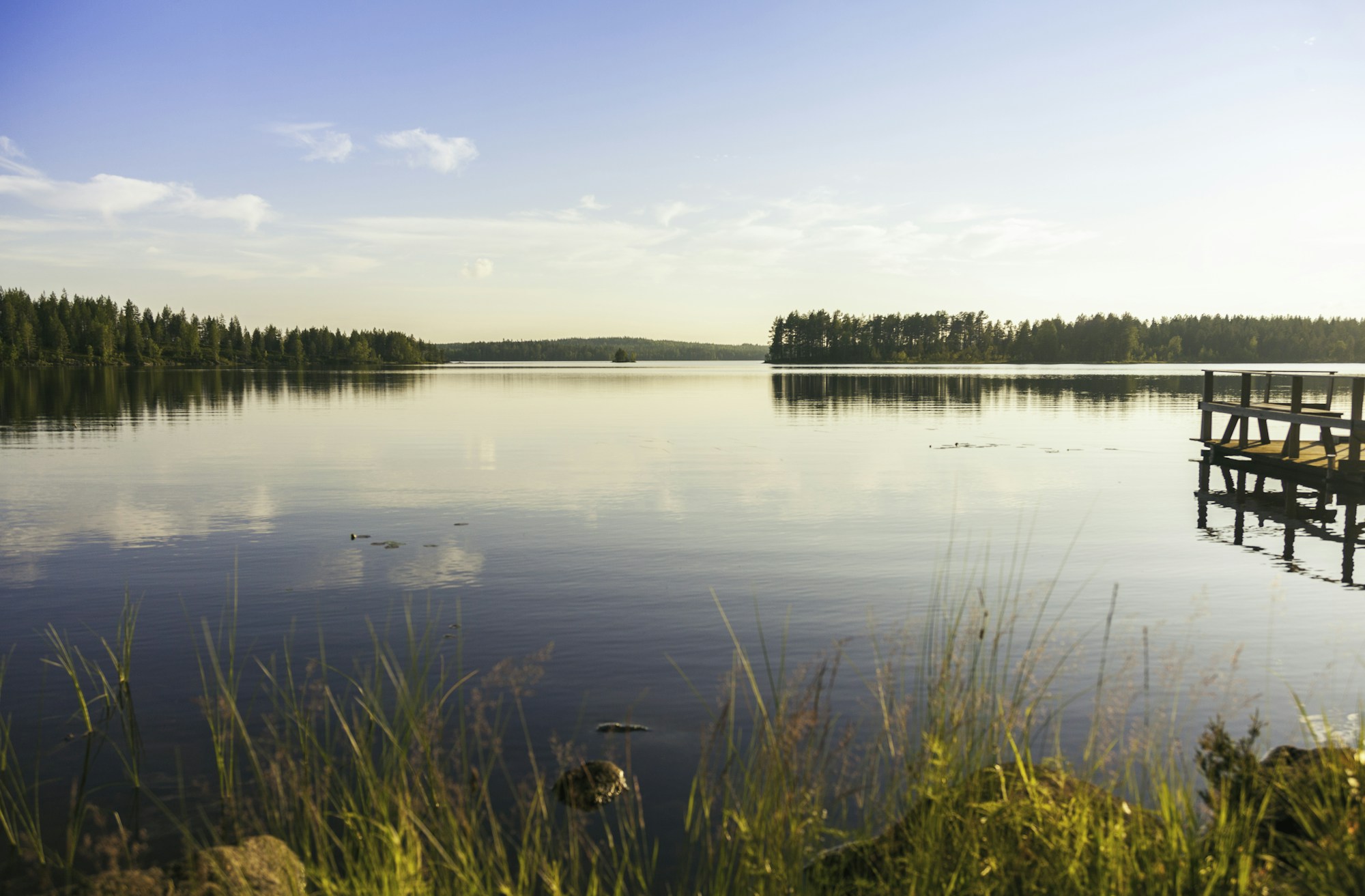
Ireland (Beara Peninsula)
The Beara Peninsula is the 3rd fastest-growing coolcation destination in the world in 2026, with searches up 23.11% year on year according to Irish Central. Similar to the Ring of Kerry but without the tour buses, the Ring of Beara offers a wild Atlantic coast flanked by the Caha and Slieve Miskish mountains, tiny fishing villages and temperatures that never exceed 18°C. For British travellers, Ireland is uniquely straightforward — no passport, no visa, no ETA required under the Common Travel Area. Ryanair and Aer Lingus fly London–Cork from around £40 return.
Highlights
- Ring of Beara: wild Atlantic scenery, fishing villages and sweeping ocean panoramas without Ring of Kerry crowds
- Common Travel Area: British citizens can enter Ireland without a passport — your driving licence suffices at the border
- Local pubs, stout on tap, traditional music sessions every evening — cultural immersion doesn’t get more authentic
- Quieter and cheaper than the Ring of Kerry next door — and equally spectacular
9. Gulf of Morbihan: warm(ish) sea, no plane required
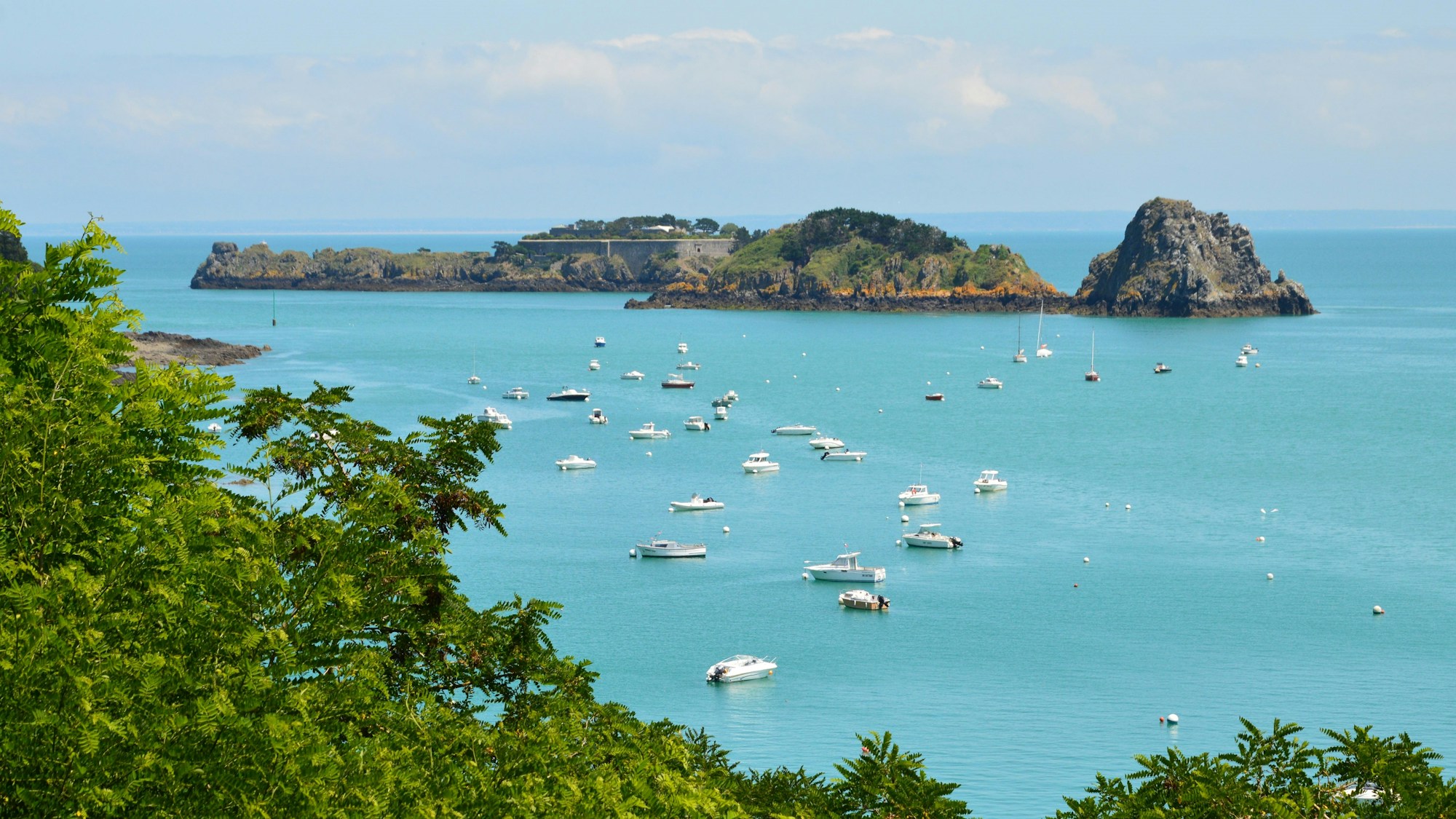
Gulf of Morbihan (Southern Brittany)
The Gulf of Morbihan is the only part of Brittany where the sea consistently exceeds 20°C in August — genuinely comfortable swimming, without the Mediterranean’s scorching air temperatures. With its 365 islands and islets, its sailing dinghies and kayak routes threading between the tidal channels, Morbihan delivers a coastal holiday of a different register entirely. The medieval walled town of Vannes deserves a half-day, and the Carnac Alignments — 3,000+ standing stones — lie just 20 km away. Reachable from Portsmouth via Brittany Ferries (Saint-Malo or Roscoff), then a 2-hour drive south.
Highlights
- Sea temperature 20°C in August: the only spot in Brittany for genuinely comfortable open-water swimming
- Kayak and sailing between the islands: Belle-Île, Groix, Île-aux-Moines and Île d’Arz all within reach
- Carnac Alignments: 3,000+ menhirs stretching over several kilometres — Europe’s largest megalithic site
- Low-carbon option: ferry to Brittany, then hire bikes or a sailing boat once you arrive
10. Iceland’s Interior: the Highlands and Landmannalaugar
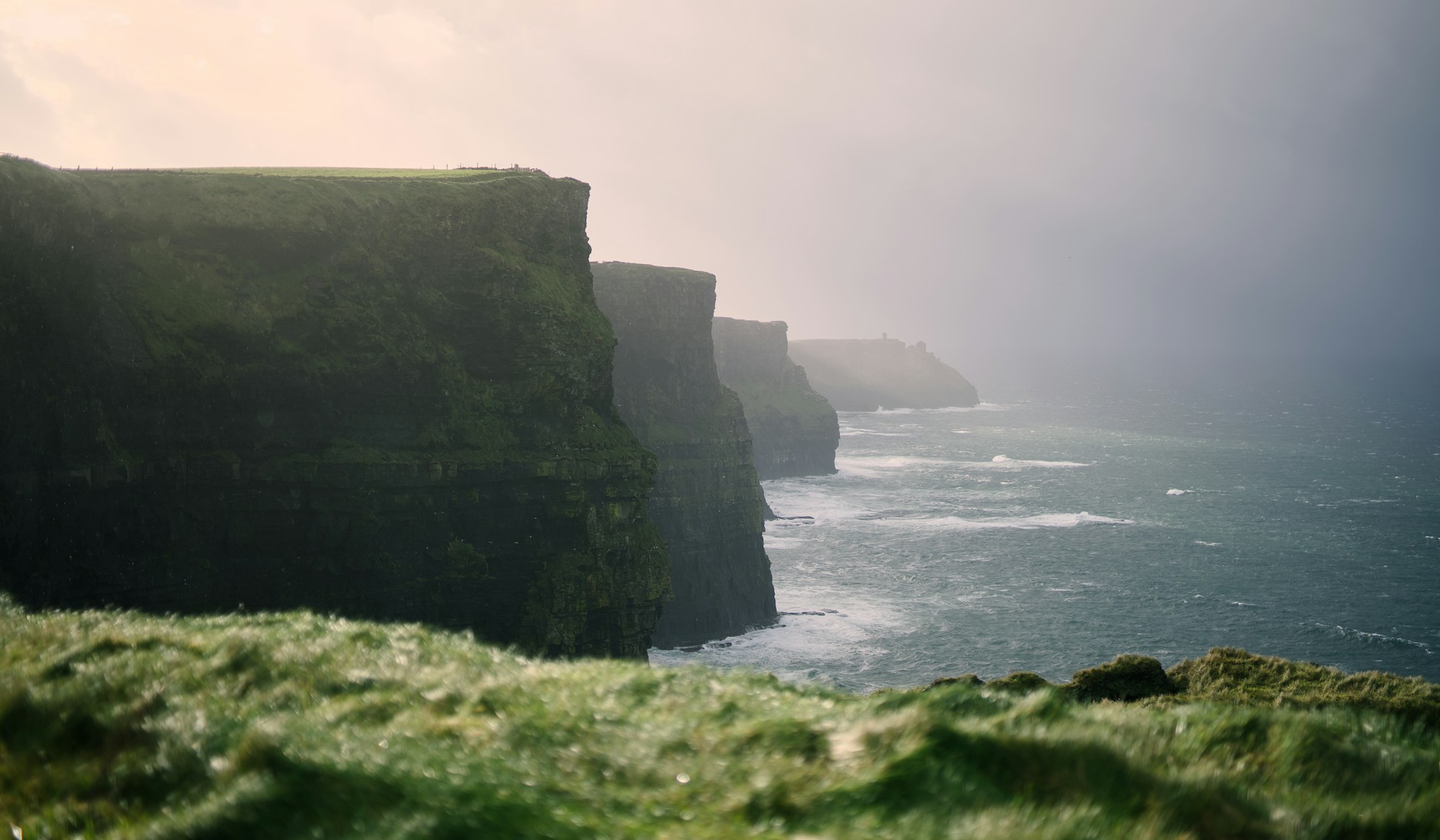
Iceland’s Interior: the Highlands
Landmannalaugar — red, yellow and green rhyolite mountains rising around natural geothermal baths at 38°C — is among Iceland’s most extraordinary experiences. National Geographic ranks the Laugavegur (55 km) among the world’s greatest treks; it links Landmannalaugar to Þórsmörk in 3–5 days. Access is via F-road (4WD required) from mid-June to 15 September. Thirty kilometres away, Kerlingarfjöll offers orange geothermal mountains, natural baths at 38°C and a campsite open from 10 June (around £13/night).
Highlights
- Rhyolite mountains in every colour: a volcanic landscape unlike anything else in Europe
- Landmannalaugar geothermal pools: free to use, walking distance from the campsite
- Lake Mývatn and Dettifoss: Europe’s most powerful waterfall, plus world-class birdwatching (13 duck species)
- Midnight sun below 65° latitude: hike at 11 pm under golden light
Practical tips for your 2026 coolcation
Instant data connectivity in Iceland, Norway, the Faroe Islands and beyond. From £4.50 for 1 GB — no physical SIM, no bill shock abroad.
From £4.50 / 1 GBHiking at altitude (Ben Nevis, Preikestolen), whale watching, diving in the Azores: cover your outdoor activities from day one. Nomad Insurance from $56/4 weeks — 10% off via our link.
From $56 / 4 weeksCoolcation summer 2026: your questions answered
What exactly is a coolcation?
A coolcation (cool + vacation) is a leisure trip to a destination that stays under 25°C throughout the summer months. The trend emerged in direct response to worsening European heatwaves: searches for cool-weather destinations jumped 74% in a single year according to Open Jaw, with Skyscanner and Expedia both reporting search increases of around 300% combined.
Is a coolcation actually more expensive than two weeks in the Algarve?
Not necessarily. Scotland and Ireland are entirely within reach on a budget — no flights needed from most of the UK, and accommodation costs are comparable to any British summer break. Brittany is a ferry ride away from Portsmouth or Plymouth. Only the Nordic destinations (Iceland, Norway, Faroe Islands) carry a genuine premium — roughly 30–60% more than southern Europe — but a week in Málaga in peak August can easily top £1,500 per person, a budget that covers Iceland comfortably. Source: Ulysse.
When should I book for Iceland, Norway or the Faroe Islands in summer 2026?
For Iceland around the eclipse on 12 August 2026, accommodation in the Westfjords and on Snæfellsnes is already sold out — book anything remaining in Reykjavik or the south immediately. For July and early August outside the eclipse corridor, book now. In the Faroe Islands, the Mykines ferry sells out weeks in advance; slot reservations for key sites also fill fast. Source: Guide to Iceland.
Can you swim comfortably in the Azores in summer?
Yes. Sea temperatures reach 21–22°C in July–August — warm enough for comfortable swimming without a wetsuit. The natural lava pools (piscinas naturais) offer sheltered bathing. Diving (visibility 20–40 m, water 21–22°C, 3 mm wetsuit sufficient) and snorkelling in the sea caves of Terceira rank among the archipelago’s finest experiences. Source: Visitazores.
Is volcanic activity in Iceland dangerous for tourists in 2026?
No. The recent eruptions on the Reykjanes Peninsula are effusive (lava flows) with no ash cloud affecting flights. Keflavik Airport is not at risk. Only the Sundhnúkagígar area is restricted — less than 1% of Iceland’s territory. Check conditions on safetravel.is before you travel. Source: Zigzag Voyages.
Do UK passport holders need a visa for Iceland, Norway or the Faroe Islands in 2026?
No visa is required. UK passport holders can visit Iceland and Norway visa-free for up to 90 days (both are part of the Schengen Area via the EEA). The Faroe Islands are outside the EU and outside Schengen, but UK citizens are also admitted visa-free for up to 3 months — you need a valid passport and proof of onward travel. Scotland and Ireland require no passport at all for British citizens under the Common Travel Area. Note that the EU’s ETIAS travel authorisation (for non-EU nationals) is expected later in 2026, but will not affect UK travellers to Iceland, Norway or the Faroes.
Is the solar eclipse in Iceland on 12 August 2026 worth travelling for?
Absolutely — if the sky is clear. Totality lasts around 1 minute in Reykjavik (17:48 UTC); for maximum duration (up to 2 min 18 s), head to the Westfjords or Snæfellsnes (2 min 7 s at Hellissandur). This is the first total solar eclipse visible from Reykjavik in 593 years; the next won’t come until 2196. Cloud cover on 12 August is historically 70–80% — your best bet for clear skies is Snæfellsnes. A dedicated eclipse festival runs 12–15 August (3,333 attendees, mixing astronomy, music and art). Source: Guide to Iceland.
Sources
- Open Jaw: Coolcations heat up, searches +74% (April 2026)
- Travel and Tour World / PR Newswire: Top 50 Coolcation Destinations 2026
- Euronews: Norway bookings +131%, Iceland +128% (March 2026)
- INSEE Flash Bretagne: Summer tourism season 2025 near-record figures
- Festival Interceltique de Lorient: 2026 programme (31 July – 9 August)
- Guide to Iceland: 2026 Solar Eclipse in Iceland (complete guide)
- Icelandair UK: Iceland 2026 solar eclipse — facts and travel tips
- Visitazores: The Azores — world’s first EarthCheck Sustainable Destination
- Irish Central: Beara Peninsula — 3rd fastest-growing coolcation globally
- Guide to Faroe Islands: Visa and entry requirements (UK citizens)
- Visit Scotland: Commonwealth Games Glasgow 2026 — 23 July to 2 August
- Brittany Ferries: 2026 sailings — Portsmouth, Plymouth and Poole routes
- Ulysse: 8 cool destinations for a 2026 coolcation
- easyJet: Cheap flights to Reykjavik from London
- Visit Finland: Finland tourism records 2024
Research completed 3 June 2026. Verify booking conditions directly with providers, especially for Iceland eclipse-period dates.
Ready to build your 2026 coolcation?
Tell Pixi what temperatures you can handle, your budget and your travel style — and it’ll help you find which of these ten destinations fits you best.
Build my personalised itinerary