
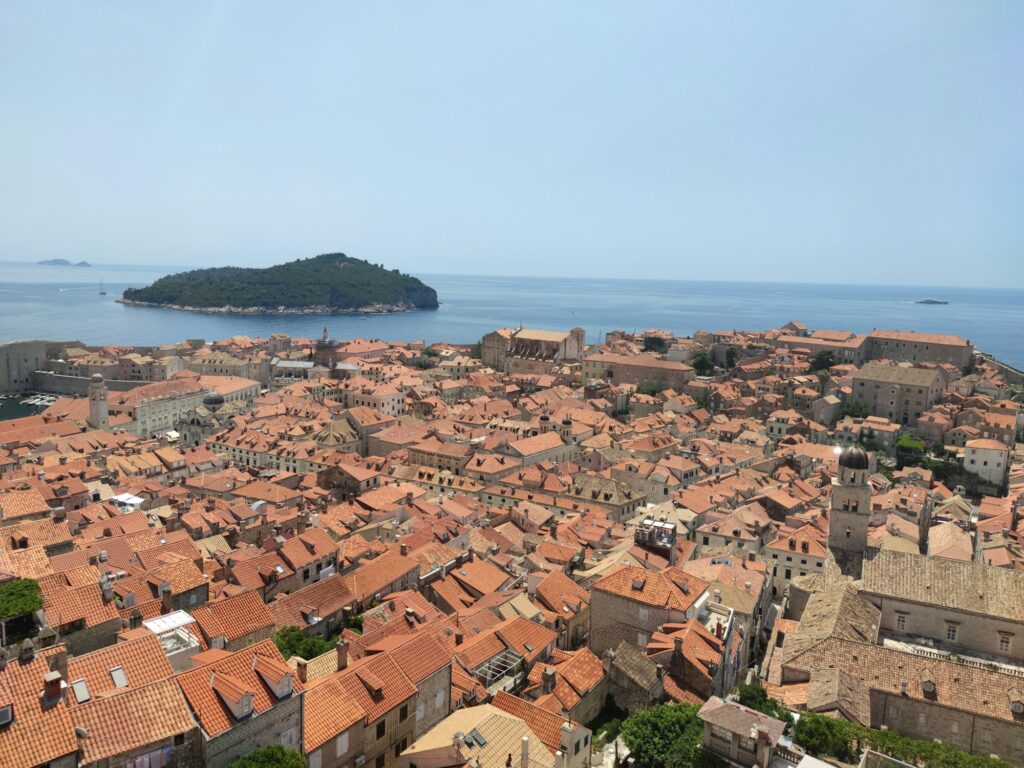
Dubrovnik, Split, Hvar, Vis, Korčula… The Croatian Dalmatian coast is one of the most beautiful in Europe, yet no one really tells you how to enjoy it without fighting your way through crowds of tourists. This guide builds a 14-day coastal itinerary between Split and Dubrovnik — with secret islands, anti-crowd tips and real 2026 prices for smart Adriatic travel.
The ideal coastal itinerary: from Split to Dubrovnik in 2 weeks
The classic itinerary starts from Split and heads south through the islands of Šolta, Vis, Hvar, Korčula and Mljet to reach Dubrovnik. According to Curiously Conscious, Croatia has over 1,000 islands, 48 of which are inhabited — for two weeks, visiting three to four islands is realistic, with ferry crossings ranging from 25 minutes (Split–Šolta) to 2h30 (Split–Vis).
The 14-day breakdown
| Days | Destination | Transport |
|---|---|---|
| D1–D3 | Split (Diocletian’s Palace, Trogir day trip) | Flight + taxi |
| D4 | Šolta (day trip) | Ferry (25 min) |
| D5–D6 | Vis (Komiža, Blue Cave, Stiniva) | Ferry (2h30) |
| D7–D8 | Hvar (old town, coves, lavender) | Ferry from Vis (1h) |
| D9 | Korčula (medieval old town, Pošip wines) | Ferry (1h) |
| D10 | Mljet (National Park, saltwater lakes) | Ferry (30–40 min) |
| D11 | Pelješac Peninsula (oysters, Dingač wine) | Car / excursion |
| D12 | Elaphiti Islands (Lopud, Šipan) | Ferry from Dubrovnik |
| D13–D14 | Dubrovnik (city walls, Lokrum, Bar Buža) | Catamaran or ferry |
1. Split — The Palace City, gateway to Dalmatia

Diocletian’s Palace — A city within a city
In the Croatian coastal city of Split, visitors often ask: « Where is Diocletian’s Palace? » And shopkeepers laugh and reply: « You’re in it! » That is the magic of Split: this Adriatic coast palace, over 1,700 years old, is not a lifeless ruin — it is the beating heart of the historic centre. More than 3,000 people live and work there today, within a UNESCO World Heritage Site listed in 1979. According to Sand in My Suitcase, its huge walls enclose a 10-acre labyrinth of temple ruins, apartments, museums, hotels, markets, cafés and even an ancient cathedral.
The Palace has four gates named after metals: the Bronze Gate (south), opening directly onto the Riva promenade; the Golden Gate (north), the most grandiose, flanked by statues; the Silver Gate (east) leading to the green market; and the Iron Gate (west), busy with cafés and shops. Entry is free and accessible 24/7, according to US News Travel.
Highlights
- Diocletian’s Palace: free entry, exceptional at night
- Peristyle: klapa singers (Croatian a cappella) in the evenings
- Day trip to Trogir (30 min by bus)
- Riva promenade at sunset
2. Šolta — The secret island 25 minutes from Split
Just 25 minutes by ferry from Split, Šolta (pronounced « sholta ») is an island that rushed tourists systematically overlook — and that is its main asset. According to Inspired by Croatia, this 19-km island is famous for its centuries-old olive trees, deep blue bays and olive oil tradition.
The island community made a conscious decision to limit mass tourism development, preserving landscapes that look much as they did centuries ago. On Šolta, visit a family beekeeping farm like Tvrdić Honey — the island is renowned for its exceptional honey. One of the best excursions is a tour of the blue lagoon and the Kontesa wreck, so shallow you can stand on some sections.
3. Vis — The timeless island, highly recommended
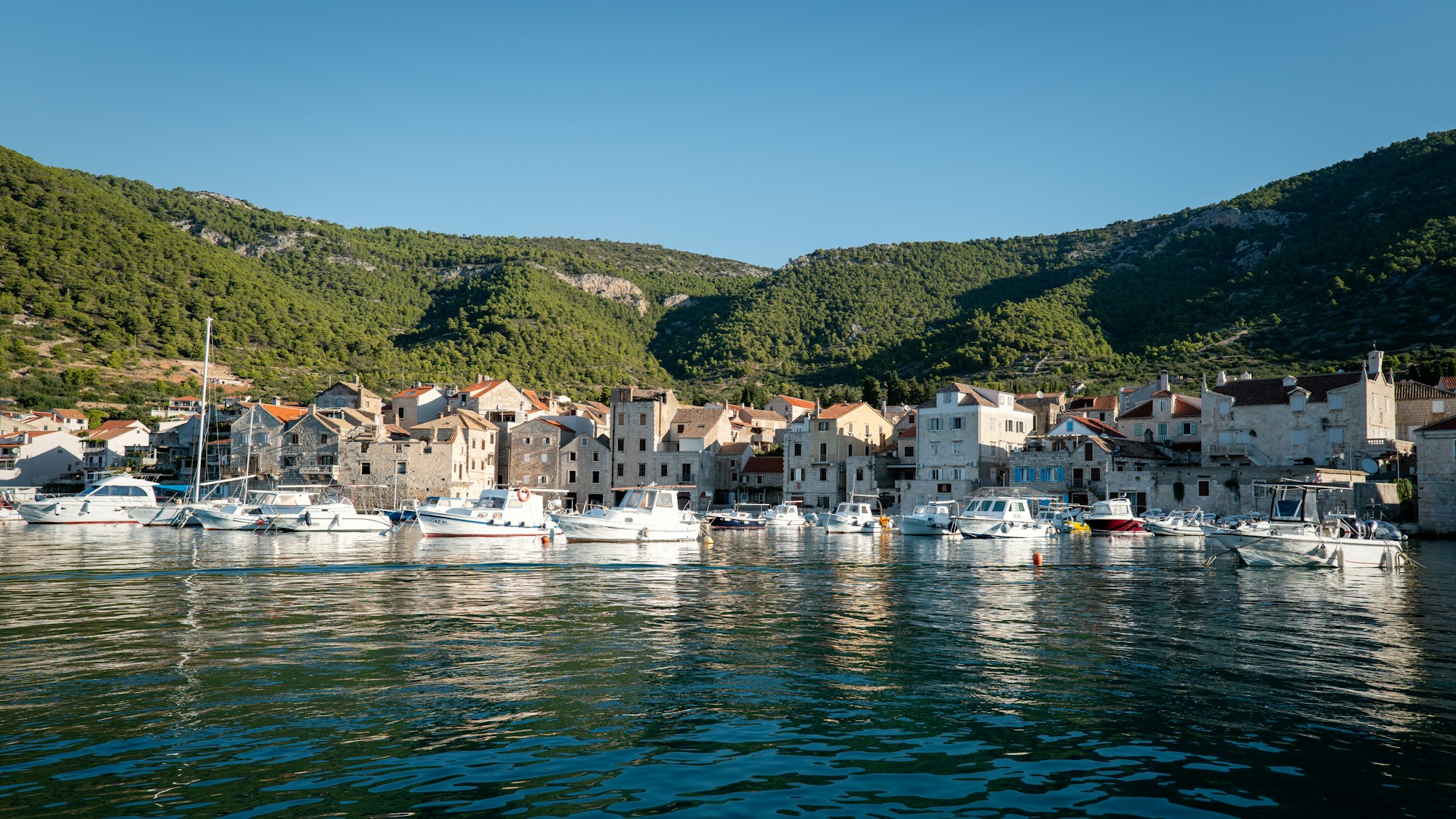
Komiža & Stiniva — Absolute authenticity
The case of Vis is unique among Croatian islands: a former Yugoslav military base, Vis was effectively closed to visitors until 1991, giving it an authenticity found nowhere else. According to World Travel Eye, while islands like Hvar and Korčula had developed massive tourist infrastructure in the 1960s–1980s, Vis remained unchanged. Traditional stone houses were not replaced by concrete hotels. Family vineyards still dominate the landscape. Small fishing boats outnumber yachts.
Today, Vis deliberately maintains this character: no large chain hotels, no cruise ship ports. The population is around 3,500 permanent residents — tiny compared to other islands. The Blue Cave of Biševo, off the coast of Vis, is one of the most spectacular natural phenomena in Croatia. According to Life and Ventures, Stiniva beach is ranked among the most beautiful in the world, surrounded by tall cliffs, accessible only by boat or via a steep hiking trail.
Highlights
- Blue Cave of Biševo: an unforgettable natural phenomenon
- Stiniva beach: one of the most beautiful in Croatia
- Vugava white wine: endemic grape variety unique in the world
- Yugoslav military submarine bunker (guided tours)
- Komiža: fishing village where time stood still
4. Hvar — The glamorous island with secret coves
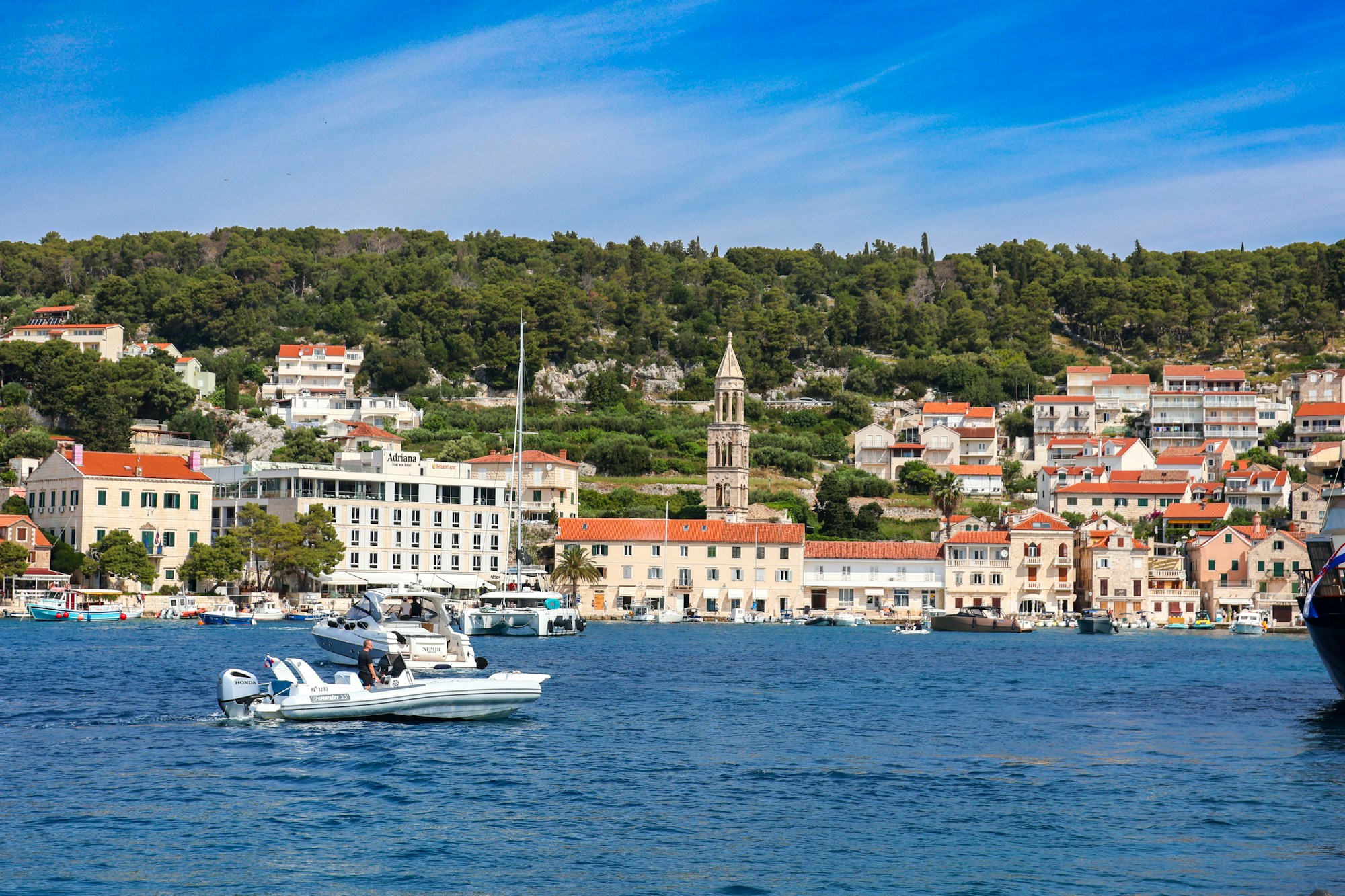
Hvar Town — Beyond the glamorous veneer
Hvar is more glamorous, with award-winning restaurants, chic beach clubs and a vibrant nightlife. According to Curiously Conscious, it is the Croatian island that attracts luxury yachts, celebrities and international party-goers. Yet beneath this veneer lies an island of genuine historical richness: the old town of Hvar, with its Renaissance square and Spanish fortress, is one of the finest in Dalmatia.
The lavender fields that carpet the island’s interior are in bloom in June and constitute one of the most iconic images of Croatia. To reach Hvar from Split without a vehicle, budget €6 by fast boat (1h, foot passengers only), according to EnCroatie.com.
Highlights
- Renaissance main square — one of the finest in Dalmatia
- Spanish fortress Tvrdalj: panoramic view over the archipelago
- Water taxi to Palmižana (secret coves)
- Lavender fields (June) in the island interior by scooter
5. Korčula — The medieval city of Marco Polo
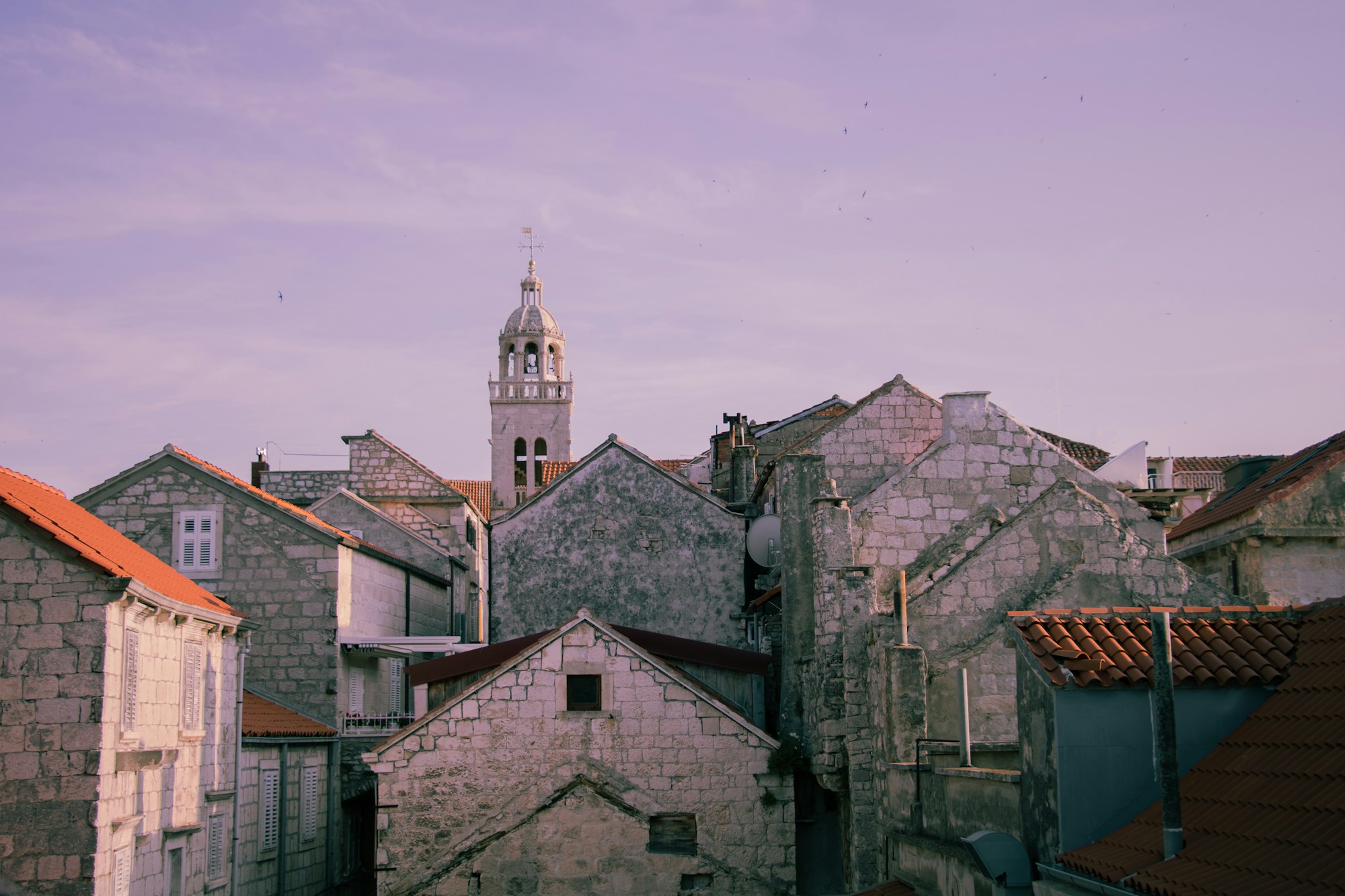
Korčula — Mini-Dubrovnik without the crowds
Korčula is steeped in history — being the supposed birthplace of Marco Polo. Its old town, enclosed by Venetian ramparts, stands on a peninsula above the Adriatic, recalling a mini-Dubrovnik without tourist hordes. Its streets are arranged in a herringbone pattern — a medieval layout that allows free air circulation while protecting against strong winds.
Korčula is renowned for its indigenous white wines, notably Pošip and Grk, produced from grape varieties that grow nowhere else in the world. According to Ferryhopper, the island welcomes you with its beaches, enticing white wines, extra-virgin olive oil and chivalric sword dances. The Moreška, a traditional sword dance, is performed in Korčula several times a week during high season.
Highlights
- Medieval old town with Venetian ramparts
- Moreška sword dance: authentic performance several times/week
- Pošip and Grk wines: grape varieties unique in the world
- Quick day trip to Mljet (30–40 min ferry)
6. Mljet — The island of two lakes and Ulysses’ Cave
With its single main road, two saltwater lakes and a national park covering half the island, Mljet is a uniquely singular destination in Dalmatia. It claims the title of Croatia’s greenest island thanks to its lush Mediterranean vegetation. According to Inspired by Croatia, you can explore the trails on foot or by bicycle, or board a small boat that takes you to a tiny island in the centre of one of the lakes, where a 12th-century monastery awaits.
Mljet National Park is, surprisingly, one of the least-known places to visit in Croatia. Visiting Ulysses’ Cave is one of the most adventurous activities on the island — legend has it that Ulysses himself spent seven years there. Before leaving Mljet, taste the local specialities: wine and goat’s cheese. For one of the best sunsets in all of Croatia, head to Pomena.
7. Pelješac Peninsula — Wines, oysters and forgotten ramparts
The Pelješac Peninsula, home to the towns of Orebić, Trpanj and Ston, is famous for its wines — particularly the Plavac Mali grape — as well as its oysters. According to Visit Croatia, this 65-km peninsula is Croatia’s second largest, after Istria. Mali Ston Bay is a unique shellfish farm across the entire Adriatic — the only place in Europe where the European oyster (Ostrea edulis) has survived, according to Dubrovnik Premium Wine Tours.
Pelješac is home to two of Croatia’s most celebrated wines: Dingač and Postup. Ston is famous for its imposing medieval walls (rivalling those of Dubrovnik) — spending a day walking the walls then savouring a lunch of oysters with a glass of local wine is a memorable experience.
8. Elaphiti Islands — The anti-Dubrovnik archipelago
The Elaphiti Islands are a small archipelago off the coast near Dubrovnik, and one of the easiest excursions from the city. The archipelago comprises 13 islands and islets, only three of which are permanently inhabited: Koločep, Lopud and Šipan. According to Absolute Croatia, the adult passenger fare from Dubrovnik is €5.40 one way in high season (€10.80 return).
For beaches and swimming: Lopud — with Šunj beach, one of the largest sandy beaches near Dubrovnik. For peace and authenticity: Šipan — the largest island, almost car-free. On Šipan, the BOWA restaurant is a must-visit, described as a « Robinson Crusoe » escape, accessible only by boat, according to Frank About Croatia.
9. Dubrovnik — The Pearl of the Adriatic (anti-crowd guide)
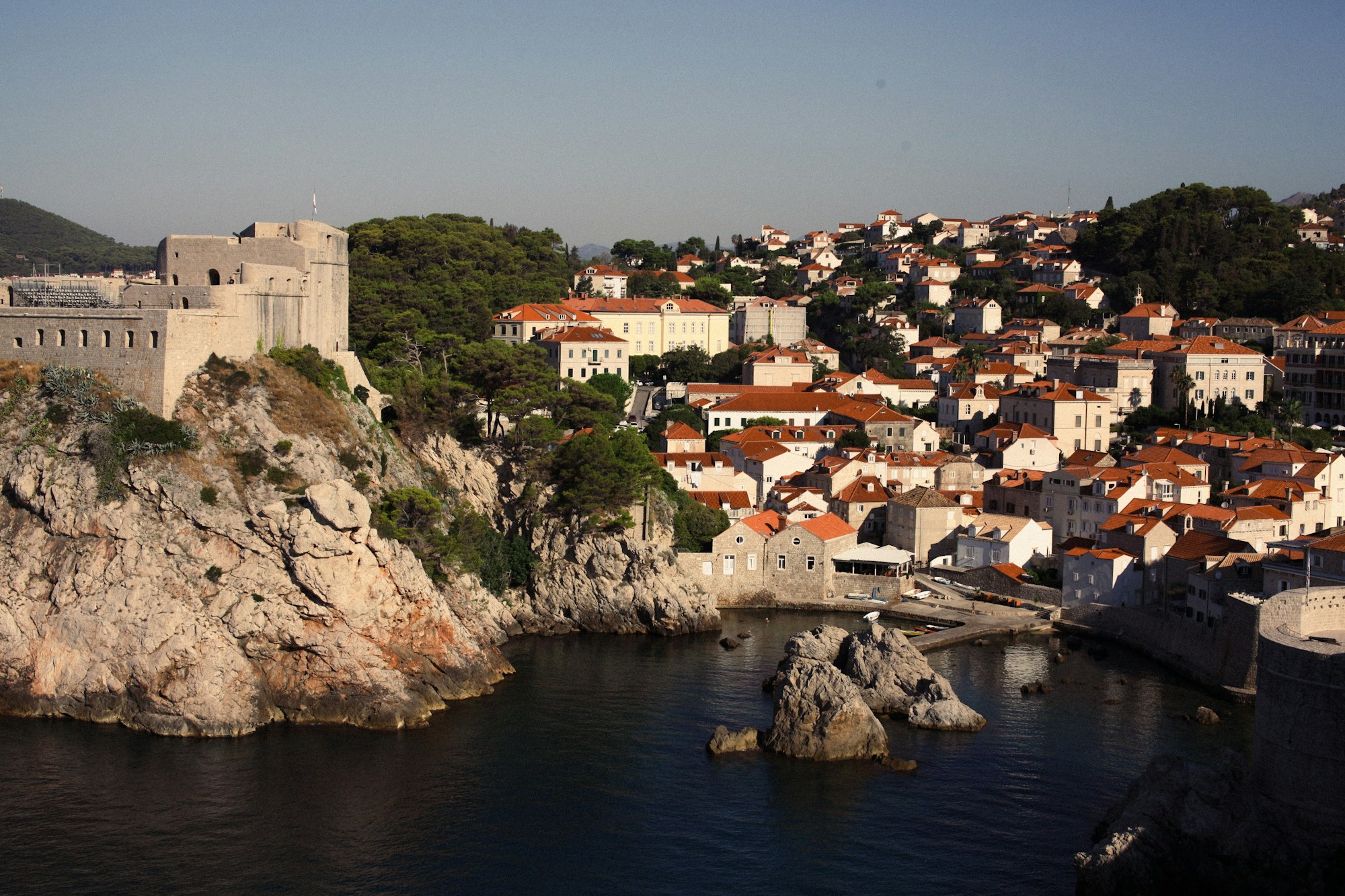
Dubrovnik — Pearl of the Adriatic, visit strategically
According to data from the Dubrovnik Tourist Board, the city recorded over 1.35 million visitors in 2024 — 12.5% more than in 2019 — with a ratio of 32 tourists for every permanent resident. Dubrovnik is objectively one of the most overcrowded destinations in the world, but also one of the most beautiful. Surrounded by some of the best-preserved medieval walls in the world, this city, once a fully autonomous republic, is protected by UNESCO.
Under an agreement with UNESCO, only 4,000 cruise passengers can enter the Old Town at once, and ships may only dock two at a time. Entry and exit signs have been installed at the Pile Gate to improve tourist flow, according to Dispatches Europe.
Anti-overtourism strategies for 2026
- Visit in April–May or October–November (crowds four times smaller)
- Walk the walls after 3pm: cruise passengers gone, sublime light
- Lokrum Island (10 min ferry): nature reserve, wild peacocks, zero crowds
- Bar Buža: legendary cliff-side bar, reached through a hole in the walls
- Buža Gate (north entrance): the least-known entrance to the Old Town
Essential practical tips for Croatia 2026
Transport and ferries
The easiest way to island-hop in Croatia is by ferry. There are several reliable companies: Jadrolinija (main network), Krilo and TP Line (fast boats). For a one-way Split–Dubrovnik ferry, budget around €40/person, according to Tourlane.
Scooter hire on the islands
A scooter is often the ideal way to explore the islands. You will find scooters for hire on all tourist islands — budget around €35–45/day for a 50cc, according to EnCroatie.com.
Is Croatia expensive?
On average, the cost of living for a trip to Croatia in 2026 is 16% lower than in France, according to Où et Quand. However, in Dubrovnik, restaurant prices are on average 18% higher than in France, and hotels 19% higher. Outside Dubrovnik and Hvar, value for money remains excellent.
Watch out for withdrawal fees
Almost all Croatian banks now charge a fixed fee called a « Direct Access Fee » (often between €4 and €5) for foreign cards. Small shops and many isolated tavernas on the islands still do not accept cards. Always keep a cash reserve.
Frequently asked questions about coastal Croatia 2026
What is the best time to visit coastal Croatia?
May, June and September are ideal: fewer crowds, quieter, cleaner and cheaper. The weather is also good during these periods. According to Responsible Travel, for good weather with fewer crowds, aim for May–June or September–October. July and August are the busiest (and most expensive) months — to avoid if you seek authenticity.
Is it better to start in Split or Dubrovnik?
We recommend starting in Split (airport more accessible) and finishing in Dubrovnik — allowing you to travel north to south following the natural direction of the archipelago. You can fly into Split and depart from Dubrovnik, avoiding the 3-hour-plus return journey by bus or catamaran, according to Elle May Photography.
How do you avoid the crowds in Dubrovnik?
To avoid contributing to overtourism, come outside the summer months of July and August if possible, and explore the Old Town early morning and late afternoon. Cruise arrivals are now limited to two per day at staggered times. Most cruises do not call at Dubrovnik at night — even in high summer, there is only bustle from 9am to 5pm. Walk the city walls after 3pm for the best light and fewest people.
Which island should I choose if I can only visit one?
It depends on your profile. For absolute authenticity and off-the-beaten-track discovery: Vis (former military base, intact fishing villages, Blue Cave). For party-goers, food lovers and a glamorous atmosphere: Hvar. For medieval culture and unique wines: Korčula. To escape the crowds from Split in one day: Šolta. For peace, nature and hiking: Mljet (National Park).
Do you need to hire a car for Croatia?
Hiring a car is the best way to explore the mainland and peninsulas (like Pelješac). According to Inspired by Croatia, it gives you the freedom to stop along the way at your own pace. However, hire costs between €50 and €60 in low season but can reach €200/day in high season. On the islands, a scooter or bicycle is often more practical — and ferries do not always carry cars.
Is Croatia easily accessible from abroad?
Yes, very well served internationally. According to Tourlane, a return flight to Croatia costs from around €200 in economy class. There is a wide choice of low-cost flights between many European cities and Croatia (Split or Dubrovnik). EasyJet, Ryanair and Croatia Airlines serve Split and Dubrovnik from numerous European airports depending on the season.
Is Vis really worth the effort despite its remoteness?
Absolutely. Vis is one of Croatia’s true hidden gems, known for its unspoilt nature, crystal-clear waters and an authenticity rarely found in the Mediterranean. Closed to tourists until 1991 (former Yugoslav military base), it has preserved unchanged fishing villages, family vineyards and coves accessible only on foot. Stiniva beach and the Blue Cave of Biševo alone are worth the trip from Split (2h30 by ferry).
Should ferries be booked in advance?
In high season (July–August), it is strongly recommended to book ferries in advance at Jadrolinija.hr — especially if travelling with a vehicle. For foot passengers, booking is less critical but advisable on busy routes such as Split–Hvar or Split–Vis. In May, June, September and October, you can generally take ferries spontaneously.
Sources
- Curiously Conscious — Island Hopping in Croatia: 7-Day Itinerary (2024)
- Sand in My Suitcase — Diocletian’s Palace in Split: Complete Guide
- Gastrotravelogue — What to See Inside Diocletian’s Palace in Split
- World Travel Eye — The Complete Guide to Vis Island, Croatia
- Little Wanderblog — Vis Island Travel Guide 2025
- Life and Ventures — Vis Island In Croatia: An Ultimate Guide
- Ferryhopper — Guide to Coast Hopping from Split to Dubrovnik
- Inspired by Croatia — 31 Croatia Hidden Gems + Secret Spots
- Absolute Croatia — Elaphiti Islands Travel Guide
- Frank About Croatia — Visiting Elafiti Islands, Dubrovnik
- Visit Croatia — The Peljesac Peninsula
- Dubrovnik Premium Wine Tours — Peljesac Peninsula: History of Wine and Oysters
- Dispatches Europe — How Dubrovnik is Finally Overcoming Overtourism (2026)
- Responsible Travel — How to Avoid the Crowds in Dubrovnik
- Tourlane — Travel budget for Croatia (2026)
- EnCroatie.com — Cost of living in Croatia
- Où et Quand — Travel budget for Croatia 2026
- Cerca Travel — Island Hopping in Croatia: Hidden Gems & Local Secrets
- Explore Croatia — Off the Beaten Path Croatia: 10 Hidden Gems
Research conducted on 19 February 2026
Ready to plan your trip to Croatia?
Create your personalised coastal itinerary between Split and Dubrovnik and manage all your stops from the Pixidia app — available offline so you can travel serenely even on the most remote islands.
Explore all Croatia itineraries