
Commercial partnership. This article contains affiliate links. If you book through these links, Pixidia earns a small commission at no extra cost to you. Learn more
For Día de Muertos 2026 in Oaxaca (1-2 November), book your experiences now — slots fill up 6 to 8 weeks in advance. The official celebrations run from 31 October to 2 November, and the Pantéon General and Pantéon de Xoxocotlán host Zapotec families through the night of 1-2 November. Mole negro cooking classes, alebrije workshops in San Martín Tilcajete and weaving in Teotitlán del Valle bring meaning to the funerary rites. I recommend combining a cooking class before the festivities with the Monte Albán tour to understand Zapotec cosmology.
Prices verified on via the Viator partner API (rates, availability).
Oaxaca transforms in the days before 1 November. The Benito Juárez and 20 de Noviembre markets fill with cempasúchil — those orange marigolds whose scent is said to guide the spirits of the dead towards the altars. The artisans of Teotitlán del Valle speed up their looms to deliver the tapestries ordered for the ofrendas. In San Martín Tilcajete, alebrije sculptors finish painting the copal wood figures that will join the family altars. This city — listed as a UNESCO World Heritage Site alongside Monte Albán — lives its most intense celebration of the year, and nothing quite matches what you might imagine from back home in the UK.
I have selected ten Viator experiences to help structure a trip around Día de los Muertos 2026. These are not generic tourist tours: each one illuminates a layer of Zapotec culture that gives meaning to the Day of the Dead. Understanding how the seven moles were prepared as food offerings before visiting the panteones at night, or seeing Monte Albán to grasp the cosmology of death gods before the candlelit vigils — this sequencing is the difference between a photographic trip and a lived experience. My first recommendation: the traditional Oaxacan cooking class, the ideal entry point into the ritual gastronomy of the festival.
Recommended arrival: 30 October 2026, depart no earlier than 3 November to soak up the post-vigil atmosphere. Hotels in the historic centre (Jalatlaco, Santo Domingo, Zócalo) are fully booked six to eight weeks in advance.
Oaxaca and Día de Muertos: a Zapotec tradition inscribed by UNESCO
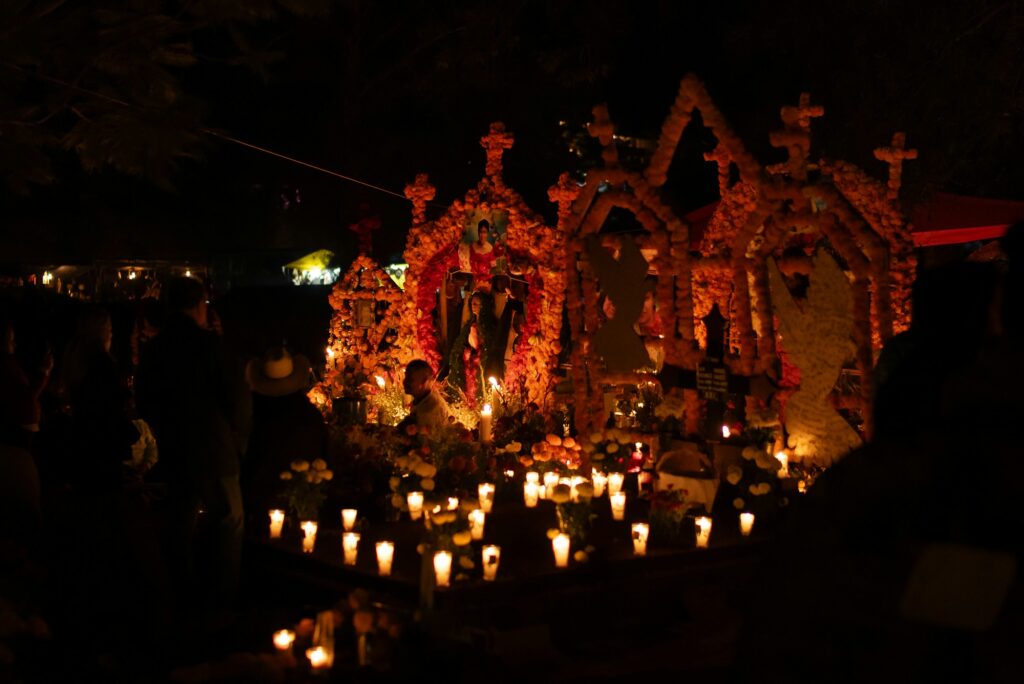
Día de los Muertos has been inscribed on UNESCO’s Intangible Cultural Heritage list since 2003. The Oaxacan celebration stands apart from the rest of Mexico because of its direct Zapotec roots: the god Pitao Bezelao, deity of death symbolised by the skull, the bat and the owl, is the invisible thread connecting today’s ofrendas to the royal tombs of Monte Albán excavated in the 20th century. The frescoes in Tomb 104 depict exactly the same provisions as those placed on contemporary altars.
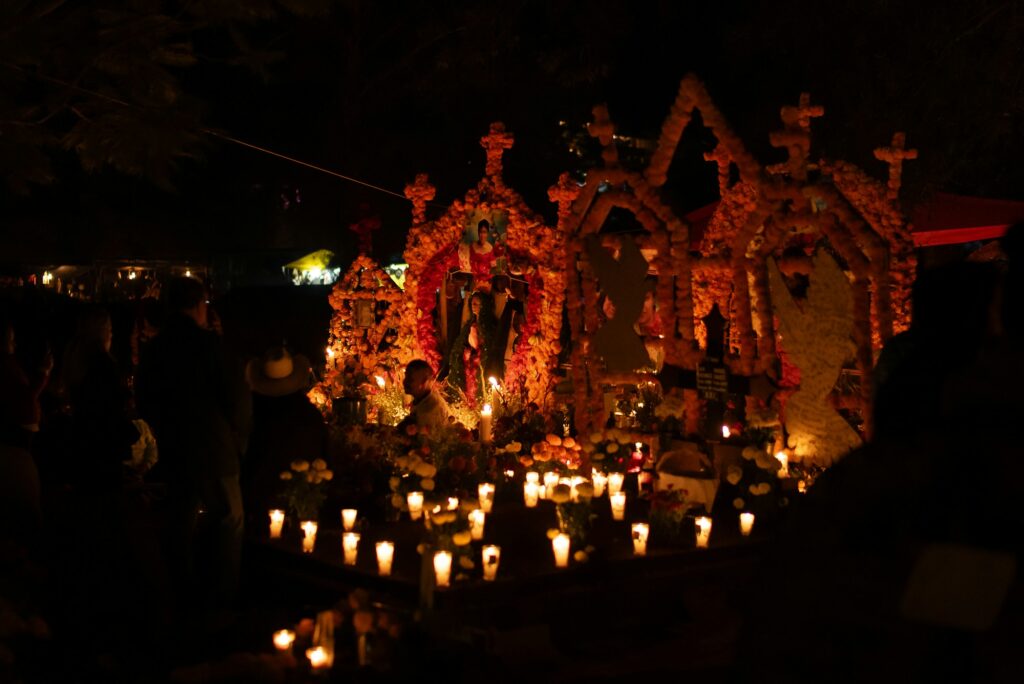
Confirmed 2026 programme: the Noche de Angelitos (vigil for deceased children) begins on 31 October at 6 pm in the panteones. The Comparsa de Catrinas parades through the historic centre on 1 November at 8 pm — a specifically Oaxacan tradition, distinct from Halloween. The night of 1-2 November is the most intense: families keep vigil in the cemeteries by candlelight, sharing food and mezcal with their dead. The Pantéon General (20 minutes’ walk from the Zócalo), the Pantéon de Xoxocotlán (15 minutes by taxi) and the panteones of Teotitlán del Valle are the three unmissable sites, each with its own atmosphere.
10 experiences to book in Oaxaca for Día de Muertos 2026
1. Traditional Mexican cooking class
This 3-hour class at Benito Juárez market is my preferred starting point before the November festivities. The local chef explains the seven Oaxacan moles — including mole negro, specifically prepared as a food offering for the dead — with a level of cultural detail you will not find in any restaurant. Understanding each ingredient as a symbolic code fundamentally changes how you read an ofrenda. The artisanal chocolate served at the end of the class reproduces the ancestral Zapotec tejate recipe.
- All 7 Oaxacan moles explained with their symbolic meaning
- Benito Juárez market visit + fresh ingredients selected with the chef
- Recipes to take home — recreate mole negro in your own kitchen
2. Natural dyeing and weaving workshop in Teotitlán
Teotitlán del Valle has been weaving continuously for 2,500 years, and this is where the link with Día de Muertos becomes visible: cempasúchil (the orange marigold, the festival’s emblematic flower) is used both to line the paths guiding spirits and to dye Zapotec tapestries. This private class with a master weaver covers the three main natural dyes — cochineal (carmine red), marigold (yellow-orange) and indigo — and lets you weave a small piece to take home. A unique piece you will now understand as a cultural object, not just a souvenir.
- Cochineal dyeing — the insect behind the carmine red of Zapotec tapestries
- Private workshop on an ancestral loom — woven piece to take home
- Direct link between cempasúchil, dyeing and ofrendas explained
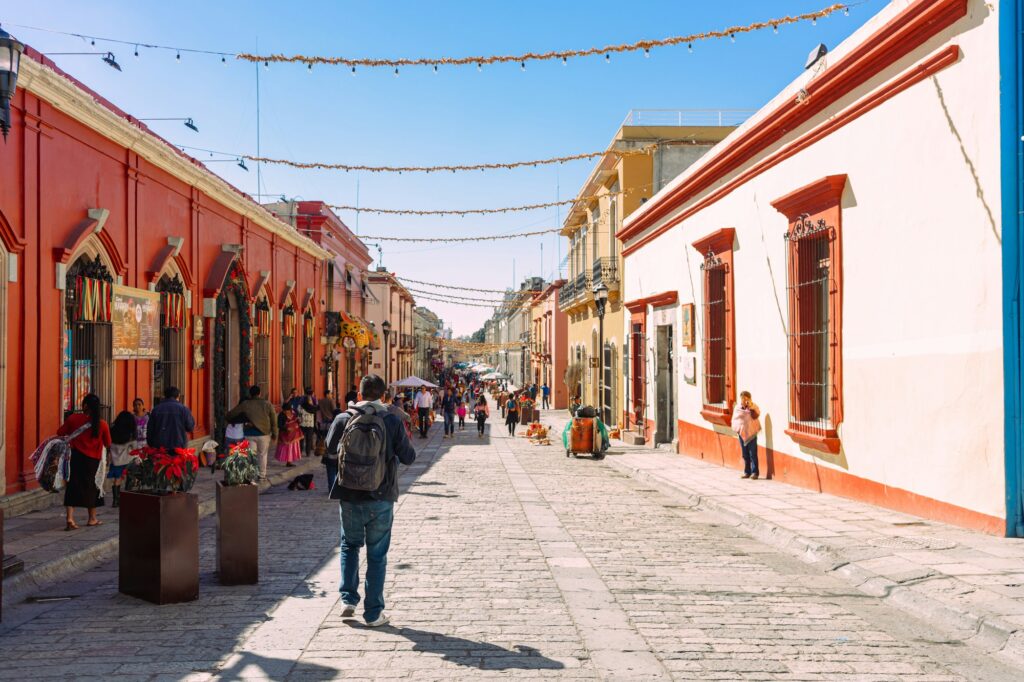
3. Oaxaca street food essentials — chapulines and mezcal
Fifteen tastings in 3.5 hours through the historic centre: crispy tlayudas, grilled chapulines (grasshoppers — a pre-Columbian speciality still present on the ofrendas), smoked tasajo and tejate — the ancestral Zapotec cacao drink that families bring to the panteones on November nights. The artisanal mezcal session at the end of the circuit explains why this spirit is poured on altars as a liquid offering. A tour that leaves you both hungry and curious.
- 15+ street food tastings — chapulines, tejate, tasajo
- Artisanal mezcal session explaining its role in the ofrendas
- Evening circuit available — ideal on 31 October and 1 November
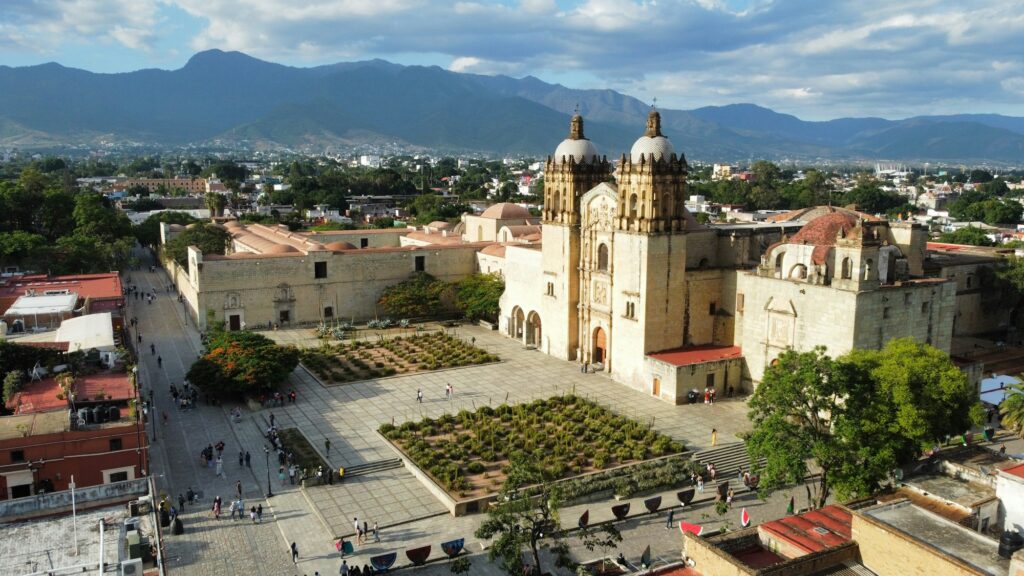
4. Oaxaca urban mythology and colonial art
This guided walking tour of the Oaxaca de Juárez historic centre is the best introduction to local legends before the cemetery nights. The historian guide draws the connection between Zapotec pre-colonial traditions — La Llorona, naguales (animal spirit guardians), ancestral funerary rites — and the baroque colonial decorations of the former Santo Domingo convent. Understanding these cultural layers before entering a panteón on the night of 1 November fundamentally changes the experience. At $38 per person, it is the most accessible option in the selection.
- Former Santo Domingo convent — colonial baroque architecture explained
- Zapotec legends of La Llorona and the protective naguales
- Ideal cultural preparation before the cemetery night visits
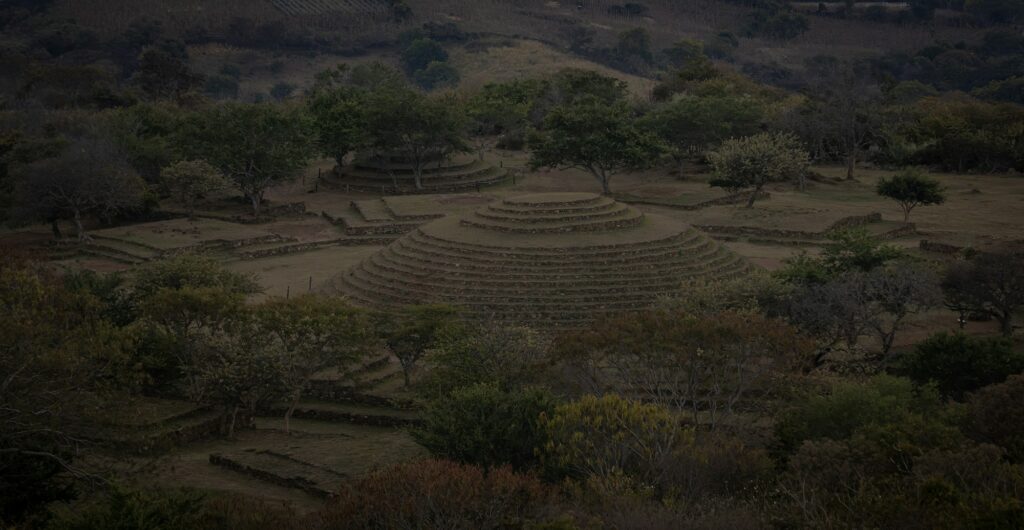
5. Full private day in an authentic Zapotec village
This nine-hour private tour of the central valleys includes hotel pickup and a native village guide — which makes all the difference. In Teotitlán del Valle, the visit to weavers goes beyond the tourist-facing workshops: you step through family home doors, watch dyes being prepared, and hear explanations in the Zapotec language about the pre-Hispanic motifs on altar tapestries. The traditional Zapotec lunch and the ancestral protection ritual round off a day that feels more like an invitation than a circuit.
- Bilingual native guide — access to weaving families beyond the tourist trail
- Traditional Zapotec lunch included + ancestral protection ritual
- Private return transport from your Oaxaca hotel
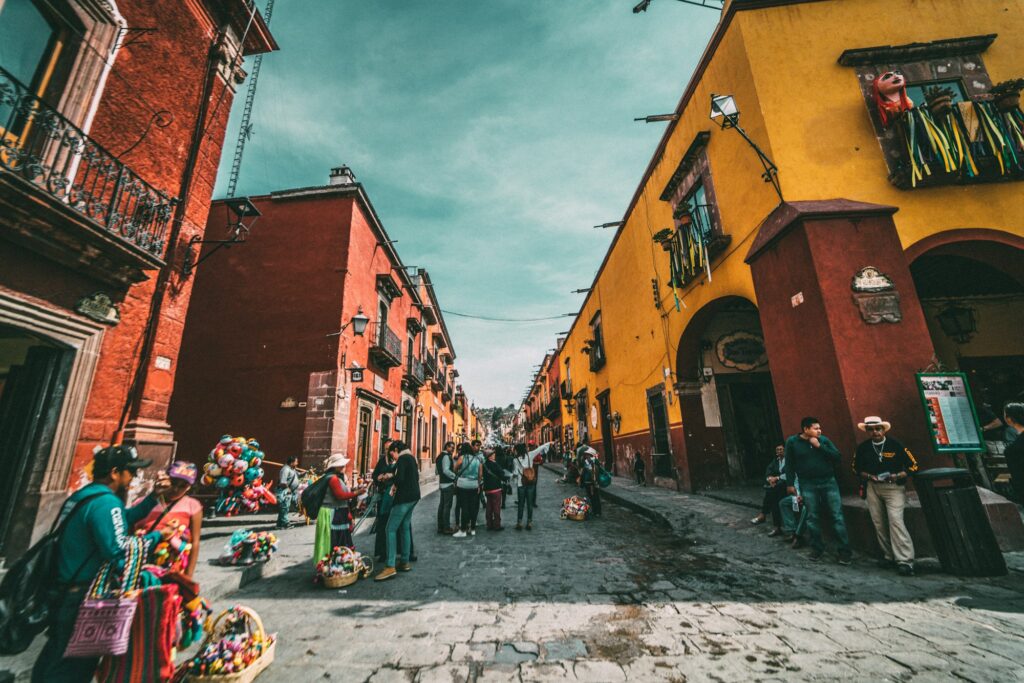
6. Private Monte Albán — alebrijes, quesillo and black clay
The most comprehensive day in the selection. Monte Albán (Zapotec capital from 500 BC to AD 850, UNESCO-listed) is the key to understanding the entire funerary cosmology underpinning Día de Muertos. After the private archaeological visit, you head to San Martín Tilcajete for the alebrije workshops — the brightly painted copal wood figures that Zapotec artisans place on the ofrendas as protective naguales for the dead. The day ends in San Bartolo Coyotepec for black clay pottery (barro negro), Oaxaca’s emblem, and an artisanal quesillo tasting.
- Monte Albán — Zapotec royal tombs and afterlife cosmology
- Alebrije workshops San Martín Tilcajete — soul guardians for the ofrendas
- San Bartolo Coyotepec black clay + artisanal quesillo tasting
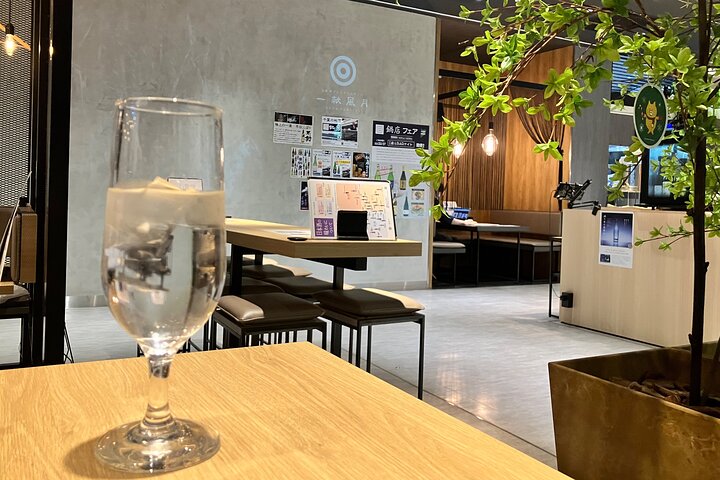
7. Oaxacan cooking class with a local chef
The budget-friendly alternative to the flagship cooking class in this selection, with 80 reviews at 5.0/5 — making it the most acclaimed product by proportion. The private format (3.5h) starts with an ingredient selection at Benito Juárez market with the chef, including the medicinal herbs that go into ancestral mole negro. Ideal for couples or small groups who prefer not to share their class with strangers. Meeting point at the entrance to Santo Domingo temple, right in the heart of the historic centre.
- 100% private class — ingredient selection with the chef at the market
- Preparation of ancestral Zapotec mole negro (the ofrenda recipe)
- 80 reviews at 5.0/5 — the best value in the selection
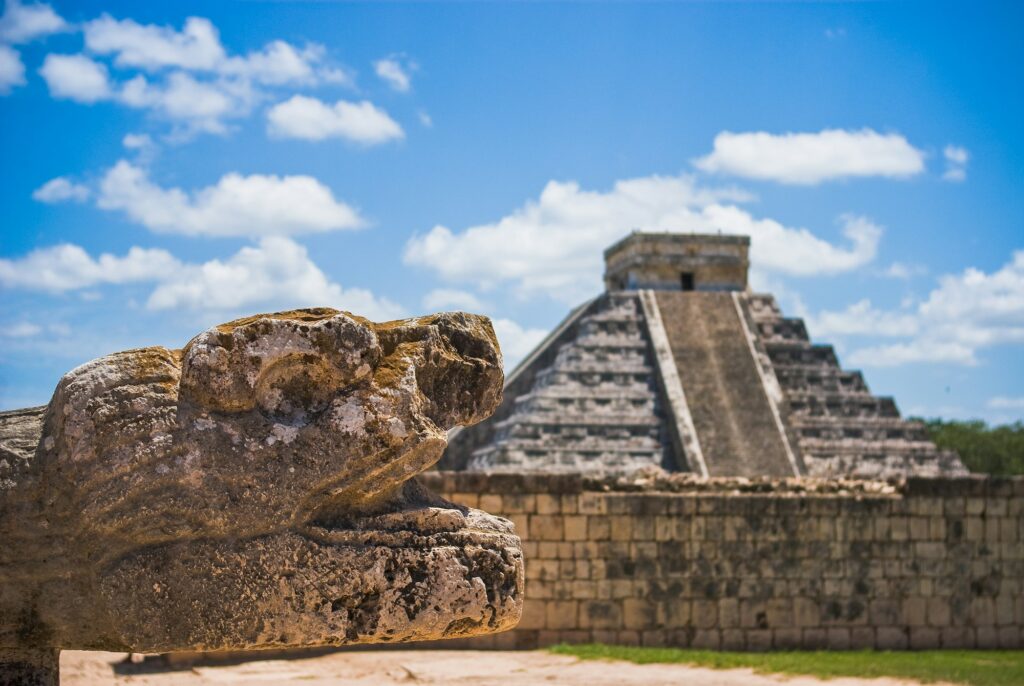
8. Markets, Textile Museum and Jalatlaco neighbourhood
Seven hours to cover the city’s essentials: Benito Juárez and 20 de Noviembre markets (where cempasúchil stalls and sugar skull figurines multiply from 28 October), the Museo Textil de Oaxaca (2,500 years of Zapotec craftsmanship in three rooms), contemporary art galleries and the Jalatlaco neighbourhood. This colourful quarter with its cobbled lanes and baroque facades is the natural backdrop for Día de Muertos comparsas — the tour prepares you well in advance. Starting point at the Zócalo, the beating heart of the city.
- Museo Textil de Oaxaca — 2,500 years of Zapotec tapestries
- 20 de Noviembre + Benito Juárez markets with speciality tastings
- Jalatlaco neighbourhood — setting for the Día de Muertos comparsas
9. Full Oaxaca tour — cemeteries, historic centre and villages
This 9.5-hour tour is the ideal panoramic option for travellers arriving in Oaxaca who want a complete overview before choosing their specialist experiences. The local guide covers the Pantéon General (the daytime visit is very different from the night vigil, but essential for getting your bearings before 1 November), the UNESCO-listed historic centre, and the Zapotec villages of the central valleys. The included traditional Oaxacan lunch — mole negro, tlayudas, tasajo — is presented in its cultural context, not simply as a meal.
- Pantéon General daytime visit — essential orientation before the night vigils
- UNESCO historic centre + Zapotec villages of the central valleys
- Traditional Oaxacan lunch included with cultural commentary
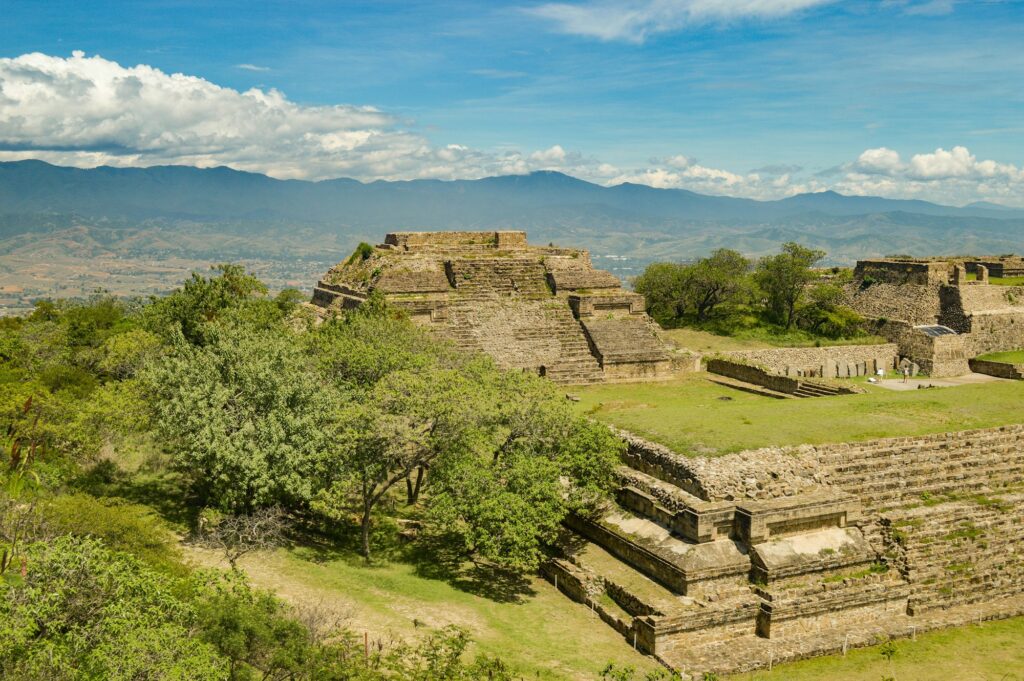
10. Private Monte Albán half-day — Zapotec cosmology
The focused, in-depth version of the Monte Albán circuit: three hours with a private archaeologist guide, entirely devoted to Zapotec cosmology of the afterlife. Tomb 104 with its funerary deity frescoes, Platform J (the astronomical observatory aligned with the setting of the Pleiades, linked to Mesoamerican funerary rituals) and explanations of the Zapotec concepts of bènizaa (cloud people) and the life-death cycle form the strongest intellectual foundation for understanding why the dead « return » to Oaxaca on 1 November. An alternative to the full day if your afternoon is reserved for another activity.
- Private archaeologist guide — royal tombs and cosmological frescoes explained
- Platform J — Pleiades observatory linked to funerary rituals
- Half-day format — combinable with a city activity in the afternoon
Plan your trip to Oaxaca
4G coverage from the moment you land at Oaxaca airport (OAX). Essential for navigating the cemetery nights without relying on café Wi-Fi.
Get my Mexico eSIMNomad Insurance: global coverage from $56/4 weeks. Covers Mexico including medical emergencies and cancellation. 10% off via our link.
From $56 / 4 weeksStandard route from London Heathrow: direct with British Airways or Aeromexico (approx. 11h), then connection Mexico City → Oaxaca (1h). Book now for October — prices rise 8 weeks before departure.
Search London-Mexico flightsIf you only book one experience before Día de Muertos 2026, make it this one: 3.5 hours to understand the moles, ritual gastronomy and the culinary culture that structures the ofrendas.
Secure my cooking class slotPractical tips for Día de Muertos in Oaxaca
Cemetery timing. The Pantéon General (20 minutes’ walk from the Zócalo) is accessible and ideal for a first visit. The Pantéon de Xoxocotlán (15 minutes by taxi) is favoured by photographers for its candlelit pathways. The panteones of Teotitlán del Valle (40 km away) offer the most preserved experience, with rituals conducted in the Zapotec language — but you will need a local guide to navigate respectfully.
Essential etiquette. Never enter a cemetery with visible alcohol. Always ask permission before photographing a family. Dress sombrely — no Halloween costumes, stick to dark or neutral colours. Bring your own candle if you wish to join the vigils. The local guides included in the Viator experiences above always provide this briefing.
Accommodation. Hotels in the historic centre (Santo Domingo, Jalatlaco, Zócalo districts) fill up 2-3 months in advance for the nights of 31 October to 2 November, at prices 2-3 times the norm. Book now. Budget guide: £70-£180 per night for a double room in the centre.
Local transport. Oaxaca airport (OAX) is 7 km from the centre (taxi £7-£9). Shared colectivos are the most economical option to reach Teotitlán (30 MXN) and Xoxocotlán. Viator excursions generally include hotel pickup.
Viator bookings for Día de Muertos 2026: November slots fill 6-8 weeks ahead for a specialist destination like Oaxaca. I recommend securing your experiences by August-September 2026 at the latest. Viator cancellation policies generally allow free cancellation up to 24 hours before.
Frequently asked questions — Día de Muertos 2026 in Oaxaca
When does Día de Muertos 2026 take place in Oaxaca?
The official 2026 dates are 31 October to 2 November. The Noche de Angelitos (vigil for deceased children) begins on 31 October at 6 pm in the panteones. The most intense night — the grand alumbrada with families keeping vigil — is the night of 1-2 November. I recommend arriving on 30 October to watch the city gradually transform, and not leaving until at least 3 November to catch the post-celebration atmosphere.
Are Oaxaca’s cemeteries open to tourists during Día de Muertos?
Yes, the panteones are technically open to the public. But they are places of private worship where families experience an intimate moment. Access requires absolute respect: sober dress, no photos without explicit permission, no visible alcohol at the entrance. A local guide — like those included in the experiences listed above — is the best guarantee of navigating these spaces respectfully. The full Oaxaca tour includes a daytime visit to the Pantéon General to get your bearings before the night vigils.
How much does a trip to Oaxaca for Día de Muertos cost?
Budget guide for 5 nights (30 Oct – 4 Nov 2026) excluding flights: hotel in the historic centre £70-£180/night, so £350-£900 for accommodation. For Viator experiences, cooking classes start at $66 (private class with local chef), Monte Albán tours at $214 (private half-day). A selection of 3-4 experiences represents roughly £280-£480 in activity costs. Flights from London to Oaxaca (via Mexico City): £600-£950 return depending on when you book.
What is the difference between Pantéon General and Pantéon de Xoxocotlán?
The Pantéon General of Oaxaca is the central cemetery, 20 minutes’ walk from the Zócalo, reachable on foot. It is home to large Oaxacan families with elaborate ofrendas and is recommended for a first visit. The Pantéon de Xoxocotlán (« Xoxo »), 15 minutes by taxi, is favoured by photographers for its candlelit pathways and dense vegetation. For a more authentic, less touristy experience, the panteones of Teotitlán del Valle (40 km, accessible via the private Zapotec village tour) are recommended — rituals there are conducted in the Zapotec language.
What is an ofrenda and what goes on it?
An ofrenda is a domestic altar set up to welcome the spirit of the deceased. Traditional Oaxacan elements include: cempasúchil (orange marigolds guiding the spirits), copal (sacred incense), a photo of the deceased, the dead person’s favourite meal (with mole negro as the main dish), pan de muerto, tejate (ancestral cacao drink) and mezcal poured as a liquid offering. Alebrijes in copal wood are placed as protective naguales. Learning to prepare these elements through the cooking class or the weaving workshop profoundly enriches your reading of a real ofrenda.
Sources
- UNESCO — Intangible Cultural Heritage: Indigenous festivity dedicated to the dead (00054) — accessed 2026-05-27
- Gobierno de Oaxaca — Official Día de Muertos 2026 Programme — accessed 2026-05-27
- Cultures Traveled — Day of the Dead in Oaxaca: Complete Guide — accessed 2026-05-27
- Inside the Upgrade — Day of the Dead Oaxaca 2026 — accessed 2026-05-27
- Where Sidewalks End — Oaxaca Day of the Dead Guide — accessed 2026-05-27
- UNESCO World Heritage — Oaxaca and Monte Albán (list 415) — accessed 2026-05-27
- Wikidata Q50001 — Día de los Muertos — accessed 2026-05-27
- Wikidata Q192339 — Monte Albán — accessed 2026-05-27
- Wikidata Q1244671 — Teotitlán del Valle — accessed 2026-05-27
- Wikidata Q1642478 — Alebrije — accessed 2026-05-27
Ready to experience Día de Muertos 2026 in Oaxaca?
Viator experiences for November 2026 sell out in August-September — private slots go first. The mole negro cooking class and the Monte Albán + alebrijes full day are my two priority recommendations for building a memorable trip around the Zapotec cemeteries.
See the #1 cooking class