
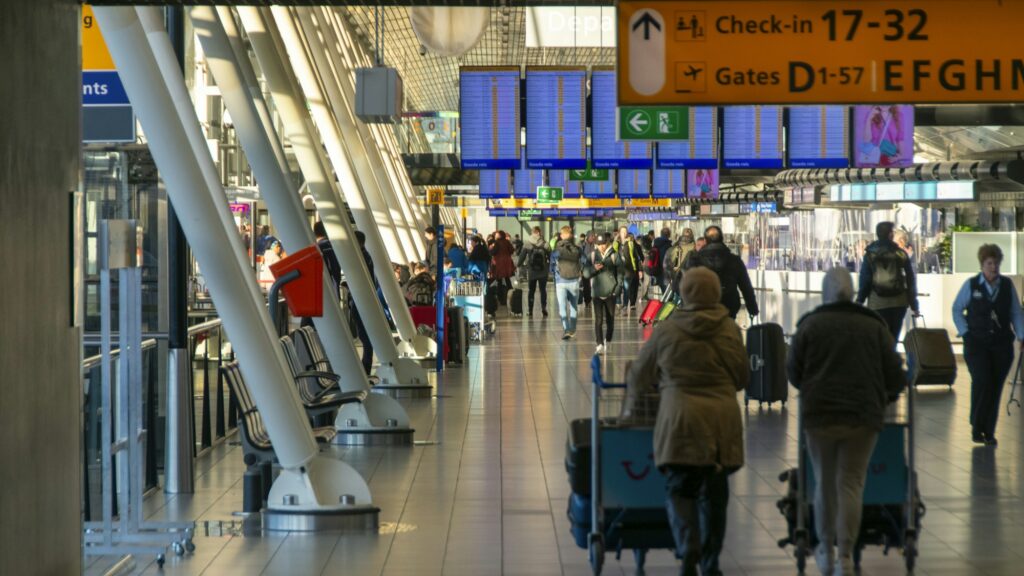
The EES (Entry/Exit System) became fully operational on April 10, 2026 across the entire Schengen zone. French nationals (EU passport) are not directly subject to biometrics, but airports will be significantly busier for the May 8 bank holiday and Ascension Day (May 14, 2026). At CDG, queues of up to 3 hours have already been recorded. Key advice: arrive 3 to 4 hours before your flight during peak times, prefer Lyon, Bordeaux or Toulouse over Beauvais, and have non-EU family members pre-register via the « Travel to Europe » app.
Since April 10, 2026, non-European travellers crossing the external borders of the Schengen area must register in the new European biometric system. And if you are French, you will not be directly affected — but you will still feel the consequences.
May 2026 offers two consecutive public holidays perfect for a getaway: May 8 (Victory in Europe Day) falls on a Friday, creating a 3-day long weekend with no annual leave required. Ascension Day, Thursday May 14, allows for a 4-day bridge. Both periods coincide exactly with the first weeks of full EES deployment — potentially the most chaotic. Here is everything you need to know to plan your departures.
What is the EES? The European biometric system explained
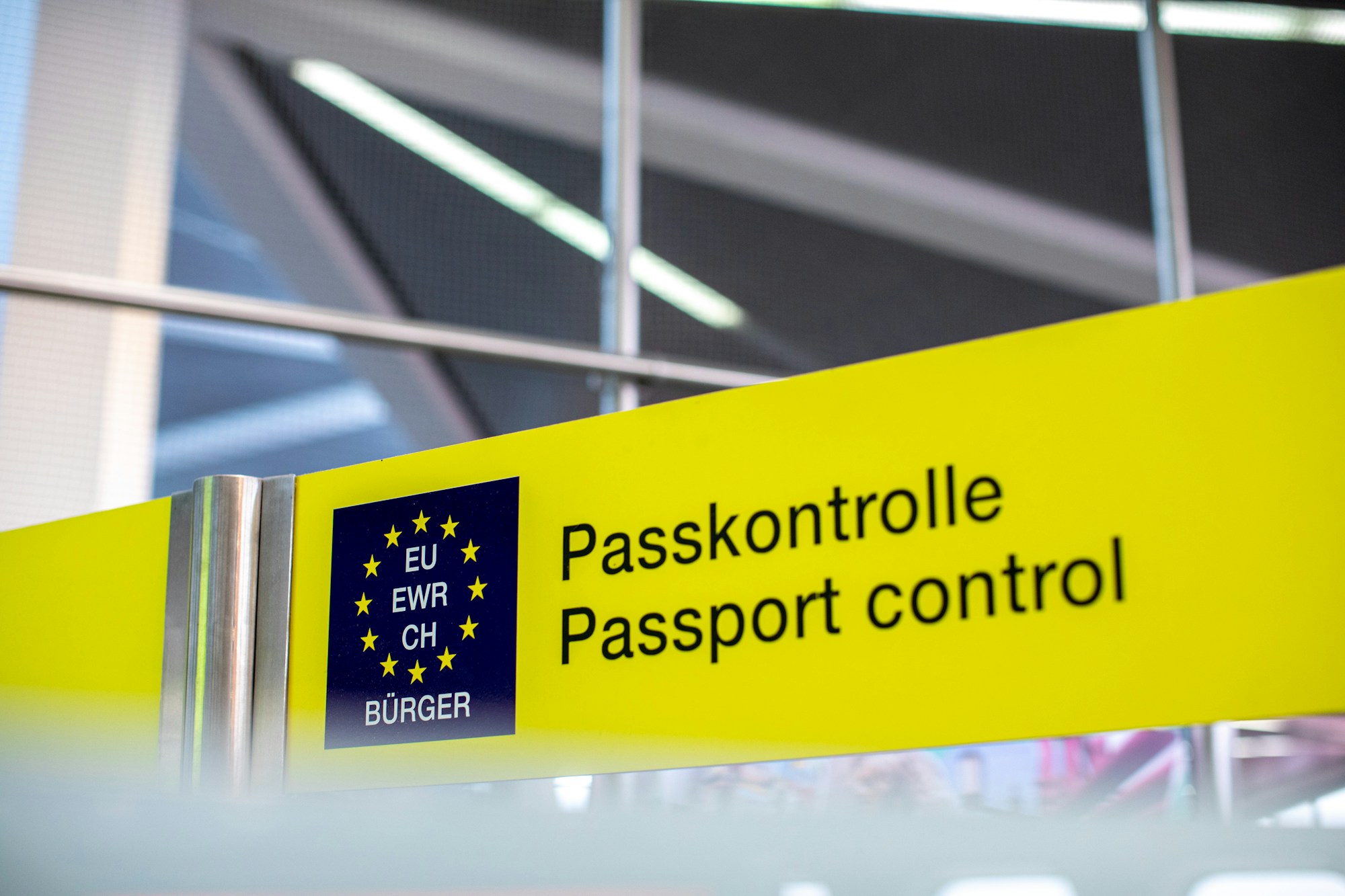
The EES (Entry/Exit System) is a European biometric database that records the data of every third-country national crossing the external borders of the Schengen area. Progressively deployed since October 2025, it entered full operation on April 10, 2026 in all 29 Schengen states, permanently replacing passport stamps.
According to the European Commission, the system collects for each non-EU traveller: name, date of birth, nationality, travel document number, a facial image and up to 4 fingerprints (except children under 12). It also automatically identifies stays exceeding 90 days in 180.
Am I affected as a French national? A clear answer
Good news: if you travel with a French passport or national ID card (or any other EU/EEA/Swiss document), you are not directly subject to the EES. You will continue to cross external borders without mandatory biometrics, just as before. According to France Diplomatie, this exemption applies to all EU nationals.
But beware of indirect effects. Even if you are not subject to biometrics, your transit time will be extended by the general airport congestion. The EES check queues for non-EU travellers occupy the same zones, slow down flows and create pressure across all departure halls. From the very first launch weekend (April 12–13), Euronews described the situation as a « systemic failure ».
The May 2026 calendar: a critical period for border crossings
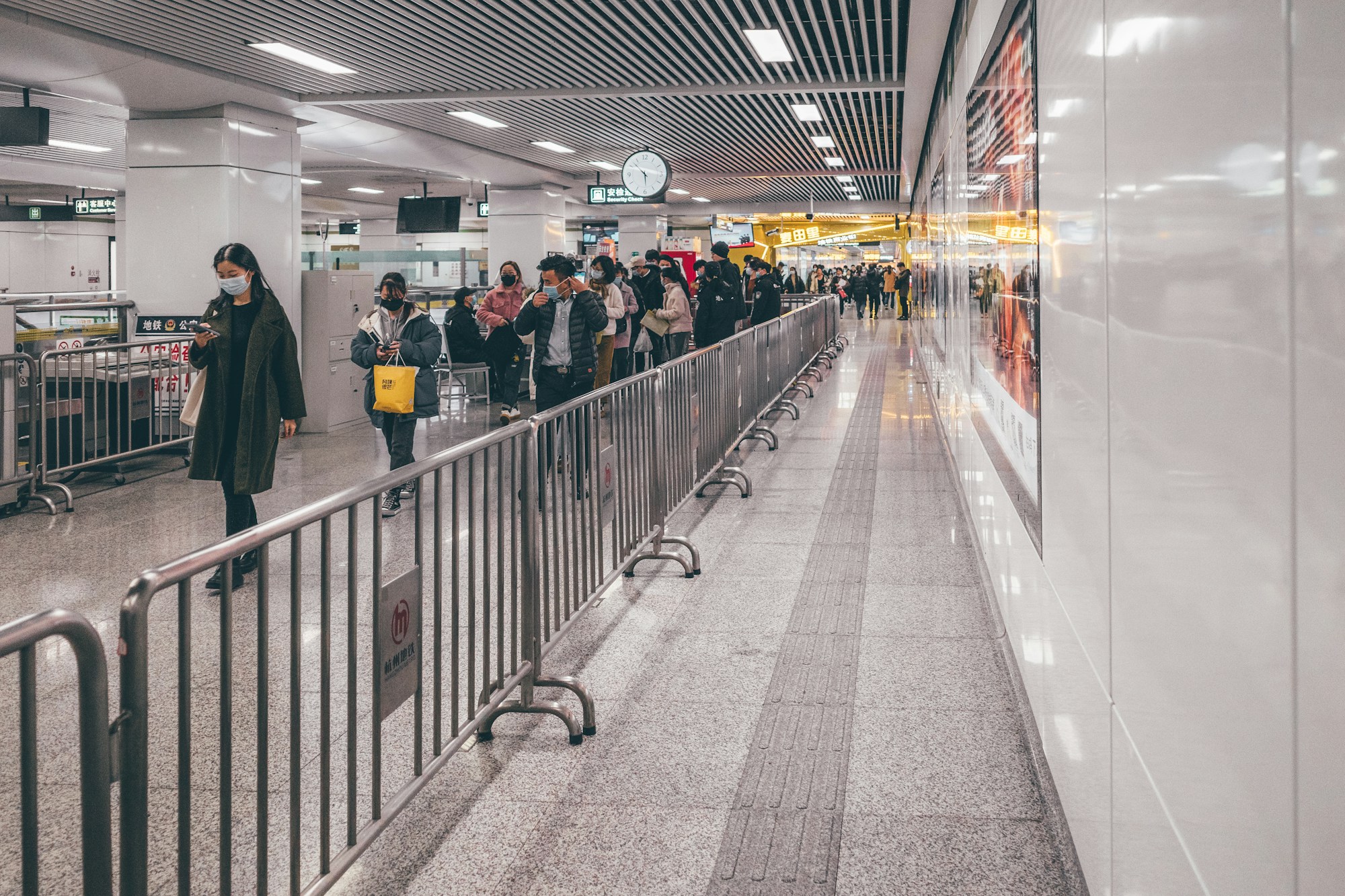
May 2026 combines two risk factors: public holidays generating traffic peaks and an EES system still in its early deployment phase.
The May 8 long weekend (Friday May 8, 2026)
May 8 commemorates the German surrender (Victory in Europe Day). In 2026, it falls on a Friday — offering a 3-day long weekend (Friday–Sunday) without using any annual leave. The result: mass departures from Thursday evening May 7. This bridge falls just 4 weeks after the EES launch — the most intense deployment period, when airports are still in heavy run-in mode.
The Ascension long weekend (Thursday May 14, 2026)
Note: Ascension 2026 is Thursday May 14, not May 29. This common confusion comes from the fact that the date varies each year (39 days after Easter). In 2026, Easter fell on April 5, so Ascension is indeed May 14. The long weekend runs from Thursday May 14 to Sunday May 17 — 4 consecutive days ideal for travel.
According to Faire le Pont, Bison Futé forecasts black-rated weekends on May 3, 10 and 17. Whit Monday (May 25) adds to the list of busy weekends.
Airports: what is the risk level at each hub?
Here is a summary of delays recorded and expected at major French airports since the EES came into force on April 10, 2026, according to Air Journal and Ulysse.com:
Paris CDG and Orly: 320 terminals, but impressive queues
CDG and Orly have deployed more than 320 EES pre-registration terminals, with 120 additional kiosks ordered for CDG. ADP described the full summer deployment as « extremely risky » through its deputy CEO Justine Coutard. From the very first hours of April 10, queues of 3 hours were observed during peak periods according to Ame-Bohème.
Beauvais: maximum risk to anticipate
Beauvais, the Ryanair and Wizz Air hub with around 200 low-cost flights per week in summer, presents the highest risk. Equipment remains limited and the terminal infrastructure was not designed to handle mass first-time biometric registrations. For comparison: on April 13, 2026 at Milan Linate airport, an easyJet flight to Manchester saw 122 out of 156 passengers blocked at controls, according to ObservAlgérie.
Ryanair schedules only 25-minute turnarounds between landing and take-off. An EES delay can directly result in a missed flight with no possible compensation: airlines are not required to compensate for delays caused by border controls.
Lyon, Bordeaux, Toulouse: the real alternatives
If you have a choice of departure point, well-equipped regional airports are your best option in May 2026. Lyon-Saint-Exupéry, Toulouse-Blagnac, Bordeaux-Mérignac and Nantes-Atlantique all offer international flights with a significantly lower passenger volume than CDG — meaning much shorter EES queues. Lyon has a particular advantage for Ascension: many direct connections to Europe and beyond, with EES equipment up to the task.
Eurostar, Eurotunnel, Calais and Dover: a special case
France has postponed the biometric EES launch for Channel crossings, originally planned for April 10, 2026, due to software and infrastructure issues. Manual stamping continues temporarily on Eurostar, Eurotunnel and Calais-Dover ferry services. According to VisaHQ, the biometric capture software failed final performance tests and the physical space at Gare du Nord (Eurostar Paris) and Calais ferry booths was insufficient.
Getlink (Eurotunnel) invested €80 million to prepare for EES, with terminals capable of processing up to 700 vehicles per hour via the system. This equipment is ready but awaiting activation. No official date has been announced for resumption of Channel EES deployment.
Your 10 practical tips for the May bank holidays
- Arrive 3 to 4 hours before your flight for your first EES crossing (especially your non-EU companions). For subsequent crossings, 2 hours is sufficient once registered in the system.
- Prefer early morning flights (before 8 AM) or evening (after 9 PM). On weekdays, Tuesday and Wednesday offer significantly lighter traffic.
- Have non-EU companions download the « Travel to Europe » app (by Frontex, free iOS/Android): pre-registration up to 72h in advance to reduce time at the border.
- Use pre-registration kiosks available at 12 equipped airports (CDG, Orly, Nice, Lyon, Bordeaux, Marseille, Toulouse, Nantes, Strasbourg, Montpellier, Beauvais, Bâle-Mulhouse).
- Avoid tight connections via a European hub. Choose a direct flight even if slightly more expensive — connections under 2 hours are high risk.
- Check your passport: it must be biometric (electronic chip) and valid at least 3 months beyond your planned return date.
- Prefer Lyon, Bordeaux or Toulouse over CDG and Beauvais — lower volumes, shorter EES queues.
- Keep your boarding pass (paper or digital): without a passport stamp, it is your only proof of entry date and location into the Schengen zone.
- Check your travel insurance: airlines are not required to compensate for delays at border controls. Some premium policies cover « missed departures due to unexpected congestion ».
- Dual nationals: always travel with your European passport (EU, EEA, Swiss) to be exempt from EES biometrics.
The « Travel to Europe » app: official pre-registration tool
The official « Travel to Europe » app, developed by Frontex (the European border agency), allows third-country travellers to pre-register their biometric data up to 72 hours before arriving in the Schengen zone. It accepts passport photos and digitised facial images, significantly reducing time at the border according to l’Observatoire de l’Europe.
Important: this app does not replace physical border checks. In April 2026, it was available in a limited number of countries (including Portugal and Sweden) — its full EU rollout is planned progressively. The French DGE has deployed pre-registration kiosks at the 25 main airports, ports and railway stations.
ETIAS: the next step to anticipate (late 2026)
Not to be confused with the EES: ETIAS is the travel authorisation system, Europe’s equivalent of the US ESTA. It will apply to nationals of visa-exempt countries (Americans, British, Canadians, Australians, etc.) wishing to enter the Schengen area.
Its entry into force is planned for late 2026. The authorisation will cost €20 (free for minors and those over 70), will be valid for 3 years, and must be applied for online before departure. Authorities note that no website currently issues ETIAS authorisations — beware of fraudulent platforms claiming to sell them.
Frequently asked questions about EES and the May 2026 bank holidays
As a French national, am I directly subject to the EES?
No. The EES does not apply to EU/EEA/Swiss citizens. If you travel with a French passport or national ID card, you are not subject to EES biometrics. However, airports will be busier than usual as your queues will be lengthened by overall congestion.
Is Ascension Day really on May 29, 2026?
No — Ascension falls on Thursday May 14, 2026 (Easter 2026 being April 5, + 39 days = May 14). May 29 is an ordinary Friday with no public holiday. The Ascension long weekend runs from May 14 to 17 (Thursday–Sunday).
How long does the EES check actually take?
On paper, the European Commission estimates 70 seconds per passenger. In practice, airport operators report durations of up to 5 minutes per person. During the launch weekend (April 12–13, 2026), queues of 3 hours were observed at CDG.
Are children under 12 subject to the EES?
Non-EU children of all ages go through EES checks, but those under 12 do not need to provide fingerprints — only a facial image. Children under 6 are fully exempt.
Will the EES be suspended during summer 2026?
Member states may partially suspend EES for 90 days after April 10 (with a possible 60-day extension), meaning until early September 2026. France has not yet officially decided. The most likely scenario according to ADP: a fully operational EES from September or October 2026 only.
Does the EES affect the Eurostar and Eurotunnel for the May bank holidays?
Not for now. France has postponed the biometric EES launch for Channel crossings (Eurostar, Eurotunnel, Calais-Dover ferries) due to software issues. Manual stamping continues temporarily. No resumption date has been announced.
Can I be compensated if I miss my flight because of EES queues?
Generally, no. Airlines are not required to compensate passengers who miss their flight due to border control delays. However, some premium travel insurance policies cover « missed departures due to unexpected congestion » — check your policy.
What is ETIAS and when does it come into force?
ETIAS is a pre-travel authorisation (Europe’s equivalent of the US ESTA), costing €20, that nationals of visa-exempt countries must obtain online before entering the Schengen zone. Its launch is planned for late 2026. French nationals (EU) will not need it.
Is Bordeaux airport open during EES checks?
The airport’s border control page, checked on 16 October 2026, does not give opening hours. It states that French and EU citizens are not subject to the EES. Non-EU travellers can use free, optional EES pre-registration kiosks, and the PARAFE e-gates in Hall A are reserved for EU citizens and some third-country nationals with a biometric passport. For opening hours and live departures, check the airport’s flight information before you leave.
Sources
- European Commission — EES fully operational, April 10, 2026
- France Diplomatie — Official EES guide, April 2026
- Euronews — « Systemic failure » at borders, April 14, 2026
- Air Journal — EES and queues, April 13, 2026
- Ulysse — 7 tips to avoid EES queues, summer 2026
- VisaHQ — France suspends EES for Channel crossings, April 8, 2026
Research conducted on April 19, 2026
Plan your spring 2026 trips
Despite the EES, the May bank holidays remain a golden opportunity to discover Europe. Hundreds of itineraries and destinations await you on Pixidia.
Explore spring itineraries