

In 2026, crossing Europe in an electric vehicle is no longer a pioneer’s adventure — it’s a no-brainer. With over 600,000 charging stations deployed across the continent and the European AFIR regulation mandating a 400 kW station every 60 km on major motorways, range anxiety is a thing of the past. Norway boasts over 90% electric vehicle sales, the Netherlands has 47.5 chargers per 100 km of road, and the Spark alliance unites Europe’s four largest fast-charging networks. The electric road trip has become the quietest, most affordable and most eco-friendly way to discover the landscapes of the old continent. Here are six exceptional routes, from Norway to Tuscany, and everything you need to know to plan your electric adventure.
1. Norway — The Fjords in Silence
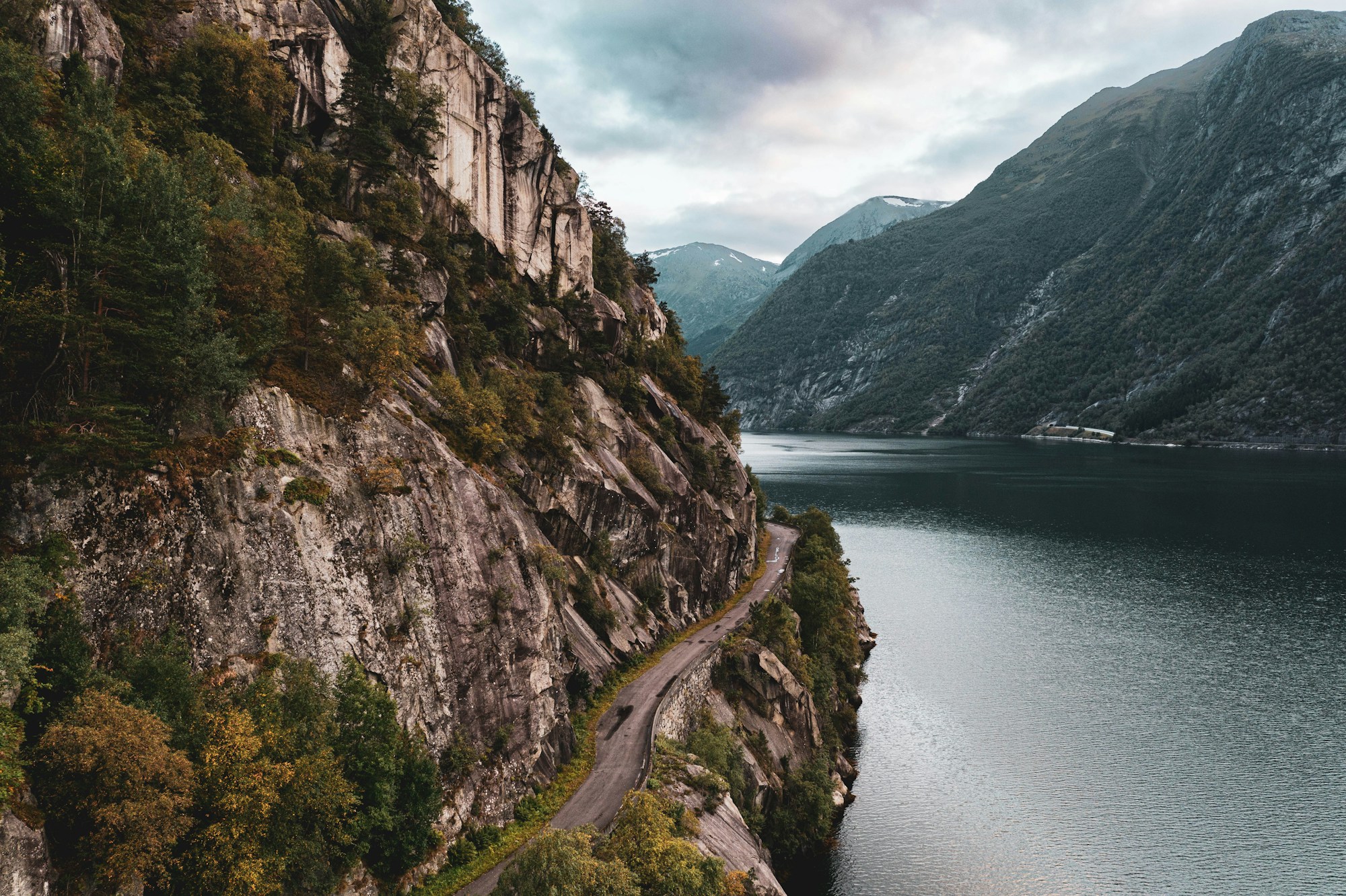
Oslo → Bergen → Geirangerfjord
Norway is, by far, the most advanced country in the world when it comes to electric mobility. In 2025, over 90% of new cars sold were 100% electric vehicles, according to Tesla Mag. The charging network is extraordinarily dense, and the government still offers considerable advantages to EV drivers: reduced tolls, free or discounted ferries, and free municipal parking in many cities.
The Oslo–Bergen–Geirangerfjord route is one of the most spectacular in Europe. From the Norwegian capital, head towards Bergen via the E16 road, which crosses the Hardangervidda highland plateaus. Charging stations are available at every major stop, often in close proximity to tourist sites. The scenic Gaularfjellet route, ranked among Norway’s most beautiful by Visit Norway, offers breathtaking views of waterfalls and glacial valleys.
Bergen, the country’s second-largest city, deserves at least two days: the Hanseatic quarter of Bryggen (UNESCO), the fish market and the Fløyen funicular are must-sees. Charge your vehicle overnight at your accommodation — virtually all Norwegian hotels offer charging stations — and resume the journey north towards the Geirangerfjord. This UNESCO fjord, framed by dizzying cliffs and waterfalls like the Seven Sisters, is the absolute jewel of the trip. The electric ferries that cross it complete the experience in total silence.
Why Norway by EV?
- Over 90% EV sales — ultra-dense charging infrastructure
- Reduced tolls and free or discounted ferries for EVs
- Classified scenic routes (Gaularfjellet, Trollstigen, Atlanterhavsveien)
- Electric ferries in the fjords — crossing in absolute silence
2. Netherlands — Europe’s Charging Champion

Amsterdam → Keukenhof → Kinderdijk → Maastricht
The Netherlands is simply the best-equipped country in Europe for EV charging. The numbers are staggering: 197,712 charging stations for a small territory, or 47.5 chargers per 100 km of road, according to Toute l’Europe. In practice, this means you’ll never be more than a few minutes from a charging point, wherever you are in the country. It’s the dream destination for a first electric road trip, especially for those who want reassurance before tackling longer routes.
The ideal route begins in Amsterdam. Take your time exploring the canals by electric boat (a major trend in 2026), then drive south towards Keukenhof, the world’s largest flower garden, open from mid-March to mid-May. The 7 million blooming tulips are an unforgettable sight. Continue to Kinderdijk, the UNESCO site of 19 iconic windmills. The car parks systematically feature charging stations, as noted by Editorial GE.
Continue south through North Brabant and its picturesque villages, then finish in Maastricht, the country’s southernmost city, with its medieval architecture and Burgundian gastronomy. The return to Amsterdam can be done along the coast, passing through The Hague and the North Sea dunes. Thanks to the density of the charging network, you can improvise your stops with complete peace of mind.
Why the Netherlands by EV?
- 197,712 stations — Europe’s densest network (47.5 chargers/100 km)
- Short distances between stops — ideal for a first EV road trip
- Flat, well-maintained roads — optimal energy consumption
- Chargers at every major tourist car park
3. Germany — The Romantic Road and Black Forest
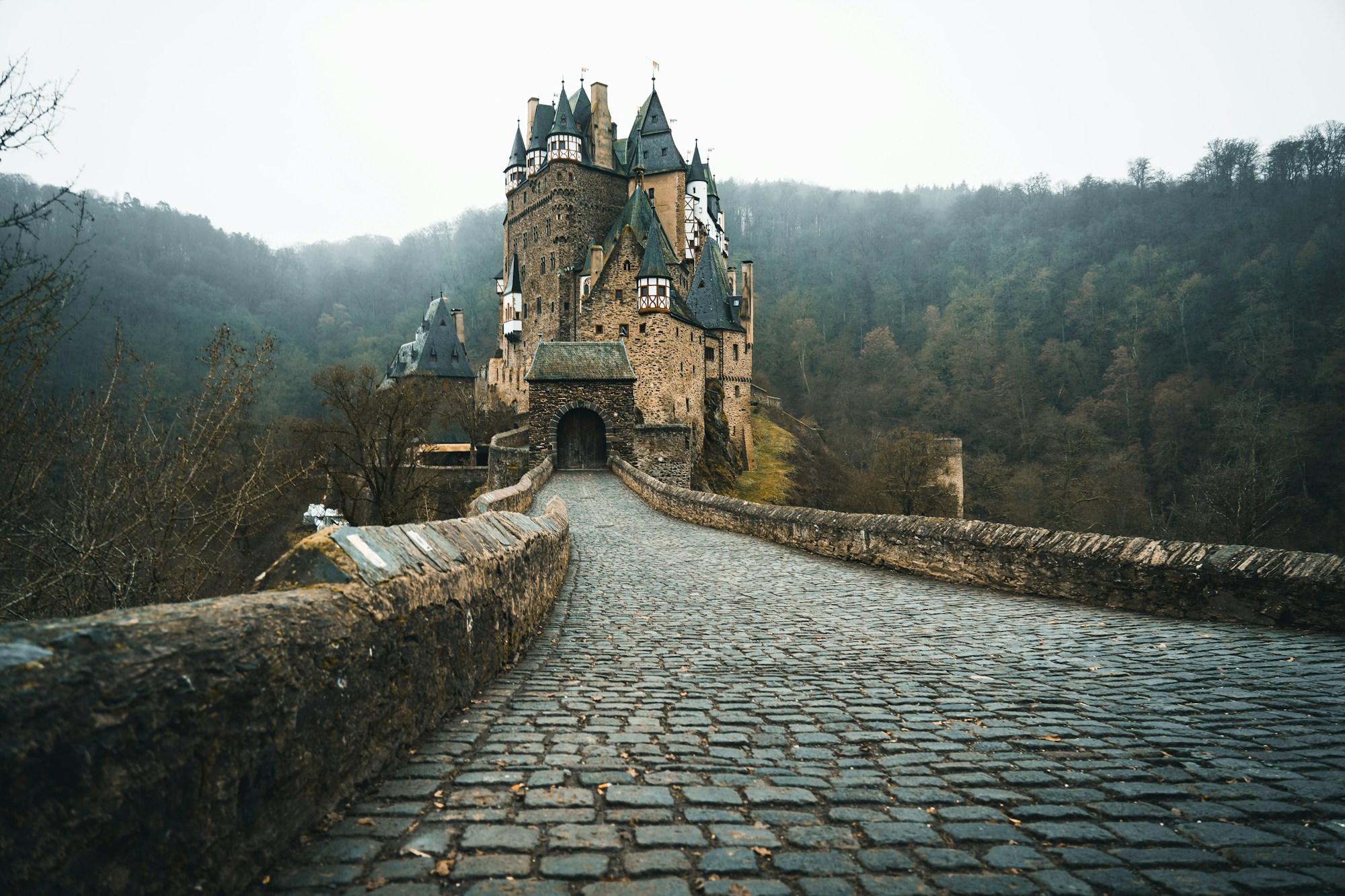
Würzburg → Rothenburg → Neuschwanstein → Black Forest
The Romantische Straße (Romantic Road) is one of Europe’s most iconic routes: 460 km from Würzburg to Füssen, passing through medieval villages, terraced vineyards and fairytale castles. In 2026, this route is perfectly suited to EVs thanks to the IONITY network, whose ultra-fast charging stations (350 kW) line Germany’s main roads, according to Le Petit Futé.
Start with Würzburg, a baroque city famous for its Residence (UNESCO) and Franconian wines. Head south to Rothenburg ob der Tauber, Germany’s most photogenic medieval town, with its intact ramparts and half-timbered houses. Charge up during your visit to the Medieval Crime Museum — allow 30-40 minutes on a fast charger near the historic centre.
Continue to Augsburg, Bavaria’s oldest city, then reach the highlight: Neuschwanstein Castle, the « Sleeping Beauty Castle » of King Ludwig II of Bavaria. Charging stations are available at the main P4 car park. Extend your road trip westward towards the Black Forest: the scenic Schwarzwaldhochstraße winds through giant firs, waterfalls and postcard-perfect villages like Triberg and Gengenbach.
Charging prices in Germany vary by operator. IONITY charges 0.59 €/kWh without a subscription, but the Passport subscription (11.99 €/month) reduces the rate to 0.39 €/kWh, according to Tesla Accessories. For a 900 km road trip, the difference amounts to savings of 35 to 50 €.
Why Germany by EV?
- IONITY ultra-fast network (350 kW) — charge from 10 to 80% in 20-25 min
- 460 km Romantic Road — medieval villages and fairytale castles
- No speed limit on some motorway sections (watch your consumption!)
- Black Forest and Deutsche Alpenstraße — natural extensions
4. Austria — Tyrol and the Grossglockner Road
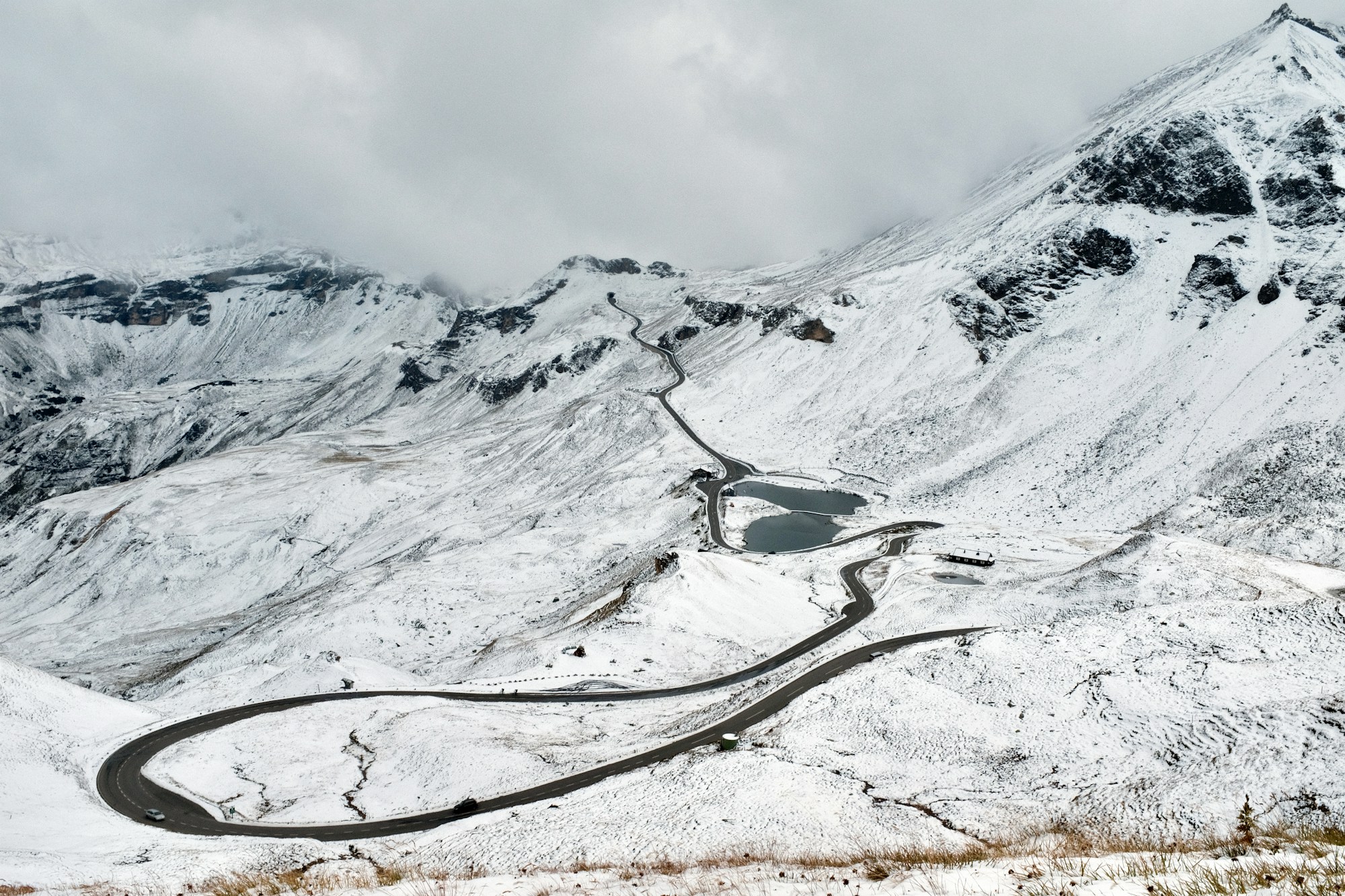
Vienna → Salzburg → Grossglockner → Innsbruck
Austria is a top destination for mountain road enthusiasts in EVs. The country has invested heavily in alpine charging infrastructure, and over 75% of its energy comes from renewable sources (primarily hydroelectric). The result: driving an EV in Austria is not only practical but genuinely green, according to Génération Auto-Moto.
From Vienna, head towards Salzburg, Mozart’s birthplace. The A1 motorway connecting the two cities is lined with fast chargers every 40-50 km. Salzburg deserves two days: the Hohensalzburg Fortress, the baroque old town (UNESCO) and the filming locations of « The Sound of Music » in the surrounding area. Charge at your hotel overnight — nighttime charging is 40% cheaper than daytime charging in Austria.
The highlight of this road trip is the Grossglockner Hochalpenstraße, one of the most spectacular alpine roads in the world. Its 48 km of hairpin bends traverse high-mountain landscapes between 1,500 and 2,504 metres altitude, with views of the Großglockner (3,798 m), Austria’s highest peak. Note: the road is open from May to November 2026 according to the official website, and the toll for a battery electric car at the booth is 40 € per vehicle. In an EV, the ascent will consume more energy, but the descent will let you recover a significant portion through regenerative braking.
Continue to Innsbruck, the capital of Tyrol, nestled in the heart of the Alps. The Bergisel ski jump (designed by Zaha Hadid), the old town with its Golden Roof and the surrounding alpine villages make for a memorable finale.
Why Austria by EV?
- 75% renewable energy — a genuinely low-carbon road trip
- Nighttime charging 40% cheaper than daytime
- Grossglockner Hochalpenstraße — one of the world’s most beautiful roads
- Highly efficient regenerative braking on alpine descents
5. France — Alsace and the Electric Wine Route
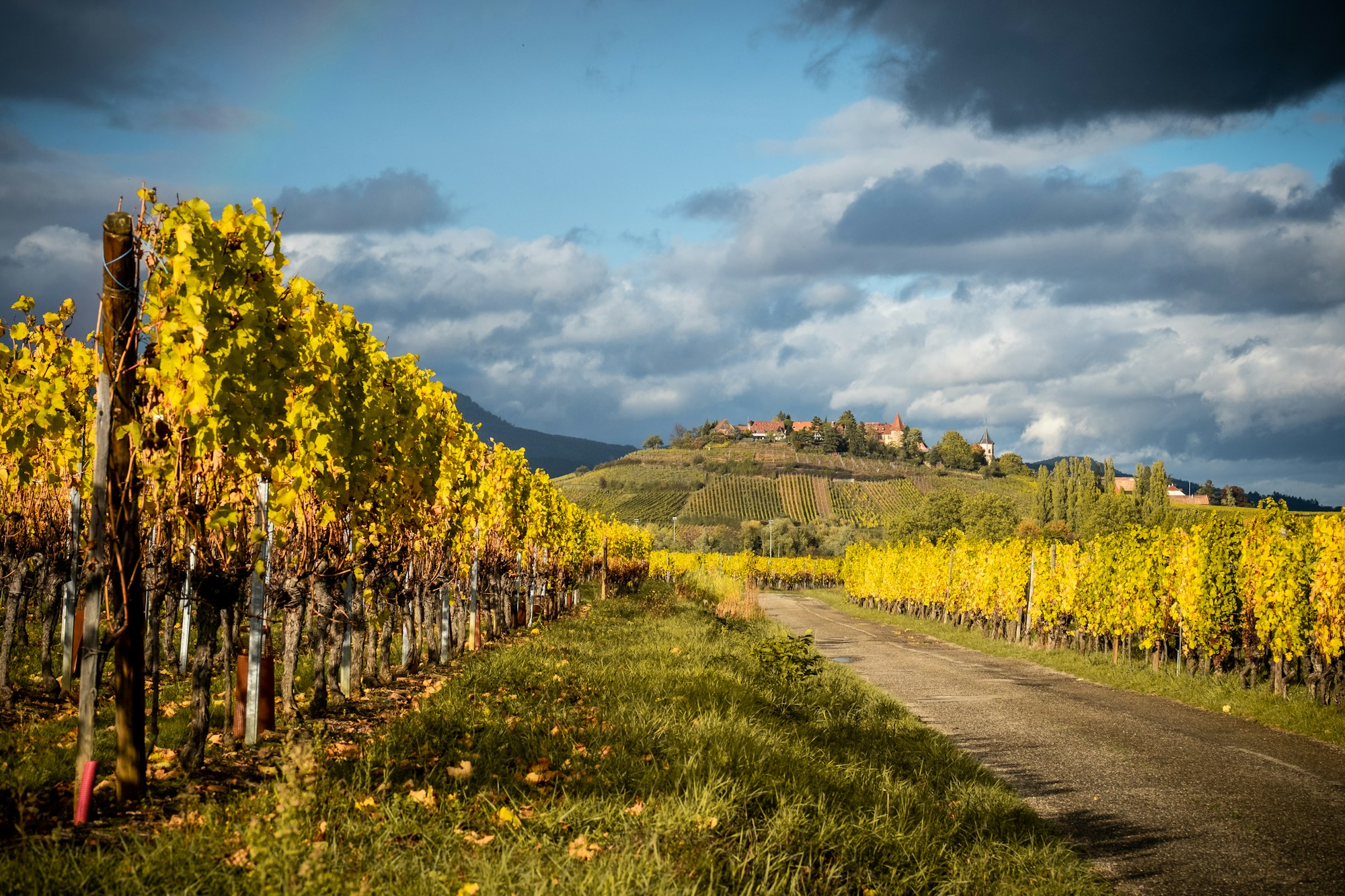
Strasbourg → Colmar → Riquewihr → Mulhouse
France has seen a spectacular acceleration of its charging network: in 2026, the country has over 200,000 public charging points, according to Automobile Propre. Tesla Superchargers, open to all brands since 2022, complement an already dense network, as noted by L’Itinéraire. Alsace, with its short distances between villages and moderate terrain, is the perfect playground for an electric road trip.
The Alsace Wine Route, stretching 170 km from Marlenheim to Thann, winds between the foothills of the Vosges and the Rhine plain. Each village is a gem: Riquewihr with its cobbled lanes, Eguisheim ranked among France’s most beautiful villages, Kaysersberg with its fortified bridge, and Obernai with its timber-framed houses. Wine-tasting cellars punctuate the route every few kilometres — and so do charging stations, as confirmed by Act Nature.
Strasbourg is an ideal starting point, with its Gothic cathedral and Petite France quarter. To the south, Colmar offers Alsatian « Little Venice » and the Unterlinden Museum (Isenheim Altarpiece). Finish with Mulhouse and its Cité de l’Automobile, the world’s largest car museum — a symbolic stop for an EV road trip! The vineyards in autumn, between grape harvest and golden foliage, offer a spectacle that only the slow pace of a road trip allows you to fully appreciate.
Why Alsace by EV?
- 200,000+ charging points in France, Tesla Superchargers open to all
- Short distances between villages (5-15 km) — range is never a concern
- 170 km Wine Route — classified villages, cellars, gastronomy
- Grape harvest in September-October — the most magical time
6. Italy — Electric Tuscany
Florence → San Gimignano → Val d’Orcia → Maremma
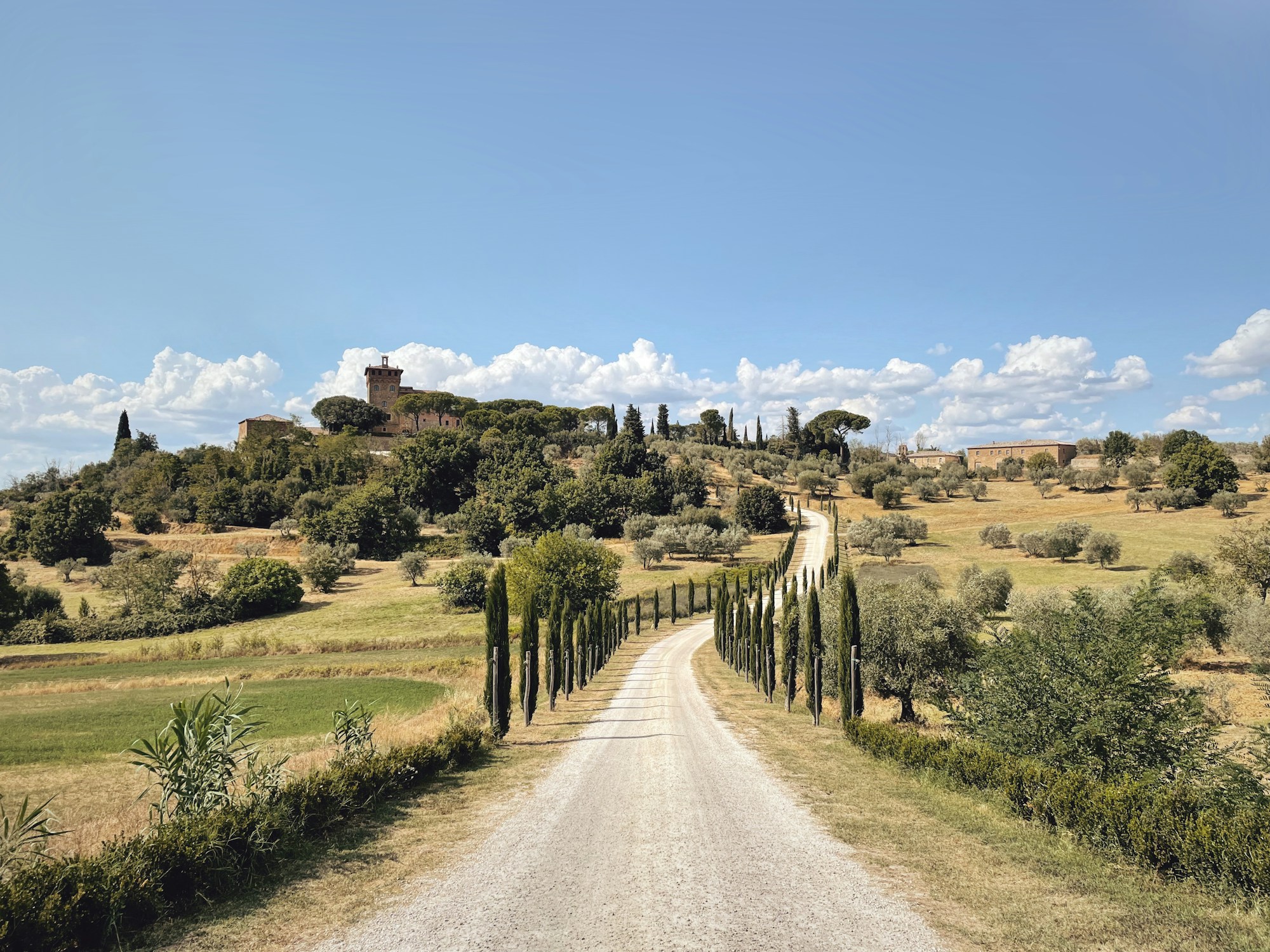
Tuscany by electric vehicle is an experience that makes perfect sense: the winding roads through cypress-dotted hills, Chianti vineyards and hilltop villages are best savoured at a moderate pace, exactly the tempo of an EV. Italy’s charging network has improved considerably, and Tuscany has a unique advantage: many agriturismo (farm stays) have installed charging stations powered by their own solar panels, according to Le Petit Futé. Charging your car with Tuscan solar energy while sipping a Brunello di Montalcino — that’s the electric luxury of 2026.
From Florence, head south towards San Gimignano, the « Manhattan of the Middle Ages » with its 14 medieval towers. Continue to the Val d’Orcia (UNESCO), that iconic landscape of rolling hills, rows of cypresses and wheat fields that inspired Renaissance painters. The villages of Pienza (pecorino capital), Montalcino (Brunello) and Montepulciano (Vino Nobile) are unmissable gastronomic stops.
Extend your trip to the Maremma, Tuscany’s wild and lesser-known coast along the Tyrrhenian Sea. Its unspoilt beaches, fishing villages and the Maremma Natural Park offer a striking contrast to the inland hills. The natural hot springs of Saturnia (cascading open-air hot pools, free access) make for an unforgettable stop. In May-June, the light is golden and the tourists still scarce; in September-October, the grape harvest is in full swing and temperatures remain mild.
Why Tuscany by EV?
- Agriturismo with solar-powered chargers — green and free charging
- Scenic roads at moderate speed — very low energy consumption
- Val d’Orcia UNESCO — one of the world’s most beautiful landscapes
- Gastronomy and wines — Chianti, Brunello, Vino Nobile, pecorino
7. Planning Your Electric Road Trip — Apps, Budget and Tips
Essential apps
Planning is the key to a successful electric road trip. Three apps stand out in 2026:
A Better Route Planner (ABRP)
The absolute reference app for EV road trips. ABRP calculates your route taking into account your exact vehicle model, weather, elevation, speed and even luggage weight. The free version is sufficient for most uses; the Premium version (4-5 €/month) adds real-time battery data and integrated weather forecasts.
Chargemap
The European app for locating charging stations. Chargemap lists over 800,000 chargers across Europe with user reviews, photos and real-time availability. The Chargemap Pass (19.90 € one-time purchase) works as a universal badge on most European networks — an essential investment to avoid juggling multiple cards.
PlugShare
Complementary to Chargemap, PlugShare excels at finding chargers in accommodations, restaurants and private car parks. Its active community reports broken chargers or new charging points faster than official databases.
The multi-network card
In 2026, the Tesla MultiPass provides access not only to Tesla Superchargers but also to the IONITY, Fastned, Allego and TotalEnergies networks from a single card, according to VoNews. The Spark alliance, formed in April 2025 by Atlante, Electra, Fastned and IONITY, creates Europe’s largest fast-charging network according to Fastned, significantly simplifying life for trans-European travellers.
Charging budget: the complete comparison
One of the major advantages of EVs remains the cost of energy, significantly lower than fossil fuel. Here are the average rates across Europe in 2026, according to Driveco:
| Charging type | Cost / kWh | Cost / 100 km |
|---|---|---|
| Home (off-peak hours) | ~0.17 € | 3-4 € |
| Public standard charger | 0.30-0.45 € | 5-8 € |
| Motorway fast charger | 0.50-0.70 € | 8-12 € |
| IONITY without subscription | 0.59 € | 10-11 € |
| IONITY Passport (11.99 €/month) | 0.39 € | ~7 € |
For comparison, a petrol vehicle averages 7 L/100 km, or roughly 12 to 14 €/100 km on fuel. Even with fast motorway charging, the EV remains more economical. On a 1,000 km road trip, the saving is 40 to 80 € compared to a combustion engine.
The 20/80 rule and pro tips
According to TCS (Touring Club Suisse), the golden rule for electric road trips is simple: never drop below 20% battery, never charge above 80%. Why? Charging between 80 and 100% is the slowest (charging speed drops dramatically), and the last 20% isn’t worth the time spent at the charger. By staying in the 20-80% « comfort zone, » you optimise your charging time and preserve battery longevity.
- Drive at 110 km/h instead of 130 km/h on motorways — you gain 20 to 30% range, according to Hess Automobile
- Pre-condition the battery before arriving at a fast charger — most modern EVs have this feature, and it speeds up charging by 30%
- Charge overnight at your hotel — often free or very inexpensive, and you leave each morning at 100%
- Schedule your charging stops during natural break times — lunch, sightseeing, coffee — so you never « waste » time
Practical Info for Your Road Trip
Frequently Asked Questions
Can you do a European road trip without range anxiety in 2026?
Yes, absolutely. In 2026, Europe has over 600,000 public charging stations, and the AFIR regulation mandates a 400 kW station every 60 km on major motorways. Countries like the Netherlands (47.5 chargers/100 km) or Norway (over 90% EV sales) have ultra-dense infrastructure. With an app like A Better Route Planner (ABRP), you plan each charging stop in advance and will never run out of energy.
How long does a fast charge actually take?
On a 150 to 350 kW fast charger (IONITY, Fastned, Tesla Supercharger), expect 20 to 35 minutes to go from 10 to 80% battery, depending on your vehicle model. That’s the perfect time for a coffee and a rest stop. The golden rule: never charge beyond 80%, as the charging speed slows considerably above that threshold. Source: TCS (Touring Club Suisse).
Which charging card should you bring for all of Europe?
The Chargemap Pass (19.90 € one-time purchase) is the most versatile card: it works on most networks in France, Germany, Italy, Austria, the Netherlands and Scandinavia. To supplement it, the Tesla MultiPass gives access to Tesla Superchargers open to all, as well as the IONITY, Fastned, Allego and TotalEnergies networks. With these two cards, you cover over 90% of European chargers.
Is the 60 km rule between chargers enforced everywhere?
The European AFIR (Alternative Fuels Infrastructure Regulation) mandates a fast charging station of at least 400 kW every 60 km on the TEN-T motorway network by the end of 2025. In 2026, Western European countries (France, Germany, the Netherlands, Austria, northern Italy) comfortably meet this standard. Some rural areas in Southern and Eastern Europe may still have wider gaps — hence the importance of planning with ABRP. Source: Editorial GE.
How is range affected by weather?
Cold is the main enemy of range. In sub-zero temperatures, expect a 20 to 30% loss of range, mainly due to cabin heating and increased battery resistance. In summer, air conditioning has a lesser impact (5 to 10%). Tip: pre-condition your vehicle while it’s still plugged in, use heated seats rather than cabin heating, and plan shorter stages in winter.
How can you save on charging costs?
Five practical strategies: 1) Charge overnight at your accommodation — often free or very cheap. 2) Prefer public standard chargers (0.30-0.45 €/kWh) over motorway fast chargers (0.50-0.70 €/kWh). 3) Subscribe to IONITY Passport (11.99 €/month) if you plan more than 3 fast charges — you go from 0.59 to 0.39 €/kWh. 4) Drive at 110 km/h instead of 130 km/h to gain 20-30% range. 5) Use subscriptions like the Chargemap Pass to avoid pay-per-use surcharges. Source: Driveco.
Sources
- Visit Norway — Norwegian scenic routes and EV infrastructure
- Tesla Mag — Norway EV sales statistics 2025
- Toute l’Europe — European charging station ranking (197,712 stations, Netherlands)
- Editorial GE — AFIR regulation and 400 kW station every 60 km targets
- Le Petit Futé — Romantic Road, Grossglockner and Tuscany EV guides
- Tesla Accessories — IONITY pricing and charging network comparison
- Génération Auto-Moto — Austrian EV infrastructure and nighttime pricing
- L’Itinéraire — French charging network and Tesla Supercharger opening
- Act Nature — Charging stations on the Alsace Wine Route
- Chargemap — European pass (figure from the Avere-France barometer: 200,045 charging points in France at 31 July 2026)
- A Better Route Planner (ABRP) — The reference EV route planner
- Driveco — Charging rates by station type across Europe 2026
- TCS (Touring Club Suisse) — The 20/80 rule and charging best practices
- Hess Automobile — Impact of speed on EV range
- Fastned — Spark alliance (Atlante, Electra, Fastned, IONITY) April 2025
- VoNews — Tesla MultiPass and network interoperability
- Nomade Aventure — Norway itineraries and scenic routes
Research conducted on March 16, 2026
Ready to Hit the Road in an Electric Vehicle?
Discover our detailed European itineraries on Pixidia: accommodations with charging stations, day-by-day stages, budget and practical tips for every destination.
Explore itineraries on Pixidia