
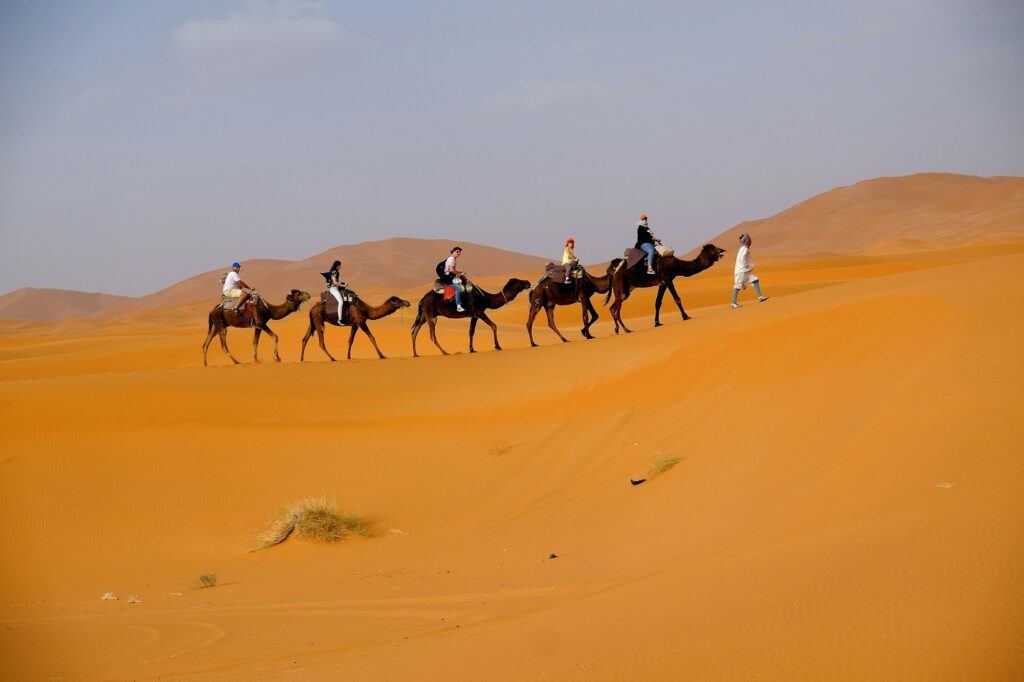
Morocco is one of the most fascinating destinations for a first big trip. From the frenetic energy of Marrakech’s souks to the silent majesty of the High Atlas, from millennia-old kasbahs to the endless golden dunes of the Sahara, this country delivers in just 10 days a diversity of landscapes and cultures that few destinations can match. In 2026, with nearly 20 million visitors expected and constantly improving road infrastructure, it’s the perfect time to discover the classic Marrakech to desert route — as long as you plan it right. Here’s our complete day-by-day guide, with detailed budget, must-see stops and hidden gems off the beaten path.
Why choose the Marrakech → Desert route for your first trip
The best of Morocco in one logical loop
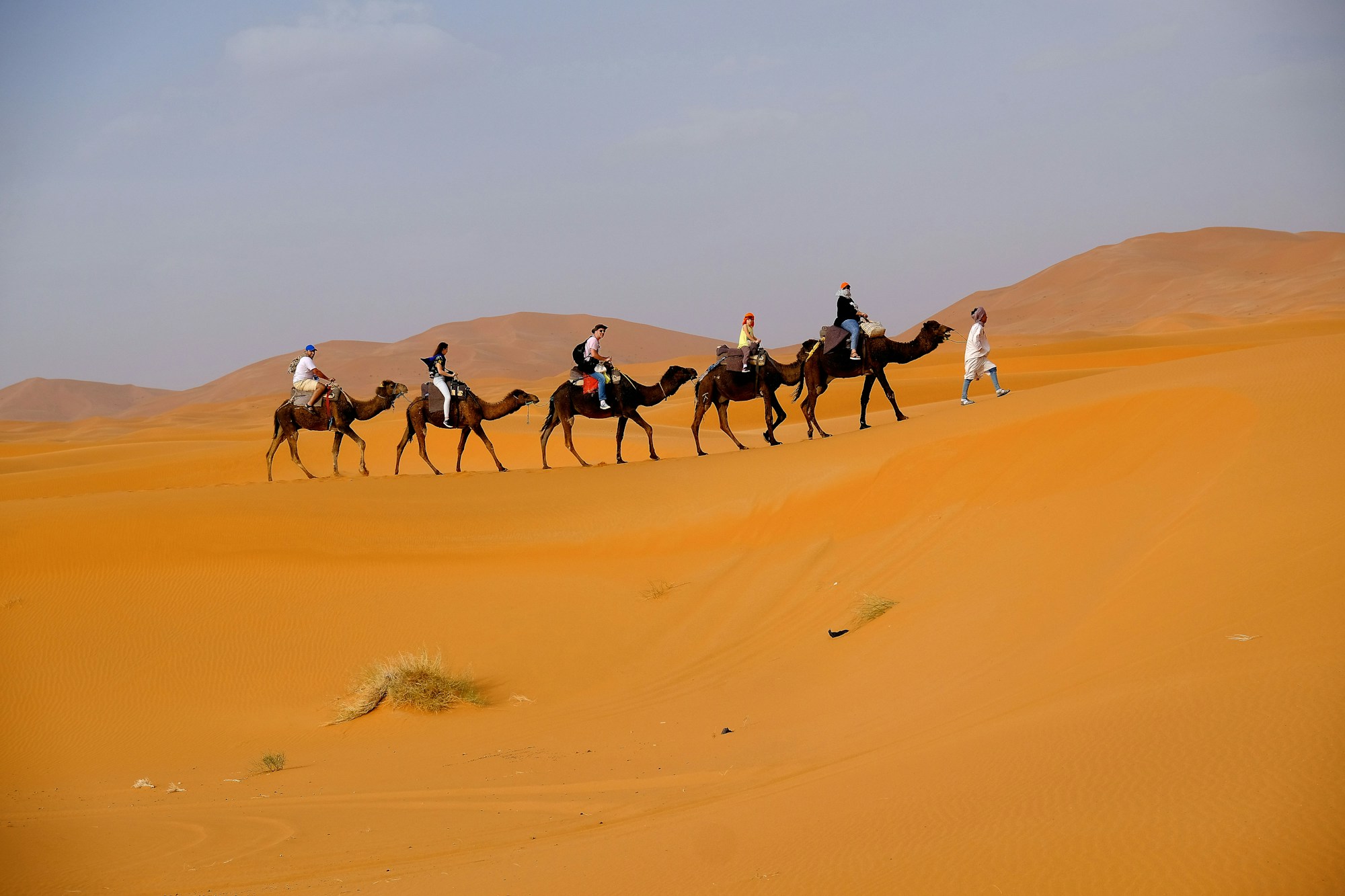
This loop itinerary departing from Marrakech is the most popular for a first visit — and for good reason. In 10 days, you’ll cross five radically different worlds: the vibrant medina of Marrakech, the snow-capped peaks of the High Atlas, the vertiginous gorges of Dades and Todra, the earthen kasbahs of the pre-Saharan south, and the infinite dunes of Erg Chebbi. All while returning to your starting point, without internal flights or complex logistics.
Unlike the « 3-day Marrakech → desert → Marrakech » package sold by agencies, our 10-day itinerary gives you time to go off the beaten path: the Fint oasis, Skoura’s palm grove, the Draa Valley, the Gnawa village of Khamlia. Stops that 90% of organised tours skip entirely.
The complete itinerary at a glance
| Day | Stage | Driving time | Accommodation |
|---|---|---|---|
| D1-D2 | Marrakech — medina, souks, gardens | — | Riad in the medina |
| D3 | Tizi n’Tichka → Ait Ben Haddou → Ouarzazate | ~4-5h | Riad in Ouarzazate |
| D4 | Fint Oasis → Skoura (palm grove) | ~2h | Ecolodge in Skoura |
| D5 | Valley of the Roses → Dades Gorges | ~3h | Guesthouse in Dades |
| D6 | Todra Gorges → Tinghir | ~2h | Riad in Tinghir |
| D7 | Tinghir → Erfoud → Merzouga | ~4-5h | Inn in Merzouga |
| D8 | Erg Chebbi — dunes, Khamlia, Dayet Srij | — | Desert bivouac |
| D9 | Merzouga → N’Kob → Agdz (Draa Valley) | ~5-6h | Guesthouse in Agdz |
| D10 | Agdz → Tamegroute → Ouarzazate → Marrakech | ~7-8h | Return |
Days 1-2: Marrakech, the Red City
The perfect acclimatisation gateway
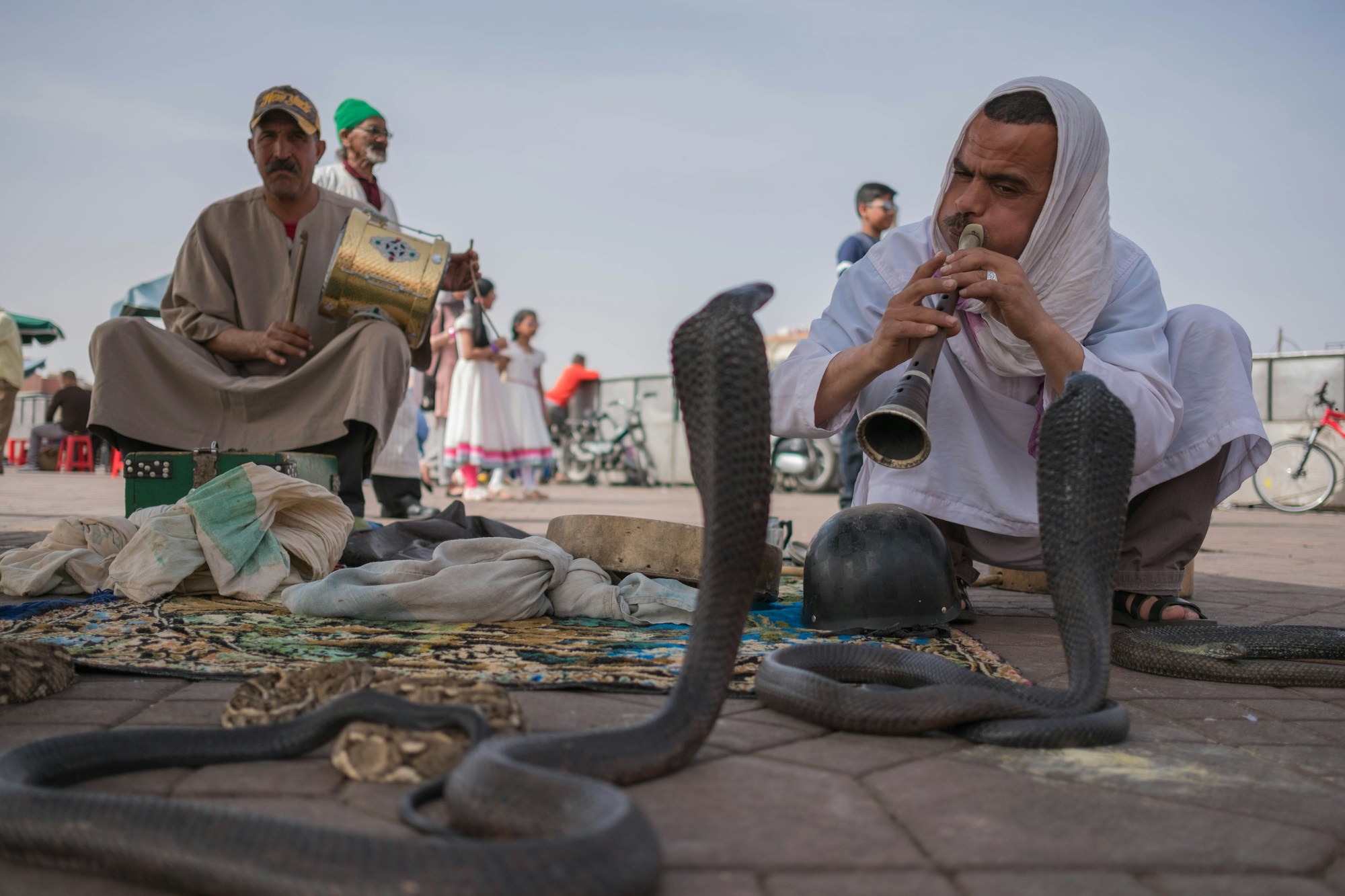
Marrakech isn’t just a compulsory stopover — it’s the ideal place to learn the codes of Morocco before heading south. The rhythm of the souks, the art of haggling, the hammam ritual, the prayer calls that punctuate the day: two days are enough to absorb the essentials without being overwhelmed.
Must-sees
- Jemaa el-Fna Square — an open-air theatre with storytellers, musicians and fresh orange juice stands (5-10 MAD per glass)
- Medina souks — spices, leather, carpets, lanterns. Start at 1/3 of the listed price
- Jardin Majorelle — 70 MAD entry, the Majorelle blue is unforgettable. Arrive at opening time
- Bahia Palace — refined Hispano-Moorish architecture, quieter than Majorelle
- Yves Saint Laurent Museum — 100 MAD, combine with Majorelle (next door)
- Le Jardin Secret — 60 MAD (+35 MAD for the panoramic tower), a lesser-known haven of peace
- Traditional hammam — budget 150-300 MAD for a full scrub
Eating like a local
Skip the tourist restaurants on the square and head into the alleyways to find neighbourhood street food spots. A full meal (skewers, bread, tea) costs 40-80 MAD. Don’t miss tangia, Marrakech’s signature dish slow-cooked in an earthenware jar, or morning sfenj (doughnuts).
Day 3: Crossing the High Atlas and the Ksar of Ait Ben Haddou
The crossing between two worlds
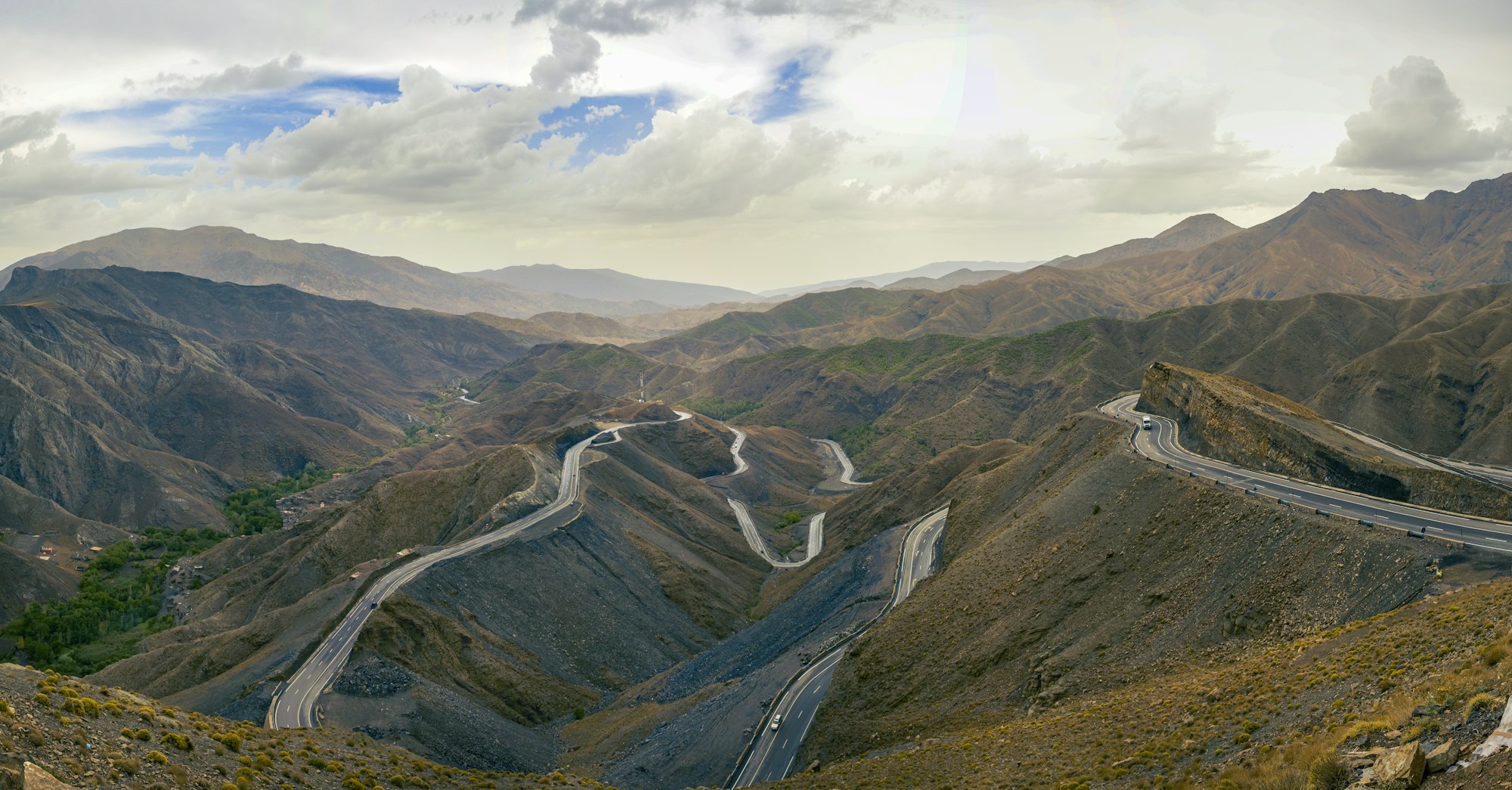
The Tizi n’Tichka pass (2,260 m) is far more than a mountain road — it’s a visual and climatic shift. Leaving the Marrakech plain, you’ll pass through Berber villages clinging to mountainsides, agricultural terraces and panoramas that change with every bend. Leave early in the morning for the best light and emptier roads.
Detour option: Telouet and the Ounila Valley
Rather than speeding to Ouarzazate on the main road, turn off towards the Telouet Kasbah — a former palace of the Glaoui family, sumptuous but partially ruined, which can be visited for a few dirhams. The road then continues through the Ounila Valley, a succession of earthen villages and terraced fields, before arriving directly at Ait Ben Haddou. This detour adds ~1h but avoids the tour buses.
Ait Ben Haddou (UNESCO)
This fortified ksar dating from the 11th century is one of the finest examples of earthen architecture in the world. The legendary backdrop for Gladiator, Game of Thrones and Lawrence of Arabia, it remains impressive despite its tourist fame. The key: arrive very early or in late afternoon to avoid the crowds and catch the best light on the ochre facades.
Climb to the top of the ksar for a 360° panorama of the valley. Crossing the river on foot (or via a bridge depending on the season) is part of the experience. Free entry — tip the local informal guides.
Day 4: Ouarzazate, the secret Fint Oasis and Skoura’s palm grove
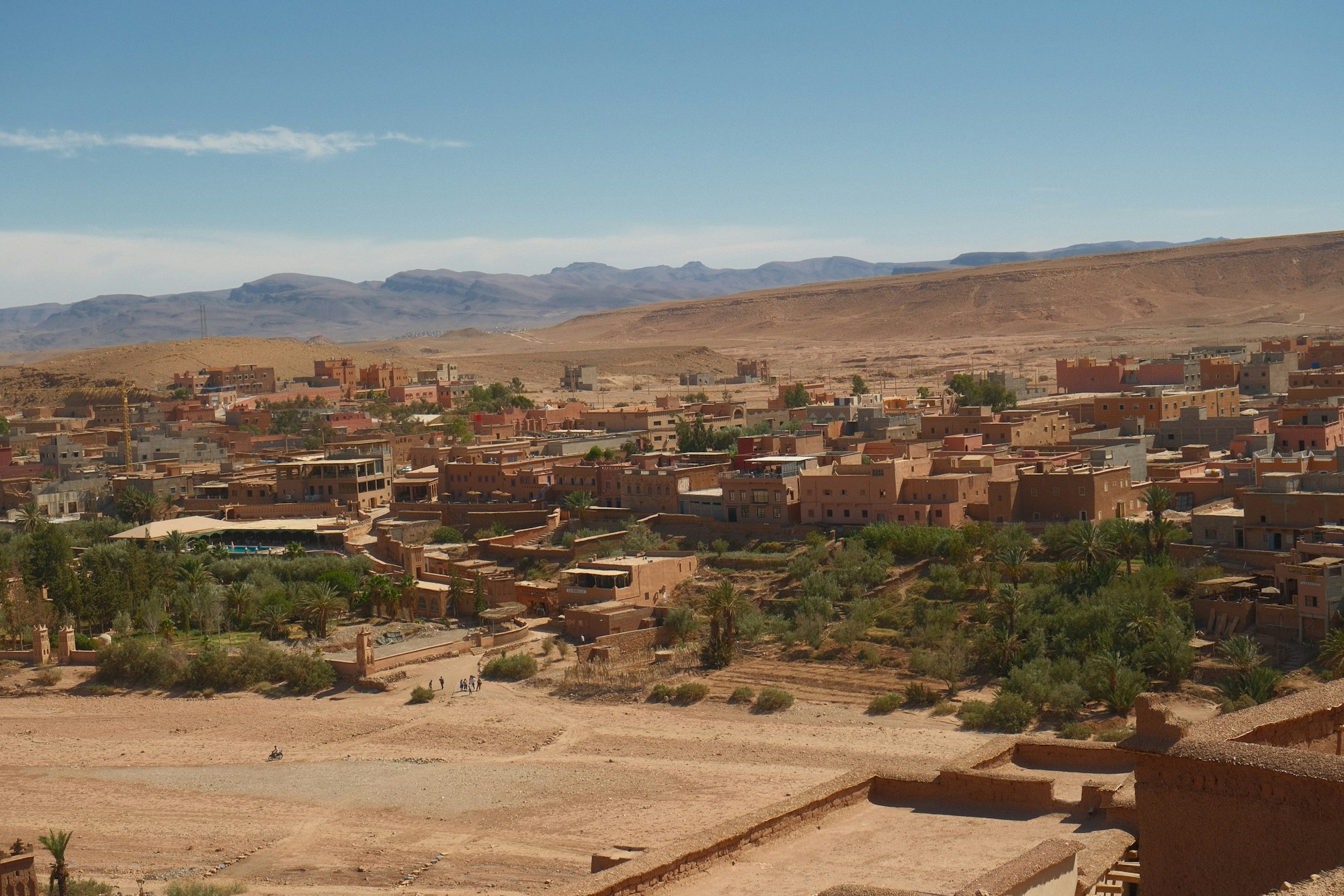
Cinema, oasis and the Valley of a Thousand Kasbahs
Ouarzazate, dubbed the « Gateway to the Desert », is mostly known for its film studios — Africa’s largest (40 MAD entry). But the real gem hides just 10 km away: the Fint Oasis, a small green paradise nestled among arid rocks. Sixty families live here to the rhythm of the wadi and the palms, far from any tourist bustle.
In the afternoon, head to Skoura, an emerging 2026 destination. This 50 km² palm grove hides centuries-old kasbahs among the palms — including the magnificent Kasbah Amridil, one of the best-preserved in southern Morocco. The Guardian recently described it as « so unchanged it is almost otherworldly ».
- Morning: Film studios or Kasbah Taourirt in Ouarzazate
- Late morning: Fint Oasis — free walk of 45-60 min, gorgeous light
- Afternoon: Drive to Skoura (40 km), explore the palm grove by bike
- Evening: Night in an ecolodge or guesthouse in the palm grove
Day 5: Valley of the Roses and Dades Gorges
From Skoura, you enter the Valley of the Roses around Kelaat M’Gouna — a living landscape where, from late April to May, millions of Damask roses perfume the air and colour the fields. Even out of season, local cooperatives produce rosewater, soaps and oils that you can buy direct (compare and smell: quality varies widely).
The day continues to the Dades Gorges, less narrow than Todra but longer and equally spectacular. The winding road climbing through the gorges offers breathtaking views of the « Monkey Fingers » rock formations — natural pinnacles sculpted by erosion.
The « 2026 approach » to the Dades Gorges is to walk. By choosing a side trail (15 minutes from the popular viewpoints), you’ll find yourself alone in a canyon with ochre walls. Hire a local guide if you want to access the narrowest passages.
Day 6: Todra Gorges — Morocco’s most spectacular canyon
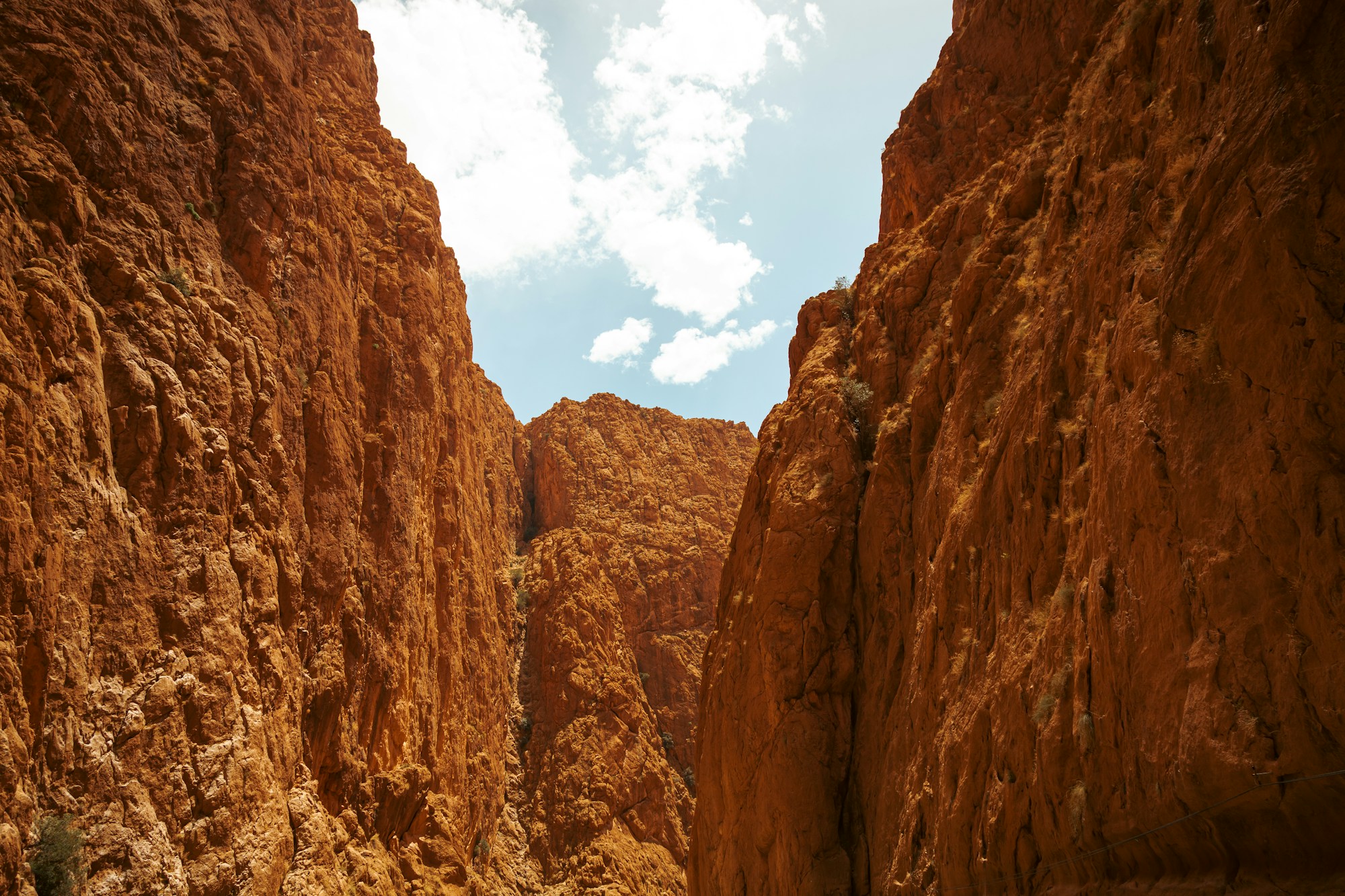
300-metre walls and morning light
The Todra Gorges are arguably the day’s highlight — and perhaps of the entire trip. A canyon with limestone walls 300 metres high, narrowing to just 10 metres wide at the tightest point. The most impressive 800 metres take just 20 minutes to walk through, but the emotion matches the scale of the cliffs.
Todra is also an internationally renowned rock climbing site. Even if you don’t climb, watching climbers on the walls gives a dizzying sense of scale. For enthusiasts, a half-day guided climb is available — enquire with local guides in Tinghir.
After the gorges, settle into Tinghir for the night. This small oasis town has its own charm, with a surprising palm grove and well-positioned accommodation for the desert drive the next day.
Days 7-8: Merzouga and Erg Chebbi — nights in the Sahara
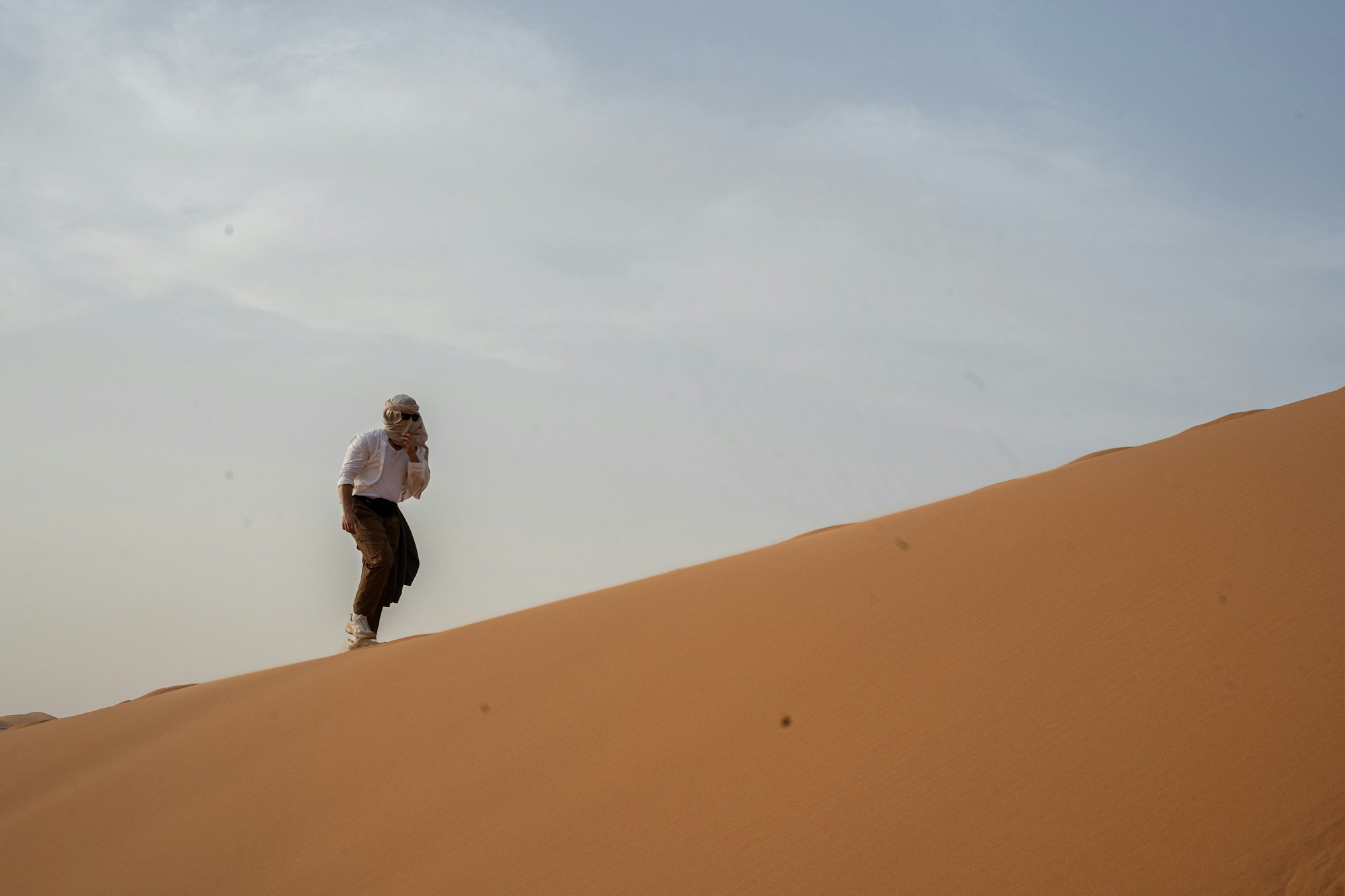
The moment you’ve been waiting for: the Sahara dunes
Arriving at Merzouga is a visual shock. After hours of arid landscapes, the golden dunes of Erg Chebbi emerge like a mirage — some reaching 150 metres high. This is where you’ll live one of the most unforgettable moments of your travelling life.
Day 7: Arrival and first sunset
- Drive from Tinghir via the Ziz Valley — a palm forest winding through a spectacular canyon
- Settle in Merzouga in late afternoon at a riad at the foot of the dunes
- First sunset from the nearest dunes — pure magic
Day 8: Full excursion and desert night
- Morning: Visit the village of Khamlia — Gnawa community, Saharan spiritual music, unique cultural encounter (50-200 MAD donation)
- Noon: Dayet Srij — seasonal lake at the foot of the dunes, home to flamingos (depending on the season)
- Afternoon: Free time for dune walking, sandboarding or quad biking
- 4-5pm: Departure by camel towards the camp in the dunes (~1h30)
- Evening: Sunset from the dunes, Berber dinner (tagine), drums around the fire, stargazing with zero light pollution
- Night: Bivouac in Berber tents (from basic to luxurious)
- Next morning: Sunrise — the most photographed moment of the trip
How to choose your camp
This is the crucial question. In 2026, options range from basic Berber tents (shared toilets, 400-600 MAD) to luxury camps with private suites, hot showers and jacuzzi (1,200-3,500 MAD). Our criteria:
- Small capacity — less noise, more authenticity
- Far from the road — the deeper into the dunes, the better
- No amplified music in the evening — desert silence is the real luxury
- Half-board included — check what’s covered (dinner, breakfast, tea)
Day 9: Return via Jbel Saghro and the Draa Valley
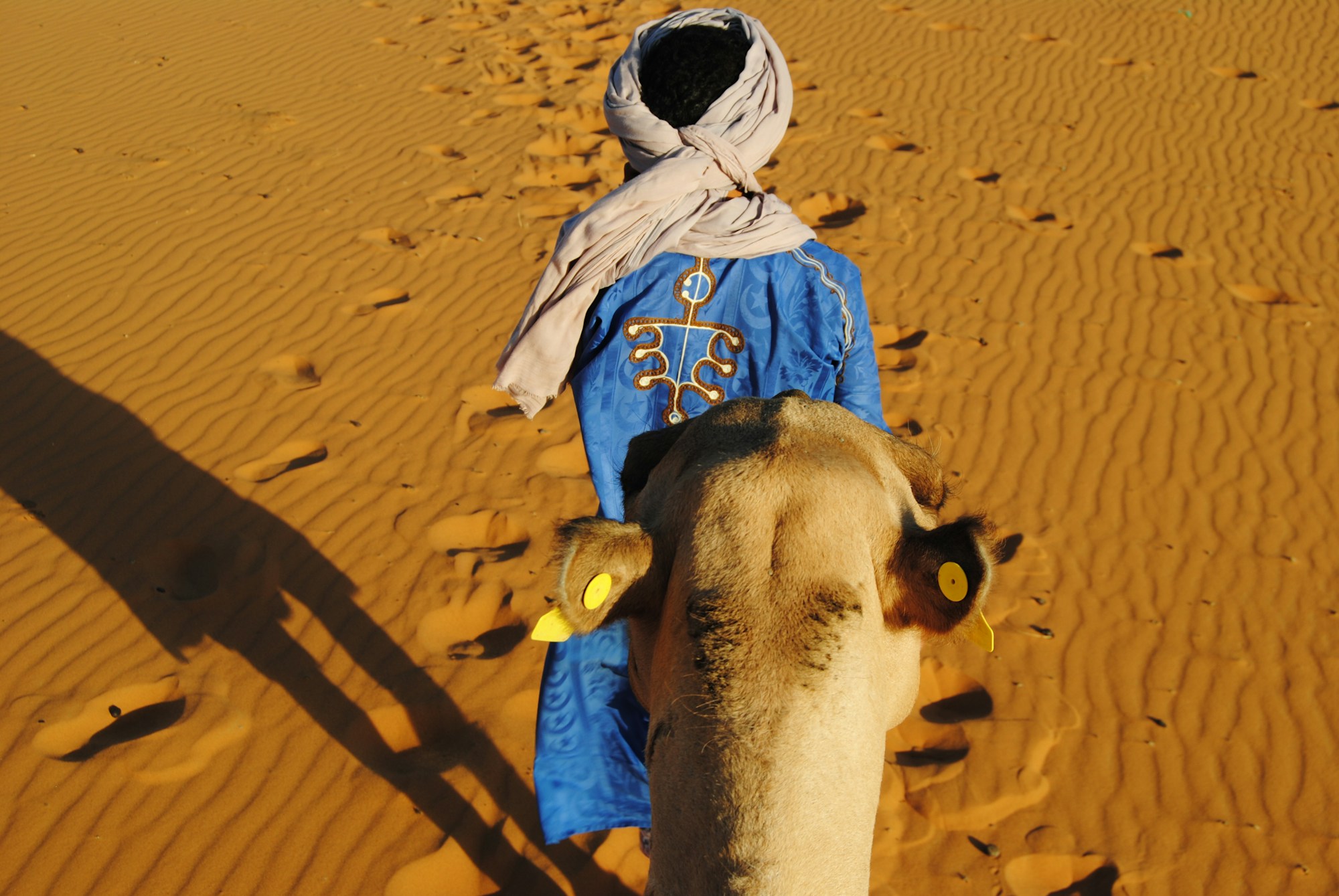
Mineral desert, palm groves and green pottery
The return route is anything but monotonous. Leaving Merzouga, you cross the Jbel Saghro — a mineral, mountainous desert with lunar landscapes, far less visited than Merzouga yet equally photogenic. It’s the antidote to « postcard desert » — a raw, wild space.
The village of N’Kob, at the foot of the Saghro, offers an authentic Berber stopover: traditional hospitality, charcoal-cooked meals, intact kasbahs. Then the road descends to Agdz and the entrance to the Draa Valley — the quintessential « oasis » route, with its labyrinthine palm groves, ksour (fortified villages) and a way of life unchanged for centuries.
Recommended stop: Tamegroute
This small village holds two treasures: an ancient Koranic library (illuminated manuscripts from the 13th century) and green pottery workshops — a distinctive green glaze achieved through ancestral firing techniques. It’s one of the best cultural stops in the South, a living craft rather than a tourist set piece.
Day 10: Return to Marrakech — the loop is complete
The final day is dedicated to the drive back to Marrakech via Ouarzazate and the Tizi n’Tichka pass. Allow 7-8 hours of driving with stops — it’s a long day but crossing the Atlas in the opposite direction offers a completely different perspective.
If timing is tight, two options:
- Option A — Break the journey by sleeping in Ouarzazate (D9 evening) and drive back to Marrakech early on D10
- Option B — Fly Ouarzazate → Casablanca if you have a flight to catch (limited flights but they exist)
If you reach Marrakech by mid-afternoon, treat yourself to a final hammam, a farewell dinner on a terrace with medina views, and one last stroll through the souks for souvenirs — spices, argan oil, Tamegroute pottery.
Detailed budget for 10 days in Morocco in 2026
Prices in Morocco have risen 10-15% since 2024, driven by record tourist numbers. Here are realistic ranges by traveller type, excluding international flights:
| Category | Budget | Mid-range | Comfort |
|---|---|---|---|
| Accommodation/night | 100-250 MAD (€10-25) | 400-900 MAD (€40-90) | 1,500-5,000+ MAD (€150-500+) |
| Meals/day | 100-150 MAD (€10-15) | 200-300 MAD (€20-30) | 500-1,000 MAD (€50-100) |
| Transport/day | 50-100 MAD (€5-10) | 100-200 MAD (€10-20) | 300-500 MAD (€30-50) |
| Activities/day | 50-100 MAD (€5-10) | 100-300 MAD (€10-30) | 500+ MAD (€50+) |
| Total/day | 300-600 MAD (€30-60) | 800-1,700 MAD (€80-170) | 2,800+ MAD (€280+) |
| Total 10 days | €300-600 | €800-1,700 | €1,500-3,000+ |
2026 reference prices
When to go: the best season for this itinerary
| Period | Marrakech | Atlas | Desert | Verdict |
|---|---|---|---|---|
| Mar-May | 18-30°C ☀️ | Passable ✅ | Pleasant ✅ | Ideal ⭐ |
| Sep-Nov | 18-28°C ☀️ | Passable ✅ | Pleasant ✅ | Ideal ⭐ |
| Dec-Feb | 10-20°C 🌤️ | Snow possible ⚠️ | Cold at night (0-5°C) 🥶 | Possible with caveats |
| Jun-Aug | 35-45°C 🔥 | Passable ✅ | 40-50°C ❌ | Avoid |
Spring (March-May) is the prime season: pleasant temperatures everywhere, green countryside, valleys in bloom. Ramadan 2026 begins around 17 February — if you travel during this period, expect restaurants closed during the day but also unique festive nighttime atmospheres.
Practical tips for your first trip to Morocco
Transport: car, bus or tour?
For this itinerary, a rental car is the most flexible choice. Roads are in excellent condition, well-signposted, and the landscapes alone justify the freedom to stop whenever you want. Budget 200-450 MAD/day depending on the vehicle. Book via a comparison site (DiscoverCars, Autoescape) and take zero-excess insurance — deposits can reach €2,500.
Alternatives:
- CTM/Supratours buses — extensive network, air-conditioned, 80-250 MAD depending on distance. Less freedom but zero driving stress
- 3-day organised tour (Marrakech → desert) — 1,500-4,000 MAD all-inclusive. Convenient if you don’t want to drive
- Smart compromise — bus Marrakech → Ouarzazate, then private driver in the South (5-6 days). Peace of mind on mountain roads
Visa and formalities
No visa required for citizens of France, Belgium, Switzerland, Canada, the UK, the US, Australia and most EU nationalities (stays under 90 days). Passport valid for at least 3 months beyond your return date. Check that customs stamps your passport properly on entry — some travellers have had issues at departure without an entry stamp.
Safety
Morocco is considered one of the safest countries in Africa for tourism. The government invests heavily in tourist security. Standard precautions apply in busy tourist areas (pickpockets at Jemaa el-Fna and in the souks). Common Marrakech scams: fake guides, pushy « friends », fake leather — a firm, smiling « no thank you » is enough.
Health and water
Never drink tap water — bottled water only (5-10 MAD for 1.5 L). Watch out for ice cubes and salads. Pack anti-diarrhoea medication and probiotics. SPF 50+ sunscreen is essential, especially in the desert.
Phone and internet
Get a local SIM card (Orange, Maroc Telecom or Inwi) at the airport — 50 MAD for a 30-day package. Or opt for an eSIM (Holafly, Airalo) to skip the queues. Wi-Fi is available in almost all riads and restaurants.
Culture and etiquette
- Clothing — conservative country: cover shoulders and knees in the medina. Headscarves are not required for foreign women
- Haggling — it’s a tradition, not an aggression. Start at 1/3 of the listed price, keep smiling
- Right hand — use it for eating, greeting and exchanging objects
- Photos — always ask permission before photographing someone
- Tipping — 10-15% at restaurants, 50-100 MAD for guides, 5-10 MAD for parking attendants
- Useful phrases — « Choukran » (thank you), « La » (no), « B’saha » (bon appétit), « Inchallah » (God willing)
Flavours you can’t miss
Moroccan cuisine is one of the richest in the world. Here are the must-try dishes during your trip:
- Tagine — the national dish, slow-cooked in a cone-shaped earthenware pot. Try chicken-preserved lemon-olives and lamb-prunes-almonds
- Couscous — traditionally served on Fridays. Seven-vegetable version for vegetarians
- Tangia — Marrakech’s signature, meat slow-cooked in an earthenware jar. Ask the locals
- Pastilla — flaky pastry with chicken, almonds, cinnamon and icing sugar. A surprising sweet-savoury blend
- Harira — lentil, chickpea and tomato soup, the Ramadan staple. Comforting in the evening
- Msemen — flaky breakfast crêpe, perfect with honey
- Mint tea — the « Moroccan whisky », an essential social ritual. Served at any time
- Street food — sfenj (doughnuts), briouats (stuffed pastries), chebakia (honey-sesame pastry)
Frequently asked questions about a first trip to Morocco
What budget should I plan for 10 days in Morocco in 2026?
For a mid-range traveller, expect €800-1,700 per person for 10 days (excluding international flights). This includes charming riads, local restaurant meals, shared car rental and one night in a desert camp. On a budget, €300-600 is possible with dormitories and street food. The exchange rate is approximately 1 EUR = 10.5-11 MAD.
When is the best time to visit Morocco?
March-May and September-November offer the best conditions for the Marrakech-desert itinerary: pleasant temperatures (18-30°C), passable Atlas roads and comfortable desert nights. Avoid June-August (40-50°C in the desert) and check Ramadan dates (around 17 February in 2026).
Are 10 days enough for a first trip to Morocco?
Yes, 10 days is an excellent balance for a first visit. You’ll have time to experience Marrakech (2 days), cross the Atlas, explore the gorges, spend two nights in the desert and return via the Draa Valley. With 14 days, add Fes, Chefchaouen or Essaouira. With only 7 days, shorten by cutting Skoura and the Draa Valley.
Should I rent a car or take an organised tour?
A rental car offers total freedom and the roads are excellent (200-450 MAD/day). It’s the best choice for off-the-beaten-path stops (Fint, Skoura, Tamegroute). If you don’t want to drive, a 3-day organised Marrakech → desert tour costs 1,500-4,000 MAD all-inclusive, or opt for a private driver in the South (more comfortable on mountain roads).
Is Morocco safe for a first-time visitor?
Yes, Morocco is considered one of the safest countries in Africa for tourism. The government invests heavily in tourist security. Standard precautions apply in busy tourist areas (pickpockets, fake guide scams in Marrakech). Say « no thank you » firmly, don’t follow unofficial guides, and check prices before ordering.
How many nights should I spend in the desert?
Two nights minimum — one at a Merzouga riad and one at a dune bivouac. The first night is the visual shock, the second is when you truly enjoy it: sunrise on foot, the Khamlia village, quiet dunes without the groups. A single night is too rushed and will leave you frustrated.
Can you drink tap water in Morocco?
No, always drink bottled water (5-10 MAD for 1.5 L). Also watch out for ice cubes and salads washed in tap water at budget restaurants. Pack anti-diarrhoea medication and probiotics as a precaution. Hepatitis A and typhoid vaccinations are not mandatory but recommended — consult your doctor.
How can I avoid tourist scams in Marrakech?
A few simple rules: never follow an unofficial « guide » who approaches you on the street, say « no thank you » firmly and keep walking, check prices before ordering (especially on terraces), haggle in the souks (start at 1/3 of the price), and beware of « fake leather » and adulterated spices. The trick: hire an official licensed guide for your first medina visit — it’s an investment that saves time and avoids traps.
Sources and references
- Medina of Marrakesh — UNESCO
- Ksar of Ait-Ben-Haddou — UNESCO
- Ouarzazate-Zagora-Tinghir — Moroccan National Tourist Office
- Errachidia-Midelt-Merzouga — Moroccan National Tourist Office
- Morocco Travel Cost — Budget Your Trip (2026)
- Skoura, Morocco — The Guardian (2025)
- Kasbah Amridil — Lonely Planet
- Green Pottery of Tamegroute — Visit Draa Tafilalet
- Gnaoua Khamlia — Visit Draa Tafilalet
- Morocco Budget Travel Guide — Nomadic Matt (2026)
- Morocco Itineraries — Rough Guides
- Best Time to Visit Morocco — Lonely Planet
- Morocco Tourism Record 2024 — Maroc.ma
- Climbing at Todra — Climb Todra