
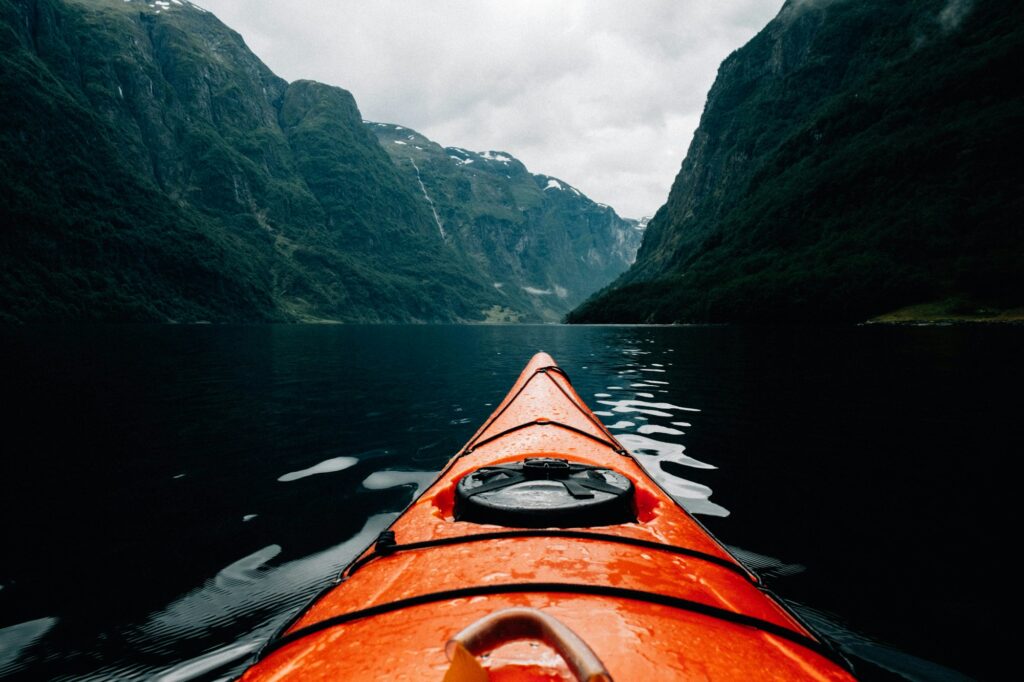
Imagine paddling beneath 1,000-metre cliffs, gliding between icebergs the size of tower blocks, or exploring coastlines battered by the North Atlantic that only a kayak can reach. Scandinavia holds some of the most spectacular sea kayaking territory on earth — from beginner-friendly UNESCO fjords in Norway to polar expeditions in Greenland. This guide presents the 5 must-do routes for 2026, ranked by level and destination, with real budgets, ideal seasons and insider tips gathered from local operators.
| Route | Country | Level | Budget (excl. flights) | Best Season |
|---|---|---|---|---|
| Nærøyfjord & Aurlandsfjord | 🇳🇴 Norway | Beginner | €700–1,000 | Jul.–Aug. |
| Geirangerfjord & Storfjord | 🇳🇴 Norway | Beginner–Intermediate | €800–1,200 | Jun.–Aug. |
| Lofoten Islands | 🇳🇴 Norway | Intermediate | €2,200–3,000 | Jul.–Sep. |
| Disko Bay & Ilulissat | 🇬🇱 Greenland | Advanced | €3,500–5,000 | Jul.–Aug. |
| Faroe Islands | 🇫🇴 Faroe | Intermediate | €1,200–2,000 | Jun.–Aug. |
1. Nærøyfjord & Aurlandsfjord: the king of Norwegian fjords (UNESCO)
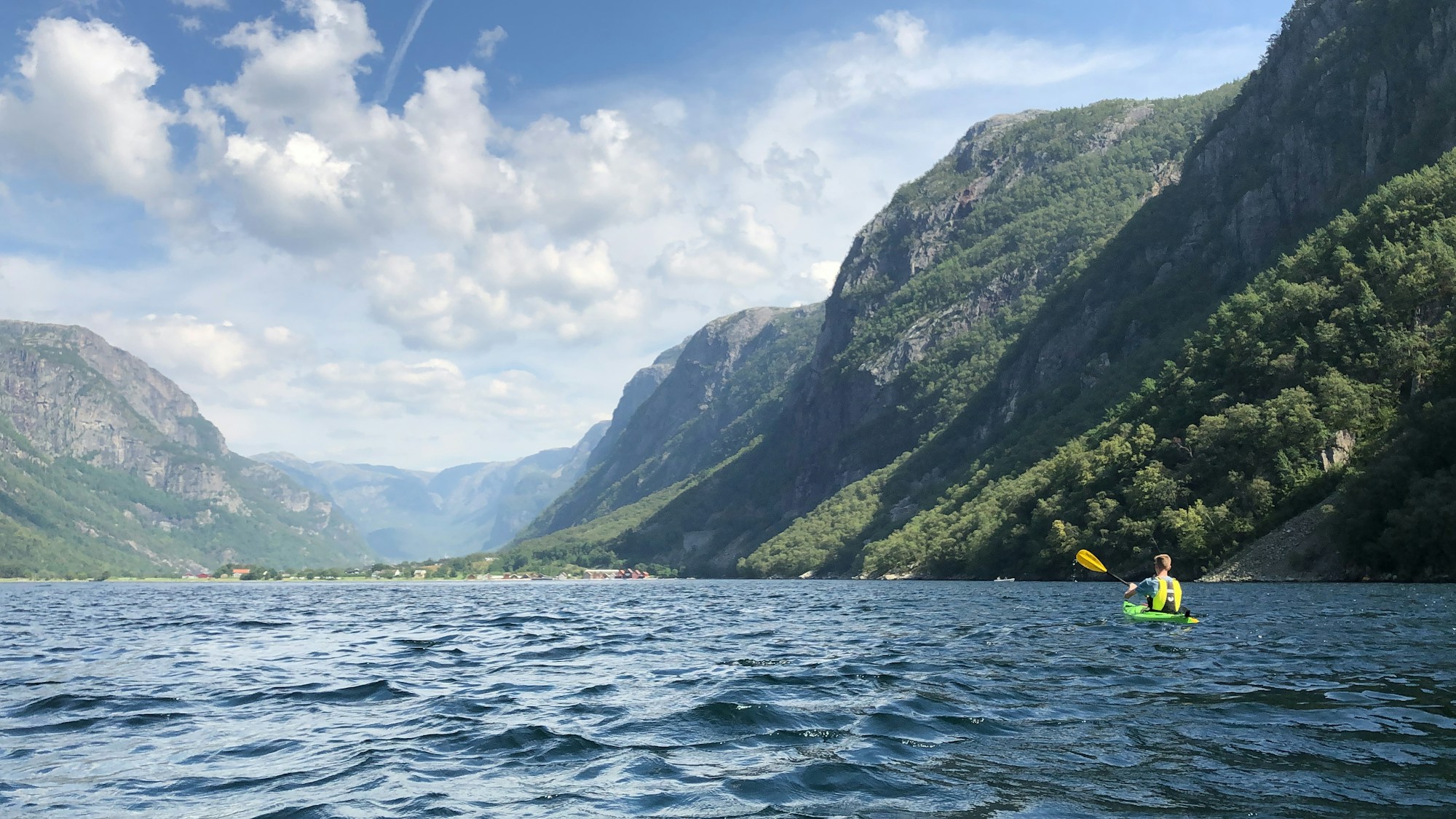
Nærøyfjord, Sogn og Fjordane — Starting point: Flåm
The Nærøyfjord is a branch of the Sognefjord, only 250 metres wide at its narrowest point — so exceptional it earned UNESCO World Heritage status. According to Fjords.com, the 17 km paddling route between Flåm and Gudvangen is perfect for a full day on the water, with views of near-vertical cliffs and traditional farms clinging to the walls.
The Aurlandsfjord stretches 29 kilometres as a branch of the Sognefjord (204 km in total). At 11 km from its mouth, it splits into two arms: the Aurlandsfjord and the Nærøyfjord. Flåm is the hub for guided tours, with options ranging from half-day excursions to multi-day camping trips on the banks.
Join a guided trip or rent from the Njord Kayak Centre Flåm and you’ll glide across mirror-like water beneath towering mountains in landscapes that feel almost unreal. In summer, it’s possible to paddle right up to waterfalls and spot seals from your cockpit.
What makes this fjord unique
- Norway’s narrowest fjord (250 m), UNESCO-listed alongside Geirangerfjord since 2005
- Exclusive kayak access: the most remote arms are unreachable any other way
- Wild camping permitted under Norwegian law (Allemansretten) on all uncultivated land
- Seal watching and waterfall paddling in summer; combine with the Flåm Railway
Budget and available packages
- 3-hour guided tour from Flåm: €50–80/person
- 3-day Flåm–Gudvangen circuit (guide + meals): €350–500/person
- Week-long kayak + camping + hiking: €700–1,000/person
2. Geirangerfjord & Storfjord: the Seven Sisters from the water (UNESCO)
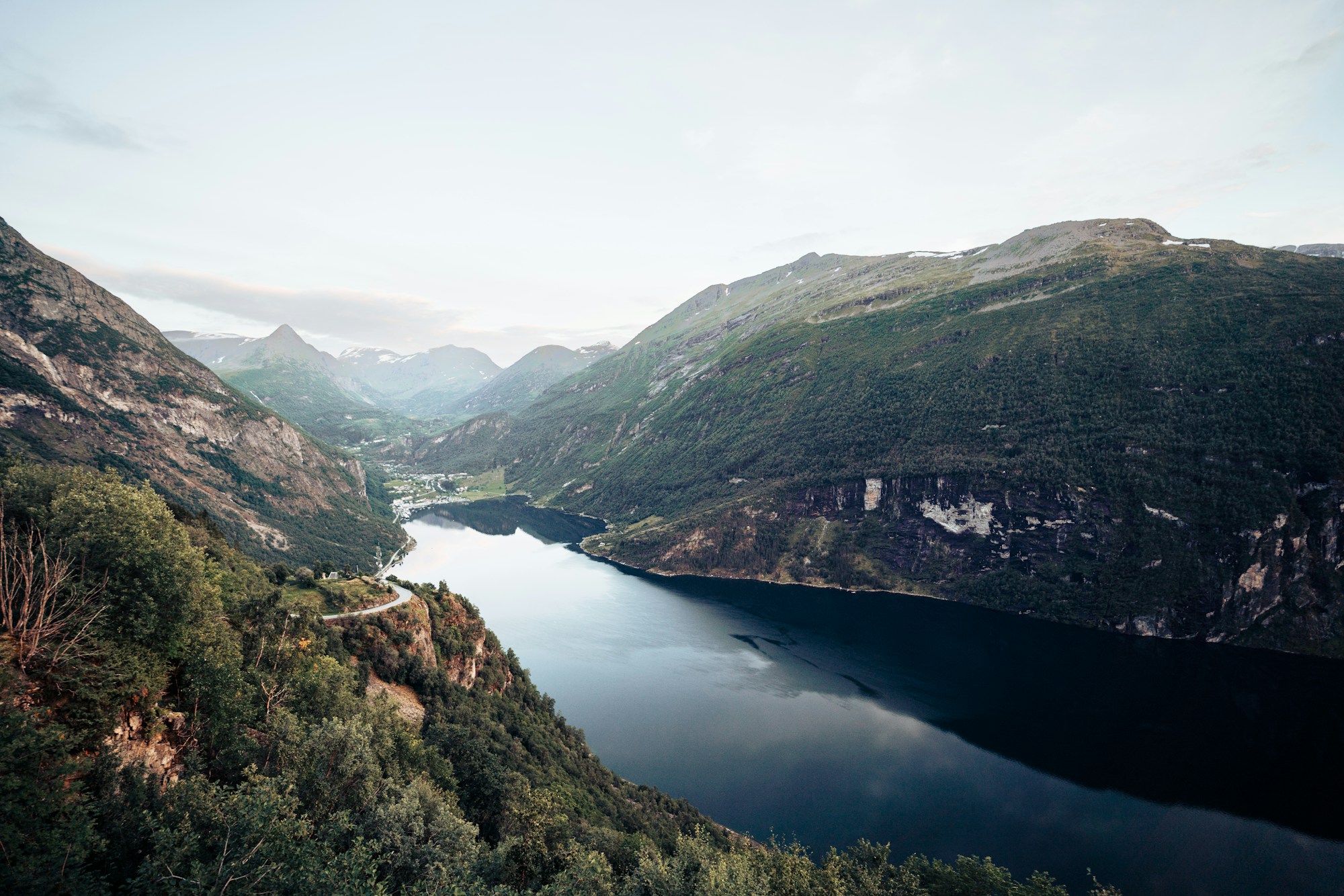
Geirangerfjord, Sunnmøre — Starting point: Geiranger or Hellesylt
Listed as a UNESCO World Heritage Site, the Geirangerfjord is famed for its sapphire waters, sheer cliffs and legendary waterfalls: the Seven Sisters (seven parallel falls), the Bridal Veil and the Suitor opposite. According to NorgeGuide, the 15 km route between sheer cliffs is very accessible even for beginners, with calm waters and many spots to rest.
Kayak More Tomorrow offers advanced multi-day itineraries in the Storfjord, including 4-day routes through the Sunnmøre Alps fjords — routes designed for experienced paddlers looking to leave the marked waters. For those who love combinations, some Granvin Fjord itineraries let you ski in the morning and paddle in the afternoon — a uniquely rare experience.
Guided tours also combine kayaking with hikes to abandoned farms like Skageflå and Knivsflå, perched hundreds of metres up the fjord walls — an unforgettable blue-and-green double experience, according to Visit Bergen.
Highlights of this fjord
- Paddle beneath the Seven Sisters falls (250 m high)
- Explore the wild Storfjord with Kayak More Tomorrow, away from tourist crowds
- Optional hike to Skageflå abandoned farm (250 m altitude) from the water
- Ski + kayak combination in spring around Granvin Fjord
Estimated budget
- Full-day guided excursion in the Geirangerfjord: €80–150/person
- 4-day Storfjord circuit with Kayak More Tomorrow: €400–700/person
- 5-day Voss package (kayak + cycling + rafting): €800–1,200/person all-inclusive
3. Lofoten Islands: sea kayaking in the Arctic
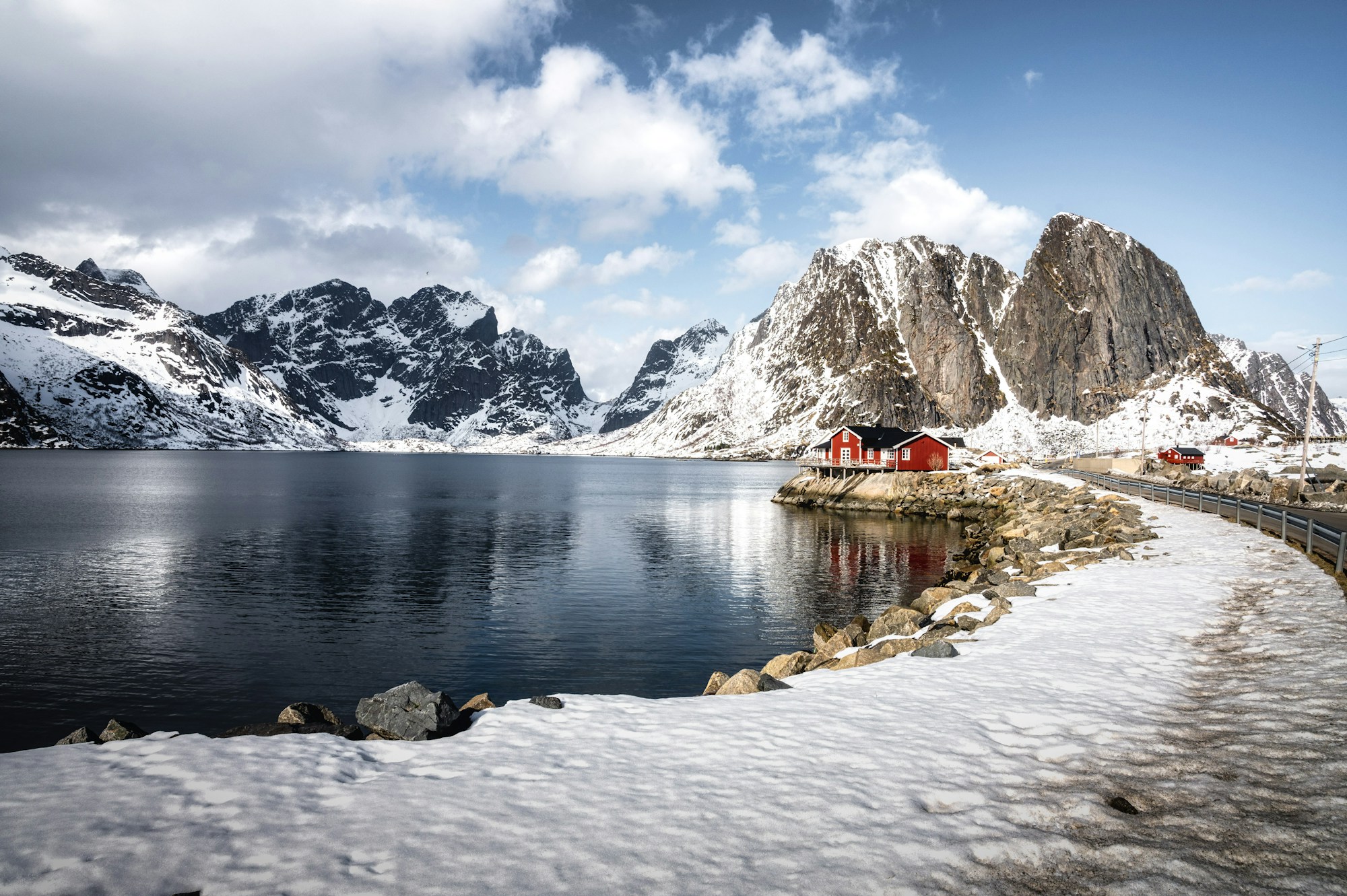
Lofoten Islands, Nordland — Starting points: Fredvang or Svolvær
The Lofoten Islands are a masterclass in Arctic beauty: jagged peaks rise directly from crystal-clear waters, according to GetYourGuide. By sea kayak, you’ll navigate secret fjords — Selfjord, Skjelfjorden, Flakstadpollen — dominated by Hermannsdalstinden, the archipelago’s highest peak.
66° Nord runs an 8-day sea kayak and hiking expedition. Paddling along the eastern coast of Flakstadøya — a prime spot for seals and porpoises — the highlight is Nusfjord, one of the Lofoten’s oldest fishing villages, listed on the UNESCO World Heritage register. Arriving by kayak from the open sea is a uniquely powerful experience.
The iconic red rorbuer (stilt fishing cabins) line the shores and can serve as accommodation between paddling stages. Don’t miss the Trollfjorden — a narrow, spectacular fjord often absent from standard tours, where white-tailed eagles, gulls and guillemots dive for fish around your kayak.
Unique experiences in the Lofoten
- Paddling through the Trollfjorden, a narrow gorge barely accessible by kayak
- Seal and porpoise encounters in the Flakstadøya waters
- Landing at Nusfjord (UNESCO), a 19th-century fishing village
- Alternating kayak stages with ridgeline hikes and breathtaking panoramas
- Overnight stays in traditional rorbu stilt cabins between stages
Estimated budget
- 3-hour sea kayak excursion: ~€145/person
- 8-day expedition (kayak + hiking + camping, with 66° Nord): €2,200–2,800/person
- Flights Paris–Bodø or Svolvær: €150–300 return
4. Disko Bay & Ilulissat: kayaking among Greenland’s icebergs (UNESCO)
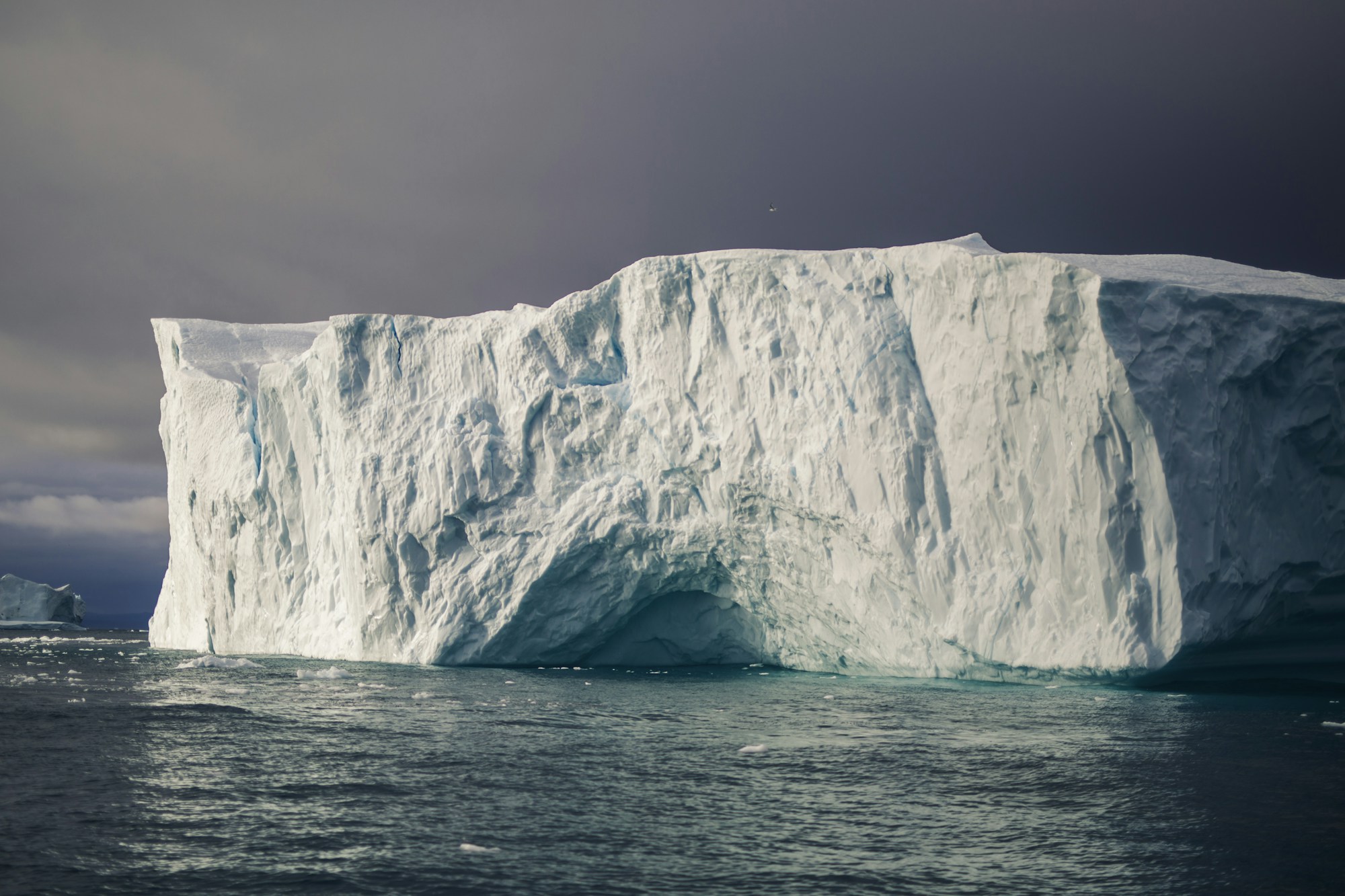
Disko Bay & Ilulissat Ice Fjord, West Greenland — 69°N
Ilulissat is home to the Ilulissat Icefjord, a UNESCO World Heritage Site since 2004. It is the northern hemisphere’s most prolific iceberg producer, calving no fewer than 20 billion tonnes of ice per year, according to 66° Nord. Paddling among ice monuments dozens of metres tall remains one of the most awe-inspiring experiences on the planet.
The coastal kayak route from the remote village of Qeqertaq covers nearly 120 km through the icebergs towards the Greenland Ice Sheet. You first thread through the Torssukatak fjord between floating ice chunks, then discover the Quervain Bay with its myriad islets and towering glacier fronts calving into the sea. In Disko Bay, humpback whales and seals regularly visit these waters — a rare chance to encounter them by kayak.
For those who don’t want a multi-week commitment, a 2.5-hour guided excursion in the Ilulissat Ice Fjord (~€115/person) is available year-round from Ilulissat, subject to ice conditions. According to the Blog Aventure Nordique, navigation is spectacular with ice islands in strange, shifting forms — one of these icebergs may have crossed the path of the Titanic in 1912.
What makes Greenland unique
- 20 billion tonnes of icebergs per year — the Northern Hemisphere’s largest
- Humpback whale and seal watching from the kayak cockpit
- Midnight sun in July — paddling at 11 pm under an orange sky
- Access to the Greenland Ice Sheet on longer expeditions
Estimated budget
- Guided 2.5-hour excursion in the Ice Fjord: ~€115/person
- 15-day kayak + hiking expedition (with 66° Nord or Atalante, all-inclusive excl. flights): €3,500–5,000/person
- Flights to Ilulissat (via Copenhagen or Reykjavik): €600–900 return
5. Faroe Islands: Atlantic sea cliffs at the edge of the world
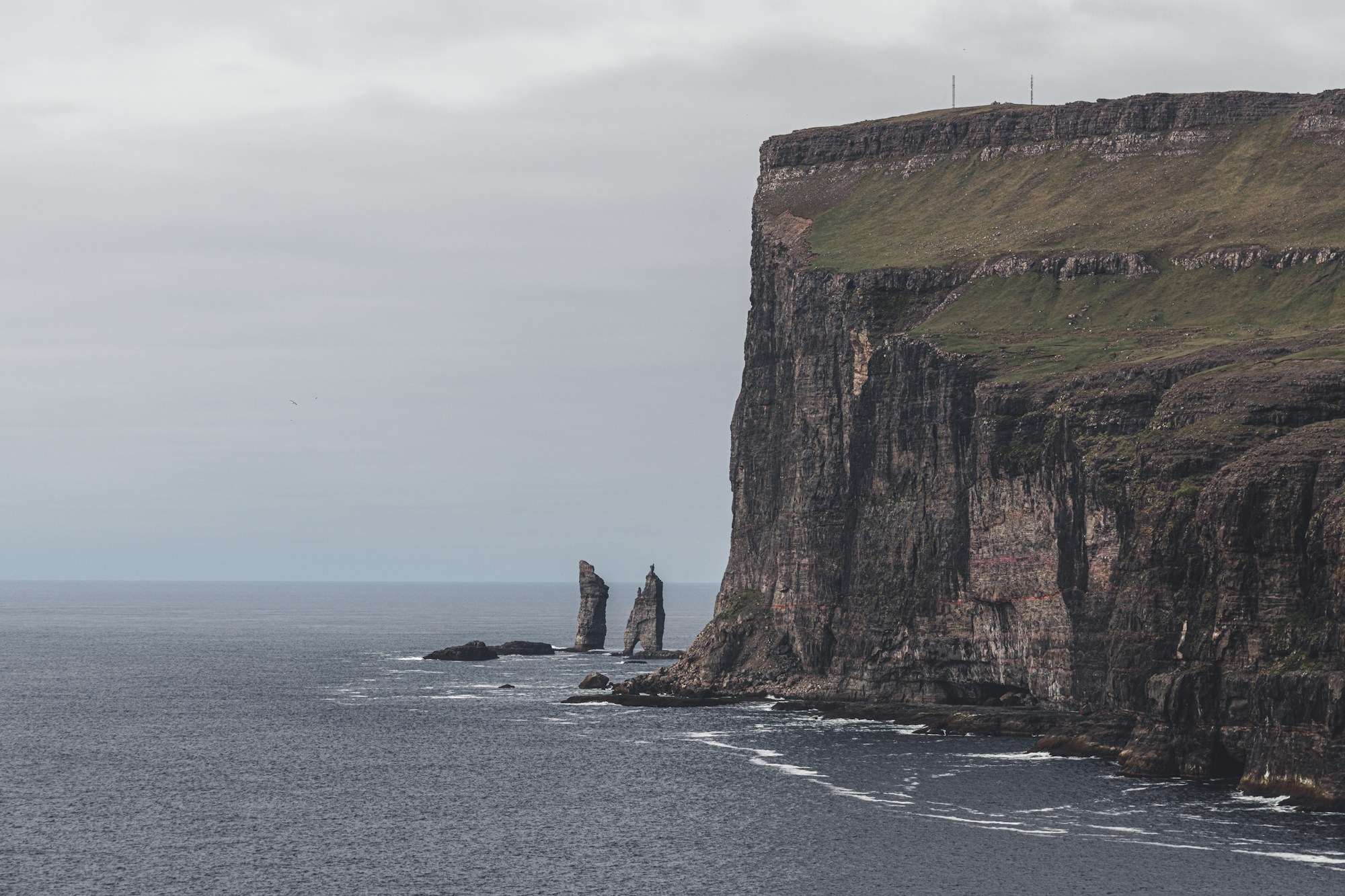
Atlantic fjords: Vestmanna, Kaldbaksfjørður, Sørvágsfjørður — 62°N
The Faroe Islands, nestled between Iceland and Scotland, are among the most pristine sea kayaking destinations in Northern Europe. This 18-island archipelago offers breathtaking scenery: towering basalt cliffs, villages perched on the edge of nothing and deep fjords battered by the Atlantic. According to Splendia, the sheltered inner fjords offer surprisingly serene paddling — in complete contrast to the exposed, wave-battered outer coasts.
The Kaldbaksfjørður on Streymoy island, or the Sørvágsfjørður beneath the towering cliffs of Vágar, rank among the most dramatic kayaking landscapes in Europe. The star attraction: Risin og Kellingin — the Giant and the Witch — two sea stacks of 71 and 68 metres rising from the ocean opposite the 600-metre Enniberg cliff. A scene that leaves you speechless.
According to Decathlon Travel, sea kayaking remains very undeveloped in the Faroe Islands — you’ll often be alone on the water, in landscapes sculpted by the elements, far from any crowd. A precious rarity in 2026.
Experiences not to miss
- Paddling past Risin og Kellingin — the Giant and the Witch (71 and 68 m high)
- Puffin colonies nesting by the thousands on the sea cliffs (mid-May to early August)
- Sunset paddling on the Sørvágsfjørður under the Arctic midnight light
- Ólavsøka (St. Olav’s Festival) in July — an authentic national celebration
Estimated budget
- Half-day guided kayak hire: €40–70/person
- 7-day stay (kayak + hiking + guesthouse): €1,200–1,800/person excl. flights
- Flights Paris–Vágar (often via Copenhagen): €150–300 return
Practical guide: planning your fjord kayaking trip in Scandinavia 2026
| Question | Summary answer |
|---|---|
| Level required | Nærøyfjord and Geirangerfjord: no experience needed. Lofoten and Faroe: prior paddling experience. Greenland: advanced + mandatory sea kayak training. |
| Essential equipment | Wetsuit, life jacket, spare paddle, bilge pump, whistle, dry bag with spare clothes, waterproof phone case. |
| Best overall season | July–August for all destinations. June and September possible in Norway. Greenland: July–August only. |
| Wild camping | Permitted in Norway (Allemansretten) on all uncultivated land. In Greenland and the Faroes, special permits or organised campsites are required. |
| Guide mandatory? | Strongly recommended everywhere; essential in Greenland. Even experienced paddlers can be caught out by sudden weather changes in exposed fjords. |
Frequently asked questions about fjord kayaking in Scandinavia
What skill level do I need to kayak in Norway’s fjords?
Generally speaking, fjord kayaking in Norway is accessible to most people, even without prior experience, according to Un Tour dans le Sac. Protected fjords like the Nærøyfjord or Geirangerfjord suit complete beginners with a guide. Arctic zones like the Lofoten or the Faroe Islands require an intermediate level and good fitness. Greenland requires advanced sea kayaking skills with specific training.
Is a guide compulsory for fjord kayaking?
For safety reasons, it is strongly recommended to join a guided trip for a first fjord experience, according to Fjords.com. Fjords can be exposed to strong winds and currents, and weather changes rapidly. In Greenland, a professional guide is essential — calving icebergs and ice conditions create unpredictable hazards.
What is the best season for kayaking in Scandinavia in 2026?
The ideal window for Norway’s fjords is July–August for the midnight sun and mildest temperatures, according to Travelbase. June and mid-September let you avoid the summer crowds. Greenland’s window is narrower: late July–late August for ice-free waters. In the Faroes, June–August offers the calmest winds, with the Ólavsøka festival in July.
Is wild camping allowed on a kayak circuit in Norway?
Yes — in Norway, wild camping is a right guaranteed by law (Allemansretten), according to Avenues. You can bivouac on virtually any uncultivated land almost anywhere in Norway. Many kayak circuits take full advantage of this for waterfront camping. In Greenland and the Faroe Islands, special permissions or organised campsites are required.
What safety equipment is essential for fjord kayaking?
According to Visit Norway, the basic mandatory kit includes: life jacket, wetsuit (essential even in summer in Arctic waters), spare paddle, bilge pump, distress whistle, waterproof first-aid kit, spare clothes in a dry bag and a waterproof phone case. Cold Norwegian and Greenlandic waters can cause hypothermia within minutes of capsize.
What is the overall budget for a fjord kayaking trip in Scandinavia?
Budgets vary enormously by destination: Nærøyfjord / Geirangerfjord: €700–1,200/person excl. flights. Lofoten: €2,200–3,000/person excl. flights (8-day itinerant circuit). Disko Bay, Greenland: €3,500–5,000/person excl. flights (all-inclusive). Faroe Islands: €1,200–2,000/person excl. flights. Note: the cost of living in Norway is high, according to 66° Nord.
Are the Faroe Islands suitable for intermediate-level sea kayaking?
Yes, inner fjords like Kaldbaksfjørður and Sørvágsfjørður are accessible to intermediate paddlers. According to Partir.com, calm inner fjord waters allow for hours of paddling. However, exposed Atlantic coasts require advanced sea kayak experience — for a first trip, stay in sheltered fjords and hire a local guide.
What is the key difference between kayaking in Norway and a Greenland expedition?
The difference is fundamental: in Norway, even the wildest fjords are reachable by road and ferry, with rescue services available quickly. In Greenland, isolation is total — some areas of Scoresby Sund or Disko Bay are hours from any help. According to the Blog Aventure Nordique, Greenland demands full expedition-level preparation — self-sufficiency, glacial hazard management and advanced risk assessment skills.
Sources
- Fjords.com — Kayaking the Aurlandsfjord & Nærøyfjord
- Njord Kayak Centre Flåm — Sea Kayak Norway
- NorgeGuide — Norway’s 5 most beautiful fjords seen from the water
- Kayak More Tomorrow — Fjords of the Sunnmøre Alps
- Visit Bergen — Kayaking in the Norwegian Fjords
- Visit Norway — Canoeing & Kayaking
- 66° Nord — Sea kayak and hiking in the Lofoten Islands
- Hurtigruten — Kayaking in Norway
- 66° Nord — Greenland kayak expedition to the Ice Sheet
- Blog Aventure Nordique — Kayaking in Greenland
- Decathlon Travel — Faroe Islands destination
- Splendia — Travelling to the Faroe Islands
- Avenues — Hiking and kayaking in Norway’s fjords
- Travelbase — Kayak Trip Norway
Data collected in March 2026.
Ready to plan your fjord kayaking adventure?
Nærøyfjord, Lofoten, Ilulissat… every destination deserves a tailored itinerary. Find our curated travel circuits, validated by passionate travellers, and plan your Scandinavian adventure step by step.
Explore Scandinavia itineraries