
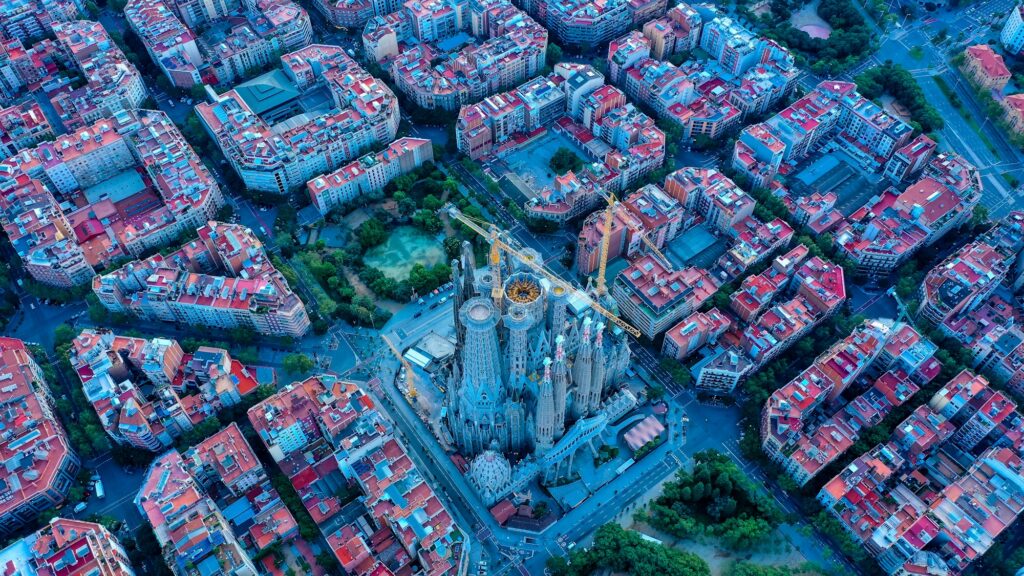
Gaudí Year 2026 combines three historic milestones in Barcelona: the June 10 inauguration of the 172.5-meter Tower of Jesus Christ, presided over by Pope Leo XIV; the year-long World Capital of Architecture 2026 program (1,500+ activities, mostly free, running through December 13); and centenary exhibitions at Casa Batlló, Casa Vicens and the Colònia Güell Crypt. Book Sagrada Família and Casa Batlló tickets 2 to 3 months ahead — standard admission runs €35–70/person. For a full week covering 3–4 Gaudí sites, budget €700–1,600/person including accommodation.
On June 10, 2026, Barcelona experienced one of the most extraordinary moments in its history. That day, the centenary of Antoni Gaudí’s death coincided with the official inauguration of the Tower of Jesus Christ at the Sagrada Família — now the world’s tallest church at 172.5 meters — in the presence of Pope Leo XIV. And that’s not all: throughout 2026, Barcelona has simultaneously been designated the World Capital of Architecture 2026 by UNESCO, with more than 1,500 activities spread across the year. Three unique historic convergences in a single year. This guide covers everything you need to know about the sites, the remaining 2026 events, and how to plan your stay — with budget breakdowns, calendar, and insider tips.
1. The Tower of Jesus Christ: the June 10, 2026 inauguration
172.5 meters — the world’s tallest church
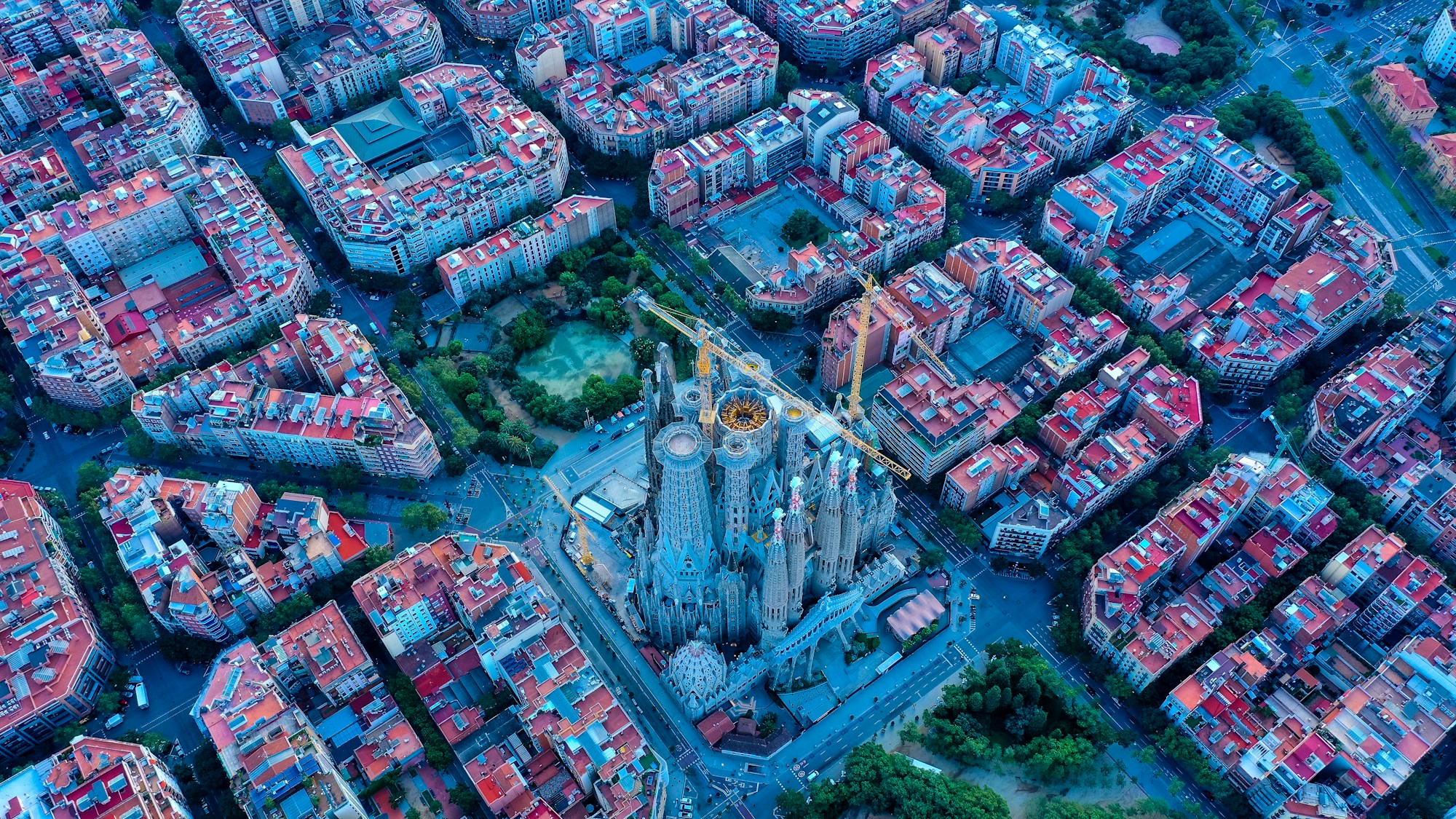
On February 20, 2026, the installation of the upper arm of the cross on the Tower of Jesus Christ marked the completion of the central tower’s exterior. At 172.5 meters, the Sagrada Família now surpasses Ulm Cathedral in Germany (161.5 m) to become the world’s tallest church. According to Vatican News, at its summit stands a monumental 17-meter cross made of crystal and white ceramic, with four 13.5-meter arms and a sculpture of the Agnus Dei by artist Andrea Mastrovito.
The height of 172.5 meters is no accident. Gaudí deliberately designed the tower to remain lower than Montjuïc hill (177.7 m), believing that no human creation should surpass the work of God. This decision turns every meter of the building into a philosophical statement as much as an architectural one.
The June 10 ceremony
The official inauguration was presided over by Pope Leo XIV on June 10, 2026 — the first papal visit to Barcelona in 15 years, confirmed by the Vatican on February 25, 2026. The ceremony included a solemn mass, the blessing of the Tower, large-scale concerts with international choirs, and open-door days; invitations for the limited-capacity events were allocated by lottery via sagradafamilia2026.org.
2. Barcelona World Capital of Architecture 2026
1,500 activities from February 12 to December 13
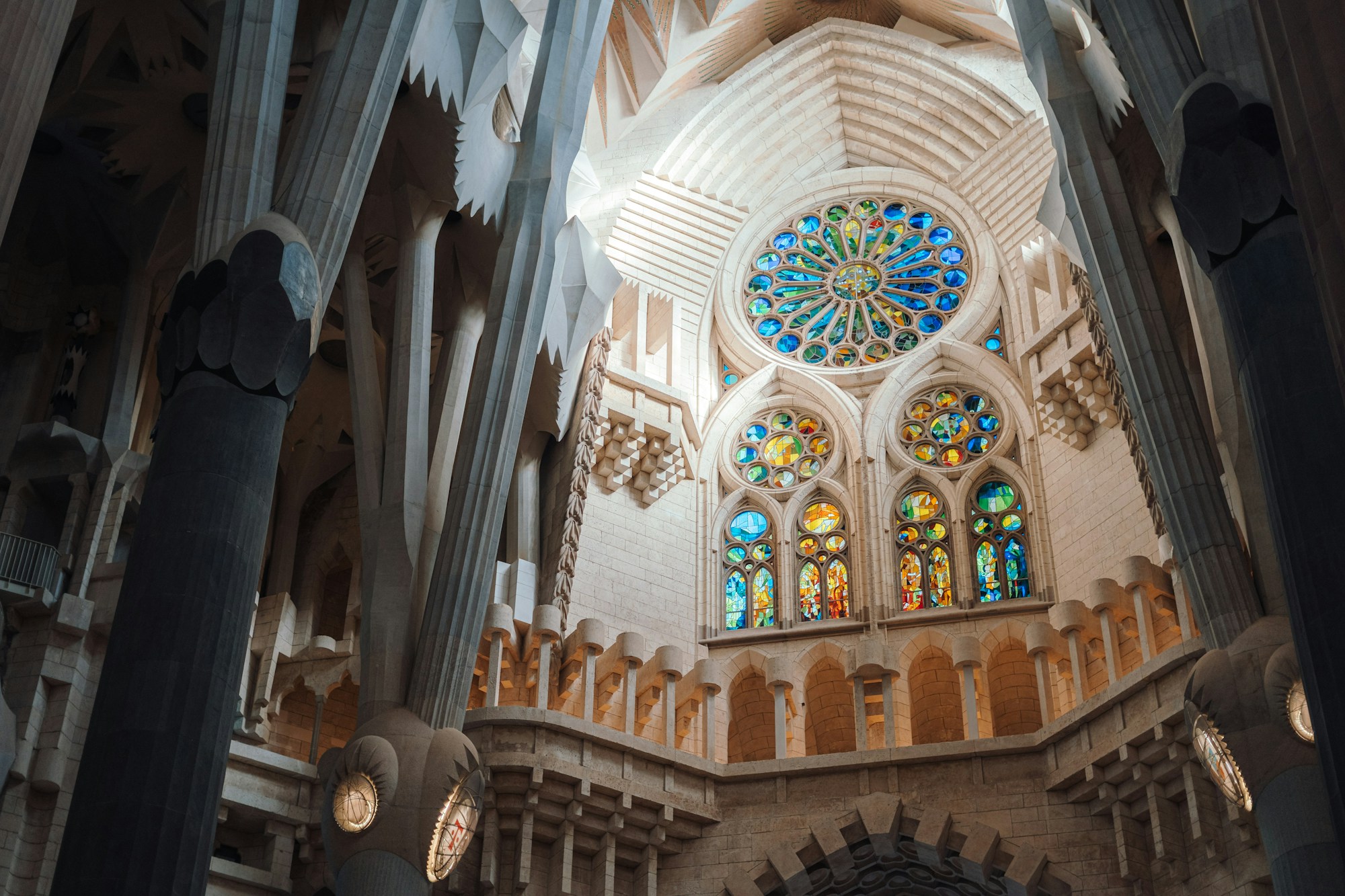
Barcelona became the first city to host the World Congress of Architects of the International Union of Architects (UIA) twice. The designation as World Capital of Architecture 2026 by UNESCO materialized in an exceptional program developed with more than 170 institutions: 143 exhibitions, over 500 itineraries and guided tours, 300 debates and conferences, 140 workshops. According to the Barcelona City Council, the event covers all ten districts of the city and extends throughout Catalonia.
One of the lasting legacies will be the renovation of ten blind walls across the city, transformed into living, colorful façades. Each edition of Open Barri offers two weeks of neighborhood activities — winter in Nou Barris, spring in Sants-Montjuïc, summer in Sarrià-Sant Gervasi — before closing with the October open-house weekend.
The UIA World Congress (June 28 – July 2)
- ~10,000 participants from 130+ countries — practitioners, researchers and students
- Venues: CCIB, Les Tres Xemeneies, Disseny Hub Barcelona
- Theme: « Becoming. Architectures for a Planet in Transition »
- Speakers: Junya Ishigami, Anne Lacaton, Jean-Philippe Vassal, Kate Orff
- Student passes ~€150; parallel exhibitions and activities free
3. Casa Batlló: nocturnal mapping and contemporary art
€30 million renovation — a new sensory experience
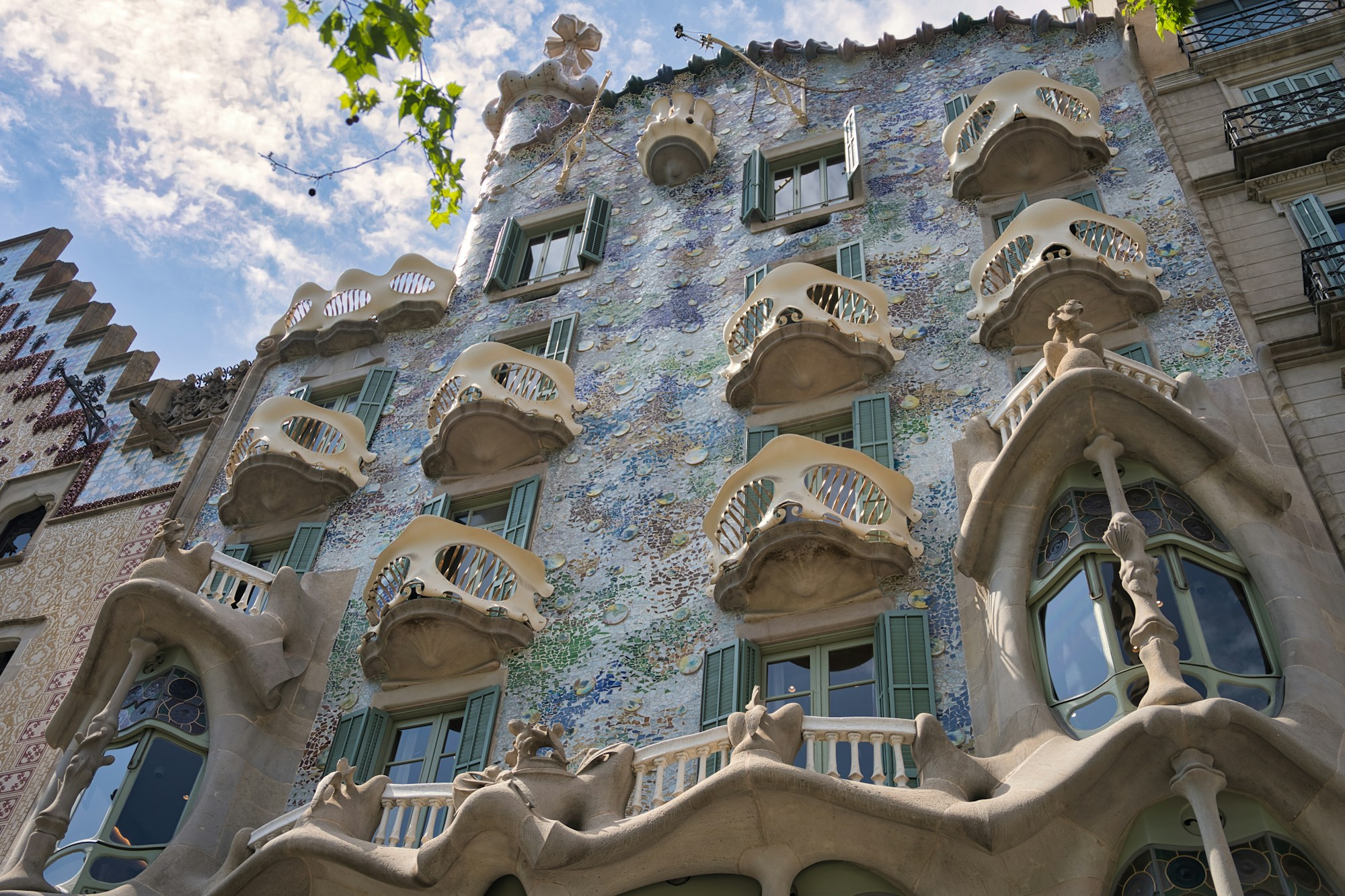
In January 2026, Casa Batlló launched a year of events marking the centenary of Gaudí’s death. After six years of restoration and technological modernization at a cost of €30 million, 2,000 additional m² are now dedicated to immersive exhibitions. The opening features a new contemporary art space, new video-mapping commissions, and an augmented reality night tour allowing visitors to visualize the bioclimatic natural ventilation system — an early example of sustainable architecture. According to Club Innovation Culture, the mapping artwork echoes the official theme of Gaudí Year 2026: « The invisible order », highlighting the architect’s ability to combine imagination with scientific rigor.
On February 6, 7 and 8, 2026, eight iconic UNESCO World Heritage buildings simultaneously lit their façades in blue: Casa Batlló, Sagrada Família, Casa Vicens, La Pedrera, Palau Güell, Parc Güell, Palau de la Música and the Sant Pau Art Nouveau Site. An exceptional spectacle that will recur at key events throughout the year.
Visit types in 2026
- Standard visit (augmented reality included): €35–47
- Magic Nights (night visit): €45–55
- Night visit with façade mapping: €55–70
- Every night — book a weekday outside June for fewer crowds
4. The Colònia Güell Crypt: Gaudí’s secret laboratory
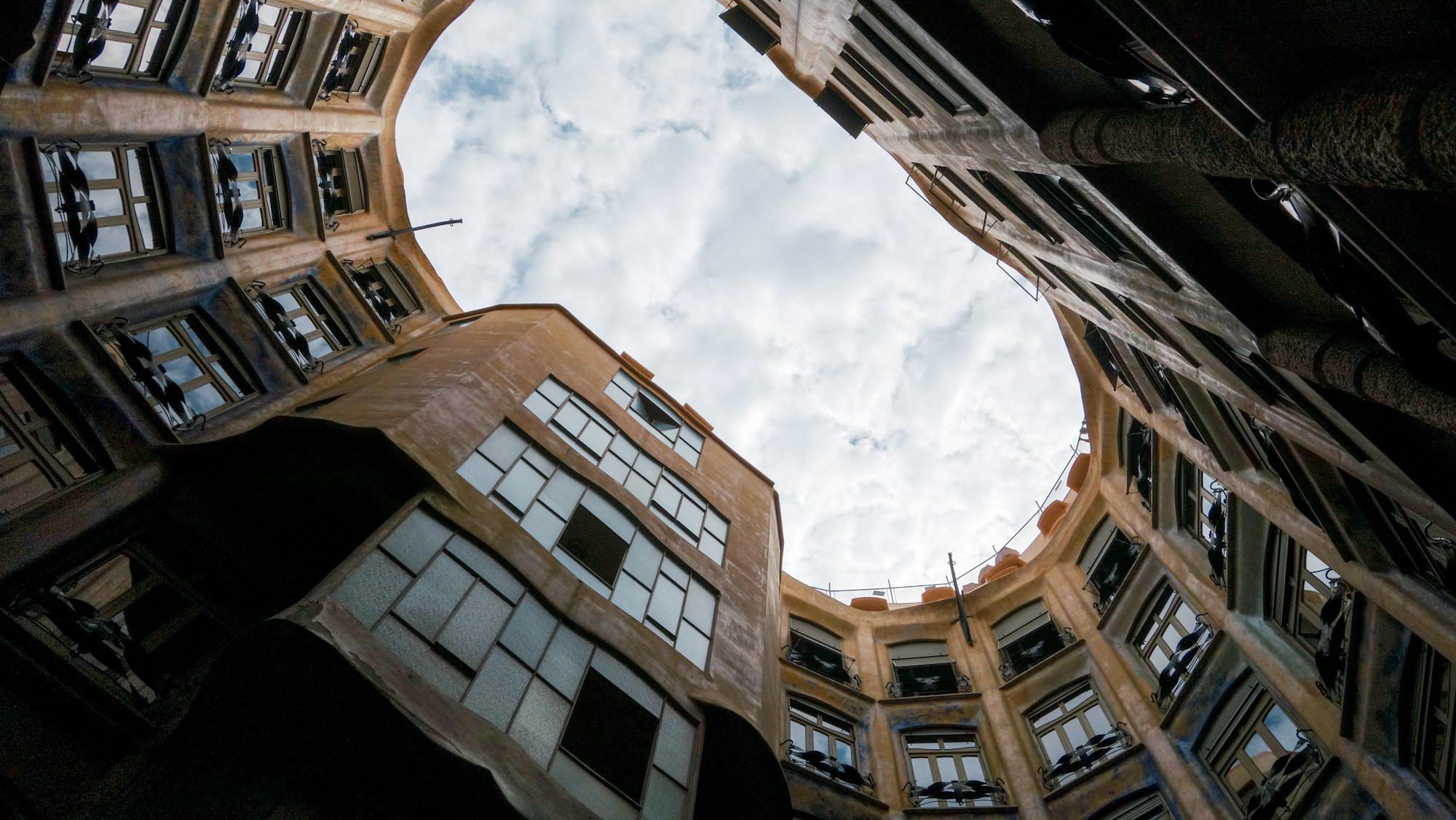
Santa Coloma de Cervelló — the most underrated site of Gaudí’s legacy
Colònia Güell is a 19th-century textile workers’ village 20 km southwest of Barcelona, home to Gaudí’s Crypt — his most important and least-visited architectural work. Listed as a UNESCO World Heritage Site since 2005, it was the laboratory where Gaudí developed all the innovations he would later apply to the Sagrada Família: parabolic arches, columns inclined following the logic of natural forces, mosaic stained glass, basalt-brick combinations. According to The Better Vacation, Gaudí himself stated that if the church had been completed, it would have been « a monumental model of the Sagrada Família. »
This is where Gaudí developed the funicular method — hanging ropes weighted with lead bags to calculate the forces exerted on structures by inverting the image, a revolutionary invention that made the Sagrada Família possible. In 2026, the Colònia Güell Modernista Festival specially celebrates the architect’s legacy.
Logistics and budget
- Entry with audio guide: €10/adult — children under 10: free
- FGC train from Plaça Espanya: covered by T-Casual card (€2.40)
- Half-day all-inclusive budget: ~€15–20/person
- Even in high season: few crowds, guaranteed intimate visit
5. Casa Vicens: Gaudí’s first work, the forgotten manifesto
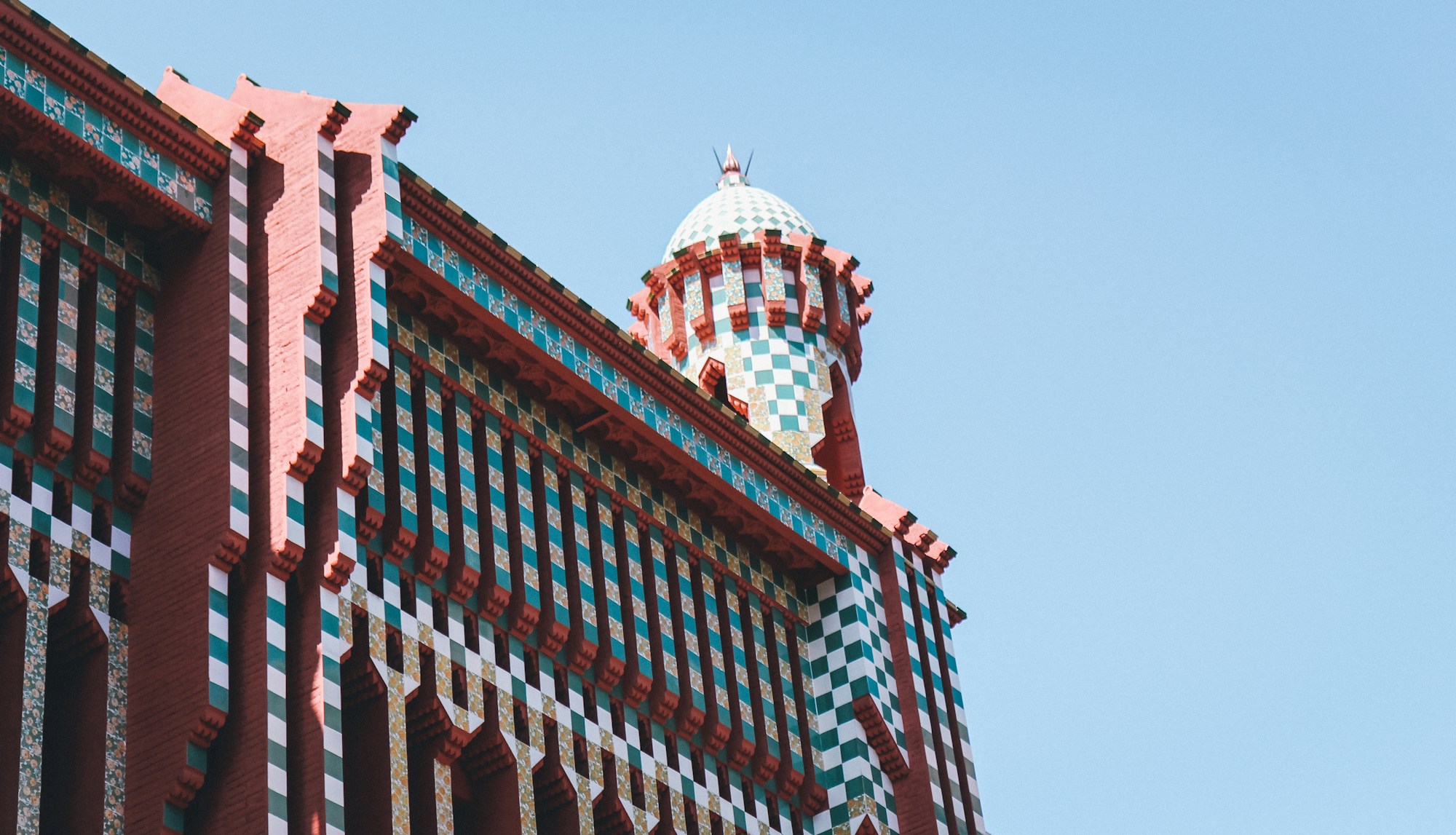
Gràcia district — the lesser-known, Orientalist face of the master
Casa Vicens (1883–1885), declared a UNESCO World Heritage Site, is Gaudí’s first residential work and his inaugural architectural manifesto. Built in the peaceful Gràcia district for broker Manel Vicens y Montaner, its façade covered with spectacular green and white mosaic tiles and Oriental influences (Islamic, Indian, Japanese) reveal a radically different Gaudí from that of the Sagrada Família. According to Casa Vicens official, this building is considered one of the first masterpieces of Catalan Modernism and marks a major aesthetic turning point in the history of European art.
Long remaining in private hands, Casa Vicens has only been open to the public since 2017. Less visited than La Pedrera or Casa Batlló, it offers a calmer, more intimate experience, enriched in 2026 by special centenary programming.
Practical information
- Standard admission: ~€20/adult (reduced ~€16, free under 11)
- Expert guided tour (60–75 min, max 12 people): ~€30
- Best off-peak period: January–March
- Open daily April to October: 9:30am–8pm
6. La Pedrera, Reus and the International Gaudí Congress
The centenary’s academic and cultural program
In June 2026, La Pedrera (Casa Milà) transforms into a global intellectual center on Gaudí. It hosts the International Gaudí Congress 2026, bringing together experts to study the architect from a scientific and disciplinary perspective, as well as the « Gaudí and the future » conference series, analyzing how his organic forms inspire today’s 3D printing and parametric architecture. Some conferences will be open to the public for free. According to BonArt, this is one of the most important academic pillars of the commemorative program.
At the Palau de la Música Catalana, don’t miss the world premiere of « Set Somnis de Gaudí » — a symphonic-choral performance conceived in Gaudí’s honor that in seven movements will recount key episodes of his life. And in Reus, Gaudí’s birthplace 110 km from Barcelona, a special musical « Gaudí, The Awakening of the Genius » is scheduled for June at the Gaudí Centre (€9–11/adult).
Key 2026 events calendar
Update (July 2026): The spring and early-summer dates below have already taken place as planned. The autumn and winter highlights — La Mercè, Open House Barcelona and the December 8 finale — are still ahead.
- March 19 — Orfeó Català concert, 144th anniversary of the Sagrada Família’s first stone
- April 26 — Centenary popular dinner, Parc Güell as a public park
- June — World premiere of « Set Somnis de Gaudí » (Palau de la Música)
- June — International Gaudí Congress 2026 (La Pedrera)
- June 10 — Tower of Jesus Christ inauguration + solemn mass with the Pope
- June 28 – July 2 — UIA World Congress of Architects 2026
- September (La Mercè) — Sagrada Família open house days
- October — 48h Open House Barcelona (accessible architecture)
- December 8 — Escolania de Montserrat concert + Nativity façade illumination
- Budget: €700–900/person (hostel, public transport, local restaurants, key admissions)
- Comfort: €1,200–1,600/person (3–4 star hotel, 3–4 Gaudí sites)
- Premium: €2,500–3,500/person (5-star hotel, private tours)
Practical travel information
Stay connected from the moment you land at El Prat without swapping your SIM card. Instant activation, unlimited data.
From €4.50Comprehensive coverage for travel in Spain and across Europe. Medical, cancellation and more.
From $1.5/dayFrequently asked questions about Gaudí Year 2026
When is the inauguration of the Tower of Jesus Christ at the Sagrada Família?
The official inauguration took place on June 10, 2026, the centenary of Antoni Gaudí’s death. The ceremony was presided over by Pope Leo XIV, whose apostolic visit — the first to Barcelona in 15 years — had been confirmed by the Vatican on February 25, 2026. Tickets for the solemn mass were distributed by lottery via sagradafamilia2026.org.
Did the Tower of Jesus Christ inauguration take place as planned on June 10, 2026?
Yes. The ceremony went ahead as scheduled on June 10, 2026, with Pope Leo XIV presiding over the solemn mass and the blessing of the completed 172.5-meter Tower of Jesus Christ — the first papal visit to Barcelona in 15 years. The event drew large crowds and international choirs, as announced by the Vatican in February 2026. The tower itself remains closed to visitors; public access is still expected to open in 2027.
Will the Sagrada Família be finished in 2026?
No. The June 10, 2026 inauguration concerns only the Tower of Jesus Christ (172.5 m), the tallest of the 18 planned towers. The Chapel of the Assumption and the Glory façade still need to be completed. According to director-architect Jordi Faulí, if all goes well, the towers of the Glory façade will be completed around 2036.
Can visitors climb to the top of the Tower of Jesus Christ in 2026?
Not yet. At the June 10, 2026 inauguration, the tower was not open to visitors, and it remains closed today. The Sagrada Família authorities estimate public access will begin around 2027, limited to 11 people at a time for an intimate experience. Official announcements will be made via sagradafamilia.org.
When should you book tickets for the Sagrada Família in 2026?
Demand peaked around the June 10, 2026 inauguration and the June 28 – July 2 UIA Congress, both now completed. For the remaining 2026 highlights — La Mercè in September, the October Open House Barcelona weekend, or the December 8 finale — book Sagrada Família tickets 2 to 3 months in advance via sagradafamilia.org. Prices remain around €40–55/person (standard visit + tower access), and Barcelona hotel rates stay elevated through the rest of Gaudí Year 2026.
Barcelona World Capital of Architecture 2026: what does it mean for tourists?
For visitors, it means more than 1,500 activities — the vast majority free — spread across the city from February 12 to December 13, 2026: exhibitions, architectural guided tours, workshops, public conferences, neighborhood events (Open Barri) and the Open House Barcelona open-house weekend in October. See barcelona.cat/capitalmundialarquitectura for the full program.
Is there a combined pass for all Gaudí sites in 2026?
There is no single official « Gaudí Pass, » but several options help reduce costs: the Barcelona Card (3/4/5 days, €50–75) includes unlimited transport and discounts at major sites; the Ruta del Modernisme (~€12) grants discounts at 50 Modernist buildings. Buying online 3–6 months ahead also avoids last-minute surcharges at Sagrada Família and La Pedrera.
When should you avoid Barcelona to escape the crowds in 2026?
Crowds will be record-breaking in 2026. Weeks to avoid: June 7–14 (Gaudí centenary), late June–early July (UIA Congress), mid-August (classic high season). To enjoy the celebrations without the crowds, choose January–March: exhibitions are in full swing, the weather is mild, and the summer tourists have not yet arrived.
Which UNESCO Gaudí sites outside Barcelona are worth visiting in 2026?
Seven of Gaudí’s works are UNESCO World Heritage Sites. Outside Barcelona, the most accessible are the Colònia Güell Crypt in Santa Coloma de Cervelló (20 km, FGC train, ~€10) and the Jardins Artigas in La Pobla de Lillet. Further afield, El Capricho in Comillas, Cantabria (600 km north) and the Gaudí Centre in Reus 110 km away (€9–11), Gaudí’s birthplace, are worth the trip in 2026 for their special centenary programs.
Sources
- Sagradafamilia2026.org — Official Gaudí centenary website
- Ulysse.com — Barcelona, the Gaudí centenary year 2026
- Vatican News — Tower of Jesus Christ completed (Feb. 2026)
- Barcelona.cat — World Capital of Architecture 2026
- ArchDaily — UIA 2026 Program
- Club Innovation Culture — Casa Batlló, Gaudí centenary
- The Better Vacation — Colònia Güell guide
- Casavicens.org — Casa Vicens official
- Visitarsagradafamilia.com — Centenary events
- HCC Hotels — Gaudí 2026 Centenary
Plan your Gaudí 2026 trip
Gaudí Year 2026 is a once-in-a-lifetime event in the history of world architecture. Whether you’re retracing the historic June 10 inauguration or exploring the Catalan master’s masterpieces at your own pace, Pixidia helps you create your tailor-made itinerary.
Create my Barcelona 2026 itinerary