
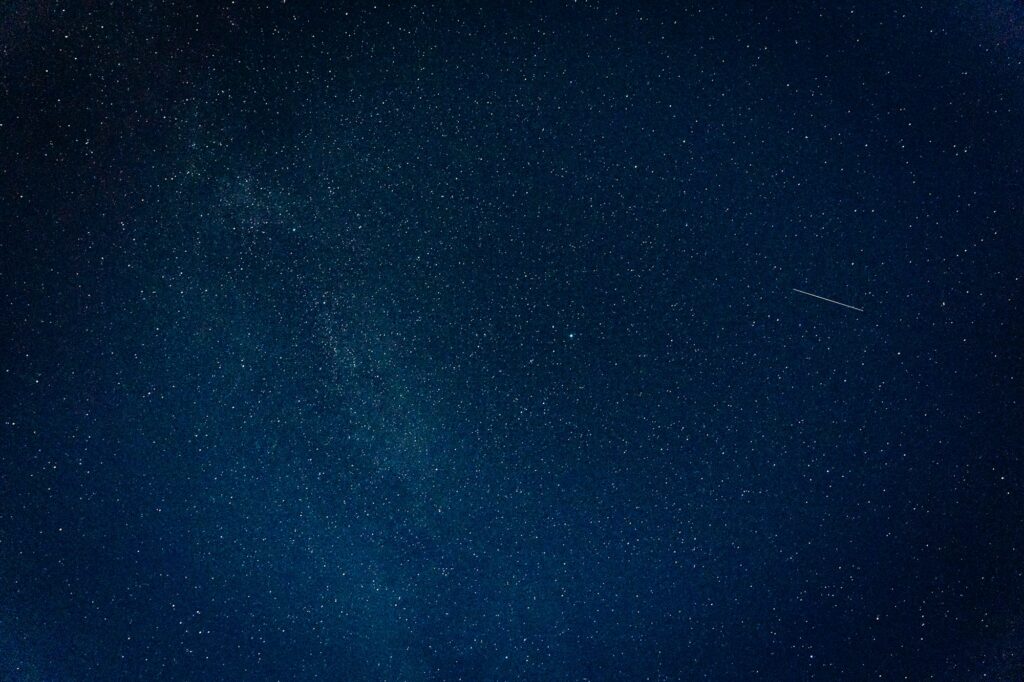
The Geminids 2026 peak is expected on Monday 14 December, with a reference rate of 120 meteors per hour (ZHR, AMS). The exact peak time is disputed between sources, so the night of 13 to 14 December is the practical window: the Moon sets around 9 pm.
Checked on against the official sources cited (EarthSky relaying the AMS, Paris Observatory-PSL, hemel.waarnemen.com, pleine-lune.org).
The Geminids are the most abundant meteor shower of the year, according to the LIRA at the Paris Observatory-PSL. The peak is expected on Monday 14 December 2026, but the exact time isn’t settled: the sources we checked disagree, from early morning to full daylight over France.
This article answers three questions: what time to look, how many shooting stars to expect, and what the Moon changes for the evening. Every figure carries its source and the date we checked it, 13 October 2026.
When exactly: 14 December, but the time is still disputed
The peak is expected on Monday 14 December 2026. The sources don’t agree on the time, and none is confirmed for 2026: the IMO calendar page had no 2026 data on 13 October, and the American Meteor Society (AMS) page returned a 404 error the same day. The times below are forecasts.
The shower starts well before the peak. Strong rates begin on 4 December and last until 17 December according to Sterngucker and Stelvision, or until 20 December according to Sortiraparis. The first meteors are announced for 7 December (Sterngucker). The AMS, via EarthSky, puts the whole swarm’s activity between 19 November and 24 December: a strong rate and total activity are not the same thing.
| Source | Time (UT) | Paris time (CET) | Reading for France |
|---|---|---|---|
| EarthSky, relaying the AMS | 5:44 am | 6:44 am | Early on the 14th, before sunrise |
| hemel.waarnemen.com (estimate for the Netherlands) | around 10:45 am | around 11:45 am | Full daylight |
| Star Walk, French edition (citing the IMO) | 2:00 pm | 3:00 pm | Full daylight |
| LIRA, Paris Observatory-PSL (2025 peak, for comparison) | 8:00 am on 14 December 2025 (converted from 9:00 am CET) | 9:00 am on 14 December 2025 | Full daylight |
Source: EarthSky (relaying the AMS), hemel.waarnemen.com, Star Walk, LIRA (Paris Observatory-PSL), checked on 13 October 2026. Paris times are the UT values converted to Central European Time (CET).
What it means for you: if the peak lands at 6:44 am Paris time, it arrives before sunrise, which is recorded at 8:41 am in Amsterdam. If the Dutch estimate or the time relayed by Star Walk is right, the peak falls in full daylight and you won’t see it. Either way, the night of 13 to 14 December is the practical window.
The recommended window opens at 9 pm on Sunday 13 December, when the Moon sets, and runs until dawn on Monday 14. At 9 pm the radiant is still low, around 26° over Paris (our calculation). Sunrise wasn’t checked for Paris: the only sourced value is Amsterdam’s, 8:41 am (hemel.waarnemen.com).
The 2025 peak gives a sense of scale: according to the LIRA, it fell on 14 December 2025 at 9:00 am CET, in full daylight.
Where to watch in France: get out of the city
The most useful official figure comes from SDES, the statistics service of the French ministry for ecology, which published its light pollution data on 10 October 2025. At the core of the night, 72% of mainland France is exposed to a high level of light pollution, and that level has dropped 19% since 2014 (2023 data). Guides tell you to “get away from the cities”. SDES gives the measure of the problem.
The place matters more than the date: sources describe a dark, clear countryside sky (Sterngucker, Stelvision).
Paris: good for the evening, not for counting meteors
From Paris, the radiant reaches about 74° around 2:50 am (our calculation). The radiant’s height doesn’t change much with location. What changes is the sky quality, and Sterngucker puts the rate at 60 to 100 meteors per hour under a dark countryside sky.
Key points
- Pick a clear sky with no clouds: without that, no window counts (Stelvision).
- Get under a dark countryside sky (Sterngucker).
- Scout the spot in daylight: in Paris the Sun sets at 4:53 pm on 11 December, the earliest sunset of the year (calendriersolaire.com).
None of our Viator searches for France on these dates turned up a stargazing trip. The tour below is a night tour of Paris centred on lit-up monuments, not on the sky: it has no direct link with shooting stars.
Where to look in the sky: the radiant, but not only
Meteors all seem to radiate from one point, the radiant, in the constellation Gemini, near Castor and Pollux. It rises toward the east early in the evening (Sortiraparis), then climbs until the middle of the night. According to hemel.waarnemen.com (Netherlands), it culminates around 2:30 to 3:00 am, at about 70°. Our calculation gives 2:50 am for Paris, at about 74°, give or take 1 or 2 degrees.
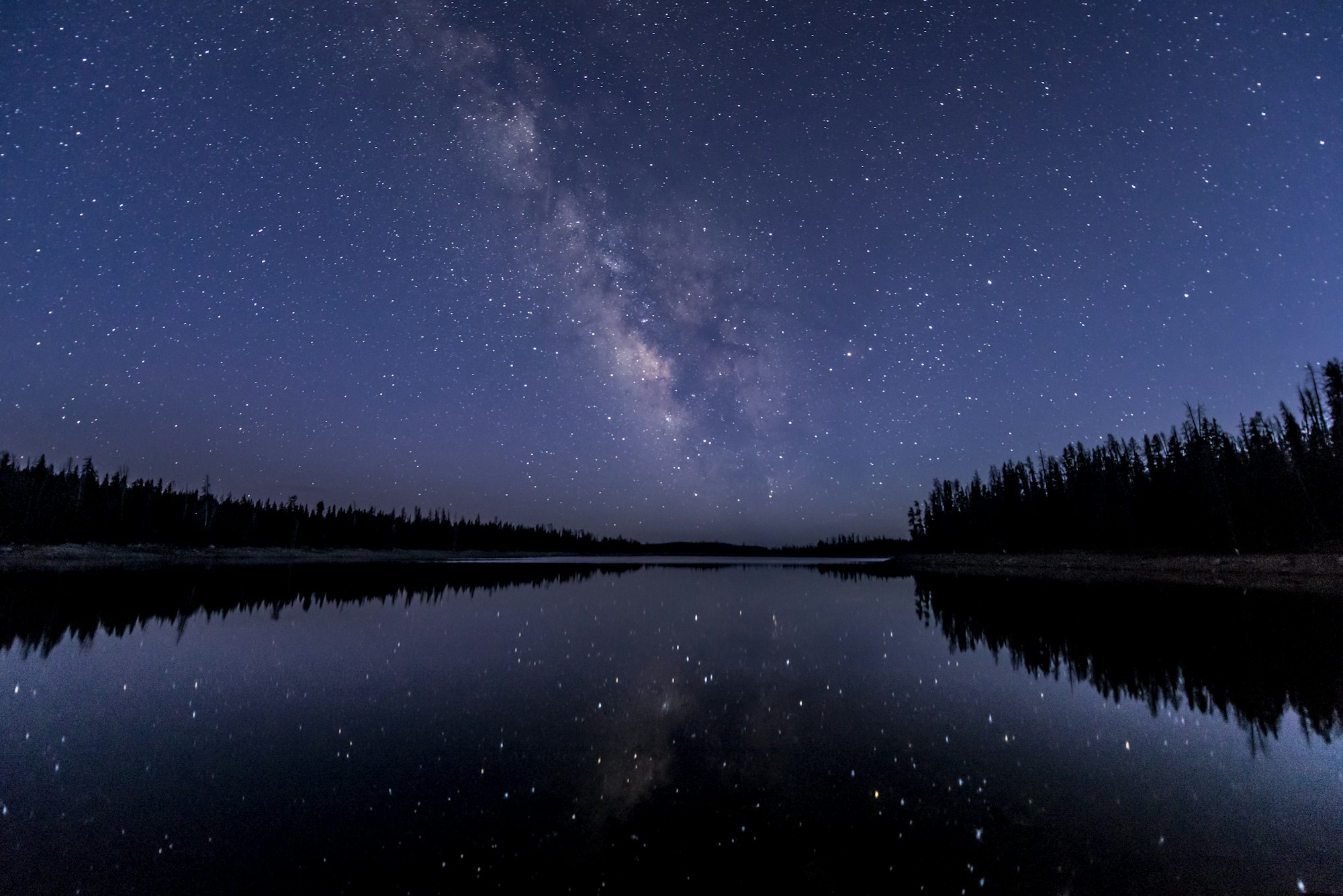
Find the radiant and aim just beside it
The instinct is to stare at the radiant. The LIRA at Paris Observatory-PSL (article of 12 December 2025) recommends aiming about 45° away from that point instead, where the streaks are longer. The radiant is your reference point, not the only target.
- Start as soon as it gets dark: the radiant rises early (Sterngucker).
- Keep a wide area of sky in view, with no instrument (Sterngucker, Sortiraparis).
- Lie down or get comfortable so you can take in the whole sky (Sterngucker).
How high the radiant climbs through the night
The radiant’s height changes every hour. The table gives our calculated values for Paris, with the hemel.waarnemen.com reference for the Netherlands where one exists.
| Time (CET) | Radiant over Paris (our calculation) | Radiant over the Netherlands (hemel) | Note |
|---|---|---|---|
| 9:00 pm, 13 December | about 26° | not given | Start of the window, Moon sets around 9 pm |
| 11:00 pm, 13 December | about 46° | not given | Cross-check: the LIRA gave 42° at 11 pm in 2025 |
| Midnight | about 55° | not given | Middle of the evening |
| 1:00 am | about 64° | not given | Steady climb |
| 2:00 am | about 72° | 69° | 48 Geminids per hour according to hemel |
| 2:50 am | about 74° | about 70° (highest, 2:30 to 3:00 am) | Highest radiant over Paris (calculated) |
| 4:30 am | about 66° | 62° | 57 Geminids per hour according to hemel: the rate keeps rising |
| 6:00 am | about 51° | not given | Before sunrise (8:41 am in Amsterdam) |
Source: our calculation from the radiant’s declination (about +33°) and Paris’s latitude (48.85° N), accuracy ±1 to 2°; cross-checked against the LIRA for 2025; Dutch values from hemel.waarnemen.com. Checked on 13 October 2026.
How many shooting stars to expect: 60 to 100 an hour in practice
The figure you hear most is 150 meteors per hour, but it’s a theoretical value. The zenithal hourly rate (ZHR) reference calculated by the AMS is 120: it assumes the radiant at the zenith and a perfect sky. Under a dark countryside sky, Sterngucker measures 60 to 100 meteors per hour in practice. The LIRA, for its part, gives 100 to 150 per hour in ideal conditions.
| Source | Figure | Type of figure | Reading |
|---|---|---|---|
| EarthSky (AMS) | ZHR of 120 | Reference | The AMS reference value |
| LIRA, Paris Observatory-PSL (2025) | 100 to 150 | Ideal conditions | Official French source |
| Sterngucker (checked 6 October 2026) | 60 to 100 | Observed, dark countryside sky | The most useful figure for an observer |
| Sortiraparis (version of 24 August 2026) | 60 to 75 usually; 120 to 160 at the maximum | Announced | Maximum figure not confirmed by the IMO |
| Stelvision and Sterngucker | Up to 150 | Theoretical | Quote with caution |
| hemel.waarnemen.com (calculation, Netherlands) | 48 per hour at 2:00 am; 57 at 4:30 am | Calculation, Geminids only | The rate climbs between 2:00 and 4:30 am |
Source: EarthSky (AMS), LIRA (Paris Observatory-PSL, 12 December 2025), Sterngucker (checked 6 October 2026), Sortiraparis (version of 24 August 2026), Stelvision, hemel.waarnemen.com; checked on 13 October 2026.
The most useful figure for you is the observed range: under a dark sky, Sterngucker puts practice between 60 and 100 meteors per hour. According to hemel.waarnemen.com, the strong rate lasts barely more than 21 hours, and one day from the peak only about 21% of the peak rate remains.
The Moon: a 20% crescent, setting around 9 pm
The new moon falls on 8 or 9 December depending on the source: pleine-lune.org gives 9 December at 1:52 am, Paris time. On the evening of 13 December the Moon is a crescent about 20% lit, and it sets around 9 pm (hemel.waarnemen.com, Stelvision). During the core of the night it stays below the horizon.
| Local time | Illumination | Height of the Moon | Note |
|---|---|---|---|
| 13 December, 7:00 pm | 19% | about +10° | Moon still above the horizon |
| 13 December, 8:00 pm | about 20% | about +4° | Dropping toward the horizon |
| 13 December, 9:00 pm | about 20% | below the horizon | Sets around 9 pm |
| 14 December, 2:00 to 4:00 am | 21% | below the horizon | Core of the night |
| 14 December, 5:00 to 7:00 am | 22% | below the horizon | End of the night |
Source: hemel.waarnemen.com (calculation, values computed for the Netherlands), Stelvision, pleine-lune.org; checked on 13 October 2026. Our cross-check: a 20% crescent sets three to four hours after the Sun, around 8:30 to 9:00 pm in Paris.
Star Walk places the Moon at first quarter at the time of the peak. That’s wrong: first quarter falls on Thursday 17 December at 6:43 am (pleine-lune.org). For another dark night of the year, our article on the northern lights in October 2026 explains how to pick a window without a Moon.
Why this shower is so strong: an asteroid, not a comet
The Geminids’ parent body is (3200) Phaethon, an asteroid, not a comet. The comet theory is older and still circulates in some definitions: read it as an outdated label rather than the current state of knowledge.
The first observation of the shower is credited to Robert Philips Greg in 1861, according to the LIRA. A study presented by Futura on 10 February 2024 favours one explanation: Phaethon lost much of its mass through rotational instability about 18,000 years ago. The debris released forms the stream Earth crosses each year around mid-December.
According to the LIRA, the peak shifts by a day or two from one year to the next because of the calendar and leap years.
Field tips: adjust your eyes, dress warm, take photos
Let your eyes adjust
Give it 20 to 30 minutes without a screen before you judge what you see, and don’t look at your phone during that time (Sterngucker).
Dress warm and get comfortable
Cold is the main limiting factor (Stelvision). Bring very warm clothes, a blanket, a hot drink and a reclining chair (Sterngucker, Stelvision). You observe with the naked eye, lying down or sitting comfortably: no instrument needed (Sterngucker, Sortiraparis).
Photographing the shower
The LIRA offers a few pointers: a tripod, a very bright wide-angle lens (f/1.8 is cited), a long exposure, and a frame aimed beside the radiant.
Mistakes to avoid
- Relying on a single peak time. The sources disagree between early morning on the 14th and full daylight.
- Counting on 150 meteors per hour. That’s a theoretical figure. Plan for 60 to 100 per hour under a dark sky (Sterngucker).
- Staring at the radiant. The LIRA suggests aiming about 45° away, where the streaks are longer.
- Giving up after fifteen minutes. Eye adaptation takes tens of minutes (Sterngucker).
A typical night from 13 to 14 December
Here’s a timeline built from the times and heights given above. It assumes a clear sky, a spot away from cities and decent weather.
- Before sunset: scout the spot in daylight.
- 7 to 9 pm: dress warmly and keep the screens off. The Moon stays above the horizon until it sets around 9 pm.
- 9 pm: the window opens. The radiant is still low, around 26° over Paris (calculation). Start looking, even though few meteors show up this early.
- 9 to 11 pm: your eyes adjust and the first meteors appear. The radiant reaches about 46° at 11 pm (calculation).
- 2:50 am: radiant at its highest, about 74° over Paris (calculation).
- 4:30 am: hemel.waarnemen.com gives 57 Geminids per hour at this time, for the Netherlands: the rate is still climbing.
- 6:44 am: peak according to the AMS (EarthSky), before sunrise. If one of the other estimates is right, the peak falls in full daylight.
- Until dawn on the 14th: end of the practical window.
Depending on your profile
First time
Cold is the main limiting factor (Stelvision): bring very warm clothes, a blanket, a hot drink and a reclining chair (Sterngucker, Stelvision).
Limited mobility
Sterngucker recommends lying down or sitting comfortably. The sources we checked don’t cover the accessibility of observation sites.
What other guides don’t tell you
Three points are often missing from guides: the peak time isn’t settled, the 150-per-hour rate is theoretical, and the radiant is not the spot to stare at.
Frequently asked questions about the Geminids 2026
How do you watch the Geminids meteor shower?
Get out of the city to a clear, dark spot and lie back with a wide field of view, no telescope or binoculars. Wait 20 to 30 minutes without looking at a screen so your eyes adjust, and dress very warmly: the cold is the main obstacle. Source: Sterngucker, checked on 13 October 2026.
When is the Geminids peak in 2026?
The peak is expected on Monday 14 December 2026, but the time isn’t settled. The AMS, relayed by EarthSky, gives 5:44 am UT, or 6:44 am in Paris, while Star Walk, citing the IMO, gives 2:00 pm UT. The night of 13 to 14 December remains the practical window, from 9 pm until dawn.
How many shooting stars can you see per hour?
The AMS reference zenithal hourly rate is 120 meteors per hour, under a perfect sky with the radiant at the zenith. Under a dark countryside sky, Sterngucker observes 60 to 100 per hour in practice. The 150 figure you see everywhere is theoretical.
Will the Moon spoil the view?
Not much this year. On the evening of 13 December the Moon is a crescent about 20% lit, and it sets around 9 pm (hemel.waarnemen.com, Stelvision). It doesn’t interfere with the core of the night, when the radiant is highest. First quarter doesn’t fall until 17 December.
Where should you look in the sky?
The radiant is in the constellation Gemini, near Castor and Pollux. The LIRA suggests aiming about 45° away from it, where the streaks are longer. The radiant culminates around 2:30 to 3:00 am; over Paris, our calculation gives 2:50 am at about 74°.
Sources
- EarthSky, Geminid meteor shower: peak date, ZHR of 120 and total activity relayed from the AMS (checked 13 October 2026)
- LIRA, Paris Observatory-PSL, The Geminids: origin (3200) Phaethon, 2025 peak, observation tips (12 December 2025, checked 13 October 2026)
- hemel.waarnemen.com, Geminids 2026: radiant heights, hourly rates and Moon, calculated for the Netherlands (checked 13 October 2026)
- Sterngucker, Geminids: strong-rate period, observed rate under a dark sky, tips (verified 6 October 2026, checked 13 October 2026)
- Stelvision, Observe the Geminids meteor shower: radiant, Moon, cold (checked 13 October 2026)
- Star Walk, Geminids (French edition): peak time relayed from the IMO (checked 13 October 2026)
- Sortiraparis, Geminids 2026: window, announced rates, observing toward Gemini (version of 24 August 2026, checked 13 October 2026)
- SDES, Light pollution in France in 2023: 72% of mainland France exposed, 19% drop since 2014 (published 10 October 2025, checked 13 October 2026)
- pleine-lune.org, 2026 moon phases calendar: new moon on 9 December, first quarter on 17 December (checked 13 October 2026)
- calendriersolaire.com, Paris: earliest sunset of the year, 11 December 2026 at 4:53 pm (checked 13 October 2026)
- Futura, origin of the Geminids: rotational instability of Phaethon (10 February 2024, checked 13 October 2026)
All times and heights were checked on 13 October 2026. Peak times remain forecasts until official 2026 data is published.

Plan your trip with Pixidia
Pixidia learns how you travel and helps you build a trip that truly fits you and everyone coming along.
Open the planner