

On February 28, 2026, as millions of Muslims worldwide were finalizing their spiritual preparations for the Hajj, explosions rang out in Tehran. Within hours, the American-Israeli-Iranian conflict would rewrite all the equations surrounding Hajj 2026: cascading airspace closures, stranded Iranian pilgrims, emergency alternative routes, and Saudi Arabia forced to navigate an impossible diplomatic neutrality. Here is a complete analysis of an unprecedented pilgrimage — 1.5 million faithful facing a simultaneous triple threat: geopolitical, climatic, and logistical.
The spark that ignited everything: the Iran-USA-Israel conflict of 2026
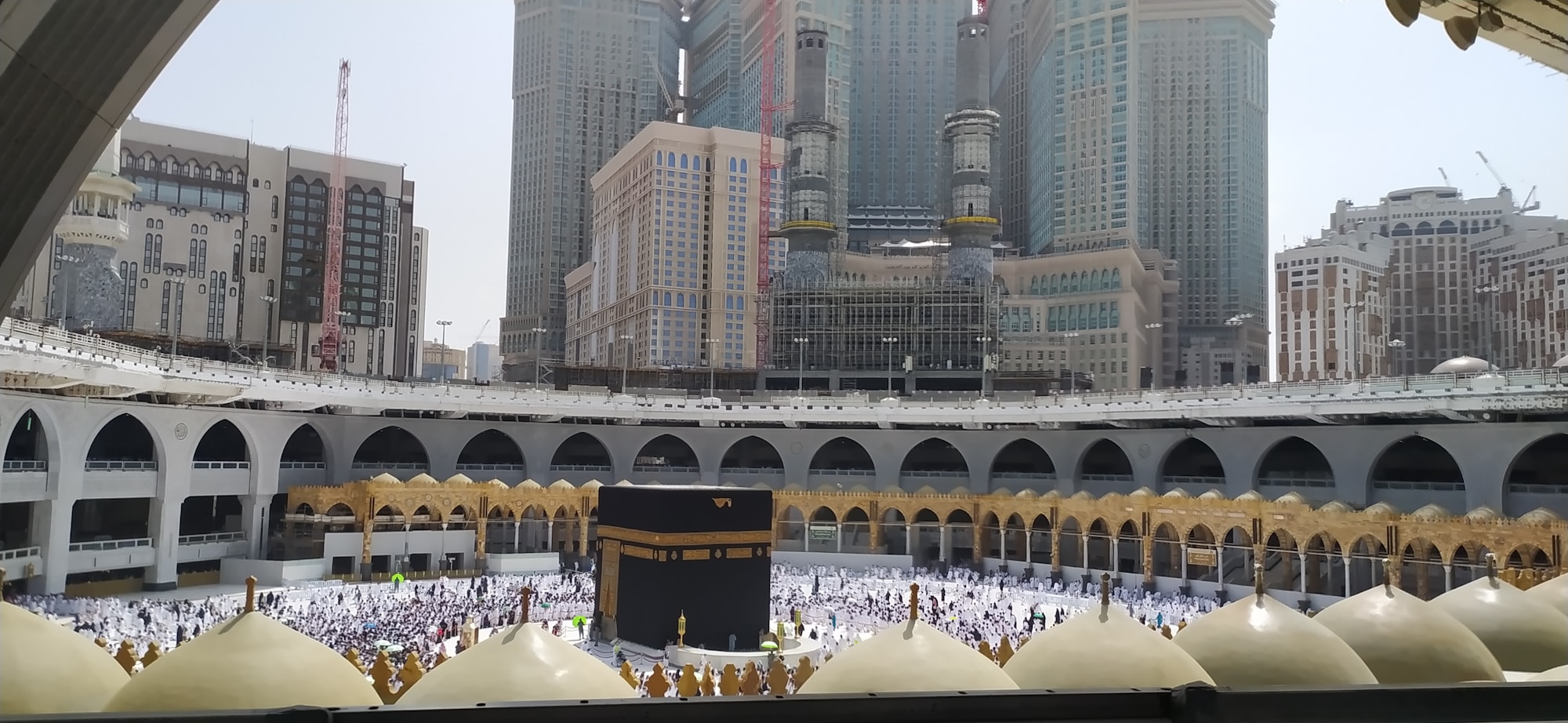
When war collides with pilgrimage: a chronicle of rupture
This is the major geopolitical event redefining all equations surrounding Hajj 2026. On February 28, 2026, a joint American-Israeli military operation struck Iran. This war followed six weeks after a violent crackdown on anti-government protests in Iran. According to Wikipedia, Ali Khamenei died on the day of the strikes, and a provisional council took control of the country.
Iran’s retaliation was swift. Within hours, Iranian forces launched a massive counter-attack against targets in Israel and American military bases in the Persian Gulf. According to Franceinfo, Iran simultaneously struck Al Udeid Air Base in Qatar, Ali Al Salem Base in Kuwait, Al Dhafra Base in the UAE, and the headquarters of the US Fifth Fleet in Bahrain. A total of nine countries and 27 military installations were targeted.
The enormous economic stakes of Hajj
- Hajj and Umrah generate between $14 and $20 billion in annual revenues for Saudi Arabia
- Second largest source of revenue after oil
- Central pillar of the Vision 2030 strategy to diversify the economy
- 1,673,230 official pilgrims in 2025 (GASTAT source)
Mecca: the sacred heart at the centre of turmoil
Makkah al-Mukarramah: organization, dates and budget for Hajj 2026
Located in the Hejaz region, 80 km from Jeddah, Mecca is the absolute destination for every pilgrim — inaccessible to non-Muslims. It concentrates the most intense rituals of the Hajj: the Tawaf around the Kaaba, the standing at Arafat, the stoning at Mina. According to NusukHajj.fr, Hajj 2026 is expected to take place approximately between May 25 and 30, subject to official moon sighting.
Official communications from the Ministry of Hajj and Umrah emphasize advance preparation and inter-agency coordination. According to Chaïma Travel, at this stage, nothing officially indicates that Saudi Arabia is reconsidering the organization of Hajj 2026.
Precise Hajj 2026 calendar
- 1st Dhul Hijjah: May 18, 2026 — start of the sacred month
- 8th Dhul Hijjah: May 25 — departure to Mina (Day 1)
- 9th Dhul Hijjah: May 26 — standing at Arafat (most sacred day)
- 10th Dhul Hijjah: May 27 — Eid al-Adha, stoning at Mina
- 11–13 Dhul Hijjah: May 28–30 — Tashreeq days and return
The closed skies: the historic Gulf aviation disruption
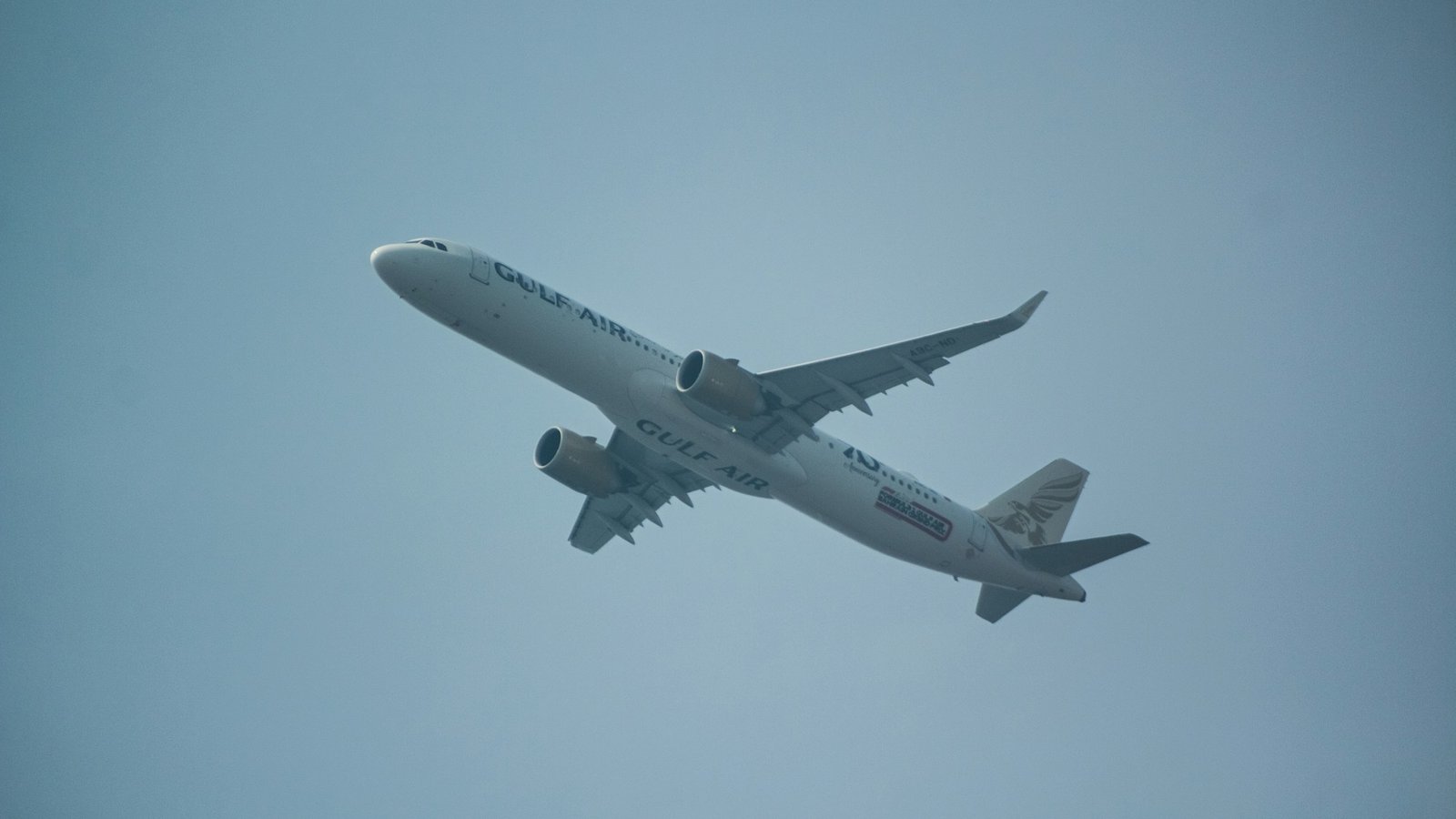
52,000 flights cancelled in 48 hours: when Middle Eastern skies empty
The aviation disruption was catastrophic. Within hours, the skies over the Middle East were almost entirely empty. Following the strikes, numerous states closed or severely restricted their airspace. According to Air Journal, this resulted in a cascade of flight cancellations affecting thousands of passengers worldwide.
Data from Cirium is striking: Emirates cancelled approximately 65% of its flights, Qatar Airways about 60%, and Etihad around 50% in the first 48 hours. According to L’Orient-Le Jour, over 52,000 out of 98,000 scheduled flights were cancelled.
Alternative hubs to reach Jeddah
- Istanbul (Turkish Airlines) — 340 destinations, Asia-Africa network intact
- Addis Ababa (Ethiopian Airlines) — ideal geographic position, new Lyon route
- Cairo (EgyptAir) — African and Arabic-speaking hub
- Casablanca (RAM) — Maghreb gateway to Jeddah
The impossible neutrality: Riyadh caught between two fires
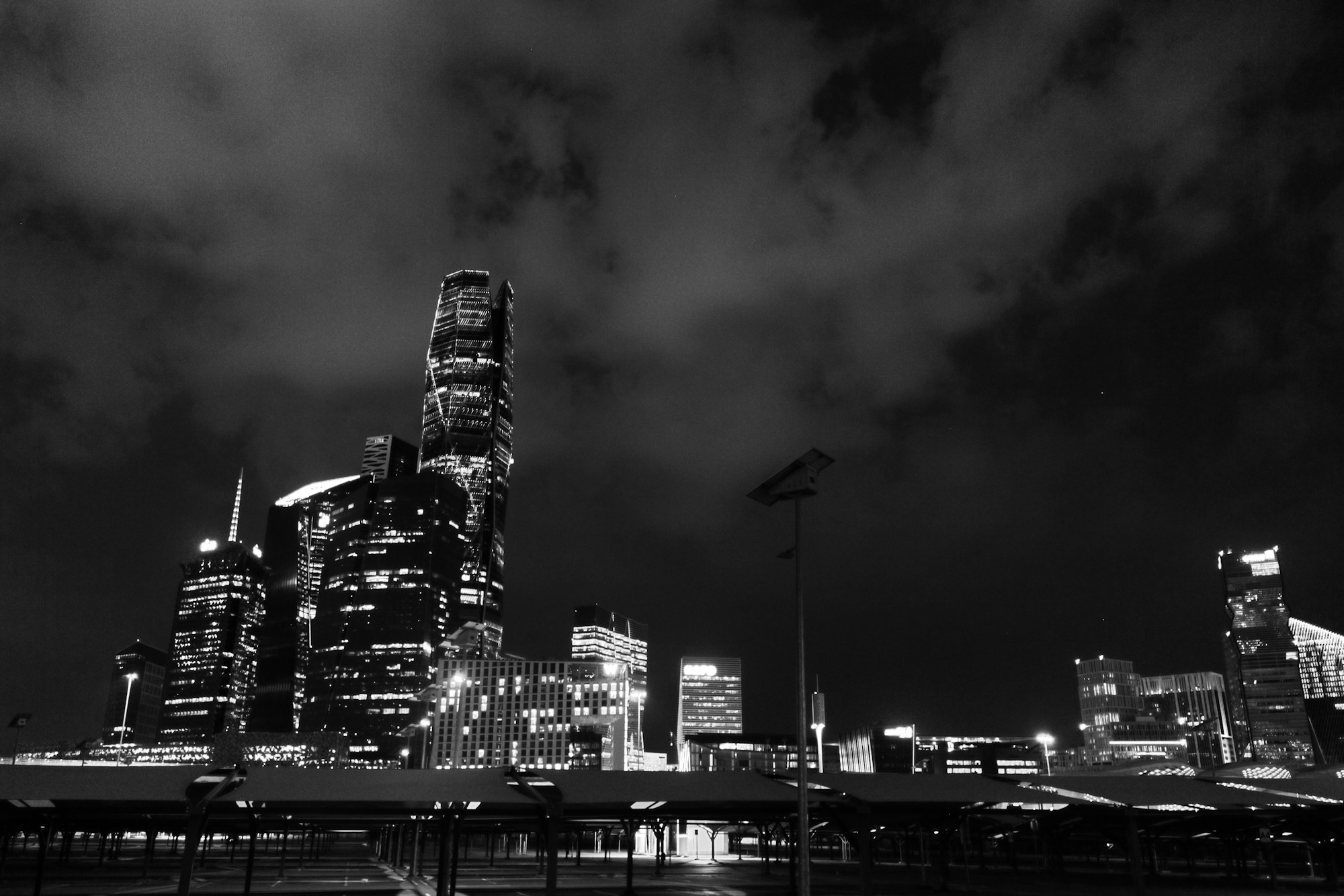
The Guardian of the Holy Sites facing the geopolitical dilemma of a generation
Saudi Arabia is navigating particularly dangerous diplomatic waters. According to Le Devoir, Riyadh had « denied access to its airspace and bases, showing its neutrality to Tehran » before the attack was launched. But Iran struck its territory anyway. Saudi Arabia also destroyed three drones east of Riyadh — marking a first direct participation in defensive operations.
For Riyadh, the stakes are even more delicate: the monarchy has not normalized relations with Israel and has stated that a formal agreement requires a credible resolution of the Palestinian question. According to Morocco Mail, despite strikes on their soil and pressure from the Trump administration, Riyadh and its neighbors are primarily seeking to preserve their long-term strategic survival.
Iranian pilgrims: a window reopened, then violently shut
The Iranian-Saudi sectarian divide: an unprecedented crisis since 1991
The Iranian-Saudi dimension of Hajj is one of the most explosive in global religious geopolitics. According to a study published in OpenEdition Journals, this confrontation symbolizes the competition between the Saudi monarchy and the Mullah regime for leadership over the Ummah.
Iranian pilgrims had resumed Umrah in April 2024 after nine years of absence, in the context of unprecedented diplomatic rapprochement. According to Maghreb Émergent, this window has now been slammed shut. With direct armed conflict and Khamenei’s death, any Iranian participation in Hajj 2026 seems almost impossible — a situation unprecedented since 1987–1991.
The Nusuk platform: Hajj 2026’s digital gateway
The centralized architecture of pilgrimage in the digital age
Since 2023, all Hajj registrations pass through the Nusuk platform exclusively. According to Hajj Omra (Méridianis), the official platform allows booking pre-defined approved packages with automatic e-visa issuance. Nusuk package categories include Standard, Premium, and Luxury tiers.
According to EntrAide Nusuk Hajj, economy packages start at around €8,000, standard packages at €9,000, and luxury packages from €10,500. Payment must be made in full upfront via the Nusuk electronic wallet — installment payments are not possible.
Mina, Arafat, Muzdalifah: triple threat under thermal pressure
The deadly heatwave: a structural threat that claims more lives than geopolitics
While the geopolitical threat is new and spectacular, the climatic threat is structural and documented by deadly statistics. According to Le Singulier, in 2025, temperatures nearly reached 52°C at the Grand Mosque, leading to the deaths of over 1,300 people. Half of the deaths involved clandestine pilgrims denied access to air-conditioned facilities.
Essential medical preparation checklist
- Mandatory cardiac check before departure (heart conditions, hypertension, diabetes)
- Prescriptions in English and home language, multiple copies
- Hajj-specific travel insurance: €50–200 covering medical emergencies and repatriation
- Umbrella, lightweight clothing, constant hydration (3–4 litres/day minimum)
Medina: the Prophet’s city, a preserved spiritual haven
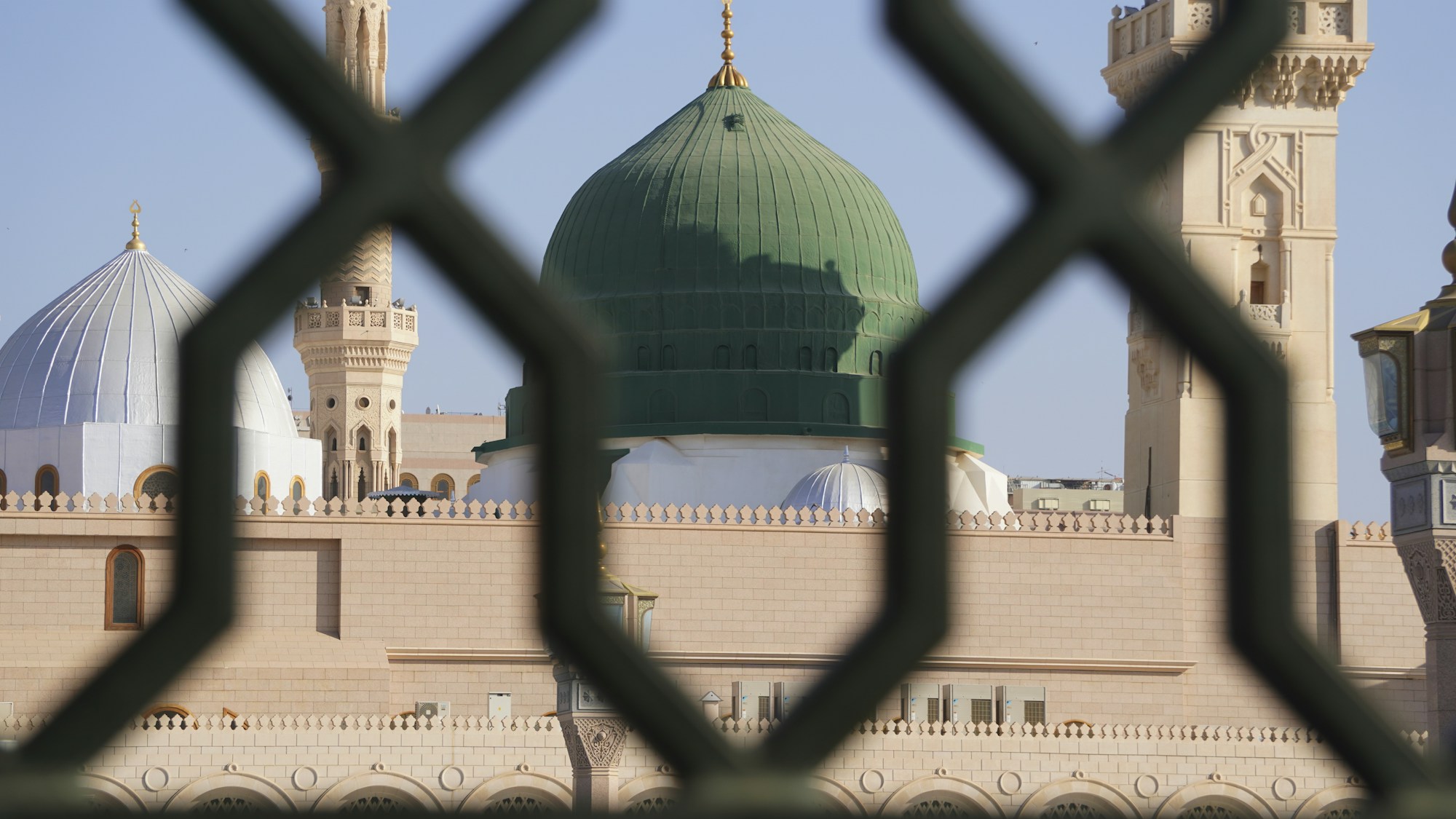
Al-Madinah al-Munawwarah: the antithesis of geopolitical chaos
Medina is Islam’s second holiest city, accessible to Muslims year-round. Most Hajj packages begin or end with a stay around the Prophet’s Mosque (Masjid al-Nabawi). According to eHajj, pilgrims visit the Prophet’s Mosque, Masjid al-Quba — the very first mosque in Islamic history — as well as the martyrs’ cemetery at Uhud.
Country quotas: the geopolitics of numbers
Who can go to Mecca in 2026? The global quota system
The quota system is the cornerstone of Hajj access, and it is deeply political. According to Al Qafila, quotas aim to ensure international equity, prevent dangerous overcrowding, and manage the enormous logistical flows. For France, the official quota stands at 6,000 pilgrims, with additional slots available from unused quotas of other countries.
Interior security: Riyadh’s unprecedented 2026 deployment
An unprecedented defensive arsenal at the gates of the Holy Sites
Despite regional chaos, Saudi Arabia maintains its course and deploys unprecedented means. According to Chaïma Travel, measures include: massive security force deployment at holy sites, enhanced access surveillance with advanced control technologies, AI-powered video surveillance for crowd management, and close coordination with Jeddah airport authorities.
Vision 2030 under threat: the billions Riyadh cannot afford to lose
The global economic impact of a pilgrimage under tension
The conflict strikes at the heart of Saudi ambition. The Hajj and Umrah represent the central pillar of the Vision 2030 strategy — a roadmap to reduce oil dependency by making religious and leisure tourism a key economic driver. According to Maghreb Émergent, they generate between $14 and $20 billion annually — the second largest revenue source after oil.
Vaccinations and health preparation: 2026 entry requirements
Your medical file: the key to entering the Kingdom
The health requirements for Hajj are as strict as the security requirements. All Hajj 2026 pilgrims must present valid vaccination certificates. The meningitis (MenACWY) vaccination is mandatory for obtaining the visa — the certificate must be valid and administered at least 10 days before arrival. Also recommended: tetanus-diphtheria-pertussis booster, seasonal flu, hepatitis A and B, typhoid, and yellow fever for travelers from endemic countries.
Health checklist before departure
- MenACWY (within 5 years, at least 10 days before departure)
- COVID-19: Saudi Arabia-approved vaccine
- Flu, hepatitis A and B (recommended)
- Cardiac check, blood sugar, blood pressure (especially 50+)
- Bilingual prescriptions (home language/English), multiple copies
- First aid kit adapted to desert climate
Practical information for your Hajj 2026
Global medical coverage with emergency repatriation. Essential in a context of regional tensions. 10% off via our link.
From $56 / 4 weeksStay connected from landing in Jeddah. Instant activation before departure, no physical SIM card needed.
From €4.50Frequently asked questions about Hajj 2026
Will Hajj 2026 be cancelled because of the war?
Analyses converge: tensions may create a more sensitive environment, but they do not signify a threat to the very existence of Hajj 2026. The most credible scenarios involve complications on certain air routes, increased administrative or security delays, and stronger diplomatic vigilance. According to Chaïma Travel, cancellation is not the dominant scenario.
What are the exact dates of Hajj 2026?
The provisional dates according to Al-Kanz are: 1st Dhul Hijjah on May 18, 2026; 8th Dhul Hijjah on May 25 (first day at Mina); 9th Dhul Hijjah on May 26 (Day of Arafat); 10th Dhul Hijjah on May 27 (Eid al-Adha); 11–13 Dhul Hijjah on May 28–30 (end of Hajj). These dates remain provisional as they depend on the official moon sighting.
What is the real cost of Hajj from Europe in 2026?
In 2026, Hajj will cost between €6,900 and €15,000 depending on the package. Nusuk standard packages start at approximately €8,000–9,000, luxury packages from €10,500. In 2026, additional factors pushing prices up include: aviation disruptions lengthening routes, hotel price inflation near the Sacred Mosque, and regional inflation linked to the conflict.
Will Iranian pilgrims be able to perform Hajj 2026?
The situation looks bleak. Iranian pilgrims had resumed Umrah in April 2024 after nine years, in an unprecedented diplomatic rapprochement. According to Maghreb Émergent, this window has now been forcefully shut. With direct armed conflict and Khamenei’s death, Iranian participation in Hajj 2026 appears compromised — unless there is rapid de-escalation through Omani or Qatari mediation channels.
Which vaccines are required for Hajj 2026?
The Meningococcal (MenACWY) vaccine is mandatory for the Saudi visa — the certificate must be valid within 5 years and administered at least 10 days before arrival. Also recommended: tetanus-diphtheria-pertussis booster, seasonal flu, hepatitis A and B, typhoid. Pilgrims not meeting vaccination requirements risk being turned back at the border despite expenses incurred.
What are the specific heat risks at Hajj 2026?
In 2025, temperatures nearly reached 52°C, leading to over 1,300 deaths — half of them involving clandestine pilgrims who lacked access to air-conditioned facilities. In 2026, temperatures are expected to exceed 40°C. Prevention: constant hydration (3–4 litres/day minimum), white umbrella, lightweight cotton clothing, avoiding outdoor movement between 12pm–4pm. Travel insurance including medical repatriation is strongly recommended.
Sources and references
- Maghreb Émergent — The Hajj, the billions Riyadh cannot afford to lose
- Chaïma Travel — Hajj 2026: Middle East tensions and pilgrimage risks
- Air Journal — The Middle East cut off from the sky: massive flight cancellations
- NusukHajj.fr — When will Hajj 2026 take place?
- Al-Kanz — Hajj 2026: dates, conditions, pilgrimage to Mecca
- Le Singulier — Hajj under heatwave: Saudi Arabia on maximum alert
Plan your trip to Saudi Arabia with Pixidia
Explore available itineraries to discover Jeddah, the Corniche, the historic Al Balad district and the wonders of the Arabian Peninsula.
Discover itineraries