
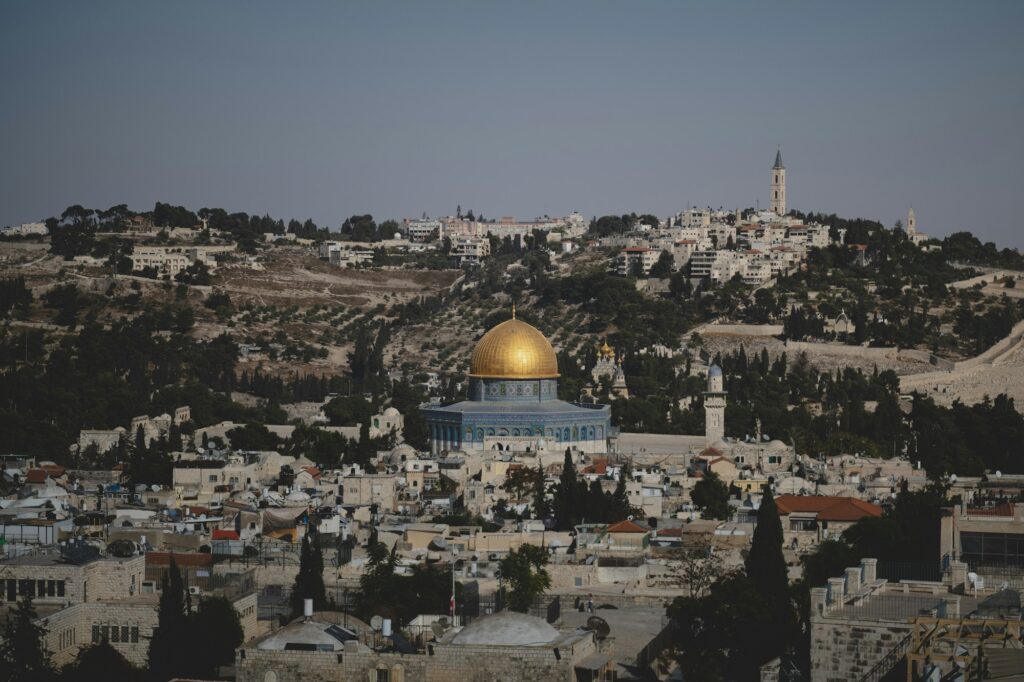
Is it still possible to go on pilgrimage to the Holy Land in 2026 — or is it too dangerous? Since a new armed conflict broke out in the Middle East, religious groups worldwide are divided. Some diocesan pilgrimages have been cancelled, others are pressing ahead. And all the while, local Christians are waiting and hoping — and economically depend on pilgrims returning. This guide gives you the facts, the accessible zones, serious alternatives, and the tools to make an informed decision.
1. Security Situation in April 2026: What the Authorities Actually Say
Israel and Palestinian Territories — Up-to-date Assessment
The context in April 2026 is the most complex in decades. On February 27, 2026, the US State Department authorized the departure of non-emergency government personnel from Mission Israel due to security risks. US and Israeli strikes against Iran disrupted regional air traffic, but major airlines — Air France, Lufthansa, British Airways, El Al — have resumed flights to Tel Aviv.
The on-the-ground reality is more nuanced than the headlines suggest. According to local operators as of April 2026, the main tourist areas — Jerusalem, Tel Aviv, the Dead Sea, Galilee — are operating normally. Israel has one of the world’s most advanced security infrastructures, with a visible presence in major cities and at all religious sites.
Zones to Avoid Completely
- Gaza: off-limits without exception
- West Bank (including Bethlehem): accessible, but only on organised tours with a guide
- Northern zones (within 4 km of Lebanese and Syrian borders): « do not travel » per US guidelines
- West Jerusalem, Galilee, Nazareth, Tel Aviv, Dead Sea: safe and operational
2. Jerusalem — The Old City of the Three Religions
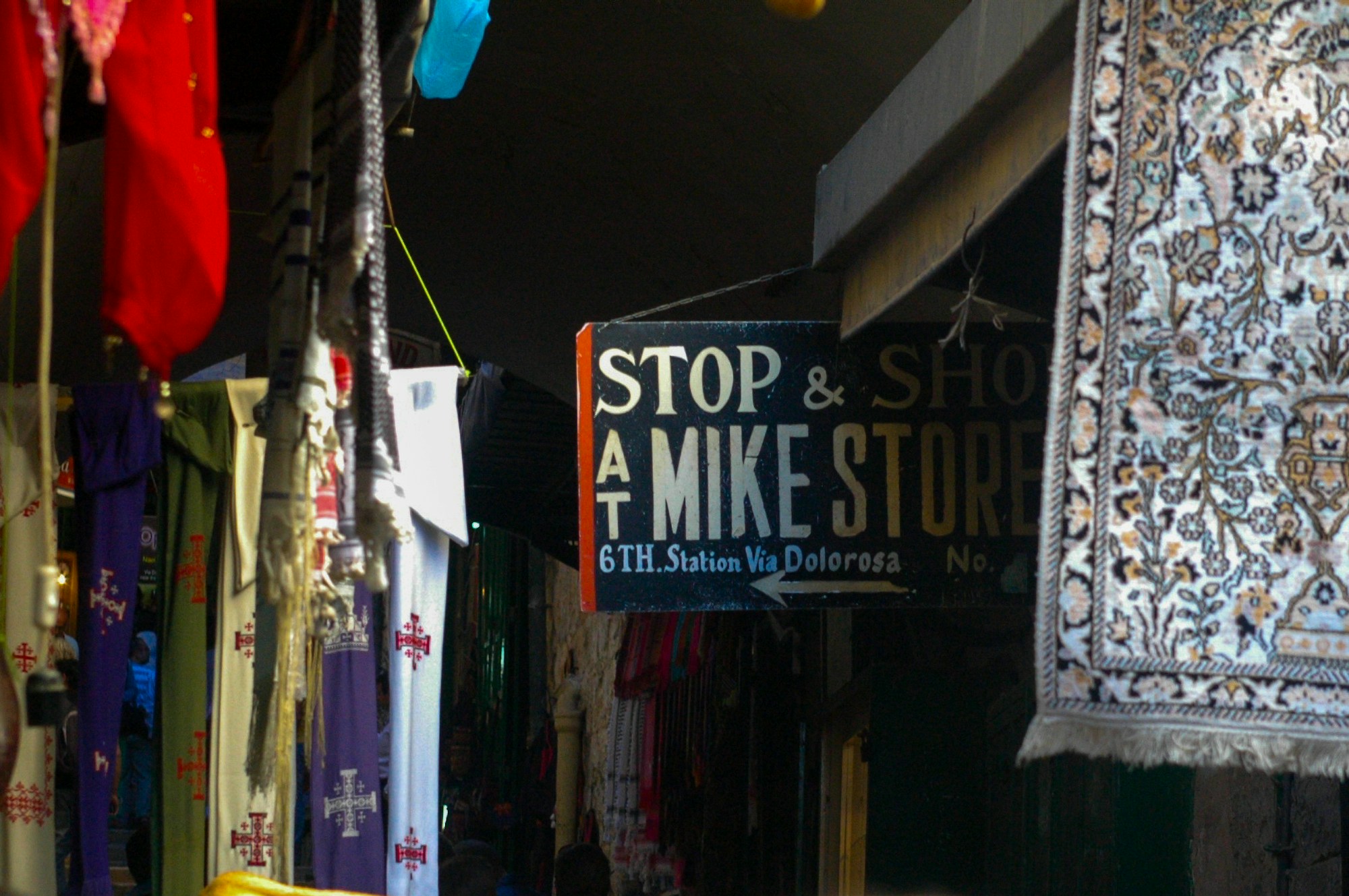
Jerusalem — Old City and Via Dolorosa
Nowhere else on earth do the holy sites of all three major monotheistic religions stand within a few hundred metres of each other. The Old City and West Jerusalem are fully operational in 2026, divided into four quarters (Christian, Jewish, Armenian, Muslim), each a world of its own.
For Christian pilgrims, the classic itinerary begins at the Church of St Anne and the Pool of Bethesda, then follows the Via Dolorosa — 14 Stations of the Cross along a 500-metre route to the Church of the Holy Sepulchre, the site of the Crucifixion and Resurrection. The Franciscan Way of the Cross procession takes place every Friday at 3 pm, free and open to all, for seven uninterrupted centuries.
Highlights for Pilgrims
- Via Dolorosa (500 m, 14 stations) — open and accessible
- Church of the Holy Sepulchre — daily Masses in multiple denominations
- Franciscan procession every Friday at 3 pm — free
- Armenian Quarter early morning — almost empty and magnificent
3. Western Wall and Temple Mount / Al-Aqsa — A Status Quo Under Strain
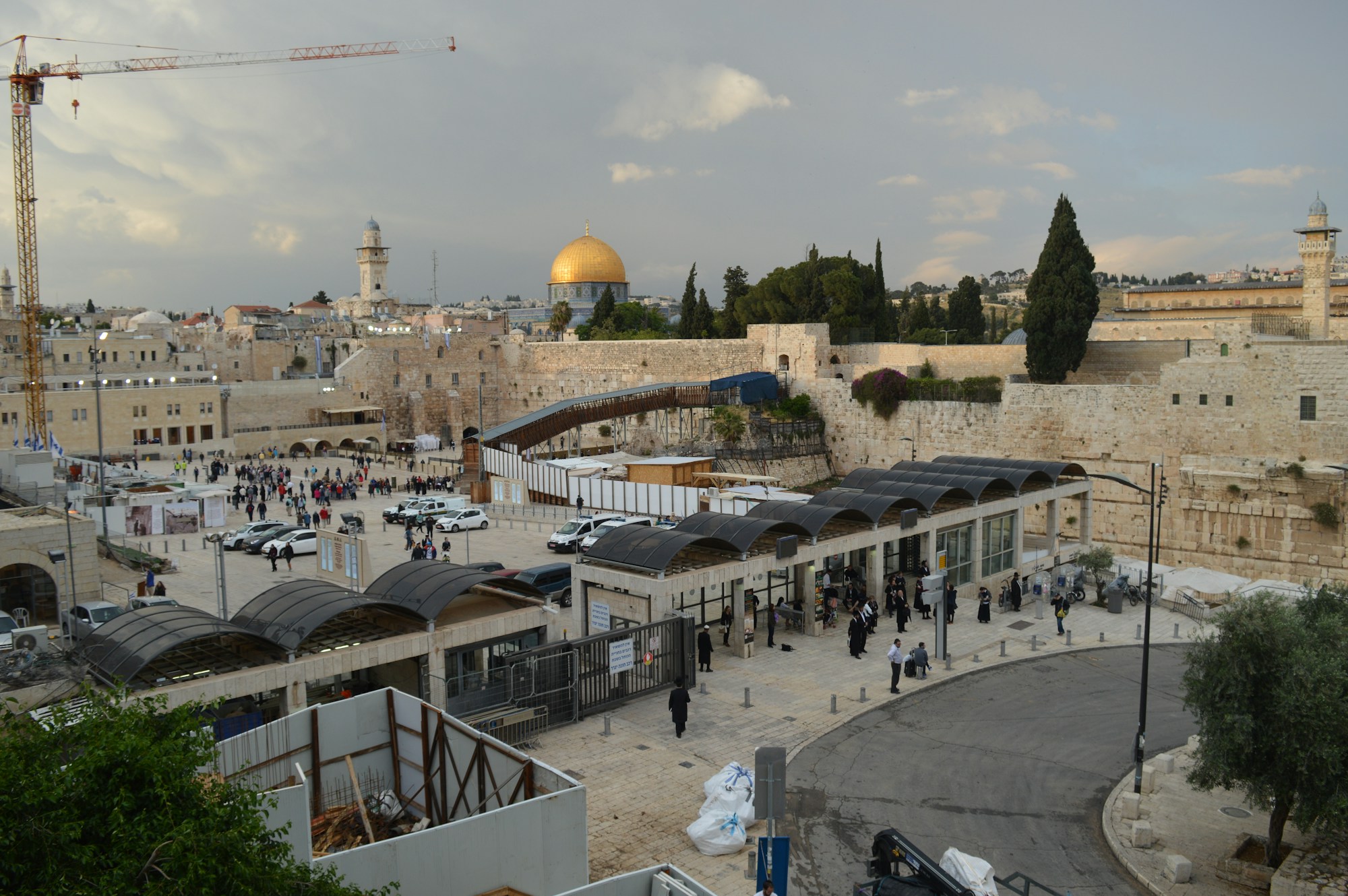
Temple Mount — The Geopolitical and Spiritual Heart
This site is the geographic epicentre of tension between the three religions. On January 21, 2026, Israeli police authorised the entry of Jewish prayer pamphlets onto the esplanade — a historic breach of the 1967 Status Quo. In 2025, 76,448 Jews « ascended » the Temple Mount according to the Beyadenu organisation, a 31% increase on 2024 and a historic record.
Practical Access
- The esplanade is open to all non-Muslims via the wooden bridge (Western Wall side)
- The Western Wall is accessible 24/7 and free for everyone
- Dome of the Rock and Al-Aqsa Mosque: non-Muslims prohibited at all times
- During Ramadan: massive police presence, heightened tensions
4. Bethlehem — Difficult Access, Essential Presence
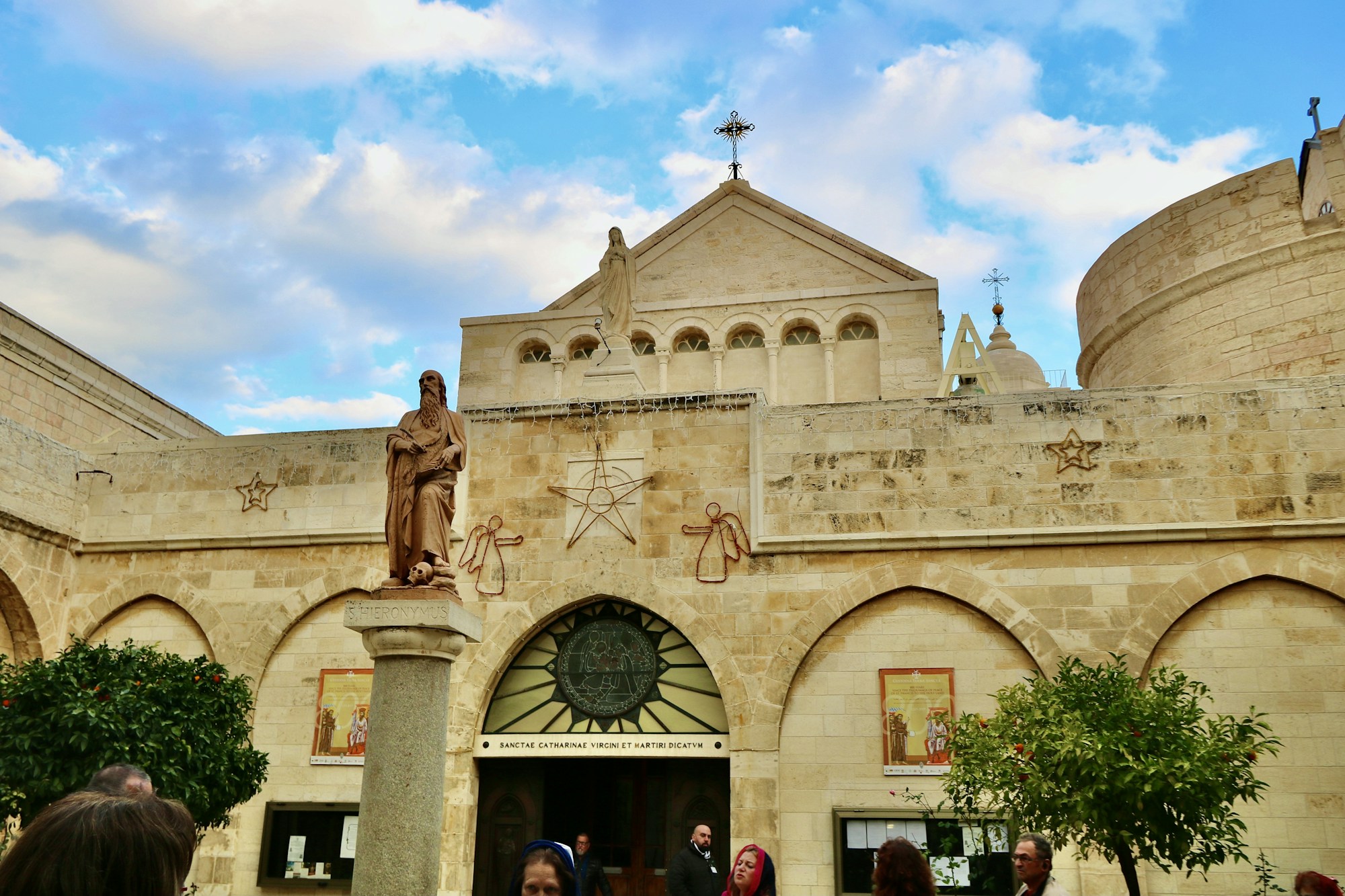
Bethlehem (West Bank) — The Nativity Under Military Control
The Church of the Nativity, built in the 4th century on the birthplace of Christ, remains accessible to foreign pilgrims via Checkpoint 300. But the situation in the city is bleak: around 70% of Bethlehem families depend on religious tourism to survive. With military checkpoints blocking movement and work permits for Israel suspended, unemployment reached nearly 50% in 2025.
Cardinal Pierbattista Pizzaballa, Latin Patriarch of Jerusalem, repeatedly emphasises that coming on pilgrimage is one of the most concrete forms of support you can give to local Christian communities. Buying from Bethlehem artisans (olive wood, mother-of-pearl, ceramics) directly supports these families.
5. Nazareth and Galilee — A Relatively Peaceful Haven
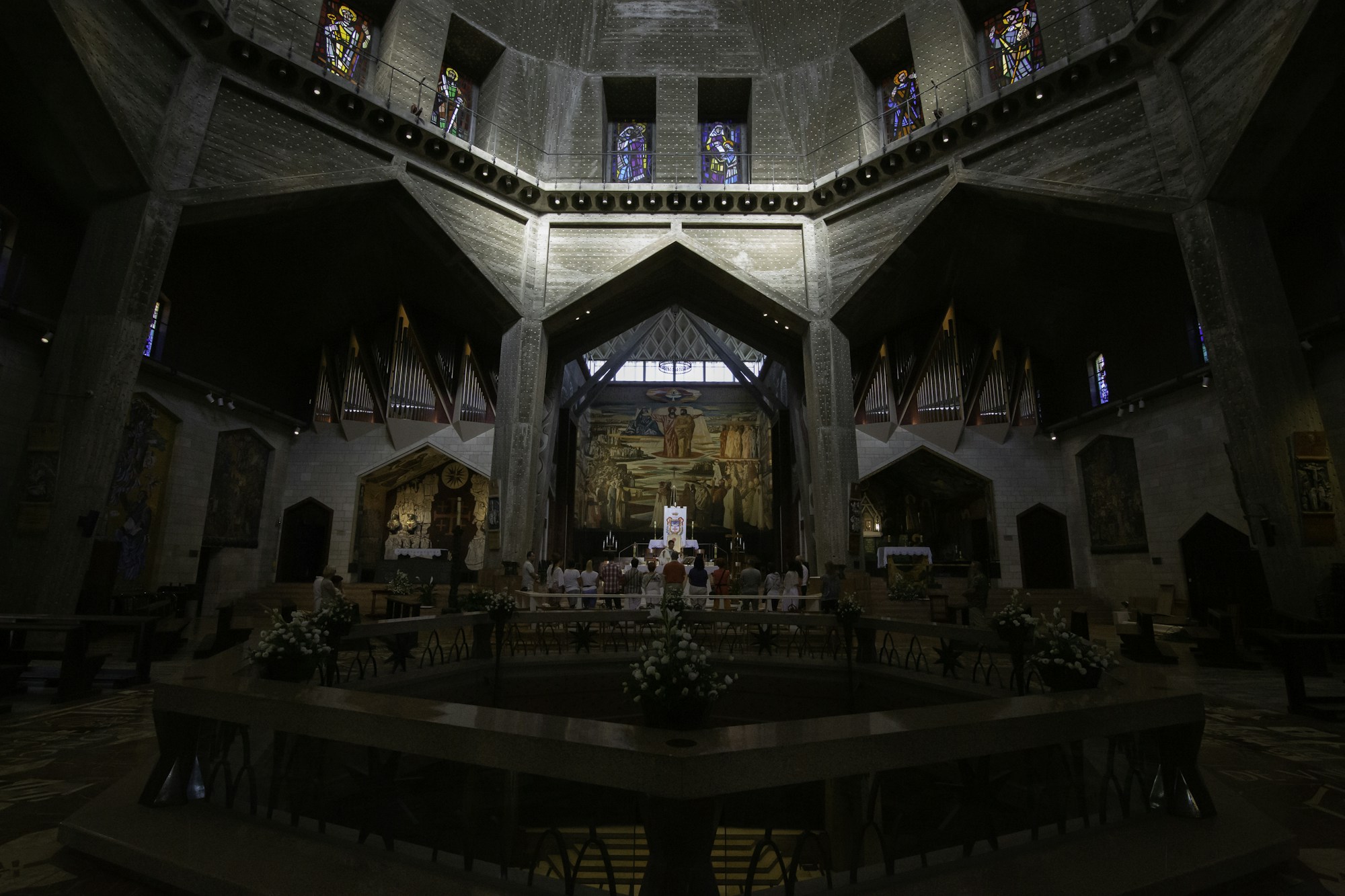
Nazareth — Arab-Israeli City, No Checkpoints
Nazareth is a predominantly Arab city within Israeli territory (not the West Bank), giving it significantly easier access than Bethlehem in 2026. Christians and Muslims have coexisted here for centuries, in an atmosphere pilgrims regularly describe as the most authentic in the Holy Land.
The Basilica of the Annunciation marks the site where the Archangel Gabriel appeared to Mary. The two-level church invites reflection on the mysteries of the Incarnation. Nearby, the Virgin’s Fountain at the Greek Orthodox Church of St Gabriel and the souks of the Old City offer authentic Levantine immersion.
Not to Miss in Galilee
- Basilica of the Annunciation — two superimposed church levels
- Sea of Galilee (Lake Tiberias) — traditional pilgrim boats
- Capernaum and Mount of Beatitudes — accessible and peaceful
- Sepphoris — Byzantine mosaics, 5 km from Nazareth
6. Jordan — The Other Holy Land, Accessible and Peaceful
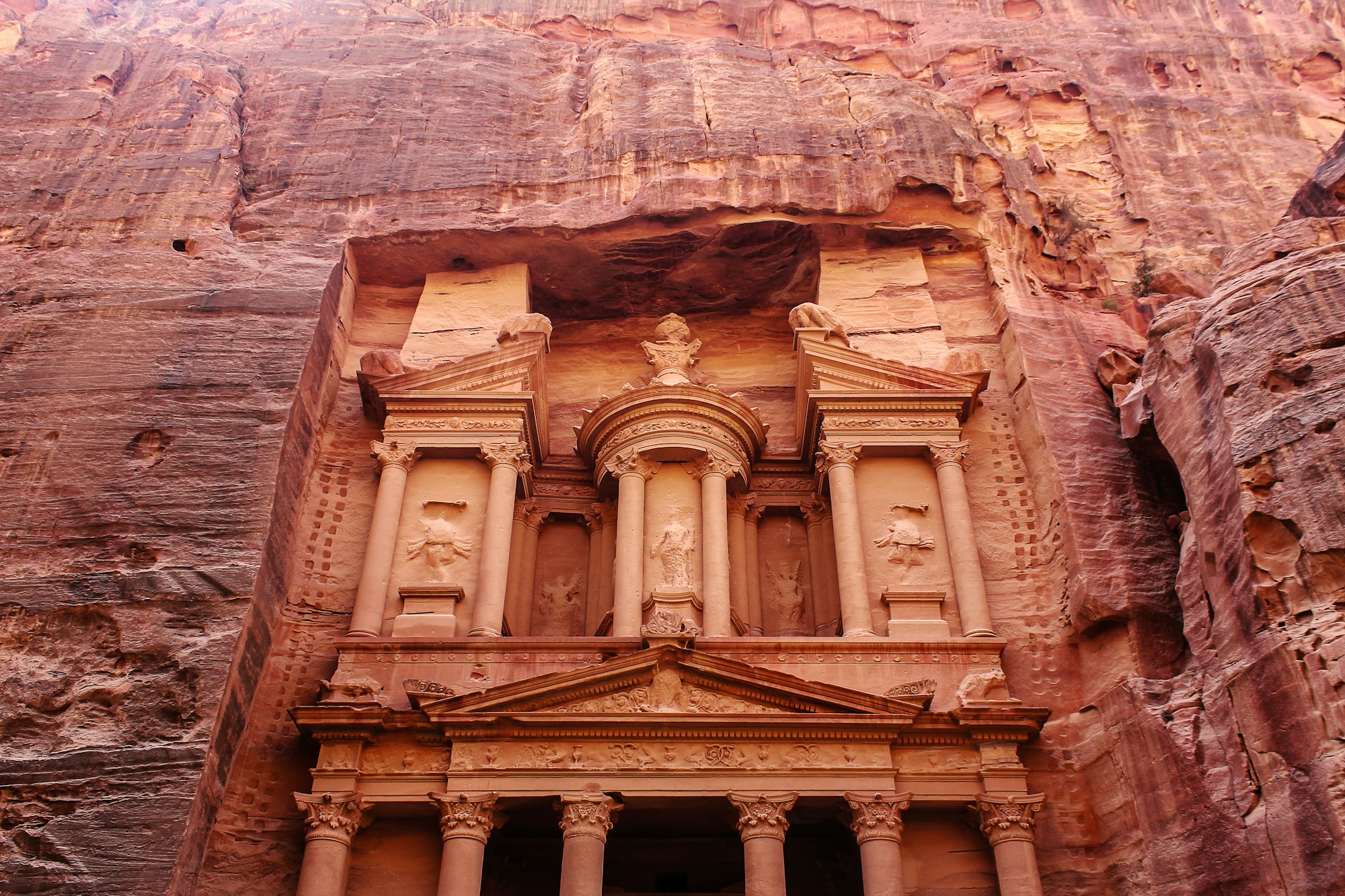
Jordan — Mount Nebo, Bethany, Petra, Madaba
Jordan has become the go-to alternative in 2026 for groups hesitant about the Israeli security situation. Vatican News dedicated a full article to it in January 2026: « Jordan, the Other Holy Land ».
The Hashemite Kingdom is home to key biblical sites: Mount Nebo where Moses died after seeing the Promised Land (840 m altitude, views across to Jericho and sometimes Jerusalem), Bethany Beyond the Jordan (UNESCO-recognised authentic site of Christ’s Baptism), Madaba with its famous Byzantine mosaic map of Palestine, and Petra with its three Byzantine churches nestled among the Nabataean ruins.
Why Jordan in 2026
- No military checkpoints, no visible intercommunal tensions
- Foreign Christians warmly welcomed in the Hashemite kingdom
- Jordan Pass: visa + Petra entry included (~€75) — excellent value
- Al-Maghtas (Jordan side of the Jordan River): often more moving than the Israeli side
7. European Alternatives: Rome, Lourdes, Taizé and Santiago
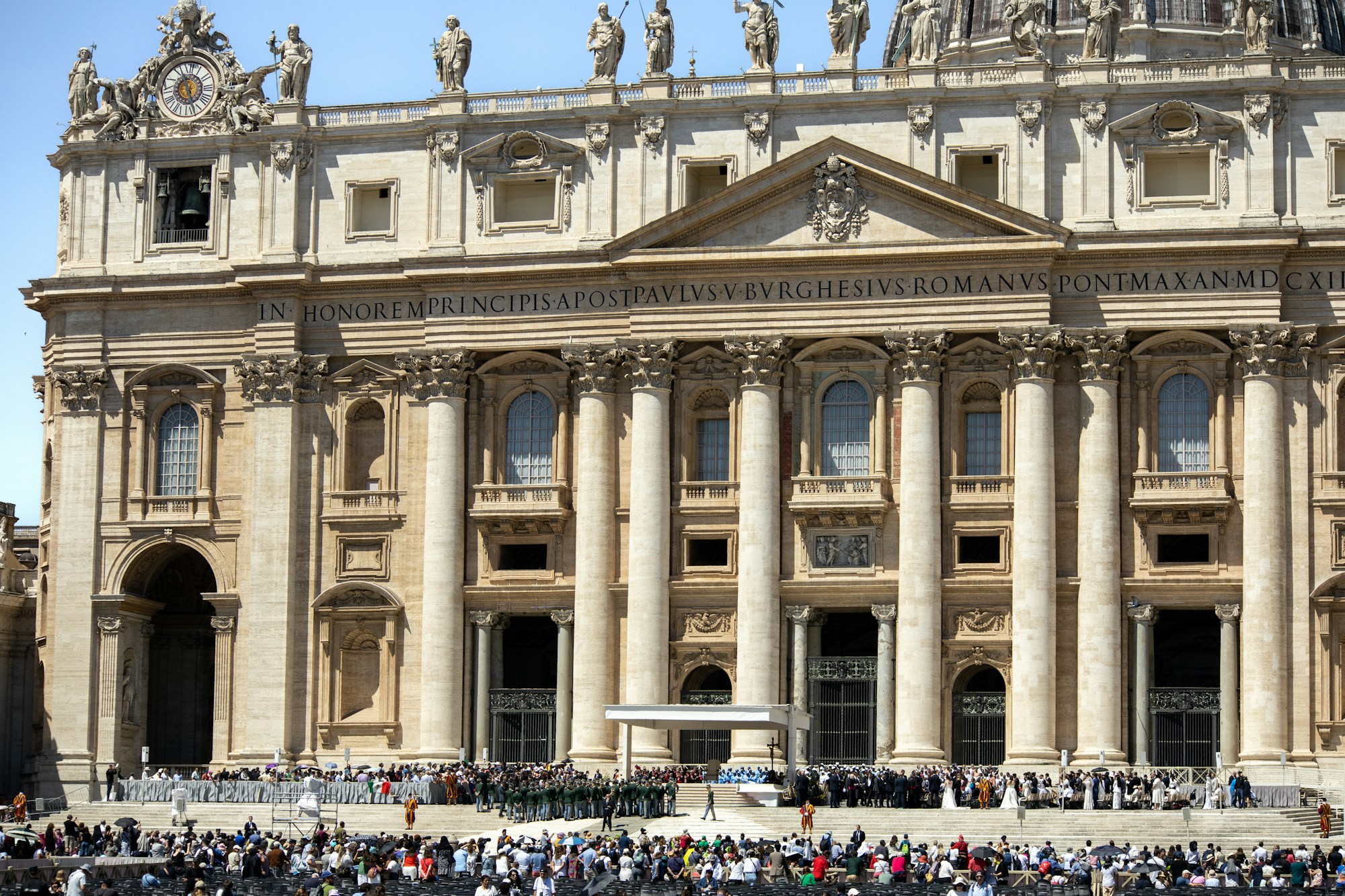
Four Serious Alternatives for 2026
Rome (Jubilee 2025–2026) — €900–1,400 for 5–7 days
The 2025 Holy Year, extended into 2026, makes Rome the most obvious Christian alternative. Many dioceses have redirected their groups to the Eternal City. The Holy Door of St Peter’s offers special Jubilee indulgences.
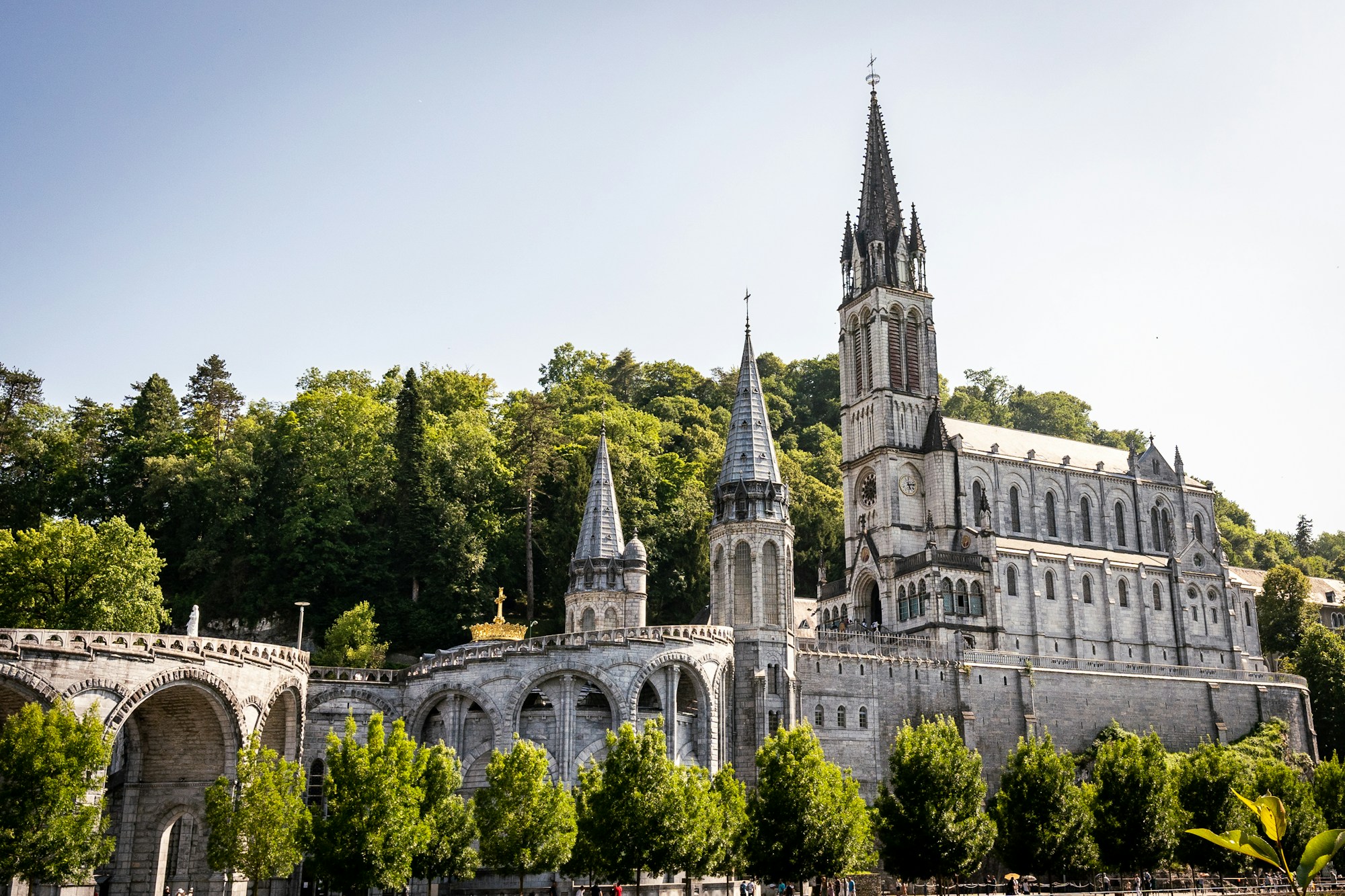
Lourdes — €400–900 for 5–6 days
Europe’s premier Catholic pilgrimage site, Lourdes is the ultimate safe haven during geopolitical instability. The major national pilgrimages maintain their dates without disruption. Its infrastructure for sick and mobility-impaired visitors is unique in the world.
Taizé (Burgundy) — €150–200 for 7 days
For groups unable to travel to the Holy Land, the ecumenical community of Taizé offers a spiritually intense experience in the heart of Burgundy. The 80 brothers from multiple denominations (Catholic, Anglican, Protestant) welcome tens of thousands of young people from 60 countries. The evening prayer in the Church of Reconciliation, lit by hundreds of candles, rivals any Holy Land site in depth.
Santiago de Compostela — €500–1,500 (variable)
The Camino remains the walking pilgrimage par excellence. It offers a physical and communal dimension that other pilgrimages cannot match — walking as prayer, kilometre by kilometre.
Alternatives Comparison
- Rome — Jubilee 2026, special graces, 5–7 days, €900–1,400
- Lourdes — Safe haven, accessible to all, 5–6 days, €400–900
- Taizé — Youth, ecumenism, 7 days, €150–200 (most affordable)
- Compostela — Walking, community, variable by distance chosen
8. Visas, Airlines and Travel Insurance
Practical Formalities and Precautions for 2026
The ETA-IL — Mandatory Since 2025
Since January 1, 2025, French nationals (and nationals of 96 other visa-exempt countries) must obtain an ETA-IL (Electronic Travel Authorization – Israel) before any departure. Apply only on the official site israel-entry.piba.gov.il (25 shekels, ~€6), valid for 2 years, processed in minutes. Beware of third-party sites that mimic the official site: some charge exorbitant fees and steal personal data.
Travel Insurance: The Biggest Blind Spot
This is the most underestimated issue. Almost all standard policies explicitly exclude war-related risks. Cancelling out of personal caution, without an official government travel warning, gives you no right to a refund in 95% of cases. The only real protection is « all-cause » insurance (4–10% of the trip cost), taken out before the conflict became widely reported — an absolute condition.
- Apply for your ETA-IL only on the official site (israel-entry.piba.gov.il)
- Register with your government’s travel registration system before departure
- Take out « all-cause » insurance BEFORE the conflict is in the news
- If the airline cancels your flight: refund guaranteed, but no compensation for war cancellations
Practical Info for Your Pilgrimage
Nomad Insurance: global coverage from $56/4 weeks. 10% off via our link.
From $56 / 4 weeksStay connected from landing. Instant activation, no roaming.
From €4.50Frequently Asked Questions — Holy Land Pilgrimage 2026
Is it really safe to go on pilgrimage to the Holy Land in 2026?
The answer is nuanced. For pilgrims on an organised tour, the vast majority experience a safe journey. West Jerusalem, Galilee, Nazareth and Tel Aviv are operational and secure. The West Bank (including Bethlehem) must be visited with a guide. In April 2026, major airlines have resumed flights to Tel Aviv.
Is Bethlehem accessible to foreign pilgrims in 2026?
Yes, but only as part of an organised tour with a local guide. Foreign tourists can enter Bethlehem through Checkpoint 300. The area is safe for visitors, but transport is complicated. The Latin Patriarch of Jerusalem calls on pilgrims to come: their presence is concrete support for local Christian communities, 70% of whom depend on religious tourism.
Can non-Muslims visit the Temple Mount / Al-Aqsa Esplanade in 2026?
Yes. The esplanade is open to non-Muslims Sunday–Thursday (7:30–10:30 am & 12:30–1:30 pm in winter; 8:30–10:30 am & 1:30–2:30 pm in summer), free of charge, via the wooden bridge near the Western Wall. However, the Dome of the Rock and Al-Aqsa Mosque are closed to non-Muslims. The January 21, 2026 breach of the Status Quo has increased tensions.
Is the ETA-IL really mandatory for EU/UK nationals?
Yes, since January 1, 2025. Nationals of 97 visa-exempt countries (including EU and UK) must apply for an ETA-IL online before travelling to Israel. Apply only on the official site israel-entry.piba.gov.il (25 shekels, ~€6), valid for 2 years. Beware of third-party scam sites charging inflated fees.
Does my travel insurance cover cancellation due to war?
Very likely not with a standard policy. Almost all travel insurance explicitly excludes damage directly or indirectly related to war. Cancelling out of personal caution, without an official government travel advisory, gives no right to a refund in 95% of cases. The only real protection is « all-cause » insurance, taken out before the conflict became widely reported, covering approximately 75% of the trip cost.
What is the best alternative to the Holy Land in 2026?
Jordan is the most spiritually relevant biblical alternative, with Mount Nebo, Bethany Beyond the Jordan (UNESCO Baptism site), Madaba and Petra. Rome (Jubilee 2025-2026) is the most accessible Christian alternative. Lourdes is France’s spiritual safe haven. Taizé (Burgundy) offers an intense experience at minimal cost (€150-200/7 days). Santiago de Compostela for those seeking a physical pilgrimage.
Are organised pilgrimages being cancelled or maintained for 2026?
The situation varies. Some groups have cancelled (the Sainte-Trinité parish in Paris cancelled its July 2026 pilgrimage, « barring an unlikely improvement »). Others are pressing ahead: the Diocese of Lyon is maintaining its April 25–May 3, 2026 pilgrimage. Bipel is operating Holy Land pilgrimages in April 2026. Flexibility and contractual protections are key.
Why do local Christians need pilgrims to return?
Around 45,000 Christians live in the West Bank and 10,000 in East Jerusalem. They are experiencing their third severe economic crisis in two decades: the 2014 and 2021 conflicts, Covid (which cancelled all pilgrimages), and now the 2023-2026 war. In Bethlehem, 70% of families depend on religious tourism. Cardinal Aveline, from Jerusalem in August 2025, urged pilgrims to come « not only for your faith, but to meet the communities who live here » — a pilgrimage of ecclesial solidarity.
Sources
- US State Department — Israel, West Bank and Gaza Travel Advisory (Feb. 2026)
- Terresainte.net — Jewish Prayer on Temple Mount: New Breach in the Status Quo (Jan. 2026)
- Vatican News — Jordan, the Other Holy Land (Jan. 2026)
- French Embassy in Israel — ETA-IL: Electronic Travel Authorization
- Génération Voyage — Travel Insurance and War: Your Rights
- Bipel — Holy Land Pilgrimage, April 2026
- Exclusive Israel Tours — Is It Safe to Travel to Israel in 2026?
- Holy Land Tours — A Christian’s Guide to Security on Pilgrimage
Research conducted on April 7, 2026. The security situation evolves rapidly — always consult your government’s official travel advisory before making any booking decision.
Plan Your Pilgrimage with Pixidia
Find spiritual itineraries adapted to the current situation — Holy Land, Jordan, Rome or Compostela.
Explore Pilgrimage Itineraries