
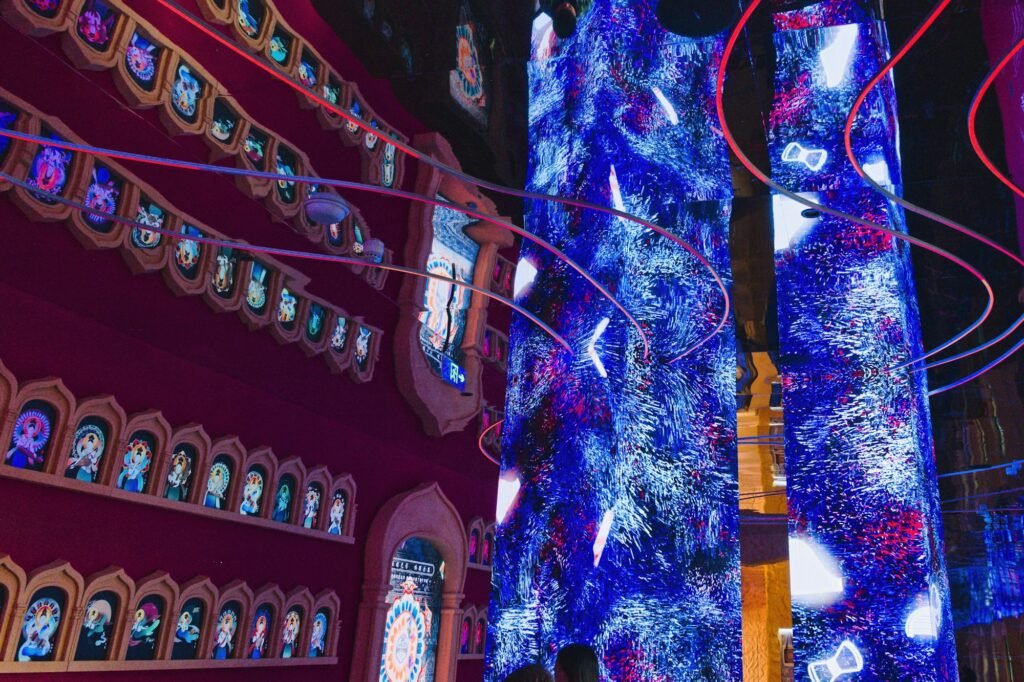
What if your next trip was an adventure where you are the hero? In 2026, a quiet revolution has transformed the way we explore the world. Escape rooms — those puzzle-in-a-box experiences that swept through the 2010s — are now just a distant prelude. Today, the most curious travellers immerse themselves in Shakespearean hotels in Shanghai, walk through reactive digital artworks in Tokyo, or wander barefoot through gothic labyrinths in New York, guided by the voice of Helena Bonham Carter. The boundaries between spectator and actor are dissolving — and with them, the very idea that travelling simply means « seeing » things.
According to the Marriott Bonvoy Ticket to Travel 2026 report, 50% of travellers used digital planning tools for their holidays in 2025, up from 41% in 2024 — and this technology is also transforming the experiences themselves. Here is the complete guide to the 9 most striking immersive adventures in the world in 2026, from Tokyo to Los Angeles via Rwanda.
1. teamLab Planets & Borderless — Tokyo, Japan
The museum where art responds to your body
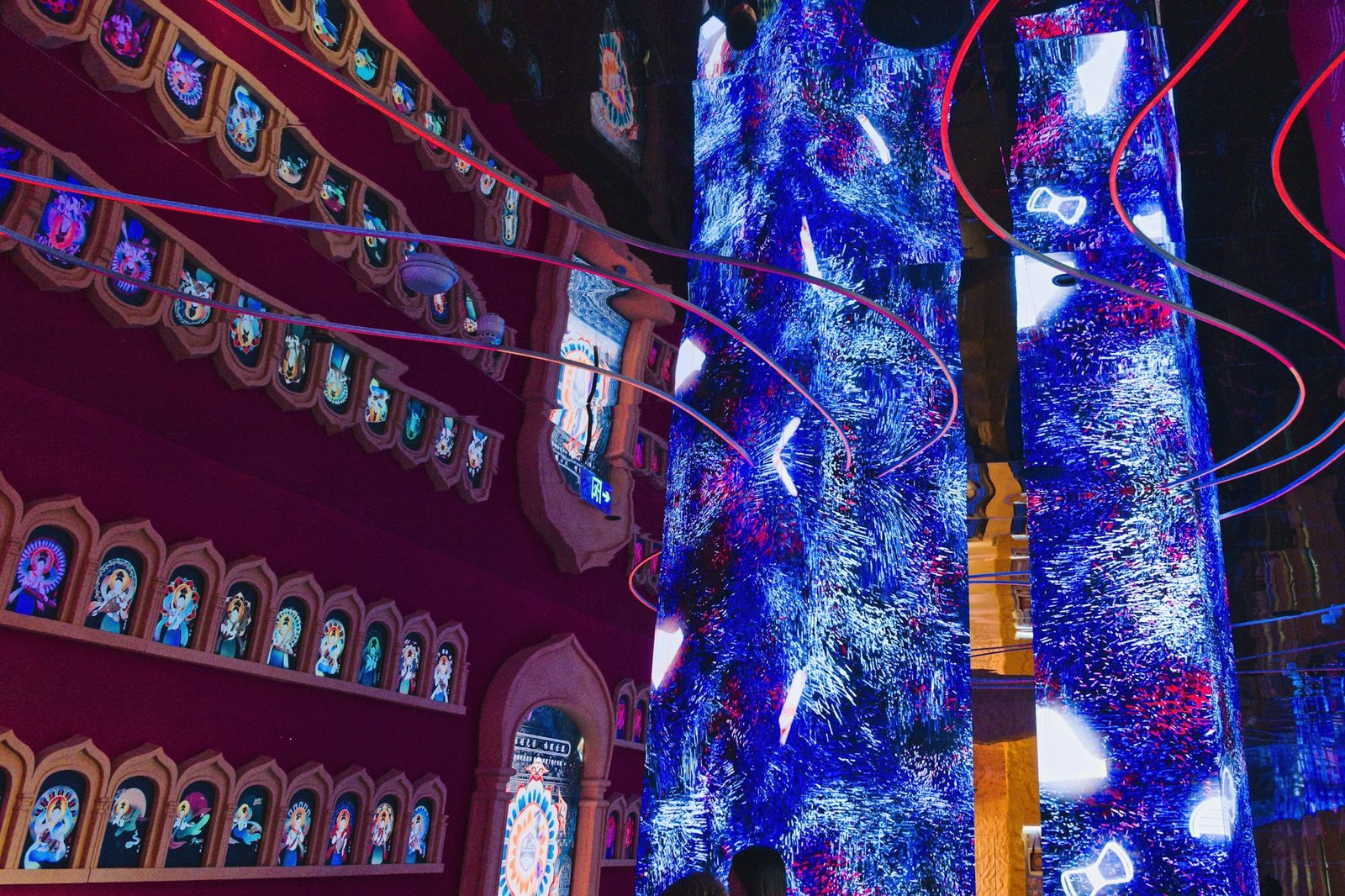
Step into a world where art transcends all boundaries. teamLab Planets Tokyo invites you to experience creativity with your entire body: you walk barefoot across a reflective water surface, lights and sounds transform in rhythm with your movements, and artworks spill from one room into the next without ever respecting borders. According to Go Tokyo, the museum holds the Guinness World Record for the most visited museum by a single art group.
teamLab Borderless, meanwhile, reopened in February 2024 in the new Azabudai Hills complex: here, no map is provided. The deliberate absence of a floor plan forces visitors to wander, get lost, and discover. In early 2025, teamLab Planets expanded with new zones — Athletics Forest, Catch and Collect Forest — blending nature, education and cutting-edge technology. Since 16 January 2025, a new permanent installation has also opened in Kyoto: teamLab Biovortex Kyoto, a 7-minute walk from the central station.
What makes the experience unique
- Interactive digital art that reacts to every movement of your body
- Two complementary museums (Planets at Toyosu, Borderless at Azabudai)
- No map provided — wandering is the very principle of Borderless
- Suitable for children from age 4 (ideal for families)
2. Sleep No More — Shanghai, China
Punchdrunk’s unique living legacy across five floors
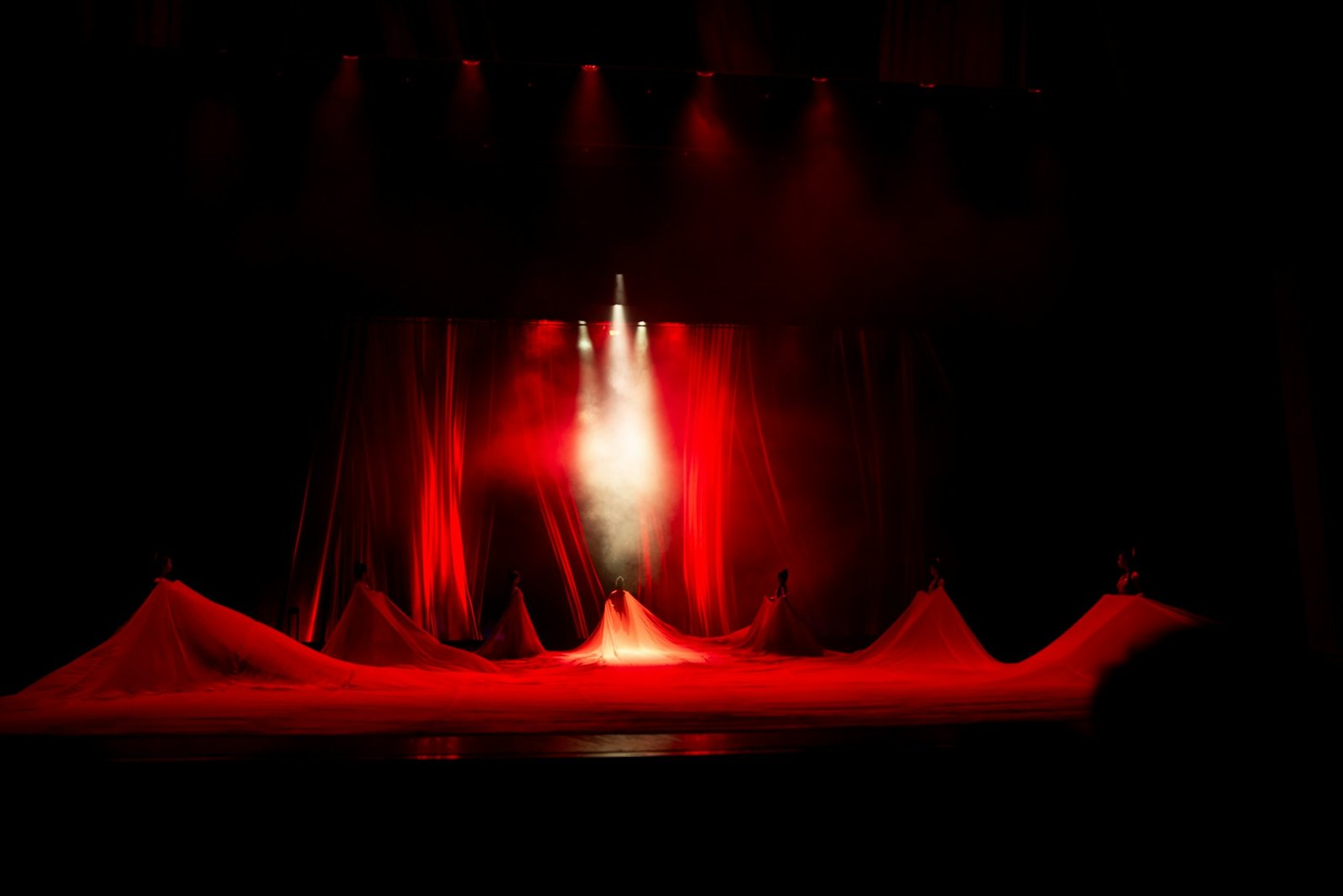
White mask on your face, silence imposed — you enter the fictional McKinnon Hotel, a five-storey building where 90 theatrical spaces recreate a 1930s Shanghai steeped in Macbeth. Since its premiere on 14 December 2016, Sleep No More Shanghai has welcomed 620,000 spectators and generated more than 560 million yuan in revenue, according to the Shanghai government.
What makes this edition particularly precious in 2026: the New York version, open since 2011, permanently closed its doors in January 2025. Shanghai is now the only production still running anywhere in the world — and the longest-running international show in the city’s history, according to China Daily. Each performance lasts three hours and no journey is ever identical: you choose who to follow, which doors to open, which secrets to uncover.
What to know before you go
- 90 spaces to explore freely for 3 hours with no guide
- No language barrier — the experience is entirely visual and physical
- Available in 24 languages on Ctrip for international travellers
- Not recommended for young children (dark and labyrinthine atmosphere)
3. Theater of the Mind — Chicago, United States
David Byrne reinvents your memories across 1,400 m²
Talking Heads founder and Oscar winner David Byrne co-created with screenwriter Mala Gaonkar a radically intimate theatrical experience, presented by the Goodman Theatre in Chicago at least through 31 May 2026, then extended (exact dates on the official site). The show installs 1,400 m² of rooms inside the Reid Murdoch Building in River North, which only 16 spectators at a time traverse over 75 minutes.
Upon arrival, you are assigned a new first name. A character named « David » — loosely inspired by Byrne himself — guides you through his life told in reverse, through a labyrinth of spaces that question memory, perception and identity. According to the Chicago Sun-Times, the experience draws on real scientific research into how the brain filters, rewrites and reinterprets the past. More than 3,000 tickets were purchased within hours of going on sale.
What the guidebooks don’t tell you
- Only 16 people per performance — a rare intimacy in theatre
- Inspired by neuroscience research: memory, perception, identity
- You move, see, feel, taste and hear the experience
- Recommended from age 10, but designed for curious adults
4. Secret Cinema Grease & The Future Permanent Venue — London, England
Grease 2026: edition ended on 13 September
Secret Cinema — behind legendary productions such as *Star Wars: The Empire Strikes Back*, *Casino Royale* and *Stranger Things* — returned in force in summer 2026 with *Grease: The Immersive Movie Musical* at Battersea Park. For 2h30, the film doesn’t just unfold in front of you: it unfolds around you.
The 2026 edition introduces « Roam and Return » seats: spectators freely explore the world of Rydell High, meet the Pink Ladies at the Frosty Diner, witness scenes from the film in different spaces, then return to their seats. What makes this season even more historic, according to West End Theatre: Secret Cinema has announced the opening of a permanent venue in Greenwich, on the banks of the Thames, by end of 2026 — its first space designed specifically for large-scale immersive productions.
Why you can’t miss this
- More than 60 immersive experiences produced worldwide since their founding
- New « Roam & Return » seats to explore the film’s universe
- Permanent venue in Greenwich announced for late 2026
- Costume encouraged — spectators dressed as characters enrich the experience
5. Viola’s Room by Punchdrunk — New York, United States
A sensory gothic tale guided by Helena Bonham Carter
After its debut in Woolwich (London) in 2024, Viola’s Room — Punchdrunk’s latest creation, the masters behind *Sleep No More* — had its North American premiere at The Shed in New York in 2025. The experience takes a radical stance: no live actors. Instead, groups of six barefoot spectators are guided by headphones broadcasting the enchanting voice of Helena Bonham Carter through a 50-minute labyrinth.
According to NPR, the experience uses binaural audio to create « a deeply personal journey »: mist, flickering lights, very narrow spaces where you must crouch or crawl. The 2025 edition (June to November 2025) is over; no 2026 edition is confirmed to date. As Punchdrunk sums it up: « Everything is accessible, everything is two clicks away — but a live, tactile 360° experience is something where you are plunged into a different universe. »
Distinctive features of the experience
- No actors — entirely guided by Helena Bonham Carter’s binaural sound
- Maximum 6 spectators per session — absolute intimacy
- Shoes must be removed at the entrance
- Be prepared to crawl, crouch and pass through very narrow spaces
6. Gami-Vacations — Tsushima & Akihabara, Japan
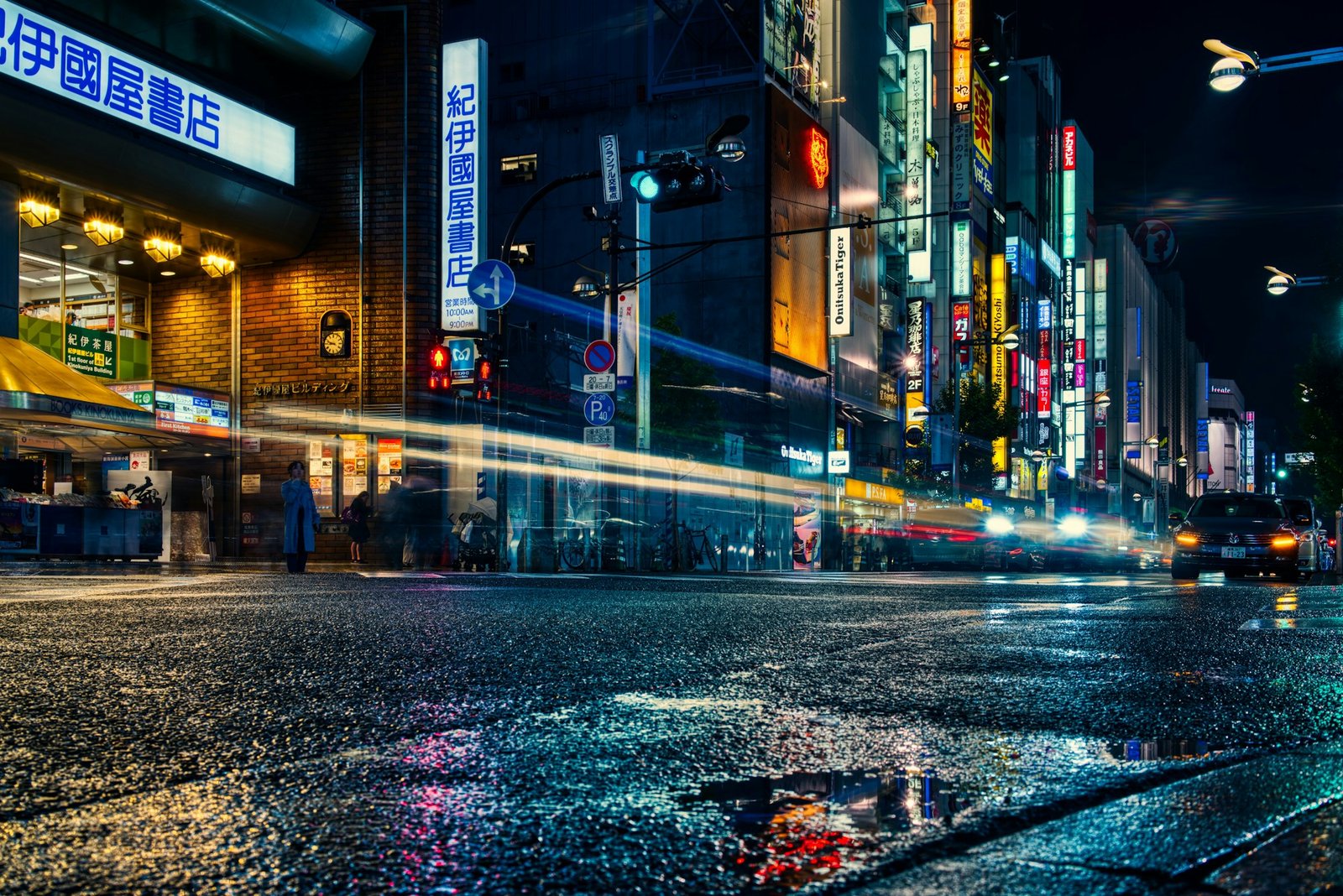
Video game-inspired travel becomes 2026’s most powerful trend
What began as a digital game is now pulling people towards the real world — and reshaping the geography of global tourism. Skyscanner coined this trend the « Gami-Vacation »: travel shaped by video game settings. According to National Geographic, 35% of American travellers have planned a trip inspired by a favourite game. In India, 88% of young people say they would choose an international destination if it is the setting of a game they have played.
The island of Tsushima, made famous by *Ghost of Tsushima* (PlayStation), now welcomes digital pilgrims who come to recognise every cliff and every shrine. In Tokyo, Akihabara is the ultimate playground: multi-storey arcades, figurine shops, manga-themed cafés, virtual reality rooms. According to Euronews, tourist boards are now collaborating with gaming influencers to create thematic itineraries — like the *Assassin’s Creed* tours in Rome.
The flagship Gami-Vacation destinations
- Tsushima: Ghost of Tsushima landscapes, shrines, coastal trails
- Akihabara: Sega arcades, manga cafés, cutting-edge VR experiences
- Kyoto: setting for many Japanese RPGs (Persona, Final Fantasy)
- Gamified apps available with quests and real-time rewards
7. The Tension Experience & The Nest — Los Angeles, United States
Los Angeles, world capital of immersive psychological thriller
Los Angeles is the only city in the world that combines Hollywood-level escape rooms with open-world theatrical experiences set in authentic urban spaces. The Tension Experience sends personalised messages to participants even before they arrive: secret instructions, fake identities, real-time interactions that deliberately blur the line between fiction and reality. The Immersive Experience Institute cites it as the global benchmark of the genre.
The Nest offers a radically different experience: equipped with just a torch and a cassette player, you explore alone the labyrinthine corridors of a storage unit that once belonged to a woman named Josie. By examining her personal belongings and listening to her audio journals, you slowly piece together a surreal and poignant narrative. And Stash House goes even further: you are invited into the seemingly normal apartment of a local entrepreneur — which turns out to be the lair of a notorious drug lord.
Three formats, one city
- The Tension Experience: psychological thriller with personalised messages before the experience
- The Nest: solo narrative, audio journals, $39–$90
- Stash House: 4 participants, 90 minutes, $180 per person
- All experiences take place in authentic Los Angeles urban settings
8. Advanced Technology, the Silent Revolution of Immersive Experiences
When advanced technologies personalise every adventure
Advanced technology is no longer a futuristic concept reserved for science fiction — it is now integrated into every stage of the immersive journey. teamLab’s installations use real-time algorithms so that artworks react differently depending on visitor density and movement. In Bradford, the *YOU:MATTER* installation by Marshmallow Laser Feast blends audio generated by advanced algorithms with recordings captured within the museum itself.
Singapore and Amsterdam have deployed smart sensors to redistribute tourist flows in real time. At the Kennedy Space Center in Florida, the new attraction The Gantry at LC-39 allows visitors to virtually design and launch rockets using simulations generated by advanced modelling systems, from a platform with a direct view of active launchpads. And according to McKinsey (March 2026), travellers who use digital tools for planning report very high satisfaction levels — particularly for multi-city itinerary comparisons.
Advanced technologies in immersive experiences: real-world applications
- Artworks that react to visitor movements (teamLab, Bradford)
- Real-time personalisation of the experience based on the traveller’s profile
- Tourist flow management via smart sensors (Singapore, Amsterdam)
- Interactive spatial simulations (Kennedy Space Center, Florida)
Practical information for your immersive adventures
Stay connected in all covered destinations (Japan, USA, UK, China). Instant activation, unlimited data.
From €4.50Comprehensive coverage for peace of mind, whether you’re in Tokyo, Shanghai or Los Angeles.
From €0.99/dayFrequently Asked Questions
What distinguishes an immersive experience from a classic escape room?
An escape room is a team puzzle experience to solve within a fixed space, with a defined objective (escape in under 60 minutes). An immersive experience, in the manner of Sleep No More or teamLab, is an open narrative world where you choose your own path, your own pace and your own story. No imposed objective, no countdown timer. Punchdrunk, pioneers since 2000, describe this format as « wandering audiences living an epic narrative inside sensory theatrical worlds. »
What exactly is a « Gami-Vacation »?
According to Skyscanner, the term « gami-vacation » refers to the rise of gamified travel — where game elements, quests and challenges are woven into the tourist experience. In 2026, travellers visit the island of Tsushima in Japan after playing *Ghost of Tsushima*, or Rome after playing *Assassin’s Creed*. It’s not just about playing games while travelling — it’s the travel itself that becomes a game.
What is the average budget for this type of immersive experience?
Prices vary considerably by level: entry-level (teamLab Planets, Bradford): €25–€50 per ticket; mid-range (Secret Cinema, Viola’s Room, Theater of the Mind): €50–€100; premium (Sleep No More Shanghai, LA experiences): €100–€300 per session; ultra-premium (Rwanda Teyssier): €5,000–€15,000 all-inclusive stay. Experience trumps price — modern travellers spend freely on distinctive local moments.
Are these experiences suitable for families with children?
It depends on the experience chosen. teamLab Planets is ideal for children from age 4, and the Kennedy Space Center in Florida is suitable for all families. Theater of the Mind is recommended from age 10. However, Sleep No More Shanghai, Viola’s Room and The Tension Experience are not recommended for young children due to their dark atmospheres, labyrinthine spaces and psychologically intense content.
How are advanced technologies concretely transforming immersive experiences?
Advanced technologies operate at several levels: in artistic installations like teamLab, algorithms make artworks react in real time to each visitor’s movement. In museums like Bradford, audio is partially generated by advanced synthesis systems. For planning, 50% of travellers used digital planning tools for their holidays in 2025 according to Marriott Bonvoy. In Singapore and Amsterdam, smart sensors manage tourist flows in real time.
Should you book far in advance for these experiences?
Absolutely, and often several months ahead. Theater of the Mind in Chicago sold nearly 3,000 tickets within hours of going on sale. For teamLab Planets in Tokyo, book at least 4 to 6 weeks in advance for your preferred slots. Sleep No More Shanghai, Viola’s Room and Secret Cinema productions sell just as quickly. The general rule: 2 to 3 months ahead for major immersive experiences.
Are there immersive experiences outside major cities?
Yes, and that is precisely the 2026 trend! Bradford (England), UK City of Culture 2025, hosts the YOU:MATTER installation by Marshmallow Laser Feast. Kansas City is home to Atlas9, a living 1990s cinematic universe spanning 4,300 m² powered by RFID technology. The island of Tsushima in Japan attracts thousands of « gami-tourists. » According to Agoda, accommodation searches in secondary destinations are growing 15% faster than in classic tourist hubs.
What is the difference between immersive theatre and virtual reality (VR)?
Immersive theatre takes place in real physical spaces with real actors, real sets and direct human interaction. VR immerses you in an entirely digital space via a headset. The two can be combined — some Gami-Vacations in Akihabara offer premium VR rooms — but immersive theatre remains irreplaceable because it engages all the senses: touch, smell, hearing, sight, taste. In the face of digital fatigue in 2026, audiences are seeking precisely this physicality that screens cannot offer.
Sources
- National Geographic — Best Trips to Book in 2026
- teamLab Planets Tokyo (official) — Experience and practical information
- Adam & Linds — Complete teamLab Japan guide 2026
- Punchdrunk International — Sleep No More Shanghai
- Shanghai Government — Sleep No More: 8 years of performances
- China Daily — New York edition closed (January 2025)
- Goodman Theatre Chicago — Theater of the Mind by David Byrne
- Hoodline — David Byrne turns River North into a Mind Trip
- West End Theatre — Grease: The Immersive Movie Musical Summer 2026
- Screen Daily — Secret Cinema: permanent London venue
- BroadwayWorld — Viola’s Room, North American premiere at The Shed
- NPR — Viola’s Room: the experience without live actors
- Tourism Review — The rise of Gami-Vacations
- Euronews — Visiting real-life video game destinations
- Immersive Experience Institute — Los Angeles immersive attractions
- WorldXO — 18 extraordinary experiences (YOU:MATTER, Kennedy Space Center)
- Euronews Travel — Top 2026 travel trends (Marriott Bonvoy report)
- CNBC — 5 major travel trends for 2026
- International Traveller — 700,000 Hours Impact Rwanda (Thierry Teyssier)
- Skyscanner via Andrea Rossi — Definition of Gami-Vacations
Research conducted on 25 March 2026
Ready to Live Your Next Immersive Adventure?
Whether you dream of walking through Tokyo’s digital artworks, getting lost in a Shakespearean hotel in Shanghai or experiencing a psychological thriller in Los Angeles, Pixidia helps you plan your tailor-made itinerary.
Explore all itineraries