
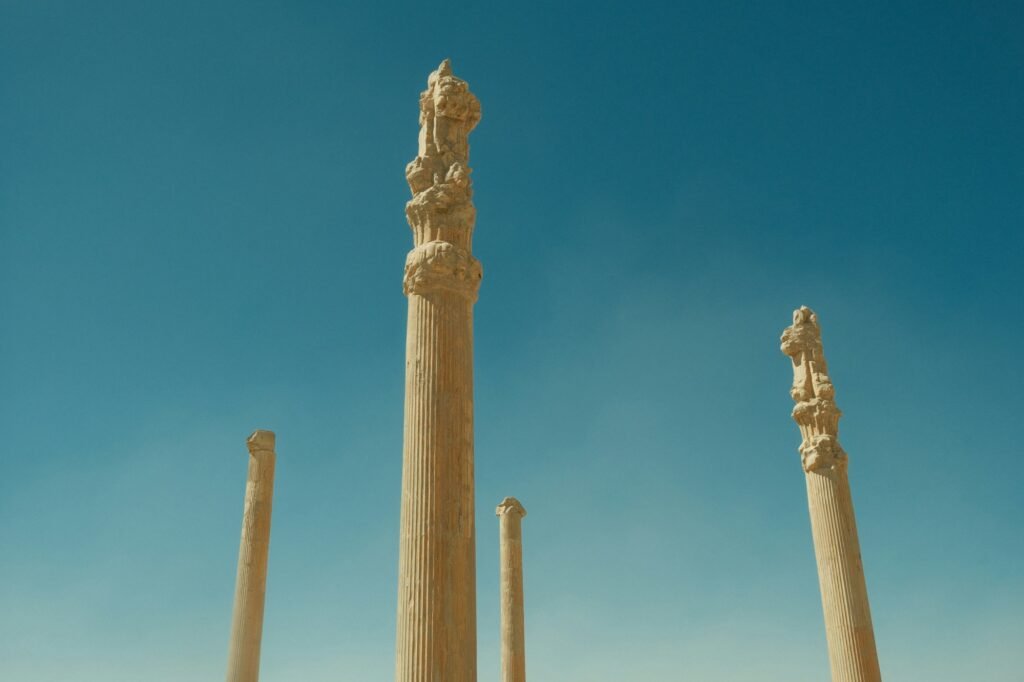
Quick answer: As of April 12, 2026, at least 4 of Iran’s 29 UNESCO World Heritage sites have confirmed damage — Golestan Palace in Tehran and three monuments in Isfahan (Chehel Sotoun, Naqsh-e Jahan Square, the Friday Mosque) — out of 131 historical monuments affected across 20 provinces. Persepolis and Yazd have not been directly struck but face indirect pollution risk from bombed refineries. All travel to Iran remains formally advised against. For a comparable Persian-heritage experience today, Samarkand in Uzbekistan is the safest accessible alternative.
One hundred and thirty-one historical monuments damaged in six weeks. Since February 28, 2026, the joint US-Israeli strikes on Iran are not only destroying military installations: they are endangering one of humanity’s richest cultural heritages. Persepolis, the palaces of Isfahan, the historic city of Yazd — UNESCO World Heritage sites caught between front lines, pollution fallout, and the absence of any access for restoration teams. As the ceasefire negotiated on April 8 by Pakistan has just faltered after the failure of the Islamabad talks on April 11 and 12, this article provides a precise, sourced, and up-to-date assessment of confirmed damage, real risks, and preservation prospects for Iranian heritage.
The 2026 conflict and its impact on cultural heritage
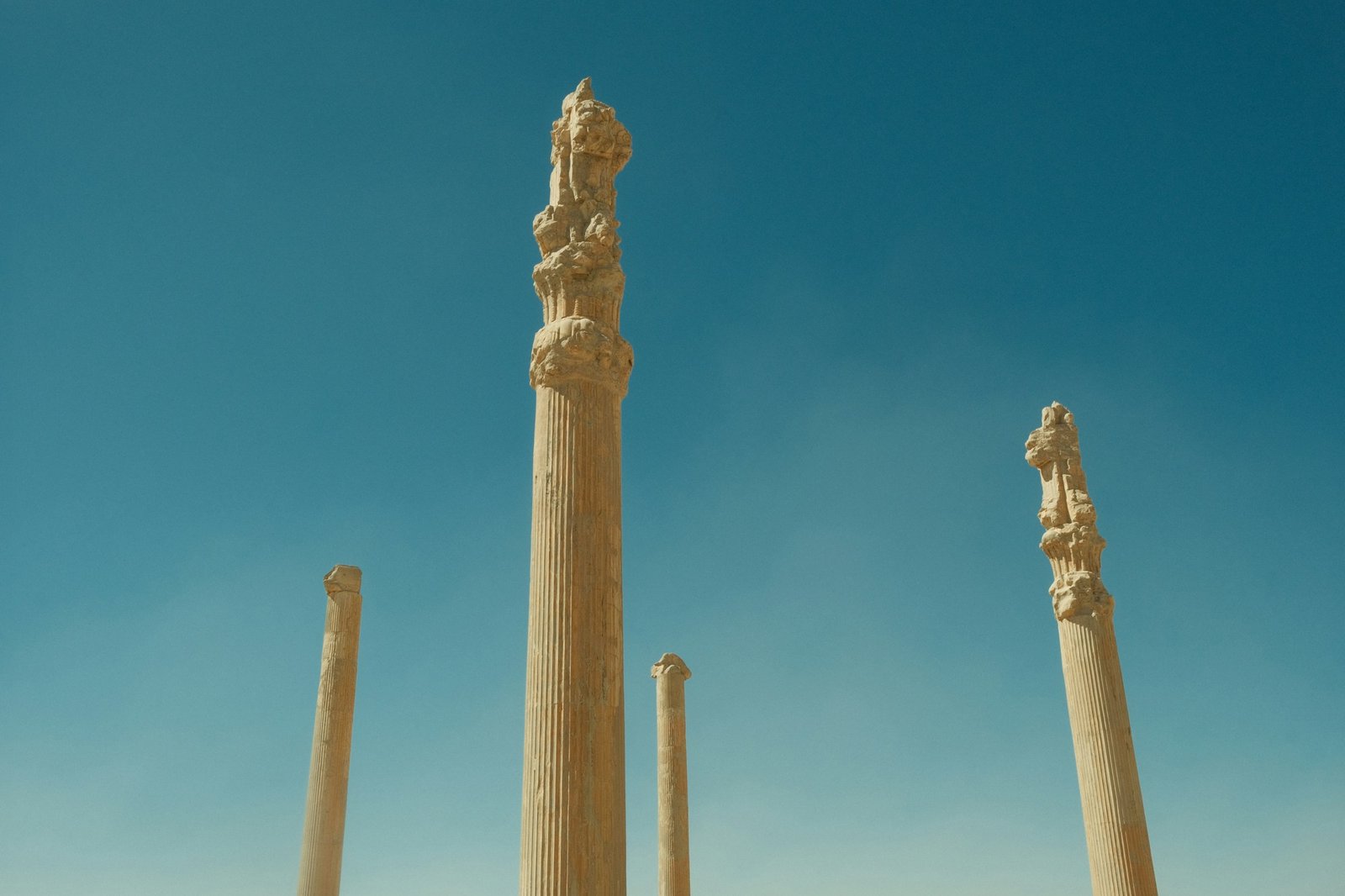
From February 28 to April 12: timeline of a heritage catastrophe
On February 28, 2026, a joint US-Israeli military operation targeted Iranian nuclear and military installations. The first strikes hit Tehran, Isfahan, Khuzestan, and other strategic provinces. But the density of Iran’s historical heritage — 29 UNESCO World Heritage sites, thousands of national monuments — makes any bombing campaign inherently dangerous for cultural legacy.
By March 1 and 2, the Golestan Palace in Tehran, a Qajar jewel inscribed on the UNESCO World Heritage List since 2013, suffered collateral damage during strikes on the capital. According to The Art Newspaper, the vibrations from nearby explosions caused cracks in the mirror mosaics and stucco work of the palatial complex.
The toll rose rapidly. By April 10, 2026, the Xinhua news agency reported the figure of 131 historical monuments damaged to varying degrees across 20 Iranian provinces. Among them, at least four UNESCO World Heritage sites sustained confirmed damage — a toll that could worsen as assessment teams gain access to new areas.
The ceasefire negotiated on April 8 by Pakistan offered a few days of respite. But the failure of the Islamabad negotiations on April 11 and 12, reported by NPR, leaves uncertainty hanging over the possible resumption of hostilities — and thus over the fate of sites still intact.
Persepolis: the Achaemenid colossus under indirect threat
No direct strike, but a creeping danger
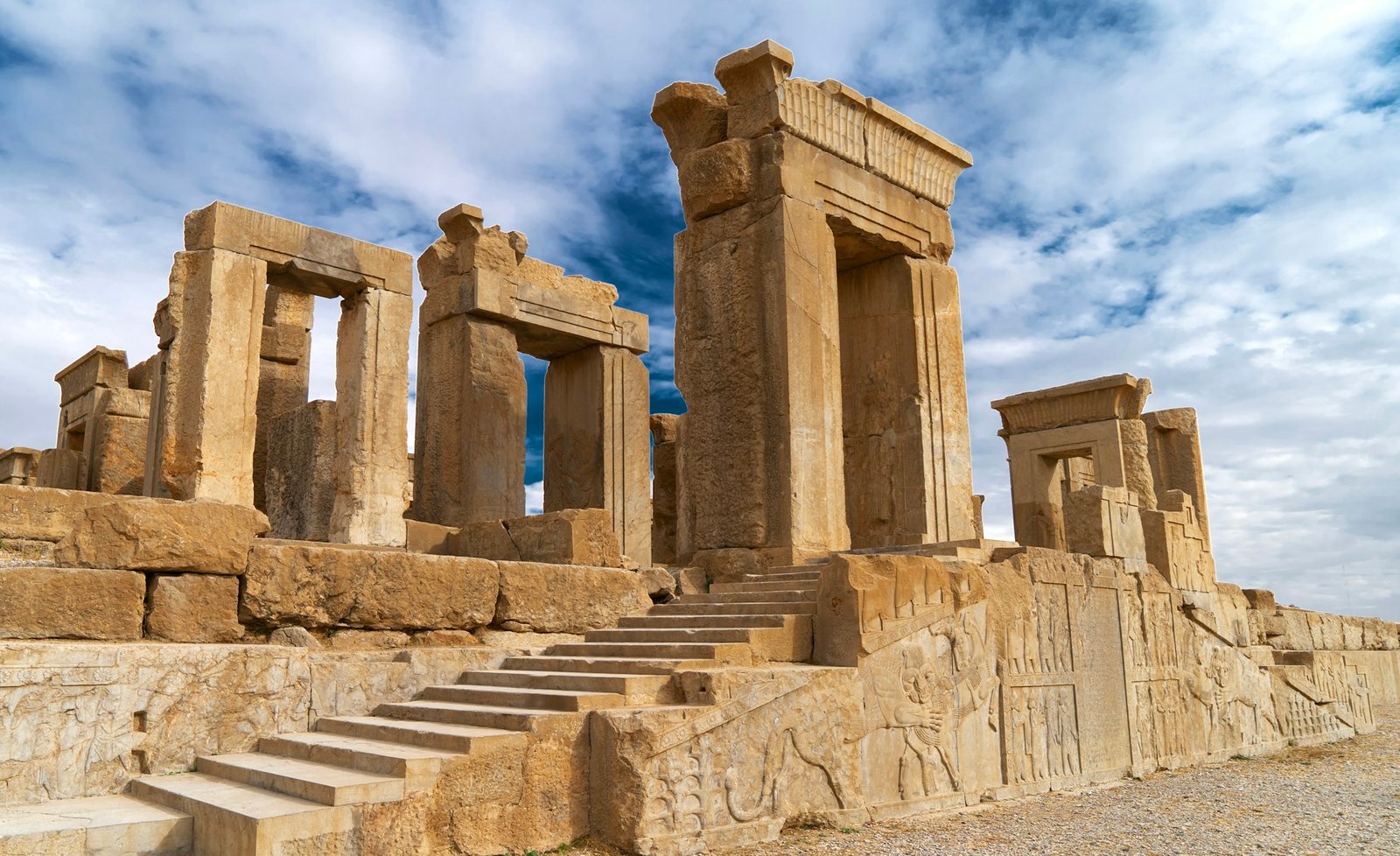
Persepolis, the ceremonial capital founded by Darius I around 518 BC, remains to this day the most universal symbol of Iranian civilization. Inscribed on the UNESCO World Heritage List in 1979, this monumental city with its sculpted reliefs, colossal columns, and Apadana staircases has fascinated archaeologists and travelers for two and a half centuries.
As of April 12, 2026, Persepolis has not been directly struck. The site, located in Fars Province about 60 kilometers northeast of Shiraz, has not been hit by bombings. That is the good news. But it is tempered by a less visible and potentially equally destructive danger.
Strikes on Iranian refineries and oil installations — particularly in neighboring Khuzestan and around Isfahan — have caused massive fires and considerable atmospheric pollutant releases. According to analyses reported by The Conversation, these pollution plumes containing soot particles, sulfur compounds, and hydrocarbons pose a chemical threat to the limestone surfaces of Persepolis. Accelerated erosion caused by acid rain and particle deposits could irreversibly alter the Achaemenid bas-reliefs that have survived 2,500 years of natural weathering.
The Blue Shield, the cultural equivalent of the Red Cross, has confirmed the installation of protective emblems on over 100 Iranian sites, including Persepolis. But as a Museums Association report notes, these emblems have only legal value — they stop neither missiles nor pollution.
What Persepolis concretely risks
- Atmospheric pollution — Plumes from bombed refineries in Khuzestan and around Isfahan carry acidic particles over hundreds of kilometers
- Seismic vibrations — High-intensity explosions within 200 km can weaken already eroded structures
- Abandonment of surveillance — Evacuation of conservation staff deprives the site of all preventive maintenance
- Potential looting — Security instability increases risks of clandestine excavations and antiquities trafficking
Isfahan: half the world in ruins?
« Nesf-e Jahan » — The city with the worst damage
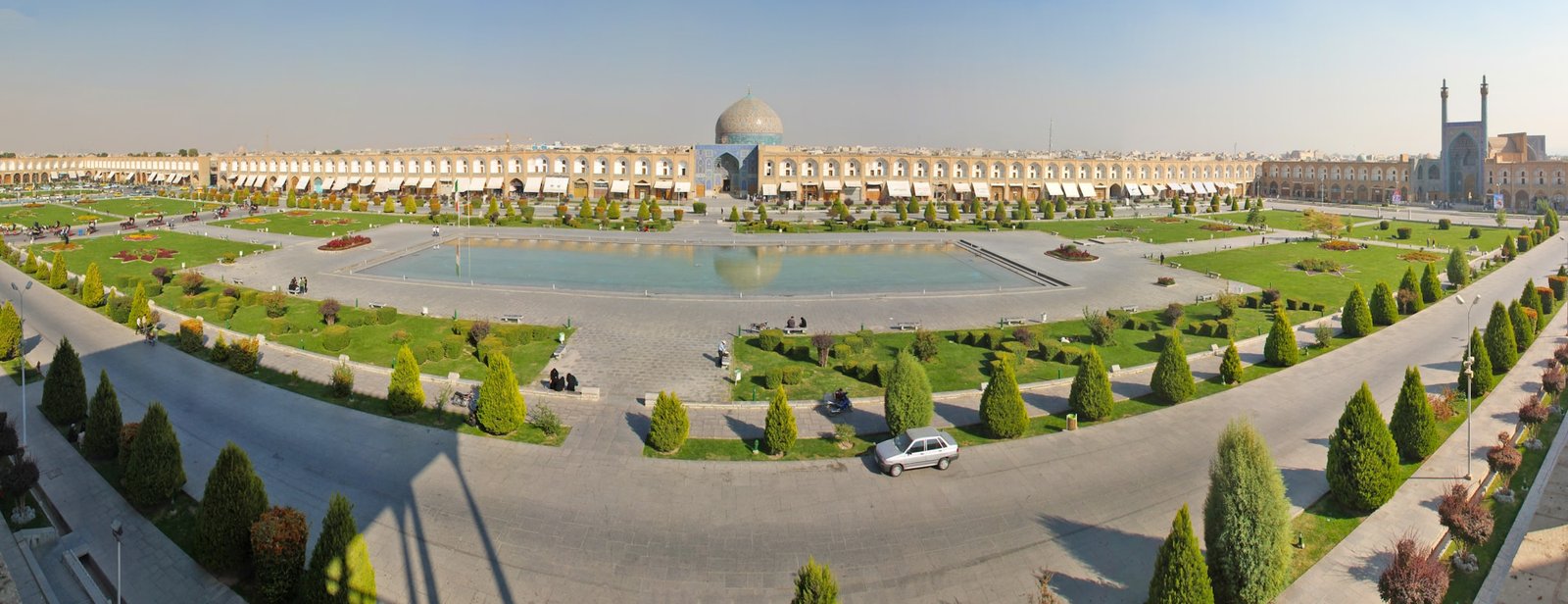
« Isfahan, nesf-e jahan » — « Isfahan is half the world. » This four-century-old Persian proverb has never sounded as tragic as in this spring of 2026. The city that was the resplendent capital of the Safavid Empire in the 17th century, the one European travelers said rivaled Paris and Constantinople, is today the epicenter of the conflict’s most severe heritage damage.
The phrase is a Persian proverb, Esfahān nesf-e-jahān ast, that praises the city: “Isfahan is half the world”. Abbas the Great moved the capital from Qazvin to the more central Isfahan in 1598.
Isfahan was targeted due to its proximity to strategic nuclear and military installations. Strikes on these sites, located on the city’s outskirts, produced shockwaves and debris fallout that reached the historic center.
Chehel Sotoun: the pavilion of forty columns, severely damaged
The Chehel Sotoun palace (the « Forty Columns »), inscribed on the UNESCO World Heritage List in 2011 as part of the « Persian Gardens, » suffered what reports describe as the worst heritage damage of the conflict. According to The Art Newspaper, the vibrations from explosions caused the partial collapse of the wooden columned portico and damaged the famous 17th-century wall frescoes depicting battle scenes and royal receptions. The throne room paintings, considered masterpieces of Safavid mural miniature art, show deep cracks and detachment of the pictorial layer.
Ali Qapu and Naqsh-e Jahan: the royal square struck
The Ali Qapu palace, the six-story royal gate overlooking Naqsh-e Jahan Square, also suffered structural damage. This palace, famous for its « music room » with acoustic niches sculpted in the shape of instruments, saw sections of its delicate stucco work detach under the effect of vibrations. Naqsh-e Jahan Square itself, inscribed on the UNESCO list since 1979 and considered one of the largest squares in the world (512 meters long), suffered damage to its merchant arcades.
The Friday Mosque (Masjed-e Jame): 1,300 years of history in danger
The Friday Mosque of Isfahan, inscribed on the UNESCO list in 2012, is one of the oldest religious buildings in Iranian Islam, with architectural elements dating back to the 8th century. This encyclopedic monument, illustrating eleven centuries of Islamic architecture, sustained damage reported by Euronews in the oldest vault areas. The 11th-century Seljuk iwans, among the earliest examples of double-shell brick vaults, show worrying cracks.
- Chehel Sotoun — Portico partially collapsed, Safavid frescoes cracked and detached
- Ali Qapu — Music room stucco detached, structural cracks in upper floors
- Naqsh-e Jahan — Merchant arcades damaged, tile cladding cracked
- Masjed-e Jame — Cracks in Seljuk vaults, localized collapse risk
Yazd: the city of earth and wind facing modern warfare
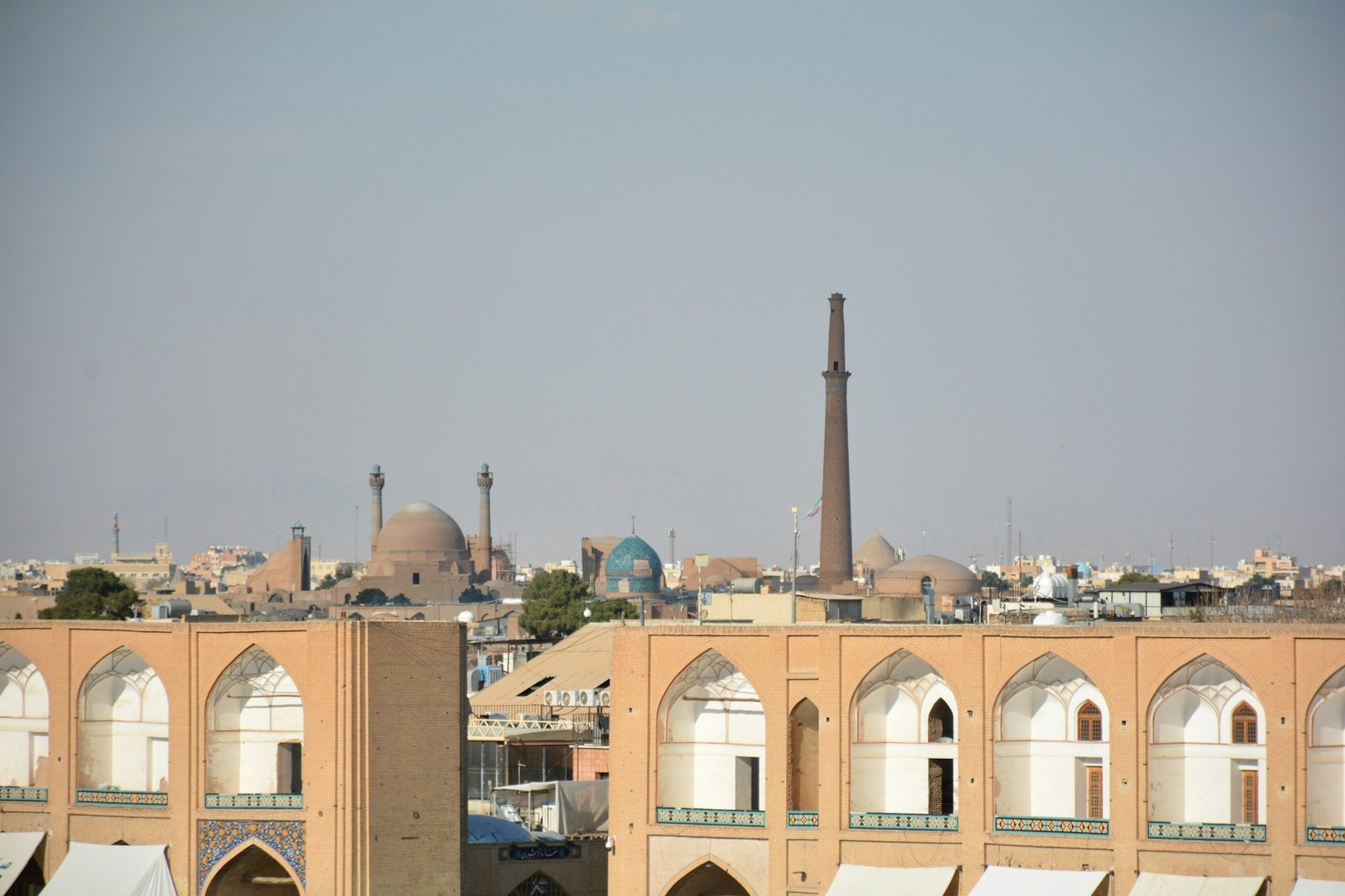
A millennia-old Zoroastrian heritage threatened by fallout
Yazd is a miracle of human adaptation. Perched at 1,200 meters altitude in the heart of the Iranian desert, this city of 530,000 inhabitants has been inhabited for over 7,000 years. Its inscription on the UNESCO World Heritage List in 2017 recognized what makes it unique: a remarkably preserved adobe urban fabric, punctuated by badgirs (wind towers), qanats (underground irrigation channels), and Zoroastrian fire temples, some of which have maintained a sacred flame for over 1,500 years.
Unlike Isfahan, Yazd’s historic center was not directly hit by bombings. But Yazd Province experienced strikes on military targets, and the city faces the same indirect threats as Persepolis: atmospheric pollution, particle fallout, and interruption of routine maintenance.
Extreme fragility of mudbrick architecture
What makes Yazd particularly vulnerable is the very nature of its building materials. Adobe — a mixture of earth, straw, and water — is an extraordinarily durable material in a dry climate, but extremely sensitive to vibrations and moisture. Pollutant particle fallout, combined with potential acid rain, could accelerate the erosion of structures that have survived millennia of normal desert conditions.
The badgirs, the wind towers that constitute Yazd’s architectural signature, are slender structures particularly vulnerable to vibrations. Some reach 33 meters in height and rest on adobe foundations. According to PBS NewsHour, Iranian assessment teams reported cracks in several wind towers in the historic quarters, although it remains difficult to distinguish conflict-related damage from natural deterioration.
Zoroastrian heritage in limbo
Yazd is home to Iran’s largest Zoroastrian community. The Atash Behram fire temple, which according to tradition has kept a flame burning continuously since 470 AD, is a major pilgrimage site. The Towers of Silence (dakhma), where Zoroastrians once laid their dead, and the Dowlat Abad Garden with its 33-meter badgir — the tallest in the world — complete a heritage ensemble of rare coherence and authenticity.
Iran has deployed 300 assessors across the country to document the damage, but the most remote areas — including some peripheral Zoroastrian sites in Yazd Province — have not yet been inspected. The British Institute of Persian Studies (BIPS) has launched an appeal to international researchers to build a pre-conflict photographic database, essential for future comparative assessments.
Beyond the icons: other heritage sites struck
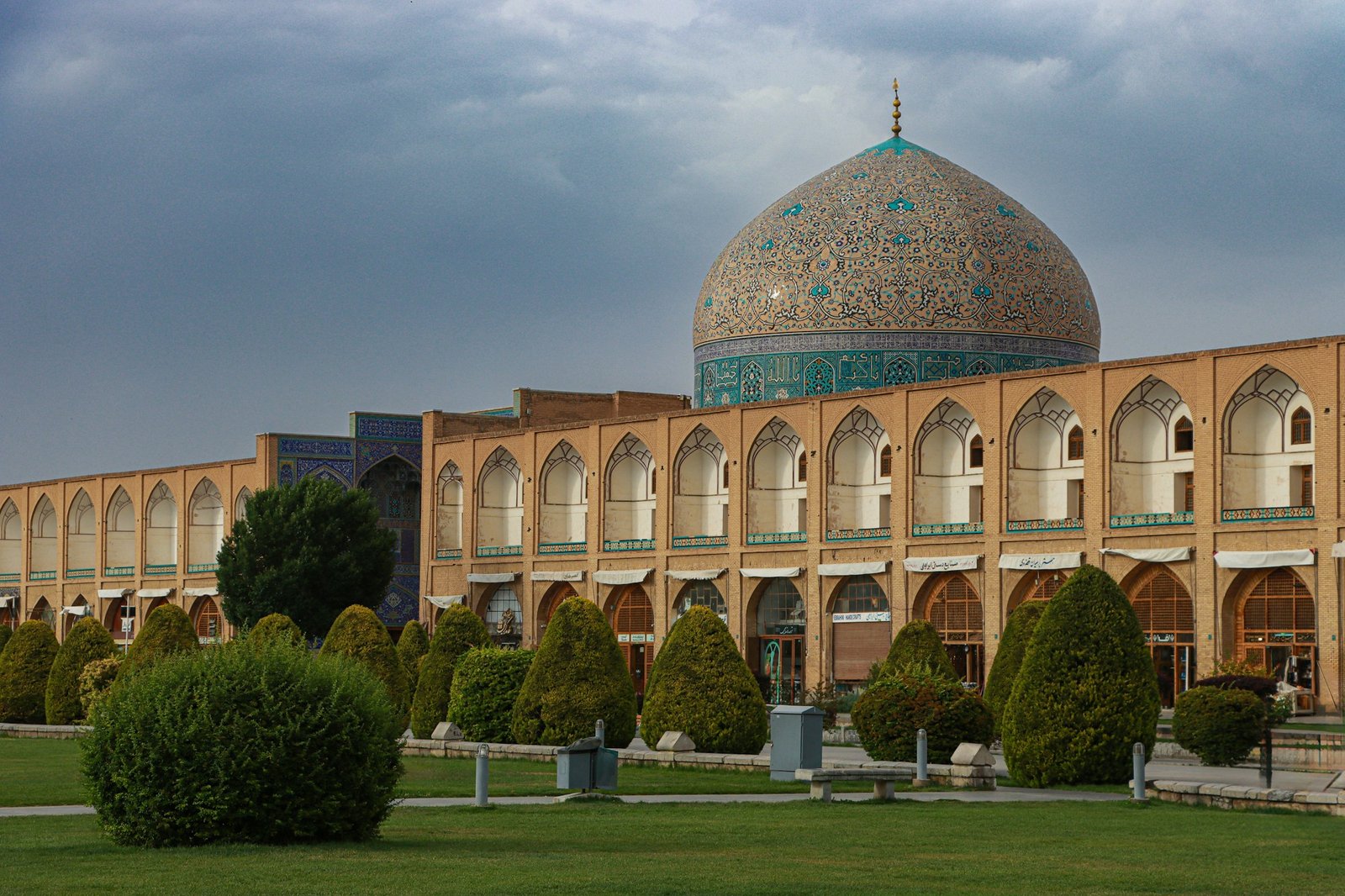
From Tehran to Lorestan: an expanding toll
While Isfahan concentrates the most publicized damage, other remarkable sites have been hit across the country. The picture of destruction extends well beyond the usual tourist icons.
Golestan Palace, Tehran
The Golestan Palace, former seat of the Qajar dynasty inscribed on the UNESCO list in 2013, suffered damage from the very first days of the conflict, on March 1 and 2. Located in the heart of Tehran, it was affected by strikes on military and government targets in the capital. The famous mirror mosaics of the Talar-e Brelian (Diamond Hall) and the tilework of the Shams-ol-Emareh (Edifice of the Sun) show damage reported by The Art Newspaper.
Saadabad Palace, Tehran
The Saadabad palatial complex, the summer residence of the last Pahlavi shahs turned museum, also suffered damage. This vast ensemble of 18 palaces and pavilions in the northern foothills of the Alborz housed collections of paintings, carpets, and art objects of considerable value. The extent of damage to the museum collections has not yet been fully assessed.
Falak-ol-Aflak Citadel, Khorramabad
In Lorestan Province, the Falak-ol-Aflak Citadel in Khorramabad, a Sassanid monument from the 3rd century perched on a rocky spur, is among the damaged sites. This fortress, one of the oldest still standing in the world, had survived the Mongol and Timurid invasions. According to Revue Conflits, sections of its walls, several meters thick, show new cracks.
Partial toll: what we know, what we don’t
Iran had 29 properties inscribed on the UNESCO World Heritage List in March 2026. As of April 12, 2026, at least four of them have confirmed damage. But the figure of 131 damaged national monuments, reported by Xinhua, covers only inspected sites — and vast areas of the country remain inaccessible to assessors due to ongoing military operations.
- Confirmed damaged UNESCO sites — Golestan (Tehran), Chehel Sotoun (Isfahan), Naqsh-e Jahan (Isfahan), Masjed-e Jame (Isfahan)
- Major national sites hit — Ali Qapu, Saadabad, Falak-ol-Aflak, among others
- Sites at indirect risk — Persepolis, Yazd, Pasargadae, Takht-e Soleyman
- Not yet assessed — Dozens of sites in provinces under active military operations
Pasargadae and Takht-e Soleyman: two more Persian treasures at indirect risk
The cradle of the Achaemenids and a Sassanid fire sanctuary
Two further UNESCO World Heritage sites recur on the « indirect risk » list compiled by assessment teams, and both deserve more than a passing mention. Pasargadae, roughly 130 kilometers northeast of Persepolis in Fars Province, was founded by Cyrus the Great after his decisive victory over the Lydians around 546 BC, becoming the first capital of the Achaemenid Empire. Its most visited monument, the austere limestone Tomb of Cyrus, has stood largely undisturbed for roughly 2,500 years and remains one of the most revered structures in Iranian history. Inscribed on the UNESCO World Heritage List in 2004, Pasargadae shares Persepolis’s exposure to regional pollution plumes rather than any confirmed direct strike.
Takht-e Soleyman (« Throne of Solomon »), inscribed in 2003, sits much farther north in West Azerbaijan Province, arranged around a volcanic crater lake. It was one of the principal sanctuaries of the Sassanid Empire, home to the great fire temple Adur Gushnasp — among the most sacred Zoroastrian fire temples of pre-Islamic Persia — later partially rebuilt as an Ilkhanid summer residence in the 13th century. Its distance from the main strike zones around Tehran, Isfahan, and Khuzestan places it, like Yazd, in the « indirect risk » category rather than among the confirmed damage sites, but assessment teams have not yet been able to fully document its post-conflict condition.
International protection: the limits of law against bombs
UNESCO, Blue Shield, Hague Convention: an insufficient legal arsenal
The legal framework for protecting cultural heritage in wartime has existed since 1954: the Hague Convention for the Protection of Cultural Property in the Event of Armed Conflict requires belligerents to take all possible measures to spare cultural sites. Iran, the United States, and Israel have obligations to varying degrees under these instruments — Iran and Israel are parties to the Convention, while the United States signed but never ratified it.
In practice, measures taken before and during the conflict proved largely insufficient:
What was done
UNESCO communicated the GPS coordinates of all protected Iranian sites to coalition forces and Iran, in accordance with standard protocol. According to Franceinfo, UNESCO Director-General Audrey Azoulay issued repeated calls for the respect of cultural heritage from the very first day of hostilities.
Blue Shield International, an organization founded in 1996 on the Red Cross model for cultural protection, installed its distinctive emblems — a blue and white shield — on over 100 Iranian sites. According to the March 2026 Blue Shield report, these markings were carried out in coordination with Iranian authorities in the weeks preceding the conflict, when tensions were already at their peak.
Why it was not enough
The reality on the ground shows the limits of these measures. The damage to Isfahan’s sites is essentially collateral: the strikes targeted military installations nearby, but the shockwaves and debris fallout reached the historic monuments. The Hague Convention prohibits directly targeting cultural sites, but it offers little protection against collateral damage when military objectives are located near heritage zones — a frequent situation in Iran, where urban continuity spans millennia.
As reported by Al Jazeera, international jurists have begun examining whether certain damage could constitute violations of international humanitarian law, under the principle of proportionality — which requires that civilian collateral damage not be excessive in relation to the anticipated military advantage.
Restoration and outlook: rebuilding after war
Archives, the key to future reconstruction
If the fighting stops, reconstruction will be possible — but it will take decades. Experience from previous conflicts (Syria, Iraq, former Yugoslavia) shows that cultural heritage restoration is a slow, costly, and technically demanding process that requires cutting-edge skills and, above all, precise documentation of the sites’ previous condition.
The treasure of Italian-Iranian archives
This is where a little-known legacy could play a decisive role. Between 1964 and 1978, IsMEO (Italian Institute for the Middle and Far East, now ISMEO) conducted, in partnership with Iranian authorities, a vast campaign of documentation and restoration of the country’s main historic sites. These archives — architectural surveys, high-resolution photographs, materials analyses, restoration plans — constitute an irreplaceable resource today.
According to the British Institute of Persian Studies, these Italian archives, preserved in Rome, are the most comprehensive ever produced on pre-revolutionary Iranian heritage. They cover notably Persepolis, Isfahan, Pasargadae, and numerous sites that now figure among the most threatened.
The Iranian mobilization
Iran has deployed 300 assessors across the country to document damage in real time, according to data reported by Xinhua. This documentation work — photographs, measurements, structural surveys — is essential for planning future restoration interventions. But it faces considerable obstacles: limited access to combat zones, power outages affecting digital equipment, and absence of conservation materials for emergency measures (protective tarps, temporary shoring).
How long to restore?
International precedents give an idea of the scale of the challenge. The reconstruction of the Mostar Bridge in Bosnia-Herzegovina took 9 years (1995-2004). The restoration of the Great Umayyad Mosque of Aleppo is still ongoing, more than 10 years after the fighting. For an ensemble as vast and complex as Isfahan’s sites, experts from The Conversation estimate that a full restoration could take 20 to 30 years, at a cost running into hundreds of millions of euros.
- Immediate priority — Emergency stabilization: shoring, protective tarps, consolidation of structures at risk of collapse
- Short term (1-3 years) — Exhaustive damage documentation, restoration plans, international funding appeals
- Medium term (3-10 years) — Restoration of structural elements, training of specialized restorers
- Long term (10-30 years) — Restoration of decorative elements (frescoes, mosaics, tilework), gradual reopening to the public
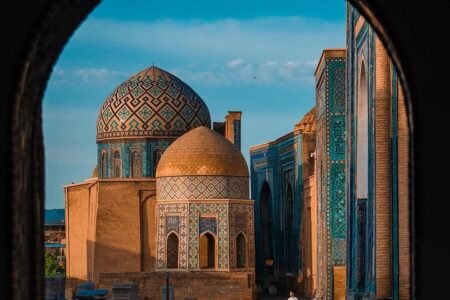
Discover a preserved Persian heritage: Registan, Shah-i-Zinda, Bibi-Khanym Mosque. The best of Timurid architecture, direct heir to Isfahan.
From $32Frequently Asked Questions
Has Persepolis been bombed during the 2026 conflict?
No, as of April 12, 2026, Persepolis has not been directly struck by bombings. The site, located in Fars Province, is however indirectly threatened by atmospheric pollution from bombed refineries in neighboring provinces. Soot and sulfur compound plumes could accelerate erosion of the 2,500-year-old limestone bas-reliefs. The Blue Shield emblem has been installed on the site, and UNESCO communicated its GPS coordinates to the belligerents.
How many UNESCO sites have been damaged in Iran?
As of April 10, 2026, at least four UNESCO World Heritage sites have confirmed damage: Golestan Palace in Tehran, Chehel Sotoun, Naqsh-e Jahan Square, and the Friday Mosque (Masjed-e Jame) in Isfahan. The total toll stands at 131 historical monuments damaged across 20 Iranian provinces, according to Xinhua news agency. This figure is likely to increase as assessors gain access to new areas.
Are Pasargadae and Takht-e Soleyman also at risk?
Yes, both are classified among the sites facing indirect rather than confirmed direct damage. Pasargadae (UNESCO since 2004), the first Achaemenid capital and home to the Tomb of Cyrus the Great, sits in Fars Province near Persepolis and shares its exposure to pollution from bombed refineries. Takht-e Soleyman (UNESCO since 2003), the Sassanid Zoroastrian sanctuary in West Azerbaijan Province, is farther from the main strike zones but has not yet received a full post-conflict inspection. Neither appears on the list of confirmed damaged UNESCO sites as of the latest reporting, but neither has been formally cleared either.
Can you still travel to Iran in 2026?
No, all travel to Iran is formally advised against by the French Ministry for Europe and Foreign Affairs since the start of the conflict on February 28, 2026. Iranian airspace is closed to civilian flights, Western embassies are operating in reduced mode, and security conditions do not allow any tourist visits. This situation will persist at minimum until a lasting peace agreement is reached. Check France Diplomatie for updates.
Which alternative destinations offer heritage similar to Iran’s?
Several destinations allow you to discover the legacy of Persian civilization and Islamic architecture: Samarkand and Bukhara (Uzbekistan) for Timurid architecture directly inherited from the Persian tradition; Istanbul (Turkey) for Ottoman mosques and the synthesis of Islamic traditions; Marrakech and Fez (Morocco) for medinas and Persian-inspired craftsmanship; Hyderabad, India for Mughal architecture influenced by Persia. Samarkand is the most direct alternative, with very affordable visit costs.
Can Iranian heritage be restored after the conflict?
Yes, restoration is technically possible for the majority of damaged sites, but it will take time. Experts estimate between 10 and 30 years for a complete restoration of Isfahan’s sites, at a cost of hundreds of millions of euros. The archives from the Italian-Iranian collaboration (IsMEO, 1964-1978) and existing architectural surveys will be crucial resources. The experience of the Mostar Bridge reconstruction (9 years) and the Great Mosque of Aleppo (still ongoing) gives an idea of the timelines. The immediate priority is emergency stabilization to prevent secondary collapses.
What is UNESCO doing to protect Iranian heritage?
UNESCO has taken several measures: communicating GPS coordinates of all protected sites to belligerents, repeated public appeals by Director-General Audrey Azoulay for respect of cultural heritage, and coordination with Blue Shield International for the installation of protective emblems on over 100 sites. However, these measures are essentially legal and symbolic: they did not prevent collateral damage caused by strikes on military targets near heritage zones. UNESCO is also preparing a post-conflict restoration plan in collaboration with international experts.
Is the April 2026 damage assessment still the latest available?
Yes. The figures in this article — 131 damaged monuments across 20 provinces and at least 4 confirmed UNESCO sites — come from the April 10-12, 2026 reporting by Xinhua and international outlets, which remains the most recent consolidated assessment publicly available. As of this page’s most recent review on July 16, 2026, no newer official tally has superseded it. Because access to several provinces was still restricted to inspection teams as of that date, the toll may be revised once more sites become reachable. Travelers should always check France Diplomatie for the current security advisory before making any plans.
Sources
- The Art Newspaper — Heritage damage in Isfahan: Chehel Sotoun and the Safavid sites — April 1, 2026
- The Art Newspaper — Assessment of damage to Iranian cultural heritage — March 10, 2026
- NPR — Iran conflict updates: ceasefire and negotiations — April 8, 2026
- Euronews — UNESCO alert on heritage damage in Isfahan — April 2, 2026
- Revue Conflits — Iranian heritage struck by war — March 2026
- Blue Shield International — Protection of Iranian cultural heritage: March 2026 report
- Museums Association — Iranian heritage at risk — March 2026
- PBS NewsHour — Iranian heritage sites in the 2026 conflict
- British Institute of Persian Studies (BIPS) — Appeal for Iranian heritage documentation
- The Conversation — Expert analysis: damage to Iranian cultural heritage
- Franceinfo — UNESCO: alert on Iranian heritage
- Al Jazeera — Iranian cultural heritage in the conflict
- Xinhua — 131 historical monuments damaged across 20 Iranian provinces — April 10, 2026
- Wikipedia — Destruction of cultural heritage during the 2026 Iran war
- France Diplomatie — Travel advice: Iran
Research conducted on April 12, 2026, last reviewed for accuracy on July 16, 2026. Figures and the situation evolve daily.
Discover Persian heritage differently
Iran is inaccessible, but the legacy of Persian civilization radiates far beyond its borders. Samarkand, Istanbul, Bukhara, Fez — plan your next cultural trip with Pixidia.

Hagia Sophia, Blue Mosque, Topkapi Palace, Grand Bazaar: the synthesis of East and West in one day. English-speaking guide available.
From $210