
As of October 15, 2026, Belgium and Canada advise against non-essential travel to Israel. Canada advises avoiding all travel to the West Bank, except Highway 1 and Route 90 near Jericho, where it advises avoiding non-essential travel. Visa-exempt visitors need an ETA-IL costing 25 shekels (about 6 EUR), valid for two years. British Airways plans to resume Tel Aviv flights on October 25, 2026.
On February 28, 2026, the United States and Israel launched massive military strikes against Iran, triggering the most intense regional conflict the Middle East has seen in decades. Within hours, Israel was struck by a barrage of retaliatory missiles and drones, a state of emergency was declared, and Ben Gurion Airport closed its doors to normal commercial traffic. Forty days later, a fragile two-week ceasefire — the « Islamabad Accords » — was signed on April 8, 2026. It is in this unprecedented context that we offer a comprehensive, sourced overview of tourism in Israel.
This article will not tell you to go to Israel right now. That would be irresponsible. But it will give you a precise and nuanced picture of the real situation, destination by destination, with testimonials from travelers who were there during the escalation, and the keys to understanding when and how the country might reopen to international tourism.
The French government strongly advises against all non-essential travel to Israel. The state of emergency is in effect until at least April 14, 2026. A two-week ceasefire was announced on April 8, but remains extremely fragile. Always consult official travel advisories before making any decision.
Geopolitical Context: The USA–Israel–Iran War in Six Key Dates

To understand the current tourism situation in Israel, you must understand the conflict that changed everything. According to Britannica, the 2026 war began on February 28, 2026, when the United States and Israel launched major military operations against Iran. The opening strike eliminated Supreme Leader Ali Khamenei, triggering an immediate response from Tehran: hundreds of ballistic missiles and thousands of drones struck Israel, Gulf countries, Jordan, and Iraq.
Within weeks, the toll became dramatically heavy: thousands dead in Iran and Lebanon, dozens in Israel and Gulf Arab states, and more than one sixth of Lebanon’s population displaced. The conflict also closed the Strait of Hormuz, disrupting world trade and international aviation.
- Feb 28, 2026: USA–Israel strikes begin on Iran. State of emergency declared in Israel. Ben Gurion closes.
- March 2026: Iranian reprisals with drones and missiles. France advises against all non-essential travel.
- Apr 5, 2026: Ben Gurion eases restrictions — up to 90 passengers per flight, Israeli carriers only.
- Apr 8, 2026: « Islamabad Accords » announced — two-week ceasefire between USA/Israel and Iran. Extreme fragility confirmed.
Analysts are deeply skeptical. The Islamabad Accords were brokered by Pakistan and China, but neither Iran nor the United States has committed to a permanent halt to hostilities. According to the US State Department, the ceasefire is described as « humanitarian and temporary. » Travel to Israel remains dangerous for the foreseeable future.
Risk Levels by Zone: Where Can You Go in April 2026?
The security situation varies enormously by region. Here is our risk analysis based on official data from the French Foreign Ministry and the US State Department.
| Region | Risk Level | Status (Apr 8, 2026) | Recommendation |
|---|---|---|---|
| Tel Aviv (center) | High | Partial ceasefire | Avoid non-essential travel |
| Jerusalem (west) | High | Restricted access, military presence | Avoid non-essential travel |
| Haifa | High | Partial ceasefire | Avoid non-essential travel |
| Eilat / Dead Sea | Very High | Proximity to conflict zones | Do not travel |
| Gaza border (20 km) | Extreme | Active combat zone | Formally prohibited |
| Lebanon border (5 km) | Extreme | Active combat zone | Formally prohibited |
| West Bank | Extreme | Intense military operations | Do not travel under any circumstances |
Ben Gurion Airport: How to Get In (and Out)?
Ben Gurion International Airport (TLV) has been the subject of intense attention since the war began. After a complete closure, it partially reopened on April 5, 2026, under strict restrictions.
- Max capacity: 90 passengers per flight (vs. normal 400+)
- Authorized carriers: El Al only (Israeli national carrier)
- Earlier in 2026, European carriers suspended their routes. British Airways plans to resume Tel Aviv on October 25, 2026, with one daily London service.
- Alternative airports: Ramon Airport (Eilat) partially operational but high risk zone
If you are currently in Israel and need to leave, contact your country’s embassy immediately. The French Embassy in Tel Aviv is coordinating emergency evacuation flights. The waiting time for a seat is 3 to 7 days as of April 8, 2026.
Tel Aviv: Between Resilience and Reality
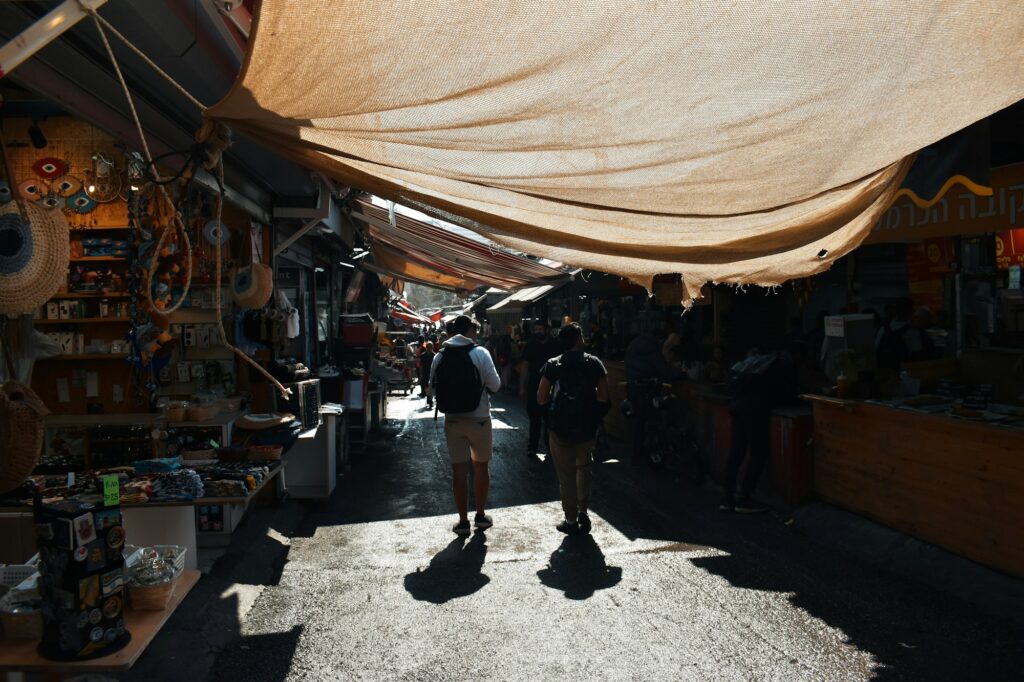
« I was in Tel Aviv when the first missiles hit on February 28. We were having dinner in Florentin when the sirens went off. In 10 seconds, everyone was underground. The bomb shelter worked. But that night, everything changed. Tel Aviv is still standing, but it’s a city under tension. »
— Antoine M., 34, Paris, stranded for 3 weeks before returning via El Al
Tel Aviv, as of April 8, remains one of the least affected areas of the country. The city was struck by missiles but the Iron Dome intercepted the vast majority. The city center — Dizengoff, Rothschild, Neve Tzedek — is functioning. Most restaurants are open, public transport is running.
Why Tel Aviv is worth visiting (in a calmer future): The city has the world’s highest density of Bauhaus buildings, a unique oriental-Mediterranean gastronomic scene, and a cultural and technological dynamism comparable to Berlin or Amsterdam. Carmel Market, Florentin quarter, and adjacent old Jaffa make it an exceptionally rich destination.
Jerusalem: Sacred City Under Military Presence
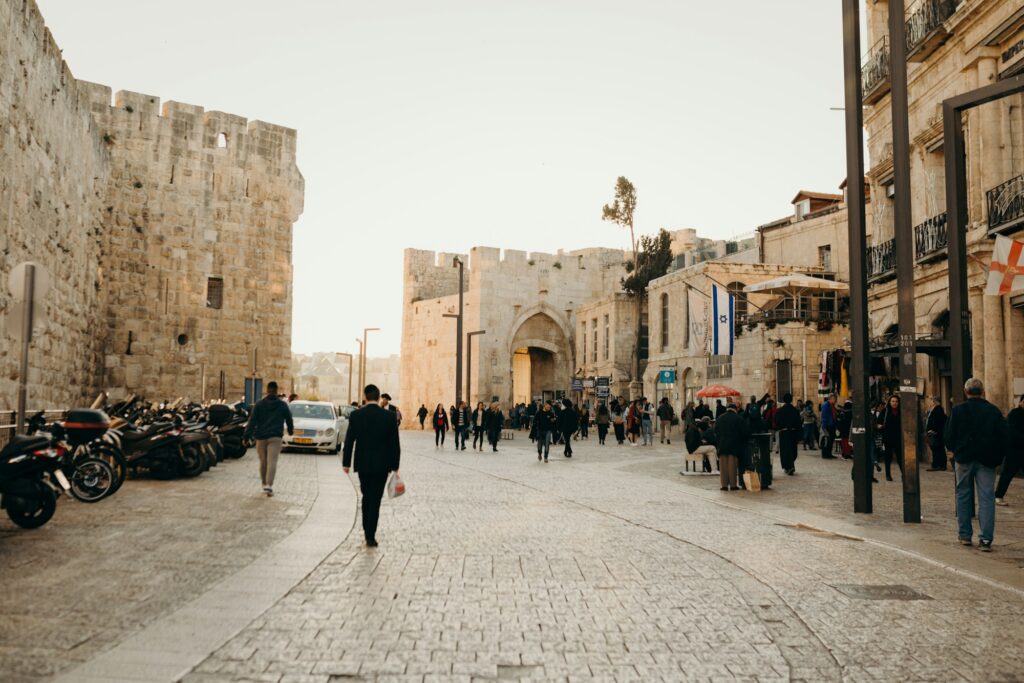
« I was doing pilgrimage in the Old City when the state of emergency was declared. The army closed the Muslim and Christian quarters for 48 hours. We were locked in our hotel. It was surreal — the Church of the Holy Sepulchre is two hundred meters from here and we couldn’t go there. »
— Maria T., 61, Madrid, pilgrimage interrupted
Jerusalem occupies a unique place in the current conflict. The holy city has been relatively spared from direct strikes, but military presence has increased enormously. Access to the Old City is controlled at all gates. The Western Wall, Church of the Holy Sepulchre, and Dome of the Rock remain accessible but with major queues and identity checks.
Private Tour: Jerusalem & Bethlehem with Expert Guide
For when travel resumes: a full day in the holy city with a certified guide — Old City, Western Wall, Bethlehem. From 396 € per person.
See this tour on ViatorHaifa: The UNESCO Garden City
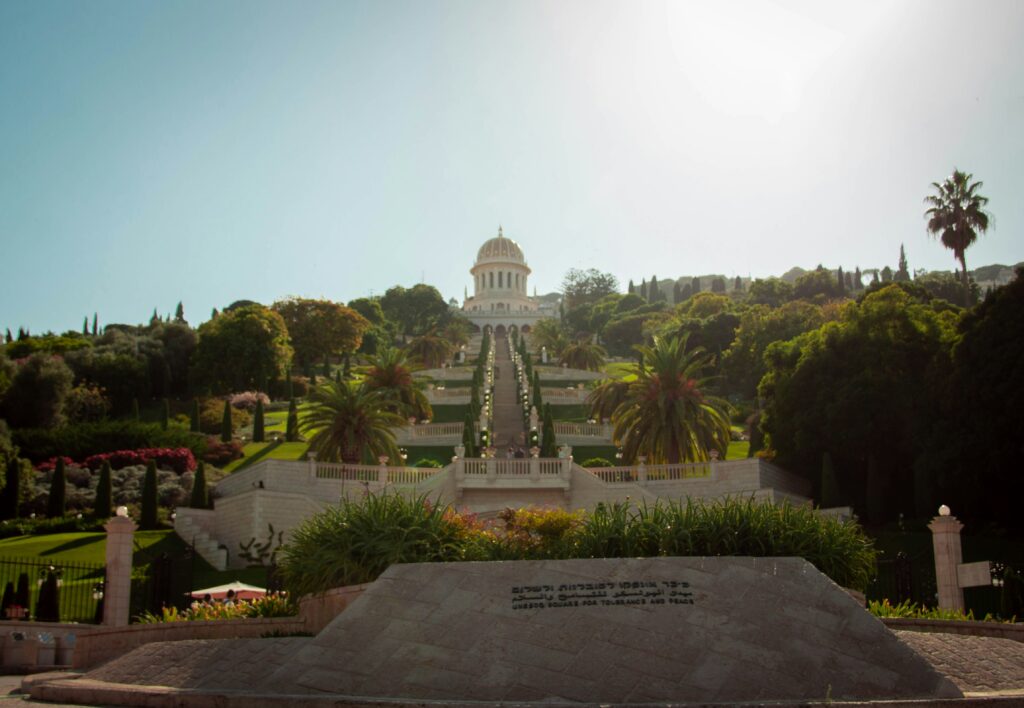
Haifa, the great port city of northern Israel, is home to the world-famous Bahá’í Gardens — UNESCO World Heritage terraced gardens cascading down Mount Carmel. The city has always been a model of Jewish-Arab coexistence and remains calmer than the south.
Currently, Haifa is at high risk due to its proximity to Lebanon (30 km from the border) and has received some missile impacts. However, as of April 8, the city is not an active combat zone.
Eilat and the Dead Sea: Very High Risk Zones
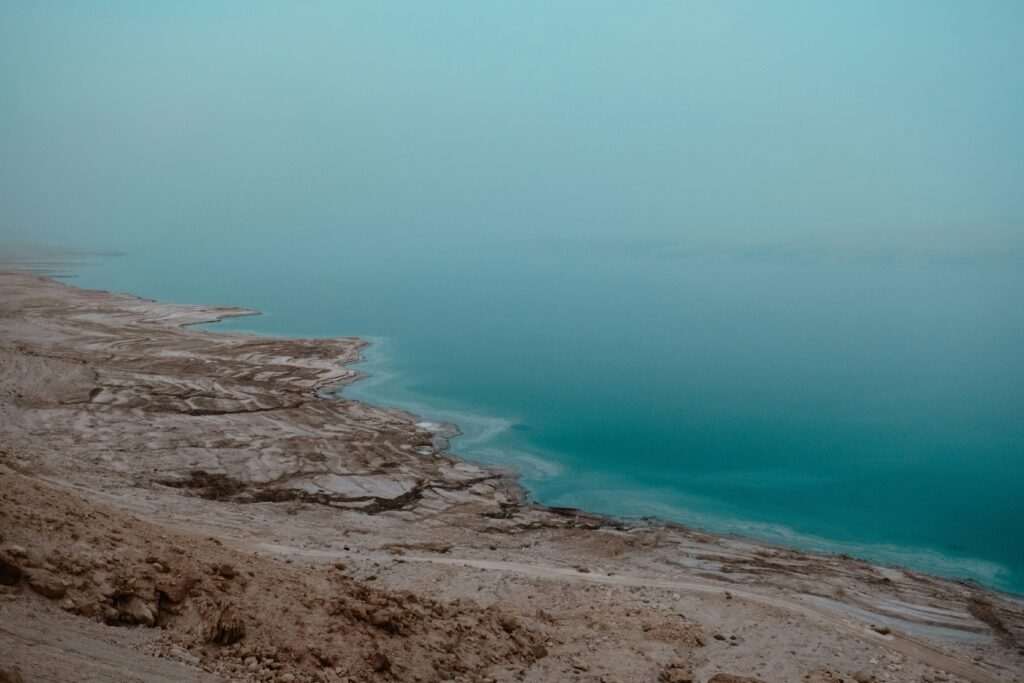
Eilat, Israel’s southern resort city on the Red Sea, and the Dead Sea region are currently classified as very high risk. Eilat sits at the crossroads of Israel, Jordan, Saudi Arabia and Egypt — a geopolitically sensitive zone during this conflict.
The Dead Sea remains one of the world’s most extraordinary natural sites: floating in water with 34% salinity at 430 meters below sea level is a unique experience. But right now, the security situation makes any visit impossible to recommend.
All travel advisories — French, American, British, German, Canadian — classify this region as « Do not travel. » This is not precautionary advice: it is a formal prohibition linked to active missile threats.
Masada and the Negev: The Desert Frontier
The ancient fortress of Masada, overlooking the Dead Sea from 400 meters height, and the vast Ramon Crater — Makhtesh Ramon — in the heart of the Negev desert are among Israel’s most spectacular sites. Both are currently inaccessible to tourists.
Adventure: Rappelling Down Ramon Crater Cliff
For when travel resumes: an extraordinary rappelling descent into the world’s largest erosion crater. From 125 € per person.
See this experience on ViatorTestimonials: Travelers Who Were There During the Escalation
« I was on a 10-day tour when the war started. My guide, Avi, stayed perfectly calm. He took us to shelters, explained the situation, and found us seats on one of the last El Al flights. What I remember is a country that knew how to face crisis — but also a country where you shouldn’t be a tourist during a war. »
— Claire D., 45, Lyon, tour interrupted on day 4
« I run a Tel Aviv guesthouse. During the first week, 80% of reservations were cancelled. Now, with the ceasefire, I’m getting inquiries from adventurous travelers. But I tell them all the same thing: wait. The ceasefire is fragile. Come back in 2027. »
— Yael K., Israeli guest house owner, Tel Aviv
« The staff at our hotel never left. They made us breakfast every morning, even with sirens going off. That hospitality in the middle of chaos — I’ll never forget it. »
— James R., 38, London, stranded for 12 days
Getting Out of Israel: Practical Procedures
Contact Your Embassy
First reflex: register on Ariane (French embassy) or your country’s equivalent. Embassies coordinate repatriation flights and maintain updated waiting lists.
Book El Al
El Al remains the only carrier operating out of Ben Gurion. Book directly on elal.com. Expect to pay 3 to 5 times the normal fare. Capacity: 90 passengers per flight.
Overland to Jordan
The Allenby Bridge (King Hussein Bridge) border crossing to Jordan remains open. From Amman, connections to Europe are available. Travel time: 2 hours Tel Aviv–border + 1 hour to Amman.
Travel Insurance
Check your policy immediately. Most standard policies exclude conflicts declared after travel date. Check for « cancel for any reason » and « repatriation » clauses. Insurers like EKTA explicitly cover conflict evacuation:
Get a travel insurance quotePractical Information: Prepare for When Travel Resumes
eSIM for Israel — Airalo
When travel resumes, stay connected in Israel from arrival. No physical SIM needed — activate before departure.
Get your eSIM on AiraloTravel Insurance — EKTA
Travel insurance including conflict coverage and medical repatriation. Essential for any travel to the Middle East right now.
Get a quote on EKTAFrequently Asked Questions — Israel 2026
Is it safe to travel to Israel in April 2026?
No. As of April 8, 2026, all major governments (France, USA, UK, Germany, Canada) advise against all non-essential travel to Israel. A fragile two-week ceasefire was announced on April 8, but the security situation remains extremely volatile. We strongly recommend waiting for a formal lifting of travel advisories before planning any trip.
Is Ben Gurion Airport open in April 2026?
Partially. Ben Gurion partially reopened on April 5, 2026, but with very strict restrictions: maximum 90 passengers per flight, El Al only. Earlier in 2026, European carriers suspended their routes, and British Airways plans to resume Tel Aviv on October 25, 2026. Check the official Israeli Airports Authority website for updates.
What areas of Israel are least risky in April 2026?
All of Israel is currently classified as high risk. That said, the center of Tel Aviv and West Jerusalem are considered relatively safer than the south (Eilat, Dead Sea), the northern border (Lebanon) and, obviously, Gaza. No area is safe for tourism right now.
I’m already in Israel — how do I get out?
Three options: 1) El Al from Ben Gurion: book directly on elal.com, expect high fares and 3–7 days wait for a seat. 2) Overland to Jordan: via Allenby Bridge (King Hussein Bridge) — open as of April 8 — then fly from Amman. 3) Embassy repatriation: register on your embassy’s system (Ariane for French citizens) to be placed on evacuation flight lists.
Can you visit the Dead Sea right now?
No. The Dead Sea area is classified as very high risk by all travel advisories. Its proximity to conflict zones makes any tourist visit impossible to recommend. Wait for a formal improvement in the security situation before planning a Dead Sea trip.
When will Israel reopen to international tourism?
This is speculative, but travel analysts suggest a gradual reopening could begin in late 2026 if the ceasefire holds, starting with European charter flights to Tel Aviv, followed by guided group tours. A full recovery of leisure tourism could take 18–24 months from the end of active hostilities. The precedent of the 2006 Lebanon War shows that Israel can recover quickly — but this conflict is of a different scale.
Does travel insurance cover a trip to Israel in 2026?
Most standard policies do not cover travel to zones under formal government travel advisories. If you travel despite the advisory, you are generally not covered. Some specialized insurers like EKTA offer policies with « conflict zone » coverage and medical repatriation, but at a high premium. Never travel without checking your policy and your country’s travel advisory status.
Is the ceasefire of April 8, 2026 reliable?
Analysts are very cautious. The Islamabad Accords are described by the US State Department as « humanitarian and temporary. » Neither side has committed to stopping the production of weapons or troop movements. The ceasefire could collapse at any time. Do not plan any travel based on this ceasefire alone.
Sources
Plan Your Future Trip to Israel
The current situation doesn’t allow tourism, but Israel will reopen. Save this guide and follow Pixidia’s updates on the Middle East situation. When the time comes, we’ll have all the itineraries ready.
Explore our Middle East guides