
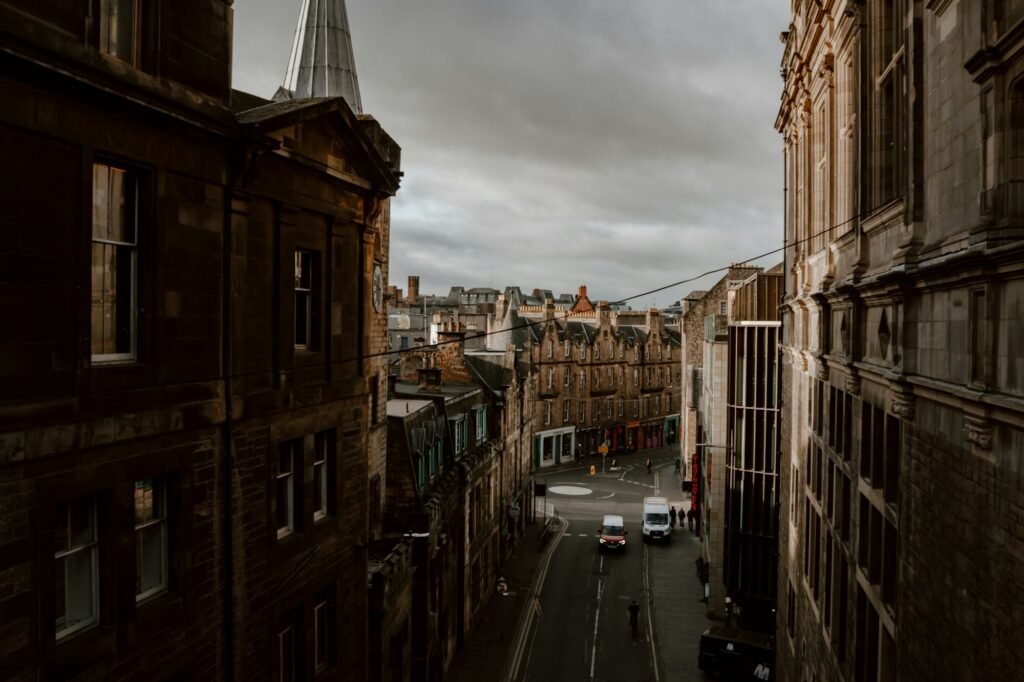
Literary tourism is travel inspired by books, authors and the places where stories are set: a novel’s streets, a writer’s home, a book town or a literary festival. A Skyscanner report found that 73% of travelers have booked or would consider a literature-inspired trip. The nine destinations below range from Edinburgh and Dublin to Tokyo and Lübeck.
Verified on against the Skyscanner figure reported by travelextra.ie.
In 2026, literature is dictating our travel destinations. Literary tourism — traveling in the footsteps of your favorite authors and novels — has grown from a niche bibliophile hobby into a global phenomenon. According to Skyscanner, 73% of travelers have booked or would consider a literature-inspired trip, and hotel bookings with the « library » filter have surged by 70%. From Edinburgh, the first UNESCO City of Literature, to the alleyways of Cartagena haunted by the spirit of García Márquez, through Kafka’s Prague and Murakami’s Tokyo, here are nine literary destinations that will turn your next getaway into an unforgettable chapter.
Three Kinds of Literary Trip
- Author pilgrimages: the Brontë Parsonage Museum in Haworth (see section 3).
- Book towns: Hay-on-Wye in Powys, Wales, where second-hand bookshops have shaped the town since Richard Booth opened his first shop there in 1962.
- Literary festivals: the August Edinburgh Book Festival (see section 1).
| Destination | Literary link | Best season | Budget per day |
|---|---|---|---|
| Edinburgh, Scotland | UNESCO City of Literature, Writers’ Museum, Book Festival | May–June or August | $130–195 |
| Dublin, Ireland | Trinity College Long Room, Book of Kells, Bloomsday | June or September–October | $140–215 |
| Haworth, Yorkshire | Brontë Parsonage Museum, Top Withens moors | September–October | $100–155 |
| Paris, France | Shakespeare and Company, Père-Lachaise cemetery | March–May or September–October | $165–275 |
| Provence and Aubagne, France | Marcel Pagnol’s landscapes, Garlaban hill trails | April–June | $85–165 |
| Prague, Czech Republic | Franz Kafka Museum, Golden Lane | March–May or September–October | $110–165 |
| Cartagena and Aracataca, Colombia | García Márquez haunts, Ruta Macondo, Aracataca birthplace | December–March (dry season) | $65–110 |
| Tokyo, Japan | Jimbocho bookshops, Murakami Library at Waseda | March–May or October–November | $130–215 |
| Lübeck, Germany | Buddenbrookhaus, 125 years of Buddenbrooks | May–September | $140–195 |
1. Edinburgh, Scotland — The World Capital of Literature
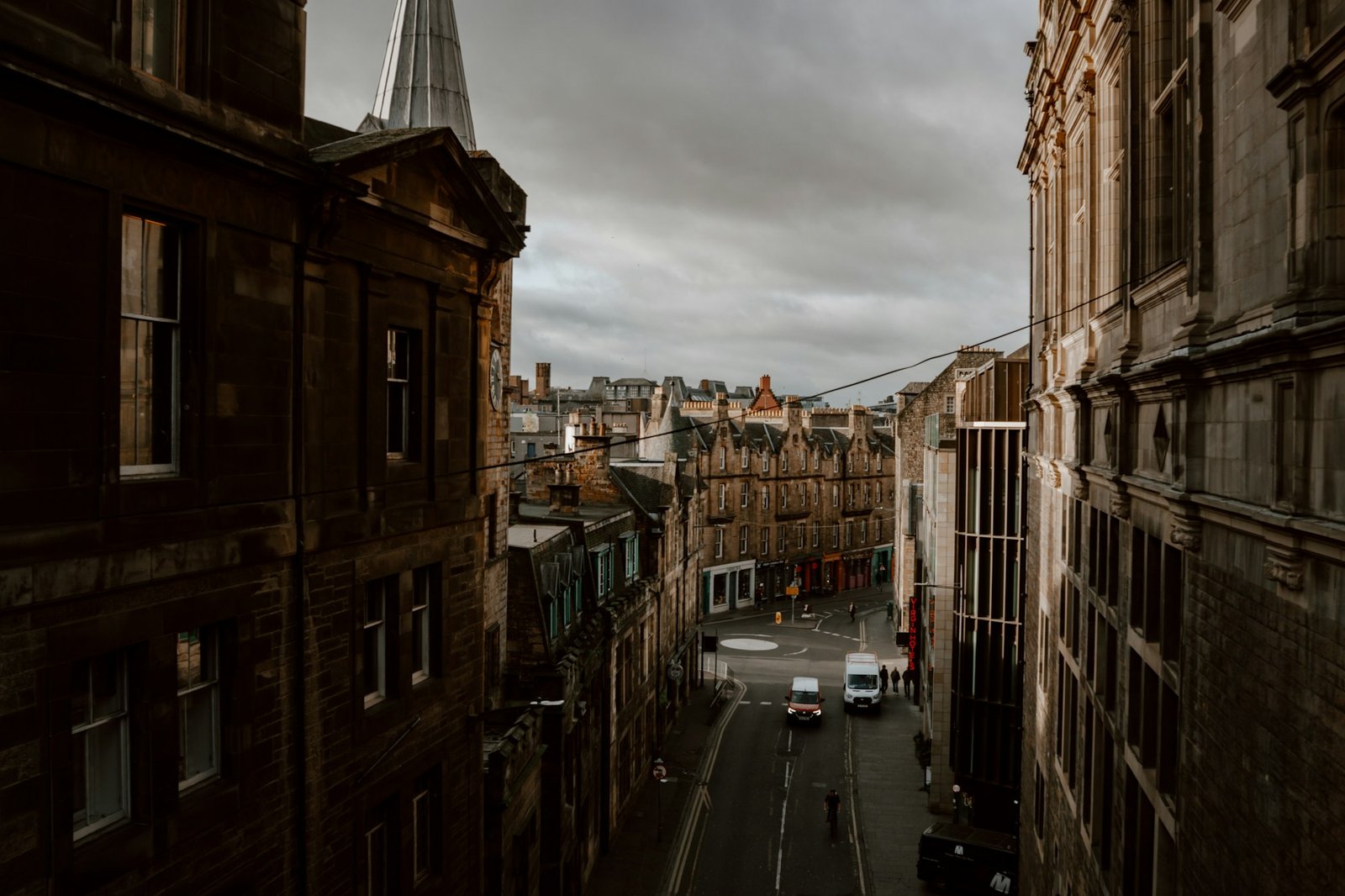
From the Royal Mile to Harry Potter — An Open-Air City of Stories
The first UNESCO City of Literature since 2004, Edinburgh breathes storytelling on every corner. Writers as diverse as Robert Louis Stevenson, Robert Burns, J.M. Barrie, and J.K. Rowling have drawn inspiration from the city’s creative fabric. The Writers’ Museum, located just off the Royal Mile, houses artifacts from three of Scotland’s greatest authors: Burns’s writing desk, Walter Scott’s printing press, and Stevenson’s personal effects.
The Greyfriars Kirk cemetery is reputed to have inspired Harry Potter character names — notably Tom Riddle. Waverley Station is the only train station in the world named after a novel. With over 50 independent bookshops, guided literary walking tours, and the world’s largest book festival every August, Edinburgh is an essential pilgrimage for any reader.
Highlights
- Free Writers’ Museum — manuscripts by Burns, Scott, and Stevenson
- Greyfriars Kirk: graves that inspired Harry Potter character names
- Edinburgh Book Festival (August): the world’s largest literary festival
- The Elephant House: the café where J.K. Rowling wrote the first chapters
2. Dublin, Ireland — The City of Joyce, Yeats, and Beckett
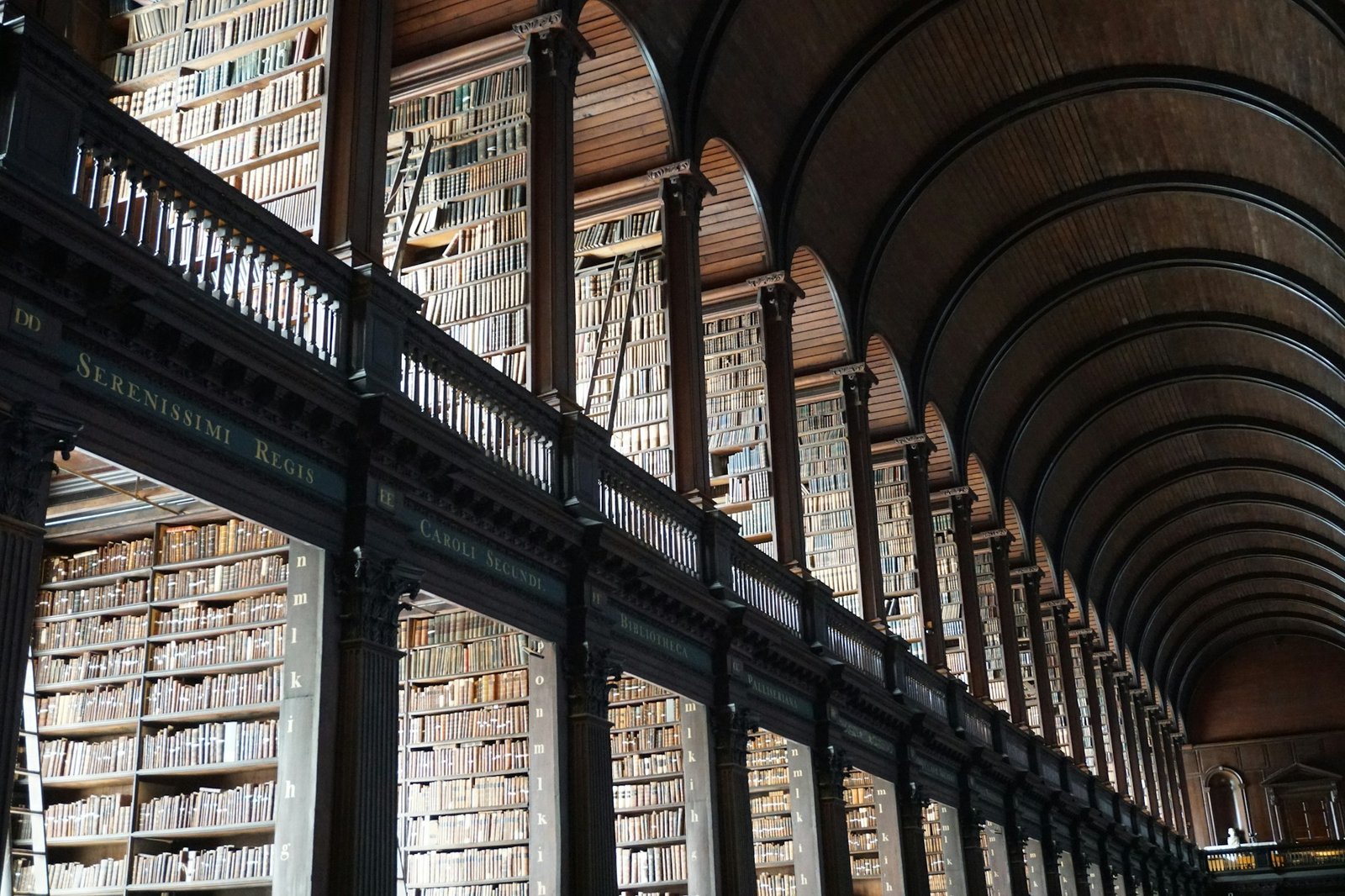
Bloomsday and the Book of Kells — Four Nobel Prizes in One City
Dublin is synonymous with literary excellence. A UNESCO City of Literature, it has produced more Nobel Prize laureates in literature per capita than almost any other city in the world: Yeats, Shaw, Beckett, and Heaney. The Dublin Writers Museum celebrates this heritage with exhibitions dedicated to Joyce, Yeats, and Beckett. Trinity College houses the legendary Book of Kells, a 9th-century illuminated manuscript, in the majestic Long Room — one of the most beautiful libraries in the world.
Every June 16, Bloomsday transforms Dublin into a life-sized literary theater: Edwardian costumes, public readings, and walking tours retracing Leopold Bloom’s steps through the streets of Ulysses. The literary pub crawls are a Dublin institution — actors recite passages from great Irish writers as you move from pub to pub. Don’t miss Sweny’s Pharmacy, a real location mentioned in Ulysses, now a community bookshop where you can still buy the lemon soap dear to Bloom.
Highlights
- Trinity College Long Room: one of the most beautiful libraries in the world
- Bloomsday (June 16): immersive festival through the streets of Joyce’s Ulysses
- Literary pub crawl: theater and tastings combined in historic pubs
- Sweny’s Pharmacy: community bookshop in the real location from the novel (~$5)
3. Haworth, Yorkshire — The Wild Moors of the Brontë Sisters
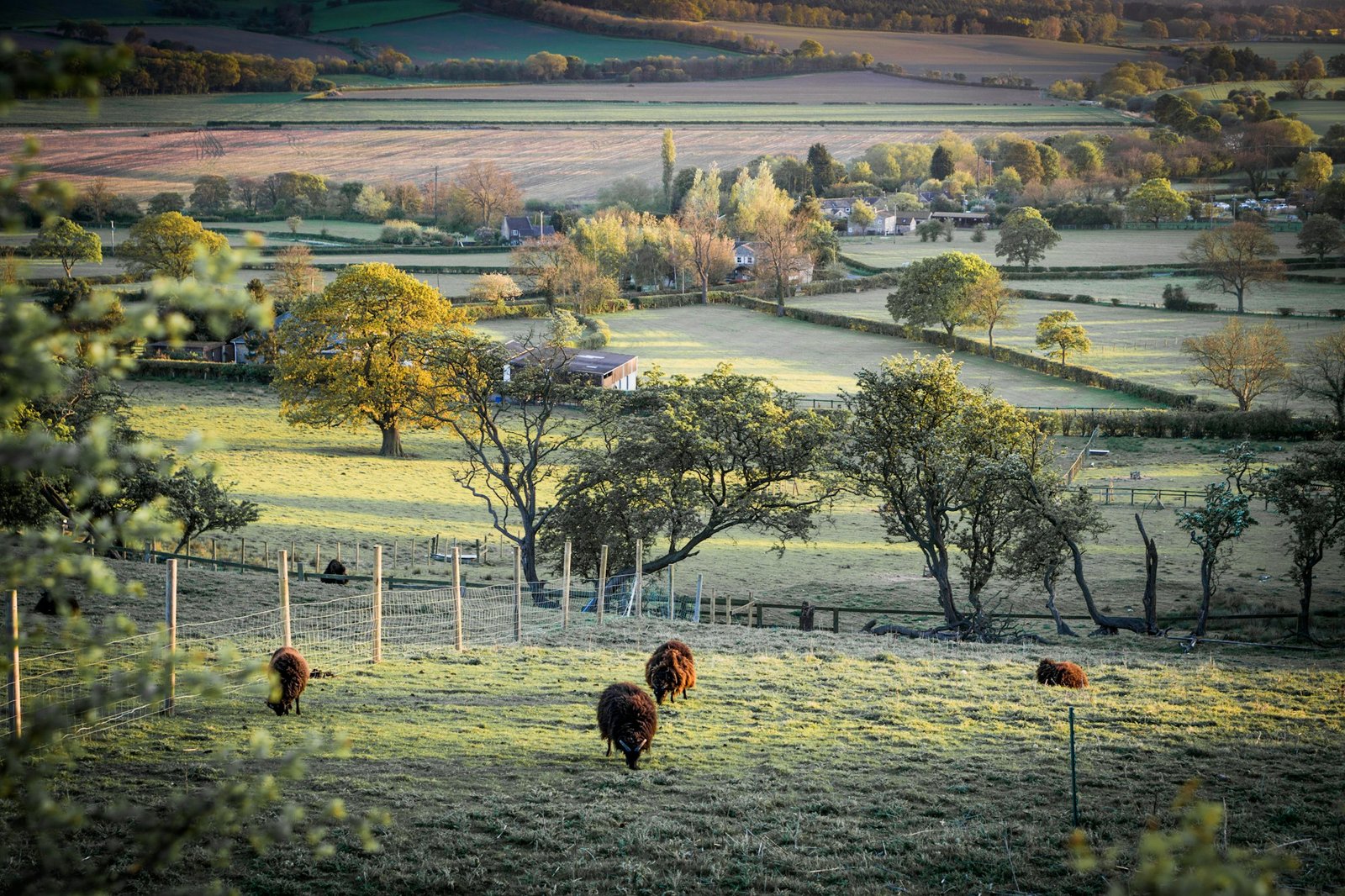
Top Withens and Brontë Parsonage — The Atmosphere of Wuthering Heights
Haworth, home of the Brontë sisters, is a village where time seems to have stood still. Its cobbled Main Street, dark stone cottages, and endless moors create an immersion that few literary destinations can match. The Brontë Parsonage Museum, the family home turned museum, preserves original manuscripts, letters, and personal belongings of the three sisters — Charlotte, Emily, and Anne.
The hike to Top Withens — the ruined farmhouse said to have inspired the manor in Wuthering Heights — is a 4-mile pilgrimage across windswept moors, exactly as Emily Brontë described them. According to Travel Weekly, Active England offers literary walking tours that « take the author’s favorite places, quotes from their novels, and turn them into a journey. » The Yorkshire moors are experiencing a resurgence of interest in 2026, driven by the literary travel trend.
Highlights
- Brontë Parsonage Museum: original manuscripts and period interiors (~£10)
- Top Withens hike: 4 miles across the moors that inspired Wuthering Heights
- Landscape virtually unchanged since the Brontë era
- Charming B&Bs in the village: £60-100 per night, 19th-century atmosphere
4. Paris, France — The City as Library, from Hemingway to BookTok
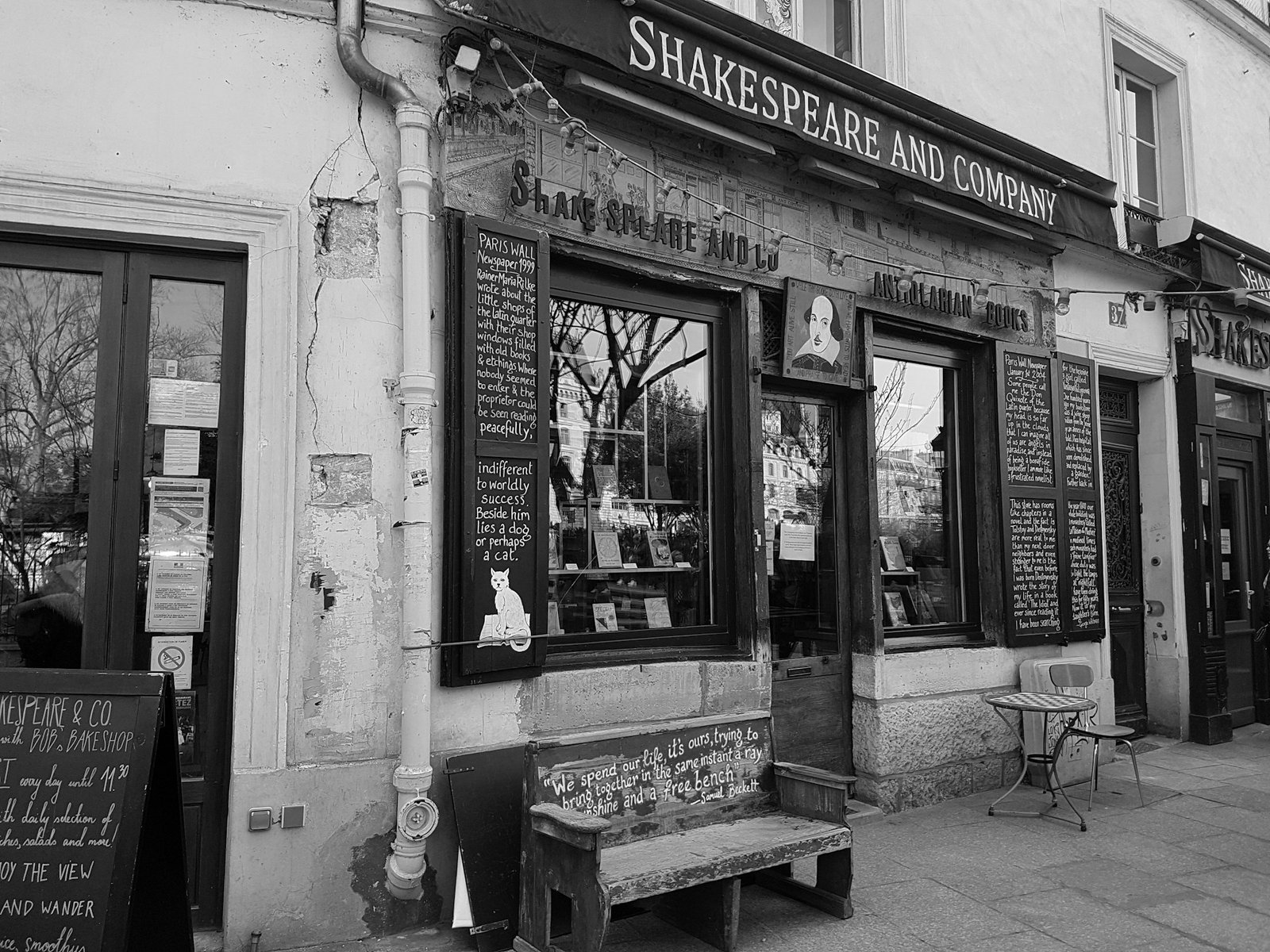
Shakespeare and Company, Père-Lachaise, and the Left Bank
Paris, an open-air library of a city, draws travelers eager to explore the cafés and streets once frequented by Hemingway, Joyce, Fitzgerald, and Gertrude Stein. The Shakespeare and Company bookshop (37 rue de la Bûcherie), founded by Sylvia Beach and later revived by George Whitman, remains the epicenter of Parisian literary life. The Café de Flore and Les Deux Magots bear the imprint of Sartre, Beauvoir, and Camus. The entire Left Bank is a literary museum in its own right.
In 2026, tourism campaigns continue to promote iconic literary landmarks, boosted by the BookTok trend. But Paris may be the only city in the world where you can go from the Maison de Victor Hugo (Place des Vosges, free admission) to Hemingway’s benches, from Proust’s haunts to Père-Lachaise — where Wilde, Proust, Balzac, and Colette rest — all in a single day’s walk. The rentrée littéraire in September transforms every bookshop into a stage for passionate debate.
Highlights
- Shakespeare and Company: legendary bookshop with daily reading program
- Maison de Victor Hugo (Place des Vosges): free and stunning
- Père-Lachaise: graves of Wilde, Proust, Balzac, Colette — free access
- Café de Flore and Les Deux Magots: the historic headquarters of existentialism
5. Provence and Aubagne — Through the Hills of Marcel Pagnol
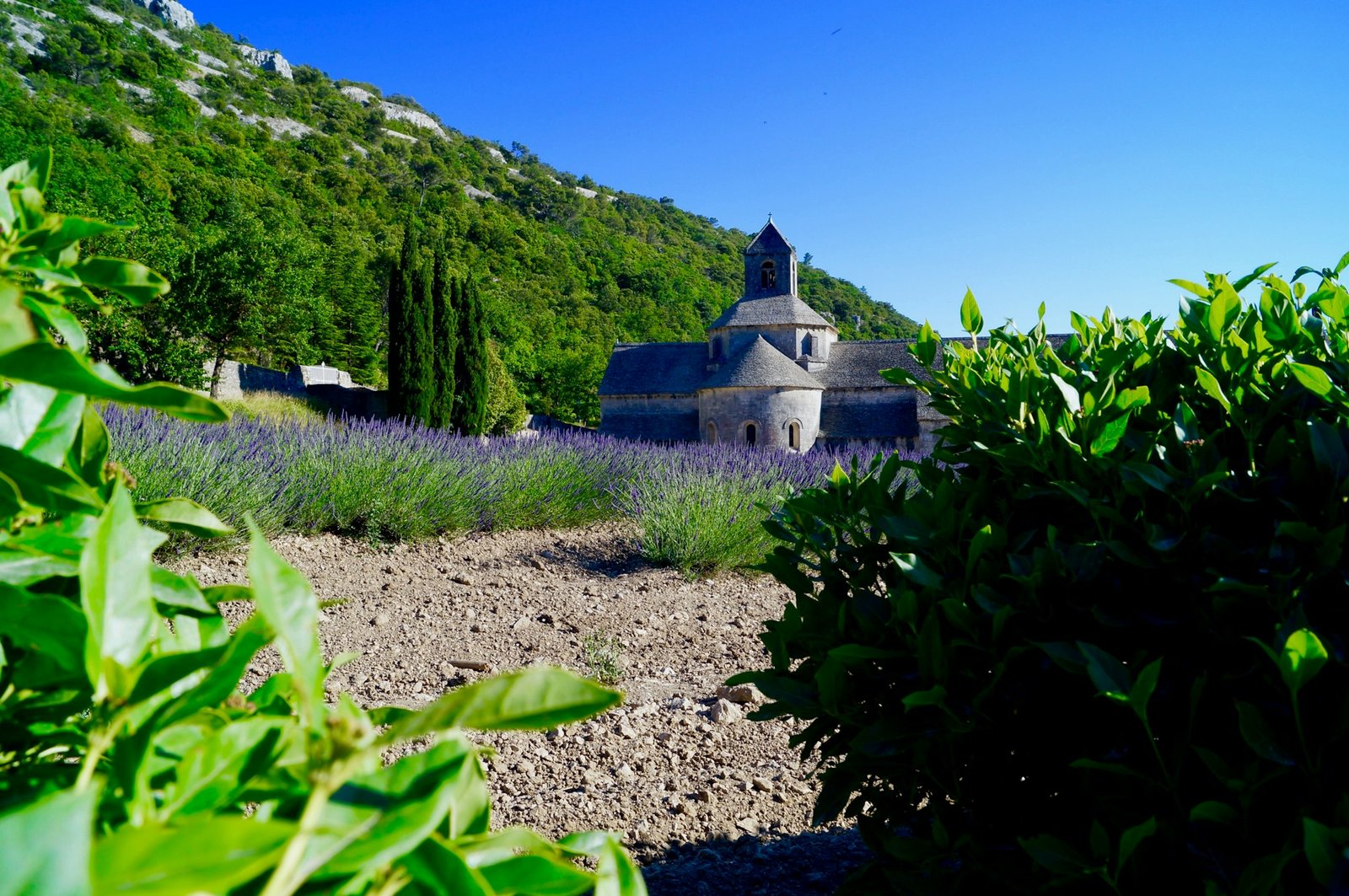
My Father’s Glory and My Mother’s Castle — Pagnol’s Provençal Countryside
Aubagne and the Garlaban hills are the literary birthplace of Marcel Pagnol. It was here, along the rocky trails of the calanques and garrigue scrubland, that young Marcel lived the adventures told in My Father’s Glory and My Mother’s Castle. Pagnol’s birthplace in Aubagne, now a museum, traces the journey of the writer-filmmaker. Marked trails wind through the hills he immortalized, from the Grotte du Grosibou to the Pas du Loup.
France boasts an exceptional network of writers’ houses and literary trails. An international symposium in Pau in February 2026 on « Writers’ Houses Today » reflects the sector’s vitality. Beyond Pagnol, Provence offers immense literary wealth: Peter Mayle’s Luberon, Frédéric Mistral’s Camargue, and the landscapes of Jean Giono. The lavender fields of the Valensole Plateau add a sensory dimension to the experience.
Highlights
- Pagnol trails in Aubagne: marked and free, through the Garlaban hills
- Pagnol’s birthplace: intimate museum in the heart of Aubagne (~$5)
- Valensole Plateau lavender fields: a unique sensory experience (June-July)
- George Sand’s Berry (Nohant), Flaubert’s Normandy (Croisset) within touring distance
6. Prague, Czech Republic — Inside Kafka’s Labyrinth
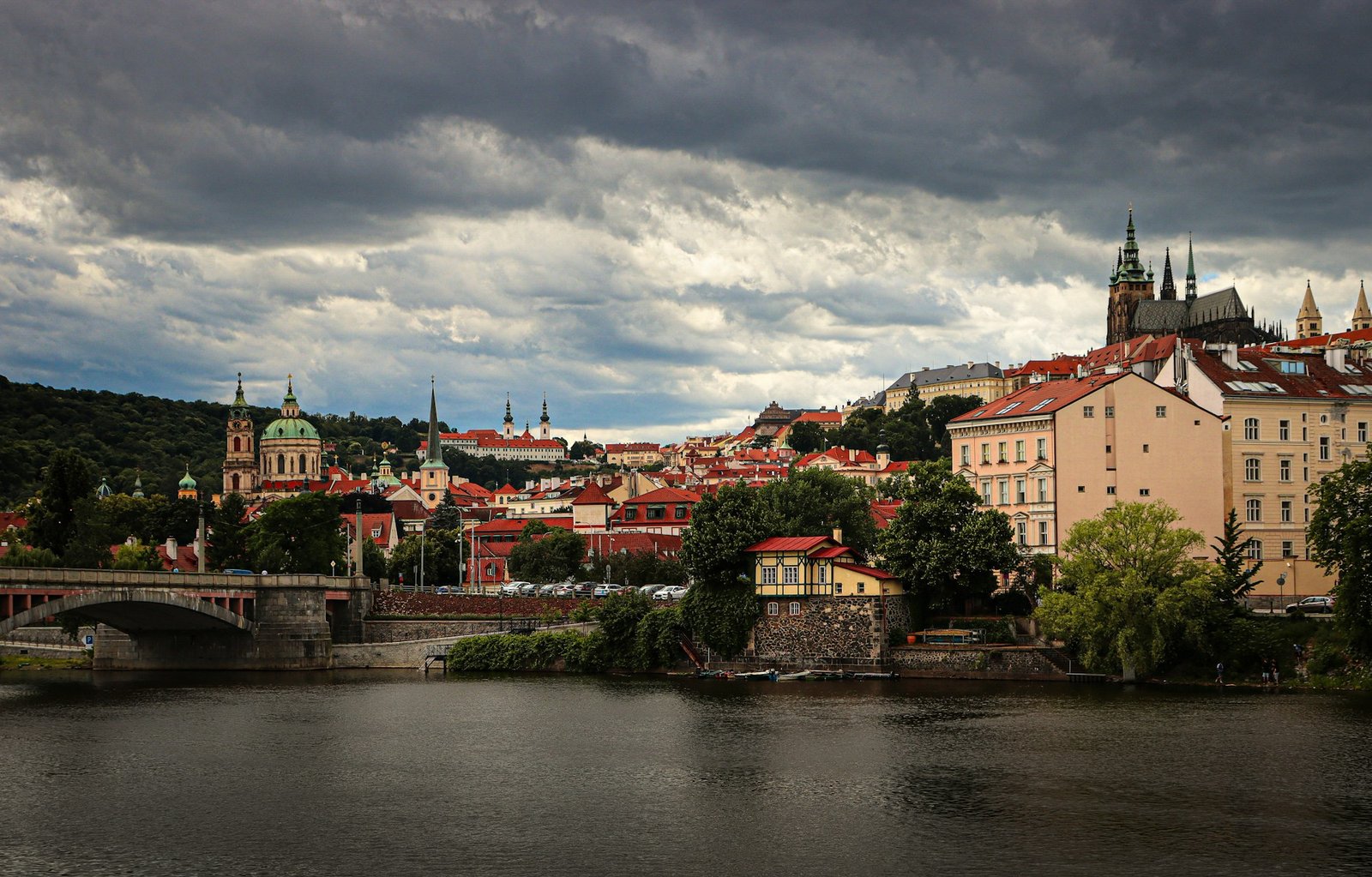
The Franz Kafka Museum and Golden Lane — Prague After the Centenary
The momentum of the Kafka centenary in 2024 triggered a rich wave of storytelling around Prague: articles, walking tours, exhibitions. The advantage in 2026? You arrive after the commemorative peak, with a still-rich array of guides and well-marked itineraries, but without the centenary crowds. The Franz Kafka Museum (300 CZK per adult, approximately $13) offers private guided tours and permanent exhibitions that decode the Kafkaesque universe.
Golden Lane (Zlatá ulička), within the Prague Castle grounds, is home to the tiny house No. 22 where Kafka wrote some of his most famous stories. According to The Guardian, a full Kafka trail crosses the Old Town, Josefov (the Jewish Quarter), and Malá Strana. Prague is a literary tourism « hack »: a stunning city, budget-friendly, with a world-class literary heritage.
Highlights
- Franz Kafka Museum: immersive exhibition with manuscripts and artifacts (300 CZK / ~$13)
- Golden Lane No. 22: the tiny house where Kafka wrote within the castle grounds
- Café Louvre: meeting place of Prague’s literary circle in the early 20th century
- Budget-friendly: ~$110-165/day, well below Western European capitals
7. Cartagena and Aracataca, Colombia — The Magical Realism of García Márquez
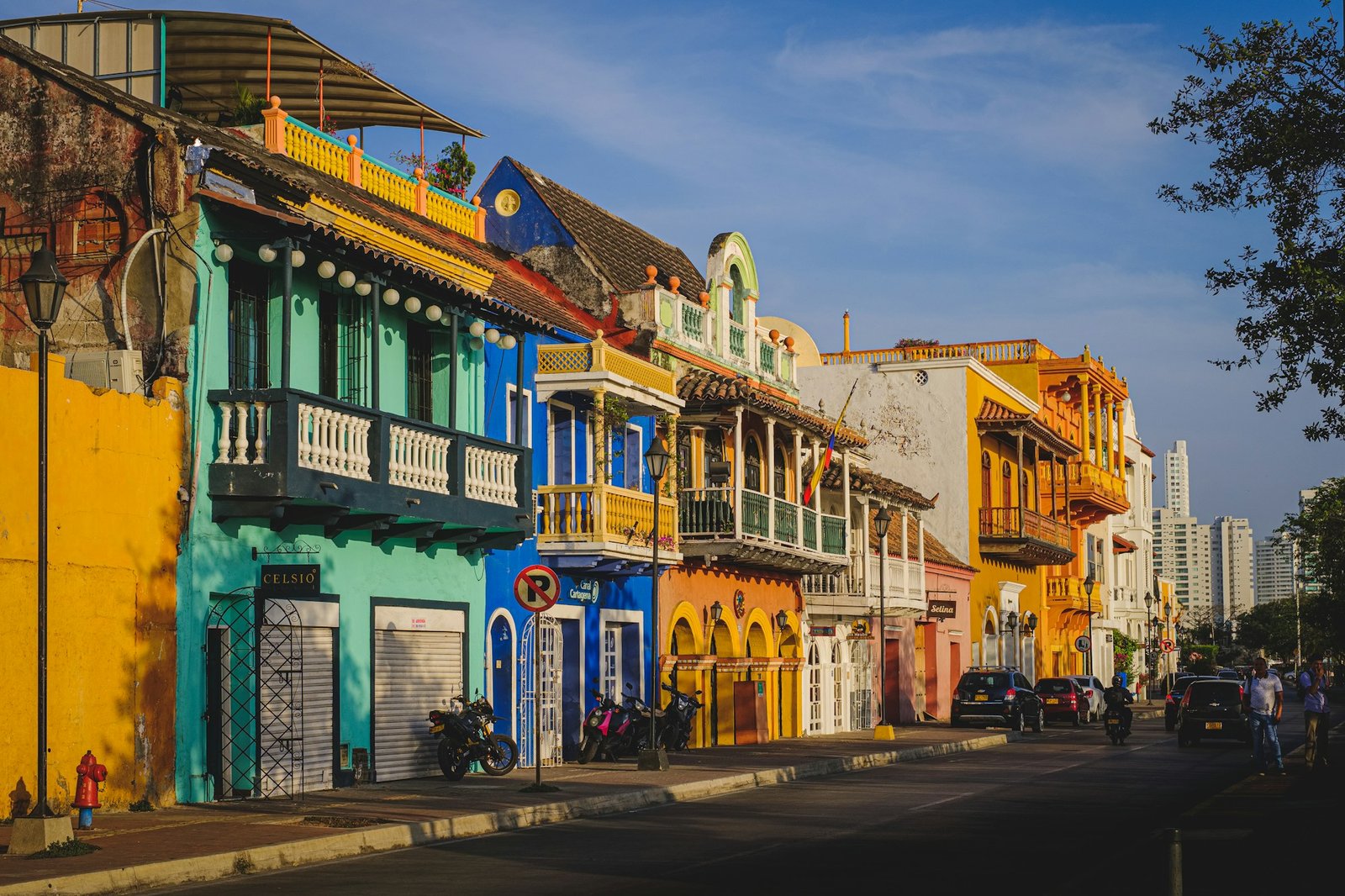
The Ruta Macondo and Getsemaní — In the Footsteps of the Nobel Laureate
Cartagena is the setting for several of García Márquez’s novels, notably Love in the Time of Cholera. In the vibrant Getsemaní neighborhood, the Ruta Macondo — a pioneering initiative combining literary heritage with digital technology — brings the Nobel laureate’s world to life through a geolocated walking tour. The full itinerary covers four cities along Colombia’s Caribbean coast: Aracataca (Márquez’s birthplace and the model for Macondo), Barranquilla, Santa Marta, and Cartagena.
In Aracataca, a mural at the town’s entrance bears this Márquez quote: « I came back one day and discovered that between reality and nostalgia lay the raw material of my work. » The Nobel laureate’s birthplace, now a museum, recreates the atmosphere of One Hundred Years of Solitude. The historic Alfiz Hotel in Cartagena houses a collection of over 200 works by García Márquez in 22 languages.
Highlights
- Ruta Macondo: immersive digital walking tour in Getsemaní (~$30-50 guided)
- Aracataca: Nobel laureate’s birthplace and the atmosphere of One Hundred Years of Solitude
- Highly affordable: $65-110/day in Colombia (accommodation + meals + visits)
- García Márquez Food Tour: 9 gastronomic stops in the writer’s footsteps
8. Tokyo, Japan — The Floating World of Haruki Murakami
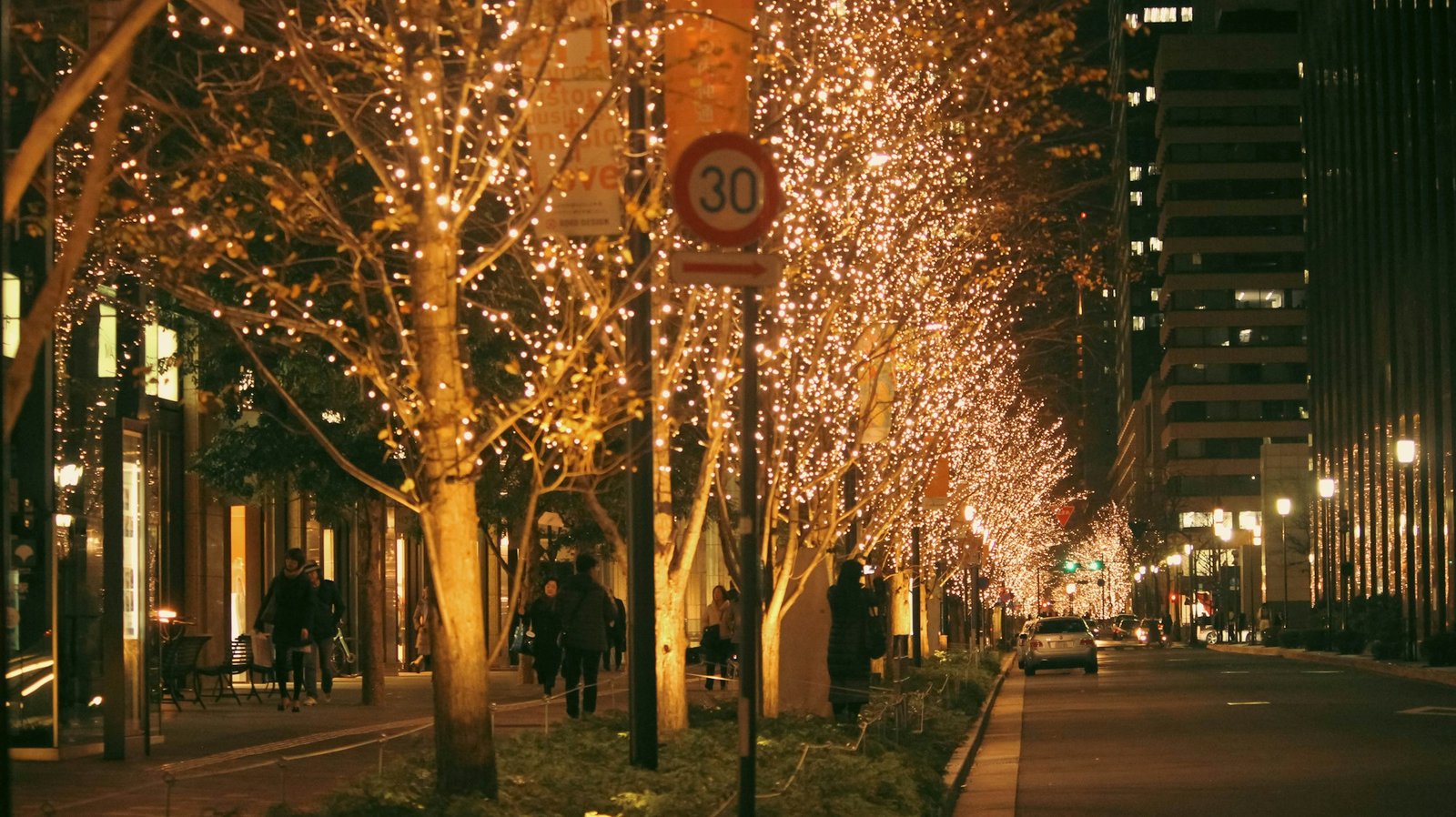
Jimbocho, Jazz Bars, and the Murakami Library — Literary Tokyo
Tokyo is a hidden paradise for literature lovers. The Jimbocho district (Kanda), considered the world’s largest bookshop quarter, lines up more than 170 specialized bookstores within a few streets. This is where Japanese and international readers come to browse rare editions, vintage manga, and art books. Since 2021, the Waseda International House of Literature (nicknamed the « Murakami Library ») welcomes fans of the novelist in a building designed by Kengo Kuma, housing a collection of manuscripts, jazz records, and translations in 50 languages.
Murakami’s universe is scattered across Tokyo: the jazz bars of Shinjuku Golden Gai (like Peter Cat, which inspired the protagonist of Kafka on the Shore), the Meiji Jingu shrine (featured in 1Q84), and the quiet backstreets of Shimokitazawa. Japan itself is a character in his novels — that sense of familiar strangeness can be found around every corner. In 2026, Japanese literary tourism benefits from the global enthusiasm for Japanese culture and the weak yen.
Highlights
- Jimbocho: 170+ bookshops, the world’s largest book district
- Murakami Library (Waseda): manuscripts, jazz, and Kengo Kuma architecture
- Shinjuku Golden Gai: jazz bars and a Murakami-novel atmosphere
- Weak yen in 2026: more affordable for European and American travelers
9. Lübeck, Germany — The Buddenbrooks Turn 125
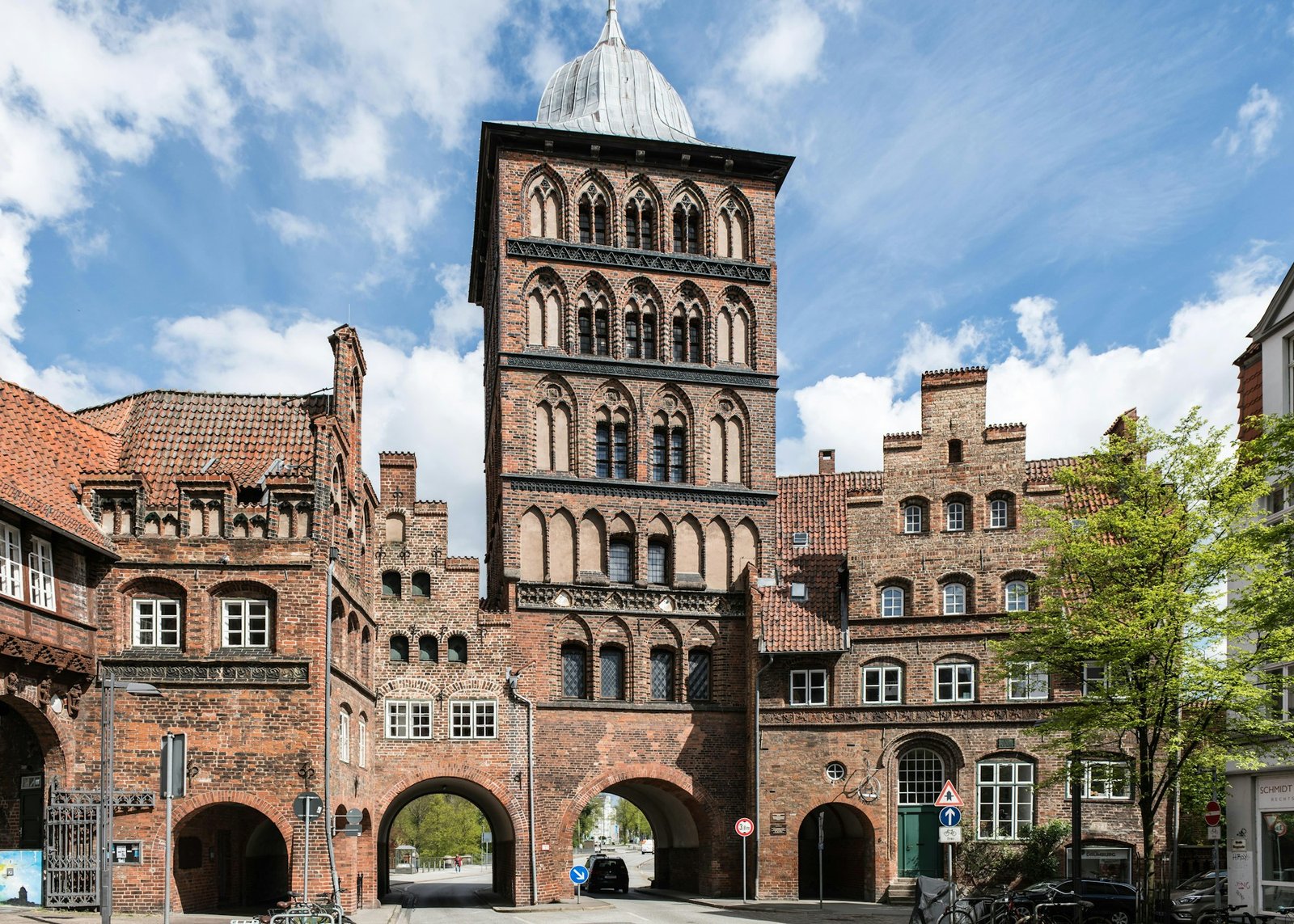
Buddenbrookhaus and Anniversary Programming — A Living Museum City
Lübeck checks a rare box in literary tourism: a stunning heritage destination, a novel deeply rooted in the city, and a special events program in 2026. Thomas Mann’s novel Buddenbrooks celebrates its 125th anniversary in 2026, and the city has announced a dedicated exhibition, « Family Affairs. 125 Jahre Buddenbrooks », at the St. Annen-Museum from October 30, 2026. Throughout the year, a series of monthly readings at locations connected to the novel (« Ein Jahr, ein Buch ») transforms Lübeck into a living literary serial.
The Holstentor, the emblematic medieval gate inscribed on the UNESCO World Heritage list, sets the tone: Lübeck is a Hanseatic fairytale city. The Buddenbrookhaus, the reconstructed family home at 4 Mengstraße, immerses visitors in the novel’s universe through a modern museographic journey. The entire old town, with its cobblestone lanes, inner courtyards, and brick warehouses, is an intact literary backdrop. As a bonus, the seaside resort of Travemünde, a 20-minute train ride away, offers the Baltic beaches described by Mann.
Highlights
- Buddenbrookhaus: museum dedicated to the Mann family at 4 Mengstraße
- Monthly « Ein Jahr, ein Buch » readings at locations from the novel (2026)
- « Family Affairs » exhibition at St. Annen-Museum from October 30, 2026
- Deutschlandticket ($63/month): Lübeck easily combined with Hamburg by regional train
Frequently Asked Questions About Literary Tourism
Is literary tourism really a major trend in 2026?
Yes, it’s one of the most well-documented trends of the year. According to Skyscanner, 73% of travelers have booked or would consider a literature-inspired trip, and « library » hotel bookings have surged by 70%. Rebecca Sinclair, Brand Director at Penguin Books UK, told National Geographic: « 85% of book buyers read to relax or escape — it’s no surprise that reading is a source of wanderlust. »
How do I plan my first literary trip?
Start with a book you love and identify its real-world locations. Literary tourism can involve visiting a famous library, attending a festival, traveling to a place that inspired a novel, or following in a protagonist’s footsteps. Destinations like Dublin (Joyce) or Edinburgh (Harry Potter) are ideal for beginners as they offer well-marked trails and a mature tourism infrastructure. Plan around an event — Bloomsday in Dublin (June 16), Edinburgh Book Festival (August) — for maximum immersion.
What budget should I plan for a literary trip?
Budgets vary considerably. In Colombia, expect $65-110/day (the most affordable destination). Prague remains very accessible at $110-165/day. Haworth (Yorkshire) costs $100-155/day. Edinburgh or Dublin: $130-215/day. Paris or Tokyo: $165-275/day. Many literary museums are free (Edinburgh’s Writers’ Museum, Maison de Victor Hugo) and literary walking tours rarely cost more than $15-25.
Which literary festivals should I include in a 2026 trip?
The 2026 calendar is packed: Printemps des Poètes in France (March 14-31), Hay Festival in Wales (May-June), Bloomsday in Dublin (June 16), Edinburgh International Book Festival (August), Jane Austen Festival in Bath (September), Wigtown Book Festival in Scotland (Sept. 25 – Oct. 4), Livre sur la Place in Nancy (September), the Buddenbrooks 125th anniversary exhibition in Lübeck (from October), and Utopiales in Nantes (November). Book accommodation as soon as your dates are confirmed — festivals drive up prices.
Is literary tourism compatible with sustainable travel?
It’s actually one of its greatest strengths. As Anna Abelson (NYU) points out in Travel Weekly, the literary traveler is « the kind of respectful, sustainable traveler every destination would love to welcome. » Literary tourism supports small businesses (independent bookshops, B&Bs), off-the-beaten-path locations, and a slower pace of travel. Destinations like Wigtown (Scotland) or Redu (Belgium) are perfect examples of book villages revitalized by reader-travelers.
What’s the difference between literary tourism and set-jetting?
Set-jetting focuses on filming locations for movies and TV shows, while literary tourism centers on places that inspired books or marked the lives of their authors. Literary tourism is potentially more sustainable because it’s rooted in works that endure across centuries, whereas set-jetting can sometimes depend on fleeting trends. The two often complement each other — Dubrovnik blends Game of Thrones (the series) with George R.R. Martin’s fiction, and Haworth combines the Brontë novels with their film adaptations.
Can you take a literary trip with children?
Absolutely, and it’s actually a growing trend. Literary travel gives families a chance to connect through a shared interest. Destinations like Edinburgh (Harry Potter), Ashdown Forest in England (Winnie-the-Pooh, centenary in 2026), the Lake District (Beatrix Potter), or Hobbiton in New Zealand (Tolkien) are perfectly suited for families. For teens, Prague (Kafka) and Dublin (Joyce) offer engaging and accessible trails.
Sources
- TravelPulse — 5 Biggest Travel Trends for 2026 (Skyscanner)
- National Geographic — How Travel Will Look in 2026
- VisitScotland — Edinburgh City of Literature
- Forever Edinburgh — 20 Years as UNESCO City of Literature
- Travel And Tour World — Literary Tourism Landscape in Europe
- Travel Weekly — A New Chapter in Literary Tourism
- Travel And Tour World — 2026 Travel Trends: Literature
- Rough Guides — In the Footsteps of Gabriel García Márquez
- Latin American Post — Ruta Macondo, Cartagena
- The Guardian — Franz Kafka’s Prague
- Franz Kafka Museum Prague — Admissions
- Lübeck.de — Buddenbrooks 125 Jahre
- Theater Lübeck — Ein Jahr, ein Buch
- Fédération des Maisons d’écrivains
- Nouvelles Littératures — Festivals littéraires 2026 en France
- Euronews — Top 2026 Travel Trends: Literary Tourism
- Expedia Group — Unpack ’26 Travel Trends
Research conducted in February 2026. Budget estimates may vary by season and exchange rate.
Ready to Write Your Next Literary Adventure?
From Edinburgh to Tokyo, from Cartagena to Lübeck, the world’s greatest novels await you on location. Discover our personalized travel itineraries to explore the literary destinations that will turn your trip into an unforgettable chapter.
Explore all itineraries