
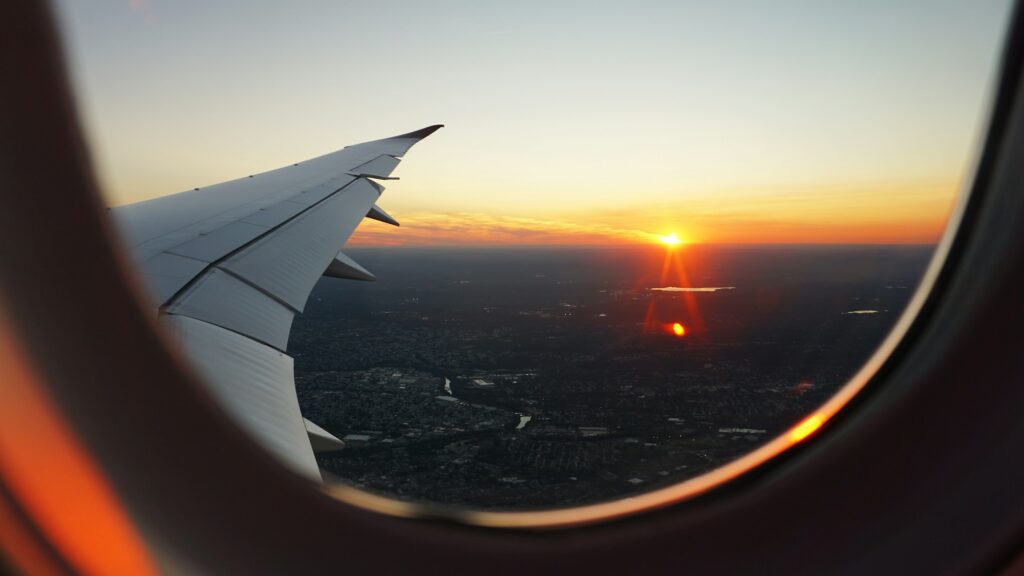
Twelve hours crammed into a seat just 17 inches wide, your knees jammed against the seat in front, the air as dry as a desert, and a baby crying three rows behind you. The long-haul flight in economy class is the ordeal that millions of travelers dread every year. Yet, with a little preparation and the right strategies, it is entirely possible to turn this experience into something almost enjoyable. Whether you are heading to Tokyo, Sydney or Buenos Aires, these 20 practical tips will help you arrive at your destination rested, hydrated and in good spirits — without blowing your budget on an upgrade.
1. Seat Selection: Your First Secret Weapon
Tip 1 — Use seat map tools
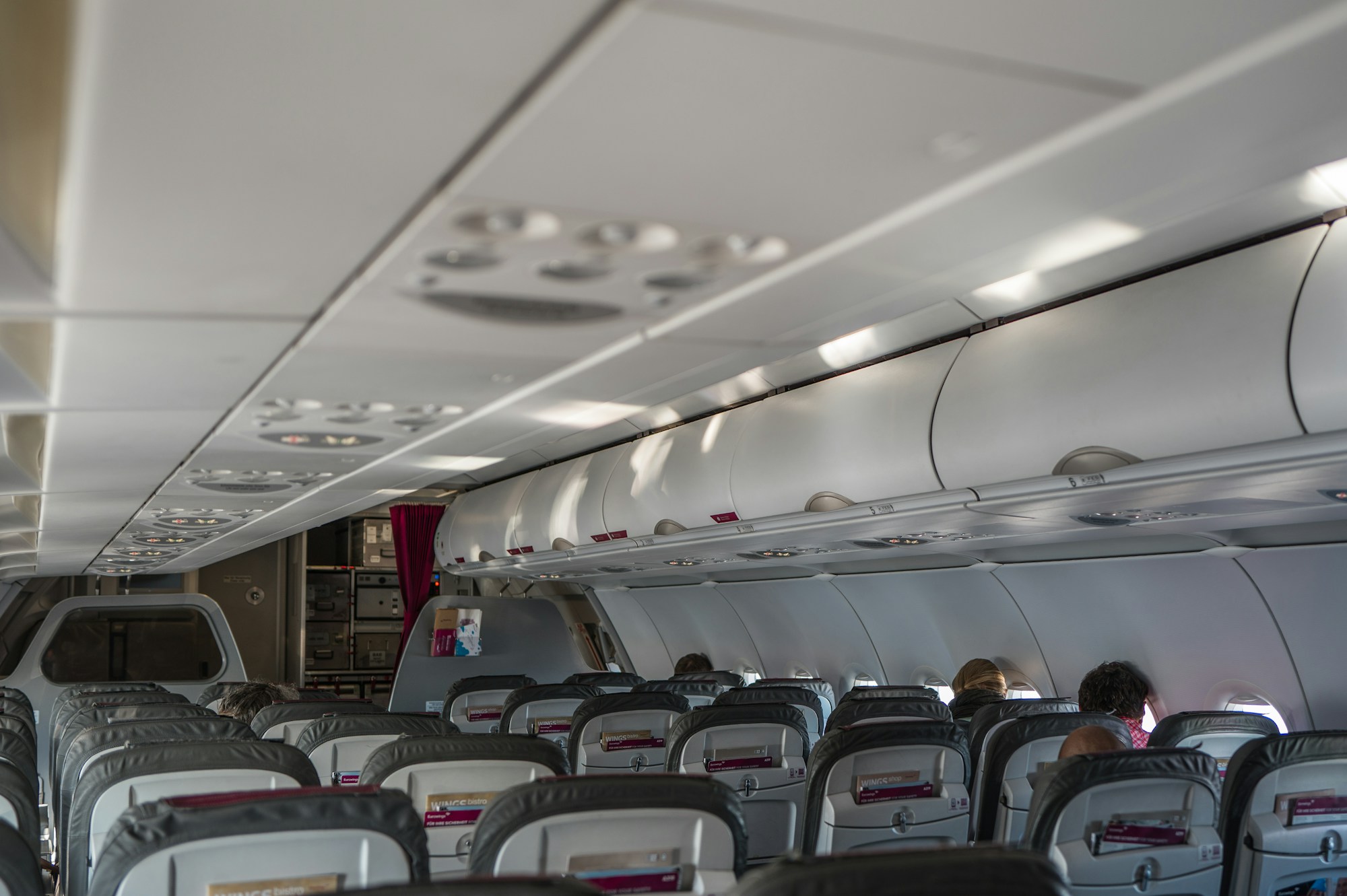
Since the closure of SeatGuru in November 2025, several alternatives have stepped in. SeatMaps, AeroLOPA and SeatMaestro let you visualize the exact configuration of your aircraft before choosing your seat. These tools highlight seats with reduced legroom, those that do not recline, and the locations of emergency exits — a goldmine for optimizing your comfort.
Tip 2 — Choose your side based on your priorities
Want to sleep? Go for the window : you will have a headrest and no one will wake you to get past. Need to move around frequently? The aisle is your best friend. If you are tall, aim for the exit row seats for a noticeable amount of extra legroom — for a surcharge of $15 to $80 depending on the airline.
Tip 3 — Avoid the classic traps
The last rows should be avoided at all costs : proximity to the lavatories (noise and constant foot traffic), engines, and often seats that do not recline. On the other hand, seats over the wings offer the most stable area of the aircraft, ideal if you are sensitive to turbulence.
Key Takeaways
- Check SeatMaps or AeroLOPA as soon as you book your ticket
- Window to sleep, aisle to move, exit row for legroom
- Always avoid the last three rows
- Choose seats over the wings for less turbulence
2. Dress Smart: Comfort Starts with Your Clothes
Tip 4 — Wear loose clothing and layer up
At altitude, reduced pressure causes your body to swell and slows blood circulation. Wearing loose-fitting clothes made of breathable fabrics (cotton, linen, technical fabric) is essential for staying comfortable during 10 or more hours. Adopt the lightweight layering system : a T-shirt, a thin sweater and a vest or jacket that you can put on or take off depending on the cabin temperature, which often varies from one section to another.
Tip 5 — Choose the right shoes (and keep them on)
Your feet swell at altitude, sometimes by half a shoe size. Opt for comfortable shoes that are easy to slip on and slightly roomier than usual : soft sneakers, loafers or dedicated travel shoes. However, resist the temptation to take them off : cabin and lavatory floors harbor numerous bacteria, and in the event of an emergency evacuation, you will need your shoes immediately.
Key Takeaways
- Choose breathable fabrics and loose fits
- Layer up to adapt to cabin temperature changes
- Comfortable shoes, slightly roomier than your usual size
- Never take your shoes off in the cabin (hygiene + safety)
3. The Essential Accessories Kit
Tip 6 — Build your cabin survival kit
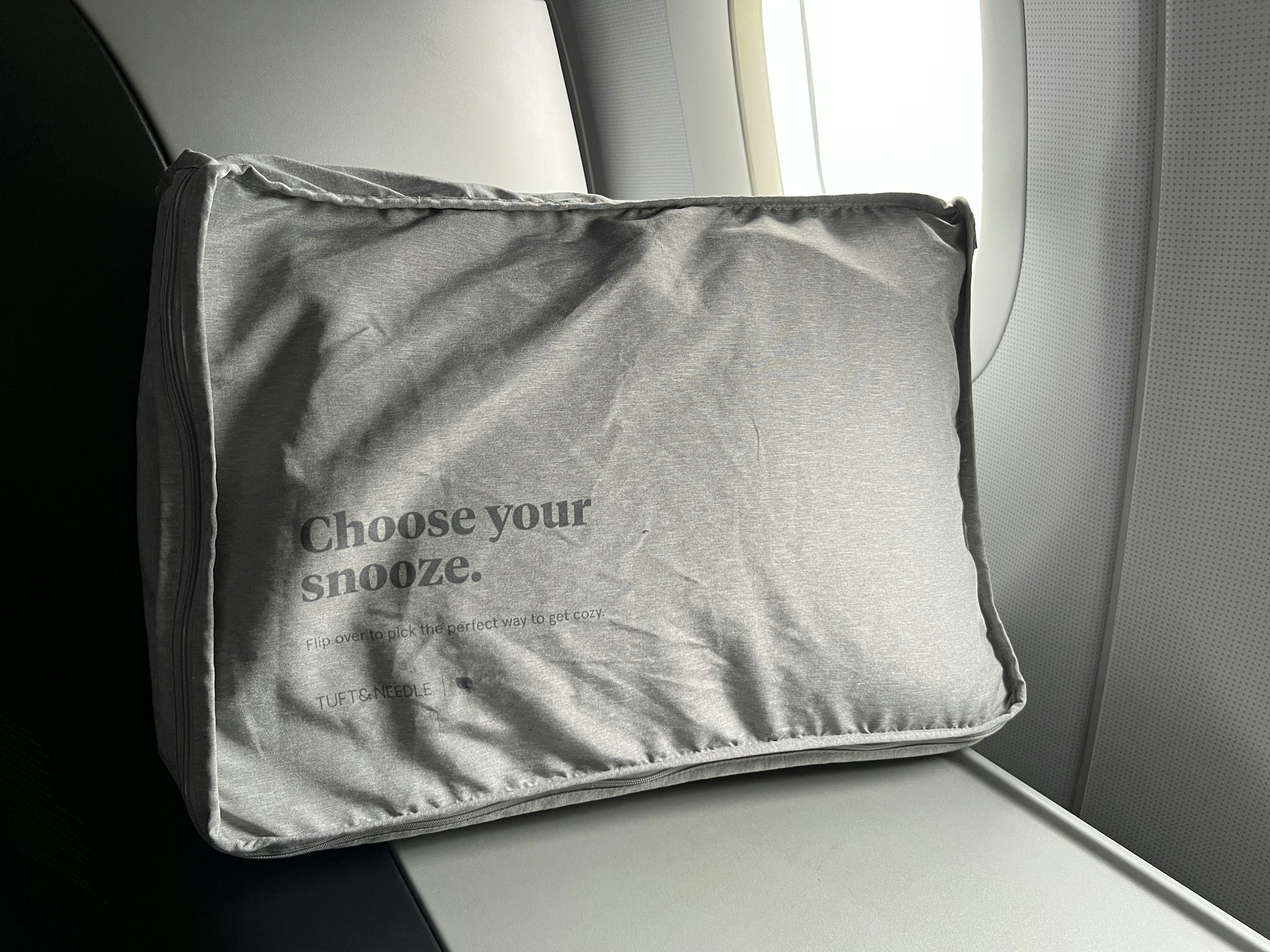
Four accessories make up the long-haul traveler’s basic kit : a neck pillow, an eye mask, earplugs and compression socks. These four items dramatically transform the cabin experience and fit into a small pouch you can slip into your carry-on bag.
Tip 7 — Invest in a good neck pillow
Not all neck pillows are created equal. A memory foam neck pillow is far superior to an inflatable one : it conforms to the shape of your neck, keeps your head in a natural position and does not deflate during the night. It does take up more space, but the comfort gain on a flight lasting over 10 hours is incomparable.
Tip 8 — Get a pair of noise-canceling headphones
An active noise-canceling (ANC) headset is probably the investment that makes the biggest difference on long-haul flights. It eliminates the constant engine hum, dramatically improves the sound quality of movies and music, and even serves as a universal « do not disturb » signal for your neighbors. The Bose QuietComfort and Sony WH-1000XM5 remain the market leaders.
Key Takeaways
- Basic kit of 4 accessories: neck pillow, eye mask, earplugs, compression socks
- Choose memory foam for your neck pillow
- ANC headphones: best comfort investment for frequent flyers
- Keep everything in a pouch you can reach without rummaging through your bag
4. Hydration and Skincare: Fighting Cabin Dryness
Tip 9 — Drink water regularly (more than you think)
The air in the cabin is extremely dry, with a humidity level far below that of your home. This dryness causes fatigue, headaches, dry skin and eye irritation. The golden rule : drink 2 to 3 glasses of water per hour of flight. A practical tip : bring an empty water bottle that you can fill after security or ask the cabin crew to refill during the flight.
Tip 10 — Limit alcohol and caffeine
That complimentary glass of wine is tempting, but alcohol and caffeine speed up dehydration at altitude. The effect of alcohol is actually amplified by pressurization : one drink in the air is roughly equivalent to two on the ground. If you want to relax, limit yourself to a single glass at the start of the flight and compensate with at least two large glasses of water.
Tip 11 — Pack a hydration kit for your skin
Your skin suffers just as much as your throat in the cabin. Bring a facial moisturizer (travel size, under 100 ml), a nourishing lip balm and a moisturizing nasal spray (saline solution). Apply the moisturizer every 3 to 4 hours and the lip balm regularly. Are your eyes sensitive? Add single-dose artificial tears.
Key Takeaways
- Bring an empty water bottle and fill it after security
- 2 to 3 glasses of water per hour, even if you do not feel thirsty
- Limit alcohol and caffeine, follow each drink with two glasses of water
- Hydration kit: facial moisturizer, lip balm, nasal spray
5. Strategic Eating: Eat Right to Fly Better
Tip 12 — Order a special meal (and get served first)
Few travelers know this, but most airlines offer free special meals on long-haul flights : vegetarian, vegan, gluten-free, halal, Hindu, and more. Simply order them 24 to 48 hours before departure through the airline’s website or your travel agent. Double benefit : these meals are often of better quality (prepared in smaller batches, therefore more carefully made) and they are served first, before the general meal service.
In the hours leading up to the flight, avoid greasy or salty foods that promote bloating and water retention — two issues already amplified by cabin pressurization.
Tip 13 — Bring your own healthy snacks
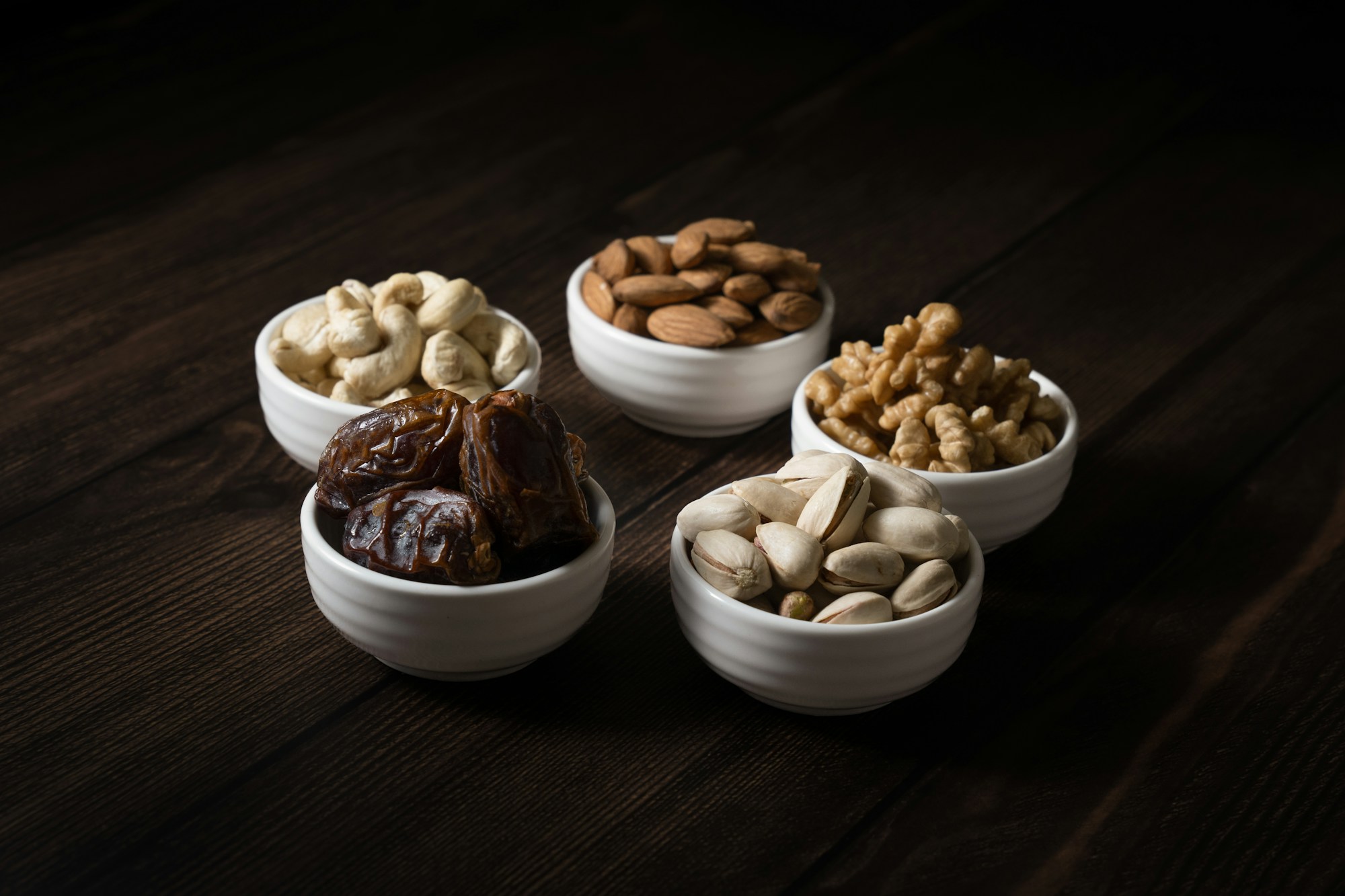
Cabin snacks are often salty or sugary. Prepare your own stash : nuts, almonds, trail mix, whole grain crackers and dried fruit make the perfect in-flight snacks — filling, light and easy to carry. They will keep you fueled between meals without depending on the cabin service.
To start fighting jet lag during the flight, try to eat according to your destination’s schedule rather than the cabin service times. Your internal clock will begin adjusting while you are still in the air.
Key Takeaways
- Order a free special meal 24 to 48 hours before the flight
- Avoid greasy and salty foods in the hours before the flight
- Bring nuts, dried fruit and crackers to snack on between meals
- Time your meals to your destination’s schedule
6. Circulation and Thrombosis Prevention: Move for Your Health
Tip 14 — Understand the risk of deep vein thrombosis (DVT)
Deep vein thrombosis (DVT) is a real medical risk during long-haul flights. Prolonged immobility in a seated position, combined with low cabin pressure and dehydration, promotes the formation of blood clots in the deep veins of the legs. In rare cases, these clots can travel to the lungs (pulmonary embolism), a potentially serious complication.
Tip 15 — Do regular micro-exercises at your seat
Even without standing up, you can stimulate your circulation : wiggle your toes, rotate your ankles and flex your calf muscles every 15 to 30 minutes. Stand up and walk down the aisle at least every 2 hours. A good excuse : go refill your water bottle or use the lavatory. And above all, do not cross your legs : this position compresses your veins and increases the risk of blood pooling.
Tip 16 — Wear compression stockings (yes, even if you are young)
Class 2 compression stockings are recommended by vascular specialists for any flight over 4 hours, regardless of your age. They apply graduated pressure that helps blood flow back toward the heart and significantly reduce the risk of DVT. Today’s models are thin, discreet and feel like regular socks. Your pharmacist can help you choose the right size.
Key Takeaways
- Move your toes, feet and ankles every 15 to 30 minutes
- Stand up and walk the aisle at least every 2 hours
- Never cross your legs during the flight
- Wear class 2 compression stockings for flights over 4 hours
7. In-Flight Sleep and Beating Jet Lag
Tip 17 — Optimize your sleep in the cabin
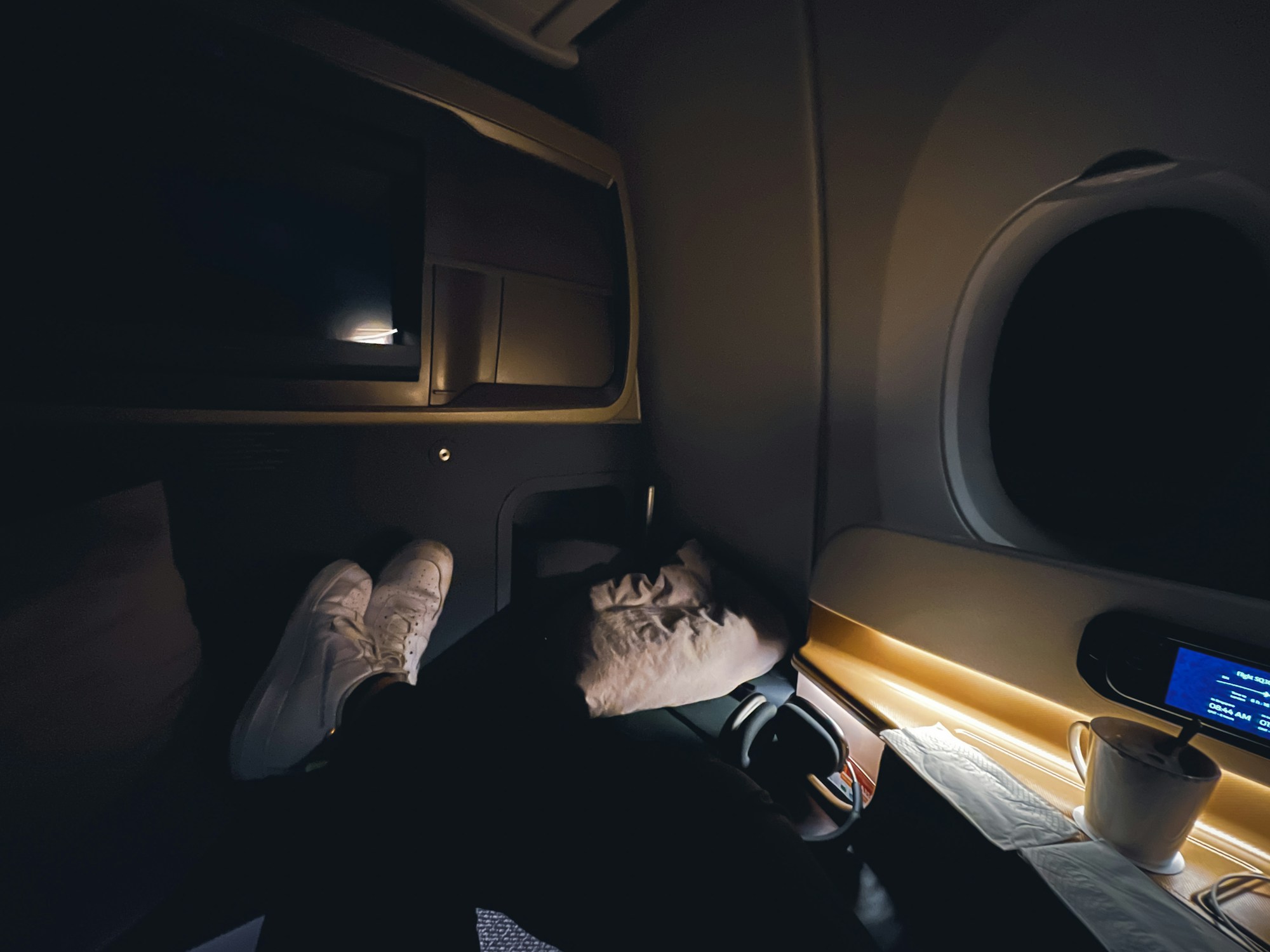
The quality of your in-flight sleep can make all the difference when you land. Start by adjusting your internal clock 2 to 3 days before departure : gradually shift your bedtime and wake-up time in the direction of your destination. If possible, choose a red-eye flight that coincides with your natural sleep hours.
In the cabin, sleep according to your destination’s time, not simply when the lights go off. If you spot empty rows at the back of the plane, do not hesitate to move there once the service is over so you can stretch out. An innovation to watch : Lufthansa tested the « Sleeper’s Row » concept in 2025, a sleeping system in economy class that transforms an entire row into a flat surface.
Tip 18 — Start managing jet lag from takeoff
Jet lag manifests as soon as you cross 3 time zones : fatigue, insomnia, digestive issues, difficulty concentrating. According to the NASA rule of thumb, you need about 1 day of full recovery per time zone crossed. A Paris-to-Tokyo trip (8 time zones) would theoretically require 8 days of complete adjustment.
First reflex : set your watch to your destination’s time as soon as you take off. This simple gesture helps your brain begin the transition. Also know that traveling west is easier than traveling east, because it is naturally easier to extend your day than to shorten it.
Tip 19 — Use light and melatonin as your allies
Upon arrival, natural light is your best tool for resetting your internal clock. Get as much sun exposure as possible during daytime at your destination, even if your body is begging for bed. For eastbound travel, melatonin (3 mg at bedtime) can help your body fall asleep at the new time. Ask your pharmacist for the right dosage.
Key Takeaways
- Shift your schedule 2 to 3 days before departure
- Sleep according to destination time, not departure time
- Set your watch to arrival time as soon as you take off
- Get natural sunlight exposure as soon as you arrive
- Melatonin (3 mg) at bedtime for eastbound trips
8. Mental Game and 2025 Innovations: The Future of Economy Comfort
Tip 20 — Break the flight into blocks and prepare your entertainment
The psychological aspect is often underestimated. A 12-hour flight feels endless if you think of it as one solid block. The solution : mentally break it down into segments. For example : 2 hours of movie, 1 hour of meal, 2 hours of sleep, 1 hour of reading, 2 hours of podcast, 1 hour of meal, 2 hours of movie, 1 hour of relaxation before landing. Suddenly, 12 hours become 8 short, manageable activities.
Before the flight, download your content for offline use : movies and shows on Netflix/Prime Video, podcast episodes, music playlists, e-books and even games. Do not rely solely on the in-flight entertainment system : the selection can be limited and the screens sometimes low quality.
Bonus — Economy class comfort innovations to watch
Airlines are increasingly investing in economy class comfort :
- JAL « Sky Wider » — Voted best economy seat 3 consecutive years by Skytrax thanks to a 2-4-2 layout instead of the standard 3-3-3
- Air New Zealand Skycouch — A row of three seats whose footrests fold up to create a flat surface, ideal for couples or families
- Swiss « Swiss Senses » — New 2025 concept with 19.5-inch wide seats (49.5 cm), among the widest on the market
- Qantas Project Sunrise — For future 20-hour flights (Sydney-London nonstop), dedicated wellness zones for exercise and stretching
- Lufthansa Sleeper’s Row — Economy class sleeping concept, tested in 2025, transforming an entire row into a sleeping surface
Frequently Asked Questions
What is the best economy class seat for a long-haul flight?
It depends on your priorities. The window is ideal for sleeping (headrest and no one disturbing you), the aisle is best if you need to move around frequently, and exit row seats offer noticeable extra legroom (for $15 to $80). Check SeatMaps or AeroLOPA to visualize the exact layout of your aircraft. Always avoid the last three rows (noise, no recline, proximity to lavatories).
How can you sleep in economy class on a 10+ hour flight?
Four key elements : a memory foam neck pillow, a blackout sleep mask, earplugs (or ANC headphones) and a window seat. Shift your schedule 2 to 3 days before the flight in the direction of your destination, and choose a red-eye flight if possible. Sleep according to your destination’s time, not according to the cabin service.
What accessories should you absolutely bring for a long-haul economy flight?
The basic kit according to travel experts : neck pillow (memory foam preferred), sleep mask, earplugs, compression socks. For enhanced comfort, add : noise-canceling headphones, an empty water bottle, moisturizer, lip balm and a nasal spray. Total budget : $70 to $480 depending on quality.
How can you prevent deep vein thrombosis (DVT) on a plane?
Three essential measures : move regularly (foot and ankle exercises every 15-30 minutes, walk the aisle every 2 hours), wear class 2 compression stockings recommended for flights over 4 hours, and stay well hydrated. Never cross your legs during the flight. If you have a history of vein problems, consult your doctor before departure.
How much water should you drink during a long-haul flight?
The recommendation is to drink 2 to 3 glasses of water per hour of flight. The cabin air is extremely dry (10 to 20 % humidity compared to 40 to 60 % on the ground), which accelerates dehydration. Bring an empty water bottle to fill after security and limit alcohol and caffeine which worsen water loss.
How can you effectively fight jet lag?
Jet lag kicks in after crossing 3 or more time zones. To fight it : set your watch to destination time at takeoff, eat and sleep according to arrival hours, get natural sunlight exposure as soon as you arrive (the most powerful signal for resetting your internal clock), and consider melatonin (3 mg at bedtime) for eastbound trips. The NASA rule estimates 1 recovery day per time zone crossed.
What are the best airlines for economy class in 2025?
According to the 2025 Skytrax rankings, the global top three are : Cathay Pacific (#1), Qatar Airways (#2) and Singapore Airlines (#3). For the most comfortable economy seat, JAL and its « Sky Wider » seat (2-4-2 layout) has been voted best economy seat three consecutive years. Air New Zealand offers the Skycouch (a row that converts into a flat surface), and Swiss launched the « Swiss Senses » concept with 19.5-inch wide seats (49.5 cm).
What should you wear for a 10+ hour long-haul flight?
Choose loose-fitting clothing in breathable fabrics (cotton, linen), as reduced pressure causes your body to swell and slows circulation. The lightweight layering system (T-shirt + thin sweater + jacket) lets you adapt to cabin temperature changes. Comfortable shoes are a must (your feet swell at altitude) and never take them off for hygiene and safety reasons.
Sources
- AwardFares Blog — Alternatives to SeatGuru after its 2025 closure
- The Points Guy — Guide to seat mapping tools
- Securite Conso — Tips for a comfortable long-haul flight
- Alanita Travel — Long-haul flight survival guide
- New York Tout Simplement — Practical long-haul flight tips
- Maybanton — How to survive a long-haul flight
- Kayak France — Travel magazine: long-haul flight tips
- ZeFly — Long-haul flight essentials
- Bien Voyager — Tips for surviving a long-haul flight
- Guide Astuces — Long-haul flight: complete guide
- Beaujour — In-flight hydration tips
- L’Internaute — Best tips for a long-haul flight
- Eminent — Surviving a long-haul flight: nutrition tips
- MeSoigner — Jet lag and nutrition
- Veine Institut Paris — Venous disease and air travel
- Groupe Proxim — Deep vein thrombosis: prevention
- Espace Contention — Compression wear and air travel
- She Buys Travel — How to survive a long-haul flight in economy
- Go Voyages — How to survive a long-haul flight
- Service Volontaire — Jet lag and travel guide
- HelloCare — Health tips: jet lag
- Sleep Doctor France — Jet lag: east vs. west
- Club Med — Tips for beating jet lag
- Wikipedia — Melatonin: dosage and recommendations
Research conducted on February 23, 2026
Ready to Plan Your Next Long-Haul Flight?
You now have all the keys to turn your next 10-hour flight into a comfortable experience. Discover Pixidia travel itineraries and start preparing your adventure — including the flight itself.
Explore all itineraries