
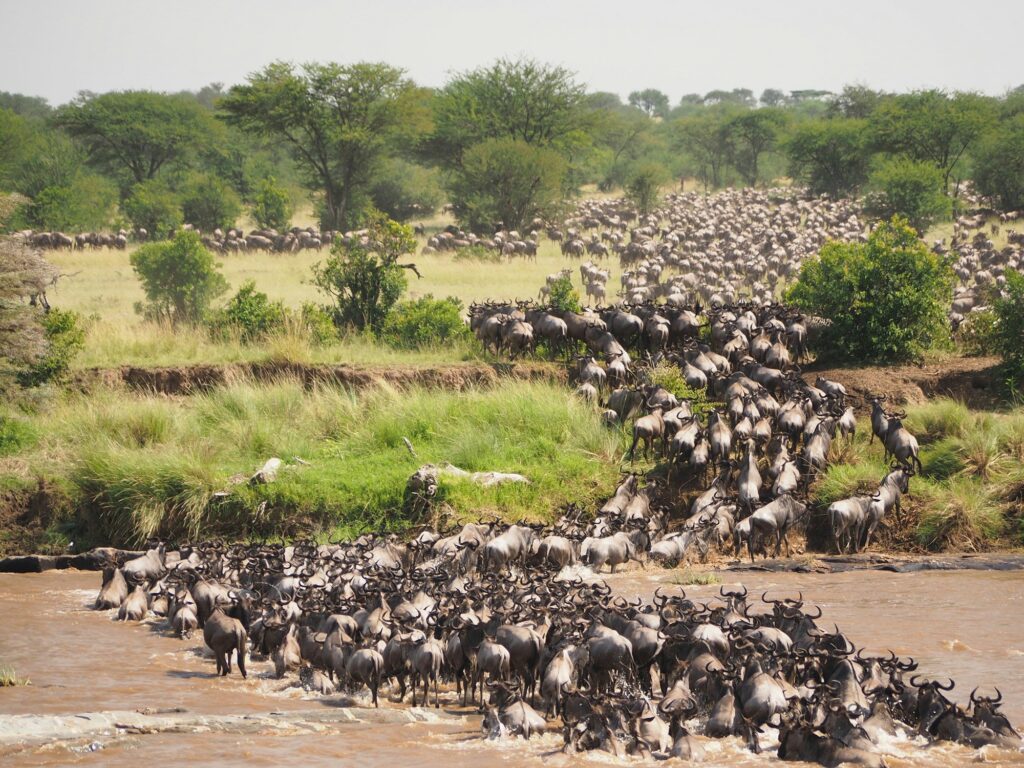
The Mara River crossing in the Masai Mara is most likely to happen between 10 August and 20 September 2026, though no date is ever guaranteed. Mega-herds are expected to settle in from the third week of July, and one specialist operator narrows the window further still, to 22 August-7 September. It’s rainfall and river levels that trigger the crossings, not a fixed calendar. Pixidia recommends booking a stay of at least 4 nights, with 3 to 5 days of flex either side of these dates.
Every year between July and October, close to two million wildebeest, zebras and gazelles cross the Mara River at the peak of a cycle that covers around 800 kilometres through Kenya and Tanzania. For 2026, specialists on the ground put the peak crossing window between mid-August and late September, though nobody can ever promise an exact date. This guide covers this year’s forecast window, the most reliable viewing spots in the Masai Mara, what a safari like this really costs, and the very real tensions now surrounding this seventh natural wonder of the world.
1. The Great Migration: A Cycle With No Beginning or End
A Circular Movement, Not a Fixed Annual Event
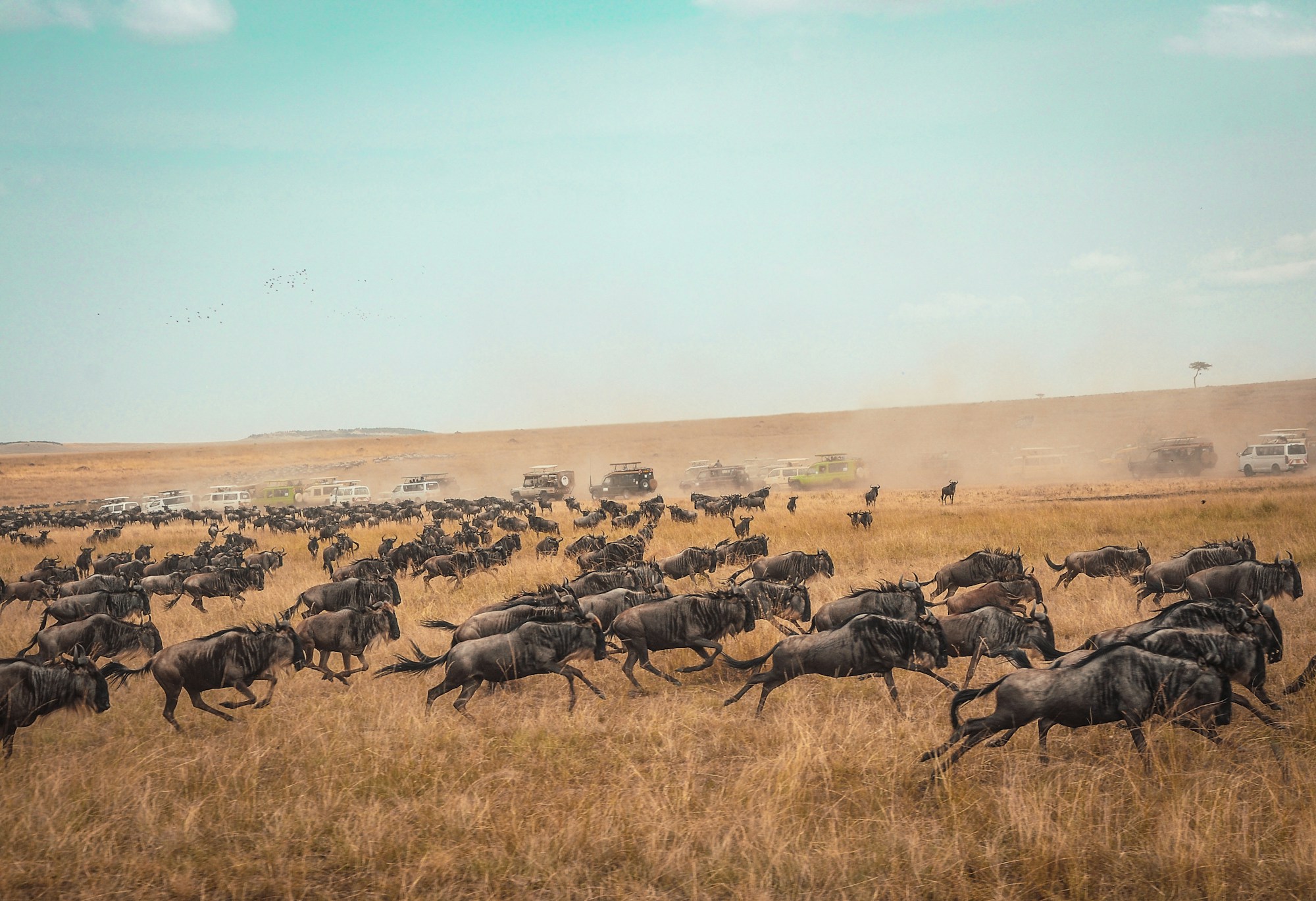
The Great Migration isn’t a there-and-back trip, it’s a permanent circular movement: every year, wildebeest, zebras and Thomson’s gazelles cover around 800 kilometres through the Serengeti-Mara ecosystem, straddling Kenya and Tanzania, with no calendar start or finish. According to National Geographic, more than a million wildebeest follow this circuit, which adds up to close to 2,000 kilometres over a full year once secondary movements are included. The phenomenon was named the seventh natural wonder of the world at a ceremony in Arusha, Tanzania, on 11 February 2013.
Beyond the spectacle, the herds play a precise ecological role: by grazing down the tall grass, wildebeest make the fresh shoots underneath more accessible to the zebras and gazelles following behind. Each year, the migration also costs the lives of around 250,000 wildebeest and 30,000 zebras (predation, drowning, exhaustion), according to Africa Geographic, a cycle of mortality that goes on to feed the Mara River ecosystem for decades afterwards.
Highlights
- A year-round movement: the Mara River crossing is just the high point (July-October) of a cycle that never really stops
- More than 2 million animals in total, led by blue wildebeest, alongside zebras and Thomson’s gazelles
- Internationally recognised: seventh natural wonder of the world since 2013
2. When to See the Migration in 2026: The Month-by-Month Calendar
Herd positions follow a fairly regular cycle from one year to the next, even if the exact dates shift with rainfall. Here’s where the migration is generally found, month by month:
| Timing | Herd location | What’s happening |
|---|---|---|
| January-March | Southern Serengeti plains (Ndutu, Naabi Hill) | Calving season, up to 8,000 calves a day at the February peak |
| April-May | Central and western Serengeti (Seronera, Moru Kopjes) | « Long rains », the cheapest low season to visit |
| June | Western Serengeti corridor | Herds gather, first Grumeti River crossings |
| July | Kenya-Tanzania border | First Sand River crossings, sporadic arrivals in the Mara |
| Late July-August | Masai Mara (Kenya) | Mega-herds settled in, peak Mara River crossings and peak visitor numbers |
| September | Masai Mara (Kenya) | Crossings still frequent, noticeably fewer vehicles than in August |
| October-early November | Masai Mara, with return crossings | Good predator activity, visitor numbers drop off sharply |
| November | Heading back south | « Short rains », herds gradually leave Kenya |
| December | Southern Serengeti plains | Final gathering before the next calving season |
For 2026 specifically, according to the 2026 Masai Mara Migration Forecast, mega-herds are expected to be fully settled in the Mara from the third week of July, with the most likely peak window falling between 10 August and 20 September. One specialist operator narrows that forecast further still, to 22 August-7 September, and recommends keeping 3 to 5 days of flex either side. According to the Masai Mara Migration Calendar 2026, the 2022, 2023 and 2025 seasons all saw a shift of one to two weeks against the historical average (never more), driven by late or irregular rainfall.
One regional factor could weigh on the 2026 calendar: after a La Niña that lingered into early in the year, the World Meteorological Organization has been flagging a growing chance of El Niño’s return between June and August since May 2026, with a risk of below-normal rainfall in western Kenya over the June-September period. Conversely, the October-December short rains could turn out heavier than usual (a positive Indian Ocean Dipole). These factors could push crossings a few days to a few weeks earlier or later, without changing the broader July-October window.
3. Masai Mara or Serengeti: Which Should You Choose?
Two Windows on the Same Ecosystem
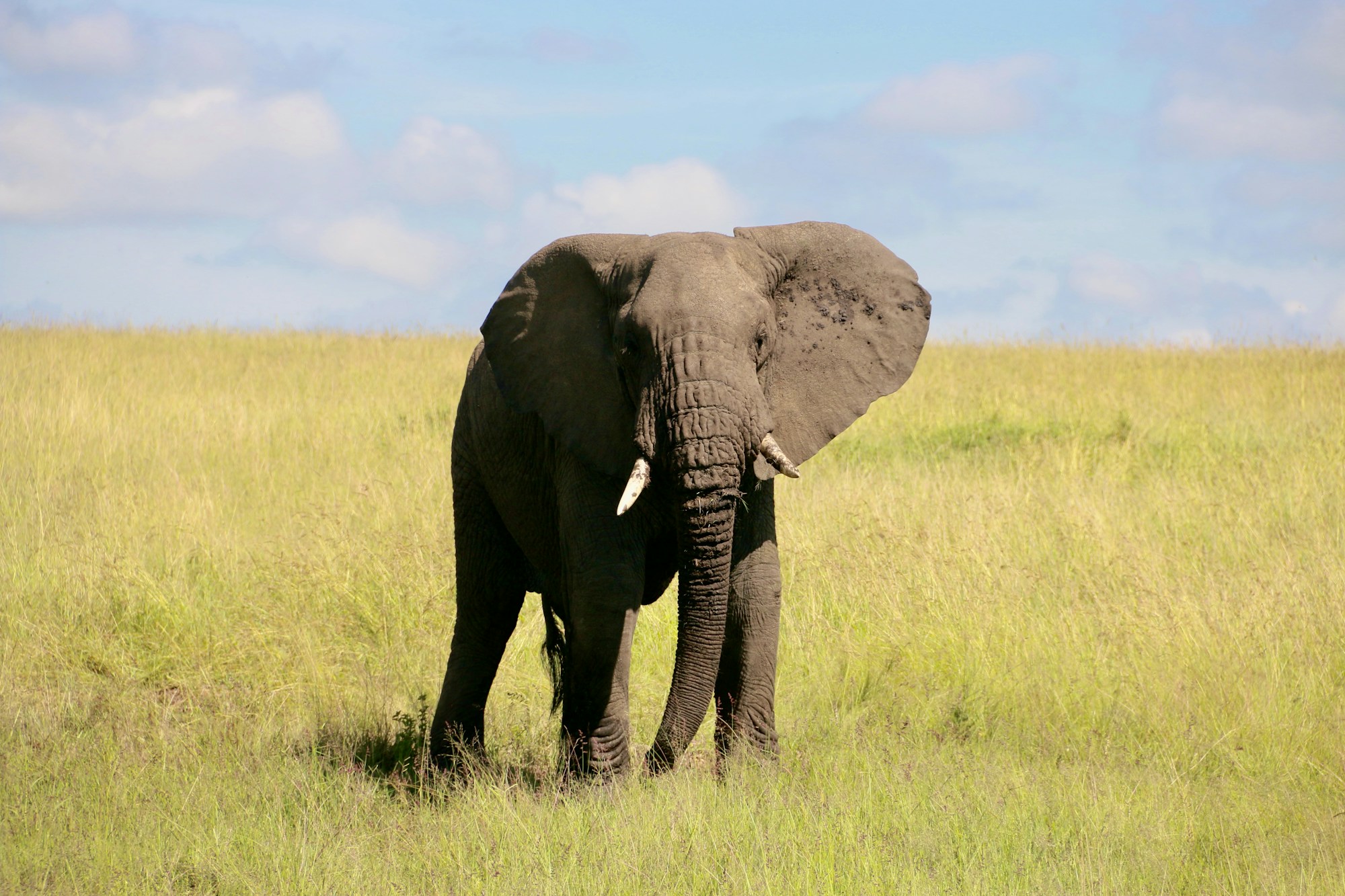
The Masai Mara is really just the northern tip of one single, shared cross-border ecosystem: at 1,510km² in Kenya’s Narok County, it accounts for only around 3% of the combined area with the Tanzanian Serengeti (nearly 14,750km²), according to Wikipedia and African Budget Safaris. That imbalance has a real practical effect: the same number of animals end up squeezed onto a much smaller area on the Kenyan side during peak season, which makes for a denser spectacle, but also more vehicles in the same spot.
The Masai Mara splits into two distinct management zones: the Mara Triangle to the west, run by the Mara Conservancy and known for tighter rules, and the Narok sector to the east, more developed for accommodation and generally busier. Around the reserve sit 23 to 24 private conservancies, including the « Big Four » (Mara North, Naboisho, Ol Kinyei, Olare Motorogi), which offer a less crowded experience on land leased from Maasai families.
Kenya offers easier access (short flights from Nairobi, a lighter-touch eTA process) and more predictable herd locations between July and October. Tanzania hosts the migration for much of the year, with crossing points just as dramatic on the northern Serengeti side (Kogatende, Lamai Wedge) and noticeably fewer vehicles. For a first migration safari, Pixidia leans towards Kenya for the logistics; our full Tanzania vs Kenya guide breaks down the trade-offs between the two.
Highlights
- Mara Triangle (west): the wildest sector, with the strictest vehicle-density rules
- 23-24 private conservancies on the fringes, including the « Big Four »
- A direct border crossing at Isebania/Sirari lets you combine the Masai Mara and the Serengeti without doubling back through Nairobi
4. Where to Watch the Crossing: Rivers and Crossing Points
Three Rivers, in a Precise Order
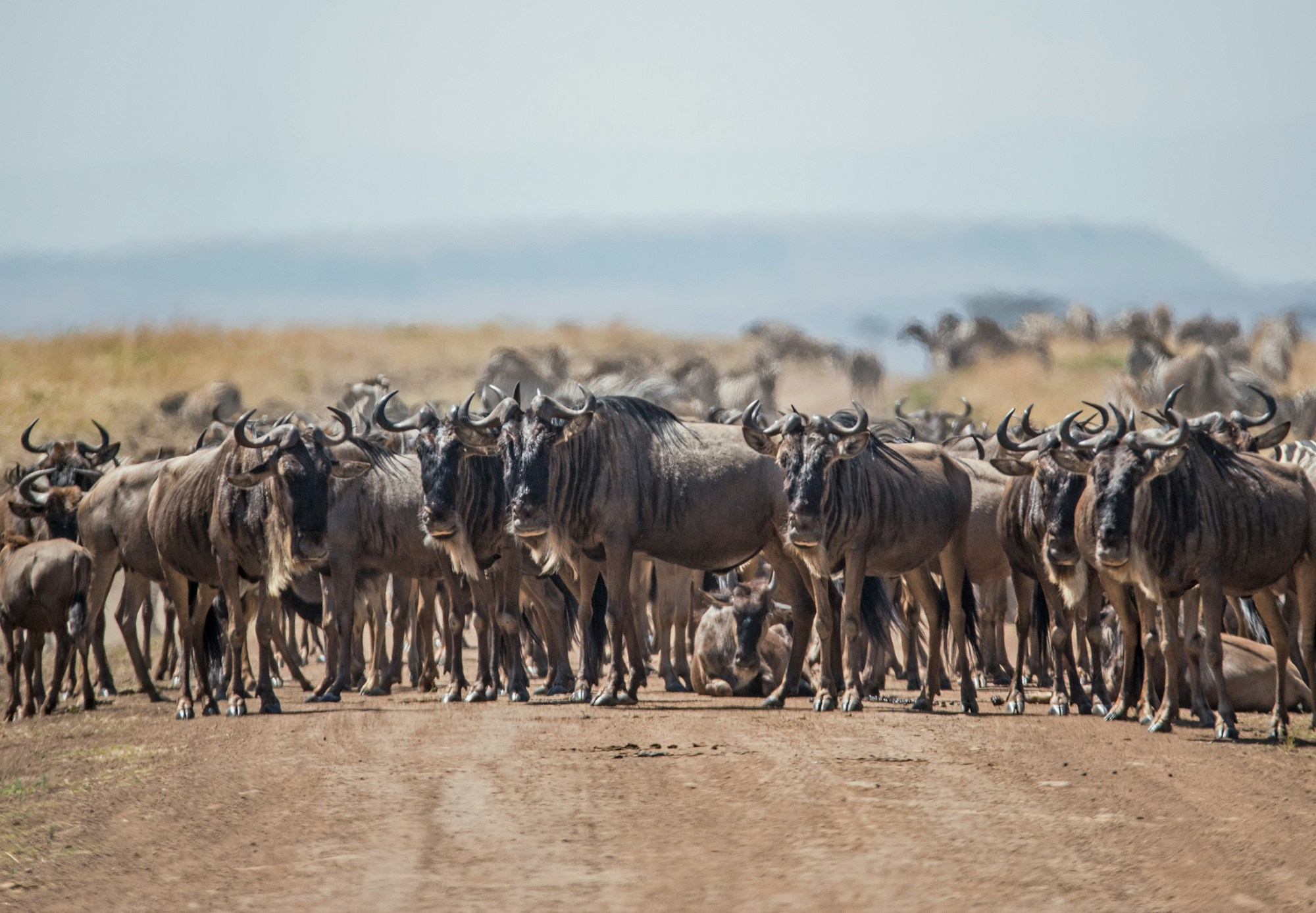
The herds enter Kenya via three rivers, always in the same order. The shallow Sand River hosts the first crossings from July onwards, a warm-up run, not especially dramatic. Next comes the Talek River, a secondary tributary. The Mara River, finally, is the only one that delivers the vertigo-inducing leaps and Nile crocodile confrontations that built the phenomenon’s worldwide reputation, according to Mara Triangle Safaris.
On the Mara Triangle side, the best-known spots are Lookout Hill, a vantage point that lets you watch up to three crossings at once, and Purungat Bridge, usually quieter in the morning. In the Narok sector, the numbered « crossing points » 1 to 4 draw most of the crowds. On the Tanzanian side, the Kogatende area and the more remote Lamai Wedge share around a dozen crossing points that guides rate as more dramatic, if harder to reach.
There’s no fixed schedule: crossings can happen at any moment (some visitors wait four full days without seeing a single one), even if the 10am-3pm window statistically accounts for the most activity. Photographers recommend a 400-600mm telephoto lens, a shutter speed of at least 1/2000s and a beanbag to steady the camera on the vehicle’s window ledge, a classic tripod is impractical inside a 4×4.
Highlights
- Lookout Hill (Mara Triangle): up to three crossing points visible from a single vantage point
- Private conservancies allow off-road driving, a real advantage for following herd movements in real time
- 2025 rules: a maximum of 5 vehicles per sighting, and a minimum distance of 100m at crossing points
5. Budget, Flights and Paperwork: Planning Your Safari
From London, both British Airways and Kenya Airways fly direct to Nairobi on wide-body aircraft, around 8 hours 40 minutes in the air, with return fares typically running £550-750 (expect the top of that range, or higher, if you’re flying during the August migration peak). Once you land, it’s on to the Masai Mara: by road, allow 225-275km and 5.5-6.5 hours from Nairobi depending on which gate you’re heading for (tarmac as far as Narok, then dirt track); by light aircraft, flights from Nairobi’s Wilson Airport (not to be confused with Jomo Kenyatta International) take just 45-48 minutes, for $200-550 depending on the season, according to Nairobi to Masai Mara Drive Time and Flights to Masai Mara.
On paperwork, Kenya scrapped the old-style visa on 1 January 2024 in favour of a $30 eTA, valid for 90 days and only available through the official etakenya.go.ke portal (steer clear of third-party sites charging extra fees), according to Kenya’s Directorate of Immigration Services. It’s worth applying a few days ahead of your flight rather than leaving it to the last minute. The reserve’s official entry fee, Narok sector, runs to $100 per non-resident adult from January to June, then $200 from July to December (valid for 12 hours); some sources quote all-inclusive packages of up to $400, which shouldn’t be confused with this straightforward daily rate. Always check the current fee schedule before booking, according to Masai Mara National Reserve.
Malaria is present year-round across the safari areas: prophylaxis is recommended, along with a travel clinic appointment 6-8 weeks before you leave. Yellow fever isn’t required for travellers arriving directly from the UK. On safety, neither the UK Foreign, Commonwealth & Development Office (FCDO) nor the US State Department lists the standard safari circuit, Masai Mara included, as an area to avoid: the genuinely high-risk regions (the Somali border area, a handful of northeastern counties) sit well outside the tourist circuit. Your GHIC or EHIC card is no use here either, Kenya isn’t part of that scheme at all, and a medical evacuation from a remote Masai Mara conservancy to a Nairobi hospital can run to $15,000-40,000. To cover the risks specific to a bush safari, including medical evacuation, see our 2026 travel insurance comparison.
Your budget will vary a lot depending on the level of comfort you’re after:
| Budget level | Accommodation | Typical budget / night |
|---|---|---|
| Budget | Buffer-zone camp (Talek, Sekenani gates) | $45-100 |
| Mid-range | Comfortable camp or lodge | $150-400 |
| Honeymoon/luxury | Riverside lodge | $400 to over $1,000 |
A three-night, high-season, fully inclusive package booked directly with a local ground operator starts from around $3,000-3,150 per person. Book instead through a UK-based Africa specialist (names like Rainbow Tours and Audley Travel both cover the Mara), and a door-to-door trip, flights, transfers, park fees and full board, typically lands somewhere around £2,000-3,200 per person for a 4-day mid-range programme; the extra cost buys you ABTA/ATOL financial protection, so you’re covered if the operator goes under. Budget $450-800 per person for a sunrise hot air balloon over the herds too, best booked directly through your camp, as prices vary a lot from one operator to the next.
The most popular add-on is still a beach extension in Zanzibar (3-4 days either side), reachable on a direct flight from Nairobi: our complete Zanzibar guide covers beaches, spices and Swahili culture for extending the trip. Amboseli (elephants, with Kilimanjaro as a backdrop) and a stop in Nairobi (the Giraffe Centre, the national park) are other common combinations to bookend your stay.
- eTA required ($30, only via etakenya.go.ke)
- 4×4 vehicles mandatory inside the reserve since June 2024
- Stay a minimum of 3-4 nights to maximise your chances of a sighting
6. Overtourism and Migration Corridors: An Ongoing Controversy
The migration’s popularity has a downside, documented since 2025 by guides, campaign groups and now the Kenyan courts themselves.
Vehicle Queues That Worry Even the Guides
In July 2025, veteran guide Nick Kleer personally counted 156 vehicles at a single crossing point on the Tanzanian side, well above what he considers a reasonable capacity of around ten, according to AFAR. « We counted 156 vehicles at one crossing. That’s not just unsustainable—it’s dangerous, » he warned, fearing the whole system could eventually collapse without proper regulation. Authorities responded by tightening the rules in 2025: a maximum of five vehicles per sighting, ten minutes beyond that, a minimum distance raised to 100 metres at crossing points (against 20-25m for other wildlife sightings), and a fine of 10,000 KES, around $77.50, for breaches, according to Xinhua. The phenomenon isn’t unique to the African savannah, either: more and more iconic tourist sites are now introducing quotas or mandatory bookings to protect the experience and the environment, as our round-up of European sites where booking is already mandatory shows.
Three Luxury Camps Named in a New Legal Complaint (July 2026)
The reserve’s 2023-2032 Management Plan, adopted by Narok County in February 2023, bans any new tourist accommodation being built inside the reserve until 2032. The Ritz-Carlton Masai Mara Safari Camp, which opened despite that moratorium on a bend of the Sand River, was first the target of a complaint from Maasai activist Meitamei Olol Dapash in August 2025, withdrawn in December, then dismissed on 26 February 2026 by the Narok Environment and Land Court, on purely procedural grounds: the ecological substance of the case was never actually ruled on, according to Mongabay.
The case resurfaced on 2 July 2026: a wider coalition, bringing together the East Africa Law Society, Natural Justice, JustAct and the African Centre for Peace and Human Rights, filed a new petition, this time targeting three properties: the Ritz-Carlton, Sala’s Camp and the Elewana Sand River Masai Mara, all accused of having been built inside critical migration corridors, according to allAfrica. The petitioners are calling for a five-judge bench and a freeze on any new development. The case is ongoing; as a matter of editorial caution, Pixidia isn’t recommending any of these three properties until the matter is settled on its merits.
How Many Wildebeest Are Actually Left? An Unsettled Scientific Debate
The classic estimate of 1.3 million wildebeest, based on aerial counts, hasn’t changed since the 1970s. A study published on 9 September 2025 in PNAS Nexus by an Oxford University team (Isla Duporge and co-authors) cross-checked two deep-learning models against satellite imagery from August 2022 and 2023, detecting between 324,000 and 533,000 individuals depending on the year, roughly half the historical estimate, according to Mongabay. Duporge is careful not to claim a definitive figure, though: « We’re not trying to say that there’s 700,000 that have died or that they’re missing. We were surprised to find so many fewer compared to findings from aerial surveys, » pointing to a possible shift in migration routes rather than a population crash. Other scientists, among them ecologist Colin Torney of the University of Glasgow, have pushed back, arguing the method hasn’t been checked against known counts on the ground. The debate remains open: Pixidia isn’t going to settle it in the scientists’ place either.
Climate change adds a medium-term unknown: regional temperatures have already risen by more than 1.5°C, and researchers consider a 20-30% decline in the wildebeest population possible by 2050 if rainfall patterns keep becoming more erratic.
7. Conservancies, Maasai Culture and Biodiversity
A Community Conservation Model
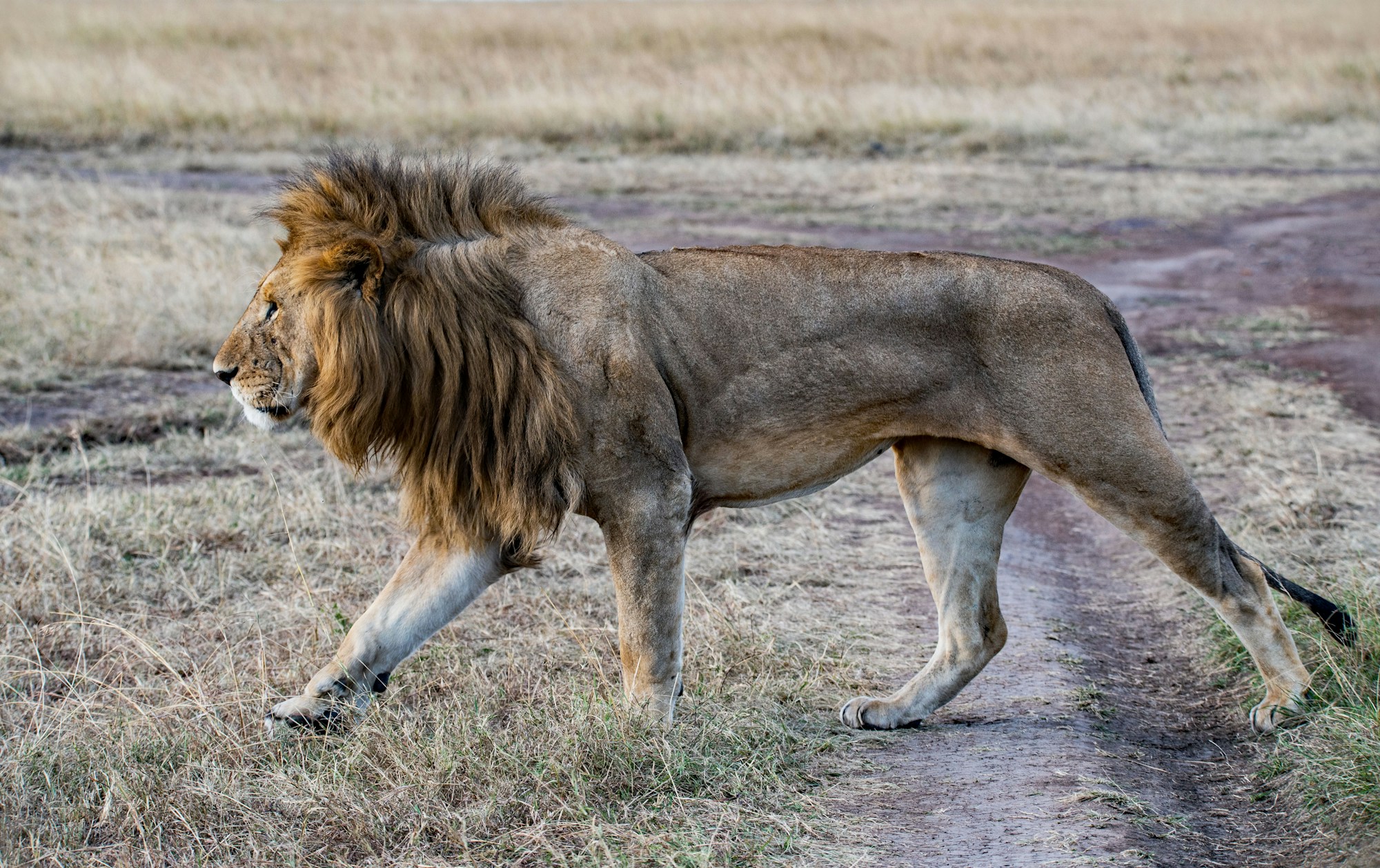
Around the reserve, 23 to 24 private conservancies make up what specialists call the « Greater Mara Ecosystem »: more than 366,000 hectares of protected land, leased from thousands of Maasai families who own it, typically on 15-year terms paid regardless of actual visitor numbers, a genuine economic safety net, according to the Maasai Mara Wildlife Conservancies Association. The « Big Four », Mara North, Mara Naboisho (145km², with more than 70 identified lions), Ol Kinyei (which specialises in walking safaris) and Olare Motorogi (one of the highest lion densities in East Africa), are regularly held up as a model for community-based conservation.
Beyond the wildebeest, the ecosystem is home to more than 500 bird species, around sixty of them birds of prey, plus Africa’s highest density of big cats: 850-900 lions and 250-300 cheetahs, according to Kenya Wild Parks. Black rhinos, on the other hand, remain a fragile presence: only 25-35 individuals survive in the Masai Mara today, up from a low of 15 at the depths of the 1980s poaching crisis, a slow but genuine recovery.
The conservancies lean heavily on the « Simba Scouts », Maasai warriors trained to track lions, and on a compensation scheme for living alongside predators. Another little-known quirk: while the Tanzanian Serengeti is already a UNESCO World Heritage Site, the Masai Mara has only sat on the tentative list since 2010, an administrative gap between two halves of the same ecosystem that takes nothing away from its worldwide fame.
Highlights
- Big Four: Mara North, Naboisho, Ol Kinyei, Olare Motorogi
- Off-road driving and night safaris are allowed in the conservancies, both banned inside the reserve itself
- « Simba Scouts » programme: community-based lion tracking by trained Maasai warriors
Practical Information for Your Safari
Stay connected the moment you land in Nairobi, no swapping SIM cards or hunting for a local network out in the bush.
Local data, instant activationCover built for bush safaris: medical evacuation, emergency care and trip cancellation, none of which your GHIC or NHS cover extends to in Kenya.
Nomad Insurance from $56 / 4 weeksFrequently Asked Questions
What’s the exact date of the Mara River crossing in 2026?
There isn’t one. Specialist forecasters put the peak window between 10 August and 20 September 2026, with mega-herds settling in from the third week of July. One operator narrows that estimate further, to 22 August-7 September. Only rainfall and river levels actually trigger the crossings. Source: 2026 Masai Mara Migration Forecast.
Should I go to Kenya or Tanzania to see the migration?
Kenya (the Masai Mara) offers easier access and good predictability between July and October. Tanzania (the Serengeti) hosts the migration for almost the whole year, with smaller crowds but trickier access. For a first migration safari, Pixidia leans towards Kenya. Source: Jacada Travel.
Is a crossing guaranteed if I book during peak season?
No, no serious tour operator guarantees one. Some visitors wait four full days without seeing a single crossing, others see several in one day. Staying at least 3-4 nights maximises your chances of catching one.
How many wildebeest actually take part in the migration?
The classic estimate, based on aerial counts, is 1.3 million, unchanged since the 1970s. An AI-based study published in September 2025 puts the figure below 600,000, feeding into a scientific debate that remains unresolved. Source: Mongabay.
What budget should I plan for a migration safari in the Masai Mara?
Budget $45-100 a night for a modest camp, and over $1,000 for a luxury riverside lodge. A three-night, high-season, fully inclusive package starts from around $3,000 per person booked directly with a local operator; UK-based Africa specialists with ABTA/ATOL protection typically price a full door-to-door trip from around £2,000 per person.
Is tourism harming the migration?
It’s a genuine debate. As many as 156 vehicles were counted at a single crossing point in 2025, and a petition filed on 2 July 2026 targets three luxury camps accused of blocking migration corridors despite an official moratorium running until 2032. Stricter rules (vehicle quotas, minimum distances, fines) were introduced in 2025 to limit the impact. Source: allAfrica.
Sources
- 2026 Masai Mara Migration Forecast: forecasts and the 2026 peak window
- Masai Mara Migration Calendar 2026: month-by-month calendar and historical shifts
- Maasai Mara (Wikipedia): reference figures on the reserve and ecosystem
- Masai Mara National Reserve, Entry Fees: official 2026 fee schedule
- MMNR Management Plan 2023-2032: moratorium on new construction
- allAfrica, 2 July 2026: petition against three luxury camps
- Mongabay, April 2026: court dismissal of the Ritz-Carlton case
- Mongabay, October 2025: satellite and AI study on the wildebeest population
- AFAR: overtourism and vehicle queues at crossing points
- Xinhua, 4 August 2025: 2025 tightening of distance rules
- Directorate of Immigration Services (Kenya): official eTA
- GOV.UK: Kenya travel advice, safety and security
- Maasai Mara Wildlife Conservancies Association: conservancies and the community model
- Jacada Travel: Kenya vs Tanzania comparison
- NHSBSA: overseas healthcare, where your UK GHIC/EHIC is valid
- Mara Triangle Safaris: safari travel insurance, what you need and why
Information verified on 3 July 2026.

Plan your trip with Pixidia
Pixidia learns how you travel and helps you build a trip that truly fits you and everyone coming along.
Open the planner