
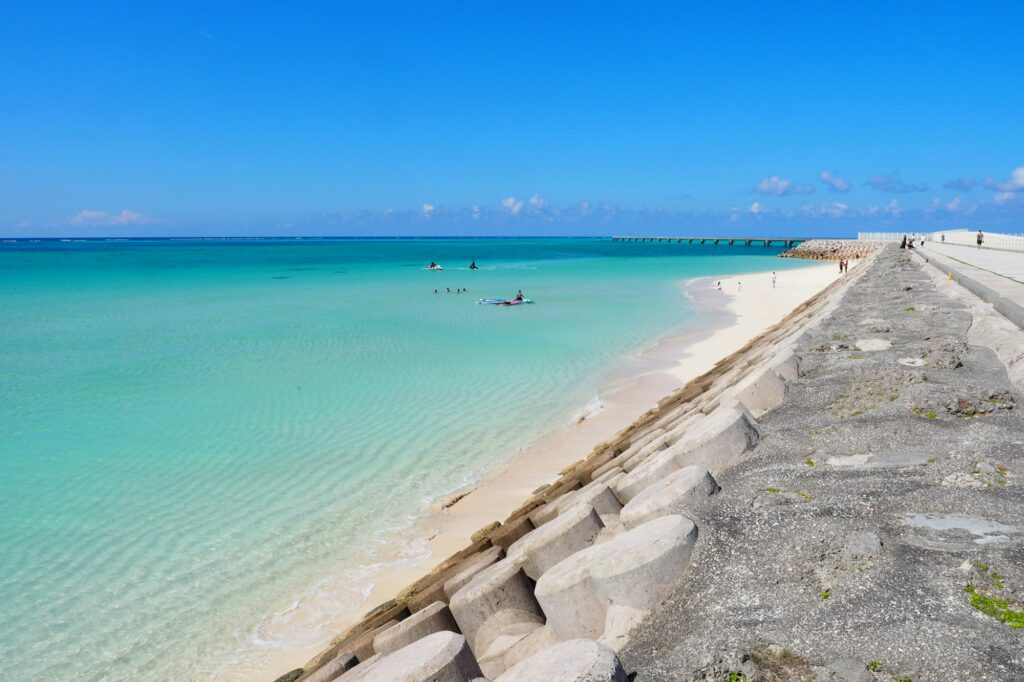
Waters so clear you can see turtles from the beach, coral reefs dubbed « Japan’s Great Barrier Reef, » and not a single skyscraper on the horizon. Miyako-jima (宮古島), located 300 kilometers south of Okinawa, is the perfect antithesis of the main island’s crowded beaches. Here, the sand is white as powdered sugar, the water shifts between turquoise and cobalt, and sugarcane fields stretch all the way to the shore. In 2026, as tourism booms on Okinawa’s main island, Miyako-jima remains a (relatively) well-kept secret — but not for much longer. Here’s why this island deserves a top spot on your travel wishlist.
1. Yonaha Maehama Beach: The Undisputed Queen of Japanese Beaches
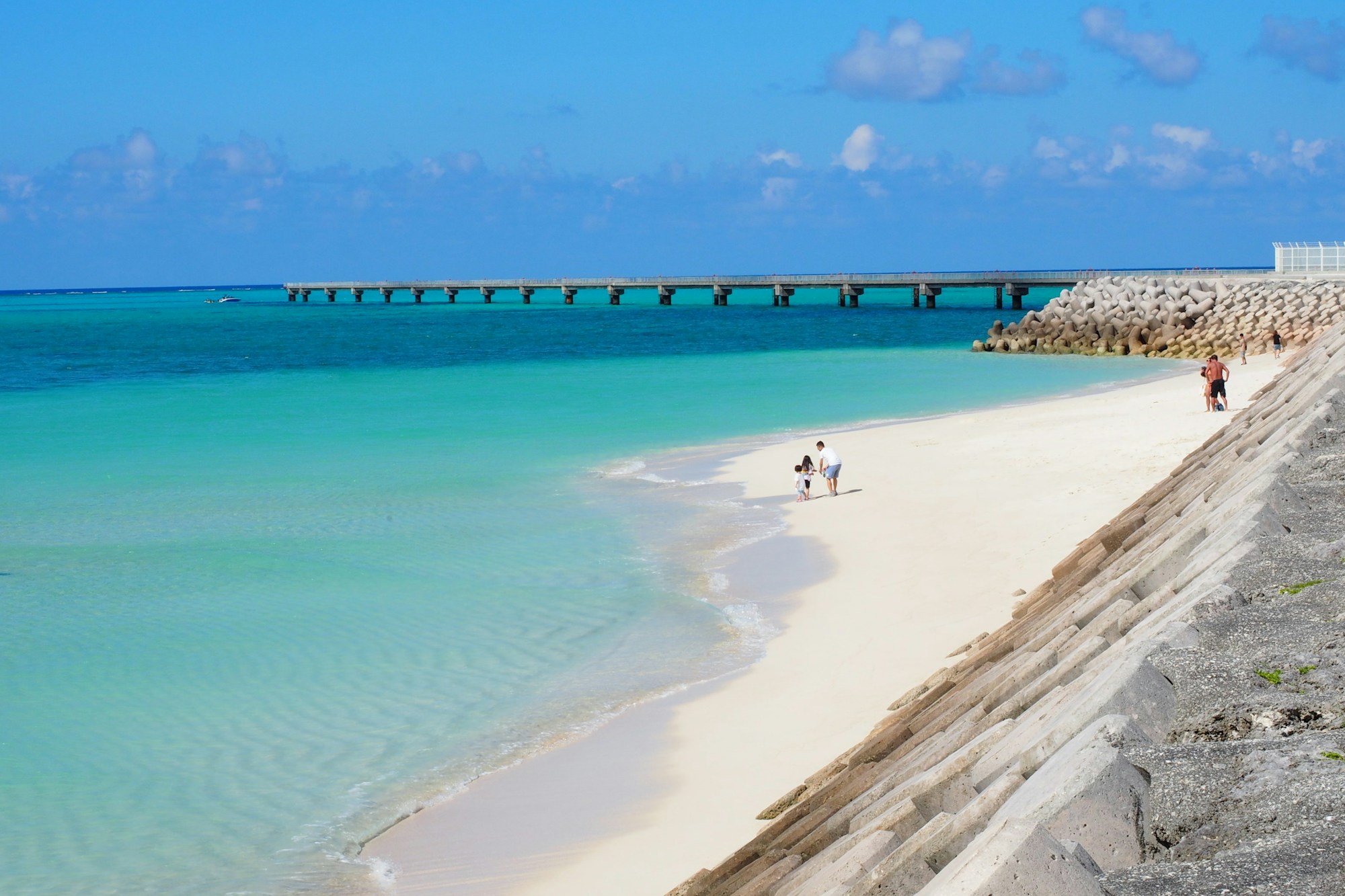
Yonaha Maehama Beach
Seven kilometers of pristine white sand facing a turquoise sea: Yonaha Maehama is regularly ranked among the most beautiful beaches in Japan. Its shallow waters make it a paradise for families, while the steady breezes attract windsurfers from around the world. According to Kanpai Japan, its west coast location makes this beach famous for its spectacular sunsets.
Highlights
- Longest white sand beach in the Miyako Islands (7 km)
- Iconic sunsets facing Kurima Island
- Beach season opening festival every first Sunday of April
- Various water sports: jet skiing, paddleboarding, windsurfing
2. Yoshino Beach: The Sea Turtle Sanctuary
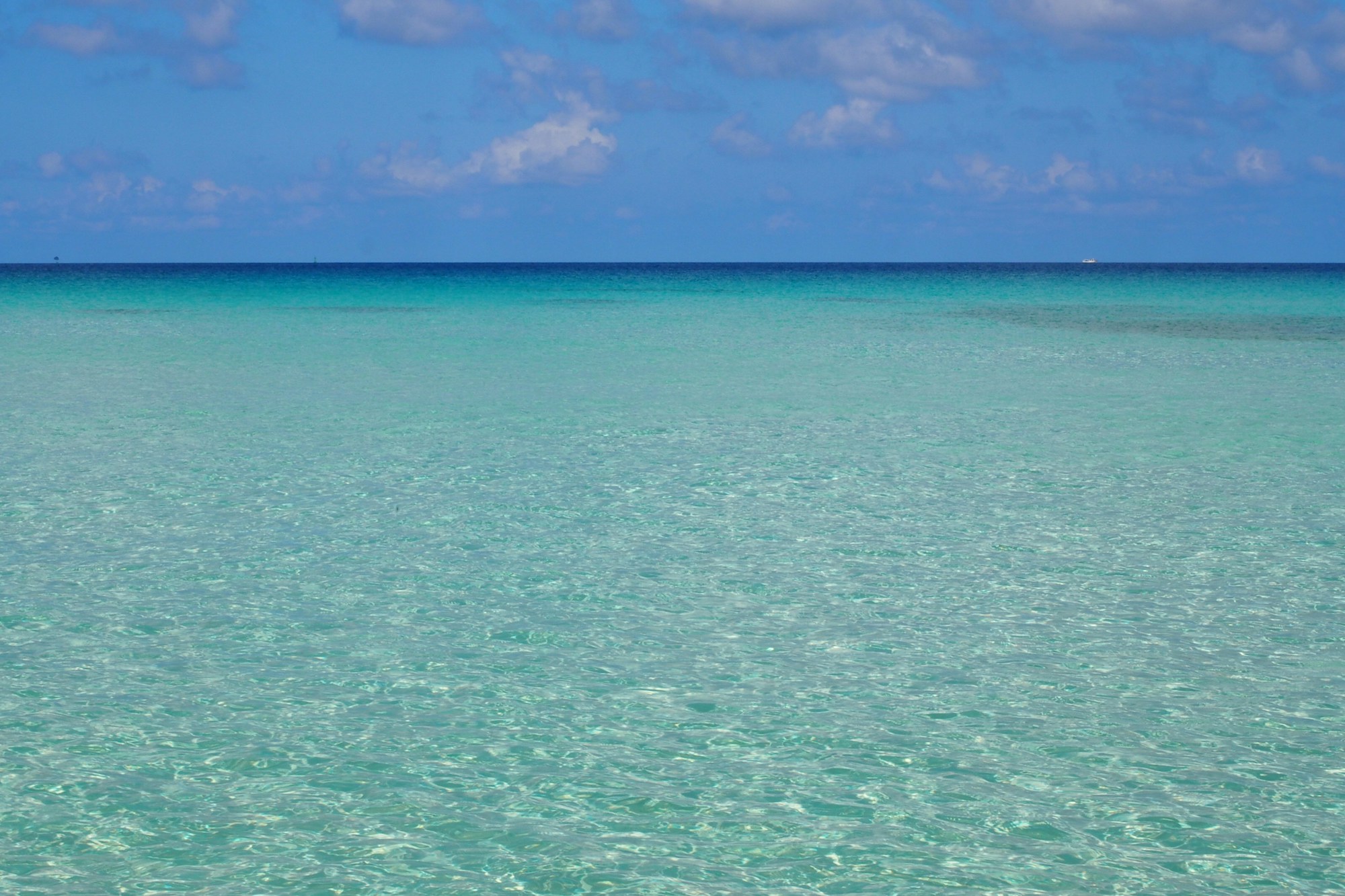
Yoshino Beach & Aragusuku Beach
Yoshino Beach is considered by Japan Guide as the best snorkeling beach on Miyako: swarms of colorful fish surround you as soon as you enter the water, and the coral reef maze begins directly from the sand. At neighboring Aragusuku Beach, according to Metropolis Japan, it’s common to spot dark-shelled turtles peacefully grazing on seagrass near the shore.
Highlights
- Coral reef accessible directly from the beach, no need to swim far out
- High probability of spotting sea turtles at Aragusuku
- No boat needed for exceptional snorkeling
3. Sunayama Beach: The Natural Arch and Sand Dunes
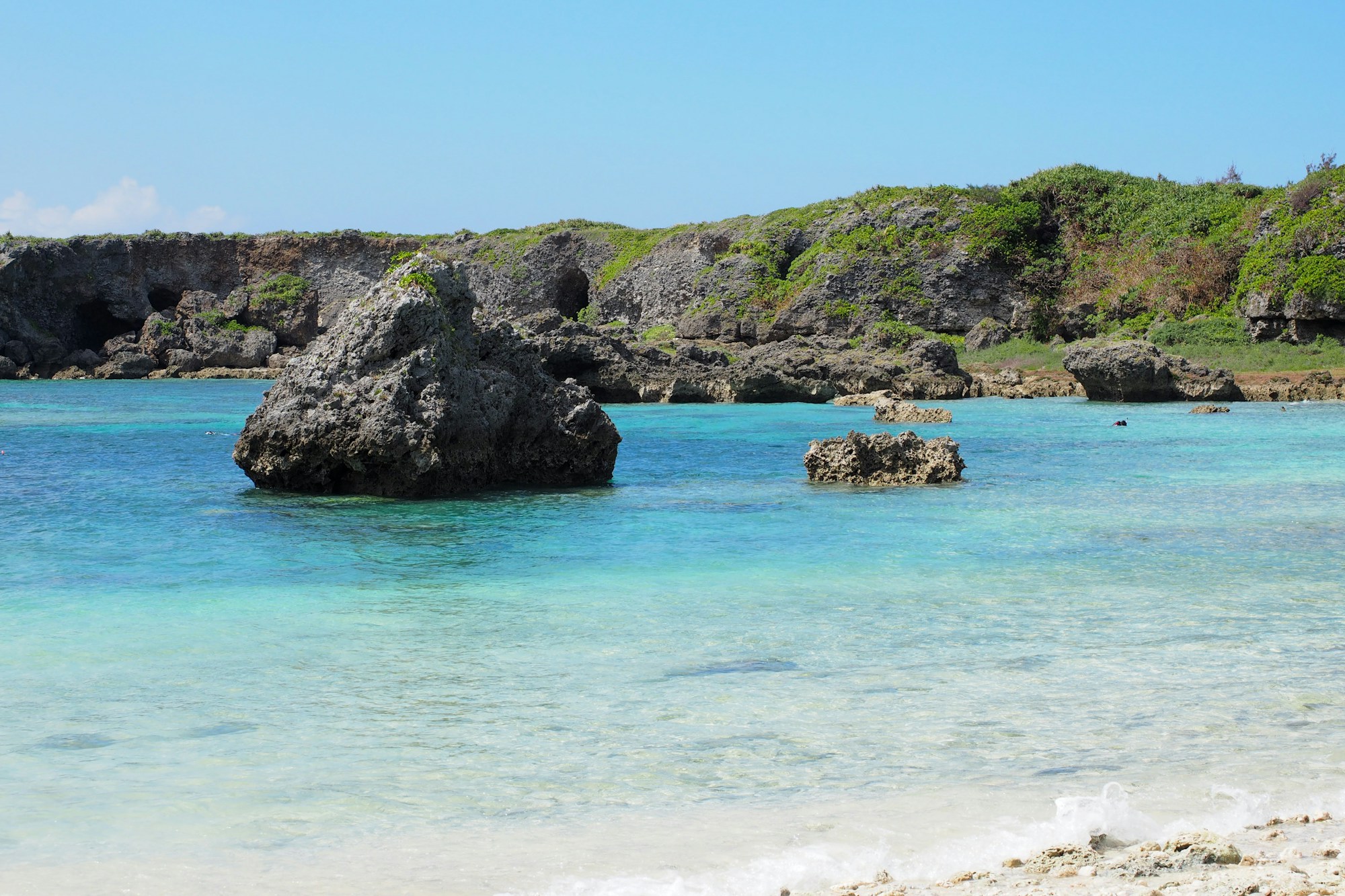
Sunayama Beach
You can’t talk about Miyako-jima without mentioning Sunayama Beach and its spectacular coral rock arch sculpted by the waves over centuries. According to Japan Guide, this compact beach features exceptionally fine white sand and crystal-clear waters. Access is via a short walk over a sand dune from the parking lot — hence its name, « sunayama » literally meaning « sand mountain. »
Highlights
- Natural coral rock arch, formed over millennia
- Ultra-fine white sand, among the softest in the archipelago
- Shallow waters ideal for families with children
- Sunset through the arch: an unmissable photo moment
4. Irabu Island: The Authentic Fishing Village at the End of Japan’s Longest Toll-Free Bridge
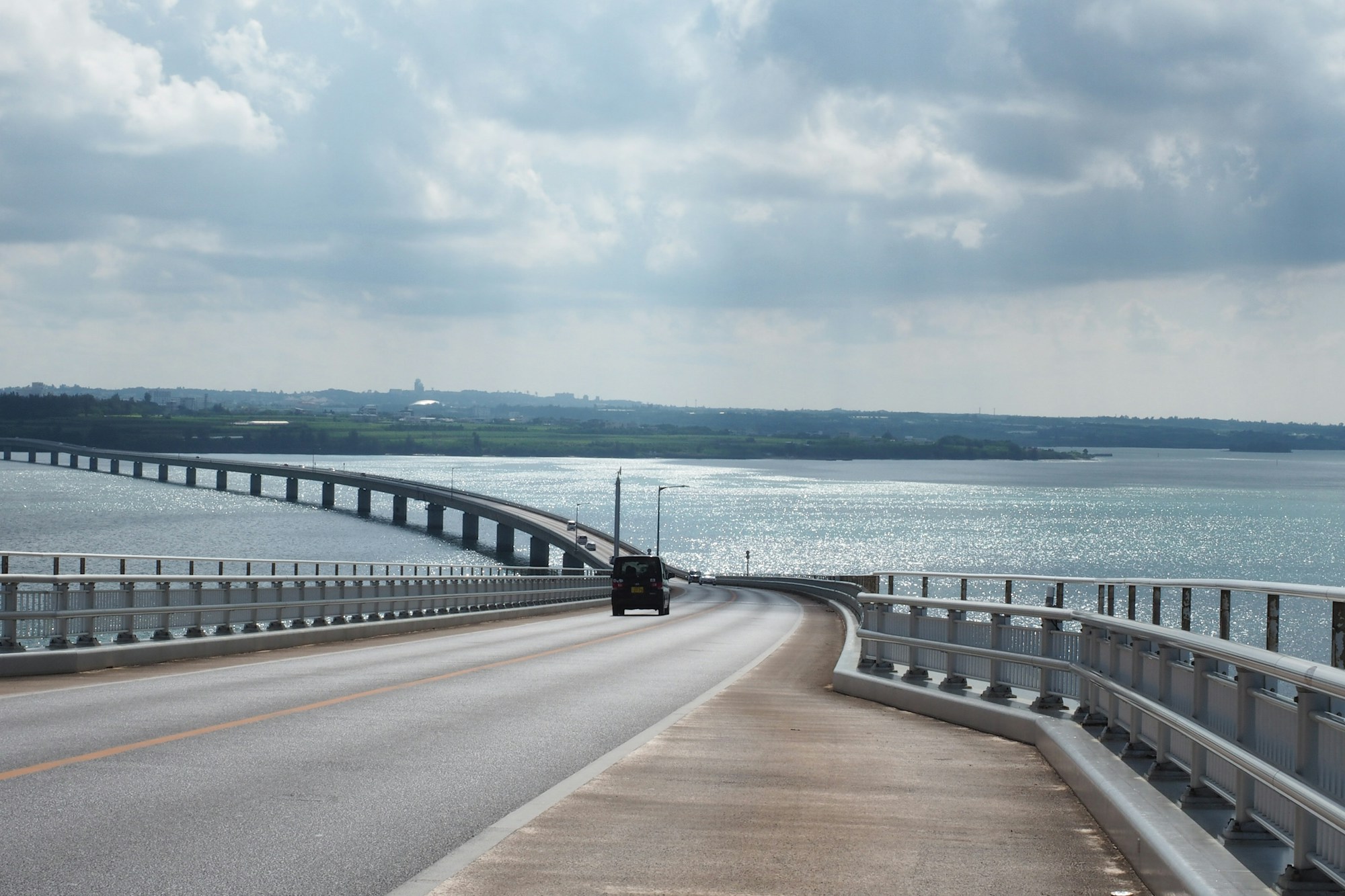
Irabu Island & Irabu-Ohashi Bridge
The Irabu-Ohashi Bridge, at 3,540 meters, is the longest toll-free bridge in Japan. The crossing offers a panoramic view of the « Miyako Blue » ocean, shifting from emerald green to cobalt blue. On the other side, Irabu-jima retains an authentic atmosphere with its lively fishing port and colorful houses, far from the tourist vibe of the main island.
Highlights
- Crossing the Irabu-Ohashi Bridge: feels like driving on the sea
- Hazama Beach: a secret, nearly deserted white sand beach
- Authentic fishing village with fresh fish restaurants
- Happy Air-Raid Shelter: a secret tunnel with an ocean view
5. Shimoji Island & Tori-ike: The Mysterious Pools and Cave Diving
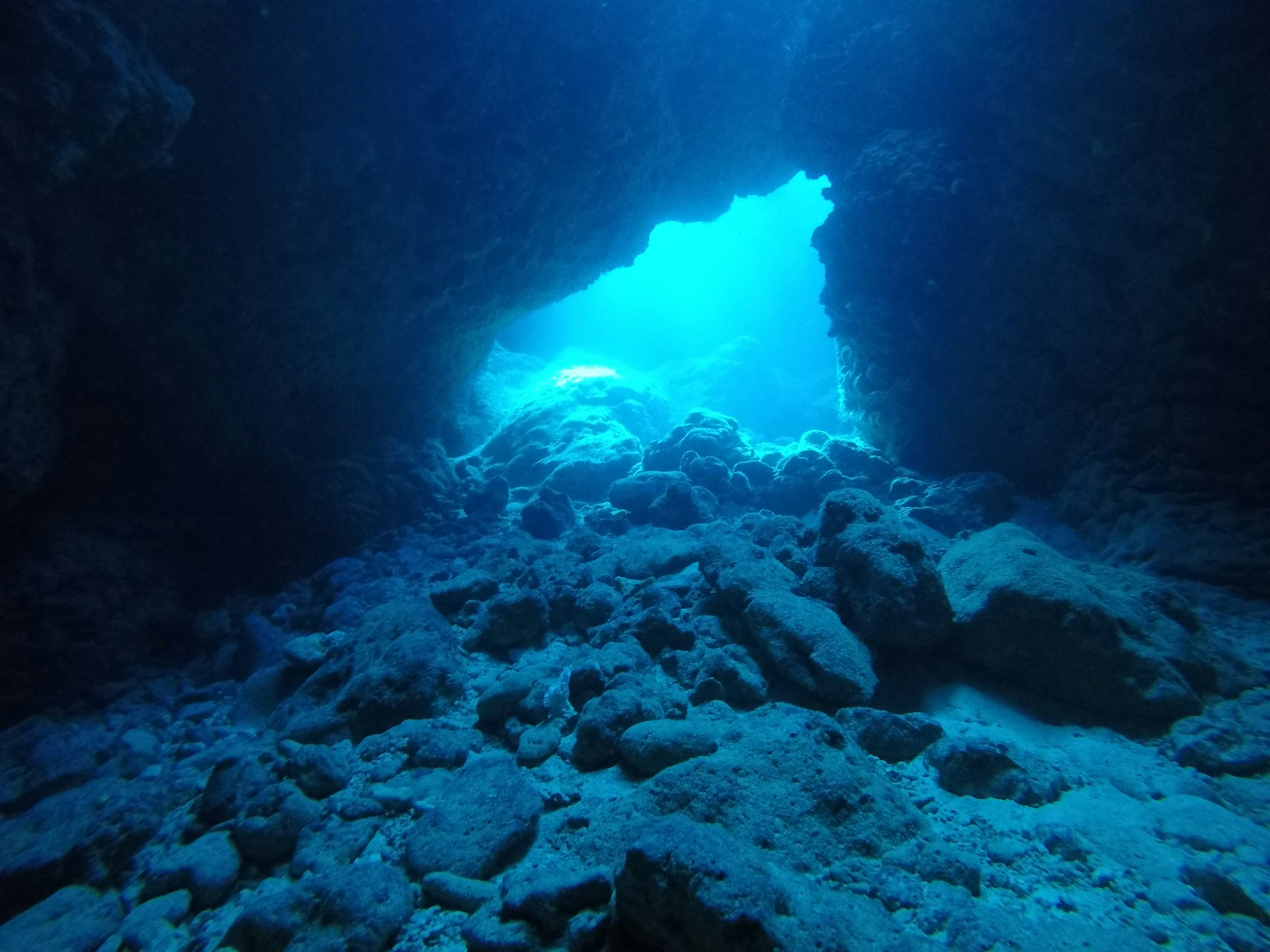
Tori-ike & « Antonio Gaudi » Dive Site
Tori-ike is a mystical site designated as a national natural monument: two ponds connected underground, one of which links to the ocean through a subterranean channel. Their color changes with the tides. Experienced divers can explore the « Antonio Gaudi » site, described by SSI as a network of complex and mysterious arches that appear to have been designed by the famous Catalan architect.
Highlights
- Two ponds connected to the ocean through an underwater tunnel
- « Antonio Gaudi » dive site: spectacular underwater arches
- « Cross Hole »: cave accessible to beginners (5–27 m depth)
- « 17END »: unique spot where planes fly over turquoise water
6. Ikema Island & Yabiji Reef: « Japan’s Great Barrier Reef »
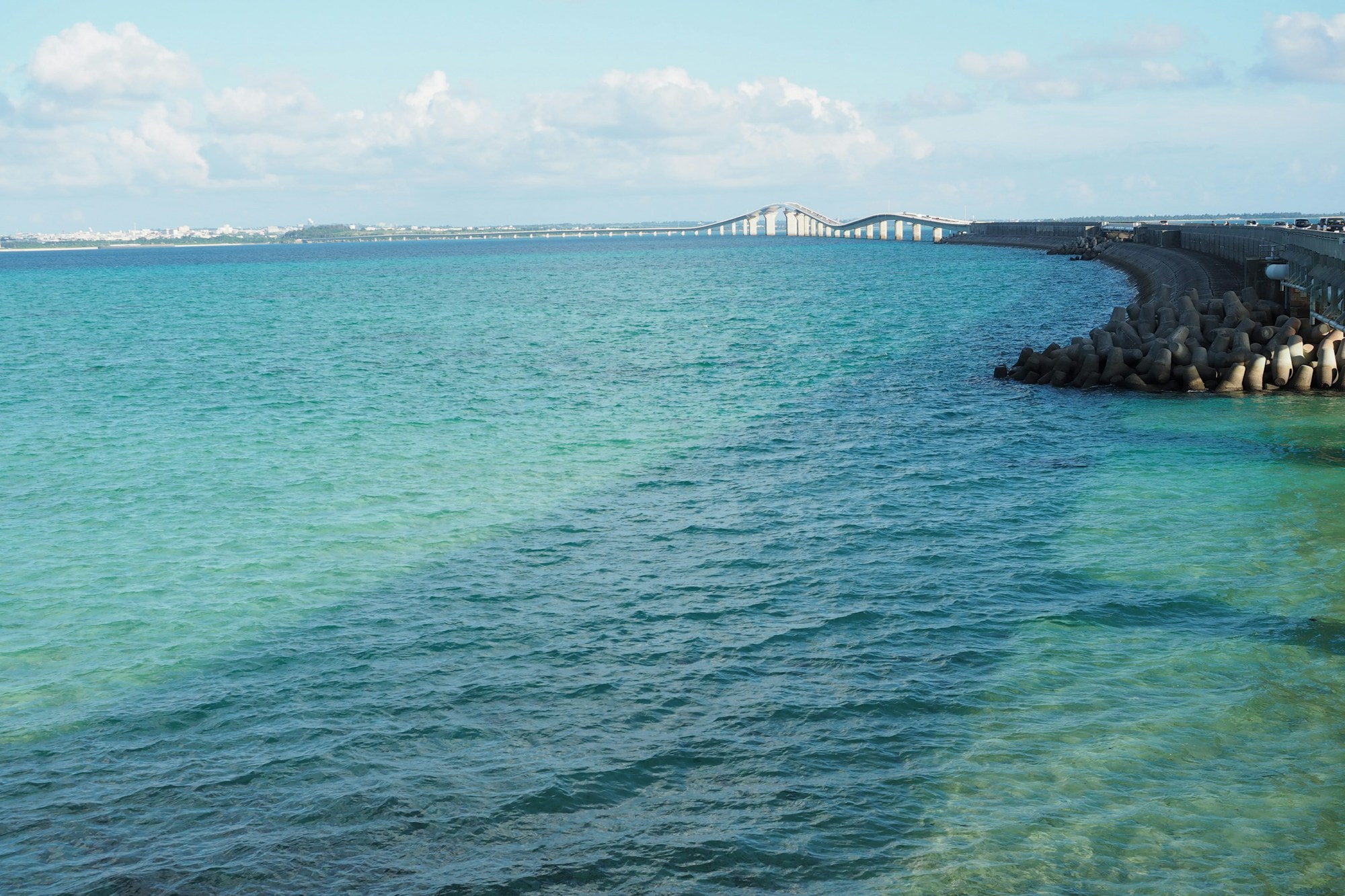
Ikema Island & Yabiji Reef
Yabiji, often called « Japan’s Great Barrier Reef, » is a national natural treasure composed of over 100 atolls spanning 25 km in circumference. During extreme low tides, this reef emerges from the ocean — a rare and breathtaking spectacle. Ikema Island, designated as a wildlife sanctuary according to Rakuten Travel, is the ideal starting point for exploring this monumental reef.
Highlights
- Yabiji: over 100 coral formations, national natural monument
- Chance to observe manta rays from December to March
- Funakusu Beach: private beach atmosphere, nearly deserted
- Ikuzu Beach: « you’ll probably have the beach all to yourself »
7. Cape Higashi-Hennazaki: Wild Beauty at the Edge of the World
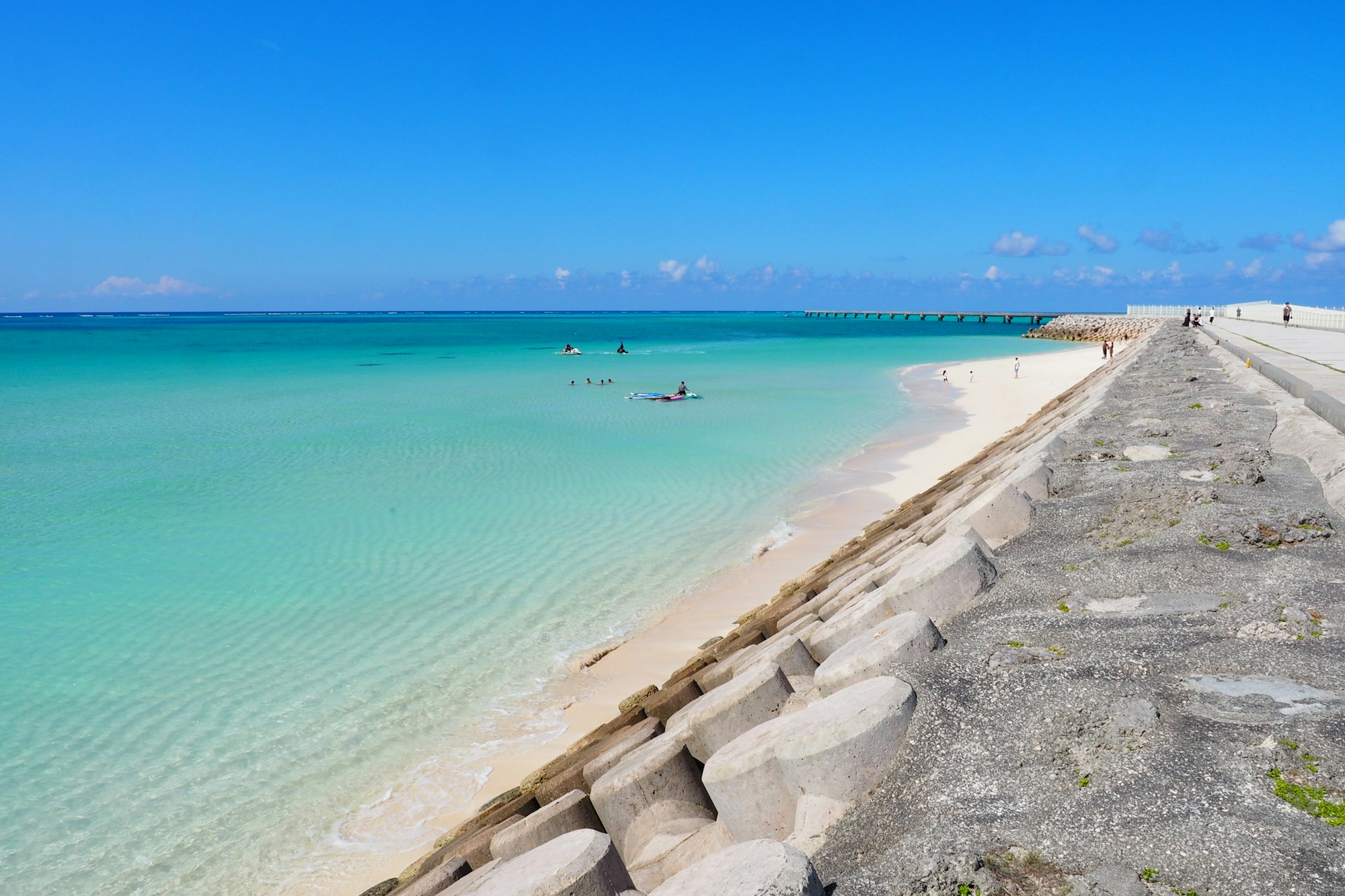
Cape Higashi-Hennazaki (東平安名岬)
Classified as a « National Place of Scenic Beauty, » Cape Higashi-Hennazaki is according to Visit Japan the most beautiful part of the entire island. The two-kilometer walk, from the parking lot to the white lighthouse at the tip, crosses a narrow wind-swept peninsula, with dramatic coral cliffs on both sides and the ocean stretching endlessly.
Highlights
- Spectacular 2 km walk to the lighthouse
- 360° panoramic view of the Pacific Ocean and the East China Sea
- One of the most beautiful sunrises in Japan
- Classified « National Place of Scenic Beauty »
8. Food: Miyako Soba, Island Wagyu and Awamori
The Culinary Scene of Miyako-jima
Miyako-jima’s cuisine blends Okinawan tradition with tropical flavors. Miyako soba, according to Miyako Tour, stands out for its light, clear broth, served with tripe and fish cakes hidden under the noodles — it’s the island’s « soul food. » Miyako wagyu, according to Live Japan, is a variety of Japanese beef raised on the island’s pastures, renowned for its exceptional quality.
Don’t miss
- Koja Soba: historic restaurant open since 1932, according to Seeing Japan
- Mozuku (local seaweed) in soup or salad: a healthy specialty
- Live sanshin and shima-uta performances in Hirara’s izakayas
- Mangoes and dragon fruit at Waido Market (local prices)
9. When to Visit Miyako-jima? The Ideal 2026 Calendar
Seasonal Calendar
The best time depends on your priorities. According to Rakuten Travel, from November to April, the island enjoys milder temperatures with fewer visitors and better accommodation rates. On the other hand, July offers the best conditions for the Yabiji reef and local festivals.
Our Recommendation by Traveler Type
- Divers: Dec.–Mar. for manta rays, Jul.–Sep. for Yabiji
- Families: Nov.–Apr. (fewer crowds, lower rates, no typhoons)
- Budget: Jan.–Feb. (lowest prices, manta rays as a bonus)
- Adventurers: Sep.–Oct. (warm water, post-typhoon transition, few crowds)
Frequently Asked Questions About Miyako-jima
Is Miyako-jima really less crowded than Okinawa?
Yes. According to Visit Japan, while the beaches of Okinawa’s main island are typically packed, this is not the case on Miyako-jima. However, the peak season (July-August) sees a notable increase in domestic Japanese tourists. Favor November to April for a truly peaceful experience.
Are there venomous snakes on Miyako-jima?
No. Unlike other parts of Okinawa, Miyako-jima is free of habu snakes (venomous snakes). This is a notable practical advantage for hikers and families with children.
How do I get to Miyako-jima from abroad?
Fly to Tokyo (around 12 hours from major international hubs), then take a domestic flight from Tokyo-Haneda to Miyako (3h30 direct) or via Naha-Okinawa (55 min from Naha to Miyako). Airlines JAL, ANA and Skymark (low-cost) serve Miyako. Expect around $674 for an international flight to Tokyo and 3,000–8,000 ¥ for the domestic flight to Miyako.
Can you get around Miyako-jima without a car?
With difficulty. According to Visit Japan, the bus network (Miyako Kyoei Bus) covers most of the island but with limited schedules. Renting a car is strongly recommended (4,000–8,000 ¥/day). Alternative: a sightseeing taxi at around 10,000 ¥/day.
Can you see manta rays at Miyako-jima?
Yes, but without guarantee. According to BigHoliday Miyakojima, unlike Ishigaki which has a « cleaning station » for manta rays, those at Miyako come to feed on plankton along the coasts in a less predictable manner. The best chances are from December to March.
What budget should I plan for a week in Miyako-jima?
For one week, expect: budget ~$350–500 (excluding flights), standard ~$700–1,150, comfort ~$1,600–2,800, luxury ~$4,600+. Domestic flights (Tokyo to Miyako) cost 3,000–8,000 ¥ one way with Skymark. Accommodation ranges from 3,000 ¥/night (guesthouse) to 80,000 ¥+ (Rosewood Miyakojima).
Is English widely spoken on Miyako-jima?
Only to a limited extent. According to World Travel Index, the spoken language is Japanese, and some locals can communicate in basic English. Major resorts have English-speaking staff. A smartphone with Google Translate is highly recommended for local restaurants and small shops.
Do I need a visa to visit Miyako-jima in 2026?
No for citizens of the US, UK, Canada, Australia, and most EU countries. Miyako-jima is part of Japanese territory: a visa exemption applies for tourist stays of less than 90 days. Make sure your passport remains valid for the whole of your stay.
Sources
- Japan Guide — Miyako Island Travel Guide
- Rakuten Travel — Guide to Miyakojima
- Ippei & Janine — Miyako-jima Guide & Tips (Nov. 2025)
- Visit Japan — The Ultimate Guide to Miyako-jima Island
- Visit Okinawa — Miyako Islands
- Kanpai Japan — Yonaha Maehama Beach
- Myakuzumi — Sightseeing in Irabu and Shimoji Islands
- Metropolis Japan — Miyakojima: Okinawa’s Most Underrated Island
- Live Japan — 10 Fun Things to Do in the Miyako Islands
- Miyako Tour — Gourmet Guide
- Marine Diving — Diving in Miyako Island
- Miyako Tour — Manta Ray Information
- BigHoliday Miyakojima — Manta Ray Situation
- Jeepe Japan — Irabu Island Travel Guide
- Lunitravels — Miyako Island Family Travel Guide
- SSI Dive Guide — Tori-ike
- Seeing Japan — 10 Best Places to Eat in Miyako-jima
- World Travel Index — Miyako-jima 2025
- Tasting Sunsets — 17 Things to Do on the Miyako Islands
Research conducted on March 23, 2026
Ready to Discover Miyako-jima?
Plan your getaway to this island paradise with Pixidia. Explore our Japan itineraries and create your dream trip, step by step.
Explore all itineraries