
Naadam 2026 takes place from 11 to 13 July in Ulaanbaatar (Mongolia), with the opening ceremony on 11 July at 11:00 at the National Sports Stadium. This edition is exceptional: it simultaneously marks the 105th anniversary of the Mongolian Revolution, the 820th anniversary of the Mongol Empire, and the 2,235th anniversary of the Xiongnu (Hunnu) Empire. Opening ceremony tickets (from $25 USD) sell out within hours. UK citizens can visit visa-free until 31 December 2026. Book your tickets and accommodation now.
Three centuries of history — one unmissable summer. The Naadam of July 2026 is no ordinary festival. Three historic commemorations converge for the first time: 105 years since the Mongolian Revolution, 820 years since Genghis Khan founded the Mongol Empire, and 2,235 years since the Xiongnu Empire. On the dusty turf of Ulaanbaatar’s National Stadium and across the infinite steppe of Khui Doloon Khudag, Mongolia will celebrate its identity with rarely matched solemnity. Bare-chested wrestlers, archers in embroidered deel robes, child jockeys galloping 30 kilometres across open grassland — Naadam remains one of the most singular sporting and cultural spectacles on Earth, inscribed on UNESCO’s Intangible Cultural Heritage list since 2010.
1. Naadam 2026: A Triple-Anniversary Edition
A Rare Historical Window
The word « naadam » simply means « games » in Mongolian. But the festival that opens every 11 July is far more than a sporting contest — it is the living embodiment of Mongolian nomadic identity, passed down since the 12th century. According to UNESCO, Naadam is « inseparably linked to the nomadic way of life of the Mongols. » The organisation inscribed it on the Representative List of the Intangible Cultural Heritage of Humanity in 2010 (file RL-00395).
The 2026 edition carries a significance that specialist travel agencies unanimously underline. According to Blue Silk Travel, three major historical anniversaries coincide this year: the 105th anniversary of the Mongolian Revolution of 11 July 1921, the 820th anniversary of the founding of the Mongol Empire by Genghis Khan (1206), and the 2,235th anniversary of the Xiongnu Empire (Hunnu, c. 209 BCE). This convergence — extraordinary in its historical sweep — should lend the state ceremonies an unusually solemn quality.
Historically, Naadam draws its roots from the military selection practices of the Genghis Khan era. The three sports appear in the Secret History of the Mongols (13th century): the most accurate archers, the most enduring riders, the most powerful wrestlers formed the combat elite of the Empire. In 1921, the Revolution transformed this tradition into a secular national holiday. The first official celebration took place in 1922. Two forms of Naadam now coexist: the Danshig Naadam (since 2015, commemorating independence from Qing China) and the National Naadam of 11–13 July — the subject of this guide.
Highlights
- Triple commemoration in 2026: unprecedented solemnity in state ceremonies
- UNESCO inscription since 2010, among Central Asia’s oldest living heritages
- Four traditional sports over three days — three of them entirely free to watch
- Visa-free entry for UK citizens until 31 December 2026 (30 days)
2. The Opening Ceremony: Programme for 11 July
The Nine White Banners Open the Festival
The 11 July ceremony begins, according to Atlas Mongolia Travel, with the procession of the Yisün Tsagaan Tug (Nine White Banners) from Sükhbaatar Square to the National Sports Stadium, starting at 09:00–09:30. These white horsehair banners mounted on long poles have been Mongolia’s sacred emblems since Genghis Khan. They symbolise peace, sovereignty, and the nine founding tribes of the Empire. They are normally kept at the State House and brought out only for Naadam.
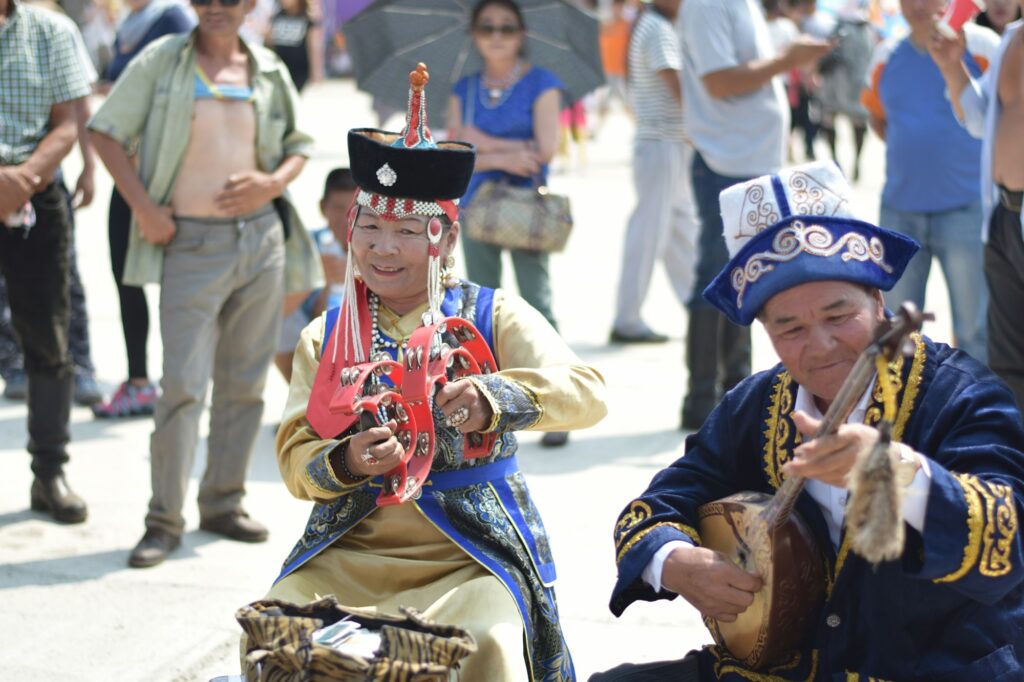
At 11:00, the official ceremony begins at the stadium (20,000 seats). The programme includes a military parade with riders in period costume, biyelgee dances (a UNESCO body dance performed from the torso up, originally practised inside gers), khoomei throat singing (another UNESCO heritage, producing two simultaneous tones), morin khuur music (the horse-head fiddle), Buddhist monks in ceremonial robes, and the presidential address. The first rounds of wrestling begin on the afternoon of 11 July.
Full 3-Day Programme
- 11 July: procession of the Nine Banners, opening ceremony at 11:00, first wrestling rounds (512+ wrestlers), archery opens
- 12 July: wrestling semi-finals, archery finals, horse races at Khui Doloon Khudag (leave by 05:00–06:00), evening concerts at Sükhbaatar Square
- 13 July: wrestling finals (most intense day), closing ceremony, national champions proclaimed
3. The Eriin Gurvan Naadam: Mongolia’s Three Manly Sports
Mongolian Wrestling (Bökh): No Weight, No Clock, No Ring
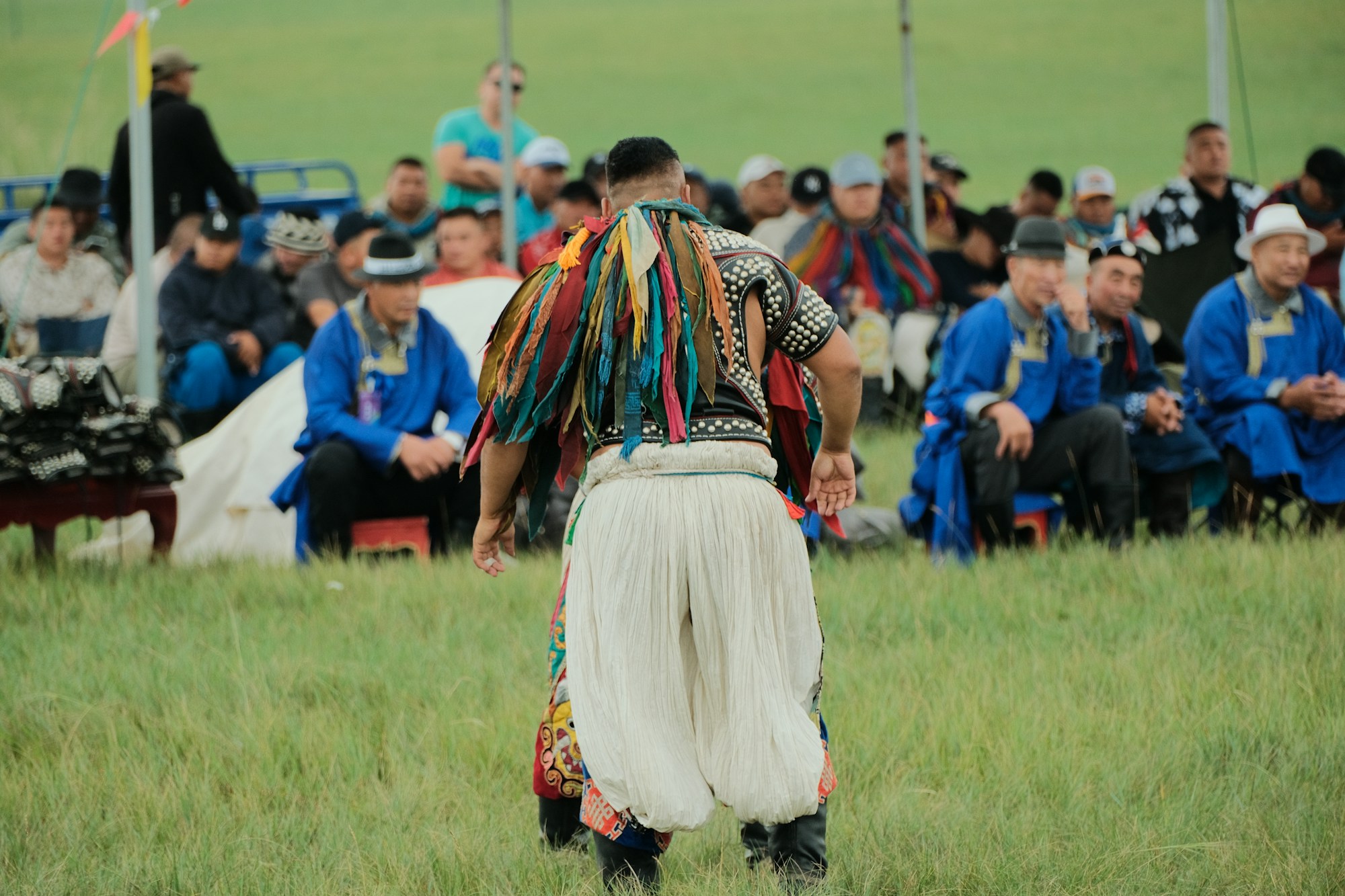
Bökh (meaning « firmness, reliability, vitality ») is the Mongolian national form of wrestling. According to Wikipedia, its rules are radically simple: force your opponent to touch the ground with any body part above the knees. No weight categories, no time limit, no defined ring. Early rounds may last 30 seconds; finals can stretch to 30 minutes with ritualised pauses.
Before each bout, the wrestler performs the eagle dance (garuda), mimicking the takeoff of a great mythical bird. He is accompanied by a zasuul — a ritual encourager who sings praise poems at rounds 3, 5, and 7. Dress code is strict: the zodog (an open-fronted vest — legend holds that this open chest design was imposed after a woman once won a tournament), the shuudag (shorts), and the gutal (traditional leather boots).
Title ranks rise with victories at the National Naadam: Nachin (Falcon, 5 wins), Khartsaga (Hawk, 6), Zaan (Elephant, 7–8), Arslan (Lion, tournament winner), Avraga (Titan, two-time champion). In 2025, Montsame reported that Batmagnai Enkhtuvshin (Ulsyn Arslan) won the title — the first champion from Bayankhongor province in 76 years.
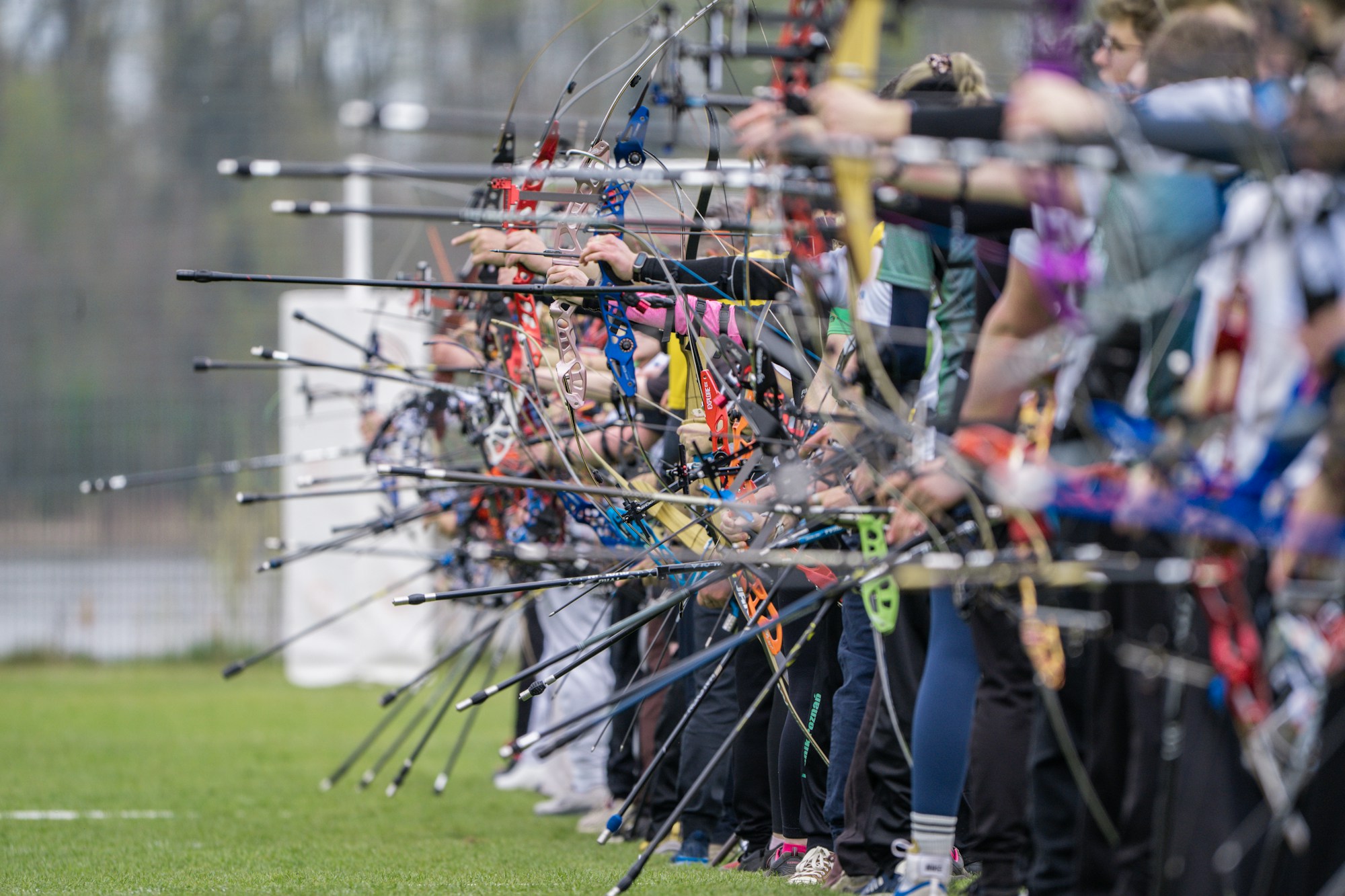
Archery (Sur Kharvaa): The Mixed Event Open to All
Unlike wrestling, archery has been a mixed event for decades. Competitors shoot in teams of ten. Men fire from 75 metres, women from 60 to 65 metres. The target is nothing like Olympic archery — small wooden or cloth cylinders just 8 cm tall (the surs), arranged in a line on the ground. Each team must knock down 33 to win. Men shoot 40 arrows in total, women 20.
When an archer hits a target, the judges on either side raise their arms and sing the Uukhai chant (« hurray! »). This ritual tradition turns every hit into a collective sonic moment. Three styles compete at the National Naadam: Khalkha (the most common), Buriad, and Uriankhai — each with its own bow characteristics. The national men’s champion receives the title Ulsiin Mergen (Grand National Archer). In 2025, according to Montsame, Kh. Khureltuya (Bayan-Ulgii province) won the title for the first time. The archery stadium is adjacent to the National Stadium and open to all.
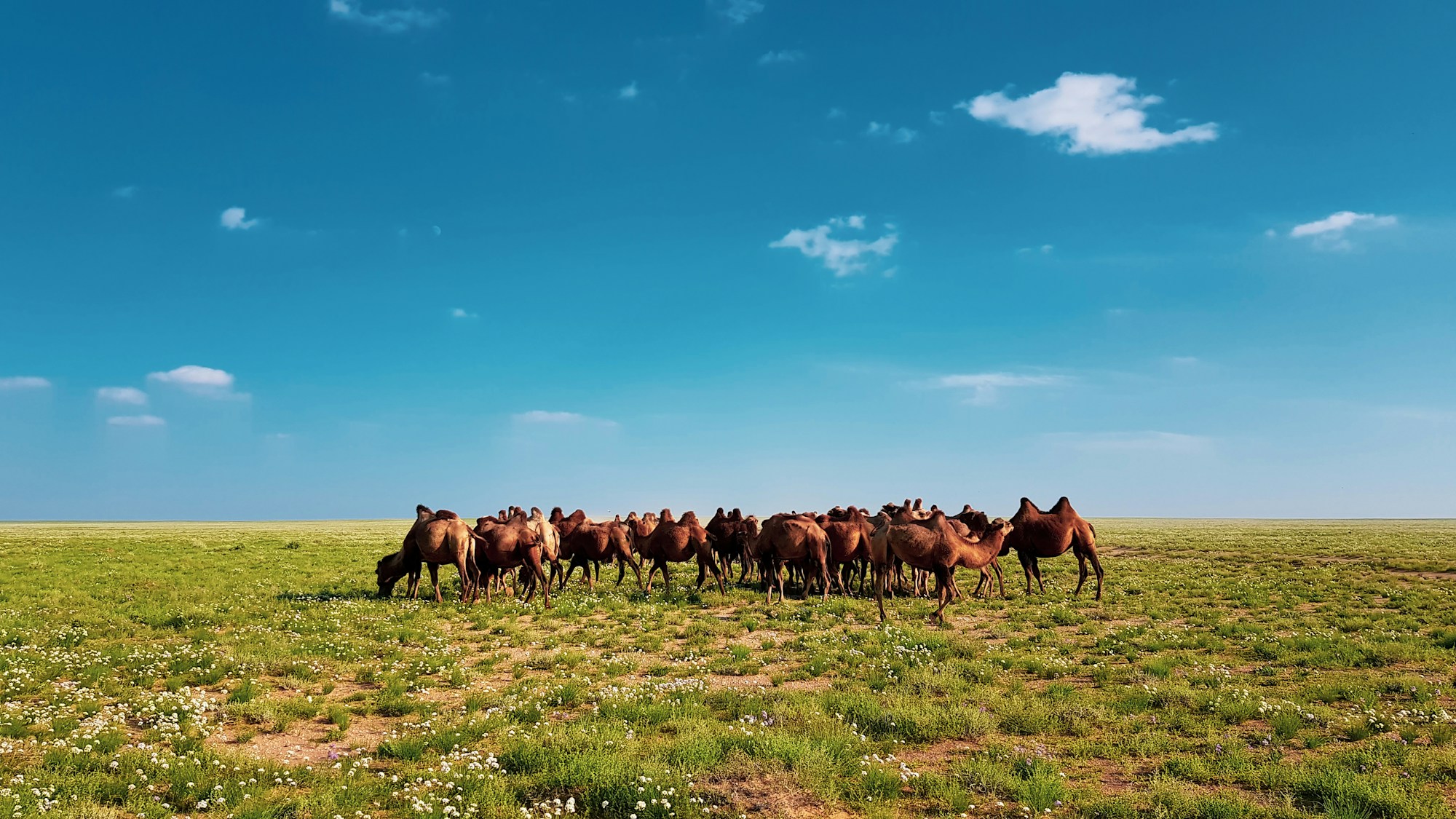
Horse Racing (Morin Uraldaan): Child Jockeys Over 30 km of Steppe
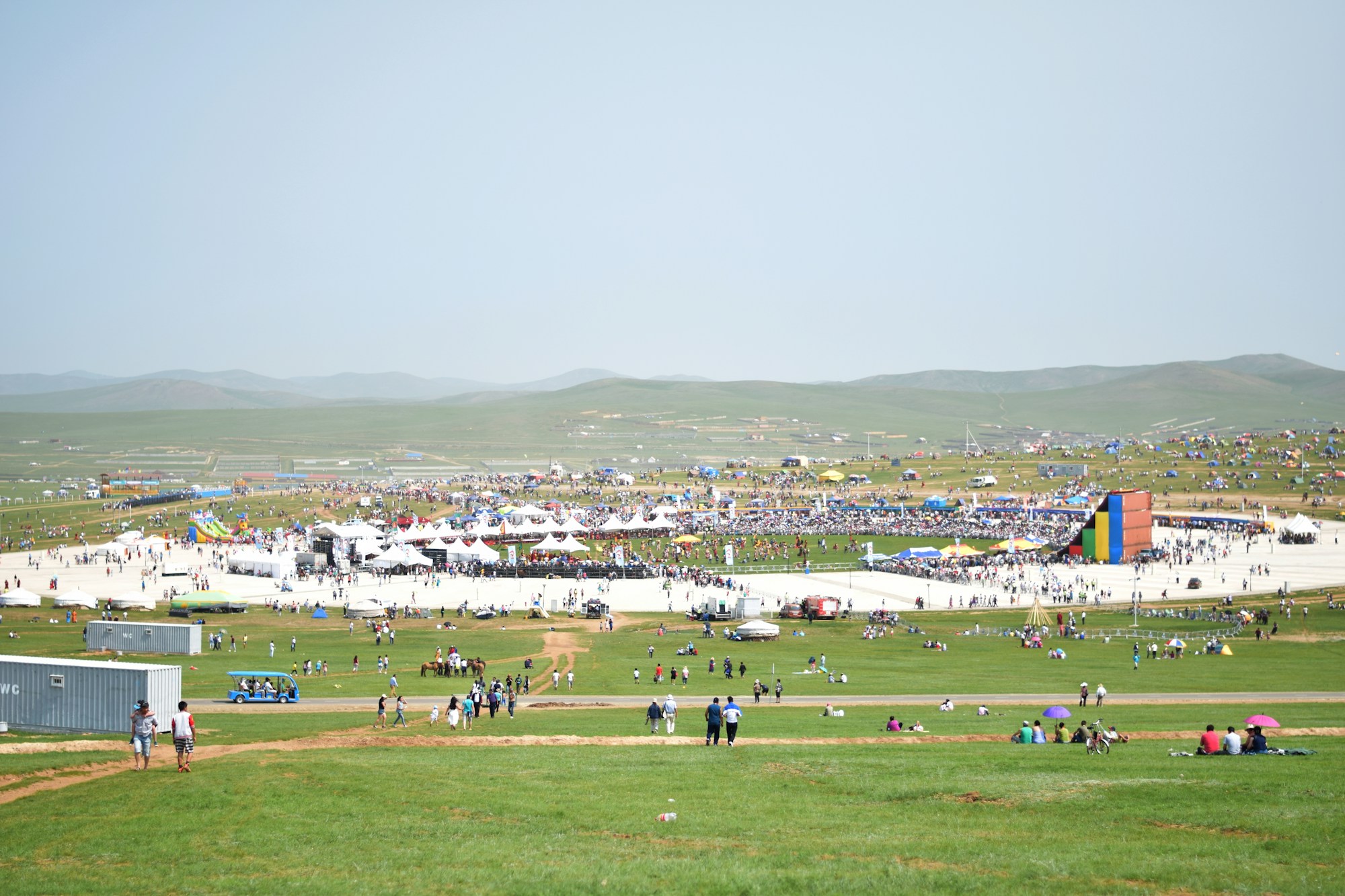
The Naadam races bear no resemblance to anything in the Western equestrian tradition. These aren’t sprint events on an oval track — they are endurance tests across open steppe, covering 15 to 30 km depending on the horse’s age group. According to Voyages en Mongolie, six categories are run (Dagaa for two-year-old foals over 15 km, up to adult stallions Azarga over 28–30 km). The venue is Khui Doloon Khudag, roughly 35 km west of Ulaanbaatar, and up to 1,000 Mongolian horses take part in the National Naadam.
The horses are the stars — not the jockeys. And the jockeys are children. Officially between 7 and 13 since a 2005 decree, they train for months. Before the start, they circle the course shouting to « prepare » their horse. The winning horse receives the title Tumny Ekh (« chief of ten thousand »). Spectators rush forward to collect the sweat of the winning horse, considered to bring good fortune. In a poetic contrast, the last-place horse in the Dagaa (foal) category is brought before the crowd and honoured with the consoling song Bayan Khodood (abundant belly) — even defeat becomes ritual.
This subject is not without tension. The International Labour Organization documents 30,000 children participating in some 500 annual races across Mongolia, with hundreds of injuries each year. Save the Children and several Mongolian NGOs are calling for stricter reforms. The government has introduced a legal minimum age and biometric registration, but enforcement remains uneven according to sources.
4. Naadam Beyond Ulaanbaatar: The More Intimate Experience
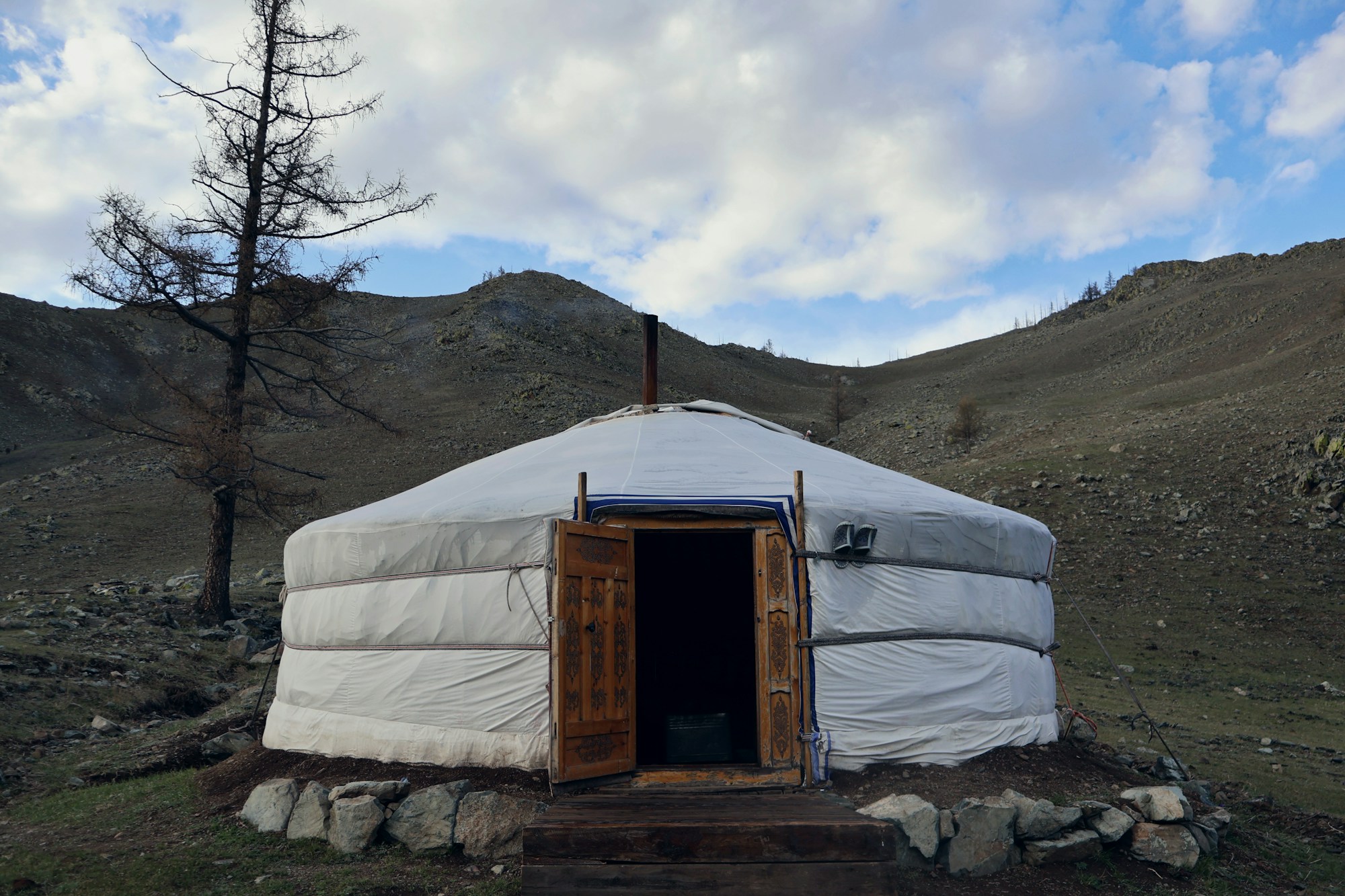
When Locals Invite You into Their Ger
Experienced travellers who have attended both the Ulaanbaatar Naadam and a provincial one describe two complementary experiences. The capital offers the state spectacle — the pageantry, the 20,000 seats. The provinces offer what Mongolians actually live: families setting up gers around a wrestling field, archers handing you a bowl of airag (fermented mare’s milk, lightly alcoholic), children inviting you to hold their horse’s reins.
Three destinations stand out according to Mongolian Tour Guide. Lake Khövsgöl (north): provincial Naadam in the village of Hatgal, on the shore of one of the world’s purest freshwater lakes. Kharkhorin (Karakorum): the ancient capital of the Mongol Empire, 380 km from Ulaanbaatar, with a visit to the Erdene Zuu monastery (14th century). Terelj National Park, 55 km from the capital: granite rock formations, ger camps, horse rides, and a visit to the Genghis Khan Equestrian Statue (40 m — the world’s largest equestrian statue).
See our Mongolia 10-day itinerary: steppe, Naadam and ger camps for a detailed programme combining capital and countryside. Our Ulaanbaatar practical guide covers all the logistics you need.
Highlights of Provincial Naadams
- Free access to all events — no queues
- Direct contact with nomadic families (invitations into gers are common)
- Chance to try some events yourself (archery and wrestling tasters for tourists)
- Stay in a ger camp in the middle of the steppe, sleeping under the stars
5. Culture & Flavours: What the Guidebooks Don’t Tell You
The Deel, the Ger, the Khuushuur: Naadam Beyond the Stadium
At Naadam, every Mongolian puts on their finest deel — this long wraparound robe, fastened on the right and tied with a coloured sash (khadag), is the national garment. Gold-embroidered silk for ceremonies, cotton for competition days. Watching the regional variety of deels in the stands is a visual spectacle in itself. Wrestlers also wear ceremonial deels between their bouts.
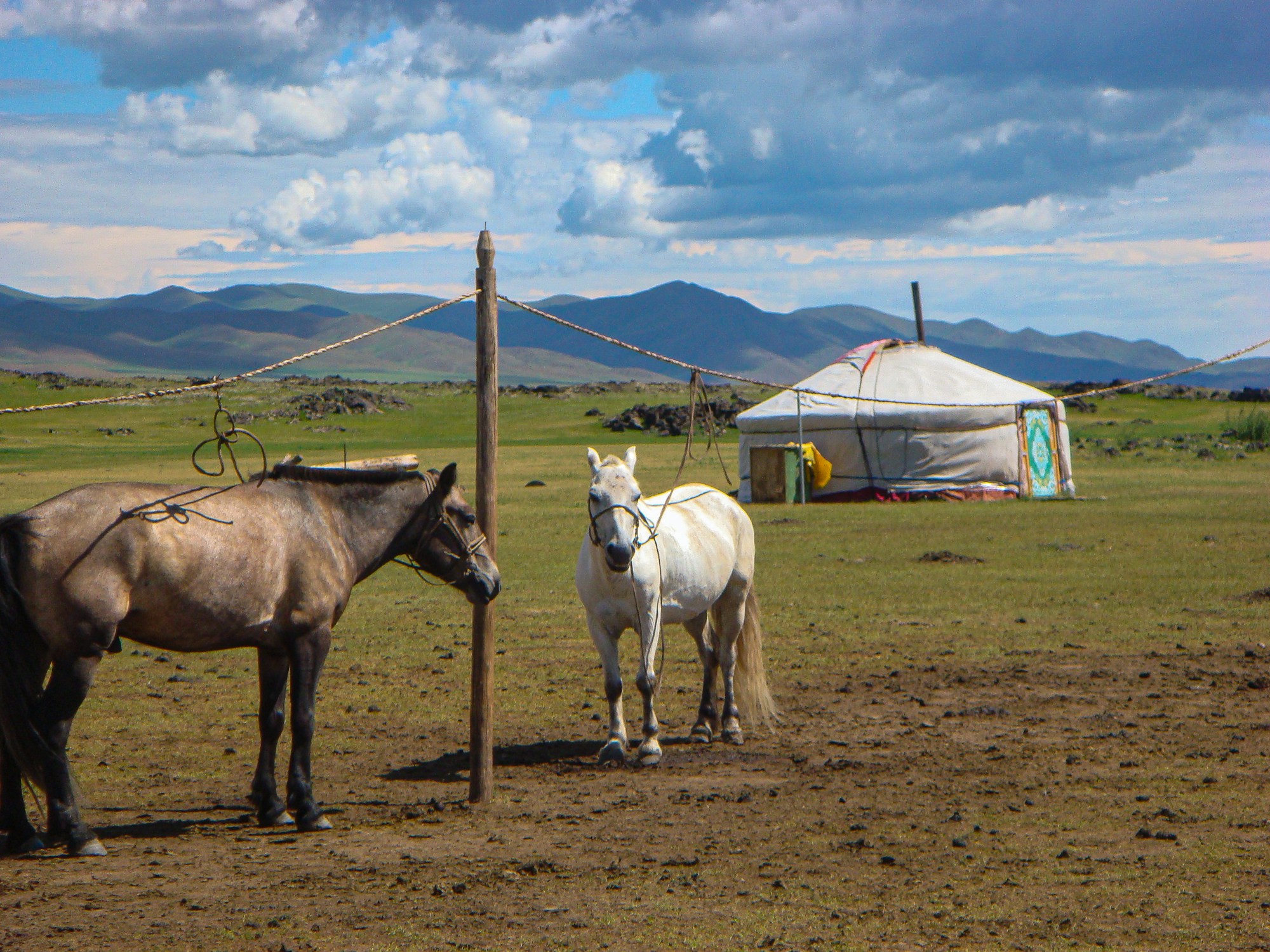
If you’re invited into a ger (the nomadic dwelling — « ger » is the Mongolian word, not the Turkish « yurt »), a few etiquette rules are essential: never step on the threshold (it symbolises the master’s neck), enter on your left foot, accept whatever you’re offered even if you’re not hungry (refusing is offensive), and never throw anything into the central fire. Men sit to the right, women to the left, following the host’s direction.
On the food front, the festival has its signature dish: khuushuur, a fried pastry stuffed with minced mutton and onion. Vendors are set up all around the stadium for all three days. You’ll also find buuz (steamed mutton dumplings), tsuivan (stir-fried noodles with meat), and inevitably airag — fermented mare’s milk, lightly alcoholic (around 2%) and given to the first five horses to finish. Suutei tsai (salted milk tea) is served in every ger.
The festival is also a stage for other intangible heritages. Khoomei throat singing (itself UNESCO-listed) is performed during ceremonies — a single singer simultaneously produces a bass note and a high melody, creating a humanly improbable chord. Biyelgee dance (separately inscribed at UNESCO), which uses only the upper body because it was historically performed inside gers, features in the opening ceremony.
6. Before You Go: Visa, Flights, Budget & Connectivity
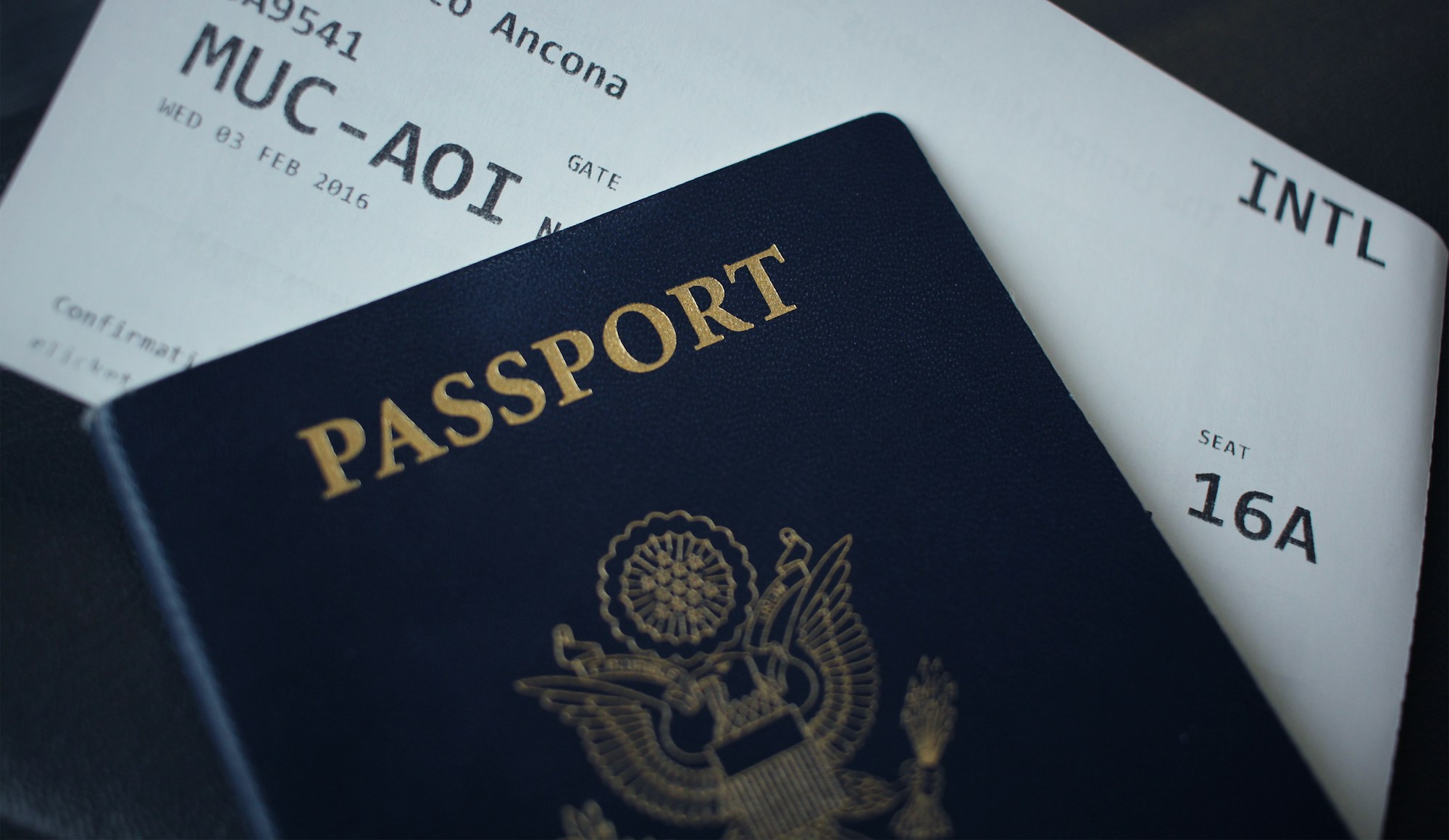
Visa, Flights, Budget: The Key Figures for 2026
Visa: according to GOV.UK, UK citizens benefit from a visa-free exemption for tourist stays of up to 30 consecutive days, valid until 31 December 2026. Your passport must be valid for at least six months beyond your return date. If staying at a hotel or ger camp, they will register you with the immigration authority automatically within 48 hours. For stays longer than 30 days, an e-visa is available at evisa.mn ($51.50 USD, 72-hour processing).
Flights: no airline offers a direct London–Ulaanbaatar (ULN/UBN) route. Turkish Airlines via Istanbul (around 17 hours) and MIAT Mongolian Airlines via Frankfurt or Istanbul are the most common options. In July (Naadam high season), expect to pay around £700–900 for a return ticket from London Heathrow. Booking 4 to 6 months in advance is strongly recommended. Compare London–Ulaanbaatar flights via Aviasales for the best fares.
Budget for 10 days on the ground (excluding flights): budget around £1,800–2,500 in comfort mode (English-speaking guide, private 4WD, mix of 3–4-star hotels and ger camps) or £1,300–1,750 in budget mode (shared transport, hostels). Naadam tickets add roughly £40–120 depending on the categories you choose.
Airport: Chinggis Khaan International Airport is 52 km from central Ulaanbaatar. Taxi: around £5–6. Airport shuttle every 30 minutes: around £1.50. Bus: under £1.
4G connection from the moment you land in Ulaanbaatar. MobiCom and Unitel cover 95% of the country. Perfect for offline Maps.me use on the steppe.
From $4.50 USD / 7 daysNomad Insurance: global medical coverage from $56/4 weeks. Mongolian hospitals demand upfront payment — don’t go without cover. 10% off via our link.
From $56 / 4 weeksFrequently Asked Questions About Naadam 2026
Does Naadam 2026 really take place from 11 to 13 July?
Yes. The official National Naadam takes place from 11 to 13 July 2026 at the National Sports Stadium in Ulaanbaatar. The opening ceremony is on 11 July at 11:00. Additional events (Sükhbaatar Square concerts, cultural activities) may extend until 15 July. Horse races take place on 12 July at Khui Doloon Khudag, 35 km west of the capital. Atlas Mongolia Travel confirms these dates with multiple concordant sources.
Why is the 2026 Naadam considered an exceptional edition?
The 2026 Naadam simultaneously commemorates three major historical anniversaries: the 105th anniversary of the Mongolian Revolution of 11 July 1921, the 820th anniversary of the founding of the Mongol Empire by Genghis Khan (1206), and the 2,235th anniversary of the Xiongnu Empire (Hunnu, c. 209 BCE). This convergence should give the state ceremonies an unusual solemnity, with parades and performances likely more elaborate than in ordinary years. Source: Blue Silk Travel.
Do UK citizens need a visa for Mongolia in 2026?
No. Until 31 December 2026, UK citizens benefit from a visa-free exemption for tourist stays of up to 30 consecutive days. Your passport must be valid for at least six months beyond your return date. Hotels and ger camps register you with the immigration authority automatically within 48 hours — no separate registration needed. For stays longer than 30 days, an e-visa is available at evisa.mn ($51.50 USD, 72-hour processing). Source: GOV.UK.
How do you get tickets for the Naadam opening ceremony?
Opening ceremony tickets (from $25 USD, up to $80 USD for the best seats) go on sale roughly one month before the festival. They sell out within hours, largely snapped up by local agencies with pre-allocated quotas. As of mid-June 2026, sales have not yet opened. The most reliable approach is to book through a local Mongolian agency (Atlas Mongolia Travel, Nomada Tours, Discover Mongolia) or reserve a package that includes tickets. On Viator, 2- or 3-day tours including tickets are available. Source: Meanwhile in Mongolia.
Are the horse races and archery free to watch?
Yes, entirely free. The archery stadium is adjacent to the National Stadium and open to everyone for all three days. The horse races at Khui Doloon Khudag (35 km west of Ulaanbaatar) are also free. But watch out for traffic on the morning of 12 July: over 50,000 vehicles converge on the site and jams start by 07:00. Leaving before 06:00 in a private vehicle is strongly recommended. Shagai (ankle-bone shooting) is free too. Source: Nomada Tours.
What is the total budget for attending Naadam 2026 from the UK?
Allow approximately £700–900 for return flights from London Heathrow to Ulaanbaatar in July (Turkish Airlines via Istanbul, or MIAT Mongolian Airlines). On the ground, budget £1,800–2,500 for 10 days in comfort mode (English-speaking guide, private 4WD, mix of 3–4-star hotels and ger camps), or £1,300–1,750 in budget mode. Add £40–120 for Naadam tickets. Total indicative budget: around £2,500–3,400 per person. Source: Ulysse.com and Visiter Mongolie, converted to GBP at current rates.
Is it better to attend Naadam in Ulaanbaatar or in the countryside?
Ideally both. The Ulaanbaatar ceremony is an impressive state spectacle — Nine White Banners, 20,000 spectators, military parade, solemn procession. Provincial Naadams (Lake Khövsgöl, Kharkhorin, Övörkhangai) offer an intimate experience, direct closeness with nomadic families, and often the chance to try some events yourself. The recommended approach: attend a provincial Naadam on 8–10 July, then travel to Ulaanbaatar for the 11 July opening ceremony. Source: Mongolian Tour Guide.
Are the horse race jockeys at Naadam really children?
Yes. Jockeys are officially between 7 and 13 years old since a 2005 decree setting the minimum age. Tradition places the horse at the centre of the event, not the human rider. According to the International Labour Organization, around 30,000 children take part in approximately 500 races per year across Mongolia, with hundreds of documented injuries. The Mongolian government has introduced biometric registration and mandatory safety equipment, but NGOs say enforcement remains uneven. This is the festival’s most controversial aspect.
Sources
- Atlas Mongolia Travel: Naadam Festival 2026 — Dates, Where to Watch, and an Insider Guide: specialist Mongolia agency, confirmed dates and programme
- UNESCO: Naadam, Mongolian Traditional Festival (file RL-00395): 2010 Intangible Cultural Heritage inscription
- GOV.UK: Mongolia travel advice — Entry requirements: visa-free exemption confirmed for UK citizens until 31/12/2026
- Montsame (official Mongolian news agency): Naadam 2025 Champions: 2025 wrestling and archery results
- Blue Silk Travel: Naadam Festival 2026: 2026 commemorations documented
- Nomada Tour Journal: Naadam 2026 — What You Actually Need to Know: ticketing and logistics
- Mongolian Tour Guide: Ultimate Mongolia Travel Guide 2026: itineraries and provinces vs capital comparison
- International Labour Organization: Mongolian child jockeys: child jockey safety issues
- Wikipedia: Mongolian wrestling (Bökh): rules and history of wrestling
- Voyages en Mongolie: Horse races at Naadam: race categories and distances
- Ulysse.com: Mongolia Naadam July 2026 — 10-day practical guide: reference budget
- Visiter Mongolie: Mongolia Budget 2026: detailed daily costs
- Meanwhile in Mongolia: Naadam Opening Ceremony — How to Get Tickets: ticketing strategy
- Travel And Tour World: Mongolia Tourism Sees 35% Rise in 2026: 2026 tourism figures
Research carried out on 21 June 2026.
Ready to Experience Naadam 2026?
Plan your Mongolia trip with Pixidia: 10-day itineraries, ger camps, local English-speaking guides and practical tips so you don’t miss a single moment of the three-day festival.
Plan my Mongolia itinerary