

Northern lights 2026, in brief: Solar Cycle 25 is in its extended double-peak phase — activity remains elevated through 2026 before declining toward the 2030–2031 solar minimum, with the next comparable peak not expected until 2035–2036. For the best odds, plan around the September–October 2026 equinox (Russell-McPherron effect) and pick a statistically reliable base: Yellowknife, Canada reports a 97% success rate across up to 240 aurora nights a year, while Abisko’s « Blue Hole » microclimate gives it the clearest skies in northern Scandinavia. Book guided excursions several months ahead — spots sell out fast.
2026 is the year of the northern lights — possibly the most exceptional in decades. The Sun is currently passing through the peak of its 25th activity cycle, the most powerful and prolonged since Cycle 19 in the 1950s. Sunspots, coronal mass ejections, record Kp indices: the conditions are aligned for light displays of rare intensity. But the window is closing: from 2027 onward, activity will gradually decline toward a solar minimum expected around 2030–2031, and you’ll then have to wait until 2035–2036 to see such levels again. Here is the sourced, comprehensive guide to not missing this unique opportunity — where to go, when to go, and how to maximize your chances.
Why 2026 Is an Exceptional Year for the Northern Lights
Solar Cycle 25 — An Unexpected and Extended Peak
The Sun follows an approximately 11-year activity cycle, marked by the evolution of sunspot numbers. Since late 2019, we have been in Cycle 25 — and this cycle has far exceeded all forecasts. The sunspot number has surpassed 200 points (SSN), nearly double what NASA predicted at the start of the cycle. This unexpected surge has produced coronal mass ejections (CMEs) far more frequent and intense than anticipated, according to Notre Planète.
As of mid-2026, we remain past the absolute peak (reached in October 2024) — and the March 2026 secondary spike is behind us too — yet levels are still elevated. This double-peak phenomenon has extended the favorable window well beyond initial forecasts. Astrophysicists are unanimous: 2026 is the last great northern lights season before 2035. Enjoy the exceptional auroras of Cycle 25 now — or wait for the next cycle around 2035–2036. That is the choice before us today, as astrophysicist Robert Lamontagne explains in Espaces.
The Russell-McPherron Effect: An Equinox Bonus
A little-known phenomenon amplifies auroras twice a year. Named after the researchers who described it in the 1970s, the Russell-McPherron effect occurs around the equinoxes (March and September), when the magnetic fields of the Sun and Earth can align and connect. A 75-year study shows that March is the geomagnetically most active month of the year, followed by September–October. In practice, even a low-intensity CME can then trigger auroras visible in central Europe, according to UFRC. In March 2026, auroras were visible in Belgium and northern France thanks to this phenomenon.
1. Abisko, Swedish Lapland — The « Blue Hole » of Aurora Hunters
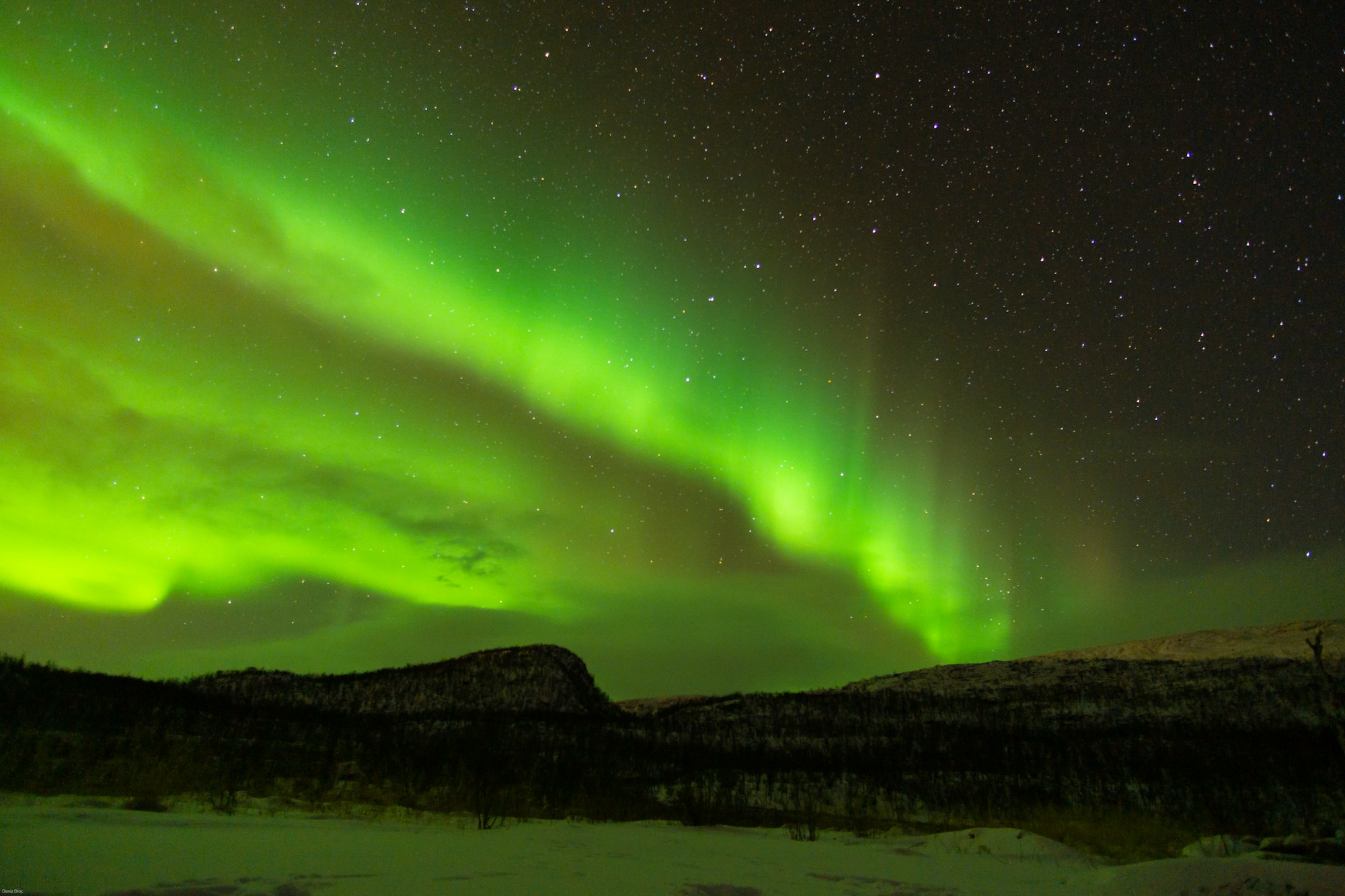
Abisko — Statistically Europe’s Most Reliable Aurora Destination
Abisko is the worst-kept secret among professional aurora hunters. This small Swedish Lapland village benefits from a meteorological advantage unique in the world: the « Blue Hole ». The surrounding mountains block moist air masses coming from the Norwegian coast, creating a permanent microclimate with significantly fewer cloudy nights than coastal sites like Tromsø. It is statistically the destination with the clearest skies in all of northern Scandinavia, according to Aurora Forecast.
At the top of Mount Nuolja (accessible by chairlift), the Aurora Sky Station offers a dedicated observatory with heated platforms and the best aurora photography setup in Europe. Lonely Planet has even ranked Abisko the world’s best destination for light experiences. Its position within the auroral oval, minimal light pollution, and crystal-clear Arctic air create optimal conditions, confirms Visit Kiruna Lapland.
Abisko Highlights
- Aurora Sky Station at the top of Nuolja (chairlift, heated platforms)
- The « Blue Hole »: a microclimate guaranteeing fewer clouds than anywhere else
- Abisko National Park — pristine Arctic landscapes
- Ideal combination with Kiruna/Icehotel (90 km away)
- Budget: from €1,276 for 5 days, flights not included
2. Senja Island, Norway — The Lofoten Without the Crowds
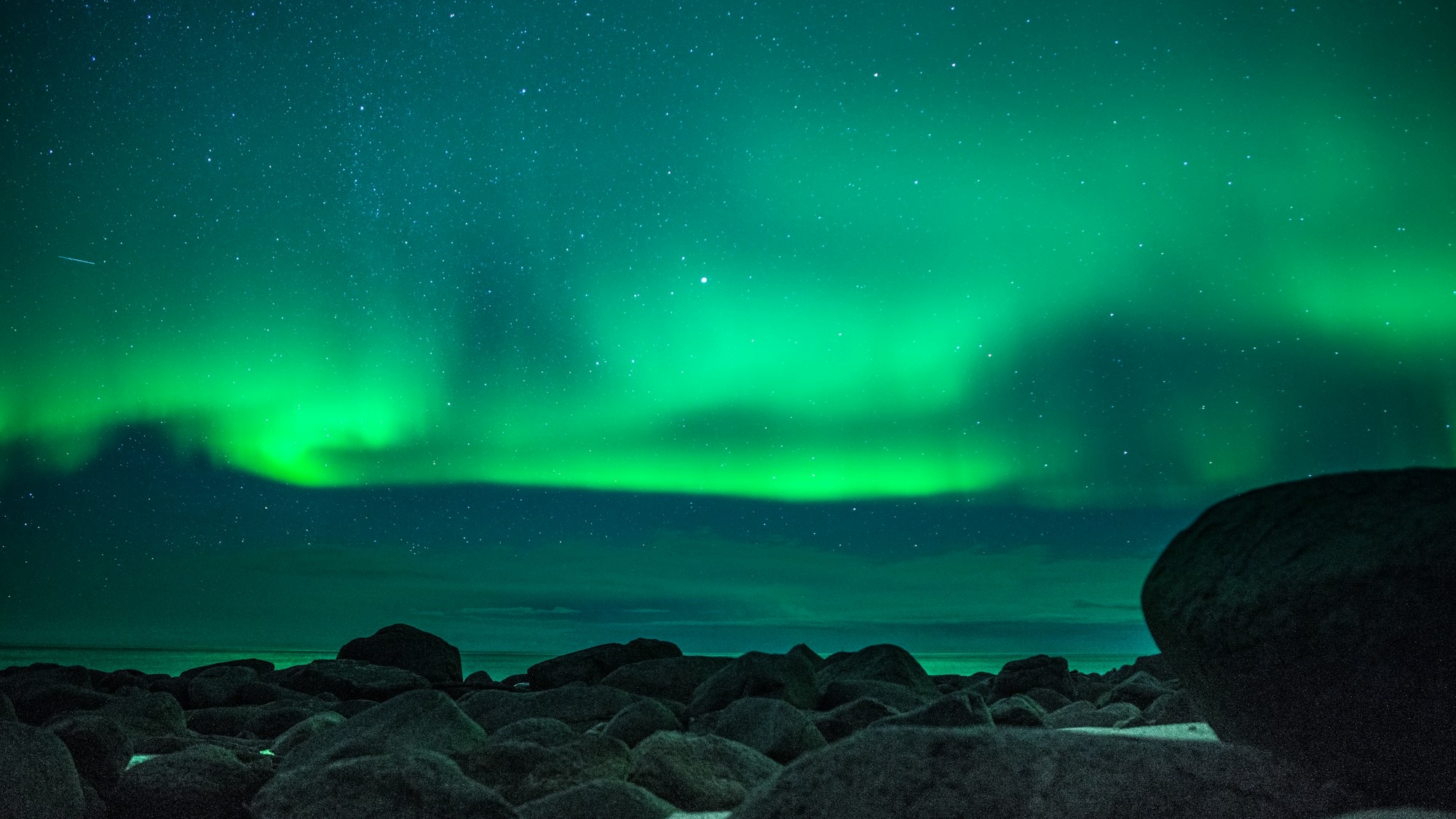
Senja — « Norway in Miniature, » Still a Hidden Gem
Just 90 minutes from Tromsø, Senja is one of Norway’s great undiscovered destinations. Nicknamed « Norway in Miniature, » it concentrates on a single island everything that makes the country unique: deep fjords, jagged mountain silhouettes, sleepy fishing villages, and forests of silver birches. Unlike the tourist-saturated Lofoten, you can explore its fjords in near-total solitude, according to Capture the Atlas.
At night, the auroras reflect off the fjords between the jagged peaks — an exceptional photographic setting that few have yet discovered. The island offers spectacular coastal auroras with less fog than Tromsø itself. Stay in a rorbu (a renovated traditional fisherman’s cabin) right on the water: the auroras reflect simultaneously in the sky and on the fjords, a doubly magical experience.
Senja Must-Dos
- Rorbu on the water at Skaland — aurora views over the fjords
- Hike to Segla (640 m) — 360° panorama without the crowds
- Scenic Route 862 — pristine western fjords free of tourists
- White sand beaches at Tungeneset
3. Svalbard / Spitsbergen — Auroras in the Polar Night, with Polar Bears
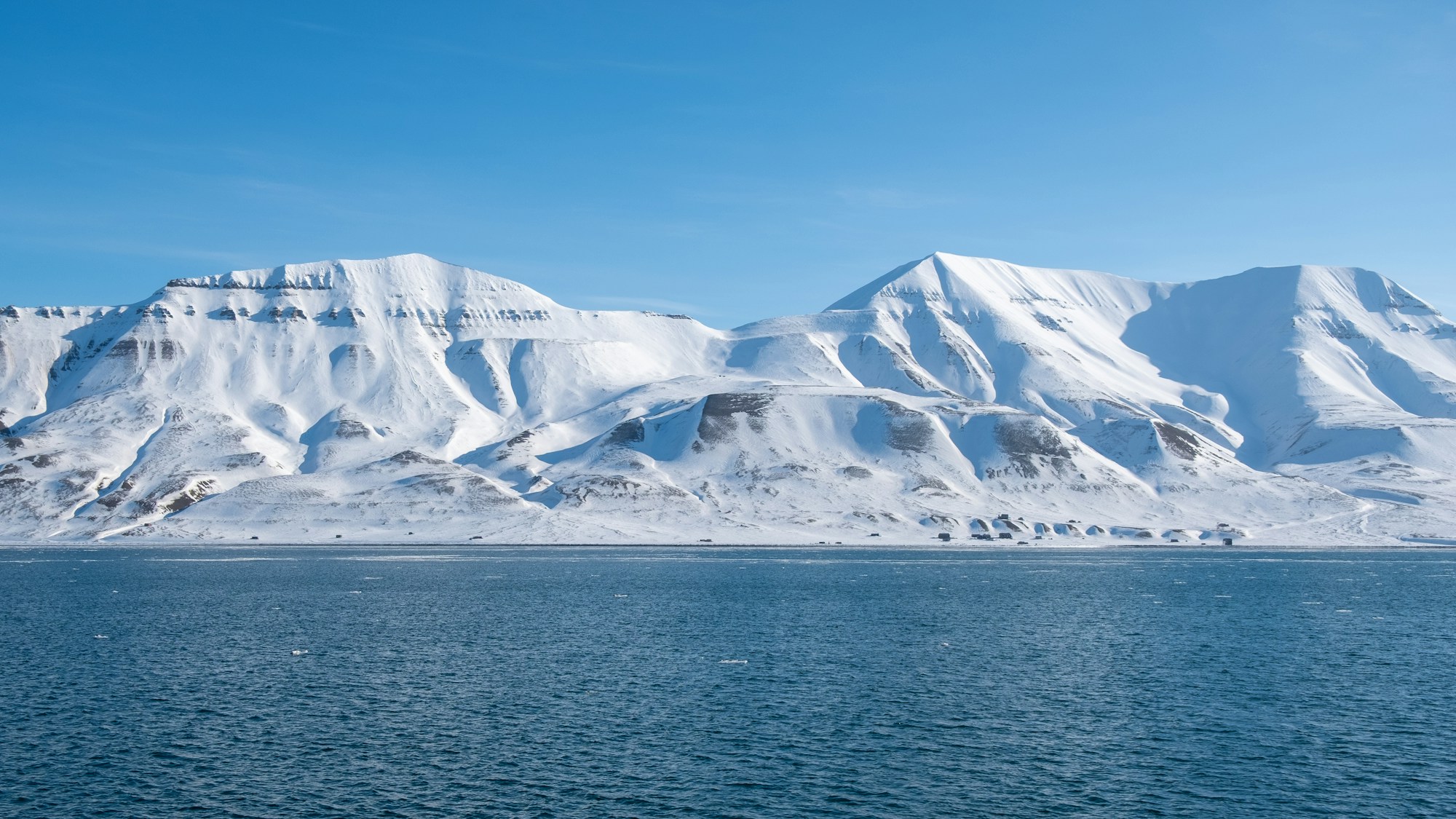
Svalbard — At 78° N, Between Polar Night and Arctic Wildlife
Svalbard holds a special place in the world of northern lights: it is the only destination on Earth where you can observe auroras at any time of day during the polar night. From late October to mid-February, the sun never rises, and absolute darkness is the daily reality. Located at 78° N, the archipelago sits directly within the auroral oval — the zone of maximum aurora activity, as noted by Rove.me.
Beyond the auroras, Svalbard offers unique Arctic wildlife: polar bears patrolling the sea ice (there are more bears than people!), walruses, Svalbard reindeer, Arctic foxes, and narwhals. Snowmobile expeditions to Pyramiden — a Soviet ghost town frozen in time since 1998 — or to the Russian community of Barentsburg complete an unparalleled experience, according to Nord Espaces.
Must-Have Experiences in Svalbard
- Northern lights snowmobile safari (5+ hours)
- Visit to Pyramiden — the Soviet ghost town
- Guided polar hike (armed guide required outside town)
- Walrus and polar bear watching by sea kayak (summer)
- Budget: €2,500–5,000 per week all-inclusive
4. Saariselkä & Inari, Finland — Deep Lapland and Sámi Culture
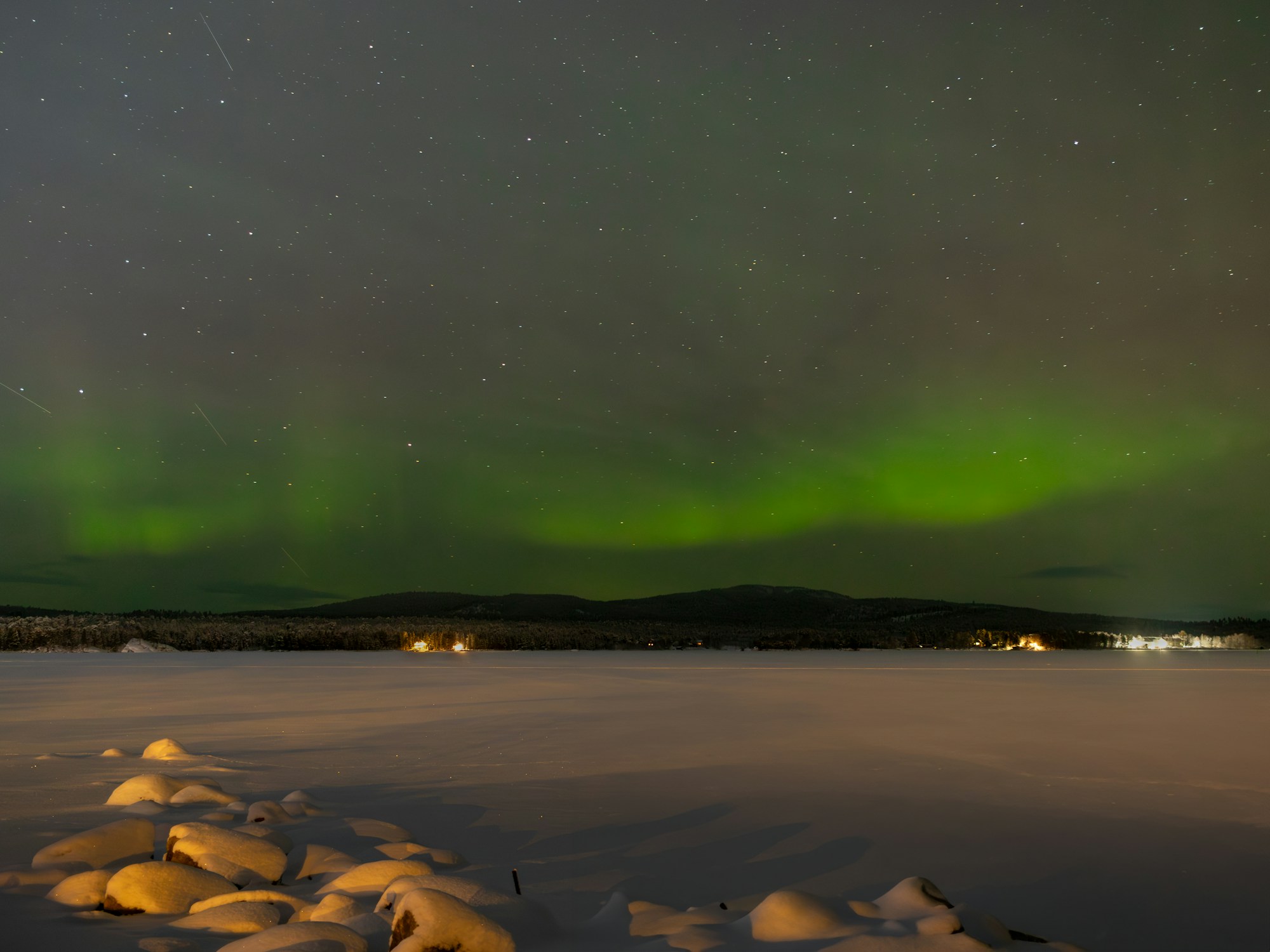
Finnish Lapland — Far from Tourist-Packed Rovaniemi, 200 Aurora Nights a Year
Most travelers stop at Rovaniemi, the commercial capital of Finnish Lapland. But serious aurora hunters know the best experiences lie 250 km further north, at Saariselkä and Inari. The region records approximately 200 visible aurora nights per year — the best statistic in all of Finland, according to Evaneos. Glass-roofed cabins with private saunas offer viewing from the comfort of a heated bed.
Lake Inari, sacred to the Sámi people, is one of Finland’s largest lakes. Its frozen waters form a perfect natural mirror that doubles the visual impact of the auroras. A local Sámi guide can offer a deep cultural immersion: a reindeer farm visit at nightfall under the auroras, Sámi legends (the auroras are said to be the souls of ancestors guiding the living), and an introduction to the art of joik, according to Nordic Odyssey.
Experiences to Have in Finnish Lapland
- Glass-roofed cabin with private sauna and aurora views
- Guided nighttime snowshoe hike with an aurora tracker
- Reindeer farm visit with a Sámi guide
- Traditional ice fishing on Lake Inari
- Husky sledding (dog sled ride)
5. Yellowknife, Canada — 240 Aurora Nights and Dene Indigenous Culture
Yellowknife — Under the Auroral Oval, 240 Nights of Spectacle a Year
Yellowknife is the capital of Canada’s Northwest Territories, and it sits directly beneath the Auroral Oval — the zone of maximum aurora activity. The ultra-low humidity of the continental plateau and minimal light pollution create ideal conditions for viewing auroras up to 240 nights per year. Local operators claim a 97% success rate on aurora tours during the 2024–2025 season, thanks to rigorous weather monitoring and sharp local expertise, according to Northern Lights Canada.
What sets Yellowknife apart from Scandinavian destinations is its deep cultural dimension: an immersive experience with the Dene First Nation indigenous peoples, whose stories and traditions offer a reading of the Arctic world you will find nowhere else. The ultimate adventure: driving across the Great Slave Lake ice road in winter, hearing the ice crack at −30°C beneath the auroras, according to Discover Canada Tours.
Must-Have Experiences in Yellowknife
- Great Slave Lake ice road (January–March)
- Aurora tour with a Dene guide — unique cultural immersion
- Aurora Village — a dedicated aurora-watching camp
- Long-exposure photography under the auroral oval
- Budget: 4-day/3-night package from €850 excl. flights
6. Kalsoy Island, Faroe Islands — The Atlantic Secret of Aurora Hunters
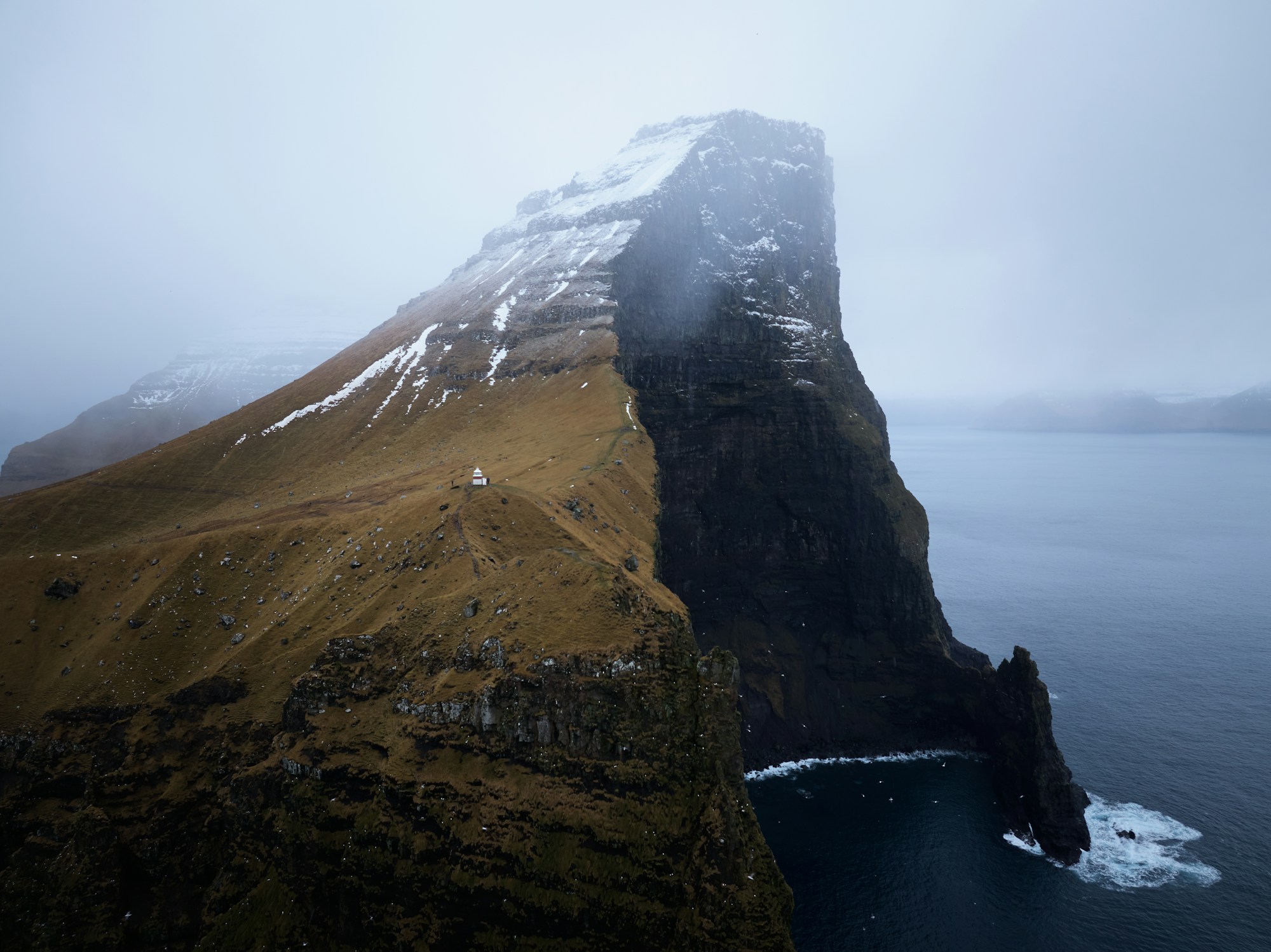
Kalsoy — The Kallur Lighthouse, the Atlantic, and the Auroras
The Faroe Islands are one of the best-kept secrets for aurora watching in Europe. A self-governing territory under the Danish realm, this subarctic archipelago of 52,000 inhabitants sits in the North Atlantic halfway between Iceland, Scotland, and Norway. Its geographic isolation and sparse population ensure an almost complete absence of light pollution, ideal for viewing auroras between November and March, according to The Outsiders Travel.
On Kalsoy island, the Kallur lighthouse — immortalized by Apple in an advertisement — is one of the most spectacular and intimate aurora-hunting spots in Europe. Perched at the end of a 788-meter cliff, with only puffins and sheep as witnesses, watching the auroras above the wild Atlantic from this headland is an experience few travelers in the world have ever had. Inter-island ferries are free — an easy gateway to one of the continent’s rarest experiences, confirms Au Bord du Quai.
Faroe Islands Must-Sees
- Hike to Kallur lighthouse on Kalsoy (3 hours round trip)
- Village of Gjógv, nestled in a valley with zero light pollution
- Múlafossur waterfall on Vágar island
- Free inter-island ferries between all 18 islands of the archipelago
7. Shetland & Orkney, Scotland — The Budget Option with Megaliths
Shetland & Orkney — The « Mirrie Dancers » Above Brodgar
Scotland is the most financially accessible option for seeing auroras from Europe: Paris–Edinburgh flights from €50 round trip, B&B accommodation at €60–80/night, and total freedom with a rental car. During the current solar peak, auroras are visible as far south as central Scotland — known here by their Gaelic name of « Mirrie Dancers », they sometimes make dramatic appearances over the Cairngorms or the Shetland Islands, according to Trafalgar.
The most unique experience on this entire list: watching the northern lights above the Ring of Brodgar in Orkney — 27 standing stones, 5,000 years old, illuminated by the auroras, a scene of unmatched mystical power. This spot is one of Europe’s best-kept aurora hunting secrets, according to Alain’s Tours.
Scotland’s Aurora Highlights
- Ring of Brodgar (Orkney) — auroras over Neolithic standing stones
- Shetland Islands — near-zero light pollution
- Cairngorms National Park — a sanctuary of darkness
- Real-time tracking via AuroraWatch UK
Practical Information for Your Northern Lights Trip
Stay connected to follow aurora alerts in real time, from the moment you land. Covers Norway, Sweden, Finland, and Canada.
From $4.50Nomad Insurance: global coverage from $56/4 weeks. 10% off via our link.
From $56 / 4 weeksFrequently Asked Questions About the Northern Lights in 2026
Why is 2026 the « last chance » for northern lights before 2031?
The solar activity cycle repeats approximately every 11 years. « We go from one maximum to another every 11 years. That means in 5–6 years, there will be fewer northern lights, » explains astrophysicist Robert Lamontagne. Cycle 25 reached its absolute peak in 2024–2025 and remains elevated in 2026 thanks to a double-peak pattern. From 2027 onward, activity will gradually decline toward a solar minimum around 2030–2031. The next comparable solar maximum is not expected until around 2035–2036. The current window literally represents a once-in-a-decade opportunity.
Can the 2026 northern lights be seen from the UK or central Europe?
Yes, during solar maxima, auroras can be visible much further south than usual. In 2024, auroras were seen as far south as Spain and Italy. In March 2026, auroras were observable in Belgium and northern France thanks to the Russell-McPherron effect combined with the solar peak. Urban light pollution dims their brightness — a clear horizon, dry skies, and a dim moon increase your chances. But for a guaranteed and truly impressive display, the destinations in this article are your best bet.
What are the best weeks to see the northern lights in 2026?
The most favorable periods still ahead in 2026 combine darkness, high solar activity, and the equinox effect. With the March 2026 equinox window now behind us, the next best opportunity is late September to late October 2026 (equinox effect + return of long nights + still-elevated solar activity), followed by December 2026 to February 2027 (long polar nights, stable skies — ideal for Svalbard or northern Norway). Optimal hours: 10 PM–2 AM local time. Avoid full moons: new moon periods maximize darkness and therefore visibility.
Which apps should you use to never miss the auroras?
The best apps recommended by professional aurora hunters are: SpaceWeatherLive (real-time Kp forecasts), My Aurora Forecast (personalized alerts based on your location), Aurora Map (real-time auroral oval), and AuroraWatch UK for Europe. To forecast 2–3 days ahead, follow CME alerts on spaceweather.com and the NOAA Space Weather Prediction Center. A Kp index of 3 or above + clear skies + new moon = ideal conditions.
How do you photograph auroras with a smartphone or camera?
For DSLR/mirrorless cameras: use a tripod, open to f/1.4–f/2.8, ISO 1600–3200, exposures of 10–20 seconds, focus set to infinity. Use a remote shutter release to avoid camera shake. For recent smartphones (iPhone 15 Pro, Samsung S24 Ultra): night mode is sufficient for G2-class auroras and above — a tripod remains essential. Auroras move quickly: shoot short bursts to capture their variations. Test your settings on a stable subject first, then compose with an interesting foreground (tree, cabin, ice).
What should you wear for a night of viewing at −20°C in Lapland?
The 3-layer system is essential: a base layer in merino wool or Polartec (moisture management), a mid layer in down or Primaloft (thermal insulation), and an outer layer that is waterproof and windproof. Must-haves: a hat covering the ears, a balaclava, mitten gloves (not individual fingers), thermal socks + insulated boots (rated to −40°C minimum), and hand warmers (for holding a camera). Below −25°C, your camera batteries last 30% less — keep a spare battery in a warm inner pocket.
Which northern lights destination is the most budget-friendly?
For a tight budget, Scotland (Shetland Islands or the Highlands) is by far the most affordable destination: flights from major European cities often under €100 round trip, B&B accommodation around €60–80/night, and accessible car rental. The downside: auroras are less frequent there and the weather is often cloudy. For a better reliability-to-cost ratio, the Faroe Islands offer access from Copenhagen (1.5-hour flight), reasonably priced accommodation, and near-zero light pollution.
Are northern lights guaranteed on a trip?
No absolute guarantee can be given — solar activity and weather remain unpredictable. But the odds improve considerably with: (1) choosing a reliable destination (Abisko, Yellowknife), (2) staying a minimum of 5–7 nights, (3) booking a professional guide who monitors alerts in real time and drives to areas with clear skies. In Yellowknife, operators report a 97% success rate. The best strategy remains choosing a destination you will enjoy regardless of the auroras — you will never be disappointed.
Sources
- EcoFlow — Solar Cycle 25 Peak 2026
- Success Knocks — Solar Cycle 25 Aurora Forecasts
- Aurora Forecast — Best Places for Northern Lights
- UFRC — The Russell-McPherron Effect
- Paris Match Belgique — Northern Lights Soon Visible in Belgium
- Visit Kiruna Lapland — Northern Lights
- Visit Abisko — Northern Lights
- Allibert Trekking — The Magic of the Northern Lights
- Rove.me — Northern Lights in Svalbard
- Nordic Odyssey — Northern Lights in Lapland, When to Go
- Northern Lights Canada — Yellowknife
- The Outsiders Travel — Where to See the Northern Lights
- Espaces.ca — 2026 Will Be Very Favorable for Northern Lights
- Trafalgar — 2026 Northern Lights Peak
- Hurtigruten — Solar Maximum Northern Lights
Ready to Experience Your Northern Lights Adventure?
Discover our personalized itineraries for Lapland, Norway, and Arctic Canada — trips designed to maximize your chances of witnessing the light show of a lifetime.
Explore Pixidia Itineraries