
Córdoba Patios Festival 2026 runs from May 4 to 17, with free entry. The 52 competition patios open from 11 AM to 2 PM and 6 PM to 10 PM (last day Sunday May 17: closing at 8:30 PM). The interactive map is available at patios.cordoba.es and via the free « Mayo Cordobés » app. Six official routes cover the emblematic neighbourhoods: San Basilio, Santa Marina, San Lorenzo, Judería, Santiago–San Pedro and Alcázar Viejo. Visit on weekdays to avoid queues, and plan 2 to 3 days to explore everything comfortably.
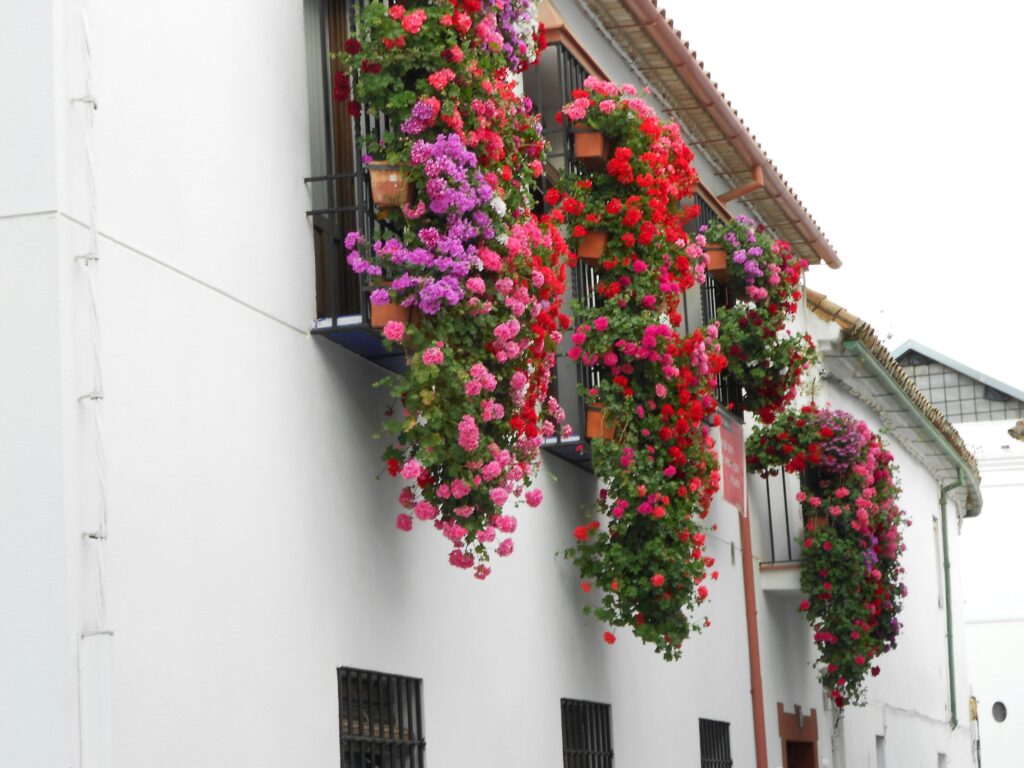
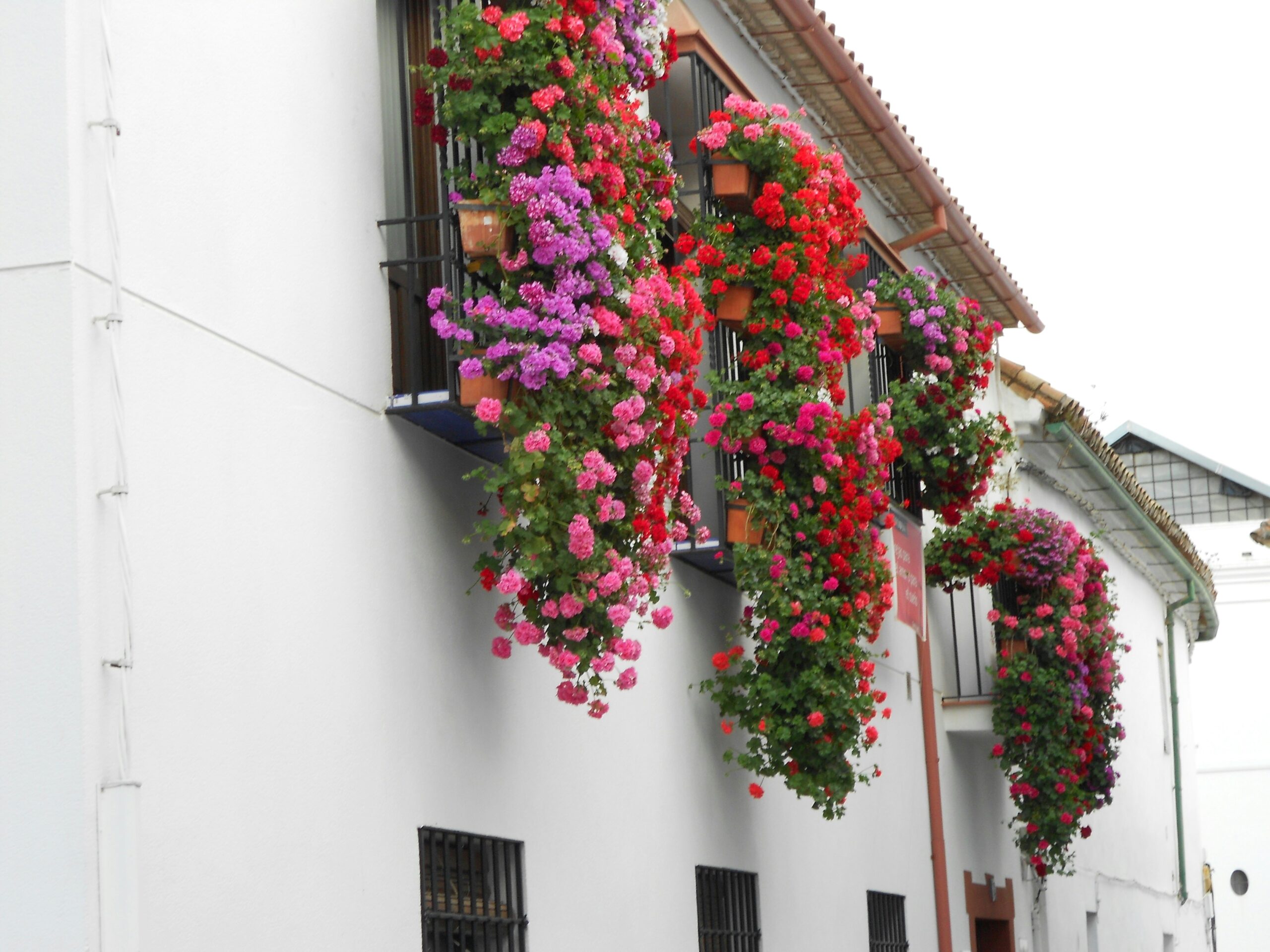
Every May, the people of Córdoba throw open their doors and reveal their hidden treasures. Behind whitewashed facades and thick Andalusian walls lie patios overflowing with scarlet geraniums, pink carnations and violet bougainvillea. The Córdoba Patio Festival, inscribed on UNESCO’s Intangible Cultural Heritage list since 2012, celebrates its 105th edition from May 4 to 17, 2026. This year, new peripheral routes are added, an unprecedented nocturnal programme illuminates the flowers, and the city prepares to welcome hundreds of thousands of visitors for one of Spain’s most authentic festivals. Here is the complete guide so you miss nothing.
Official dates and hours of Córdoba Patios Festival 2026
Everything you need to know before arriving
The Fiesta de los Patios de Córdoba 2026 takes place from May 4 to 17. According to the official website patios.cordoba.es, competition patios are open in two daily slots: 11 AM to 2 PM and 6 PM to 10 PM. On Sunday May 17, the last day of the festival, closing is at 8:30 PM.
This two-slot schedule is deliberate: it allows owners to rest their plants during the hottest midday hours and water their hundreds of macetas. According to La Cosmopolilla, peripheral neighbourhood routes are reinforced in 2026 to prevent crowd build-up in San Basilio, the most popular area.
Access and official map
- Free entry — no advance booking required for competition patios
- Interactive map at patios.cordoba.es/mapa — full list, photos and videos of each patio
- Mayo Cordobés app (iPhone & Android, free) — real-time map, routes, crowd alerts
- Paper map available at the Córdoba Tourist Office on arrival
The 6 official routes of the Patios Festival 2026
The festival is organised into 6 themed routes crossing the different historic neighbourhoods of Córdoba. Each route includes 8 to 12 patios. According to Spain Voyages, the six itineraries cover around 52 patios spread across the historic centre:
| Route | Neighbourhoods | Atmosphere | Tip |
|---|---|---|---|
| Ruta 1 | Regina – Realejo | Urban and traditional mix | Great starting point |
| Ruta 2 | Santa Marina – San Agustín | Grand, spacious courtyards | Most prize-winning patio in history |
| Ruta 3 | San Lorenzo | Quiet and authentic | Ideal to escape the crowds |
| Ruta 4 | Santiago – San Pedro | Local neighbourhood life | Less touristy |
| Ruta 5 | Judería | Historic, near the Mezquita | Combine with monument visits |
| Ruta 6 | Alcázar Viejo (San Basilio) | The most spectacular | Arrive early or after 8 PM |
The 2026 novelty: the Ayuntamiento de Córdoba has strengthened peripheral routes to better distribute tourist flow. New addresses in the less-visited areas of Santa Marina and previously unexplored peripheral zones allow visitors to discover lesser-known facets of the Cordovan tradition. As Córdoba Hoy notes, the 2026 edition is set to be a record-breaking edition with the highest number of participating patios in the festival’s entire history.
Barrio San Basilio (Alcázar Viejo): the festival’s star neighbourhood
The living heart of the patio tradition
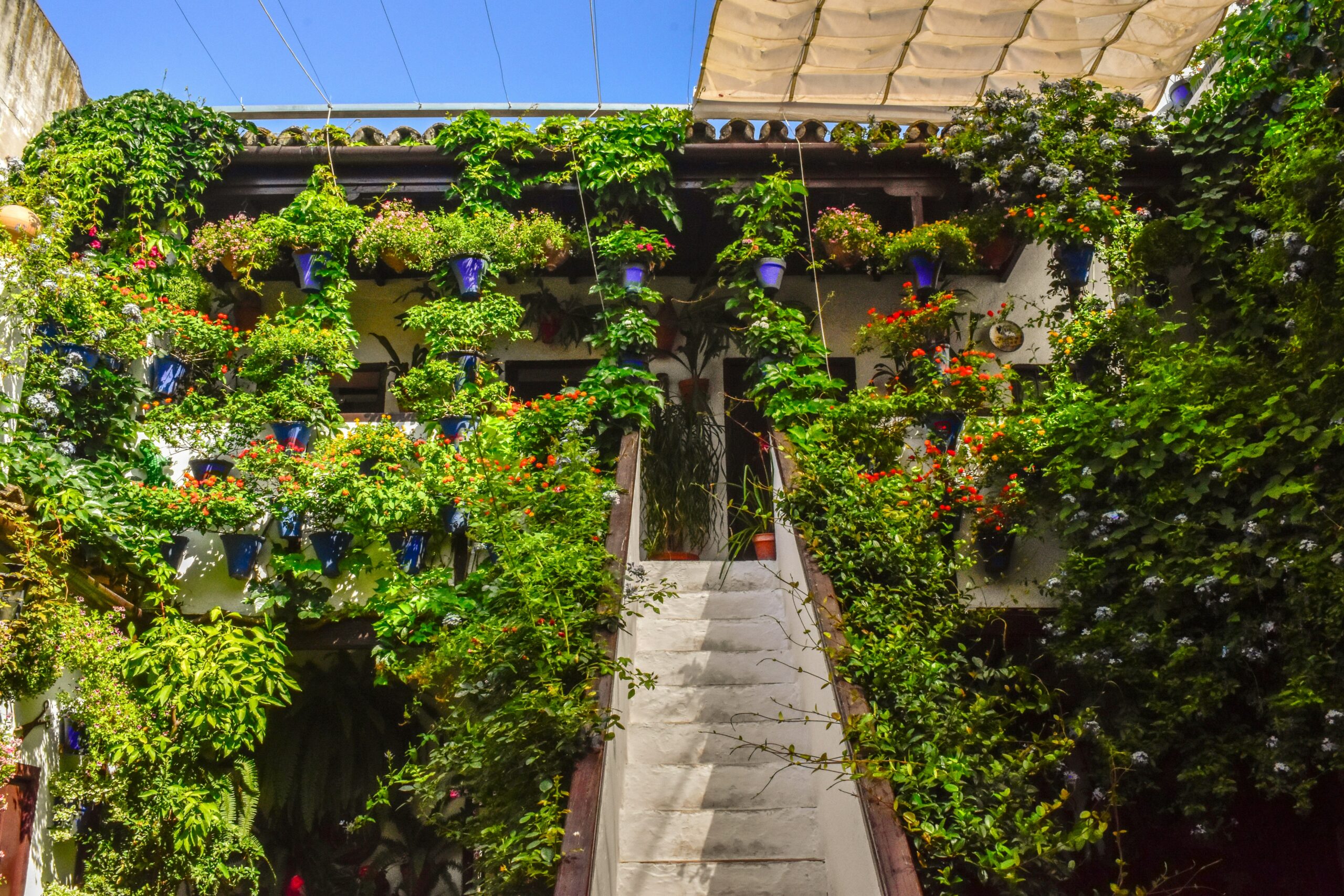
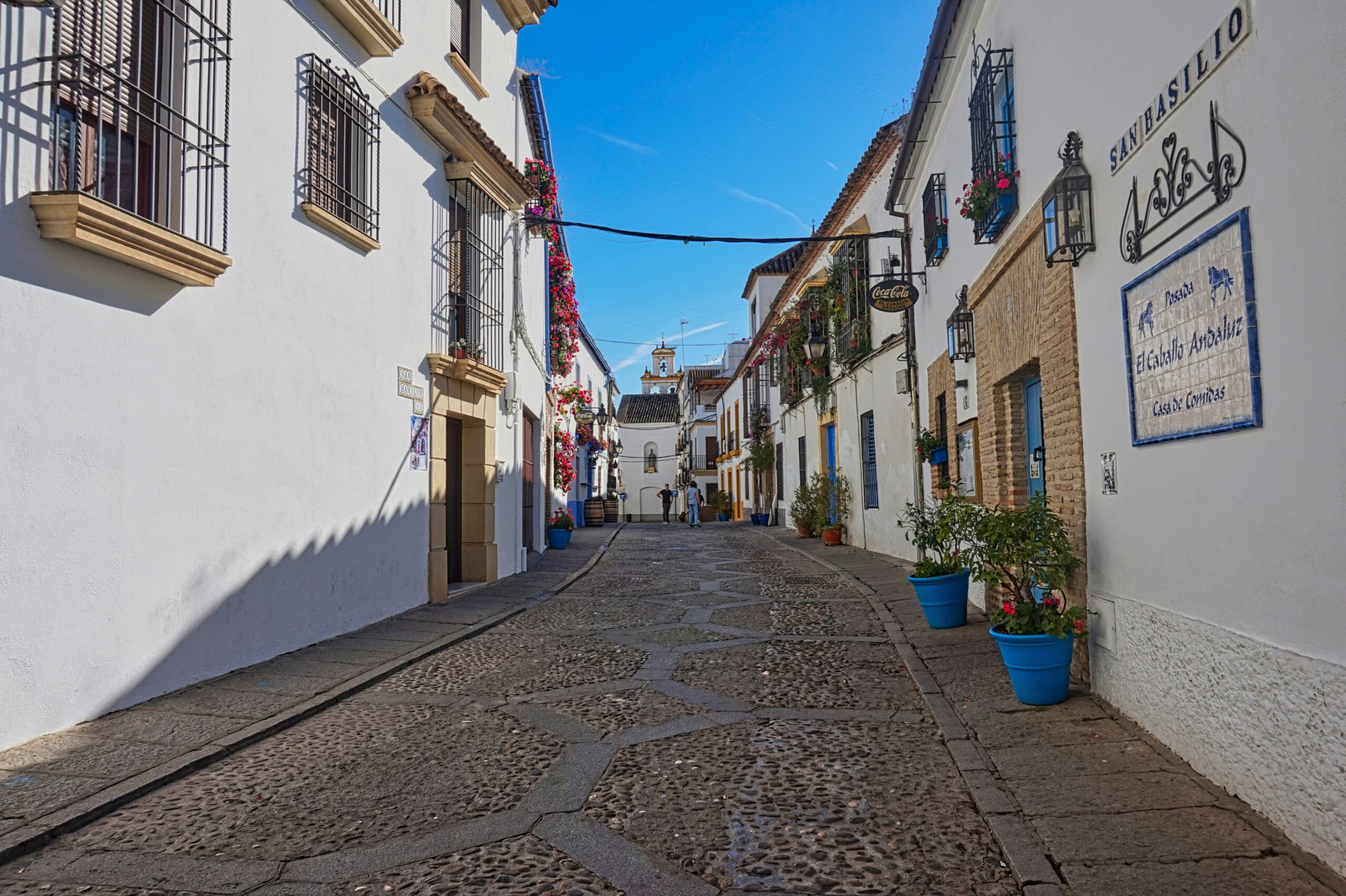
Just a short walk from the Alcázar de los Reyes Cristianos, barrio San Basilio — also known as Alcázar Viejo — is the iconic neighbourhood of the Córdoba Patio Festival. This is where you’ll find some of the most spectacular and prize-winning patios in the competition’s entire history. According to dePATIOS, the patio at no. 14 calle San Basilio retains the original 16th-century layout of a communal house, with its 600 pots of geraniums, begonias and carnations.
No. 44 houses the seat of the Association of Friends of Cordovan Patios, a 15th–16th century house where up to 12 families once lived together. Its central staircase covered in macetas is one of the most photographed images of the festival. Calle Samuel de los Santos, slightly off the main drag, offers equally prize-winning patios with far smaller crowds — perfect for photography without queuing.
Barrio Santa Marina – San Agustín: the grand patios of the bullfighters’ neighbourhood
The neighbourhood of champions and grand architecture
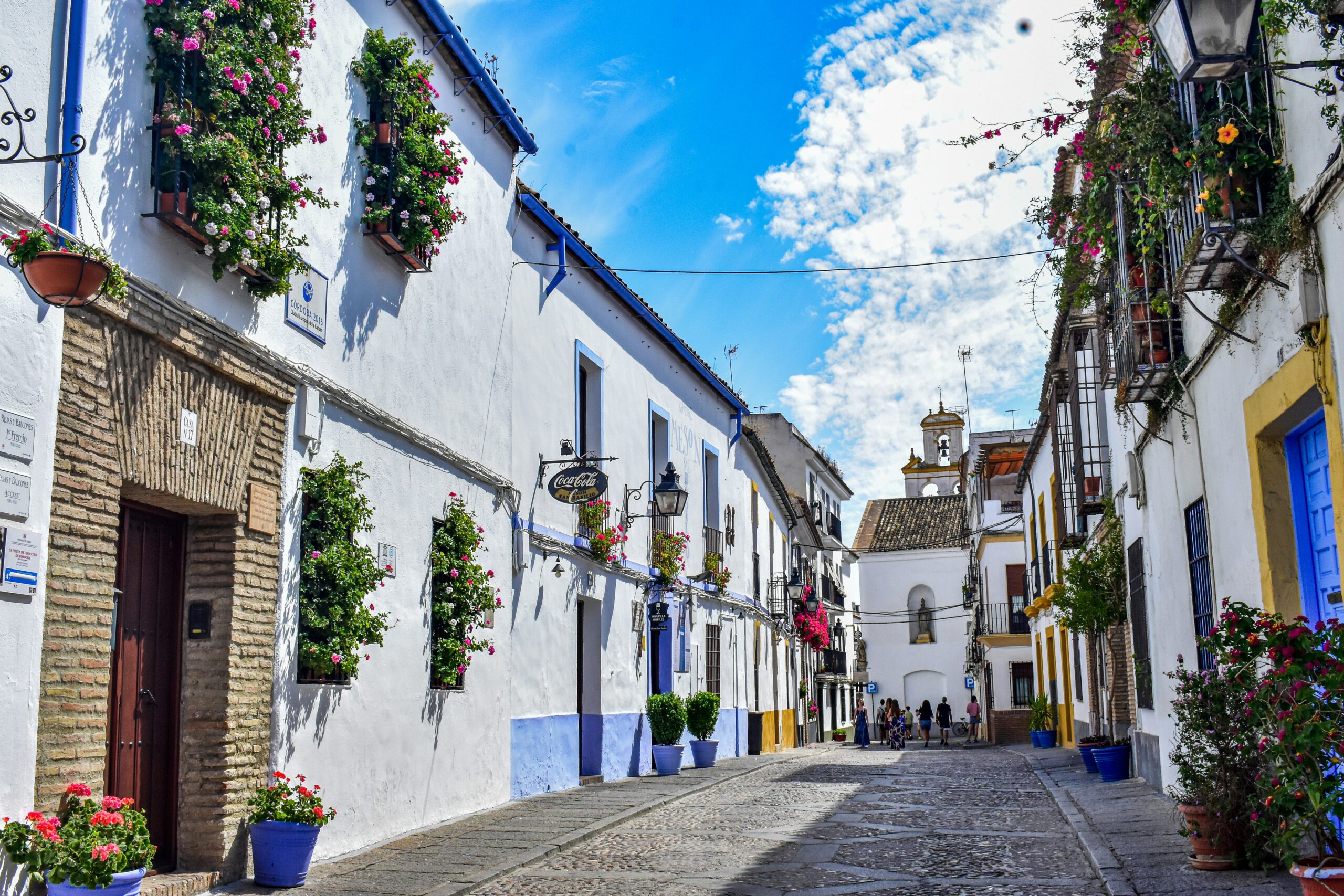
Known as « the bullfighters’ neighbourhood », Santa Marina concentrates some of the festival’s grandest patios. According to Remitly Guide 2026, these Axerquía spaces offer a calmer, more authentic atmosphere with large courtyards and exquisite botanical selections. The must-see address: calle Marroquíes no. 6, awarded more times than any other patio in the competition’s entire history.
The 2026 novelty brings new addresses in less-visited areas of the neighbourhood, offering an intimate perspective on Cordovan heritage and showing the evolution of traditional irrigation systems and artisanal azulejo design. The route concludes perfectly at one of the tapas bars of the San Agustín neighbourhood, steps from the main square.
Tip for lovers of cultural travel in Spain: combine San Agustín with a visit to the medieval square for a complete immersion in Andalusian historic urbanism.
San Lorenzo and the Judería: crowd-free and a thousand years of history
Two neighbourhoods, two complementary atmospheres
Barrio San Lorenzo — Tranquillity and the Interpretation Centre
Heading slightly towards the old city walls, barrio San Lorenzo offers a noticeably more relaxed atmosphere. According to La Cosmopolilla, crowds here are significantly lighter than in the festival’s main hotspots, without sacrificing floral quality. The unmissable stop: the Centro de Interpretación de los Patios (Calle Trueque, 4), set in a historic patio with its well, enchinado cordobés floor and century-old jasmine. Entry is free and the educational visit is ideal for understanding the history and upkeep of this centuries-old tradition.
The Judería — Patios in the shadow of the Mezquita
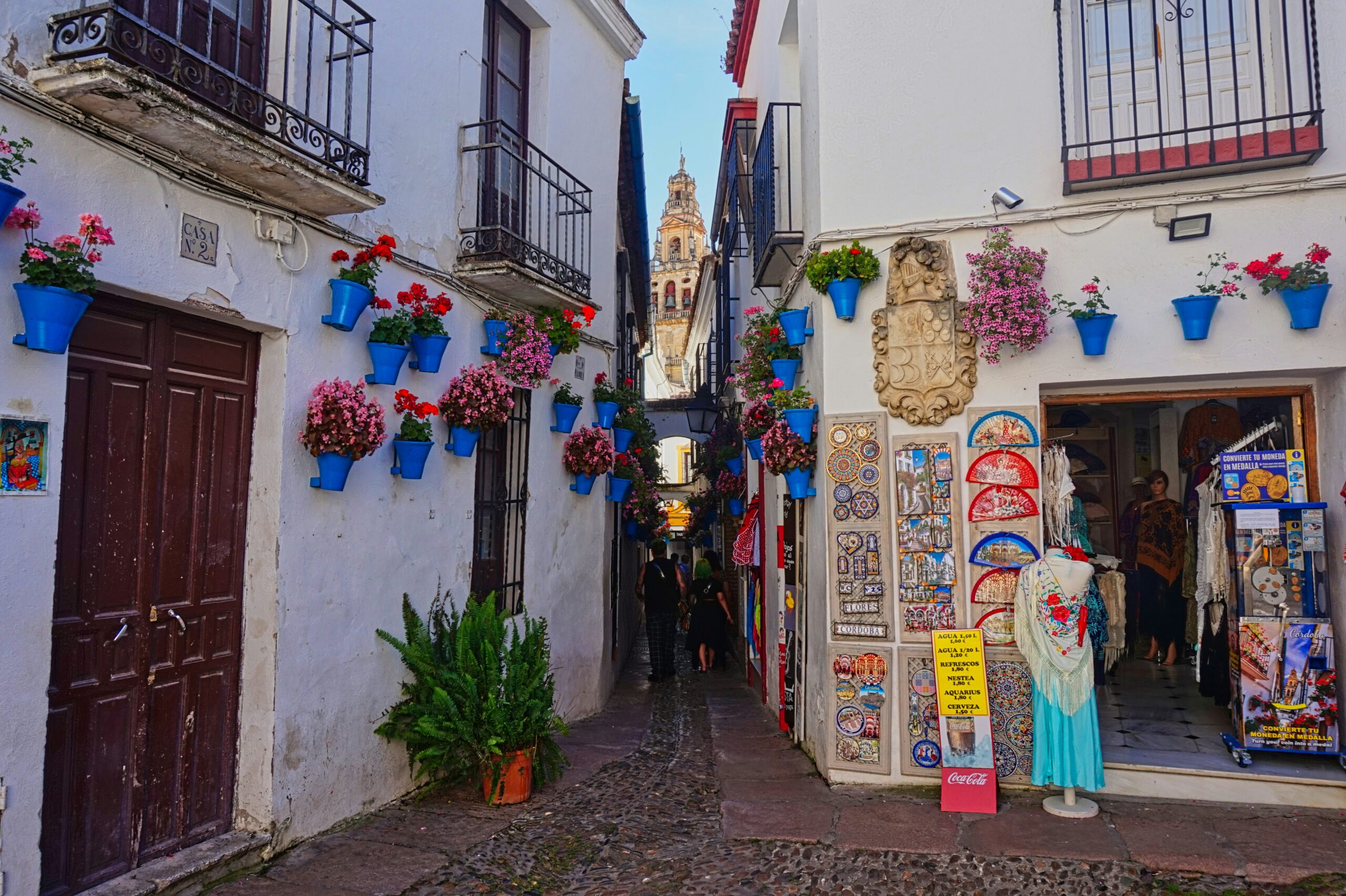
Strolling through the alleyways surrounding the Mezquita-Cathedral during the festival is a uniquely moving experience: the scent of flowers mingles with incense drifting from the monument. Though the number of patios here is smaller than in San Basilio, their age and historical value are unmatched. The Zoco Municipal (free entry 10 AM–8 PM daily) also offers flower-filled spaces continuing the patio tradition. Steps from the Mezquita, Taberna el Nº10 (calle Romero) is the best spot for a tasting of mazamorra — the Andalusian cold almond soup — as a cultural pause.
Palacio de Viana: the living patio museum (open year-round)
Visiting Córdoba outside the festival? The Palacio de Viana (Plaza de Don Gome, 2) is the perfect answer. This palace of over 6,500 m², in the barrio of Santa Marina, houses the city’s largest collection of Cordovan patios: 12 patios in different styles, from medieval to baroque to Romantic. According to Disfruta Córdoba, each patio is connected to the next by arcaded galleries and overflows with aromatic plants, citrus trees and Andalusian fountains.
Entry to the 12 patios and institutional area costs €8.50; the guided interior tour (40 min) is €9; the combined ticket is €14. Good news: every Wednesday from 2 PM to 5 PM, patio entry is free. Hours from September to June: Tuesday–Saturday 10 AM–7 PM, Sundays and holidays 10 AM–3 PM. Closed Mondays.
The Palacio de Viana also offers a chance to explore the history of Cordovan nobility from 1425 to 1980. The city’s oldest communal patio — the Patio de los Gatos, shared between neighbouring houses in the Middle Ages — is here, along with the Patio del Recibo and Patio de las Rejas, symbolising power and family lineage. An absolutely unmissable experience for understanding how the patio tradition evolved beyond the festival.
Flamenco nights and Cruces de Mayo: the 2026 nocturnal programme
The 2026 edition lights up like never before
The 2026 nocturnal programme — An unprecedented novelty
In 2026, the Ayuntamiento de Córdoba has radically transformed the festival’s night-time experience. As darkness falls, patios come alive with live flamenco performances and are illuminated by ambient lighting systems designed specifically to reveal the colours of geraniums and carnations. As reported by Guia Flama, the patios of Las Campanas, Los Naranjos, Orive and Rey Heredia, along with Alcázar Viejo, Corredera and La Calahorra, host flamenco shows throughout the festival. Evenings start at 6 PM — note that patio temperatures can be 10 to 15 degrees cooler than the street.
Cruces de Mayo — The floral prologue (April 29 – May 3, 2026)
The « Mayo Cordobés » actually begins a week before the Patio Festival, with the Cruces de Mayo (April 29–May 3, 2026). More than 55 floral crosses are installed on the squares of the historic centre by neighbourhood associations, brotherhoods and clubs. Unlike the Patios — spaces of silent contemplation — the Cruces are a loud and lively popular celebration: live music, tapas bars, festive atmosphere until 2 AM. Entry is free; you only pay for your drinks (€10–15 per evening). The liveliest squares: Plaza de San Agustín, Plaza de San Pedro, Plaza del Socorro and Plaza de Jerónimo Páez.
Medina Azahara day trip: the Caliph’s patio (8 km from Córdoba)
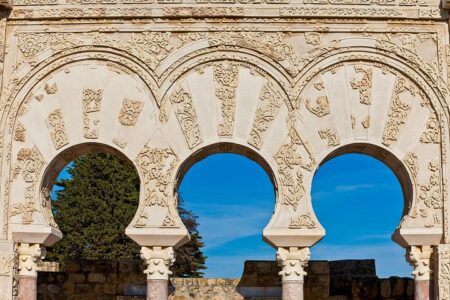
Just 8 km from the historic centre, Medina Azahara is the unmissable excursion from Córdoba. Built in 936 on the orders of Caliph Abd al-Rahman III, this palatial city — a UNESCO World Heritage Site since 2018 — reveals the very origins of the « patio » concept in a unique archaeological context. The vizier Jafar’s residence is organised around a central courtyard with fountains and gardens, characteristic of Caliphal-era Islamic architecture. During the festival, the site organises special visits dedicated to its historic patios.
Admission: free for EU citizens (€1.50 otherwise). The shuttle bus between the visitor centre and the ruins costs €3 (return). Tip: watch the 18-minute film in the museum before visiting the archaeological site — it completely transforms how you read the ruins. With 45 extra minutes for European Museum Night 2026, Córdoba can boast an exceptionally dense cultural offering in May.
Budget and logistics: how much to budget for the Córdoba Patios?
The festival’s biggest draw: competition patios are completely free. Your budget focuses on accommodation, meals and extra activities. Based on an analysis of several 2026 guides, here are realistic ranges:
| Profile | Accommodation/night | Daily budget | Total 3 days |
|---|---|---|---|
| Budget traveller | Hostel Judería: €18–28/bed | ~€30–40 | ~€120–150 |
| Comfort | Central hotel: €65–95 | ~€60–80 | ~€270–345 |
| Premium | Eurostars Patios: €80–100 | ~€100–120 | ~€390–480 |
How to get to Córdoba
- AVE high-speed train from Madrid: 1h45 (approx. €25–60) — the fastest connection
- Train from Seville: 45 min (€10–25) — ideal for an Andalusia circuit
- Fly to Seville (SVQ) then train — from London under 3h flight
- May weather: 20–27°C daytime (up to 30°C at noon), 15–18°C evenings — bring a light layer for night itineraries
Frequently asked questions about Córdoba Patios 2026
Are the Córdoba Patios 2026 really free?
Yes, entry to the official competition patios is completely free — no advance booking or ticket required. According to Saltar Con Migo, visits take place in free flow during official hours (11 AM–2 PM and 6 PM–10 PM). The Palacio de Viana (12 permanent patios) is paid (€8.50 for patios only), except Wednesdays from 2 PM to 5 PM when entry is free. Tradition suggests leaving a small voluntary donation of €1–2 in the collection boxes at competition patio entrances to support the owners who maintain these spaces.
How do I get the official Córdoba Patios 2026 map?
Three options: (1) the official site patios.cordoba.es/mapa offers a real-time interactive map with density alerts, downloadable as PDF; (2) the free Mayo Cordobés app (iOS and Android) centralises the map, routes and crowd alerts; (3) a physical map is available at the Córdoba Tourist Office (Calle Rey Heredia, 22) on arrival. The 2026 map integrates the new peripheral routes in the extended Santa Marina neighbourhood and less-visited areas.
What is the best time to avoid crowds at the Córdoba Patios?
The two least crowded slots are: (1) 11 AM–12:30 PM, at the morning opening — lovely light and short queues; (2) 8:30 PM–10 PM, late evening — daytime crowds have gone, nocturnal lighting reveals flowers in a uniquely beautiful way. The calmest days are Monday, Tuesday and Wednesday of the first week (May 4–8). The weekends of May 9–10 and 16–17 account for over 60% of total attendance. For San Basilio in particular, arrive at 1:30 PM (just before the midday closing) to avoid waits of up to 45 minutes.
Can you visit Córdoba’s patios outside the festival?
Yes, several alternatives allow you to discover patio culture year-round: (1) the Palacio de Viana (Plaza de Don Gome, 2) and its 12 patios are open from September to June (Tue–Sat 10 AM–7 PM, Sun 10 AM–3 PM, closed Mon); (2) the Centro de Interpretación de la Fiesta de los Patios (Calle Trueque, 4, barrio San Lorenzo) is an iconic patio-house to visit free of charge; (3) the Zoco Municipal in the Judería offers flower-filled spaces accessible daily 10 AM–8 PM without a ticket. During May before the festival (May 1–3), some private patios already spontaneously open their doors to passers-by.
How can you tell if a patio is open during the festival?
The unmistakable sign: flower pots on either side of the entrance door. According to Visit Andalucía, participating patios also display an official festival sign with the route number they belong to. When a door is closed, it means the patio is either in its midday closing period (2 PM–6 PM) or not participating in the competition this year. The Mayo Cordobés app shows in real time which patios are currently open and their crowd level.
What is the difference between the Patios and the Cruces de Mayo?
They are two complementary but very different events. The Córdoba Patios (May 4–17) are spaces of silent contemplation and floral beauty: no loud music, no bars, no food stalls. It is an intimate, peaceful experience. The Cruces de Mayo (April 29–May 3), by contrast, are a lively popular celebration: more than 55 floral crosses are erected on the historic centre’s squares by neighbourhood associations, accompanied by tapas bars, live music until 2 AM and a very festive atmosphere. Both are part of the « Mayo Cordobés » (the « Cordovan May »), which concludes with the Feria de Córdoba.
Are the Córdoba Patios accessible to people with reduced mobility?
Accessibility varies by patio. The Palacio de Viana has adapted ramps for wheelchair users and pushchairs. For private competition patios, accessibility depends on each individual house’s architecture: old houses often have thresholds or steps at the entrance. The Mayo Cordobés app and the official site patios.cordoba.es provide accessibility information for each patio. Barrio San Lorenzo and its wider streets offer easier circulation than the maze of the San Basilio neighbourhood.
Why are the Córdoba Patios UNESCO-listed?
Since 2012, the Fiesta de los Patios de Córdoba has been inscribed on UNESCO’s Representative List of the Intangible Cultural Heritage of Humanity. This recognition highlights the historical and communal value of a tradition over a century old: the competition has existed since 1921. UNESCO particularly valued the fact that this heritage is kept alive by ordinary families who maintain their patios with altruistic devotion, graciously opening them to visitors. The patio tradition bears witness to the synthesis of Roman, Arab and Christian cultures that characterises Córdoba — a city that, in the 10th century, was the largest and most learned in Western Europe.
Sources and references
- Ayuntamiento de Córdoba — Patios.cordoba.es (official)
- Turismo de Córdoba — Festival de los Patios Cordobeses
- Mayo Cordobés App — Official map and list 2026
- La Cosmopolilla — Guía de los Patios de Córdoba 2026
- Saltar Con Migo — Visiting the Patios de Córdoba 2026
- Turiscordoba — Festival guide
- Disfruta Córdoba — Palacio de Viana
- Córdoba Hoy — Record 2026 edition
- Spain Voyages — La Fiesta de los Patios 2026
- Visit Andalucía — Córdoba Patio Festival
- Guia Flama — Flamenco and Patios 2026
- Remitly — Guide to visiting the Patios de Córdoba 2026
Plan your trip to Córdoba
Ready to organise your stay during the Patio Festival? Explore Pixidia’s itineraries for Andalusia and get inspired by our travel guides.
Explore our itineraries