
Commercial partnership. This article contains affiliate links. If you book through these links, Pixidia earns a small commission at no extra cost to you. Learn more
The best private cooking classes in Kyoto in 2026 start from £40 per person, in small groups of 4 to 8 participants maximum, all rated 4.88+ on Viator. The 10 selected workshops cover unique specialities: private sushi with tea ceremony, home-style obanzai, ramen from scratch, wagashi nerikiri, sake pairing with a certified sommelier — unavailable in standard group classes. I recommend the private class at Emika’s home (sushi or obanzai + matcha tea ceremony) for a complete first immersion into Kyoto washoku, and the home cooking class near Fushimi Inari to understand obanzai from market to plate.
Kyoto is Japan’s culinary capital — and yet most visitors leave with a supermarket ramen photo and a handful of wagashi bought at the konbini. That gap between tourist and Kyoto’s kitchen is exactly what a small-group class with a local master bridges in half a day.
I’ve selected 10 cooking classes in Kyoto around one common criterion: small group or full private exclusivity. No 30-person halls where you can’t hear the chef’s instructions. No rushed instructors darting between stations. These workshops bring together a maximum of 4 to 8 people — or your group alone. The masters running them pass on gestures learned from their parents and grandparents: their family ramen, the tea ceremony at home, nerikiri shaped to the season’s motifs.
The private class at Emika’s home — traditional wooden house, sushi or obanzai of your choice, tea ceremony with wagashi — is the standout pick of this selection. It’s also the only workshop that combines cooking and tea ceremony under one roof in a genuine domestic setting, rated 4.976 stars from 83 reviews. The selection covers all budgets (from £40 for the intense 1-hour ramen class in Gion, to £93 for the gyoza class in a machiya) and all specialities: everyday washoku, kaiseki haute cuisine, wagashi confectionery, Fushimi sake. In Kyoto, learning to cook means learning straight from the source.
Why Kyoto is the world capital of washoku
In December 2013, UNESCO inscribed washoku (和食) on the Representative List of Intangible Cultural Heritage. Kyoto played a central role in this recognition: it was in this former imperial capital — seat of the court for over a thousand years — that chefs led the candidacy process. Kyoto cuisine — kyo-ryori — carries the legacy of the imperial court, Zen Buddhist temples, tea ceremonies, and everyday domestic kitchens.
Kaiseki (懐石) was born in Kyoto during 16th-century tea ceremonies. Obanzai, Kyoto’s everyday cuisine built around kyo-yasai (Kyoto vegetables), dates back at least to 1849 according to the earliest written records. Wagashi, the sweets inseparable from the tea ceremony, were developed in Kyoto as far back as the Edo period. Nishiki Market, nicknamed « Kyoto’s Kitchen », has concentrated 130 specialist shops along 400 metres since the 17th century. And the sake district of Fushimi Inari still hosts around 40 breweries today, thanks to the exceptional quality of its underground springs. Taking a cooking class here means learning from five centuries of unbroken transmission.
The 10 best small-group cooking classes in Kyoto
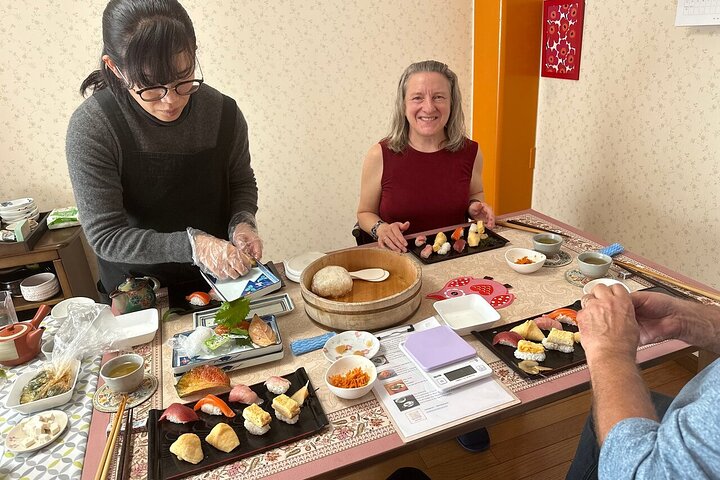
1. Private class at Emika’s — sushi or obanzai + tea ceremony
This is the only workshop in the selection that combines cooking and tea ceremony under one roof — a traditional wooden house in central Kyoto. Emika is a Kyoto native who passes on hereditary family techniques, whether you choose traditional sushi or seasonal obanzai (pickled vegetables, mushrooms, miso soup). The session ends over matcha tea with home-made wagashi. Your group only — no strangers.
- Complete exclusivity — your group alone in the house
- Dual experience: Japanese cooking + matcha tea ceremony
- Menu of your choice: traditional sushi or seasonal obanzai
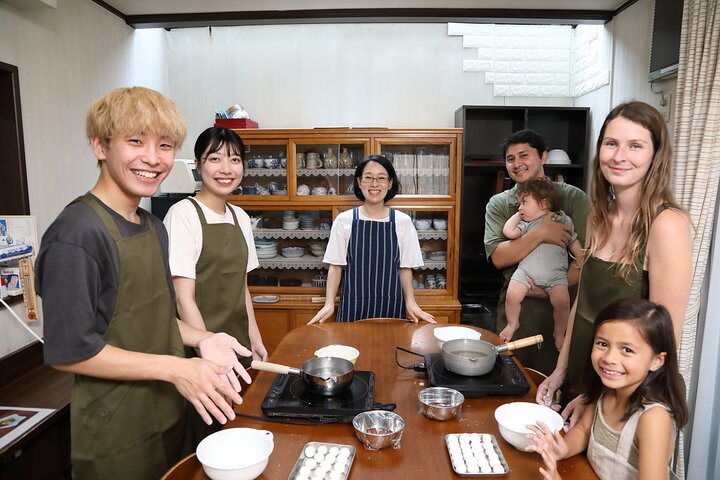
2. Home cooking + supermarket visit — Fushimi Inari
This class starts where others don’t: at the local supermarket, a fifteen-minute walk from Fushimi Inari shrine. Together with your host you select seasonal ingredients — a rare glimpse into the everyday food habits of Kyoto locals, far from the tourist grocers of Nishiki Market. The session continues in a real Japanese home with a menu adapted to your preferences; vegetarian option available. Max 6 people.
- Local supermarket visit included — genuine insight into Japanese food shopping
- Flexible vegetarian/vegan menu on request
- Lunch with the dishes you cooked together included
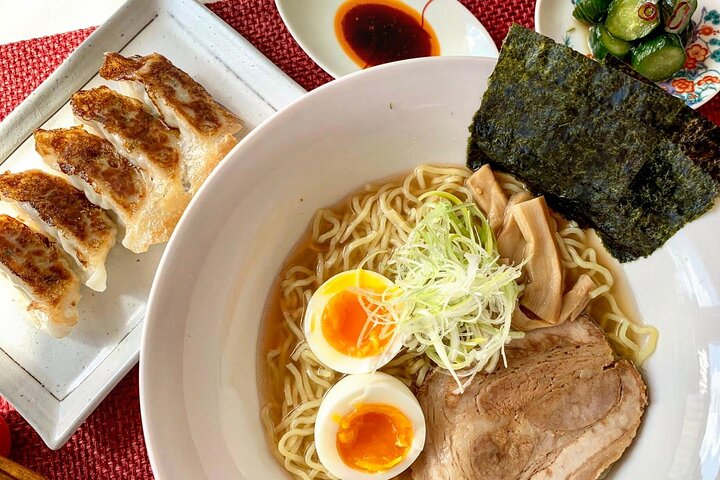
3. Home-style ramen and gyoza — family recipe from scratch
This is the highest-reviewed ramen class in the selection — 154 reviews at 4.994 stars — and for good reason: you make a proper ramen broth entirely from scratch (chicken stock + shoyu tare, no sachets), fold your own gyoza, and sit down to eat what you just cooked. A Kyoto family that has made their ramen this way for generations guides you at every step. Recipes are yours to take home.
- Ramen broth made from scratch — no instant packets
- Recipes to take home and recreate
- Ramen + gyoza lunch you cooked included
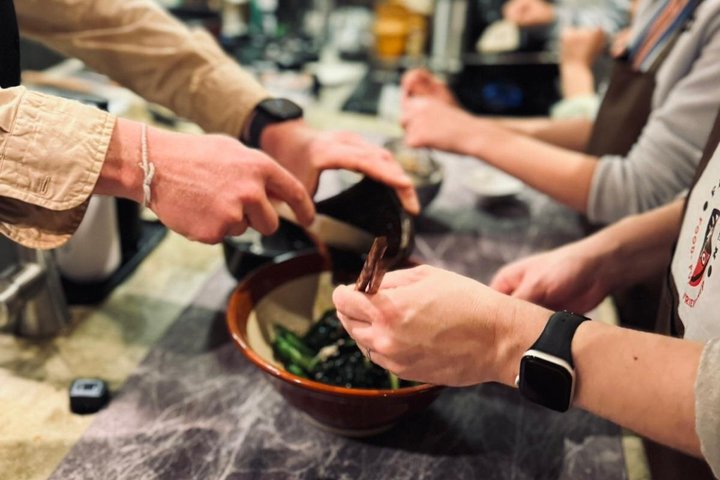
4. Kyoto Family Kitchen — immersion into real Japanese home life
The only experience in the selection set in a residential neighbourhood away from the tourist trail — the exact address is shared only after booking. Your group alone in a real Kyoto family kitchen: a welcome tea on arrival, cooking together, then sharing a meal with the host family. Ideal for families or couples looking for less of a « class » and more of a genuine immersion into ordinary Japanese life.
- Authentic residential neighbourhood — off the tourist circuit
- Shared meal with the host family after the session
- Japanese welcome tea included on arrival
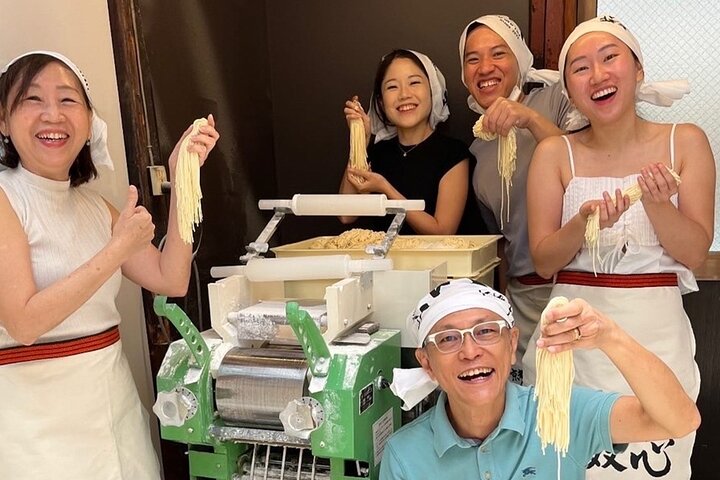
5. Hand-made ramen noodles — in the historic Gion district
The most accessible format in the selection: in just one hour at Musoshin restaurant in the historic Gion district, you learn to hand-make ramen noodles and assemble your own bowl. Intensive session led by a professional chef, maximum 6 participants. Perfect if your Kyoto itinerary is packed — or if you’d like to follow it with a stroll through Gion at dusk.
- Gion district — historic setting of machiya and cobbled lanes
- 1-hour format ideal for busy schedules
- Noodle making + bowl assembly + tasting included
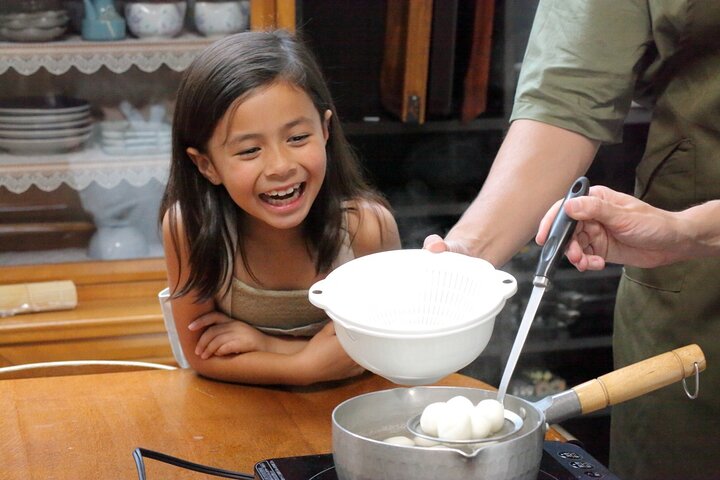
6. Wagashi nerikiri — the art of Kyoto confectionery since the Edo period
Nerikiri is the most distinctive speciality in this selection — a culinary art born in Kyoto in the 17th century and impossible to learn anywhere else. You shape confections by hand from white bean paste using seasonal motifs: cherry blossoms, maple leaves, snowflakes. Bamboo tools, precise gestures, matcha tea to accompany — the full philosophy of the tea ceremony distilled into 2.5 hours. Highly photogenic and a perfect edible souvenir to take home.
- Nerikiri art born in Kyoto in the Edo period — unique to the city
- Matcha tea included to accompany your wagashi creations
- Max 6 people — seasonal motif customisation possible
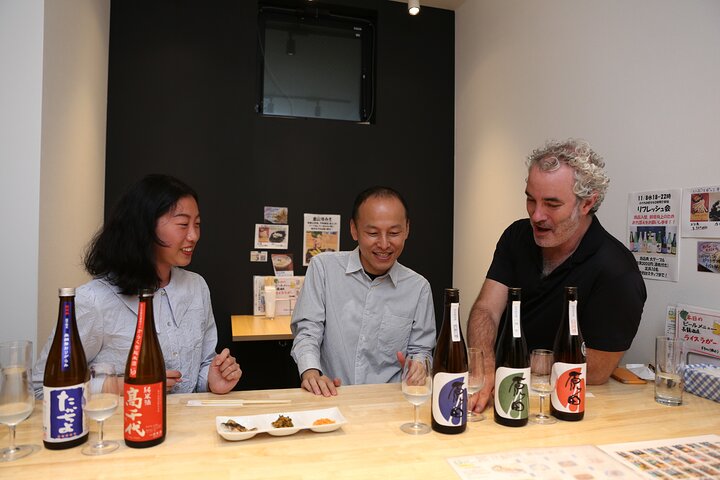
7. Private sake tasting — 8 labels with a certified sommelier
Kenji is a certified International Sake Sommelier — not just a server behind a counter. Over 2 hours in his private space at the Shijo-Karasuma intersection, he guides you through 8 sakes representing Japan’s great producing regions: the sweet nigorizake from Fushimi (Kyoto’s underground springs still supply 40 breweries), the dry variety from Nada (Hyogo), the fruity styles from Niigata. Food pairings, label reading, sake vocabulary. The best introduction to Japanese sake I’ve found in Kyoto.
- Certified International Sake Sommelier — rare expertise in Kyoto
- 8 sakes from varied regions: Fushimi, Nada, Niigata and more
- Food pairings and Japanese label reading included
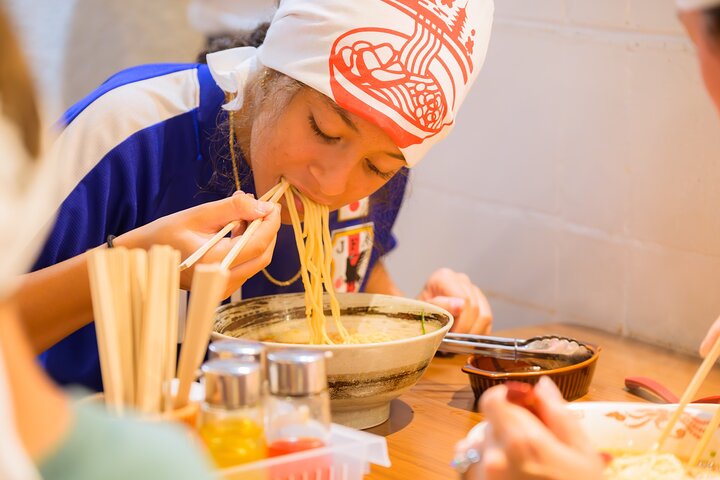
8. Hand-made ramen at the Ramen Factory — Kyoto’s most-reviewed workshop
This is the most-reviewed workshop in the entire selection: 2,590 reviews at a 4.97 average. The Ramen Factory claims to be the only place where you build your bowl end to end, from kneading and cutting the noodles to assembling the broth and roasting the chicken. Allow 1 hr 30, with instant confirmation and free cancellation. Vegetarian, vegan and halal versions are available, which makes it the most accommodating option on this list for a group with mixed diets.
- 2,590 reviews at 4.97 — by far the most-reviewed on this list
- Noodles kneaded and cut by hand, broth assembled yourself
- Vegetarian, vegan and halal versions — useful for mixed groups
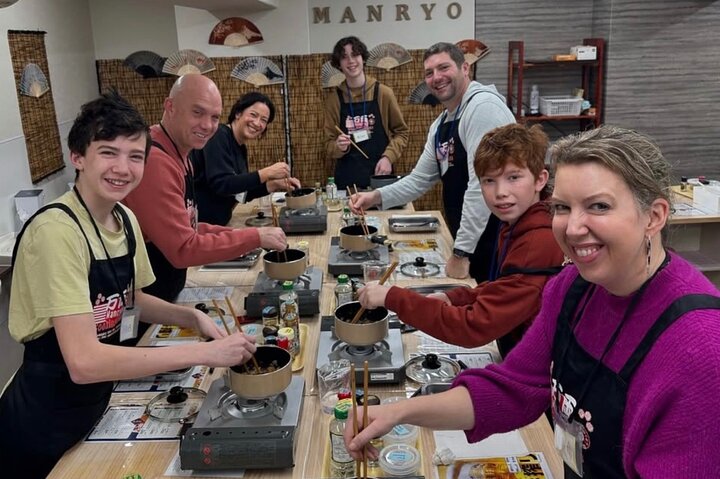
9. Ramen, gyoza and onigiri — triple lesson in 1.5 hours
Three dishes in 90 minutes — the highest teaching density in the selection. You make a shoyu + miso ramen broth from scratch, crispy gyoza, and onigiri (rice triangles), with patient and welcoming English-speaking instructors. Modern basement setting in central Kyoto, maximum 8 people. The option to choose if you want to leave with solid foundations in the three everyday staples of Japanese cooking in a single session.
- 3 dishes in 90 minutes — best content-to-duration ratio in the selection
- Shoyu + miso ramen, crispy gyoza and onigiri
- Friendly English-speaking instructors, personalised attention
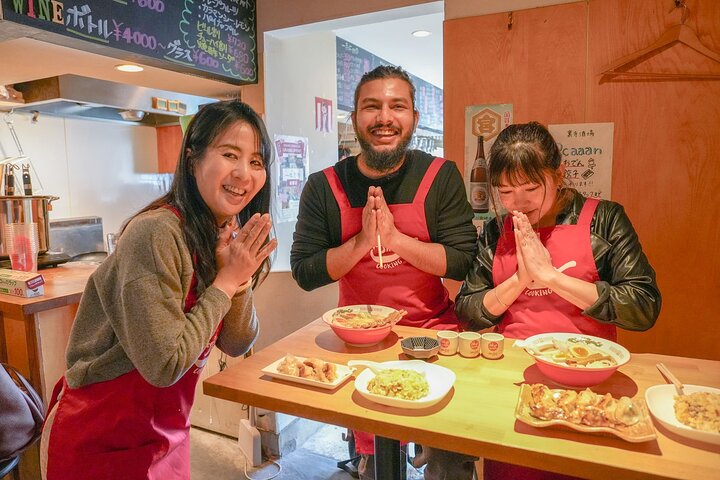
10. Ramen and gyoza with MagicalTrip — the safe bet (401 reviews)
MagicalTrip is the operator with the highest review volume in the entire selection — 401 reviews at 4.895 stars, winner of the Tripadvisor Travellers’ Choice Best of the Best 2024-2025. If you’re on the fence about booking a Kyoto cooking class and want a thoroughly proven option, this is it. Ramen from scratch (chicken broth + tare), crispy gyoza, fried rice. Two complimentary drinks included. The professional guidance of certified MagicalTrip chefs more than compensates for the slightly larger group format.
- 401 reviews — highest volume in the selection
- Tripadvisor Best of the Best 2024-2025
- 2 complimentary drinks + ramen + gyoza + fried rice included
Planning your trip to Kyoto
4G/5G connectivity from the moment you land at Kansai (KIX) or Osaka (ITM). No physical SIM to hunt down — activate directly from your phone before you board.
Get my Japan eSIMNomad Insurance: global coverage from $56/4 weeks. Japan has high medical costs outside the NHS — don’t skip cover. 10% off via our link.
From $56 / 4 weeksCompare flights from London to Kansai (KIX) or Tokyo (NRT) with Shinkansen connection. Live fares updated in real time.
See flightsThe most-reviewed workshop in the selection: ramen made by hand from start to finish, 1 hr 30, with vegetarian, vegan and halal versions.
Check availabilityPractical tips for your Kyoto cooking classes
When to book: private classes (at Emika’s, Kyoto Family Kitchen) should be booked 2 to 4 weeks in advance during peak season — cherry blossom (March–April) and autumn foliage (October–November). Outside these periods, 5 to 7 days ahead is usually sufficient. For group classes (wagashi, ramen machiya), 48 to 72 hours’ notice may be enough in low season (December–February).
Getting to the workshops: classes near Fushimi Inari (home cooking class and wagashi) are accessible from Kyoto Station via the JR Nara Line, Inari stop (5 minutes). The Matsugasaki ramen class (family ramen from scratch) is reached via the Karasuma subway line, Matsugasaki stop (north of the city). The Gion classes (noodle making) and the Shijo-Karasuma sake tasting (private sake) are accessible via Karasuma subway, Shijo stop.
Language and dietary requirements: all selected classes are conducted in English. Mention any dietary restrictions (vegetarian, vegan, soy allergy) at booking — several classes offer adaptations. Kyoto Family Kitchen and the Fushimi Inari class are particularly flexible on menus.
What to bring: aprons are provided at most workshops. Wear comfortable clothes. Arrive slightly hungry — you’ll eat what you’ve cooked at the end of the session. Japan is still largely a cash society: some classes do not accept international cards for on-site payments (check at booking).
Related articles: if Kyoto has caught your imagination, our guide to the best Kyoto cherry blossom tours for hanami pairs perfectly with a culinary stay. For other culinary capitals across Asia and Europe, explore our picks for cooking classes in Hanoi, private cooking classes in Rome, and cooking classes in Naples.
Frequently asked questions — Private cooking classes in Kyoto
What is the difference between a private and a group cooking class in Kyoto?
A private class (your group only, no strangers) gives you a fully personalised menu, a pace that suits you, and the master’s undivided attention throughout. Group classes in our selection are capped at 6 to 8 people — well below the tourist-style classes of 20 to 30. For maximum immersion, the class at Emika’s and Kyoto Family Kitchen are the 100% private options. Ramen, wagashi and gyoza classes are small group (max 6–8).
Do I need to speak Japanese to take a cooking class in Kyoto?
No. All classes in this selection are conducted in English with instructors experienced in hosting international visitors. English is the main language of instruction throughout: Japanese culinary terms (tare, dashi, nerikiri) are always explained in English with hands-on demonstration. If you prefer to note down a particular language preference, you can mention it in the booking comments.
Can I take a Kyoto cooking class as a vegetarian or vegan?
Yes, for most classes. The home cooking class near Fushimi Inari explicitly offers vegetarian and vegan menus on request — that is one of its strengths. Kyoto’s obanzai cuisine is in fact naturally vegetable-forward, rooted in Buddhist culinary tradition (shojin ryori). Ramen classes require advance notice as the standard broth is chicken-based — a kombu dashi (vegan) broth can generally be substituted. Always state your requirements at the time of booking.
How much does a private cooking class in Kyoto cost in 2026?
Prices in this selection range from £40 (hand-made ramen noodle class — 1 hour in the Gion district, max 6 people) to £93 (gyoza class in a historic machiya). Fully private experiences (at Emika’s, Kyoto Family Kitchen) sit between £80 and £84 per person. Wagashi and sake pairing classes are between £56 and £61. All prices are « from » and depend on the number of participants.
What is the best season for a cooking class in Kyoto?
Kyoto cooking classes run year-round — they are an evergreen format. However, ingredients vary by season: sakura-motif wagashi in spring (March–May), summer kyo-yasai vegetables in June–August, maple-leaf wagashi in autumn (Oct–Nov), yuzu and daikon in winter. Private slot availability is best in low season (July–August outside hanami, December–February). During peak season (April hanami, autumn foliage), book 3 to 4 weeks ahead for private formats.
Sources
- UNESCO — Washoku, traditional dietary cultures of the Japanese (inscribed 2013) — accessed 20 May 2026
- Wikidata — Kaiseki (Q175595) — accessed 20 May 2026
- Wikidata — Washoku / Japanese cuisine (Q234138) — accessed 20 May 2026
- Wikidata — Nishiki Market (Q11650434) — accessed 20 May 2026
- Wikidata — Fushimi Inari Taisha (Q510737) — accessed 20 May 2026
- Japan Guide — Kyoto Cooking Classes — accessed 20 May 2026
- ByFood — Kyoto Cooking Classes 2026 — accessed 20 May 2026
- Gekkeikan Sake Museum — Fushimi, Kyoto — accessed 20 May 2026
- Viator API — product data, ratings, reviews and URLs for the 10 selected workshops (ramen, gyoza, wagashi, private sushi, sake, obanzai) — retrieved 20 May 2026
Ready to cook washoku in Kyoto?
Private class slots in Kyoto fill quickly during peak season (April hanami, autumn foliage). Book ahead to secure the speciality that speaks to you — home-style ramen, wagashi nerikiri, Fushimi sake, or a full immersion at Emika’s.
See class #1 (at Emika’s)