
The Fiestas de San Fermín 2026 take place in Pamplona from 6 to 14 July, with 8 encierros every morning at 8am. The official route measures 848.6 metres; since 1910, between 15 and 16 people have died in the run (last fatality: 2009) and 6 runners were gored in 2025. A new 2026 rule shifts course access to 7:30am from the Plaza Consistorial only. If running isn’t for you, free concerts, nightly fireworks and the Giants Parade fill nine full days of fiesta.
Pamplona, 8am. A rocket explodes over Navarre, six fighting bulls burst from their pen, and 2,000 runners in white and red sprint across 848.6 metres of ancient cobblestones. The encierro lasts under three minutes. The decision to take part — or not — can take weeks. This guide brings together the hard facts, the new 2026 rules, and the full alternative programme for those who want to experience San Fermín on their own terms.
1. San Fermín 2026: programme & key dates (6–14 July)
Navarre’s biggest party: 204 hours of celebration
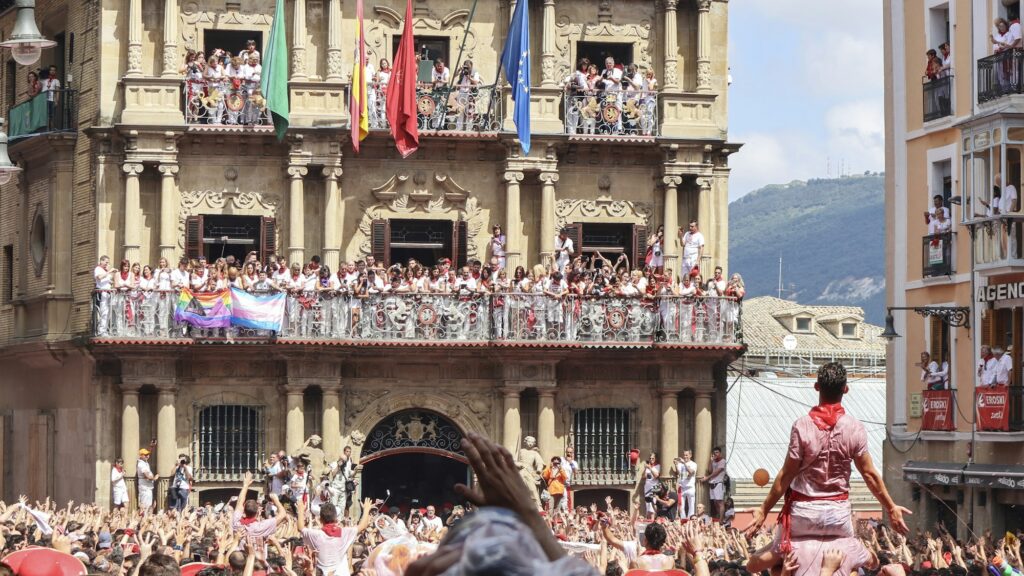
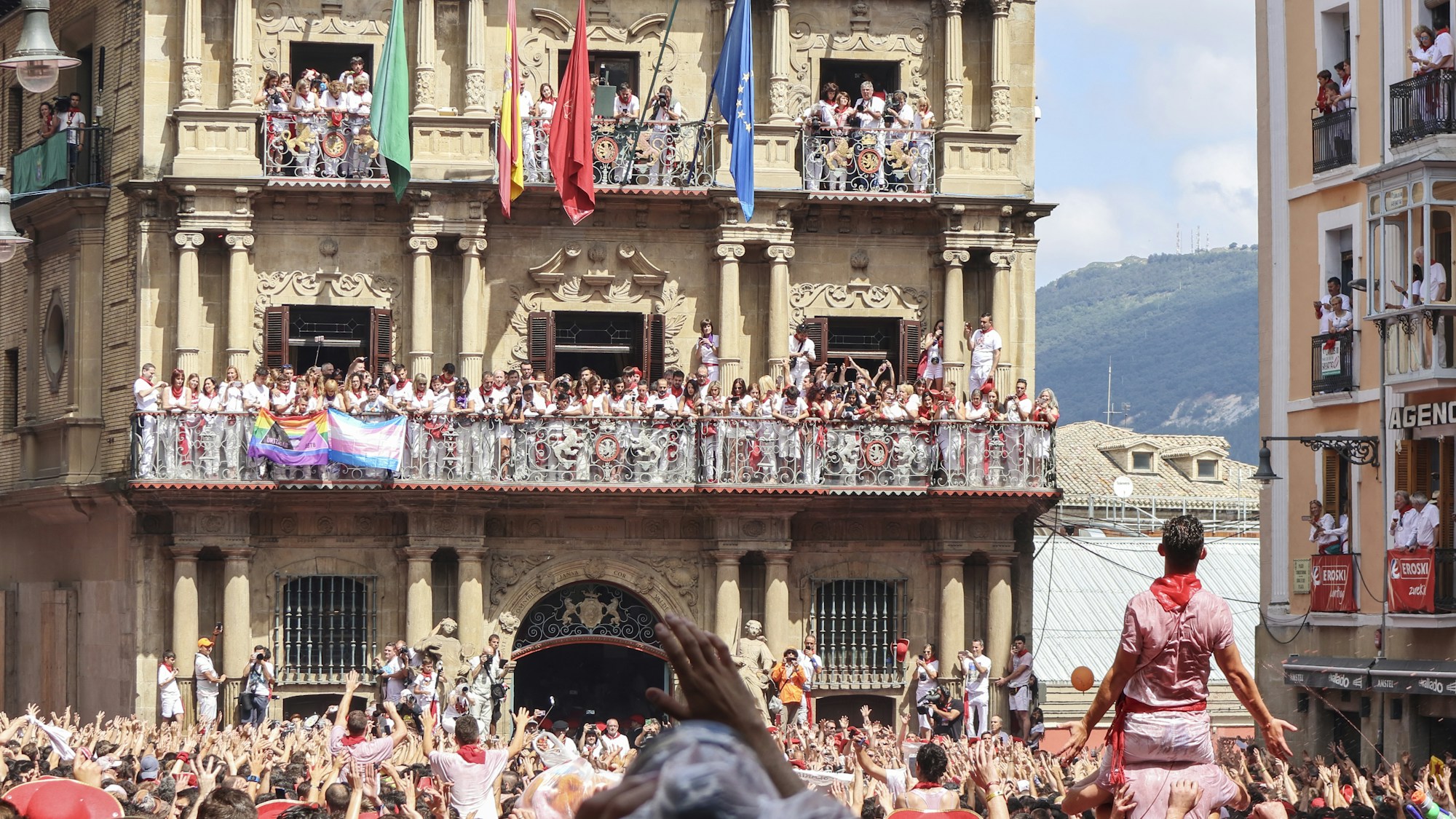
According to the Ayuntamiento de Pamplona, the Fiestas de San Fermín open on 6 July at noon with the Txupinazo — a rocket fired from the town hall balcony over the Plaza Consistorial, where tens of thousands of revellers in white and red gather chanting « ¡Viva San Fermín! Gora San Fermín! » The closing ceremony on 14 July at midnight is the Pobre de mí, a collective candlelit farewell song. In between: 204 hours of concerts, processions, bull runs, bullfights, fireworks and the Giants Parade.
The festival’s roots lie in the fusion of three medieval traditions: the religious cult of Saint Firmin (martyred in Amiens around AD 303), Pamplona’s livestock fairs, and the 16th-century custom of butchers herding bulls to the arena. Made world-famous by Ernest Hemingway in The Sun Also Rises (1926), the festival today draws participants from every corner of the globe. An official study by the Ayuntamiento (April 2026) counted 424,369 unique visitors in 2025, contributing €259.4 million to the local economy.
Typical daily schedule (7–14 July)
- 6:45am: Dianas — the La Pamplonesa brass band wakes the city from the town hall
- 7:30am: Course closes, runners enter (new 2026 rule)
- 8:00am: Encierro — bulls released, 2 to 5 minutes
- 9:30am: Giants Parade — cabezudos, kilikis and zaldikos
- 9:45pm: Toro de fuego — pyrotechnic bull through the old quarter
- 10:30pm: Free concerts at Plaza del Castillo
- 11:00pm: Fireworks at the Ciudadela (International Pyrotechnics Competition)
2. The San Fermín encierro: official rules, route & real risks
848.6 metres, 8 bulls, 2 to 5 minutes
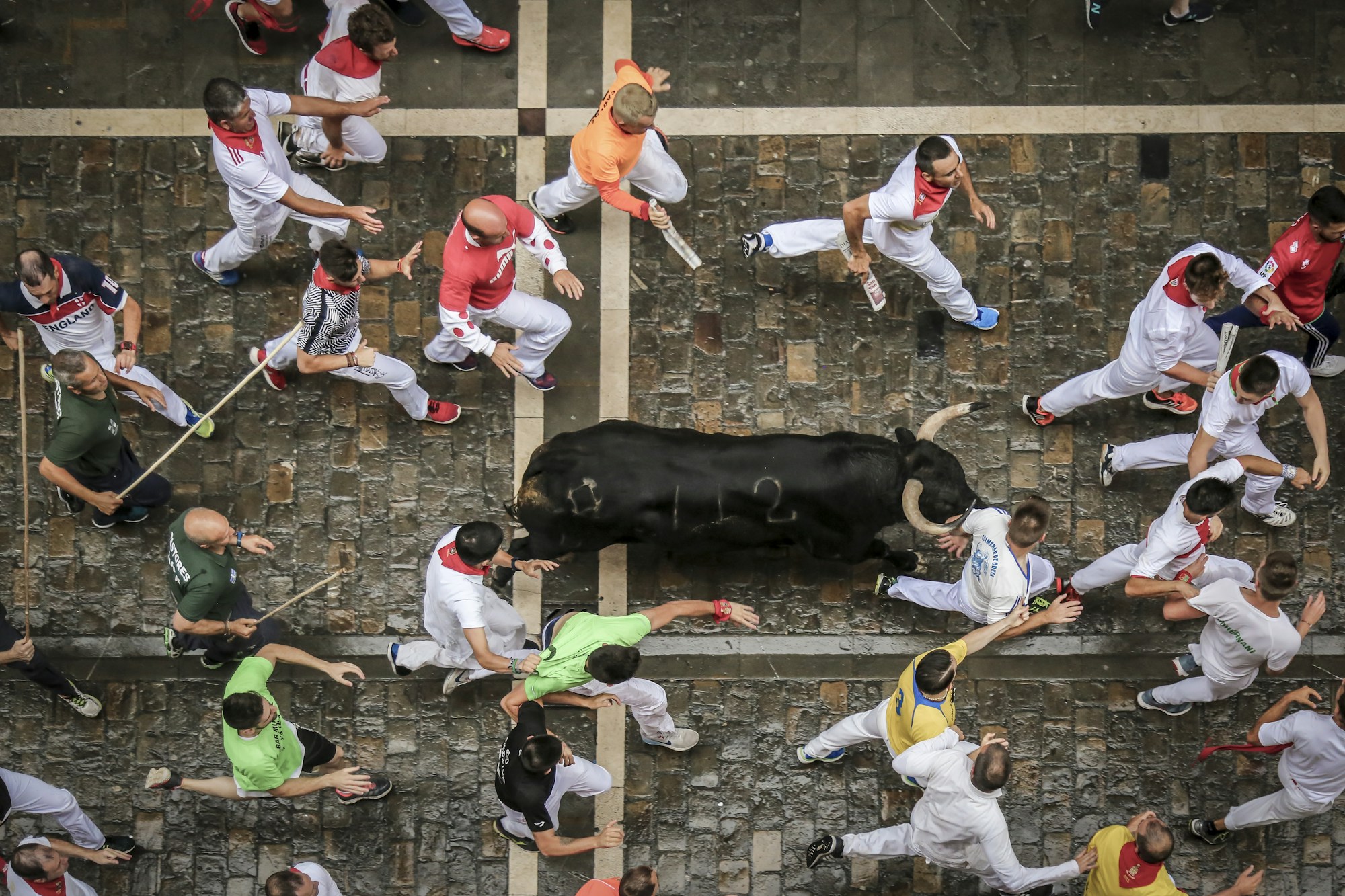
According to the official Bando of the Ayuntamiento, the encierro is open to any adult (minimum age 18), sober, carrying no bags or cameras in hand. The route links the Santo Domingo pen to the Plaza de Toros bullring via the streets of Estafeta and Mercaderes. Six fighting bulls and six steers are released after two rockets: the first signals the pen gates opening, the second confirms all animals are in the street.
The medical operation deployed every morning is remarkable: 9 medical posts along the 848 metres (roughly one every 50 m), 8 additional support points, 16 intensive care ambulances and 2 in reserve, all coordinated by the 112-SOS Navarra centre. Navarre Hospital is on preventive alert every morning from 7 to 14 July. Treatment is guaranteed for all participants, including foreign nationals, who then receive a bill to claim back through their travel insurance — another reason to sort cover before you go.
Safety statistics (official data)
- 15–16 deaths since 1910, last fatality: 2009 (Daniel Jimeno Romero, aged 27)
- 6 gored in 2025 (heaviest toll since 2022), 2 in 2024
- Overall injury risk: ~4.14% of participants (sanfermin.com)
- Goring risk: ~0.9%; fatality risk: ~0.017% (115-year historical average)
- 54% of runners only take part once in their lifetime
Technical tips for running safely
Experienced runners — including Jokin Zuasti (50 years of participation, author of Julios Intensos) — stress four core principles: pick one section only to suit your level, run in a straight line without sudden stops, never try to overtake the herd, and if you fall curl to the side and cover your head until all the animals have passed. Beginners should position themselves at the top of Calle Estafeta (a long 300 m straight) or near the Plaza del Ayuntamiento. The most dangerous spots are the Cuesta de Santo Domingo (steep slope, slippery cobblestones) and the Callejón (the narrow tunnel into the arena). Preparation courses run by veteran runners are available at encierro.com.
3. New 2026 rules: what’s changing for runners
Two major changes adopted by the Mesa del Encierro
According to Cope Navarra (May 2026), the Mesa del Encierro has adopted two amendments to the official Bando de San Fermín 2026:
- Later access time: entry to the course moves from 7:15am to 7:30am. Where previously several access points existed, from 2026 entry is exclusively from the Plaza Consistorial (the town hall square).
- Arena ban before the bulls: runners who pass through the Callejón (the narrow entrance tunnel to the arena) before the herd arrives must leave immediately, so as not to obstruct the animals’ entry.
Both measures are included in the official 2026 Bando. Any breach carries an on-the-spot fine. Meanwhile, a municipal inspection carried out in May 2026 identified 39 balconies and façade elements along the route with structural deficiencies — owners have been notified and a second inspection is planned for June. The Peñas Federation and the town hall are also running an awareness campaign with clear, direct messaging against dangerous behaviour: touching the animals, provoking them, or stepping into their path.
2026 ticket sale schedule
- Bullfight season-ticket renewals: 8–12 June 2026
- Online encierro arena tickets: already on sale from 1 June 2026
- Individual bullfight tickets: from 23 June 2026 at 11am on bacantix.com (€10–153)
4. Bullfighting in Spain in 2026: 78% oppose it
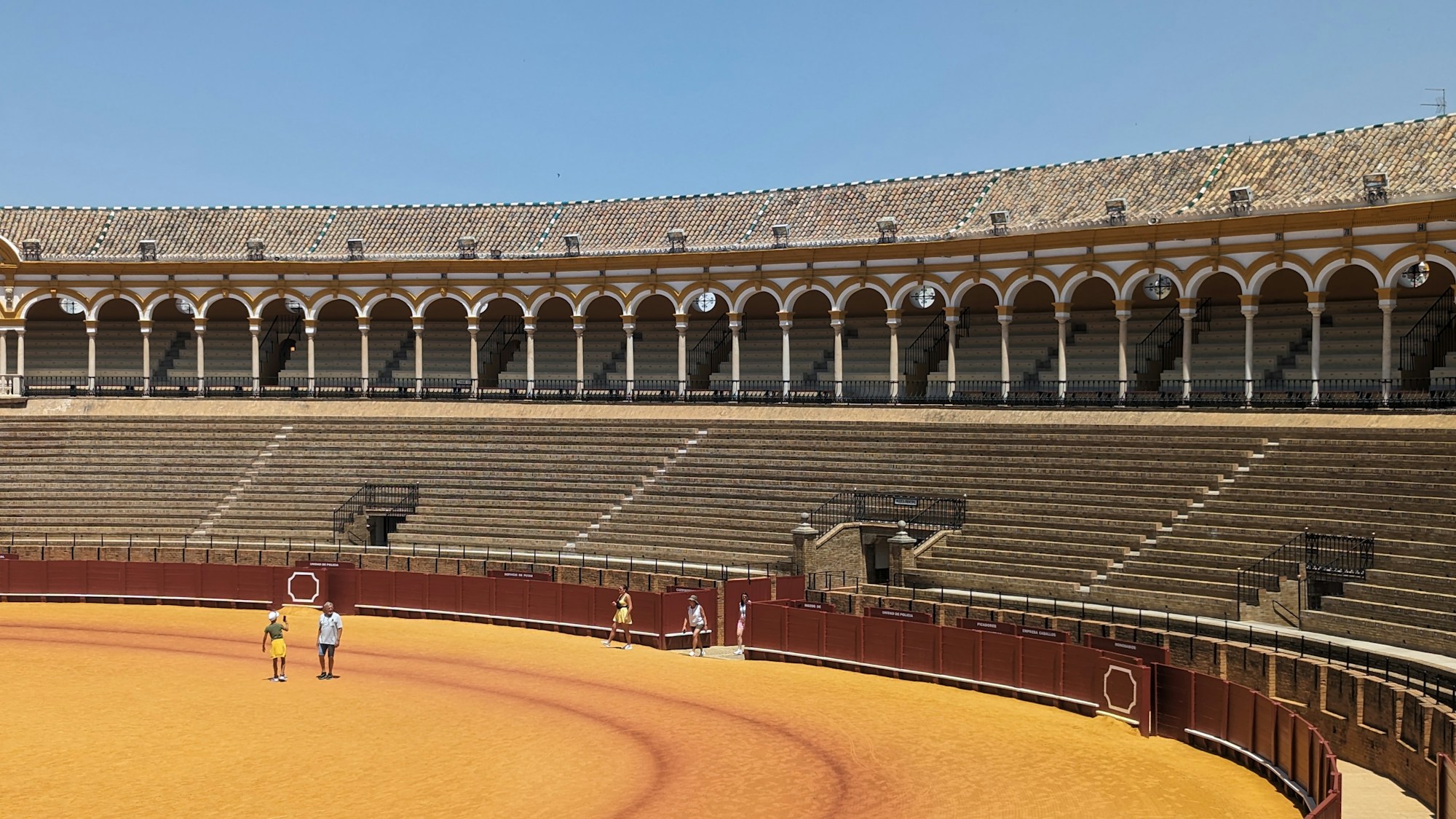
A societal debate that’s now front and centre in Spain
A Sigma Dos poll from April 2025 (n=1,819, margin ±2.3%) found that 78% of Spaniards oppose bullfighting — including 82.1% of women and 73.6% of men. At the same time, 715,606 signatures were gathered for a citizens’ legislative initiative to strip bullfighting of its cultural heritage status. That public pressure forced the Spanish Congress to open a debate in September 2025 — though the outcome remains uncertain in the face of opposition from the PP and Vox.
Yet bullfighting remains protected at national level by Law 18/2013 (passed under the Rajoy government), which classifies the corrida as intangible cultural heritage and blocks any regional ban. Culture Minister Ernest Urtasun of the Sánchez government abolished the National Bullfighting Prize in 2024 but was unable to repeal the law. In Pamplona itself, the mayor — from the socialist-EH Bildu coalition — is personally opposed to bullfights but has no legal power to ban them. 125 Spanish municipalities have already outlawed bullfighting locally, and the Canary Islands remain the only autonomous community where it is legally banned.
The case for bullfighting’s defenders
- A centuries-old tradition and an integral part of Navarrese and Spanish identity
- Direct economic impact: €259.4 million, 2,431 jobs (2025 figures)
- Fighting bull breeds (bos taurus ibéricus) face extinction if bullfighting is banned
5. San Fermín without the bullfighting: 9 days of festival, full throttle
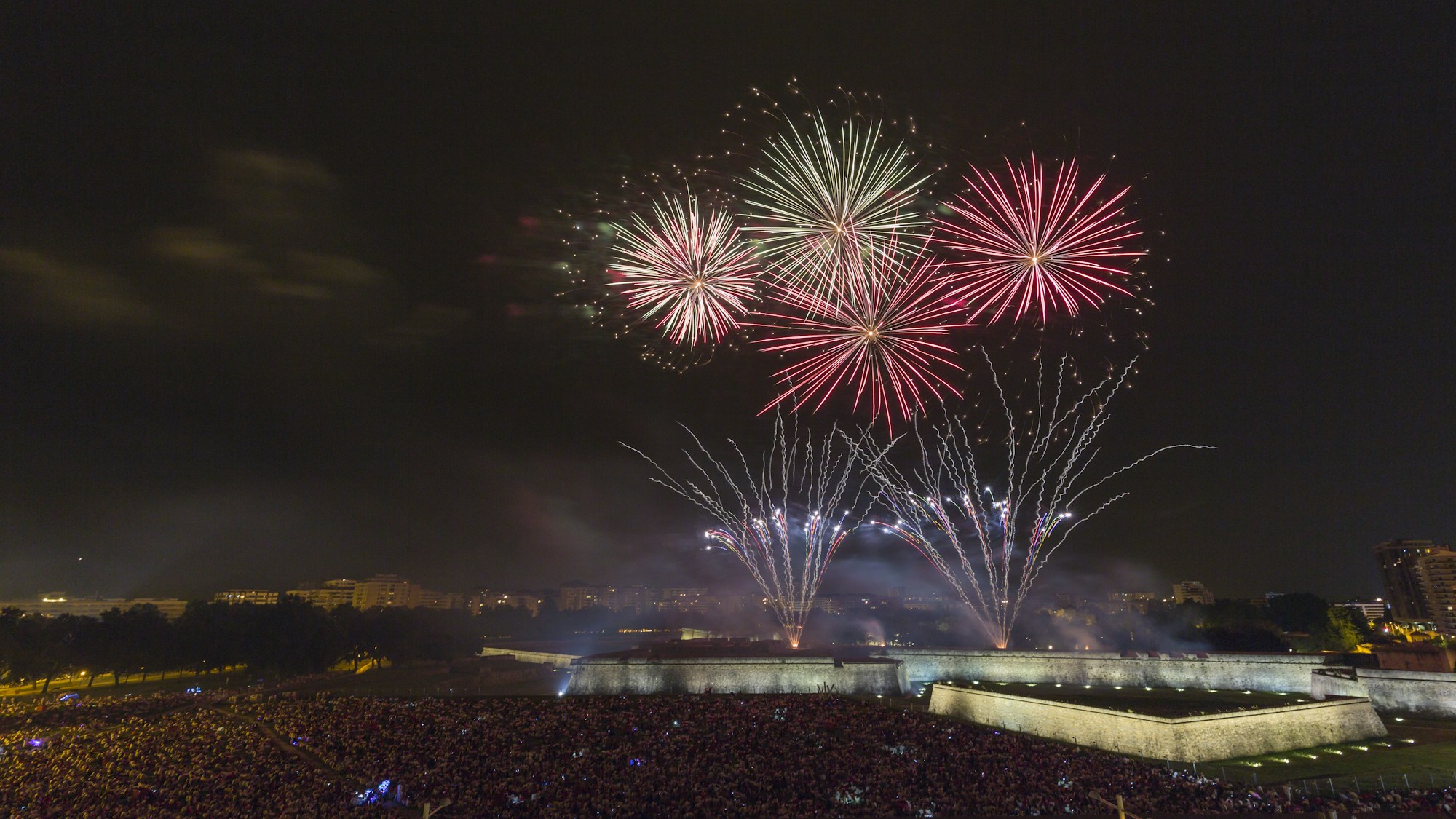
An alternative programme that stands on its own
Good news for travellers who’d rather not run in front of bulls or watch a corrida: it’s perfectly possible to have nine days of intense festival without ever going near the Plaza de Toros. According to the Ayuntamiento de Pamplona, the official 2026 programme offers more than enough to fill a full stay.
The unmissable alternative programme
- Free concerts at Plaza del Castillo: 14 concerts over 8 evenings featuring Boney M, Shinova, Ojete Calor, Marlena and more — one of the best free music line-ups in Spain in July.
- Nightly fireworks (11pm): every evening from the ramparts of the Ciudadela — the 24th International Pyrotechnics Competition in 2026. Free panoramic view (arrive at the Paseo de la Vuelta del Castillo by 10:15pm).
- Giants Parade (9:30am): four pairs of 4.2-metre giants created in 1860, plus cabezudos, kilikis and zaldikos. Free and very photogenic.
- Toro de fuego (9:45pm): a bull-shaped frame packed with fireworks winds through the old quarter — spectacular and wildly popular, free to watch.
- Recortadores competition (12 July, 11am): bull-vaulting acrobatics with no killing — athletes leap over live, unharmed bulls. From €26.
- Food & drink: pintxos in the bars along Estafeta and San Nicolás (€2–4 each), grilled chistorra sausage, Navarrese wines (Garnacha, Tempranillo). La Rioja wine country is just 30 minutes away.
- Day trips in Navarre: Baztan Valley, the Irati Forest, Camino de Santiago trails, the Hemingway Route (Burguete, River Irati).
6. Getting to Pamplona: transport, accommodation & budget
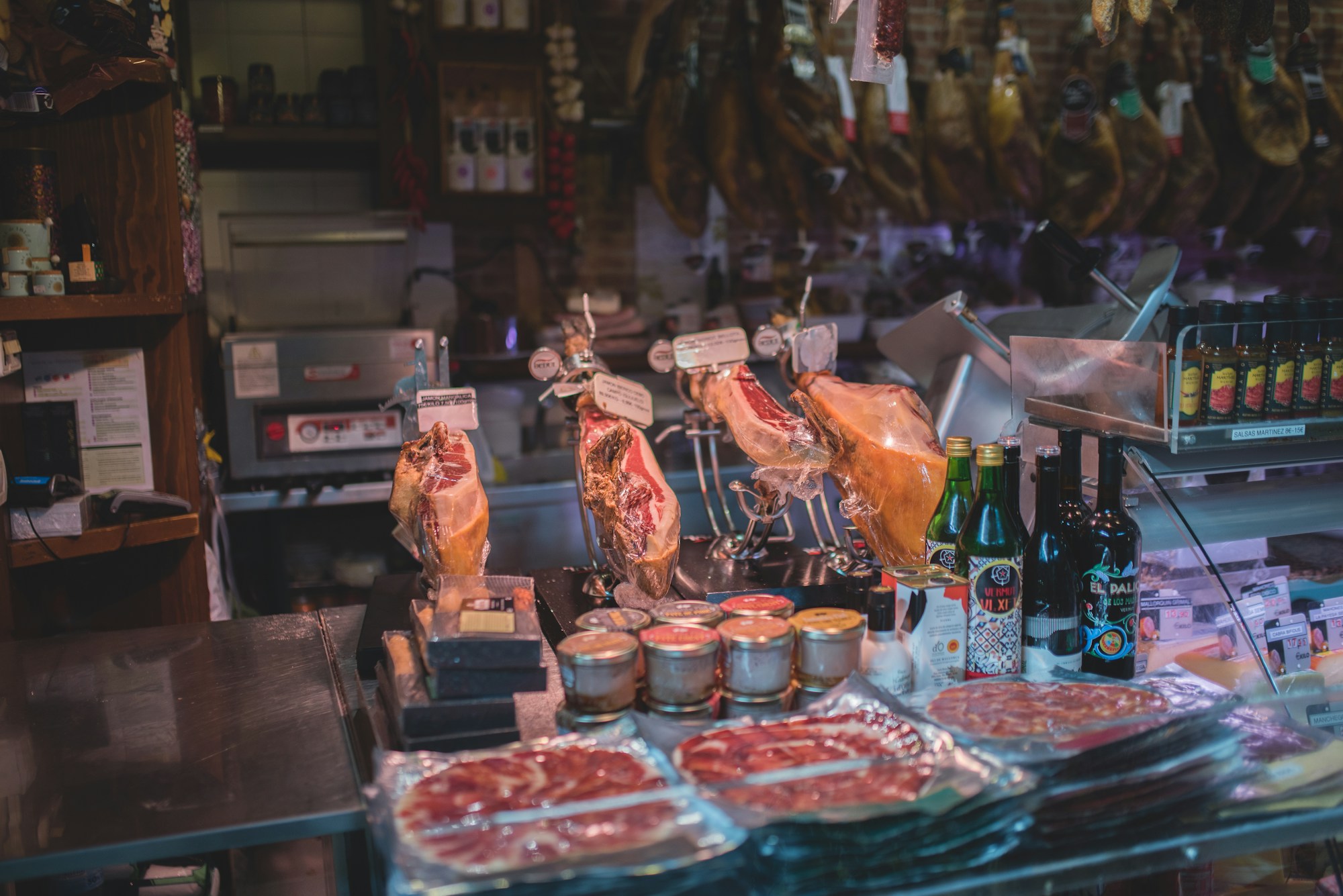
Transport, accommodation & budget
How to get there from the UK
- From London (Heathrow/Gatwick/Stansted): fly to Bilbao (2 hrs, from around £60–120 return with easyJet, Ryanair or Vueling), then take a bus to Pamplona (1 hr). Or fly to Biarritz and take the ALSA coach to Pamplona (2.5 hrs, from €18).
- From Madrid: Renfe ALVIA from €20–25 booked in advance, journey time 3h35. Book 2–3 months ahead — tickets sell out fast for San Fermín.
- Coach: ALSA Madrid–Pamplona from €15, journey time 4 hrs. Bordeaux–Pamplona via comparabus.com from €15.
Weekly budget (7 nights)
| Cost | Budget | Mid-range |
|---|---|---|
| Accommodation (7 nights) | €420–700 (dorm/outskirts) | €1,400–2,100 (city centre hotel) |
| Food (7 days) | €175 (€25/day) | €280 (restaurants + pintxos) |
| Drinks & nights out | €100–150 | €200 |
| Transport | €80–150 | €150–250 |
| Encierro balcony (optional) | — | €175–435 |
| Bullfight tickets (optional) | — | €26–153 |
| Estimated total | €775–1,175 | €1,950–3,000 |
The encierro itself is free. UK flights not included in the table above.
Plan your trip to San Fermín
Stay connected during San Fermín without roaming charges. Spain eSIM activated before you leave, compatible with recent iPhones and Android phones.
From €5 / 7 daysRunning with the bulls? Travel insurance covering sports activities is a must for San Fermín. SafetyWing’s Nomad Insurance covers medical emergencies and evacuation — and you get 10% off via our link.
From $56 / 4 weeksCompare flights from the UK to the nearest airports to Pamplona. Prices typically rise 3 weeks before the festival — book ahead.
From £60 returnExplore the Casco Viejo and the secrets of the old town with a local guide. Perfect for understanding the history of San Fermín before or after the encierro.
From €37.50Frequently asked questions about San Fermín 2026
Is the San Fermín encierro really dangerous?
Yes, the danger is real but statistically managed. Between 50 and 300 people are injured each year in the Pamplona bull run, mainly from falls and trampling. In 2025, 6 people were gored. Since official records began in 1910, there have been 15–16 fatalities (the last in 2009). The overall injury risk is estimated at 4.14% of participants, and the fatality risk at around 0.017% (115-year historical average). The medical operation deployed every morning is exceptional: 9 medical posts across the 848.6 metres and 16 intensive care ambulances. Sources: runningofthebulls.com, sanfermin.com.
What are the new encierro rules for 2026?
Two major changes come into force for San Fermín 2026: first, course access moves from 7:15am to 7:30am and is now exclusively from the Plaza Consistorial (the town hall square), replacing the previous multiple entry points. Second, runners who reach the arena before the herd must immediately leave the enclosure. Breaching either rule carries a fine. Both measures are set out in the official 2026 Bando, published by the Mesa del Encierro. Source: Cope Navarra.
Can you enjoy San Fermín without the bullfights or the bull run?
Absolutely. The bullfights are just one part of the official programme, taking place at 6:30pm in the arena — there’s no obligation to attend. You can have nine full days of festival by focusing instead on: 14 free concerts at Plaza del Castillo, the nightly International Pyrotechnics Competition fireworks (11pm at the Ciudadela), the daily Giants Parade (9:30am), the Toro de fuego pyrotechnic bull (9:45pm), the recortadores competition on 12 July (acrobatics with no killing, from €26), pintxos gastronomy, and day trips around Navarre. Source: Ayuntamiento de Pamplona.
What’s the best spot to watch the encierro without running?
Several options exist for watching the encierro safely: (1) private balconies along the route, especially on Calle Estafeta — the most comfortable option (from €175–435 per person with breakfast buffet), bookable from January; (2) free wooden barriers along the route, though you need to arrive by 5am to secure a spot; (3) inside the arena, accessible from 6am for €4–12, where you see the dramatic arrival of the herd. The live broadcast on RTVE draws 1.4 million viewers (2025 record). Source: pamplonafiesta.com.
When should I book accommodation for San Fermín 2026?
As early as possible — ideally 6–12 months in advance. The best hotels in central Pamplona sell out by March. During San Fermín, prices triple or quadruple compared to normal rates (€60–100/night in a dorm, €120–300/night for a budget to mid-range hotel, €350–600/night luxury). If you arrive on 9–14 July (after the opening rush), prices drop 30–40%. The smart move: stay in nearby towns 10 km away (Burlada, Villava, Zizur Mayor) with night buses into the city. Source: alojamientosenpamplona.com.
Will bullfighting be banned in Spain in 2026?
In the short term, no. Law 18/2013 protects the corrida as national intangible cultural heritage and blocks any regional ban. The parliamentary debate opened in September 2025 on the back of the citizens’ initiative (715,606 signatures) has not yet led to repeal, in the face of opposition from the PP and Vox. That said, the long-term trend is clearly against it: 78% public opposition (Sigma Dos, 2025), abolition of the National Bullfighting Prize by Minister Urtasun (2024), bans in 125 Spanish municipalities and in the Canary Islands. San Fermín 2026 will therefore go ahead with its full programme. Source: The Olive Press.
Sources
- Ayuntamiento de Pamplona: The encierro (official): Rules, route, safety
- Ayuntamiento de Pamplona: Official encierro rules 2026: Official Bando
- Ayuntamiento de Pamplona: Economic impact San Fermín 2025: €259.4M, 424,369 participants
- Ayuntamiento de Pamplona: Concerts San Fermín 2026: Plaza del Castillo programme
- Sanfermin.com: Quick guide to the Running of the Bulls: Description, history, rules
- Sanfermin.com: Official encierro regulations: Full Bando text
- Feriadeltoro.com: 2026 bullfight ticket prices: Official Feria del Toro prices
- Cope Navarra: New encierro rules 2026: Access shifted to 7:30am, arena ban
- Okdiario Navarra: San Fermín 2025 report (6 gored): Safety statistics
- Runningofthebulls.com: Historical encierro statistics: Deaths, injuries, risks
- No Corrida: Sigma Dos 2025 poll (78% against bullfighting): Opinion data
- The Olive Press: Citizens’ initiative — 715,000 signatures: Spanish parliamentary debate
- Pamplonafiesta.com: Encierro balcony rentals: Estafeta balconies, prices
- Alojamientosenpamplona.com: San Fermín 2026 accommodation: Rates, booking advice
- Noticiasdenavarra.com: San Fermín 2026 medical operation: 9 posts, 16 ambulances
Research conducted 1 June 2026. Official sources consulted: Ayuntamiento de Pamplona, sanfermin.com, feriadeltoro.com, VisitNavarra.
Ready to explore Spain beyond Pamplona?
Discover our Spain itineraries to extend your adventure — the Hemingway Route through Navarre, pintxos in San Sebastián, or the La Rioja vineyards just 30 minutes from Pamplona.
Explore Spain