
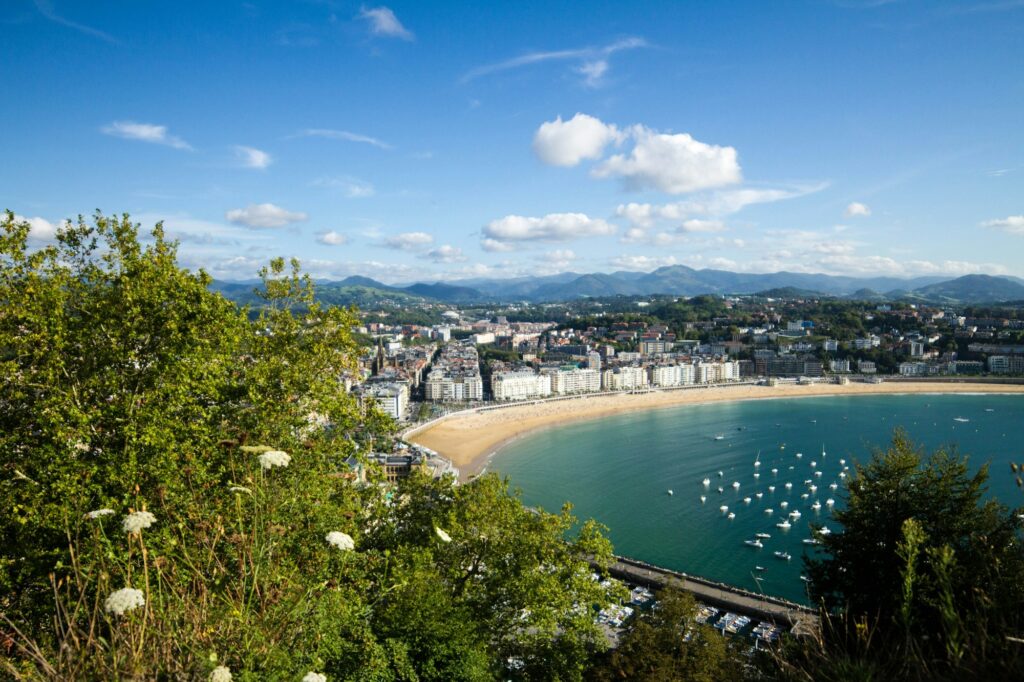
San Sebastián’s Semana Grande 2026 runs from Saturday 8 to Saturday 15 August, for the 61st edition of its International Fireworks Contest. Each night at 10.45pm, eight pyrotechnic companies compete over the Bay of La Concha, with three-time defending champion Pirotecnia Valenciana chasing a fourth win in a row. On Wednesday 12 August, a total solar eclipse crosses the sky just before that evening’s display. British Airways flies directly into San Sebastián from London City, Edinburgh and, new for 2026, Glasgow. Book your accommodation now: prices climb sharply during this week.
Every year since 1964, the Bay of La Concha has turned into the stage for one of the oldest fireworks contests in the world. From 8 to 15 August 2026, eight pyrotechnic companies take turns each night at 10.45pm in front of the Alderdi Eder gardens, while the whole city moves to the rhythm of its Semana Grande: an opening cannon shot, giants over four metres tall, free concerts and a popular pirate party. This year adds a rare extra, a total solar eclipse on 12 August, and there’s good news for UK travellers too: British Airways now flies straight into San Sebastián’s own airport, with a brand-new Glasgow route landing right in the middle of festival week.
The International Fireworks Contest: Europe’s longest-running pyrotechnic rivalry
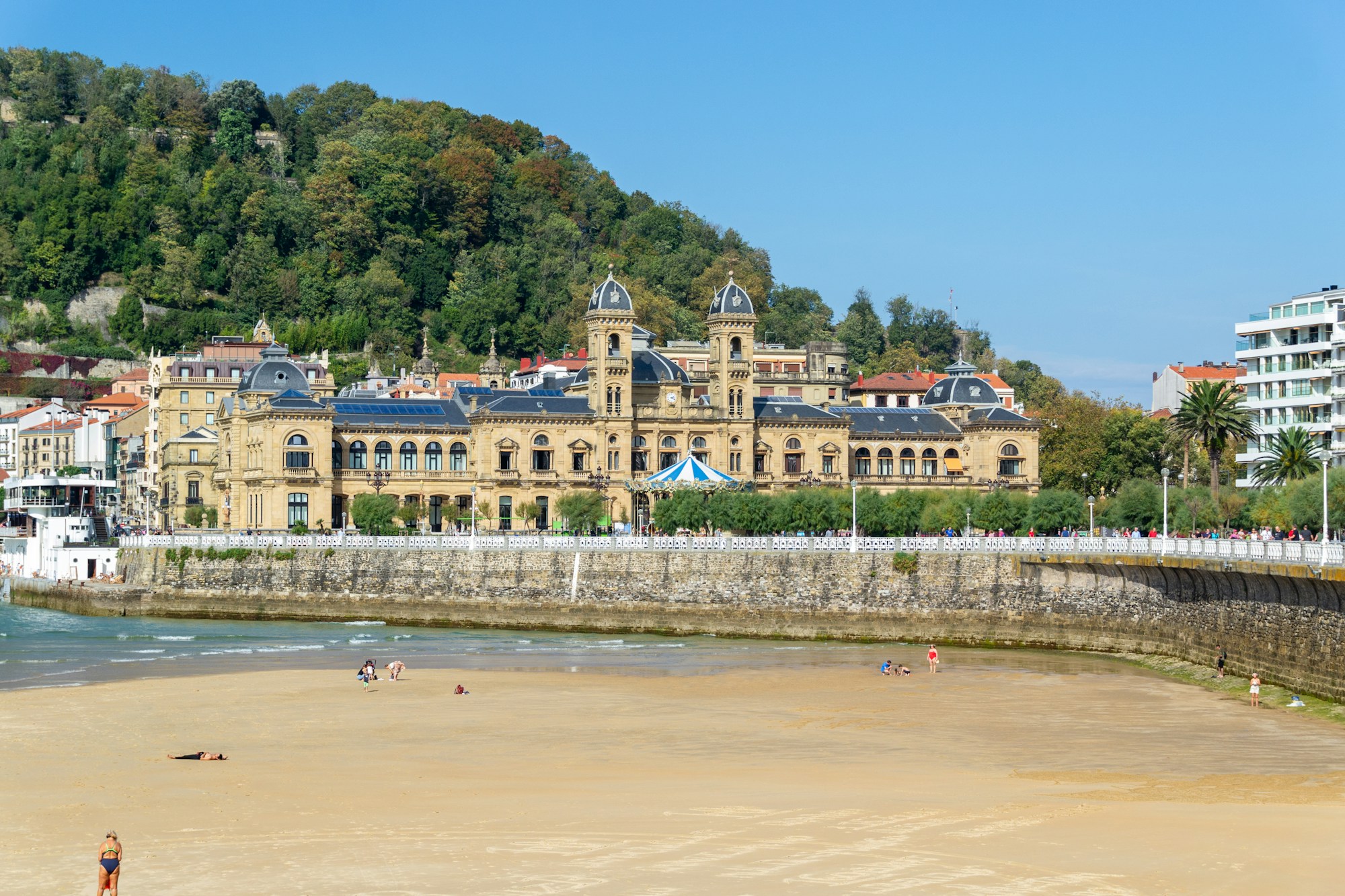
Born in 1964, standing alongside Monaco and Cannes
The Concurso Internacional de Fuegos Artificiales was launched in 1964, on the initiative of Donostia’s Tourist Attraction Centre, with the declared aim of stretching the summer season between the Jazzaldia (July’s jazz festival) and August’s Semana Grande. The city’s pyrotechnic tradition actually runs much further back: a display is already documented in 1848, in honour of Queen Isabella II, according to Wikipedia. Since 1964, the contest has only been interrupted twice, both times during the Covid-19 pandemic, and it now ranks among the oldest international fireworks contests still running anywhere, alongside Monaco (launched in 1966) and Cannes’ pyrotechnic art festival.
In 2026, eight companies are competing for the Concha de Oro (Golden Shell), judged on originality, colour, musical timing, variety of effects and safety. A public prize and a young jury award (sponsored by Euskaltel) round out the honours. The winner’s prize money is around €7,000, a modest sum next to the prestige of taking the title: Barcelona’s Pirotecnia Igual holds the record with seven wins between 1972 and 1988, according to El Diario.
Safety has held a particular place in how the contest is run ever since 1985, when a rocket exploded prematurely over the crowd, killing a five-year-old child and injuring around a hundred people. That episode, now decades in the past, is why there’s such a wide buffer between the public and the firing point today, and why the safety protocols remain so strict. As for attendance, estimates vary widely depending on the night and how the count is done, from several tens of thousands up to roughly 90,000 across the city, beaches and hills combined: best treated as a rough order of magnitude rather than an exact figure.
Highlights
- Launched in 1964, one of the oldest fireworks contests still running anywhere, alongside Monaco and Cannes
- Eight companies compete from 8 to 14 August, before Valecea’s closing pyro-musical show on the 15th
- Free, open access from La Concha beach, the seafront promenade or the Paseo Nuevo
Before heading down to the bay, most visitors spend the late afternoon exploring the Old Town and trying the first pintxos of the evening, an efficient way to pack in a full Semana Grande night without missing a beat.
The 2026 line-up: eight companies, and Pirotecnia Valenciana’s hunt for a historic fourth win in a row
Pirotecnia Valenciana goes into this edition as the clear favourite. The Valencia-based house has won the Concha de Oro three years running, in 2023, 2024 and 2025, and performs this time on Wednesday 12 August, the same evening as the solar eclipse. A fourth consecutive win would put it within reach of the all-time record of seven titles, held by Pirotecnia Igual between 1972 and 1988, according to Naiz.
The full week’s line-up:
| Date | Company | Country / region |
|---|---|---|
| Sat 8 Aug | Pirotecnia Alpujarreña | Spain (Granada) |
| Sun 9 Aug | Xena Pyrotechnics | Netherlands |
| Mon 10 Aug | Pirotecnia Tamarit | Spain (Valencia) |
| Tue 11 Aug | Phoenix Fireworks | United Kingdom |
| Wed 12 Aug | Pirotecnia Valenciana | Spain (Valencia), defending champion |
| Thu 13 Aug | Gianni Vaccalluzzo | Italy (Sicily) |
| Fri 14 Aug | Pirotecnia Gironina | Spain (Valencia) |
| Sat 15 Aug | Valecea (closing show, non-competitive) | Spain (Araba) |
Saturday 15 August sits outside the competition: Valecea, a 150-year-old house from Araba, closes the week with a pyro-musical show blending classical, jazz, rock and Basque music. The public can vote for their favourite display from 11pm on 8 August to 11.59pm on 16 August, either at Super Amara supermarkets or online, with online voters entered into a prize draw for a €500 voucher, according to Semanagrande.com.
Semana Grande in full: the cañonazo, the Itzurun giants and the Abordaje Pirata
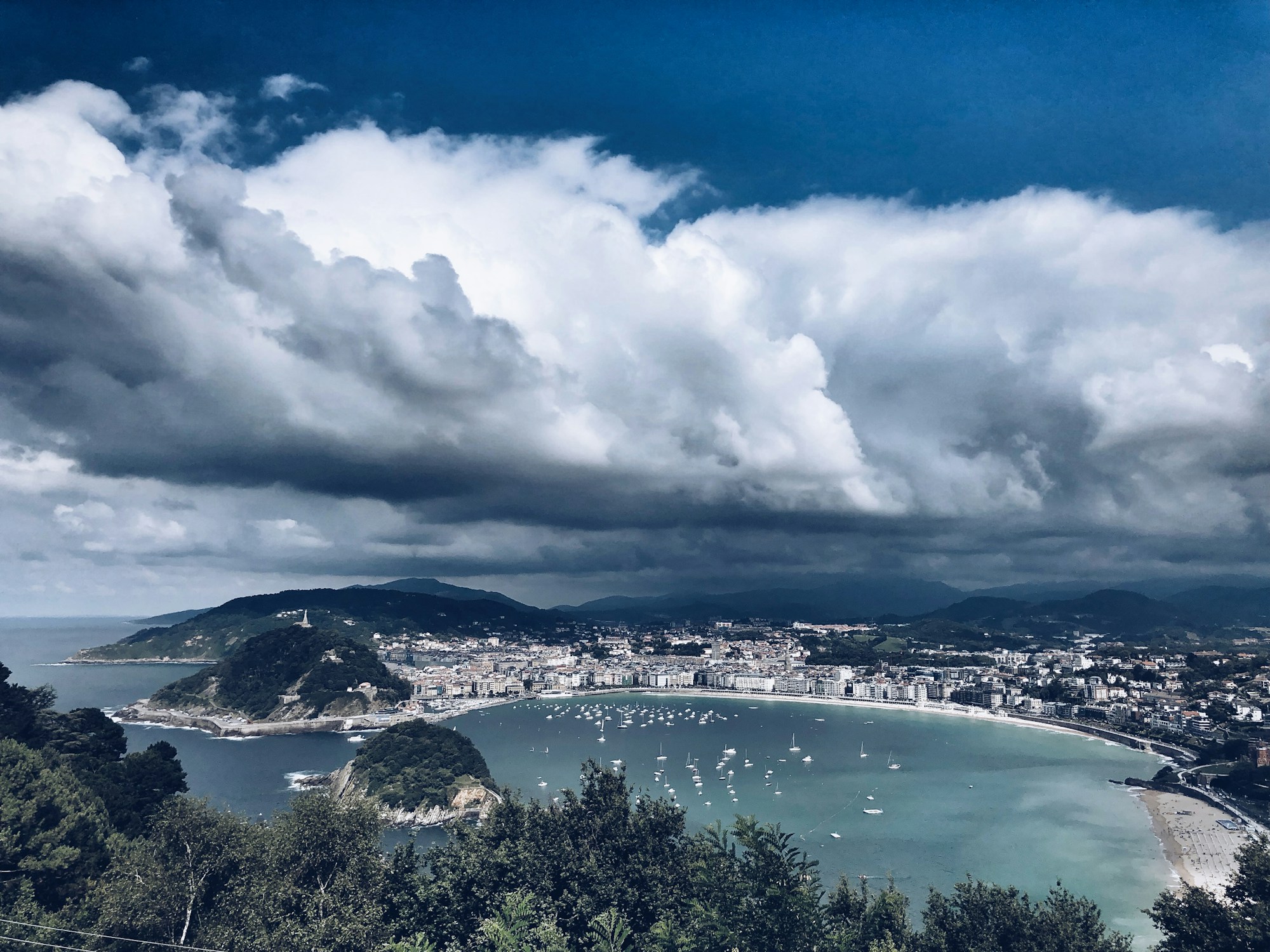
A festival born in 1876, far bigger than its fireworks contest alone
Semana Grande, Aste Nagusia in Basque (« Great Week »), began in 1876 after the Third Carlist War, when the city was looking to revive its tourism. Businessman José Arana and municipal architect José Goicoa had the Atocha bullring built, and the festival, initially centred on bullfighting, gradually broadened to include music, dance and fireworks. For 2026, the city council has announced 416 events spread across 30 venues, according to Orain.
It all starts on 8 August at 7pm with the cañonazo, a cannon shot fired from the Alderdi Eder gardens after the crowd sings « Artillero, dale fuego » together. Free concerts follow every night at 11.45pm on the Sagüés esplanade: Veintiuno opens the week on 8 August, Lia Kali plays on the 14th, and Etzakit, a triki-pop band from Hernani, closes it out on the 15th after 23 years off the stage. Through the streets, the Itzurun comparsa parades eight 4.15-metre giants and fourteen cabezudos (the oversized-head figures that follow them), carried by 80 to 90 volunteers. On the food side, the marmitako contest, a Basque tuna stew, brings cooks together on Calle Elkano on 15 August at 11am for its 19th edition, in a city that already counts over 200 pintxo bars packed into the Parte Vieja: plenty to fuel a run through San Sebastián’s best pintxo tours before heading down to the bay for the fireworks.
Two useful clarifications, so nothing gets mixed up. First, the Bandera de la Concha, the famous trainera rowing regatta and one of Europe’s oldest sea-rowing races, does not take place during Semana Grande: it’s held in September, with only a qualifying heat in August. Second, San Sebastián’s Semana Grande has nothing to do with Bilbao’s: Bilbao’s version usually runs one to two weeks later, with its own identity built around the Marijaia figure. Each Basque city has its own big summer festival, and Bilbao adds the Bilbao BBK Live festival on Mount Kobetamendi to its own.
Highlights
- Opening cañonazo on 8 August at 7pm in the Alderdi Eder gardens
- Free concerts every night at 11.45pm on the Sagüés esplanade
- Abordaje Pirata: an alternative harbourside party, run since 2002 by the Donostiako Piratak collective
12 August 2026: the Wednesday with a total solar eclipse before that night’s display
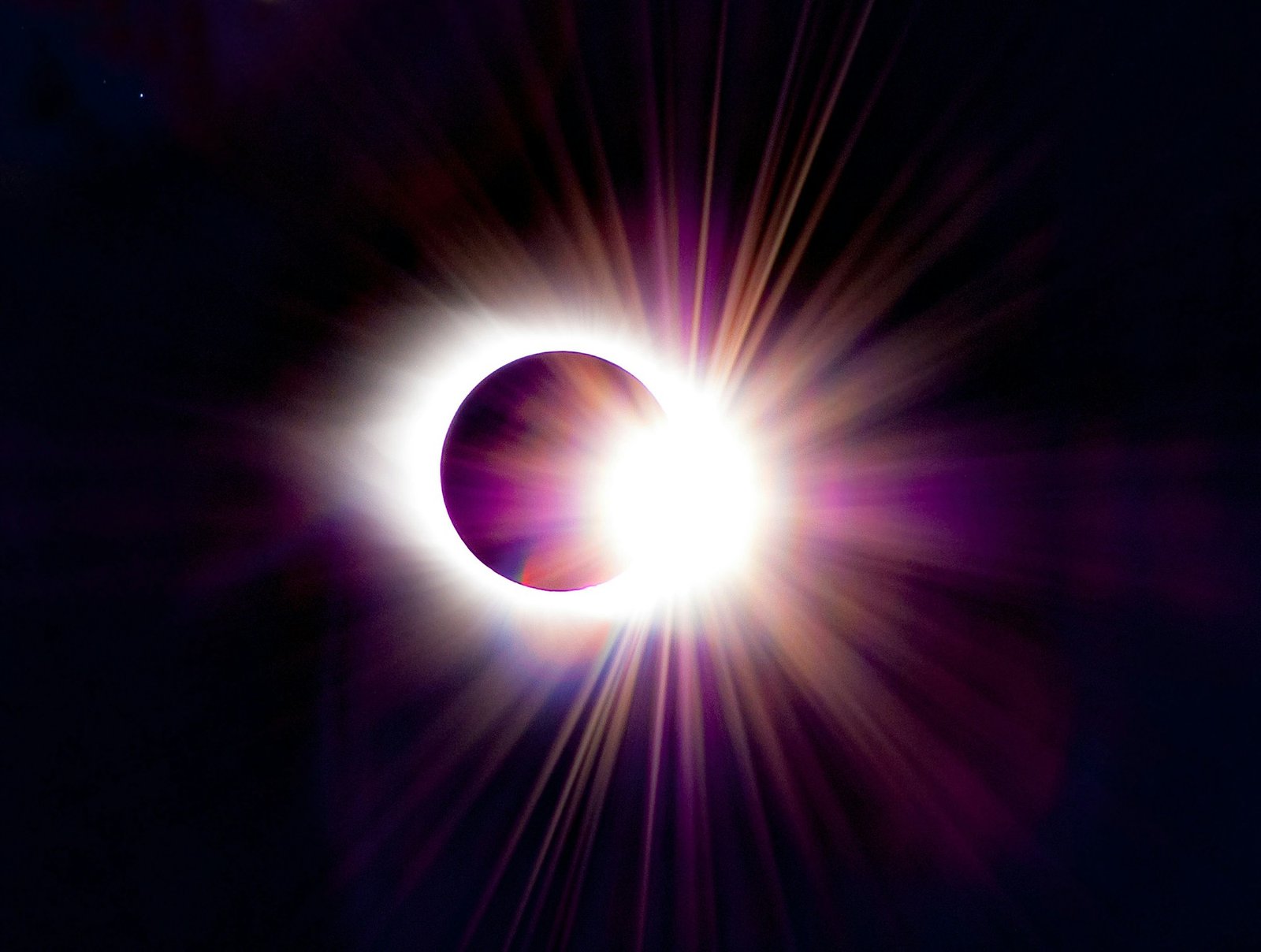
A total eclipse unseen on the Iberian Peninsula since 1912
The 2026 edition benefits from a genuinely rare coincidence. On Wednesday 12 August, a total solar eclipse, the first visible from the Iberian Peninsula since 1912, crosses Spain in the late afternoon. In San Sebastián, the phenomenon begins around 7.08pm and reaches its peak around 8.31pm, with totality lasting roughly one minute two seconds, according to Eclipse Solar España 2026. It’s over well before the 10.45pm fireworks, giving the same evening two very different celestial shows; that Wednesday happens to be defending champion Pirotecnia Valenciana’s night in the contest.
One caveat is worth flagging: San Sebastián sits right at the edge of the path of totality, so full darkness isn’t guaranteed at every point in the city, it depends on exactly where you’re standing. West-facing high ground is the best bet, starting with Monte Igueldo, but also La Concha beach, the Peine del Viento (Chillida’s « Comb of the Wind » sculpture), or the coast at Hondarribia, Zarautz, Getaria and Zumaia. For exact timings and observation safety advice (certified glasses only, never with the naked eye even when the sun looks partly veiled), Spain’s National Geographic Institute is the reference: eclipses.ign.es. Our complete guide to the 12 August 2026 solar eclipse in Spain covers the best viewing spots across the country.
Highlights
- First total solar eclipse visible from the Iberian Peninsula since 1912
- Totality visible around 8.31pm, well before the 10.45pm fireworks
- San Sebastián sits at the edge of the path of totality: head for west-facing high ground
Getting there from the UK: direct to San Sebastián, or via Bilbao and Biarritz
For UK travellers, this is no longer the connecting-flight slog it used to be. British Airways flies straight into San Sebastián’s own airport at Hondarribia (EAS), just 20 minutes from the Old Town, from London City and Edinburgh, and, new for summer 2026, from Glasgow too, on a twice-weekly service running from 18 July to 8 September that lands squarely in festival week. Flights are operated by BA Cityflyer’s Embraer 190s with a Club Europe cabin, and fares from Glasgow start from around £113 each way.
Bilbao is the bigger gateway if you want more choice or a cheaper fare: Vueling flies from London Gatwick and Heathrow, Wizz Air from London Luton, and easyJet from Bristol and Manchester, with the flight itself taking around 2 hours. From Bilbao airport, the PESA bus runs straight into San Sebastián’s city centre in about 75 minutes for roughly €17, departing hourly through the evening, handy if your flight lands late. If you’re combining San Sebastián with more of the Basque Country, our 7-day itinerary across the French and Spanish Basque coast covers surf, pintxos and villages on both sides of the border.
The closest option outside Spain is Biarritz, just over the French border: easyJet flies there from London Gatwick in around 1 hour 50 minutes, with a taxi or bus onward to San Sebastián taking about 45 minutes (roughly €120 by taxi, cheaper by Flixbus or ALSA). Budget travellers often go via Hendaye instead, on the little cross-border Topo train also used by French day-trippers, worth knowing if you’re routing through inland Spain by rail too, since the classic Renfe line between Irun and Hernani is suspended for engineering works until 6 September 2026, with replacement buses running; the Topo/Euskotren shuttle is unaffected.
On formalities: a valid passport is all you need. There’s no ID-card option for UK travellers since the UK isn’t in the Schengen area, but no visa either for stays under 90 days in any 180-day period. The EU’s new ETIAS entry system isn’t expected before the last quarter of 2026, so it shouldn’t apply to this year’s festival. If you’re driving in from France, the city centre is a low-emission zone (not unlike London’s ULEZ); the free car parks at Illunbe or Igara, linked to the Old Town by bus, are a better bet than hunting for a space downtown.
Watching the fireworks, where to stay, and budgeting your trip
Watching the fireworks costs nothing: La Concha beach, the promenade, the Paseo Nuevo or the heights of Monte Urgull all offer a free view, provided you arrive at least an hour before the display. Monte Urgull usually closes its gates in the early evening, so it’s worth checking the exact time on site rather than counting on it at the last minute. For a paid option, catamaran trips follow the show from out at sea with food on board; demand is high, so book several weeks ahead. The Monte Igueldo funicular (€3.15 return) remains a safe bet for an elevated view over the whole bay.
For somewhere to stay, three areas stand out: the Parte Vieja, lively and nocturnal, ideal for working your way through the pintxo bars; Gros, more local and noticeably cheaper (€70-200 for a double room depending on the season), across the Urumea river; and Centro, in between, more romantic and food-focused. Prices climb sharply during Semana Grande itself: the Basque statistics office Eustat recorded an average room rate of €238.10 a night in San Sebastián in August 2025, against €96.93 in Vitoria-Gasteiz, with regional occupancy at 86%, according to Eustat. Budget around €200-350 per person for three days, not including your flight, with a pintxo running €2-6, a set lunch menu €15-22, and a full crawl through 5-6 bars costing €35-65 per person.
Highlights
- Free views from La Concha beach, the promenade or the Paseo Nuevo
- Gros neighbourhood: a more local feel and noticeably softer prices than the Parte Vieja
- August evenings turn cool (18°C): pack something warmer than a T-shirt for the seafront
On safety, San Sebastián remains a safe city overall, though it’s worth watching for pickpockets in busy spots (the Parte Vieja, public transport, queues). During Semana Grande, around 200 officers from the Guardia Municipal (local police) and the Ertzaintza (the Basque regional force) are deployed, working alongside firefighters, health services and public transport. Your GHIC (or an older EHIC) covers urgent state healthcare but not repatriation, so extra travel insurance is worth having for a week that draws this many people.
Pollution, noise and overtourism: the criticism Semana Grande also draws
The festival doesn’t win universal approval. Since 2017, the Kalapie association has been measuring the fine-particle pollution the displays generate in the city centre, an issue also documented more broadly in the scientific literature on large fireworks shows, with PM2.5 spikes climbing by several tens of percent and metallic compounds sometimes lingering in the air for days, according to Kalapie. Noise levels, between 120 and 130 decibels within 100 metres of the firing point, are also criticised, particularly for their effect on the many young children in the crowd.
San Sebastián is also one of the Spanish cities that has seen anti-tourism protests since April 2024. The city council has responded by capping tour groups at 25 people in the busiest areas, extending the freeze on new tourist accommodation licences, and commissioning a carrying-capacity study due to report in autumn 2026. Notably, the local Semana Grande saw a slight dip in 2025 (-2.1% visitors, -1.6% overnight stays) even as Bilbao’s edition grew strongly, according to Hosteltur. The bullfights held at the Illumbe arena from 13 to 15 August also draw recurring protests from the local anti-bullfighting movement, which objects every year to the use of public funds for the tradition.
Practical info for your trip to San Sebastián
Stay connected in San Sebastián from the moment you land, no hunting for a local SIM card: set up in a few minutes on your phone.
Data plans from a few eurosCover that goes well beyond what the GHIC offers, for a week with this many crowds, concerts and fireworks; get a quote online in a couple of minutes.
Free quote, no commitmentFrequently asked questions
What are the dates of Semana Grande 2026 in San Sebastián?
From Saturday 8 to Saturday 15 August 2026, with the 61st International Fireworks Contest held every night at 10.45pm over the Bay of La Concha, according to the official city council website.
How do I get to San Sebastián from the UK?
British Airways flies directly into San Sebastián’s own airport from London City, Edinburgh and, new for 2026, Glasgow. Bilbao airport offers more choice and often cheaper fares (Vueling, easyJet, Wizz Air), followed by a 75-minute bus into town; Biarritz, just over the French border, works too, with easyJet from London Gatwick.
Do UK travellers need a visa or ETIAS to visit Spain in August 2026?
No. A valid passport is enough for stays of up to 90 days in any 180-day period. The EU’s new ETIAS travel authorisation isn’t expected to start before the last quarter of 2026, so it shouldn’t affect this year’s festival.
Can you watch the fireworks for free?
Yes, from La Concha beach, the promenade, the Paseo Nuevo or Monte Urgull, provided you arrive at least an hour before the 10.45pm display. Paid options exist too, such as catamaran trips out on the bay.
Who’s the favourite to win the 2026 contest?
Pirotecnia Valenciana, the three-time defending champion (2023-2025), which performs on Wednesday 12 August 2026, the same night as the solar eclipse.
Is San Sebastián’s Semana Grande the same festival as Bilbao’s?
No, they’re two separate festivals, held on different dates with their own identities: Bilbao has its emblematic Marijaia figure, which San Sebastián doesn’t have.
Can you also see a solar eclipse during this year’s edition?
Yes, on Wednesday 12 August 2026, a total solar eclipse (the first visible from the Iberian Peninsula since 1912) is observable in the late afternoon; San Sebastián sits right at the edge of the path of totality.
What budget should I plan for a weekend in San Sebastián during Semana Grande?
Budget €200-350 per person for three days, not including your flight, with hotel prices at their peak this week (around €238 a night on average in August).
Sources
- Donostia.eus: official presentation of the 61st contest, San Sebastián city council
- Astenagusia.donostiakultura.eus: official Semana Grande 2026 programme
- SanSebastianTurismoa.eus: official tourist board, Semana Grande 2026 agenda
- Semanagrande.com: 61st Concurso Internacional de Fuegos Artificiales, pyrotechnic companies’ schedule
- Wikipedia: history of the fireworks contest
- Wikipedia: history of San Sebastián’s Semana Grande
- El Diario: 60 years of Semana Grande’s pyrotechnic history
- Naiz: Pirotecnia Valenciana’s bid for a fourth Concha de Oro
- Noticias de Gipuzkoa: 416 events and the eclipse, 2026 edition preview
- Eclipse Solar España 2026: eclipse timings in San Sebastián
- Instituto Geográfico Nacional: official data and observation safety guidance for the eclipse
- British Airways: BA Cityflyer’s new Glasgow-San Sebastián route and 2026 summer schedule
- Grupo Renfe: official notice on the Irun-Hernani engineering works and replacement buses
- GOV.UK: official passport, visa and ETIAS entry requirements for Spain
- GOV.UK: official GHIC/EHIC healthcare guidance for Spain
- Eustat: official Basque statistics office, August 2025 tourism data
- Hosteltur: carrying-capacity study and overtourism in San Sebastián
- Kalapie: air pollution measurements linked to the fireworks displays
- The Geographical Cure: Bilbao vs San Sebastián comparison
Research carried out on 4 August 2026.

Plan your trip to San Sebastián with Pixidia
Pixidia learns how you travel and helps you build a trip that truly fits you, from fireworks and pintxos to Basque coast getaways.
Open the planner