
The Silvesterchläuse take place on Thursday 31 December 2026 and Wednesday 13 January 2027, the second date following the Julian calendar. Masked groups go from house to house in the Hinterland of Appenzell Ausserrhoden, mainly in Urnäsch, not in Appenzell town. No 2027 timetable is confirmed: ask the Urnäsch tourist office for the programme.
Checked on against the sources read in full or in excerpt, flagged in the text.
On 31 December and 13 January, groups of masked, costumed men walk from farm to farm through the villages of the Hinterland of Appenzell Ausserrhoden. They ring bells, sing a Zäuerli, a wordless yodel, in front of each house, and receive drinks and small sums of money in return. The custom is first recorded in writing in 1663. It is lived on foot, in the cold and by listening, more than it is photographed. Here is how to join in, what you need to know about the timings, and what is still to be confirmed for 2027.
1. Two New Years, and a date that surprises
31 December 2026 is a Thursday: it is New Year’s Eve in the Gregorian calendar. 13 January 2027 is a Wednesday: it is the « Alter Silvester », Old New Year’s Eve, which follows the Julian calendar. The two dates are unambiguous, because the gap between the two calendars is 13 days across the whole 2026-2027 period. It is 13 January that the press and tourist offices highlight. For 31 December, only a guided hike is announced (running.life, excerpt).
| Date | Day | Calendar | What you need to know |
|---|---|---|---|
| 31 December 2026 | Thursday | Gregorian | New Year’s Eve. A guided hike is announced (running.life, excerpt); the early-morning start comes only from first-hand accounts. |
| 13 January 2027 | Wednesday | Julian (« Alter Silvester ») | Main day. Guided tours left Urnäsch station at 4:30 am in 2023, to be reconfirmed. 2027 timetable not published. |
| Previous edition, 12 and 13 January (year to be confirmed) | not recorded | Julian | SRF Kulturclub programme, page published 24 September 2024. The year of that edition is still to be confirmed. |
Source: MySwitzerland (2026-2027 announcements, read in excerpt), calendar calculation, nau.ch (2023 news report), and running.life (excerpt, 31 December 2026), checked on 4 November 2026.
The first written mention of the custom dates from 1663, according to SRF (2013) and the Swiss National Museum. The Protestant half-canton did not follow the Gregorian reform of 1582: it kept the old calendar, and with it the second « Silvester ». Sources do not agree on when the Gregorian calendar was finally adopted in the half-canton. The Swiss National Museum puts it in 1798 (research excerpt), while an SRF interview published in 2025 points to the 17th century. This guide does not settle the question.
2. Where to see them: the Hinterland, not Appenzell town
The name Appenzell covers two half-cantons, and that is the first source of confusion. The custom is practised in Appenzell Ausserrhoden, the Protestant half-canton, in the villages of the Hinterland. Urnäsch is its centre. The 2026-2027 announcements and the pages read also cite Hundwil, Waldstatt, Schönengrund, Schwellbrunn, Stein, Herisau, Teufen, Speicher and Bühler. The groups follow the farms: there is no official route plan.
Appenzell town, for its part, lies in Appenzell Innerrhoden, the Catholic half-canton. SRF (2013) notes that the Church in that half-canton sanctioned the custom in the 18th century, while the tradition carried on on the other side of the cantonal border. To see the groups, Appenzell town is therefore not the right starting point.
In 2022, the Hundwil edition took place without tourists, for health reasons, and the routes were moved away from the village centres (nau.ch, 12 January 2022). That Covid-year edition is not representative: the sources read take no position on tourism from it. It does show that a village can change how it runs the event.
3. Getting there from Zurich: the train, then the walk
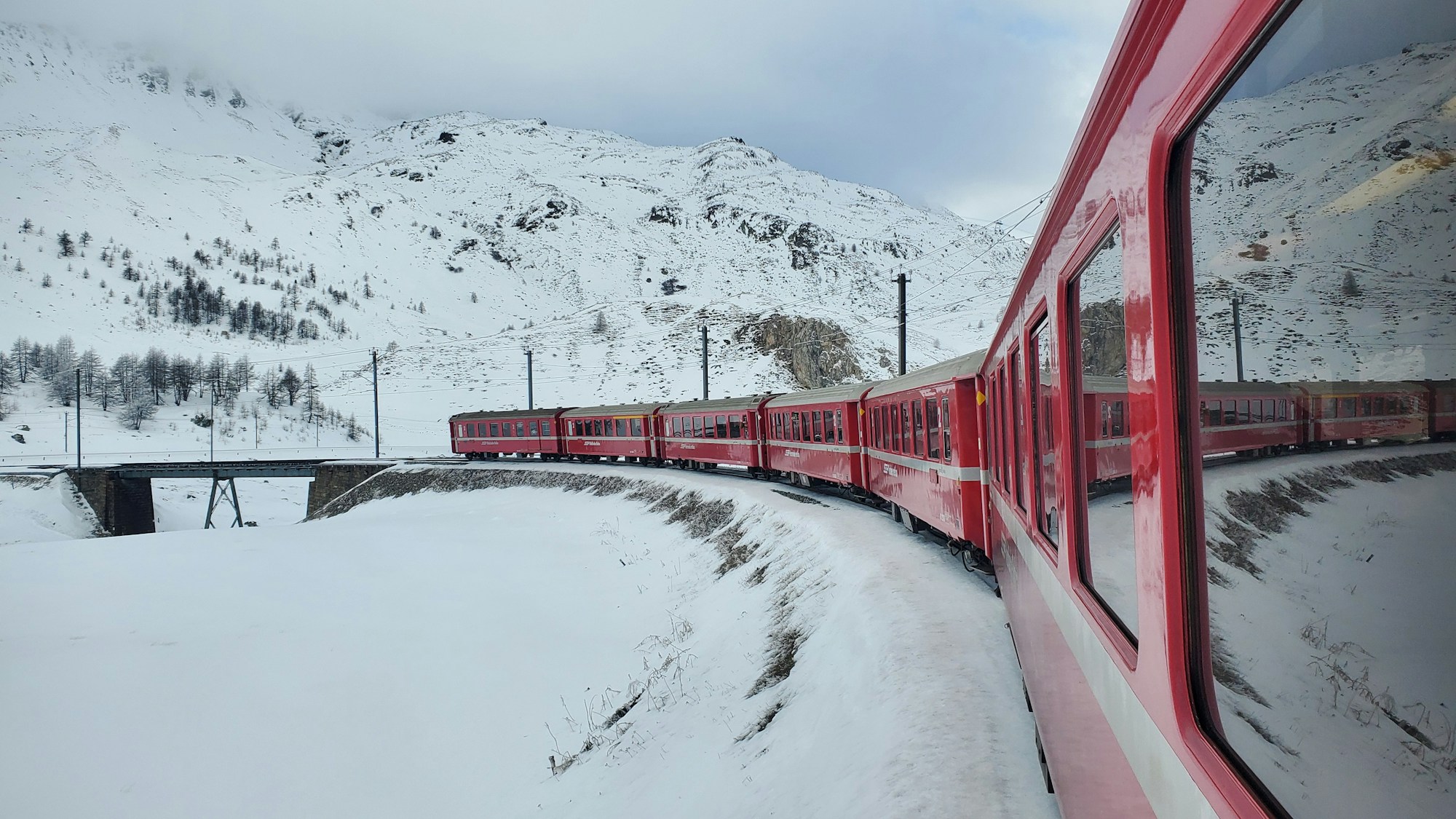
Zurich, then the train into the Hinterland
The indicative journey leaves Zurich HB on an InterCity to Gossau SG, then takes the S23 line of the Appenzeller Bahnen via Herisau to Urnäsch station. House of Switzerland (2017) puts it at about an hour and a half. These times have not been confirmed for 2027: check timetables on sbb.ch and appenzellerbahnen.ch before you set off.
Zurich is not the destination, but it is the indicative starting point of the journey described above: Zurich HB station is the first stop.
Highlights
- Urnäsch station was the starting point of the guided tours on 13 January in 2023 (nau.ch).
- Urnäsch Tourist Information, Dorfplatz 6, +41 71 364 26 40, is the local contact for timetables.
- By car, one source read in excerpt mentions event car parks with staff guidance. No plan is published.
- A night service Gossau-Herisau-Urnäsch was added to the 2025 timetable, on Friday and Saturday (tp-info.ch, excerpt); to be confirmed for 2027 on sbb.ch. The two 2026-2027 dates fall on a Thursday and a Wednesday: reconfirm for 2027.
- A 4.2 km walk, about 1 h 20 downhill, links the Schönau to Urnäsch, on a route suggested by guides (excerpt, to be reconfirmed).
This one-day circuit from Zurich goes to Appenzell and Liechtenstein; it is not about the custom. Price checked on Viator on 4 November 2026 for 13 January 2027.
| Step | Indicative duration | Data status |
|---|---|---|
| Zurich HB to Gossau SG (InterCity) | 1 h 03 to 1 h 15 | Journey planners, unofficial |
| Gossau SG to Urnäsch via Herisau (S23) | 18 min direct (journey planner, excerpt) | Journey planner, excerpt; not confirmed for 2027 |
| Total | about 1 h 30 | House of Switzerland (2017), not confirmed for 2027 |
Source: sbb.ch for official timetables; durations from House of Switzerland (2017), Wikipedia and journey planners (excerpts), checked on 4 November 2026.
4. The day itself, as it is told
A group, called a Schuppel, has six men according to SRF (2013). They go from house to house, with no fixed route published and no guaranteed timing. The sequence below comes from accounts and reports, not from an official programme. It describes what you usually see, and nothing more.
- Before dawn. The groups get ready at the farm or in the village. The costumes are heavy and dressing takes hours (House of Switzerland, 2017).
- Around 5 am. The groups set off. According to House of Switzerland (2017), the village lights are switched off at that time, and a 2019 account (SwissTravelGirl) also gives 5 am for the start.
- On the move. The bells ring in rhythm. The large bells, the Rollen, set the tempo.
- At each farm. The group stops, forms a circle, rings its bells and sings a Zäuerli, three times according to House of Switzerland (2017). Hosts often offer mulled wine or tea, and a little money.
- At midday. The groups take a break, sometimes at the village Gasthof. The 2019 account describes a stop where you can warm up, open to visitors.
- In the afternoon. The groups carry on through the village, sometimes until evening.
For timings, Tourist Information Urnäsch (+41 71 364 26 40) is the only contact cited by the sources: call before you set off.
5. Costumes, masks and bells
What they wear and what you hear
Only men take part. Some wear women’s clothing, the Wiiber (SRF, 2013). The costumes come in three types, the Schöne, the Schö-Wüeschte and the Wüeschte, shown in the table below. House of Switzerland (2017) gives a weight of 20 to 30 kg, and SRF (2017, excerpt) mentions about 30 kg for a Schöne costume: the sources do not give a single figure, so treat it as an order of magnitude.
There are thirteen large bells, spread across the harnesses of the Vorrolli and the Noerolli (House of Switzerland, 2017). The Zäuerli is a wordless chant. House of Switzerland (2017) counts about 1,000 Zäuerli, of which around thirty are still sung. That figure is nine years old: it does not tell you how many are sung today.
Highlights
- The bells set the pace of the walk, and the singing happens at a stop, in front of the house.
- The masks are hand-painted by a saddler in Urnäsch, from blanks printed in 3D.
- Schöne: reassuring masks, velvet and lace. Wüeschte: frightening masks made of branches, bark and moss (House of Switzerland, 2017).
| Type | Meaning of the name | Mask and costume |
|---|---|---|
| Schöne | « the beautiful ones » | Reassuring masks, velvet and lace costumes |
| Schö-Wüeschte | « beautiful-ugly » | A mix of the two styles |
| Wüeschte | « the ugly ones » | Frightening masks made of branches, bark and moss |
Source: House of Switzerland, « Urnäsch’s magical double New Year’s Eve » (10 January 2017), and Swiss Films (excerpt), checked on 4 November 2026.
The masks have also changed how they are made. For some years now, their blanks have been 3D-printed by a company in Appenzell Innerrhoden, then hand-painted by the saddler Niklaus Frehner, of Urnäsch (SRF, 13 January 2026). The report presents this change as an adaptation of the tradition. We found no published criticism of it.
6. How to behave in front of a group
No code of conduct has been published for the custom, and there is no official rule on photography. The advice below comes from interviews, a tourist office or common sense, and each item is dated or marked as such.
- Keep a good distance. The Urnäsch tourist office advises against rushing at the groups (SRF, January 2014).
- Do not skip a farm when following a group. This is the advice of former Chläus Hansueli Frick, interviewed by SRF on 13 January 2025.
- Ask before taking close-up photos, and avoid flash. No rule is published: this is common sense.
- Do not touch the costumes or masks. Common sense, with no published source: the costumes are heavy and are worn through a long night.
- Accept hospitality in moderation. Hosts offer drinks and small sums at each house (House of Switzerland, 2017). Accounts also mention mulled wine, beer and Glühwein, with no published safety rule.
A 2019 account also says the event is cancelled in rain or snow, to protect the headdresses. This rule appears in no other source read: take it as a story, not as a rule.
What remains unknown
Three questions have no published answer to date: the number of groups in 2026, which is not disclosed; attendance, which is not quantified (SRF spoke of « thousands » of visitors in 2014); and the shuttle buses announced for a recent edition, which have not been confirmed for 2027.
7. Budget: what is free and what you pay for
Following the groups costs nothing according to the sources read: no ticket was found for the walking. The Urnäsch museum, the Appenzeller Brauchtumsmuseum, is the paid site most directly linked to the custom. Admission is CHF 6 for an adult and CHF 3 for children and pupils up to age 16 (appenzell.ch, 2026 page).
| Place | Address | Phone | Price | Published opening hours |
|---|---|---|---|---|
| Appenzeller Brauchtumsmuseum | Dorfplatz 6, 9107 Urnäsch | +41 71 364 23 22 | CHF 6 adult; CHF 3 up to age 16 | April to early November: Mon–Sat 9:00 am–11:30 am and 1:30 pm–5:00 pm; Sun 1:30 pm–5:00 pm. Winter: contradictory page, to be confirmed. |
| Tourist Information Urnäsch | Dorfplatz 6, 9107 Urnäsch | +41 71 364 26 40 | not applicable | Ask on site or by phone |
| Appenzellerland Tourismus | Hauptgasse 38, 9050 Appenzell | +41 71 788 96 41 | not applicable | Ask by phone |
Source: appenzell.ch (museum page, 2026); office addresses and phone numbers from a MySwitzerland excerpt, checked on 4 November 2026.
Organised tours, on the other hand, cost money. The SRF Kulturclub programme for January, whose year is still to be confirmed (page published 24 September 2024), was charged CHF 640 in a double room and CHF 650 in a single room, for 18 participants at most. The package included one night, dinner, breakfast, two coach transfers, lunch at a farm, a guided visit and museum entry. This price relates to a past edition: no 2027 offer was found.
For food, no menu specific to 13 January was found. The train fare was not checked: see sbb.ch for the fare on the day.
8. Depending on your profile
- First time. 13 January is the main day; the press talks about « thousands » of tourists (SRF, 2014), with no precise figure. 31 December is a quieter outing: a good way to understand the walk before the crowds arrive.
- Family. No minimum age is published for following the groups. Bring warm shoes and plan an early, long outing in the open air. The museum charges CHF 3 for children up to 16.
- Tight budget. The walking is free. The museum costs CHF 6 for an adult, and the train fare can be compared on sbb.ch. Avoid paid organised tours: the January SRF package (year to be confirmed) cost CHF 640 in a double room, night included.
- Reduced mobility. The route is on foot, from farm to farm, sometimes over several kilometres. No accessibility data for the farms was found: check with the tourist office before you come.
What other guides don’t tell you
Six points that several guides, read for this research, leave out or get wrong. Each one gives its source and its consultation date, 4 November 2026.
- The custom is in the Hinterland of Ausserrhoden, not in Appenzell town. Several guides write « in Appenzell ». The town belongs to the Catholic half-canton of Innerrhoden, which sanctioned the custom in the 18th century. Source: SRF, 4 January 2013 (consulted 4 November 2026).
- The guided tours of 13 January left Urnäsch station at 4:30 am. That time dates from 2023, and several guides read give no time at all. It needs to be reconfirmed for 2027. Source: nau.ch, Keystone-SDA report of 13 January 2023 (consulted 4 November 2026).
- The museum has seasonal hours, and its official page is contradictory for winter. The published hours cover April to early November, with a reduced rate of CHF 3 up to age 16. Call before you count on a visit in January. Source: appenzell.ch (page read in 2026, consulted 4 November 2026).
- The Zäuerli is wordless, but the Chläuse are not silent. The bells ring during the walk, and the singing happens at each house, three times. Some texts describe silent groups: this is inaccurate. Source: House of Switzerland, 10 January 2017 (consulted 4 November 2026).
- 13 January 2027 is a Wednesday, and the Sunday rule does not apply. Some texts say that when 13 January falls on a Sunday, the celebration moves to the Saturday. That rule is not official, and it does not apply in 2027. Source: calendar calculation, and SwissTravelGirl, 12 January 2019 (consulted 4 November 2026).
- The switch to the Gregorian calendar is dated in two different ways. Guides cite 1582 without naming the canton, which is incomplete. The Swiss National Museum (excerpt, 2021) gives 1798 for the half-canton; an SRF interview from 2025 (source to be specified) points to the 17th century. Consulted 4 November 2026.
Practical information before you go
Thursday 31 December 2026 and Wednesday 13 January 2027. 13 January is the main day. For 31 December, only a guided hike from Zürchersmühle to Urnäsch is announced (running.life, excerpt), with limited places reserved for members. Confirm the timings before you set off.
Zurich, then Gossau SG and the S23 line to Urnäsch, about 1 h 30 according to 2017 data. Official timetables are on sbb.ch.
Urnäsch Tourist Information, +41 71 364 26 40; Appenzellerland Tourismus, +41 71 788 96 41. These numbers come from MySwitzerland excerpts.
A 2019 account describes a cold, damp day. Bring shoes suited to snow and rural paths, and something to warm up with.
A 12-minute short film by Andrew Norman Wilson (2025) has been shown at festivals, according to press excerpts. Do not confuse it with a 2011 feature film of the same title. Its online availability has not been checked.
Between Zurich, Urnäsch and the other events in January, the Pixi planner can help you arrange your days around these dates.
Frequently asked questions
When do the Silvesterchläuse take place in 2026-2027?
Thursday 31 December 2026, for the Gregorian New Year, and Wednesday 13 January 2027, for the Julian calendar’s « Alter Silvester ». 13 January is the main day. No detailed timetable is confirmed for 2027: ask the Urnäsch tourist office before you set off (MySwitzerland announcements, read in excerpt).
Where can you see the Silvesterchläuse?
In the Hinterland of Appenzell Ausserrhoden, with Urnäsch at the centre. The 2026-2027 announcements also cite Hundwil, Waldstatt, Schönengrund, Schwellbrunn, Stein, Herisau, Teufen, Speicher and Bühler. It is not Appenzell town, which lies in the Catholic half-canton of Innerrhoden (SRF, 2013).
Why are there two New Year’s Eves?
The Protestant half-canton did not follow the Gregorian reform of 1582 and kept the old calendar. 13 January, the date of the Julian calendar, therefore stayed the second New Year, the « Alter Silvester ». Sources date the switch to the Gregorian calendar differently: 1798 for the Swiss National Museum, the 17th century for a 2025 SRF interview.
Do you have to pay to see the Chläuse?
No: no ticket was found for following the groups. The Urnäsch museum charges CHF 6 for an adult and CHF 3 up to age 16 (appenzell.ch, 2026 page). Organised tours cost money: the SRF Kulturclub January programme, year to be confirmed, cost CHF 640 in a double room, according to a page published in 2024.
Can you take photos?
No photography rule is published for the custom. The good habit is to ask before taking close-up photos, and to avoid flash if you can. This is common sense, not an official requirement.
How do you get there from Zurich?
The indicative journey takes about 1 h 30: InterCity to Gossau SG, then the S23 line of the Appenzeller Bahnen via Herisau to Urnäsch (House of Switzerland, 2017). 2027 timetables are not confirmed: check sbb.ch. One source read in excerpt mentions guided event car parks, with no plan published.
What do Schöne, Schö-Wüeschte and Wüeschte mean?
Schöne means « the beautiful ones »: reassuring masks, velvet and lace costumes. Wüeschte means « the ugly ones »: frightening masks made of branches, bark and moss. Schö-Wüeschte, « beautiful-ugly », combines both styles (House of Switzerland, 2017; Swiss Films, excerpt).
Do the Chläuse speak?
The Zäuerli is a wordless chant; the groups also offer their New Year wishes (SRF, 2013; House of Switzerland, 2017). It is sung three times in front of each house, according to House of Switzerland (2017). The bells ring during the walk: that is the most constant sound. Silence is not the rule.
Is it the same in Appenzell Innerrhoden?
No, not in the same half-canton. The tradition lives on in Ausserrhoden. Innerrhoden, Catholic and home to Appenzell town, sanctioned the custom in the 18th century (SRF, 2013). We found no programme for these groups in Innerrhoden for 2026-2027.
Is there an official programme for 2027?
Not that we know of. No detailed programme has been published for 2026-2027, neither timings nor a route plan for the groups. Your contacts are the Urnäsch tourist office (Dorfplatz 6, +41 71 364 26 40) and Appenzellerland Tourismus. Ask them for the dates before you book.
Sources
- SRF, « Musik, geschellt, geklingelt und gejodelt » : article of 4 January 2013 (1663, Innerrhoden, six men per Schuppel).
- SRF, interview with Hansueli Frick : 13 January 2025 (rules of conduct, do not skip a house).
- SRF, 3D-printed masks : 13 January 2026.
- SRF, « Touristenmagnet Alter Silvester » : 13 January 2014 (attendance, tourist office advice).
- SRF Kulturclub : programme for 12 and 13 January, year to be confirmed (page published 24 September 2024, whose slug carries « 12-und-13-januar-2025 »).
- House of Switzerland, « Urnäsch’s magical double New Year’s Eve » : 10 January 2017 (costumes, bells, Zäuerli, journey).
- nau.ch, Keystone-SDA : 13 January 2023 (tours at 4:30 am from Urnäsch station).
- nau.ch, Hundwil without tourists : 12 January 2022.
- appenzell.ch, Appenzeller Brauchtumsmuseum : museum page, admission and seasonal hours (2026).
- SwissTravelGirl, first-hand account : 12 January 2019 (start around 5 am, unofficial Sunday rule, cancellation in cold weather).
- running.life : guided hike of 31 December 2026 (excerpt).
- vol.at : article of January 2026 on Urnäsch, Waldstatt and Schönengrund.
- Wikipedia, « Silvesterklaus » : municipalities concerned (encyclopaedia, not a primary source).
- MySwitzerland : tourism announcements for 2026-2027, read in excerpt.
Consulted on 4 November 2026. Sources read only in excerpt are flagged in the text.

Plan your trip with Pixidia
Pixidia learns how you travel and helps you build a trip that truly fits you and everyone coming along.
Open the planner