

Tickets from just 1 euro, three operators locked in fierce competition, and three new high-speed lines opening in 2026: Spain has become the most spectacular laboratory of the European rail revolution. The first EU country to run three competing companies on the same high-speed network — Renfe, Ouigo España, and iryo — the Iberian kingdom has seen fares plummet by 58% on the Madrid–Barcelona route and passenger numbers soar by 77% in five years. In 2026, the network expands further: the Mediterranean Corridor advances between Murcia and Almería, the Alicante–Valencia line drops from 2h15 to 50 minutes, and Renfe launches an international Toulouse–Barcelona service from just 29 euros. Here is the complete guide to making the most of this revolution on rails.
1. Spain’s Rail Liberalisation — 3 Operators, Prices Cut in Half

Renfe, Ouigo, iryo: the trio that transformed Spain’s rail landscape
In barely four years, Spain has become the world’s textbook case for high-speed rail liberalisation. According to RailTech, the Madrid–Barcelona route — the country’s busiest — has seen average prices fall by 58% compared to the Renfe monopoly era. The trigger: the arrival of Ouigo España (a subsidiary of SNCF Voyageurs) in May 2021, followed by iryo — a joint venture between Trenitalia (51%), Air Nostrum (25%), and Globalvia (24%) — in November 2022.
The figures from the CNMC (National Commission for Markets and Competition) speak for themselves: between 2019 and 2024, the number of high-speed passengers grew by 77.2%, an additional 17.2 million travellers per year. Ouigo alone has carried nearly 20 million passengers in Spain since its launch. The average fare reduction across all corridors is estimated at 40%.
The fare war sometimes reaches unprecedented levels. During flash sales, Ouigo and Avlo (Renfe’s low-cost brand) offer tickets at 1 euro on Madrid–Barcelona or Madrid–Valencia. Even outside promotions, it is common to find journeys at 7, 9, or 15 euros between two major Spanish cities — prices comparable to carpooling, but for a trip at 300 km/h. According to Equinox Magazine, this competition has triggered a massive modal shift from planes to trains on the served corridors.
The three operators you need to know
- Renfe (AVE / Avlo): the historic operator with the most extensive network. Avlo is its low-cost brand with tickets from 7 €.
- Ouigo España: SNCF subsidiary, double-decker trains, tickets from 1 € in flash sales. Madrid–Barcelona, Madrid–Valencia, Madrid–Alicante.
- iryo: Italian-Spanish alliance, Frecciarossa 1000 trains, premium comfort at competitive prices. Madrid–Barcelona, Madrid–Seville, Madrid–Málaga.
- Phase 2 of liberalisation: opening of the Madrid–Galicia, Madrid–Asturias/Cantabria, and Madrid–Cádiz/Huelva corridors to competition.
2. Murcia–Almería — The Mediterranean Corridor Finally Completed
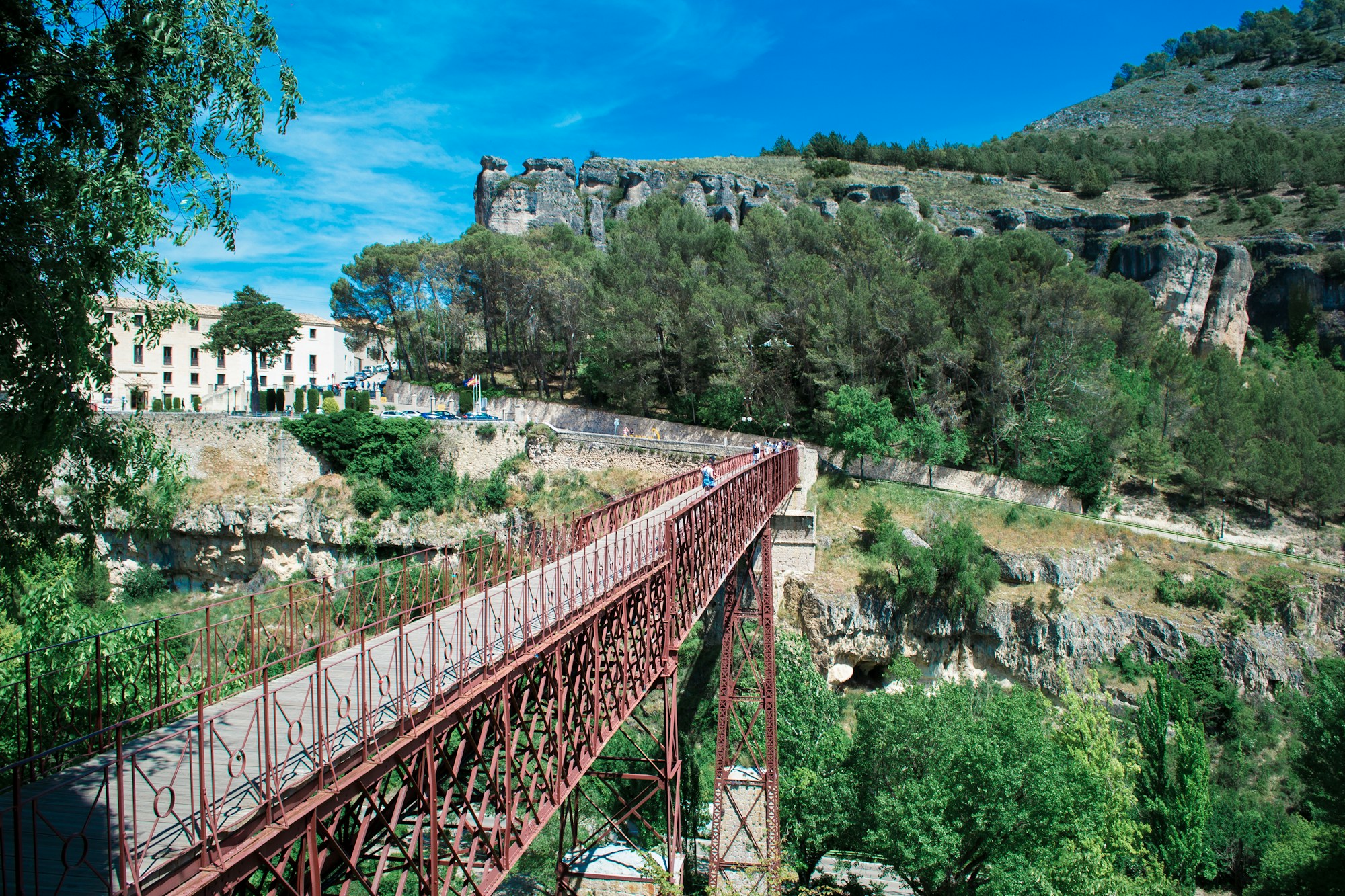
200 km of new track connecting Almería to the high-speed network
The Mediterranean Corridor is Spain’s largest railway construction project — and one of the most eagerly awaited in Europe. This section between Murcia and Almería, approximately 200 km of new track, is the missing piece that will finally link the Spanish Mediterranean coast in a single stretch, from the French border all the way to eastern Andalusia. According to ADIF Alta Velocidad, Spain’s railway infrastructure operator, construction was 65% complete as of August 2024.
The inauguration of this section is planned for 2026, although the delays accumulated by the broader Mediterranean Corridor project call for caution. According to Maldita.es, the complete corridor will not be fully operational until 2027–2028. However, the Murcia–Almería section is a national priority and benefits from European funding through the NextGenerationEU programme.
For travellers, the impact will be considerable. Almería, until now one of the most poorly connected provincial capitals in Spain, will finally be linked to the AVE network. Journey times to Madrid, Barcelona, and Valencia will be reduced by approximately 30%. The corridor will also open new possibilities for coastal tourism along the Costa Cálida and the Costa de Almería, two areas still relatively untouched by mass tourism.
What this line changes for travellers
- Almería finally connected to the national high-speed network
- Murcia–Almería in 1 hour instead of 2h30 on the current regional train
- Continuous Mediterranean Corridor from Barcelona to Almería by high-speed rail
- Easier access to the beaches of the Costa de Almería and Cabo de Gata Natural Park
3. Alicante–Valencia — From 2h15 Down to 50 Minutes

A journey cut by three thanks to new infrastructure
Connecting Alicante to Valencia in 50 minutes instead of 2h15: that is the promise of the new high-speed section set to enter service in 2026. This section, part of the broader Mediterranean Corridor project, will radically transform mobility between the two main cities of the Valencian Community. With trains capable of reaching 300 km/h, what was once a regional journey becomes a commuter trip.
The impact on daily life will be major. According to Le Petit Journal, this fast connection could create a truly integrated living area between Alicante and Valencia, similar to what the Madrid–Toledo line (33 minutes) has achieved in Castile. French expatriates on the Costa Blanca — one of the largest French-speaking communities in Spain — see it as an opportunity for easier access to Valencia’s international airport and its high-speed rail station.
For tourists, this change opens up unprecedented combined itineraries. You could visit Valencia in the morning (City of Arts and Sciences, Central Market, old town) and be in Alicante for lunch by the sea, or the other way around. With competition between Renfe, Ouigo, and iryo on this corridor, prices are expected to remain particularly aggressive — potentially under 10 euros for a 50-minute high-speed journey.
Why this line is a game changer
- Journey time cut by three: from 2h15 to 50 minutes between Alicante and Valencia
- Tourist combinations: Valencia + Alicante + Costa Blanca in a single trip
- Low-cost fares expected: prices estimated under 10 € thanks to competition
- European connection: eventually, Barcelona–Alicante non-stop via the Mediterranean Corridor
4. Toulouse–Barcelona — The New Trans-Pyrenean Route
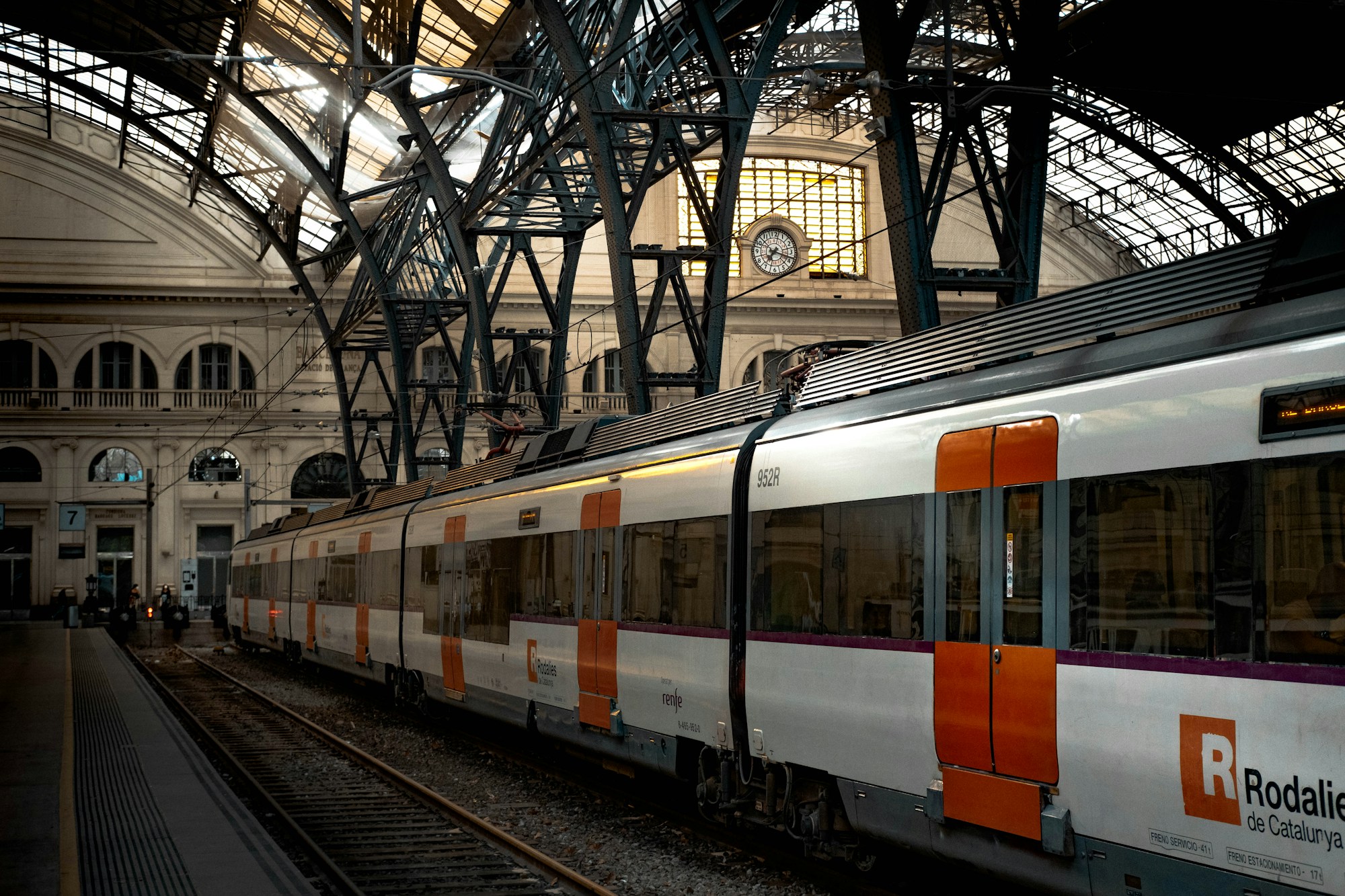
3h30 and from 29 €: Renfe crosses the Pyrenees
This is the rail event that concretely brings France and Spain closer together. Since the second quarter of 2025, Renfe has operated a direct service between Toulouse and Barcelona in 3h30, with stops at Carcassonne, Perpignan, Figueres, and Girona. According to the official Renfe press release, tickets start at 29 euros — a fare that defies all competition from planes or cars.
This service is a boon for southern France. Toulouse, France’s fourth-largest city, had no direct high-speed rail link to Barcelona until now. The car journey takes around 3h30 to 4 hours (without traffic), the budget bus 5 to 6 hours, and flying — including airport transfers — barely less than 3 hours in total. The Renfe train, departing from the centre of Toulouse and arriving in the centre of Barcelona, offers the best time-price-comfort compromise.
Beyond Toulouse, the whole Occitanie region benefits from this opening. The intermediate stops at Carcassonne and Perpignan allow residents of these cities to reach Barcelona without a car, while the stops at Figueres (Dalí Museum) and Girona (cathedral, Jewish quarter, Michelin-starred dining) make it a powerful tourism tool. According to Le Petit Journal, Renfe plans to eventually connect this line to the rest of the Spanish AVE network, opening the prospect of a Toulouse–Madrid journey by train with a short connection in Barcelona.
What this line offers travellers
- Toulouse–Barcelona in 3h30, city centre to city centre, no transfer needed
- Tickets from 29 €: cheaper than budget flights with luggage
- 4 tourist stopovers: Carcassonne, Perpignan, Figueres (Dalí), Girona
- AVE connections from Barcelona to Madrid, Seville, Málaga, and the entire Spanish network
- Reduced carbon footprint: 50 times less CO₂ than flying on this route
5. Price Comparison and Booking Tips
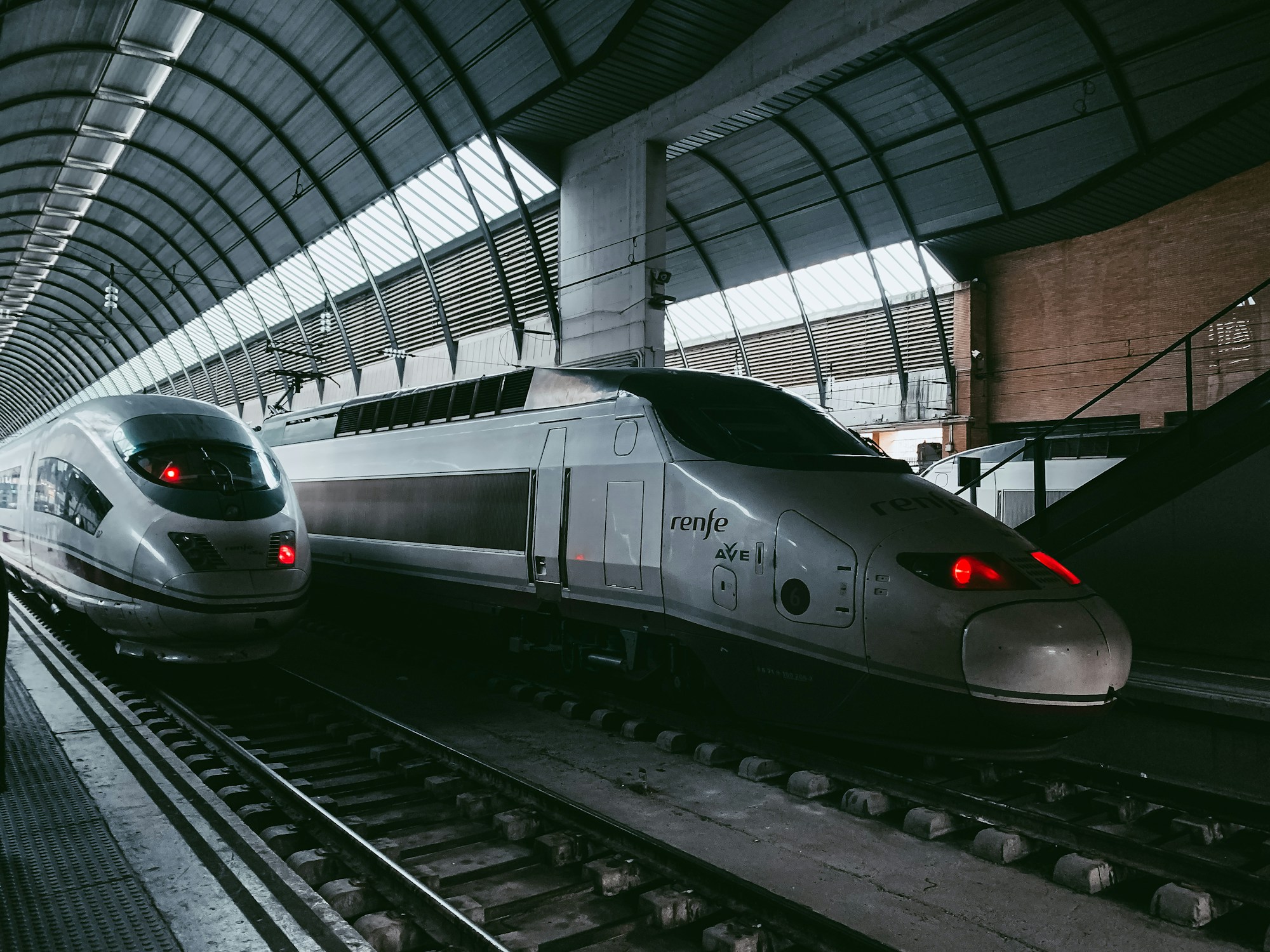
Comparison table: where to find the best fares
The great strength of the Spanish system is direct competition on the same lines. On the Madrid–Barcelona corridor, you can choose between Renfe AVE (premium), Avlo (Renfe low-cost), Ouigo España, and iryo. Prices fluctuate depending on the operator, date, and occupancy. Here is a comparison table based on fares observed in March 2026, compiled from data by RailTech and our own research on operator websites.
| Route | Duration | Min. price | Operator(s) |
|---|---|---|---|
| Madrid → Barcelona | 2h30 | 1–10 € | Ouigo / Avlo / iryo |
| Madrid → Valencia | 1h35 | 9–15 € | Ouigo / Avlo |
| Madrid → Seville | 2h40 | 12–30 € | Renfe Avlo / iryo |
| Madrid → Málaga | 2h40 | 15–30 € | Renfe / iryo |
| Madrid → Granada | 3h20 | 20–40 € | Renfe |
| Toulouse → Barcelona | 3h30 | 29 € | Renfe |
Prices observed in March 2026 for bookings made 30 to 60 days in advance. Flash fares (1 €) are available during occasional promotions on operator apps.
10 tips to pay the lowest fares
- Always compare the three operators: Renfe/Avlo, Ouigo, and iryo each have their own booking system.
- Download all 3 apps: Renfe, Ouigo España, and iryo. The best deals are often exclusive to the mobile app.
- Book 30 to 60 days in advance. This is the sweet spot between promotional fare availability and planning flexibility.
- Travel on Tuesday, Wednesday, or Thursday: these days have the lowest fares, especially outside school holidays.
- Enable flash sale alerts on the Ouigo and Avlo apps: 1 € tickets in limited quantities, typically announced in the morning.
- Choose off-peak times (early morning, mid-afternoon) to avoid full trains and inflated prices.
- Get the Tarjeta Dorada from Renfe (40 €/year) if you travel frequently: 40% discount on all Renfe journeys.
- Use Trainline as a meta-comparator to see offers from all three operators on a single screen.
Practical Information for Your Trip to Spain
Frequently Asked Questions
What is the difference between AVE, Avlo, Ouigo España, and iryo?
AVE is the premium service of Renfe, Spain’s historic operator: flexible tickets, buffet car, generous space. Avlo is Renfe’s low-cost brand, with tickets from 7 € but reduced services (no buffet car, limited luggage). Ouigo España is the Spanish subsidiary of France’s SNCF, with double-decker trains and tickets from 1 € in flash sales. iryo is a joint venture between Italy’s Trenitalia (51%), Spain’s Air Nostrum (25%), and Globalvia (24%), using Frecciarossa 1000 trains and positioned as premium value for money. All four run on the same high-speed tracks, but each has its own booking system. Source: RailTech.
How do I get the cheapest tickets?
Three strategies you can combine. First: book 30 to 60 days in advance on the mobile apps of Ouigo, Avlo, and iryo, where the best fares are often exclusive. Second: enable flash sale notifications — Ouigo and Avlo regularly launch 1 € promotions on Madrid–Barcelona and Madrid–Valencia. Third: travel on Tuesday, Wednesday, or Thursday, outside school holiday periods and at off-peak times (early morning or mid-afternoon). You can also use Trainline as a meta-comparator to view offers from all three operators on a single screen.
Which new AVE lines are opening in 2026?
Three major lines. Murcia–Almería (~200 km) brings Almería into the high-speed network as part of the Mediterranean Corridor. Fast Alicante–Valencia will cut the journey from 2h15 to around 50 minutes. And the international Toulouse–Barcelona service, operated by Renfe, connects both cities in 3h30 with tickets from 29 €, launched in Q2 2025. Sources: ADIF Alta Velocidad and Renfe.
Can you take the AVE from France?
Yes, in two ways. The most direct is the Renfe Toulouse–Barcelona service, launched in Q2 2025: 3h30, from 29 €, with stops at Carcassonne, Perpignan, Figueres, and Girona. The other option is the SNCF TGV Paris–Barcelona (via Montpellier and Perpignan), approximately 6h30 with a connection. From Barcelona, you can then take any AVE, Ouigo, or iryo service to Madrid, Seville, Málaga, or Valencia. Source: Renfe.
Are iryo and Ouigo compatible with Interrail?
No. The Interrail/Eurail pass is only valid on Renfe trains (AVE, Avlo, Alvia, Cercanías). Ouigo España and iryo trains are not included in the pass and require a separate ticket purchased directly from these operators. However, given the very low fares offered by Ouigo and iryo (often 9 to 15 €), it may be more economical not to use your Interrail pass on Spanish corridors and buy individual low-cost tickets instead.
Will prices go back up after the fare war?
That is unlikely in the short term. According to analysis by Mediarail, all three operators have adopted aggressive expansion strategies, with heavy investments in rolling stock and marketing. Ouigo plans to increase its frequencies, iryo is expanding its network to new corridors, and Renfe is defending its market share with Avlo. The second phase of liberalisation, which opens three new corridors to competition (Madrid–Galicia, Madrid–Asturias, Madrid–Cádiz), will further intensify downward pressure on prices. As long as three operators compete for the same passengers, fares will stay low.
How much luggage can I bring on a Spanish low-cost train?
It depends on the operator. Ouigo España: one cabin bag (55x35x25 cm) included, extra suitcase as an option (from 5 €). Avlo (Renfe low-cost): one carry-on included, extra suitcase from 5 €. iryo: carry-on and one suitcase included in all classes. By comparison, Renfe AVE (premium) allows three bags at no extra charge. Check the exact conditions on each operator’s website when booking, as policies evolve.
How can I easily compare prices between operators?
Three methods. Trainline (thetrainline.com) is the most comprehensive meta-comparator: it displays offers from Renfe, Ouigo, and iryo on a single screen. Google Maps (Transport tab) also shows timetables and prices from multiple operators for a given journey. Finally, the official apps of each operator remain the go-to for flash sales and mobile-exclusive fares. Our recommendation: start with Trainline to identify the best value, then check the operator’s app for any promotional fare that might be available.
Sources
- RailTech — 58% price drop on Madrid–Barcelona — Analysis of fares following Spanish rail liberalisation (January 2025)
- Mediarail — Liberalisation figures — CNMC data on the 77% growth in high-speed passengers (April 2025)
- Equinox Magazine — Fare war — Analysis of the plane-to-train modal shift in Spain (October 2025)
- Le Petit Journal — Spain’s high-speed trains — History, new developments, and fares of Spanish high-speed rail
- Renfe — Toulouse–Barcelona press release — Official announcement of the international AVE service
- Maldita.es — Mediterranean Corridor — Progress update on corridor construction (February 2025)
- ADIF Alta Velocidad — Almería-Murcia line — Official technical sheet for the Murcia–Almería section
- RailTech — Impact on car use — Charts on the modal shift to rail in Spain (October 2025)
- RailTech — Phase 2 of liberalisation — Opening of three new competitive corridors (October 2024)
Research conducted on 16 March 2026
Ready to Cross Spain at High Speed?
Explore our travel itineraries in Spain and discover how to include the AVE train in your next adventures. From Madrid to Barcelona, from Toulouse to Seville: Spain’s rail revolution is waiting for you.
Explore all itineraries