
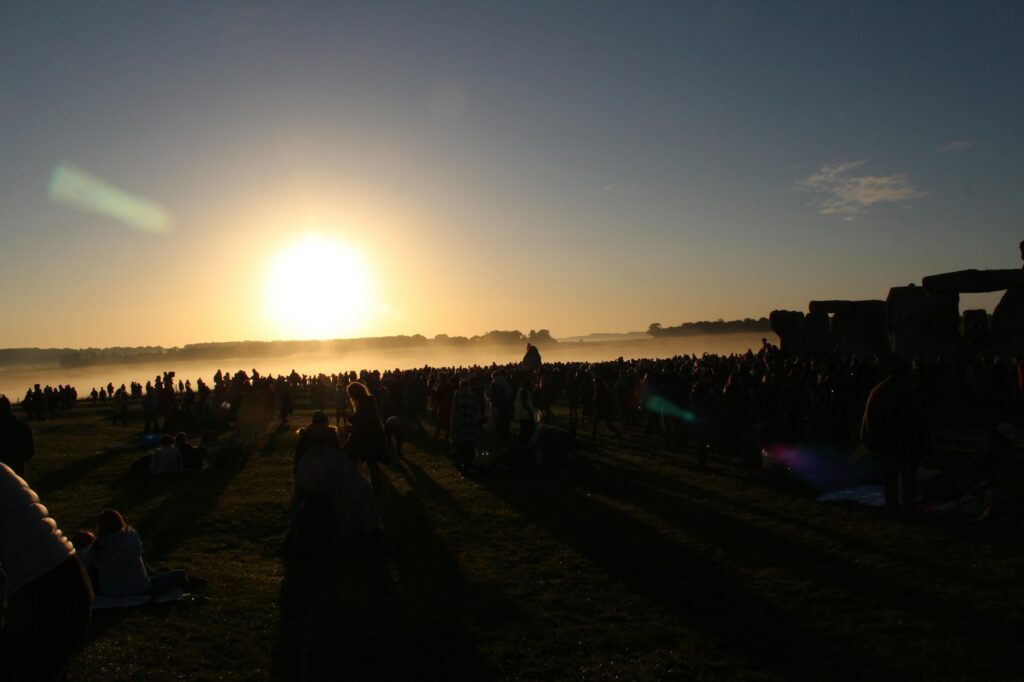
The 2026 summer solstice at Stonehenge falls on the night of 20–21 June, with sunrise at 04:52 BST. Entry to the monument is completely free (English Heritage Managed Open Access) but the car park costs £25 and must be booked in advance. During these few hours, visitors can touch the stones — a privilege forbidden for the remaining 364 days of the year. In 2025, around 25,000 people gathered on Salisbury Plain to witness this 4,500-year-old astronomical alignment, joined by druids leading a triple ceremony at midnight, dawn and noon. Arrive before 02:00 to secure your place inside the stone circle.
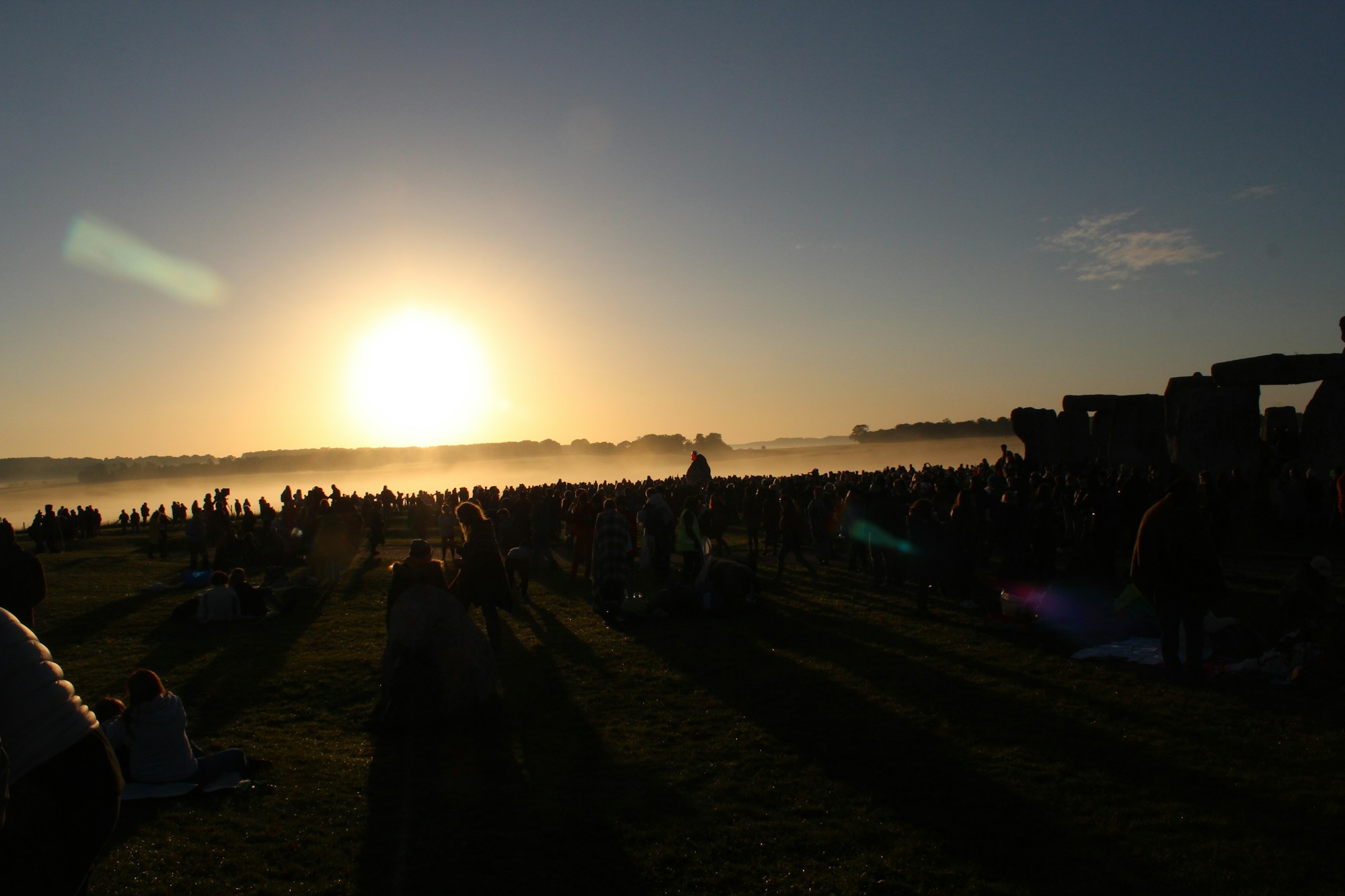
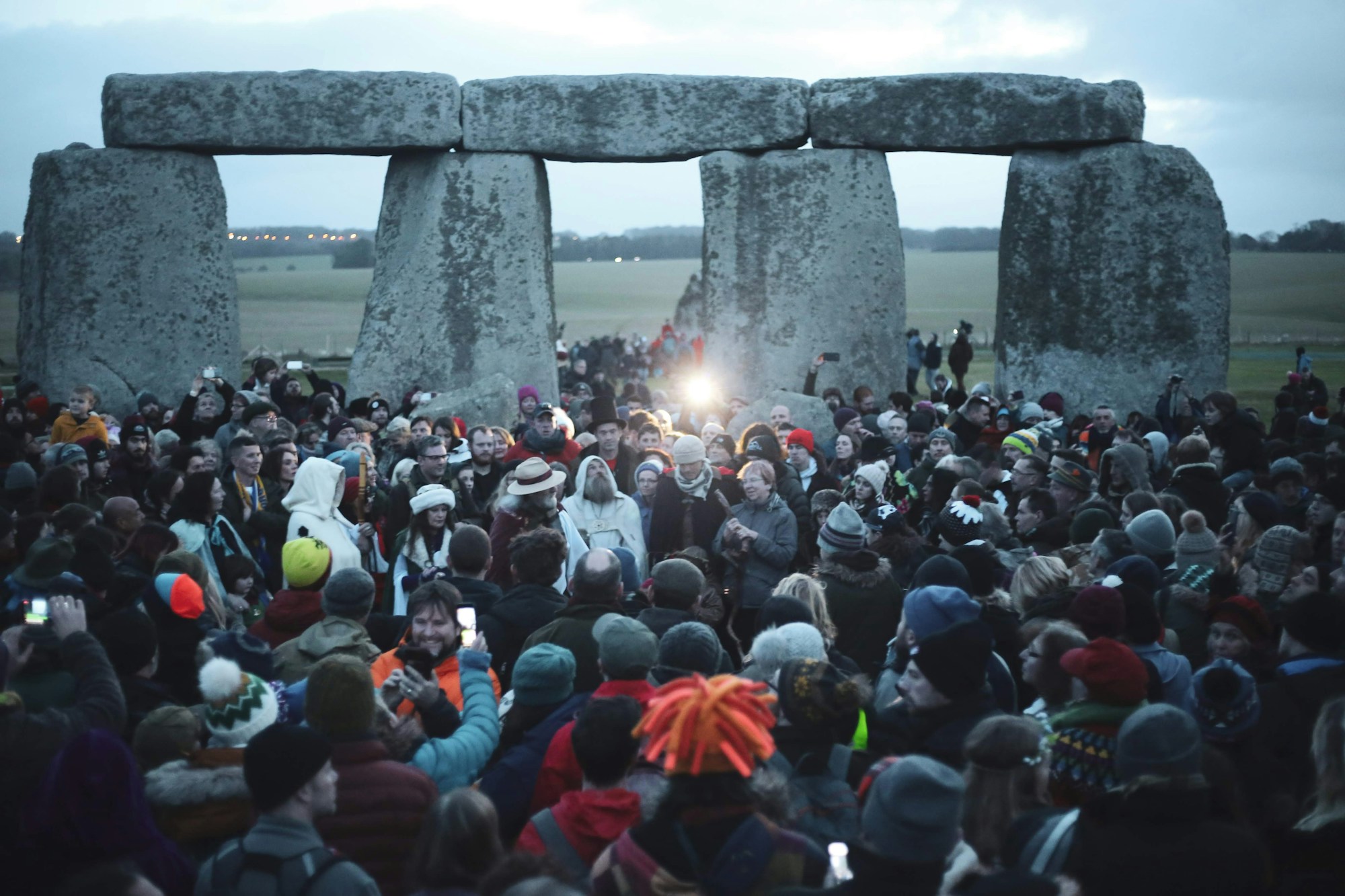
It’s 04:30. Darkness still wraps the Wiltshire plain and, somewhere out in the night, a drum begins to beat. Around me, thousands of silhouettes press close to the great sarsen giants — druids in white robes, families carrying lanterns, photographers with tripods, pilgrims from every corner of the world. The sky to the north-east glows slowly with deep orange. Then, at exactly 04:52, the sun clears the Heel Stone and sends its first rays straight down the axis of the monument. A cry rises from the crowd — spontaneous, sincere, unmistakably British. That is Stonehenge at the summer solstice.
On 21 June 2026, Stonehenge opens its gates for free under the Managed Open Access — the annual celebration run by English Heritage since 2000. Around 25,000 people are expected, drawn not only to one of the world’s most mysterious prehistoric sites, but to a genuinely unique cultural and spiritual event. Here is everything you need to make the most of this extraordinary night.
1. Stonehenge and the solstice: 4,500 years of astronomical alignment
A monument built for the sun
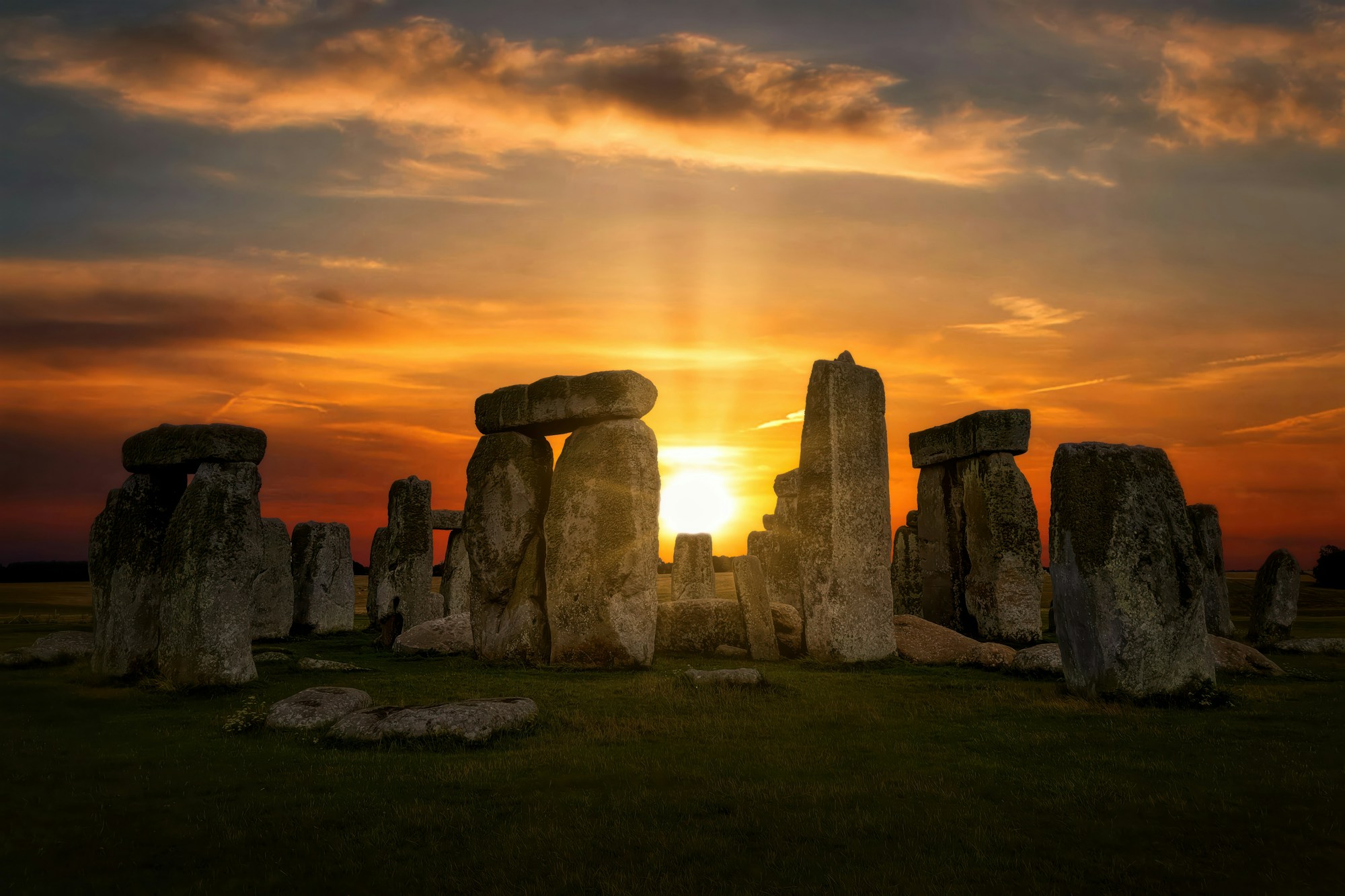
Stonehenge is no architectural accident. According to archaeoastronomy research, the central axis of the monument is oriented precisely towards the north-east — the direction of the midsummer sunrise. As the sun breaks the horizon, its rays travel down the axis of the circle to the central altar stone: an intentional alignment repeated for more than four millennia.
The Heel Stone is the key element of this alignment: this rough-hewn rock, 4.9 metres tall and slightly tilted, stands to the north-east of the entrance. The sun rises just to its left, casting the stone’s shadow inward through the circle. Excavations have revealed an empty stone hole beside the Heel Stone, suggesting a second stone once formed a true « solar corridor ».
The stones themselves tell a vertiginous story. A study published in Nature in August 2024 revealed that the Altar Stone (6 tonnes, 5 metres long) did not come from Wales as previously believed, but from the Orcadian Basin in Scotland — over 700 km away. The bluestones, meanwhile, were transported by hand from the Preseli Hills in Wales, as confirmed by a July 2025 University of Aberystwyth study that definitively refuted the glacial transport theory.
Key facts
- Perfect astronomical alignment: the sun illuminates the monument’s axis at sunrise on 21 June
- Over 20 million estimated man-hours to build
- 2024 discovery: the Altar Stone came from Scotland, 700 miles away
- Listed as a UNESCO World Heritage Site under the criterion of « outstanding prehistoric creative achievement »
2. Modern druids: who are they and what do they do at Stonehenge?
Neo-druids and spiritual traditions
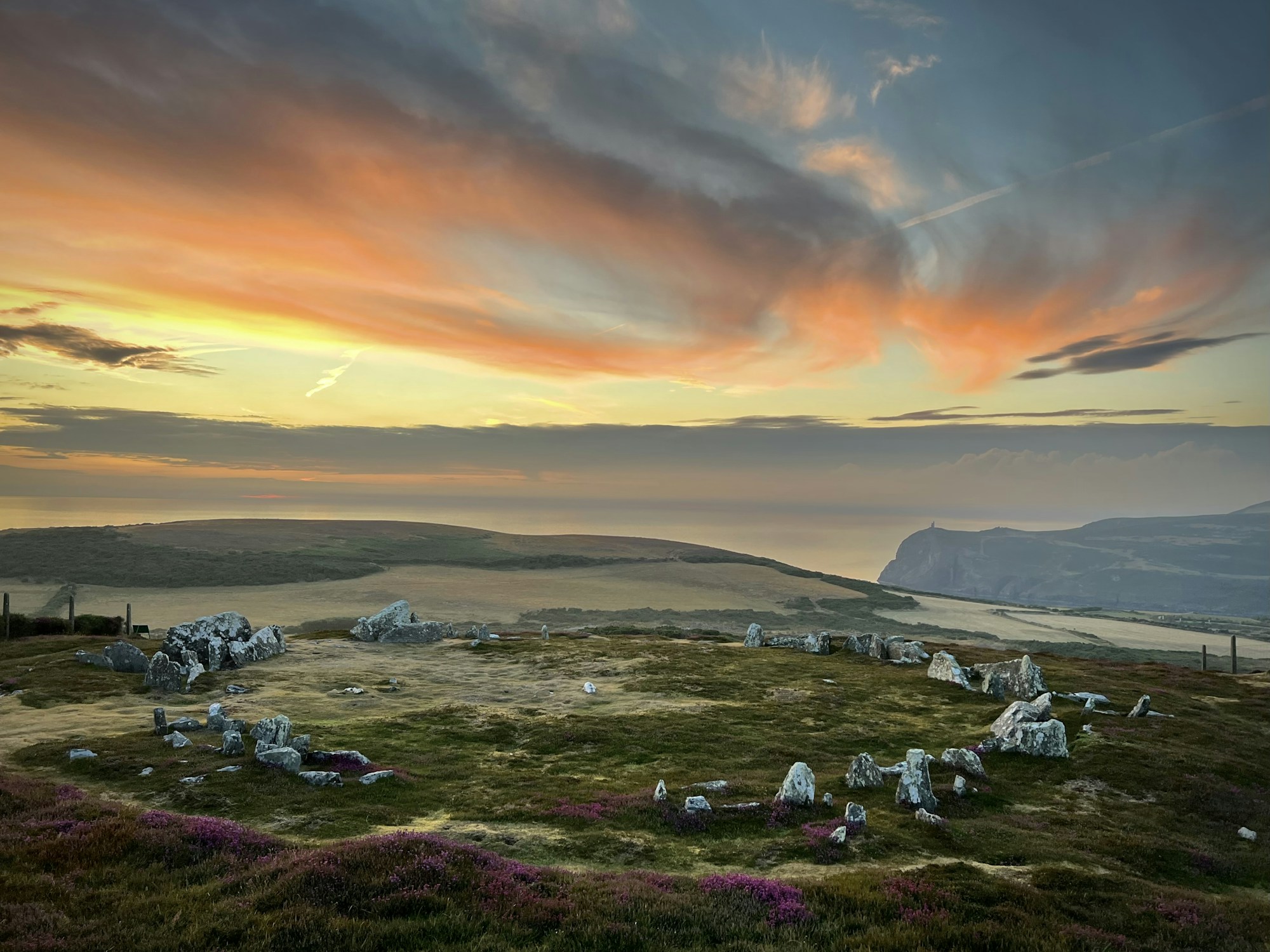
One point that often surprises visitors: modern druids have no direct connection to the Iron Age Celtic druids, who lived long after Stonehenge was built. The link between « druids and Stonehenge » is an 18th-century Romantic invention, popularised by William Stukeley. According to Stonehengetours, it was John Aubrey who, in 1626, first proposed that Stonehenge was a druidic temple — a compelling theory, but archaeologically inaccurate.
None of that diminishes the intensity of their presence. Neo-druidic groups regard Stonehenge as a sacred site tied to the natural cycles. Among the most active at the solstice:
- The Druid Order (the oldest): leads the triple ceremony at midnight, dawn and noon
- Order of Bards, Ovates and Druids (OBOD): ~7,000 members worldwide
- Loyal Arthurian Warband (LAW): led by Arthur Uther Pendragon, Archdruid of Salisbury
- Rollo Maughfling (Archdruid of Stonehenge): officiating at solstice ceremonies as recently as 2022
The Druid Order’s triple ceremony unfolds as follows: a first ceremony at midnight at the barrows to the south-west of Stonehenge; a second at dawn behind the Heel Stone — the most spectacular; and a third at noon to celebrate the fullness of the summer light (Alban Hefin in Welsh). As NPR reported in 2023, druids remain a visible minority who are deeply respected by other visitors.
3. Free entry, times and parking: everything you need to know
Managed Open Access 2026: confirmed dates and times
Since 2000, English Heritage has offered free and unrestricted access to Stonehenge for solstices and equinoxes under the banner of Managed Open Access. This is the only time of year when the public can step inside the stone circle and touch the megaliths — a privilege that otherwise costs £70 via the Stone Circle Experience.
For the 2026 summer solstice, here is the confirmed schedule from English Heritage official and the Stonehenge Stone Circle blog:
- 20 June at 19:00 BST: car park and monument field open (ideal for watching sunset at 21:26)
- 21 June at 04:52 BST: sunrise (the central moment of the celebration)
- 21 June at 08:00 BST: monument field closes (some sources say 08:30 — allow a margin)
- 21 June at 12:00 BST: car park must be cleared
The golden rule: arrive before 02:00 to secure a good position inside the circle. Coaches from London arrive en masse around 03:00, and the best spots facing the Heel Stone will already be taken. Photographers wanting to set up in peace should aim to arrive at 22:00 or 23:00 — the site is almost empty before the night-time rush, and the long summer twilight makes for extraordinary images.
4. Living the experience: atmosphere, ceremonies and photography
Timeline of a solstice night
The atmosphere of the solstice night is described by visitors as an improbable mix of music festival, spiritual gathering and enormous open-air camp. According to Archaeology Travel, « the crowd is made up of people in their thirties and forties, there with friends » — musicians playing gentle melodies (didgeridoos, drums, choral singing), families with lanterns, neo-druids in white robes and professional photographers with tripods.
Here is how a typical solstice night unfolds:
- 19:00–22:00: first visitors arrive, sunset at 21:26, vigil atmosphere begins, first druidic ceremonies
- Midnight: Druid Order ceremony at the barrows to the south-west of the site
- 01:00–03:00: coaches arrive from London, the site fills rapidly in the darkness
- 03:30–04:30: sky begins to lighten, photographers reposition, a gradual hush descends
- 04:52: sunrise — « a cry rises from the crowd, spontaneous and sincere » (Washington Post, 2025)
- 04:52–06:00: druidic dawn ceremony, illuminated stones, photography, gradual departures
The warmth stored by the sarsens throughout the previous day is perceptible to the touch in the darkness of the night — a sensory experience visitors unanimously describe as « impossible to put into words ». During Managed Open Access you can place your hand on the stones, which is forbidden on all other 364 days of the year. Strictly forbidden, however: climbing on the stones.
For photography, position yourself slightly off the central axis, to the north-east, to see the sun clear the Heel Stone. A tripod is essential (extremely low light at 04:52). The most striking shots show the silhouettes of the stones against the orange sky with the crowds in the foreground.
5. Getting there: transport, accommodation and budget from London
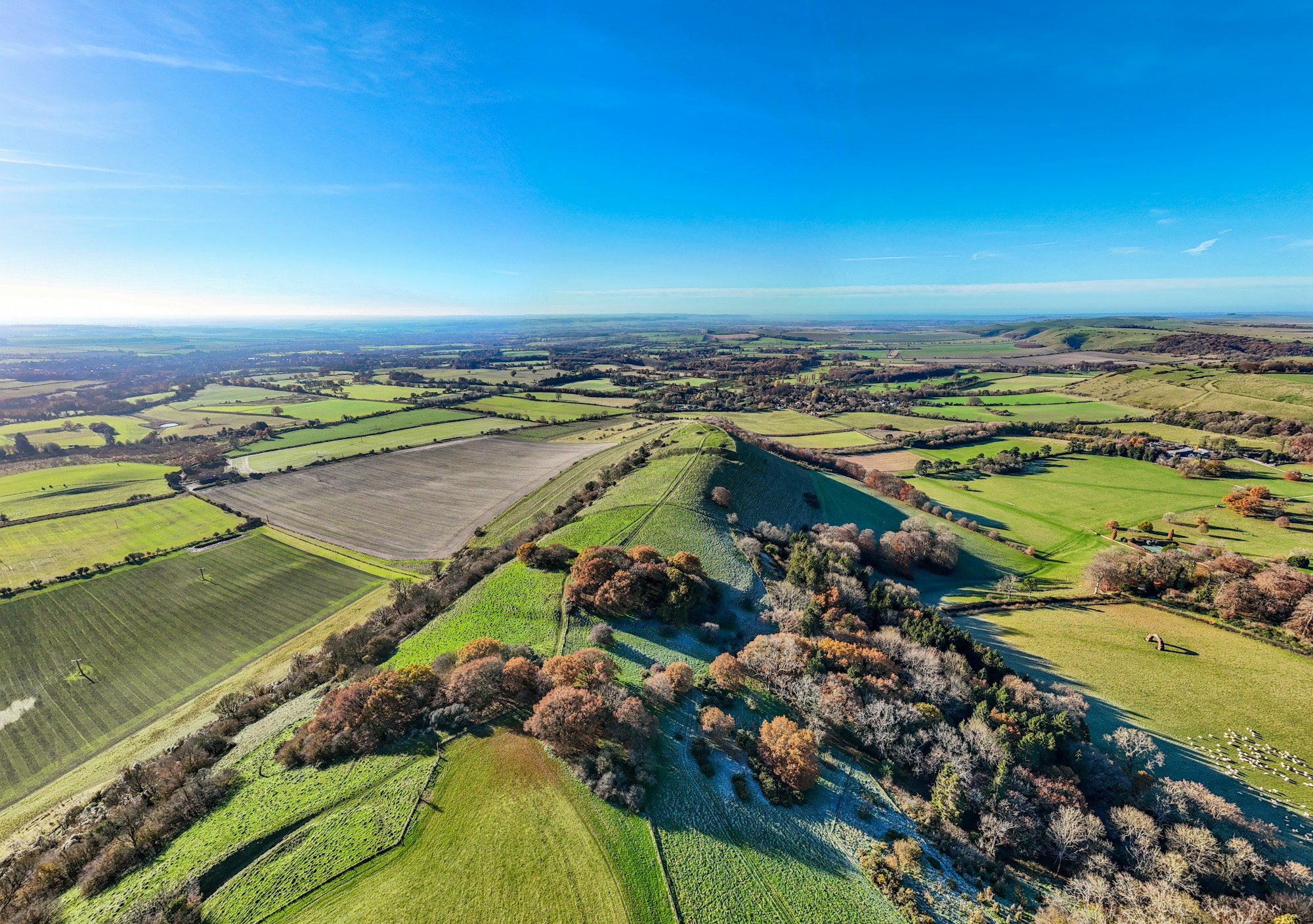
How to get to Stonehenge from London
The most straightforward route from London is the train and bus combination — no driving, no parking stress, and you arrive fresh for the all-nighter:
- From London: South Western Railway Waterloo → Salisbury in 1h22–1h41 (~42 trains/day, from £10 in advance)
- Salisbury Reds (route 333): Salisbury station to Stonehenge, ~£15 return
- From Bristol: Great Western Railway to Salisbury (1h10, from £7) — ideal for visitors from the South West
- From Manchester/Birmingham: GWR or CrossCountry to Salisbury (2h30–3h); book Advance fares to keep costs under £30
The classic alternative: a dedicated solstice coach from London run by operators such as Anderson Tours or London ToolKit. Departures from London Bridge (23:00), Victoria (23:30), Earls Court (23:50), arriving at Stonehenge around 03:00. Price: ~£138 per adult. The advantage is door-to-door logistics with a guided return from 05:00 — no need to navigate public transport in the small hours.
Coming by car: take the M3 then A303 from London (around 2 hours). The car park MUST be booked in advance (£25 for a car, £35 for a motorhome) via the English Heritage website. Cars without a booking are turned away. The A303 is closed at Longbarrow Roundabout: diversions via the A345, Packway and B3086 are signposted.
Accommodation
Book 6–12 months ahead — accommodation within 20 miles sells out by the autumn before the event:
- Holiday Inn Salisbury-Stonehenge (Amesbury, 6 miles): £90–150/night, free parking, « Solstice Bar & Grill » restaurant
- Travelodge Amesbury Stonehenge: £50–80/night, budget option, 7 miles
- Stonehenge Campsite & Glamping Pods (Berwick St James, 2 miles): from £30/night, closest option, festival on site 18–21 June
- Stone Circle Glamping (Durrington): shepherd’s huts with views over Durrington Walls
For a visitor travelling by train and bus from London, the total budget typically sits between £60 and £120 per person including a night’s accommodation — remember that entry to the stones is free at the solstice, whereas the Stone Circle Experience costs £70 the rest of the year.
Planning a longer trip around the event? Browse our England destination guides to combine Stonehenge with Bath, Avebury or the Cotswolds. The Wiltshire region is packed with prehistoric sites within a 20-mile radius.
6. What to bring (and what to leave at home)
The essential checklist
Salisbury Plain at 04:00 on a June morning can drop to 8–12°C — even in midsummer the wind on the plateau is relentless. Here is what English Heritage recommends bringing:
- Layered clothing — even in June, pack a warm jacket
- Waterproof walking shoes (uneven ground, wet grass, 25–30 min walk from the Visitor Centre)
- Light waterproof jacket (large umbrellas are banned)
- Torch or headtorch (essential for walking in the dark)
- Plenty of water (only one drinking water tap on site for thousands of people)
- Light snacks (food vans are several minutes from the stones)
- Small blanket or yoga mat (sleeping bags and duvets are banned)
- Portable power bank (no charging points on site)
- Camera tripod for sharp dawn photographs
Bags must not exceed 30 cm × 25 cm × 15 cm. Random security searches are carried out at the entrance. Allow 45 minutes for security checks during peak arrivals.
Strictly banned: alcohol (confiscated at entry — entirely alcohol-free site), drones (plain-clothes operators patrol the area), glass of any kind, fires, candles, incense, lit torches, tents, sleeping bags, pets (except assistance dogs), amplified music, hi-visibility jackets.
Plan your trip: practical information
Guided day trip from London including Stonehenge, the Roman city of Bath and Bath Abbey. 4,660 reviews, rated 4.71/5. Morning departures from London.
From £115Stay connected across the UK without swapping your SIM. UK eSIM plans from £3.50 for 1 GB — ideal for navigation, sharing your solstice photos and using Google Maps across Wiltshire.
From £3.50Worldwide medical cover and trip protection for your UK trip. SafetyWing’s Nomad Insurance covers emergency medical costs, repatriation and travel disruption — from just $1.99/day.
From $1.99/dayCompare flight prices to London (LHR/LGW/STN) for the solstice weekend. Fares typically rise 6–8 weeks before 21 June — compare now to lock in the best price.
Compare pricesFrequently asked questions — Stonehenge Summer Solstice 2026
Is entry to Stonehenge really free for the 2026 summer solstice?
Yes. English Heritage operates a completely free Managed Open Access for the 2026 summer solstice (the night of 20–21 June). No ticket is required to enter the monument field. Only the car park is charged: £25 for a car (advance booking essential), £35 for a motorhome. The Salisbury Reds bus costs around £15 return. Source: English Heritage Summer Solstice 2026.
What time exactly does the sun rise at Stonehenge on 21 June 2026?
Sunrise is expected at 04:52 BST (British Summer Time, 03:52 UTC) on Sunday 21 June 2026. The astronomical solstice itself occurs at 09:24 BST — but it is the sunrise that forms the centrepiece of the celebration. Sunset the previous evening (20 June) is at 21:26 BST, making an early arrival on the evening of the 20th a great way to soak up the atmosphere. Sources: English Heritage official and Royal Observatory Greenwich.
Can you touch the stones at Stonehenge during the solstice?
Yes. This is one of the most compelling reasons to attend the solstice: during Managed Open Access, visitors can walk right up to and touch the megaliths — strictly forbidden on all other days of the year, when the public must remain behind a rope barrier. Climbing on the stones is absolutely prohibited, however. Source: English Heritage entry conditions.
How do I get to Stonehenge from London for the solstice?
The simplest route: South Western Railway from London Waterloo to Salisbury (1h22–1h41, from £10 in advance), then the Salisbury Reds bus (route 333) from Salisbury station to Stonehenge (around £15 return). Total journey time: under 2 hours from central London. For the solstice night itself, dedicated coaches depart from London Bridge, Victoria and Earls Court between 23:00 and midnight, arriving at Stonehenge around 03:00 (price ~£138). By car: M3 then A303, approximately 2 hours from London; car park must be booked in advance at £25.
What time should I arrive at Stonehenge for the summer solstice?
To secure a good position inside the stone circle at sunrise, arrive before 02:00. Coaches from London typically arrive around 03:00, and the spots directly facing the Heel Stone fill up fast. Photographers wanting to set up properly should aim to arrive at 22:00 or 23:00 on 20 June. The car park opens at 19:00 BST on 20 June; the monument field closes at 08:00 BST on 21 June.
Is there a less crowded alternative to Stonehenge for the summer solstice?
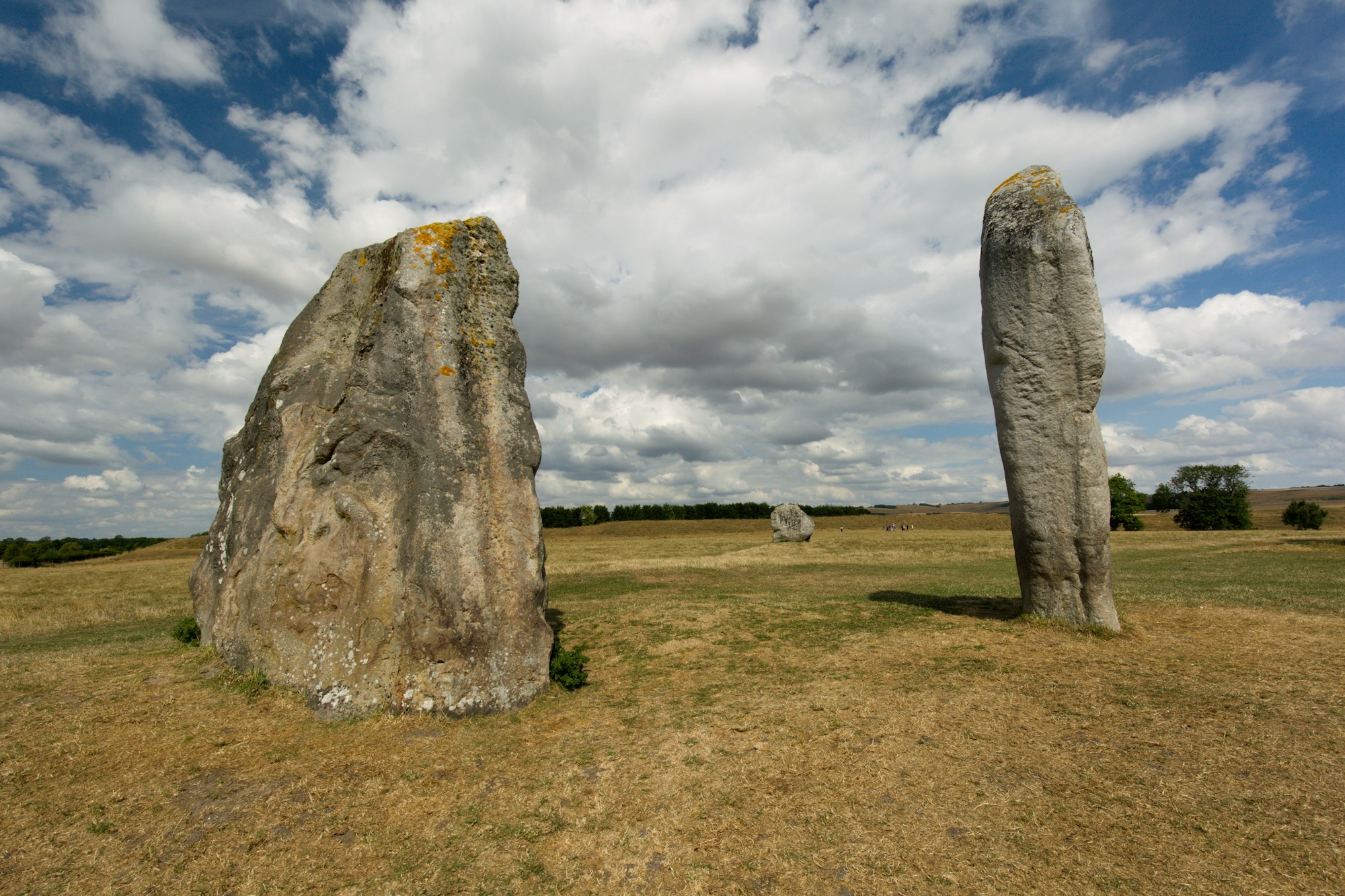
Yes. Avebury, 19 miles north of Stonehenge, also marks the solstice with a few hundred visitors rather than 25,000. It is Britain’s largest stone circle (300 metres in diameter), listed under the same UNESCO World Heritage Site. The stones are freely accessible all year and an entire village sits inside the circle. The winter solstice at Stonehenge (December) also attracts far fewer people (~8,500) for a more intimate atmosphere. Source: English Heritage Avebury.
Sources
- Summer Solstice 2026 — English Heritage — official information on the 2026 Managed Open Access
- Managed Open Access Arrangements 2026 — Stonehenge Stone Circle — confirmed times and arrangements
- What and what not to bring — English Heritage — official list of permitted items
- Respect the Stones — English Heritage — code of conduct
- Travelling to Stonehenge — English Heritage — official transport information
- Stonehenge’s Altar Stone came from Scotland — ScienceDaily — study published in Nature, August 2024
- Humans brought bluestones to Stonehenge — Phys.org — University of Aberystwyth, July 2025
- A303 tunnel revoked — New Civil Engineer — 18 March 2026
- Stonehenge tunnel scrapped — ITV News Meridian — 19 March 2026
- Stonehenge Summer Solstice 2025 — On Location Events — 2025 attendance record
- Visiting Stonehenge for Summer Solstice — Archaeology Travel — first-hand visit account
- Survival Guide — Cornish Bird Blog — practical visitor tips
- Stonehenge and the Druids — Stonehengetours — history of druidic groups
- Summer Solstice at Stonehenge — NPR — 2023 report
- Stonehenge, Avebury and Associated Sites — UNESCO WHC no.373 — World Heritage listing
- Solstice Timetable — Salisbury Reds — official bus timetable
Research conducted 16 May 2026. Please verify access information directly with English Heritage before travelling.
Ready to experience the solstice at Stonehenge?
On 21 June 2026, join 25,000 pilgrims converging on Salisbury Plain for one of Europe’s most mysterious events. Free entry, stones you can touch, druids in full ceremony — a night you will never forget.
Explore our England guides