
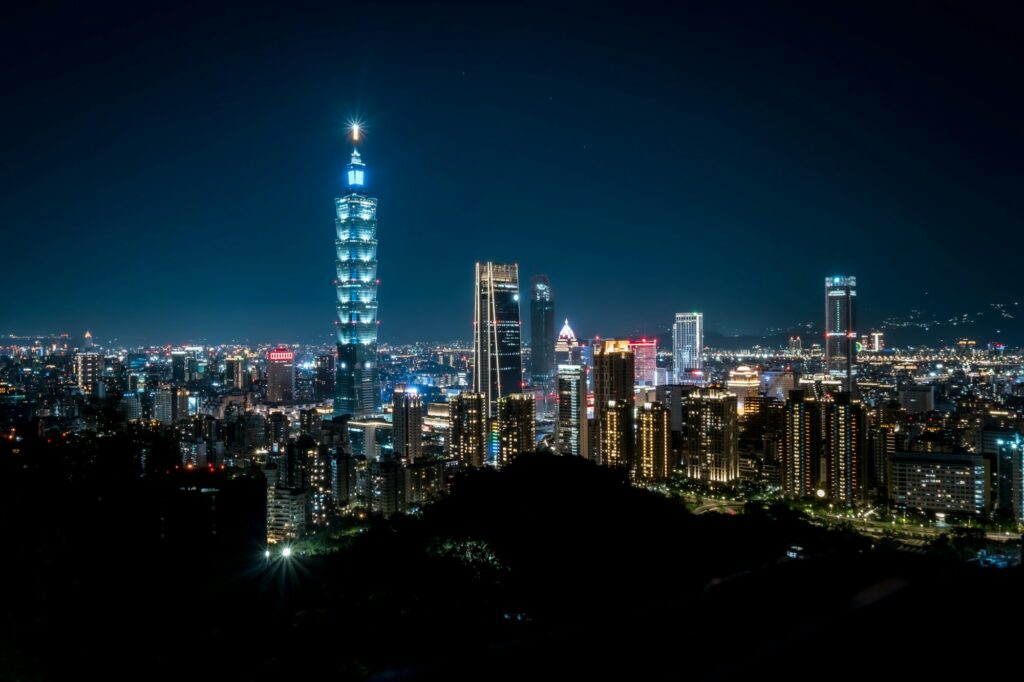
What if the most spectacular destination this spring was not Japan, but its neighboring island? Taiwan has everything Japan offers — pale pink cherry blossoms, mystical temples, nighttime street food — without the exorbitant prices and crowds that spoil the experience. With a cost of living 22% lower than Japan and cherry blossom seasons running from January to April depending on altitude, Taiwan establishes itself in 2026 as the most alluring Asian alternative for travelers who refuse to choose between authenticity and budget.
From Wuling Farm at 2,100 meters altitude, where 20,000 cherry trees carpet the valleys in pink, to the six Michelin-recognized stands at Raohe Night Market, to the colossal Buddhist complex of Fo Guang Shan with its 108-meter Buddha — Taiwan offers in one country what Japan, Korea and Southeast Asia would sell you separately. This guide is your roadmap for experiencing this Taiwanese spring.
1. Taiwan’s cherry blossoms: when, where and how to see them without crowds
Unlike Japan, where sakura blooms concentrate over two to three weeks in March-April, Taiwan offers an exceptionally long flowering window, from late January to mid-April, depending on altitude and region. According to Taiwan News, low-altitude areas like Taipei see blossoms from mid-January, while mountain regions like Alishan peak at the end of March to early April. This altitudinal diversity allows you to « chase » cherry blossoms from north to south in a single trip.
Wuling Farm (武陵農場) — Taiwan’s cherry blossom summit
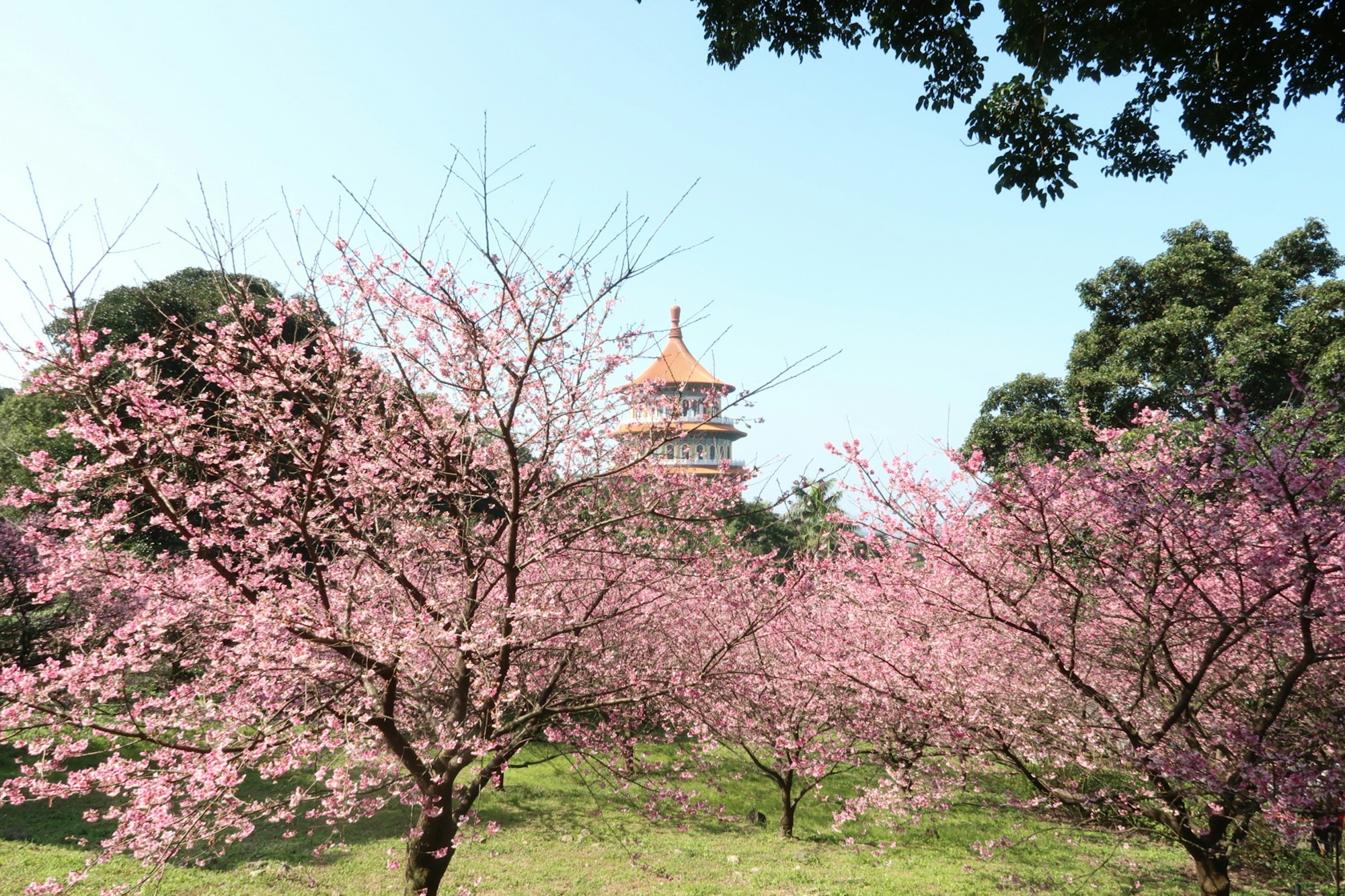
Nestled at 2,100 meters altitude in Heping District, Taichung, Wuling Farm is the Mecca of Taiwanese cherry blossoms. Some 20,000 cherry trees bloom each year from February to March, covering the valleys and trails in a pink mantle. According to the Taipei Times, visitors are limited to 6,000 per day during the season — a quota that preserves a serene atmosphere, very different from Japanese crowds. In 2026, the season started February 13 and ran until March 1.
The « Cherry Blossom Lane, » a 2km tunnel of intertwined trees, and the « Peach Garden » where pink cherry trees meet white pear trees, offer sublime photographic compositions. The site is far more than just an ornamental farm: at this altitude, it also cultivates pears, peaches, apples, and Qingxin Oolong tea.
Other must-see cherry blossom spots
- Yangmingshan (Taipei) — Free entry, bus from Taipei Main Station (NTD 15-30). The Yangmingshan Flower Festival mixes cherry blossoms, azaleas and calla lilies from January to April. Pingjing Street Lane 42 is the most romantic spot.
- Alishan (Chiayi) — Over 30 cherry blossom varieties, including the legendary century-old « King of Sakura » at the station. Rack railway, mist and ancient cypresses. Peak late March-early April. Entry NTD 300.
- Smangus (Hsinchu) — Isolated Atayal indigenous village 3 hours from Taipei, where 2,000 cherry trees bloom among ancient red cypresses. Authentic community tourism. Entry NTD 150, homestay NTD 1,500-2,500.
2. Taiwan’s night markets: the soul of the island after dark
Taiwanese night markets (夜市, yèshì) are not simply places to eat — they are cultural institutions. According to Taiwan Obsessed, Taiwan has over 300 night markets, some of which serve as testing grounds for new culinary trends that then spread throughout Asia. Eating at a Taiwanese night market for 3 to 8 USD — versus 15 to 30 USD at a restaurant in Tokyo — is perhaps where Taiwan wins the comparison most easily.
Raohe Street Night Market (饒河街觀光夜市) — Taipei’s best night market
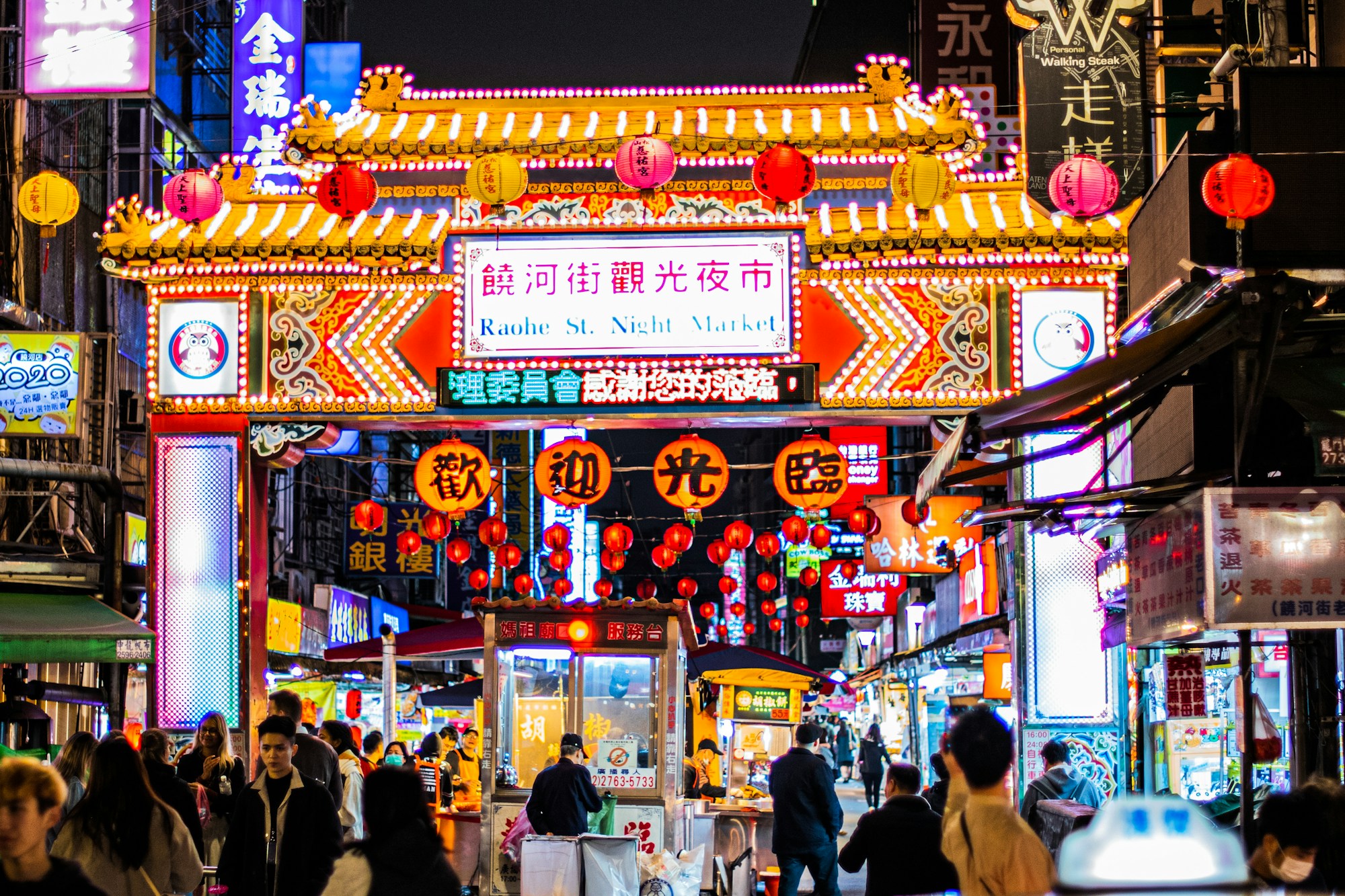
In recent years, Raohe Night Market has surpassed the famous Shilin in popularity, taking the title of most visited night market in Taipei. According to Taiwan Obsessed, no fewer than six stalls have been recognized by Michelin — a record. The market is relatively easy to navigate, entering on one side and exiting the other, over about 600 meters.
Its star dish: Fuzhou Black Pepper Buns (福州世祖胡椒餅), NTD 60 each. These small buns stuffed with pork, chives and black pepper are baked on the inner walls of a clay oven. They come out burning hot and crispy — consider it a sin to visit Raohe without trying one. The illuminated Ciyou Temple at the entrance adds an almost magical atmosphere to the nighttime visit.
Other markets not to miss
- Shilin Night Market (Taipei) — Taiwan’s largest, with its air-conditioned underground hall reopened in April 2025 after renovation. Ideal for families. Open 4pm-midnight.
- Fengjia Night Market (Taichung) — 1.5 km from north to south, testing ground for new Taiwanese culinary trends. Don’t miss the scallion pancakes from the legendary 逢甲丹丹香蔥油餅 stall.
- Liuhe Night Market (Kaohsiung) — Seafood paradise near the port. About 130 stalls, with fried crab, seafood bouillabaisse and oyster cakes. Open past midnight.
3. Taiwan’s temples: a living and accessible spirituality
Taiwan has over 15,000 temples — one temple for every 1,500 inhabitants. But unlike museums, these temples are alive: incense, chanting, offerings and daily rituals immerse you in authentic Taoist and Buddhist spirituality. And unlike Japan, where temples often charge high entrance fees, most Taiwanese temples are free or nearly free.
Longshan Temple (龍山寺) — Taipei’s beating heart
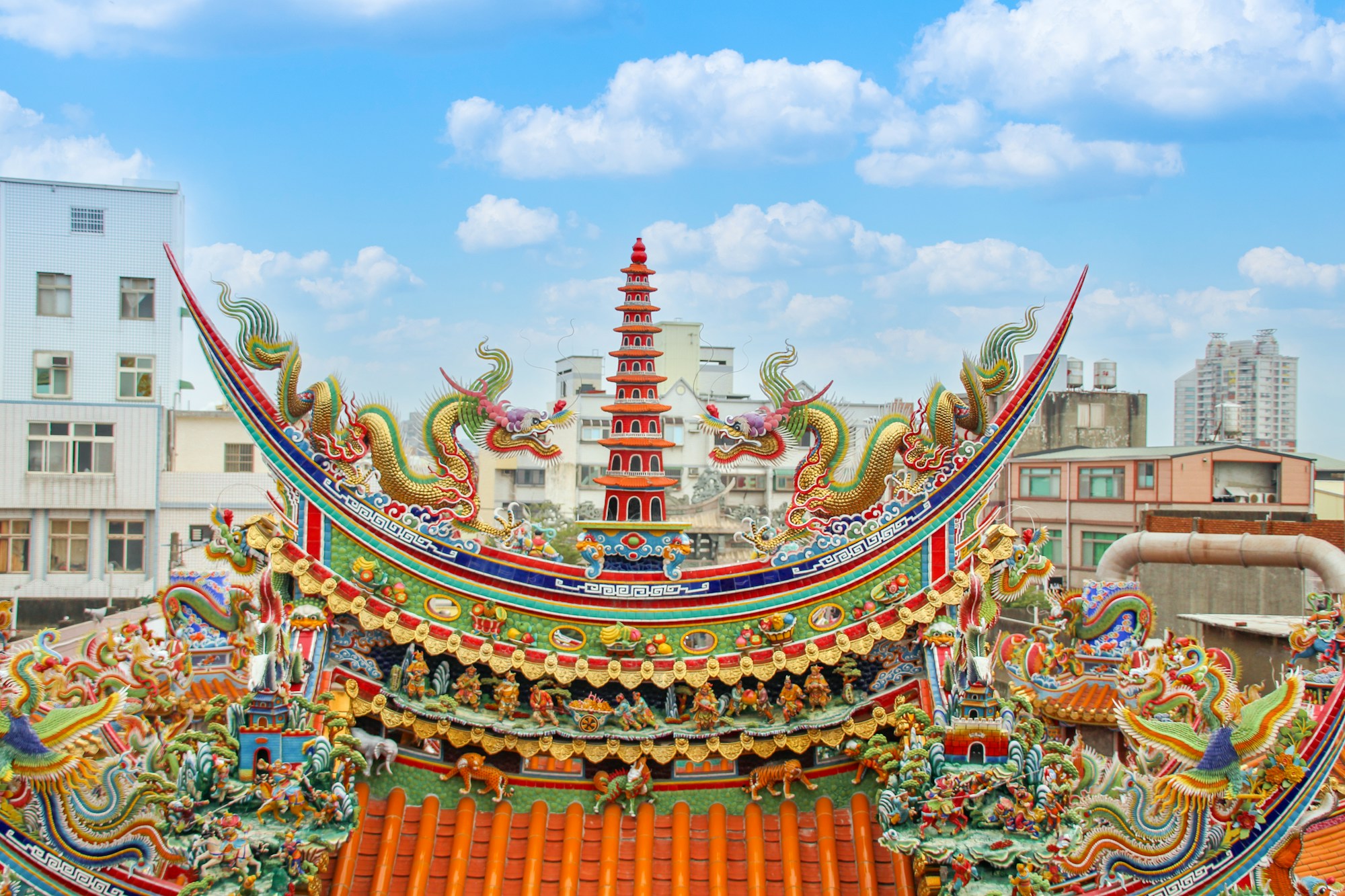
Three hundred years old, nestled in Taipei’s oldest neighborhood, Longshan Temple is far more than a tourist trap. According to Taiwan Obsessed, locals consider it the most important temple in the city — it is an active place of worship, always animated with sincere devotion. Fortune tellers dispense advice in the adjacent streets, and no fewer than four night markets come alive in the evening.
The absolute tip: arrive at 5:45am to attend the 6am ceremony in an almost supernatural atmosphere, without tourists. The incense, chanting and golden morning light create an experience impossible to replicate at noon. Right next door, Herb Lane (青草巷, the medicinal herb alley) offers a journey into traditional Chinese pharmacopoeia.
Other essential temples
- Fo Guang Shan (Kaohsiung) — Taiwan’s largest monastic complex, founded in 1967. 108-meter seated Buddha. Buddha Museum with vegetarian Starbucks. Free monastic stays by reservation via fgs.org.tw. Free entry.
- Wenwu Temple (Sun Moon Lake) — Decorated with red pillars and golden statues, dedicated to Confucius and the God of War. The view from the temple over the lake is as spectacular as the temple itself.
- Xuanzang Temple (Sun Moon Lake) — Quieter and more contemplative than Wenwu. Serene atmosphere ideal for meditation facing the lake. Combinable in a half-day with Wenwu Temple.
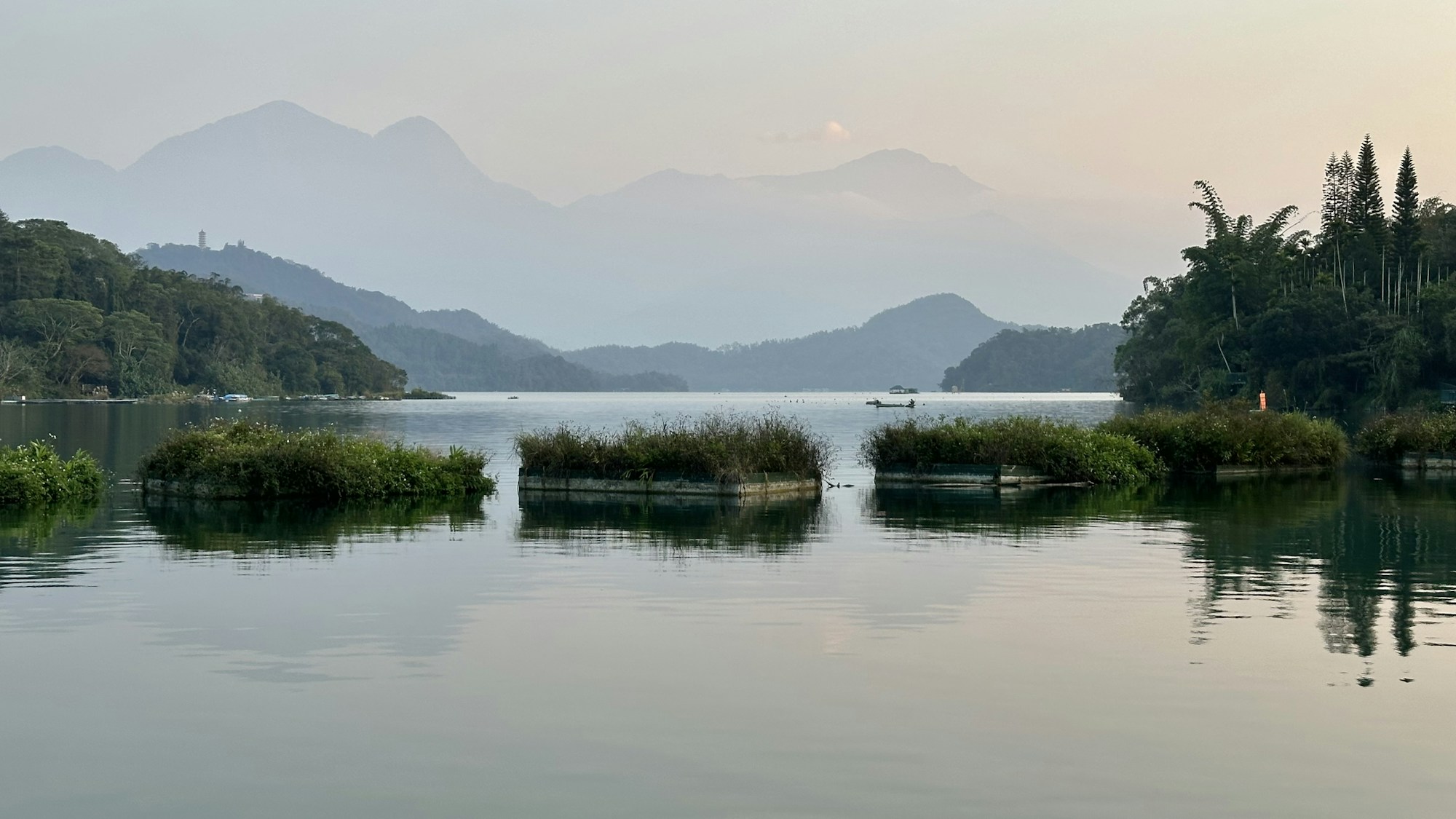
Sun Moon Lake (日月潭) — Lakeside sanctuaries in the heart of Taiwan
Sun Moon Lake — 8 km² in the heart of Nantou County — is Taiwan’s largest natural body of water. According to A Born Traveller, its name comes from its shape: one side resembles the sun, the other the moon. In addition to its temples, the site hosts the Formosan Aboriginal Culture Village with over 5,000 cherry trees (entry NTD 700) and the Water Frog Head Trail, a peaceful boardwalk through bamboo forests that tour buses typically ignore.
4. Taiwan vs. Japan: the budget comparison that changes everything
This is where Taiwan truly shines as an alternative. According to Expatistan, the cost of living in Taiwan is 22% lower than in Japan. And this difference is felt in every aspect of travel.
| Category | Taiwan | Japan |
|---|---|---|
| Street food meal | 1-5 USD | 5-15 USD |
| Mid-range restaurant | 8-15 USD | 15-30 USD |
| Budget hotel/night | 10-20 USD | 25-50 USD |
| Mid-range hotel/night | 40-80 USD | 80-200 USD |
| Subway/ride | 0.50-1.50 USD | 1-5 USD |
| Cultural activities | 0-10 USD | 5-30 USD |
| Long-distance train | ≈ 40 USD (Taipei → Kaohsiung) | ≈ 130 USD (Tokyo → Osaka) |
Sources: City News Net, Explorer Tom, Travelpander
With careful planning, you can travel Taiwan as a backpacker for 30 to 40 USD per day. For a mid-range trip, 60 to 100 USD per day is realistic. Night markets offer world-class meals for 3-8 USD — versus 15-30 USD at a restaurant in Tokyo. And flights to Taipei are currently 65% cheaper than budget flights to Tokyo, according to City News Net.
5. Practical tips for planning your spring trip to Taiwan
Visa, transport and accommodation: everything you need to know
🛂 Visa and entry
Citizens of the European Union, United Kingdom, United States, Canada, Australia, New Zealand, Singapore, South Korea and Japan can stay in Taiwan visa-free for 14 to 90 days, depending on nationality. According to Round Taiwan Round, since October 1, 2025, Taiwan has fully implemented a digital arrival card system, replacing the old paper forms. Check your specific situation with Taiwan’s Bureau of Consular Affairs (BOCA) before departure.
🚄 Transport
The Taiwan High Speed Rail (HSR/高鐵) is your best ally for long distances: from Taipei to Kaohsiung in just 1h30, at a maximum speed of 300 km/h. For tourists, the Taiwan Pass HSR Edition — unlimited rides for 3 days plus various transports for 7 days — is exceptionally good value. According to Taiwan Obsessed, it can include tickets for the Alishan Forest Railway.
In cities, the EasyCard is essential: it works on all MRT lines, buses, YouBike and in convenience stores. The Taiwan Tourist Shuttle (Taiwan Haohing) network connects HSR stations to isolated destinations like Sun Moon Lake, Alishan and Wuling Farm.
🏨 Accommodation
- Budget (10-20 USD/night): hostels and guesthouses with communal kitchens, ideal for backpackers.
- Mid-range (40-80 USD/night): clean rooms with private bathroom, AC, WiFi and sometimes breakfast in major cities.
- Unique accommodation: free monastic stay at Fo Guang Shan (book via the official website), or homestay in Smangus village (NTD 1,500-2,500).
Frequently asked questions about Taiwan in spring
Taiwan or Japan for cherry blossoms — which is the better destination?
Both have their strengths, but Taiwan offers a more flexible and more affordable experience. Taiwan’s cherry blossom season is longer than Japan’s, running from late January to mid-April depending on altitude. According to Taiwan Obsessed, you can « chase » cherry blossoms from north to south in a single trip — an experience impossible in one week in Japan. And without Japan’s massive price hikes during sakura season (March/April) and Golden Week (late April/early May), your budget benefits considerably.
Do I need a visa to go to Taiwan in 2026?
Taiwan allows visa-free entry for citizens of many countries. Nationals of EU countries, the United Kingdom, United States, Canada, Australia, New Zealand, Singapore, South Korea and Japan can stay in Taiwan visa-free for 14 to 90 days depending on nationality. Since October 1, 2025, a digital arrival card system is in place. Check your specific case with Taiwan’s Bureau of Consular Affairs (BOCA) before departure. Source: Trip.com Taiwan Visa Guide.
What is the best way to get around Taiwan?
The Taiwan High Speed Rail (HSR, 高鐵) is the benchmark for long distances: Taipei to Kaohsiung in just 1h30, at 300 km/h. For tourists, the Taiwan Pass HSR Edition (unlimited rides + various transports) is excellent value. Combine the HSR for long distances, EasyCard for cities (MRT, buses, YouBike), and Taiwan Haohing tourist shuttles for isolated sites like Alishan and Sun Moon Lake. Source: Taiwan Obsessed – HSR Guide.
How to avoid crowds at Wuling Farm during cherry blossom season?
Wuling Farm imposes a strict quota of 6,000 visitors per day during cherry blossom season — making advance booking essential. Special shuttle tickets must be purchased at 7-Eleven, FamilyMart and Hi-Life stores, generally available from December. For a near-solitary experience, book on-site accommodation (cabins available in December), arrive at opening, and head to sections far from the visitor center before tour buses arrive at 9am. Source: Taipei Times.
Are Taiwanese night markets accessible without speaking Mandarin?
Yes, absolutely. Night market stalls often display prices and names in English or with photos. Google Translate’s camera function is your best ally for Mandarin menus. Young Taiwanese people often speak English, and gestures are generally sufficient to order. Prices are fixed and displayed — no negotiation. Payment is in cash (NTD), so bring some change. Source: Shilin Night Market Food Guide.
Can you really spend the night in a monastery in Taiwan?
Yes! Fo Guang Shan in Kaohsiung offers free overnight stays for foreign travelers through its monastic stay program. It’s an unforgettable way to immerse yourself in Buddhist culture. Accommodations are simple but clean, and the tranquility of the surroundings makes the stay feel like a true retreat. Guided meditation sessions, tea ceremonies and calligraphy classes are offered. Book at the official website fgs.org.tw several weeks in advance.
When should you book for Taiwan’s cherry blossom season in 2027?
As early as possible — ideally 3 to 6 months in advance for accommodations in Alishan and Wuling Farm. For special Wuling shuttle tickets, they are typically released in December for the February season. Wuling Farm enforces strict visitor limits — non-residents must take designated shuttles. For Alishan, bus tickets from Chiayi are only available at FamiPort machines in FamilyMart stores. Source: Round Taiwan Round – Cherry Blossom Itinerary.
What itinerary do you recommend for 10 days in Taiwan in spring?
An optimal « cherry blossoms + culture + nighttime gastronomy » itinerary: Days 1-3 in Taipei — Longshan Temple, Raohe Night Market, Yangmingshan cherry blossoms, Tamsui. Day 4: Wuling Farm by round-trip shuttle or overnight. Days 5-6: Taichung and Sun Moon Lake — lake temples, Fengjia Night Market. Day 7: Alishan — forest railway, sunrise over the sea of clouds, cherry blossoms. Days 8-10: Kaohsiung — Fo Guang Shan, Liuhe Night Market, Cijin Island. Total estimated mid-range budget: 700-1,000 € excluding flights. Source: Pixidia research synthesis.
Sources
- Taiwan News — Top 10 cherry blossom viewing locations in Taiwan (Feb 25, 2026)
- Taipei Times — Travel options for Wuling outlined as blossoms loom (Jan 2026)
- Taiwan Obsessed — Cherry Blossoms in Taiwan: Best Spots & 2026 Viewing Times
- Klook — Taiwan Cherry Blossom Forecast 2026: Viewing Spots & Peak Dates
- Taiwan Obsessed — Raohe Night Market: What to Eat at Taipei’s Best Night Market
- Taiwan Obsessed — Longshan Temple: Taipei’s Top Temple
- Nick Kembel — Fo Guang Shan: Taiwan’s Biggest Monastery
- A Born Traveller — Sun Moon Lake, Taiwan: A beginner’s guide
- City News Net — Taiwan vs. Japan: Travel Comparison
- Expatistan — Cost of Living Comparison Taiwan vs Japan
- Round Taiwan Round — Taiwan Arrival Card and Taiwan Visa Requirements 2026
- Taiwan Obsessed — Guide to Booking HSR Tickets in Taiwan
Research conducted on March 2, 2026
Ready to plan your trip to Taiwan this spring?
Create your personalized Taiwan itinerary on Pixidia — cherry blossoms, night markets and temples, organized according to your dates and budget.
Explore all itineraries