
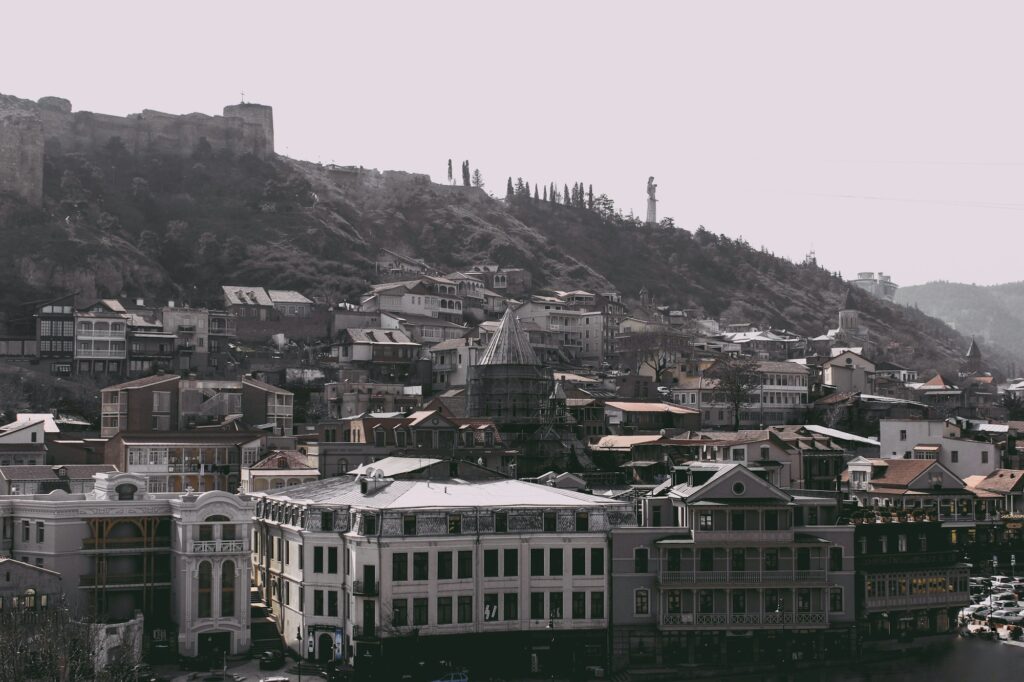
Tbilisi has just claimed 2nd place worldwide in Tripadvisor’s trending destinations ranking for 2026 — right behind Madeira. Yet unlike the Portuguese island, Georgia’s capital remains largely unknown to the English-speaking public. According to official Geostat figures, Q3 2025 alone recorded 3 million international arrivals, up 6.6% year-on-year. Sulfuric thermal baths for under €2/hour, natural wine dating back 8,000 years, UNESCO medieval towers and wild Caucasus cuisine — Georgia delivers on every promise. This complete guide tells you everything you need to know for 2026.
1. Tbilisi, the electrifying capital of 2026
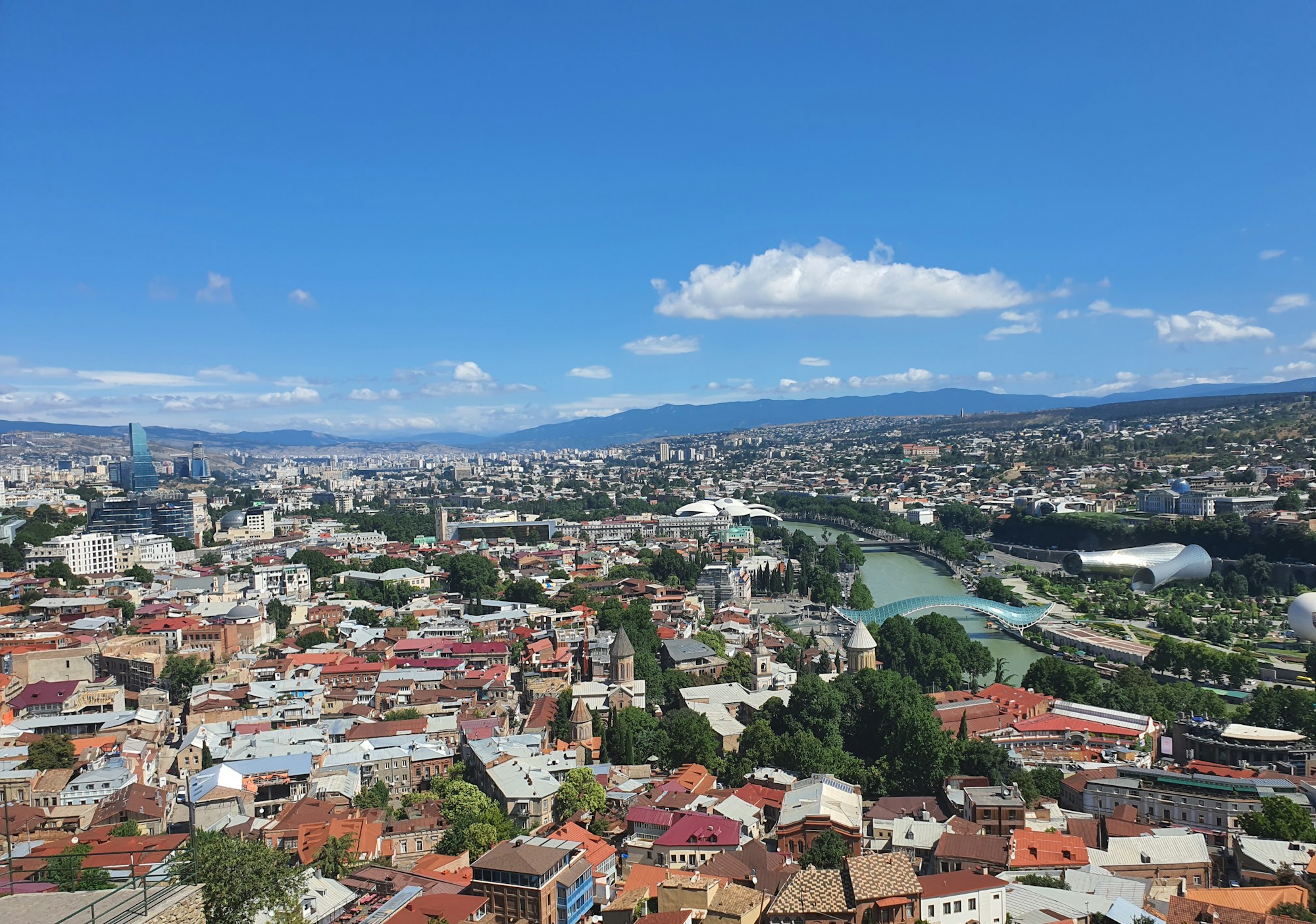
Tbilisi (Georgia)
Tbilisi is the kind of city that draws you in, reveals itself slowly, then gets under your skin. Brimming with tradition yet effortlessly stylish, it is both suave and chaotic, charming and eccentric. According to Lodging Magazine reporting the Tripadvisor Travellers’ Choice Awards, Tbilisi claimed 2nd place globally among trending destinations for 2026 — a ranking based on 12 months of real traveller reviews worldwide.
Its cobblestoned old quarter reflects a complex, layered history: Persian rule, Russian Empire, regained independence. The heterogeneous architecture blends Eastern Orthodox churches, ornate Art Nouveau buildings and Soviet modernist structures, all dominated by the 4th-century Narikala Fortress and the iconic statue of Kartlis Deda — « Mother of Georgia ». According to Luxury Travel Magazine, new cultural spaces are emerging across the city — from the new Anagi Art Foundation to the expansion of the Shalva Amiranashvili Fine Arts Museum — and historic buildings are being transformed into elegant boutique accommodations.
Neighbourhoods not to miss
- Sololaki — southeast of Freedom Square, Ottoman and Art Nouveau architecture
- Abanotubani — the sulfur baths district, with its distinctive brick domes
- Fabrika — former Soviet factory converted into a creative hub with bars, workshops and concerts
- Marjanishvili — trendy neighbourhood with galleries, vegan restaurants and natural wine bars
2. Abanotubani: the sulfur baths that gave the city its name
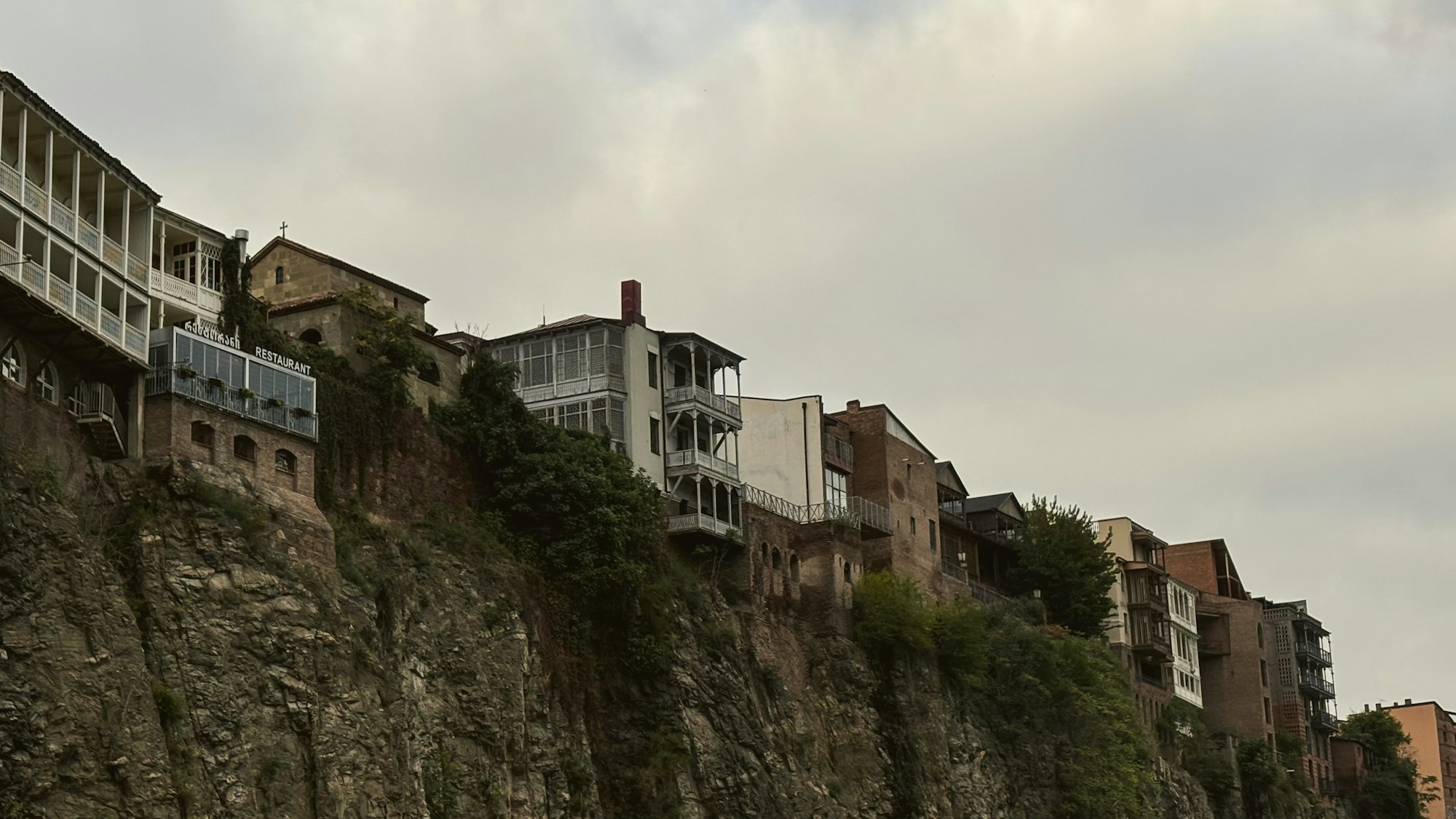
The Baths District — Abanotubani
The very name « Tbilisi » derives from the Georgian word tbili meaning « warm » — a direct reference to the natural hot springs that have bubbled beneath the city for millennia. According to Wander-Lush, most sulfur baths are located in the Abanotubani district, adjacent to the Mtkvari River near the old medina. The neighbourhood is characterised by its brick domes rising from the ground like molehills — a design that allows natural light to penetrate the bathing halls while letting the sulphurous steam escape.
Unlike baths elsewhere in the world, Tbilisi’s water is not manually heated: it comes from the ground naturally hot. Geothermal springs feed the pools directly at 38–40°C. According to The Georgian Guide, the baths are genuinely worth the visit — « one of the few ‘must-do’ activities in Tbilisi that actually lives up to the hype, because it’s not a manufactured tourist experience: it’s something people have been doing here since before the city had a name ».
What you need to know
- Public baths from just 5 GEL/hour (~€1.72) · Private rooms from 70 GEL/hour
- Traditional kisi scrub (similar to Turkish hammam): 10–20 GEL for 10–15 minutes
- Chreli Abano (the Coloured Baths): the most iconic, with its blue Persian-tiled facade, reopened in 2017
- Open until midnight or later — an evening session is magical in winter
3. Kakheti: 8,000 years of natural wine in clay amphorae
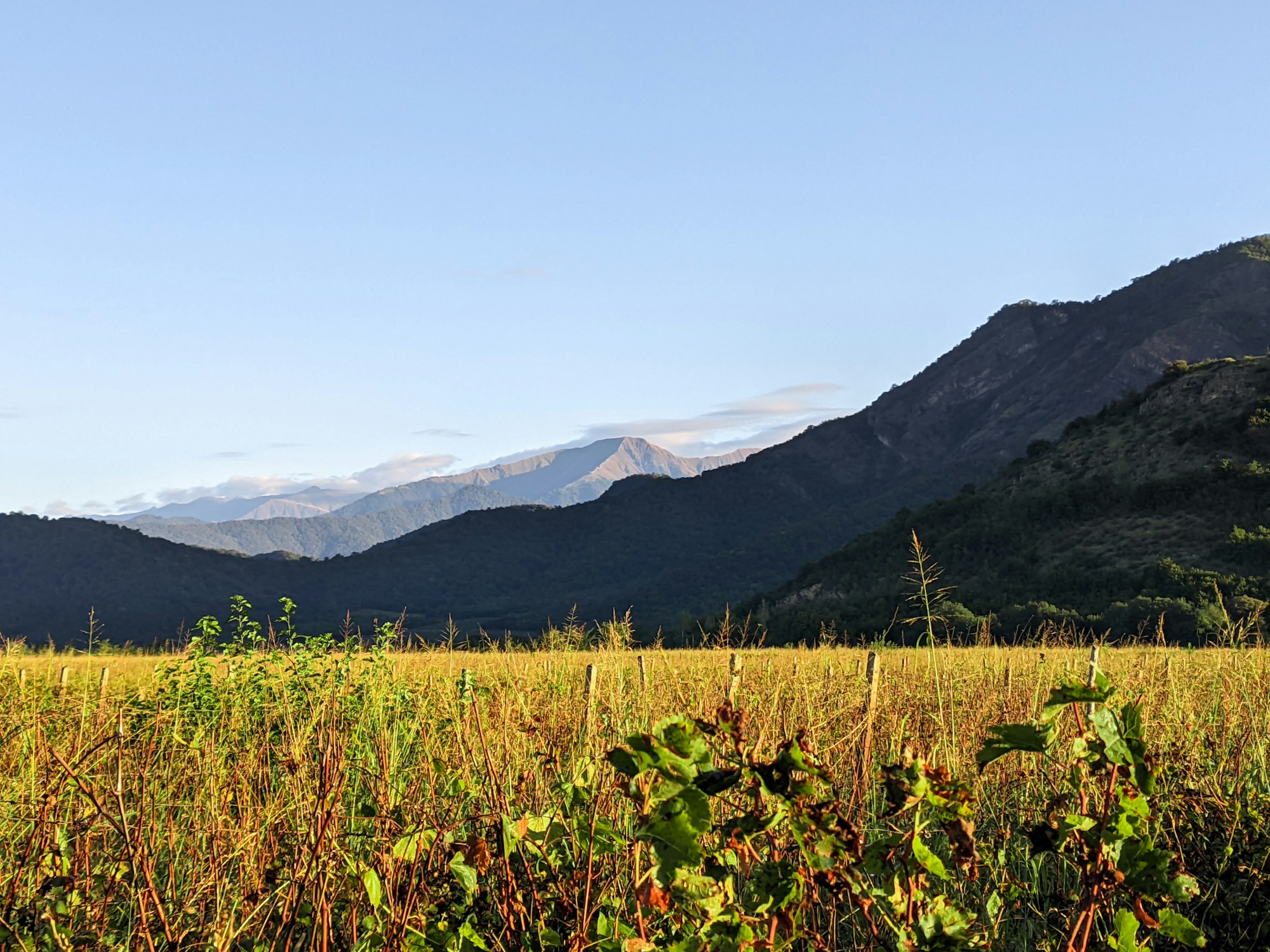
Kakheti (Eastern Georgia)
Archaeological discoveries have uncovered 8,000-year-old grape residues in ancient vessels, making Georgia one of the world’s oldest continuous winemaking civilisations. According to WineTourism.com, Georgia boasts 525 indigenous grape varieties and still produces wine using the traditional method in qvevri — egg-shaped clay amphorae buried underground.
The Kakheti wine region concentrates nearly three-quarters of Georgia’s wine grapes. The qvevri winemaking process involves pouring juice along with all the « chacha » (skins, stems and seeds) into a buried amphora, where fermentation takes place for about 6 months — a method recognised by UNESCO as Intangible Cultural Heritage of Humanity since 2013. This process gives birth to the famous Georgian orange wine, today one of the most sought-after oenological trends worldwide.
Not to miss in Kakheti
- Sighnaghi — the hilltop « City of Love », surrounded by 4.5 km of walls and endless vineyards
- Pheasant’s Tears winery in Sighnaghi — world reference for Georgian organic wine on indigenous varieties
- Rtveli (September–October) — the harvest festival where families invite you to tread grapes and witness fermentation
- Tasting at a marani (wine estate) with accommodation: $40–100/night, meals included
4. Kazbegi: the roof of the Caucasus at 5,047 metres
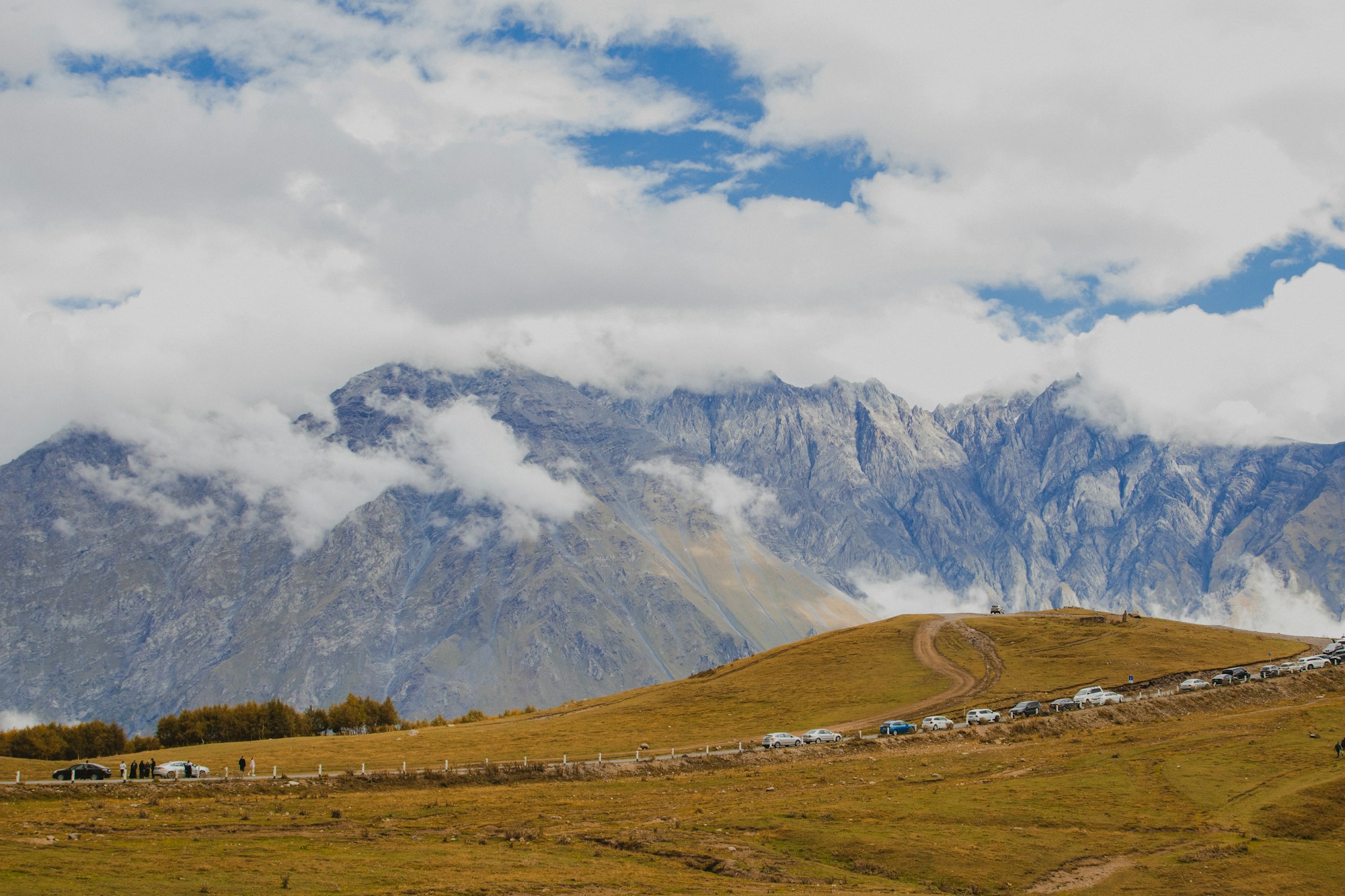
Kazbegi / Stepantsminda
Kazbegi is emerging as THE unmissable destination of 2026. Nestled in Georgia’s highlands 3 hours north of Tbilisi, this alpine town offers breathtaking dramatic scenery. Mount Kazbek peaks at 5,047 metres, dominating a landscape where the Gergeti Trinity Church, perched at 2,170 metres among swirling clouds, forms Georgia’s most iconic image. According to Travel and Tour World, these iconic landscapes, accessible via the Georgian Military Road, captivate hikers and photographers from around the world.
Kazbegi essentials
- Hike to Gergeti Trinity Church: 2 hours round-trip, breathtaking panoramas of Mount Kazbek
- Truso Valley: reddish mineral springs, natural CO₂ fields and medieval ruins — 45 minutes from Kazbegi
- Gveleti Petrified Forest: a rare geological phenomenon not to be missed
- Helicopter skiing on Mount Kazbek in winter for experienced adventurers
5. Svaneti: one of Europe’s last true frontiers
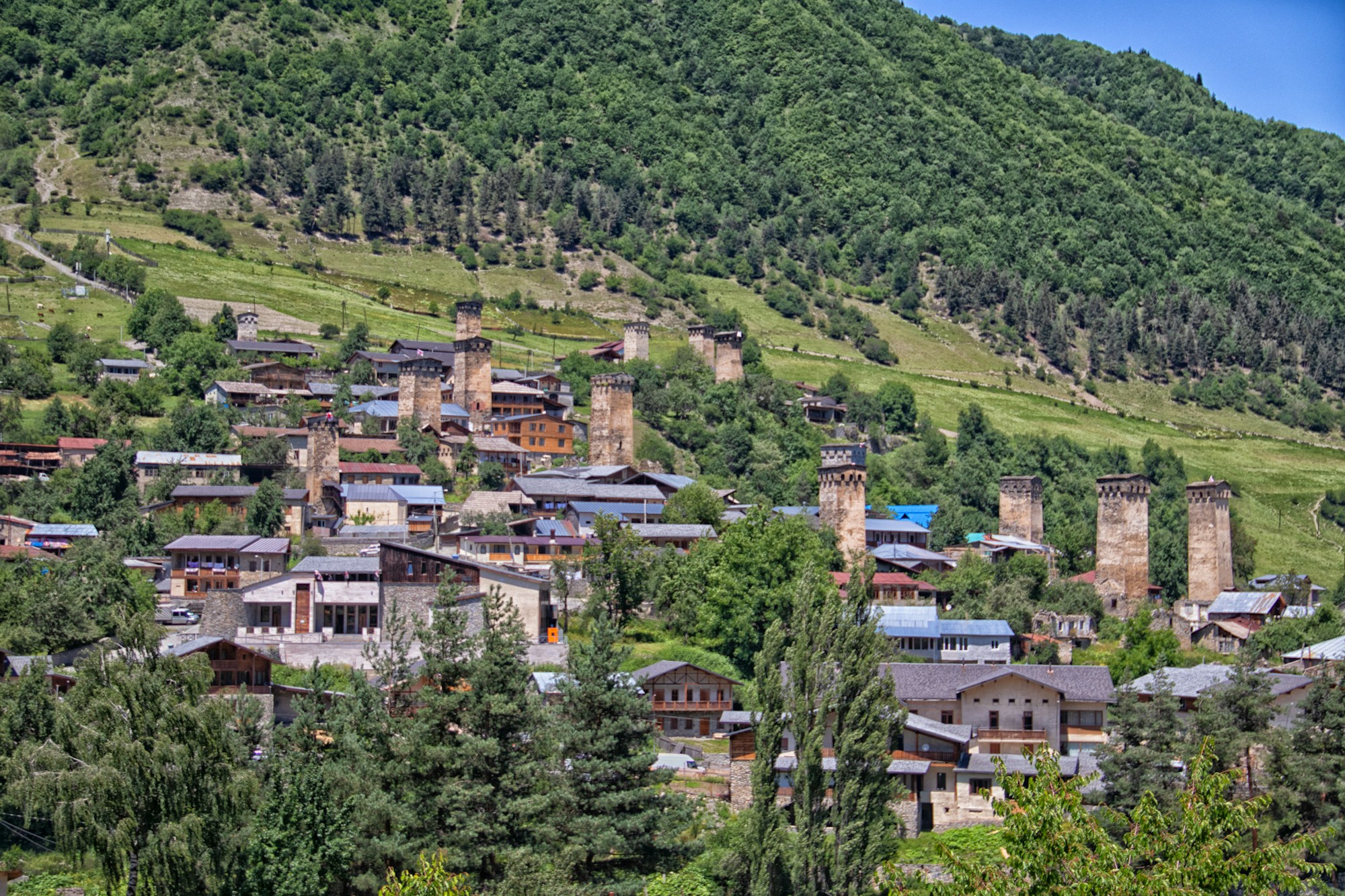
Svaneti (Northwestern Georgia)
Svaneti represents one of Europe’s last true frontiers — a UNESCO World Heritage landscape where approximately 3,500 medieval defensive towers pierce alpine valleys. These svanuri k’oshk’i, mainly built between the 9th and 12th centuries during Georgia’s Golden Age, typically rise 3 to 5 storeys with tapering profiles. According to Questquip, the village of Chazhashi alone preserves over 200 medieval structures — and unlike European castle ruins turned into tourist attractions, Svaneti’s towers remain integrated into living villages where families continue traditional agricultural practices.
Svaneti essentials
- Mestia-Ushguli trek: 4 days through medieval towers and summer villages — one of Europe’s most beautiful hikes
- Narchvi cheese: UNESCO Heritage, made in only a few Upper Svaneti villages — found nowhere else on Earth
- Svan salt: a unique blend of endemic spices, the perfect souvenir to bring home
- Hatsvali ski resort: cheaper and less crowded than Gudauri, with reliable snow
6. Mtskheta: the sacred city 25 minutes from Tbilisi
Mtskheta — Ancient Capital of Georgia
Former capital of the Kingdom of Kartli from the 3rd century BC to the 6th century AD, Mtskheta is Georgia’s spiritual heart — where Christianity was adopted as the official religion in 337 AD. According to UNESCO, Svetitskhoveli Cathedral, Jvari Monastery and Samtavro Monastery rank among the most important monuments of medieval Georgia.
Just 25 km north of Tbilisi, Mtskheta is one of the most accessible destinations from the capital — yet one of the most profoundly transporting. Most travellers visit in 2 hours, but its lanes hide gems that standard tours completely ignore, such as Shio-Mgvime Monastery, 11 km away, housing some of Georgia’s best-preserved medieval frescoes.
7. The Supra: the Georgian feast you will never forget
Georgian cuisine — A culture of sharing
The supra is the pinnacle of Georgian hospitality — a grand feast filled with dozens of dishes, flowing wine and a rhythm of poetic toasts led by the tamada (master of ceremonies). More than a simple meal, it is a cultural ceremony rich in music, storytelling and emotion. According to Journal of Nomads, the supra cultivates intimacy, deep bonds and love of family — « it is far more than a feast ».
Must-try dishes
- Khinkali — giant mountain dumplings filled with juicy meat or cheese: 2–3 GEL each
- Khachapuri — cheese-stuffed bread, prepared differently in each region
- Badrijani — aubergine rolls with walnut and garlic paste, served cold
- Churchkhela — walnut and grape juice sweets, often called « the Georgian Snickers »
- Mtsvadi — pork or veal skewers grilled over wood fire, served with fresh bread
8. Practical information: budget, visas and transport in 2026
Everything you need to know before you go
Budget by traveller profile
- 🎒 Backpacker: $14–50/day · Dorm from $7/night · Khinkali and markets
- 🏨 Mid-range: $50–125/day · 3-star hotel $60–70/night · Local restaurants
- ✨ Luxury: $120–200/day · Boutique hotel from $150/night · Fine dining
According to Cheapest Destinations Blog, restaurants are 53% cheaper than in Washington DC and groceries 62% cheaper. Georgia is comparable to the Balkans — less expensive than Croatia, roughly at the same level as Montenegro.
Essential logistics
- Visa: visa-free entry for up to 1 year for EU, USA, Canada, Australia citizens
- Currency: Georgian Lari (GEL) — 1 € ≈ 2.9 GEL in 2026 · Exchange at city banks for better rates
- Transport: Tbilisi metro: 2 GEL/trip · Bolt (like Uber) for taxis · Marshrutkas between cities
- Connectivity: Cheap local SIM, fast internet throughout tourist cities
9. Recommended itinerary: 10 days in Georgia
10 days to discover the essentials
- Days 1–3: Tbilisi — Old town, Abanotubani baths, Fabrika, contemporary art galleries
- Day 4: Mtskheta — Day trip: Jvari, Svetitskhoveli, lunch at Salobie
- Days 5–6: Kazbegi — Gergeti Trinity Church, Truso Valley, alpine hikes
- Days 7–8: Sighnaghi + Kakheti — Vineyards, Pheasant’s Tears, Rtveli (in season), Bodbe Monastery
- Days 9–10: Kutaisi — Gelati Monastery, Prometheus Caves, local market
Frequently asked questions about Georgia in 2026
Why is Tbilisi ranked the 2nd trending destination worldwide in 2026?
Tbilisi claimed 2nd place globally in the Tripadvisor Travellers’ Choice Awards 2026, based on 12 months of real traveller reviews from around the world. Georgia’s capital captivates with its unique combination of millennial thermal baths, ancestral natural wine, eclectic architecture and a booming contemporary arts scene. The country also recorded 3 million international arrivals in Q3 2025 alone, up 6.6% year-on-year.
Do I need a visa to visit Georgia?
No, citizens of the European Union, United States, Canada, Australia and many other countries enjoy visa-free entry to Georgia for stays of up to 1 year. This is one of the world’s most liberal immigration policies. Since 1 January 2026, mandatory travel insurance of 30,000 GEL (~€10,000) is required — check that your insurance covers this amount.
What is the average budget for a trip to Georgia?
Georgia is one of Europe’s most affordable destinations. A backpacker will spend $14–50/day (dorm from $7/night, khinkali and markets). A mid-range traveller can count on $50–125/day (3-star hotel, local restaurants). A full week comes to $350–700 (excluding flights) depending on your travel style. Restaurants are 53% cheaper than in Western Europe, and domestic transport is inexpensive (metro: 2 GEL/trip, intercity marshrutka: 10–15 GEL).
When is the best time to visit Georgia?
The best periods are April–June (blooming spring, ideal temperatures, few tourists) and September–October (pleasant heat, autumn colours and above all the Rtveli — the Georgian grape harvest festival). Avoid July–August for intense heat and crowds. Winter (December–March) is perfect for skiing at Gudauri or in Svaneti, and for enjoying thermal baths in a peaceful atmosphere.
How much do the Abanotubani thermal baths cost in Tbilisi?
Abanotubani’s public baths cost just 5 GEL/hour (~€1.72), making them one of Tbilisi’s most accessible experiences. Private rooms (for 2–4 people) start from 70–130 GEL/hour depending on the establishment. The traditional kisi scrub (similar to a Turkish hammam) costs 10–20 GEL for 10–15 minutes. Chreli Abano (the Coloured Baths), with its blue Persian-tiled facade, is the most iconic — book ahead for weekends.
Is Georgian natural wine in qvevri really worth it?
Absolutely. Georgia is the birthplace of wine with 8,000 years of uninterrupted viticultural history and 525 indigenous grape varieties. Winemaking in qvevri (underground clay amphorae) has been recognised by UNESCO as Intangible Cultural Heritage of Humanity since 2013. Georgian orange wine — natural, unfiltered, with skin maceration — is today the most sought-after oenological trend worldwide. Kakheti wines offer a complexity and authenticity unmatched elsewhere, at prices that defy comparison.
How do you travel between destinations in Georgia?
Marshrutkas (shared minibuses) connect almost every city in Georgia at very low prices (Tbilisi-Kazbegi: ~10 GEL). Tbilisi metro is efficient at 2 GEL/trip. Bolt (Georgia’s Uber equivalent) works very well in the city. For Kazbegi, group tours from Tbilisi are available for $20–30. Trains are recommended for Kutaisi and Svaneti (departure 8:20am from Tbilisi, arriving at Zugdidi at 2:21pm, about €5.50). Car hire with a driver is ideal for Kakheti or Svaneti.
Is Georgia safe for solo travellers?
Georgia is considered one of the safest destinations in the Caucasus. Crime rates are low and Georgian culture is renowned for its extraordinary hospitality — solo travellers are particularly welcomed. The hostel scene is mature, especially in Tbilisi. The country attracts a growing number of digital nomads; Nomad Capitalist named it one of the best countries for remote work. The only areas to avoid are South Ossetia and Abkhazia, not under Georgian control.
Sources
- Lodging Magazine — Tripadvisor Travellers’ Choice Awards 2026 — Global trending destinations ranking
- Travel and Tour World — Tbilisi and Madeira, flagship destinations for 2026
- BB Georgia Travel — Geostat 2025-2026 — Official Georgian tourism statistics
- Wander-Lush — Complete guide to Abanotubani thermal baths
- WineTourism.com — Georgia — History and wine regions of Georgia
- Eat This Tours — Rtveli 2026 — Georgian grape harvest festival
- Questquip — Complete guide to the Mestia-Ushguli trek, Svaneti
- UNESCO — Upper Svaneti — UNESCO World Heritage
- Cheapest Destinations Blog — Cost of living in Georgia 2025-2026
Research conducted on 2 March 2026
Ready to plan your trip to Georgia?
Tbilisi, Kazbegi, Kakheti, Svaneti — create your tailor-made itinerary and enjoy the world’s 2nd trending destination in 2026 before the crowds arrive.
Explore Georgia itineraries