
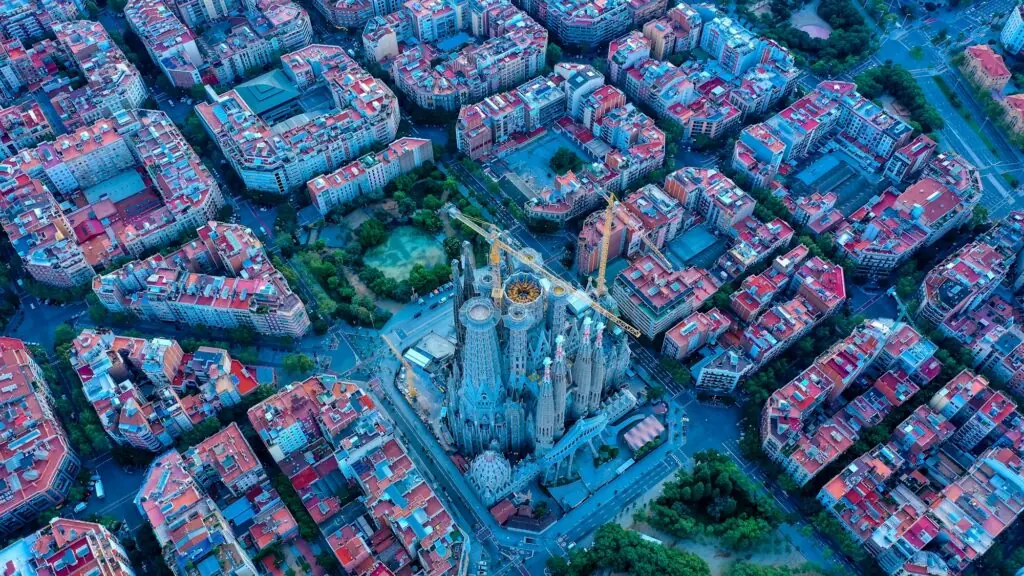
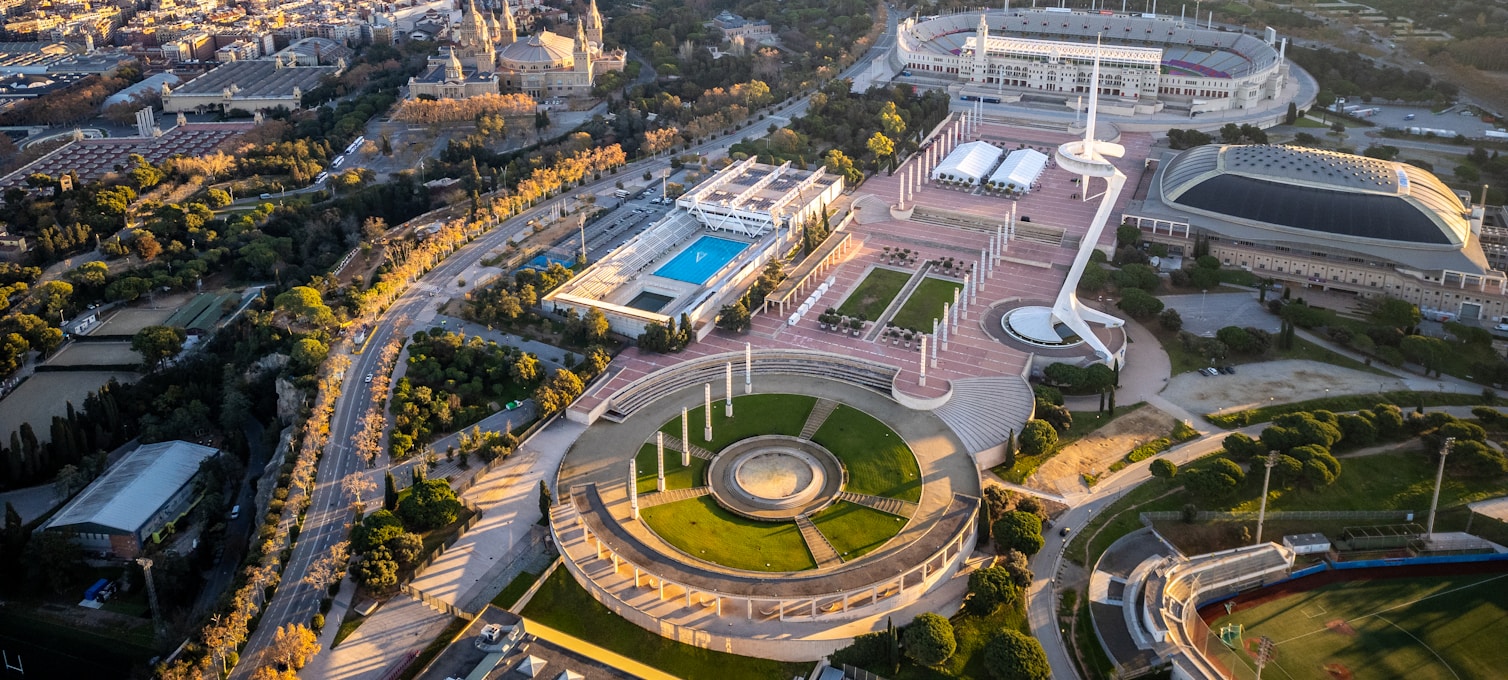
The 2026 Tour de France Grand Depart takes place in Barcelona on Saturday 4 July, with a historic 19.7 km team time trial from Parc del Forum to the Olympic Stadium on Montjuic. It is the first TTT to open the Tour since 1971, with a start window between 14:30 and 17:30 CEST. Entry is completely free along the entire route. Position yourself on the slopes of Montjuic or outside the Sagrada Familia by 12:30 for the best spots.
When the Grande Boucle embraces the Mediterranean, Barcelona becomes the centre of the cycling world. On 4 July 2026, 23 teams and 184 riders will set off from Parc del Forum for a 19.7 km team time trial – a format used for the first time to open the Tour in 55 years. The teams will ride through Barcelona’s finest avenues, along the seafront, past the Sagrada Familia in the heart of the Gaudi Year, and climb the two ramps of Montjuic to the 1992 Olympic Stadium. All of it, completely free, from the roadside.
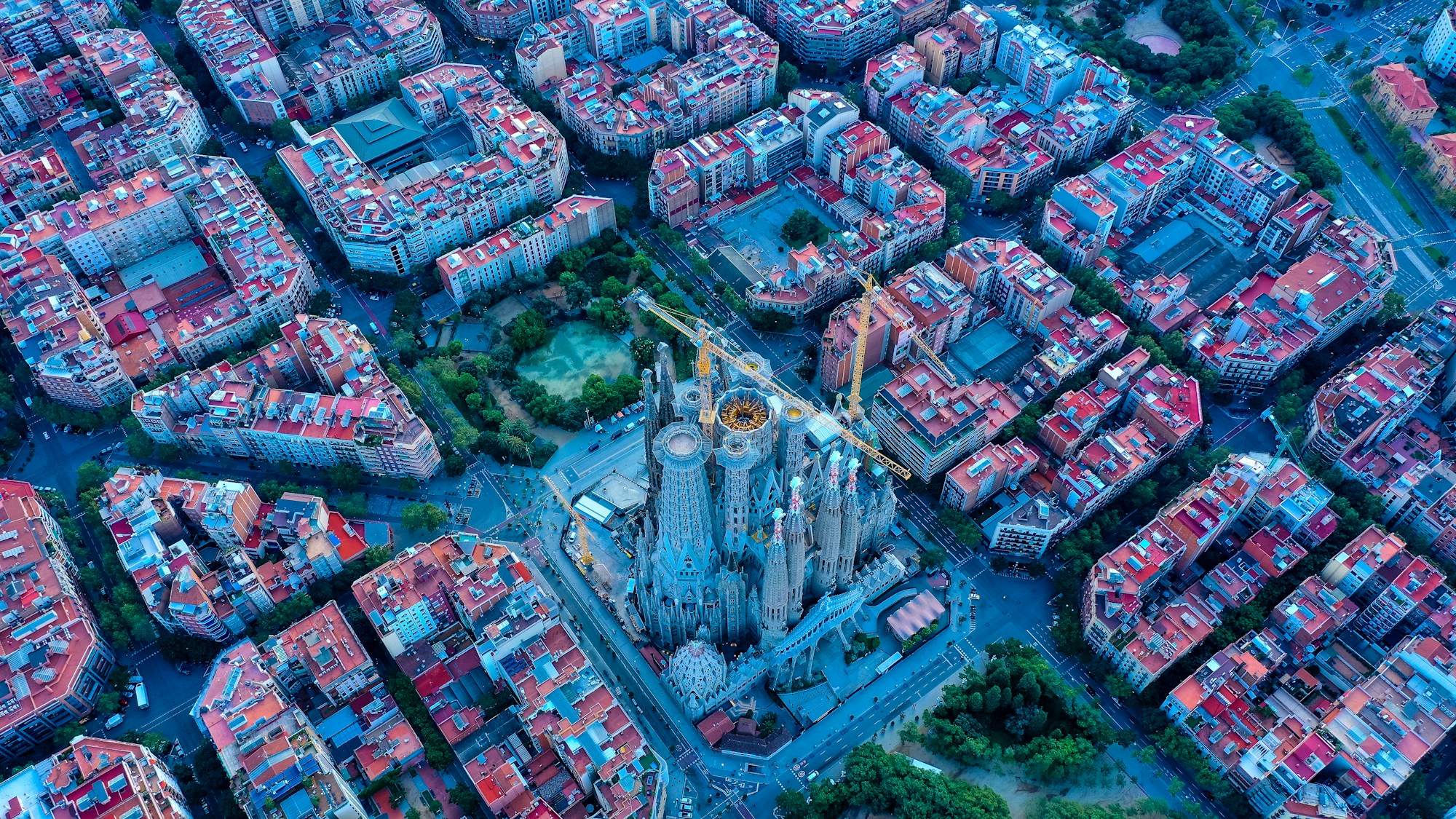
Barcelona is the third Spanish city to host a Grand Depart (after San Sebastian in 1992 and Bilbao in 2023), but the first time for the Catalan capital – and the most southerly city ever to open the Tour in its history. The event arrives in an exceptional context: Barcelona has been named World Capital of Architecture 2026 by UNESCO, and 10 June marks the centenary of Gaudi’s death. The Tour will pass in front of the Sagrada Familia’s Tower of Jesus Christ – inaugurated that same month – as the ultimate tribute to the Catalan genius. If you can only fit one sporting event into your 2026 calendar, this is it.
A historic Grand Depart for Barcelona and world cycling
Barcelona, the city of sporting records
According to letour.barcelona, this is the 27th Grand Depart in the Tour’s history to be held abroad since 1954, and the 3rd in Spain. Barcelona joins a very exclusive club, but goes further still: it becomes the first city in the world to have hosted the FIFA World Cup (1982), the Olympic Games (1992), the America’s Cup (2024) and the Tour de France Grand Depart (2026). Mayor Jaume Collboll summed it up bluntly in March 2026, at 100 days to go: « This is the dream becoming reality. »
The symbolic convergence is striking: the Gaudi Year 2026, marking the centenary of Antoni Gaudi’s death (10 June), sees the inauguration of the Sagrada Familia’s Tower of Jesus Christ (172.5 m, set to become the world’s tallest church). A few weeks later, the peloton rides past this masterpiece during Stage 1. Tour director Christian Prudhomme has called Barcelona a « magical city » – the city of Gaudi, the 1992 Olympics and great sporting occasions. According to the Catalan government, 1.2 million spectators are expected along the Catalan roads, with 260 million EUR in projected economic impact over the three days.
Highlights
- First Grand Depart in the most southerly city in Tour de France history
- Gaudi Year 2026: centenary of the architect’s death, Sagrada Familia tower inaugurated
- 15 million EUR host fee – an all-time Tour de France record
- Three stages entirely in Catalonia: 60 municipalities crossed
Stage 1 explained: the 19.7 km team time trial
A format not seen since 1971
According to Domestique Cycling, the 2026 TTT introduces an innovation on the classic format. In a traditional team time trial, the team’s time is set by the 4th or 5th rider to cross the line. In 2026, it is the 1st rider who determines the team’s time for the stage classification, while each rider receives their own individual time for the general classification. The tactical consequence: teammates no longer need to wait for struggling riders – and on the final Montjuic climb, GC leaders can « attack » to gain seconds on their rivals. This format, successfully trialled at Paris-Nice since 2023, is being used to open the Tour for the first time.
The 23 teams (18 WorldTeams + 5 ProTeams, including two wildcards: Caja Rural and TotalEnergies) leave at 3-minute intervals within the 14:30-17:30 window. The publicity caravan precedes the riders by 2 to 3 hours – be in position by 12:00 at the latest to see both the caravan and the riders.
The route, kilometre by kilometre
- Km 0 – Parc del Forum: large esplanade on the seafront, views over the Mediterranean, explosive team starts in formation
- Km 0-4 – Coastal section: teams ride along the seafront towards Port Olympic at 55-60 km/h, flat out
- Km 4-10 – Eixample and Sagrada Familia: past the basilica, Casa Batllo and La Pedrera on Passeig de Gracia
- Km 10-17 – Montjuic: through Placa d’Espanya, first climb (1.1 km at 5.1%), then a flat section
- Km 17-19.7 – Olympic Stadium finale: Stadium Climb (800 m at 7%), finish at Estadi Olympic Lluis Companys, first yellow jersey awarded
The 6 best free spots to watch the Tour
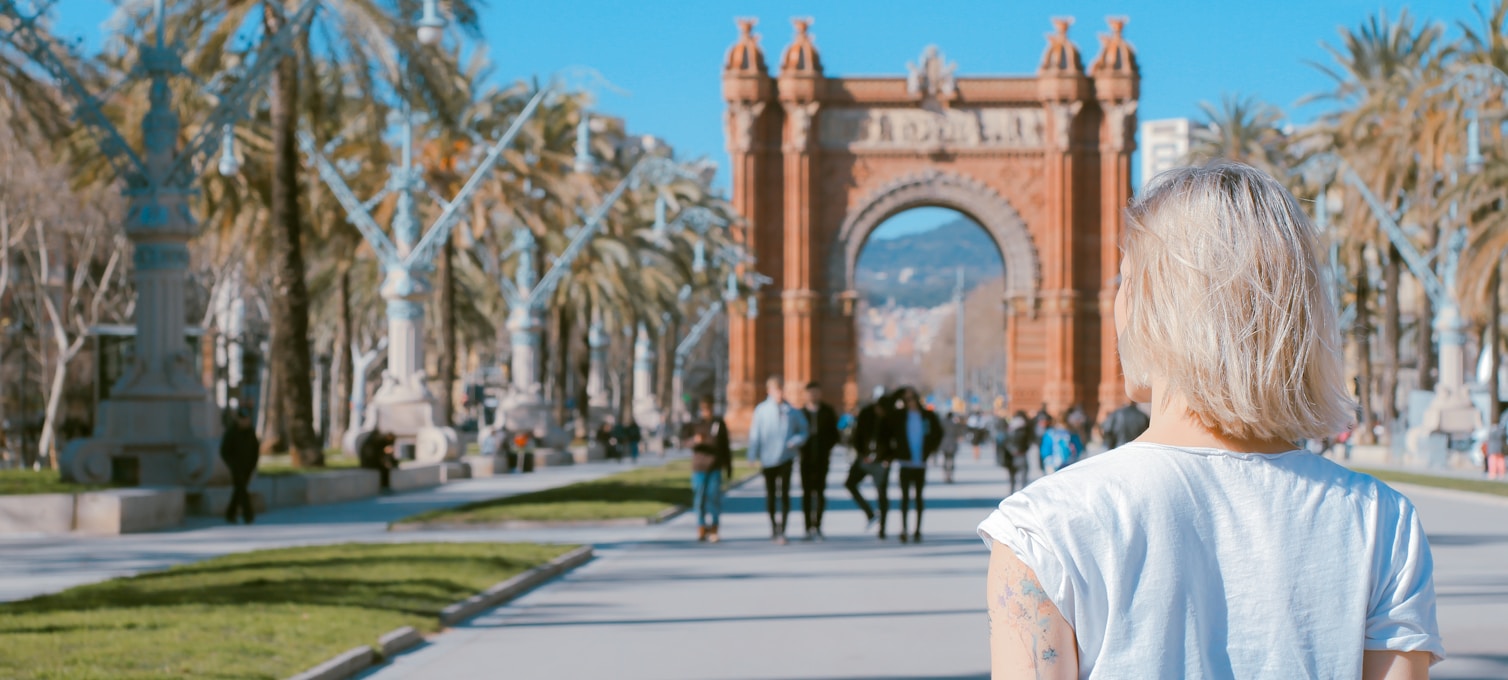
Six zones, six atmospheres – all free
According to Barcelonaturisme, roadside access is completely free along the entire route. Here are the six zones to prioritise, in order of difficulty of access:
- Parc del Forum (Start) – Large open esplanade with sea views. Moderate crowds; arrive 45 minutes before the first start. Access: L4 El Maresme-Forum or Tram T4/T6.
- Seafront / Port Olympic – Teams fly past at 55-60 km/h along 4 km of coastline. Combine the race with a swim (Nova Icaria and Bogatell beaches).
- Sagrada Familia (PREMIUM) – The most photogenic spot: basilica as backdrop, riders in the foreground. Very high crowds. Arrive by 12:30 at the latest. Access: L2/L5 Sagrada Familia.
- Passeig de Gracia – Past Casa Batllo and La Pedrera. Wide, tree-lined avenue offering a dual architecture-and-cycling experience. Access: L3 Passeig de Gracia.
- Placa d’Espanya – Iconic roundabout with the Venetian Towers and Palau Nacional as backdrop. Large capacity, easy access L1/L3 Espanya.
- Montjuic slopes (ABSOLUTE PREMIUM) – Two successive climbs (5.1% then 7%). Teams blow up here. Grassy hillsides freely accessible. Arrive by 11:00. Walk up from Espanya (20 min): the funicular and bus 125 will be packed.
Stages 2 and 3: extend your Catalan weekend
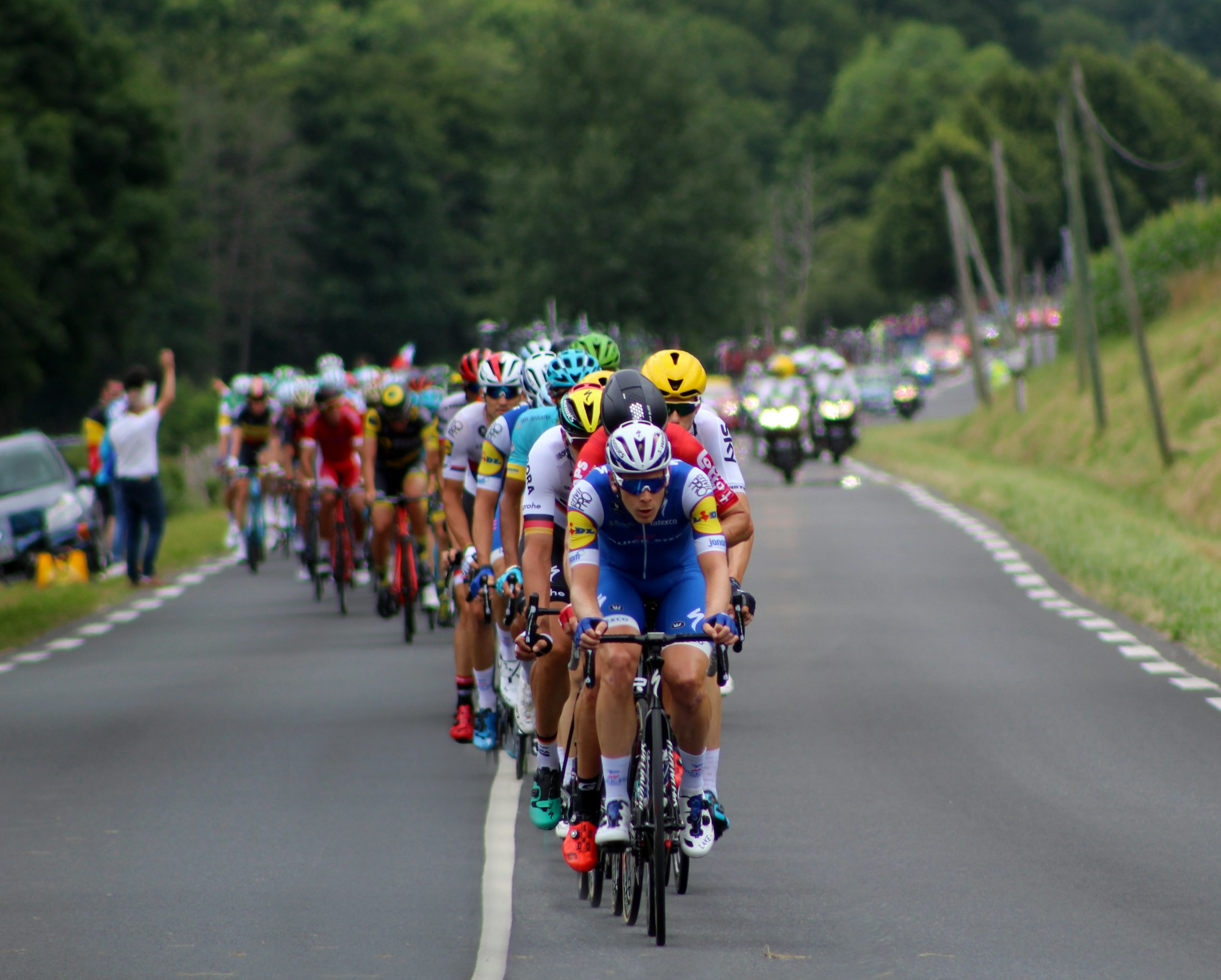
Stage 2: Tarragona to Barcelona (5 July, 178 km)
According to CyclingStage, Stage 2 hugs the Costa Daurada from Tarragona (a UNESCO Roman heritage site) for 85 km of Mediterranean coastline before reaching Barcelona. The climax: the Montjuic Castle climb (1.6 km, with 600 m at a maximum 13% gradient) is tackled three times in a row in under 30 minutes. From a single vantage point on the slopes, you will see the same climbers pass three times – the TTT gaps will either be confirmed or overturned. Total elevation gain: approximately 2,400 m. Access from Barcelona-Sants or Passeig de Gracia to Tarragona: 55 minutes, approximately 8 EUR.
Stage 3: Granollers to Les Angles (6 July, 196 km)
According to CyclingStage, Stage 3 leaves Granollers (30 km north of Barcelona, a medieval market town) and crosses Catalonia towards the French Pyrenees. Four major climbs, including the Collada de Toses (9.3 km at 6.5%) and the Col du Calvaire (14.9 km at 4.1%, 1,836 m). The finish at Les Angles (Pyrenees-Orientales, France) on 4.7 km at 4.6% (last kilometre at 7.6%) is new in Tour history. To reach Granollers from Barcelona: RENFE train from Sants or Arc de Triomf (approx. 30 min, approx. 4 EUR). To follow the stage all the way to the Les Angles finish, a motorhome is recommended.
- Stage 2: position yourself on the Montjuic slopes by 9:00 to see all 3 passes
- Stage 2: Tarragona offers a full sightseeing programme (Roman amphitheatre, UNESCO walls) before the start
- Stage 3: train Barcelona to Granollers in 30 minutes for the festive start atmosphere
- First Tour passage through Granollers and Les Angles – a historic moment for these towns
Getting around: transport, accommodation and the official programme
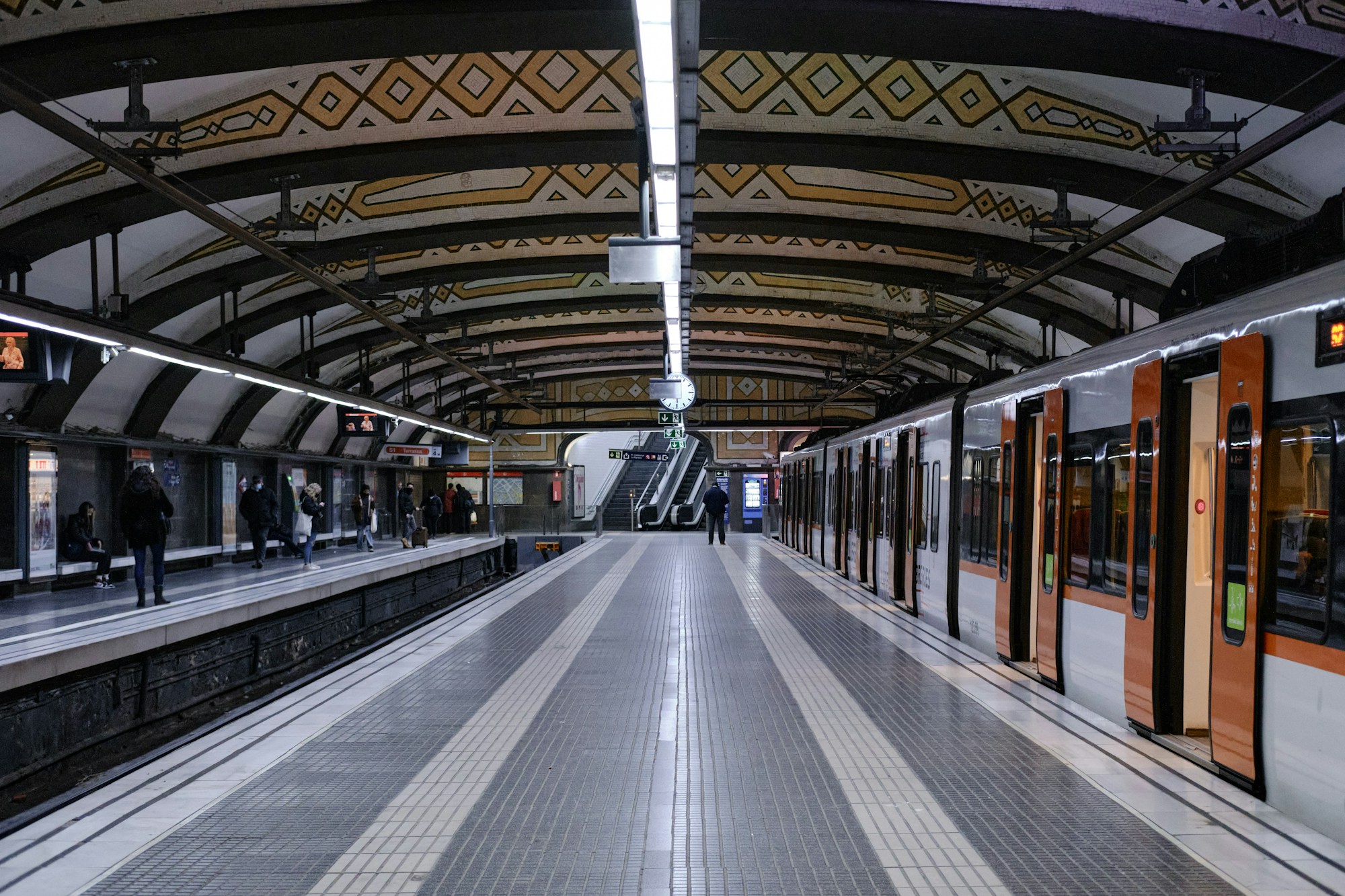
Transport: leave the car behind on 4 and 5 July
On 4 and 5 July, Barcelona’s road network will be heavily disrupted. The seafront, Eixample, Sagrada Familia and Montjuic will be partially closed to traffic. According to barcelona.cat, the TMB metro is the recommended solution. Key lines:
- L4 El Maresme-Forum – Parc del Forum start area
- L2/L5 Sagrada Familia – Sagrada Familia premium spot
- L3 Passeig de Gracia – Passeig de Gracia (Casa Batllo, La Pedrera)
- L1/L3 Espanya – Montjuic (+ 20-minute walk up to the stadium)
- T-Casual 10 journeys: 12.15 EUR | T-72h 3 days: 19.50 EUR (recommended for TDF stay)
Official programme for the week
| Date | Event | Location | Access |
|---|---|---|---|
| 26 June – 5 July | Festa Major del Tour (100+ activities) | 10 Barcelona neighbourhoods | Free |
| 2 July (Thursday) | Official team presentation | Sant Pau – Av. Gaudi – Sagrada Familia | Free |
| 2-5 July | Grand Depart Fan Park | Parc del Forum | Free |
| 4 July (Saturday) | Stage 1: Team Time Trial 19.7 km | Parc del Forum – Olympic Stadium Montjuic | Free |
| 5 July (Sunday) | Stage 2: Tarragona – Barcelona 178 km | Montjuic (x3 passes at 13%) | Free |
| 6 July (Monday) | Stage 3: Granollers – Les Angles 196 km | Catalonia – Pyrenees – France | Free |
Practical info: eSIM, travel insurance and Barcelona tours
Stay connected in Spain and across Europe during all three stages. Activate your eSIM before you fly – no SIM card swap needed. 4G/5G coverage across 36 European countries.
From 4.50 EURNomad Insurance: global coverage from $56/4 weeks. The July heat and Grand Depart crowds make comprehensive cover essential. 10% off via our link.
From $56 / 4 weeksCombine the Tour de France with Barcelona’s must-sees on a single guided day. Perfect for 3 July (eve of the Grand Depart) or 7 July (after the stages). Skip-the-line tickets included.
From 119 EURFrequently asked questions about the 2026 Tour de France Grand Depart in Barcelona
Do you need to pay to watch the Tour de France in Barcelona?
No. The Tour de France is completely free from the roadside along the entire Barcelona route. There are no tickets to book for Stages 1, 2 and 3. Only VIP areas – team paddocks, official grandstands, hospitality operator zones – are paid. The team presentation on 2 July and the Fan Park from 2 to 5 July are also free and open to everyone. Source: Barcelonaturisme.
What is the difference between a team time trial and an individual time trial?
In an individual time trial, each rider starts alone and their personal time is recorded. In the 2026 Tour’s team time trial, all riders from the same team start together and ride in formation (rotating turns, aerodynamic shelter). The 2026 innovation: the team’s time is set by the 1st rider to cross the line (stage classification), but each rider receives their own individual time for the general classification. This means GC leaders can « attack » on the final Montjuic climb to take seconds on their rivals. This format has been trialled at Paris-Nice since 2023. Source: Domestique Cycling.
What is the best spot to watch Stage 1 if I only arrive on the morning of 4 July?
Head to Placa d’Espanya (metro L1/L3 Espanya) before 13:00. You will see the publicity caravan first, then all 23 teams on the Montjuic climb. If you absolutely want the Sagrada Familia backdrop, arrive by 12:30 at the latest (metro L2/L5 Sagrada Familia). For the best sporting spectacle, walk up from Espanya to the grassy Montjuic slopes in 20 minutes – you will see teams on both decisive climbs (5.1% then 7%). Source: letour.barcelona.
How do I see all 3 Montjuic passes during Stage 2 on 5 July?
Position yourself on the slopes of the Montjuic Castle climb (1.6 km, with 600 m at 13%). The riders tackle this climb three times in a row in under 30 minutes. From a single spot on the slopes, you will see the same climbers pass three times without moving. Arrive on Montjuic by 9:00 on 5 July (the stage starts from Tarragona but the Barcelona finish is expected in the afternoon). Source: CyclingStage.
How do I get to Granollers for the Stage 3 start on 6 July?
Take a RENFE train from Barcelona-Sants or Arc de Triomf to Granollers-Centre or Granollers-Canovelles. The journey takes about 30 minutes with frequent services (every 15 minutes at peak times). The fare is approximately 4 EUR. Granollers is a medieval town with its 16th-century covered market hall – allow time to explore before the stage rolls out. To follow the stage all the way to the Les Angles finish (Pyrenees-Orientales, France), a motorhome is recommended. Source: CyclingStage.
How hot is Barcelona in early July? What are the tips for spectators?
Barcelona’s average July maximum temperature is 27-29 degrees C, with potential peaks of 34-35 degrees C during heatwaves. The coastal humidity can make the heat feel more intense than in dry sunshine. Riders pass during the 14:00-17:30 window, the hottest part of the day. Bring: at least 2 litres of water per person, SPF50+ sunscreen, a hat and light breathable clothing. Prefer the partly shaded Montjuic slopes to the open Placa d’Espanya or the exposed seafront. The beaches are less than 10 minutes away by tram from Montjuic for a cool-down after the stages. Source: Weather Atlas.
Sources
- letour.barcelona – Official website of the 2026 Tour de France Grand Depart in Barcelona (Ajuntament)
- letour.barcelona – Stage 1 – Official details of the 19.7 km team time trial
- Domestique Cycling – 2026 TTT format and rules explained
- CyclingStage – Stage 1 – Detailed route and profile
- CyclingStage – Stage 2 – Tarragona to Barcelona, 3x Montjuic
- CyclingStage – Stage 3 – Granollers to Les Angles
- Barcelonaturisme – Spectator guide, free access, transport
- barcelona.cat – Fan Park and official weekly programme
- Ajuntament de Barcelona – Festa Major del Tour, 100+ activities
- letour.barcelona – Architecture and cycling, Gaudi Year 2026
- Catalan News – Team presentation on 2 July
- Eurosport – 100 days to the Grand Depart, Mayor Collboll’s statement
- Weather Atlas – Barcelona July weather, temperatures and sunshine
- Wikipedia – 2026 Tour de France, general data and history
- CyclingArchives – Full schedule, 15M EUR host fee
Research conducted in May 2026.
Ready to experience the Grand Depart from the Barcelona roadside?
Discover our itineraries to plan your Barcelona stay during the 2026 Tour de France – from spectator spots to Poble Sec dining gems and Gaudi visits you cannot miss.
Explore Barcelona itineraries