
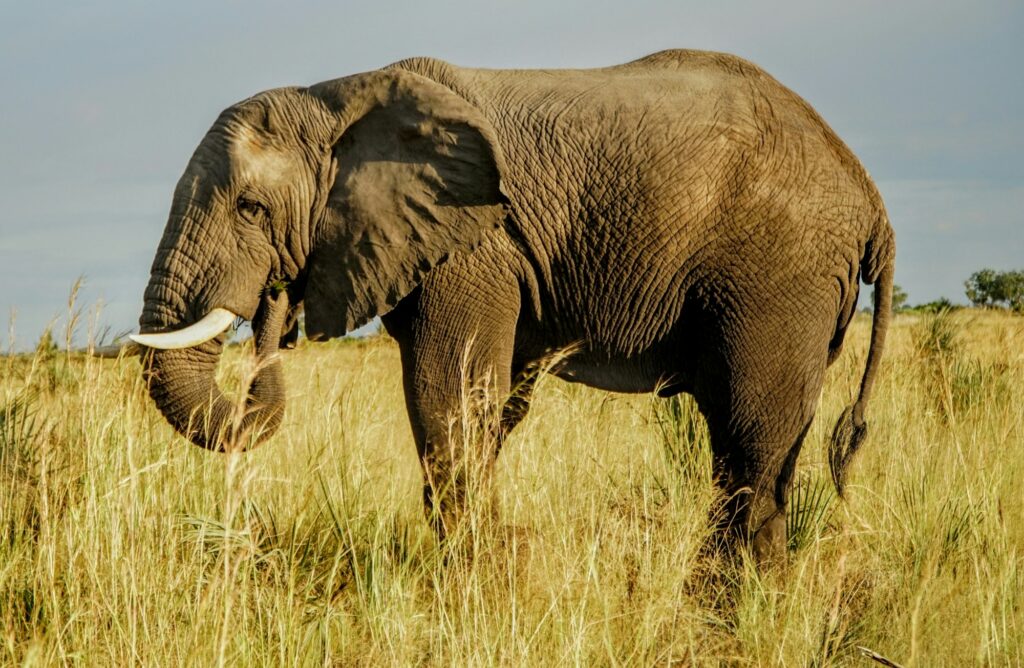
Forget classic savanna safaris. In 2026, wetlands are emerging as the new frontier of wildlife watching. From Brazil’s Pantanal where jaguars hunt caimans just meters from boats, to the Okavango Delta where elephants cross channels under the gaze of lions, to the Zambian swamps where you can track the shoebill — a prehistoric bird that has become the Holy Grail of birders — these aquatic ecosystems offer encounters impossible anywhere else. Wilder, less crowded, and often more affordable than Africa’s great reserves, these destinations are attracting a new generation of travelers seeking authenticity. We’ve selected ten exceptional wetlands, from Brazil to the Camargue, to help you plan the most memorable safari of your life.
1. North Pantanal (Porto Jofre), Brazil — The Jaguar Kingdom
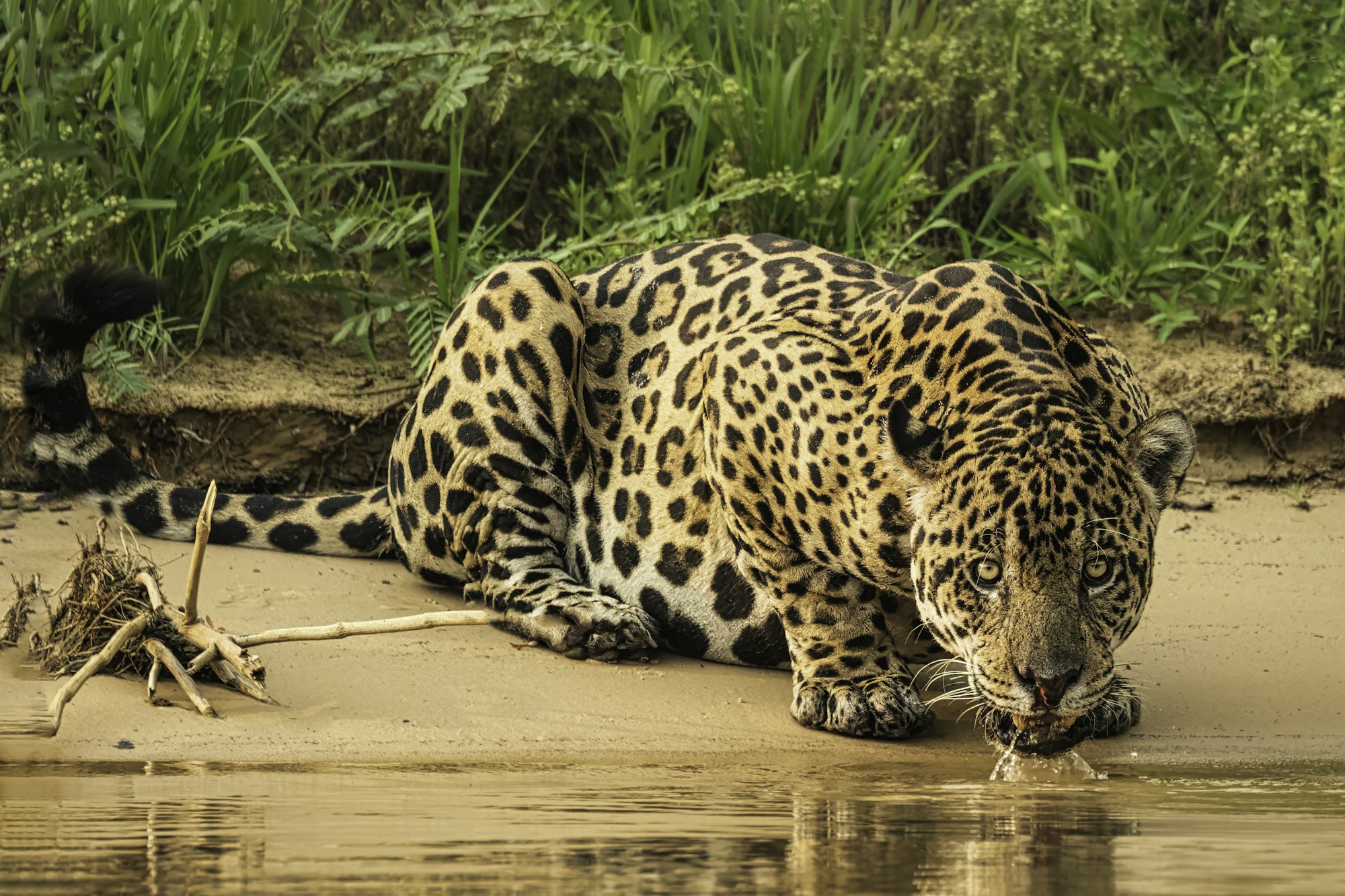
North Pantanal — Porto Jofre
The Pantanal is the world’s largest tropical wetland and, without question, the best place on the planet to observe jaguars in the wild. Over 100 mammal species and 600 bird species thrive in this dynamic ecosystem where seasonal flooding concentrates wildlife into spectacular navigable corridors. According to Ameliya Safaris, jaguars, caimans, capybaras, and giant otters flourish here amid some of the most breathtaking landscapes on Earth.
The Porto Jofre region, at the confluence of the Cuiaba River and several tributaries, is world-renowned for its exceptional sighting rates. As Lorenzo Expeditions explains, the jaguar population density here is exceptionally high, and the open terrain allows observation from boats that sometimes approach within four or five meters of the animals. The Encontro das Aguas State Park, with its 100 km of preserved waterways, is the true epicenter of this unique experience.
During the dry season (August-September), receding waters concentrate caimans — the jaguars’ main prey — into restricted areas, maximizing the chances of witnessing spectacular hunting scenes. According to Wild Junket, the Pantanal is often overshadowed by the Amazon rainforest, but it’s actually Brazil’s best-kept secret. Eight-night packages start from 3,850 USD in shared accommodation according to Wild Jaguar Photo Safaris, with a 10% price increase expected for 2026.
Highlights
- Among the highest jaguar sighting rates in the world (dry season)
- Boat safari just meters from wild animals
- 740 bird species, including the jabiru and toucan
- Giant otters, green anacondas, and giant anteaters
- Budget options with 4-day safaris starting from 800 USD
2. Okavango Delta, Botswana — The Jewel of the Kalahari
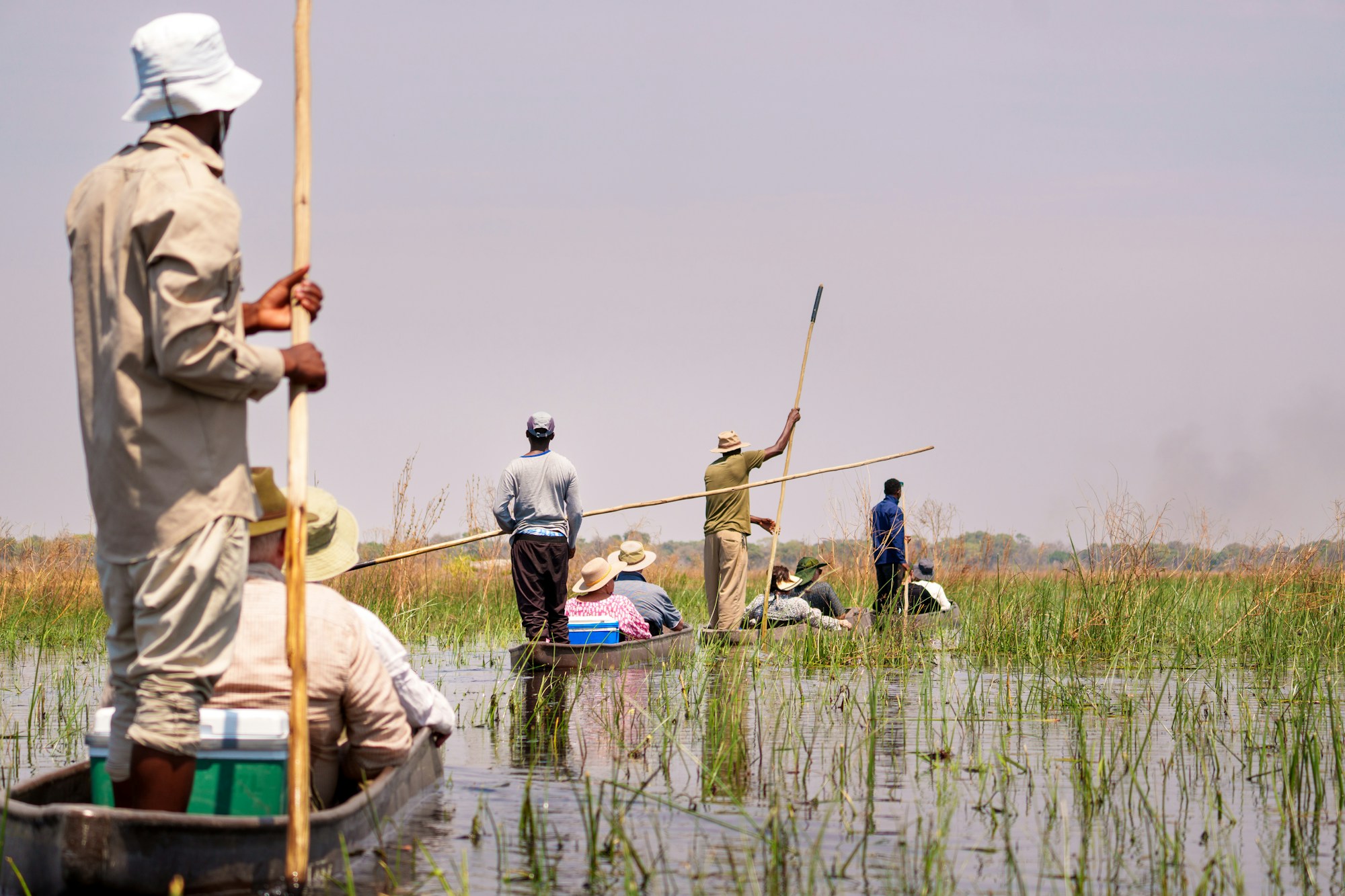
Okavango Delta — Maun
Known as the « jewel of the Kalahari, » the Okavango Delta is the world’s largest inland river delta. Every year, over 11,000 km³ of seasonal floodwaters from the Angolan highlands fill this basin, creating a habitat for more than 2,000 plants, 450 bird species, and 65 fish species, according to Machaba Safaris. It is a vital water source for all animals living in the plains of Botswana.
During peak season (March to August), over 260,000 mammals converge in the delta. According to Africa Travel Designers, elephants, lions, leopards, hippos, cheetahs, and wild dogs gather in the same area, with a human population density of just three people per square kilometer — an untouched paradise for safari enthusiasts. The dry season (June-October) is ideal for elephant watching, as they concentrate near rivers and channels as water sources dry up.
The delta’s most iconic experience remains the mokoro ride, a traditional dugout canoe guided by an expert local poler. According to Intrepid Travel, paddling through the winding waterways, you’ll encounter elephants, antelopes, rhinos, and a multitude of colorful bird and frog species. Budget-wise, expect between 4,000 and 8,000 USD per person for a week in a lodge, or as little as 2,000 USD for self-drive camping with a 4×4 rented from Maun.
Highlights
- Mokoro safari through the channels — a one-of-a-kind experience
- Big Five united in an aquatic ecosystem
- 260,000+ mammals during peak season
- Very low tourist density (3 people/km²)
- UNESCO World Heritage Site since 2014
3. Moremi Game Reserve, Botswana — The Predator’s Lair
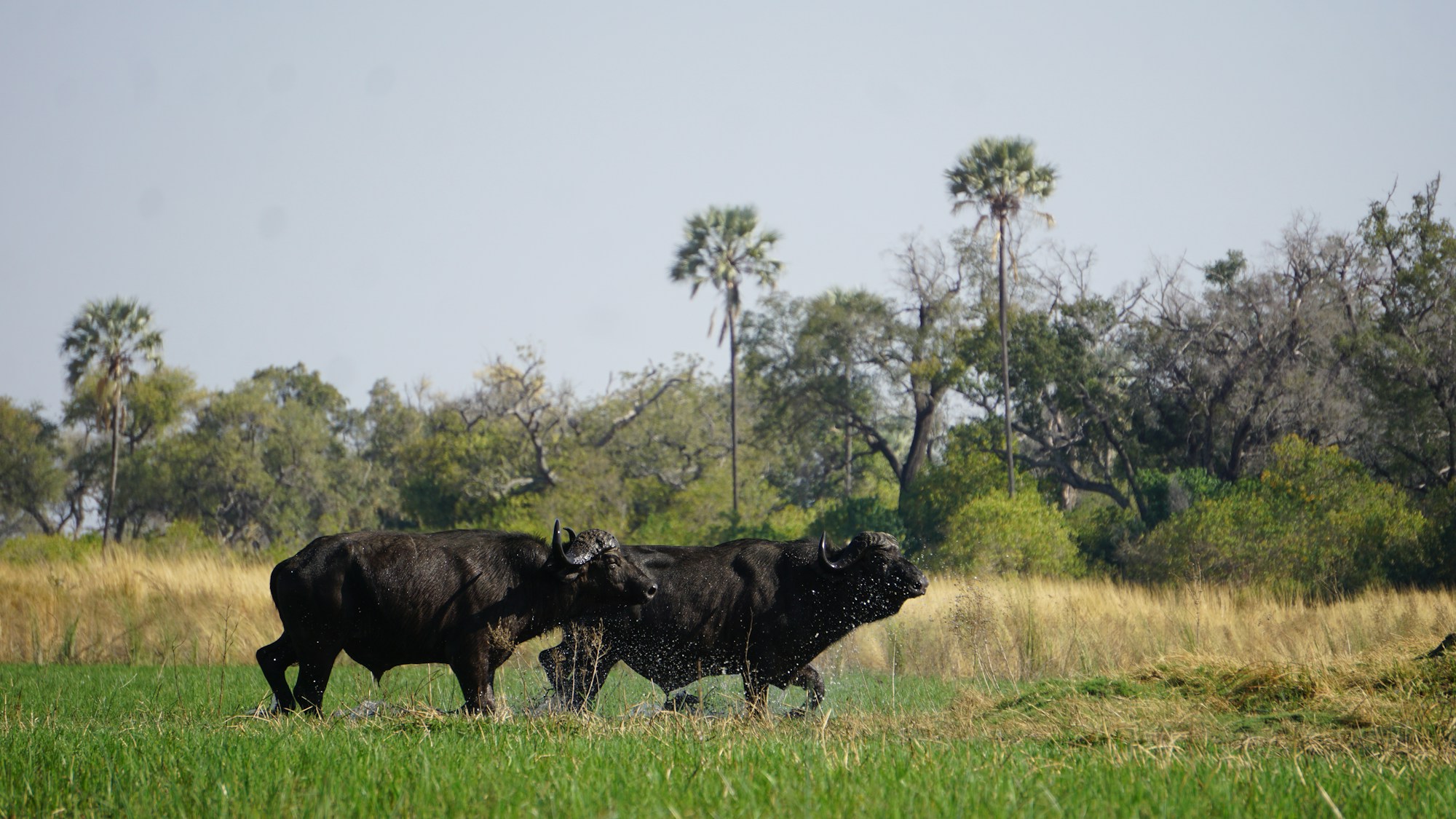
Moremi Game Reserve — East Okavango
Regarded as one of Africa’s most beautiful natural areas, Moremi Game Reserve covers the eastern part of the Okavango Delta and offers a complete African safari experience. According to African Budget Safaris, the wide variety of habitats supports high species diversity, and the varied terrain can be explored by 4×4 vehicle, on foot, by traditional dugout canoe, or by motorboat — a rare versatility for an African reserve.
Moremi is one of Botswana’s best spots for predators. According to Castaway Chris, lions, leopards, and wild dogs patrol the water’s edge where dry land narrows into marshland. Early mornings favor lion sightings, while late afternoons bring leopards down from the trees to hunt. Birding is also exceptional here, with rare species like the slaty egret and African skimmer.
Unlike heavily visited reserves such as the Serengeti or the Masai Mara during peak season, safaris in Moremi don’t suffer from « vehicle queues » around animals, confirms TripAdvisor. It’s also one of the best places for a budget safari in Botswana: unlike most delta areas, Moremi is accessible by 4×4 vehicle, eliminating the cost of a round-trip charter flight according to SafariBookings.
Highlights
- Botswana’s best spot for lions, leopards, and wild dogs
- 4×4 accessible safari — no charter flight needed
- Low-volume policy: no vehicle queues
- Combines terrestrial and aquatic habitats
- Night drives allowed in adjacent private concessions
4. Caprivi Strip (Zambezi), Namibia — The Hidden Gem
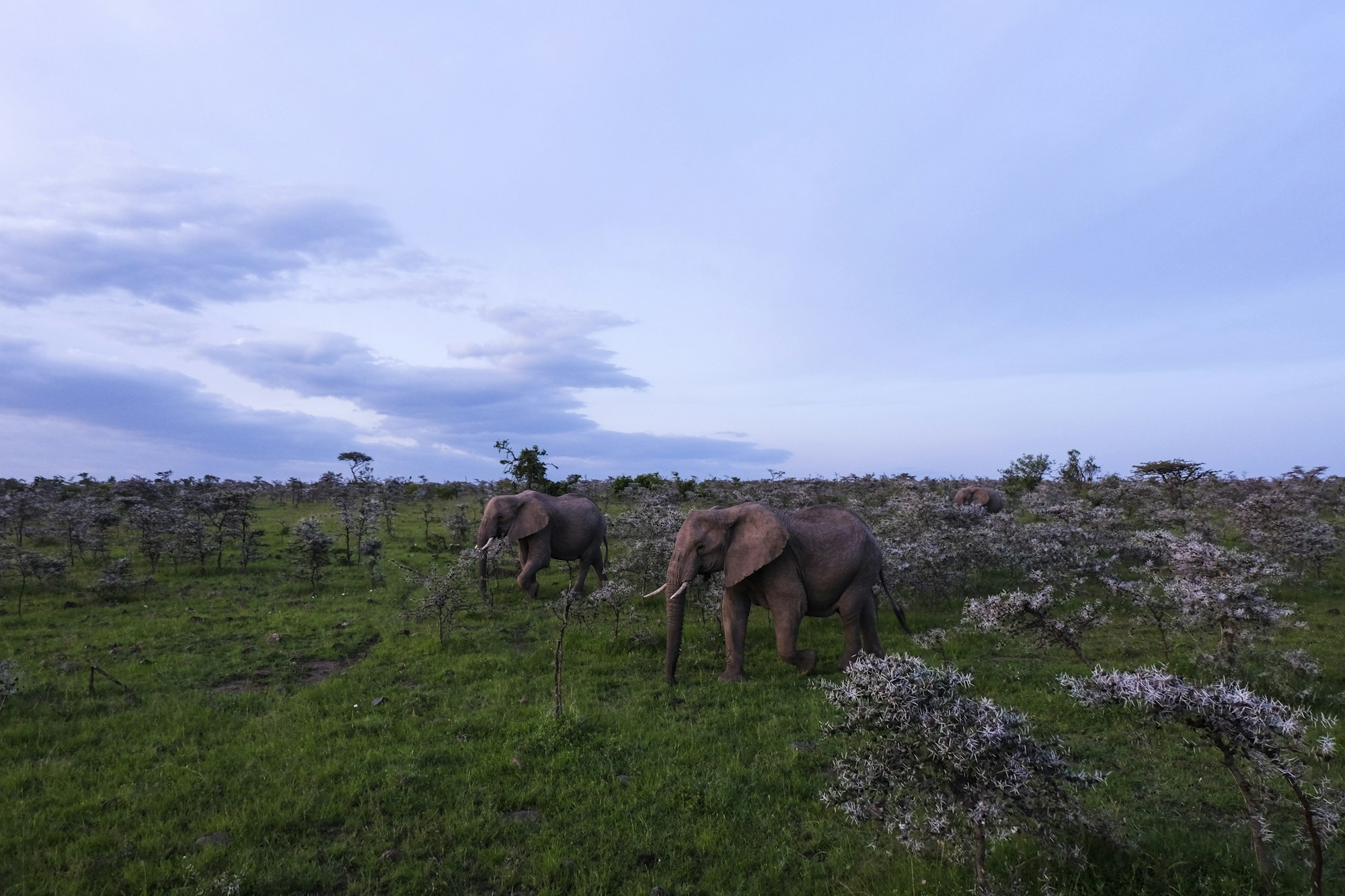
Zambezi Region (Caprivi Strip) — Northeastern Namibia
The Caprivi Strip, also known as the Zambezi Region, is one of Namibia’s most unique and overlooked safari destinations. According to Natural World Safaris, this narrow strip of land in the far northeast of the country, bordered by Angola, Zambia, and Botswana, is unlike any other part of Namibia. While the rest of the country is known for its arid deserts, the Caprivi is a lush region home to four perennial rivers: the Zambezi, Kwando, Chobe, and Linyanti.
Often described as Namibia’s answer to the Okavango Delta, the Caprivi wetlands harbor species absent from the famous but much drier Etosha National Park, such as hippos and buffalo. According to Rhino Africa, you can spot Pel’s fishing owl, the African skimmer, the southern carmine bee-eater, and the slaty egret — ornithological gems sought after by specialists.
The main advantage of the Caprivi is its value for money. According to Sun Safaris, its proximity to Botswana’s reserves makes it a fantastic safari destination, without the visitor numbers or premium prices. Tours including the Caprivi start around 4,895 GBP for 18 days (flights included), according to Wildlife Worldwide. The Ichingo Chobe River Lodge, nestled on an island in the middle of the Chobe River, offers the same experience as Chobe National Park on the Botswana side, but without the crowds.
Highlights
- Four perennial rivers creating a unique aquatic ecosystem
- Budget-friendly alternative to neighboring Botswana
- Exceptional birding (Pel’s fishing owl, bee-eaters)
- Can be combined with Etosha and Victoria Falls
- Very low tourist numbers
5. Bangweulu Wetlands, Zambia — Tracking the Shoebill
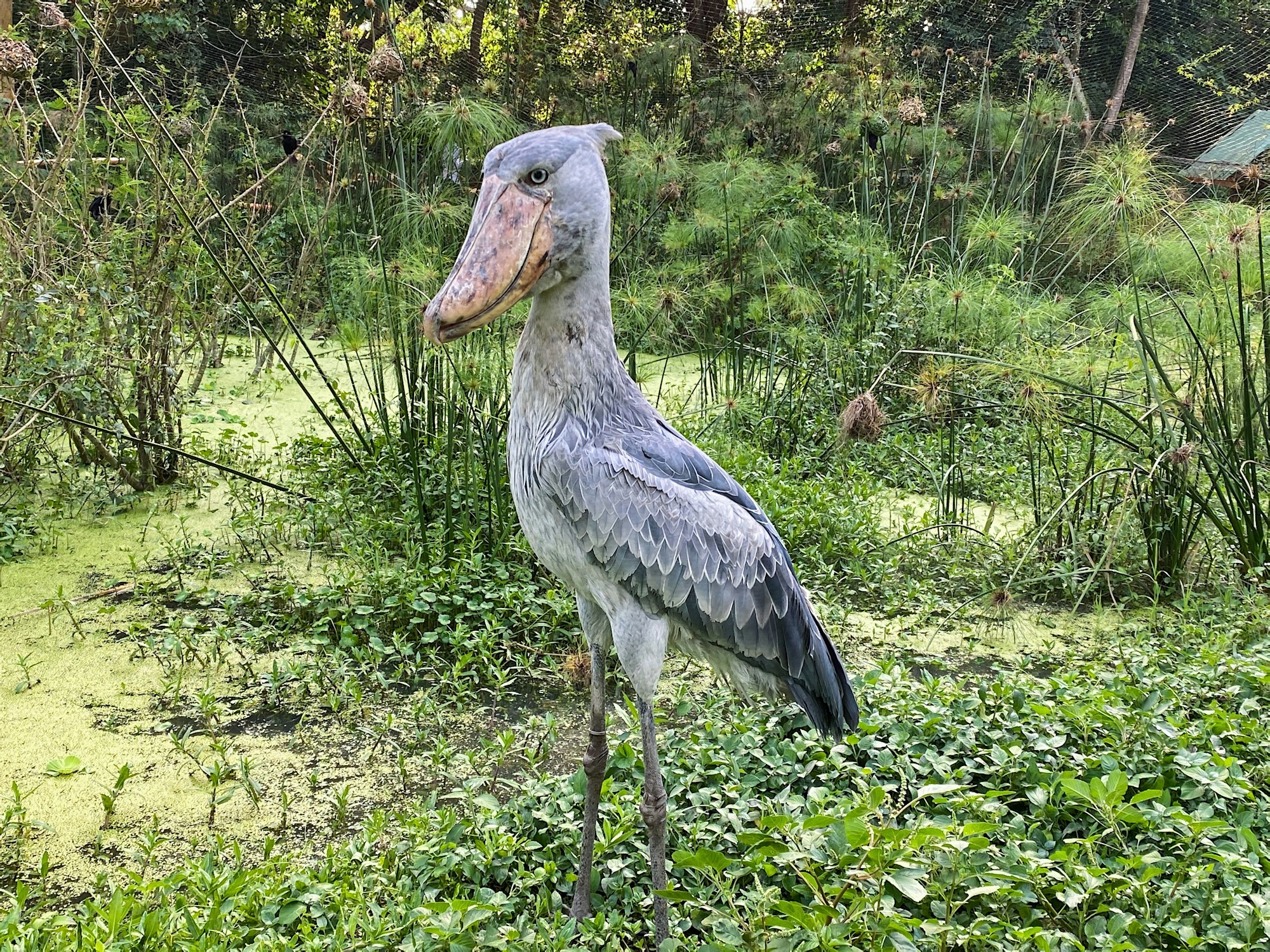
Bangweulu Wetlands — Northeastern Zambia
Bangweulu means « where the water meets the sky » — a perfect description of this extraordinary wetland spanning 6,000 km² in northeastern Zambia. According to SafariBookings, it is one of Zambia’s top birding destinations thanks to the presence of the rare and coveted shoebill, a prehistoric bird that has become the Holy Grail of birders worldwide. The ecosystem includes floodplains, seasonally flooded grasslands, miombo forests, and permanent swamps dominated by vast stands of papyrus.
The numbers speak for themselves: Bangweulu is home to over 433 bird species, including 10% of the world’s wattled crane population and a globally significant population of the endangered shoebill, according to Robin Pope Safaris. The flagship experience involves heading out by mokoro (wooden dugout canoe) into the heart of the swamps, sometimes wading on foot through the water — waterproof shoes essential — to track these fixed-gaze birds with their massive bills.
Since African Parks took over joint management of the park in 2008, populations of many species have recovered, according to Absolute Zambia Safaris. The black lechwe, endemic to the area, is found nowhere else in the world. Rates for an 8-night shoebill safari start from 8,704 USD per person in 2026, including all costs from Lusaka. It’s a significant investment, but the experience is truly unique.
Highlights
- One of the best sites in the world to spot the shoebill
- 433 bird species in a single ecosystem
- Endemic black lechwe — found nowhere else
- Mokoro safari through papyrus swamps
- Interaction with local fishing communities
6. Los Llanos, Colombia — The Serengeti of South America
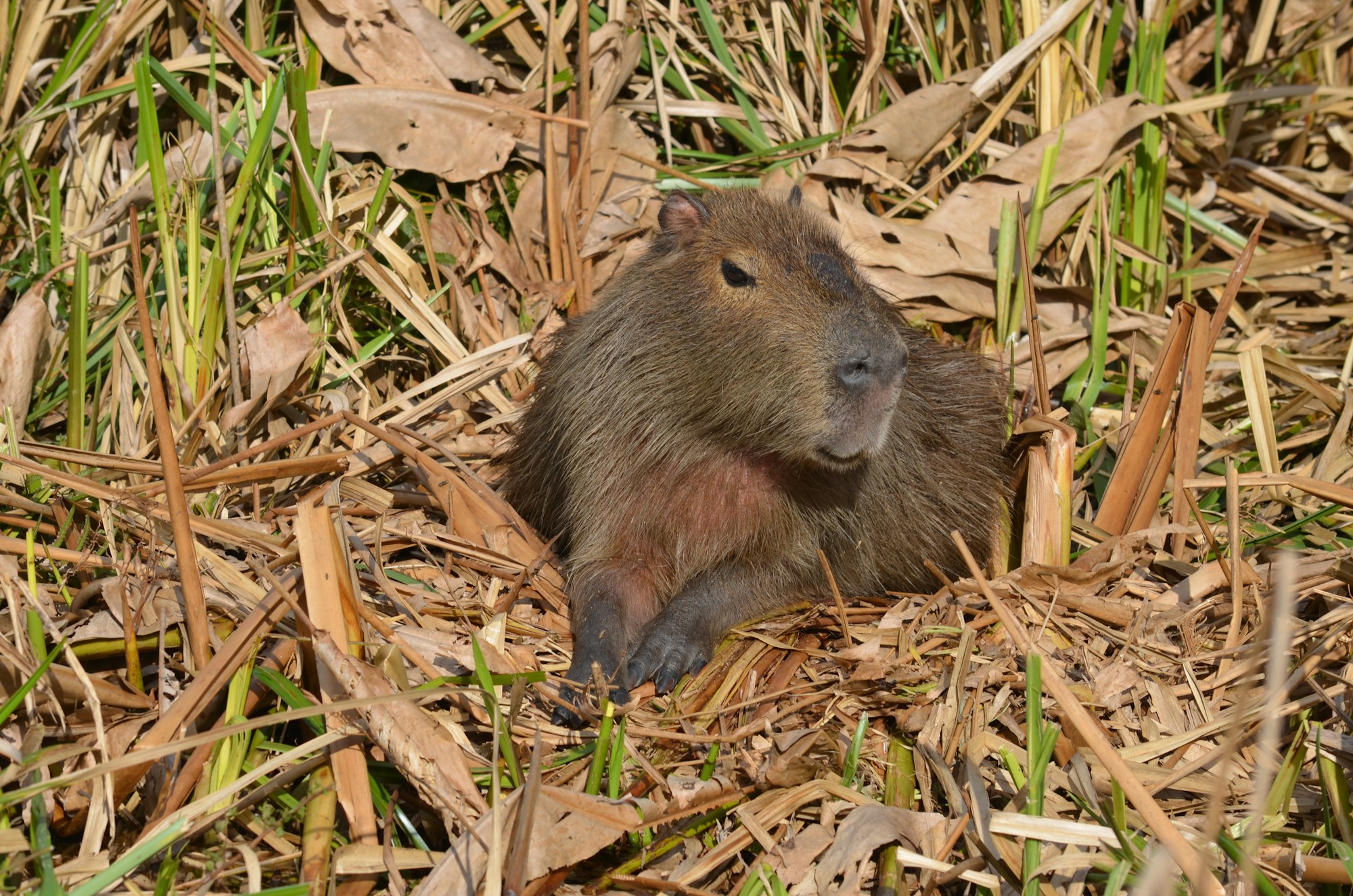
Los Llanos — Eastern Plains of Colombia
The flooded plains of Los Llanos, stretching from eastern Colombia into north-central Venezuela, are often described as South America’s answer to the Serengeti. According to Neblina Forest, this vast area of tropical savannas, humid forests, and wetlands creates ideal conditions for extraordinary wildlife. Birders can spot impressive species like the Orinoco goose, scarlet ibis, sunbittern, and the giant jabiru.
As Journey Latin America reports, the sparse vegetation of the savannas exposes all the region’s endemic creatures, making wildlife spotting remarkably easy. Huge groups of capybaras climb the riverbanks, caimans dive into the water alongside sunbathing turtles, and iguanas dash across the roads. With some luck, you might even spot an anaconda or jaguar. The experience is also cultural: the hatos (ranches) of the llaneros (plains cowboys) offer horseback safaris in a traditional, non-industrialized cattle-raising setting.
The major advantage of Los Llanos is its cost: Colombia is generally 30 to 40% cheaper than Brazil for comparable wildlife experiences. A 3-4 night stay at a hato costs about 200-400 USD per person per night, full board. According to The Wildlife Diaries, ranching here is still very traditional: ranchers coexist with predators without retaliation, and the marriage of this form of cattle-raising with tourism helps keep these lands protected.
Highlights
- Budget-friendly alternative to the Pantanal (30-40% cheaper)
- Anacondas, capybaras, caimans, and over 700 bird species
- Horseback safari with llaneros (Colombian cowboys)
- Almost zero tourist traffic
- Ecotourism directly supporting traditional ranching
7. Lake Turkana, Northern Kenya — The Jade Sea
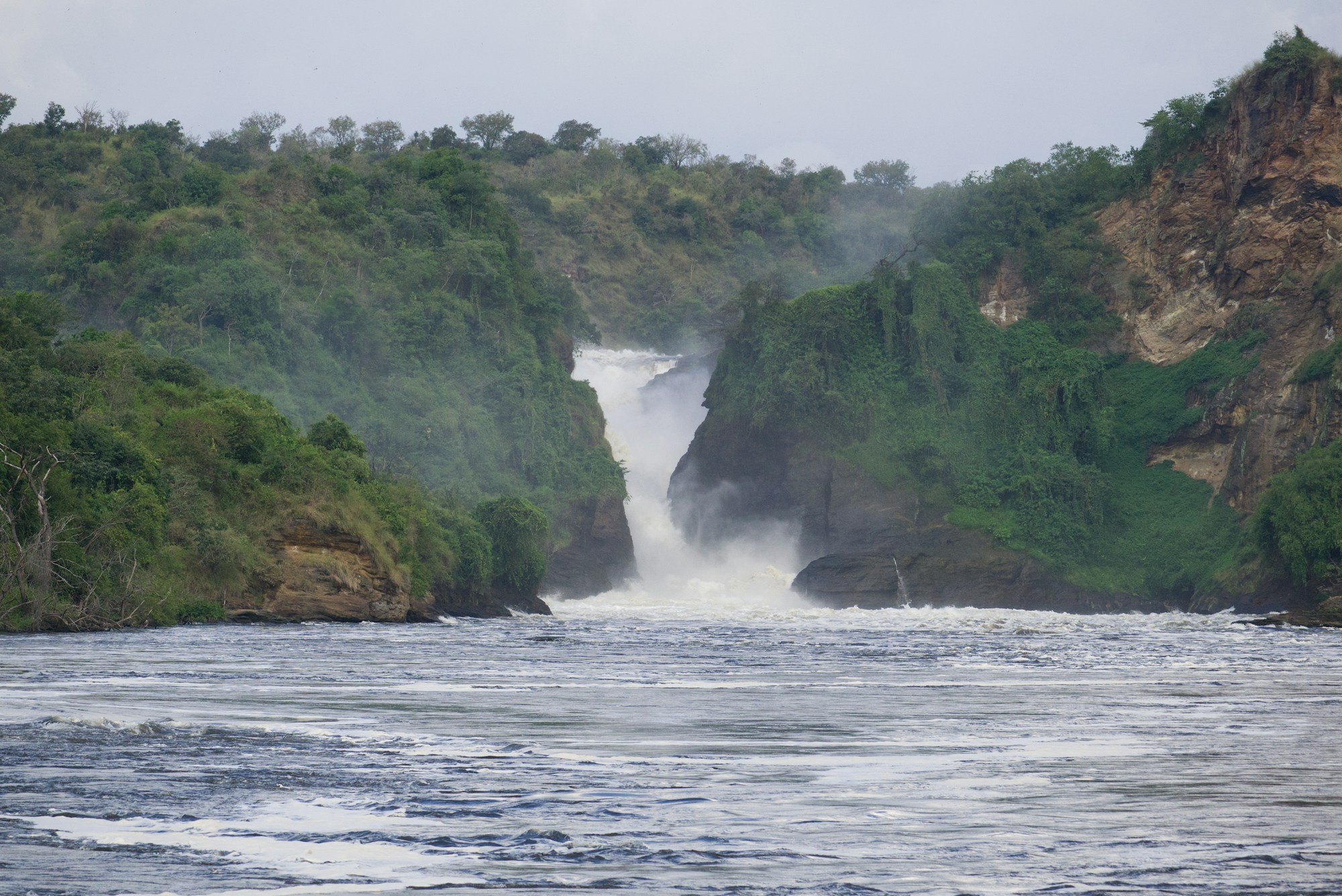
Lake Turkana National Parks — Northern Kenya
Tucked away in Kenya’s remote northern corner lies Lake Turkana, the world’s largest permanent desert lake. According to Turkana Wildlife Safaris, a Turkana safari isn’t an ordinary wildlife tour — it’s an expedition into a dramatic landscape of volcanic formations, prehistoric sites, and tribal traditions unchanged for centuries. The « Jade Sea, » as it’s nicknamed for its striking turquoise color, is a world apart in the Kenyan safari universe.
The lake’s shimmering waters and surrounding landscapes create an ideal habitat for over 350 bird species, according to Avian Safaris. You can observe the African fish eagle, flamingos, the crested lark, and endemic species like the Somali bee-eater. The park is also home to the world’s largest concentration of Nile crocodiles, as well as rare species like the Beisa oryx and Grevy’s zebra.
Lake Turkana’s unbeatable advantage is its cost: between 45 and 80 USD per day (excluding domestic flights) according to Take Your Backpack. A 5-7 day tour with a specialized operator typically costs between 1,500 and 3,000 USD. According to Samburu Reserve, Turkana’s parks represent the most remote and scientifically important protected areas in Kenya — unique geological, ecological, and evolutionary landscapes.
Highlights
- World’s largest desert lake — UNESCO World Heritage Site
- 350+ bird species including endemics
- World’s largest concentration of Nile crocodiles
- Affordable budget: 45-80 USD/day
- Ancestral tribal cultures (Turkana, El Molo, Rendille)
8. Rift Valley Lakes (Nakuru, Baringo, Naivasha), Kenya — Flamingo Paradise
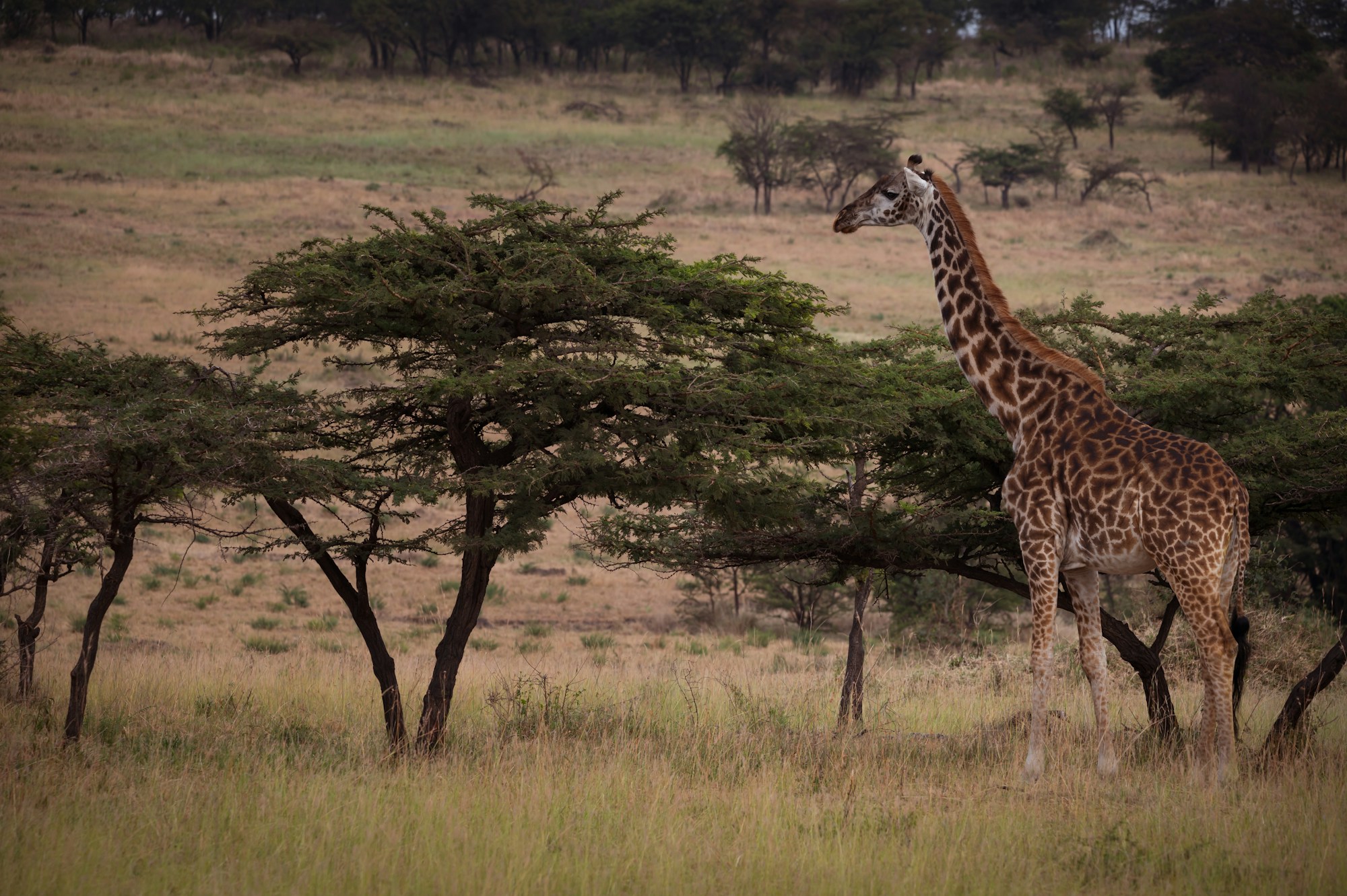
Great Rift Valley Lakes — Central Kenya
Kenya boasts 5 Great Rift Valley lakes designated as RAMSAR sites: Nakuru, Bogoria, Baringo, Elementaita, and Naivasha. According to African Budget Safaris, travelers flock to their shores to witness the masses of flamingos that gather from November to April — a surreal spectacle where hundreds of thousands of birds tint the shores pink.
Lake Naivasha is renowned for its freshwater ecosystem supporting over 350 bird species. According to Otter African Safaris, boat safaris offer close encounters with African fish eagles diving for their prey, while papyrus swamps attract vibrant malachite kingfishers and rare African jacanas. Lake Baringo offers four excellent birding sites where you can spot 120 of the 480 recorded species in just 12 hours.
The strength of this circuit is its accessibility from Nairobi (just a few hours’ drive) and the unique combination of waterbirds and terrestrial wildlife. At Lake Nakuru, you can also observe black rhinos, buffalo, and giraffes. According to Birding Ecotours, a three-week Kenya birding tour can yield between 450 and 750 bird species. Combining Nakuru (flamingos), Baringo (cliff birds), and Naivasha (waterbirds) in a single 4-5 day circuit remarkably optimizes the species list.
Highlights
- Hundreds of thousands of flamingos from November to April
- 5 RAMSAR lakes accessible within hours of Nairobi
- Black rhinos at Lake Nakuru
- Boat safari on Lake Naivasha among the hippos
- Africa’s most accessible birding circuit
9. Esteros del Ibera, Argentina — The Forgotten Marshes
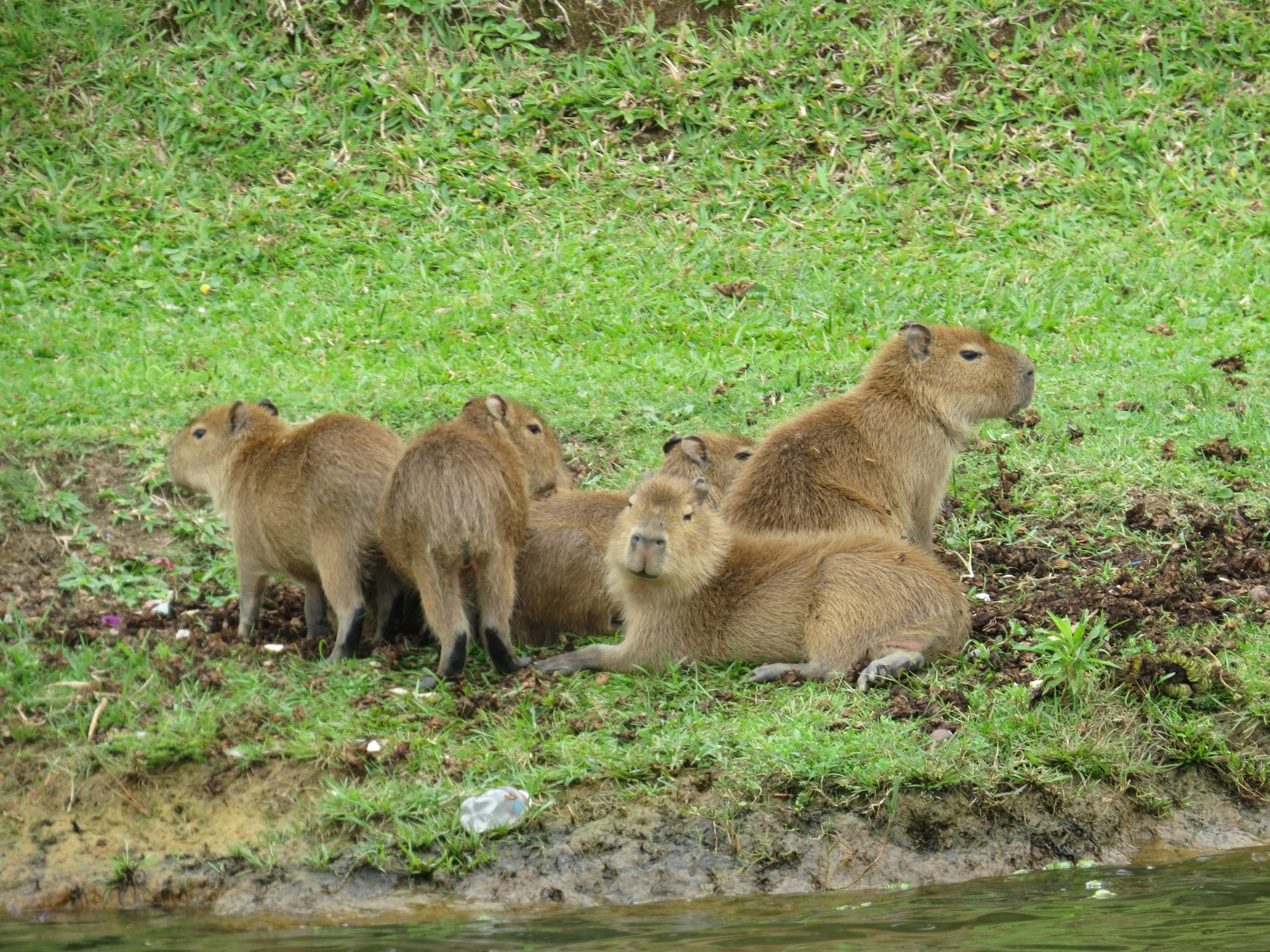
Esteros del Ibera — Corrientes Province, Argentina
The Esteros del Ibera, South America’s second-largest wetland after the Pantanal, spans over 13,000 km² in Corrientes Province, northeastern Argentina. This vast system of lagoons, marshes, and floating islands harbors stunning biodiversity: over 350 bird species, 85 mammal species, and a remarkable concentration of yacare caimans numbering in the thousands along the banks.
What sets Ibera apart from other South American wetlands is the continent’s most ambitious rewilding program. The Rewilding Argentina Foundation has reintroduced locally extinct species: the jaguar (through a captive breeding and release program), giant anteater, tapir, red macaw, and marsh deer. Since the creation of Ibera National Park in 2018, visitors can observe these animals in near-wild conditions, with minimal supervision and well-maintained trails.
The considerable advantage of Ibera is its accessibility and cost. From Buenos Aires, a 1.5-hour domestic flight to Posadas or Corrientes followed by a 3-4 hour drive leads to the heart of the marshes. Accommodation in posadas (local guesthouses) with full board and guided excursions starts at 80-150 USD per night. By kayak or motorboat, you navigate between floating islands of water hyacinth, encountering caimans, giant capybaras, long-tailed otters, and clouds of jacanas, herons, and roseate spoonbills — all without any tourist crowds.
Highlights
- South America’s most ambitious rewilding program
- Reintroduction of jaguars, tapirs, and red macaws
- Very affordable budget (80-200 USD/day all-inclusive)
- Kayaking among floating islands and caimans
- Can be combined with Iguazu Falls (4-hour drive)
10. Camargue, France — The European Alternative
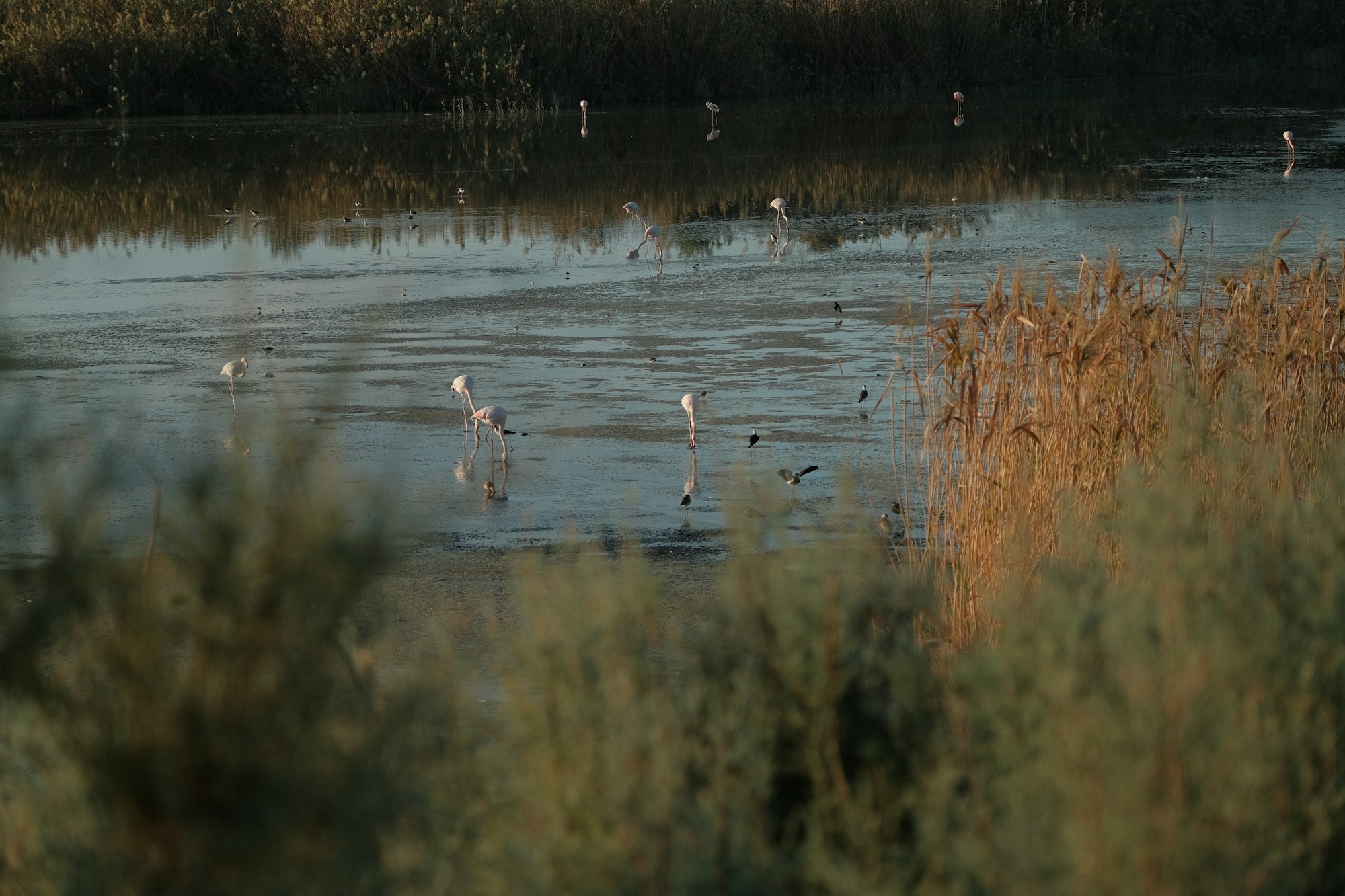
Camargue Regional Nature Park — Southern France
You don’t need to cross oceans to experience a wetland safari. The Camargue, a vast Rhone River delta spanning 150,000 hectares between Arles and the Mediterranean, is France’s largest wetland and one of Europe’s richest ecosystems. Its landscapes of salt marshes, lagoons, and flooded meadows harbor iconic wildlife: flamingos by the tens of thousands, semi-wild white horses, black Camargue bulls, and over 350 bird species — some of which nest nowhere else in France.
The Pont de Gau Ornithological Park, near Saintes-Maries-de-la-Mer, offers trails through the marshes where you can observe flamingos, purple herons, little egrets, and terns from well-placed observation hides. Wilder still, the Camargue National Reserve (13,000 hectares) protects an ecosystem where avocets, black-winged stilts, glossy ibises, and, with luck, the Eurasian bittern — one of Europe’s most elusive birds — coexist. Horseback safari with the gardians (Camargue cowboys) through the ponds and salt flats is a uniquely French experience.
The Camargue’s incomparable advantage is its proximity. Just 3 hours by TGV from Paris, 45 minutes from Marseille or Montpellier, it’s a weekend safari accessible without a passport, vaccinations, or jet lag. Accommodation in a mas camarguais (traditional converted farmhouse) offers charm and comfort for 80 to 150 EUR per night. The April-to-June season is ideal: flamingos are nesting, spring migrants are arriving, and the low-angle Provencal sunlight transforms every pond into an impressionist painting.
Highlights
- 3 hours from Paris by TGV — a weekend safari
- Thousands of flamingos from April to October
- Horseback safari with Camargue gardians
- 350+ bird species (including glossy ibis and Eurasian bittern)
- Very affordable: 50-150 EUR/day
Practical information for your safari
Compare the best fares for your trip.
Stay connected from the moment you land with Airalo.
Complete coverage for worry-free travel.
Frequently asked questions about wetland safaris
What is the best time to visit the Pantanal?
The dry season, between July and October, is the best time to visit the Pantanal. August and September record the highest number of jaguar sightings, as receding waters concentrate caimans (the jaguars’ main prey) into restricted areas. May-June is preferable for birding and greener vegetation. Avoid January-March, the peak flood period when many tracks become impassable.
Is the Okavango Delta accessible during the rainy season?
The Okavango Delta operates on a counter-intuitive cycle: the floods arrive from March to August, fed by rains that fell in Angola months earlier. The local « rainy season » (November-March) brings tropical afternoon showers but remains accessible. It’s actually the « green season, » with rates reduced by 30 to 50%, lush vegetation, and the arrival of migratory birds. The dry season (June-October) remains the best for terrestrial wildlife concentrated around water points.
What are the chances of spotting a jaguar in the Pantanal?
During the dry season (August-October) at Porto Jofre, jaguar sighting rates are remarkably high — specialized operators report success rates of 90 to 95% over a minimum 3-day stay. The jaguar population density in the Cuiaba River region is exceptional, and the open terrain makes observation from boats easy. A 4-5 day safari significantly increases the chances of witnessing spectacular hunting scenes.
How much does a wetland safari cost?
Budgets vary enormously by destination. The most affordable options are Lake Turkana in Kenya (45-80 USD/day), the Camargue in France (50-150 EUR/day), and the Esteros del Ibera in Argentina (80-200 USD/day). In the mid-range, Los Llanos in Colombia (150-300 USD/day) and Kenya’s Rift Valley Lakes (100-350 USD/day) offer excellent value. Premium destinations like the Pantanal (300-700 USD/day) and Okavango (400-1,000 USD/day) require a larger budget, but the experience matches the price.
Is a mokoro safari dangerous?
The mokoro (traditional dugout canoe) is the ancestral mode of transport in the Okavango Delta and Bangweulu Wetlands. Local polers know the channels perfectly and can avoid hippos and crocodiles. Incidents are extremely rare. The canoes are stable and glide silently, allowing close approaches to wildlife. Wear a life jacket (provided by operators) and follow the guide’s instructions. The mokoro remains one of the safest and most immersive ways to explore the wetlands.
Where can you see the shoebill in Africa?
The shoebill is one of Africa’s rarest and most sought-after birds. The best observation sites are the Bangweulu Wetlands in Zambia (May-July), the Mabamba Swamps in Uganda (year-round, but especially December-March), and Akagera National Park in Rwanda. Bangweulu offers the most authentic experience with mokoro safaris through the swamps, while Mabamba near Entebbe is the most accessible. The shoebill is an endangered species with an estimated population of 5,000-8,000 individuals.
What are the alternatives to Kenya for a wildlife safari?
For a wetland experience, the Caprivi Strip in Namibia offers a budget-friendly alternative to neighboring Botswana with comparable wildlife and far fewer tourists. In South America, Los Llanos in Colombia is 30-40% cheaper than the Pantanal for equally impressive biodiversity. In Argentina, the Esteros del Ibera feature a unique rewilding program with jaguar reintroduction. And to stay in Europe, the Camargue offers flamingos, wild horses, and 350 bird species just 3 hours from Paris.
Are wetlands accessible during the Southern Hemisphere summer?
The Southern Hemisphere summer (November-March) corresponds to the rainy season for most Southern Hemisphere destinations. Conditions vary: the Pantanal experiences significant flooding making some areas inaccessible, but the Okavango’s « green season » remains accessible with reduced rates. The Esteros del Ibera in Argentina are accessible year-round, with hot but navigable summers. Generally, the dry season (May-October in the Southern Hemisphere) offers the best wildlife viewing conditions, as animals concentrate around the last remaining water sources.
Sources
- Lorenzo Expeditions — Complete guide to jaguar safaris in the Brazilian Pantanal
- Ameliya Safaris — Pantanal: biodiversity and observation conditions
- Africa Travel Designers — Okavango Delta: luxury safaris 2025-2026
- Adventure Life — Overview of the Okavango Delta, Botswana
- Castaway Chris — Practical guide to Moremi Game Reserve
- Natural World Safaris — Caprivi Strip: wetland safaris in Namibia
- Robin Pope Safaris — Shoebill safari in the Bangweulu Wetlands
- Absolute Zambia Safaris — Bangweulu ecosystem and wildlife
- The Wildlife Diaries — Wildlife safari in Los Llanos, Colombia
- Avian Safaris — Birding at Lake Turkana, Kenya
- African Budget Safaris — Birding guide to Kenya’s best sites
- Birding Ecotours — Birding tours in Kenya
- SafariBookings — Top 10 best African safari destinations 2026
- Wild Junket — How to see jaguars in the Pantanal
- Samburu Reserve — Lake Turkana National Parks
Research conducted in March 2026
Ready to plan your safari?
Explore our safari itineraries in Botswana, Tanzania, and Brazil, created by passionate travelers.
Explore all itineraries