
Commercial partnership. This article contains affiliate links. If you book through these links, Pixidia earns a small commission at no extra cost to you. Learn more Partners: Viator
Yanaka is the Tokyo neighbourhood that survived the earthquakes, the bombs and the bulldozers of the economic miracle. A 15-minute walk from Ueno Park, its Taisho-era wooden lanes shelter over 70 Buddhist temples, the Yanaka Ginza shopping street and the Nezu Shrine with its vermilion torii gates. To make the most of the district, I have selected 8 experiences rated between 4.7 and 5.0/5 on Viator, priced from 23 to 198 euros: guided walks, kintsugi workshops, shodo calligraphy, ikebana and home cooking. Best pick: the 3.5-hour signature walk (4.91/5); best value: the 41-euro half-day tour.
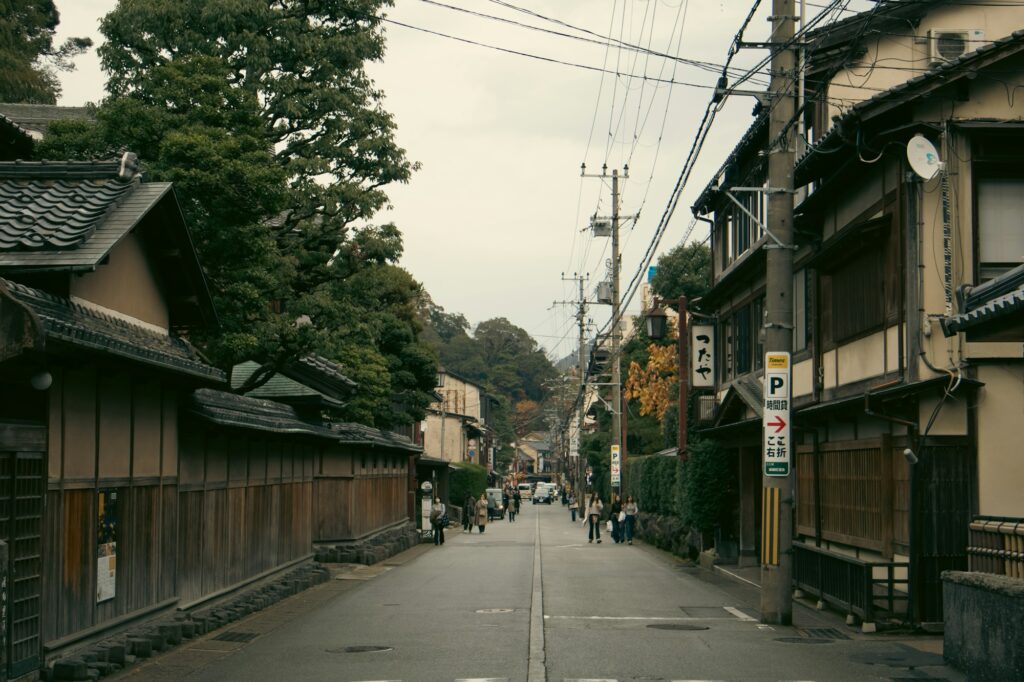
Tokyo used to intimidate me. Fourteen million people, glass towers as far as the eye can see, crossings where thousands of pedestrians surge in every direction at once. Then someone told me: « Get off at Nippori. » Twenty minutes from Shinjuku on the JR Yamanote Line, I stepped out into another era. Faded blue wooden houses. A ginger cat asleep on a stone wall. A vendor shouting prices from a stall the size of a wardrobe. Welcome to Yanaka.
Imagine a neighbourhood like Notting Hill or Brick Lane in terms of its intimate scale and community feel — except the streets here have not changed since the Edo period. Yanaka is one of the rare pockets of Tokyo that came through the 1923 Great Earthquake, the 1945 firebombing raids and the concrete fever of the 1970s and 1980s largely intact. Its hilly topography, its dense web of temples and its winding lanes protected it where other districts were razed and rebuilt. For travellers seeking « the real Japan » without going all the way to Kyoto, Yanaka is the most accessible answer.
To get the most out of it, I have selected 8 bookable experiences on Viator, starting with the guided walk through Yanaka’s backstreets (rated 4.91/5 from 564 reviews) through to craft workshops in a traditional townhouse. Every one was chosen for its deep local roots in the neighbourhood or its immediate neighbours (the Yanesen triangle).
Yanaka, the Tokyo neighbourhood that refuses to disappear
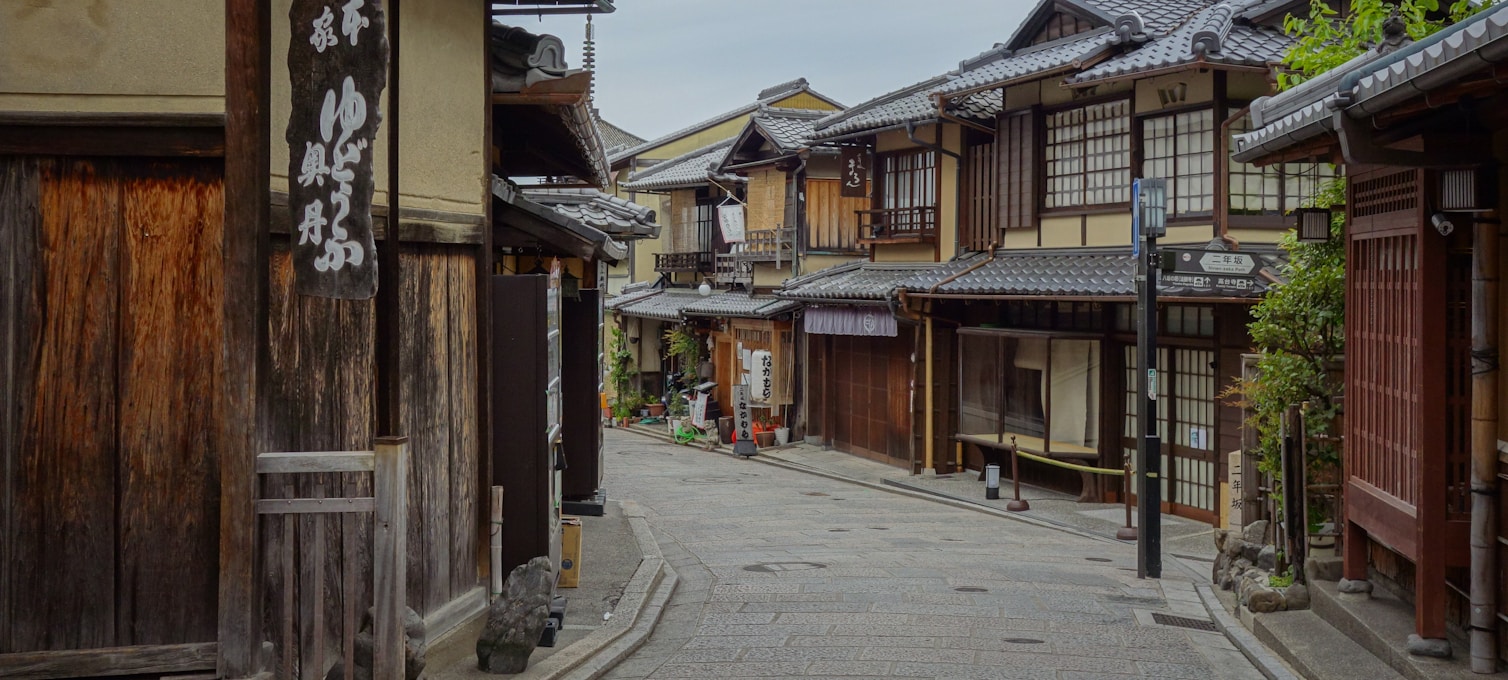
Yanaka belongs to the Yanesen triangle (Yanaka + Nezu + Sendagi), an enclave less than 2 km across in northern Tokyo. Its character stems from an exceptional triple layer of historical preservation: the great fire of 1657 spared its hillside, the 1923 earthquake left it almost untouched, and the incendiary bombs of March 1945 (which destroyed 40% of the city) veered away from its narrow lanes. The result: wooden houses from the Taisho (1912-1926) and Meiji (1868-1912) eras stand today alongside modest 1950s buildings. The street pattern has not changed since Edo.
The concept of shitamachi (下町, « low city ») defines the soul of Yanaka: a working-class community spirit that stands in contrast to the bourgeois residential Tokyo of the heights (Yamanote). Neighbours still talk to one another in the alleyways. The matsuri (neighbourhood festivals) are organised by residents themselves. More than 70 Buddhist temples are scattered through Yanaka alone, the highest concentration of places of worship anywhere in Japan. And since the Edo era, when temples used cats to protect their sutras from rodents, the district has been nicknamed « Cat Town »: a dozen stray cats still make their home among the mossy stones.
The best time to visit is late March to early May (cherry blossoms in Yanaka Cemetery, azaleas at Nezu Shrine) or September to November (autumn foliage, ideal temperatures, few tourists). In summer, the heat regularly exceeds 35 degrees Celsius with oppressive humidity.
The 8 best experiences in Yanaka and old Tokyo
1. The Yanaka signature walk: 3.5 hours through the real old Tokyo
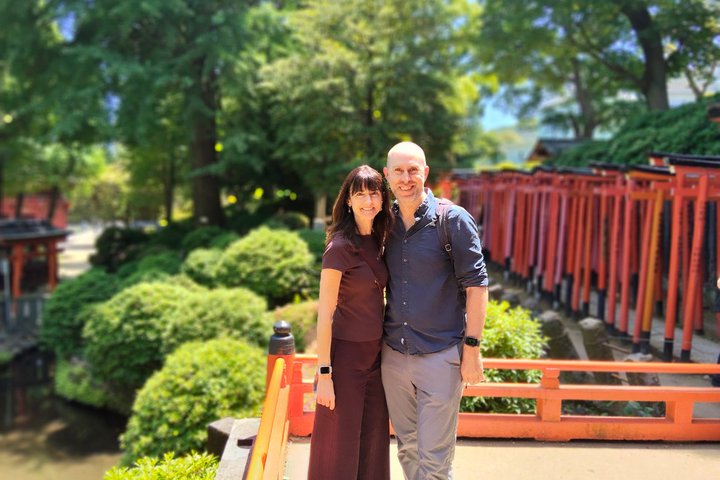
This is the definitive Yanaka tour: 3.5 hours through Edo-period lanes with a local expert guide who knows the district house by house. You pass through Nezu Shrine, the historic cemetery where the last shogun is buried, and the Yanaka Ginza shopping street, without once crossing paths with a coach-tour group. All participant photos are included, as are entrance fees.
- Nezu Shrine + historic cemetery + Yanaka Ginza
- Certified specialist guide for the district
- Participant photos included
2. Tokyo’s old quarter in a half-day: the budget-friendly option
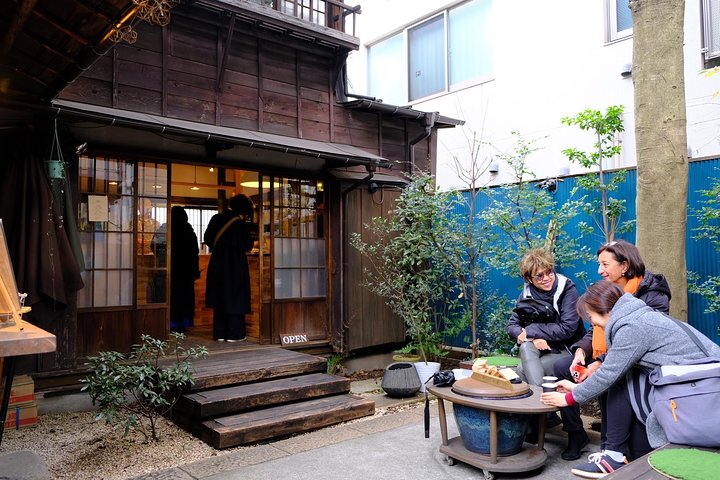
With 675 reviews and a price starting at just 41 euros, this is the ideal entry point for a first visit to Yanaka. A local guide takes you through pre-war wooden houses, Buddhist temples and the famous Yanaka Ginza street in a well-paced 2.5 hours. Photos throughout the walk are included, handy for coming home with beautiful memories without stopping at every corner.
- 675 reviews: the largest community of travellers in the selection
- Most affordable price (41 €), perfect for tight budgets
- Edo-era wooden houses and historic lanes
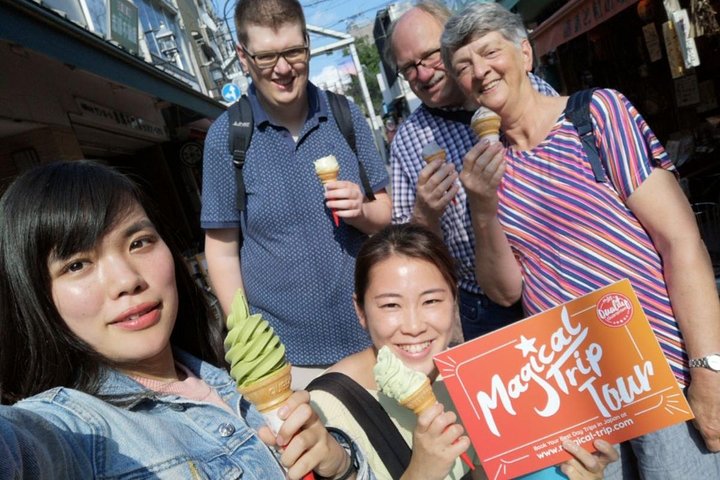
3. The Tripadvisor award winner: temples, lucky cats and local snacks
This MagicalTrip tour won the Tripadvisor Best of the Best award, a rare distinction placing it in the global top 1% of activities. What sets it apart: alongside the historic walk through Yanaka’s temples, you take part in a maneki-neko (lucky cat) painting workshop and finish in a traditional cafe with a drink and dessert. A programme that blends culture, craft and street food in a single outing.
- Tripadvisor Best of the Best award winner
- Maneki-neko painting workshop included (unique souvenir)
- Local snack tasting + traditional cafe
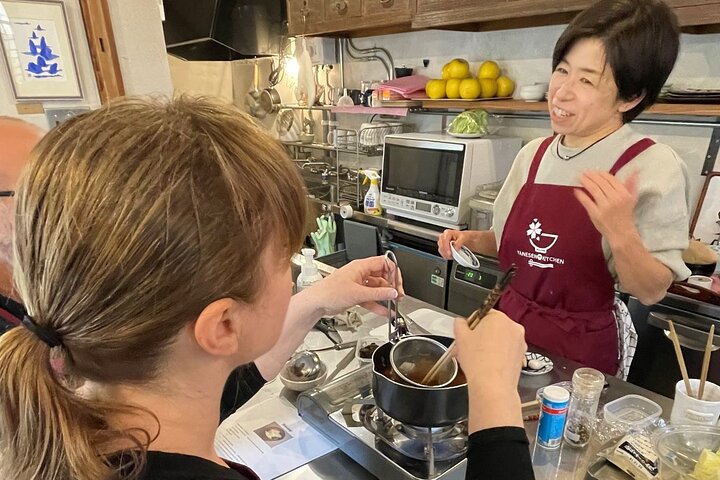
4. Private home cooking: lunch with a real Yanaka family
A Yanaka resident opens the doors of her traditional townhouse for a fully private cooking class. Before heading into the kitchen, you stop at the Yanaka Ginza market to choose the day’s ingredients: onigiri, karaage, miso soup, nimono. This is not haute cuisine — it is the meal a shitamachi family makes every lunchtime. Rated 4.98/5 from 181 reviews. Hard to do better.
- Rated 4.98/5 (among the highest-rated in the entire selection)
- Fully private format, personalised attention
- Visit to Yanaka Ginza market before cooking
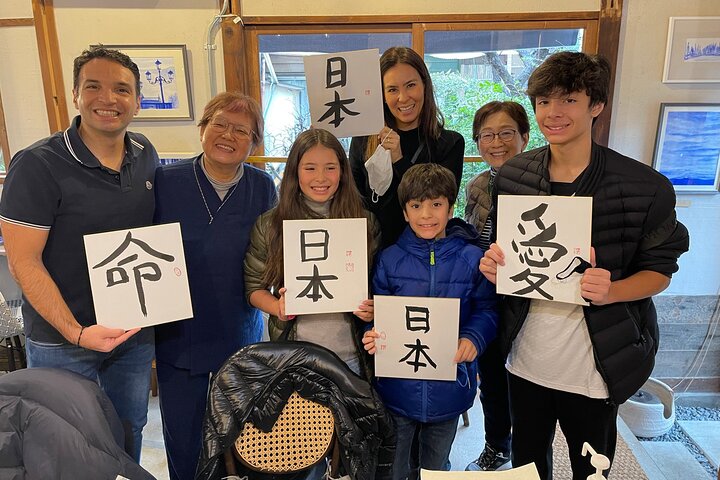
5. Shodo calligraphy in Yanaka: write your kanji, leave with your artwork
Shodo (書道) is the art of writing kanji in brush on washi paper: each stroke is irreversible, no corrections are possible. This is the only calligraphy class based right in Yanaka neighbourhood, at the YANESEN Cultural Center. Under the guidance of a master, you choose a kanji that speaks to you (love, journey, strength…), practise your technique, then make your final version on a framed Shikishi board. It is the most authentic souvenir you can bring back from Yanaka.
- The only calligraphy workshop rooted in Yanaka itself
- Gift included: your kanji on a framed Shikishi board
- Private format, personalised attention from the master
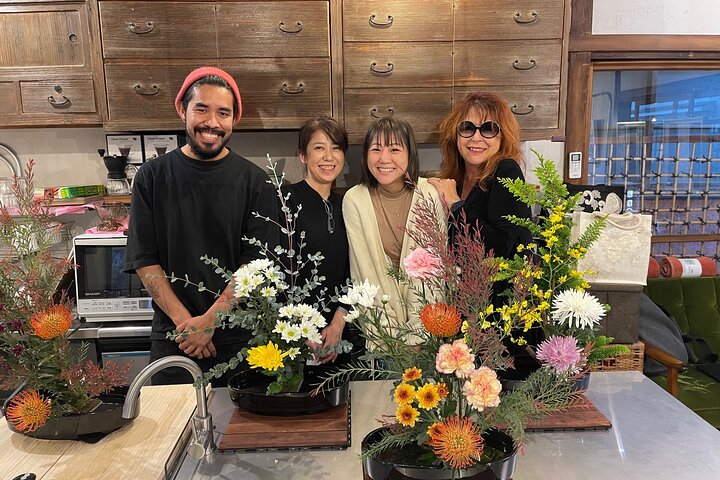
6. Ikebana in Yanaka: Japanese flower arranging and the art of empty space
A perfect 5.0/5 score. Ikebana is not the art of putting flowers in a vase: it is a discipline built around the principle of Ma (間, empty space), asymmetry and the seasonality of time. At the YANESEN Cultural Center (the same traditional townhouse as the calligraphy and cooking classes), a certified ikebana master teaches you to compose your own arrangement according to these ancestral principles. An unexpectedly mindful experience.
- Perfect rating 5.0/5 on Viator
- The only ikebana workshop rooted in Yanaka neighbourhood
- Certified master + English-speaking assistant
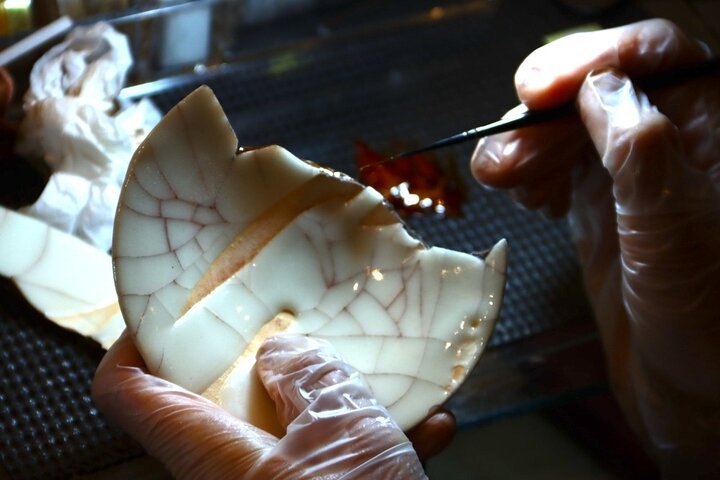
7. Pure gold kintsugi with a master craftsman: repair a piece, take it home
Kintsugi (金継ぎ) is the art of repairing broken ceramics with urushi lacquer and 24-carat pure gold powder, highlighting the cracks rather than hiding them. Master Taku practises the authentic technique, not a simulated version. You leave with your own restored piece, an object that tells both the story of Japanese ceramics and the story of your day in Tokyo. It is the most singular craft souvenir in this selection.
- 24-carat pure gold, authentic technique (not simulated)
- Master craftsman Taku, traditional training
- Repaired ceramic piece to take home
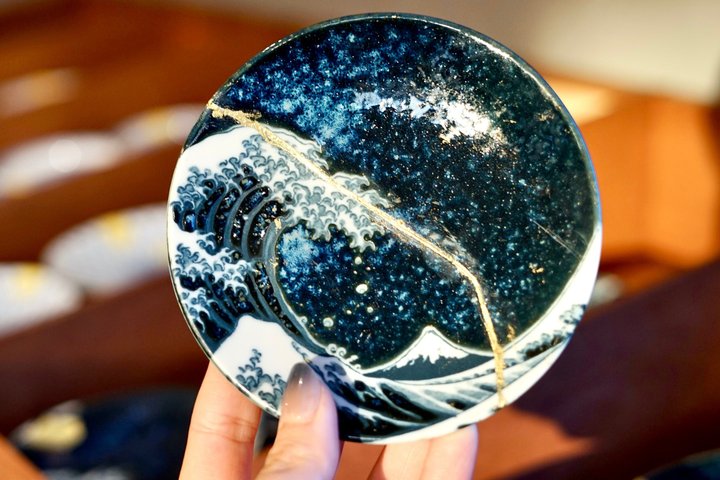
8. Budget kintsugi in Asakusa: the introduction at 23 euros
Asakusa is Yanaka’s neighbouring district (25 minutes on foot through the historic quarters) and this kintsugi workshop is the accessible version for those who want to discover the technique without pushing the budget to 200 euros. Over 1,000 reviews on Viator (the most-reviewed experience in this entire selection), bilingual Japanese-English staff, choice of crockery, all tools provided: it is the perfect introduction before, optionally, moving on to the pure gold version with Master Taku. Ideal if you combine Yanaka and Asakusa in the same day.
- Over 1,000 reviews (the most-reviewed experience in the selection)
- Lowest price in the kintsugi category (23 €)
- Bilingual Japanese-English staff, choice of crockery
Prepare your trip to Tokyo
The easiest way to book Yanaka today: instant confirmation, 675 reviews and the lowest entry price of the selection. Nezu Shrine, historic cemetery and Yanaka Ginza in 2.5 hours.
Check availabilityPractical tips for visiting Yanaka
How to get there: JR Nippori Station (Yamanote Line, 12 minutes from Tokyo Station, 20 minutes from Shinjuku) is the main access point for Yanaka. To start at Nezu Shrine, get off instead at Sendagi or Nezu Station (Tokyo Metro Chiyoda Line). From Asakusa, Yanaka is a 25-minute walk through the historic quarters, an ideal route to combine both in the same day.
How long to allow: Budget 2-3 hours for a self-guided visit (Yanaka Ginza + cemetery + 3-4 temples). With a guided walk, allow 2.5 to 3.5 hours depending on the tour. For a half-day combining a stroll with a craft workshop (kintsugi, calligraphy or ikebana), 4 to 5 hours is enough. A full day (walk + private cooking lunch + craft workshop + free exploration) easily stretches to 6-7 hours.
Yanaka Ginza: The 170-metre shopping street opens from 10am. Arrive before noon to avoid queues at the Menchi katsu (breaded meat patty, 150-200 yen) and Korokke (croquette, 100-150 yen) stalls. The « Yuyake Dandan » (Sunset Steps) at the bottom of the street are a popular photo spot in late afternoon.
SCAI The Bathhouse: Inside a 200-year-old sento (public bathhouse), this contemporary art gallery has shown world-class artists since 1993. Free entry. Not to be missed if you have an interest in contemporary Japanese art.
Temple etiquette: Yanaka has more than 70 Buddhist temples. Access is generally free, but maintain a respectful attitude. Shinto shrines (such as Nezu-jinja) follow an entry ritual: wash your hands at the temizuya, pass beneath the torii gate. Avoid taking photos during rituals.
Frequently asked questions about Yanaka in Tokyo
Which is the highest-rated Yanaka tour on Viator?
The 3.5-hour guided Yanaka walk is the highest-rated in our selection at 4.91/5 from 564 reviews. It covers Nezu Shrine, the historic cemetery and Yanaka Ginza with a local expert guide. For the best value for money, the half-day tour at 41 euros has accumulated 675 reviews and offers instant confirmation. The most-reviewed experience overall is the budget kintsugi workshop in Asakusa, with over 1,000 reviews.
What is the best season to visit Yanaka in Tokyo?
Two periods stand out. Late March to early May for cherry blossoms in Yanaka Cemetery and the 3,000 azaleas at Nezu Shrine (Bunkyo Tsutsuji Matsuri festival in April). September to November for the autumn atmosphere, comfortable temperatures and very few tourists. Summer (July-August) is manageable but demanding: 35 degrees with high humidity. Winter offers an intact Showa atmosphere and quiet mornings.
How long does it take to visit Yanaka?
A self-guided visit to Yanaka Ginza, the cemetery and a few temples takes 2 to 3 hours. With a guided walk, allow 2.5 to 3.5 hours depending on the option. To combine a stroll with a craft workshop (kintsugi, calligraphy or ikebana), plan a half-day of 4 to 5 hours. A full day with private home cooking and free exploration can easily stretch to 6-7 hours.
Is Yanaka different from Asakusa for a cultural visit?
Yes, and markedly so. Asakusa centres on Senso-ji Temple and draws millions of tourists a year; the atmosphere is festive and commercial. Yanaka is a living, inhabited neighbourhood, far less touristy, where pre-war wooden houses are still standing and residents go about their daily lives. The two districts complement each other and are just 25 minutes apart on foot — many travellers combine them in the same day.
Do you need to speak Japanese to visit Yanaka?
No. All experiences in this selection are offered in English with bilingual guides or assistants. For self-guided visits, Yanaka Ginza and the main temples are accessible without Japanese. Shops on the shopping street often operate by gesture and displayed prices. To maximise your cultural and historical understanding of the district, a guided walk remains the best option.
What is the cheapest way to experience Yanaka?
The budget kintsugi introduction in neighbouring Asakusa starts at 23 euros with instant confirmation, and the half-day Old Quarter walking tour through Yanaka itself starts at 41 euros, also instantly confirmed. Both are fully bookable online without waiting on supplier approval, making them the fastest and most affordable options if you are travelling on a tight budget or a tight schedule.
How do you get to Yanaka from central Tokyo?
Take the JR Yamanote Line to Nippori Station, about 20 minutes from Shinjuku, then walk five minutes to Yanaka Ginza. Yanaka is also a 15-minute walk from Ueno Park, so it pairs easily with a morning at the Ueno museums.
Sources
- Go Tokyo: Yanaka and Nezu, accessed 2026-06-13
- Kanpai.fr: Yanaka guide, accessed 2026-06-13
- Matcha-jp: Yanesen guide, accessed 2026-06-13
- MagicalTrip: Yanaka Ginza street food guide, accessed 2026-06-13
- Wikipedia: Yanesen, accessed 2026-06-13
- SCAI The Bathhouse, contemporary art gallery, accessed 2026-06-13
Ready to explore Yanaka?
The authentic Tokyo is not in Shinjuku or Shibuya — it is 20 minutes from Nippori. Book your guided walk and craft workshops well in advance: morning slots fill quickly, especially in April (azalea season) and November.
See the top Yanaka walk