
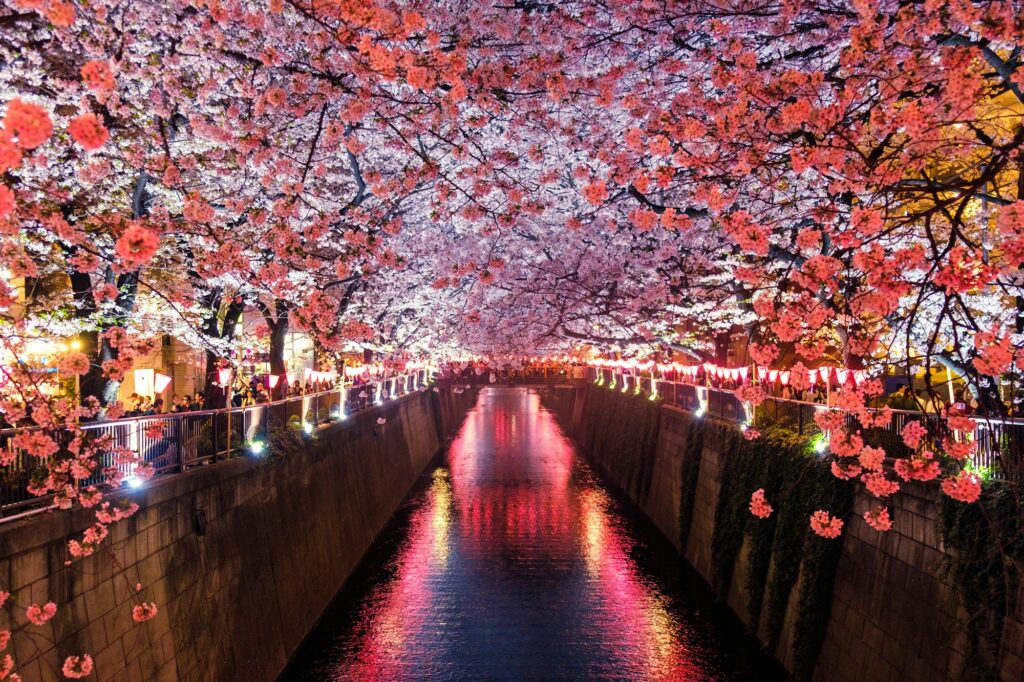
Kawazu’s cherry trees start blooming in early February, and full bloom most often arrives between February 12 and 28. The 2027 festival is scheduled for Saturday, February 6 to Sunday, March 7, 2027, according to the organizer, and dates may change. No 2027 bloom forecast had been published as of November 27, 2026.
Checked on against the official sources cited (festival committee, Kawazu town).
Travel guides still repeat the 2026 dates. For 2027, the most reliable source is still the organizer: the 37th Kawazu-zakura festival is scheduled for February 6 to March 7, 2027, subject to change. This page covers what’s already published (past blooms, dates, getting there, 2026 prices) and what isn’t yet (illuminations, 2027 train timetables, bloom forecast). It helps you plan the trip without waiting for an announcement that hasn’t come out yet.
1. Kawazu-zakura, the early cherry tree that opens the season
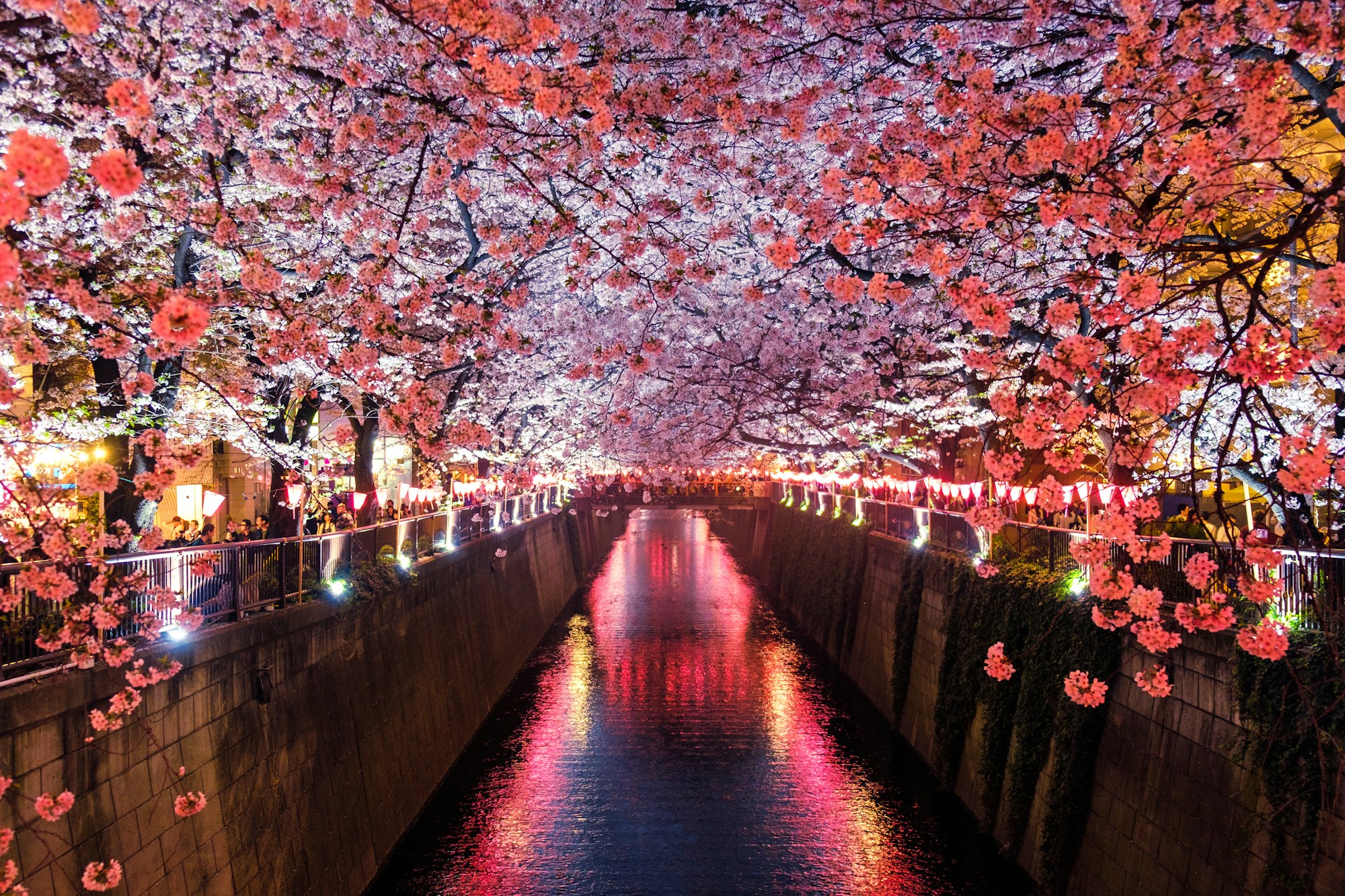
Kawazu-zakura, an early variety that started as a garden seedling
Kawazu-zakura is a natural hybrid of two Japanese cherry trees, the Oshima-zakura and the Kanhi-zakura, according to the festival committee. It’s easy to tell apart from Somei-Yoshino, the most common cherry tree in Japan, thanks to its deeper pink flowers and wider petals (japan-guide, japan.travel). The committee says the original tree was planted around 1955 by Mr. Iida Katsumi in his garden, from a seedling found along the river. It first bloomed in 1966, was named Kawazu-zakura in 1974, and was declared the town tree in 1975. The tree’s history on the committee’s website.
Highlights
- A long bloom: the committee talks about full bloom lasting a week to ten days.
- A walk of about 4 km along the river, where the crowds thin out as you head upstream.
- Street stalls sell grilled seafood, sakura mochi and Izu wasabi products, according to a secondary travel guide that we haven’t been able to verify.
This private tour suits anyone who doesn’t want to drive on a weekend or rely on the last train at 8:40 pm. The Viator listing checked on November 27, 2026 includes hotel pickup, a local guide, a 7 to 8 hour day and six stops: the Jogasaki Suspension Bridge, Mount Ōmuro park, a stop at Izu Kōgen Beer (lunch not included, at your own expense), the Kawazu Seven Waterfalls, Shirahama Shrine and Shuzenji Onsen Town. The vehicle is priced per trip, not per person: the price is the same for two or four travelers.
Two things to check before you book. Cancellations aren’t refunded (the listing’s « all sales final » terms), and the operator confirms bookings by hand. Also, the Mount Ōmuro elevator fee, €8.59 per person (¥1,500), isn’t included and is paid on site.
2. When the trees bloom: a window, not a date
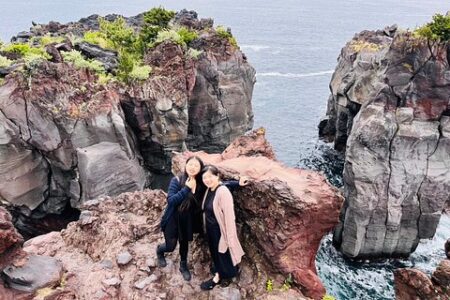
The committee expects the usual bloom to run from early February to early March. The full bloom date, though, changes from year to year. The committee declared full bloom on February 26 in 2022, February 17 in 2023, February 12 in 2024, February 28 in 2025 and February 13 in 2026. Between the earliest and the latest year, that’s a sixteen-day gap. In three of those five years, full bloom fell in the second half of February.
| Year | Edition | Festival | Full bloom declared |
|---|---|---|---|
| 2022 | 32nd | not recorded | February 26 |
| 2023 | 33rd | not recorded | February 17 |
| 2024 | 34th | not recorded | February 12 |
| 2025 | 35th | extended to March 9 (press reports) | February 28 |
| 2026 | 36th | February 7 to March 8 | February 13 |
| 2027 | 37th | February 6 to March 7 (scheduled) | not yet announced |
Source: festival committee, bloom page, 2022 to 2026 reports cross-checked via Watabi, checked November 27, 2026.
According to the committee, full bloom lasts a week to ten days. It also considers the trees already very beautiful when 50 to 60% of the flowers are open. Heavy rain can cut the peak short, though: in 2026, petals began falling around February 25 after heavy rain, according to a japan-guide blog post checked on November 27, 2026.
Private forecasts add uncertainty. Weathernews announced on January 26, 2026 an opening on February 6 and full bloom on February 22. Full bloom was finally declared on February 13, nine days earlier. A late-January forecast gives you a rough idea, but the official date, published by the committee during the season, is the one that counts.
3. What hasn’t been announced for 2027 yet
As of November 27, 2026, the organizer hasn’t published 2027 illumination times or a bloom forecast. The train times cited below are the 2026 reference times from its website.
- Illuminations. In 2026, the trees were lit from 6:00 to 9:00 pm. No 2027 times have been published as of this date: the official site is the one to watch (kawazuzakura.jp, checked November 27, 2026).
- Trains. Timetables can change from one year to the next. The ones in this article are the 2026 reference times, so double-check them before you book.
- Forecast. Weathernews publishes its Kawazu forecast around late January (January 26 for 2026). Don’t count on any 2027 bloom date until that’s out.
4. Getting there from Tokyo: 2 hours 28 minutes, and a return to plan
The direct trip is on the Odoriko, a JR East express. According to the 2026 reference timetable, the 9:00 am train from Tokyo reaches Kawazu at 11:28 am, a trip of 2 hours 28 minutes. From the station, the first trees along the river are about a three-minute walk away, according to the committee.
The return takes more planning. According to the same reference, the last train leaves Kawazu at 8:40 pm and reaches Tokyo at 11:24 pm. That’s before the 2026 illuminations ended, which ran until 9:00 pm. To see the trees fully lit, you need to stay overnight. According to GOOD LUCK TRIP, there were still rooms available in mid-January 2026.
Two other options exist. To get there early, take a Shinkansen to Atami, then the Ito Line and a local train, which reaches Kawazu around 8:39 am on the first pass, according to the official site. On weekends and public holidays, an Odoriko leaves Tokyo at 7:30 am, according to GOOD LUCK TRIP (2026 timetable, to recheck for 2027). Between February 6 and 28, a direct express leaves Kawazu at 4:14 pm, which is handy for an afternoon visit.
| Route | Train | Departure | Arrival | Duration |
|---|---|---|---|---|
| Direct, outbound | Odoriko | 9:00 am, Tokyo | 11:28 am, Kawazu | 2 hr 28 min |
| Weekend, outbound | Odoriko | 7:30 am, Tokyo | not specified | not specified |
| Early start | Shinkansen to Atami, then Ito Line and local train | not specified | 8:39 am, first pass | not specified |
| Return, last train | Last train | 8:40 pm, Kawazu | 11:24 pm, Tokyo | 2 hr 44 min |
| Direct return | Express, February 6 to 28 | 4:14 pm, Kawazu | not specified | not specified |
Source: kawazuzakura.jp, 2026 reference timetable, checked November 27, 2026; to recheck for 2027. Weekend times: GOOD LUCK TRIP, checked November 27, 2026.
For booking, tickets can be bought up to a month before travel, through Ekitan or resellers (unofficial sources). One guide also says the Odoriko’s reserved seats have been booked since March 2021, and mentions an unreserved option. We haven’t verified this with JR East.
5. On site: the river, the stalls and the crowds
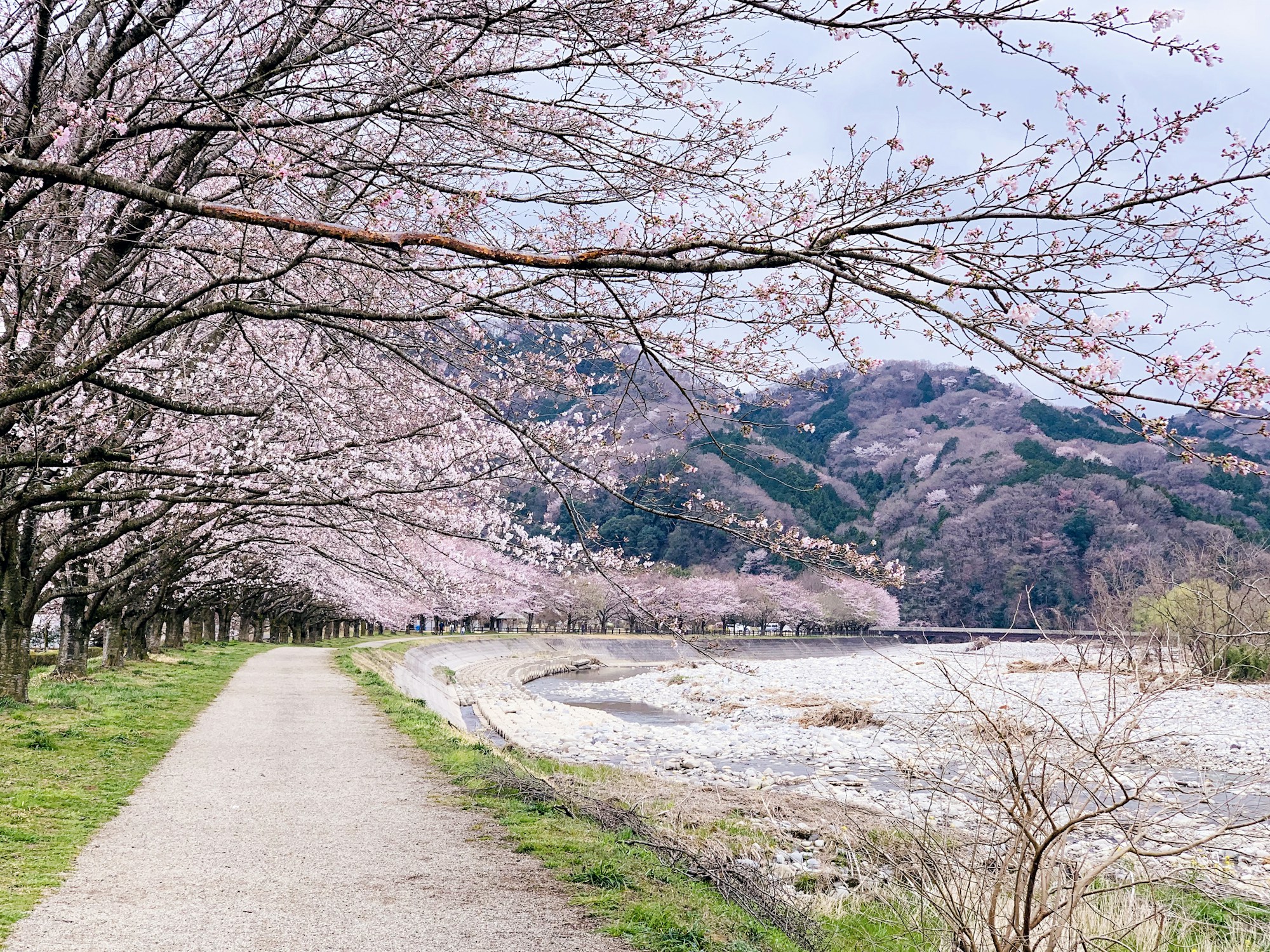
The river, from the station upstream
The trees line the Kawazu River. The stretch near the station draws the biggest crowds, the stalls and the tour groups. The walk is about 4 km (Tourism All Japan and Tokyo), but its upstream end, the quietest, is about 2.5 km from the starting point. A visitor who went on February 17, 2026 describes it in a japan-guide report. The committee counts about 850 trees along the river, and about 8,000 across the town.
Highlights
- Walking upstream along the river gets you away from the crowds near the station.
- According to guides, the riverside takes half a day, and a full day lets you add the Seven Waterfalls and Mine Onsen.
- The illuminations ran from 6 to 9 pm in 2026; 2027 times haven’t been announced.
6. Driving, crowds and overtourism: what to plan for
The GOOD LUCK TRIP guide describes the town as very busy during the festival. It advises against driving on weekends because of traffic jams and hard-to-find parking. Parking is paid during the festival, at the following 2026 rates.
| Vehicle | 2026 rate | Note |
|---|---|---|
| Passenger car | ¥1,000 | during the festival only |
| Large vehicle | ¥7,000 | during the festival only |
| Motorcycle | ¥500 | during the festival only |
| Parking hours | not specified | 8:30 am to 5:00 pm, evening parking possible |
Source: Weathernews, Kawazu spot for the rates, and Tourism All Japan and Tokyo for the hours, checked November 27, 2026.
The most recent official figure we found dates from 2019: 907,050 visitors, according to the town of Kawazu. Guides cite one to two million visitors a year, without a source.
The national context matters too. In 2026, the English-language press reported that the cherry blossom festival in Fujiyoshida, near Mount Fuji, was canceled because of overcrowding and disruption for local residents (Time Out). We found no similar cancellation or restriction for Kawazu.
7. Budget: what a day costs
The festival is free according to several guides, and no official source mentions an entry fee. The budget comes down to the train, food and, if you drive, parking. The items below are rough estimates, and each one states its status.
- Festival entry. Free according to several guides. No official source mentions an entry fee.
- Parking. ¥1,000 for a car in 2026, during the festival only (Weathernews).
- Food. According to guides, stalls charge from a few hundred yen to more than ¥1,000 per dish. No official source confirms this.
- Seven Waterfalls. One listing says entry is free, but opening hours differ from one listing to another. To confirm with the town hall.
- Private car tour. €439.07 for one vehicle (minivan, up to 5 travelers), per the Viator listing checked November 27, 2026, with hotel pickup and a local guide. The same price applies for two or four travelers. The Mount Ōmuro elevator fee, €8.59 per person (¥1,500), is paid on site and not included in the price.
| Route | Indicative fare | Status |
|---|---|---|
| Tokyo to Atami (Odoriko) | ¥3,670 | indicative |
| Tokyo to Izukyu-Shimoda (Odoriko) | ¥6,660 | indicative |
| Izukyu surcharge | ¥800 | to be confirmed |
| Tokyo to Kawazu | not found | to check with JR East |
Source: Ekitan, an unofficial route planner, checked November 27, 2026. The ¥800 Izukyu surcharge isn’t confirmed by the operator. A JR Pass covers the JR portion (Ito Line), not the Izukyu section: to confirm with JR East. We didn’t find the Tokyo to Kawazu fare in the sources we checked.
8. A plan for one day, then for a weekend
One day is enough for the river. The 9:00 am train from Tokyo, on the 2026 reference timetable, gets you there around 11:30 am. The trees are a three-minute walk from the station. Head upstream to see the blossoms before the crowds settle near the station, then have lunch at the stalls.
In the afternoon, the Kawazu Seven Waterfalls are about 15 minutes from the station, by car or bus, according to a visitor listing that still needs checking. The forest trail is about one kilometer and takes an hour to walk, according to a travel blog. For the trip back, two trains are useful: the 4:14 pm express between February 6 and 28, and the last train at 8:40 pm.
For a weekend, the simplest option is to stay overnight. Saturdays, Sundays and public holidays are the busiest, and a weekday gives you a calmer visit, according to guides.
Traveling with family: head for the upstream stretch, which is less crowded, and plan a stop at the stalls. On a budget: the festival is free; the costs to plan for are the train (Tokyo to Kawazu fare not found) and parking (¥1,000 in 2026). First time: arrive in the morning and keep a second day for the peninsula, since the trip from Tokyo takes 2 hr 28 min one way and 2 hr 44 min back (last train at 8:40 pm, arriving 11:24 pm, 2026 reference times).
9. Around Kawazu: Minamiizu and the east coast of Izu
Kawazu-zakura isn’t the only early cherry tree in bloom here. Minamiizu, in the southwest of the peninsula, holds a cherry and rapeseed festival: about 800 trees over 4.2 km along the Aono River, with a rapeseed field at Hino. The 2026 festival ran from February 1 to March 10. The 2027 dates aren’t confirmed, and edition numbers differ from one site to another.
The private day trip above, according to the Viator listing checked November 27, 2026, covers the Jogasaki Suspension Bridge, Mount Ōmuro park, a stop at Izu Kōgen Beer (lunch not included, at your own expense), the Kawazu Seven Waterfalls, Shirahama Shrine and Shuzenji Onsen Town, over 7 to 8 hours. The listing notes the Mount Ōmuro visit can be canceled in bad weather. To plan an itinerary around these dates, the Pixi planner helps you compare options.
Two local details are worth the detour. According to japan-guide, Izu citrus such as mandarin and lemon, and Izu wasabi, are sold at the stalls. The foot bath at Mine Onsen is a simple stop: we didn’t find its price in the sources we checked, and towels aren’t provided.
10. A fragile tree, a heritage to protect
The festival rests on a living, fragile heritage. The most useful thing you can do as a visitor is stay on the paths, not climb the embankments, and not break branches for a photo. That’s advice, not an official rule.
What other guides don’t tell you
These points are missing or wrong in the guides we read. Each one points to an official source checked on November 27, 2026.
- The 2027 dates are announced as scheduled. The festival is planned for February 6 to March 7, according to the official site. The guides we read still refer to 2026 (kawazuzakura.jp/en/, checked November 27, 2026).
- Five full-bloom declarations exist. The committee publishes them for 2022 to 2026. GOOD LUCK TRIP cites four (2022 to 2025, not 2026), and japan-guide cites none (kawazuzakura.jp/en/bloom/, checked November 27, 2026).
- The 2027 illuminations haven’t been announced. The guides we read present 6 to 9 pm as settled, but those are the 2026 times (kawazuzakura.jp/en/, checked November 27, 2026).
- The last train and the return express. The last train leaves Kawazu at 8:40 pm, and a direct express leaves at 4:14 pm between February 6 and 28 (2026 reference times). These times are missing from the guides we read (kawazuzakura.jp/en/, checked November 27, 2026).
- 850 trees along the river, 8,000 in the town. The two figures are often mixed up. The first covers the riverbanks, the second the whole town (kawazuzakura.jp/en/, checked November 27, 2026).
- The official attendance figure dates from 2019. Guides cite one to two million visitors with no source. The only official figure we found is 907,050 visitors for the 2019 edition (town of Kawazu PDF, 2019, checked November 27, 2026).
Practical information for planning your stay
February 6 to March 7, 2027, as set by the organizer. The only official site is kawazuzakura.jp; kawazuzakura.net is an unofficial site, so avoid it. The full bloom day is only known once blooming has started.
According to GOOD LUCK TRIP, there were still rooms available in mid-January 2026. On weekends, hotels are the most in demand.
The wind is cold by the water, and rain can knock the petals off within days, as it did in 2026.
Frequently asked questions
When is the Kawazu-zakura festival in 2027?
The festival is scheduled for Saturday, February 6 to Sunday, March 7, 2027, according to the organizer’s official site (kawazuzakura.jp). These dates are provisional and may change, so check the page again before you book. They replace the 2026 dates, February 7 to March 8, which many guides still cite.
When are the cherry trees at Kawazu in full bloom?
Full bloom has been declared between February 12 and 28, depending on the year: February 26 in 2022, February 17 in 2023, February 12 in 2024, February 28 in 2025 and February 13 in 2026. No 2027 date has been published. Weathernews published its 2026 forecast on January 26, 2026, and no 2027 forecast exists yet as of the date of this article.
How long does it take to get to Kawazu from Tokyo?
About 2 hours 28 minutes on the direct Odoriko: leaving Tokyo at 9:00 am, arriving in Kawazu at 11:28 am, per the 2026 reference timetable. The last train back leaves Kawazu at 8:40 pm and arrives in Tokyo at 11:24 pm. Check the 2027 timetables before you book: they weren’t published as of November 27, 2026.
Do you have to pay to see the cherry trees?
No. The festival is free according to several guides, and no official source mentions an entry fee. Parking, though, is paid during the festival: ¥1,000 for a car in 2026, according to Weathernews. For lunch, budget separately for the stalls, whose prices no official source confirms.
Can you drive to Kawazu?
You can, but the GOOD LUCK TRIP guide advises against driving on weekends because of traffic jams and hard-to-find parking. The train is the simplest option. A private car tour with a guide also exists: €439.07 for one vehicle, per the Viator listing checked on November 27, 2026, plus the €8.59 per person Mount Ōmuro elevator fee, paid on site.
How many trees are there?
About 850 along the Kawazu River and about 8,000 across the whole town, according to the organizer. The two figures don’t overlap: the first covers the riverbanks, the second the entire municipality. The walk is about 4 km, and its quieter upstream end is about 2.5 km from the start.
Are the trees lit up at night?
Yes, in 2026, from 6:00 to 9:00 pm. No illumination times for 2027 have been announced as of this article’s date, so keep an eye on the official site. The last train from Kawazu leaves at 8:40 pm, before the 2026 illuminations end: to see the trees fully lit, you need to stay overnight.
Is there another early cherry festival on the peninsula?
Yes, in Minamiizu, in the southwest of the peninsula: about 800 trees over 4.2 km along the Aono River, with a rapeseed field. The 2026 festival ran from February 1 to March 10. The 2027 dates aren’t confirmed.
Sources
- Official festival site : 2027 dates as scheduled, 2026 illuminations, access and return times.
- Committee bloom page : declared full blooms from 2022 to 2026.
- The tree’s history : planting, name and status of the tree.
- Town of Kawazu, 2019 PDF : visitor numbers for the 2019 edition.
- Weathernews, Kawazu spot : parking rates during the 2026 festival.
- Weathernews, 2026 forecast : forecast published January 26, 2026.
- Watabi, festival guide : review of the declared bloom dates.
- GOOD LUCK TRIP : traffic, accommodation and visit planning.
- Japan-guide, 2026 report : end of the 2026 peak and the river walk.
- Tourism All Japan and Tokyo : length of the walk, parking hours.
- Time Out, 2026 : cancellation of the Fujiyoshida festival, for national context.
- Viator listing for the private car tour, checked November 27, 2026: price per vehicle, stops, duration, cancellation terms.
- Ekitan, unofficial route planner : indicative train fares.
Sources consulted on November 27, 2026.

Plan your trip with Pixidia
Pixidia learns how you travel and helps you build a trip that truly fits you and everyone coming along.
Open the planner