
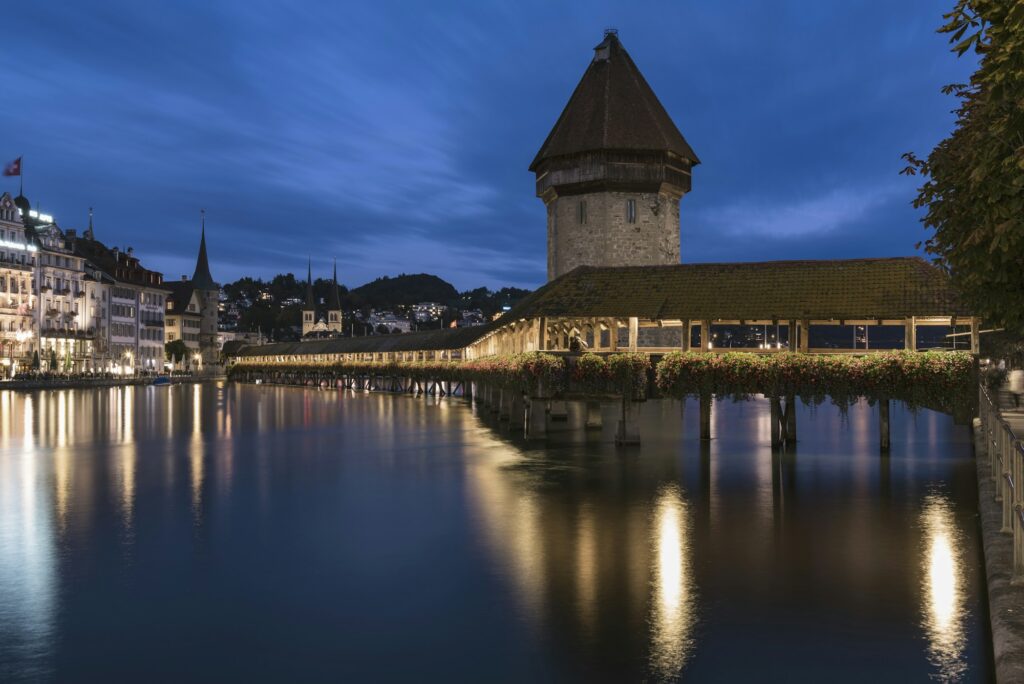
Lucerne’s Fasnacht 2027 runs from Thursday 4 to Tuesday 9 February 2027, opening with the Urknall at 5 am on 4 February. The parades and the Monstercorso, which sets off at 7:30 pm on 9 February, are free, with no ticketing reported. No programme is announced for Saturday 6 February.
Checked on against the official sources cited (Switzerland Tourism, Luzern Tourismus, City of Lucerne).
Lucerne’s Fasnacht runs from Thursday 4 to Tuesday 9 February 2027, with three high points: Thursday, Monday and Tuesday. It starts with a cannon shot by the lake at 5 am on Fat Thursday, and ends with the Monstercorso, the parade of the guggenmusigen, those masked brass bands that play loud and often unannounced. No ticketing is reported for the parades: the festival is lived in the streets of the old town, through the processions, the bands and the masks.
This guide brings together three reference points to plan your stay: the 2027 calendar published by Switzerland Tourism and Luzern Tourismus, the points still to be confirmed (exact Urknall spot, Passepartout and 2027 accommodation), and the safety rules from the 2026 brochure, which is the closest reference we have. Every time, price or rule comes with its source and the date it was checked.
Thursday 4 February: the Urknall by the lake and the Fritschi parade

The Urknall, the kick-off of the Fasnacht
The Urknall, literally the « big bang », opens the Fasnacht in the small hours of Fat Thursday. The cannon shot is fired by the lake, in the old town; the exact spot for the 2027 Urknall has not been confirmed yet. The Fritschi, a straw figure turned urban, then heads for the Fritschi fountain on the Kapellplatz, according to the official account from Switzerland Tourism. The city’s first wake-up call draws a huge crowd: SRF counted about 25,000 people at the 2024 Fritschi Tagwach.
The exact spot for the 2027 Urknall is not confirmed yet. Sources mention the lakeside and the old town, with the Kapellplatz as a frequent landmark, and the Schweizerhofquai for the 2026 Tagwach. Check the organiser’s site before you go, luzerner-fasnacht.ch, for the definitive meeting point.
Highlights
- A meeting point with no ticket, in the heart of the historic centre.
- A festival that starts before sunrise: Luzern Tourismus suggests being on site around 4 am, as the crowd gathers by the lake before the cannon shot.
- The Fritschi parade the same day, at 2 pm according to Switzerland Tourism, to carry on the day in the old town.
Where to see the Fritschiumzug?
The 2026 route, as described in the official brochure (summary relayed by livingin.swiss), set off from the Hofkirche towards the Hirschmattstrasse. The brochure gave a 1:45 pm start, while Luzern Tourismus gave 2 pm. For 2027, Switzerland Tourism lists 2 pm. The 2027 route was not found in the pages we checked. Pixidia tip: plan for 2 pm, but arrive around 1:30 pm so you can find your spot without rushing.
If you arrive the day before and want to get your bearings in the centre before picking a spot along the parades, a two-hour-and-fifteen-minute small-group walking tour, limited to eight people, covers the city’s history and its nooks. It has no link with the Fasnacht: it’s a reference for the map. Availability checked on 27 November 2026 covers all six days from 4 to 9 February 2027.

The 2027 calendar, day by day
The Fasnacht dates follow Easter. In 2027 Easter falls on Sunday 28 March, so Ash Wednesday is Wednesday 10 February, and Fat Thursday, the start of the festival, is Thursday 4 February. The table below lists the times published by Switzerland Tourism and Luzern Tourismus, checked on 27 November 2026.
| Day | Date | Highlight | Announced time |
|---|---|---|---|
| Thursday | 4 February 2027 | Urknall and Fritschi Tagwach | 5 am |
| Thursday | 4 February 2027 | Fritschi parade | 2 pm |
| Saturday | 6 February 2027 | No event described in the sources | 12 pm, no description |
| Monday | 8 February 2027 | Wey Tagwach | 6 am |
| Monday | 8 February 2027 | Wey parade | 2 pm |
| Tuesday | 9 February 2027 | Chendermonschter, children’s parade | 2:30 pm |
| Tuesday | 9 February 2027 | Monstercorso of the guggenmusigen | 7:30 pm |
| Wednesday | 10 February 2027 | Ash Wednesday, the city gets its calm back | Not specified |
Source: Switzerland Tourism, Lucerne Carnival page, and Luzern Tourismus, checked on 27 November 2026.
Saturday 6 February appears in the Switzerland Tourism timetable, with an entry at 12 pm, but no event is described. Don’t build a festival day around it. The 2027 dates come from the tourist pages; the definitive times may still be adjusted by the organising committee.
Güdismontag: the Wey Tagwach and the big Monday parade
The Wey, a parade with a huge following
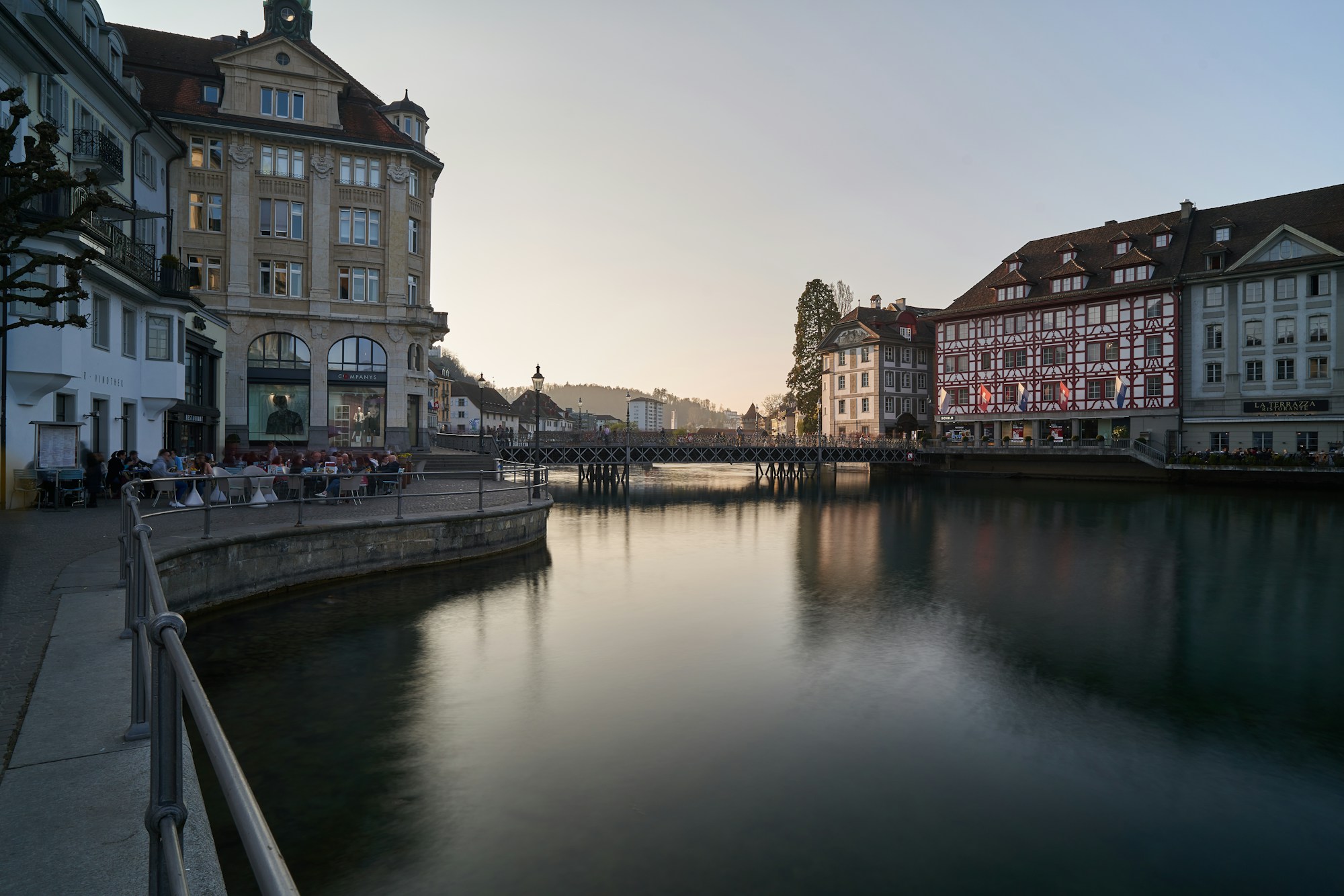
Monday unfolds in two parts. At 6 am, the Wey Tagwach wakes up the centre, like the Urknall on Thursday, but on a smaller scale: about 1,500 people were counted on the Kapellplatz in 2026, according to the daily Südostschweiz. Another source mentioned 4,000 people; that figure is disputed, so we give no firm total for this edition.
At 2 pm, the Wey parade draws the biggest crowd of the programme. Police counted about 45,000 people along the route in 2026, according to Bluewin. A traveller who followed the parade in 2023 describes a route along the Pilatusstrasse and past the station, then over the bridge to the Schwanenplatz: an isolated account. We could not confirm it against an official 2027 map, so check street closures on the day.
Highlights
- The 6 am Tagwach, a more modest wake-up than the Urknall, on the Kapellplatz.
- The Wey-Umzug is the parade most watched on TV, according to the summary of the official 2026 brochure relayed by livingin.swiss.
- The parade accepts masked participants without registration, according to the same summary of the 2026 brochure.
Güdisdienstag: the children’s parade in the afternoon, the Monstercorso in the evening
The Monstercorso, the evening highlight
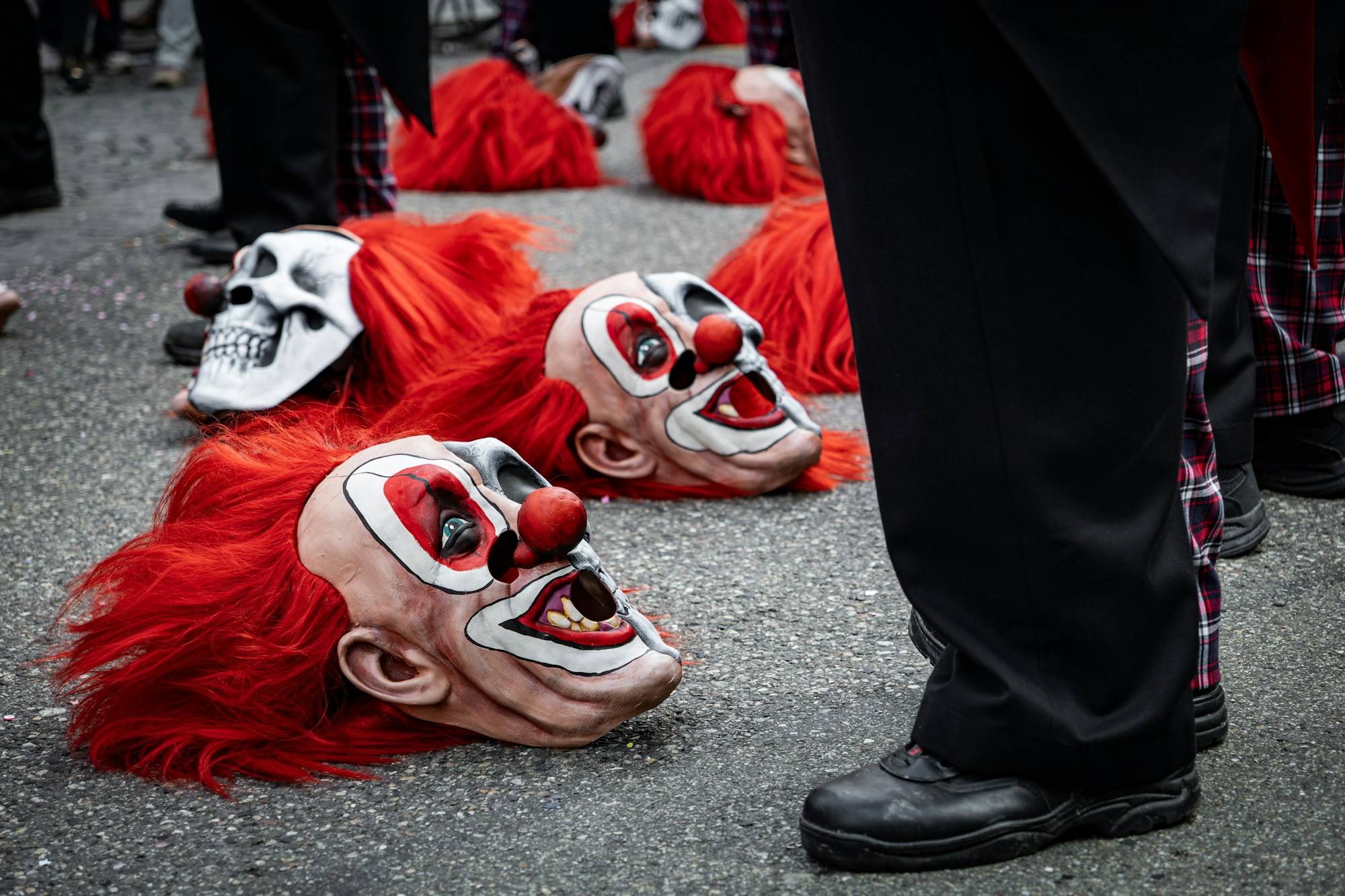
The Monstercorso is the parade of the guggenmusigen. It sets off at 7:30 pm from the Bahnhofstrasse, passes the lake basin and heads into the old town. The summary of the official 2026 brochure, relayed by livingin.swiss, says it runs until morning, which makes it a long evening rather than a simple parade after dark. In 2025, police counted about 40,000 spectators, according to Bluewin (Keystone-SDA).
Sources disagree on the number of groups: about 80 guggenmusigen according to Bluewin, around forty acts according to Blick. We therefore don’t put a figure on the parade. What is certain is the noise and the crowd that settles into the old town late in the afternoon.
Earlier in the afternoon, the children’s parade, the Chendermonschter, sets off at 2:30 pm. In 2026 it left the Mühlenplatz for the Jesuitenplatz, with more than 800 children according to Migros Famigros. The route is narrow: leave the pushchair at home.
Highlights
- A free parade, no booking needed, watched from the streets of the centre.
- Masked brass bands playing non-stop, with confetti thrown over the masks.
- The children’s parade, a more family-friendly option in the afternoon.
Guggenmusigen and Guuggerbühnen: the musical heart of the Fasnacht
Guggenmusigen are masked brass bands, organised into societies, that play in parades and on improvised stages. In Lucerne they form the musical heart of the Fasnacht. The Monstercorso is dedicated to them, but they also play all over the old town for the whole festival.
The stages are called Guuggerbühnen. The Luzern Tourismus page says they open from 3:30 pm to 1 am on Fat Thursday and on Monday, but does not list every location. The interactive map in the Vereinigte app shows the stages, mobile toilets and sanitation points. Check it on the day, as locations can change from one year to the next.
The mask is at the centre of the festival. The Maskenliebhaber-Gesellschaft, a mask society, has existed since 1819 according to SRF, and the festival’s etiquette encourages wearing a mask or costume, but not photographing a masked person without their consent. The guggenmusigen throw confetti onto the masks: protective glasses are a good investment.
Where does the Fritschi come from? A key to understanding the festival
The Fritschi is the central figure of Lucerne’s Fasnacht. His first mention dates back to 1443, according to the Historisches Lexikon der Schweiz. He is a straw figure turned urban, who enters the city during the Fritschiumzug on Fat Thursday. The clerk Renward Cysat, around 1600, linked his solemn entrance to carnival customs. The name probably comes from Fridolin, although its origin is still debated.
The Fasnacht has been banned at times. In the sixteenth century the Reformers fought it, and in Lucerne the Jesuits, present from 1574, worked with the secular authorities against it. Restrictions eased in the eighteenth century, and the parade resumed in 1803, according to the same dictionary. In the nineteenth century the festival moved from masked balls in halls to street parades, a shift that explains its current form.
A useful point for your visit: the Fritschi, accompanied by his wife the Fritschene, is present in the old town from Thursday to Tuesday, according to the programme we consulted. The festival is carried by the Zünfte (guilds) and the Lozärner Fasnachtskomitee (LFK), which organises the parades and accreditations. The costumed groups you’ll see marching are societies, not paid shows.
Fireworks, glass and fires: the rules to follow
The 2027 rules are not published yet. What follows repeats the summary of the LFK’s 2026 brochure, of which we could only read extracts (the PDF is not legible in detail), and the City’s communiqués, which we treat as the closest reference.
- Open fires are banned. Torches, candles, braziers and fires on public land are prohibited. The LFK’s 2026 brochure lists them among banned acts.
- Fireworks are banned. Firecrackers, böllers and fireworks of any kind are prohibited. Police recorded more firecrackers in 2025, and four officers were injured on Fasnacht Tuesday after a böller was thrown at a patrol, according to Lucerne police.
- Glass is discouraged, even avoided. SRF reports that you should give up glass during the Fasnacht, and the 2026 brochure devotes a section to « Kein Glas an der Fasnacht » (no glass at the Fasnacht). A campaign reduced the number of glass bottles recorded, according to Nau.ch.
- Tighter controls. Anti-vehicle barriers were reinforced in 2025, cameras broadcast live images, and a system flags the points where crowds gather, according to SRF.
- Traffic direction and closed lanes. This practice has been in place since 2024, according to SRF. The 2027 traffic plan is not published at this date: check closures on the day.
- Real-time information. A WhatsApp channel, « Sicherheit Fasnacht Stadt Luzern », announces street closures on the main days.
The City’s communiqué of February 2026 says police recorded fewer incidents linked to firecrackers and fires than the year before. A trend like that guarantees nothing for 2027: apply the rules as if they were strict.
Getting around and budgeting: trains, fares and accommodation
The Passepartout Fasnachts-Abo is the ticket that lets you travel during the Fasnacht. In 2026 it was valid from 12 to 18 February, with « freie Fahrt » (free travel) day and night within the network zones, according to the Passepartout communiqué of 26 January 2026. The 2027 offer was not published as of 27 November 2026: the SBB page we checked says it is « currently unavailable ». We therefore give no price for 2027.
BLS and Zentralbahn add trains and buses between Fat Thursday and the night of Wednesday, according to their 2026 pages. Detailed timetables are on sbb.ch and zentralbahn.ch, once searches for February 2027 open.
| Item | Price or status | Status date |
|---|---|---|
| Parades (Fritschi, Wey, children) | Free, no ticketing reported | 27 November 2026 |
| Monstercorso | Free entry, no ticketing reported | 27 November 2026 |
| Guided tour « Rüüdigi Lozärner Fasnacht » | CHF 30 adult, CHF 10 child (undated rate) | 27 November 2026 |
| Passepartout Fasnachts-Abo 2026 | Valid 12 to 18 February 2026; price not found | 27 November 2026 |
| Passepartout Fasnachts-Abo 2027 | Not published at this date | 27 November 2026 |
| Accommodation 2027 | No reliable price found | 27 November 2026 |
Source: Luzern Tourismus, SBB Freizeit and the Passepartout communiqué of 26 January 2026, checked on 27 November 2026.
The budget therefore depends mainly on accommodation and meals. Parades and the Monstercorso are free. An old City document says food stalls on public land need a permit: this point is not confirmed for 2027. Pixidia tip: try the Chnöiblätze, the Fasnacht fritters that SBB Freizeit lists among the local specialities, and the only food tradition documented in the sources we read. Booking portals show generic or inconsistent prices for 2027: we use none of them.
For accommodation, an isolated account from a 2023 traveller advises avoiding the old town and preferring the area around the station or the Pilatusstrasse, to escape the noise of the bands, which carries late. Editorial advice, not sourced: hotels fill up mostly from Thursday to Tuesday, so check availability as soon as bookings open.
How many people to expect? The published figures
Attendance figures are rare and usually come from the police or the regional press. The table below only includes figures with their year and source. A total of 70,000 people for the Wey circulates without a verified year: we don’t use it.
| Year | Highlight | Announced attendance | Source |
|---|---|---|---|
| 2024 | Fasnacht, from Fat Thursday to Ash Wednesday (city) | About 300,000 people | SRF, 13 February 2025 |
| 2024 | Fritschi Tagwach (Urknall) | 25,000 people | SRF, 13 February 2025 |
| 2025 | Monstercorso | About 40,000 people (police) | Bluewin, 4 March 2025 |
| 2026 | Fritschiumzug, in overcast weather | About 26,000 people | Bluewin |
| 2026 | Wey-Umzug, along the route | About 45,000 people (police) | Bluewin |
Source: SRF, 13 February 2025 and Bluewin (Keystone-SDA), checked on 27 November 2026.
A useful reading: the festival draws tens of thousands of people on each big day, and most of it happens in open streets. The pages we checked on 27 November 2026 mention no stands or reserved seating: that is a gap in our sources, not a guarantee. Editorial advice: arrive early to get a spot along a parade, and check the arrangements on luzerner-fasnacht.ch before you leave.
Depending on your profile: family, first time, tight budget
With family. Editorial advice, not sourced: the Tuesday afternoon children’s parade and the Monday Tagwach probably suit a family better than the Monstercorso, which runs until morning. Sources don’t compare noise levels. Bring ear protection, plan a break late in the afternoon, and agree on a meeting point in case you get separated: the crowd is dense in the centre.
First time? Pick up a map of the centre the day before. Three landmarks are enough: the Urknall by the lake, the Kapellplatz with the Fritschi fountain, and the Bahnhofstrasse, start of the Monstercorso. Pixidia tip: walk over from the station on Thursday morning, then stay in the old town, where the parades pass on foot and follow one another.
On a tight budget. Parades, Guuggerbühnen and the Monstercorso are free. Spending concentrates on transport, accommodation and food. Pixidia tip: if your budget requires it, stay outside the centre and take the train in the morning, after checking the 2027 timetables on sbb.ch.
With reduced mobility. The centre is paved and hard to get around in a wheelchair in some areas. The City flags accessible toilets in its app, and routes should be scouted the day before.
Lucerne or Basel? Two carnivals that don’t overlap
Lucerne and Basel are easy to mix up. Their dates don’t overlap: Lucerne’s Fasnacht runs from Thursday 4 to Tuesday 9 February 2027, while Basel’s Morgestraich opens on Monday 15 February 2027 at 4 am. Basel’s carnival lasts three days, from 15 to 17 February 2027, according to basel.com.
The format differs too. In Lucerne, the festival is a succession of float parades, costumed groups and guggenmusigen, over six days with three high points. Basel leans more on masks, lanterns and its dawn entry. We only read an extract of the AboutSwitzerland page, « Basel and Lucerne: when carnival becomes art », checked on 27 November 2026: it compares the two traditions, but we take no detail from it.
What other guides don’t tell you
Mainstream guides talk about the festival without always spelling out the points below, which matter for a real stay.
- Fireworks are banned, and police are watching. The summary of the LFK’s official 2026 brochure lists open fires and firecrackers among strictly banned acts, and police reported officers injured in 2025 (2026 LFK brochure, extract only, consulted 27 November 2026; livingin.swiss).
- Glass should be avoided during the Fasnacht. SRF writes that you should give it up, and the 2026 brochure devotes a whole section to it (SRF, 13 February 2025, consulted 27 November 2026).
- The Monstercorso goes on until morning. It sets off at 7:30 pm from the Bahnhofstrasse and carries on « until the Morgengrauen » (first light), according to the summary of the 2026 brochure (livingin.swiss, consulted 27 November 2026).
- The Wey Tagwach is at 6 am on Monday. Switzerland Tourism’s 2027 programme lists it at 6 am, in addition to Thursday’s Urknall (Switzerland Tourism, consulted 27 November 2026).
- The crowd size is rarely given. SRF mentions about 300,000 people in town in 2024, and police about 45,000 at the 2026 Wey-Umzug (Bluewin, consulted 27 November 2026). A 2023 visitor advises against sleeping in the old town: an isolated account, to be cross-checked with other opinions (Rick Steves forum).
Practical information for your stay
Flat, waterproof shoes, layers, gloves for the early mornings. The centre is paved and you’ll be on your feet all day.
The City’s app shows public toilets, their opening hours and water points (map.stadtluzern.ch/wc-app). Restaurants displaying the « Netten Toiletten » sticker open their toilets for free, without replacing public toilets.
Lucerne station is the main arrival point. Plan your return after midnight if you go to the Monstercorso, and check timetables on sbb.ch before you set off.
Editorial advice: hotels in the centre fill up mostly from Thursday to Tuesday. Check availability as soon as 2027 bookings open, and don’t rely on the generic prices shown by booking portals.
Frequently asked questions
When is the Lucerne Fasnacht in 2027?
Lucerne’s Fasnacht 2027 runs from Thursday 4 to Tuesday 9 February 2027, from Fat Thursday to Tuesday evening. The first high point is the Urknall at 5 am on Thursday 4 February; the last is the Monstercorso at 7:30 pm on Tuesday 9 February. Saturday 6 February has no described programme, and sources say the nights get quieter from Ash Wednesday, 10 February. Dates confirmed by Switzerland Tourism.
What time is the Urknall in Lucerne?
The Urknall starts at 5 am on Fat Thursday, Thursday 4 February 2027. Luzern Tourismus suggests being on site around 4 am, as the crowd gathers by the lake before the cannon shot. The exact meeting point is still to be confirmed on the organiser’s site: sources mention the lakeside and the old town, with the Kapellplatz as a frequent landmark. It’s cold at dawn in February, so dress warmly.
Is the Monstercorso free?
Yes. The sources we consulted list no ticketing for the Monstercorso, which is free entry. It sets off at 7:30 pm on Tuesday 9 February 2027 from the Bahnhofstrasse, passes the lake basin and reaches the old town. According to police, about 40,000 people attended in 2025, and the summary of the official 2026 brochure says the parade continues until morning.
Where can you see the Fritschiumzug?
The Fritschi parade sets off on Fat Thursday at 2 pm according to Switzerland Tourism. The 2026 route, as described in the official brochure, ran from the Hofkirche to the Hirschmattstrasse; that brochure gave a 1:45 pm start, against 2 pm according to Luzern Tourismus. The 2027 route was not found in the pages we checked. Plan for 2 pm, arrive around 1:30 pm, and check luzerner-fasnacht.ch.
Can you take the train during the Lucerne Fasnacht?
Yes. In 2026 the Passepartout Fasnachts-Abo allowed travel day and night from 12 to 18 February, and extra trains and buses ran between Fat Thursday and Wednesday. The 2027 offer was not published as of 27 November 2026, so check sbb.ch before you book. Floats can block access to some trains, according to Zentralbahn, so leave a margin.
Is it forbidden to bring glass or firecrackers?
Yes. Open fires, torches, candles and braziers are banned, as is all pyrotechnics, firecrackers and böllers included, according to the summary of the official 2026 brochure. Glass should be avoided: SRF reports you should give it up during the Fasnacht. In 2025 police recorded more firecrackers and four officers were injured on Fasnacht Tuesday; in 2026 the City announced fewer incidents involving pyrotechnics.
Is the Lucerne Fasnacht suitable for children?
Yes, with precautions. The children’s parade, the Chendermonschter, sets off on Tuesday 9 February at 2:30 pm from the Mühlenplatz towards the Jesuitenplatz, with more than 800 children according to Migros Famigros for 2026. The bands play for a long time in the old town, and the Monstercorso runs late into the evening. Pixidia tip: ear protection, a break in the late afternoon and washable clothes make the day easier.
Lucerne or Basel: which Fasnacht should you choose?
The two don’t overlap. Lucerne is a festival of parades, floats and guggenmusigen, from 4 to 9 February 2027, with high points on Thursday, Monday and Tuesday. Basel opens on Monday 15 February 2027 at 4 am with the Morgestraich, a carnival more centred on masks and lanterns. Pixidia tip: for a noisy street festival that starts at dawn, choose Lucerne; for the tradition of masks and lanterns, choose Basel.
Sources
- Switzerland Tourism, Lucerne Carnival : 2027 calendar, parade times, official period.
- Luzern Tourismus, Le carnaval endiablé de Lucerne : festival overview, Guuggerbühnen, stage hours.
- Bluewin (Keystone-SDA), Monstercorso of the Guuggenmusigen closes Lucerne carnival : 2025 attendance per police, Monstercorso route.
- Bluewin, Lucerne Wey parade attracts 45,000 jester fans : 2026 attendance per police.
- SRF, Sicherheit an der Fasnacht schränkt Narrenfreiheit nicht ein : safety, glass, controls, 2024 attendance.
- livingin.swiss, Your guide to Fasnacht 2026 : summary of the official 2026 brochure, times and programme. Read as a summary, not as official text.
- LFK, Fasnacht brochure 2026 (PDF) : extracts only, the PDF could not be read in full.
- Historisches Lexikon der Schweiz, Bruder Fritschi : origin and first mention of the Fritschi.
- SBB Freizeit, Kulinarik und Volksfeste: Luzerner Fasnacht : local food specialities, Chnöiblätze.
- Passepartout communiqué, Fasnachts-Abo 2026 : validity and conditions of the 2026 ticket.
- Migros Famigros, Fasnacht Kinderumzug Luzern : children’s parade route and attendance.
- AboutSwitzerland, Basel and Lucerne: when carnival becomes art : comparison of the Lucerne and Basel carnivals, extract only.
- Rick Steves Community Forum, Luzern hotel for Fasnacht : traveller accounts (2023), to be read as isolated opinions.
Sources checked on 27 November 2026.

Plan your trip with Pixidia
Pixidia learns how you travel and helps you build a trip that truly fits you and everyone coming along.
Open the planner