

On August 12, 2026, the Moon will completely block the Sun for over two minutes. The lunar shadow will cross the Arctic, Greenland, Iceland, and northern Spain — delivering a rare celestial spectacle on European soil. The last total eclipse visible from the Iberian Peninsula dates back to 1912. In Iceland, you would have to wait until 2196 to see another one.
Whether you are a seasoned eclipse chaser or a curious traveler, this guide reveals the best viewing spots, weather strategies, photography tips, and practical advice to experience this historic event.
Why this eclipse is exceptional
The eclipse of August 12, 2026 is a total solar eclipse whose path of totality stretches from eastern Siberia to the Balearic Islands, passing through Greenland, Iceland, and northern Spain. According to National Eclipse, the maximum duration of totality will reach 2 minutes and 18 seconds off the coast of Iceland.
A crucial detail distinguishes the two main destinations. In Iceland, the eclipse will occur in the mid-afternoon, with the Sun high in the sky (~25°) and totalities exceeding two minutes on land. In Spain, totality will happen in the evening, with the Sun very low on the horizon (between 2° and 12° depending on location), creating a visually unique spectacle but requiring a perfectly clear western horizon. According to the Cite de l’Espace, totality will last less than two minutes at the center of the path in continental Europe.
As an added bonus, the eclipse coincides with the peak of the Perseid meteor shower, offering what Solar Eclipse Spain calls a rare double astronomical spectacle.
Iceland: 4 exceptional viewing spots
Iceland offers the longest totalities on land for this eclipse. The path of totality crosses the Westfjords, the Snaefellsnes peninsula, Reykjavik, and the Reykjanes peninsula. According to Visit Reykjanes, totality makes landfall at Straumnes (Hornstrandir) before crossing the western part of the country.
1. Latrabjarg, Westfjords — The ultimate land-based spot
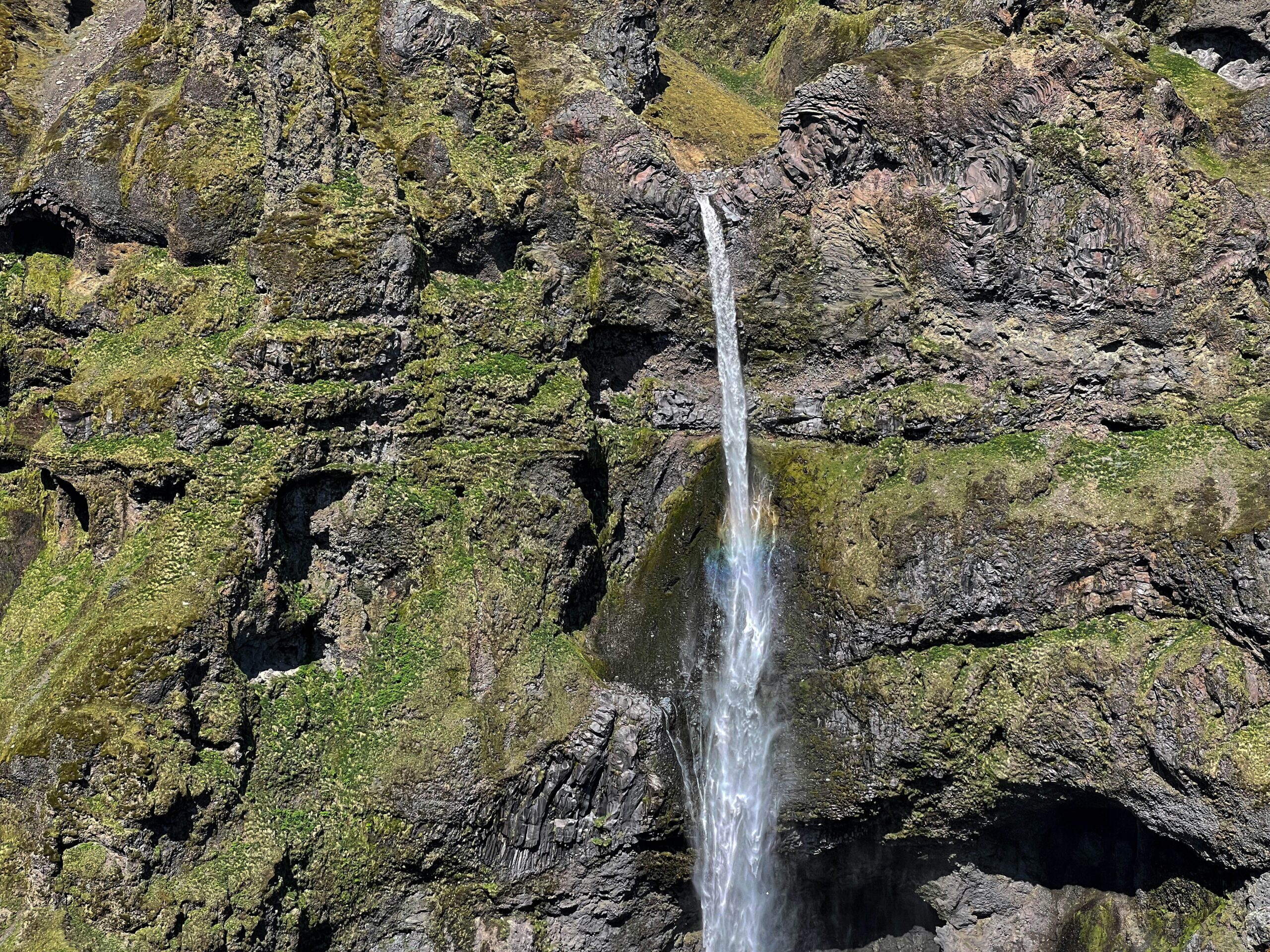
Latrabjarg — Westfjords Cliffs
Latrabjarg holds the record: it is the land-based point with the longest totality in the world for this eclipse. According to RE.is, the 440-meter cliffs stretch for 14 kilometers, offering numerous vantage points with a perfectly clear ocean horizon.
The location is also a world-renowned bird sanctuary: Eclipse2026.is notes that the cliffs are home to millions of puffins, gannets, and guillemots. Be aware, however, that access restrictions are being considered on the day, with shuttle buses from Patreksfjordur.
Highlights
- Longest totality on land (~2 min 14 s)
- Spectacular 440 m cliffs facing the Atlantic
- Westernmost point of Iceland
- Puffin colony in August
2. Snaefellsnes Peninsula — Iceland in miniature
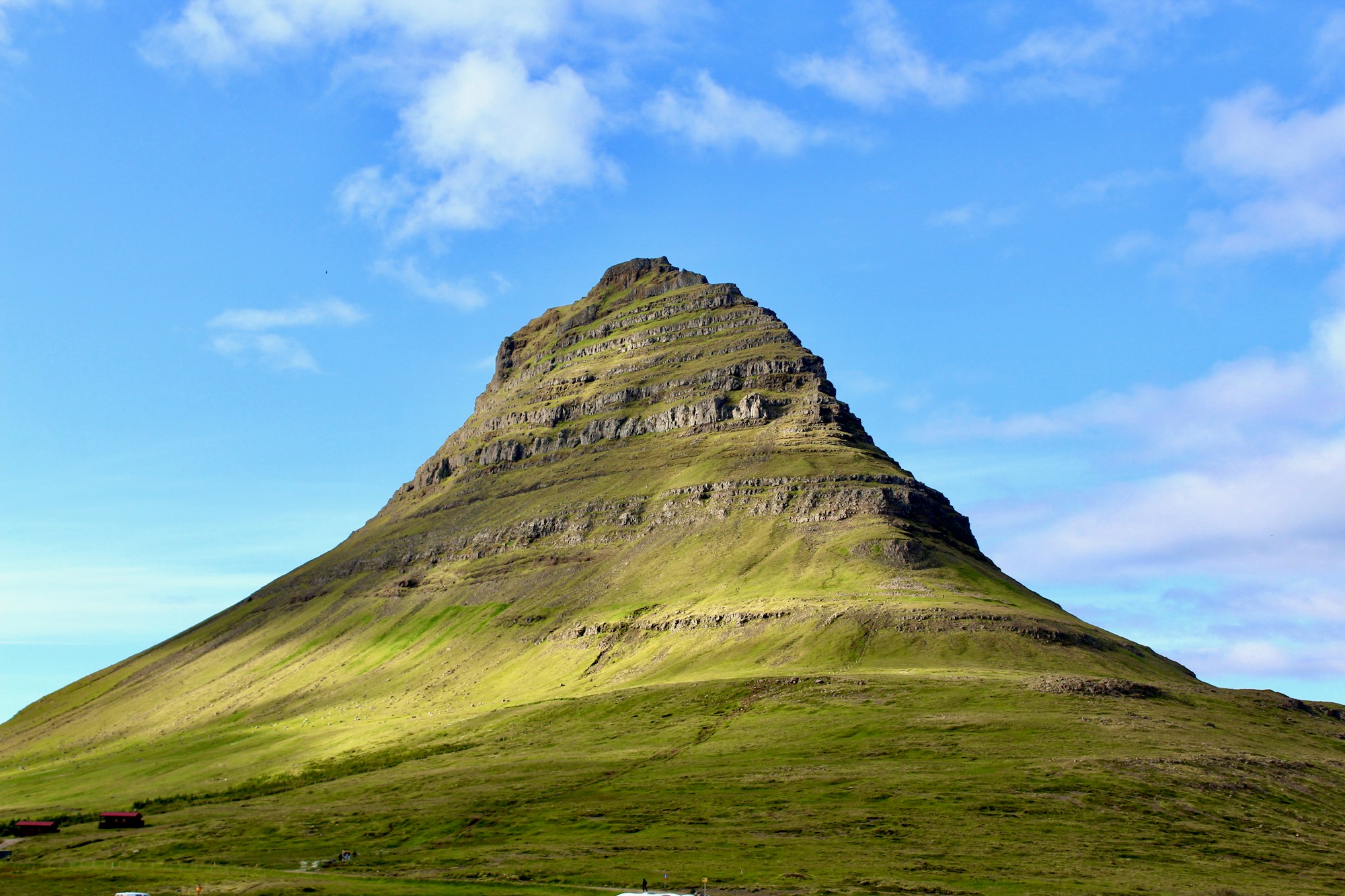
Snaefellsnes — Glacier, mountain, and totality
The Snaefellsnes peninsula is the ideal compromise between totality duration and accessibility. According to Eclipse2026.is, the lunar shadow reaches Snaefellsnes at 17:45:46 UTC, with a totality of 2 min 07 s from Hellissandur and 2 min 05 s from Olafsvík.
The choice of spots is exceptional: Eclipse2026.is recommends the Svodufoss waterfall for a spectacular foreground (totality: 2 min 06 s), while Grundarfjordur allows you to observe the eclipse with the famous Mount Kirkjufell in the background. The south coast, with Arnarstapi and Budir, offers views featuring the Snaefellsjokull glacier.
Highlights
- Over 2 minutes of totality
- Iconic scenery: Kirkjufell, Snaefellsjokull, Djupalonssandur
- Accessible by car from Reykjavik (2h30)
- Variety of photo foregrounds (lava, waterfalls, black beaches)
3. Reykjanes Peninsula — Eclipse meets geothermal
Reykjanes & Blue Lagoon
The Blue Lagoon is already offering eclipse packages to experience totality from the geothermal spa. At Keflavik Airport, totality lasts 1 min 38 s; at the Blue Lagoon, 1 min 36 s according to Eclipse2026.is.
The main advantage of Reykjanes: simplified logistics. Close to the airport, Reykjavik, and multiple accommodation options. The Reykjanesta lighthouse, noted as the last Icelandic point touched by the shadow, offers 1 min 47 s of totality according to Visit Reykjanes.
A unique bonus: the peninsula is currently the site of recurring volcanic eruptions. According to Eclipse2026.is, it is perfectly safe to visit even if an eruption is underway — and the eclipse could coincide with visible volcanic activity.
Highlights
- Watch from the Blue Lagoon (eclipse packages available)
- Close to the airport and Reykjavik
- Chance to witness a simultaneous volcanic eruption
- Perseids + possible northern lights the same evening
4. Raudasandur — The red beach at the edge of the world
Raudasandur — Westfjords
Raudasandur is a smart alternative to Latrabjarg: same Westfjords area, totality exceeding 2 minutes, but with 10 kilometers of red sand beach offering ample space. According to Eclipse2026.is, the reddish tones shift with the light, promising a fascinating spectacle as brightness fades during totality.
You will also find Saurbaejarkirkja, a black church with a red roof, complete with parking — a surreal photographic foreground during the eclipse. More accessible than Hornstrandir, far less mainstream than the Golden Circle, Raudasandur is a genuinely off-the-beaten-path choice.
Highlights
- Over 2 minutes of totality
- Unique red sand beach in Iceland
- Photogenic black church (Saurbaejarkirkja)
- Fewer crowds than Latrabjarg
Spain: 6 strategic destinations
In Spain, the path of totality crosses the country from west to east: from A Coruna to Palma de Mallorca, passing through Oviedo, Leon, Burgos, Bilbao, Zaragoza, and Valencia. The Spanish IGN provides official data by municipality. The main challenge: a very low Sun on the horizon (between 2° and 12°), which requires finding an absolutely clear western horizon.
5. Zaragoza and the Ebro Valley — The winning weather bet
Zaragoza — Aragon
For observers who want to maximize their chances of success, Zaragoza is the rational choice. According to Solar Eclipse Spain, the Ebro alluvial plain between Zaragoza and Huesca has cloud cover often below 30%, among the lowest along the entire path. The city enjoyed clear skies on August 12 in 18 out of 21 years between 2001 and 2021.
Zaragoza is also a stunning city, birthplace of Goya, featuring the spectacular Basilica del Pilar. According to Expat Explore, it is a must-visit for art and history lovers — far less crowded than Madrid or Barcelona.
Highlights
- Best weather probability along the entire path (~70-75%)
- Reasonable budget (80-150 €/day)
- Outstanding cultural heritage (Basilica del Pilar, Goya)
- Flat terrain ideal for viewing
6. A Coruna, Galicia — The Atlantic eclipse
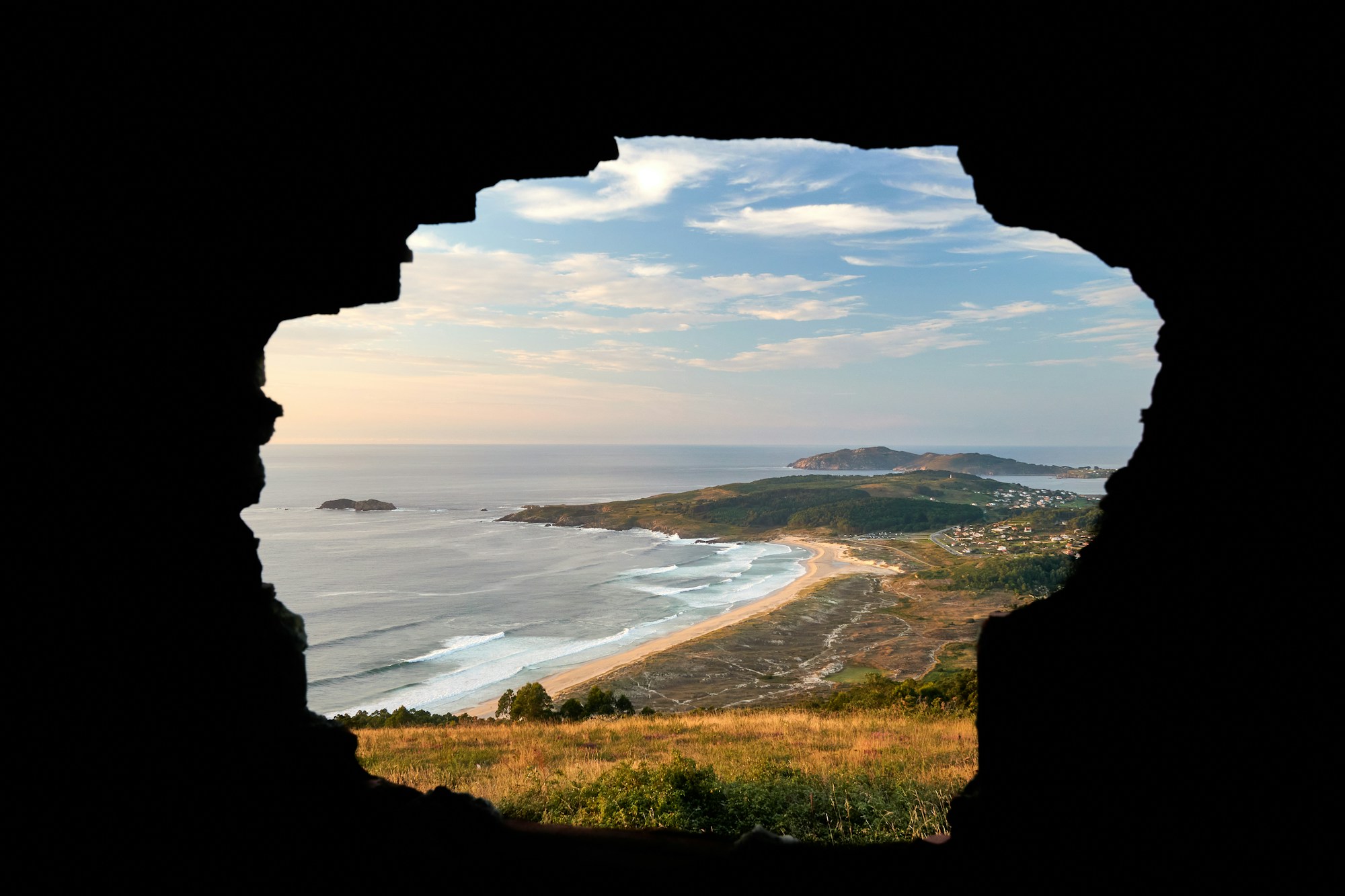
A Coruna & Costa da Morte — Galicia
A Coruna is one of the first points in Spain reached by the lunar shadow. According to Idealista, totality will occur around 20:27, lasting approximately 74 seconds.
The iconic Tower of Hercules, a 1st-century Roman lighthouse and UNESCO World Heritage Site, provides an exceptional photographic setting. Further south, Cabo Tourinan (Muxia) is a strategic choice according to the Spanish IGN: an Atlantic headland with a perfectly clear sea horizon to the west. The Mirador Cabo Prior (Ferrol) combines cliffs, a lighthouse, and rocky textures — a spot with high photographic value, less crowded than downtown.
Highlights
- Clear Atlantic horizon to the west
- Tower of Hercules (UNESCO heritage) as foreground
- Galician gastronomy (exceptional seafood)
- Costa da Morte atmosphere — authentic and spectacular
7. Burgos and Leon — The Camino de Santiago eclipse
Burgos, Leon & the Camino Frances
The eclipse literally follows the legendary Camino de Santiago. According to CaminoWays, the Camino Frances is the most rewarding route for experiencing this event, as major stops like Leon, Burgos, and Astorga fall directly under the Moon’s shadow.
Burgos offers wide viewing angles from the Parque del Castillo and the Mirador. The Spanish IGN reports approximately 104 seconds of totality in Burgos, with the Sun at ~8° — among the best figures on the Spanish path. According to WAW Travel, inland regions like Leon or Burgos generally benefit from drier and clearer skies than the coast.
Highlights
- 104 seconds of totality in Burgos
- Combine a centuries-old pilgrimage with an eclipse
- Unbeatable budget (60-120 €/day, Camino accommodation)
- Spectacular Gothic cathedrals
8. Asturias Coast — The eclipse between sea and mountains
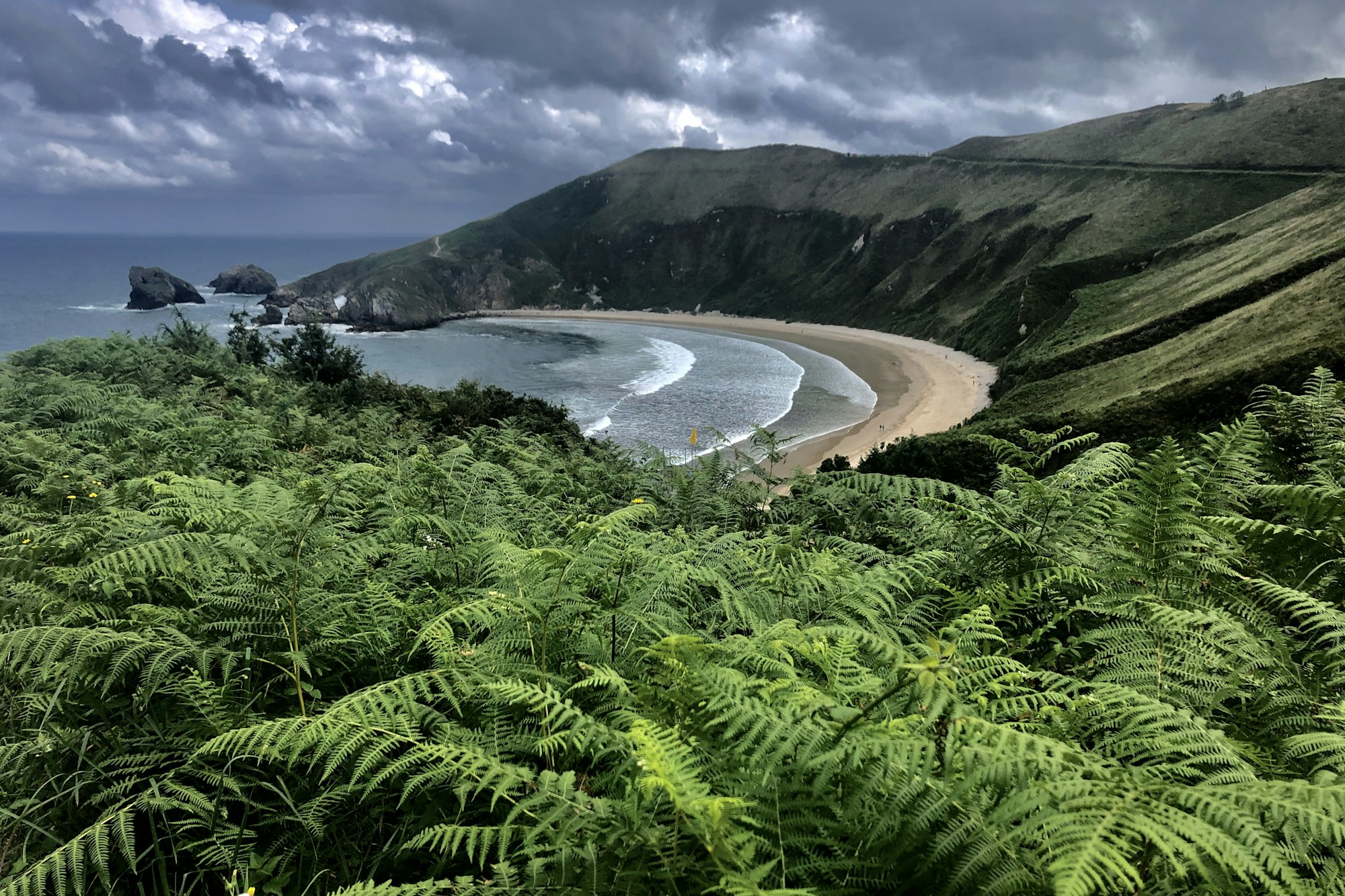
Cabo Penas, Gijon & Oviedo
Gijon is listed among the notable cities in the path of totality according to Space.com. Cabo Penas and its surroundings offer a straightforward viewing strategy: clear views to the west/northwest over the sea, minimizing terrain that might block the low Sun.
Asturias combines an authentic northern coast, exceptional gastronomy (fabada, cabrales cheese, cider), and proximity to the Picos de Europa for extending your trip. According to Budget Your Trip, the average daily budget in Gijon is approximately 142 €/day and 134 €/day in Oviedo.
Highlights
- Authentic northern coast, less touristy than the Mediterranean
- Renowned Asturian gastronomy
- Can be combined with the Picos de Europa
- Clear sea horizon from Cabo Penas
9. Mallorca — The Mediterranean sunset eclipse
Serra de Tramuntana — West coast of Mallorca
Mallorca is the last Spanish sector reached by the shadow. The Spanish IGN indicates a maximum around 20:32 in Palma, with the Sun at only ~2° above the horizon. This is an extreme case: clear horizon or nothing.
But what a horizon! According to Sky & Telescope, few eclipse chasers have experienced the thrill of seeing totality with the Sun so low that its disc is distorted into an oval by atmospheric refraction. Meteorologist Jay Anderson estimates approximately 75% chances of success on the Balearic coasts, thanks to lower cloud cover on the western side.
Sant Elm, facing the uninhabited island of Sa Dragonera, is according to Expat Explore an idyllic spot to watch totality sink into the Mediterranean.
Highlights
- 75% chance of clear skies
- Eclipse skimming the Mediterranean — unique aesthetic
- Sa Dragonera island as foreground
- Beach vacation and eclipse in a single trip
10. Palencia and Soria — The secrets of Castile
Palencia, Soria & Santo Domingo de Silos
Palencia is a hidden gem with its Romanesque churches, medieval walls, and flat terrain ideal for viewing. According to Expat Explore, it is a dream for serious observers thanks to its panoramic views and clear summer skies. The Cerro del Otero, a hill overlooking the city topped by the Cristo del Otero, offers a perfectly clear western horizon. Unbeatable budget: 50-100 €/day.
Soria offers one of the best trade-offs in all of Spain. With 73% sunshine in August according to Solar Eclipse Spain and 1 min 42 s of totality, it is a reliable and culturally rich choice. The agency Chasseurs d’Eclipses offers a 3-night stay at 810 €/person including the abbey of Santo Domingo de Silos, a renowned center of Gregorian chant.
The Castle of Gormaz, the longest Caliphate fortress in Europe (1 km of walls), offers a strategic elevated vantage point — and virtually no one is targeting it for the eclipse.
Highlights
- Best value for money along the entire path
- 73% sunshine in Soria in August
- No international crowds
- Exceptional Romanesque and Caliphate heritage
Destination comparison table
| Destination | Totality duration | Clear sky | Budget/day | Sun altitude |
|---|---|---|---|---|
| Latrabjarg 🇮🇸 | 2 min 14 s | ~30% | 200-350 € | ~25° |
| Snaefellsnes 🇮🇸 | 2 min 07 s | ~30% | 180-300 € | ~25° |
| Raudasandur 🇮🇸 | 2 min 05 s | ~30% | 150-250 € | ~25° |
| Reykjanes 🇮🇸 | 1 min 38 s | ~30% | 250-500 € | ~24° |
| Zaragoza 🇪🇸 | ~1 min 30 s | ~70-75% | 80-150 € | ~8° |
| Burgos 🇪🇸 | ~1 min 44 s | ~55-65% | 60-120 € | ~10° |
| Soria 🇪🇸 | ~1 min 42 s | ~73% | 70-130 € | ~8° |
| Palencia 🇪🇸 | ~1 min 35 s | ~65-70% | 50-100 € | ~9° |
| Mallorca 🇪🇸 | ~1 min 34 s | ~75% | 150-350 € | ~2-4° |
| A Coruna 🇪🇸 | ~1 min 14 s | ~40% | 90-160 € | ~12° |
Photography equipment and technical tips
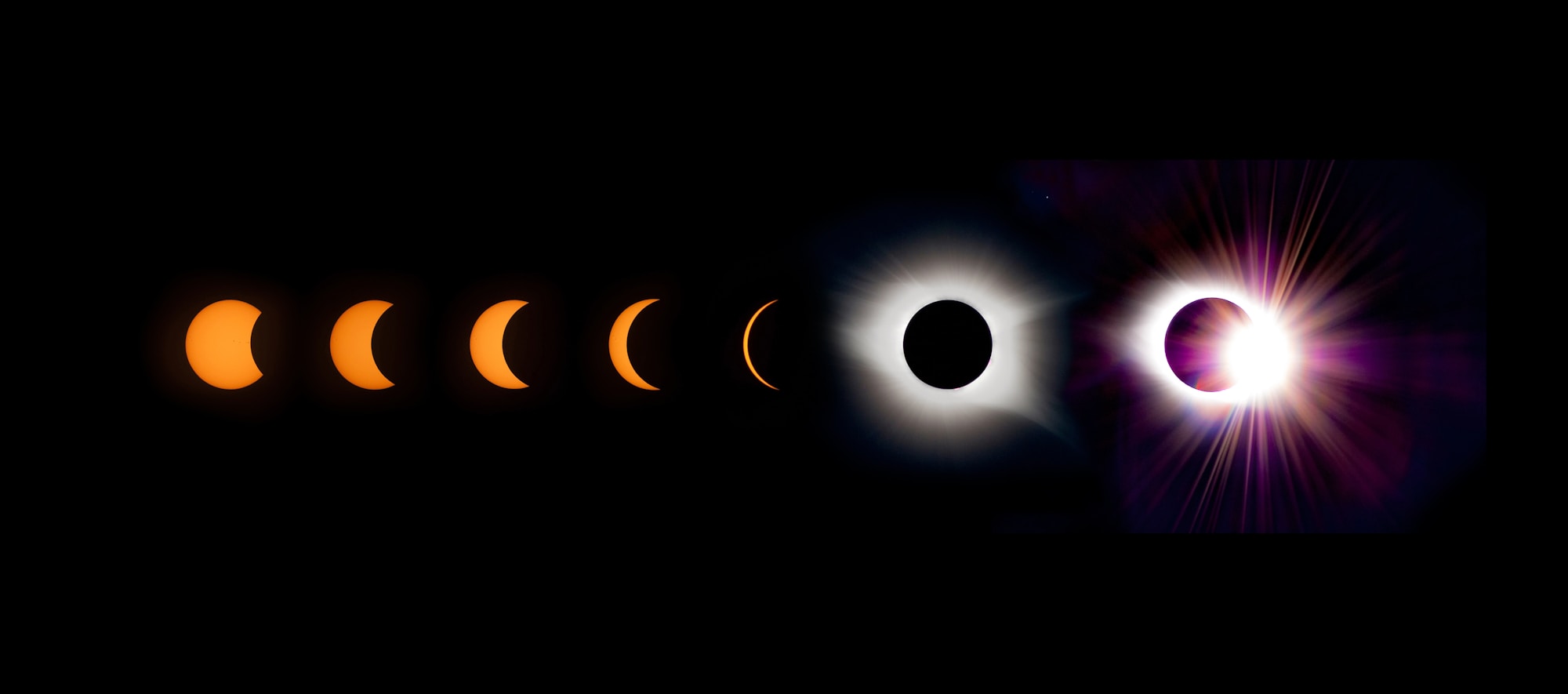
Essential photo kit
Solar filter — NON-NEGOTIABLE. According to PhotoPills, the filter must block visible, infrared, and ultraviolet light. Never use a cheap or improvised filter.
According to Eclipse2026.is, a small refractor telescope (60-110 mm) with up to 800 mm focal length is perfect for wide-field views of the corona. For Baily’s Beads and prominences, a focal length of 1000 mm or more is recommended.
Recommended settings
- Sturdy tripod with hook/weighted bag (wind in Iceland and on Spanish capes)
- Two framings: wide-angle landscape + telephoto for Sun/corona detail
- Aperture f/8 to f/16, shutter speeds from 1/1000 to 1/4 s (NASA)
- Manual focus — autofocus is unreliable in these conditions
- Timer or remote shutter to trigger without shaking the camera
Sequence during the eclipse
- Partial phases: solar filter ON on the lens
- ~15 seconds before totality: remove the filter to capture the diamond ring effect
- During totality: bracket extensively (corona brightness varies greatly according to Canon)
- End of totality: replace the filter as soon as the « diamond ring » reappears
Eye safety: the golden rules
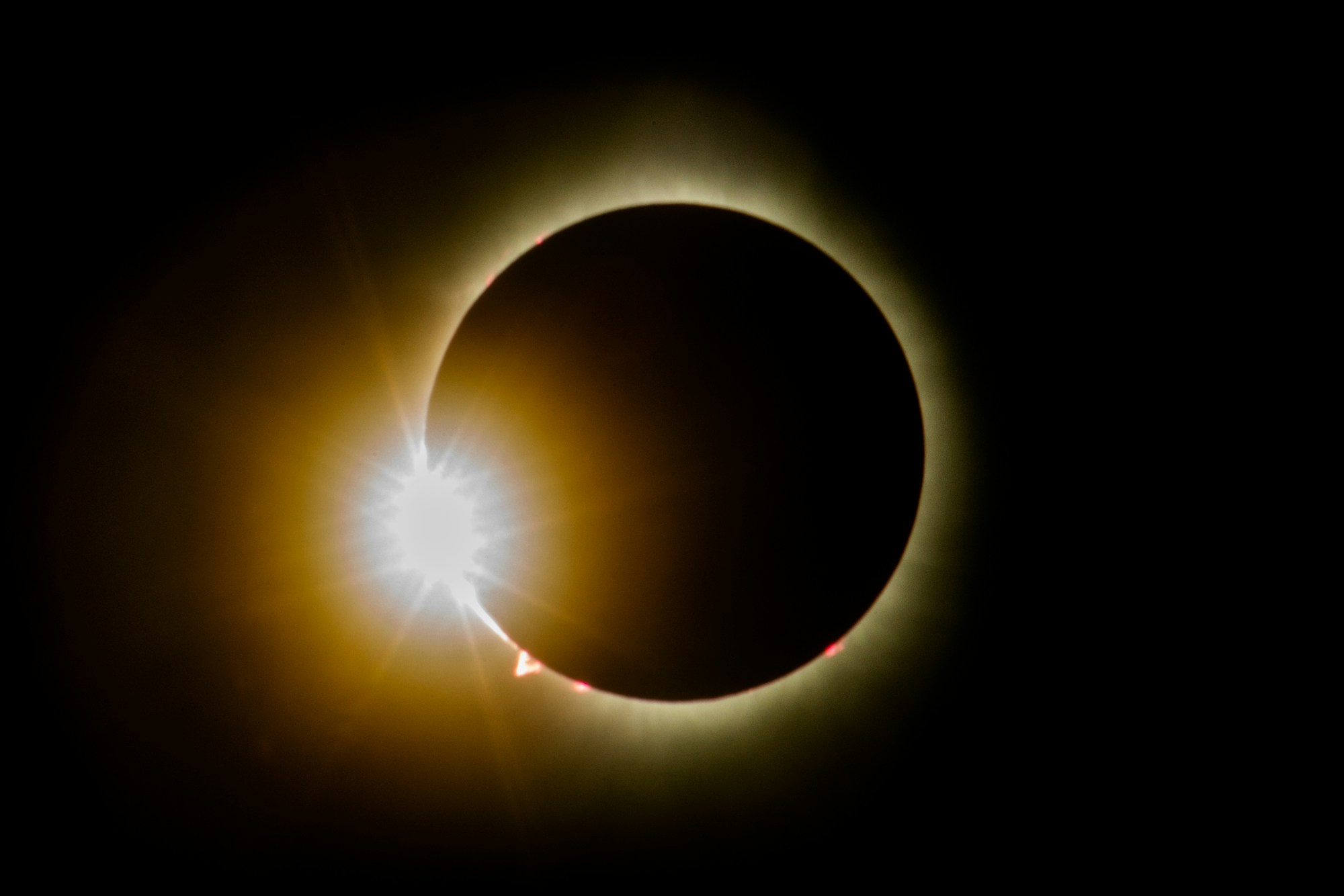
Protecting your eyes — no compromise
Looking directly at the Sun is dangerous except during the brief phase of totality, when the Moon completely blocks the Sun’s bright face, according to the National Solar Observatory.
- Use ISO 12312-2 certified eclipse glasses (not regular sunglasses)
- Beware of counterfeits: the AAS warns against fake filters
- Never look through a lens, binoculars, or telescope without a proper solar filter (NASA)
- During totality only: naked-eye viewing is safe
- Immediately put protection back on as soon as the Sun reappears
Weather strategy: Iceland vs Spain
The decisive factor
Weather is the decisive factor for a successful eclipse. Data from weather expert Jay Anderson (Eclipsophile) speaks for itself:
Iceland: the bold gamble
The Sun shines during 32% of daylight hours in August in Reykjavik, corresponding to an average cloud cover of 71%. In short: approximately 30% chance of clear skies. Maximum temperatures around 15°C, lows in single digits. If Iceland is your choice, National Eclipse recommends joining an organized excursion whose guides understand the country’s complex weather patterns.
Spain: the statistical advantage
According to Eclipse262728, the eclipse « fortunately arrives at the end of its path in a sunny and promising Iberian climate. » Satellite data shows average daytime cloud cover of only 35% across most of Spain. However, watch out for calimas — southerly winds carrying Saharan dust that can tint the sky orange and reduce visibility.
Your tactical advantages
- Mobility: rent a car so you can relocate 50-100 km on the day
- Lead time: arrive 2-3 days early to scout and monitor weather
- Multiple plans: have 2-3 scouted spots at different altitudes or distances
- H-6 forecast: make your final spot decision on the morning of August 12
Accommodation: getting ahead of the price surge
The 2024 eclipse in the United States caused hotel prices to multiply by 3 to 5 within the path of totality. Expect a similar trend in 2026. Here are the budget benchmarks:
| Destination | Budget/day/person | Accommodation type |
|---|---|---|
| Iceland (Westfjords) | 200-350 € | Guesthouse, camping |
| Iceland (Reykjavik/Reykjanes) | 250-500 € | Hotels, Blue Lagoon packages |
| Spain (inland Castile) | 50-130 € | Casas rurales, Camino hostels |
| Spain (coast/Mallorca) | 150-350 € | Seaside hotels |
Frequently asked questions about the 2026 eclipse
Iceland or Spain: which should you choose for the 2026 eclipse?
If your priority is to maximize your chances of seeing the corona, Spain wins with 65-75% chances of clear skies (versus ~30% in Iceland). On the other hand, Iceland offers a longer totality (up to 2 min 14 s on land vs ~1 min 44 s in Spain) and a much higher Sun (~25° versus 2-12°). According to Icelandia, Iceland is near the point of maximum eclipse, with 2 min 18 s off the coast of Breidafjordur.
What time will totality occur on August 12, 2026?
In Iceland, totality will cross the country around 17:43-17:50 UTC (local time). In Spain, totality arrives in the evening: A Coruna around 20:27, Burgos around 20:29, Zaragoza around 20:31, and Palma around 20:32 (local time). According to the Spanish IGN, times vary by a few minutes depending on your exact position within the path.
Do you need special glasses to watch the eclipse?
Yes, absolutely. Use ISO 12312-2 certified glasses. Regular sunglasses, X-rays, or homemade filters are not safe. The American Astronomical Society warns against counterfeits. Naked-eye viewing is only safe during the phase of totality — immediately put your glasses back on as soon as the Sun reappears.
How can I check if my spot is within the path of totality?
Use the official interactive maps: the Spanish IGN provides tables by municipality, NASA provides path coordinates, and TimeAndDate offers interactive maps with totality duration by location. Xavier Jubier also provides a detailed Google map.
What budget should I plan for an eclipse trip in 2026?
For Spain, a one-week trip will cost between 800 and 2,000 € per person (flights + accommodation + meals + equipment). For Iceland, expect 1,500 to 4,000 € according to Budget Your Trip. The « Monastery » organized stay by Chasseurs d’Eclipses offers 3 nights at 810 €/person in Soria.
What are the pitfalls to avoid in Spain for this eclipse?
The main pitfall is choosing a spot with an obstructed western horizon. With the Sun between 2° and 12° above the horizon, the slightest hill, row of trees, or building can block your view of totality. The Spanish IGN insists: do a mandatory scouting the day before at the same time. Calimas (Saharan dust) are a secondary risk according to Eclipsophile.
What happens if it is cloudy on eclipse day?
Even if it is cloudy, you will experience total darkness as day turns to night — it is a striking experience even without seeing the corona. According to Adventures.is, mobility is your best ally: plan for a rental car and 2-3 alternative spots. In Spain, 50 to 100 km is often enough to find a clear patch.
Will there be another total eclipse in Europe soon?
Yes! The next total eclipse visible in Spain will occur on August 2, 2027, this time crossing the south of the country. According to the Cite de l’Espace, it will be spectacular with a maximum duration of 6 minutes and 29 seconds — one of the longest of the 21st century. For Iceland, however, the next one is not expected until 2196.
Sources
- IGN Spain — Total Solar Eclipse of August 12, 2026 — Official data by municipality
- Eclipse2026.is — Where to see the eclipse — Guide to Icelandic spots
- Eclipse2026.is — Westfjords guide — Westfjords details
- Eclipsophile (Jay Anderson) — TSE 2026 — Expert weather analysis
- Visit Reykjanes — Solar Eclipse 2026 — Reykjanes guide
- RE.is — Best places Iceland Eclipse 2026 — Top spots Iceland
- Blue Lagoon — Total Eclipse 2026 — Eclipse packages
- Solar Eclipse Spain — Complete Guide — Detailed weather statistics
- Eclipse262728 — Meteorology — Spain climate data
- Sky & Telescope — Mallorca 2026 — Mallorca guide
- CaminoWays — Eclipse Camino 2026 — Eclipse and pilgrimage
- WAW Travel — Eclipse Camino 2026 — Camino guide
- Chasseurs d’Eclipses — Spain 2026 Trip — Organized stays
- Expat Explore — Solar Eclipse Spain 2026 — Spain destinations
- Idealista — Spain Solar Eclipse 2026 — Times and cities
- National Eclipse — 2026 Maps — Path mapping
- National Eclipse — 2026 Overview — Overview
- Cite de l’Espace — Eclipses 2026 and 2027 — Scientific context
- Wikipedia — Solar eclipse August 12, 2026 — General data
- Spain.info — Total Solar Eclipses in Spain — Official Spain guide
- NASA — Eclipse Safety — Eye safety
- AAS — Counterfeit Eclipse Glasses Warning — Counterfeits
- NASA — Five Tips for Photographing an Eclipse — Photo tips
- Eclipse2026.is — Photographing the Eclipse — Iceland photo guide
- PhotoPills — Solar Eclipse Photography Guide — Complete photo guide
- Canon — Photographic Exposure of a Solar Eclipse — Exposure and bracketing
- Budget Your Trip — Iceland — Iceland costs
- Budget Your Trip — Spain — Spain costs
- TimeAndDate — Solar Eclipse August 12, 2026 — Interactive maps
- NASA GSFC — Eclipse Path — Official path
- Xavier Jubier — Interactive Google Map — Detailed map
Research conducted on February 7, 2026
Plan your eclipse trip now
The eclipse of August 12, 2026 will be a historic moment for Europe. Whether you choose the Icelandic cliffs or the Castilian plains, the key to success is planning ahead. Book your accommodation, scout your spots, prepare your gear — and let the celestial magic do the rest.
Plan your itinerary on Pixidia