
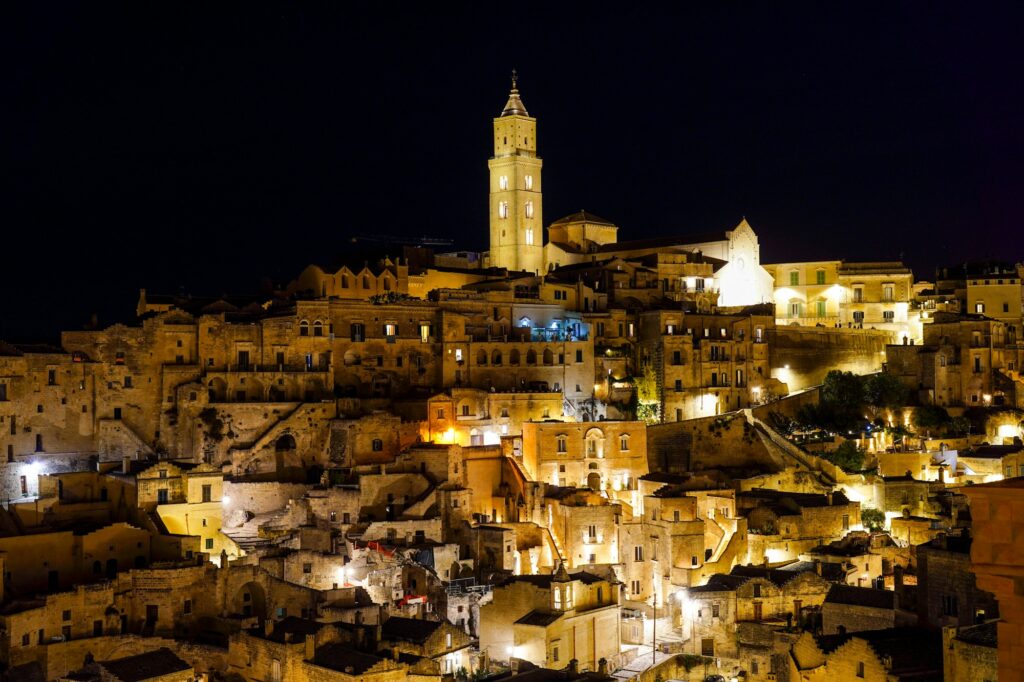
From Matera to Puglia, in the footsteps of Agent 007. In 2021, No Time to Die revealed Southern Italy’s spectacular scenery to the world: Matera’s cave-dwelling alleyways, Gravina in Puglia’s vertiginous bridge, and the canyons of Basilicata. But beyond the silver screen, this region offers an exceptional road trip through whitewashed villages, UNESCO trulli, Adriatic cliffs, and authentic cuisine. In 2026, Puglia surpassed 20 million tourist overnight stays, cementing its status as a must-visit destination. Here is our complete 8 to 10-day itinerary, from ancient stone to turquoise sea.
1. Matera — In the Footsteps of James Bond
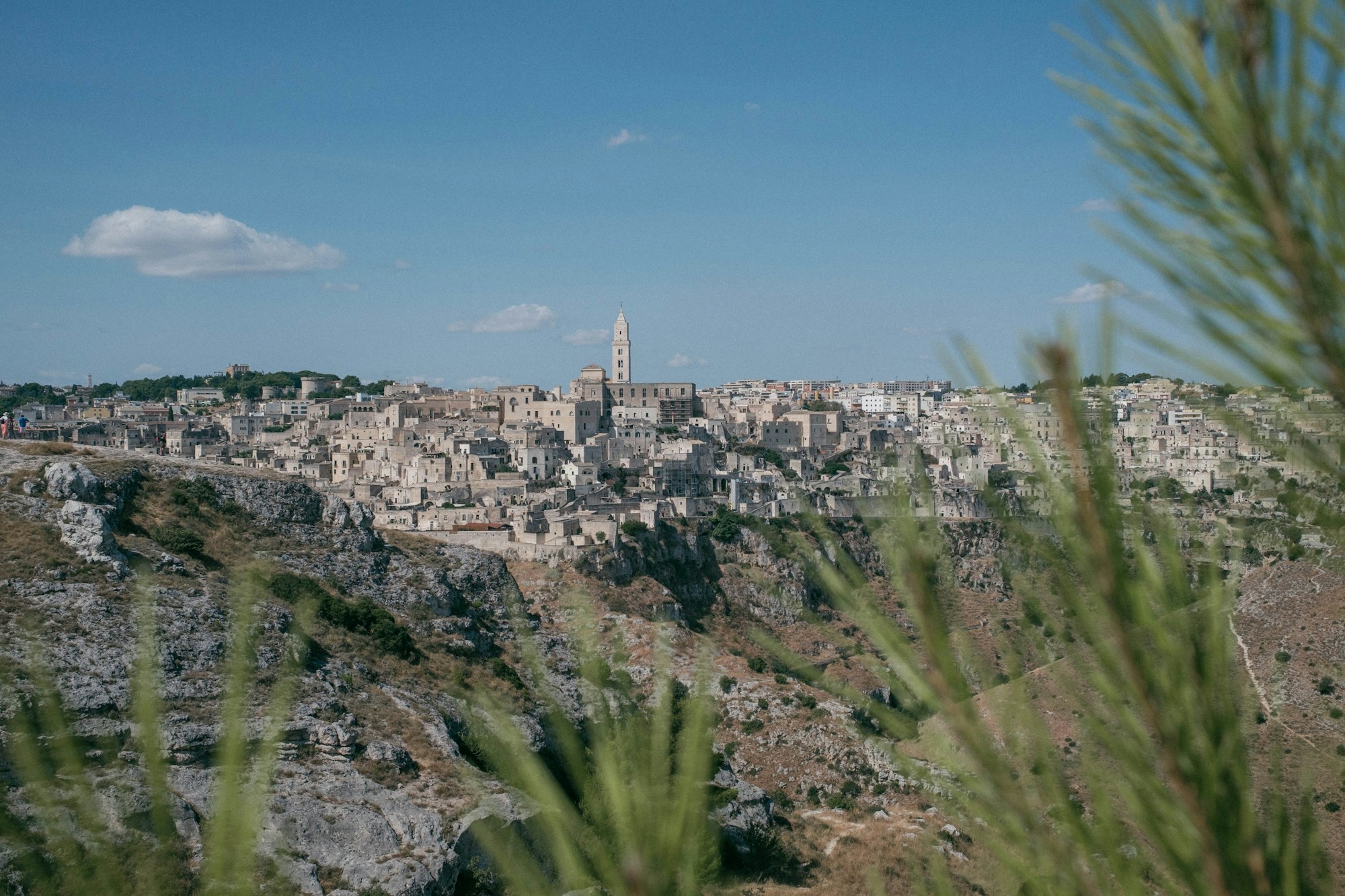
Sassi di Matera — UNESCO Heritage and « No Time to Die » Film Set
Matera is the ideal starting point for this cinematic road trip. This ancient city in Basilicata is home to the Sassi, two historic cave-dwelling quarters — Sasso Barisano and Sasso Caveoso — carved directly into the limestone cliffs. Listed as a UNESCO World Heritage Site since 1993, they are among the oldest continuously inhabited settlements on the planet, dating back to the Paleolithic era.
For No Time to Die, director Cary Fukunaga chose Matera as « Civita Lucana »: « The monochrome nature of Matera already gives it the appearance of a great necropolis, » he explained. The scenes show Bond (Daniel Craig) and Madeleine Swann (Léa Seydoux) in romantic sequences followed by a spectacular chase in an Aston Martin DB5 and a Triumph motorcycle.
Must-See Filming Locations
- Via D’Addozio — tunnel exit in the Sassi (arrival scene)
- Via Bruno Buozzi — Bond parks the Aston Martin DB5 at the intersection with Rione Pianelle
- Piazza San Pietro Caveoso — spectacular DB5 skid
- Via Gradoni Duomo — motorcycle jump in front of the Cathedral
- Belvedere di Piazza Giovanni Pascoli — best panoramic viewpoint over the Sassi
2. Gravina in Puglia — Agent 007’s Bridge
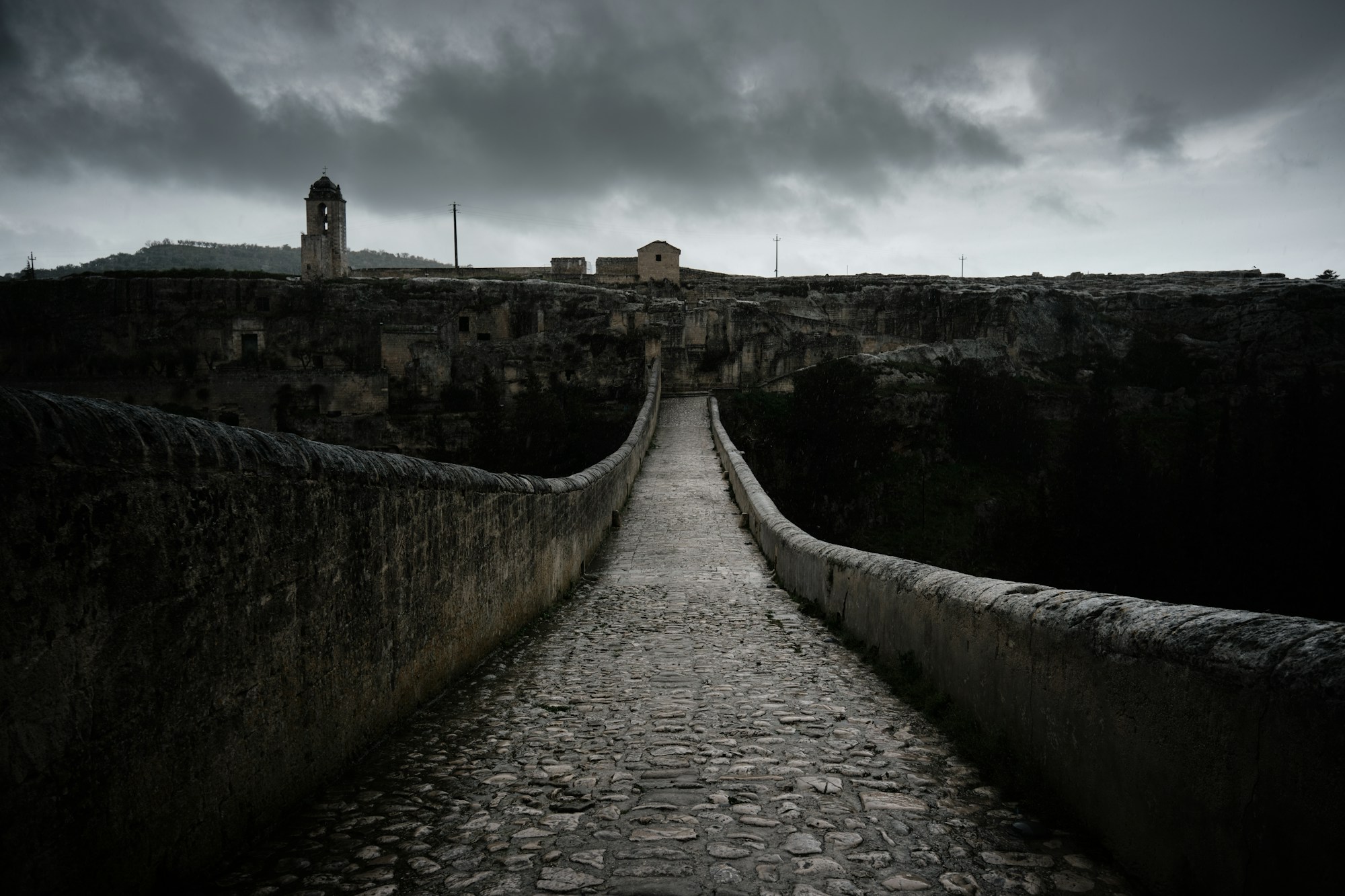
Ponte Acquedotto — 90 Meters Above the Void
Just 30 minutes from Matera, Gravina in Puglia gained international fame thanks to No Time to Die. The iconic opening sequence shows Daniel Craig sprinting across the Ponte Acquedotto — a breathtaking aqueduct bridge spanning the town’s deep ravine (gravina). Built in the 18th century, it measures 90 m long, 5.5 m wide, and 37 m high.
Director Fukunaga revealed: « The bridge that we make believe connects Matera to the necropolis is actually in a neighboring town, Gravina in Puglia. We made it look like it’s all part of the same route. » Since filming, a new wave of visitors has arrived, but the town remains far less touristy than Matera.
Why Gravina Is Worth the Detour
- Ponte Acquedotto — accessible on foot, stunning at sunrise and sunset
- Gravina Sotterranea — labyrinth of underground tunnels, caves, and crypts
- Rock churches — carved into the rock, witnesses to a millennia-old past
- Alta Murgia — UNESCO Global Geopark since 2024, karst landscapes to explore
3. Alberobello — The UNESCO Trulli Village
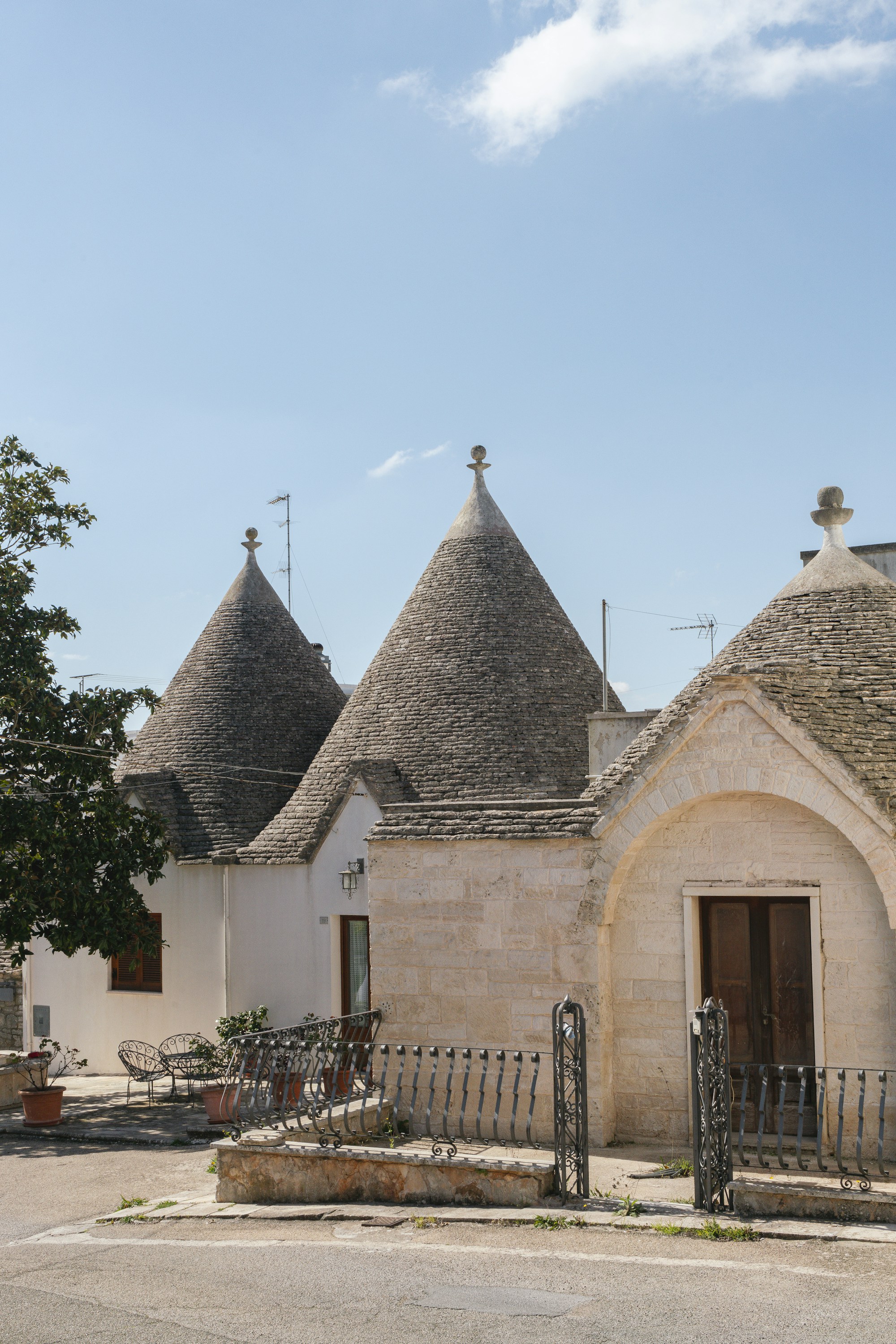
Trulli of Alberobello — Architecture Unique in the World
No trip to Southern Italy is complete without the trulli of Alberobello. These conical dry-stone houses, whitewashed with lime, have been a UNESCO World Heritage Site since 1996. Built from the 14th century onward without mortar, they give the village a fairytale atmosphere unlike anywhere else in the world.
The main street divides the town into two quarters: Rione Monti, the tourist side with trulli converted into shops, and Rione Aia Piccola, quieter, with trulli in their original residential state. It is this second quarter you should prioritize for an authentic experience.
Highlights
- Rione Aia Piccola — residential quarter, quiet and photogenic at dawn
- Church of Saint Anthony of Padua — itself shaped like a trullo
- Sleep in a trullo — restored accommodations from 70 to 180 EUR/night
- Itria Valley — combine with nearby Locorotondo and Cisternino
4. Polignano a Mare — The Pearl of the Adriatic
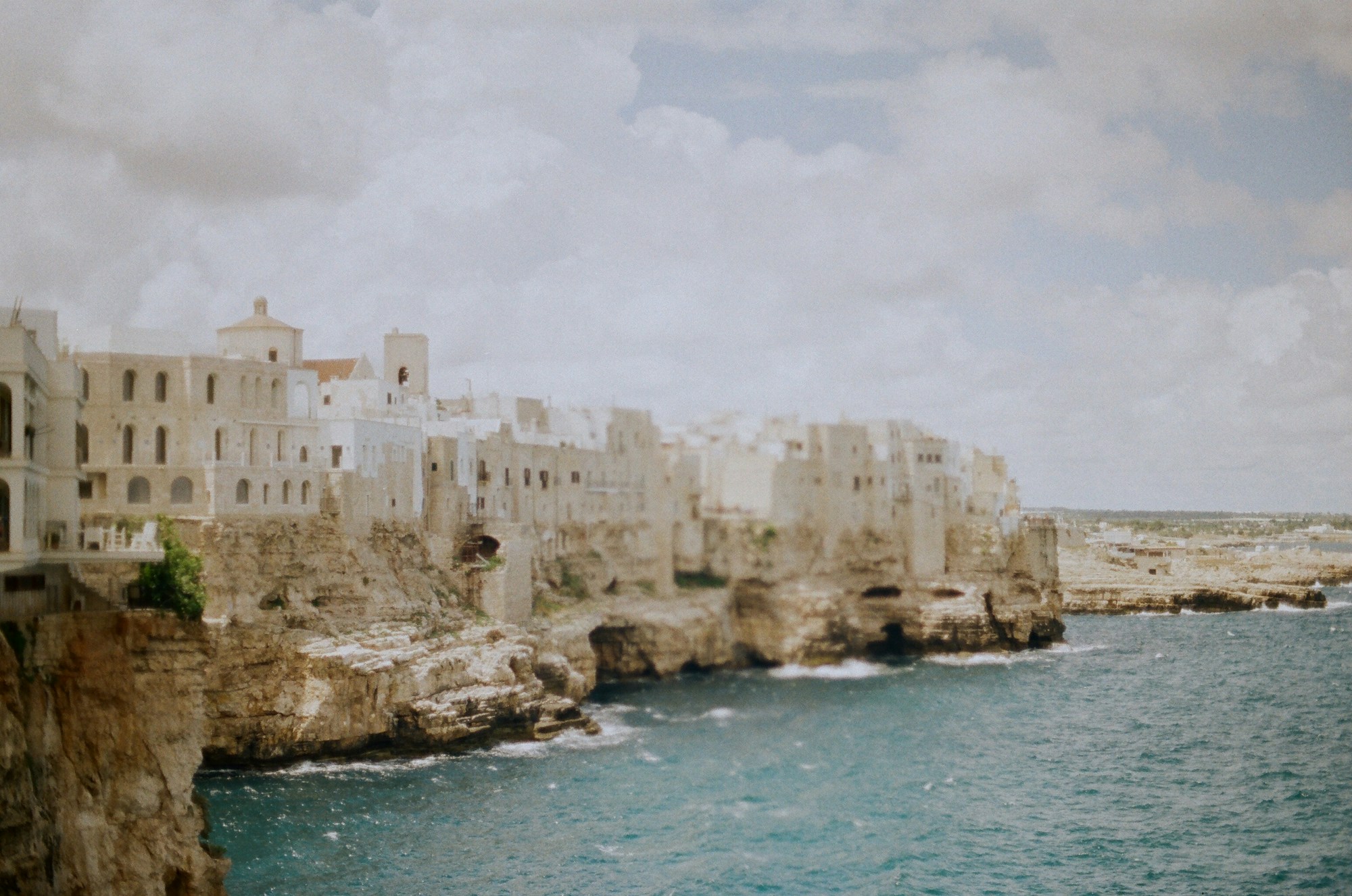
Lama Monachile — Cliffs and Turquoise Waters
Polignano a Mare boasts one of the most striking coastal settings in all of Puglia. Its historic center is perched dramatically on limestone cliffs plunging into the Adriatic Sea. Below lies the famous Lama Monachile, a stunning pebble beach nestled in a cove sculpted by nature.
The town is one of the most popular (and most expensive) places in Puglia. The legendary restaurant Grotta Palazzese, set in a natural cave overlooking the sea, offers menus starting at around 190 EUR per person. But Polignano can also be enjoyed as a quick 2-3 hour visit, just enough time to take in the viewpoints and the centro storico.
Highlights
- Lama Monachile — the iconic beach framed by cliffs
- Old town viewpoints — sweeping views over the Adriatic
- Grotta Palazzese — dine in a sea cave (reservation required)
- Statue of Domenico Modugno — tribute to the singer of Volare, born in the town
5. Ostuni — The « Città Bianca »
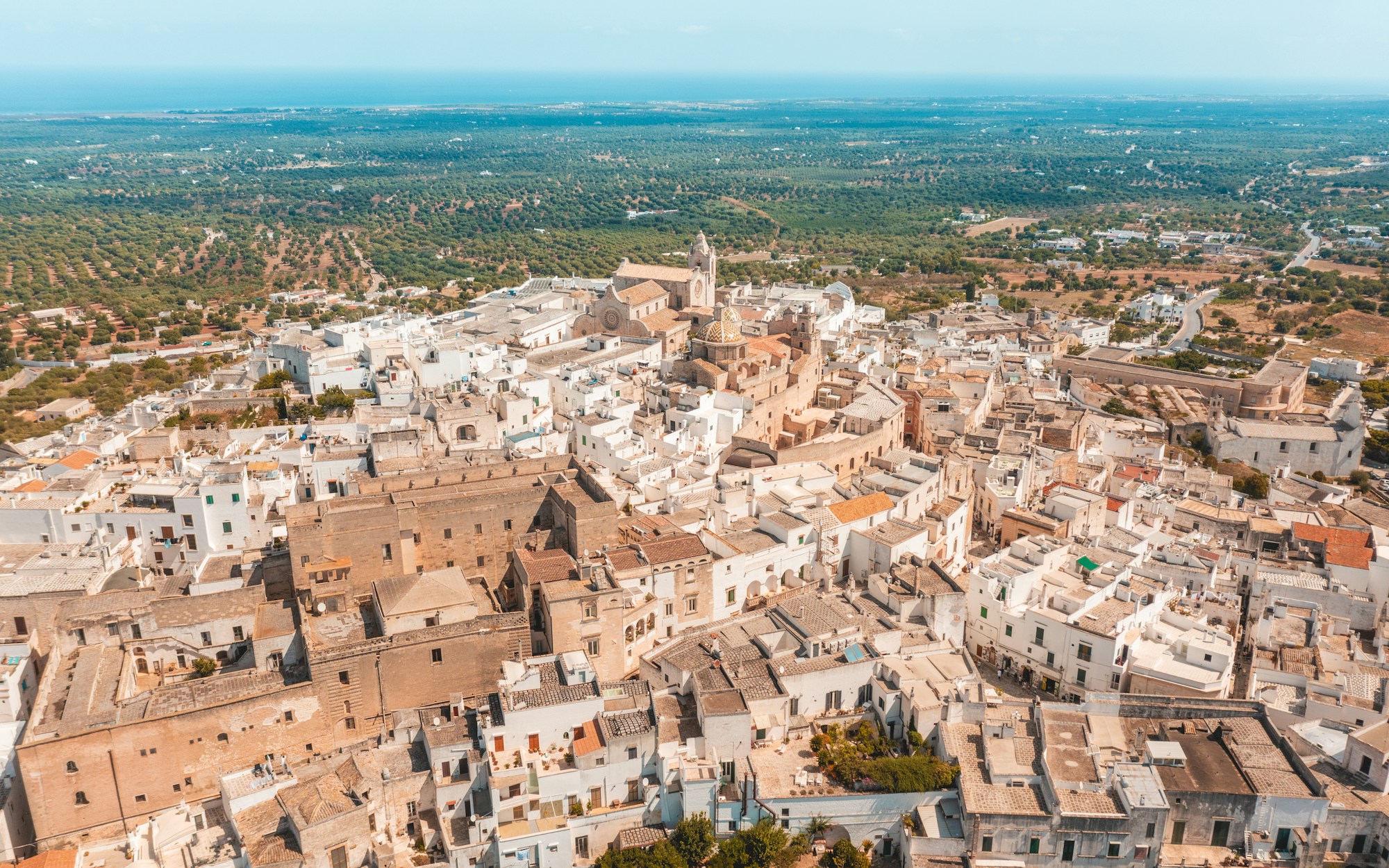
Ostuni — White City and Ancient Olive Trees
Perched on the last hills of the Murge, Ostuni overlooks a landscape of sea and olive trees. Its whitewashed historic center has earned it the nickname « White City. » According to tradition, the name derives from a dialectal corruption of the Arabic word zaitun, meaning olive — a nod to the region’s agricultural treasure.
From the viewpoint at the highest point of the town, the eye sweeps across long stretches of olive groves dotted with trulli, extending all the way to the Adriatic Sea. The magnificent Cathedral of Santa Maria Assunta, with its Gothic facade and splendid rose window, crowns the summit of the city. Inland towns like Ostuni offer prices 25 to 35% lower than seaside resorts in summer.
Highlights
- Cathedral of Santa Maria Assunta — Gothic facade and remarkable rose window
- Olive grove panorama — spectacular view from the hilltop viewpoint
- Masserie — stay in a restored farmhouse 15-25 min from Ostuni
- Torre Guaceto — nearby protected marine reserve, a « sustainable sea » alternative
6. Lecce — The « Florence of the South »
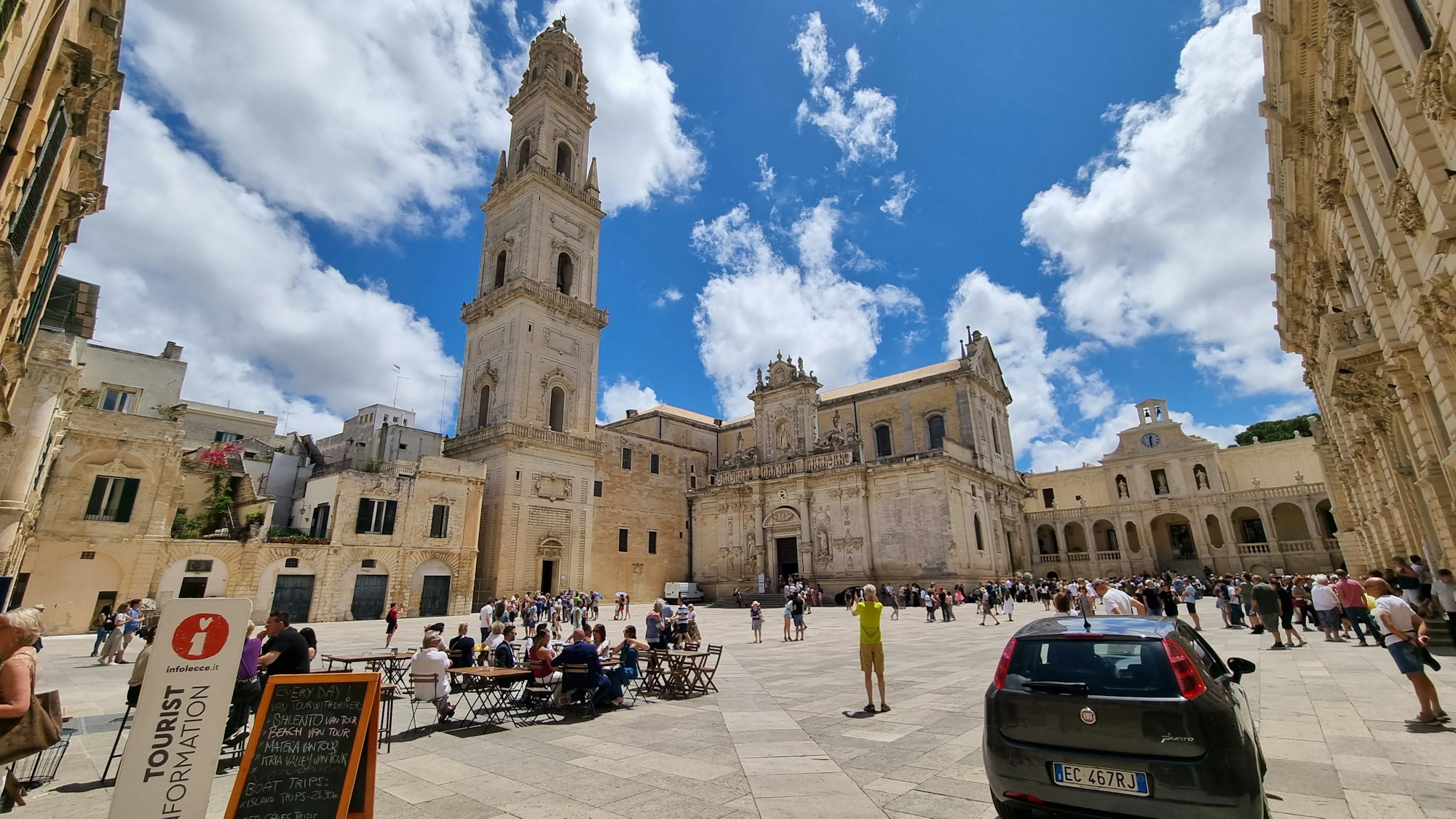
Lecce — Golden Baroque and the Art of Living
Lecce is the crowning reward of this road trip. Nicknamed the « Florence of the South, » this Salento city dazzles with its baroque architecture sculpted in soft pietra leccese, a golden limestone. From the intricate church facades to the Roman ruins, Lecce invites you to slow down and savor its timeless beauty.
Unlike Florence, it is quieter, less crowded, and 30 to 50% cheaper. Accommodation costs 60-100 EUR per night. Italia.it offers an ideal 2-day program: Piazza del Duomo, Basilica di Santa Croce, the Roman amphitheater, and cartapesta (papier-mâché) artisans. The local secret for cooling down: Caffè in Ghiaccio con Latte di Mandorla (iced coffee with almond milk).
Highlights
- Basilica di Santa Croce — the ultimate masterpiece of Lecce baroque
- Piazza del Duomo — stunning enclosed square with cathedral and bell tower
- Roman amphitheater — 2nd-century ruins right in the city center
- Museo Faggiano — the « house with 2,000 years of secrets » beneath your feet
- Pasticciotto — iconic custard-filled pastry, perfect for breakfast
7. Monopoli — The Authentic Coastal Gem
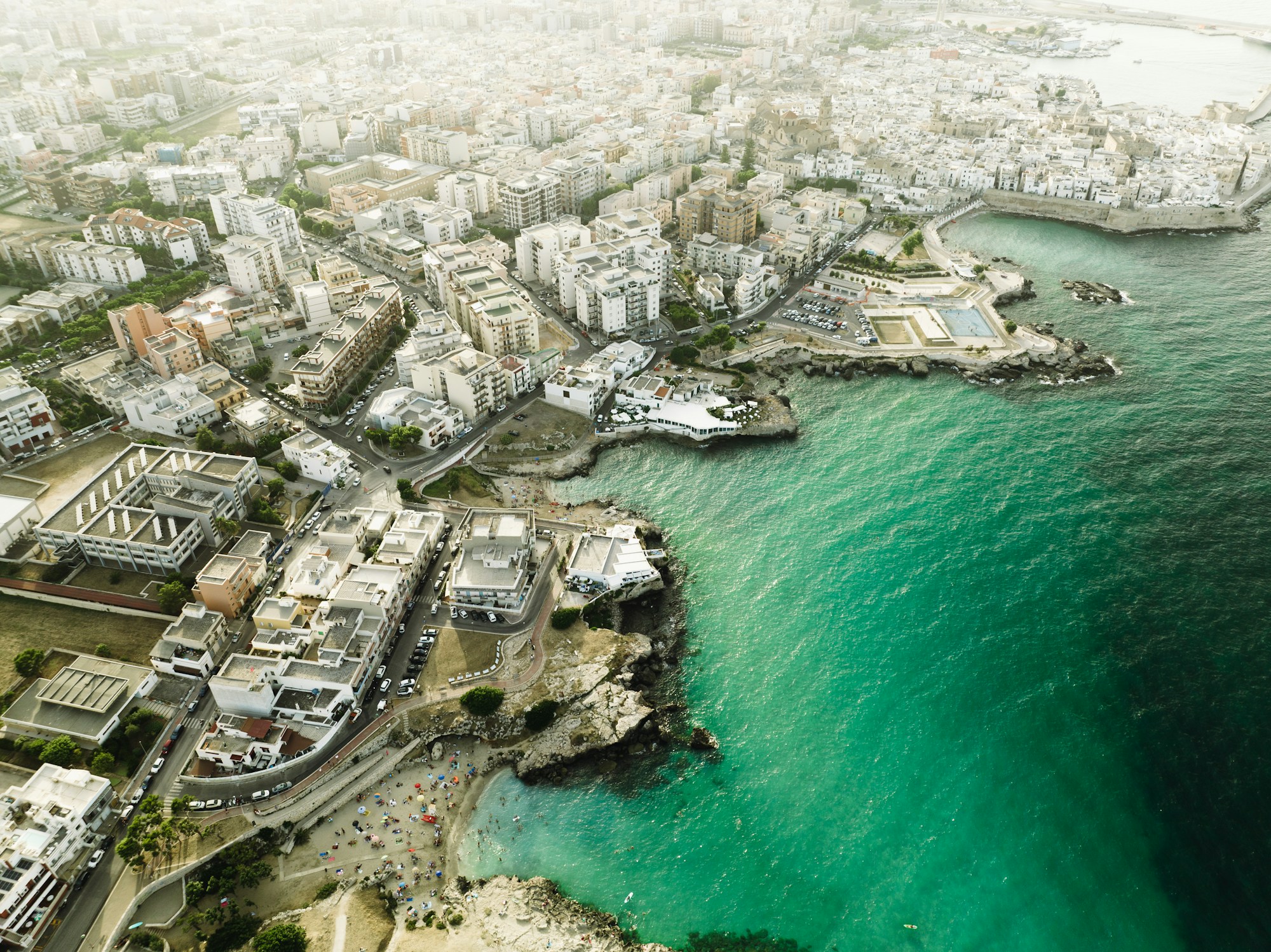
Monopoli — Ancient Port and Secret Coves
Monopoli is the ideal strategic base between Polignano a Mare and Ostuni. This sun-drenched coastal town retains an authentic port atmosphere where Polignano has become heavily touristic. Its ancient port sits right against the historic center, with bobbing fishing boats and a labyrinth of whitewashed alleyways.
The old Aragonese walls offer spectacular maritime walks without the crowds. The jagged coastline hides cale (coves) and varied beaches, all accessible on foot from the center. Monopoli is also more affordable than its neighbors, with B&Bs from 50-80 EUR/night.
Highlights
- Porto Antico — picturesque fishing port in the heart of the historic center
- Cala Porta Vecchia — urban beach accessible on foot
- Castello Carlo V — Aragonese fortress with sea views
- Ideal base — explore Alberobello (morning), Polignano (evening), and the masserie from here
8. Puglia’s Gastronomy — Cucina Povera Elevated to an Art Form
A Culinary Journey from Matera to Lecce
Puglia is Italy’s breadbasket. Its fertile red soil and Mediterranean climate make it one of the top producers of durum wheat, olive oil (nearly 40% of the national output), and wine. The culinary culture revolves around cucina povera — simple dishes made with fresh, local ingredients, elevated to an art form.
Must-Try Specialties
- Orecchiette alle cime di rapa — « little ears » fresh pasta with turnip tops, Puglia’s signature dish
- Burrata — best eaten the day it’s made, from a fresh caseificio (cheese dairy)
- Focaccia barese — topped with tomatoes, olives, and olive oil
- Pane di Altamura DOP — semolina bread with a crispy crust
- Pasticciotto leccese — pastry filled with custard cream
- Bombette pugliesi — cheese-stuffed meat rolls, grilled over a fornello (charcoal grill)
- Panzerotti — deep-fried turnovers filled with mozzarella and tomato
- Tiella barese — oven-baked rice, potatoes, and mussels
In Bari Vecchia, the nonne (grandmothers) still shape orecchiette by hand outside their homes, a tradition that has become a living symbol of the region. A pizza costs 6 to 8 EUR at a local restaurant, and wine is served by the carafe for just a few euros per liter.
9. Budget and Practical Tips for 2026
Everything You Need to Know Before You Go
Puglia offers exceptional value for money: 30 to 50% cheaper than the classic Rome-Florence-Venice circuit. In 2026, the average summer rate sits at around 137 EUR per room per night on booking platforms. The shoulder seasons (April-May, September-October) allow savings of up to 40%.
Budget by Range (8 nights, 2 people, excluding flights)
- Budget: 1,450-1,950 EUR — B&Bs, simple meals, few paid activities
- Comfort: 2,000-2,900 EUR — hotels/masserie, good restaurants, 2-4 activities
- Premium: 3,200 EUR+ — upscale masserie, fine dining, private experiences
Transportation and Logistics
A rental car is essential to fully enjoy this itinerary (ravines, natural parks, masserie). Budget 25-35 EUR/day plus around 10 EUR/day for fuel (~1.65-1.69 EUR/L as of February 2026). Puglia has two international airports at Bari and Brindisi, served by Ryanair and EasyJet.
Essential Tips
- Plan around the pausa: shops are closed between 1 PM and 5 PM
- Hit « Instagram » spots before 9 AM (or after 6 PM), save nature for midday
- Cash is still king — always carry some on you
- Book accommodations 2-3 months in advance for May/June and September
- Local markets are excellent for fresh produce at great prices
10. Recommended Itinerary — 8 to 10-Day Road Trip
From Matera to Lecce, Step by Step
Here is our recommended optimal itinerary, inspired by circuits recommended by Italia.it. Distances are short (30 min to 1 hour between each stop), leaving plenty of time to explore.
The Day-by-Day Route
- Days 1-2: Matera — Sassi, Bond tour, rock churches, Parco della Murgia Materana (arrival via Bari, ~1h)
- Day 3: Gravina + Altamura — Bond bridge, Gravina Sotterranea, Pane di Altamura DOP (~30 min)
- Day 4: Alberobello + Itria Valley — Trulli, Locorotondo, Grotte di Castellana (~1h)
- Day 5: Polignano + Monopoli — Cliffs, Lama Monachile, ancient port, coves (~40 min)
- Day 6: Ostuni — Citta Bianca, ancient olive trees, Torre Guaceto (~30 min)
- Days 7-8: Lecce — Baroque, pasticciotto, artisanal crafts, Museo Faggiano (~1h)
- Days 9-10: Salento — Otranto, Gallipoli, Porto Selvaggio or return to Bari (~45 min)
Frequently Asked Questions
How many days do you need for this Matera-Puglia road trip?
A minimum of 7 days is recommended to cover the main stops. The ideal is 8 to 10 days for a comfortable pace including Matera, Gravina, the Itria Valley, the Adriatic coast, and Lecce. With fewer than 7 days, it is unrealistic to fit everything in without rushing. Plan 2 nights in Matera, 2 nights on the coast (Monopoli/Ostuni), and 2 nights in Lecce as your base.
Do you absolutely need a rental car?
Yes, a car is strongly recommended. Trains connect the major cities (Bari, Lecce, Alberobello via Ferrovie Appulo-Lucane), but you will lose access to the ravines, natural parks, masserie, and sites like Craco that require a private vehicle. Rental costs around 25-35 EUR/day. The roads are good and distances are short (30 min to 1 hour between stops).
What total budget should a couple plan for in 2026?
For 8 to 10 days for two in comfort mode, budget approximately 2,000 to 2,900 EUR all-inclusive (excluding international flights). Puglia is 30 to 50% cheaper than Rome, Florence, or Venice. A full meal at a trattoria costs 15-25 EUR/person, accommodation in a masseria 80-180 EUR/night, and fuel around 1.65-1.69 EUR/L in 2026.
Are the James Bond filming locations easy to find in Matera?
Yes, the No Time to Die filming locations are clustered within the Sassi (Via D’Addozio, Via Bruno Buozzi, Piazza San Pietro Caveoso, Via Gradoni Duomo). Guided « Bond Tour » visits are available with local experts (such as Ferula Viaggi or Martulli Viaggi). The Gravina in Puglia bridge is a 30-minute drive away. Fun fact: « Bond Tourism » remains low-key in Matera — there are few 007 references on site.
What is the best season to visit?
The shoulder seasons are ideal: mid-April to mid-June and mid-September to late October. You get pleasant temperatures (15-28 °C), fewer crowds, and savings of 40% compared to summer. July and August bring high temperatures (35 °C+) and heavy tourist influx. Puglia shows a broadening season beyond summer with a 22% growth in international visitor flows in 2024.
Can you combine this road trip with other regions?
Absolutely! Many people combine Puglia with the Amalfi Coast, but do Amalfi first: after the tranquil charm of Puglia, the crowds and prices of Amalfi can come as a shock. From Lecce, you can also extend to the Salento (Otranto, Gallipoli), or from Matera head to Calabria or the Ionian coast. Brindisi airport is ideal for a loop circuit.
What dishes should you absolutely try?
Five must-tries: orecchiette alle cime di rapa (pasta with turnip tops), fresh burrata made that day, focaccia barese (tomatoes, olives, oil), bombette pugliesi (grilled stuffed meat rolls), and pasticciotto leccese (custard-filled pastry). Don’t miss the Pane di Altamura DOP and taralli (crunchy savory ring-shaped crackers). Buy the local wine by the carafe for just a few euros per liter.
What are the hidden gems off the beaten path not to miss?
Three hidden gems to include: the ghost village of Craco in Basilicata (guided tour ~11 EUR, a fascinating film set), the canyon of Laterza (Terra delle Gravine, the « Grand Canyon of Puglia »), and Parco dell’Alta Murgia, recognized as a UNESCO Global Geopark in 2024 — an emerging destination with unique karst landscapes. Add the fortified hamlet of Acaya near Lecce and the Porto Selvaggio marine reserve in Nardo.
Sources
- UNESCO — Les Sassi et le Parc des églises rupestres de Matera
- UNESCO — Les Trulli d’Alberobello
- The James Bond Dossier — Lieux de tournage No Time to Die en Italie
- On the Tracks of 007 — Matera & Gravina
- Bond Locations — No Time to Die à Matera
- James Bond Lifestyle — Matera, Italie
- The Puglia Guys — Gravina in Puglia
- Regione Puglia — Flussi turistici 2024
- Italia.it — Road Trip Pouilles 9 jours
- Budget Guide Pouilles 2026
- Savoring Italy — Guide de Lecce
- The Puglia Guys — 20 meilleurs plats des Pouilles
- Lonely Planet — Pouilles petit budget
- Parco Alta Murgia — UNESCO Global Geopark
- Martulli Viaggi — Bond Tour Matera
Research conducted on February 7, 2026 — prices and conditions may vary. Always check the most up-to-date information before booking.
Ready to Plan Your Southern Italy Road Trip?
From Matera to Puglia, every stop on this itinerary blends cinema, UNESCO heritage, and the Mediterranean art of living. Explore our detailed itineraries to plan your next trip.
Explore all itineraries