

90 minutes apart, two radically different worlds. Dubai amazes with its architectural ambitions and endless record-breaking, while Abu Dhabi quietly establishes itself as the cultural capital of a region in full renaissance. In 2026, the UAE is living its most exciting moment since the Burj Khalifa was built: Saadiyat Cultural District reaches maturity with the opening of Frank Gehry’s Guggenheim Abu Dhabi, teamLab Phenomena sets a new world record for immersive art, and the Liwa Desert continues to draw travellers seeking the absolute. This guide unpacks both cities without drowning you in must-sees — with real budgets, insider tips, and experiences that classic guides always miss.
2026 Budget Guide: From Hostels to Palaces
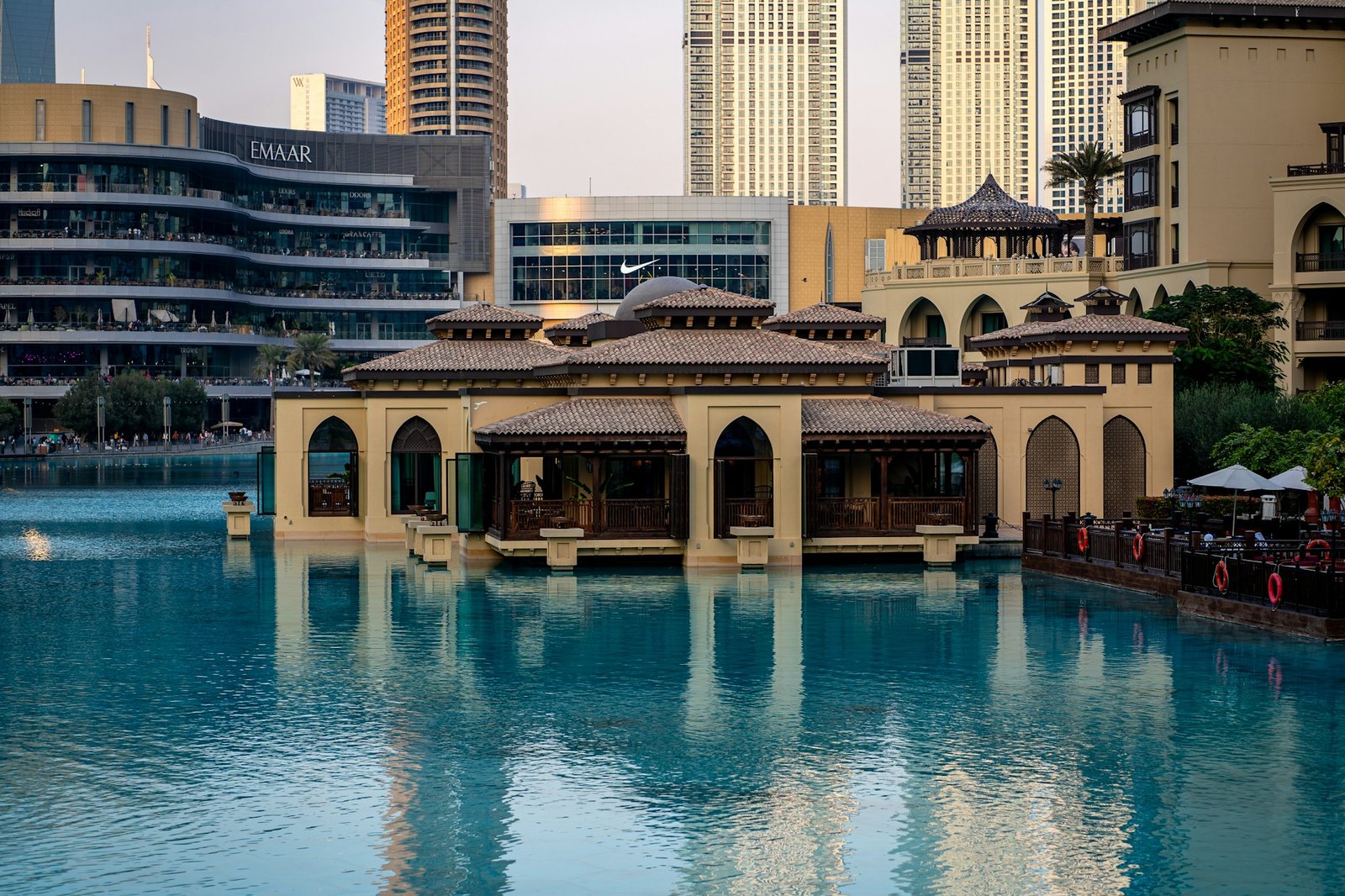
How much does a UAE trip cost?
The UAE is often seen as an expensive destination — that’s both true and false. According to Amigo, daily budgets vary considerably depending on your travel style:
- Budget traveller: ~$113/day (hostel $25/night, street food, metro)
- Mid-range: 1,500 AED/day (~$410) for a 5-day stay
- Luxury: ~$748/day (5-star resorts, celebrity chef restaurants, private transfers)
The dirham (AED) has been pegged at 3.67 AED per USD for decades. In winter (November–February), hotels are at peak pricing. For a week in a mid-range hotel, budget $548–$822 for a double room. Digital payments dominate — Visa, Mastercard and Apple Pay are accepted everywhere, including taxis and small cafés.
1. Saadiyat Cultural District — Abu Dhabi’s Cultural Revolution
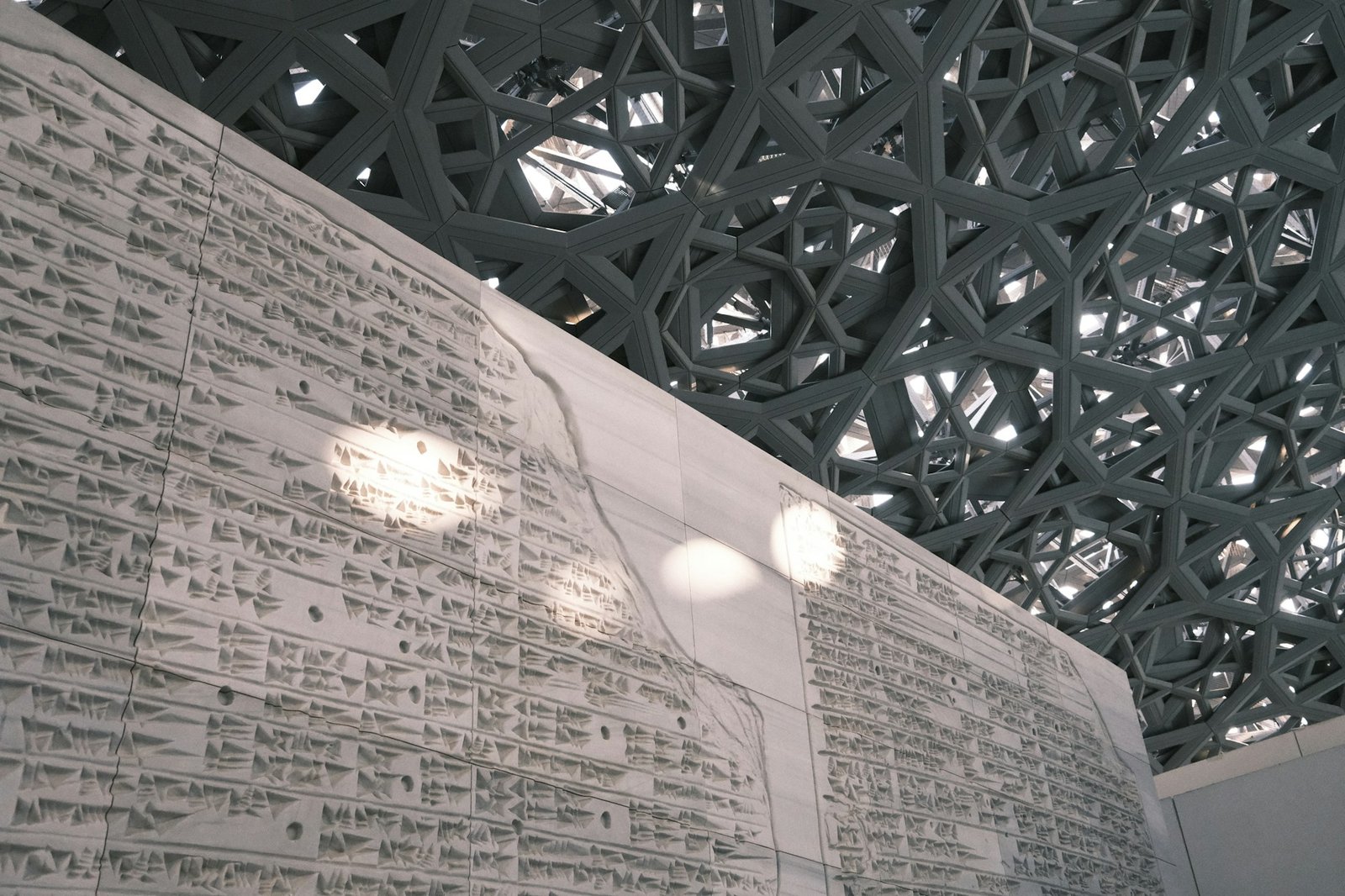
Saadiyat Island, Abu Dhabi
If you want to visit a Louvre and a Guggenheim on the same day, you’d normally have to cross international borders. At Saadiyat, you’ll soon be able to walk between them. According to CNN Travel, the Saadiyat Cultural District is one of the world’s most ambitious cultural projects — over 1.7 million square feet spanning five major institutions.
In 2026, the district reaches full maturity. The Louvre Abu Dhabi and teamLab Phenomena (the world’s largest digital art museum, 17,000 m²) are already open. Frank Gehry’s Guggenheim Abu Dhabi — whose spectacular geometric volumes surrounded by water Dezeen describes — should open in 2026. Add Norman Foster’s Zayed National Museum with its steel falcon-wing towers: a space that tells UAE history through 3,000 artefacts, including a 300,000-year-old stone tool found in Al Ain.
District highlights
- Louvre Abu Dhabi: 9 permanent galleries, universal collection under a unique honeycomb dome
- teamLab Phenomena: dry and wet zones where artwork responds to your presence
- Guggenheim Abu Dhabi: Frank Gehry’s final masterpiece, opening 2026
- Zayed National Museum: 300,000 years of Emirati history beneath steel falcon wings
2. Sheikh Zayed Grand Mosque — The Arab World’s Most Beautiful Mosque
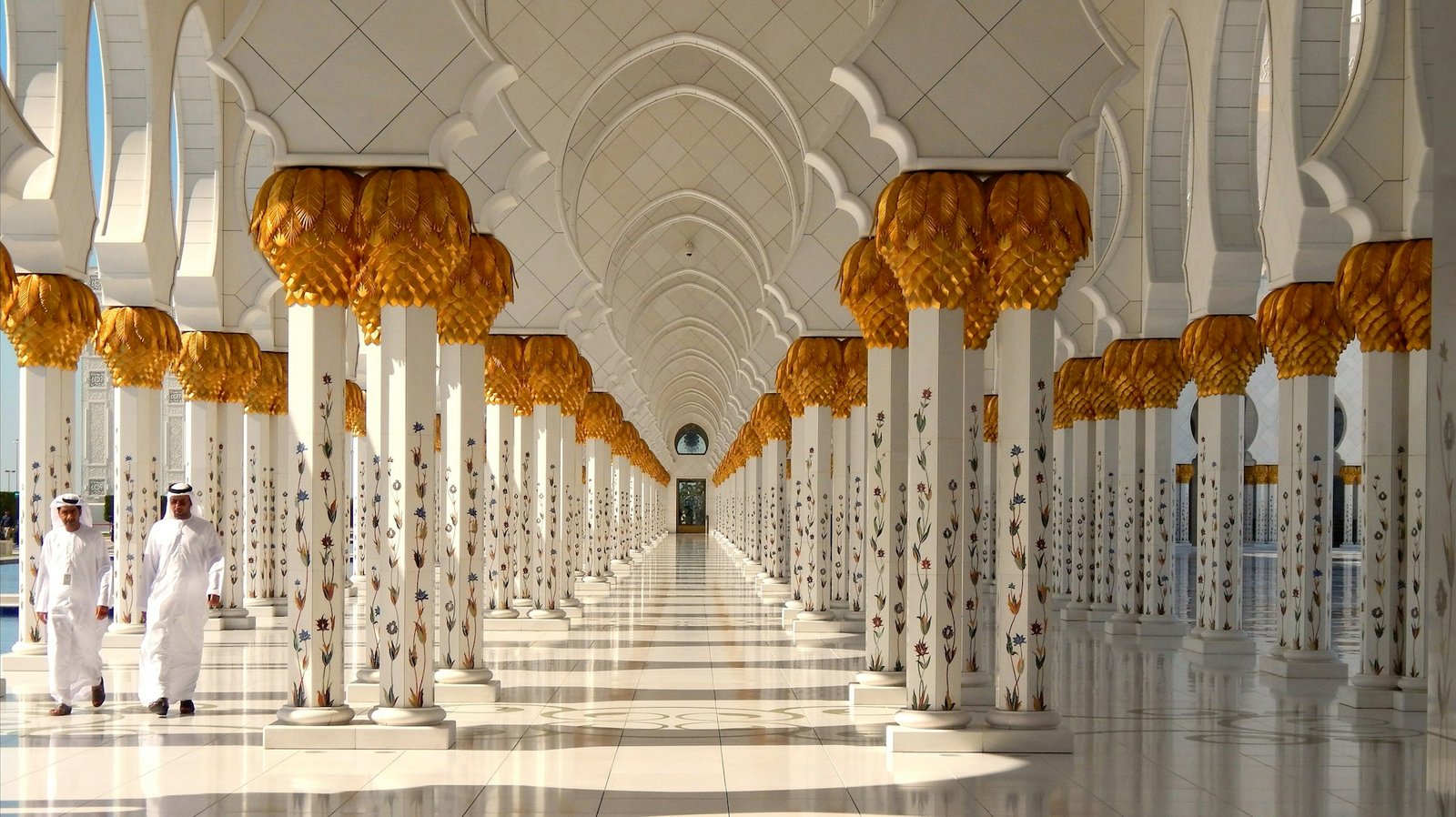
Abu Dhabi — Absolute must-see
The third-largest mosque in the world, Sheikh Zayed Grand Mosque is one of the rare world monuments that consistently exceeds expectations. Carrara white marble, 1,000 columns inlaid with semi-precious stones, 82 domes and the world’s largest hand-knotted carpet (5,627 m²): every detail is a masterclass in craftsmanship. Entry is free for non-Muslims, provided you dress modestly.
The magic moment is at dawn or sunset, when light plays across the marble pools and the mosque reflects infinitely. Free guided tours (organised by the mosque itself) offer fascinating insight into Islamic architecture and Emirati culture.
- Free entry — modest dress required (abayas provided free)
- World’s largest hand-woven carpet (Guinness World Record)
- Free guided tours in English, French, Arabic and other languages
- Closed to non-Muslims during Friday morning prayers
3. Liwa Desert — The Empty Quarter, Endless Sand
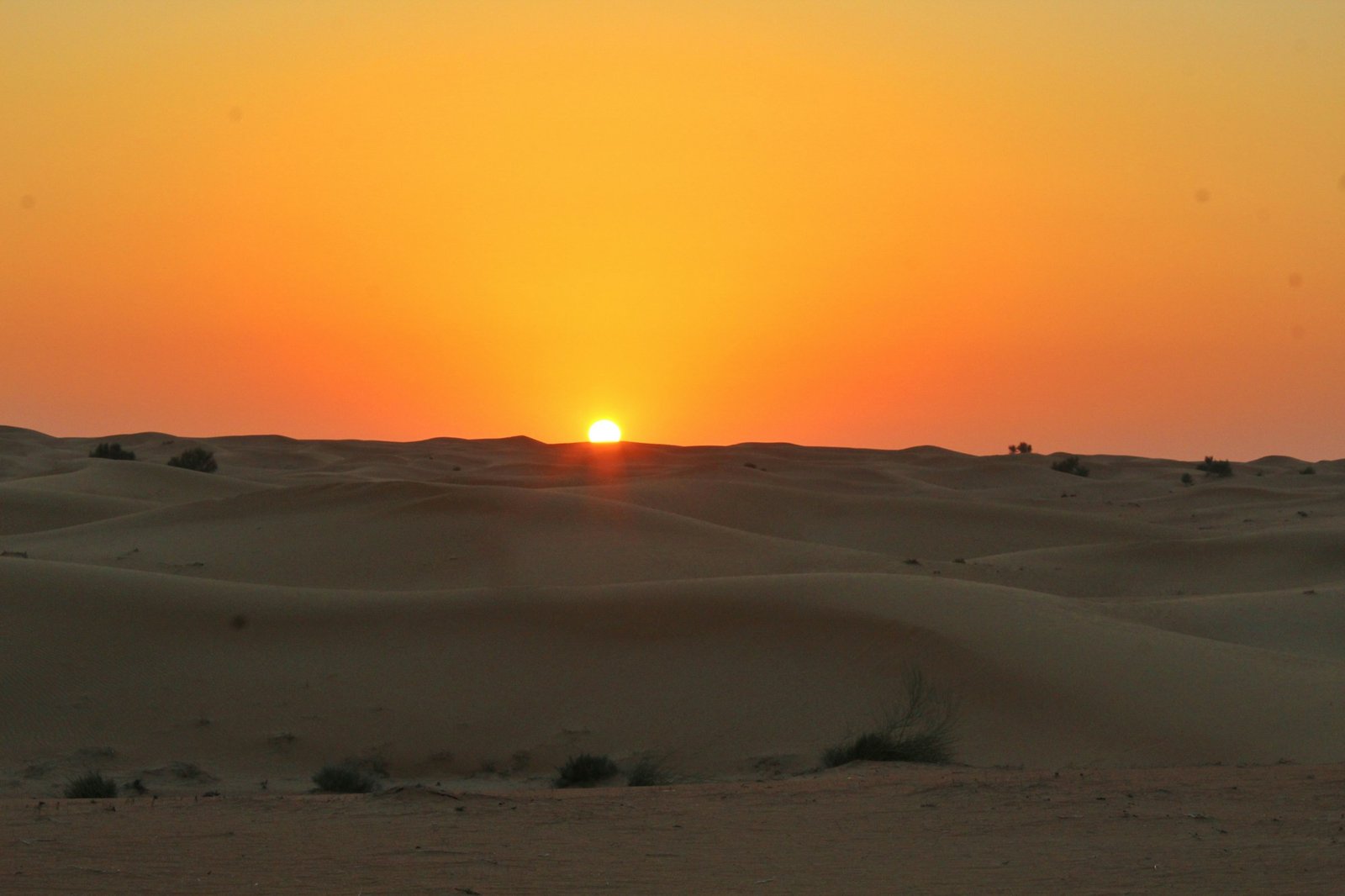
Al Dhafra Region, 220 km south-west of Abu Dhabi
The Rub’ al Khali — literally « the Empty Quarter » — is one of the world’s largest continuous sand deserts, stretching across 650,000 km². Liwa Safari describes the landscape aptly: massive red dunes rising up to 300 metres, complete silence, and an authentic experience far from any light pollution. It’s the ultimate antidote to Dubai’s air-conditioned malls.
Each winter, the Liwa International Festival transforms this desert into a major event destination. According to Visit Abu Dhabi, the festival running from 12 December to 3 January attracts up to 40,000 people with motorsport around the famous 300m Tal Moreeb dune and family activities. For the rest of the year, Liwa remains a sanctuary for travellers seeking space.
Must-do experiences
- 4×4 dune safari with a local guide (essential — never go off-road alone)
- Night under the stars (glamping or Bedouin camp with traditional dinner)
- Stay at Qasr Al Sarab Desert Resort (ultimate luxury, integrated into the dunes)
- Sandboarding on the giant dunes
4. Sir Bani Yas Island — An African Safari in the Arabian Gulf
170 km south-west of Abu Dhabi
On this island off the Al Dhafra coast, over 17,000 animals roam freely: Arabian oryx, Somali ostriches, gazelles, deer and cheetahs. According to Abu Dhabi Discovery, the experience feels like a piece of East Africa placed in the Arabian Gulf. The UAE’s largest natural island also hides a Christian monastery dating from AD 600, discovered beneath the sands during excavations in 1992.
Anantara operates several luxury resorts here with beachfront villas. But even as a day trip from Abu Dhabi (20-minute ferry from Jebel Dhanna), the excursion is worth it. A guided open-vehicle safari at sunrise remains the most memorable experience in the region.
5. Al Ain — The UNESCO Oasis City, Off the Beaten Track
150 km east of Abu Dhabi
Al Ain offers what no other UAE city can: direct access to traditional desert ways of life. National Geographic describes it as « restful, with low humidity, and an abundance of unique heritage experiences. » Inhabited for nearly 4,000 years, Al Ain is one of the world’s oldest permanent human settlements. Its falaj irrigation system earned it UNESCO World Heritage status.
The Al Ain Oasis spans 1,200 hectares with over 147,000 date palms of 100 varieties. Entry is free and electric scooters are available from 30 AED. The Al Ain Camel Market remains one of the UAE’s most authentic — hundreds of camels in a genuinely ancestral trading atmosphere.
6. Al Fahidi Quarter — Dubai Before the Skyscrapers
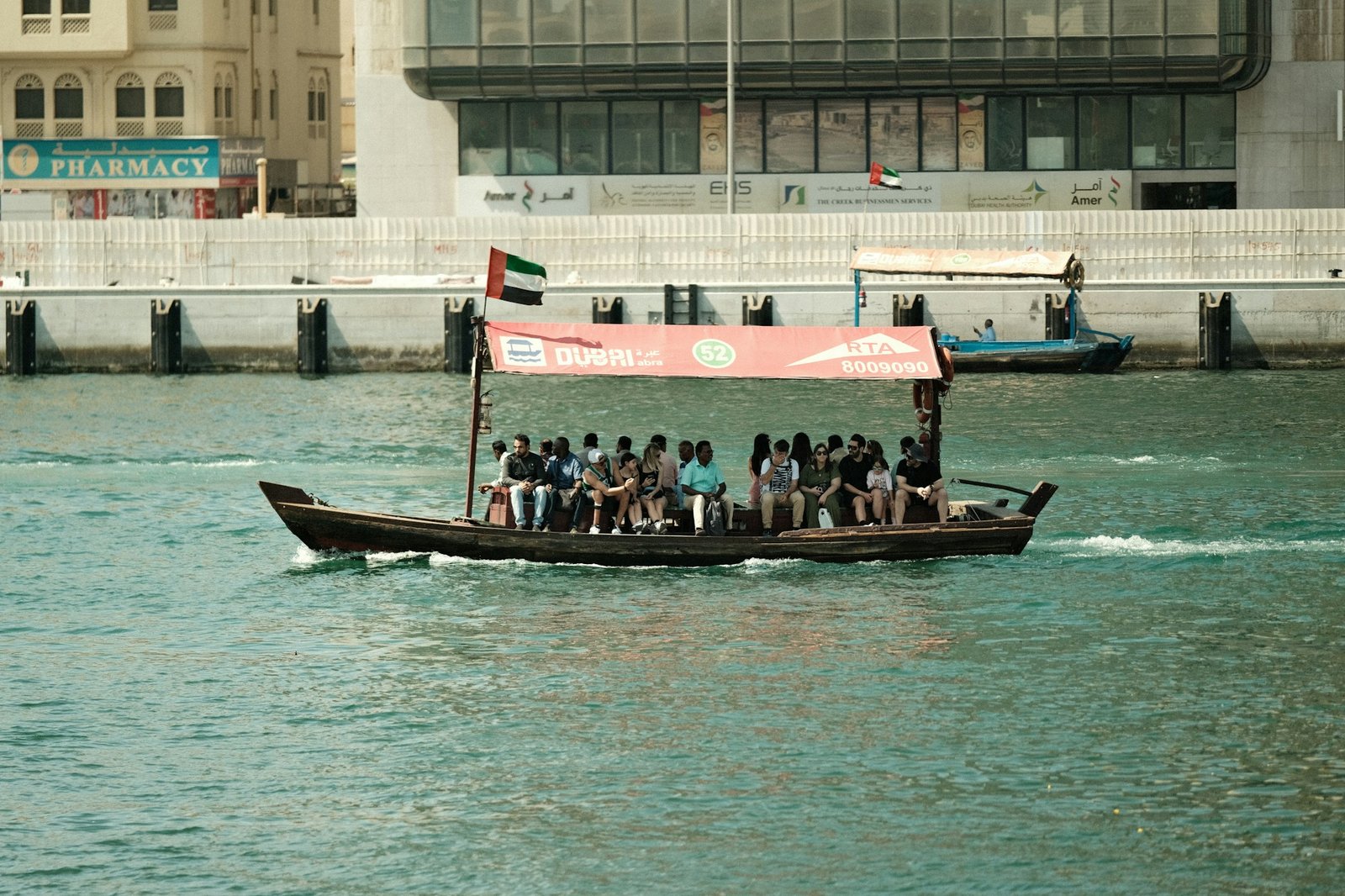
Bur Dubai, on the banks of Dubai Creek
Al Fahidi is a time machine. This living heritage district — described as one of Dubai’s hidden gems — preserves its original wind tower (barjeel) architecture, winding alleyways and shaded courtyards. It houses the Coffee Museum, the Coins Museum and surprisingly vibrant contemporary art galleries. The XVA Art Hotel and Café — a boutique hotel steeped in art — is the city’s best-kept secret.
Steps away lies Dubai Creek, the city’s historic soul. A crossing in an abra (traditional wooden boat) for just 1 AED takes you from one quarter to another, as it has for 150 years. On the Deira side, the spice and gold souks still operate on ancestral logic, with traders from Iran, India and Africa.
Must-do
- Guided tour with Sheikh Mohammed Centre for Cultural Understanding (150 AED)
- Frying Pan Adventures food tour — Emirati, Indian, Iranian, Levantine cuisines
- Abra crossing (1 AED!) between Bur Dubai and Deira
- Gold Souk: bespoke jewellery and negotiable gold prices
7. Hatta — Turquoise Wadis and Mountains, 115 km from Dubai
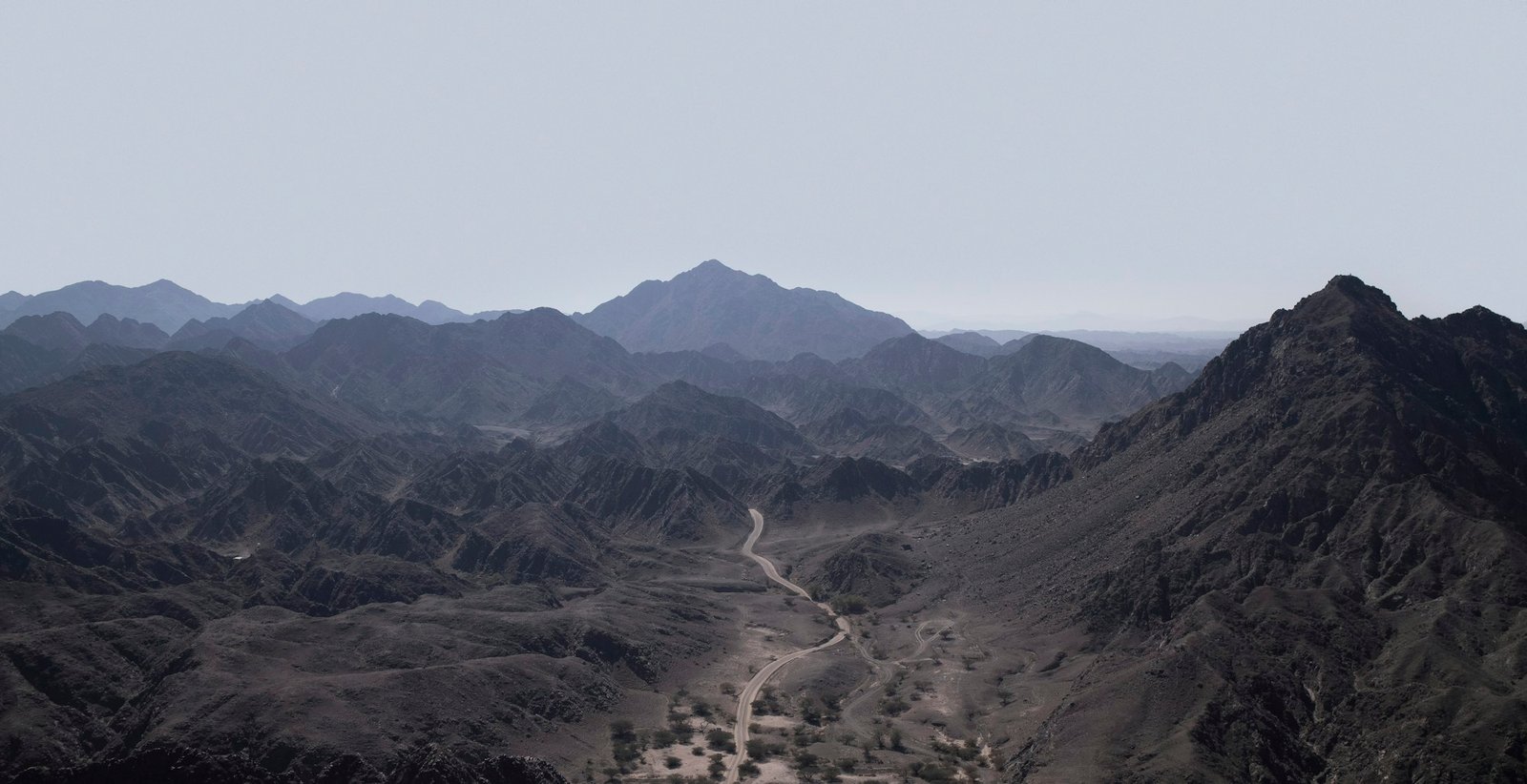
Hajar Mountains — Dubai Exclave
Hatta is proof that the UAE isn’t all flat sand and buildings. Nestled in the Hajar Mountains, this Dubai exclave offers turquoise pools, hiking trails and a unique beekeeping culture. Against the Compass also recommends Wadi Shawka, even less visited than Jebel Jais, with natural pools, cycling trails and epic camping under the stars.
The Hatta Dam offers a tranquil kayaking experience against a mountain backdrop. To stay overnight, Hatta Dome Park offers unique accommodation (800–1,500 AED/night). And for nature lovers: Hatta’s bee village reveals the secrets of Emirati beekeeping — one of the country’s last living agricultural traditions.
- Kayaking on Hatta Dam (calm waters, mountain scenery)
- Hiking to Hatta Heritage Village (mud-brick houses)
- Wadi Shawka — camping, natural pools, less touristy
- Local honey tasting at Hatta’s beekeeping village
8. Flamingos and Global Village — Dubai’s Hidden Side
Two unexpected experiences in the heart of the metropolis
Ras Al Khor Wildlife Sanctuary — Between November and March, thousands of wild flamingos colonise the marshes at the mouth of Dubai Creek. The contrast between the pink birds and the skyscrapers looming in the background is one of the UAE’s most striking images. Entry is free. Al Qudra Lakes, 30 km away, complete the experience with 170 bird species and a 100km cycling trail through the dunes.
Global Village — From October 2025 to April 2026, over 90 national pavilions spread across Dubailand. It’s the Middle East’s most ambitious multicultural event: a street food lane per country, live shows, concerts and craft markets. Entry is just 25–30 AED — the value-for-discovery ratio is unbeatable.
9. Recommended Itinerary: 10 Days Between Dubai and Abu Dhabi
Optimal organisation of your stay
To cover the essentials of both cities while avoiding tourist burnout, here’s a suggested breakdown:
- Days 1–3 (Dubai): Al Fahidi + Dubai Creek + Deira Souks, then Ras Al Khor + Global Village, then Downtown + Burj Khalifa (evening)
- Day 4 (Excursion): Hatta (mountains, kayaking, hiking)
- Days 5–7 (Abu Dhabi): Sheikh Zayed Mosque, Saadiyat Cultural District (Louvre + teamLab + Guggenheim), Al Ain
- Days 8–9 (Desert): Night in Liwa (safari, sunset over the dunes, sleeping under the stars)
- Day 10: Sir Bani Yas Island (optional) or a relaxing return to Dubai
According to Embassy Alliance, the taxi between Dubai and Abu Dhabi costs 250–300 AED for about 1.5 hours. The Nol card works on Dubai’s metro, tram, bus and Abra boats. Note: an Etihad Rail high-speed train is expected to link Abu Dhabi to other emirates in 2026, according to National Geographic.
Frequently Asked Questions — Dubai & Abu Dhabi 2026
When is the best time to visit Dubai and Abu Dhabi?
The best period is November to March, when temperatures are pleasant (20–30°C) and ideal for outdoor visits. According to Two Continents, hotel and flight costs rise significantly during these peak winter months. Summer (June–September) is extremely hot (40–50°C) but prices drop and indoor water parks remain enjoyable.
Do you need a separate visa to travel between Dubai and Abu Dhabi?
No. Once through immigration in the UAE, you can travel freely between Dubai, Abu Dhabi, Sharjah and the other five emirates with no additional permits. Citizens of the EU, UK, USA and many other countries benefit from visa-free entry for 30–90 days.
How do you get between Dubai and Abu Dhabi?
A taxi costs 250–300 AED (~$68–82) for a 1.5-hour journey. Public buses (E100 from Al Ghubaiba) exist for under 25 AED but take longer. An Etihad Rail high-speed train should link the emirates in 2026. In Dubai, the Nol card (rechargeable at the airport) covers the metro, tram, bus and Abra boats.
What cultural rules should you respect?
Dubai is modern but its foundations are traditional. Dress modestly in public spaces (shoulders and knees covered, especially for women). Avoid public displays of affection. During Ramadan, do not eat, drink or smoke in public spaces between dawn and sunset. To enter a mosque, clothing covering arms, legs and head is mandatory (abayas provided free at Sheikh Zayed Mosque).
Is the Guggenheim Abu Dhabi open in 2026?
Not yet. The official opening date is 11 December 2026, as announced by the Department of Culture and Tourism Abu Dhabi. Before your visit, check the Saadiyat Cultural District website for opening hours and tickets.
Can you camp in the Liwa Desert?
Yes. Options range from public camping (bring your own tent) to glamping in furnished Berber tents, RV caravan stays, or Bedouin camps with traditional dinner (500–1,200 AED/night). Operators such as Liwa Safari or Extreme Tourism offer packages with starlit dinner and safari included. The best season runs from October to April (20–30°C).
How can you visit the UAE on a tight budget?
Several flagship experiences are free: Sheikh Zayed Mosque, Al Ain Oasis, Ras Al Khor Wildlife Sanctuary, Al Fahidi quarter, Deira souks and public beaches. Dubai’s metro is affordable. Street food in Deira or at Global Village starts from 5–20 AED per dish. Karak tea — the UAE’s national drink — can be found for 5 AED in neighbourhood cafés versus 25 AED in hotels.
What are the major events in the UAE in 2026?
Two dated events stand out for 2026-2027. The Global Village in Dubai has been open since 14 October 2026 and runs until May 2027. The Guggenheim Abu Dhabi will open on 11 December 2026, according to an official announcement by the Department of Culture and Tourism Abu Dhabi. For the other events of that period, check their dates with the organisers before you book.
Sources
- National Geographic — Abu Dhabi Essential Travel Guide — Comprehensive Abu Dhabi 2026 guide
- CNN Travel — Saadiyat Cultural District — Saadiyat cultural district and museums
- Artsy — teamLab Phenomena Abu Dhabi — World’s largest digital art museum
- Dezeen — Five cultural anchors of Saadiyat Island — Architecture of Saadiyat’s five institutions
- Experience Abu Dhabi — Liwa International Festival — Winter desert festival
- Abu Dhabi Discovery — Sir Bani Yas Island — Safari island guide
- National Geographic — Al Ain UNESCO World Heritage — The oasis city
- Against the Compass — Dubai off the beaten track — Dubai beyond the highlights
- VisaGo — UAE Events Guide 2025–2026 — Major events calendar
- Embassy Alliance — Dubai Travel Guide 2026 — Practical first-timer guide
Research conducted on 20 February 2026 — Sources verified and up to date.
Ready to Plan Your UAE Trip?
Explore itineraries created by real travellers — from Dubai to Abu Dhabi, through the Al Ain desert and the Gulf islands. Pixidia helps you build the trip that reflects you, whether luxury, adventure or cultural discovery.
Explore all itineraries