
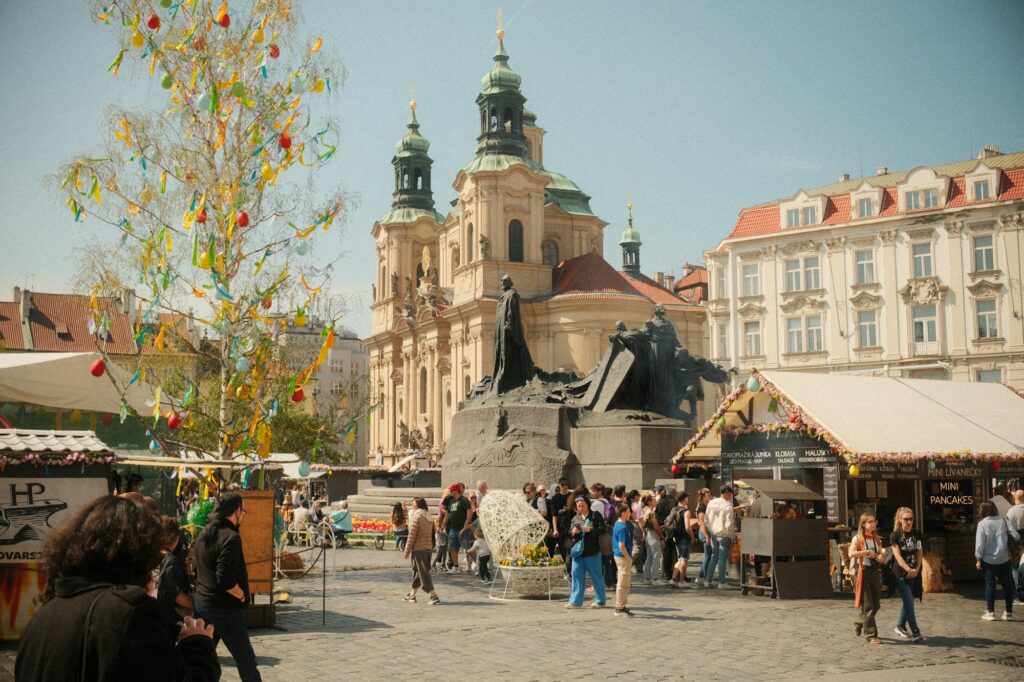
Easter falls on Sunday, April 5, 2026 — and it’s the perfect time to discover Central Europe at its most beautiful. In Prague, hundreds of wooden stalls take over the Old Town Square to the sound of folk dances. In Vienna, the courtyard of Schönbrunn Palace is adorned with spring colors and 40,000 painted eggs. In Budapest, the banks of the Danube come alive with centuries-old Hungarian traditions. This guide takes you through the most beautiful Easter markets of 2026 in these three capitals, with exact dates, tips, must-try specialties, and advice to plan your stay — without breaking the bank.
1. Prague — The Art of Easter in the Heart of Bohemia
Old Town Square & Wenceslas Square — The Iconic Markets
Prague’s Easter markets are anchored at Old Town Square (Staroměstské náměstí) and Wenceslas Square (Václavské náměstí), open daily from March 21 to April 12, 2026, from 10 AM to 10 PM. Beneath the medieval astronomical clock and the neo-Gothic spires of the Church of Our Lady before Týn, dozens of wooden stalls transform the square into a spectacular spring village. According to Real Prague Guides, the markets welcome up to 10,000 visitors per day on busy weekends.
The experience is first and foremost culinary: large spit-roasted hams (Pražská Šunka), barbecued sausages (klobása), garlic flatbread (langoš), and crepes (palačinky). Craft stalls offer pomlázky (willow-braided spring whips), straw ornaments, and wooden marionettes in folk costumes. Egg-decorating and candle-making workshops welcome families and children at Old Town Square.
Good to know: Peace Square (Náměstí Míru), in the upscale Vinohrady neighborhood, hosts a local-spirited market from March 21 to April 6 — less touristy, more authentic — with Prague artisans and noticeably lower prices than the historic center. Prague Secrète calls it its absolute top recommendation.
Highlights
- Magical setting: astronomical clock, Gothic spires, wooden stalls
- Workshops for painting kraslice eggs and making pomlázky
- Live folk dancing and music on stage
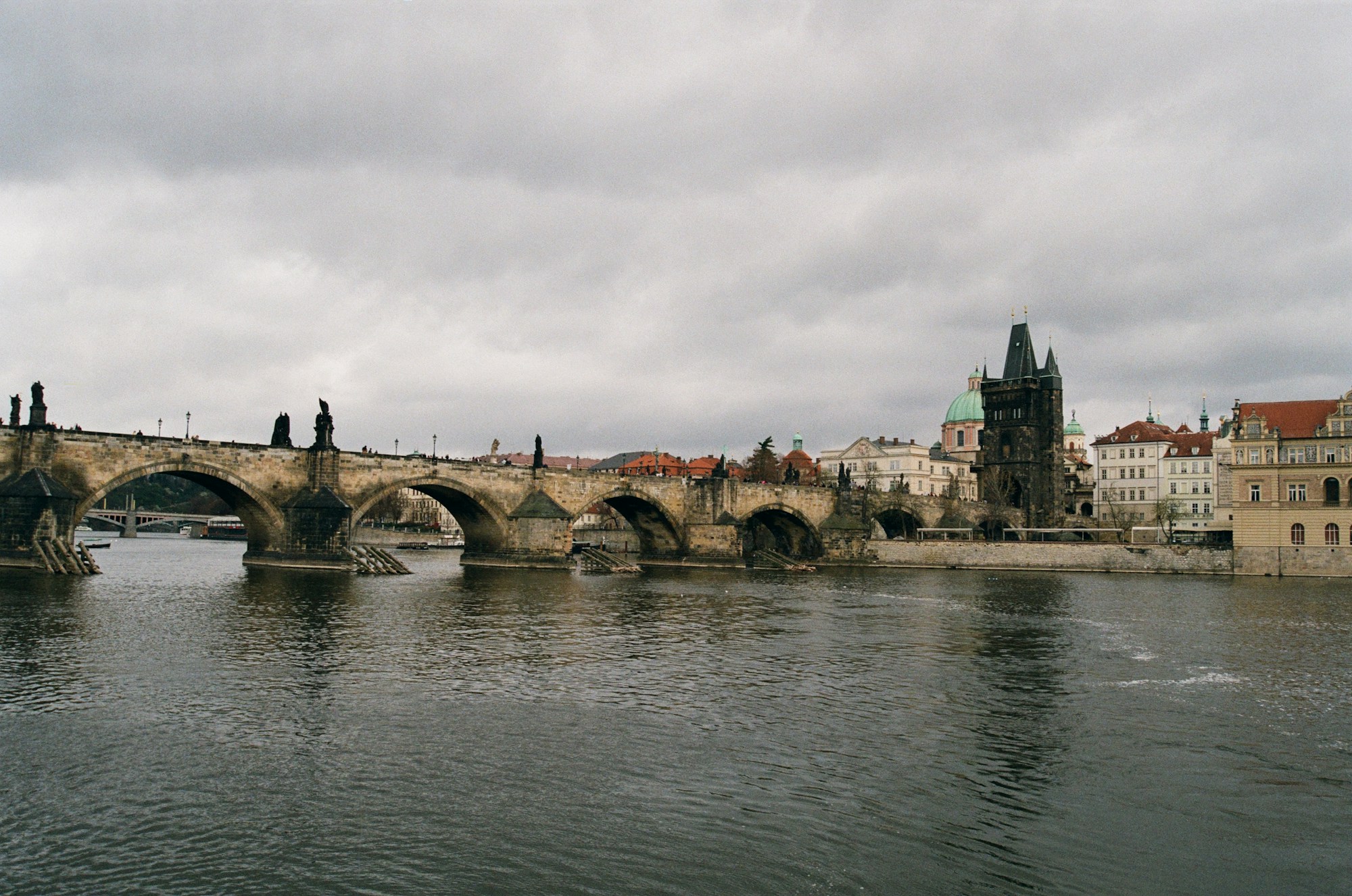
- Kampa Island market (at the foot of Charles Bridge) — the most romantic
- Havelský trh: Europe’s oldest market (since 1232), Easter-themed in spring
2. Vienna — Spring Magic in the Imperial City
Schönbrunn, Freyung & Am Hof — Three Markets, One Imperial City
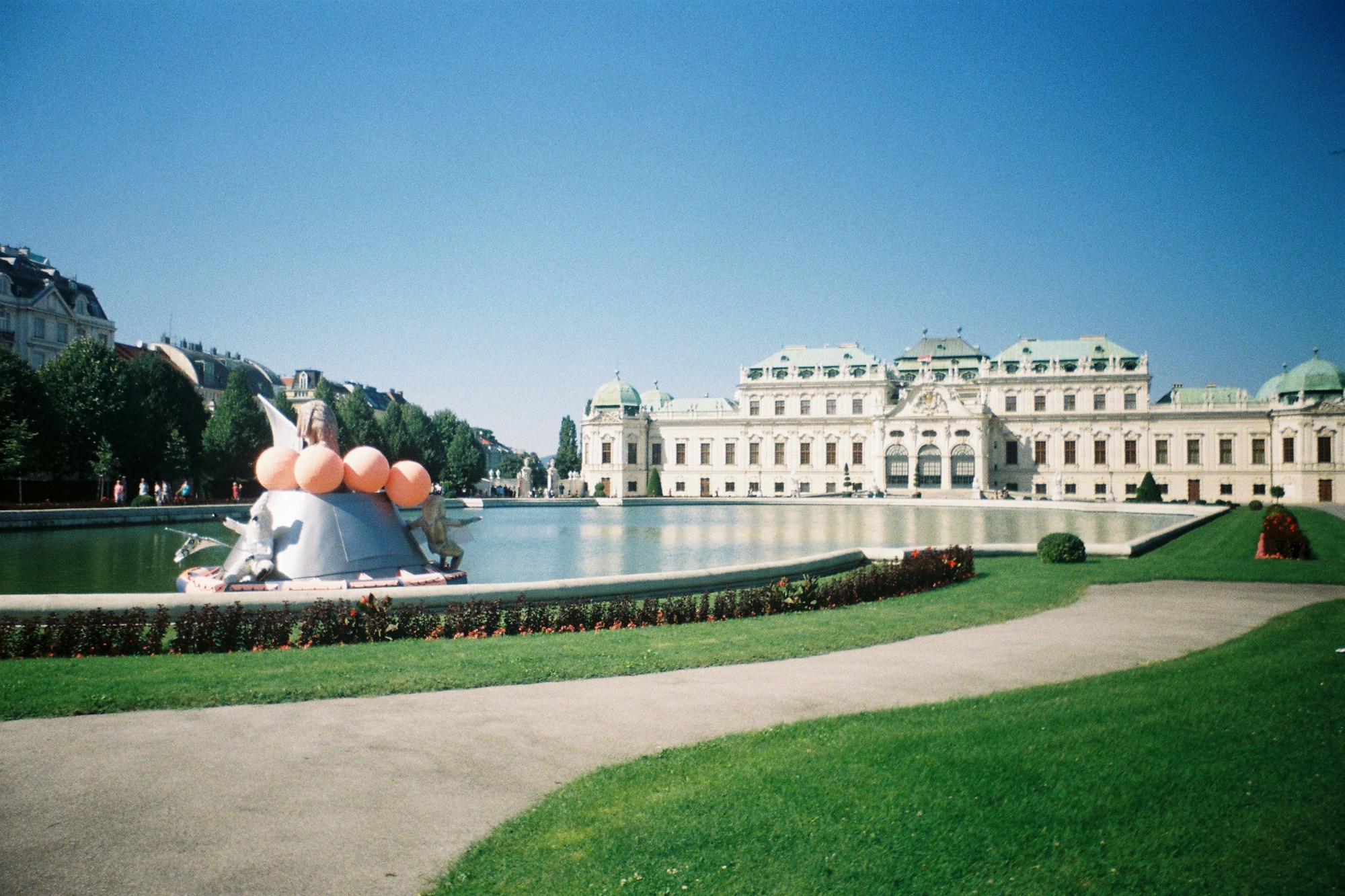
Vienna concentrates three must-see Easter markets, all free to enter. The Easter and Spring Market at Schönbrunn Palace (March 25 – April 19, 2026) is considered one of the most romantic in Central Europe, according to the palace’s official website. Unique in its kind, it extends beyond Easter and transforms into a spring market. Children love its straw labyrinth, merry-go-round, Ferris wheel, and craft workshops.
Freyung (March 20 – April 6) hosts one of the most iconic symbols of Viennese Easter markets each year: a giant egg tower made of 40,000 hand-painted Easter eggs, according to Wien.info, Vienna’s official tourism office. Artisans also offer Blaudruck textiles, handmade jewelry, and ceramics.
For art and refinement lovers, Am Hof Ostermarkt (March 20 – April 6) is the hidden gem: over 50 stalls of glassware, ceramics, and unique artisan creations, on the historic square where Mozart gave his first public performance in Vienna, according to Visiting Vienna.
Highlights
- Schönbrunn: the only major Easter market that continues after the holiday
- Freyung: Europe’s largest egg tower (40,000 painted eggs!)
- Am Hof: artistic and intimate atmosphere without the crowds
- Specialties: Osterpinzen (fluffy Easter bread), Striezel (braided brioche), Kaiserschmarrn
- During Easter school holidays: free transport for children under 14
3. Budapest — Hungarian Traditions on the Danube

Vörösmarty, Gozsdu & City Park — Hungarian Easter in Full Splendor
Budapest concentrates its Easter festivities over the long weekend from April 3–6, 2026, with three unmissable sites. The Spring Fair at Vörösmarty Square, in the heart of District V, continues the tradition of the popular Christmas Fair. According to Budapest by Locals, folk dance ensembles, music groups, egg-painting workshops, and an Easter play house animate the square, with the legendary Café Gerbeaud (founded 1858) as a backdrop.
In the heart of the Jewish Quarter, the Gozsdu Courtyard (Gozsdu Udvar) hosts an Easter market surrounded by bars, cafés, and ruin pubs — a unique cultural experience. The food is particularly noteworthy: kürtőskalács (chimney cake), lángos (garlic doughnut), and seasonal Hungarian specialties.
The Easter Festival at City Park (Városliget) is Budapest’s largest free Easter event, according to Trip to Budapest. Live concerts, craft workshops, traditional Hungarian cuisine, and children’s shows in the exceptional setting of the municipal park — with Vajdahunyad Castle and Széchenyi Baths within reach.
Highlights
- Unique traditions: locsolkodás (sprinkling), regional egg decoration
- Extremely rare technique: metal egg decoration (egg shoeing) practiced only in Hungary
- Gozsdu Courtyard: ruin pub atmosphere meets artisan market
- The most affordable of the three cities: 20–30% cheaper than Prague
- Thermal option: end your day at Széchenyi Spa after the festival
4. Hollókő — The UNESCO Village, a Must-Do Day Trip from Budapest
Hollókő Easter Festival — The Most Authentic Experience in Central Europe
About 100 km from Budapest, the village of Hollókő is a UNESCO World Heritage Site for its 67 red-tiled houses that bear witness to a rural way of life now largely vanished elsewhere. For four days, from Good Friday to Easter Monday, locals don their colorful Palóc folk costumes and bring back to life traditions centuries old, according to Today’s Festival.
The most spectacular ritual is locsolkodás: men and boys in embroidered vests sprinkle women with water at wells and in courtyards — a rite of purification and renewal. In Hollókő, unlike most towns, the village women still receive real buckets of water, not perfume, following the strictest tradition. In return, they offer hand-painted Easter eggs.
The entrance ticket gives access to all programs: Play House, School, Postal Museum, Village Museum, craft printing workshop, and Castle. On Good Friday (April 3), programs are completely free — flea market, egg painting, and screenings of old village films at the Visitor Center.
Highlights
- Living UNESCO village — not a frozen open-air museum
- Palóc folk costumes among the most colorful in Hungary
- Locsolkodás ritual with real buckets of water (unique in the world)
- Access by train + bus from Budapest (approx. 1h30)
- Good Friday: free entry to many programs
5. Budget Comparison — Which City to Choose?
Overall travel costs rank Budapest as the most affordable, Prague as mid-range, and Vienna as the most expensive, according to a detailed 2026 budget analysis. Travelers save 25–35% by choosing Budapest over Prague, and 40–50% compared to Vienna.
| Expense | 🇨🇿 Prague | 🇦🇹 Vienna | 🇭🇺 Budapest |
|---|---|---|---|
| 3-star hotel | €70–100/night | €100–140/night | €50–75/night |
| Restaurant meal | €12–18 | €18–26 | €9–14 |
| Daily transport | €4.80 | €8 | €4.40 |
| Beer on a terrace | €2–3 | €4–5 | €1–2 |
| Market meal | €8–15 | €15–25 | €5–12 |
Frequently Asked Questions about Easter Markets 2026
When exactly does Easter 2026 fall, and which days are public holidays?
Easter 2026 runs as follows: Holy Thursday on April 2, Good Friday on April 3 (public holiday in Czech Republic and Austria), Holy Saturday on April 4, Easter Sunday on April 5, and Easter Monday on April 6 (public holiday in all three countries). According to Visiting Vienna, Easter Monday in Vienna sees many shops and restaurants close — plan accordingly.
Are the Easter markets free to enter in Prague, Vienna, and Budapest?
Yes, entry is completely free in all three cities. In Prague (Old Town Square, Peace Square, Kampa Island), Vienna (Schönbrunn, Freyung, Am Hof), and Budapest (Vörösmarty, Gozsdu, City Park): you only pay for food and craft purchases. Only the Hollókő festival is paid (reduced rate for under 7s, Good Friday is free), according to Trip to Budapest.
What are the exact dates of the 2026 Easter markets?
Here is the 2026 summary: Prague — Old Town Square and Charles Bridge: March 21 – April 12; Peace Square: March 21 – April 6. Vienna — Freyung and Am Hof: March 20 – April 6; Schönbrunn: March 25 – April 19 (extended as a spring market). Budapest — Vörösmarty, Gozsdu and City Park: April 3–6. Hollókő: April 3–6. Sources: Real Prague Guides and Schönbrunn’s official website.
What culinary specialty should you not miss in each city?
Each city has its Easter treats: in Prague, don’t miss Mazanec (sweet braided bread with raisins and almonds) and Beránek (lamb-shaped cake). In Vienna, try Osterpinzen (traditional fluffy Easter rolls) and Striezel (braided brioche). In Budapest, the Hungarian Easter table features smoked ham, hard-boiled eggs, and kalács, the sweet braided Easter bread, according to Alle Travel.
How do you travel between Prague, Vienna, and Budapest?
Day trains and buses are the most economical option, with fares between €10 and €30 for routes between capitals, according to Pieter on Tour. Overnight trains can save on accommodation costs. For the Hollókő excursion from Budapest, take the train to Pásztó (about 1h30) then a local bus. By car, count about 90 minutes from Budapest to Hollókő.
What Easter traditions are unique to each country?
Each country has its own customs: in Czech Republic, men craft pomlázky (willow whips) and paint kraslice (wax-decorated eggs) — a tradition dating back to the 11th century. In Austria, the Osterbaum (Easter tree decorated with painted eggs) is a Viennese specialty. In Hungary, locsolkodás (sprinkling water or perfume on women) symbolizes renewal and fertility. Metal egg decoration (egg shoeing) is practiced only in Hungary and neighboring countries with Hungarian populations, according to Budapest by Locals.
Sources
- Real Prague Guides — Prague Easter Markets 2026: dates, locations and complete guide
- Schönbrunn Palace (official site) — Easter and Spring Market Schönbrunn 2026
- Wien.info — City of Vienna — Easter markets in Vienna 2026
- Visiting Vienna — Easter markets in Vienna: complete guide
- Budapest by Locals — Budapest Spring Fair & Easter Markets 2026
- Trip to Budapest — Budapest Easter Events 2026
- Today’s Festival — Hollókő Easter Festival 2026
- Pieter on Tour — Central Europe budget 2026: realistic guide
Research conducted on February 21, 2026
Ready to Experience Easter in Central Europe?
Prague, Vienna, or Budapest — each city offers a unique Easter experience. Discover our detailed itineraries to plan your dream stay and make the most of the 2026 Easter markets stress-free.
Explore all itineraries