

Imagine yourself behind the wheel of your van, windows open, with the electric blue of Kotor Bay below — and in two weeks, the turquoise coves of the Albanian Riviera. This 3-week road trip from Dubrovnik to Tirana via Montenegro and Albania is one of the most breathtaking van itineraries in Europe in 2026: Mediterranean fjords, wild national parks, pristine beaches, and legendary hospitality — all on a budget. According to travel experts, it is entirely realistic to travel as a couple for 25–35 € per day in Albania — including fuel.
What strikes you immediately about the Balkans is the contrast. You can go from the misty mountains of Durmitor to turquoise coves in a single day. This blend of cultures — Central European, Mediterranean, and Ottoman influences — gives each stage a unique richness. Here is our complete, sourced and illustrated guide to planning your van road trip from Dubrovnik to Tirana in 2026.
A 3-week van road trip from Dubrovnik to Tirana through Montenegro and Albania covers 21 days, from the Croatian coast to the Albanian capital. The step-by-step itinerary comes first, and the budget for two people is in the budget section below.
The 21-day itinerary: from Dubrovnik to Tirana
This itinerary covers approximately 2,500 km over three weeks, crossing Croatia, Montenegro, and Albania. It combines the Adriatic coast, the Dinaric Alps, and the Ionian coast for a complete van experience.
| Days | Stages | Distance | Night |
|---|---|---|---|
| D1–D2 | Dubrovnik → Kotor (Bay of Kotor) | 90 km | Official / wild camping |
| D3–D4 | Kotor → Budva → Petrovac | 50 km | Campsite |
| D5–D6 | Petrovac → Lake Skadar (Virpazar) | 60 km | Lakeside bivouac |
| D7–D9 | Lake Skadar → Žabljak / Durmitor | 170 km | Durmitor camping |
| D10 | Tara Canyon & Đurđevića Bridge | 0 km | Camping |
| D11 | Back via Podgorica → Ulcinj | 120 km | Beach camping |
| D12 | Ulcinj → Border → Shkodra | 70 km | Van parking / camping |
| D13 | Shkodra → Theth (Albanian Alps detour) | 80 km | Guesthouse Theth |
| D14 | Theth → Shkodra → Coast | 180 km | Coastal camping |
| D15–D16 | Riviera: Vlorë → Llogara → Dhërmï → Gjipe | 80 km | Wild camping |
| D17 | Himara → Borsh → Ksamil | 90 km | Ksamil camping |
| D18 | Ksamil → Saranda → Butrint | 15 km | Saranda camping |
| D19 | Saranda → Gjirokastër (detour) | 60 km | Town van parking |
| D20 | Gjirokastër → Berat | 110 km | Berat camping |
| D21 | Berat → Tirana | 120 km | Tirana camping |
Preparing your van for the Balkans: documents, insurance, equipment
Before hitting the road for the Balkans, a few preparations are essential. The good news: French citizens need no visa for Montenegro or Albania (stays up to 90 days with a valid ID card or passport). According to the French Ministry of Foreign Affairs, the document must be valid for 3 months after your planned return date.
Mandatory documents
- Valid passport or ID card (passport recommended for Albania)
- Driving licence (French/EU licence valid in both countries)
- Vehicle registration document
- Green card with codes MNE (Montenegro) and AL (Albania) not crossed out
- Warning triangle and high-visibility vest (mandatory)
Montenegro and Albania recognize European insurance via the Green Card. However, it is essential to check that the MNE and AL codes appear on your Green Card without being crossed out. According to D66.org, the most common oversight is a Green Card not updated for Albania — in which case you will need to buy local insurance at the border (45–55 € per week). Simply call your insurer before departure to have these two codes added.
Essential van equipment
- Extra water jerrycan (minimum 20–30 L) — van services are scarce in Albania
- Solar panels or auxiliary battery — many wild spots without electricity
- Park4Night app — essential for finding free or paid spots with reviews
- eSIM or local SIM card — your EU roaming may not work everywhere
- Cash in Albanian LEK for local campsites and rural areas (1 € ≈ 98 LEK)
Stage 1: Dubrovnik, Croatia (D1–D2)
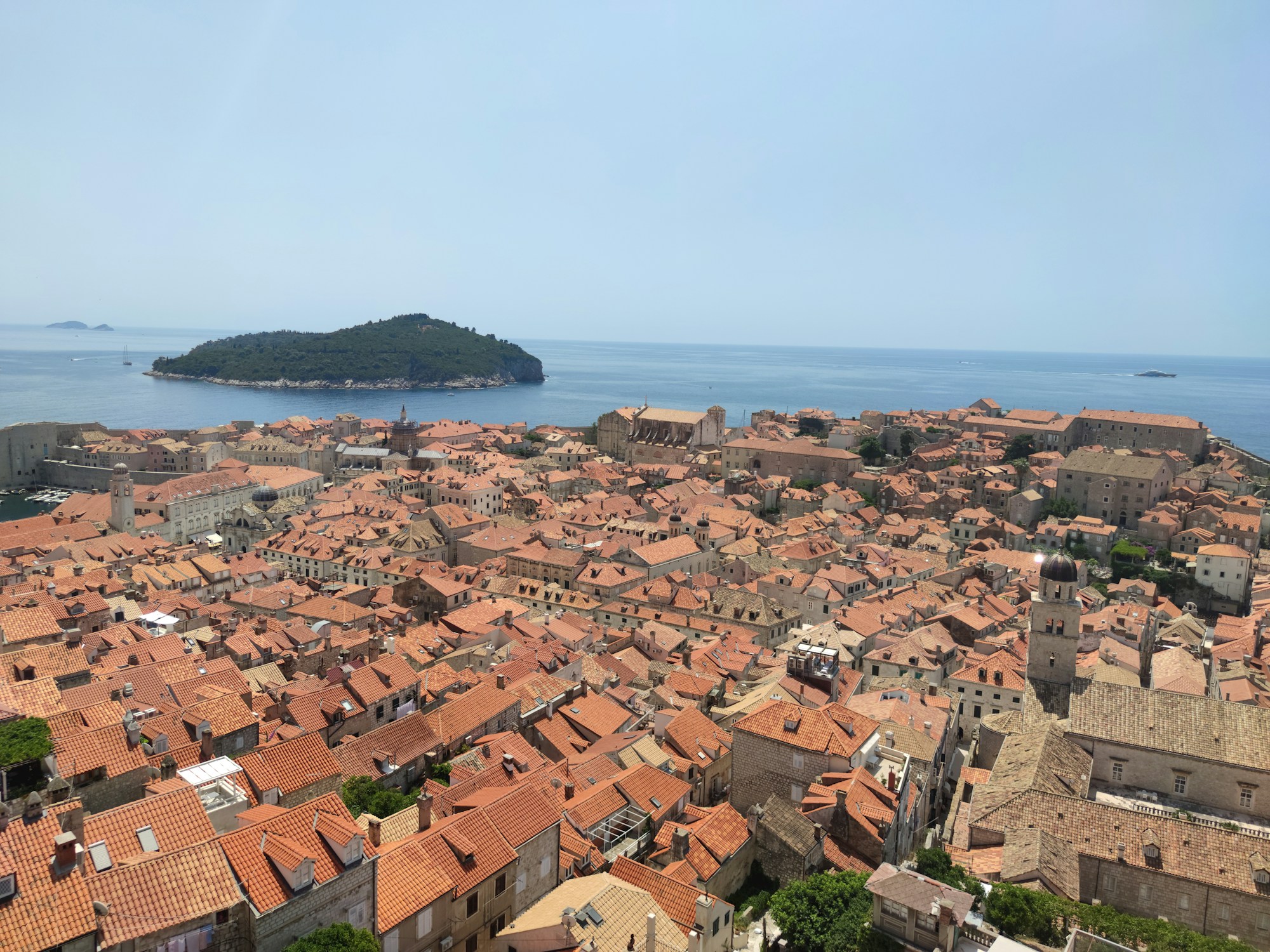
Dubrovnik — The gateway to the Adriatic
Dubrovnik is the natural starting point for this itinerary. With your van, it is better to park outside the historic centre — traffic restrictions are very strict and wild camping is prohibited throughout Croatia. The solution: Camping Solitudo, only 3 km from the centre, from 20–25 €/night.
Spend half a day in the UNESCO-listed old town: walk the city walls overlooking the Adriatic, get lost in the marble lanes, and enjoy a coffee on the Stradun. But don’t linger too long — Dubrovnik is the most expensive stop on this itinerary, and the real adventure begins across the Montenegrin border.
Practical tips
- Leave early for the border — outside peak season, waiting time rarely exceeds 10–15 minutes
- Avoid July–August: crowds and inflated prices
- The road from Dubrovnik to Montenegro passes hidden coves still little-visited on the Croatian side
Stage 2: Kotor & the Bay of Kotor (D3–D4)
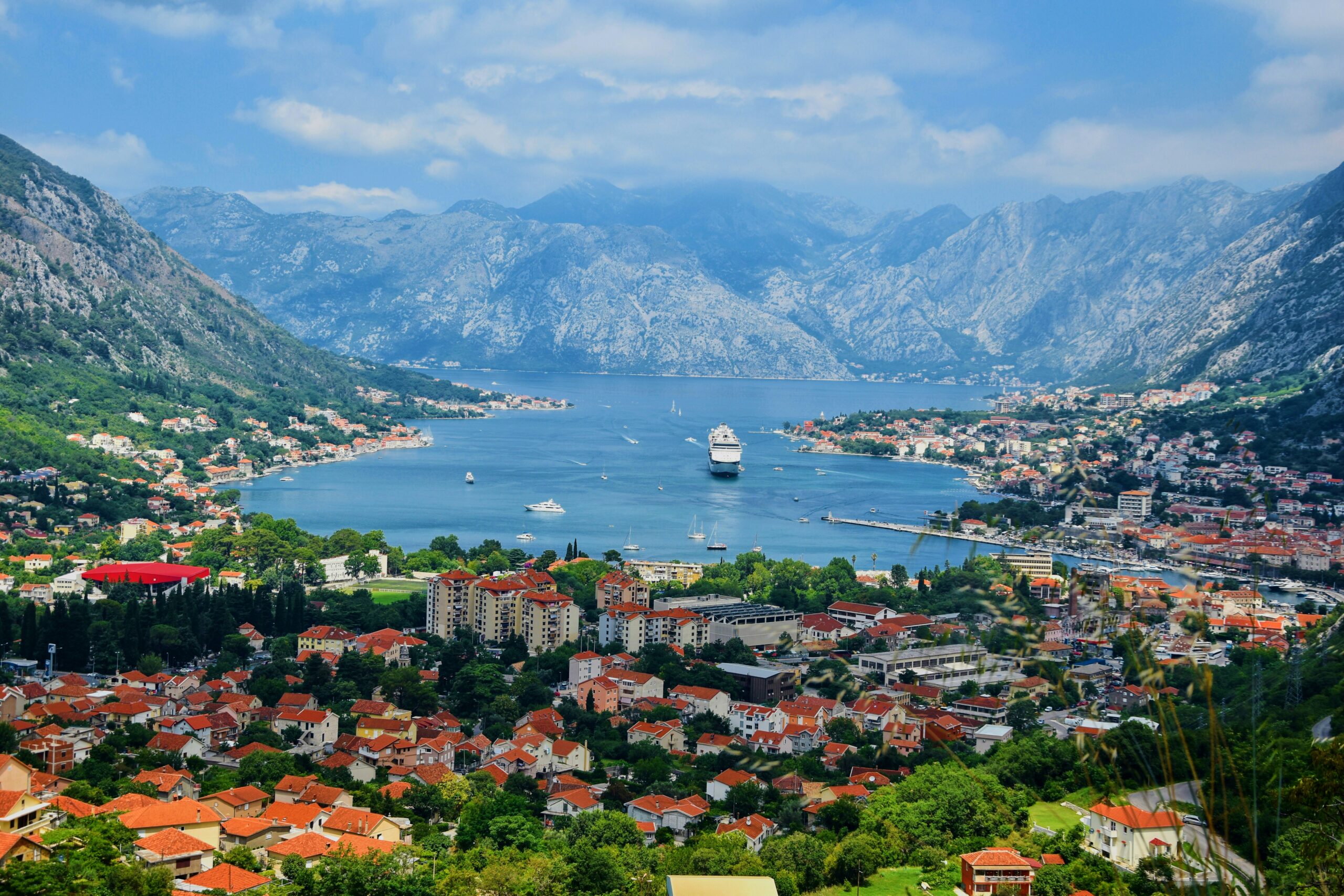
Kotor — The « Southern Fjord » and its hidden treasures
The Bay of Kotor is often called the « Southern Fjord » — technically a ria, but the beauty is real: calm waters framed by vertiginous karst mountains. The UNESCO-listed medieval old town of Kotor deserves 2 hours of exploration on foot between its paved lanes and Venetian fortifications.
But for van-lifers, the real treasures lie around the bay. According to These Wild Journeys, the villages of Perast, Risan, or the Lustica peninsula are almost deserted out of season. For a night with a bay view: AutoKamp Dule at ~15 €/night is unmissable.
Don’t miss
- The panoramic road to Lovćen Pass — a plunging view over the bay that surpasses any photo
- The village of Perast and its two islets in the middle of the bay (Our Lady of the Rocks)
- In summer, Kotor is invaded by cruise ship passengers — always recommend the low season
Stage 3: Budva & the Montenegrin Riviera (D5–D6)
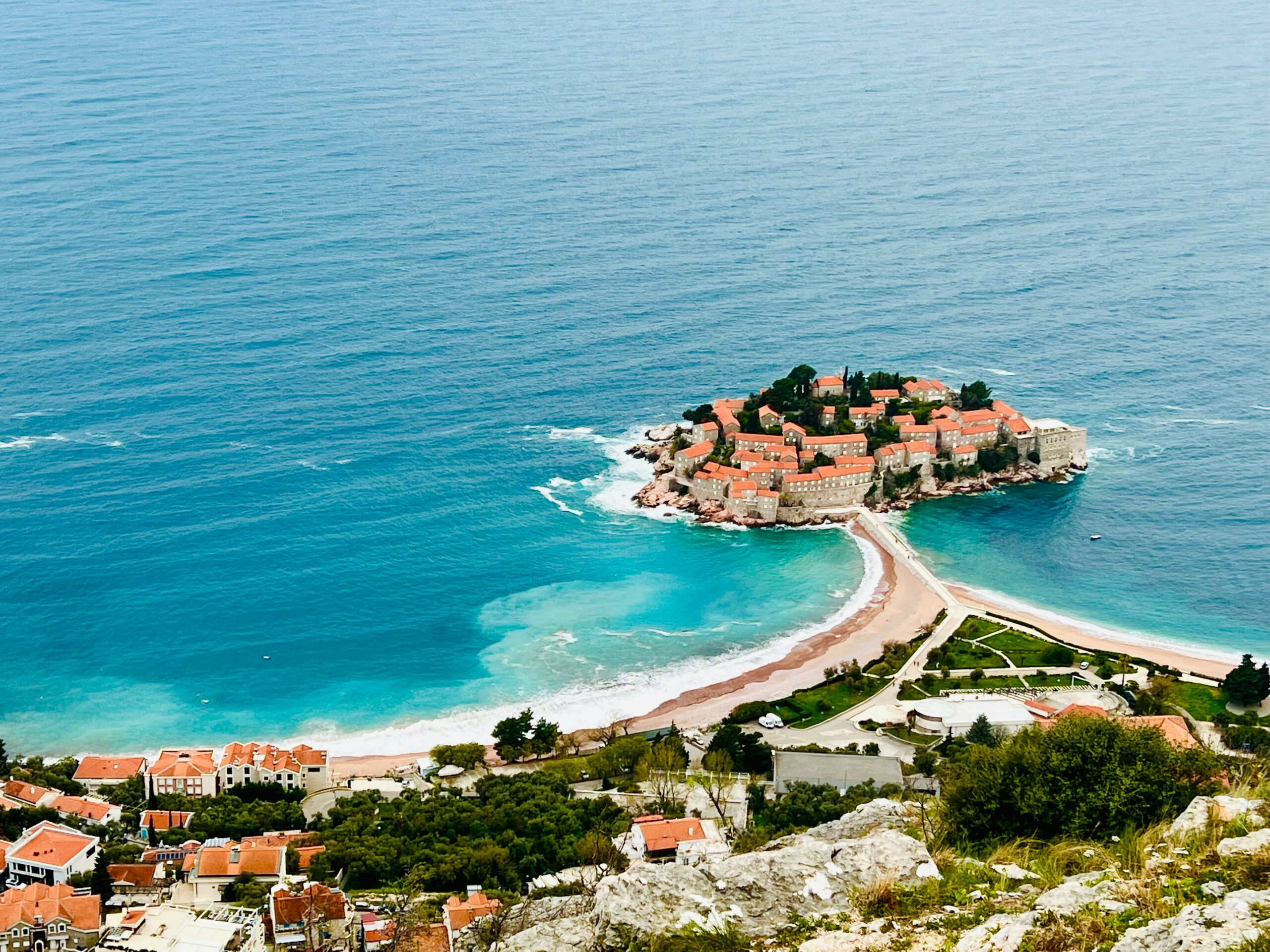
Budva — Glam or wild? Both at once
Budva is Montenegro’s best-known seaside resort. Its old town perched on a rocky headland is stunning, but in July–August it resembles an overcrowded Mediterranean resort more than authentic Balkans. For van-lifers, the real gem is the coast south of Petrovac: isolated coves, almost pristine pebble beaches, and free roadside parking by the sea.
According to Blue Marble Vagabonds, a stop at Valdanos beach, north of Ulcinj, allows you to settle without crowds amid ancient olive trees — one of the most beautiful bivouacs in all of Montenegro. The coastal road between Budva and Petrovac is one of the most photogenic in the country: hairpin bends overlook beaches only visible from your van window.
Stage 4: Durmitor National Park & Tara Canyon (D7–D10)
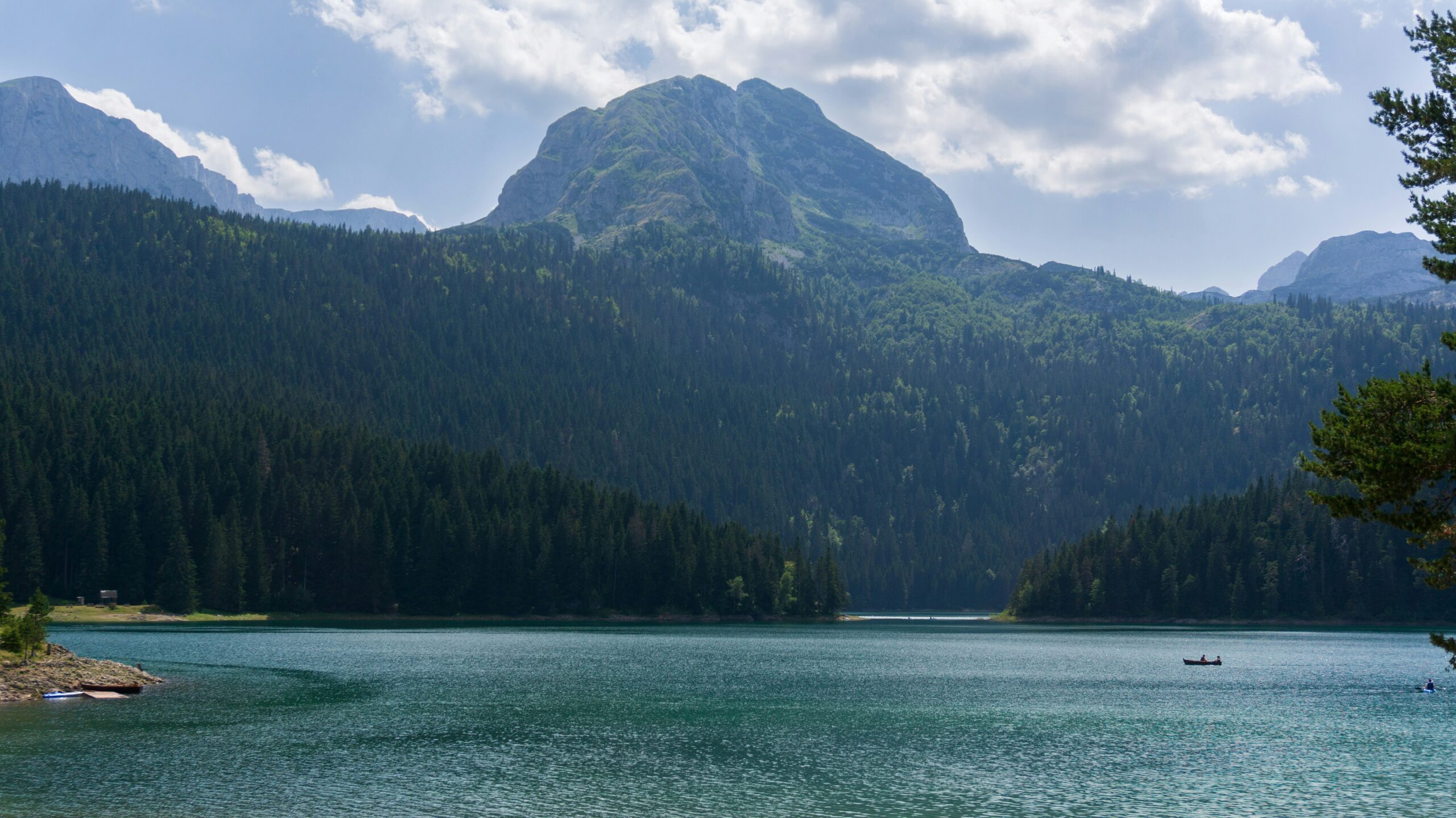
Durmitor — The Himalayas of the Balkans
In northern Montenegro, Durmitor is one of Europe’s most impressive national parks. It features 48 Dinaric Alps peaks above 2,000 m, 18 glacial lakes, 304 caves, and the Tara Canyon — Europe’s deepest at 1,333 m.
The big surprise for van-lifers: wild camping is officially permitted in Durmitor National Park — a rare case in Europe. According to Roads and Rivers, park entry costs 5 € per person per day. An annual pass covering Durmitor, Lovćen, Biogradska Gora, Skadar and Prokletije costs just 13.50 €.
The Tara Canyon & Đurđevića Bridge
The Đurđevića Tara Bridge stretches 365 metres above one of Europe’s deepest canyons. It towers 172 metres above the Tara River, nicknamed « the Tear of Europe » for the crystal purity of its waters. Rafting is king: the most powerful rapids run from April to June, with packages from 40 to 70 € per person.
- 73 km panoramic circuit from Žabljak via Bosača village (1,600 m altitude)
- Ćurevac hike (2 km return from Žabljak) for the best canyon view
- Zip-line over the canyon — the sensation of flying above the « European Grand Canyon »
Stage 5: The Albanian Riviera — The Last Wild Mediterranean (D15–D18)
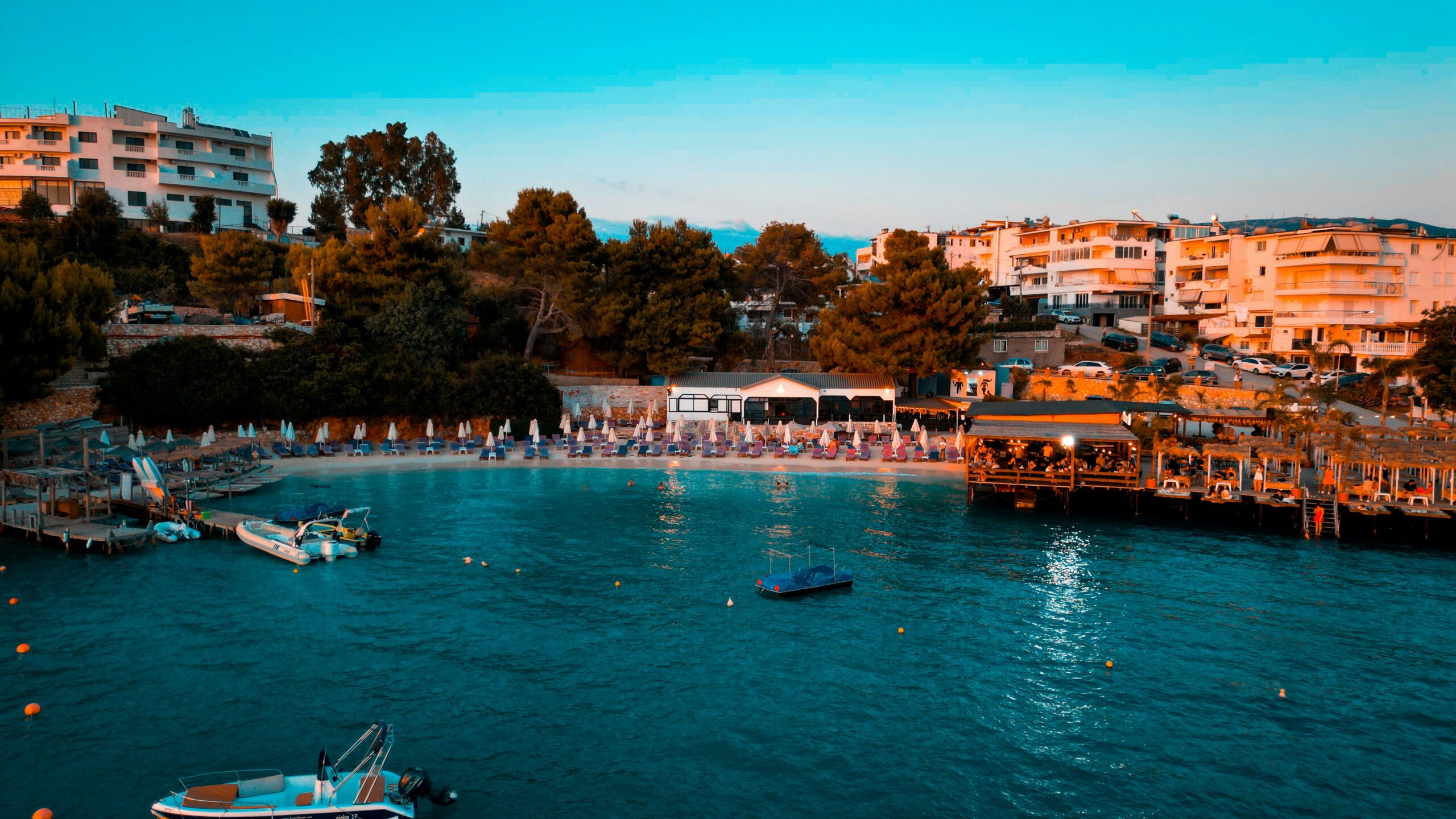
Albanian Riviera — From Vlorë to Ksamil
From Vlorë to the Greek border, it’s a succession of secret coves, cliffs plunging into the blue, gleaming white pebble beaches, and waters of an almost unreal turquoise. According to The Wom Travel, this is where you’ll find the best snorkelling spots and the most photogenic landscapes in the country.
Riviera highlights for van-lifers
- Llogara Pass (1,027 m) — the most spectacular road on the Riviera: from giant pines to 180° views over the Ionian Sea
- Dhërmï — white pebble beach stretching for kilometres with the adjacent Drymades beach even quieter
- Gjipe — secluded wild beach between Dhërmï and Himara, accessible only on foot (20 min) or by boat
- Borsh — Albania’s longest beach (7 km), still spared from mass tourism
- Ksamil — the jewel of the Riviera, with its three islets accessible by swimming and Caribbean-like waters
Stage 6: Tirana — The Balkans’ Most Colourful Capital (D21)
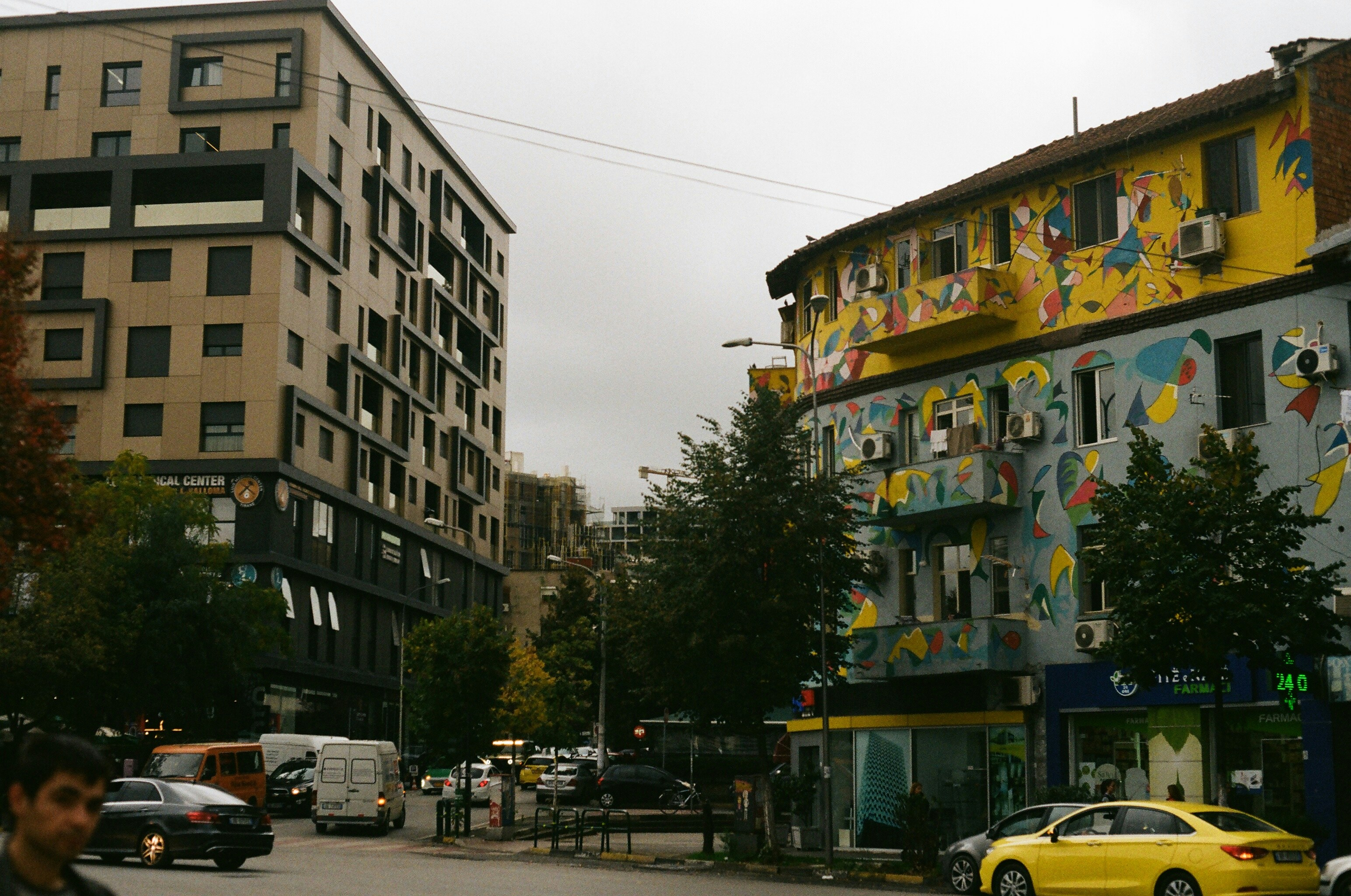
Tirana — Creative explosion and final surprise
Tirana is a total surprise: a capital in full creative explosion, covered in murals, trendy bars, and lively cafés. According to Renting Van Albania, Tirana reportedly has the highest density of bars per capita in Europe.
Must-sees in Tirana
- BunkArt — Enver Hoxha’s former atomic bunker transformed into a contemporary art museum
- Bllok district — formerly reserved for communist elites, now the heart of nightlife
- Skanderbeg Square and the National History Museum
- Lake Bovilla (15 km north-east) — turquoise waters between dramatic cliffs, free wild camping, swimming and kayaking
For the rest of Albania, the complete Albania 2026 guide covers Tirana, the Albanian Riviera and Berat.
Budget & logistics for 3 weeks
For two people, with an already-equipped van, cooking regularly and alternating wild camping with official campsites, you can manage 800 to 1,000 € for three weeks. A full meal with drinks regularly costs around 25 € for two in Albania.
| Expense | Montenegro (7 days) | Albania (14 days) | Total 3 weeks |
|---|---|---|---|
| Fuel (~2,500 km) | ~60 € | ~120 € | ~180 € |
| Camping (mix wild + official) | 5–15 €/night | 0–15 €/night | ~120–200 € |
| Food (market + 1 restaurant/day) | 25–35 €/day | 15–25 €/day | ~350–500 € |
| Entrance fees | ~40 € | ~30 € | ~70 € |
| Activities (rafting, boat…) | ~80 € | ~50 € | ~130 € |
| Phone (eSIM) | — | ~20–30 € | |
| Miscellaneous | — | ~50 € | |
| TOTAL (2 people) | — | ~920–1,160 € | |
Frequently asked questions about the Balkans van road trip
Is wild camping allowed in Montenegro and Albania?
In Montenegro, wild camping is officially permitted in Durmitor National Park — a rare case in Europe. Elsewhere it is technically illegal but widely tolerated in practice, notably on the shores of Lake Skadar or in the hills around Kotor. In Albania, there is no law against wild camping. According to Nigel and Sue Adventures, they saw only one « No Camping » sign during their entire trip through the country. Note: during the dry season (June–September), open fires are strictly forbidden due to high wildfire risk.
Are the roads in Montenegro and Albania passable for a van?
Overall, Montenegrin roads are in good condition, with a few exceptions: the northern road from Bosnia towards Durmitor and hairpin roads near the Adriatic coast. In Albania, main roads are generally fine, but some secondary roads can be narrow or unpaved. A compact van (VW T6 or Mercedes Sprinter L1/L2) handles the main itinerary perfectly. However, the road to Theth (Albanian Alps) is strictly reserved for small vans — impossible for large motorhomes.
Is Albania safe for van travellers?
Albania is considered very safe for van and motorhome travellers. According to Albania Secrets, the country’s greatest asset is its people: travellers regularly report being offered food, drinks, or shots of raki by locals. The only places where slightly more vigilance against theft is needed are large cities like Tirana — standard advice for any European country. At night, always lock your van completely.
Do I need a visa for Montenegro and Albania?
No. EU citizens are exempt from visa requirements for stays up to 90 days in both countries. For Albania, the travel document must be valid for 3 months after your planned return date. For Montenegro, a valid ID card or passport suffices. Note: Croatia is part of the Schengen Area, so your entry into Croatia counts toward the 90-day Schengen allowance.
How do I manage van insurance for this trip?
Montenegro and Albania recognise European insurance via the Green Card. Check that the MNE (Montenegro) and AL (Albania) codes appear on your Green Card without being crossed out. The most common oversight is a Green Card not updated for Albania — resulting in having to buy local insurance at the border (45–55 € per week). Simply call your insurer before departure to have these two codes explicitly added.
What is the best time to do this road trip?
May–June and September are the ideal months. You get pleasant temperatures (18–25°C on the coast), reduced crowds, affordable prices, and open facilities. July–August brings mass tourism, prices double in popular spots like Ksamil and Dhërmï, and temperatures can reach 35–40°C. October offers stunning mountain landscapes in total tranquillity, though some services close. According to Pixidia, April–June is the optimal window for Albania.
How do I find water for my van in Albania?
Van services (water refill, grey/black water dump) are harder to find in Albania than in Montenegro. Water is available at many petrol stations and villages, often free or for a few LEK. Carry a minimum of 20–30 litres of reserve, and don’t hesitate to ask locals for the next drinkable water source — it’s often the start of a warm exchange. For grey water, some campsites have dump stations; otherwise use biodegradable products and avoid dumping near watercourses.
What size van is recommended for this itinerary?
A VW T6 or Mercedes Sprinter L1/L2-type van is ideal. These vans are manoeuvrable, easy to park, fuel-efficient, and perfect for mountain roads and city access. A large motorhome (over 7 m) will be strongly discouraged on Albanian mountain roads or the Theth route. For the main coastal itinerary, a standard Sprinter L2H2 handles everything fine.
Sources
- Mon Carnet de Voyage — Van road trip guide in Montenegro
- Blue Marble Vagabonds — Vanlife in Montenegro: wild spots, practical tips
- These Wild Journeys — Everything about vanlife in Montenegro
- Nigel and Sue Adventures — Albania by campervan: safety, fuel, camping
- Albania Secrets — Best campervan sites in Albania
- Roads and Rivers — Durmitor National Park: circuits, camping, entry fees
- D66.org — Driving to Albania: essentials, itinerary, budget
- French Ministry of Foreign Affairs — Travel advice: Albania
- Pixidia — Van road trip in Europe 2026: itineraries, budget and secret spots
Research conducted in March 2026
Ready to hit the road to the Balkans?
From Dubrovnik’s Adriatic fjords to Montenegro’s wild mountains, from the Albanian Alps to the turquoise coves of Ksamil — this 3-week van road trip is one of Europe’s richest and most accessible adventures in 2026. Choose May–June or September for the best conditions: fewer crowds, affordable prices, and landscapes at their finest. Discover itineraries created by our community of travellers and plan your next Balkans van adventure.
Explore all itineraries