
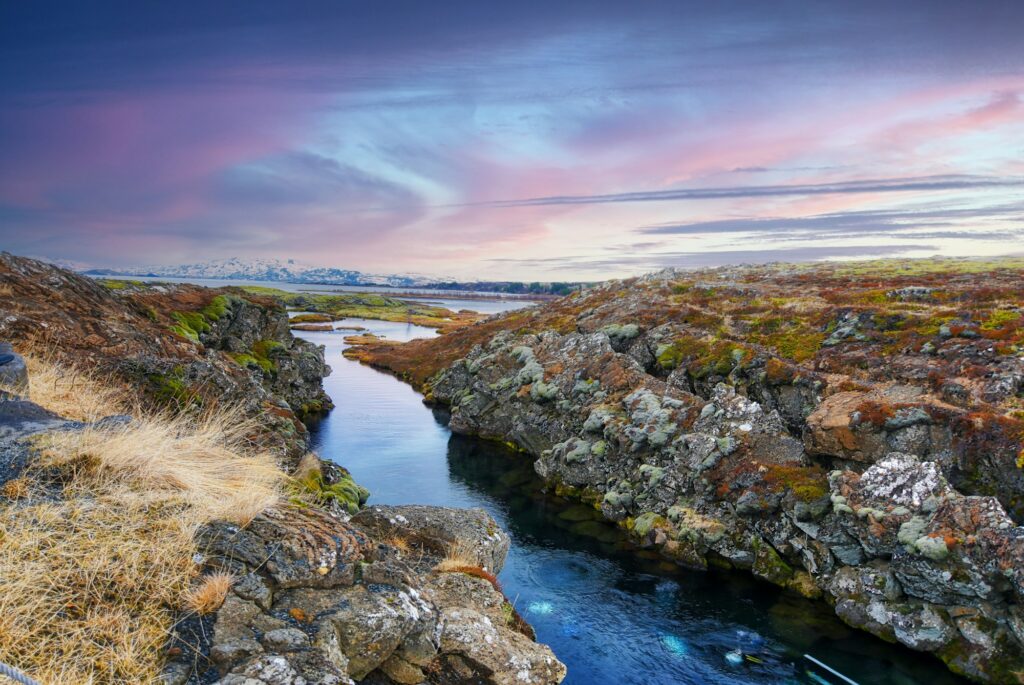
Water at 2°C burns your hands like fire. — This is the striking paradox experienced by divers exploring Iceland’s Silfra fissure or Norway’s fjords: in these Arctic waters of absolute clarity, between two continents or facing World War II wrecks, cold-water diving is attracting an unprecedented wave of underwater adventurers in 2026. As coral bleaching spreads across tropical seas, divers worldwide are turning massively northward. This guide takes you to the heart of this movement, with the best destinations, required equipment, and advice from local experts — all sourced and verified for 2026.
The maximum depth allowed for diving in the Silfra fissure is 18 metres. As of 20 October 2026, dives usually last 30 to 45 minutes in water at 2 to 4 °C. Divers need an Open Water certification plus either a drysuit certification or 10 logged drysuit dives within two years.
1. The Silfra Fissure — Diving Between Two Continents
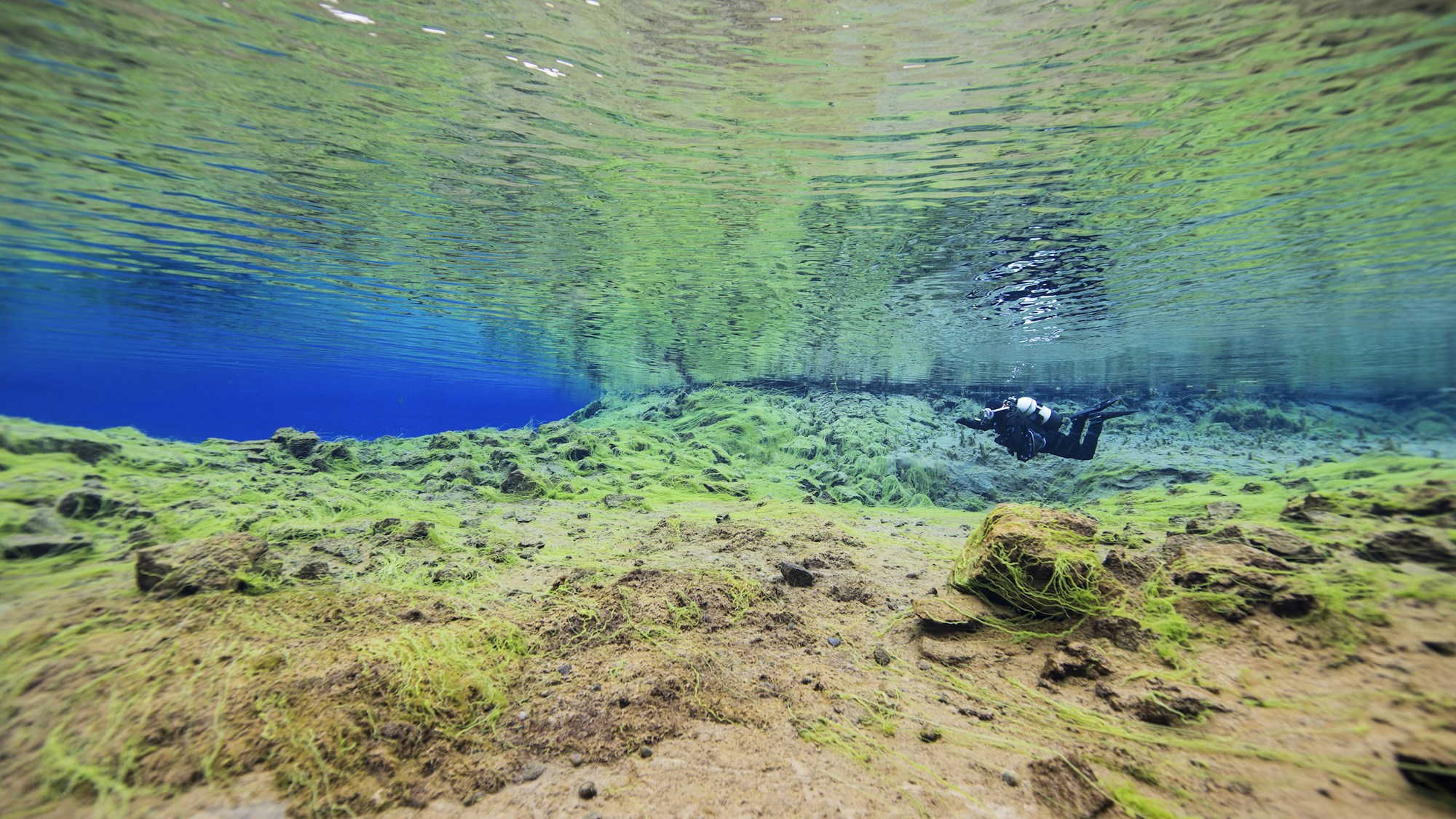
Þingvellir National Park, Iceland
The Silfra fissure, located in Þingvellir National Park, a UNESCO World Heritage Site, is one of the world’s most exceptional dive sites. According to Dive Silfra, the water temperature remains stable between 2 and 4°C year-round, fed by the Langjökull glacier filtered through lava rocks for 30 to 100 years. The result: visibility exceeding 100 metres and water so pure it is drinkable.
The site is divided into four sections: Silfra Hall, Silfra Cathedral (the most impressive, with 60 m high walls), Silfra Lagoon, and the Sandy End. According to Dive.is, divers must hold a PADI Drysuit Diver certification or equivalent, with at least 10 logged dives.
- Best period: April–October (milder weather, 18–20h daylight in summer)
- Minimum certification: PADI Open Water + Drysuit Diver
- Duration: approximately 5 hours including briefing + 2 dives
- Visibility: up to 100 metres
- Budget: €161–300 depending on operator and group size
2. Strýtan and Iceland’s Geothermal Sites
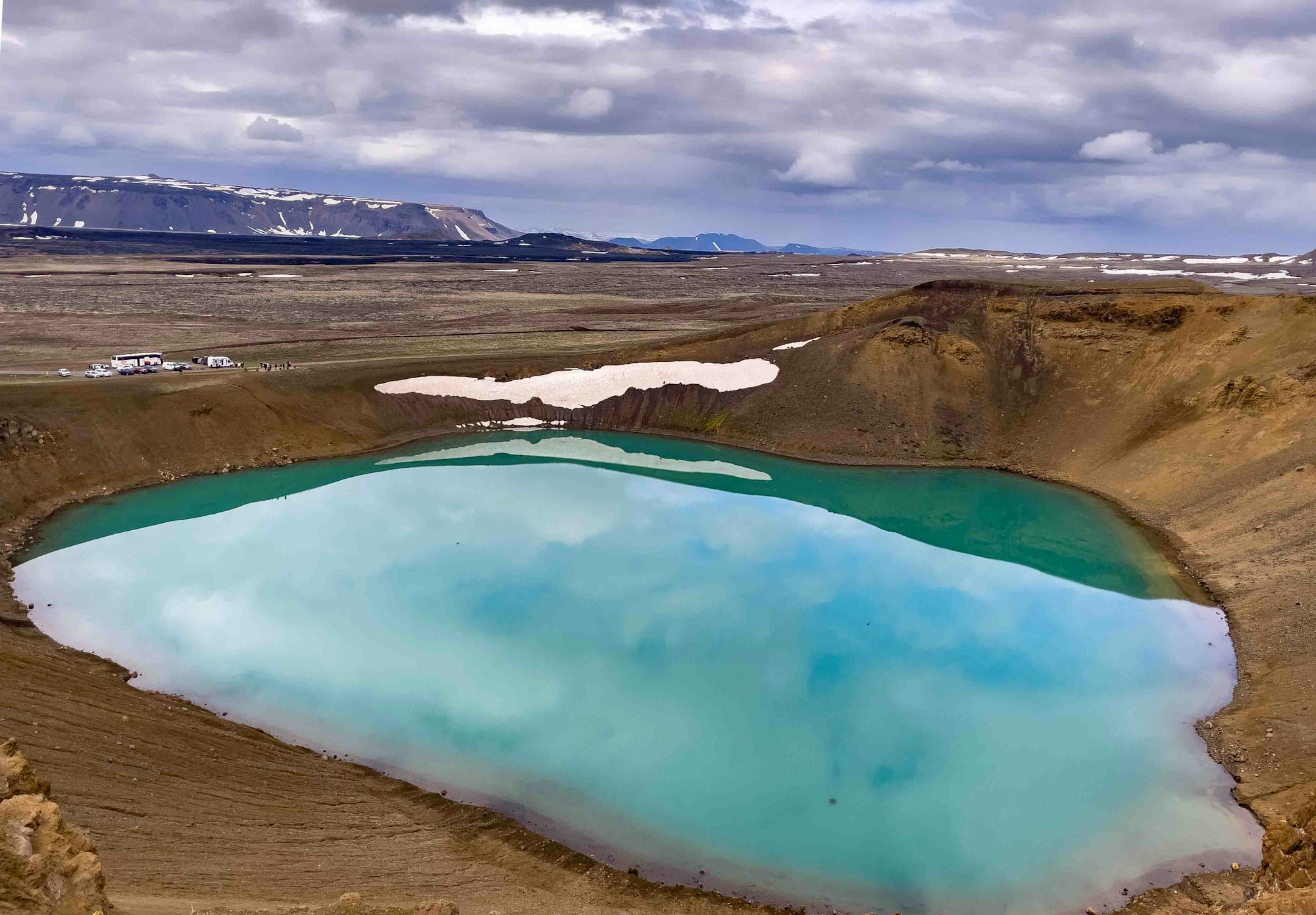
Eyjafjörður, Northern Iceland
Less well-known than Silfra, the Strýtan chimneys in Eyjafjörður are Iceland’s second jewel for cold-water diving. According to Icefiord Dive, these hydrothermal vents on the seafloor emit warm freshwater at 70–80°C into the cold saltwater of the fjord, creating a unique thermocline visible to the naked eye. The main chimney rises to 55 metres high, just 15 metres below the surface.
Unlike Silfra, this site is rarely crowded: according to local guides, fewer than 200 divers visit per year. The PADI Advanced Open Water + Drysuit Diver certification is required to reach the main chimney at 15 m depth.
- Best period: June–September (weather and sea conditions)
- Access via: Akureyri (airport + 45 min drive)
- Local operator: Icefiord Dive (Sævar Ólafs, pioneer of the site)
- Budget: €200–350/day including boat and guide
- Unique feature: freshwater chimneys in saltwater environment
3. Norwegian Fjords — Cold Water, Extraordinary Life
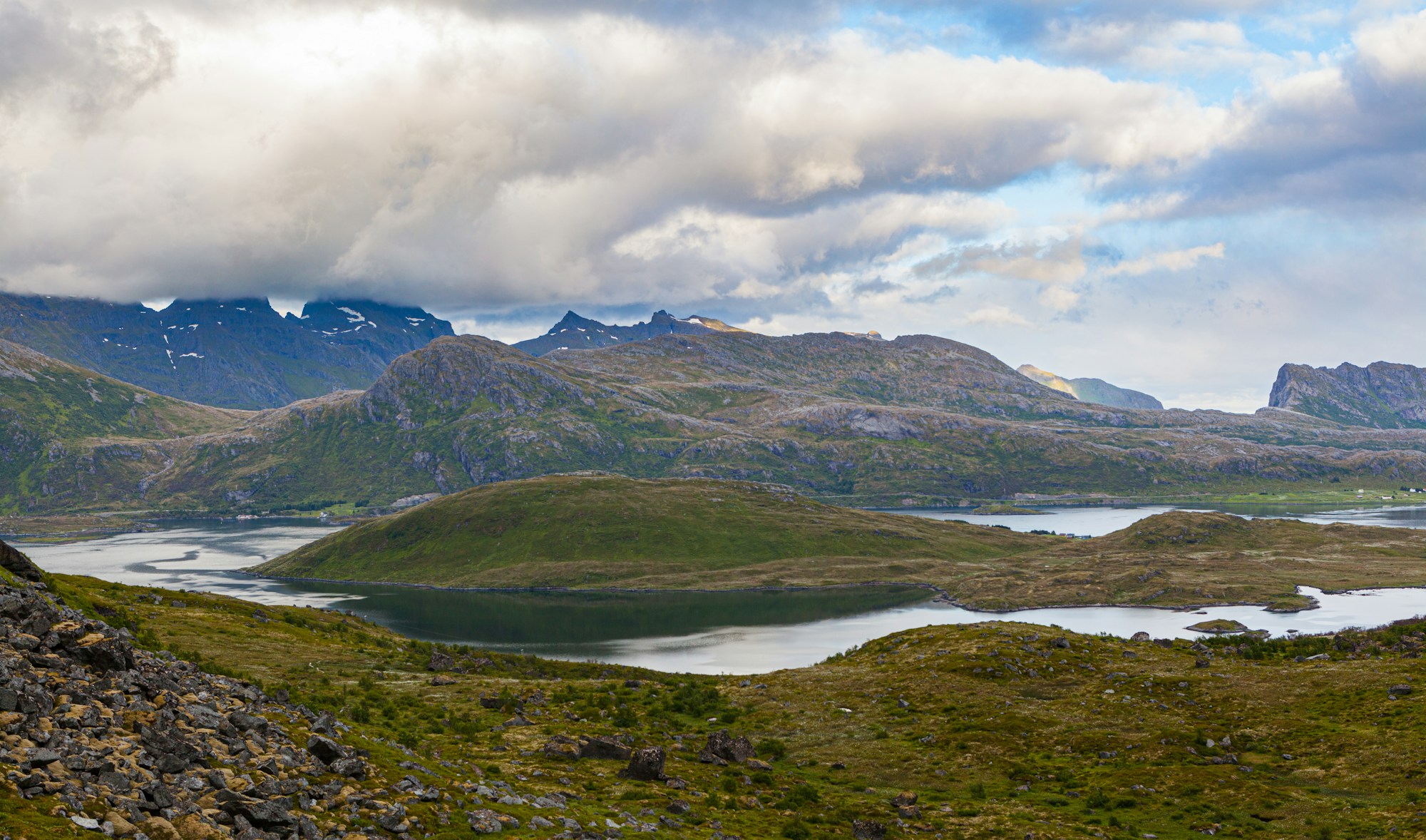
Lysefjord, Hardangerfjord & Sognefjord, Norway
According to Nordic Diver and Visit Norway, Norwegian fjords offer some of the richest cold-water biodiversity in the world. The combination of deep, fresh, nutrient-loaded waters and Arctic currents creates exceptional visibility (up to 40 m in the fjords) and incredible marine density.
Key sites for 2026:
- Lysefjord (Stavanger): walls dropping to 500 m, giant wolffish, Atlantic halibut. Budget: €130–180/guided dive day.
- Gulen Dive Resort (Sognefjord): Norway’s first dedicated cold-water dive resort. Package 3 days/3 nights/6 dives from €480. Species: 250+ types of nudibranch, giant spider crabs.
- Hardangerfjord: unique night dives with bioluminescent plankton in summer. Base: Ulvik village.
4. Narvik & Lofoten — World War II Wrecks and Arctic Wildlife
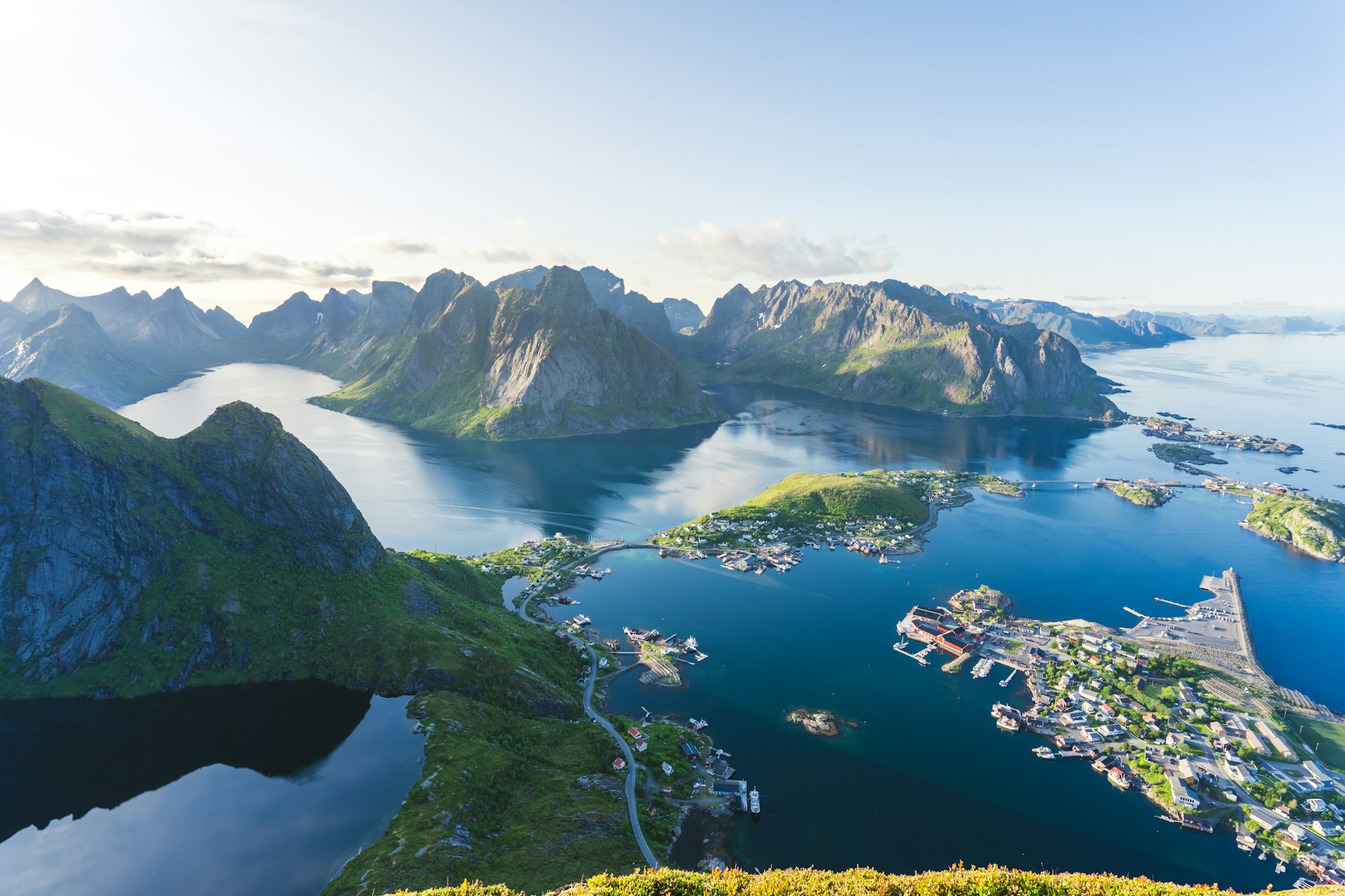
Narvik & Lofoten Archipelago, Northern Norway
The Battles of Narvik in April–June 1940 left some of northern Europe’s most significant wreck diving sites. According to Arctic Eagle Diving, over 50 wrecks lie in Ofotfjord, including German destroyers (Z2, Z13) and British ships sunk during the naval battles. The wrecks lie between 20 and 80 metres deep, accessible from PADI Advanced level with wreck specialisation.
In the Lofoten Islands, diving centres like Lofoten Diving offer immersions amid sea eagles, porpoises and halibut in the same dive. The Saltstraumen strait, near Bodø, holds the world’s strongest tidal current (28 knots) and is classified as one of the world’s top 10 dive sites by Dive Magazine.
- Narvik wrecks: PADI Advanced + Wreck Diver specialisation required
- Saltstraumen: only during neap tides (consult tide tables)
- Combine with: Lofoten hiking (Reinebringen, Ryten) and northern lights (Oct–Feb)
- Recommended operator: Arctic Eagle Diving (Narvik), Lofoten Diving (Svolvær)
5. Diving with Orcas in Tromsø
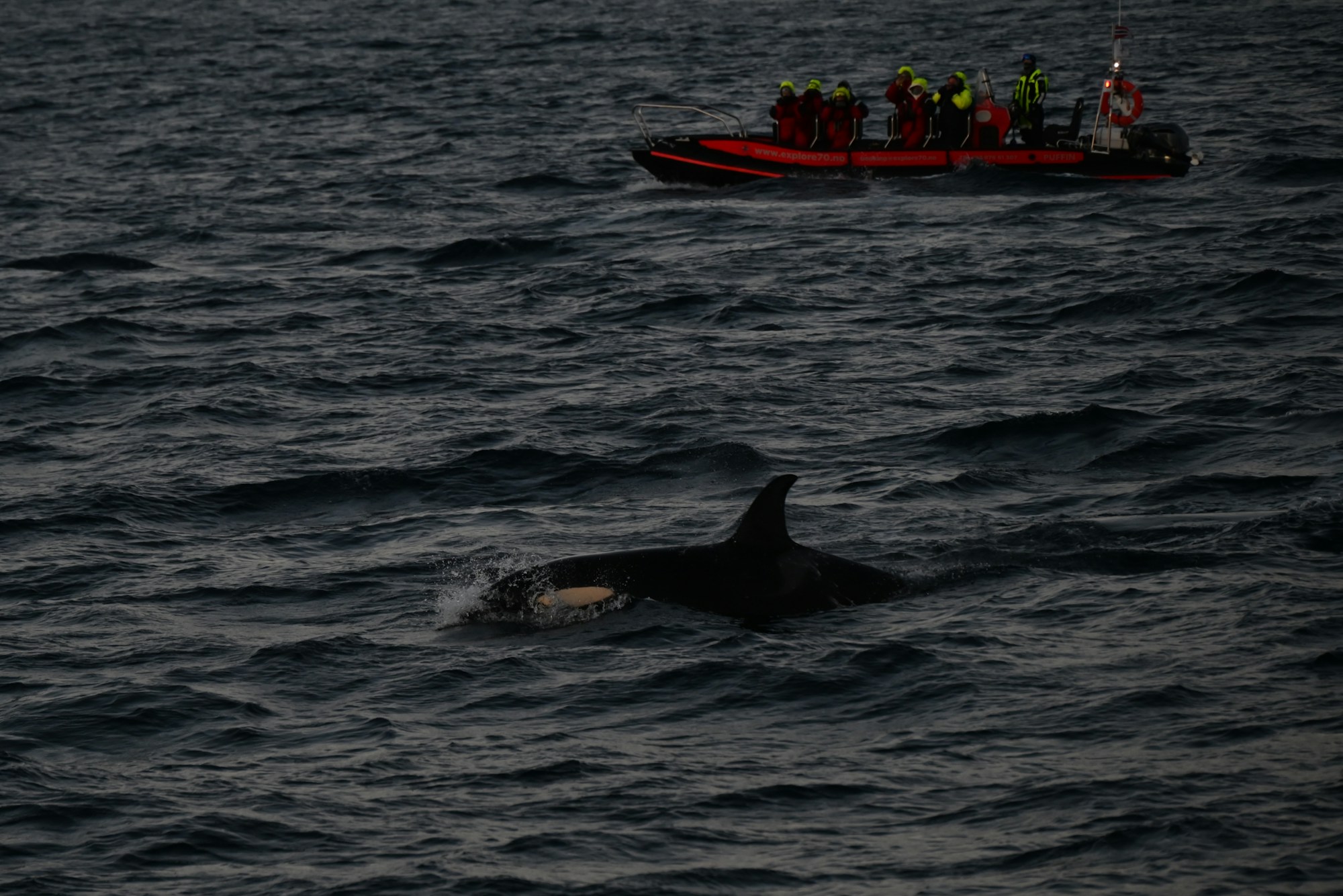
Skjervøy & Tromsø region, Northern Norway
Every year from October to February, orcas and humpback whales converge on the Norwegian fjords around Skjervøy and Tromsø to feed on herring. According to Orca Stream, this is the world’s most accessible dive with wild orcas: approximately 500 orcas are present each season, and local operators report visibility encounters of 3–15 metres with the animals.
The protocol is strict: no chasing the animals, entry from the boat only on the operator’s signal, no touching. Sea2Sky and Northern Lights Adventures are among the most respected operators in terms of ethics and safety. Budget: €180–350 per day, with liveaboard packages over 5–7 days from €1,200.
- Best period: November–January (maximum orca concentration)
- Mandatory certification: PADI Advanced + Drysuit Diver
- Combine with: northern lights (polar night from November)
- Booking: minimum 6–9 months in advance (limited spots)
- Ethics: follow operator code of conduct strictly
6. Cold Water Diving Trends in 2026
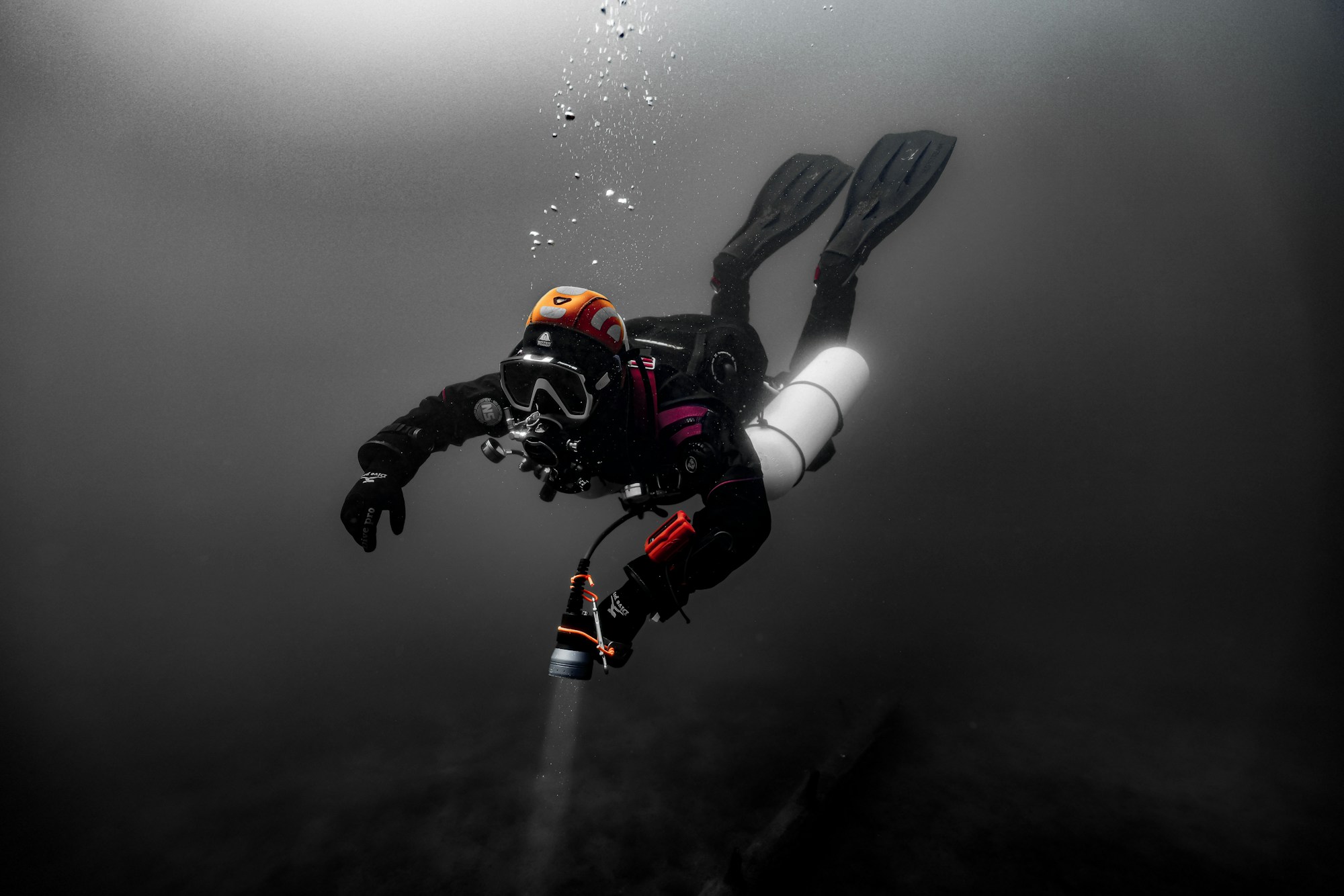
What’s new for 2026
According to PADI’s 2026 report, cold-water drysuit certifications grew by 34% in 2025–2026, primarily in France, Germany and the UK. Three major trends are shaping the discipline in 2026:
- AI in dive briefings: operators like Dive Silfra now use AI platforms (based on weather, tides and real-time visibility data) to customise safety briefings for each group. Results: 28% reduction in minor incidents since 2024.
- Heated drysuits: brands like Hollis and Waterproof have launched electrically heated drysuit liners in 2025, extending bottom time from 30–40 min to 60–80 min in 2°C waters.
- Cold-water freediving: Guinness World Records 2025 recorded a significant increase in cold-water freediving records; AIDA is developing a specific cold-water freediving certification track for 2026.
- Scientific citizen diving: programmes like REEF and i-Survey (Norway) recruit cold-water divers for marine biodiversity monitoring, particularly in fjords.
7. Equipment & Required Certifications
Essential Equipment for Cold Water
- Drysuit: non-negotiable below 10°C. Budget: €800–3,000 (Waterproof D1X, Scubapro Exodry, Dui TLS350)
- Undersuit: fleece or compressed neoprene, adapted to temperature. Hollis SMS100 (€200–400)
- Gloves & hood: minimum 5 mm, ideally 7 mm for sub-5°C. Santi Flex System gloves (€80–150)
- Cold-water regulator: DIN valve, anti-freeze, environmentally sealed. Apex ATX200 or ScubaPro MK25 EVO (€400–900)
- Dive computer: with drysuit diving mode and decompression algorithm. Shearwater Perdix 2 (€900–1,200)
- Torch: mandatory for wrecks and reduced visibility. Primary: Sola 1200 (€200+), backup: Tovatec Fusion 530 (€80)
Required Certifications
- PADI Drysuit Diver: prerequisite for Silfra, Strýtan and most Norwegian sites. 2 theory sessions + 2 confined water dives + 2 open water dives. Cost: €150–250 in France.
- PADI Advanced Open Water Diver: required for depth >18 m (fjord wrecks). Minimum 30 logged dives recommended before cold-water diving.
- PADI Ice Diver: recommended for under-ice environments (Silfra in winter, Antarctica). Requires a specialised dive centre with ice diving facilities.
- PADI Wreck Diver: required for the WWII wrecks in Narvik (penetration dives).
8. Safety & Cold-Water Dangers
Main Risks and Precautions
- Hypothermia: most common risk in sub-10°C waters. Symptoms: uncontrolled shivering, confusion, loss of coordination. Prevention: quality drysuit + undersuit, limit bottom time (max 40 min at 2°C without heated equipment), buddy system.
- Regulator free-flow: cold water can cause regulator freezing, leading to continuous air release. Use only anti-freeze, environmentally sealed regulators. Always pre-cool regulators before entering the water.
- Nitrogen narcosis: risk amplified by cold (narcotic effect from 30 m vs 40 m in warm water). Limit depth to 30 m for recreational cold-water diving.
- Tidal currents: Saltstraumen (28 knots), Silfra currents (variable): always check tidal conditions with the local operator. Never dive alone against an unknown current.
- Limited visibility: in certain Norwegian fjords during spring algae blooms, visibility can drop to 1–2 m. Always carry a primary and backup torch.
According to the Norwegian Diving Safety Association (DANSA), the most serious accidents involve insufficient equipment (wrong suit), solo diving and ignoring local conditions. Always consult the local operator on the day of the dive.
Frequently Asked Questions — Cold-Water Diving 2026
What certification is required to dive in the Silfra fissure in Iceland?
To dive in Silfra, you must hold a PADI Open Water Diver certification (or equivalent) combined with a PADI Drysuit Diver certification, as the water temperature is 2–4°C year-round. A minimum of 10 logged dives is required. If you’re already Advanced certified, the operators will accept you directly with the drysuit certification.
What is the best period to dive in the Norwegian fjords?
Diving is possible year-round in the Norwegian fjords, but the best conditions depend on what you’re looking for: February–May for maximum marine wildlife (spring migrations), June–August for best visibility and milder conditions, October–February for orca diving near Tromsø. For wrecks in Narvik, June–September offers best visibility.
How much does it cost to dive in Iceland and Norway?
Budget estimates for 2026: Silfra (Iceland): €161–300 per session (2 dives, guide, all equipment). Norwegian fjords: €120–250/guided dive day, equipment included. Orca diving (Tromsø): €180–350/day or from €1,200 for a 5–7 day liveaboard package. These prices include guides and basic equipment; add your own flights and accommodation.
Is diving in 2°C water dangerous for beginners?
Diving in waters of 2–4°C is technically accessible to certified beginners with a drysuit, but requires specific preparation. The main risks (hypothermia, regulator freeze-up) are manageable with proper equipment and good training. We recommend completing at least 20–30 dives in warm water before tackling cold diving, and always starting with a guided operator who provides the right equipment.
Can you snorkel instead of dive in Silfra?
Yes, snorkelling is available in Silfra with a drysuit provided by the operator. No certification required, just basic swimming ability. The session lasts approximately 3–4 hours and costs around €95–150. Visibility is identical to that experienced by divers, and this is an excellent option for those not yet certified. Most operators offer both options simultaneously.
What is the best site for cold-water wreck diving?
Narvik (Norway) is Europe’s premier destination for WWII wreck diving with over 50 wrecks in Ofotfjord. The most accessible wrecks (German destroyer Z2, British troopships) lie between 20 and 45 metres. You need PADI Advanced + Wreck Diver certification. For less technical wreck diving, the Hardangerfjord and Lysefjord also offer numerous accessible wrecks from PADI Advanced level.
How far in advance should I book an orca diving trip in Norway?
At least 6 to 9 months in advance for the best operators (Sea2Sky, Orca Stream, Northern Lights Adventures). The season runs October to February, with November–January being peak months. Groups are limited to 6–10 divers per boat for safety and wildlife impact reasons. Liveaboard packages (5–7 days) typically sell out by March–April for the following season.
What drysuit brands are recommended for cold-water diving in 2026?
For 2026, the most recommended brands are: Waterproof (Swedish) for quality/price ratio (D1X from €1,200); Scubapro Exodry for reliability and robustness (€1,500–2,200); Dui TLS350 for professionals (€2,500+); and Hollis SMS100 for the entry-level undersuit combined with a basic neoprene drysuit. Renting from operators before buying is highly recommended for first cold-water divers.
Sources
- Þingvellir National Park — Official Website
- Dive Silfra — Official Operator
- Dive.is — Silfra Conditions & Certifications
- Icefiord Dive — Strýtan Operator
- Nordic Diver — Norwegian Fjords Guide
- Visit Norway — Diving Official Guide
- Arctic Eagle Diving — Narvik Wrecks
- Lofoten Diving — Lofoten Islands Operator
- Orca Stream — Orca Diving Tromsø
- Sea2Sky — Ethical Orca Diving
- PADI — Cold Water Diving 2026 Report
- DANSA — Norwegian Diving Safety Association
- Waterproof Drysuits — Equipment Guide
Ready for Your Cold-Water Diving Adventure?
Discover our Iceland and Norway itineraries specially designed for diving enthusiasts — combining underwater exploration, northern lights and Arctic hiking.