

Only 12% of French employees dare to ask their employer for a sabbatical leave, according to a 2024 Cadremploi survey. Yet the right has existed since 1984, and conditions have never been more favorable than in 2026. Between the explosion of remote work, the post-Covid search for meaning, and a strong euro against Southeast Asian and Caucasian currencies, taking a 6- to 11-month career break has become a realistic project — even without personal wealth. With an average budget of EUR 7,000 to 8,000 for six months in the destinations we recommend, and a legal framework that guarantees your position upon return, a sabbatical year is no longer a luxury reserved for the privileged few. Here is the complete guide — legal framework, detailed budget, negotiation strategies, affordable destinations, and turnkey itineraries — to turn your dream into a concrete action plan.
The Legal Framework for Sabbatical Leave in France
Sabbatical leave is a right enshrined in the French Labour Code under articles L3142-28 to L3142-35. Unlike unpaid leave, it offers a protective legal framework with specific conditions and a guaranteed return to employment. According to Service-Public.fr, any private-sector employee can benefit from it under certain conditions.
Eligibility Requirements
| Criterion | Requirement |
|---|---|
| Professional seniority | Minimum 6 years of salaried employment |
| Company seniority | 36 months, consecutive or not |
| Gap between two sabbaticals | Minimum 6 years since the last one |
| Authorized duration | 6 to 11 months |
| Required notice | 3 months before the desired departure date |
| Employer response deadline | 30 days (no response = tacit approval) |
A key point many people overlook: if your employer does not respond within 30 days of receiving your request, the leave is considered automatically granted, as noted by Culture RH. However, the employer may defer departure by up to 9 months (6 months in companies with 300 employees or more), or refuse it in companies with fewer than 300 employees if the absence is deemed detrimental to operations.
Throughout the leave, your employment contract is suspended but not terminated. You do not receive a salary but retain your company health insurance rights (subject to conditions), and your pension quarters are not validated unless you contribute voluntarily. Upon return, the employer is required to reinstate you in your position or an equivalent one with at least equal compensation, according to the FESP.
How to Negotiate Your Sabbatical Leave with Your Employer
The law alone is not enough: negotiation is often the key to a smooth departure. According to Coin du Salarie, 78% of successful sabbaticals begin with an informal discussion with the direct manager, well before sending the official letter. Here are five proven strategies.
1. Prepare a Comprehensive Transition Plan
Don’t leave your employer imagining chaos. Write a detailed document outlining how your tasks will be distributed, which colleagues are trained to replace you, and a handover timeline. According to CSE Guide, employers are twice as likely to agree when the employee presents a business continuity plan.
2. Choose the Right Timing
Avoid peak activity periods or restructuring phases. The ideal moment: after a recent professional success (completed project, exceeded targets) and during a moderate activity period. Your negotiating power is at its peak when you’ve just proven your value.
3. Appeal to Talent Retention
Turnover costs an employer an average of 6 to 9 months’ salary (recruitment + training the replacement). A sabbatical leave that prevents you from resigning is therefore a profitable investment for the company. Don’t hesitate to make this calculation explicit.
4. Offer Periodic Check-ins
Propose a monthly 30-minute call or a quarterly report during your absence. This flexibility reassures the employer and shows your long-term commitment without compromising your freedom.
5. Explore Your Collective Agreement and Time Savings Account
Some collective agreements provide sabbatical leaves with relaxed conditions. Additionally, if you have a Time Savings Account (CET), you can draw from it to partially fund your absence while maintaining a paid contractual link, according to Solutions CSE.
Detailed Budget for a Sabbatical Year
The number one obstacle cited by employees dreaming of a sabbatical is money. Yet the actual figures are often far below expectations. According to MoneyBounce, the average budget for a 6-month trip is around EUR 7,000 to 8,000 for a solo traveler heading to affordable destinations — equivalent to 3 to 4 months of Parisian rent.
Budget by Duration
| Duration | Low Range | Mid Range | High Range |
|---|---|---|---|
| 6 months | EUR 4,000 | EUR 7,000 – 8,000 | EUR 15,000 – 30,000 |
| 1 year | EUR 8,000 | EUR 13,000 – 15,000 | EUR 25,000 – 50,000 |
The low range corresponds to travel in Southeast Asia or the Caucasus, staying in hostels and using local transport. The high range includes Australia, Japan, or Scandinavia, with mid-range accommodation.
Preparation Costs to Anticipate
| Expense Category | Estimate |
|---|---|
| One-way flight (or round-the-world ticket) | EUR 300 – 2,500 |
| Long-term travel insurance | EUR 300 – 800 / year |
| Vaccinations and first aid kit | EUR 100 – 400 |
| Gear (backpack, clothing, tech) | EUR 200 – 600 |
| Multiple-entry visas | EUR 50 – 300 |
| Contract cancellations / suspensions | Variable |
According to A Contresens, accommodation accounts for 35 to 45% of the total budget, followed by food (20-25%) and local transport (15-20%). The choice of destinations is therefore the most powerful budget lever.
How to Fund Your Sabbatical Year
Beyond traditional savings, several mechanisms can significantly reduce the actual cost of your sabbatical — or even make it nearly cost-neutral.
The Time Savings Account (CET)
If your company offers a CET, you can accumulate unused vacation days and convert them into income during your sabbatical. According to Solutions CSE, an employee accumulating 10 days per year over 5 years has a capital of 50 paid days — roughly 2.5 months of salary.
Deferred Salary Arrangements
Some company agreements allow you to receive 80% of your salary for 4 years, then receive that same 80% during the fifth sabbatical year. A still little-known but highly effective mechanism for planners, according to S’offrir le Monde.
Subletting Your Apartment
If you’re a tenant, subletting (with the landlord’s consent) can cover your entire rent during your absence. In high-demand areas, a Parisian studio sublet at EUR 800/month generates EUR 4,800 over 6 months — often more than the total budget for a trip to Southeast Asia.
Freelancing While Traveling
More and more sabbatical-takers combine travel with occasional remote work: writing, translation, web development, graphic design. A few hours per week are enough to supplement your budget in countries with a low cost of living. Note, however: during a sabbatical leave, you have the right to work for another employer (except for non-compete clauses), according to Service-Public.fr.
Georgia: The Caucasus on a Budget
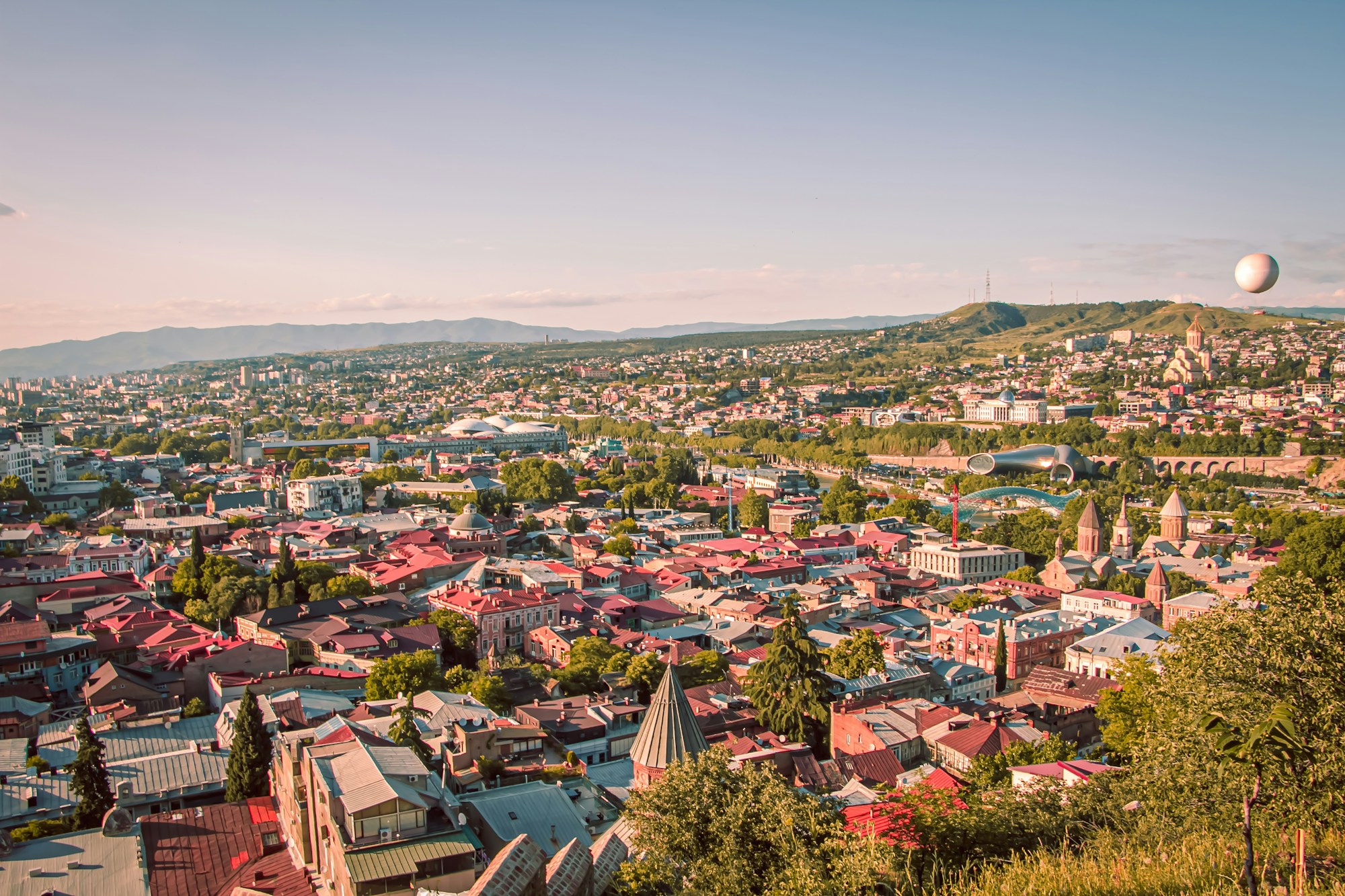
The Most Hospitable Country in the Caucasus, Just 4 Hours from Paris
Georgia has become the haven of long-term travelers and digital nomads — and for good reason. With a cost of living 43% lower than France, a one-year visa-free stay for Europeans, and legendary hospitality (the supra, a Georgian feast with a tamada raising dozens of toasts, is listed as intangible heritage), the country offers unbeatable value for money. According to Ou et Quand, the best months are April to June and September to October, when temperatures range between 18 and 28 degrees C.
Tbilisi, the capital, blends Ottoman old town, natural wine bars, and open-air sulfur baths in the Abanotubani district. But it’s in the mountains that Georgia truly reveals itself. The Mestia to Ushguli trek (4 days, UNESCO-listed) crosses villages of medieval towers perched at 2,200 meters altitude, against a backdrop of breathtaking glacial peaks. According to Sarah Conte ses Aventures, a hearty meal at a local restaurant costs EUR 3 to 6, a bed in a family guesthouse EUR 8 to 15, and a marshrutka (shared minibus) between cities rarely more than EUR 5.
Highlights
- One-year visa-free stay for European citizens
- Mestia – Ushguli trek: 4 days in the heart of the Greater Caucasus (UNESCO)
- Exceptional cuisine: khinkali, khachapuri, natural wine in qvevri
- High-speed internet and coworking in Tbilisi for freelancers
Colombia: Latin America at Its Best
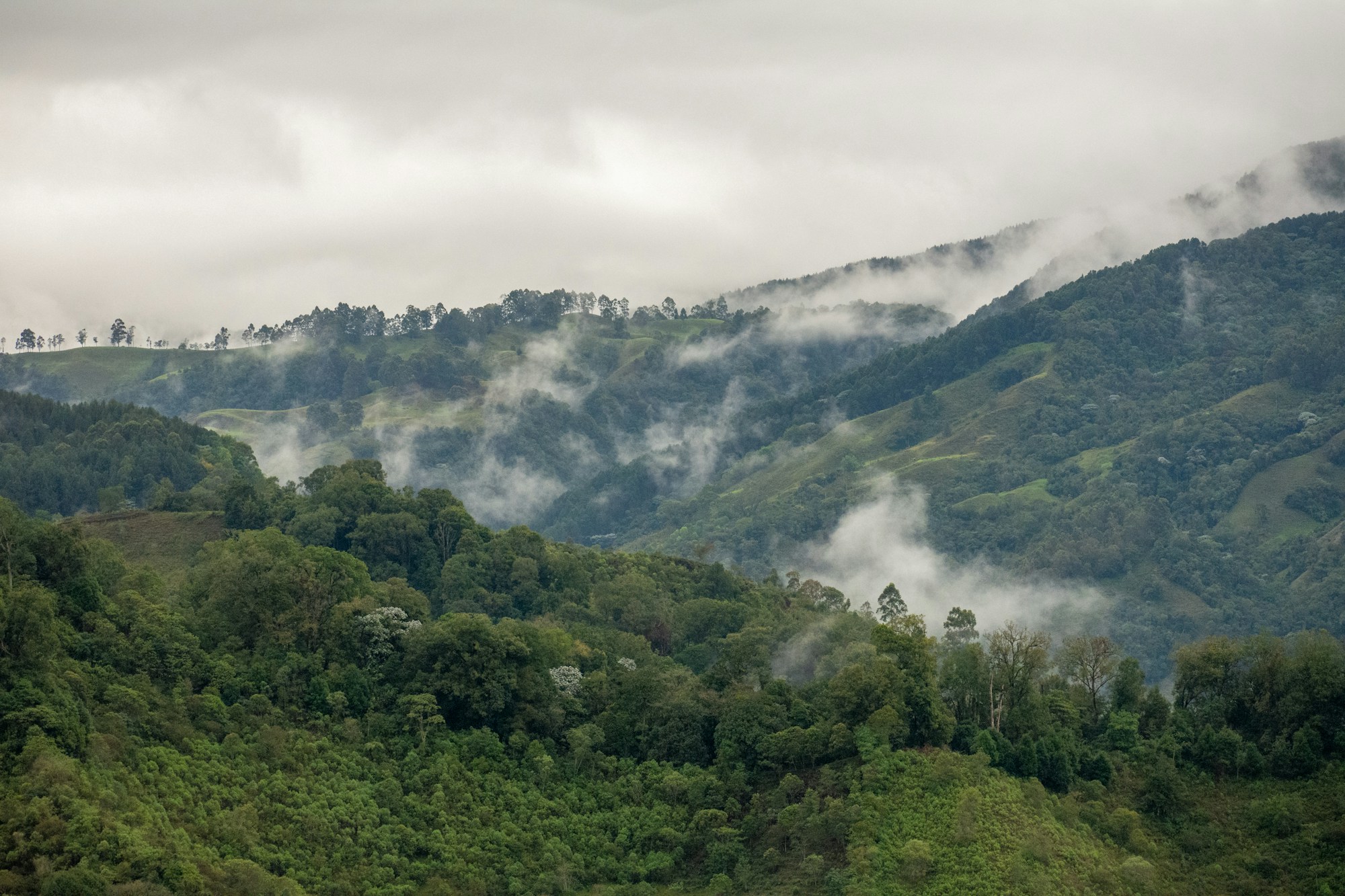
Three Colombias in a Single Trip
Colombia offers staggering geographical and cultural diversity: Caribbean beaches in Cartagena, Andean mountains in Medellin, Amazon rainforest in Leticia, and the UNESCO-listed coffee region in between. The tourist visa allows a stay of 90 days, renewable once on-site, totaling 6 months without complex formalities. According to Mon Voyage en Colombie, a comfortable budget of EUR 35 to 55 per day covers charming hostels, local restaurant meals, and budget domestic flights.
The beating heart of a long stay is the Cocora Valley and the village of Salento: giant wax palms, coffee fincas offering specialty coffee tastings, and hikes through the lush Andes. For ocean lovers, the islands of San Andres and Providencia offer crystal-clear waters rivaling the Maldives at Colombian prices. According to Viventura, domestic flights with Viva Air or Wingo rarely exceed EUR 40 for routes like Bogota to Medellin.
Highlights
- 90 days renewable = up to 6 months of legal stay
- Cocora Valley and Salento: hiking and UNESCO coffee heritage
- Medellin: year-round spring climate and digital nomad scene
- Very affordable domestic flights (EUR 30 – 50)
Laos: Southeast Asia’s Hidden Gem
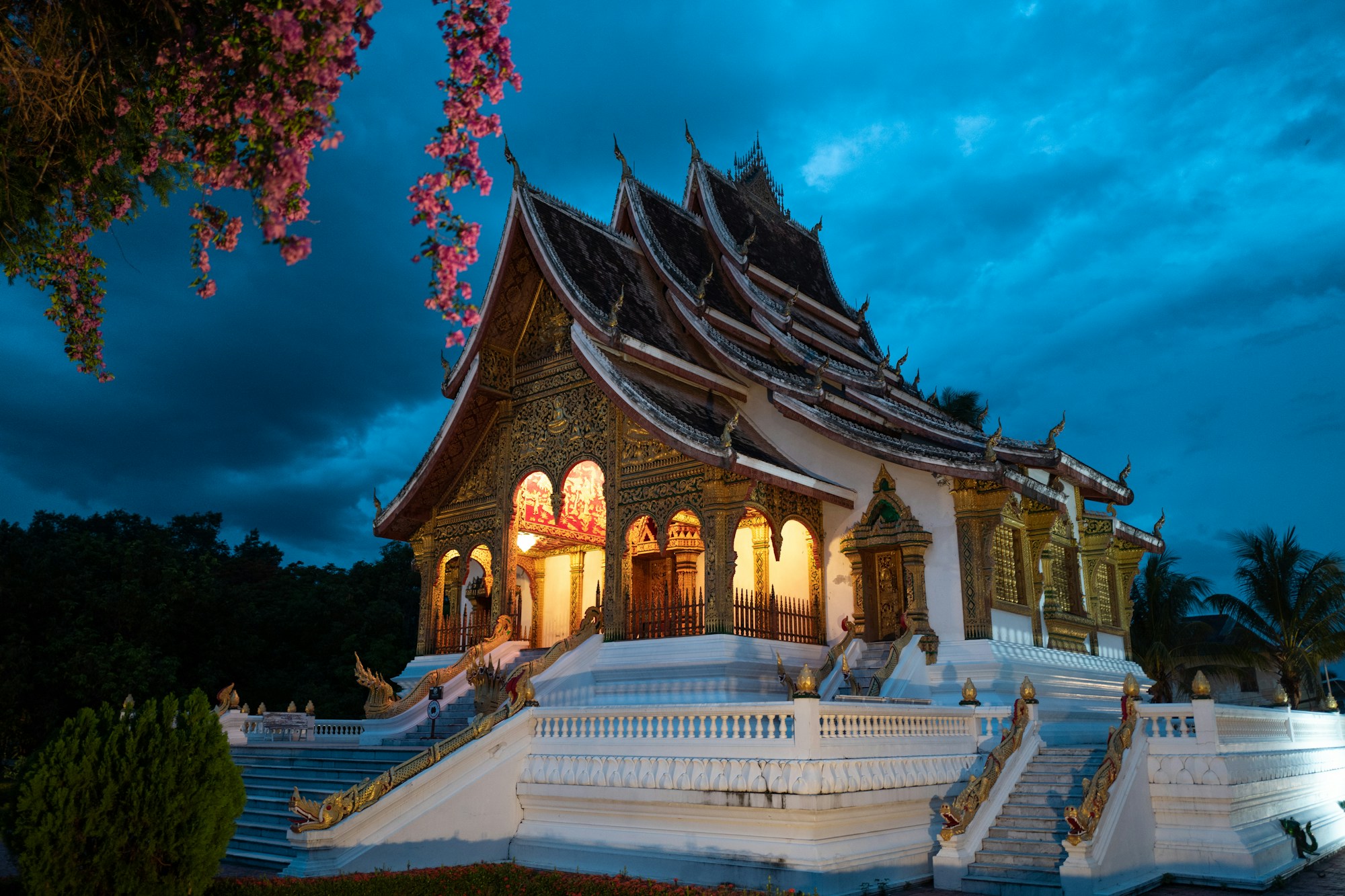
The Land of a Million Elephants, Without the Crowds
While Thailand and Vietnam attract millions of tourists, Laos remains a haven of tranquility. With a daily budget of EUR 25 to 40, this landlocked country between China, Vietnam, and Thailand offers an authentic Southeast Asian experience free from overtourism. According to Nos Voyages Heureux, a comfortable double room costs EUR 10 to 20, a local meal EUR 2 to 4, and a Beerlao (the national pride) barely EUR 1.
Luang Prabang, a UNESCO World Heritage site, is the undisputed jewel: golden temples at sunrise, the monks’ procession at dawn, and the turquoise Kuang Si waterfall just 30 minutes away. But the most memorable experience is arguably the slow boat on the Mekong: two days of navigation between Huay Xai (Thai border) and Luang Prabang, through limestone gorges and fishing villages frozen in time. The new China-Laos high-speed train now connects Vientiane to the Chinese border in a few hours, opening up new possibilities for combined itineraries.
Highlights
- Luang Prabang: UNESCO heritage, temples, and waterfalls
- Slow boat on the Mekong: 2 days of total immersion
- Vang Vieng: hiking, kayaking, and limestone karsts
- No mass tourism — a peaceful pace of life
Morocco: Total Immersion Just 3 Hours from Paris
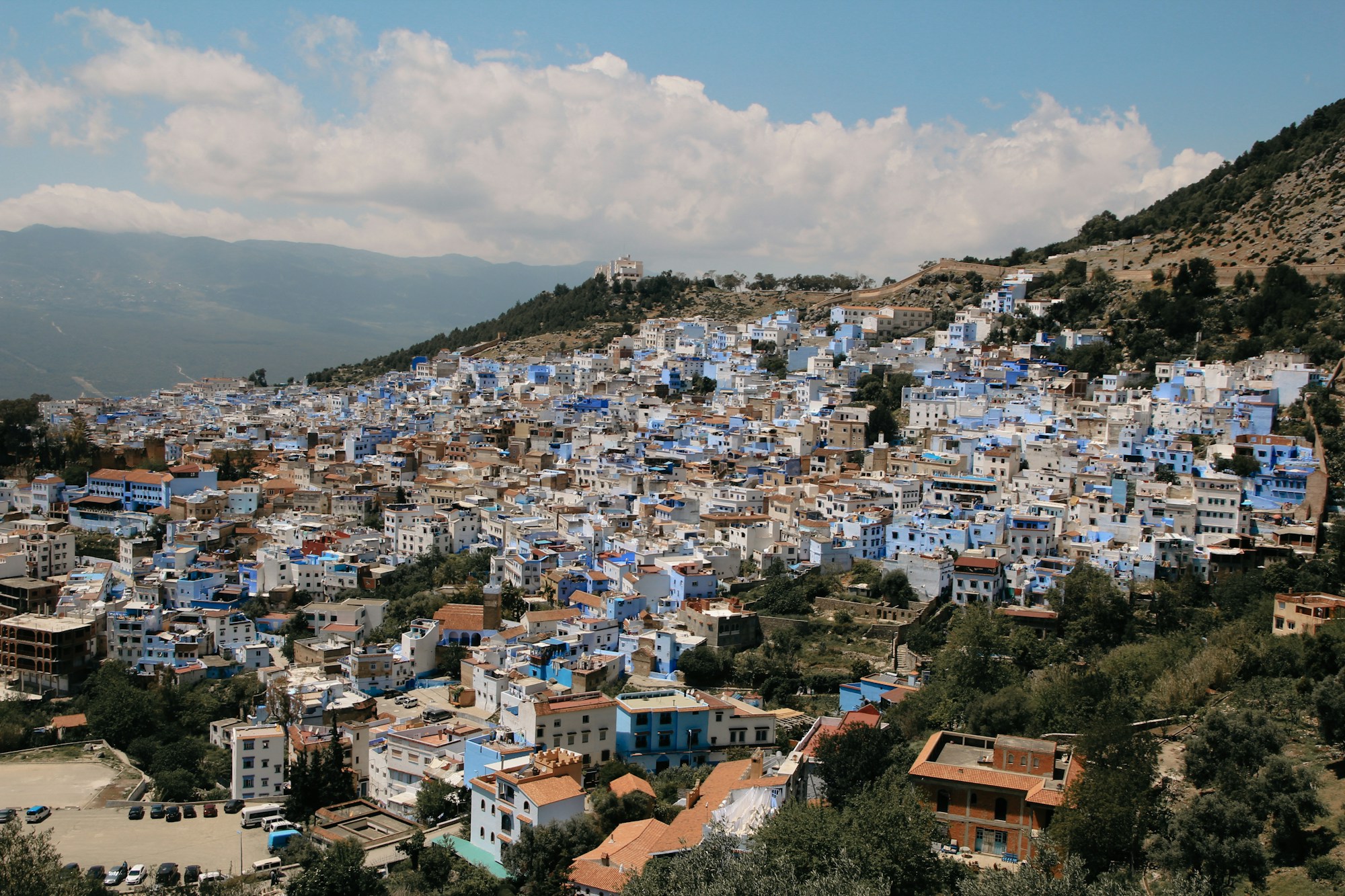
From Chefchaouen to the Desert, a Continent in a Single Country
Morocco combines the convenience of a low-cost flight just 3 hours from Paris, a very low cost of living, and a cultural richness that alone justifies several months of exploration. According to Nos Voyages Heureux, a long-term traveler can live comfortably on EUR 25 to 45 per day: a charming riad at EUR 15 – 30/night, a hearty tagine at EUR 3 – 6, and shared grand taxis between cities for a few euros.
The classic itinerary — Marrakech, Fez, Merzouga (desert) — only scratches the surface. For an extended stay, explore Chefchaouen (the blue city nestled in the Rif), the Draa Valley with its palm groves and earthen kasbahs, and the Anti-Atlas, a wild and nearly deserted region where almond trees bloom in February. The tourist visa allows 90 days, and many travelers follow up with a stay in neighboring Spain or Portugal before returning for a second round.
Highlights
- Chefchaouen: the photogenic blue city of the Rif
- Draa Valley and Todra Gorges: Saharan landscapes
- Essaouira: surf, wind, and a preserved medina
- Frequent low-cost flights from all over France
Albania: The Mediterranean’s Last Secret
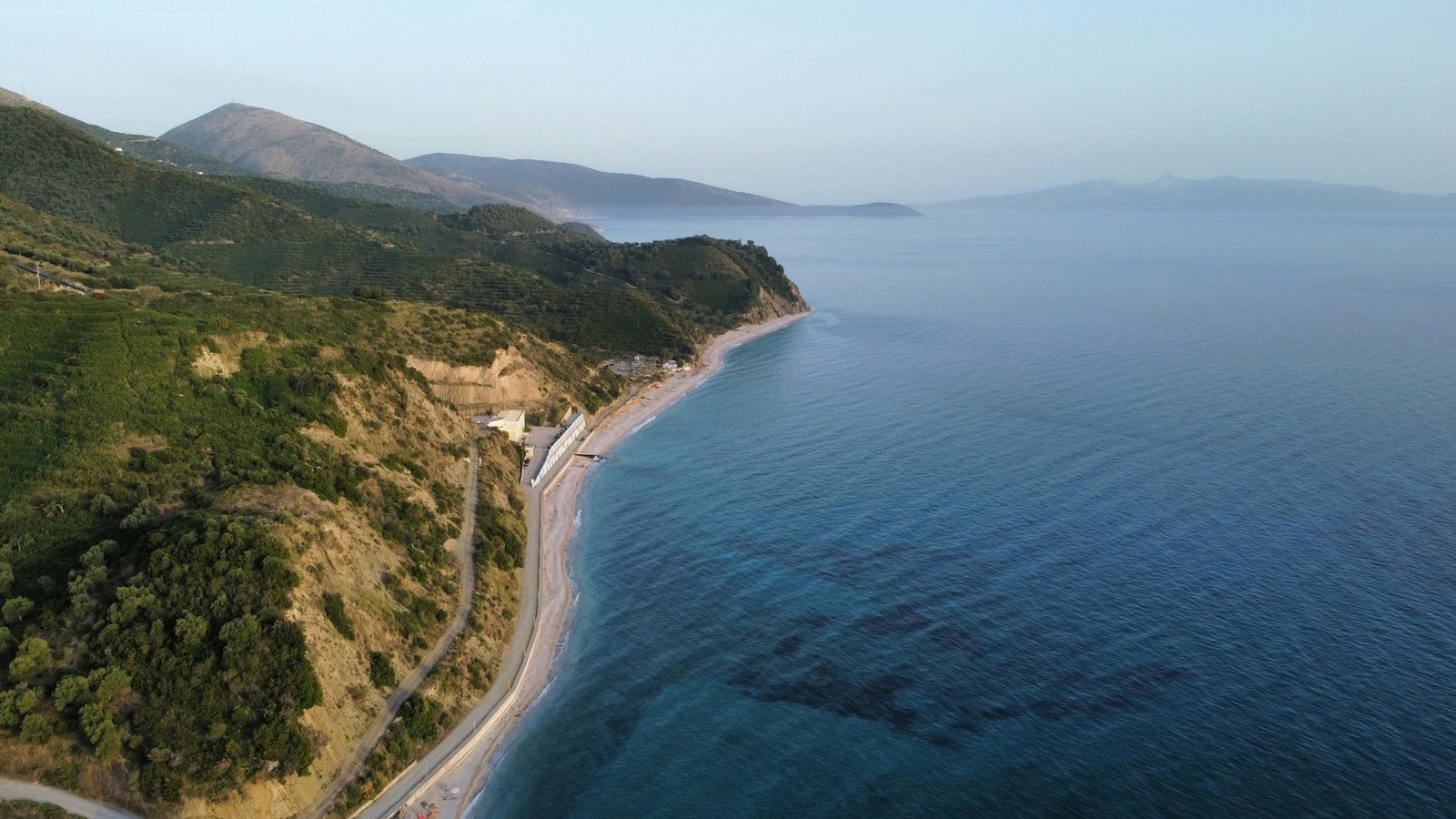
The European Riviera That Nobody Knows About Yet
Albania is experiencing what Croatia went through 15 years ago: a rapid rise in tourism, but with prices that remain among the lowest in Europe. According to Baga Trip, a traveler can live on EUR 30 to 50 per day while enjoying generous Mediterranean cuisine, turquoise Ionian beaches, and UNESCO-listed cities. Europeans can stay for up to one year without a visa.
The Albanian Riviera, between Vlore and Saranda, offers beaches rivaling neighboring Greece — Ksamil, Gjipe, Dhermi — at a fraction of the price. Inland, the museum cities of Berat (the city of a thousand windows) and Gjirokaster (the city of stone), both UNESCO-listed, showcase fascinating architectural history. According to Albania Tradition, the country is investing heavily in tourism infrastructure while preserving an authenticity that neighboring destinations have lost.
Highlights
- Albanian Riviera: crystal-clear Ionian beaches at gentle prices
- Berat and Gjirokaster: two UNESCO-listed cities
- Blue Eye Spring (Syri i Kalter): a unique natural phenomenon
- One-year visa-free stay for Europeans
Three Sample Itineraries for Your Sabbatical
Here are three concrete scenarios, calibrated to the most common budgets and durations among sabbatical travelers.
Itinerary A: 6 Months Central Asia and Caucasus — ~EUR 7,000
| Leg | Duration | Estimated Budget |
|---|---|---|
| Georgia (Tbilisi, Svaneti, Kakheti) | 2 months | EUR 1,600 |
| Armenia (Yerevan, Lake Sevan, Tatev) | 1 month | EUR 900 |
| Uzbekistan (Samarkand, Bukhara, Khiva) | 1 month | EUR 1,000 |
| Kyrgyzstan (Bishkek, Son-Kul, Issyk-Kul) | 1 month | EUR 800 |
| Turkey (Istanbul, Cappadocia, Aegean coast) | 1 month | EUR 1,200 |
| International flights + insurance | — | EUR 1,500 |
| Estimated total | 6 months | ~EUR 7,000 |
Itinerary B: 6 Months in the Americas — ~EUR 9,000
| Leg | Duration | Estimated Budget |
|---|---|---|
| Colombia (Caribbean coast, coffee region, Medellin) | 2 months | EUR 2,200 |
| Ecuador (Quito, Galapagos, Amazon) | 1 month | EUR 1,400 |
| Peru (Lima, Cusco, Machu Picchu) | 1.5 months | EUR 1,800 |
| Bolivia (La Paz, Uyuni Salt Flat, Sucre) | 1 month | EUR 900 |
| Argentina (Buenos Aires, Northern Patagonia) | 0.5 months | EUR 800 |
| International flights + insurance | — | EUR 1,900 |
| Estimated total | 6 months | ~EUR 9,000 |
Itinerary C: 1-Year Round the World — ~EUR 13,000
| Leg | Duration | Estimated Budget |
|---|---|---|
| Southeast Asia (Thailand, Laos, Vietnam, Cambodia) | 4 months | EUR 3,200 |
| Northern India (Rajasthan, Varanasi, Himalayas) | 2 months | EUR 1,200 |
| Caucasus (Georgia, Armenia) | 2 months | EUR 1,600 |
| Balkans (Albania, Montenegro, Bosnia) | 2 months | EUR 2,000 |
| Morocco (from Tangier to the Sahara) | 2 months | EUR 1,800 |
| Round-the-world ticket + insurance | — | EUR 3,200 |
| Estimated total | 12 months | ~EUR 13,000 |
Preparing for Departure: The Complete Checklist
A successful sabbatical is prepared 6 to 12 months in advance. Here are the essential steps, organized by category.
Administrative and Legal
- Send the official sabbatical leave request (registered mail, minimum 3 months in advance)
- Check the collective agreement for potentially more favorable provisions
- Notify the tax office of your departure (temporary departure declaration)
- Verify your passport validity (6 months beyond your planned return date)
- Submit necessary visa applications (some processing times exceed 2 months)
- Grant power of attorney to a trusted person for administrative mail
Health and Insurance
- Subscribe to long-term travel insurance covering repatriation
- Consult a travel medicine specialist (vaccinations, malaria prevention)
- Assemble a first aid kit adapted to the regions you’ll visit
- Verify your health insurance coverage abroad
- Digitize all medical documents and store them online
Finances
- Open an online bank account with no foreign transaction fees
- Order at least two bank cards from different networks (Visa + Mastercard)
- Build a minimum EUR 2,000 emergency fund
- Set up automatic transfers for mandatory payments
- Notify your bank of your travel zones to prevent card blocks
Housing
- Terminate or sublet your apartment (with written landlord consent)
- Store your belongings (self-storage: EUR 50 – 150/month depending on volume)
- Cancel or suspend subscriptions: electricity, gas, internet, gym
- Redirect your mail to a trusted person
Professional
- Write a detailed handover document for your replacement
- Train one or two colleagues on your critical tasks
- Set up an automatic out-of-office message with an emergency contact
- Document unwritten processes that only you know
Practical Information for Your Sabbatical Year
Frequently Asked Questions About Sabbatical Leave
Can you work during a sabbatical leave?
Yes. During a sabbatical leave, you may engage in professional activity — salaried or freelance — provided you respect any non-compete clause and your duty of loyalty to your employer. In practice, you cannot work for a direct competitor, but nothing prevents you from freelancing in a different field or starting a micro-business. This freedom is one of the major advantages of sabbatical leave over unpaid leave, according to Service-Public.fr.
Is my position guaranteed upon return?
Yes, legally. Article L3142-33 of the French Labour Code states that at the end of the sabbatical leave, the employee returns to their previous position or a similar one, with at least equivalent compensation. The employer cannot dismiss you during the leave except in cases of serious misconduct or collective economic layoffs. In practice, it is recommended to maintain regular contact with your company to facilitate your reintegration.
Can I receive unemployment benefits during a sabbatical leave?
No. Sabbatical leave suspends your employment contract but does not terminate it. You are therefore not considered a job seeker and cannot receive unemployment benefits. However, if your employer refuses to reinstate you upon return (which would constitute dismissal without real and serious cause), you could then register with the employment agency and receive benefits, according to Culture RH.
What is the difference between sabbatical leave and unpaid leave?
The main difference is legal. Sabbatical leave is a right governed by the French Labour Code (articles L3142-28 to L3142-35): duration of 6 to 11 months, defined seniority requirements, mandatory reinstatement upon return. Unpaid leave, on the other hand, has no legal framework: its duration, conditions, and return guarantees depend entirely on negotiation with the employer. Sabbatical leave therefore offers far greater protection, provided you meet the eligibility criteria.
How do you leverage a sabbatical year on your resume?
A well-presented sabbatical year is an asset on a resume, not a gap. Highlight the skills acquired: foreign languages practiced through immersion, autonomous budget management, cultural adaptability, and problem-solving in unfamiliar contexts. If you freelanced or volunteered, include it as a full professional experience. In interviews, structure your narrative around what this break taught you and how it makes you more effective. Recruiters are increasingly receptive to this type of career path.
Should you terminate your lease before leaving?
It depends on the duration and your situation. For 6 months, subletting (with written landlord consent) is often the best option: it covers your rent and you keep your apartment upon return. For one year or more, termination may be more cost-effective — you save on residual rental charges and avoid the legal complications of subletting. Plan for a notice period of 1 month (high-demand area) to 3 months and store your belongings in self-storage (EUR 50 to 150/month).
What if the employer refuses the sabbatical leave?
The employer can refuse in two cases: companies with fewer than 300 employees (if they demonstrate the absence would be detrimental) or failure to meet eligibility requirements. They may also defer departure by up to 9 months (6 months in companies with 300 employees or more) if a certain percentage of the workforce is already absent. If you believe the refusal is unjustified, you can refer the matter to the Labour Court (Conseil de prud’hommes). Before reaching that point, try mediation through employee representatives or the works council. According to CSE Guide, most disputes are resolved through negotiation.
What is the minimum budget for a 6-month sabbatical?
The strict minimum for 6 months of travel is approximately EUR 4,000 to 5,000, targeting exclusively very affordable destinations (Southeast Asia, Caucasus, Indian subcontinent), sleeping in dormitories, cooking, and using only local transport. A more realistic and comfortable budget is around EUR 7,000 to 8,000, including private hostel rooms, local restaurant meals, and some paid activities. Add to that preparation costs (flight, insurance, vaccinations) estimated at EUR 800 to 1,500, according to MoneyBounce.
Sources and References
- Service-Public.fr — Sabbatical leave in the private sector
- Culture RH — Sabbatical leave: conditions, duration, procedures
- FESP — Everything you need to know about sabbatical leave
- Coin du Salarie — How to negotiate your sabbatical leave
- CSE Guide — Sabbatical leave: procedures and employer rights
- Solutions CSE — Funding sabbatical leave via the CET
- MoneyBounce — Long-term travel budget: how much to plan
- A Contresens — Round-the-world budget: expense breakdown
- S’offrir le Monde — Funding your sabbatical
- Ou et Quand — When to visit Georgia
- Sarah Conte ses Aventures — Georgia budget
- Mon Voyage en Colombie — Colombia budget
- Viventura — Colombia: what budget to plan
- Nos Voyages Heureux — Laos budget
- Nos Voyages Heureux — Morocco budget
- Baga Trip — Albania budget
- Albania Tradition — Traveling in Albania
Research conducted in March 2026
Ready to Plan Your Sabbatical Year?
Discover itineraries created by travelers for your career break. Georgia, Colombia, Southeast Asia, or the Balkans: tested routes detailed day by day to turn your sabbatical leave into an unforgettable adventure.
Explore all itineraries