
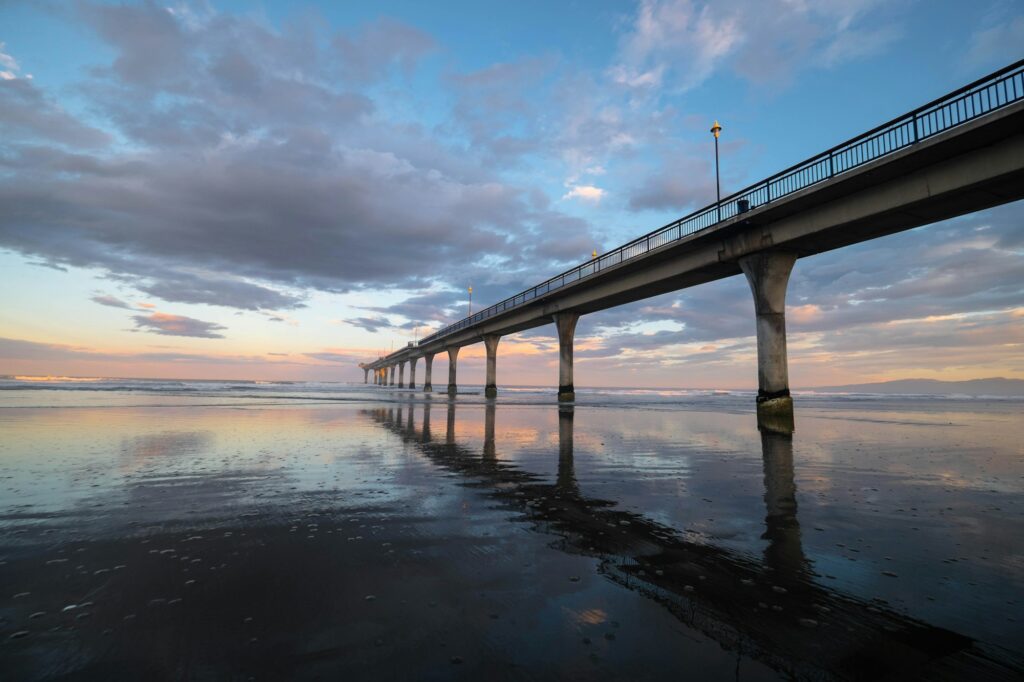
Christchurch is rising from the ashes — and the transformation is breathtaking. Fifteen years after the devastating 2011 earthquake, the largest city on New Zealand’s South Island has completed an unprecedented urban metamorphosis. The inauguration of Te Kaha stadium on March 27, 2026 — a 30,000-seat venue funded with NZ$683 million — marks the culmination of a reconstruction that has turned a wounded city into an open-air architectural laboratory. Street art, a cardboard cathedral, inventive restaurants, craft bars: the city center is unrecognizable.
But Christchurch is above all an exceptional base camp. In under two hours, you can swim with Hector’s dolphins in Akaroa, watch sperm whales in Kaikoura, hike through the Southern Alps, or board the TranzAlpine — one of the world’s most spectacular train journeys. Google searches for « Christchurch travel » surged 200% earlier this year, driven by the 2026 sporting calendar: Super Rugby Super Round in April, the Rugby League World Cup in autumn, and a Robbie Williams concert in November.
This comprehensive guide takes you to the heart of a city that has turned resilience into creative force — and into the breathtaking landscapes that surround it. Here’s why Christchurch deserves far more than a stopover in 2026.
1. The reinvented city center: architecture, street art and gastronomy
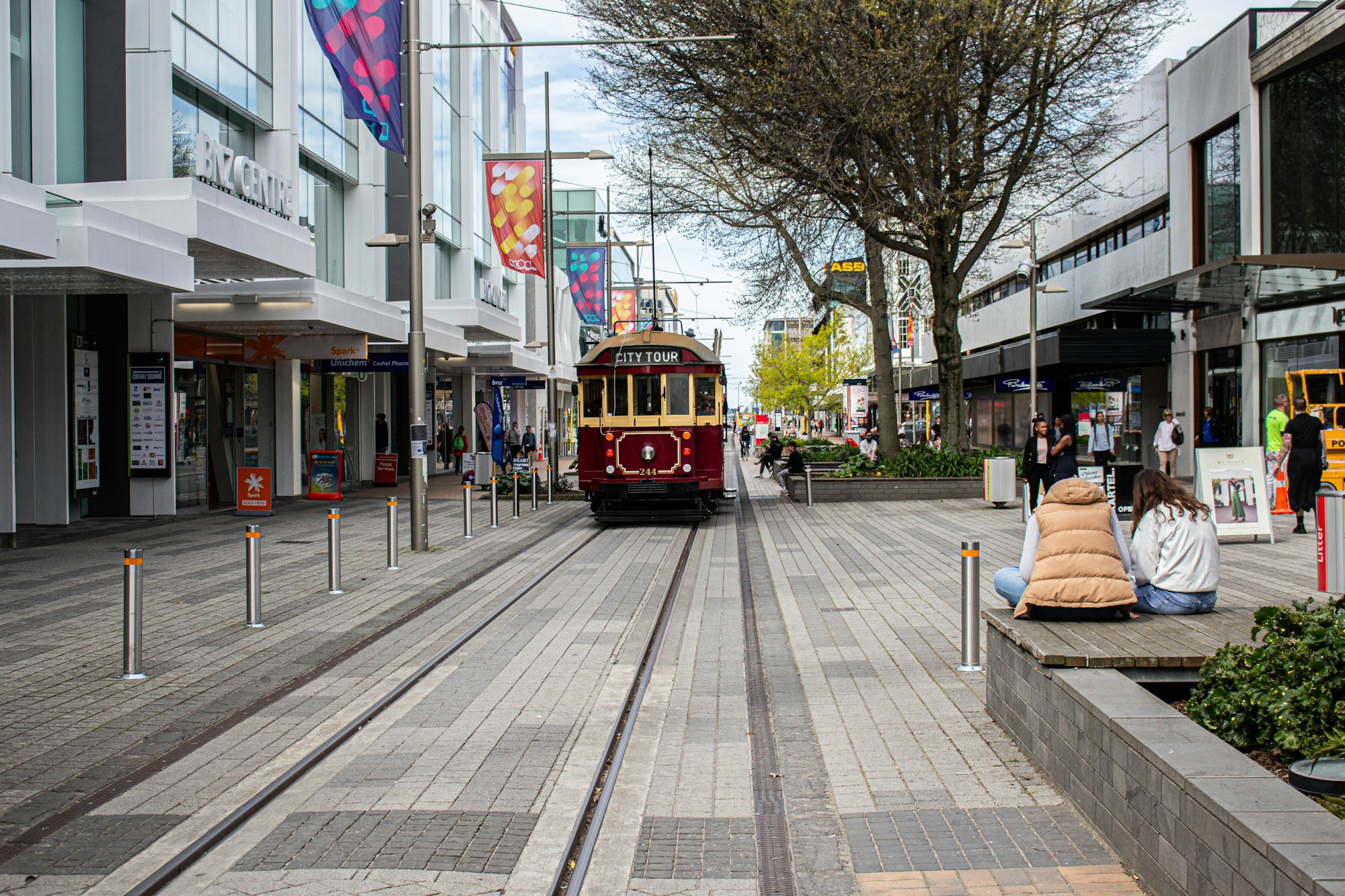
Christchurch City Center — CBD
Christchurch’s city center is unique in the world: a metropolis entirely redesigned after a magnitude 6.3 earthquake. Where Victorian buildings once stood, you’ll now find bold contemporary architecture, innovative green spaces, and street art that transforms every alleyway into an open-air gallery. The Cardboard Cathedral, designed by Japanese architect Shigeru Ban in 2013, remains the most striking symbol of this resilience — a temporary cathedral built from cardboard tubes that became permanent through the sheer force of its elegance.
To understand the scale of the earthquake and reconstruction, Quake City (NZ$25-30) offers an immersive experience with an earthquake simulator, survivor testimonies, and objects recovered from the rubble. The Canterbury Museum is entirely free and provides a fascinating dive into the region’s history, from the Maori people to Antarctic explorers. Don’t miss New Regent Street, a pedestrian lane lined with pastel Art Deco facades where the historic tramway runs — the most photographed spot in the city.
On the food front, Little High Eatery brings the best food trucks and micro-restaurants under one roof: Thai cuisine, gourmet burgers, poke bowls, artisan pastries. For a craft beer evening, head to Dux Central, which brews its own beers in a former warehouse turned gastronomic complex with an indoor garden. The neighborhood also teems with specialty coffee shops — Christchurch has become one of New Zealand’s most vibrant coffee scenes.
Highlights
- Shigeru Ban’s Cardboard Cathedral — ephemeral architecture turned iconic
- Free Canterbury Museum — Maori and Antarctic collections
- New Regent Street — Art Deco charm and historic tramway
- Ubiquitous street art — self-guided trail throughout the CBD
Pixidia tip: Te Kaha Stadium opens on March 27, 2026 with a packed sporting schedule. Book your tickets for the Super Rugby Super Round (April 24-26) as soon as possible — the first events at this brand-new stadium will sell out fast.
2. The Avon River and Botanic Gardens: the green lung
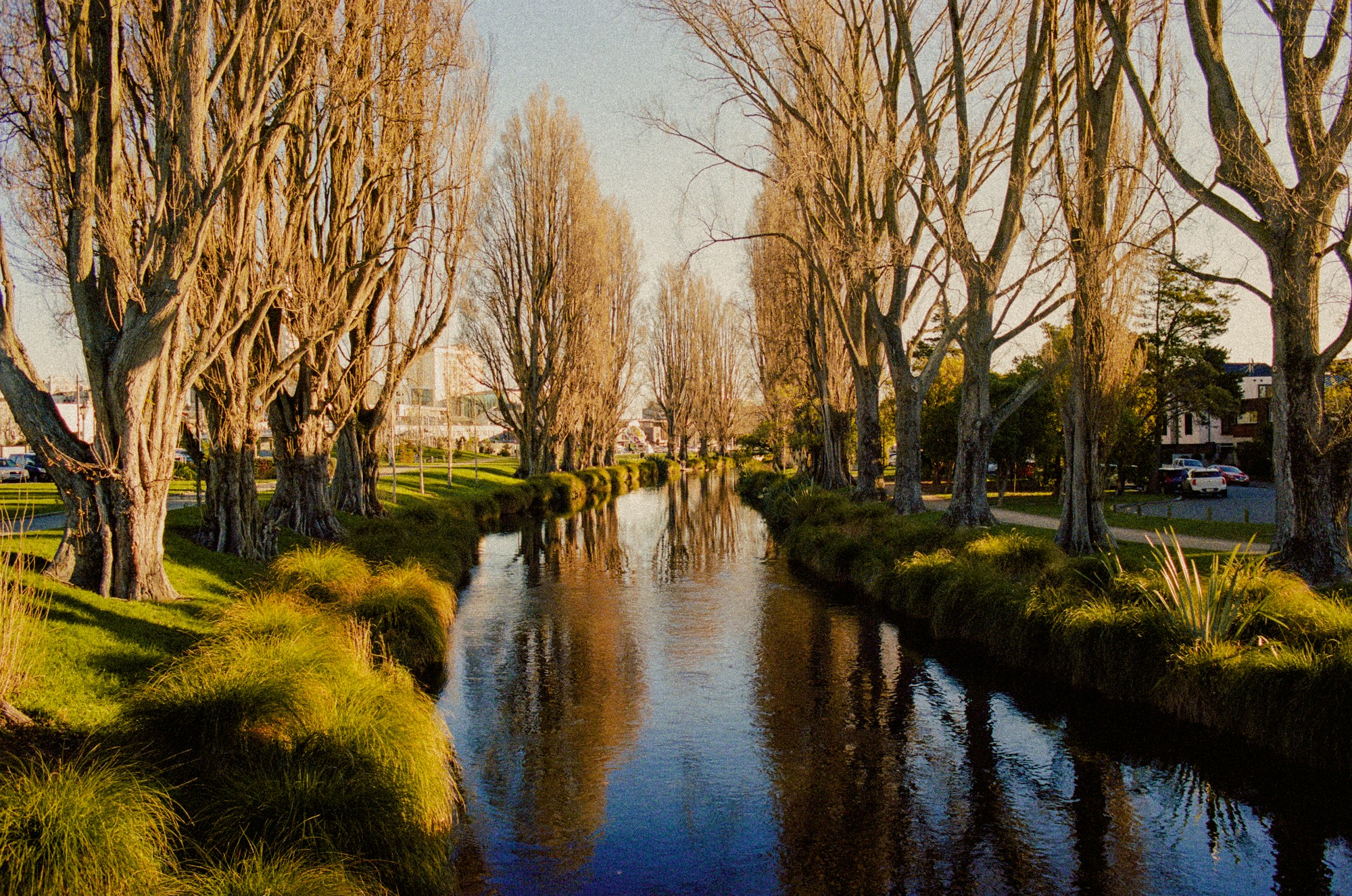
Avon River Precinct and Botanic Gardens
It’s no coincidence that Christchurch is nicknamed the Garden City. The Avon River (Otakaro in Maori) meanders lazily through the heart of the city, lined with weeping willows and immaculate lawns. Walking along its banks is one of the most peaceful activities in town — and it’s entirely free. For a more romantic experience, hop aboard a punt (a flat-bottomed boat propelled by pole), a tradition inherited from Cambridge and Oxford that has endured here for over a century.
The Christchurch Botanic Gardens, founded in 1863, cover 21 hectares along the river. Admission is free and the collections are remarkable: a rose garden with over 250 varieties, a medicinal herb garden, tropical greenhouses, and an impressive section devoted to New Zealand’s native plants. During the austral spring (September to November), flowering cherry trees and magnolias create a dazzling display of color.
Along the Avon, the Margaret Mahy Family Playground is one of the largest playgrounds in the Southern Hemisphere — perfect for families. Further along, Hagley Park (165 hectares) offers jogging trails, cricket pitches, and picnic spots under century-old oak trees. On Saturday mornings, the Riccarton Bush Market brings the neighborhood to life with local produce, crafts, and street food.
Highlights
- Free walk along the Avon River — 5 km of landscaped riverbanks
- Botanic Gardens — 21 hectares, free entry, tropical greenhouses
- Punting on the Avon — an English tradition in New Zealand
- Hagley Park — jogging, picnics and Saturday markets
Pixidia tip: Visit the Botanic Gardens early in the morning to enjoy the golden light and avoid tour groups. The garden cafe serves excellent flat whites — New Zealand’s signature coffee drink.
3. Port Hills and Lyttelton: panoramas and a harbor village
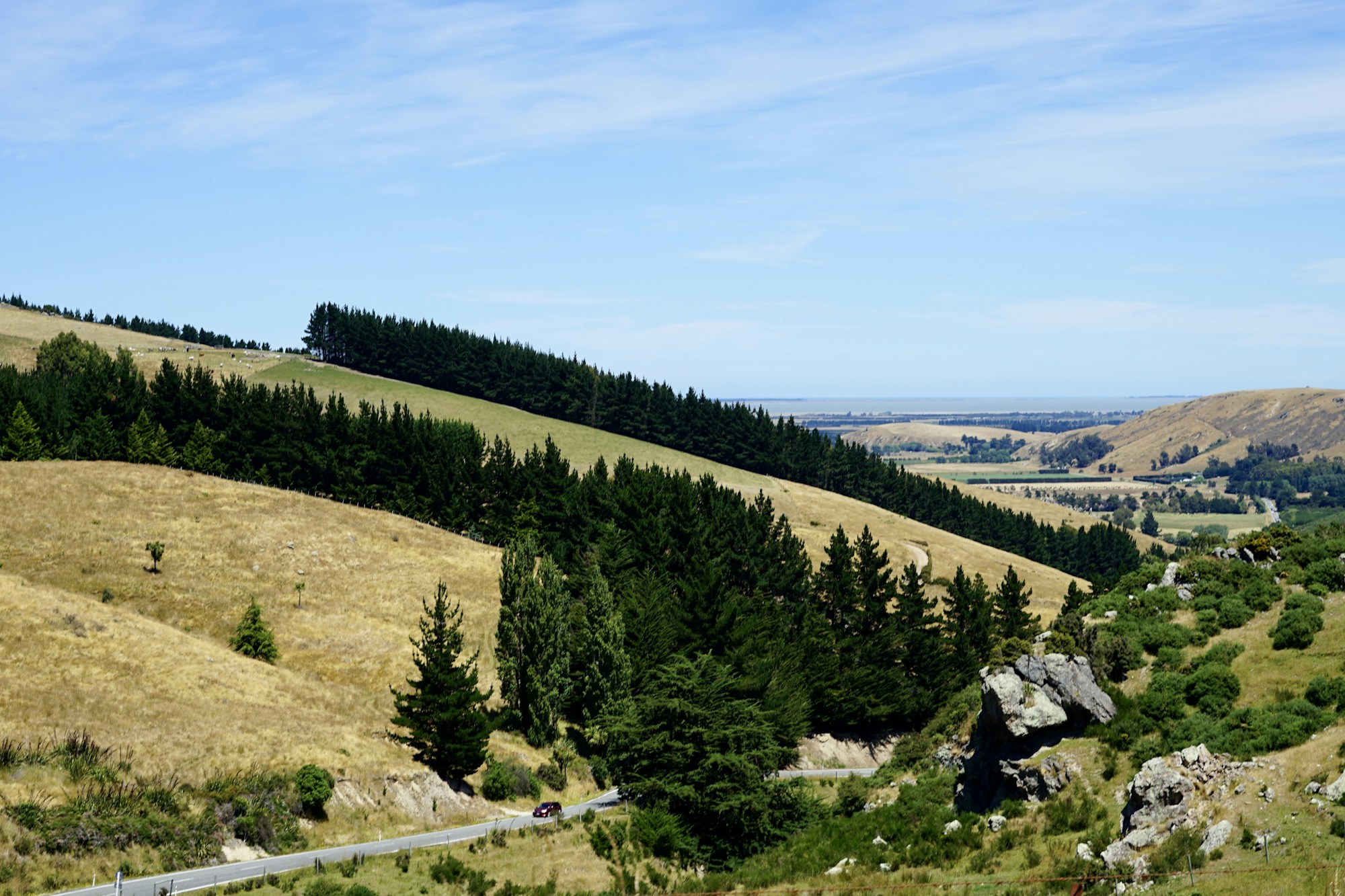
Port Hills — Christchurch Gondola and Lyttelton
The Port Hills form the volcanic boundary between Christchurch and the natural harbor of Lyttelton. The most spectacular way to reach them is the Christchurch Gondola (NZ$45), a cable car that climbs 500 meters in elevation while offering 360-degree views of the city, Canterbury Plains, Southern Alps, and the Lyttelton Harbour crater. At the summit, a panoramic cafe and exhibition trace the region’s geological history.
Hikers will opt for the Crater Rim Track, an 8-kilometer ridge trail that follows the edge of the volcanic crater with vertiginous views on both sides — the city on one side, the ocean on the other. The Godley Head Walkway, more accessible, leads to World War II bunkers perched on the cliffs, with stunning panoramas of the harbor entrance and Banks Peninsula.
Below, the harbor village of Lyttelton is a hidden gem. Rebuilt with character after the earthquake, this small fishing port is brimming with art galleries, independent cafes, and seafood restaurants. The Wunderbar, a legendary underground bar, hosts live concerts nearly every evening. The Lyttelton Farmers Market, every Saturday morning, is considered one of the best farmers’ markets in the country — artisan cheeses, manuka honey, sourdough bread, and organic vegetables straight from Canterbury farms.
Highlights
- Christchurch Gondola — 360-degree views of city, mountains, and ocean
- Crater Rim Track — spectacular ridge hike
- Lyttelton — bohemian harbor village, Saturday market
- Godley Head — WWII bunkers and coastal cliffs
Pixidia tip: Take the gondola up, then walk down via the Bridle Path (1h30) to Lyttelton for the Saturday market. Catch the ferry back to Christchurch — the perfect loop.
4. Akaroa and Banks Peninsula: the forgotten French colony
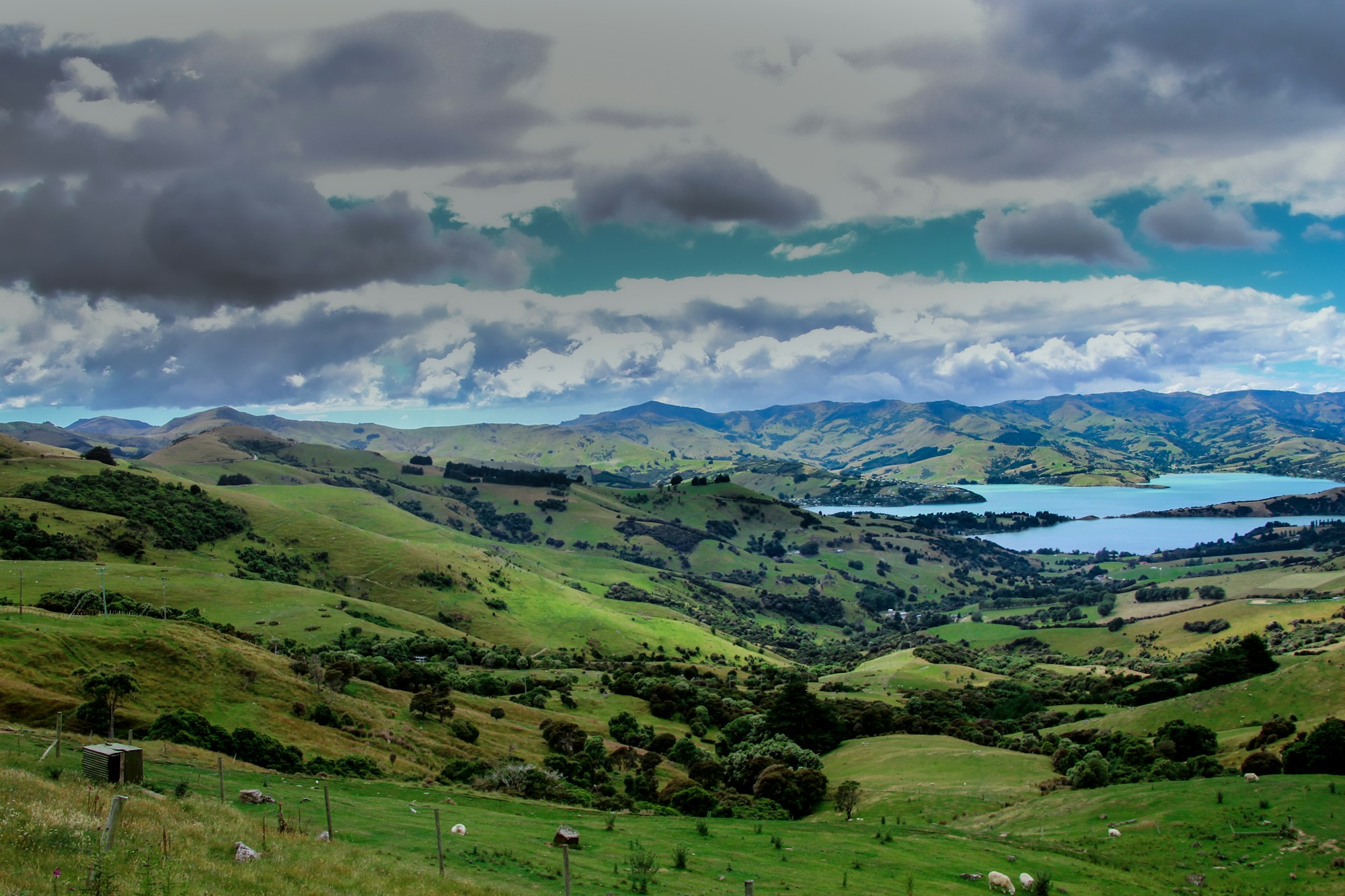
Akaroa — Banks Peninsula
Here’s a story few people know: in 1840, a group of 63 French settlers landed in this volcanic bay on the South Island to establish a colony. They arrived a few days too late — the British had just signed the Treaty of Waitangi. But Akaroa has preserved its French heritage: streets bear names like rue Lavaud and rue Jolie, colonial houses exude a Provencal charm, and the local patisserie serves croissants that would put some Parisian bakeries to shame.
Akaroa’s main attraction is the Hector’s dolphins — the smallest and rarest dolphins in the world, endemic to New Zealand. Black Cat Cruises offers excursions with a 98% detection rate, and the opportunity to swim with them in the crystal-clear waters of the natural harbor. An unforgettable experience — book well in advance during peak season.
Banks Peninsula itself is a collapsed ancient volcano whose craters form spectacular bays. The Banks Track, a 2 to 4-day hike across private land, traverses coastal landscapes of wild beauty — podocarp forests, sheer cliffs, and deserted beaches. For a shorter excursion, the Purple Peak trail offers sweeping views over Akaroa Harbour in a 3-hour round trip. Sea kayaking in the bay is also a remarkable experience, with chances of encountering fur seals, yellow-eyed penguins, and of course, dolphins.
Highlights
- Swimming with Hector’s dolphins — the world’s rarest (98% detection rate)
- Authentic French village — streets, architecture, and cuisine
- Banks Track — 2 to 4-day coastal hike
- Sea kayaking — seals, penguins, and volcanic landscapes
Pixidia tip: The winding road between Christchurch and Akaroa (Summit Road) offers spectacular panoramas but takes 1h30. Plan photo stops at the Hilltop lookouts — the view over Akaroa Harbour is absolutely breathtaking.
5. Kaikoura: face to face with ocean giants
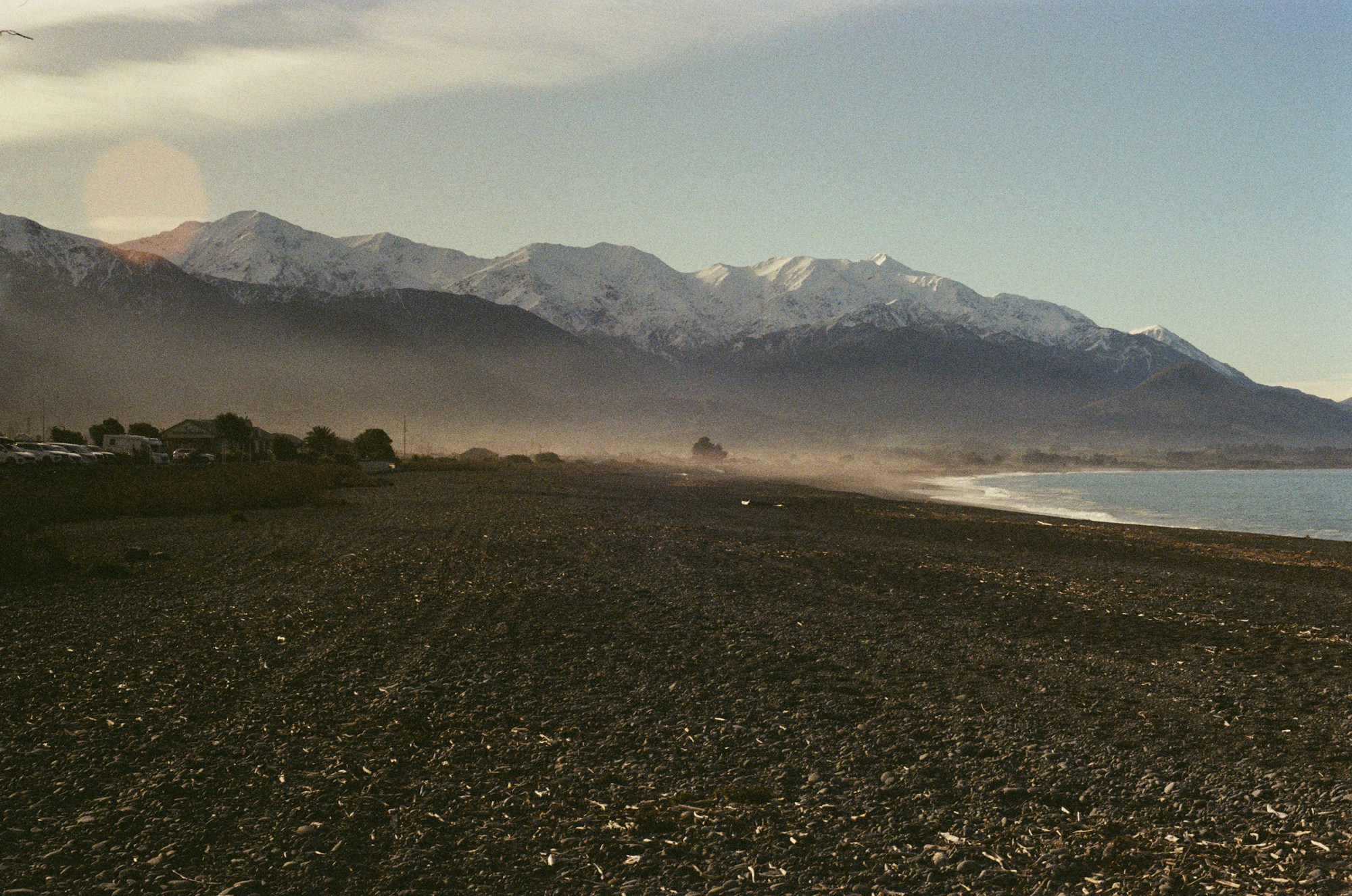
Kaikoura — Whale Watch and the wild coast
Kaikoura is one of the rare places on Earth where snow-capped mountains rising above 2,500 meters plunge directly into a 1,600-meter-deep underwater canyon. This unique geography creates a marine ecosystem of exceptional richness. Sperm whales — the largest predators on the planet — reside here year-round, drawn by the nutrient-rich waters of the Kaikoura Canyon.
Whale Watch Kaikoura offers 2.5-hour ocean trips with a 95% success rate. Depending on the season, you may spot sperm whales (year-round), humpback whales (June to August, during their migration), dusky dolphins (pods of 100 to 1,000 individuals), orcas (December to March), and royal albatrosses. The train journey from Christchurch via the Coastal Pacific (NZ$59-129) hugs the coast for 300 km and is a memorable experience in its own right.
On land, the Kaikoura Peninsula Walkway (3 hours, free) winds along cliffs and rocks where colonies of New Zealand fur seals bask in the sun. The town itself is renowned for its crayfish (rock lobster) — the name Kaikoura literally means « crayfish meal » in Maori. Try them at one of the roadside stands north of town for a fraction of restaurant prices.
Highlights
- Whale Watch — sperm whales year-round, humpbacks in winter
- Peninsula Walkway — fur seal colonies, free access
- Coastal Pacific — scenic train from Christchurch (NZ$59-129)
- Fresh crayfish (rock lobster) — unmissable local specialty
Pixidia tip: Book your Whale Watch trip at least 2 weeks ahead in summer. If cancelled due to weather (common), you’ll be rescheduled for free — build some flexibility into your itinerary.
6. The TranzAlpine and the Southern Alps: one of the world’s most beautiful train journeys
TranzAlpine — Christchurch to Greymouth
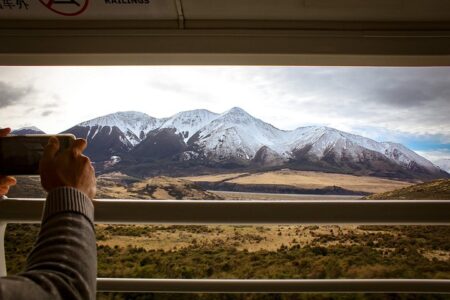
The TranzAlpine connects Christchurch to Greymouth, crossing the Southern Alps from east to west over 223 kilometers. Ranked among the world’s most spectacular rail journeys by National Geographic, Lonely Planet, and Conde Nast Traveler, this 4.5-hour trip is a succession of jaw-dropping landscapes: the golden Canterbury Plains, the Waimakariri River gorges, the beech forests of Arthur’s Pass National Park, and the misty valleys of the West Coast.
The train crosses Arthur’s Pass at 920 meters above sea level, passing through 19 tunnels and over 4 viaducts. The open-air observation carriage lets you breathe in the crisp mountain air and photograph the scenery without glass in the way. The views change with every season: snow-capped peaks and crystal-clear skies in winter, lush green valleys and cascading waterfalls fed by snowmelt in spring.
Arthur’s Pass itself is worth a stop. This alpine village is the gateway to the national park of the same name — home to keas, the world’s only alpine parrots. Curious and mischievous, they won’t hesitate to rummage through your belongings if you leave them unattended. The Devil’s Punchbowl Falls hike (1-hour round trip) leads to a 131-meter waterfall tucked into a rocky amphitheater. The more ambitious can tackle Avalanche Peak (6-8 hours round trip), one of New Zealand’s most demanding and rewarding alpine hikes, with 360-degree views of the Southern Alps. Access to the national park is completely free.
Highlights
- TranzAlpine — one of the world’s top 10 train journeys
- Arthur’s Pass — free national park, keas, and waterfalls
- Devil’s Punchbowl Falls — 131 m waterfall, easy hike
- Open-air observation carriage for unobstructed landscape photography
Pixidia tip: Sit on the left side (Christchurch to Greymouth direction) for the best views of the Waimakariri gorges. Book Scenic Plus class for wider seats, an included meal, and onboard service.
7. Day trips from Christchurch: Mt Cook, Hanmer Springs and Antarctica
Christchurch’s strategic location, at the crossroads of routes leading to the South Island’s top attractions, makes it an ideal base camp for day trips and longer excursions.
Mount Cook and Lake Tekapo
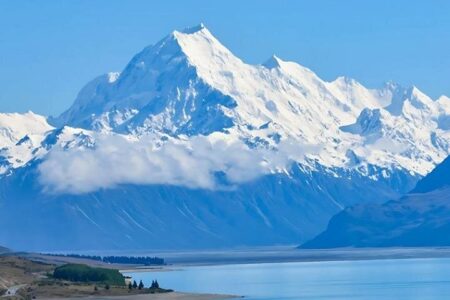
The ultimate excursion: a day trip to Mount Cook / Aoraki (3,724 m), New Zealand’s highest peak, via Lake Tekapo with its surreal turquoise waters. The supernatural color of this lake comes from fine glacial rock particles suspended in the water — a unique geological phenomenon. The Church of the Good Shepherd, on the lake shore, is one of the most photographed buildings in the country. At night, Lake Tekapo is part of the Aoraki Mackenzie International Dark Sky Reserve, the world’s largest dark sky reserve — the stargazing conditions here are exceptional.
At the foot of Mount Cook, the Hooker Valley Track (3-hour round trip, free) is an accessible hike that crosses three swing bridges over glacial rivers and leads to a glacial lake dotted with icebergs. Arguably one of the world’s most spectacular hikes for its effort-to-reward ratio.
Hanmer Springs: alpine hot springs
A 1h45 drive north of Christchurch (135 km), Hanmer Springs is the South Island’s most renowned thermal spa town. The Hanmer Springs Thermal Pools & Spa (NZ$25-35) features around twenty naturally heated pools, some nestled among century-old sequoias. After a day hiking the Port Hills or driving mountain roads, it’s the perfect detour for recovery. The alpine village also offers outdoor activities: jet-boating on the Waiau River, zip-lining, mountain biking, and forest hikes.
International Antarctic Centre
Christchurch has historically been the gateway to Antarctica — Scott’s and Shackleton’s expeditions were outfitted here in the early 20th century, and the US Antarctic air base still operates from Christchurch Airport. The International Antarctic Centre (NZ$49-65) offers an immersive experience: a -18°C storm simulation, encounters with rescued little blue penguins, and exhibits on the scientific challenges of Antarctica. An ideal activity for a rainy day or for families.
8. Budget and best time to visit Christchurch
How much does a trip to Christchurch cost?
| Category | Backpacker | Mid-range | Comfort |
|---|---|---|---|
| Accommodation | NZ$30 – 50 | NZ$82 – 152 | NZ$250 – 500+ |
| Meals / day | NZ$20 – 30 | NZ$40 – 60 | NZ$80 – 150 |
| Transport | NZ$10 – 15 | NZ$40 – 60 | NZ$60 – 100 |
| Activities | NZ$15 – 25 | NZ$30 – 50 | NZ$100 – 200 |
| Total / day | NZ$75 – 100 | NZ$150 – 250 | NZ$400 – 700+ |
| In USD | ~$46 – 62 | ~$93 – 155 | ~$248 – 434+ |
Indicative exchange rate: 1 USD ≈ 1.61 NZD. Car rental, virtually essential for exploring the region, costs between NZ$40 and NZ$60 per day. For a one-week trip for two on a mid-range budget, expect to spend around $1,679 USD, excluding flights.
When to go?
October to April (austral spring and summer) offers the best conditions: long days, pleasant temperatures (15-25°C / 59-77°F), and access to all mountain hikes. December to February is peak season — festivals, crowded beaches, and higher prices — but also the sunniest period.
June to August (winter) is the most budget-friendly season. Accommodation is up to 40% cheaper, tourist sites are uncrowded, and it’s the best time to spot humpback whales in Kaikoura. Skiing is available at nearby resorts (Mt Hutt, 1h30 away).
September to November offers the best value for money: spring blooms in the Botanic Gardens, mid-range prices, and seal and penguin colonies at the peak of their breeding season.
Frequently Asked Questions
How many days do you need to visit Christchurch and its region?
Allow 3 to 4 days minimum for the city and immediate surroundings (Port Hills, Lyttelton, Akaroa). To explore the major excursions — Kaikoura, TranzAlpine, Mt Cook/Lake Tekapo, and Hanmer Springs — plan for 7 to 10 days. That’s the ideal amount of time to enjoy everything at a relaxed pace and take in the staggering diversity of the region.
Has the city been rebuilt after the 2011 earthquake?
Yes, for the most part. Fifteen years after the earthquake, the city center (CBD) is almost entirely rebuilt with bold contemporary architecture. The inauguration of Te Kaha Stadium in March 2026 symbolically marks the end of the reconstruction. A few peripheral construction sites remain, but they don’t affect the tourist experience. The city has managed to turn disaster into opportunity, creating a greener, more pedestrian-friendly, and more creative city center than before the earthquake.
Can you swim with Hector’s dolphins in Akaroa?
Yes, it’s one of the most iconic experiences in the region. Black Cat Cruises is the main operator and boasts a 98% detection rate. Hector’s dolphins are the smallest and rarest dolphins in the world, endemic to New Zealand. Trips run year-round, but November to April offers the best swimming conditions. Book several days in advance during peak season.
Is the TranzAlpine really worth it?
Absolutely. The TranzAlpine is consistently ranked among the world’s most beautiful rail journeys by National Geographic, Lonely Planet, and Conde Nast Traveler. In 4.5 hours, it crosses the Canterbury Plains, the Waimakariri gorges, Arthur’s Pass, and the West Coast forests. Fares: NZ$109 to NZ$219 depending on class. Tip: book early online for the best rates, and choose a clear day for exceptional panoramas.
When can you see whales in Kaikoura?
Sperm whales are present year-round in Kaikoura thanks to the underwater canyon that creates ideal feeding conditions. Humpback whales pass through from June to August during their migration. Orcas are most frequently spotted from December to March. Dusky dolphins form pods of 100 to 1,000 individuals and are visible year-round. Whale Watch Kaikoura has a 95% success rate, with an 80% refund if no whales are sighted.
Is Christchurch safe for tourists?
Yes, Christchurch is a very safe city. New Zealand consistently ranks among the safest countries in the world on the Global Peace Index. Regarding earthquakes, the city has been rebuilt to the strictest seismic standards and has an effective alert system. Standard travel precautions apply: don’t leave valuables visible in your rental car and follow safety guidelines for outdoor activities.
Can you get around without a car near Christchurch?
It’s possible but limiting. Within the city, the Metro bus network is sufficient. For excursions, InterCity runs buses to Kaikoura, Hanmer Springs, and major destinations. The TranzAlpine and Coastal Pacific cover the rail routes. Guided day trips are available to Akaroa, Mt Cook, and Kaikoura. However, renting a car (from NZ$40-60/day) is recommended for flexible exploration of the region — many remarkable sites are not served by public transport.
What are the free things to do in Christchurch?
Christchurch offers plenty of free activities: the Botanic Gardens (21 hectares, outstanding collections), the Canterbury Museum (history, art, and Antarctic exhibition), the Avon River walk (5 km of landscaped riverbanks), the street art trail in the CBD, the Riccarton Bush Market on Saturdays, the Kaikoura Peninsula Walkway (fur seal colonies), and access to Arthur’s Pass National Park (hikes, waterfalls, keas). The Lyttelton market on Saturday mornings is also free to visit.
Sources
- Te Kaha Stadium — Official website of Christchurch’s new stadium
- ChristchurchNZ — Official Christchurch and Canterbury tourism board
- Whale Watch Kaikoura — Whale watching tours
- Black Cat Cruises — Hector’s dolphins in Akaroa
- Great Journeys of New Zealand — TranzAlpine and Coastal Pacific
- Department of Conservation (DOC) — National parks and hiking trails
- Lonely Planet — Christchurch and Canterbury guide
- Immigration New Zealand — NZeTA and entry requirements
- Budget Your Trip — Average travel costs in Christchurch
- Tourism New Zealand — Official tourism information
Research conducted on March 23, 2026
Ready to explore Christchurch?
Create your custom itinerary with Pixidia and discover the Garden City, the Southern Alps, and the treasures of New Zealand’s South Island.
Explore all itineraries