
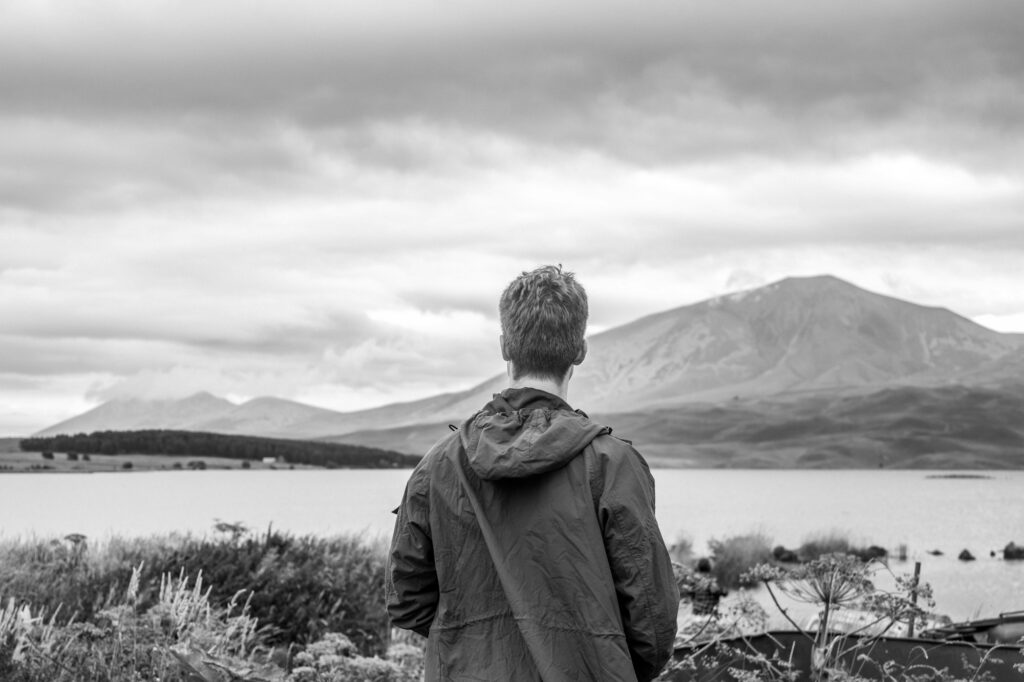
Slow intentional travel means fewer destinations, longer stays, and real immersion instead of a checklist of sights. In 2026, 91% of travelers want it (Vrbo), and daily costs drop 40–60% after the first month on the road, once local rhythms replace tourist pricing. Our pick for genuine immersion this year: Alentejo, Portugal — 90 minutes from Lisbon, €50–90/day, quiet enough to actually slow down.
The biggest travel trend of 2026 isn’t about a destination. It’s about a mindset: go fewer places, stay longer, and come back genuinely changed. According to a Vrbo study cited by Parade, 91% of travelers say they’re interested in slower, simpler travel in 2026, focused on rest, nature, and genuinely enriching experiences. After years of overloaded itineraries and destination bucket lists, a generation of travelers is deliberately choosing to do less — and enjoying it incomparably more. Six destinations, six ways to travel differently.
Why travelers are cutting their destination lists in 2026
Intentional slow travel isn’t just another trend: it’s a direct response to collective burnout. According to trend analysis published by EdnandT, nearly 60% of Gen Z and Millennial travelers took at least two trips of five nights or more in 2025, with a strong shift toward wellness and rich experiences over rushed tourism.
Burnout is now driving travel decisions. After years of high-speed living, many travelers crave rest, stillness, and a mental reset. Research published in the PAR Learning Center shows that women who vacation at least twice a year have significantly lower risk of chronic stress and depression. A study published in PMC found that stress levels remain lower for 30 to 45 days after a successful vacation.
- 91% of travelers are interested in slower travel in 2026 (Vrbo)
- 40–60% reduction in daily costs after the first month of extended travel
- 60% of Gen Z and Millennials now prefer stays of 5+ nights
- In 2026, people talk about « why-cations »: traveling not toward a destination, but toward a feeling
Economics also matter: according to BudgetYourTrip, daily travel costs can drop by 40 to 60% after the first month, once travelers shift from tourist pricing to local daily life costs. Slow travel is both more fulfilling and, often, cheaper.
1. Alentejo, Portugal — The art of Iberian slowness
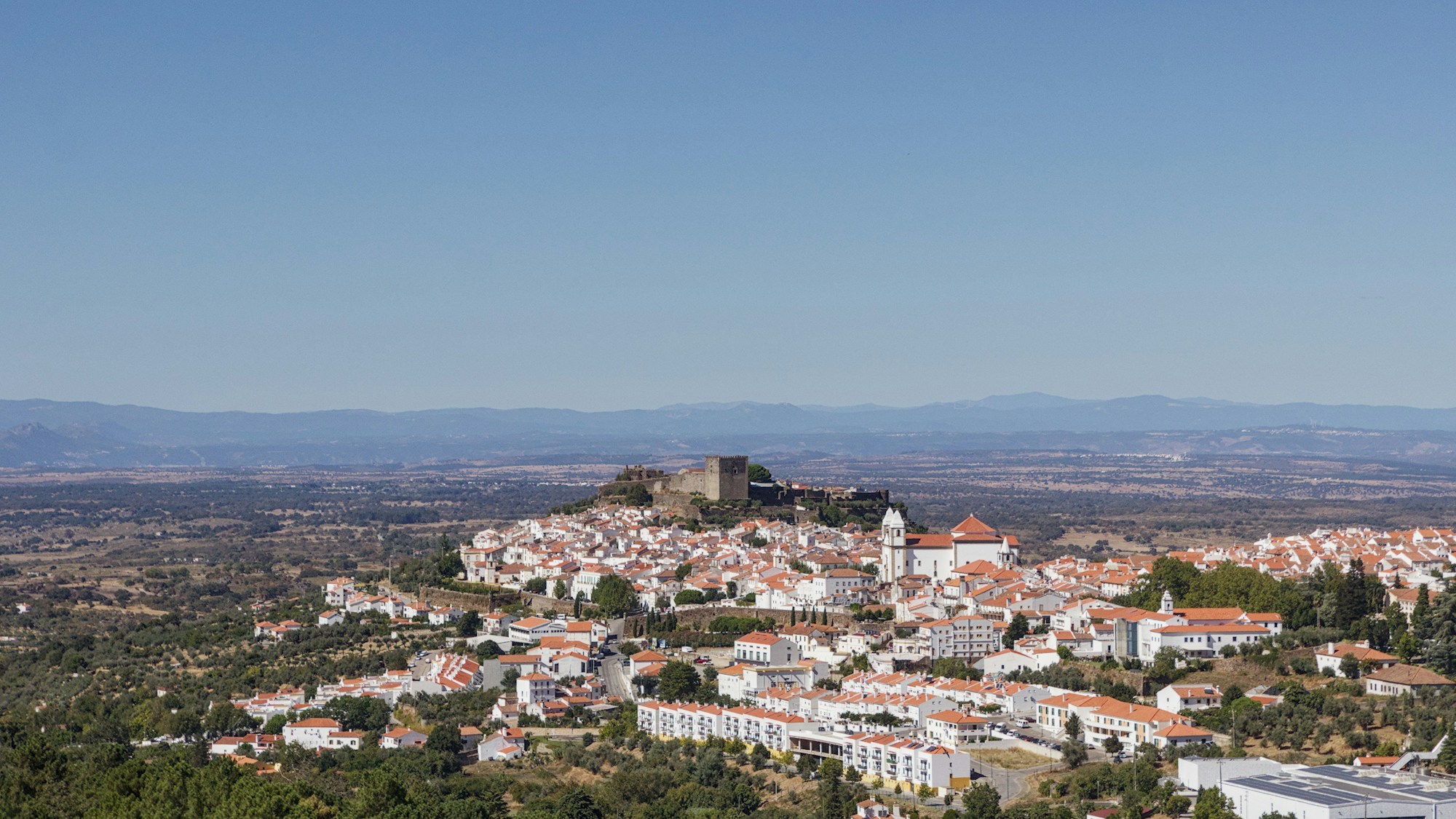
Alentejo — A territory of calm, 90 minutes from Lisbon
Recent research on slow tourism in rural areas identifies Alentejo as an ideal region for slow travel, highlighting its unhurried pace, silence, low traffic, and landscapes of cork oak forests, olive groves, and vineyards. According to Wine Tourism Portugal, the region is designated a « territory of calm » and is attracting a growing number of travelers seeking genuine deceleration.
Portugal remains one of the best value destinations in Western Europe. A three-course lunch (menu do dia) in a neighborhood tasca — wine included — costs between €12 and €16. April and May are ideal months: pleasant temperatures (18–24°C in Évora), jacaranda trees in bloom, and negligible crowds outside major cities.
Highlights
- Medieval walled villages: Monsaraz, Marvão, Castelo de Vide
- Outstanding gastronomy: Alentejano black pork, D.O.C. wines, Serra cheese
- Lake Alqueva — Europe’s largest artificial lake with turquoise waters
- Some of Europe’s clearest starry skies (Starlight Reserve)
2. Lofoten Islands, Norway — The Arctic for slow souls
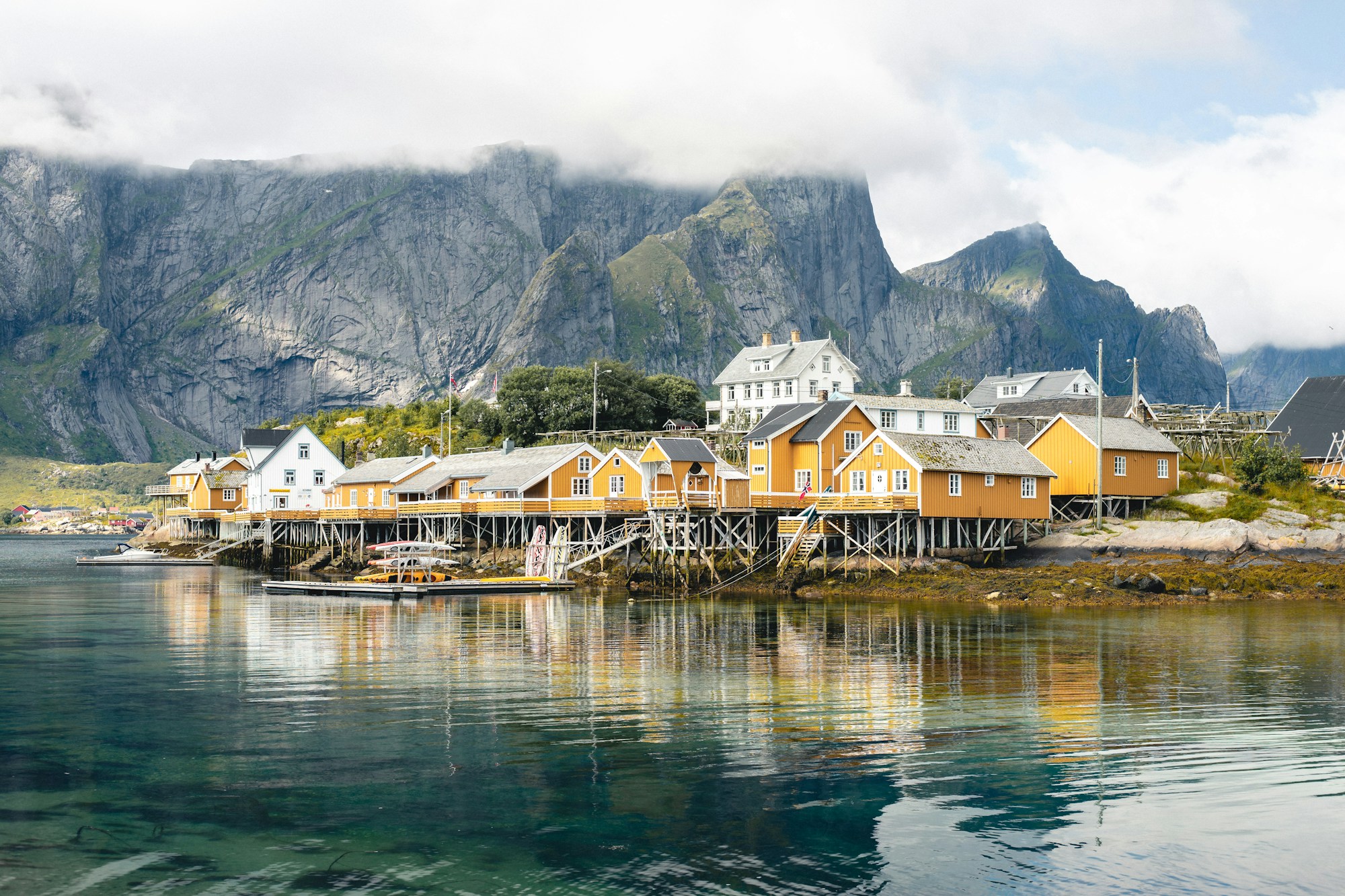
Lofoten — Arctic peaks rising from the sea
The Lofoten Islands lie above the Arctic Circle in northern Norway. These islands offer dramatic peaks rising directly from turquoise waters, creating some of the most breathtaking scenery in the world. According to Travel to Norway, the island of Skrova — just 200 inhabitants — is nicknamed the « Hawaii of Lofoten » for its immaculate white sand beaches.
Norway is expensive, but the local strategy changes everything: opt for accommodation with a kitchen, combine picnics with fisherman’s restaurants, take advantage of all the free hiking trails. Late spring remains the best time — days lengthen, the midnight sun appears from late May, and summer crowds haven’t arrived yet.
Highlights
- Stay in a rorbu — an authentic fisherman’s cabin on the water
- Midnight sun in June: golden light around the clock
- Spectacular hikes from villages (Reinebringen, Munkebu)
- Kayaking between fjords and traditional fishing with locals
3. Oaxaca, Mexico — Gastronomy, art and Zapotec civilization
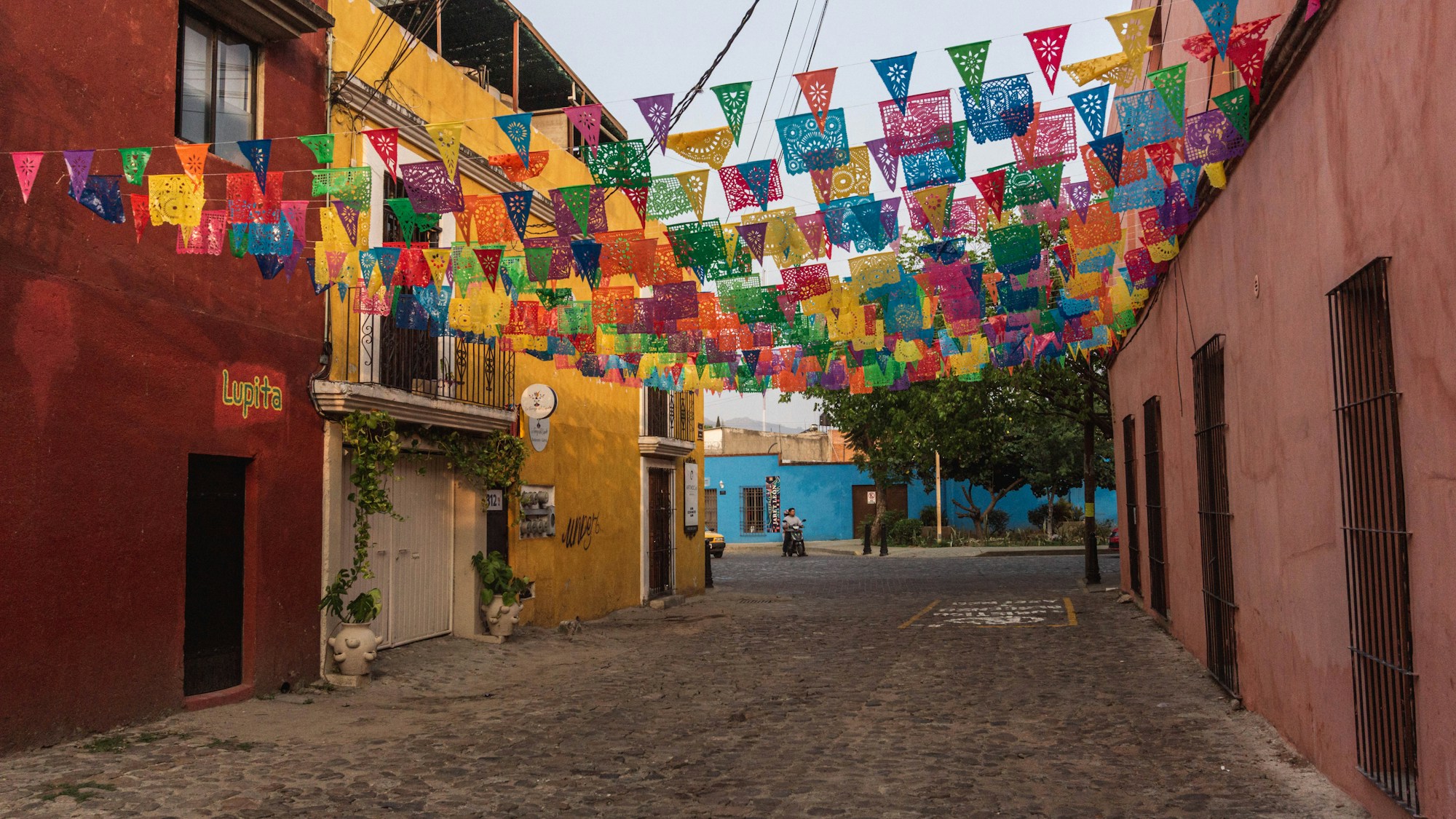
Oaxaca — Mexico’s cultural heart
Oaxaca is where pre-Hispanic civilizations, colonial architecture, indigenous traditions, and contemporary gastronomy converge with extraordinary density. The city is the gateway to Monte Albán — one of Mesoamerica’s most important archaeological sites — while offering immersive experiences in textile production, mezcal distillation, and Zapotec heritage. According to Nomadic Matt, it’s one of the American continent’s most ideal cities for slow travel.
Communities across southern Mexico are expanding their community tourism offerings linked to coffee production, weaving, and traditional markets, according to The Traveler. Budget travelers can manage on $40–60 USD per day; mid-range travelers spend $80–150 USD.
Highlights
- Monte Albán archaeological site (Zapotec civilization, 500 BC)
- World-renowned gastronomy: tlayudas, mole negro, chapulines
- Artisanal mezcal distilleries in surrounding villages
- Día de los Muertos (Oct 31–Nov 2): one of the most authentic in the country
4. Da Nang & Hội An, Vietnam — Asia’s coastal rhythm
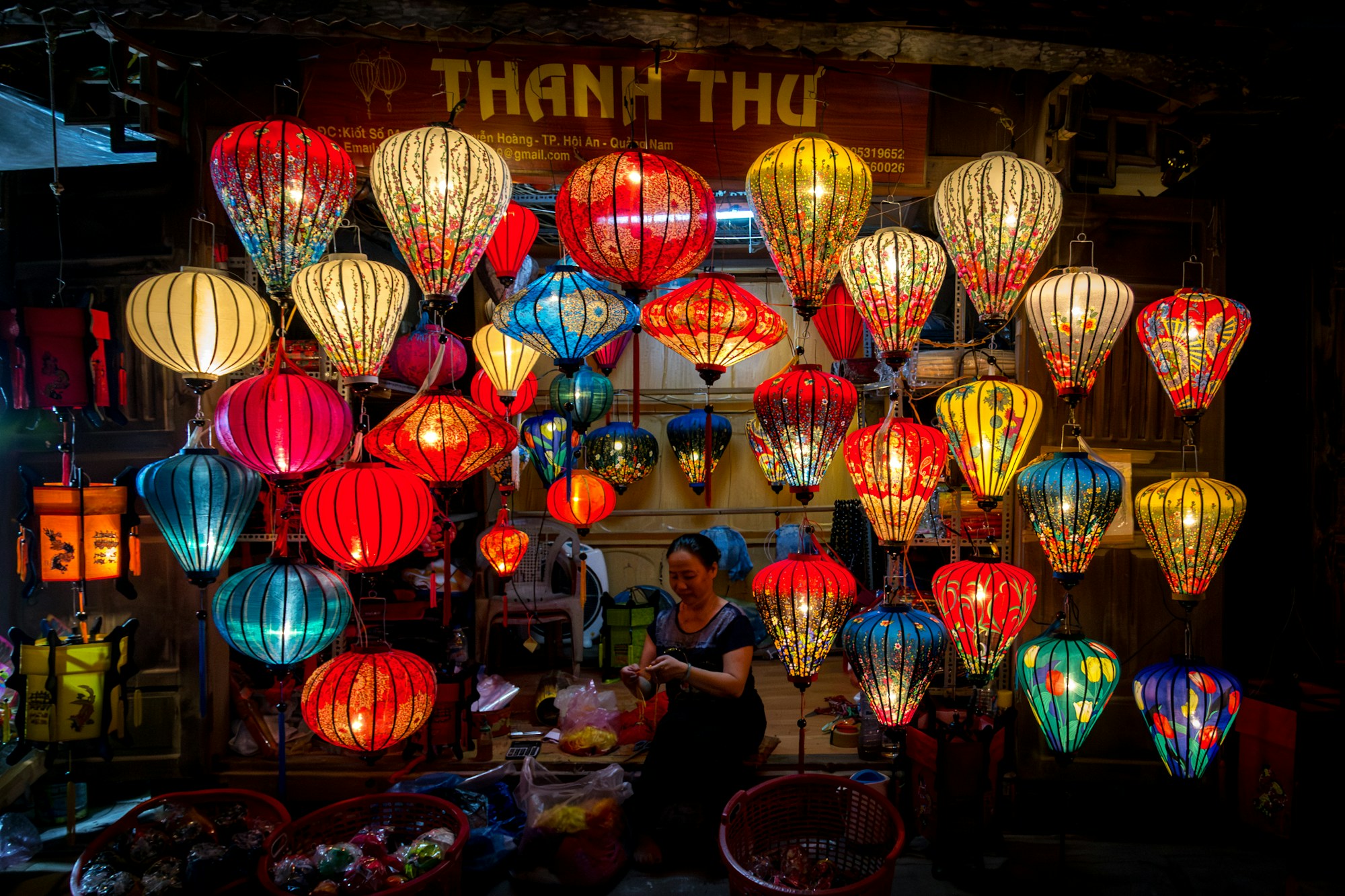
Central Vietnam — The perfect base for two UNESCO gems
Thanks to its strategic position in central Vietnam, Da Nang serves as the ideal base to explore two UNESCO World Heritage Sites within easy reach: the ancient town of Hội An (30 km south) and the imperial city of Huế (100 km north). According to Lifestyle Inquirer, Da Nang rewards travelers who want to immerse themselves in another way of life: mornings start early at the beach, afternoons drift slowly, evenings bring everyone outside again.
Travel costs in Vietnam remain among Asia’s lowest: between $20 and $35 USD per day for budget travelers, between $45 and $95 USD for mid-range comfort, according to Wander on Less.
Highlights
- Hội An and its lanterns — one of Asia’s most photographed towns
- Hai Van Pass by scooter (exceptional panoramas)
- Local gastronomy: cao lầu, mì quảng, bánh mì hội an
- Cooking classes, tailor workshops, boat rides on Thu Bon river
5. Kyrgyzstan — The nomadic paradise of Central Asia
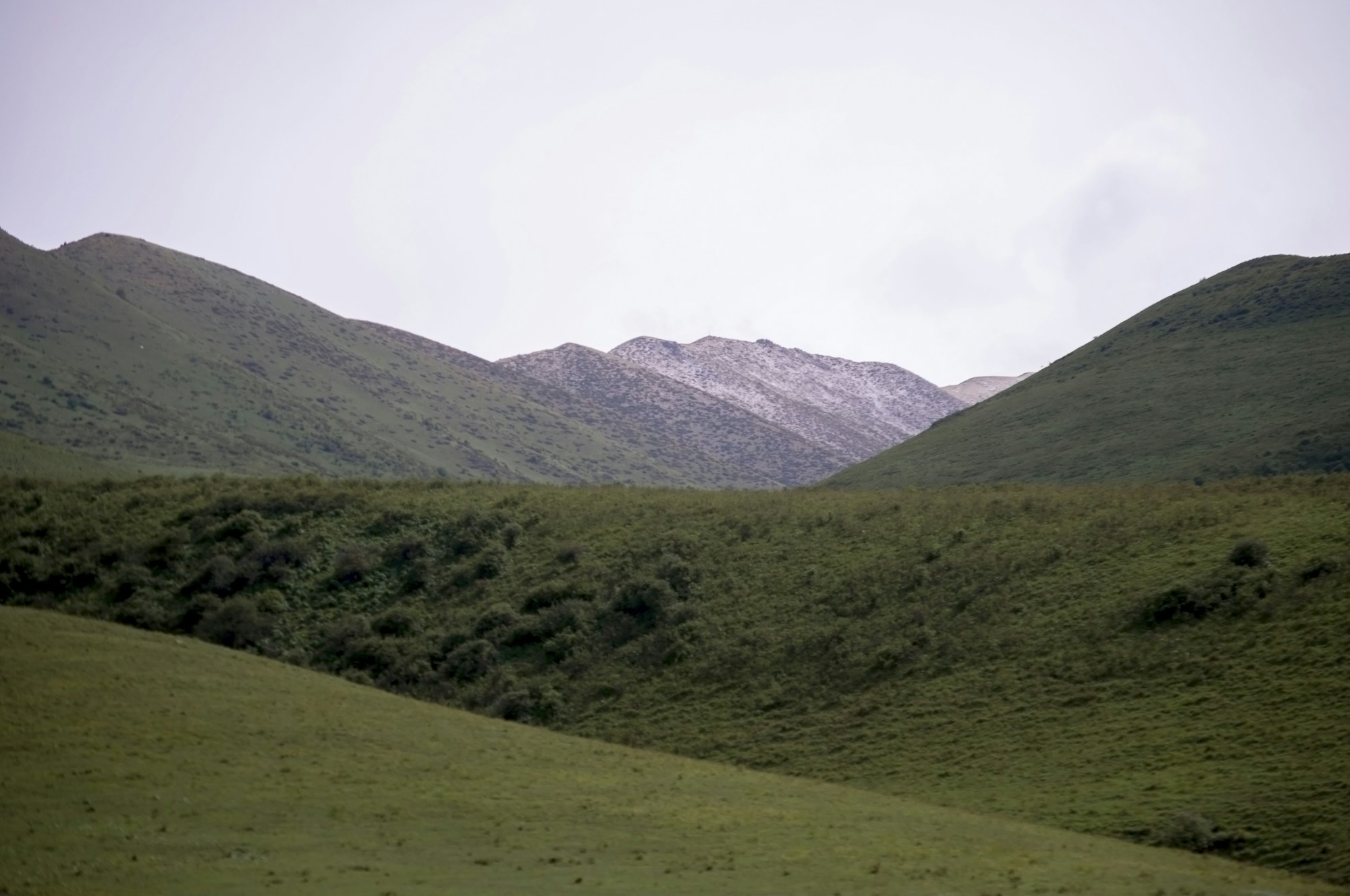
Kyrgyzstan — Pristine mountains and a centuries-old nomadic culture
Kyrgyzstan is a country of breathtaking beauty: pristine mountains, green valleys, crystal-clear lakes, and a nomadic culture centuries old. According to the Journal of Nomads, a trip costs between $13 and $40 USD per day (average $21), with homestays or yurts at $10 per night including meals.
In 2026, the World Nomad Games return to Kyrgyzstan for the first time since 2018: traditional wrestling, falconry, archery, and the spectacular kok boru (polo played with a goat carcass). According to Against the Compass, Kyrgyz people welcome you into their country and homes with a genuine nomadic spirit.
Highlights
- Lake Issyk-Kul — 180 km long, surrounded by 4,000m peaks
- Yurt stays with nomadic families in summer alpine pastures
- Treks in the Tian Shan: some of Asia’s most pristine passes
- World Nomad Games 2026 — unique sporting and cultural event
6. Transylvania, Romania — Wild and living Europe
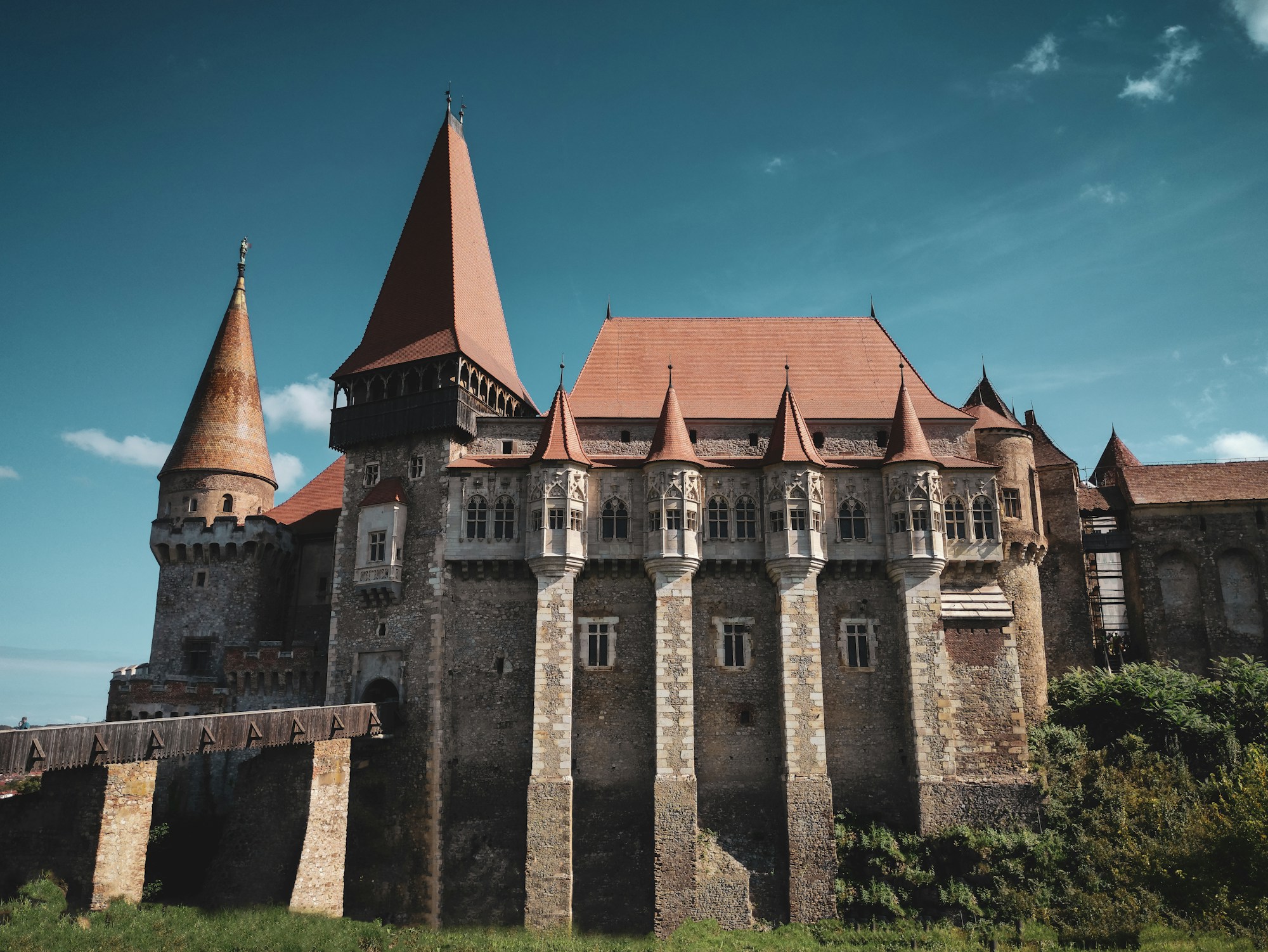
Transylvania — Intact Saxon villages in the heart of the Carpathians
Transylvania represents one of Europe’s best value destinations, with outstanding UNESCO-listed medieval heritage. According to Travel Off Path, a circuit through breathtaking medieval towns like Sighișoara and Sibiu stands as one of the continent’s most authentic adventures. Medieval peasant villages, intact Saxon fortifications, wild brown bears, and pre-industrial farming practices coexist with discreet modernity.
Romania is one of Europe’s best value destinations: expect just €30–55/day mid-range, with medieval village guesthouses at €20–40/night including breakfast.
Highlights
- Inhabited Saxon villages: Viscri, Biertan, Mălâncrav (UNESCO listed)
- Carpathian hikes with wildlife watching (bears, wolves)
- Sighișoara — Europe’s only inhabited medieval citadel
- Transylvanian gastronomy: ciorbă, sarmale, artisanal pălincă
Slow travel destinations at a glance
A quick side-by-side to help you pick where to slow down first, based on budget, season, and how much time you can realistically give a single place.
| Destination | Daily budget | Best months | Ideal stay | Difficulty |
|---|---|---|---|---|
| Alentejo, Portugal | €50–90 | Apr–May / Sep–Oct | 10–21 days | Easy |
| Lofoten, Norway | €100–180 | May–June / Sep | 10–14 days | Moderate |
| Oaxaca, Mexico | €40–80 | Oct–Nov / Feb–Mar | 10–21 days | Easy |
| Da Nang & Hội An, Vietnam | €20–60 | March–May | 14–30 days | Easy |
| Kyrgyzstan | €15–35 | June–September | 14–21 days | Moderate |
| Transylvania, Romania | €30–55 | May–June / Sep–Oct | 10–21 days | Moderate |
How to practice intentional slow travel: practical guide
Adopting intentional slow travel isn’t just about choosing a lesser-known destination. It’s a different way of traveling altogether. According to The Inn at Stone Cliffe, the accommodation you choose shapes how you experience the destination: prioritize properties with kitchens, which serve as a « base » rather than just a place to sleep.
The 5 rules of the slow traveler
- Aim for 5+ nights in one place. Below that, genuine immersion is impossible — you remain in tourist mode.
- Avoid over-planning. Leave at least 2 completely « free » days per week, with no program.
- Choose accommodation with a kitchen. Shopping at local markets, cooking — that’s already integrating.
- Reduce digital load. Slow travelers limit notifications and social media during the trip to anchor the benefits.
- Choose not a destination, but a feeling. Ask yourself « what do I need right now? » — that’s the logic of 2026’s why-cations.
Trend analyses highlight the importance of reducing cognitive load: less logistics, fewer notifications, more intentionality in screen use. This can mean direct routes, simple transport, and setting limits on apps during the trip, according to EdnandT.
Practical info for your slow journey
Stay connected from the moment you land, anywhere in the world. Instant activation, no physical SIM swap needed.
From €4.50Nomad Insurance: global coverage from $56/4 weeks. 10% off via our link. Perfect for extended stays.
From $56 / 4 weeksFrequently asked questions about slow travel in 2026
What exactly is intentional slow travel?
Intentional slow travel is fewer destinations, longer stays, and deeper experiences. Rather than collecting passport stamps, you choose a place and « live » it: you settle in, create habits, learn a few words of the local language, always go to the same bakery. According to Miles with McConkey, it’s « savoring the journey, rather than rushing through it. »
Is slow travel more expensive than regular travel?
No, often the opposite. According to BudgetYourTrip, daily travel costs can drop by 40 to 60% after the first month, once travelers shift from tourist services to local daily life costs. Fewer internal journeys (planes, trains, different hotels every night) also means fewer logistical expenses. Extended stays often allow for negotiating very favorable weekly or monthly rates.
How long should a slow travel stay last to be truly immersive?
As a rule, 5 nights minimum allows you to reach the first effects of immersion. But the real magic starts from 10 to 14 days in one place. In Kyrgyzstan, for example, you need at least 10 days and ideally two weeks to truly experience the nomadic culture. For destinations like Da Nang or Medellín, a full month allows you to create lasting local habits and significantly reduce your daily budget.
Do you have to choose unknown destinations for slow travel?
Not at all. According to Penguin Trampoline, in 2026, « off the beaten path » no longer means remote or complicated. It generally means choosing the quieter option next door: the rural region near the capital, the village 40 km from the crowded beach resort, the residential neighborhood instead of the tourist center. Alentejo rather than Lisbon. Sibiu rather than Bucharest.
Is slow travel compatible with a full-time job?
With remote work becoming the new norm, the boundaries between travel and daily life are blurring. Cities like Da Nang, Medellín, or Seoul allow for temporary stays with excellent digital infrastructure (fiber, coworking spaces, well-equipped cafes), without upending your life. For those who can’t work remotely, slow travel also applies to vacations: taking three weeks in one place rather than rushing through five countries in two weeks.
What are the real psychological benefits of slow travel?
Studies show that travel offers serious mental health benefits: stress reduction, burnout prevention, reconnection with oneself. A study published in PMC found that stress levels remain lower for 30 to 45 days after a successful vacation. Slow travel anchors these benefits over time: sensory novelty (new sounds, tastes, textures) pulls us out of excessive rumination and grounds us in the present, according to Modern Therapy.
How do you choose your slow travel destination in 2026?
In 2026, many are calling this year the year of « why-cations » — a travel mindset that starts not from a pin on a map, but from the pursuit of a feeling. Ask yourself: « What do I need right now? » Reconnect? Recharge? Learn something new? Feel something different? According to &Beyond, travelers are no longer asking « where should I go? » but first seek the feeling, then the destination.
Is slow travel a passing trend or a lasting change?
It’s a structural shift, not a trend. According to The Inn at Stone Cliffe, slow travel offers a way to reclaim travel as an experience that restores rather than exhausts. The convergence of widespread burnout, normalized remote work, and environmental awareness makes this evolution lasting. For travelers planning for 2026, choosing destinations and accommodation that support this philosophy leads to deeper, more rewarding journeys.
Sources
- Parade — Why More Travelers Are Ditching Packed Itineraries for Slow Travel (2026)
- EdnandT — The 2026 Travel Trend: Fewer Places, Longer Stays
- &Beyond — Four Shifts Shaping Travel in 2026
- The Inn at Stone Cliffe — Slow Travel in 2026
- Lifestyle Inquirer — Intentional Travel Trends in 2026
- Penguin Trampoline — Travel Trends 2026
- Travel to Norway — Lofoten Islands Travel Guide (2026)
- Nomadic Matt — Oaxaca Travel Guide (2026)
- Vietnam Marvel Travel — Ultimate Da Nang Itinerary 2025–2026
- Journal of Nomads — Kyrgyzstan Money Guide 2026
- Travel Off Path — 15 Lesser Known Destinations to Visit in 2026
- PMC — A Two-Week Vacation and Psychological Well-Being
Research conducted on March 24, 2026 · refreshed on July 16, 2026.
Ready to travel differently in 2026?
Discover itineraries designed for genuine immersion: fewer destinations, more experiences. Pixidia selects journeys that are truly worth stopping for.
Explore Pixidia itineraries