
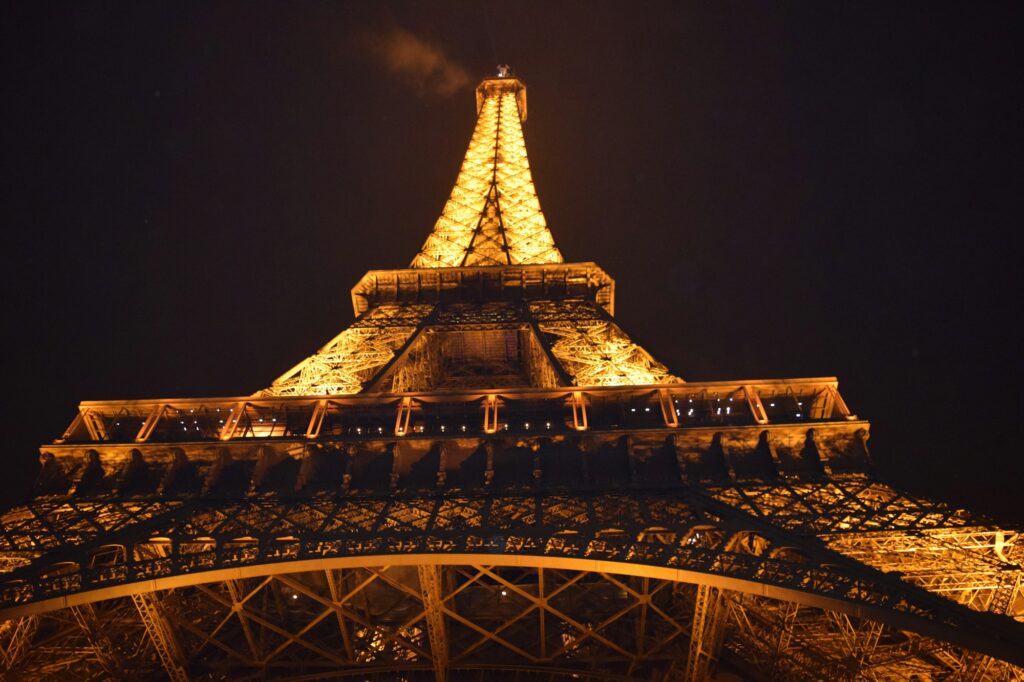
Bastille Day Paris 2026 at a glance: The Eiffel Tower fireworks are on Monday 13 July at 11pm (35 min, free from Trocadéro — arrive before 5pm). The military parade is on Tuesday 14 July, 10am–12pm, along the Champs-Élysées (free, arrive by 6:30am for a good spot). The fireworks were moved to 13 July as a tribute to victims of the Nice terror attack (10th anniversary, 86 killed, 14 July 2016). All main events are free. For an elevated experience, a Seine dinner cruise lets you watch the fireworks from the river — book early as 13 July slots sell out weeks in advance.
Bastille Day 2026 in Paris unfolds across two extraordinary days. On the evening of 13 July, the Eiffel Tower fireworks light up the Champ-de-Mars in a 35-minute show celebrating 400 years of the French Navy. Then on the morning of 14 July, the biggest military parade in decades rolls down the Champs-Élysées, with allies from the Ukraine coalition in the presidential stands. This guide gives you the official programme, the best free viewing spots, a two-day walking itinerary and all the logistics you need to get around Paris without a hitch.
1. Why Bastille Day matters
From 14 July 1789 to a national tradition
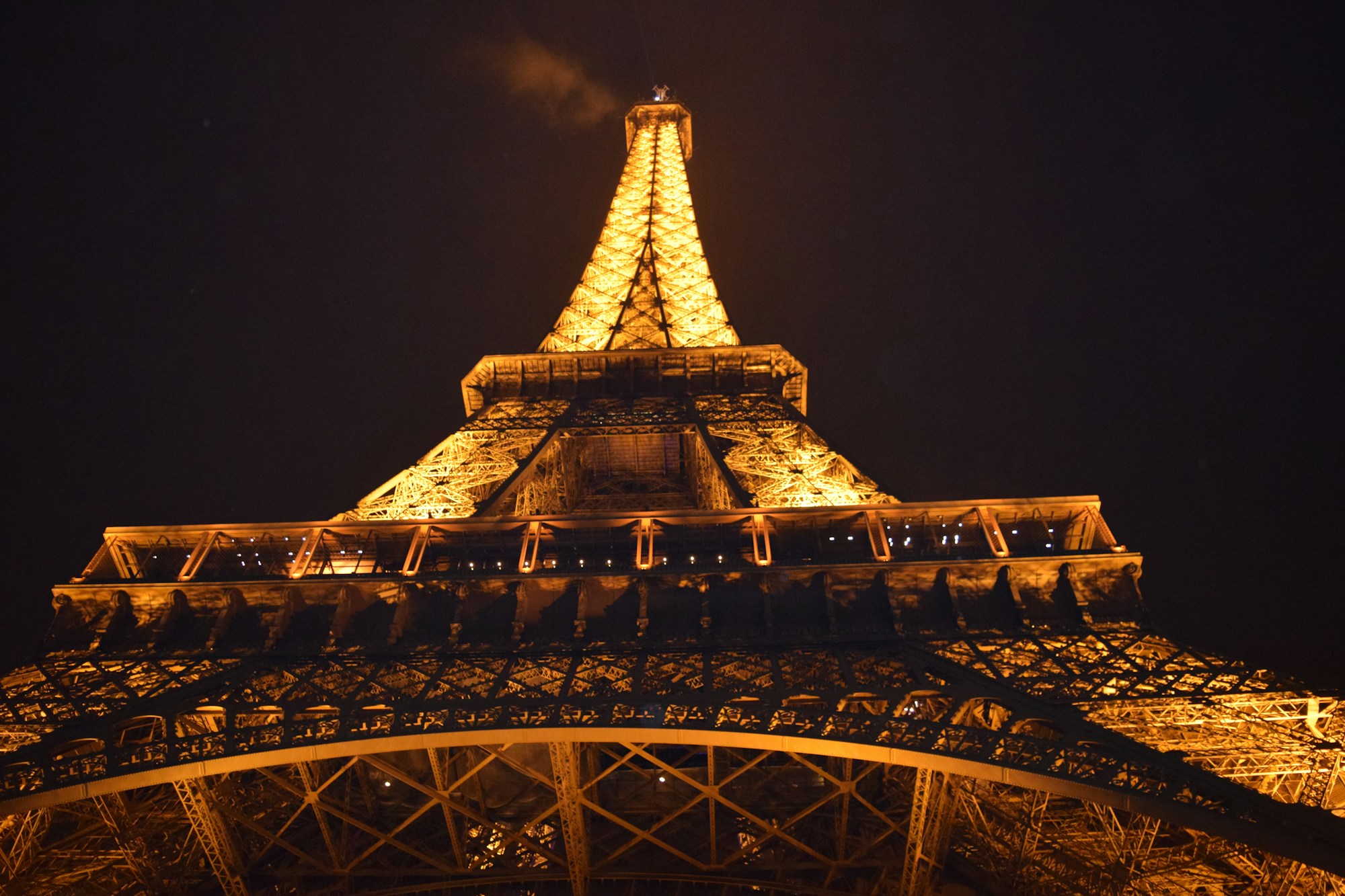
On 14 July 1789, thousands of Parisians stormed the Bastille fortress — a symbol of royal tyranny. The day before, King Louis XVI had dismissed finance minister Necker, sparking the uprising (the Bastille held just seven prisoners at the time). A century later, the law of 6 July 1880 proclaimed 14 July France’s national holiday, also commemorating the Fête de la Fédération of 14 July 1790 — when 400,000 Parisians gathered on the Champ-de-Mars and Louis XVI swore an oath to the Nation.
The first official military parade was held at Longchamp in 1880. The parade moved permanently to the Champs-Élysées in 1980 in its current form. The tradition of fireworks launched from the Eiffel Tower dates to the 1960s, growing ever more spectacular with each passing decade.
Key highlights
- Dual symbolism: the storming of the Bastille (popular heroism) and the Fête de la Fédération (national unity)
- Centenary of the Flame under the Arc de Triomphe association in 2026 (founded 1926)
- 400 years of the French Navy, founded by Cardinal Richelieu in 1626 — the central theme for 2026
2. Fireworks: evening of 13 July 2026 (not the 14th)
An official decision rooted in remembrance
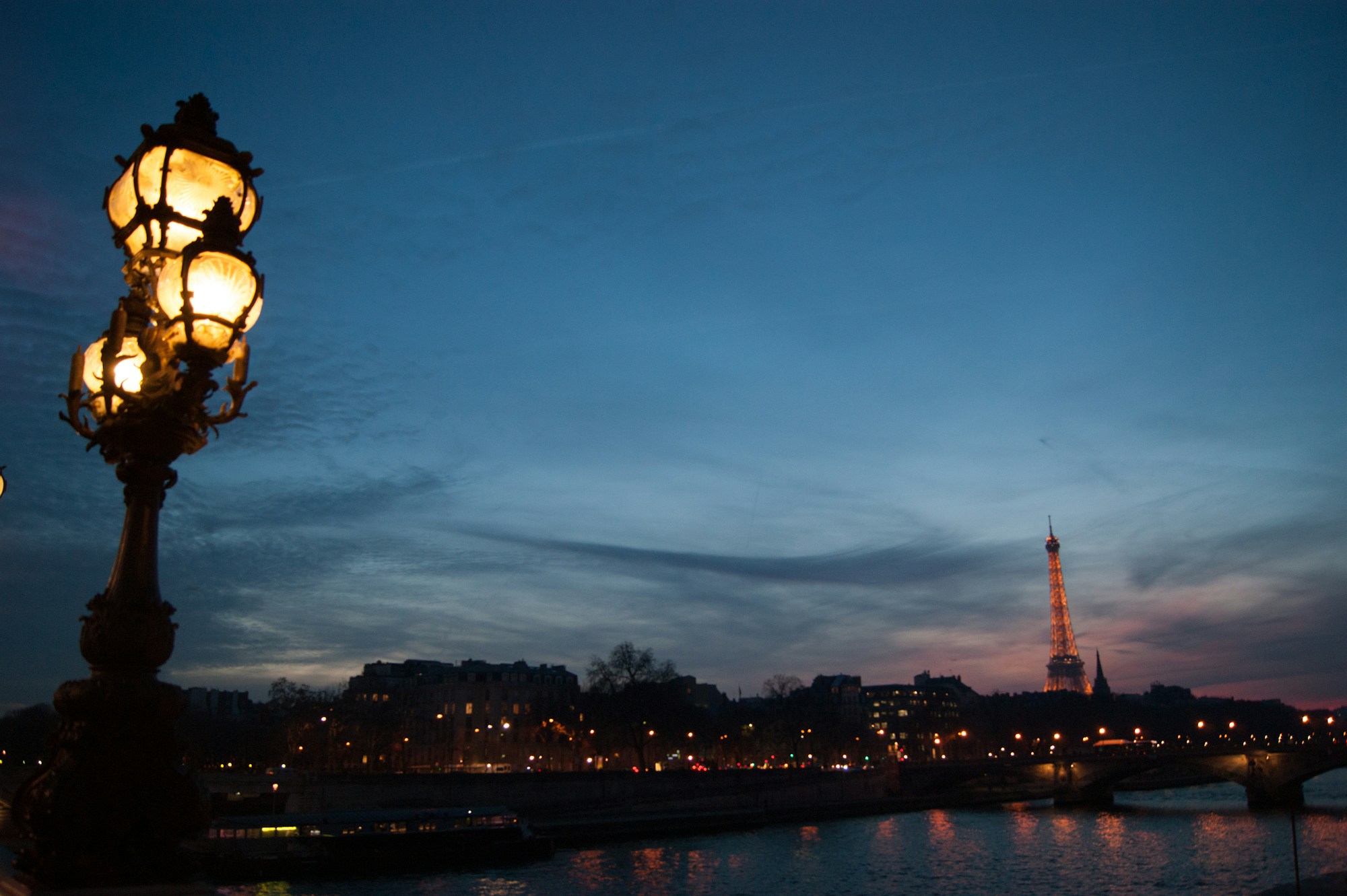
On 30 May 2026, Paris Mayor Emmanuel Grégoire announced, in agreement with the President of the Republic, that the fireworks display would be moved to Monday 13 July in the evening. The decision aims to “allow full respect for the national day of remembrance for the tenth anniversary of the 14 July 2016 Nice attack”, according to the official City of Paris press release. On that night in 2016, a lorry drove into the crowd on the Promenade des Anglais in Nice, killing 86 people including 15 children.
As for the show itself, the 2026 programme features a brand-new artistic creation dedicated to 400 years of the French Navy. Regular pyrotechnist Groupe F (artistic director Christophe Berthonneau) deploys around 120 firing points, roughly 80 of them on the Eiffel Tower itself. In 2025, the “Brazil” theme featured more than 1,000 synchronised light drones — a technology likely to be reprised, according to the Eiffel Tower official website.
The display lasts approximately 35 minutes and is broadcast live on France 2 and France 5. The City of Paris budget for the show is €700,000, of which €300,000 goes to pyrotechnics.
Key highlights
- Unique in the world: 80 firing points on the Eiffel Tower, visible up to 10 km away
- Artistic programme renewed each year (2026 theme: 400 years of the French Navy)
- Up to one million spectators gathered around the Champ-de-Mars and Trocadéro
3. Military parade: 14 July 2026, 10am–12pm, Champs-Élysées
The most ambitious parade in decades
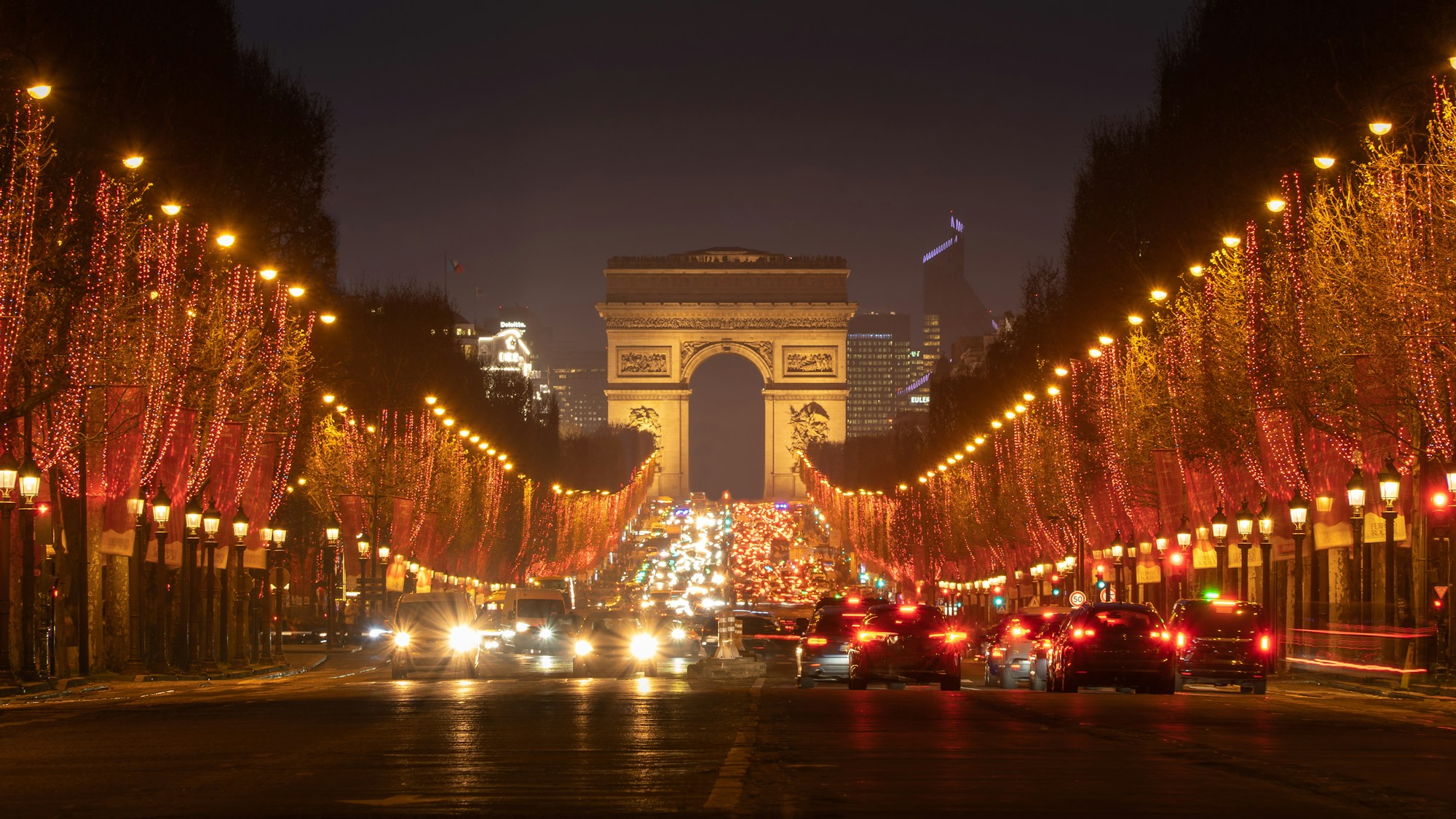
For his last Bastille Day at the Élysée Palace before the 2027 presidential election, Emmanuel Macron has set his sights high. Sources close to the Élysée describe it as “the biggest parade we’ve ever seen”, according to Affiches Parisiennes. The 2026 parade carries a powerful theme: 400 years of the French Navy, founded in 1626 by Cardinal Richelieu. Sailors from the Royale, Marine commandos and naval infantry will be front and centre, with a tribute expected to the Battle of Chesapeake (1781) — the naval victory that opened the road to American independence.
The 2026 parade programme, according to the French Ministry of Defence:
- 9:55am: President arrives at the Arc de Triomphe, pays tribute at the Tomb of the Unknown Soldier
- 10am: parade begins (7,000+ participants, 250 motorised vehicles including Leclerc tanks and Caesar artillery)
- Around 10:25am: aerial flyover (~60 aircraft) with the Patrouille de France in 8 Alpha Jets
- 12pm: parade ends, presidential salute at Place de la Concorde
The geopolitical context gives the 2026 parade a diplomatic dimension unseen since 1919: heads of state from the Ukraine support coalition (Poland, Baltic states, UK, etc.) are expected in the presidential stands.
The parade also marks the centenary of the “La Flamme sous l’Arc de Triomphe” association, founded in 1926. Pavement access along the Champs-Élysées is entirely free; presidential stands are by invitation only (applications via the Élysée).
4. Best free spots to watch the fireworks
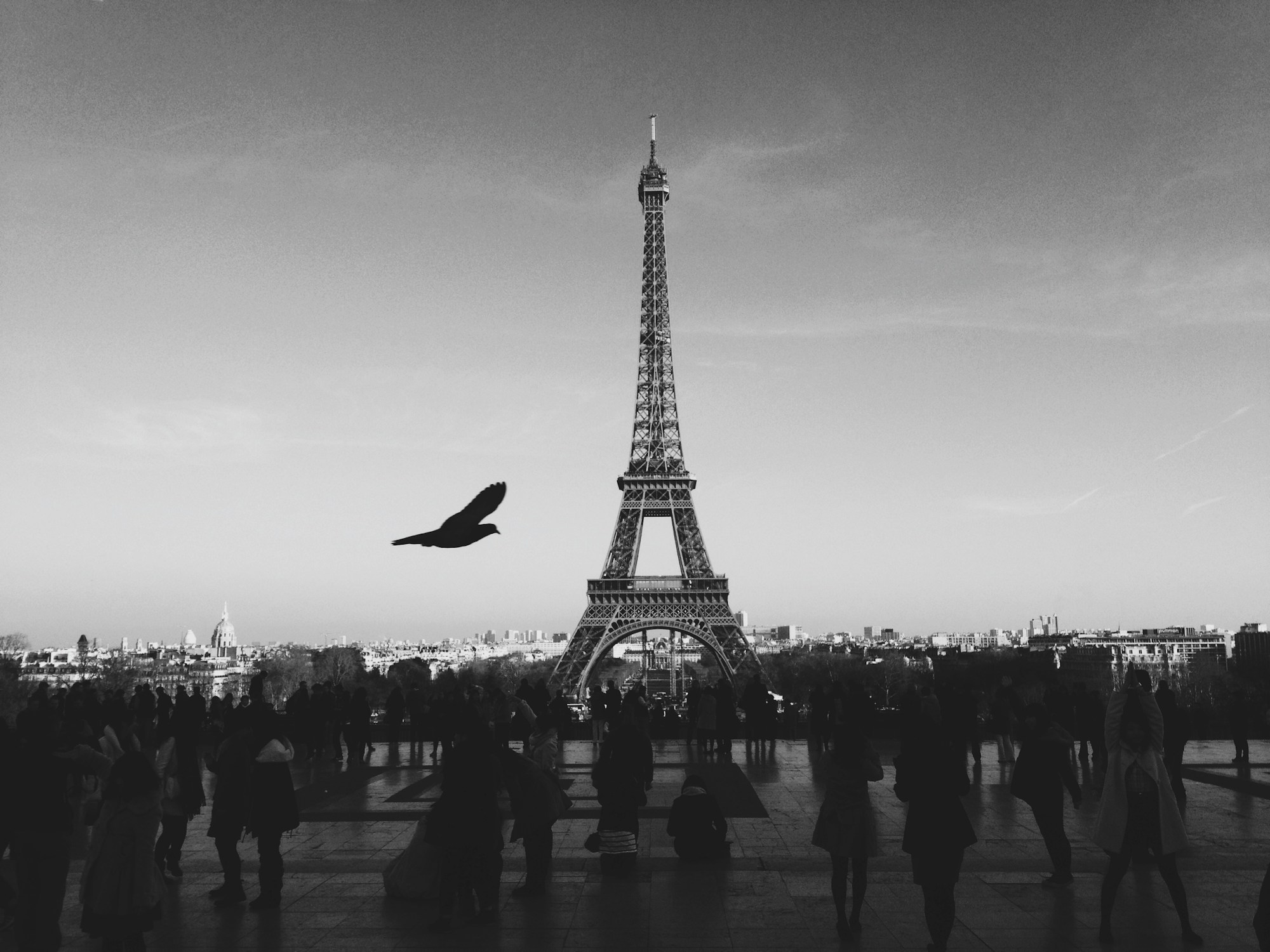
Trocadéro, Seine riverbanks and the Paris heights
Here are the six best spots, ranked by proximity and atmosphere, based on OutgoMag, Timeout Paris and CometoParis:
| Spot | View | Arrive by | Vibe |
|---|---|---|---|
| Trocadéro (16th arr.) | Head-on, perfect | 5pm on 13 July | Very packed, 300,000+ people |
| Champ-de-Mars (7th, Invalides side) | Axial from the east | 4pm on 13 July | Festive, family-friendly, picnics |
| Pont de l’Alma (8th/16th) | Excellent lateral | 8pm on 13 July | Lively, accessible, less crowded |
| Passerelle Debilly (7th/16th) | Direct angle | 9pm on 13 July | Quieter, popular with photographers |
| Sacré-Cœur / Montmartre (18th) | Panoramic (Tower 6 km away) | 7:30pm on 13 July | Romantic, view of all Paris |
| Parc de Belleville (20th) | Panoramic, less crowded | 7:30pm on 13 July | Local feel, authentic |
Key highlights
- Trocadéro: the iconic head-on view of the Eiffel Tower — but expect 5–6 hours of waiting for a prime spot
- Passerelle Debilly and Pont de l’Alma: great proximity-to-crowd ratio, lateral angle on the firing points
- Parc de Belleville (108m elevation): panoramic view of the Paris skyline with fireworks in the background
5. Two-day walking itinerary (13 + 14 July)
Hour-by-hour programme to see everything
Evening of 13 July (fireworks)
- 4pm: arrive at Champ-de-Mars (Invalides side) or Trocadéro. Lay out your blanket and settle in.
- 4pm – 9pm: picnic, ambient music, the crowd builds steadily.
- 9:30pm: Firemen’s Balls begin in nearby fire stations — CS La Monnaie (6th arr.) and CS Sévigné (4th arr.). Free entry, voluntary donation.
- 11pm – 11:35pm: fireworks from the Eiffel Tower. 35-minute display.
- 11:35pm: leave immediately towards Bir-Hakeim (Line 6) or walk towards Invalides/Duroc to beat the crowds.
14 July morning — military parade
- 6:30–7am: head to the Champs-Élysées (George V or Franklin Roosevelt, Line 1). Even-numbered side = left side of the avenue = best view.
- 7am – 10am: get settled, grab a coffee and pastries. Watch the 11,500 security personnel take their positions.
- 10am – 12pm: military parade. At around 10:25am, the Patrouille de France roars over in 8 Alpha Jets.
- 12pm – 2pm: lunch on the Champs-Élysées or walk 40 minutes to the Champ-de-Mars via Pont de l’Alma (3.2 km).
14 July evening — Concert de Paris
- 6:30pm: head to the Champ-de-Mars for the free Concert de Paris (no booking needed).
- 9pm – 10:30pm: concert by the Orchestre National de France and the Chœur de Radio France, broadcast live on France 2.
- 10:30pm: Firemen’s Balls at nearby stations — CS Grenelle (15th arr.) and CS Chaligny (12th arr.).
For more tips on how to visit Paris throughout the year, check out our complete destination guide. You can also browse our selection of Seine river cruises to compare options available year-round.
6. Getting around: transport, closures and security zones
Everything you need to know before you leave
Road closures
On 14 July from 6am to 3pm, a wide perimeter around the Champs-Élysées (8th, 16th and 17th arrondissements) is closed to traffic, including Place de la Concorde and all adjacent streets. On the evening of 13 July from 6pm, the Trocadéro/Iéna/Alma area is closed to vehicles, according to Timeout Paris.
Closed metro stations
Morning of 14 July (from 6:30am): Line 1 (Charles de Gaulle-Étoile, George V, Franklin D. Roosevelt, Champs-Élysées-Clémenceau, Concorde, Tuileries), Lines 2/6 (Étoile), Line 8 (Concorde), Lines 9/12 (Franklin and Concorde), Line 13 (Champs-Élysées-Clémenceau), RER A (Étoile).
Evening of 13 July and afternoon of 14 July (from 7pm): Line 6 (Cambronne, Trocadéro, Bir-Hakeim, Dupleix, Passy), Lines 8 and 13 (École Militaire, Invalides), Line 9 (Trocadéro, Alma-Marceau), RER C (Pont de l’Alma, Champ-de-Mars-Tour Eiffel from 3pm).
Recommended alternatives
- Walking: the most reliable option. Plan for comfortable shoes over 10 km.
- Navigo Weekly Pass: €31.60 (zones suspended on public holidays in July).
- Navigo Day Pass: €12.30, all zones — handy for the full day.
- Vélib’ bike hire: possible but central docking stations are often blocked.
Banned items in security zones
Glass bottles, knives, umbrellas (except compact folding ones) and alcohol. Systematic bag searches at entry points. Large bags are strongly discouraged.
What to bring
Waterproof picnic mat, soft cooler bag, at least 2 litres of water per person (July heat: 24–26°C), SPF 50+ sun cream, a hat, a portable charger and some small change for the Firemen’s Balls.
For data connectivity during the festivities, an Airalo France eSIM means no roaming charges if you’re travelling from abroad.
7. Firemen’s Balls and cultural alternatives
Late-night festivities and wet-weather back-up plans
Paris fire stations open their courtyards for the famous Firemen’s Balls (Bals des Pompiers) on two consecutive nights: 12–13 July and 13–14 July. Around forty stations take part in 2026. Free entry with a voluntary donation at the door, according to Familin Paris.
Main stations (2025 data — confirm for 2026)
| Arrondissement | Station | Address |
|---|---|---|
| 4th | CS Sévigné | 7–9, rue de Sévigné |
| 6th | CS La Monnaie | 11, quai de Conti |
| 9th | CS Blanche | 28, rue Blanche |
| 10th | CS Landon | 188, quai de Valmy |
| 15th | CS Grenelle | 6, Place Violet |
| 18th | CS Montmartre | 12, rue Carpeaux |
| 20th | CS Ménilmontant | 47, rue Saint-Fargeau |
If the weather turns or you want to avoid the crowds
- Musée Rodin (7th arr.): usually open, with beautiful gardens ideal for a daytime visit on 14 July
- Musée du Quai Branly (7th arr.): often offers special Bastille Day programming
- Opéra Garnier: “Vibrations” is programmed until 14 July 2026 — a possible last performance that evening
- World Cup fan zones: if France reach the semi-finals (match at 10pm French time on 14 July in Dallas), La Villette, Ground Control (12th arr.) and Club Coca-Cola (13th arr.) will be electric
Practical info for your Paris trip
Watch the 13 July fireworks from the Seine, right at the heart of the action. Champagne, gourmet menu, stunning views of the illuminated Eiffel Tower.
From €150.701-hour guided cruise past Notre-Dame, the Louvre and the Eiffel Tower. Instant confirmation, departs every 30 minutes — a relaxed way to see Paris before or after the parade.
From €17Stay connected during the celebrations with no roaming charges. France or Europe eSIM activated in minutes — perfect for visitors from the UK and beyond.
From €4.50Nomad Insurance: global coverage from $56/4 weeks. Get 10% off through our link. Perfect for UK travellers heading to France.
From $56 / 4 weeksFrequently asked questions
Are the Eiffel Tower fireworks on 14 July 2026?
No. In 2026, the Eiffel Tower fireworks have been moved to Monday 13 July in the evening (around 11pm), as a tribute to victims of the Nice terror attack on 14 July 2016 (10th anniversary, 86 killed). The decision was announced on 30 May 2026 by Paris Mayor Emmanuel Grégoire, in agreement with the President of the Republic. Source: official City of Paris press release.
What time should I arrive for a good fireworks spot?
For Trocadéro or Champ-de-Mars (Invalides side), arrive before 5pm on 13 July. Secondary spots such as Passerelle Debilly, Pont de l’Alma or the heights of Belleville and Montmartre can still be found up to 8–9pm. The display starts at around 11pm and lasts 35 minutes. Source: CometoParis.
Is the Bastille Day military parade free to watch in Paris?
Yes, watching the parade from the pavements of the Champs-Élysées is completely free. Presidential stands are by invitation only, but thousands of pavement spots are open to the public. Arrive before 7am (ideally 6:30am) for a good position. The parade runs from 10am to 12pm, from the Arc de Triomphe to Place de la Concorde. Source: French Ministry of Defence.
Is the Louvre open on 14 July 2026?
No. In 2026, 14 July falls on a Tuesday, which is the Louvre’s regular weekly closing day. The museum will be shut. The Musée Rodin, Musée du Quai Branly-Jacques Chirac and Musée d’Orsay are generally open — check their official websites for opening hours. Source: Sortiraparis.com.
How do I get home after the 13 July fireworks?
The smartest strategy is to walk 20–25 minutes after the show to a quieter metro station: Invalides (Lines 8/13), Duroc (Lines 10/13) or Vaugirard (Line 12). Avoid Trocadéro and Bir-Hakeim where the crowd is overwhelming. Métros run until around 1:30–2am on festive nights. Taxis and ride-hailing are virtually impossible for an hour after the show, with one million people moving at once. Source: RATP.
Is the Concert de Paris on 14 July free and do I need to book?
Yes, the Concert de Paris is completely free and no booking is required. It takes place on 14 July from 9pm on the lawns of the Champ-de-Mars, facing the Eiffel Tower (7th arrondissement). The Orchestre National de France, the Chœur de Radio France and the Maîtrise de Radio France perform. Arrive before 6:30pm for a seated spot. It’s also broadcast on France 2 and France Inter. Source: Maison de la Radio et de la Musique.
Is a Seine river cruise a good way to watch the Bastille Day fireworks?
Yes — a dinner cruise on the Seine gives you a unique floating vantage point for the 13 July fireworks, right beneath the Eiffel Tower, without having to arrive at 5pm to secure a spot. The Bateaux Parisiens Gourmet Dinner Cruise (from €150.70) includes a gourmet dinner and champagne with live music; 13 July departures sell out weeks in advance so book early. For a budget-friendly option, the Bateaux Parisiens Sightseeing Cruise (from €17, instant confirmation, departs every 30 minutes) is ideal during the day on 13 or 14 July. Both are bookable via Viator with free cancellation options.
- Official City of Paris press release: fireworks moved to 13 July 2026, presse.paris.fr, 30 May 2026
- Bastille Day Parade 2026 programme, defense.gouv.fr
- 400 years of the French Navy, defense.gouv.fr
- Bastille Day fireworks — official Eiffel Tower website, toureiffel.paris
- Concert de Paris, 14 July 2026, maisondelaradioetdelamusique.fr
- Bastille Day 2026: Eiffel Tower fireworks will not be on 14 July, sortiraparis.com
- Paris fireworks moved to 13 July in tribute to Nice attack victims, franceinfo.fr
- Firemen’s Balls in Paris, familinparis.fr
- 14 July: closed metro and RER stations in Paris, timeout.fr
- 10 best spots to watch the Bastille Day fireworks, outgomag.com
- Macron wants a historic military parade for his last Bastille Day, Affiches Parisiennes
- Where to watch Bastille Day fireworks in Paris, cometoparis.com
Research conducted in June 2026. Sources verified on official websites and reference media.
Want to plan your Paris stay beyond Bastille Day?
Discover tailor-made itineraries to explore Paris at your own pace, built around your travel style.
Plan my Paris trip