
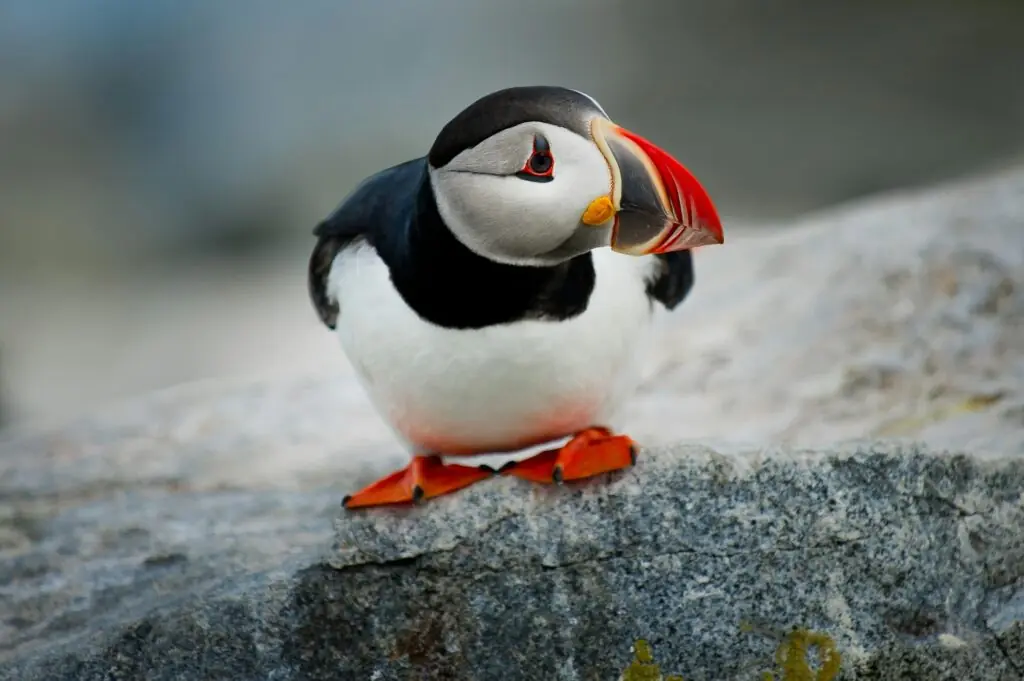
Iceland holds 60% of the world’s puffin population — the largest colony (800,000 breeding pairs) is at Vestmannaeyjar. The 2026 season closes late July for UK sites (Skomer, Lunga, Handa) and mid-August for Iceland. After the February 2026 seabird wreck — over 10,000 puffins found dead on European beaches — watching these birds carries real urgency. Free, no-boat access: Borgarfjörður Eystri (Iceland) or Sumburgh Head (Shetland). Act now: Skomer Island is nearly fully booked for July.
In February 2026, more than 10,000 Atlantic puffins washed up dead on European coastlines. Seven consecutive storms stopped these birds from feeding for weeks at a time. BirdLife International warned in March that « puffin cliffs might turn quieter this year. » A 34-year-old puffin was among the casualties — two decades of breeding, gone in a single winter.
Despite that, colonies in Iceland and Britain returned to their clifftops from 10 April onwards. Right now, adults are making relentless back-and-forth trips to their burrows, bills crammed with sand eels. But this scene has a sell-by date: late July for most UK sites, mid-August at best for Icelandic islands. This guide covers the best active spots, their verified 2026 prices and the last remaining booking windows.
Iceland: the best spots to see puffins in 2026
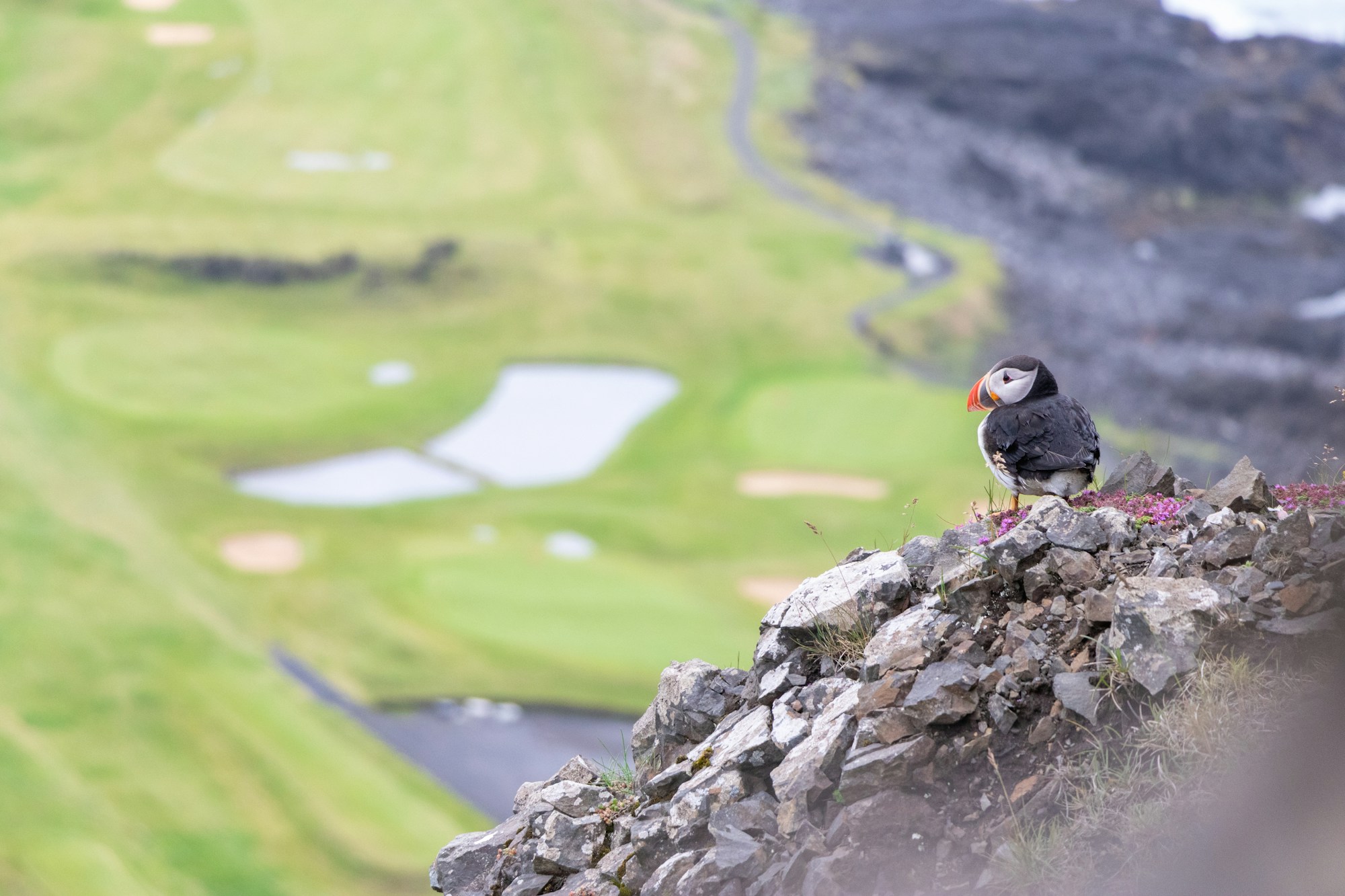
Vestmannaeyjar / Heimaey: the world’s largest puffin colony
The Vestmannaeyjar archipelago holds an absolute world record: 800,000 breeding pairs on the single island of Heimaey. According to Iceland Highlights, that’s 40% of the global Atlantic puffin population crammed into 13 km². In July, adults make up to ten round-trips a day to feed their chicks — bills fanned out with sand eels. The main site, Stórhöfði hill, is a ten-minute drive from the harbour.
Come August, something unique kicks in: the Puffling Patrol. Fledglings, confused by the town’s lights, flood the streets of Heimaey. Residents and visitors gently pick them up and launch them seaward. According to Lonely Planet, over 15,000 chicks are rescued each year during these evening patrols. It’s an emotional dimension no other puffin site can offer.
Highlights
- World’s largest puffin colony: 800,000 breeding pairs on one island
- Puffling Patrol in August — a rescue tradition that exists nowhere else on Earth
- 2h15 drive from Reykjavik, then 35–40 min on the Herjólfur ferry from Landeyjahöfn
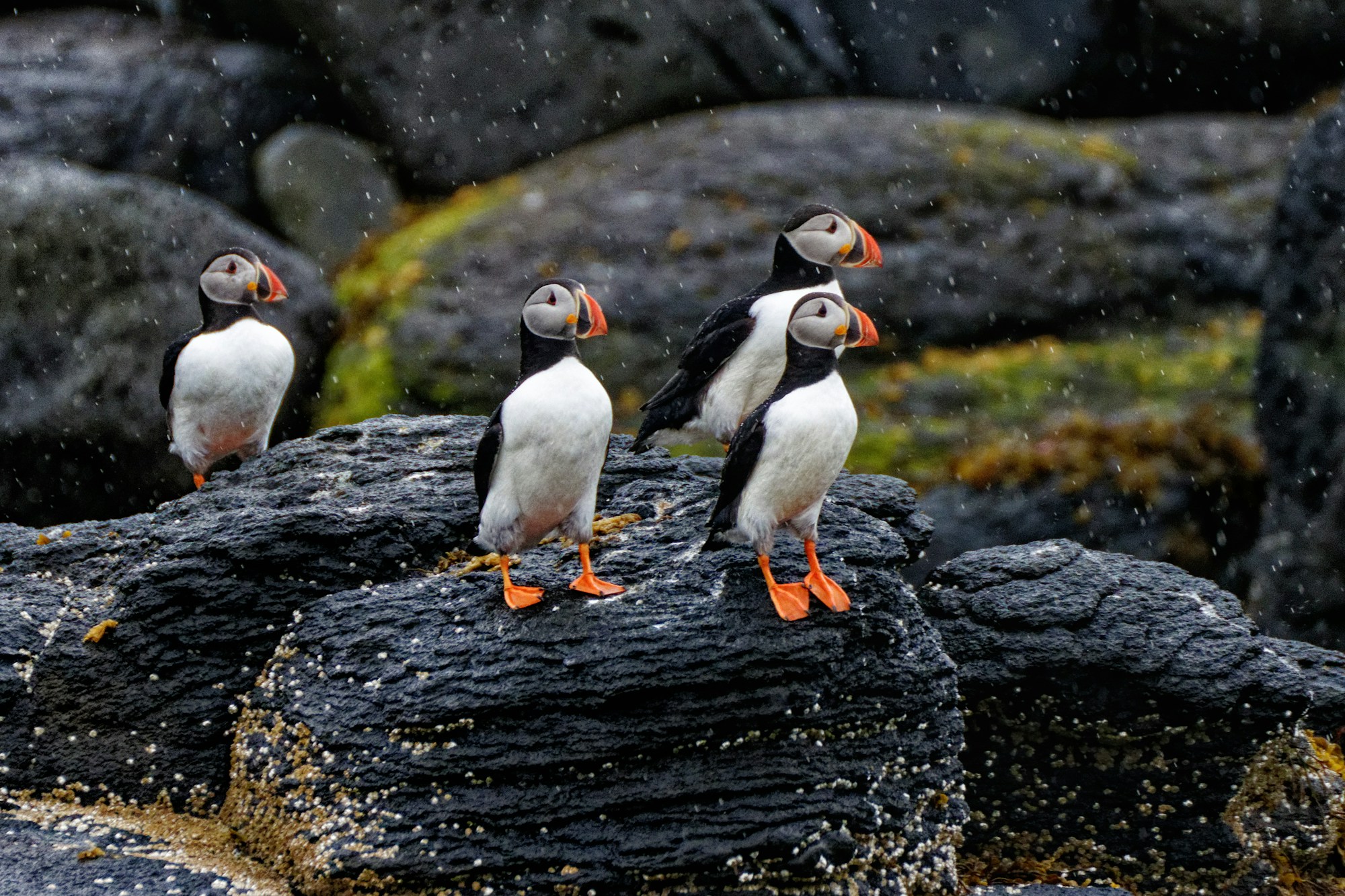
Borgarfjörður Eystri: Iceland’s puffin capital — and it’s free
Hafnarhólmi is rated « the easiest and safest place to watch puffins in Iceland » by the local municipality’s official website. The boardwalk cuts straight through a colony of 10,000 pairs — birds nest in burrows less than a metre from you and seem entirely unbothered by calm, low-profile visitors. No booking, no ticket, no guide needed. Parking is a five-minute walk from the colony.
For photographers, the midnight sun transforms the site between 9pm and 1am in June and early July — raking golden light that turns every puffin portrait extraordinary. A live webcam is available on borgarfjordureystri.is for real-time conditions. The first 2026 sighting was recorded here on 10 April.
Highlights
- Free, walk-up access, no booking — closest approach: 50–100 cm
- Midnight sun: golden photographic light from 9pm to 1am in June–July
- On-site accommodation: electric campsite 5 min away, hotel and guesthouse in Bakkagerði
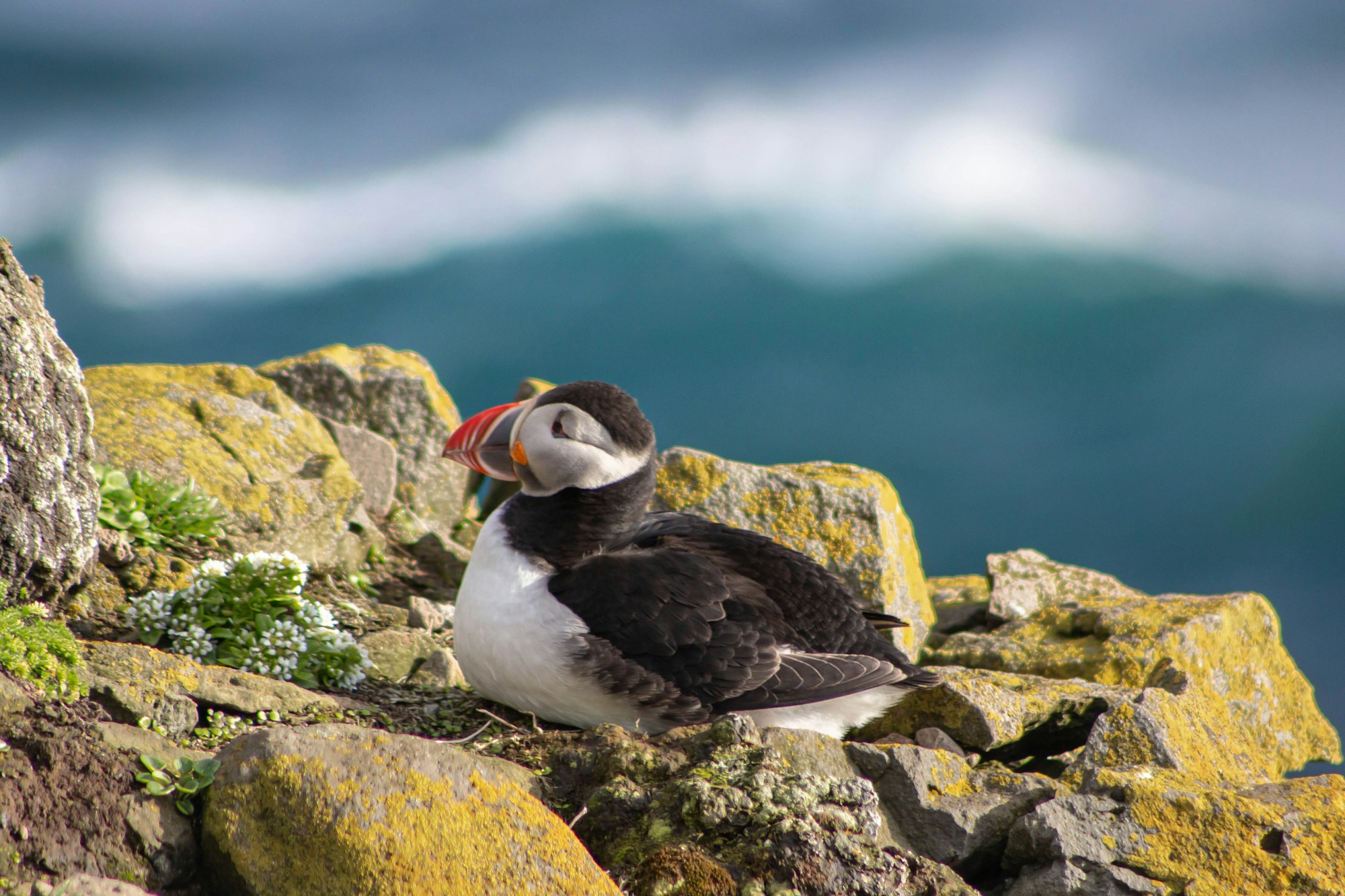
Látrabjarg: the most spectacular sea cliffs in Europe
Látrabjarg’s cliffs stretch 14 km long and 440 m high in the Westfjords. The puffin colony numbers 50,000 pairs — but what makes this site special is behaviour. Látrabjarg puffins are among the least skittish in Iceland. They’ll tolerate an approach to within 30 cm if you stay low and still. Visitors regularly report photo sessions lasting several hours, lying flat on the clifftop path.
Getting there takes effort. The last 45 km from Patreksfjörður are gravel and take 90 minutes of careful driving. A 4WD is strongly recommended even in summer; there’s no public transport. It’s a 6-hour drive from Reykjavik. Save Látrabjarg for trips already committed to the Westfjords, or if you’re willing to dedicate two full days specifically to it.
Highlights
- Among Iceland’s least wary puffins — close approach to 30 cm is genuinely possible
- Multi-species cliffs: puffins, gannets, razorbills, guillemots and fulmars together
- No crowds — the demanding logistics naturally filter the visitor numbers
Reykjavik and Dyrhólaey: see puffins without hiring a car
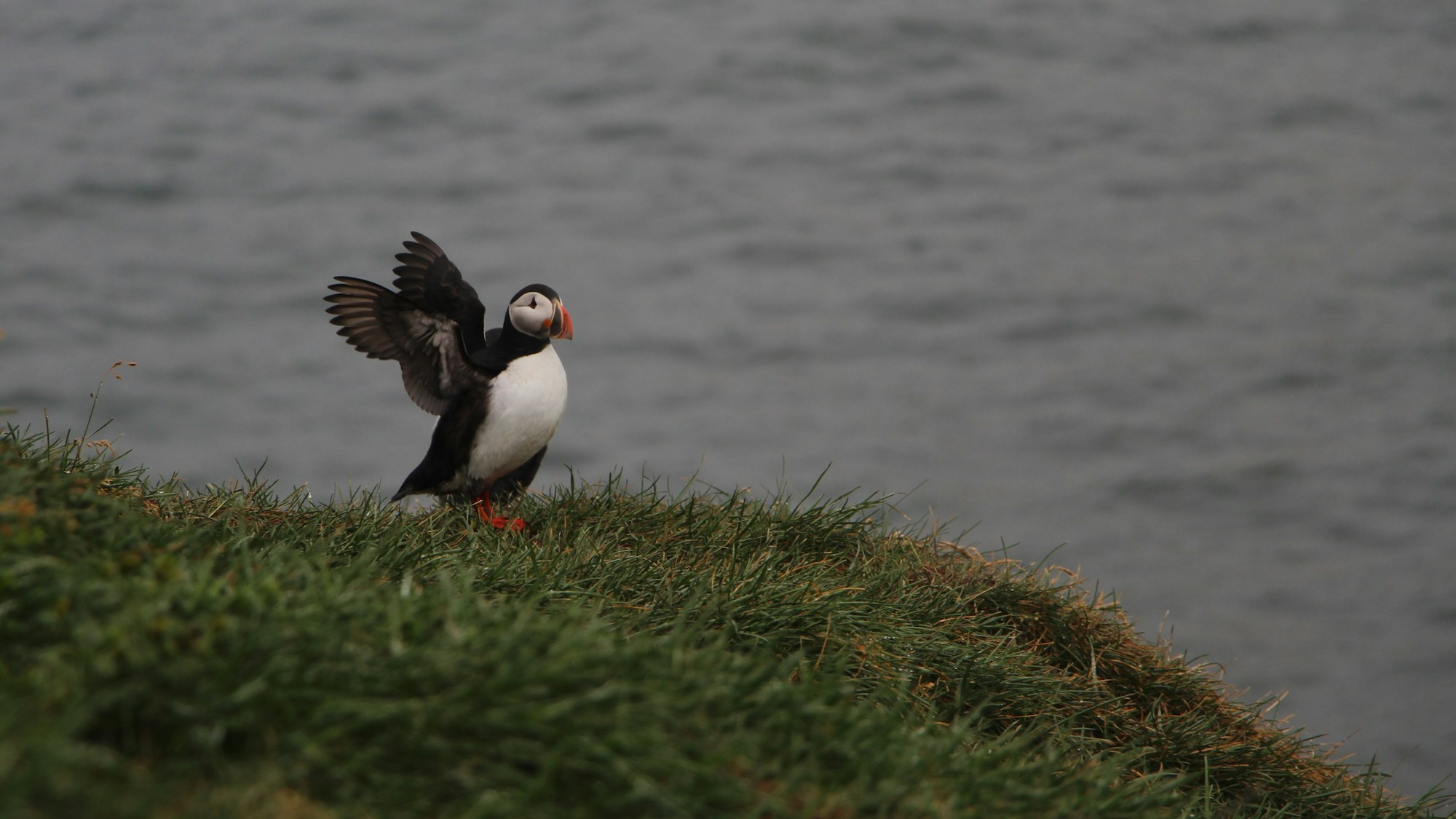
For travellers on a layover or without a hire car, Reykjavik has you covered. Operators Elding Adventure at Sea and Reykjavik Excursions run daily cruises out to the islets of Akurey and Lundey from the Old Harbour. Those islets hold 30,000–50,000 puffins depending on the season. Multiple departures run each day: 10am, noon, 2pm, 4pm and 6pm on the Classic version. The season runs to 20 August.
Two and a half hours south of Reykjavik, Dyrhólaey peninsula is doable as a half-day by car or organised tour. Since 25 June 2026, access restrictions to the upper zone have been lifted (they previously capped visits to 9am–7pm from 1 May to 25 June, per ust.is). Puffins nest on the cliffs through to August. Pair Dyrhólaey with Reynisfjara black-sand beach for a perfect half-day loop.
Highlights
- Car-free: departs directly from Reykjavik’s Old Harbour, no transfers needed
- 30,000–50,000 puffins on the Akurey and Lundey islets
- Dyrhólaey pairs with Reynisfjara for a great half-day from Reykjavik or Vík
A few more sites deserve a mention for travellers with extra time. Ingólfshöfði (East Iceland) offers a tractor-cart ride across 7 km of marshland followed by a guided walk through the nature reserve — adult 12,500 ISK, Monday to Saturday until mid-August. Vigur Island (Westfjords) — a private island of 100,000 puffins — runs from Ísafjörður at 25,000 ISK (around €165); birds start leaving from 1 August. Grímsey, straddling the Arctic Circle, delivers absolute midnight sun at the solstice and is reachable by plane from Akureyri (25 min).
Scotland and Wales: three colonies before late July
Lunga and Staffa: puffins and Fingal’s Cave in one day
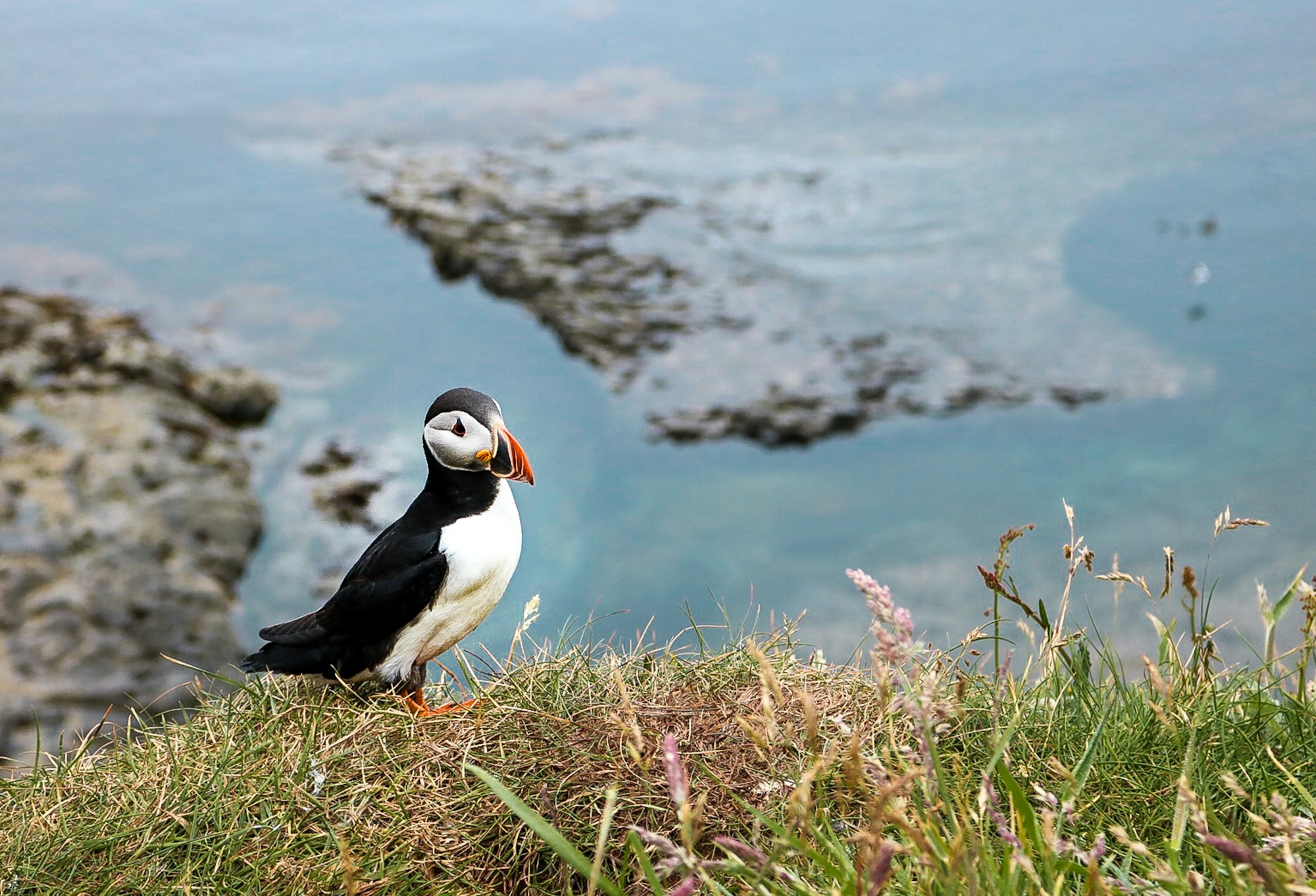
Lunga, in the Treshnish Isles (Inner Hebrides), is one of Scotland’s most intense puffin experiences. The colony runs to around 2,000 pairs. Landings last roughly two hours — enough time to sit in the long grass and wait for puffins to shuffle past within a few centimetres. These birds don’t bolt from sitting, still observers. Regular visitors describe it as one of the few colonies where you can photograph birds arriving at their burrows handheld, without a telephoto lens.
Most tours combine Lunga with Staffa and Fingal’s Cave — the hexagonal basalt formation that inspired composer Felix Mendelssohn. Departures leave from Tobermory (Isle of Mull) with Turus Mara or from Oban with Staffa Tours. According to Staffa Tours, improvements to Staffa’s landing jetty were completed on 1 May 2026.
Highlights
- Walk-up viewing: puffins at 50 cm, no binoculars required
- Lunga + Staffa combo (Fingal’s Cave, hexagonal basalt) in a single day
- Accessible from Oban (1h30 from Glasgow) via the CalMac ferry to Mull
Skomer Island: the largest puffin colony in southern Britain
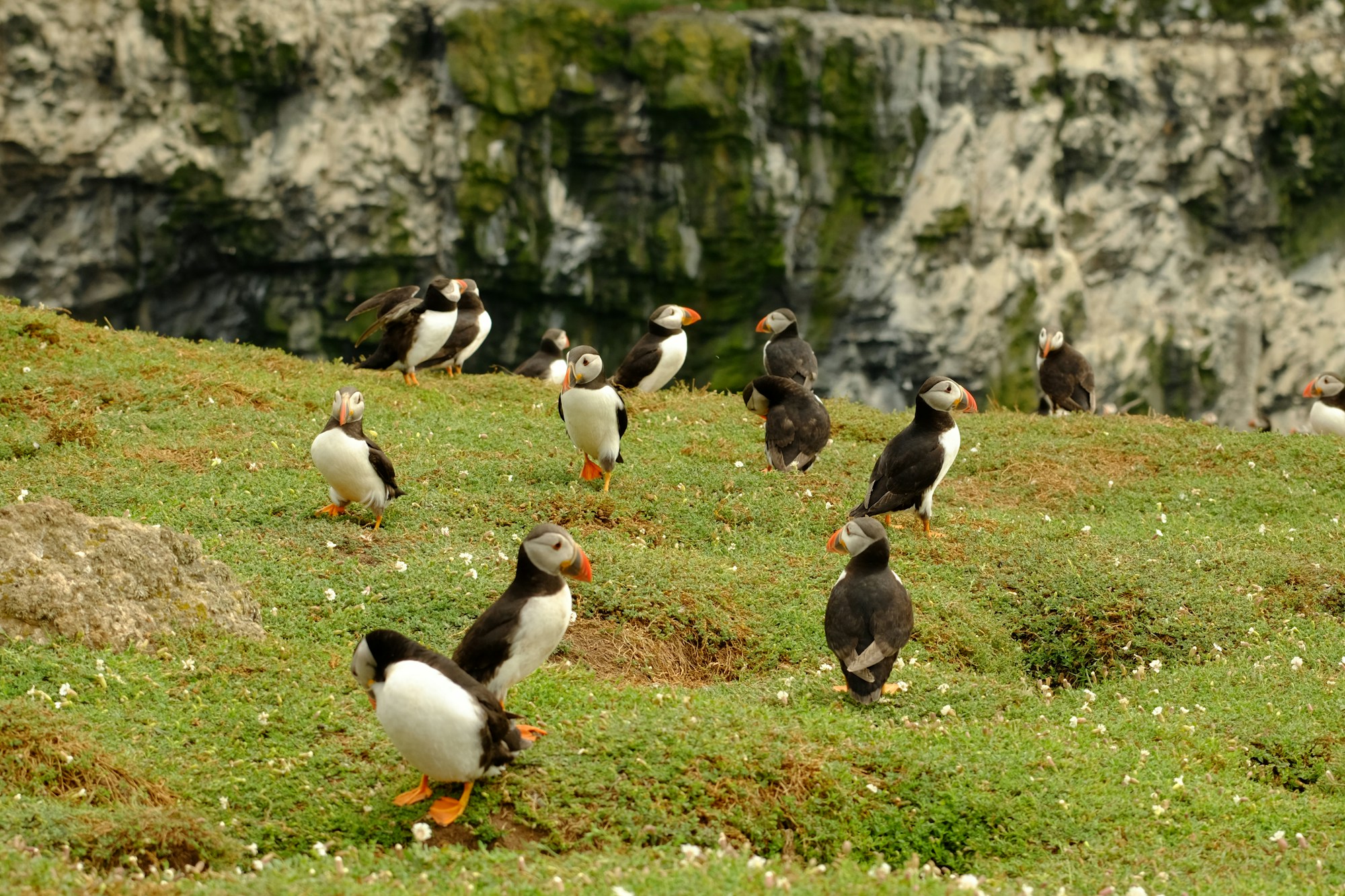
The 2025 census by the Welsh Wildlife Trust recorded 43,626 puffins on Skomer Island — a record count. The island also holds the world’s largest Manx shearwater colony (50,000 pairs). The urgency is real: according to welshwildlife.org, the first puffins begin leaving in mid-July and all are gone by late July. Availability after 28 July 2026 is extremely limited.
The sole operator is Pembrokeshire Islands Boat Trips. Boats leave from Martin’s Haven every 30 minutes between 10am and noon. No service on Mondays. Maximum 250 visitors per day. Waterproof bags required; no dogs. Martin’s Haven is 1h30 by train from Cardiff, then 30 minutes by car or taxi.
Highlights
- 43,626 puffins counted in 2025 — largest colony in southern Britain
- On-foot viewing across open ground — birds nest in accessible terrain
- Also: 50,000 pairs of Manx shearwaters, the world’s largest colony of this species
Shetland: Sumburgh Head, Noss and Hermaness for end-of-the-world explorers
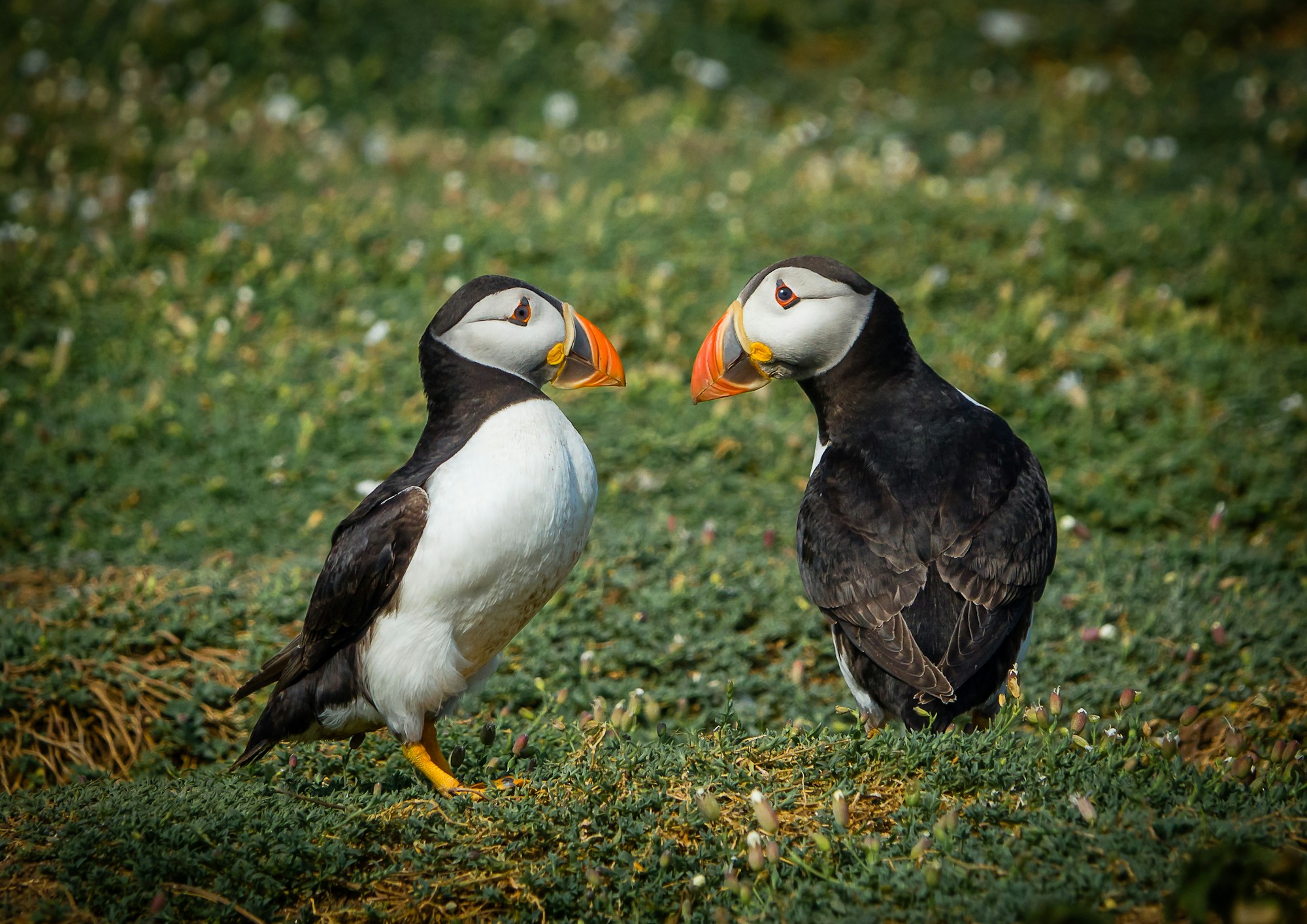
Sumburgh Head, at the southern tip of Mainland, has been an RSPB reserve since 1996. Puffins nest at eye level along the clifftop path beside the lighthouse — and entry is free. There’s a small café and RSPB car park on site. Bus 6 from Lerwick runs 25 miles south. Peak season: late May to early July, after which birds start heading back out to sea.
Further north, Noss (National Nature Reserve) holds 2,000 pairs of puffins alongside 23,000 gannets and 24,000 guillemots. The crossing from Bressay (ferry from Lerwick then zodiac) takes 20 minutes. Closed Mondays and Thursdays. At the very top of Unst, Hermaness has 25,000 breeding pairs — 5% of the British puffin population. Watch out for great skuas: they’re particularly aggressive during nesting season, so carry a stick above your head.
Highlights
- Sumburgh Head: free, no boat needed, eye-level puffins — ideal for first-timers
- Noss NNR: puffins plus Scotland’s largest gannet colony
- Hermaness on Unst: Britain’s northernmost point, 25,000 breeding pairs
2026 calendar: remaining windows site by site
The 2026 puffin season opened on 10 April with the first sightings at Grímsey and Borgarfjörður Eystri. Closures run from mid-July (Sumburgh Head) through to mid-August (Iceland). Here’s the availability picture as of 29 June 2026.
| Site | Country | 2026 season end | Current status |
|---|---|---|---|
| Skomer Island | Wales | Late July | Critical: July nearly fully booked |
| Sumburgh Head | Shetland | Mid-July | Critical: window closing |
| Handa Island | Scotland | Late July | High demand: booking advised |
| Lunga / Staffa | Scotland | Early August | High demand: limited boat places |
| Vigur Island | Iceland | 1 August | High demand: imminent closure |
| Vestmannaeyjar | Iceland | Mid-August | Moderate: popular tours booking up weeks ahead |
| Borgarfjörður Eystri | Iceland | Mid-August | Open: free access, no booking needed |
| Dyrhólaey | Iceland | Mid-August | Open: restrictions lifted since 25 June |
The rule of thumb: the further south a site sits (Wales, east coast Scotland), the earlier the season ends. Iceland typically runs two to three weeks longer. For Vigur Island, the operator confirms that puffins « begin leaving from 1 August » — a wording that underlines the need to move before that date.
The silent crisis: the 2026 seabird wreck and long-term decline
In January–February 2026, the largest mass seabird mortality in a decade struck European coastlines. According to Phys.org, over 20,000 birds were found dead along French shores alone (LPO reports), including more than 10,000 identified Atlantic puffins. The direct cause: seven consecutive storms — including Storm Chandra — that made underwater hunting impossible for weeks. Birds died of exhaustion and starvation. A 34-year-old puffin was among the victims — two decades of breeding, lost in one winter.
The 2026 seabird wreck sits within a deeply alarming long-term trend. According to BirdLife International, Iceland — which holds 60% of the world’s Atlantic puffin population — has seen a -70% decline since 1975. The root cause: warming of the North Atlantic is disrupting the distribution of capelin, the puffins’ main prey around Iceland. When capelin becomes scarce, adults can’t feed their chicks sufficiently, and the chicks starve in the burrows.
In Britain, the picture is equally worrying. The UK puffin population has fallen by 24% since 2000. The Scottish Seabird Centre launched the SOS Puffin project to restore nesting sites on several Firth of Forth islets — combating tree mallow, an invasive plant that blocks burrow entrances. Over 700 volunteers have contributed to these efforts.
Plan your trip: eSIM, insurance and flights
Iceland eSIMs on Airalo start from $3.50/GB. One caveat: Airalo’s Iceland coverage runs via Vodafone only, which is patchy in the Westfjords and East Iceland (Borgarfjörður Eystri, Látrabjarg). For those areas, Holafly or Nomad are better options. Airalo works well for Reykjavik, Dyrhólaey and Vestmannaeyjar. For Scotland and Shetland, a standard UK eSIM from Airalo is fine.
From $3.50 / GBIceland and Shetland are exposed to unpredictable weather — ferry and boat cancellations to Lunga and Skomer are common in rough conditions. SafetyWing’s Nomad Insurance covers trip interruptions, medical costs and emergency evacuation, from $56 per 4 weeks. 10% off through our affiliate link.
From $56 / 4 weeksLondon → Reykjavik (KEF): Icelandair and British Airways fly direct from Heathrow from ~£100–200 return. London → Edinburgh (EDI): Ryanair and easyJet from London Stansted or Gatwick from ~£30 return. Compare live fares for the last weeks of July 2026 — prices rise sharply as the season closes.
From ~£100 return London → ReykjavikFrequently asked questions
Where is the best place to see puffins without a guide or boat?
Borgarfjörður Eystri in East Iceland is the unanimous top pick for free, independent puffin watching. The Hafnarhólmi boardwalk gives direct access to a colony of 10,000 pairs — no charge, no booking, no guide required, any time of day. Birds nest in burrows less than a metre from the path. Best windows: 7–10am and 6–10pm. In Scotland, Sumburgh Head (Shetland) is the best free, boat-free option: puffins nest at eye level along the RSPB clifftop path beside the lighthouse.
How late in 2026 can you still see puffins?
Closing dates vary by site. In Scotland and Wales: Skomer Island (Wales) will be empty by late July, Sumburgh Head (Shetland) by mid-July, Lunga and Handa by early August. In Iceland: most colonies are empty by mid-August. Vigur Island closes from 1 August. Elding’s cruises from Reykjavik run to 20 August. Borgarfjörður Eystri stays active until mid-August. The rule is clear: any UK site — act before the end of July 2026.
Can you see puffins from Reykjavik without hiring a car?
Yes. Elding Adventure at Sea and Reykjavik Excursions depart directly from Reykjavik’s Old Harbour — no transfer required. Multiple daily departures run throughout the day (10am, noon, 2pm, 4pm, 6pm on the Classic version). The islets of Akurey and Lundey hold 30,000–50,000 puffins depending on the season. The Classic cruise lasts one hour and starts from around 8,300 ISK (roughly €55) per Elding’s current pricing. The season runs to 20 August 2026 — ideal for travellers on a layover or without a vehicle.
Are puffins endangered?
They’re classified as Vulnerable by the IUCN since 2015. In Iceland, which holds 60% of the global population, numbers have declined by 70% since 1975 according to BirdLife Iceland. The population is listed as Critically Endangered on Iceland’s national red list. In 2026, an exceptional seabird wreck killed over 10,000 puffins on European beaches between January and February. In the UK, the population has dropped by 24% since 2000. Responsible wildlife tourism is compatible with conservation — and helps raise awareness of what’s at stake.
Skomer or Lunga: which island should you choose in 2026?
Skomer Island (Wales) has the larger colony — 43,626 birds recorded in 2025 — but May and June 2026 are sold out and late-July days are nearly gone; puffins begin leaving mid-July. Lunga (Scotland, Treshnish Isles) currently has better availability with places still on sale and a season running to early August. The two experiences differ: Skomer allows a long, full-day immersion on foot, while Lunga gives around two hours ashore with the added bonus of Staffa and Fingal’s Cave.
Do you need to book ahead to see puffins in 2026?
Absolutely — for most sites. In peak season (June–July), tours fill weeks in advance. Skomer Island (max 250 visitors/day), Vigur Island and the Oban–Lunga cruises are the tightest for availability. Borgarfjörður Eystri (Iceland) is the exception: walk-up access, no booking needed. For Sumburgh Head (Shetland) and Handa Island (Scotland), no booking is required but check ferry timetables in advance. For Viator tours departing from Reykjavik, book at least two weeks ahead in July.
Sources
- Lilja Tours: Puffins Are Back in Iceland 2026, first 2026 sightings (10 April)
- Iceland Highlights: Puffin Season Iceland 2026, Vestmannaeyjar population data
- borgarfjordureystri.is, Borgarfjörður Eystri colony data
- Herjólfur Ferry: 2026 Fares, Vestmannaeyjar ferry prices
- Elding Adventure at Sea: Puffin Watching, Reykjavik cruise prices and timetables
- ust.is: Dyrhólaey, 2026 access restrictions
- Staffa Tours: Staffa and Treshnish Isles Wildlife Tour, Lunga prices and dates
- Welsh Wildlife Trust: Skomer Island, 2025 census and prices
- RSPB: Sumburgh Head, Shetland colony information
- Phys.org: Thousands of Dead Puffins on European Beaches 2026, January–February 2026 seabird wreck
- BirdLife International: Puffin Cliffs 2026, seabird wreck impact on the season
- Iceland Review: Puffin Population Declining, -70% decline since 1975
- Vigur Island: Visit, prices and 2026 season
- Handa Ferry, Handa Island prices and timetables
- Wikidata: Atlantic Puffin (Q26685), taxonomic data
Research completed 29 June 2026. Prices and availability subject to change.
Ready to go looking for puffins?
Build your Iceland or Scotland itinerary with Pixidia — discover destinations that match what you’re actually after.
Explore Pixidia destinations