
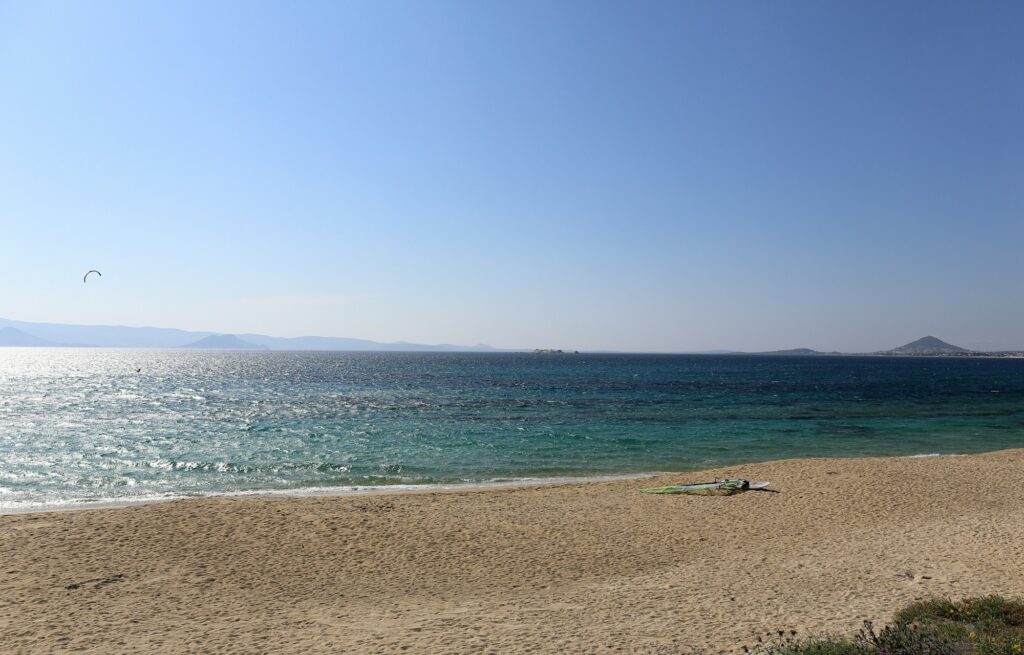
The most reliable alternatives to Santorini and Mykonos in August 2026 are still Naxos, Folegandros, Sifnos, Amorgos and Tinos (outside 15 August), noticeably less crowded despite Greece’s record-breaking tourist numbers. One caveat: Paros broke its own visitor record in 2025 (close to 970,000 arrivals) and has faced a citizens’ backlash since July 2026 against a 46-pool hotel project. Twelve to thirteen islands, including Tinos and Karpathos, declared a water state of emergency in 2026: check this before you book.
The Greek government won’t use the word « overtourism, » but it’s legislating around it anyway. In May 2026, a new national framework classified Santorini and Mykonos as « saturated » zones, capped new hotel construction and tightened how the cruise-passenger quota is calculated in Santorini. In practical terms, for your trip this summer: the two most photographed islands in the Cyclades are still packed, expensive and, at points in August, genuinely gruelling, while some of the overflow has already shifted to the usual alternatives. This guide builds on our pick of five lesser-known Greek islands with an extra filter specific to 2026: which alternatives still deliver on the calm they promise in peak August, which ones to choose with your eyes open (Paros, Milos), and which seasonal traps to avoid (the water crisis, wildfire risk, the 15 August trap).
Santorini and Mykonos in 2026: fewer cruise ships, more rules, still packed
On 11 May 2026, Tourism Minister Olga Kefalogianni and Environment Minister Stavros Papastavrou unveiled the Special Spatial Framework for Tourism, which for the first time classifies Santorini, Mykonos, Skiathos and parts of Rhodes, Zakynthos and Crete as category A, or « saturated, » zones. According to Euronews, new hotels there are now capped at 100 beds, the minimum plot size rises to 1.6 hectares, and a 25-metre coastal strip is protected from any construction. A carrying-capacity study is now mandatory before any new development.
Santorini’s cruise-passenger cap stays at 8,000 a day for 2026, unchanged from 2025, but how it’s calculated has changed: ship occupancy is now estimated at 100%, up from 80% last year, which effectively cuts the number of large liners allowed to dock on the same day. According to GreekCityTimes, cruise calls drop to 595 in 2026 from 728 in 2025 (-18.3%), partly due to MSC Cruises pulling out. A cruise-passenger tourist tax has applied since 21 July 2025: up to €20 per passenger in high season, from June to September.
Yet Prime Minister Kyriakos Mitsotakis said in May 2026, at an event held by the SETE tourism confederation: « I reject the notion of overtourism, » even while backing this same new regulatory framework. According to GTP Headlines, that gap reflects a genuine tension between the official line and the measures actually being rolled out on the ground.
Mykonos is on a different trajectory. International air arrivals there rose 13.2% in the first half of 2026, the sharpest increase of any island destination tracked by INSETE, the research arm of the Greek tourism confederation, according to GTP Headlines. But the backlash is about prices: beach-club sunbeds from €30 to over €150 a spot, a €1,000 bill for three dishes at DK Oyster (which earned the restaurant an unusual safety alert on TripAdvisor), and recurring reports of taxi-meter scams. Greece as a whole welcomed around 38 million visitors in 2025, up 5.6%, with international air arrivals still growing 3.8% in the first half of 2026.
If you want a sunset without the Oia crush, there are ways to manage it even while staying on Santorini (see our catamaran versus traditional sailboat comparison). And if you’d still rather work both headline islands into your trip than avoid them altogether, a three-day route between Santorini, Mykonos and Naxos remains a reasonable option outside July and August. But if avoiding the crowds in peak August is your priority, here are the alternatives that actually deliver on that in 2026.
Naxos, the big island that dilutes the crowds without playing the star
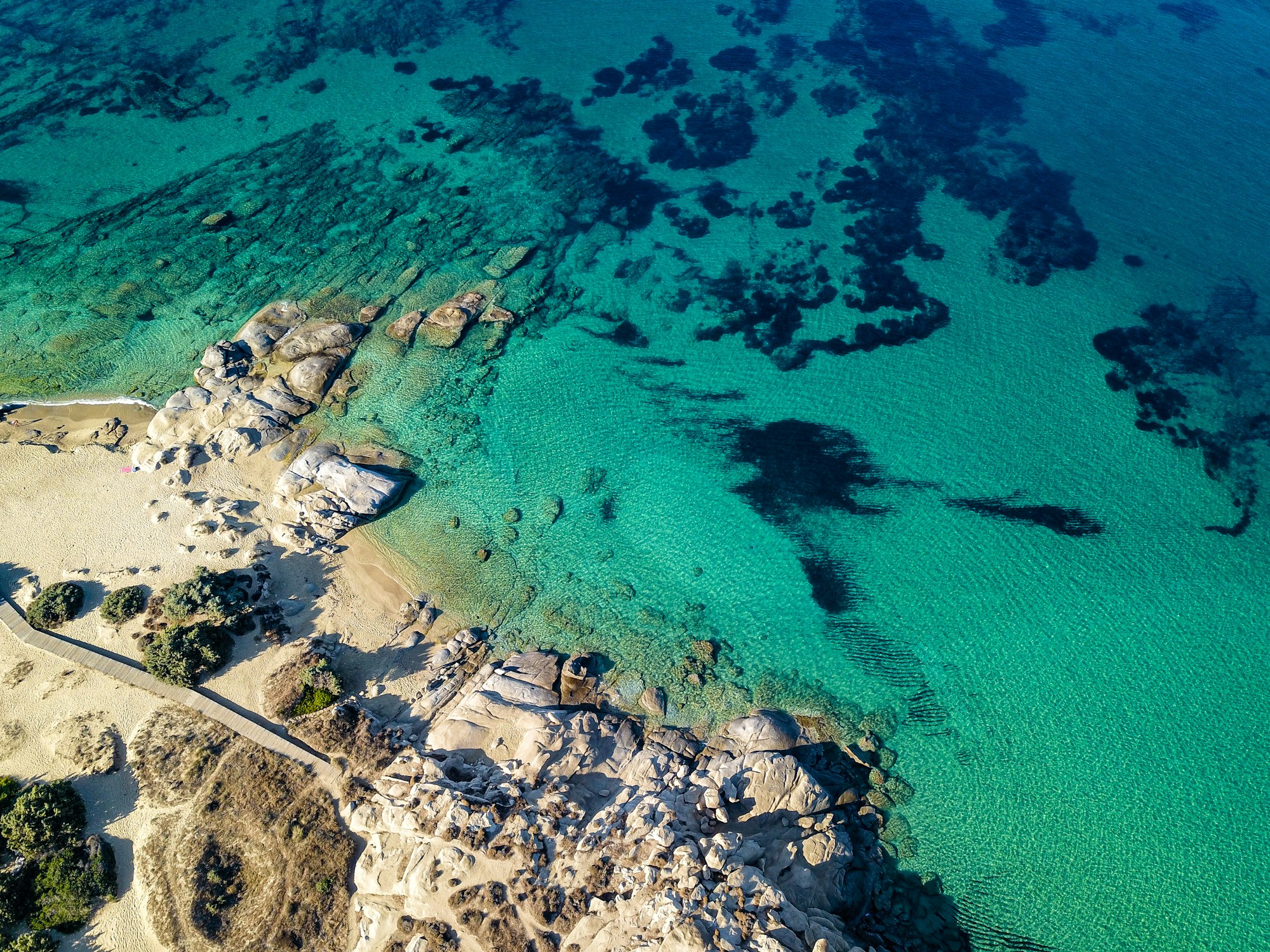
Naxos
With around 20,600 residents, 7,300 of them in Naxos Town, Naxos is the largest of the Cyclades, and its size changes the equation: it spreads tourist flows out instead of concentrating them on a single village the way Oia does. According to Santorini Dave, Plaka beach, several kilometres long, rarely feels crowded even at the height of summer. The island is under « enhanced monitoring » for water (its reservoirs were at roughly a third of last year’s level by mid-2026), but without a formal state of emergency, unlike some of the islands covered further down.
The island stacks up the arguments: Mount Zas (1,004m), the highest point in the Cyclades; the Portara, the monumental gateway of an unfinished 6th-century BC temple to Apollo that’s become the go-to sunset photo spot; the marble village of Apiranthos; and a distinctive food scene built around Graviera Naxou, the only Greek graviera cheese made predominantly from cow’s milk, protected under a PDO.
Highlights
- Plaka beach: several kilometres of sand, rarely packed even in August
- Airport (JNX) with direct flights from Athens, Heraklion, Rhodes and Thessaloniki
- Hotel budgets 30-50% lower than Santorini or Mykonos for comparable comfort
Paros, the alternative already caught out by its own success
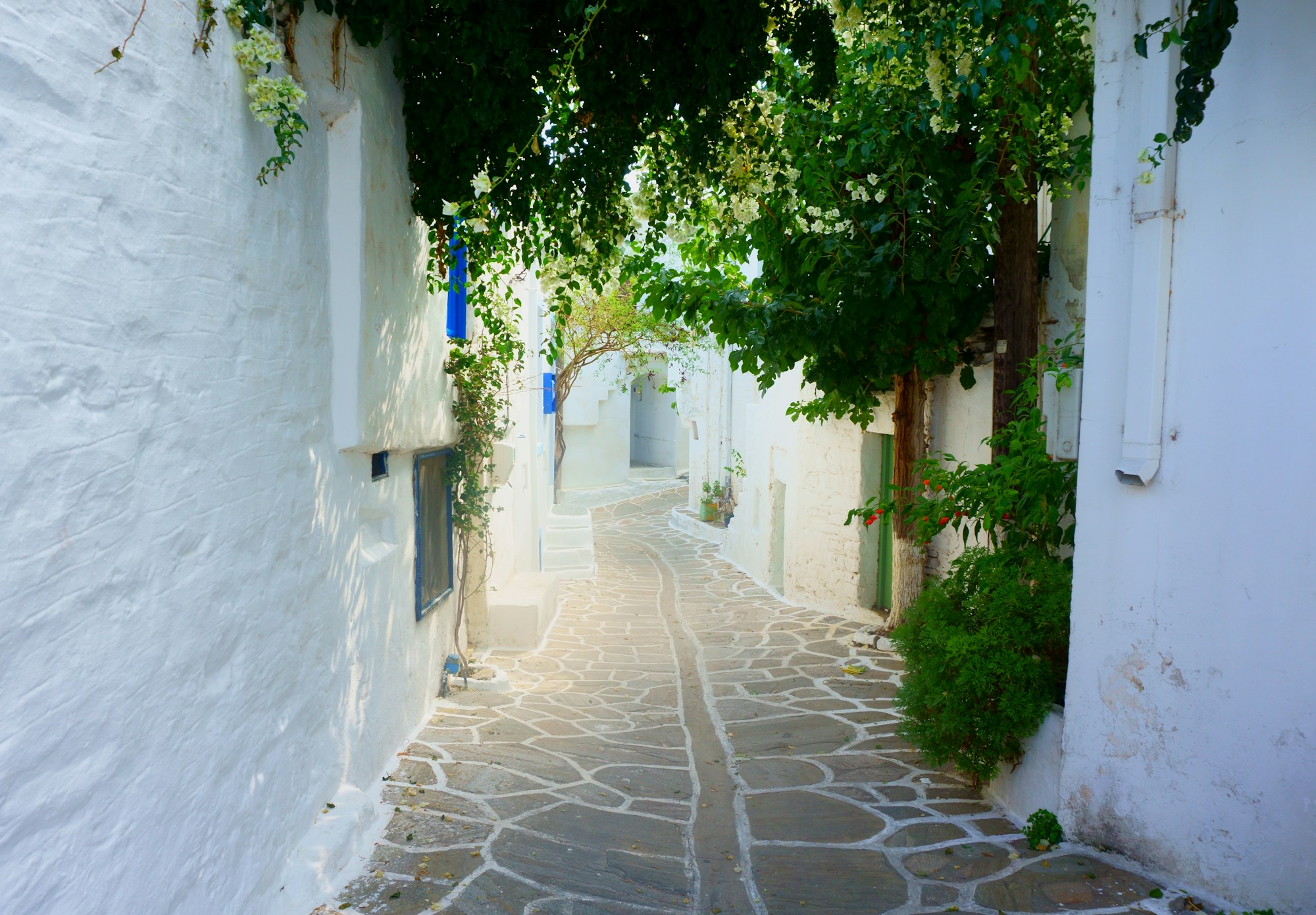
Paros
Paros has long featured on every list of alternatives to Mykonos. The trouble is, that recommendation eventually turned against it. In 2025 the island broke its own visitor record with close to 970,000 arrivals combined by air and sea, and port traffic up 8.6%, according to Protothema. Its upmarket hotel stock has more than doubled in six years: 15 five-star hotels in 2025 (730 rooms), up from just 6 in 2019.
Since July 2026, a nearly finished five-star hotel project with 46 individual pools near Marcello beach has triggered an unprecedented citizens’ mobilisation on the island: the « Paros Citizens’ Movement » held a rally on 19 July 2026 at Trypiti beach, and the « Friends of Paros & Antiparos » group has been vocal about the pace of development. According to The Cool Down, the local council had already refused, back in October 2025, to connect another five-star complex in Kolympithres to the water and sewage network, citing insufficient network capacity.
What still holds true: Naoussa, in the north of the island, keeps a more low-key vibe than Mykonos, with a well-regarded seafood scene and nightlife that’s still fairly manageable. Several international outlets describe it as « Mykonos twenty years ago, » a double-edged comparison, since that’s exactly what keeps drawing more people in. Antiparos, a few minutes away by boat, stays considerably more low-profile: it’s where Tom Hanks and Rita Wilson have owned a villa since 2004.
Highlights
- Naoussa: a calmer vibe than Mykonos, well-regarded fish restaurants
- Antiparos, a few minutes away by boat, still largely spared the crowds
- Direct ferry from Piraeus from €40.50 (2h40 to 5h depending on the boat)
Milos, Santorini’s geological twin, is accelerating too
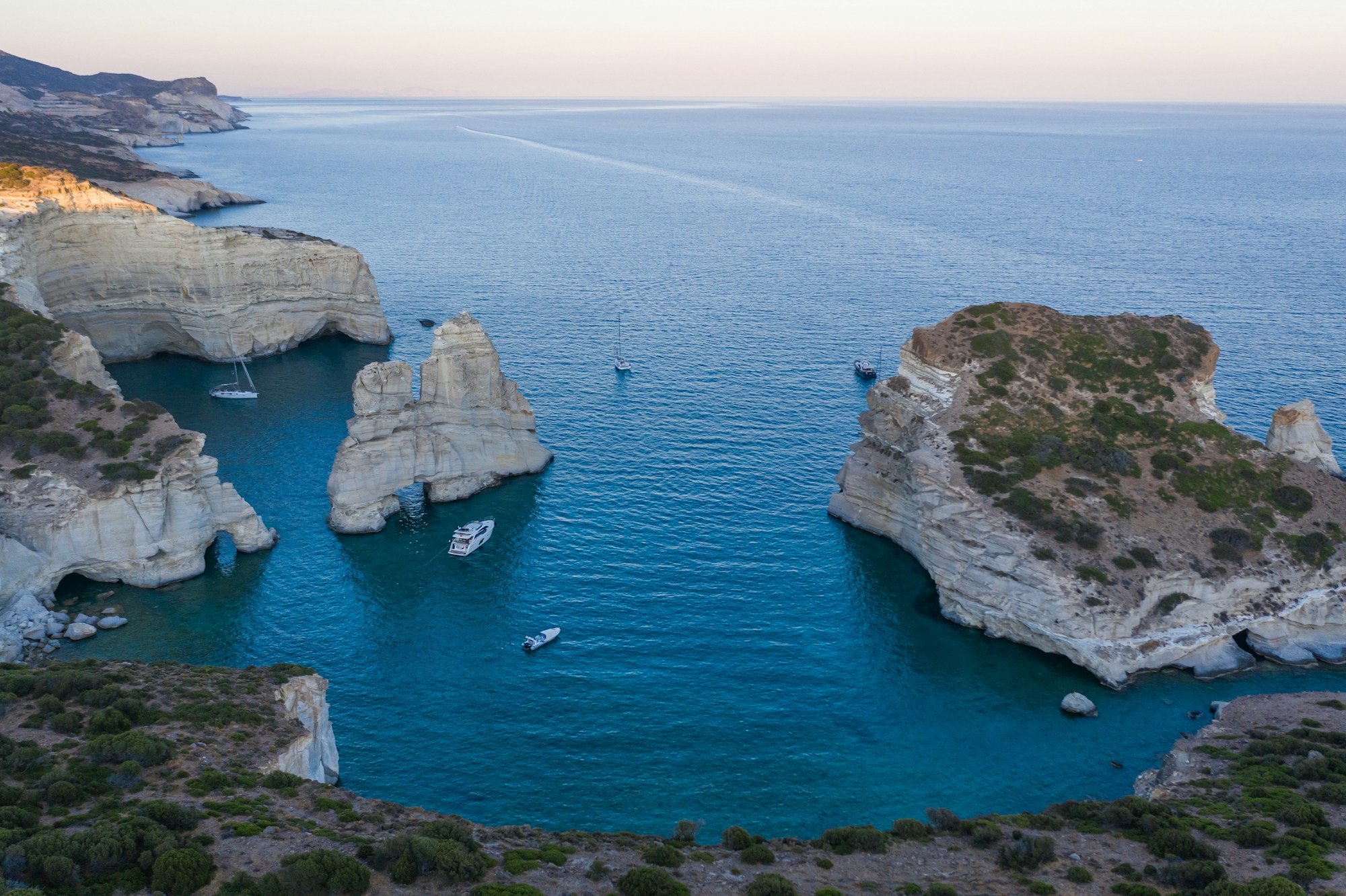
Milos
Milos shares Santorini’s volcanic origin, part of the same Hellenic Volcanic Arc, but with a much wider colour palette. Local guide Andreas Belivanakis sums it up, quoted by National Geographic: « on Milos, you find every colour of the rainbow: green is bentonite, red is iron oxide, blue is amethyst. » More than 70 beaches are mapped on the island, including Sarakiniko, a lunar landscape of white rock that’s among the most photographed spots in the Aegean, and Kleftiko, reachable only by boat, with its sea caves.
The island has around 5,193 permanent residents according to the 2021 census (Wikipedia), but its tourist numbers explode in summer: from around 2,000 passengers in April to more than 11,000 in July-August. That’s still far below Santorini’s volumes, but the growth is real: one specialist outlet notes that Milos, like Folegandros and Paros, now shows up « on the same lists, the same influencer reels, the same cruise itineraries » as the destinations it was supposed to be an escape from.
The ancient heritage is dense for an island this size: 1st-century catacombs running 183 metres, an ancient theatre with 700 surviving seats, and the Phylakopi site, one of the most important in Cycladic civilisation. The Venus de Milo, discovered in 1820 and now on display at the Louvre, came from here.
Highlights
- Sarakiniko and Kleftiko: two volcanic landscapes unlike anywhere else in the Cyclades
- Still noticeably less crowded than Santorini in absolute numbers, despite the growth
- New direct Rhodes-Milos flight route since July 2026
Folegandros, the clifftop that keeps the tour buses out
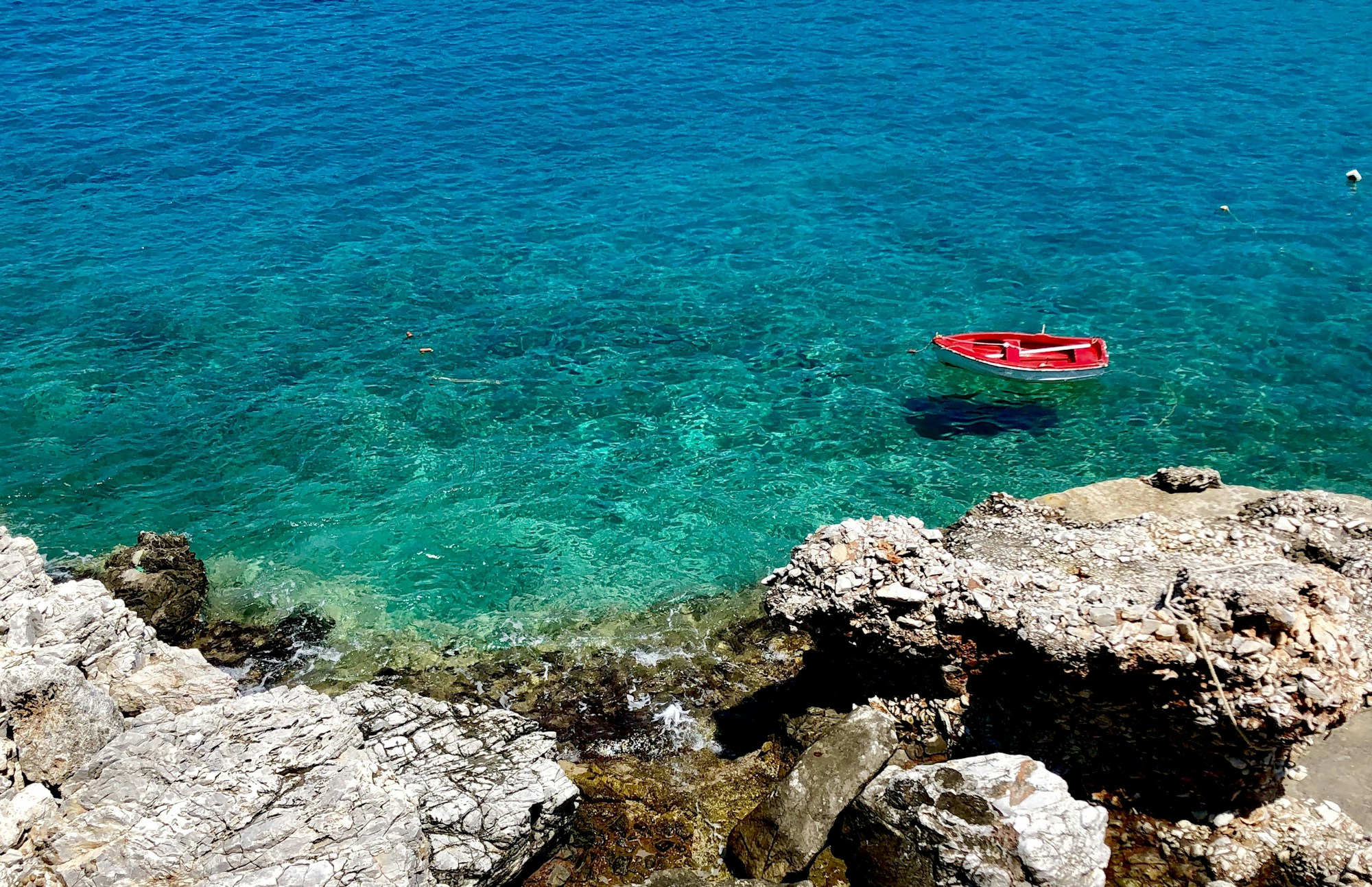
Folegandros
Folegandros has no airport, and its Chora is entirely pedestrianised, perched 200 metres above the sea and ringed by a 13th-century Venetian Kastro. According to Go Ask A Local, it’s one of the few Choras still described as « a scaled-down Oia, without the crowds, the cruise ships or the prices. » The fifteen-minute walk up to the church of Panagia from the main square delivers one of the most talked-about sunsets in the Cyclades, minus the Oia crush.
The island has six waymarked trails and more than 30km of paths, including one linking the Chora to Agali beach through terraced gardens growing wheat, beans and barley. On the food side, hand-made matsata pasta and the tangy souroto cheese are the local specialities.
One important caveat if you’re specifically targeting August: several specialist guides recommend June or September over Folegandros in high summer, and advise against July-August for the heat and for visitor numbers that are already climbing, according to Stay in Cyclades. The island is still far calmer than Santorini in peak season, but it’s no longer « calm, full stop » during that specific window.
Highlights
- Fully pedestrianised Chora, no airport and no big cruise ships
- Celebrated sunset from the church of Panagia, without the Oia crowds
- More than 30km of waymarked trails between villages and beaches
Amorgos, cliffside silence and the memory of The Big Blue
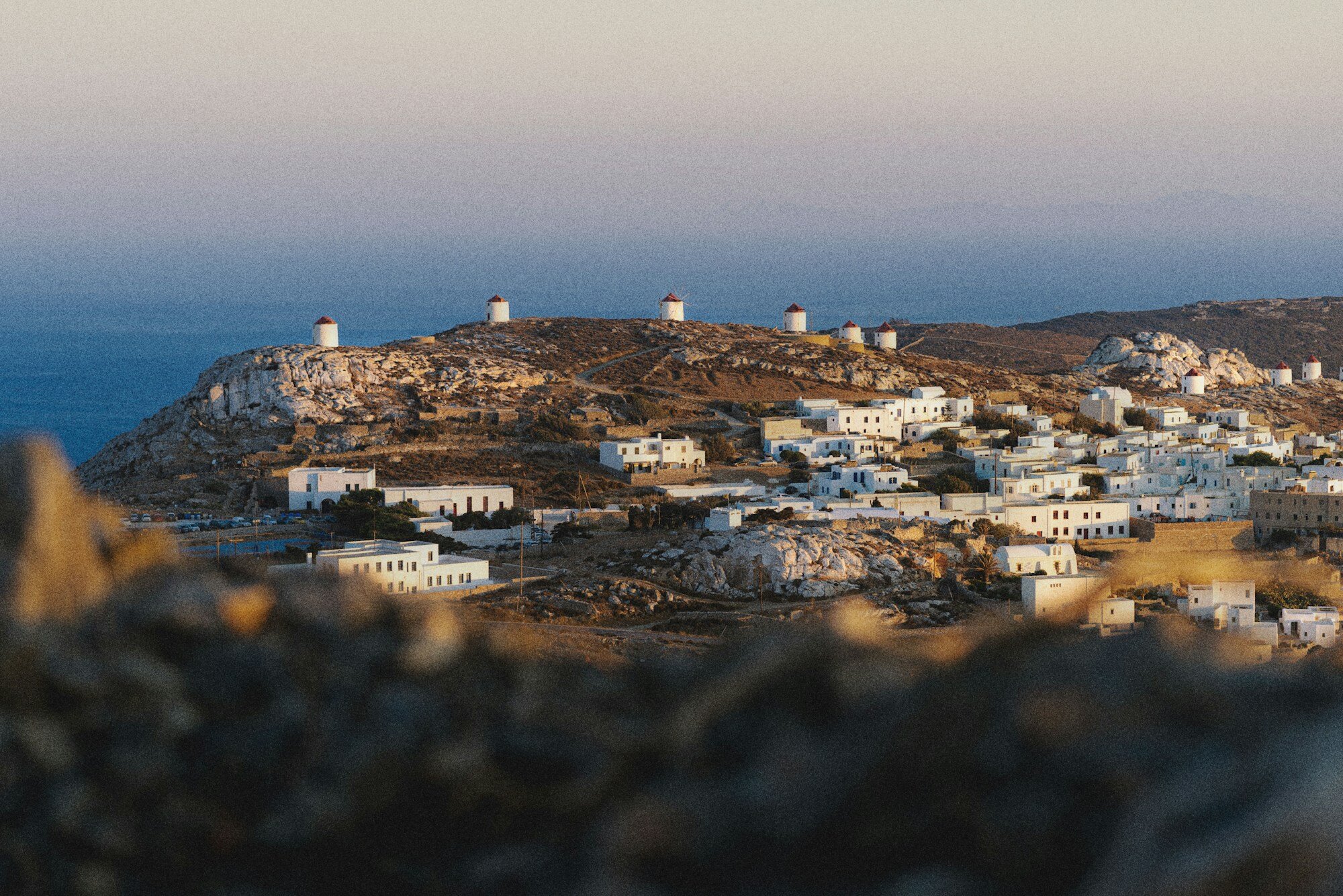
Amorgos
Amorgos owes part of its fame to being the filming location for The Big Blue (Luc Besson, 1988, starring Jean Reno), one of the biggest commercial hits in French box-office history, according to GreekReporter. The Monastery of Panagia Hozoviotissa, clinging to the cliff above Agia Anna beach since the year 1088, features in the film’s final scene and remains the island’s biggest draw.
The island is built around two hubs: Katapola in the south, more central and the gateway to the Chora, and Aegiali in the north, smarter, with the island’s longest sandy beach and clifftop villages (Potamos, Lagada, Tholaria). You get there by regular ferry from Piraeus, or on the Express Skopelitis, the historic Small Cyclades ferry (45 metres, 340 passengers, no wifi or catering on board), which also serves Naxos, Iraklia, Schinoussa, Koufonissi and Donoussa.
Highlights
- Monastery of Panagia Hozoviotissa, clinging to the cliff since 1088
- Two moods on one island: Katapola (central) and Aegiali (beach, clifftop villages)
- More of a hiking island than a classic beach-lounging one
Tinos, calm all year round except for one day to avoid at all costs
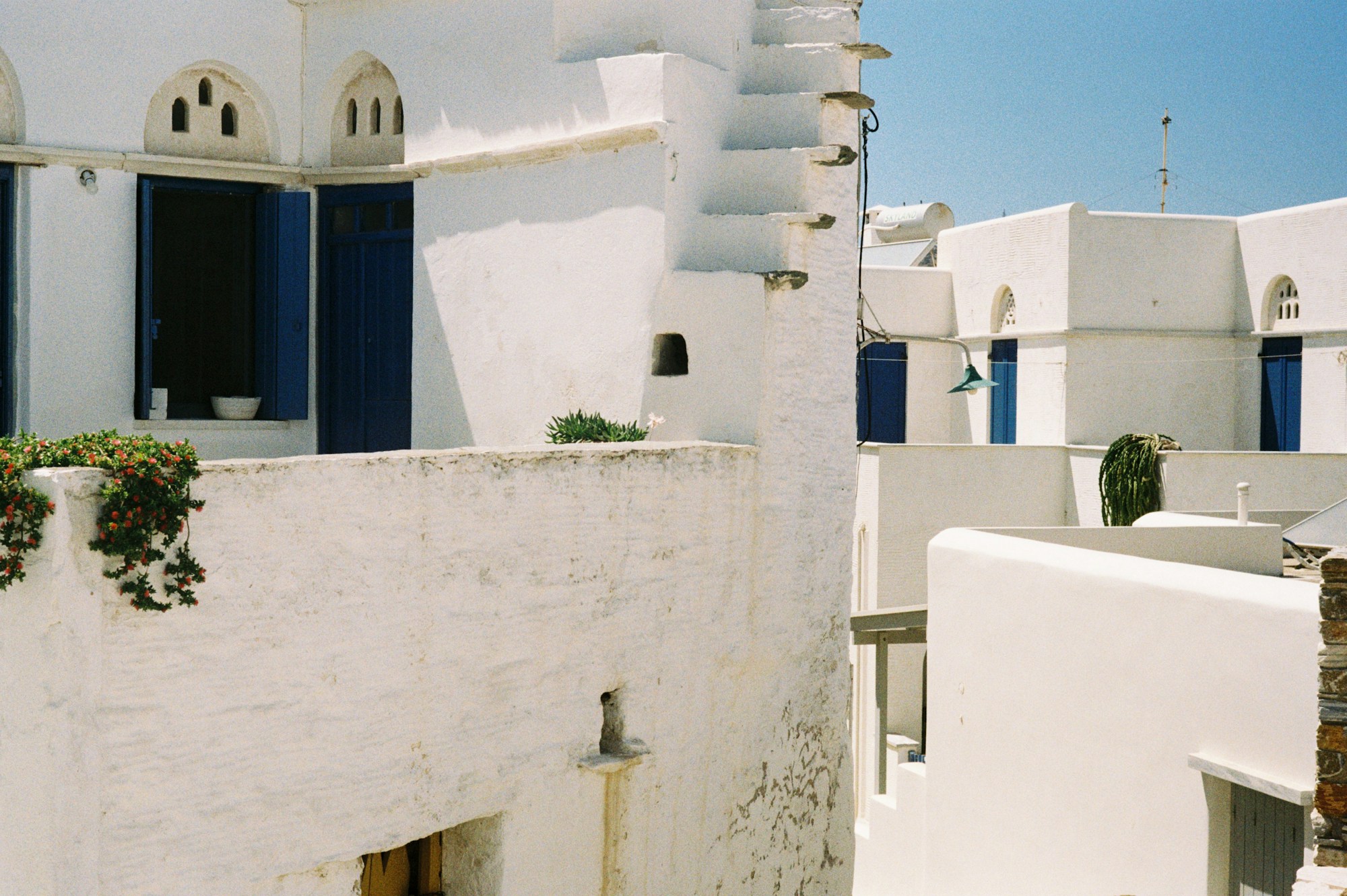
Tinos
The Church of Panagia Evangelistria holds a miraculous icon discovered in 1823, and Tinos remains Greece’s most important Orthodox pilgrimage site. For the rest of the year, the island is quiet: more than 50 traditional villages, a still-living marble-carving tradition, and more than 600 decorated stone dovecotes, a craft high point in the Cyclades.
The problem comes down to a single date: 15 August, the Dormition of the Virgin and a mandatory public holiday in Greece, one of the six « summer Easters, » which falls on a Saturday in 2026. According to GreekReporter, thousands of pilgrims walk up from the port to the church that day, some on their knees. A smaller second peak happens on 23 July for Saint Pelagia’s day. Recommending Tinos as a calm island without flagging this trap would mean ignoring the single worst day possible to visit.
Another useful angle: the ferry crossing to Mykonos takes just 15 to 35 minutes depending on the boat, with up to ten sailings a day in high season, for €10-19. So you can flip the usual logic: base yourself on Tinos, noticeably cheaper and less crowded, and visit Mykonos as a day trip rather than the other way round.
Highlights
- More than 600 decorated stone dovecotes, unique to the Cyclades
- 15-35 minutes by ferry from Mykonos: base yourself on Tinos and day-trip into Mykonos
- Calm the rest of the year, with 15 August as the total exception
Karpathos, Syros and other options for travellers happy with more logistics
Beyond the six islands above, several others are worth the detour if you’re willing to deal with heavier logistics: fewer direct flights, less frequent ferries. The table below sums up the profiles most relevant for August 2026.
| Island | Profile | Access | Good to know for 2026 |
|---|---|---|---|
| Karpathos (Dodecanese) | Olympos village, a living museum of Greek folklore, isolated since the 7th century | Daily flights from Athens (around 1h) | Among the islands under a water state of emergency by mid-2026; Olympos best visited early morning |
| Syros | Ermoupoli, the administrative capital of the Cyclades, 19th-century neoclassical architecture | Airport (JSY), regular ferry | Year-round university and administrative life, not a purely seasonal island |
| Sifnos | The culinary capital of the Cyclades (revithada, ceramic tradition) | No airport, ferry only | The lack of direct flights naturally filters out some of the crowds |
| Astypalaia (Dodecanese) | Pilot « smart and sustainable » island, Volkswagen partnership, shared electric vehicles | Ferry, seasonal flights | 2026 paradox: ranked among the islands with the most severe water emergency, reservoir down to a sixth of capacity |
| Koufonisia and the Small Cyclades | Ano Koufonissi, a car-free island, 16 mapped beaches | From Naxos: 40-50 min by Seajet or around 2h30 on the Express Skopelitis | Still under the radar, but its profile is rising fast |
| Ios | Formerly the island of student partying, now repositioning towards higher-quality tourism | Ferry, seasonal airport | Just one premium beach club (Salt), against a dozen or so on Mykonos |
| Serifos, Kimolos, Anafi, Sikinos | Under-the-radar profile: very low tourist density | Ferry only, often with no road beyond the port | Anafi only really operates June to September; Kimolos pairs easily with Milos (10-minute ferry) |
Sources: Karpathos Info, The Mediterranean Traveller, Seasoned Traveller, Travel And Tour World.
The 2026 water crisis: a factor to check before booking, not just the crowds
Between 23 June and 15 July 2026, twelve to thirteen Greek islands declared a water state of emergency, according to several consistent sources (Time Out, en.rua.gr, Novinite). The hard core of islands named as of mid-July 2026 includes Astypalaia, the worst-hit with its main reservoir down to a sixth of capacity, plus Tinos, Alonissos, Leros, Patmos, Symi and Karpathos. Poros joined the list on 15 July, according to Keep Talking Greece.
Santorini, Mykonos and Naxos aren’t on these formal emergency lists, but remain under « enhanced monitoring » after a dry winter: Naxos’s reservoirs were at around a third of last year’s level by mid-2026. Back in May 2025, a desalination breakdown had already left fifteen Santorini villages without water due to overconsumption.
On islands under emergency status, tap water is generally reserved for showers, bottled water is recommended for drinking, and some hotels restrict the use of private pools or offer a discount in exchange for skipping daily housekeeping. Among the alternatives covered above, only Tinos appears on the emergency lists checked: Naxos, Paros, Milos, Folegandros and Amorgos don’t feature, nor do Sifnos or Syros. Karpathos, covered above, is also on the list. Before booking accommodation with a private pool, it’s worth asking the hotelier directly whether the island’s water supply is under any restriction: the list has grown in successive waves since late June 2026 and could still change before you travel.
Ferries, flights, heat and wind: the logistics of August 2026
Book your ferries early
The main operators across the Cyclades are Blue Star Ferries (conventional boats, more stable in wind), Seajets (fast catamarans, more sensitive to the Meltemi) and Small Cyclades Lines for the Small Cyclades. Book your tickets 4 to 6 weeks ahead for July-August, especially on the Piraeus-Santorini and Piraeus-Mykonos routes, and without fail before 15 August. Compare operators via our round-up of Mediterranean ferry routes.
Favour islands with an airport if you’re short on time
Six Cycladic islands have an airport with direct flights from Athens: Naxos (JNX), Paros (PAS), Milos (MLO) and Syros (JSY), on top of Mykonos (JMK) and Santorini (JTR). Karpathos, in the Dodecanese, has one too, with year-round daily flights (around an hour). It’s the simplest way to avoid long ferry crossings in the middle of the August heat.
Heat, the Meltemi wind and wildfire risk
2026 forecasts point to temperatures « consistently above historical averages » for July-August, with island averages of 24-34°C and spikes to 36-40°C during heatwave episodes, according to GreekReporter. The Meltemi wind blows from June to September, peaking in July-August at up to Force 7-8: it makes swimming trickier on exposed beaches and can disrupt some boat excursions, but rarely cancels the big conventional ferries, which generally need Force 8-9 to be affected. The fast Seajets catamarans are more sensitive and can be cancelled from as low as Force 7, according to Dave’s Travel Pages.
In early August 2026, Greek Civil Protection rated Attica as category 4, very high, fire risk for 5 and 6 August, with several islands also rated category 3 or 4, according to Keep Talking Greece. Active fires hit Paros and Crete in early August (6,000 hectares combined). The risk generally stays localised: it’s worth checking the specific situation at your destination rather than cancelling an entire trip on the back of a national-level alert.
On the paperwork side, the EES (Entry/Exit System) now applies at the Schengen area’s external borders: automatic passport and facial-photo registration on arrival, with no advance steps needed. ETIAS, on the other hand, isn’t yet mandatory as of early August 2026, according to Santorini Dave; its launch, still pencilled in for later this year, could well slip to 2027.
Budget: the gap stays wide
Choosing an alternative won’t change the August weather, but it will change your budget substantially. Here’s the typical gap between Santorini/Mykonos and the alternatives covered above, according to Machu Picchu Travel Guides.
| Item | Santorini / Mykonos (August) | Alternatives (Naxos, Paros, Milos…) |
|---|---|---|
| 3-star hotel / night | €195-430 on average in Santorini, up to €800-1,500+ for a cave suite in Oia | €70-100 (Naxos, family-run hotel) |
| Restaurant meal | €25-40, up to €45-65 for a single dish in Mykonos, before outliers like DK Oyster | €18-25 |
| Daily mid-range budget | €150-200/day and up | €100-150/day |
| Mid-range week, per person | €1,100 and up | €600-900 |
Once you’ve picked a destination, you can put your route together with the Pixidia trip planner, factoring in ferry crossings and the weather windows for your trip.
Before you go: eSIM and travel insurance
Local 4G/5G data without swapping your SIM card, set up in a few minutes before you fly.
Plans from a few euros for several daysCancellation, baggage and medical cover for a trip through the Cyclades or the Dodecanese.
From $56 / 4 weeksFrequently asked questions
What’s the best alternative to Santorini in August 2026 if I want to avoid the crowds without giving up the volcanic scenery?
Milos, with its twin geology (Sarakiniko, Kleftiko), is still the benchmark. Its numbers climb fast in summer, from around 2,000 passengers in April to more than 11,000 in July-August 2026, but stay well below Santorini’s volumes over the year, according to National Geographic.
Is Paros still a good alternative to Mykonos in 2026, or has it become just as crowded?
This needs a strong caveat. Paros broke its visitor record in 2025 (close to 970,000 arrivals) and has faced a citizens’ backlash since July 2026 against a 46-pool hotel project, according to Protothema. Naoussa remains cheaper and less showy than Mykonos day to day, though.
Are the alternative islands also affected by water restrictions in 2026?
Some of them, yes. Tinos and Karpathos are among the islands under a water state of emergency by mid-2026; Astypalaia is the worst affected. Naxos is under enhanced monitoring, without a formal emergency. Milos, Paros, Folegandros, Sifnos, Amorgos and Syros don’t appear on the emergency lists checked, according to Time Out.
Which island should I choose for the food rather than the beaches?
Sifnos, seen as the culinary capital of the Cyclades thanks to revithada, a chickpea stew slow-cooked overnight in clay pots, and its ceramic tradition. Naxos is also a solid choice, for its PDO Graviera cheese and its kitron liqueur.
Do I need to book ferries far in advance in August?
Yes, 4 to 6 weeks before travel for the main routes, Piraeus-Santorini and Piraeus-Mykonos especially, and without fail before 15 August, which also clogs up neighbouring routes because of the Tinos pilgrimage.
Will the Meltemi wind disrupt my trip in August?
Probably not in any trip-ending way. Full ferry cancellations stay rare on the big conventional boats, which generally need Force 8-9 to be affected. The fast Seajets catamarans are more sensitive and can cancel from as low as Force 7.
Is it dangerous to travel to Greece in August 2026 because of the wildfires?
The risk is real and documented: category 4, very high, for Attica on 5 and 6 August 2026 according to Greek Civil Protection, with several islands also rated at risk. It generally stays localised: it’s worth checking the specific situation at your destination rather than cancelling an entire trip on the back of a national-level alert, according to Keep Talking Greece.
When does 15 August 2026 fall, and why does it matter for choosing an island?
15 August 2026 falls on a Saturday. It’s the Dormition of the Virgin, a national public holiday and the peak day for the Tinos pilgrimage: the worst possible day to visit that island if you’re after some calm.
Sources
- Euronews: national tourism regulation framework, May 2026.
- GreekCityTimes: Santorini cruise-passenger cap, 2026.
- GTP Headlines: Prime Minister Mitsotakis’s comments.
- GTP Headlines / INSETE: international air arrivals, first half of 2026.
- Protothema: citizens’ backlash in Paros, July 2026.
- The Cool Down: Paros hotel project and water tensions.
- National Geographic: Milos geology and visitor numbers.
- Wikipedia: Milos demographic data, 2021 census.
- Go Ask A Local: Folegandros guide.
- GreekReporter: Amorgos and the filming of The Big Blue.
- GreekReporter: Tinos pilgrimages.
- dayoftheweek.org: confirmation of the day of the week for 15 August 2026.
- Time Out: Greek islands under a water state of emergency, 2026.
- Keep Talking Greece: wildfire risk, early August 2026.
- GreekReporter: summer 2026 weather forecast.
- Dave’s Travel Pages: the Meltemi wind.
- Machu Picchu Travel Guides: Greece 2026 travel budget.
Research conducted on 8 August 2026.

Plan your trip with Pixidia
Pixidia learns how you travel and helps you build a trip that truly fits you and everyone coming along.
Open the planner