
The Feria de Albacete runs from 7 to 17 September 2026, and Madrid is just 1h28 away by AVE high-speed train. With 3.16 million visitors in 2025 — a record — it regularly beats San Fermín and Seville’s Feria de Abril in Spanish opinion polls, with completely free entry to the Recinto Ferial. Up to 18 daily trains make a same-day round trip from the capital entirely doable. Book your AVE or AVLO ticket now: accommodation on site can top €11,000 a week during the Feria.
Picture a Madrid-to-Albacete journey quicker than London to Birmingham by rail. At the other end waits one of Spain’s biggest popular festivals: eleven days of casetas, bullfights and free concerts, with attendance that topped three million visitors in 2025, an all-time record. The Feria de Albacete ticks every box yet rarely makes it onto international travel itineraries, overshadowed by San Fermín or Seville’s Feria de Abril. It runs from 7 to 17 September 2026 in Albacete, capital of the province of the same name in Castilla-La Mancha, and its proximity to Madrid changes the equation for anyone planning a September trip to the Spanish capital.
What exactly is the Feria de Albacete?
Eleven days under the patronage of the Virgen de los Llanos
The Feria’s origins trace back to a document dated 21 March 1325, which mentions a temporary transfer of the fair to Chinchilla. In 1375, Albacete was granted city status along with the royal privilege of holding an annual fair, confirmed and extended on 6 March 1710 by Philip V: four days of fair in early September, tied to the feast of the Virgen de los Llanos, patron saint of the city. According to the Castilla-La Mancha Culture Portal, today’s Recinto Ferial — the sprawling circular, arcaded complex locals nickname « la Sartén » (the frying pan) or « Los Redondeles » (the rounds) because of its shape from above — was inaugurated on 7 September 1783, designed and built in just 33 days by Albacete-born architect Josef López Ximénez. Its entrance avenue, the « rabo de la sartén » (the pan’s handle), explains the nickname in full. Every 7 September evening, Albacete’s mayor still opens the Puerta de Hierros with the city’s symbolic key, a ritual marking the official start of the festivities, according to Wikipedia. In 2008 the Feria received Spain’s highest festive honour, Fiesta de Interés Turístico Internacional status (Official State Gazette, 1 September 2008), after already being declared of national interest back in 1967 — making Albacete one of only around thirty Spanish cities to hold this status.
Highlights
- 3.16 million visitors in 2025, an all-time record over 11 days, according to La Cerca
- Rated Fiesta de Interés Turístico Internacional since 2008
- Free, open access to the Recinto Ferial and the traditional casetas
- Regularly voted ahead of San Fermín and the Feria de Abril in Spanish polls
If you’re staying in Madrid before or after the Feria, a natural way to extend the Don Quixote-country immersion is to visit the windmills of La Mancha and the vineyards of the Denominación de Origen La Mancha — the same appellation behind the gazpacho manchego served on the Recinto Ferial.
Cabalgata, bullfights and concerts: the 2026 programme
Eleven days of tradition and new twists
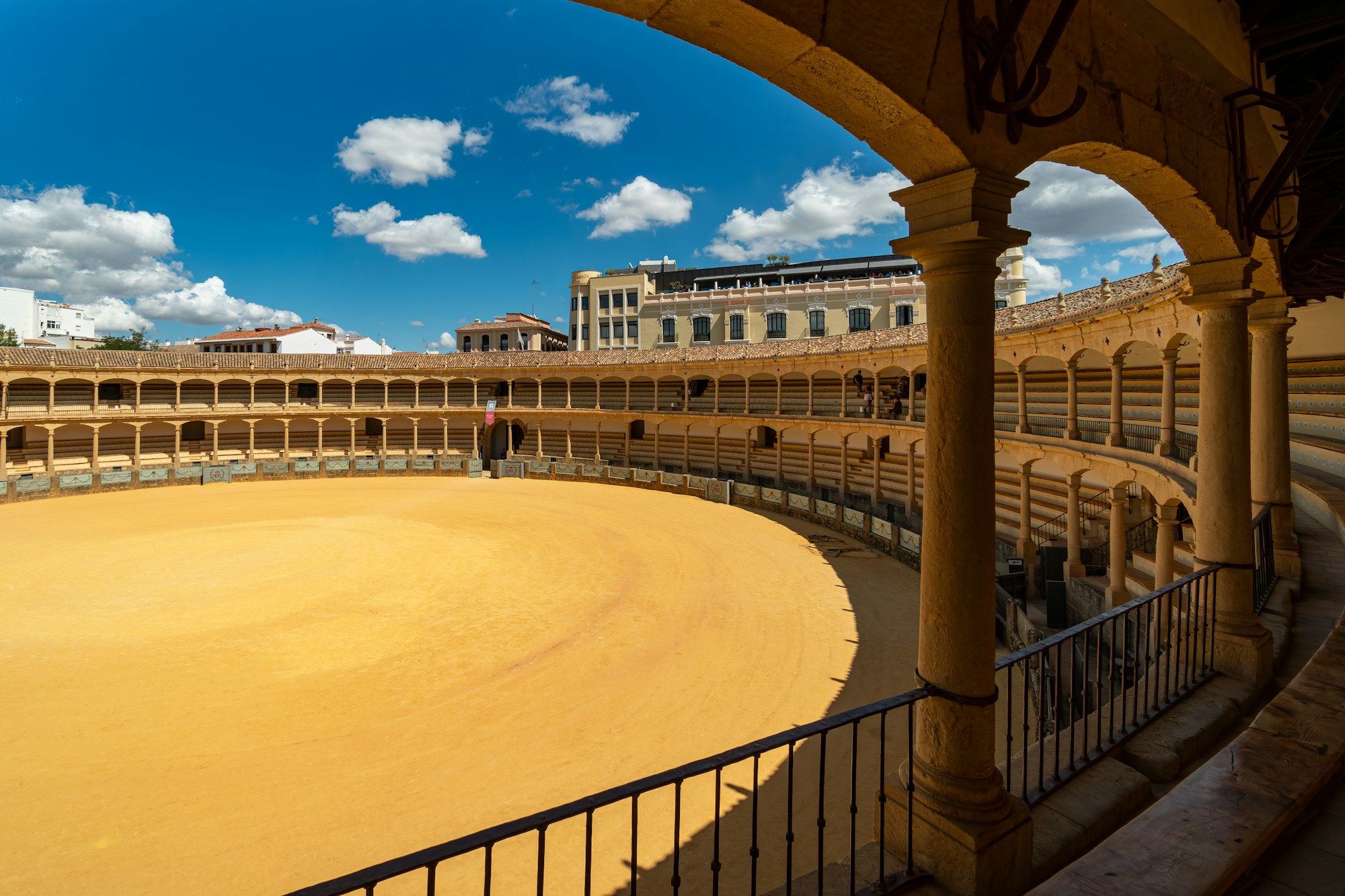
It all starts on 6 September with the pregón, the opening speech at the Municipal Museum, followed by the Cabalgata de Apertura on the afternoon of 7 September: a parade of 60 floats and 136 associations from Avenida de España to the Puerta de Hierros, symbolically carrying the image of the Virgen de los Llanos to her chapel inside the Recinto Ferial. The next day, 8 September, the patron saint’s feast day, brings the Batalla de Flores in the historic centre, with everyone in traditional manchego dress. The bullfighting card, confirmed on 16 June 2026 by Plaza de Toros de Albacete, lines up ten events from 8 to 17 September (seven corridas, two novilladas, one rejoneo contest), headlined by two of the circuit’s biggest current names: Roca Rey on 11 September and Morante de la Puebla on 12 September. On the music side, the ticketed Caseta de los Jardinillos hosts Malú, Chambao, Bebe, Taburete and Camela, while the free open-air Viva la Feria stage lines up Juan Magán, Viva Suecia and Celtas Cortos, according to official announcements.
Highlights
- 2026 bullfighting headliners: Roca Rey (11 Sept) and Morante de la Puebla (12 Sept)
- Free open-air concerts at the Viva la Feria stage (Juan Magán, Viva Suecia, Celtas Cortos…)
- New for 2026: the official poster was chosen by public vote for the first time
- IANOS, a free WhatsApp chat assistant, helps you navigate the programme
Madrid to Albacete: 1h30 by AVE, the real trump card
Up to 18 trains a day, and two different departure stations to watch for
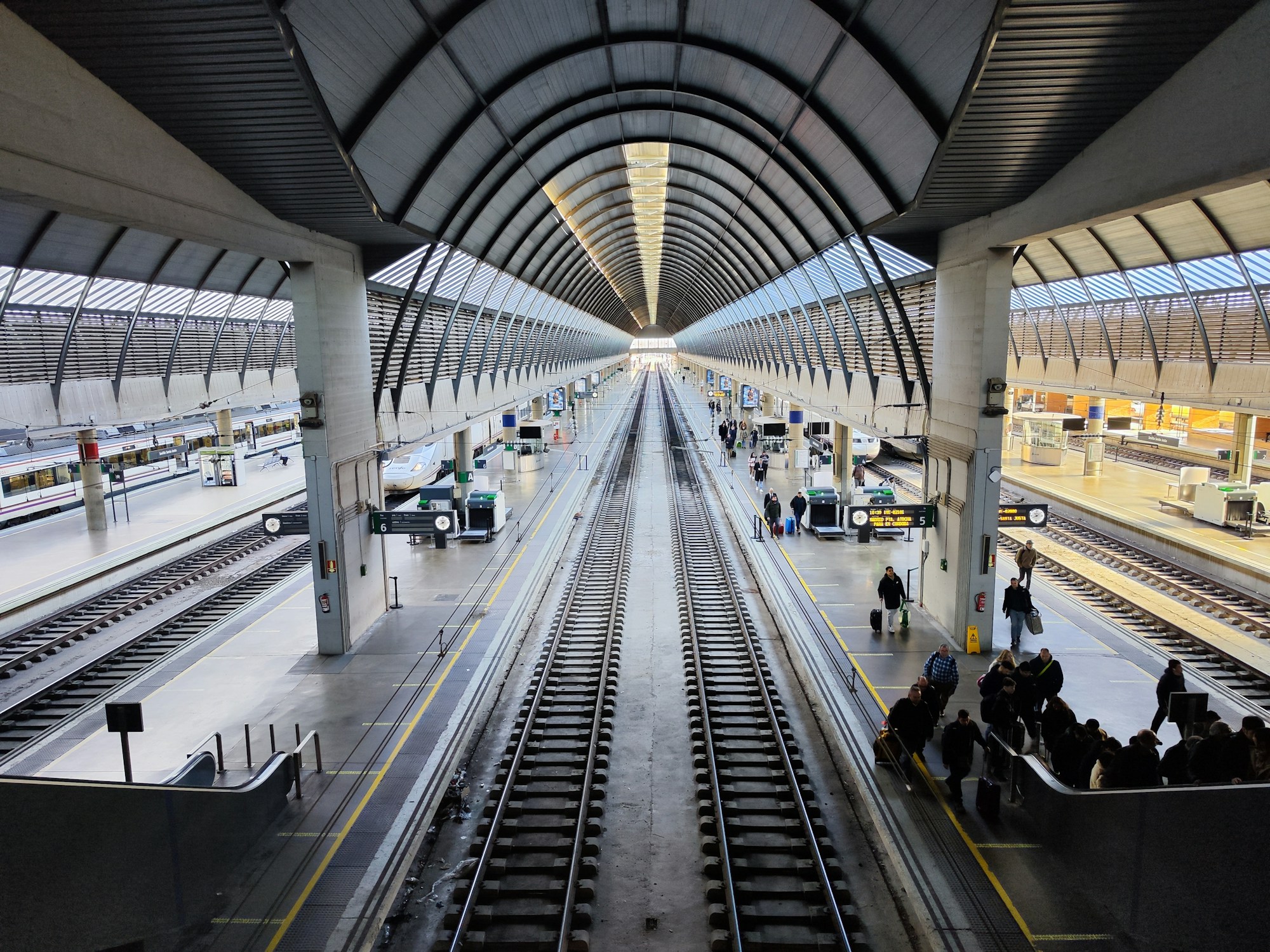
This is the detail that changes everything if you’re already spending time in Madrid: Albacete sits on a direct high-speed line, with a Madrid Puerta de Atocha–Albacete-Los Llanos journey of 1h28 to 1h38 depending on the train — quicker than London to Birmingham by rail. Four operators share the route, according to Renfe: the classic AVE and the low-cost AVLO (from €7-13 with early booking), both departing from Atocha; OUIGO (from €7-9, around 1h35), departing from a different station, Madrid-Chamartín; and Iryo (1h31, two daily round trips). Adding up every operator, up to 18 daily services run the route, with a first train around 8am and a last return in the evening: a same-day round trip from Madrid is entirely realistic. At the other end, Albacete-Los Llanos station, opened in 2010 at a cost of €48 million, sits 10-15 minutes from the centre by taxi (€8-10) or 7 minutes on bus line C; four special F1-to-F4 lines run straight to the Recinto Ferial during the Feria for a flat €1 fare, according to El Digital de Albacete. To plan this round trip or a longer stay, Pixidia’s itineraries help you fit the train times around the rest of the programme.
Highlights
- Up to 18 daily trains combined (Renfe AVE/AVLO, OUIGO, Iryo)
- From €7 to €13 with early booking on AVLO or OUIGO
- Renfe adds extra services on the Feria’s busiest weekends
- 4 free park-and-ride car parks on the outskirts, around 1,200 spaces in total
Budget and accommodation: the real logistical headache
On the Recinto Ferial itself, the Feria costs €0: access and the casetas are entirely free, and only what you eat and drink is charged at market price. You do need to budget for the bullfights (€15 to €120 depending on seating) and some indoor concerts (€10 to €60). The real pinch point lies elsewhere: according to an El Digital de Albacete survey from April 2026, only one hotel still had rooms available in Albacete for the ten days of the Feria, at close to €2,000 for the full stay, while flats were listed at €3,115 to €11,031 depending on standard and location. For the single busiest weekend alone, two nights could already cost €794 in a hotel or €1,000 to €2,200 in a flat.
This is exactly what makes the « base yourself in Madrid, hop over by AVE » angle so compelling: with a far larger and more competitive Madrid hotel scene, staying in the capital and taking the train back and forth costs, in the vast majority of cases, a lot less than a bed in Albacete on the peak dates. Local advice converges on the same point: book almost a year ahead for a weekend night in Albacete, or plan a weekday visit instead, where availability stays far more affordable. To weigh this up case by case for your own dates, Pixidia’s planner helps compare stay options.
Manchego food: the real trio (and it’s not michirones)
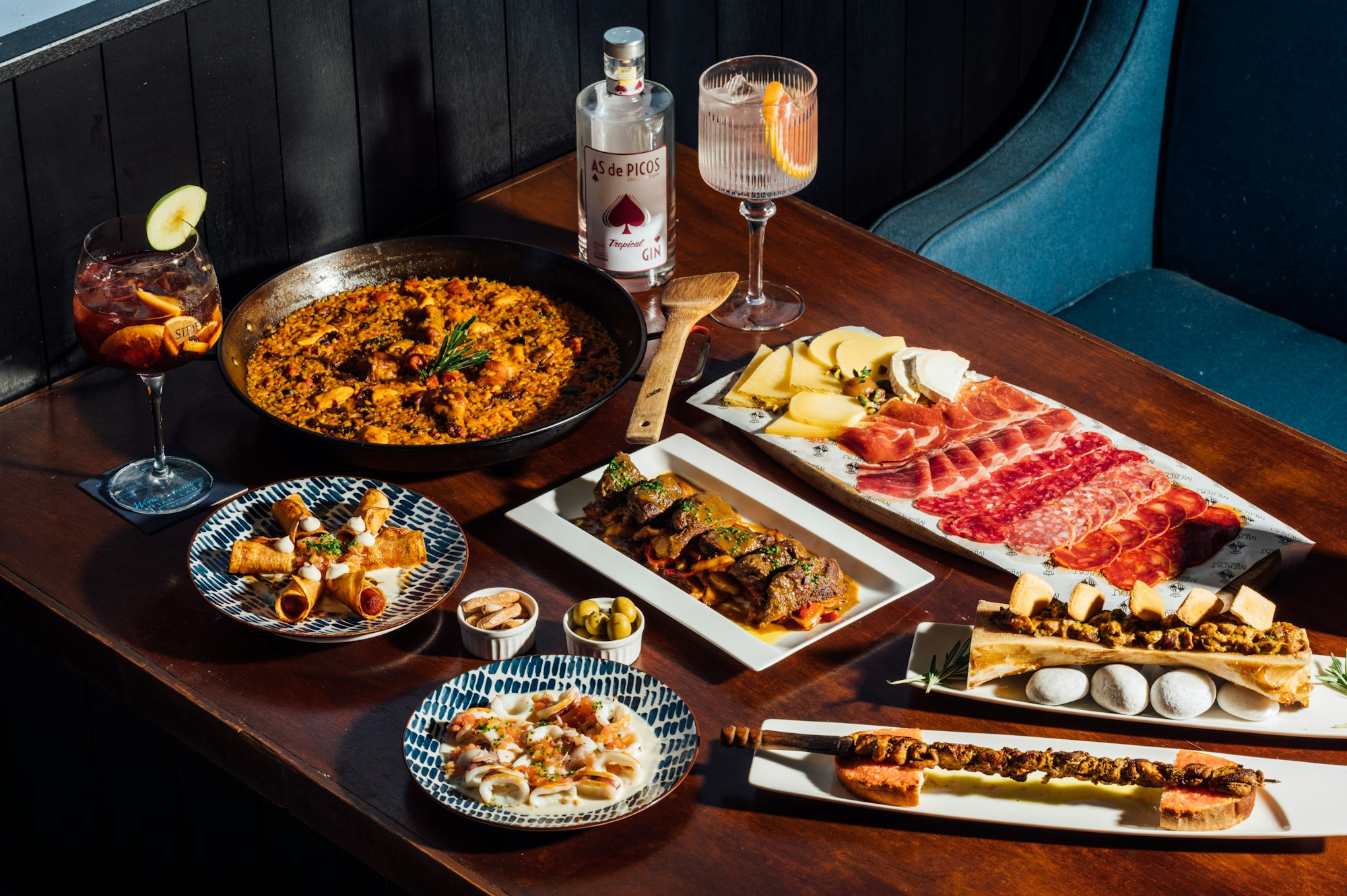
Gazpacho manchego, atascaburras and Miguelitos de La Roda
First thing to unlearn: gazpacho manchego has nothing to do with cold Andalusian gazpacho. It’s a hot stew built on game meat (traditionally rabbit and poultry), a vegetable sofrito and « tortas cenceñas », a local unleavened bread that dissolves into the broth, according to Don Asado. Cervantes himself mentions it in Don Quixote under the name « galianos », Sancho Panza’s favourite dish — a fitting link back to the windmills and vineyards of the same region. Alongside it, atascaburras (a cold purée of salt cod, potato, garlic and olive oil) provides the perfect cool counterpoint on a hot day. For dessert, the Miguelitos de La Roda, flaky pastries filled with crème pâtissière and dusted with icing sugar, are THE dessert to have: more than seven million are sold every year during the Feria, traditionally paired with a well-chilled cider, according to the Castilla-La Mancha Tourist Board. Wash it all down with wines from the Denominación de Origen La Mancha, established in 1973 and the largest wine-growing appellation in the world by vineyard area.
Highlights
- Gazpacho manchego: a hot stew mentioned in Don Quixote under the name « galianos »
- Atascaburras: a cold salt cod purée, a refreshing contrast to the gazpacho
- Miguelitos de La Roda: more than 7 million sold every year during the Feria
- Wines from the Denominación de Origen La Mancha, the largest wine appellation in the world
What to see beyond the casetas
The Recinto Ferial (« la Sartén ») is where most of the crafts and food stalls are concentrated, but several other spots are worth the detour during the eleven days of the Feria, according to Albacete Guía:
- La Puerta de Hierros: a monumental replica (25m high, 36m long) unveiled in 2010 for the 300th anniversary of the 1710 royal privilege, and the stage for the opening and closing rituals.
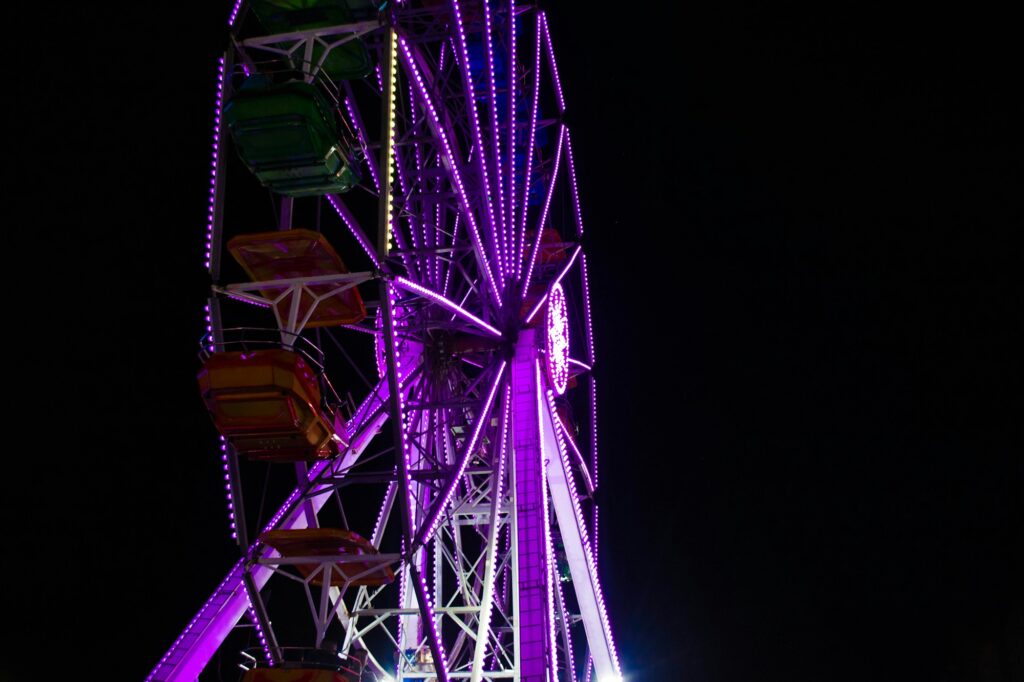
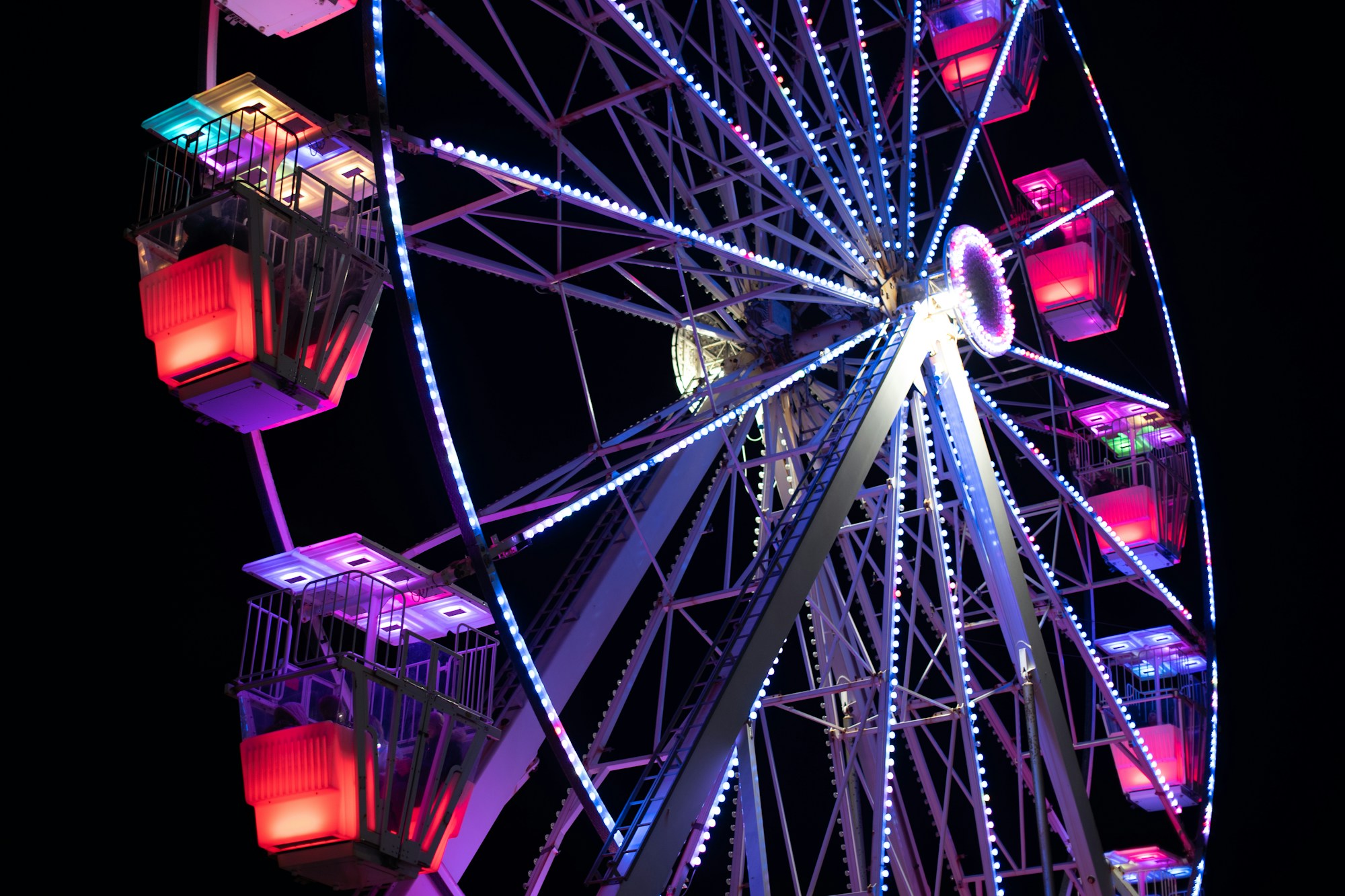
- La Noria, the big wheel set up in the Ejidos, gives the best panoramic view over the whole site.
- La Tómbola de Cáritas, a charity raffle set up right on the Paseo Ferial, sold 736,000 tickets in 2025: a popular institution in its own right.
- La Casa del Hortelano (the municipal cutlery museum), opposite the cathedral: Albacete is historically Spain’s « knife city », with around twenty craftspeople setting up during the Feria.
- Albacete’s historic centre (Plaza del Altozano, San Juan Bautista cathedral, Pasaje de Lodares) makes for an easy half-day walk to round out the Feria.
Safety and accessibility: what to know
Pickpocketing is a recurring issue in the crowds, almost acknowledged by the authorities themselves as part of the Feria’s folklore, with around 200 phone-theft complaints reported over a single weekend, according to El Digital de Albacete. The usual advice applies: a small cross-body bag, never a wallet in a back pocket, and extra care with phones in the crush. A « Puntos Violeta » scheme is dedicated to preventing sexual assault, with a main point on the Virgen de los Llanos esplanade and a second open 24/7 at the Isabel Bonal school, backed up by patrols of identifiable volunteers, according to EnCastillaLaMancha. The 2025 security record was rated « sobresaliente » (outstanding) by the authorities despite record attendance.
On accessibility, the City Council has announced works described as « historic » across 18,700m² of the Ejidos de la Feria, alongside a recurring inclusive programme (adapted sports activities, mobility routes) run in partnership with local associations. The municipal opposition has nonetheless flagged that accessibility on the ground still has room for improvement: worth checking on arrival rather than taking for granted.
Up against San Fermín, the Feria de Abril and Las Fallas: why Albacete holds its own
In Spanish TV polls (Telecinco in 2009, then Antena 3 in 2013, 2015 and 2017), the Feria de Albacete regularly comes out ahead of these three big fixtures of the national festive calendar, according to El Digital de Albacete. That’s a strong case for the detour, especially given that Seville and Pamplona, two other major stops among Spain’s popular festivals, sit considerably further from Madrid.
| Festival | Duration | Attendance | What sets it apart |
|---|---|---|---|
| Feria de Albacete | 11 days (7-17 Sept) | 3.16M (2025, record) | The longest one, with direct AVE access 1h30 from Madrid |
| Feria de Abril (Seville) | ~1 week | Several million | Mostly private casetas, access often restricted |
| San Fermín (Pamplona) | ~9 days | Several hundred thousand | Centred on the encierro, the running of the bulls |
| Las Fallas (Valencia) | ~5 days | Several million | Centred on the monuments and their final burning |
Practical information
Stay connected between Madrid and Albacete with a local or regional Europe eSIM. Set up in 5 minutes, no need to touch your existing SIM card.
From €4.50Stay covered between Madrid and Albacete: worldwide health, cancellation and baggage cover with SafetyWing’s Nomad Insurance.
From $56 / 4 weeksFrequently asked questions
What are the exact dates of the Feria de Albacete 2026?
The Feria de Albacete 2026 runs from Monday 7 to Thursday 17 September, eleven days in total, dates confirmed by the official website and Albacete City Council. The pregón, the ceremonial opening speech, takes place the evening before, on 6 September.
How long is the train journey between Madrid and Albacete?
Between 1h28 and 1h38 depending on the train, on Renfe AVE or AVLO; around 1h31 on Iryo and 1h35 on OUIGO, according to Renfe. That’s quicker than London to Birmingham by rail.
Can you do a same-day round trip from Madrid?
Yes. With up to 18 daily services combined across Renfe, OUIGO and Iryo, a first train around 8am and a last return in the evening, a same-day round trip is entirely realistic, and arguably the smart move given how accommodation prices spike in Albacete during the Feria.
Is entry to the Feria de Albacete free?
Yes, access to the Recinto Ferial and the casetas is entirely free. Only the bullfights (€15 to €120), some indoor concerts (€10 to €60) and whatever you eat and drink on site come at a cost, according to the official website.
What budget should you plan for accommodation in Albacete during the Feria?
Prices spike hard: up to €11,000 for a flat over the eleven days in 2026, with barely any hotel availability left if you book less than a year ahead for a weekend, according to El Digital de Albacete. That’s exactly what makes the « stay in Madrid and hop over by AVE » option so worthwhile.
What should you eat during the Feria de Albacete?
The unmissable local trio is gazpacho manchego (a hot stew, not to be confused with cold Andalusian gazpacho), atascaburras (a cold salt cod purée) and Miguelitos de La Roda for dessert, more than seven million sold every year during the Feria.
What is « la Sartén » in Albacete?
It’s the popular nickname for the Recinto Ferial, the circular, arcaded building that has hosted the Feria since 1783, named for its shape seen from above: a circle extended by an entrance avenue that traces the handle of a frying pan, according to Wikipedia.
Is the Feria de Albacete safe for tourists?
The security operation is rated excellent by the authorities (the 2025 report was graded « sobresaliente »), but pickpocketing remains common in the crowds: keep an eye on bags and phones. A Puntos Violeta scheme is dedicated to preventing sexual assault, according to La Cerca.
Sources
- Feria de Albacete — official event website, 2026 dates and programme
- Ayuntamiento de Albacete — official history of the Feria
- Spain.info (Turespaña) — Spain’s national tourist board
- BOE-A-2008-14494 — Fiesta de Interés Turístico Internacional declaration
- Portal de Cultura Castilla-La Mancha — Recinto Ferial timeline
- Wikipedia (ES) — Feria de Albacete
- Wikipedia (ES) — Recinto Ferial de Albacete
- La Cerca — detailed 2025 Feria report, 3 million visitors
- Renfe — Madrid-Albacete route
- OUIGO — Madrid-Albacete
- El Digital de Albacete — accommodation budget during the Feria
- El Digital de Albacete — official 2026 bullfighting programme
- El Digital de Albacete — 2026 music line-up
- Don Asado — recipe and history of gazpacho manchego
- Turismo Castilla-La Mancha — Miguelitos de La Roda
- Wikipedia (ES) — Michirones (Región de Murcia)
- El Digital de Albacete — pickpocketing advisory
- EnCastillaLaMancha — Puntos Violeta scheme
- El Digital de Albacete — comparison with Spain’s other major ferias
Research conducted on 17 August 2026.

Plan your trip with Pixidia
Pixidia learns how you travel and helps you build a trip that truly fits you and everyone coming along.
Open the planner